Have you ever finished a piece of embroidery and felt that, while technically correct, it was missing a certain spark? A quiet polish that separates handmade craft from intentional art?
That feeling is completely normal, and the solution isn’t about mastering hundreds of new stitches or buying expensive supplies. It’s about learning to see your thread, fabric, and composition with an artist’s eye.
In the ideas that follow, I’ll guide you through small, specific adjustments you can make right now—from changing the direction of a stitch to using negative space—that will instantly elevate your work. Together, we’ll turn your skill into a signature style that is both professional and deeply personal.
1. Master the Fluidity of Single-Line Art
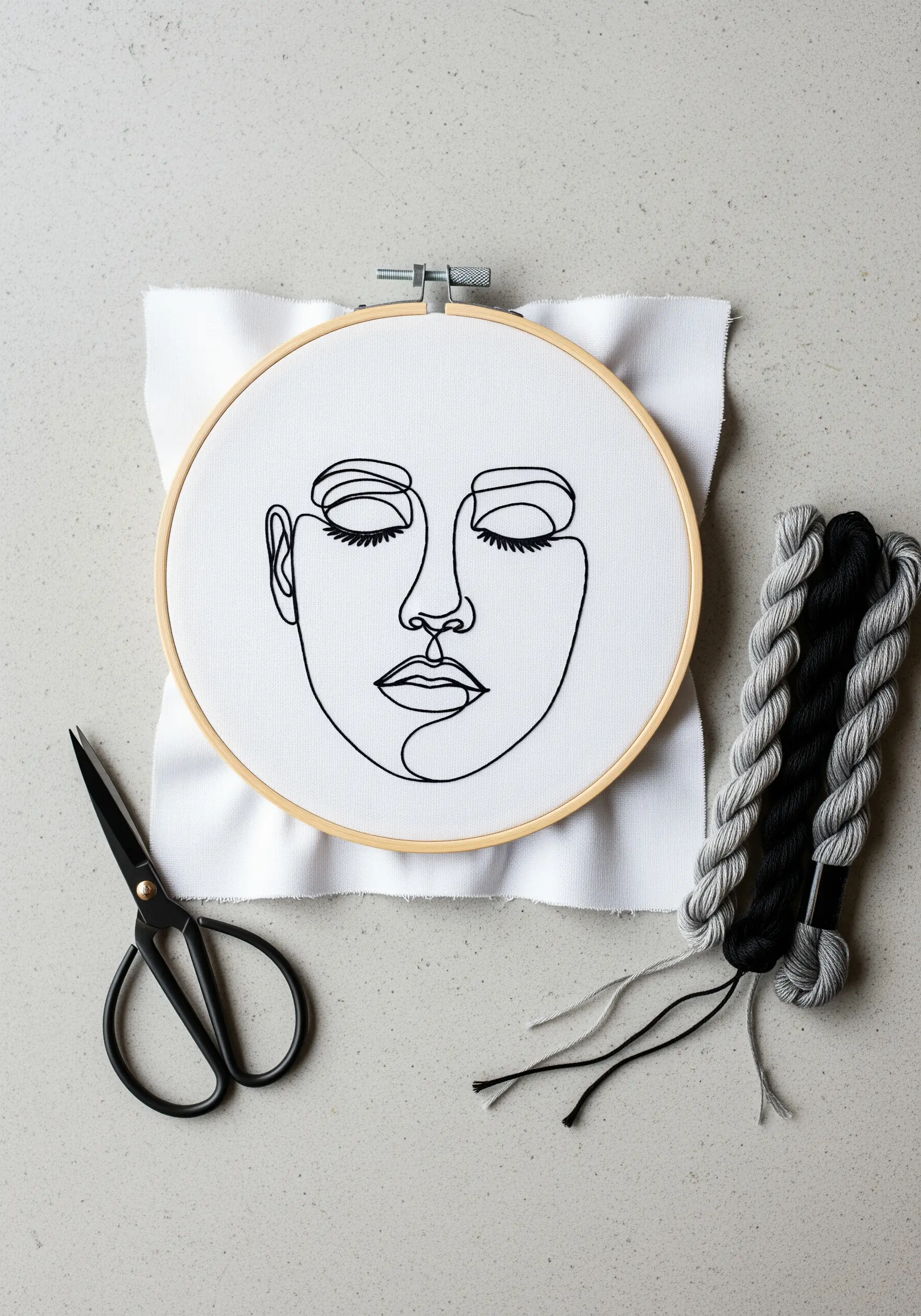
To achieve a truly seamless line that flows without interruption, use a whipped backstitch.
First, create your design using a standard backstitch with three strands of floss for a visible but elegant weight.
Then, take a single strand of the same color and “whip” it around each backstitch without piercing the fabric.
This technique smooths the jagged edges of a standard backstitch, resulting in a single, fluid line that elevates modern line art.
2. Create Depth with Directional Satin Stitch

Turn flat shapes into dynamic forms by controlling the direction of your satin stitch.
Instead of filling an entire shape with parallel stitches, divide it into sections and angle the stitches differently in each one.
This simple adjustment catches the light from multiple angles, creating the illusion of facets and dimension.
For impeccably sharp edges on your geometric hoop art designs, always outline the shape with a split stitch first to act as a raised guide.
3. Achieve Scale with Minimalist Topography
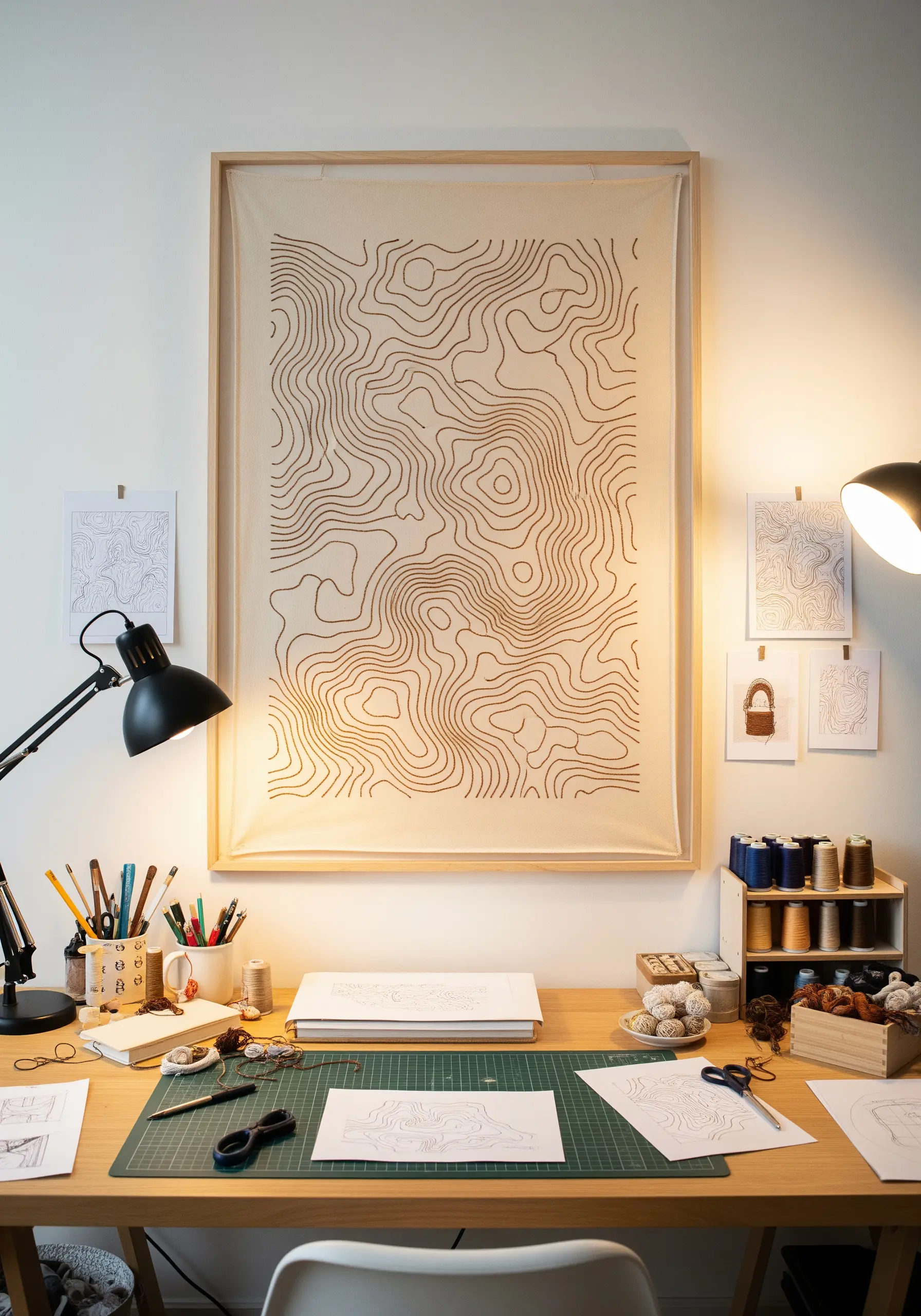
To create a large-scale wall hanging that feels intentional, not empty, focus on the power of a single, repeating line.
A simple backstitch or stem stitch is all you need to render complex topographic patterns.
The key to a professional finish is consistency in your stitch length and tension across the entire piece.
Choose a heavyweight fabric like linen or cotton canvas that can support its own weight without warping when hung.
4. Build Botanical Texture with Knots and Stitches
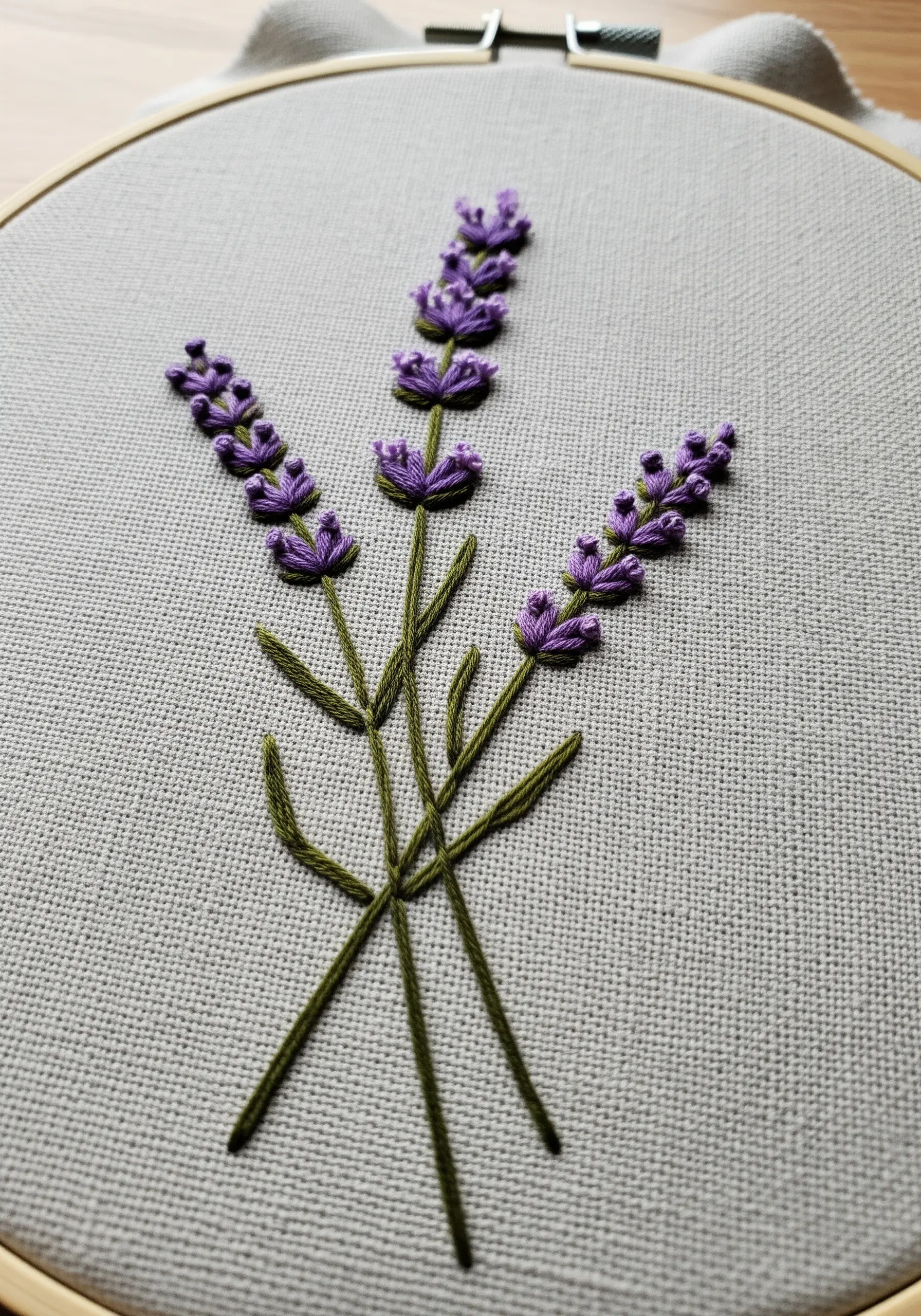
Give your embroidered florals a realistic, touchable quality by combining different stitches for texture.
For lavender blossoms, use tightly packed French knots made with three strands of floss to create dense, bumpy buds.
Contrast this with slender stems made from a whipped backstitch using only two strands for a smooth, clean line.
This combination of textures makes the lavender-inspired embroidery designs feel more lifelike and visually interesting.
5. Refine Typography with a Perfect Outline
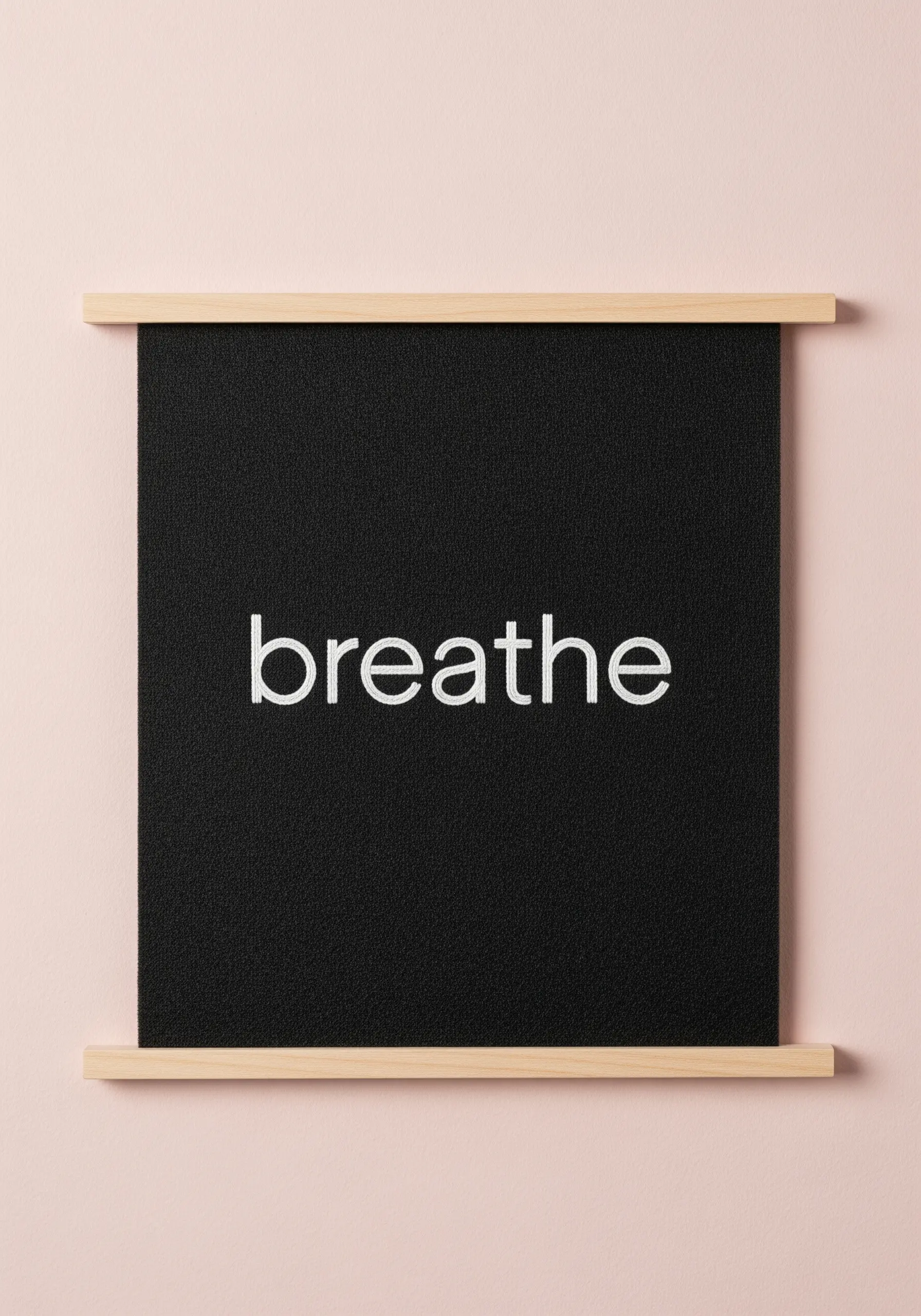
For clean, modern lettering that looks printed, a simple backstitch is often not enough.
First, stitch your letters using a split stitch; this creates a stable, perfectly formed base.
Then, using the same thread, wrap each stitch (whipping) to conceal any gaps or irregularities.
The result is a single, raised cord-like line that looks incredibly sharp, especially when using high-contrast white thread on black fabric.
6. Explore Abstract Forms with Couching Fill
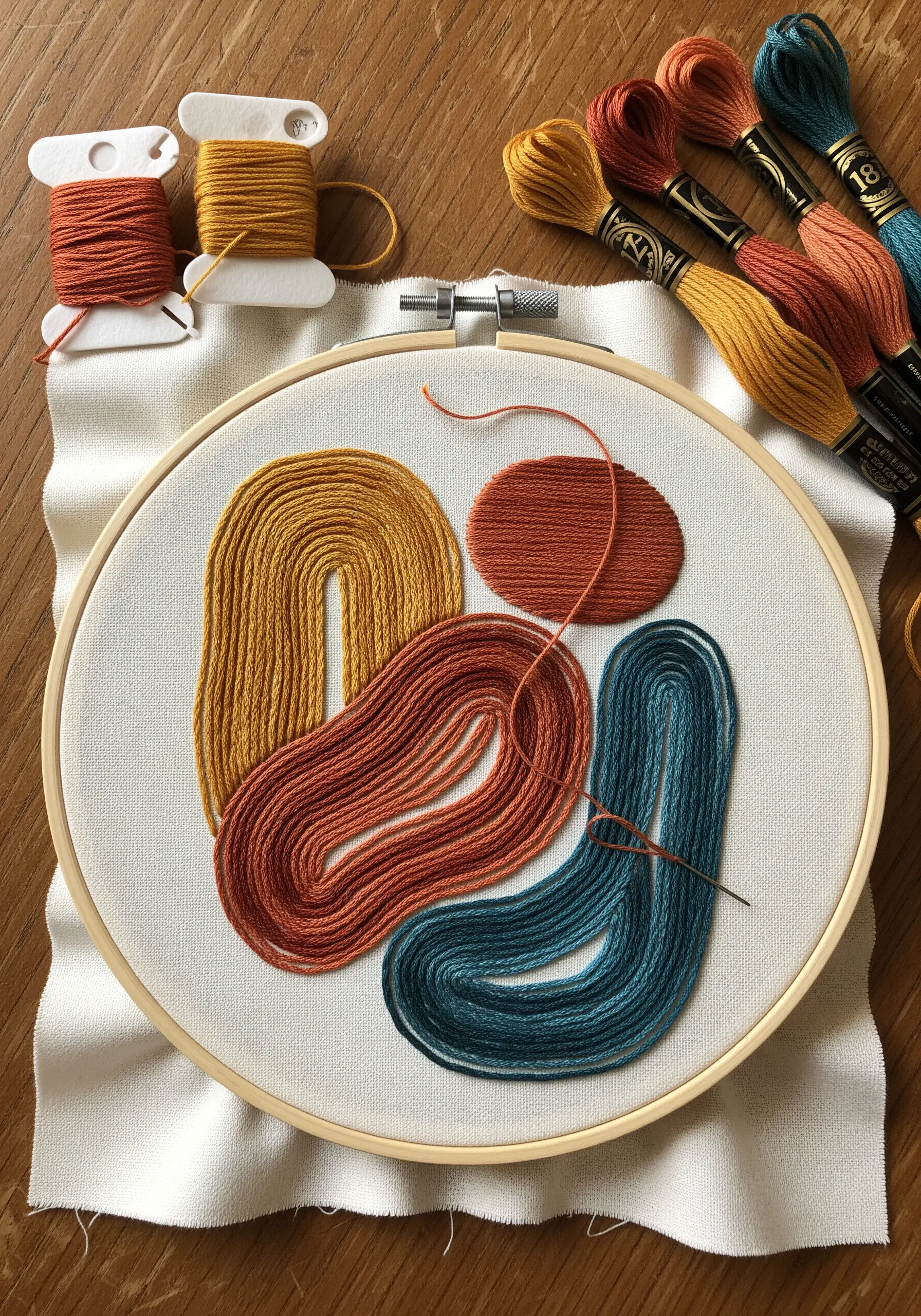
For filling large, curved shapes, couching offers more fluidity and speed than a traditional satin stitch.
Lay down long strands of thread—or even multiple strands at once—to follow the curve of your shape.
Then, use a single, separate thread to tack these foundation threads down at regular intervals.
This technique creates a ribbed, linear texture that emphasizes movement and direction within your abstract textile wall art.
7. Illustrate Lunar Texture with Seed Stitch
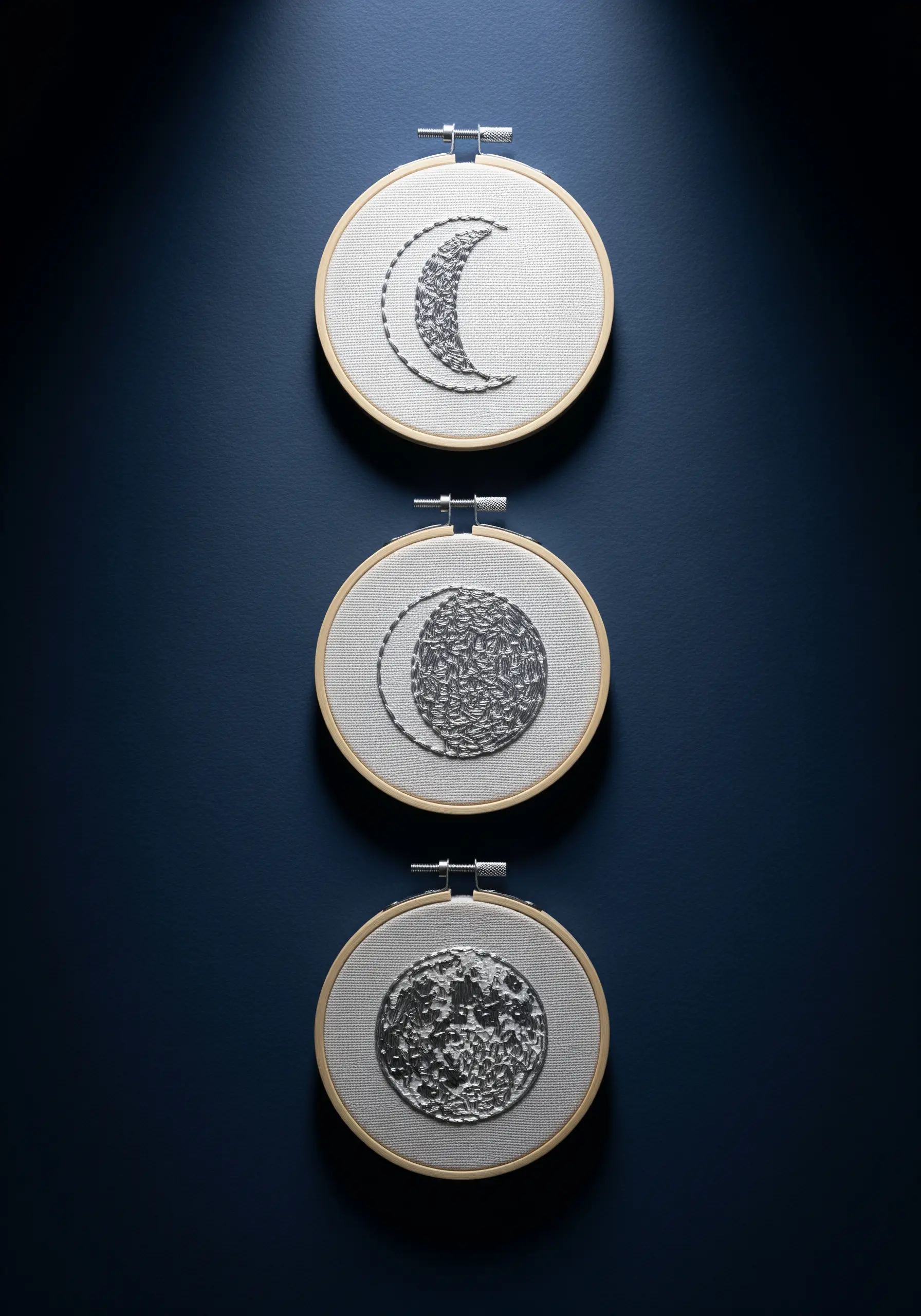
To capture the cratered, varied surface of the moon, abandon uniform fill stitches.
Instead, use a scattered seed stitch—tiny, individual straight stitches placed in random directions.
Vary the density of your stitches to create light and shadow: place them far apart for highlighted areas and pack them tightly for darker regions.
Using a silver metallic thread enhances the celestial feel, giving your moon and stars embroidery a subtle, light-catching shimmer.
8. Define Architecture with Graphic Line Work
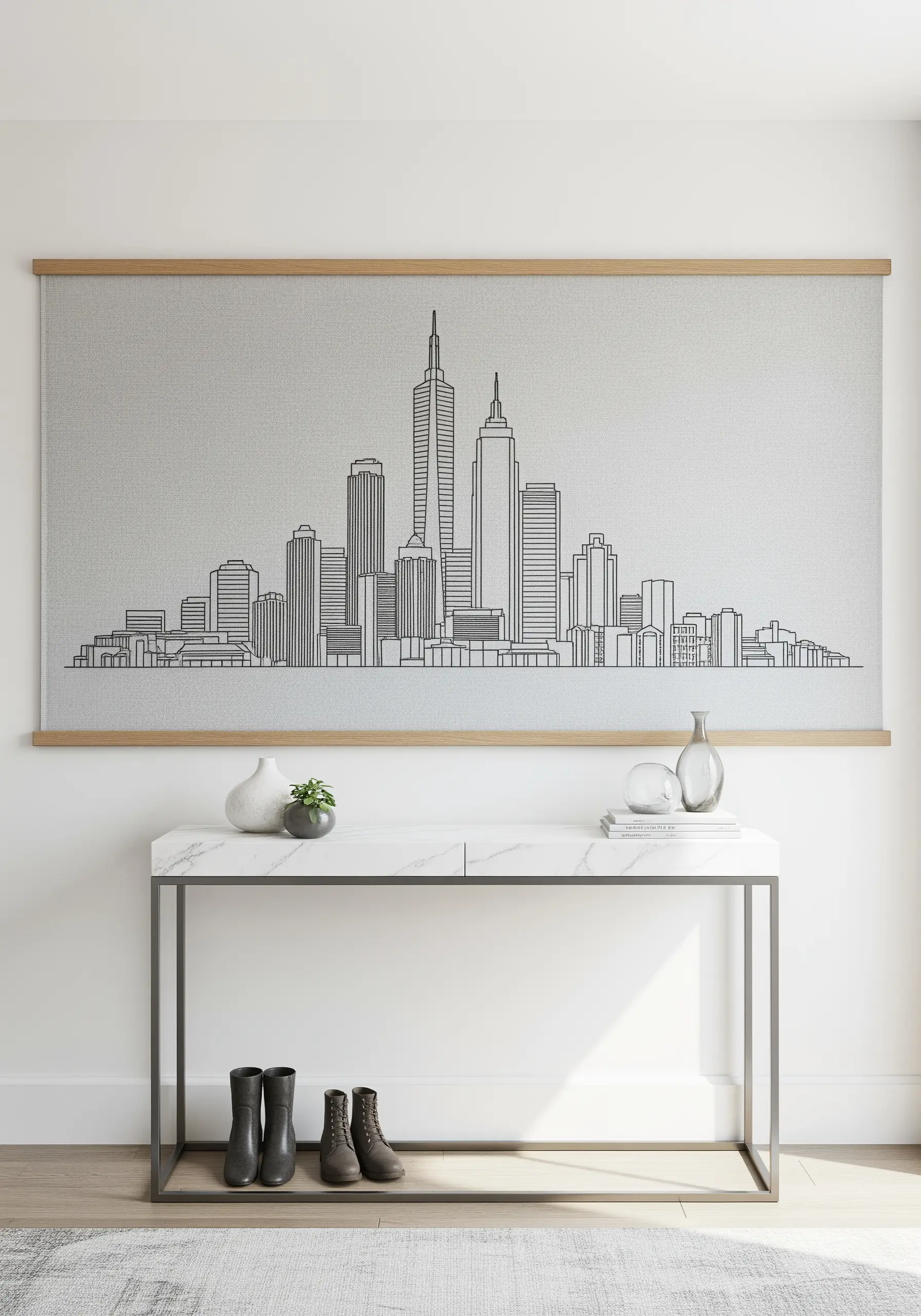
You can capture the complexity of a cityscape with the simplest of stitches: the backstitch.
The professional polish comes from precision—maintaining a consistent stitch length and ensuring all your corners are sharp and deliberate.
Work on a medium-weight, tightly woven fabric that won’t pucker under the tension of so many lines.
This approach transforms an intricate subject into a clean, graphic statement that commands attention in a modern space.
9. Use Radiating Stitches for Organic Movement
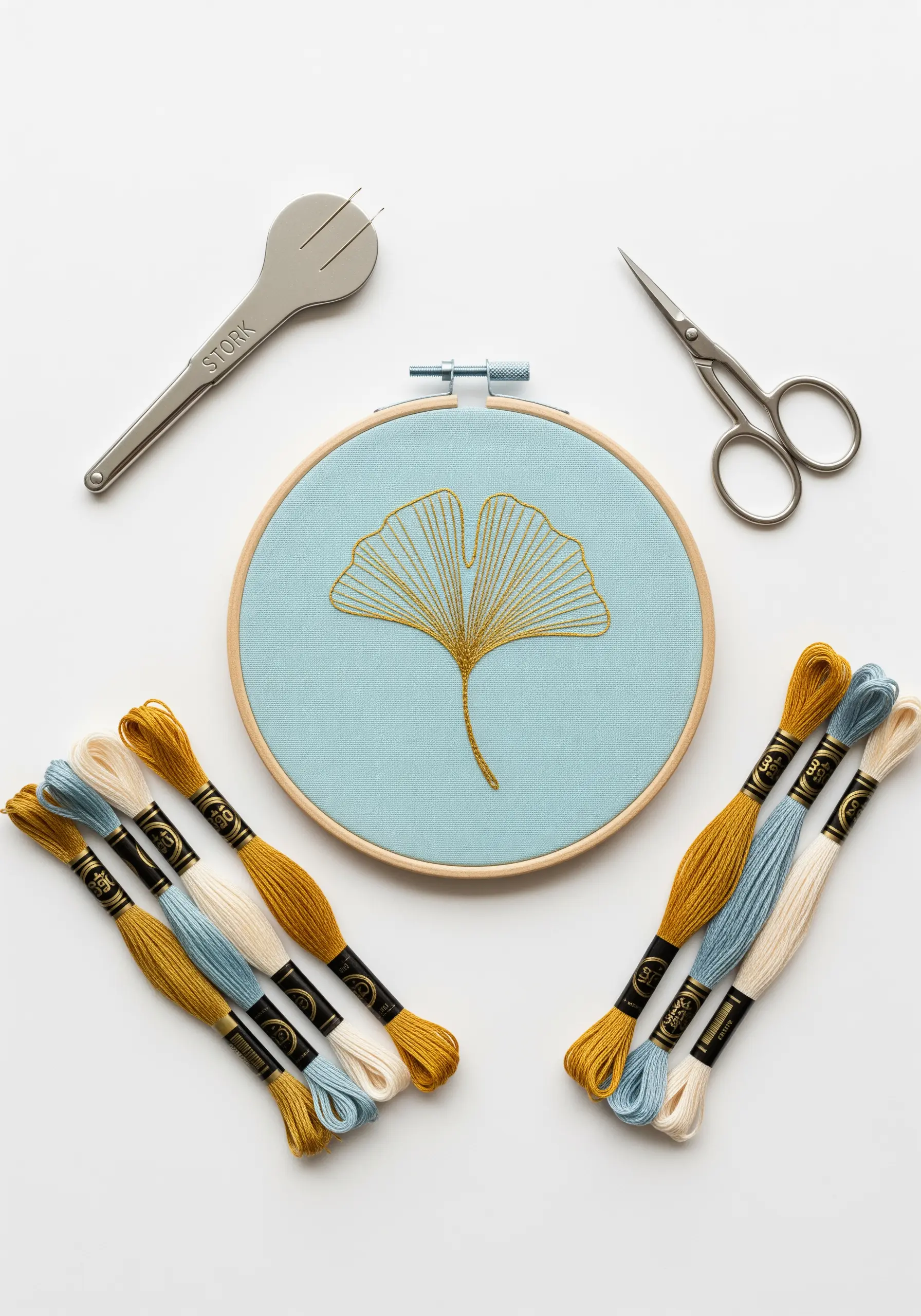
Capture the delicate structure of a ginkgo leaf by using its natural form to guide your stitches.
Instead of outlining and filling, work a series of long, straight stitches that all radiate from a single point at the base of the leaf.
This technique instantly mimics the leaf’s veins and creates a beautiful sense of fanning movement.
Using a single high-sheen thread, like gold rayon floss, on a solid matte fabric enhances the elegance of these simple minimalist leaf embroidery ideas.
10. Create Atmospheric Layers on Sheer Fabric
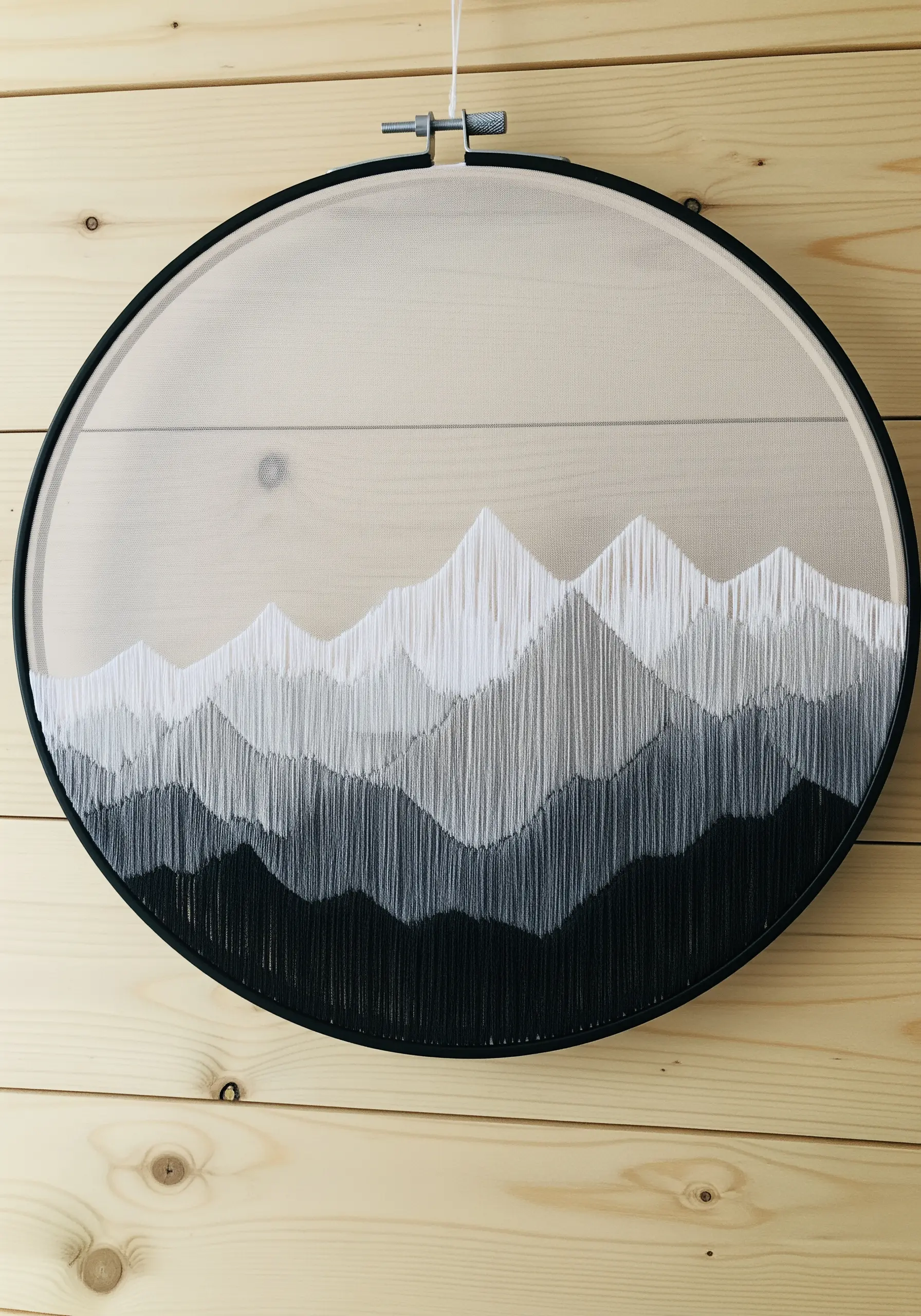
Stitching on a transparent base like tulle or organza allows the fabric itself to become part of the art.
Layer long, straight satin stitches in graduating shades of grey and white to build a mountain range that appears to float in the hoop.
The overlapping threads create new tones and a sense of atmospheric perspective that you can’t achieve on opaque fabric.
This technique is perfect for ethereal nature scene embroidery ideas that feel light and airy.
11. Build Sculptural Surfaces with Colonial Knots
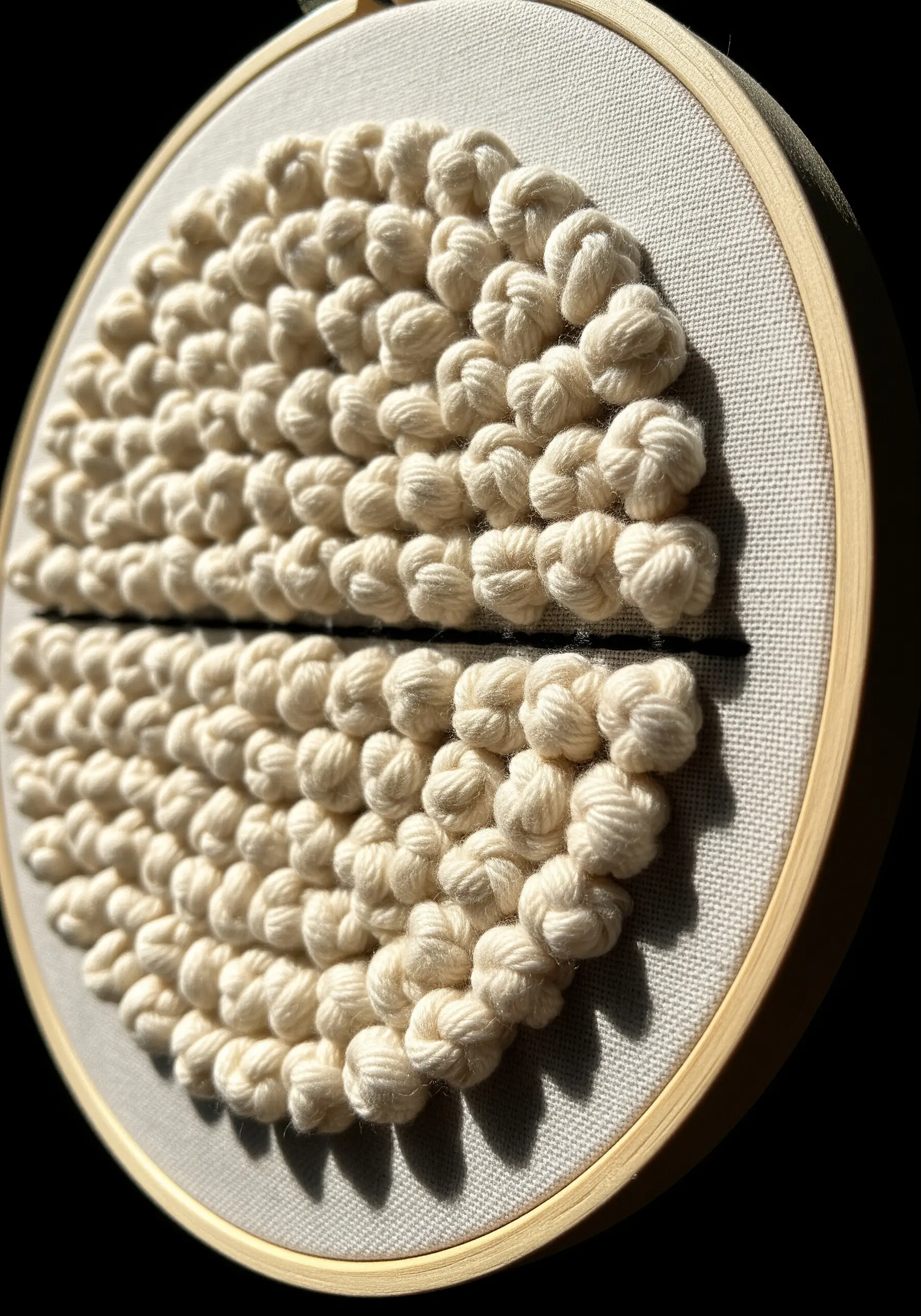
For a highly textured surface that feels almost sculptural, substitute French knots with Colonial knots.
The figure-eight wrap of a Colonial knot creates a rounder, more robust nub that stands up straighter from the fabric.
Pack them tightly together using a thick thread, like cotton perle or all six strands of floss, to create a dense, bobbled fabric with incredible tactile appeal.
12. Craft Delicate Foliage with Detached Chain Stitch
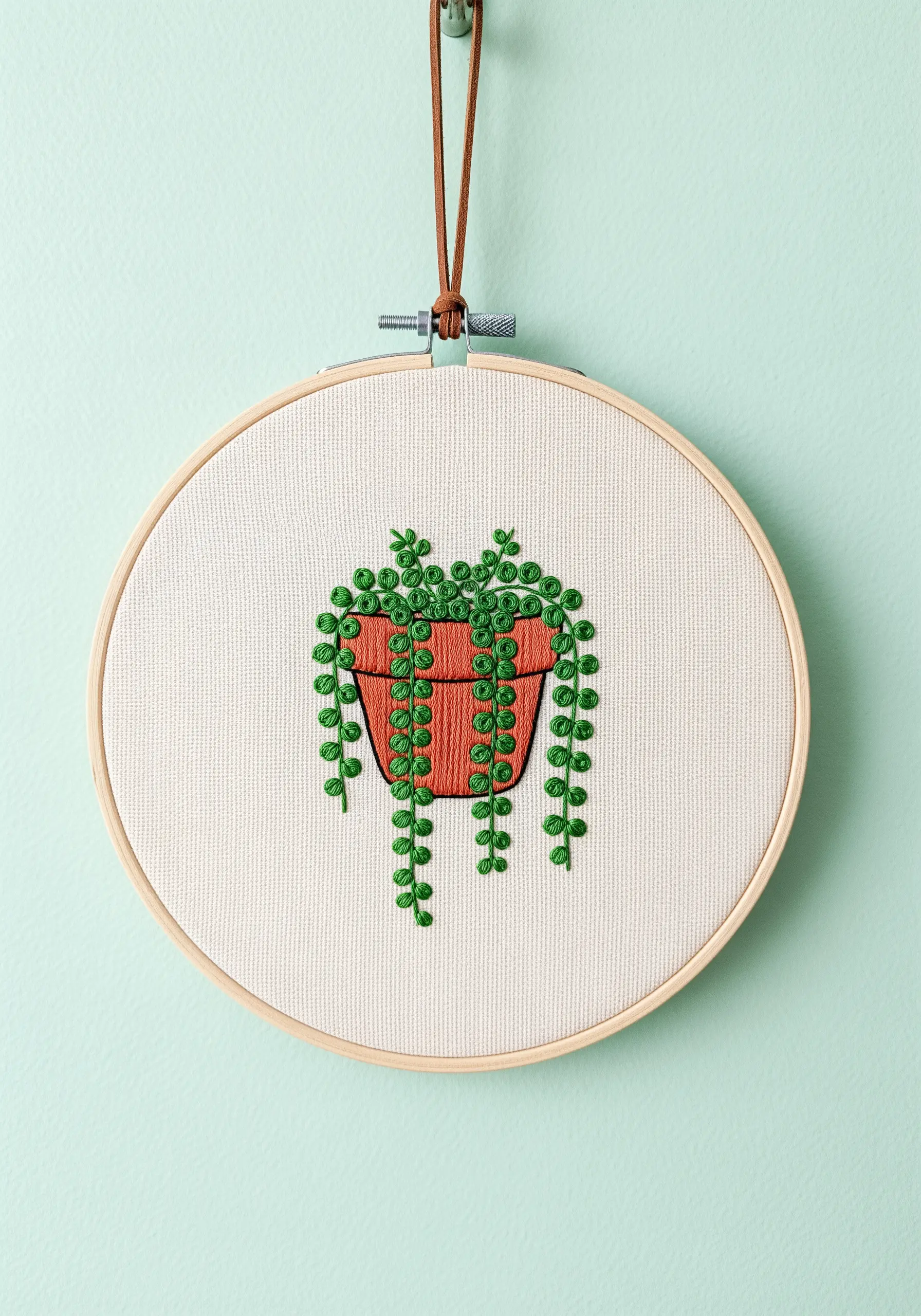
To stitch the individual, bead-like leaves of a string of pearls plant, the detached chain stitch (or lazy daisy) is your most effective tool.
Each stitch creates a single, perfect teardrop shape that mimics the plant’s foliage exactly.
Use a clean, sharp backstitch for the pot outline to provide a solid visual anchor for the delicate, cascading vines.
This simple stitch combination is key for refined plant-inspired hoop art designs.
13. Master Dynamic Energy with Straight Stitch Bursts
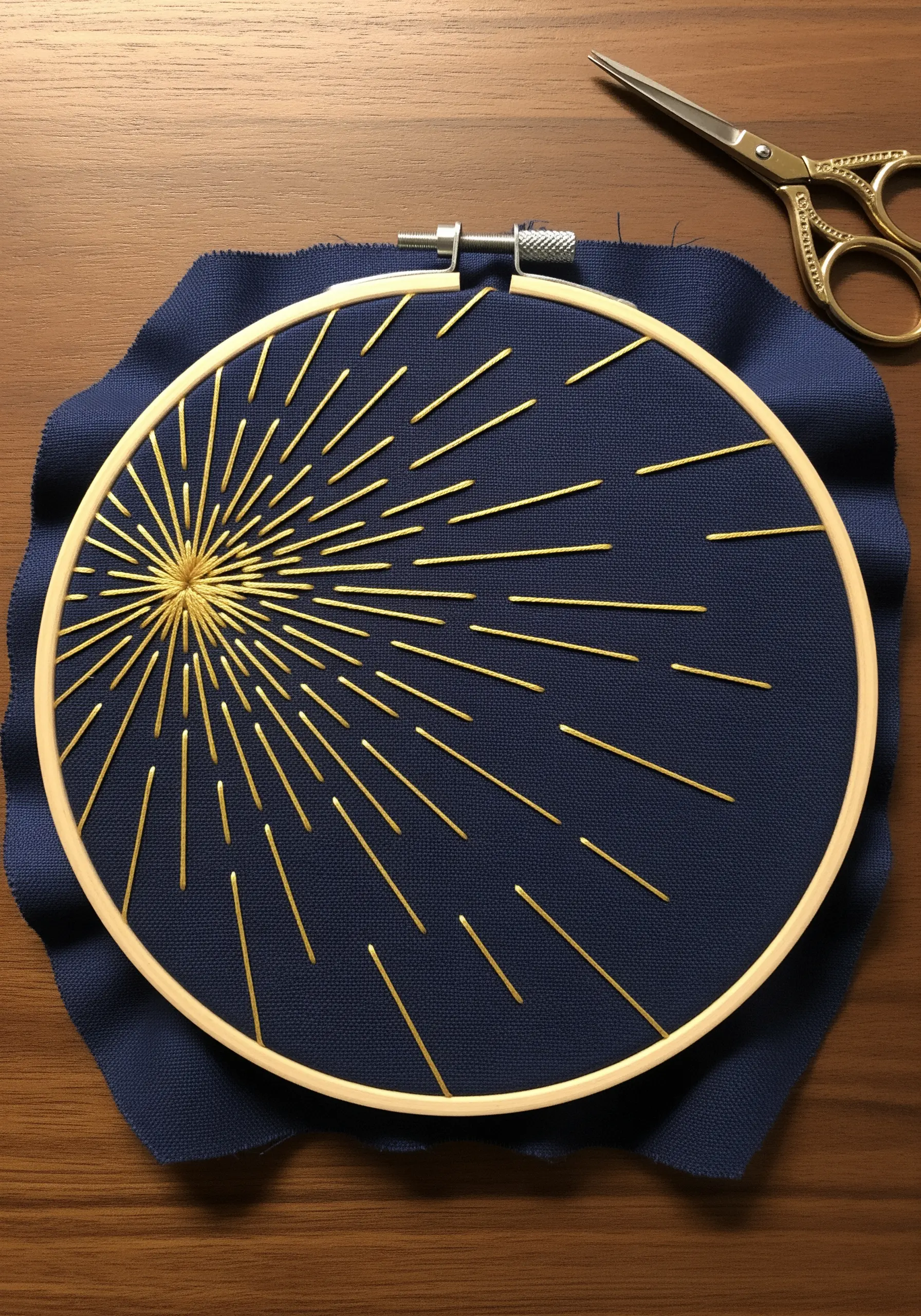
This design is a masterclass in the power of the simple straight stitch.
Create a dynamic starburst by varying the length, placement, and angle of each stitch radiating from a central point.
For maximum visual impact, choose a thread with a high sheen—like a metallic or rayon floss—and stitch it onto a dark, matte fabric like navy blue or black cotton.
The contrast in light reflection makes the design feel electric and alive.
14. Integrate Appliqué for Bold Color Blocking

For a modern, graphic look, combine embroidery with fabric appliqué.
Cut your primary shapes from a contrasting fabric like felt or tightly woven cotton and tack them down with a simple running stitch around the edge.
Then, add your embroidered line work over and around the appliqué shapes.
This layered fabric collage approach adds dimension and allows you to incorporate bold fields of color with texture and efficiency.
15. Weave Texture Directly onto Fabric
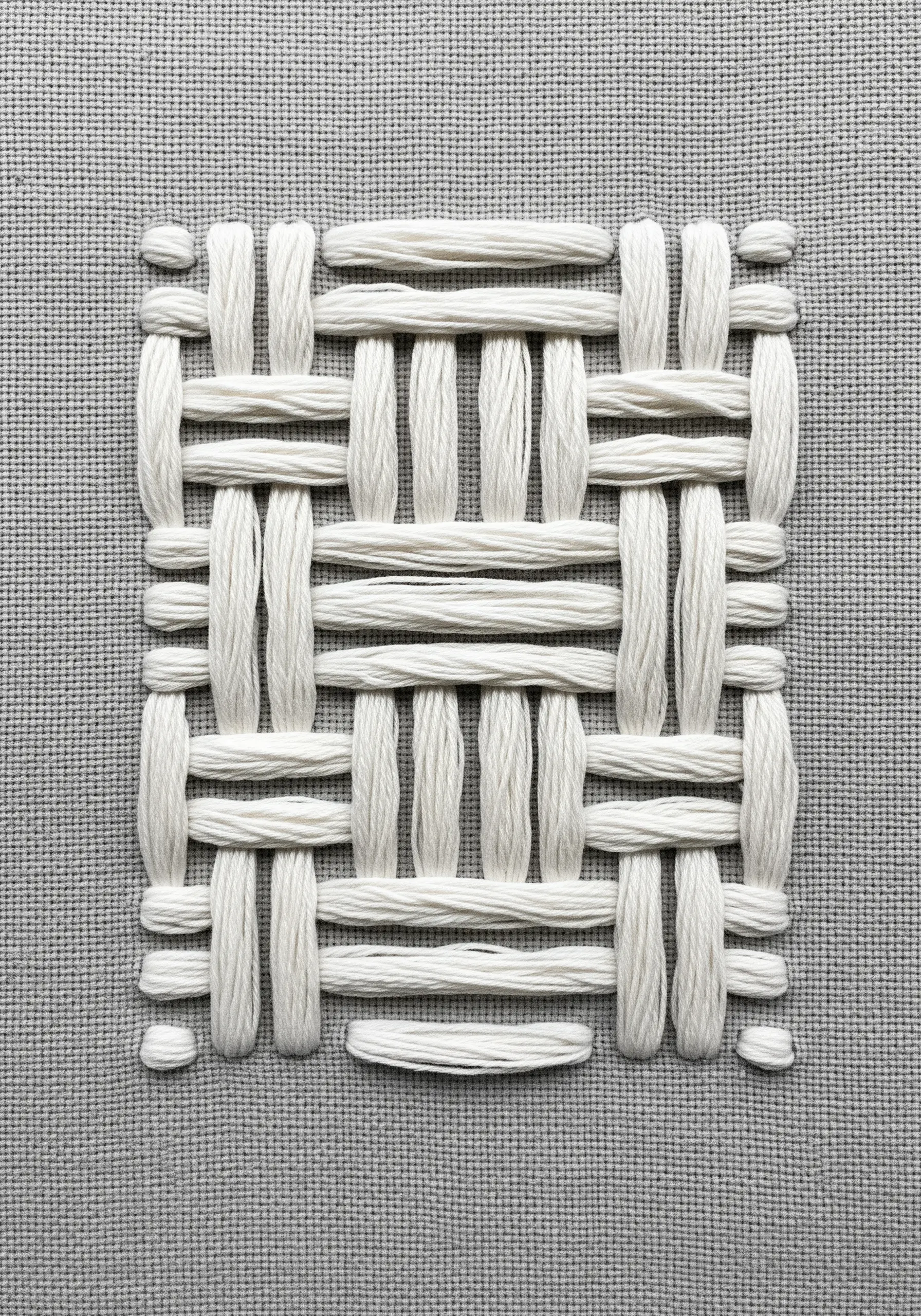
Create a woven, basket-like effect without a loom by using a needle weaving technique.
First, lay down a foundation grid of long, parallel straight stitches.
Next, use your needle to weave a second thread over and under these foundation stitches, being careful not to pierce the fabric.
This builds a raised, dimensional texture that stands completely separate from the base fabric, adding stunning and unexpected depth.
16. Embrace Simplicity with a Single Wavy Line

On a large canvas, a single, minimalist line can have more impact than a dense, complex design.
Use a simple running stitch with a thick, visible thread—like a #8 pearl cotton or sashiko thread—to create an organic, flowing line.
The beauty of this approach lies in its quiet confidence and the texture of the hand-stitching.
It transforms a plain piece of fabric into a serene focal point for a calm, minimalist bedroom.
17. Add Celestial Sparkle with Seed Beads

To elevate a simple line design, incorporate non-thread elements like beads.
First, stitch the lines of your constellation using a fine, two-strand backstitch with silver thread.
Then, return to each point where a star should be and secure a single silver seed bead with a tiny anchoring stitch.
This subtle addition of beading catches the light and adds a touch of magic, making your zodiac-inspired embroidery patterns look polished and precious.
18. Utilize Negative Space for Asymmetric Balance

A sophisticated composition doesn’t need to fill the entire frame.
By clustering your detailed stitch work in one quadrant of the hoop, you turn the empty fabric into an active, intentional design element.
This asymmetrical approach feels modern and dynamic, drawing the viewer’s eye directly to the intricate details.
Allowing some threads to hang loose further breaks the frame’s boundary, adding a playful, deconstructed touch to your abstract wall hoop designs.
19. Achieve Gradients with Thread Painting
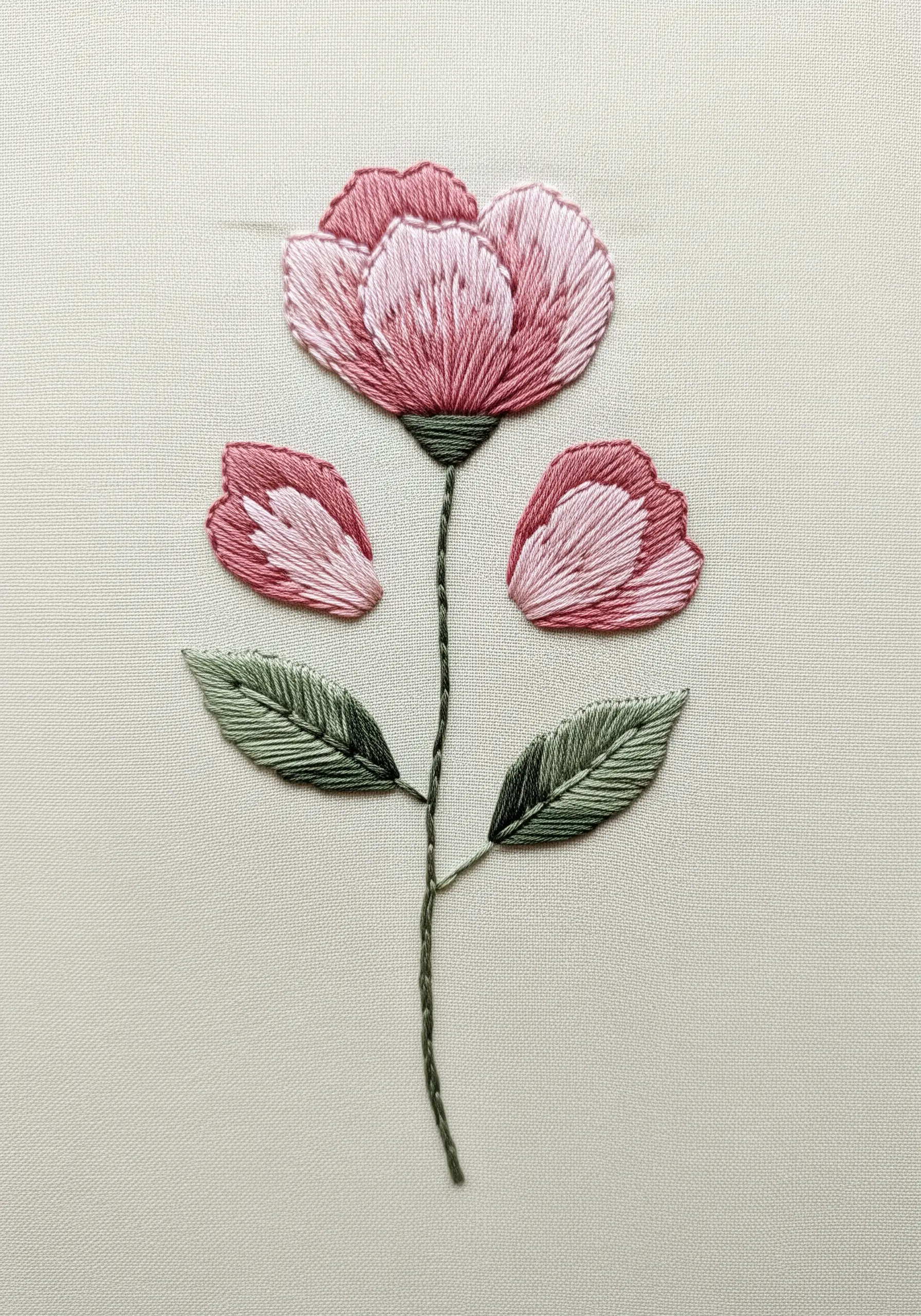
Create the soft, blended look of a watercolor painting using the long-and-short stitch technique.
Work with a single strand of floss and several similar shades of one color.
Fill a small section with stitches of varying lengths, ensuring they follow the natural direction of the petal.
Then, begin the next section by bringing your needle up through the middle of the previous stitches, seamlessly blending the new color into the old for stunningly realistic wild garden floral embroidery.
20. Define a Silhouette with a Textured Fill
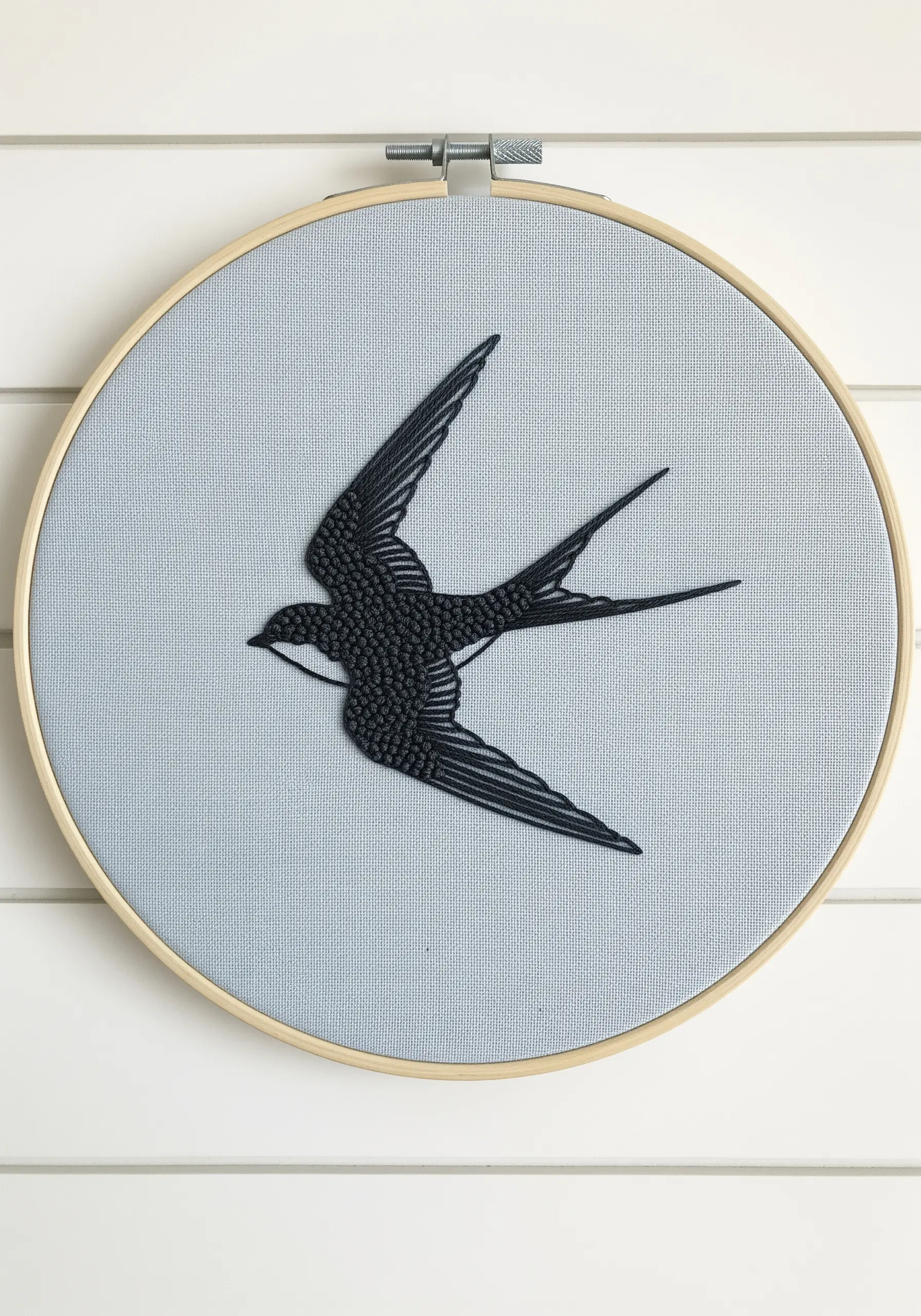
To make a simple silhouette pop, create a sharp contrast between outline and fill.
First, define the shape with a clean, precise split stitch to create a firm, raised edge.
Then, fill the interior entirely with dense, tightly packed French knots.
This contrast—the smooth, graphic line against the bumpy, textural surface—gives the design a strong visual impact and a satisfying tactile quality.
21. Add Dimension with a Braided Chain Stitch
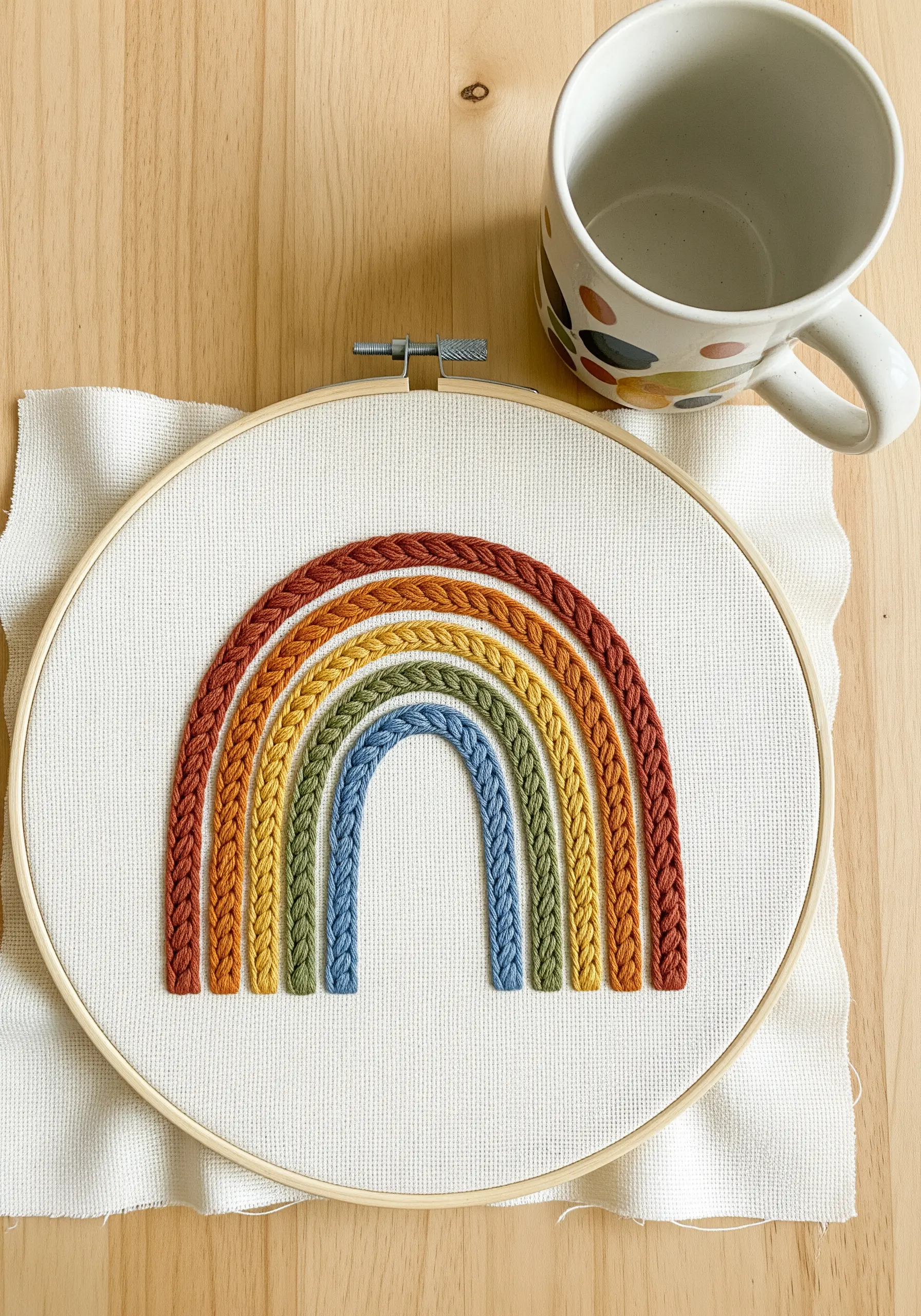
When you want a line that is bold, thick, and highly textured, the braided chain stitch is the perfect choice.
Unlike a standard chain stitch, this variation creates a raised, plaited line that looks like a miniature rope sitting on the fabric’s surface.
Use all six strands of cotton floss or even a fine wool yarn to maximize the stitch’s dimensional, chunky appearance.
22. Create Rhythm with a Minimalist Stitch Pattern
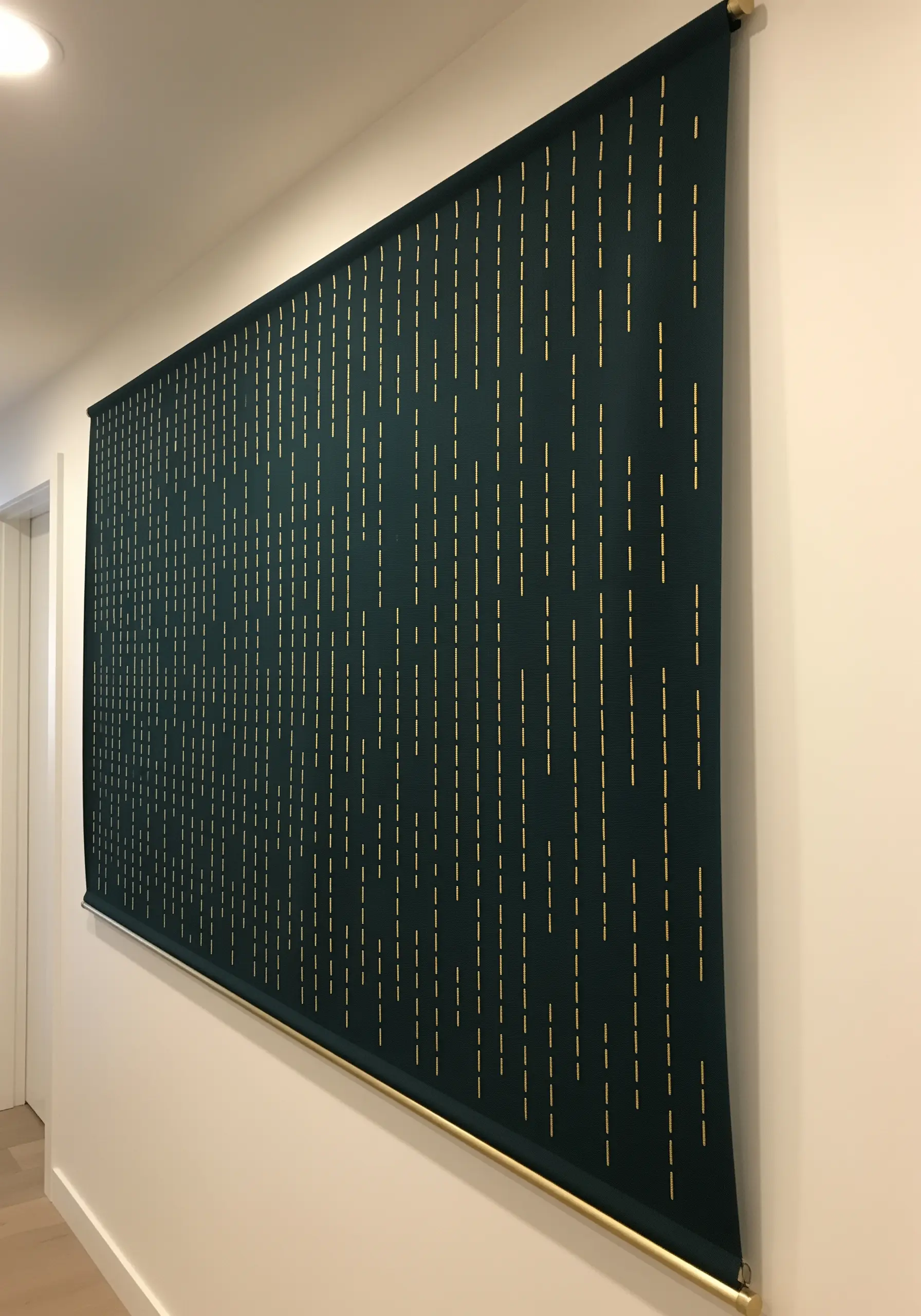
A large-scale wall hanging can achieve a profound sense of calm through simple, meditative repetition.
Using only a basic running stitch, create a pattern of dashed lines across the fabric.
The key to a polished result is maintaining consistency in both the stitch length and the spaces between them.
This creates a subtle rhythm that is soothing and sophisticated, perfect for hand-embroidery textile wall art that complements a space rather than overpowering it.
23. Mimic a Brushstroke with Layered Stitches

Capture the dynamic energy of a painter’s brushstroke by layering dense straight stitches.
First, create the foundational shape of the stroke with long stitches that follow its curve.
Then, go back and add shorter, slightly angled stitches on top, especially at the beginning and end of the stroke, to mimic the texture of paint-loaded bristles.
This directional layering turns simple thread into a gesture filled with movement and artistic energy, perfect for framed embroidery art.