

If you’ve ever felt that geometric embroidery seems too rigid or impersonal, I invite you to look closer. These designs are not just about lines and angles; they are about rhythm, balance, and the pure, meditative joy of a perfectly placed stitch.
Geometric art gives you a framework to explore color theory, texture, and composition with confidence. You can transform a simple backstitch into an intricate mandala or use satin stitch to create bold, graphic statements that feel both modern and timeless.
Here, you’ll discover how to make every line intentional, every shape meaningful, and every hoop a polished piece of art that speaks to a refined, contemporary aesthetic. Let’s begin.
1. Radiate with Metallic Straight Stitches

Create this striking starburst effect using only the straight stitch, focusing on flawless tension and precise spacing.
Choose a high-contrast background like black or navy linen to make metallic threads appear more luminous.
Alternate between gold and silver, or use a variegated metallic floss to add subtle complexity without changing your technique.
The key is mapping your points on the hoop’s circumference before you begin; use a chalk pencil to mark evenly spaced dots to guide each stitch toward the central point.
This design explores unexpected ways to use metallic thread for modern artwork that shimmers like real jewelry.
2. Master Color-Blocking with Layered Triangles
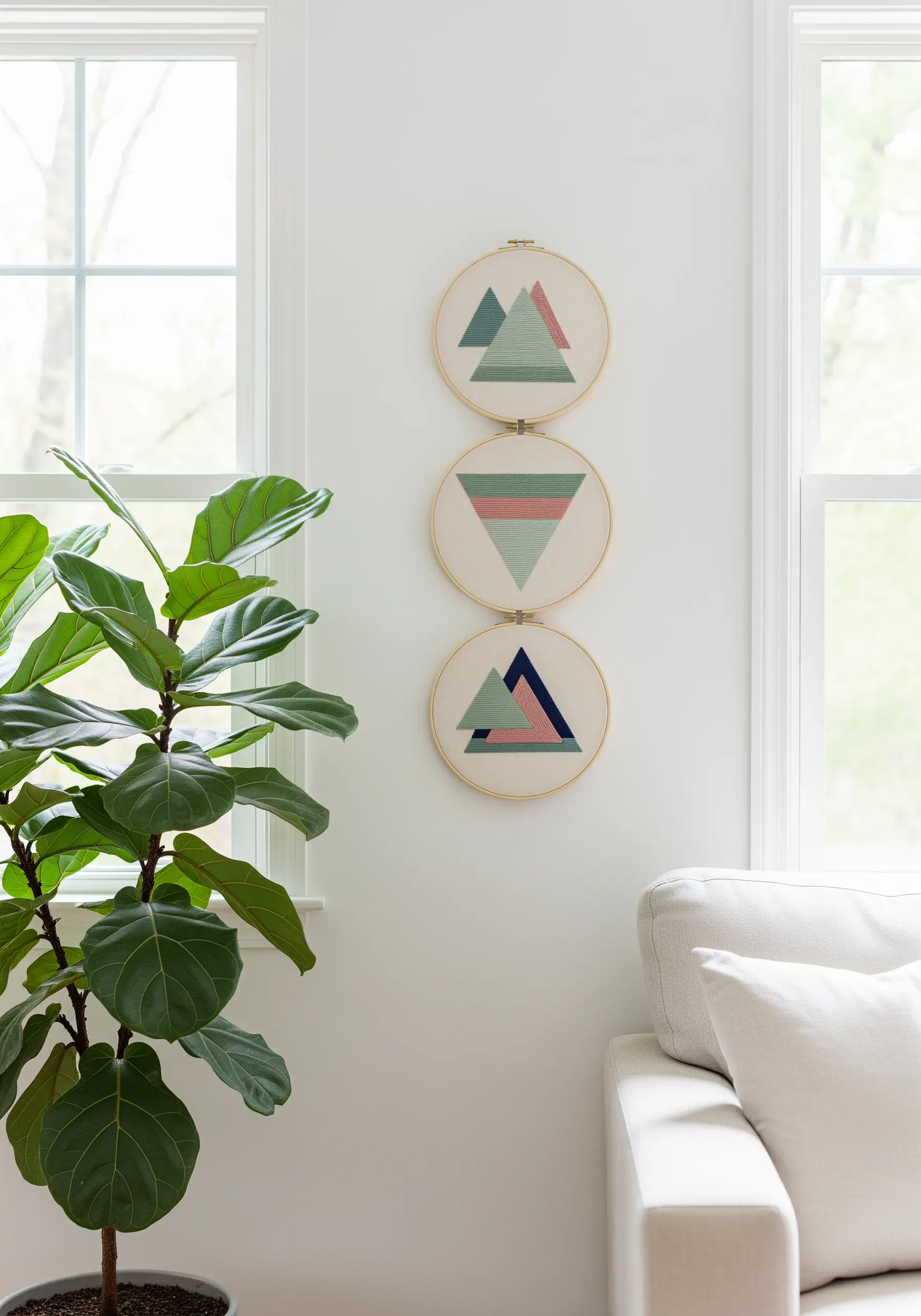
To achieve perfectly crisp edges on your geometric shapes, outline each triangle with a single strand of split stitch before filling it with satin stitch.
This underlying structure prevents the fill stitches from pulling the fabric or blurring the lines.
Work your satin stitches in opposing directions for each color block to create a subtle play of light and texture.
Arranging three hoops vertically creates a narrative of shifting forms and pastel gradient stitch patterns for aesthetic cottage-meets-modern decor, turning simple shapes into a cohesive statement piece.
3. Curate a Gallery of Sacred Geometry

Build a gallery wall by stitching intricate mandalas or ‘Flower of Life’ patterns in varying sizes and complementary thread colors.
Use a single, elegant backstitch for the linework to maintain clarity and precision, letting the complexity of the pattern shine.
Choose an earthy, neutral linen or cotton fabric to ground the spiritual symbolism and create a calming effect.
Clustering hoops of different diameters adds rhythm and visual interest, turning a simple corner into a meditative focal point.
You can even create tiny mandala embroidery wall art ideas for calming meditation corners.
4. Embrace Abstract Composition
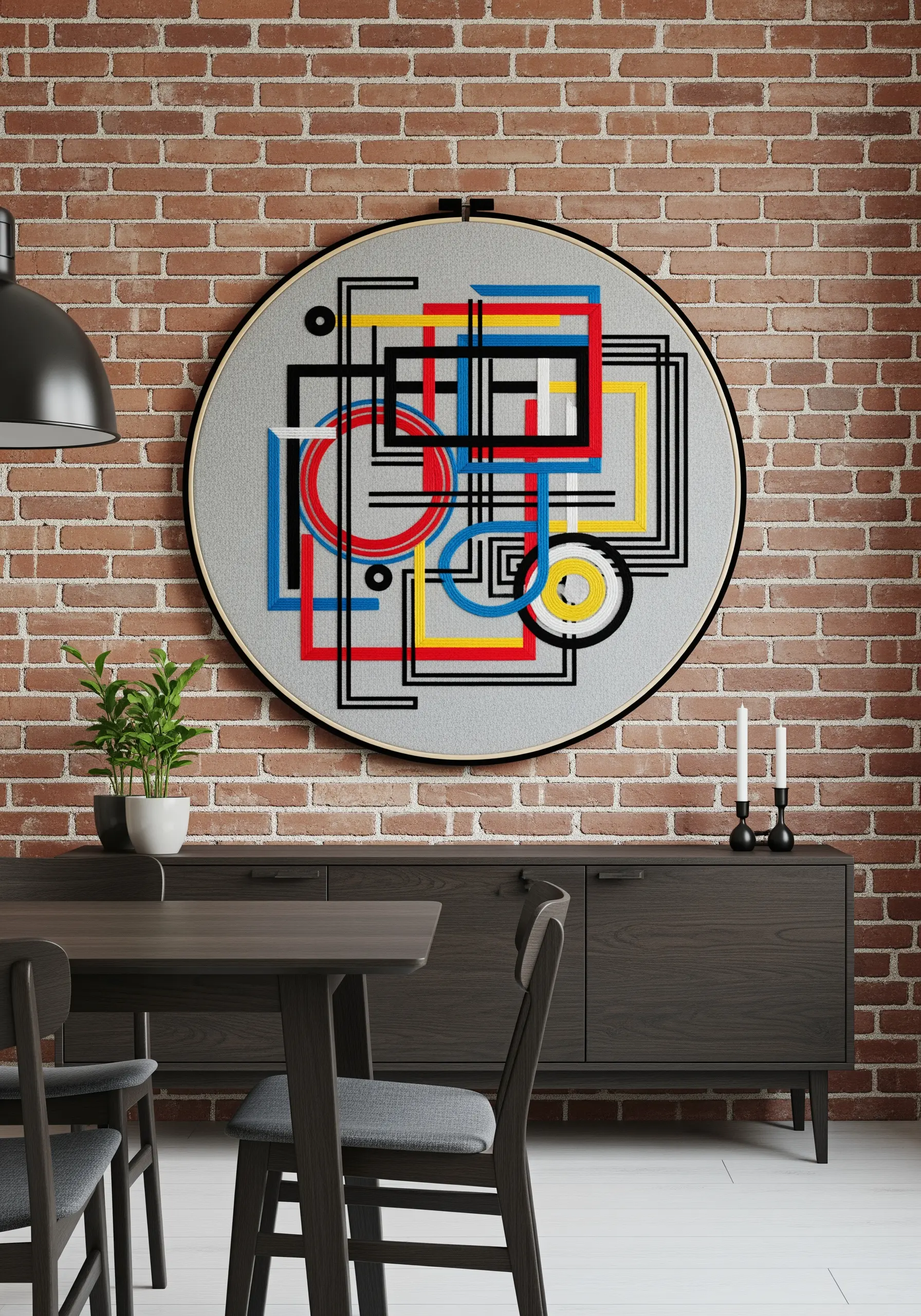
Channel the energy of abstract art by layering lines and shapes without a fixed pattern, focusing instead on balance and movement.
Use a bold primary color palette (red, yellow, blue) grounded with black outlines to create a design reminiscent of the Bauhaus movement.
Vary your line weight by using different numbers of floss strands—six strands for thick, assertive lines and two for delicate intersections.
This approach transforms your hoop into a dynamic canvas, exploring how abstract thread embroidery ideas that turn simple lines into mesmerizing wall art can redefine a space.
5. Stitch Playful Patterns with Satin Stitch
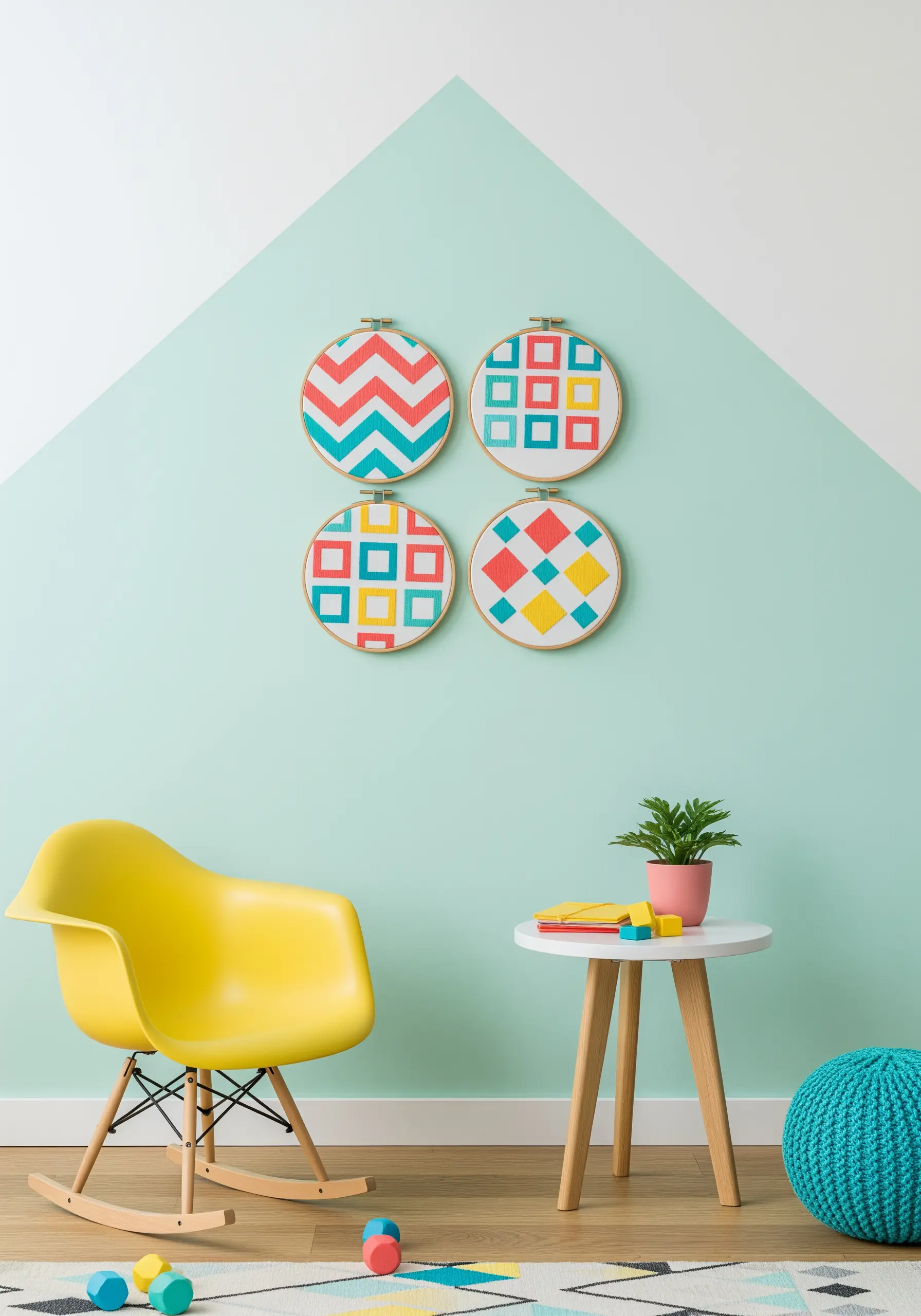
When filling bold, graphic patterns, the consistency of your satin stitch is paramount for a polished, almost printed look.
To keep your stitches perfectly parallel and smooth, draw light pencil guidelines across your shapes before you start stitching.
Choose vibrant, high-contrast colors to maximize the graphic impact, making this style ideal for a child’s room or a playful modern space.
Grouping four small hoops in a grid amplifies the effect and turns simple patterns into intentional decor, perfect for color pop embroidery art ideas that revive boring white walls in small apartments.
6. Create Texture with Shattered Forms
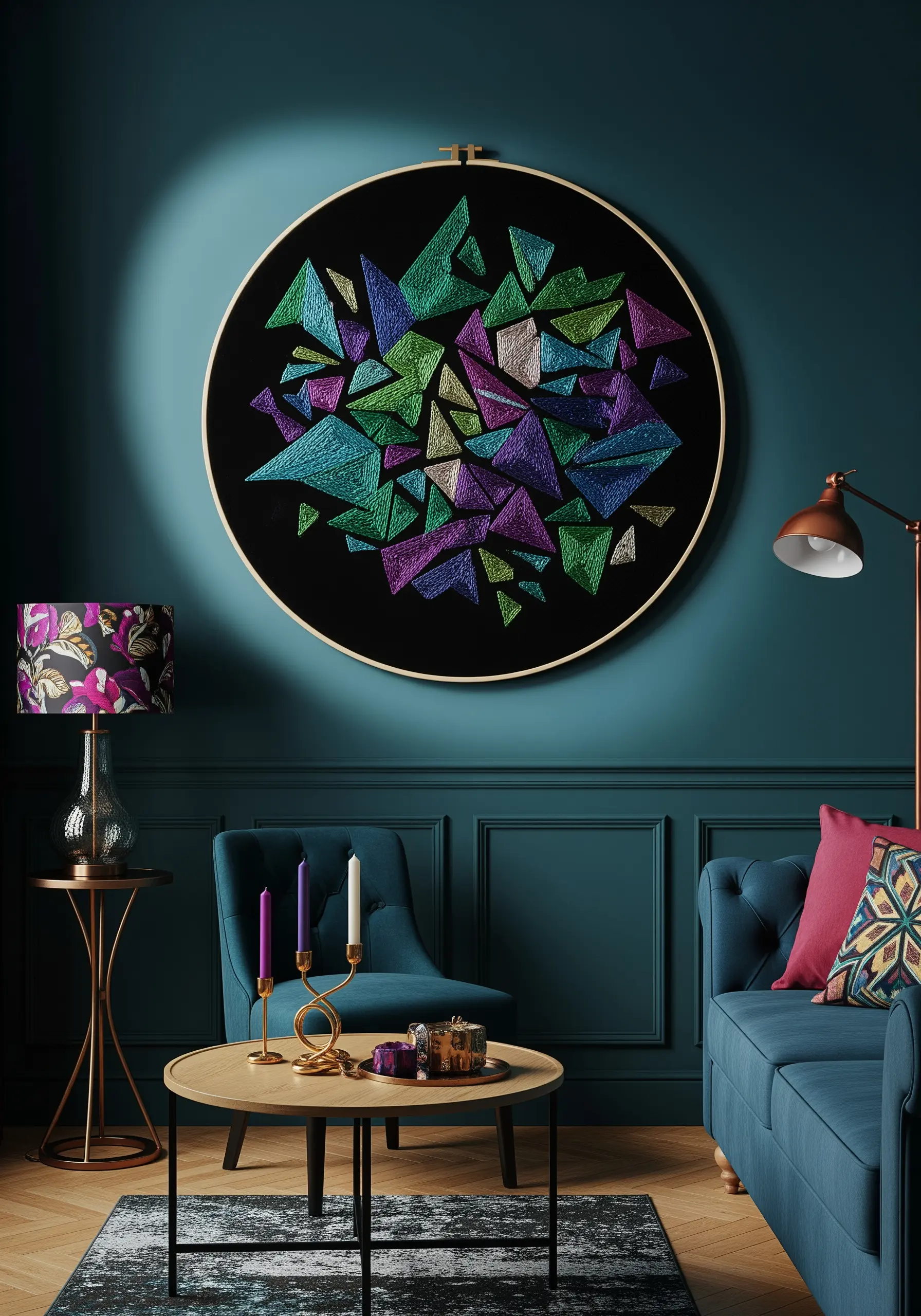
Build a sense of dynamic energy by filling fragmented shapes with directional satin stitches.
For each shard, change the angle of your stitches to catch the light differently, creating the illusion of multiple facets and depths.
Introduce metallic or silk threads for select pieces to add a reflective quality that mimics glimmering glass.
The high contrast of a dark fabric base makes the vibrant jewel tones feel even more electric and is one of the best statement textured embroidery techniques for 3d wall decor that pops.
7. Define Space with Minimalist Constellations

Harness the power of negative space by stitching clean, delicate constellation patterns on a dark, tightly woven fabric like cotton twill.
Use a simple backstitch with two strands of white or silver floss for crisp, refined lines.
The French knots for stars should be wrapped only once to keep them small and subtle, enhancing the minimalist aesthetic.
This is one of those minimalist stitched art pieces you’ll actually want to hang, proving that less is often more impactful.
8. Build Dimension with Yarn Couching

For a bold, textural look, move beyond floss and incorporate chunky yarn into your geometric designs.
Instead of pulling the thick yarn through the fabric, use the couching technique: lay the yarn on the surface and tack it down with a thinner, matching embroidery floss every quarter-inch.
This method allows you to create raised, sculptural patterns that add warmth and dimension, blending the lines between embroidery and weaving.
Explore more ways to play with fiber by checking out these yarn wall art techniques that mix fiber art with modern decor.
9. Fill Geometric Shapes with Flawless Satin Stitch
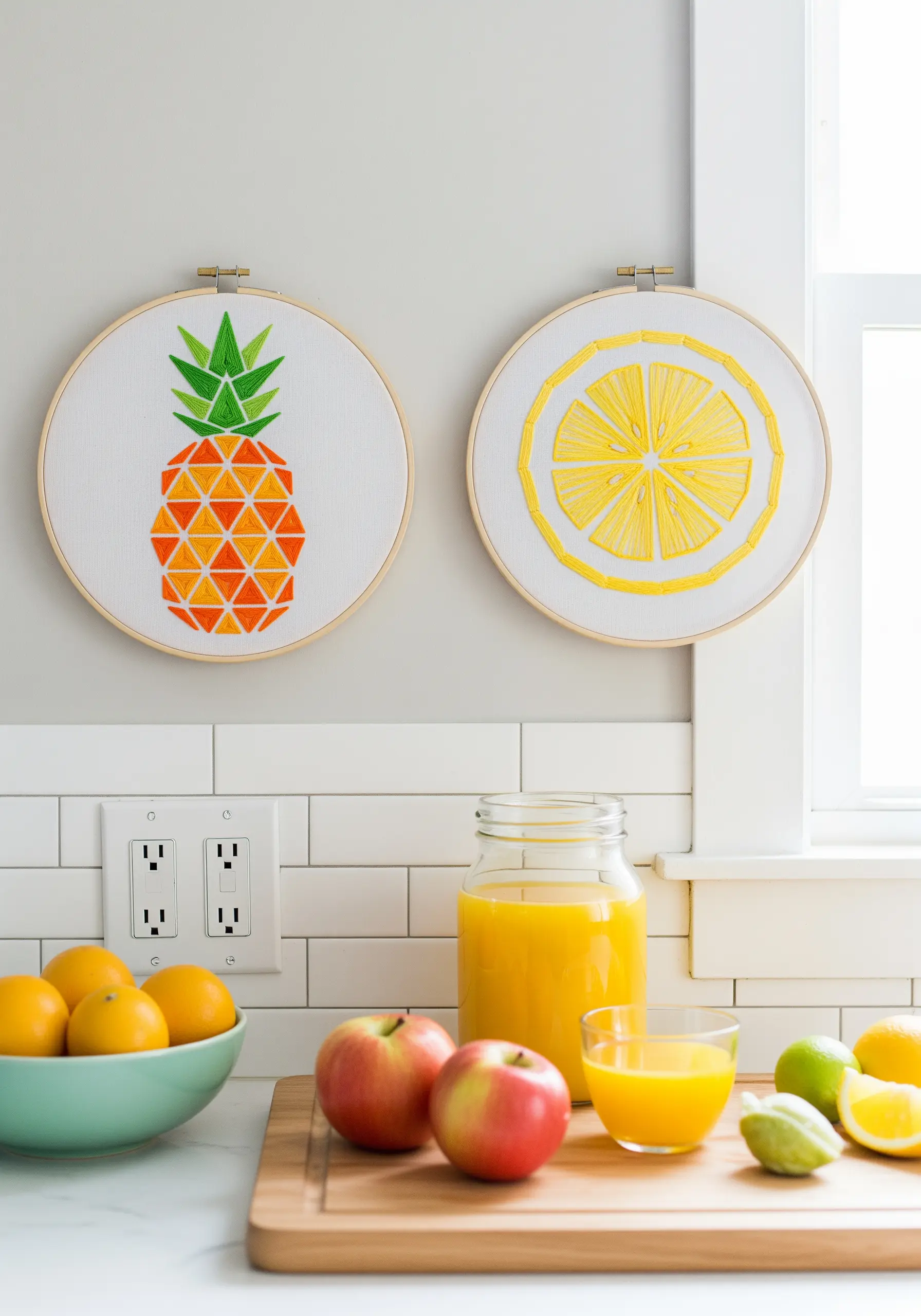
To achieve that smooth, seamless fill on geometric fruit, keep your satin stitches close but not overlapping.
Work from the center of a shape outwards to maintain even tension and prevent the fabric from puckering.
Using a single, darker shade for the backstitch outline provides sharp definition and makes the saturated colors appear even brighter.
This technique is perfect for creating minimal fruit botanical embroidery patterns for kitchen wall decor that looks boutique-made.
10. Command Attention with Large-Scale Linework
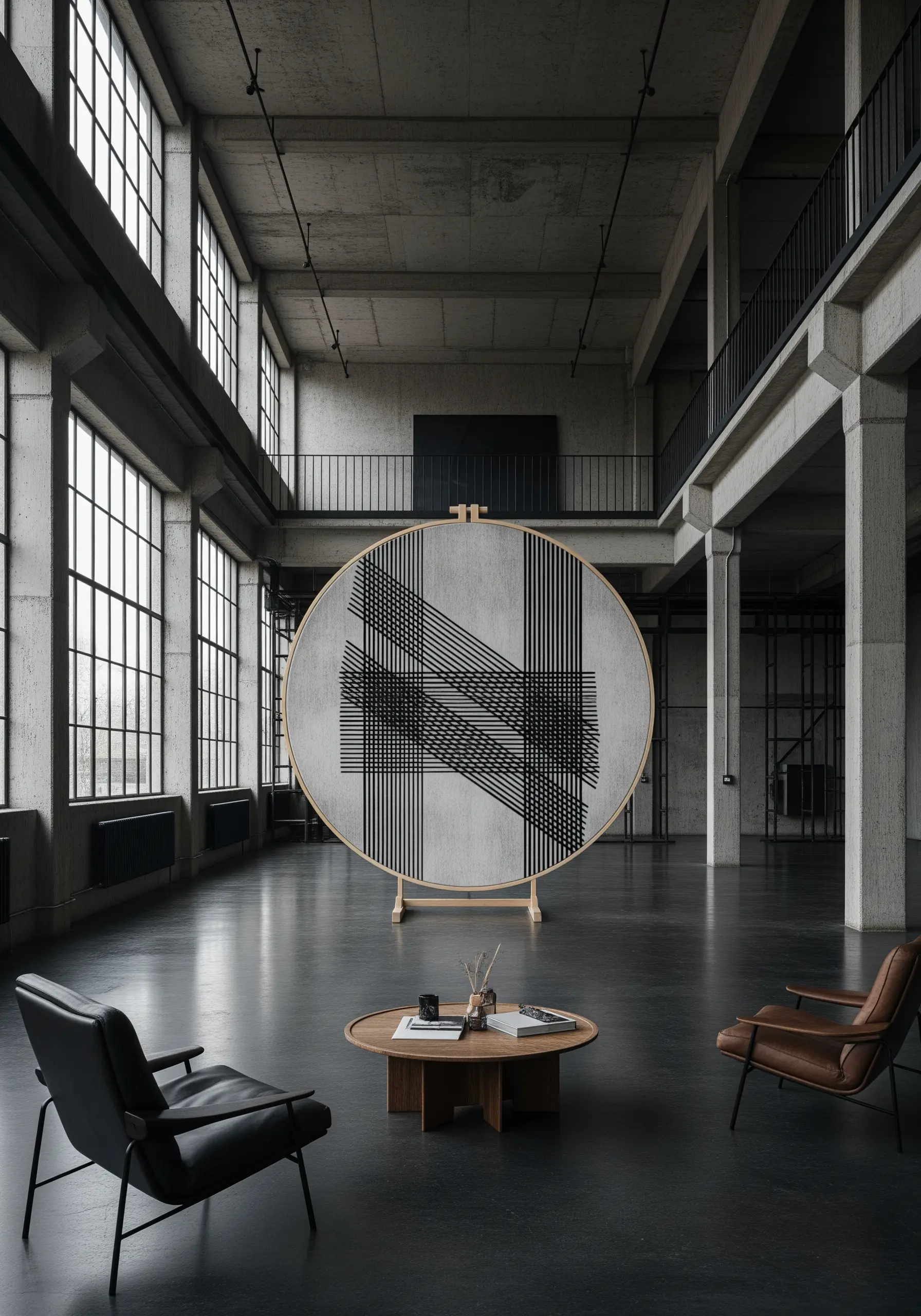
When working on an oversized hoop, your thread tension is the most critical element for success.
The long, straight stitches act like architectural beams, and any slack will cause them to sag. Keep the fabric drum-tight and pull each stitch taut but not so tight that it distorts the weave.
Use a thicker pearl cotton or multiple strands of floss to ensure the lines have visual weight appropriate for the scale.
This piece functions as a modern embroidered tapestry design that makes your living room look designer-made, blurring the line between craft and industrial art.
11. Create a Cohesive Vertical Wall Hanging
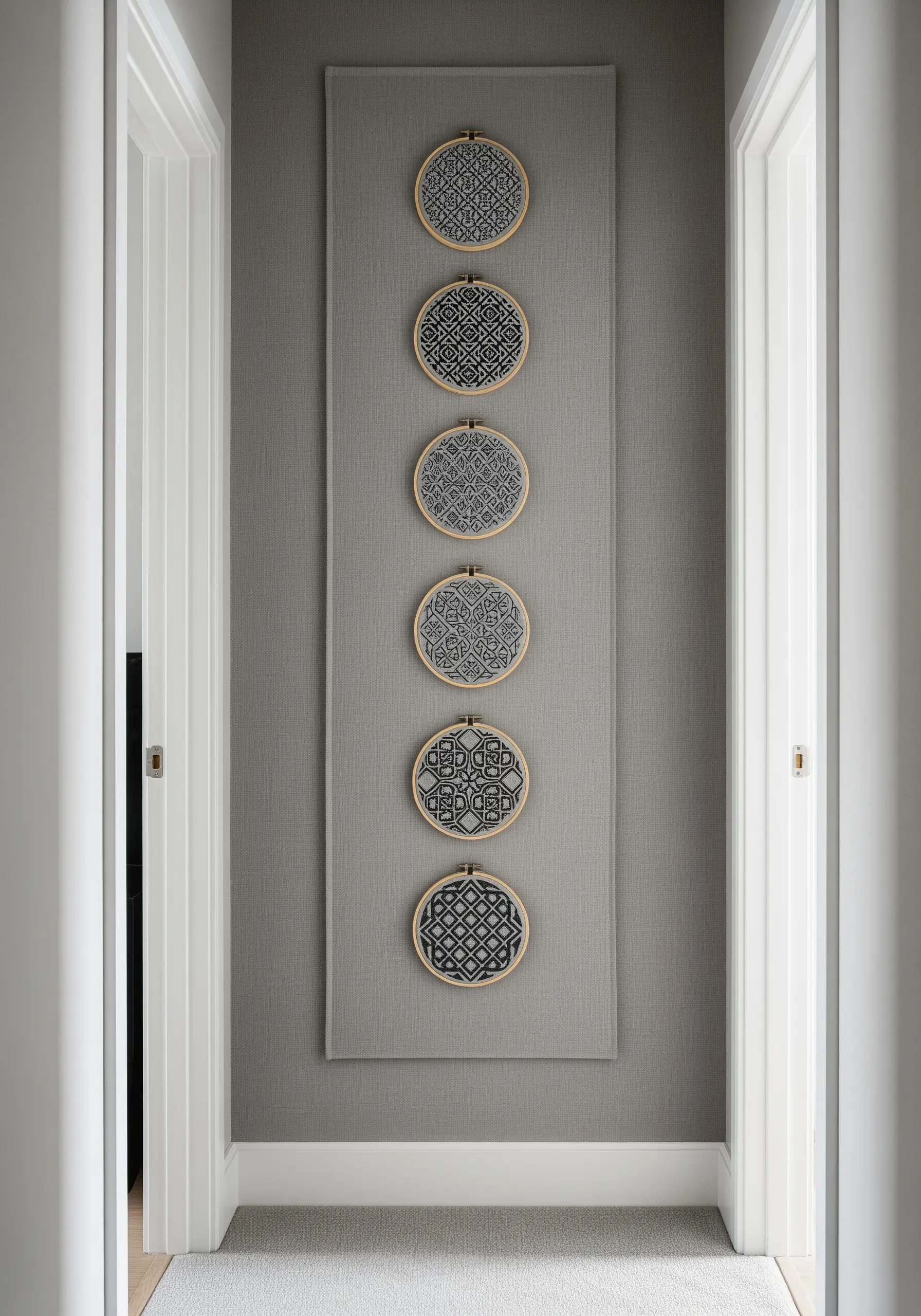
Elevate a collection of small hoops by mounting them on a single fabric runner, instantly creating a unified and impactful wall hanging.
Choose a background fabric for the runner that complements both your wall color and the neutral hoop fabric for a sophisticated, layered effect.
Stitching each pattern in a simple monochrome palette allows the complexity of the geometric designs to take center stage without visual clutter.
This display method is perfect for showcasing a series of abstract monochrome thread designs for a sophisticated, minimalist look.
12. Capture a Mid-Century Modern Aesthetic

Recreate the iconic mid-century modern style by combining organic shapes with sharp geometric lines and atomic-era starbursts.
The key is the color palette: pair muted earth tones like avocado green and harvest gold with pops of turquoise and burnt orange.
Use a combination of satin stitch for the solid shapes and a delicate backstitch for the linework and star details.
Arranging the hoops along an architectural curve enhances the retro, dynamic feel of these vintage-inspired framed embroidery ideas you’ll want to collect.
13. Experiment with Geometric String Art
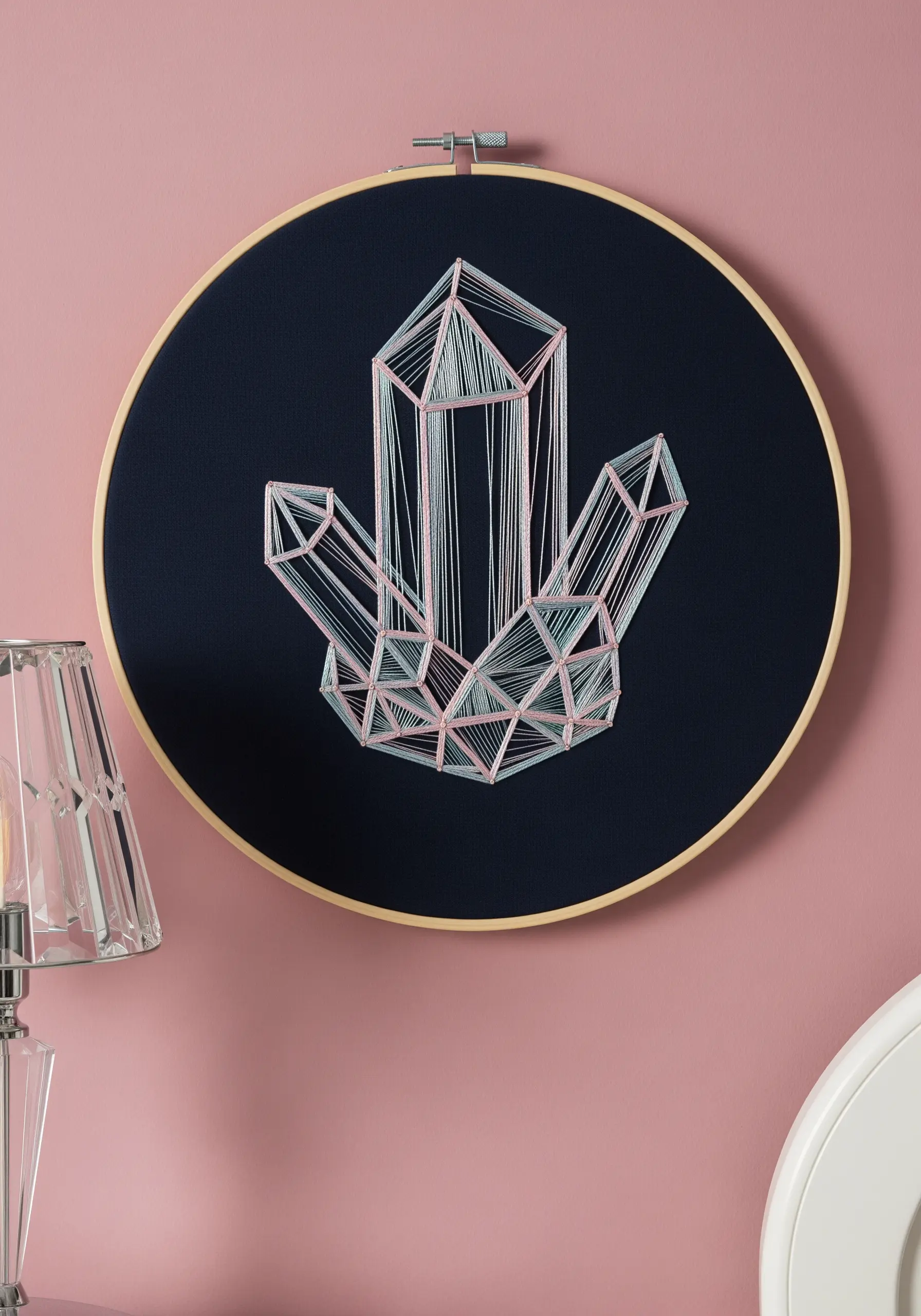
Transform your hoop into a frame for string art by using thread to connect points across the open space, rather than stitching into the fabric.
To create this crystal effect, first stitch a perimeter of small, sturdy backstitches around your shapes. Then, wrap your floss around these anchor stitches to build the geometric planes.
Using a variegated or ombre thread adds instant depth and a color-shifting effect that mimics light refracting through a crystal.
This technique is a fresh take on fiber art, similar in spirit to string art wildlife designs from foxes to elephants ideal for statement embroidery pieces.
14. Weave Dimension into Honeycomb Shapes
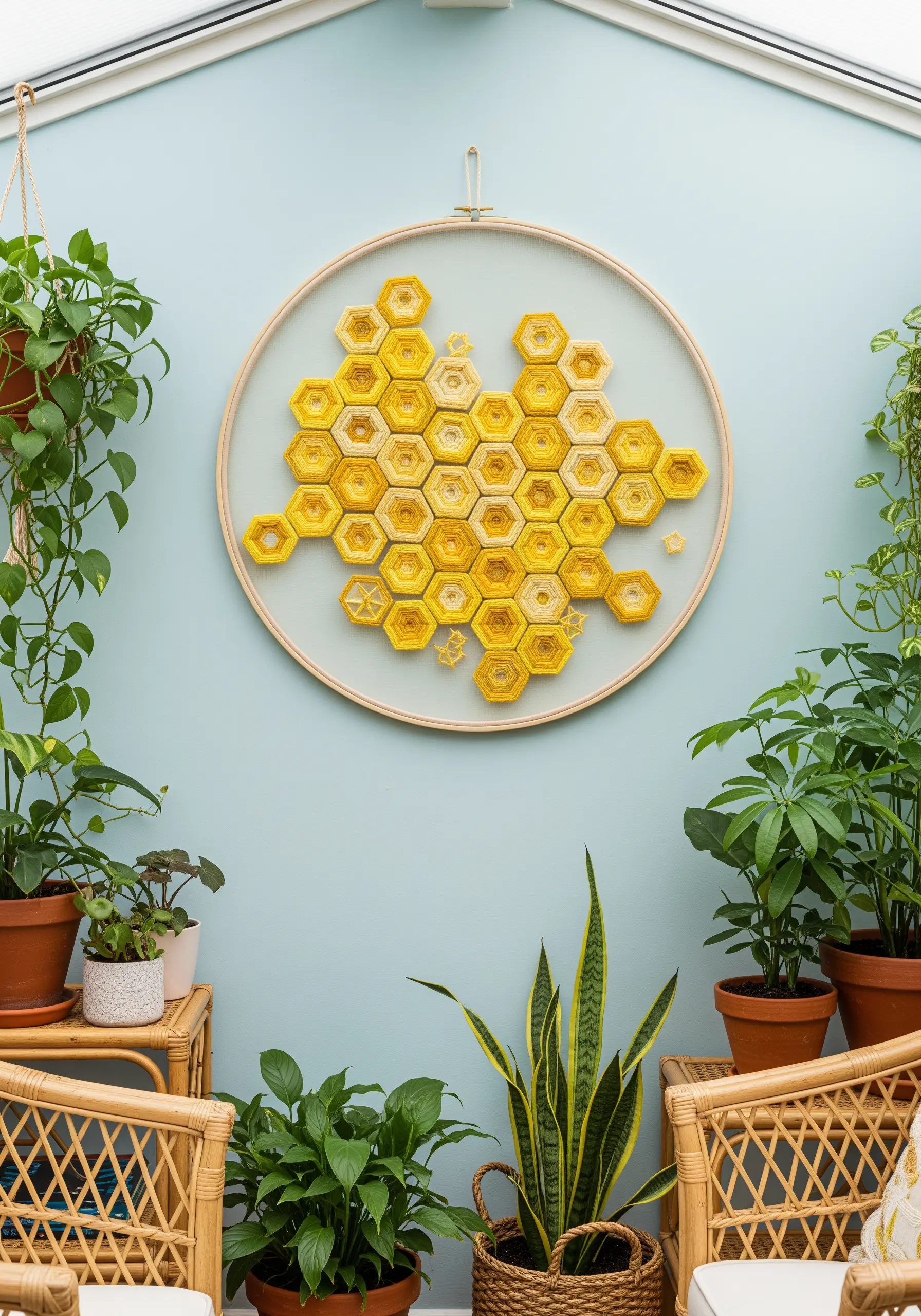
Give a simple honeycomb pattern depth by filling each hexagon with woven stitches, like the woven wheel or spider web stitch.
Start with a star of straight stitches as your foundation, then weave your working thread over and under these spokes to fill the shape.
Using a gradient of yellow and gold threads across the design creates a natural, sun-kissed look.
Leaving some hexagons as empty outlines showcases one of the best ways to combine thread and negative space to achieve luxury minimal art for living rooms.
15. Isolate a Single, Powerful Graphic
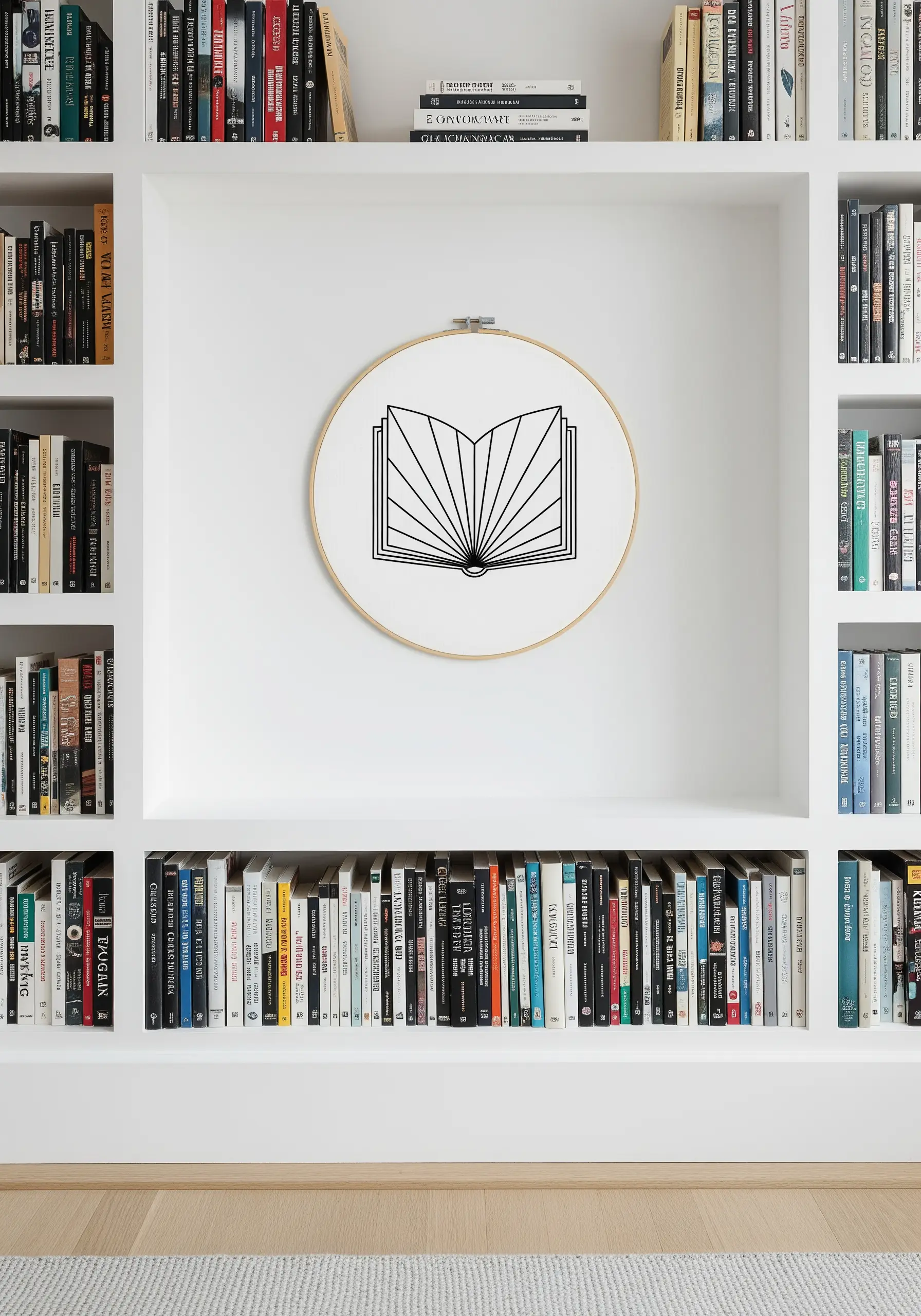
Make a bold statement by placing one clean, graphic motif in the center of your hoop, surrounded by ample negative space.
For a design like this, use a thick, high-contrast thread—like black pearl cotton—to achieve assertive, uniform lines.
A whipped backstitch is an excellent choice here; it creates a smooth, solid line with the appearance of a fine cord, elevating the simple design.
This minimalist approach has the graphic punch of minimal typography quotes that look trending on hoops and denim, perfect for a modern library or office.
16. Depict Movement with Directional Stitches

When stitching elements like waves, the direction of your satin stitch is crucial for conveying movement.
Angle your stitches to follow the natural curve of the wave, creating a flowing, dynamic texture that tricks the eye.
Use distinct blocks of color to define the different parts of the wave and sky, keeping the aesthetic clean and graphic.
This is one of the most effective coastal-inspired embroidery wall decorations that make your home feel like summer, bringing a stylized sense of the ocean indoors.
17. Sculpt a Tactile Mountainscape
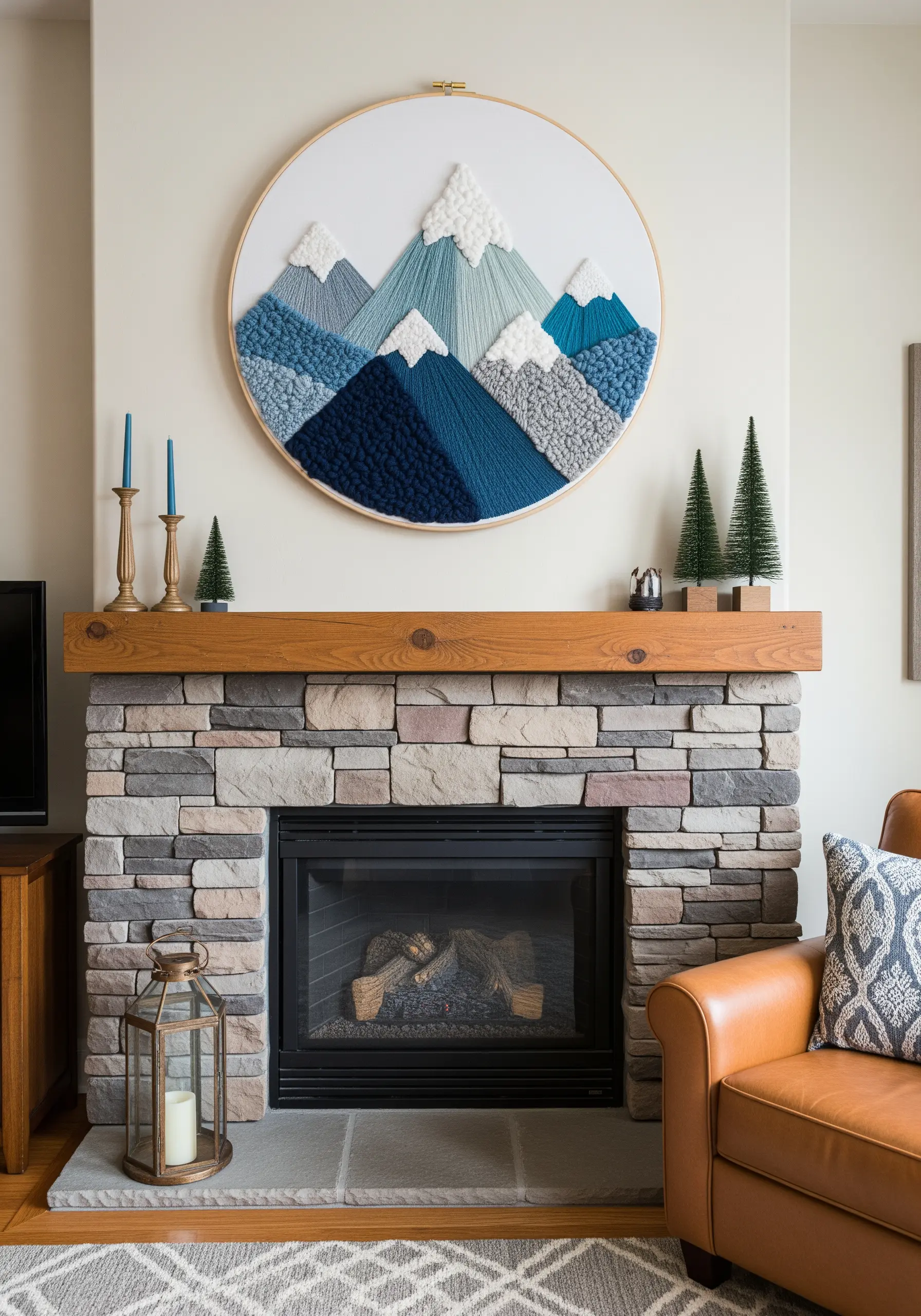
Combine different textural stitches and fibers to build a landscape that invites touch. Use chunky yarn and plush French knots for snowy peaks and dense Turkey work for forested slopes.
Arrange your colors in an ombre gradient to suggest atmospheric perspective, with darker, more textured mountains in the foreground and lighter, smoother ones behind.
This project is a perfect way to explore how nature-inspired texture patterns that look expensive but are easy to make can add incredible depth to your work.
18. Organize Your Creativity on a Pegboard
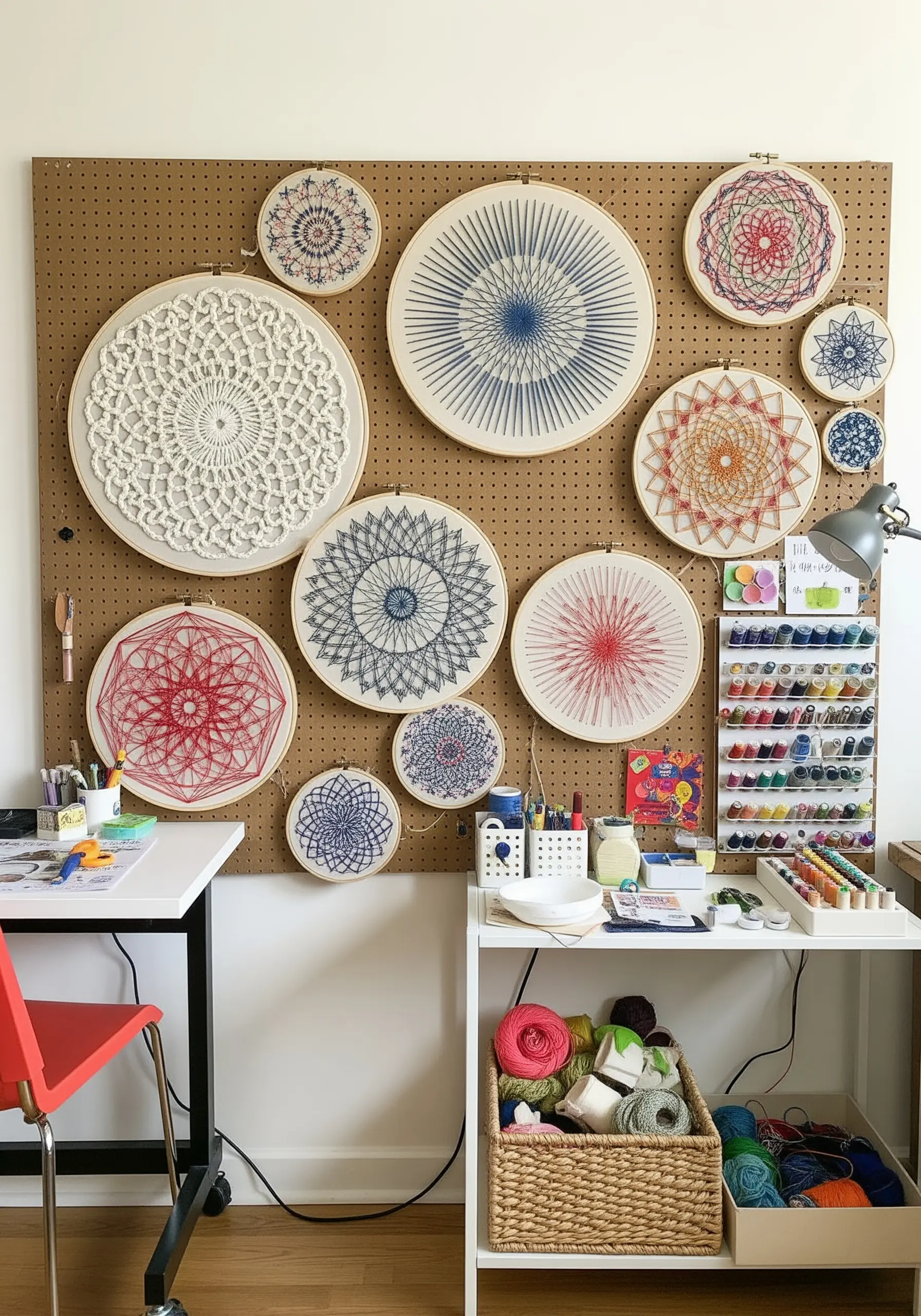
A pegboard isn’t just for tools—it’s the perfect modular system for displaying your embroidery hoops and supplies.
This approach allows you to easily rearrange your collection, creating an evolving gallery wall that reflects your current projects and inspirations.
Mix finished string art mandalas with your colorful thread spools and tools to create a functional and visually dynamic studio space.
This is one of the most practical and inspiring hoop art projects for a creative gallery wall because it grows with you.
19. Achieve Elegance with Raised Couching
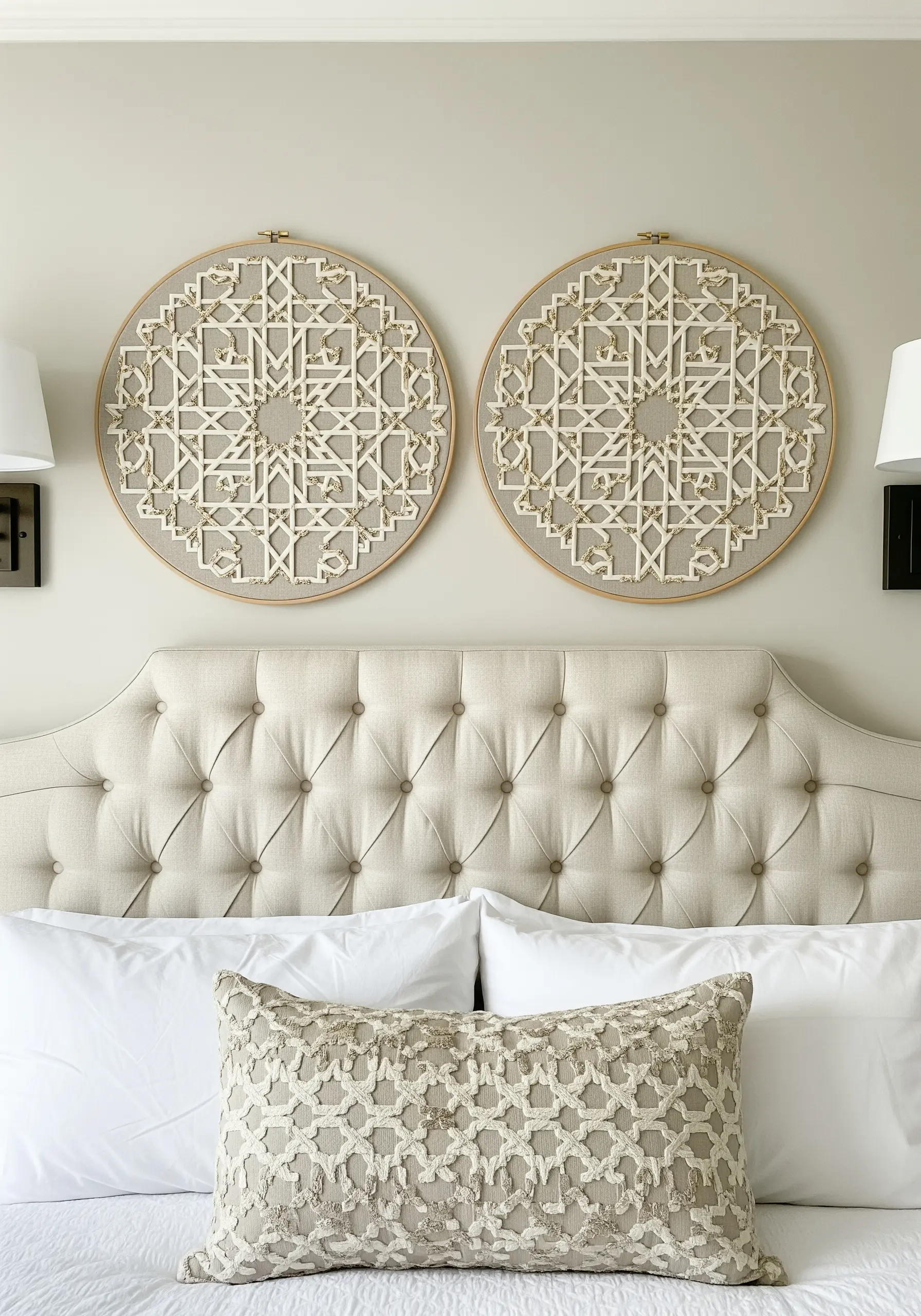
Create the intricate look of Moroccan tile work by using the couching technique with a thick, textural cord or yarn.
Lay your primary cord along the pattern lines and use a finer, contrasting thread (like a metallic gold) to tack it down at regular intervals and intersections.
This creates a raised, three-dimensional line that adds a luxurious, architectural quality to the design.
The neutral color scheme makes these hoops a perfect match for beige gold embroidered cushion patterns for luxury neutral decor lovers.
20. Frame Woven Textiles in Hoops
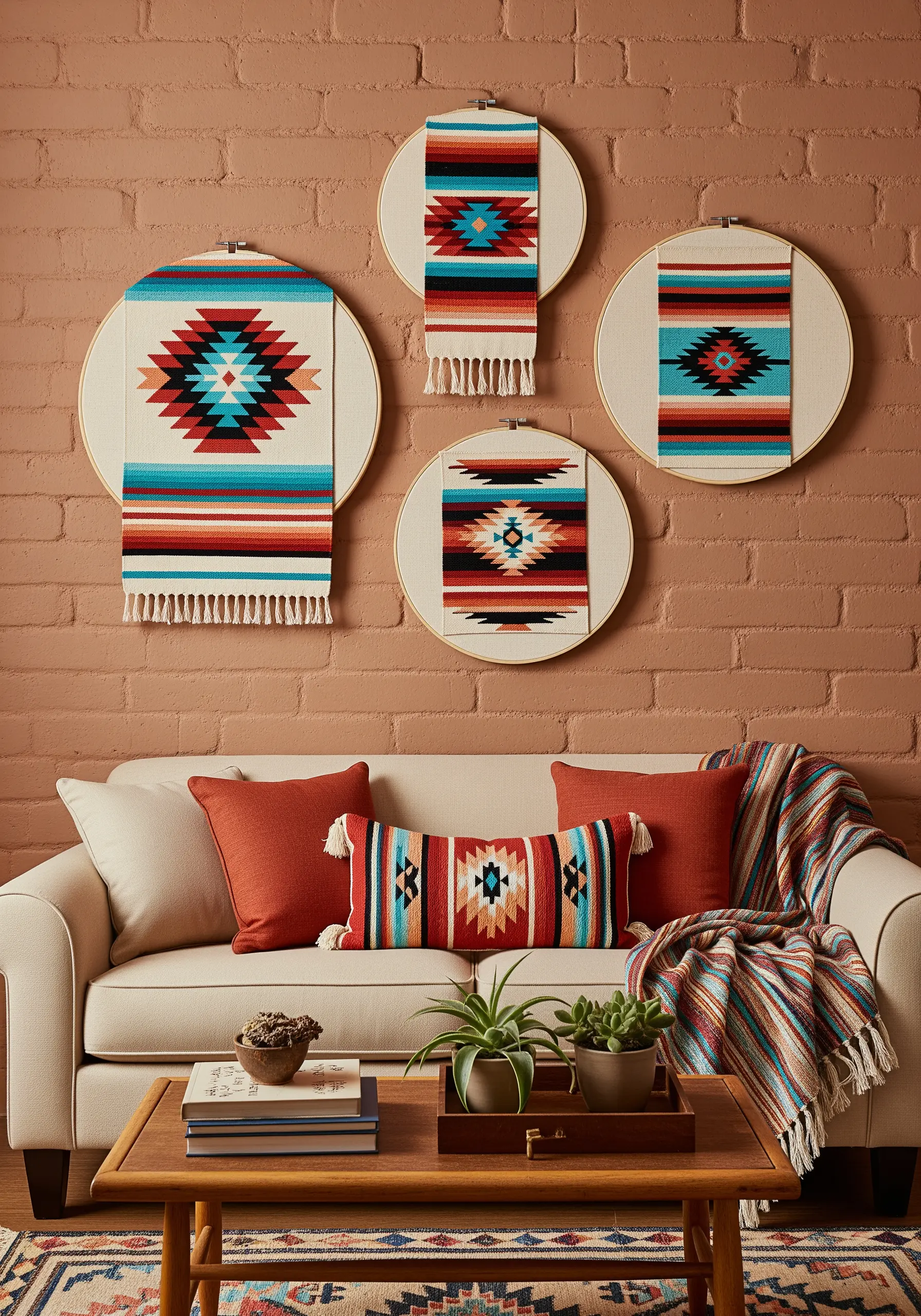
Think beyond stitching directly onto fabric and use embroidery hoops to frame and display sections of beautiful woven textiles, like these Southwestern tapestries.
This mixed-media approach celebrates the texture and artistry of weaving while using the clean, modern shape of the hoop to focus the viewer’s eye.
Vary the hoop sizes and the section of the pattern you frame to create a dynamic and curated gallery wall.
It’s a fantastic way to create boho-inspired textile wall art patterns for embroiderers who love earthy aesthetics without stitching a single thread.
21. Design a Vertical Gradient with Chevrons
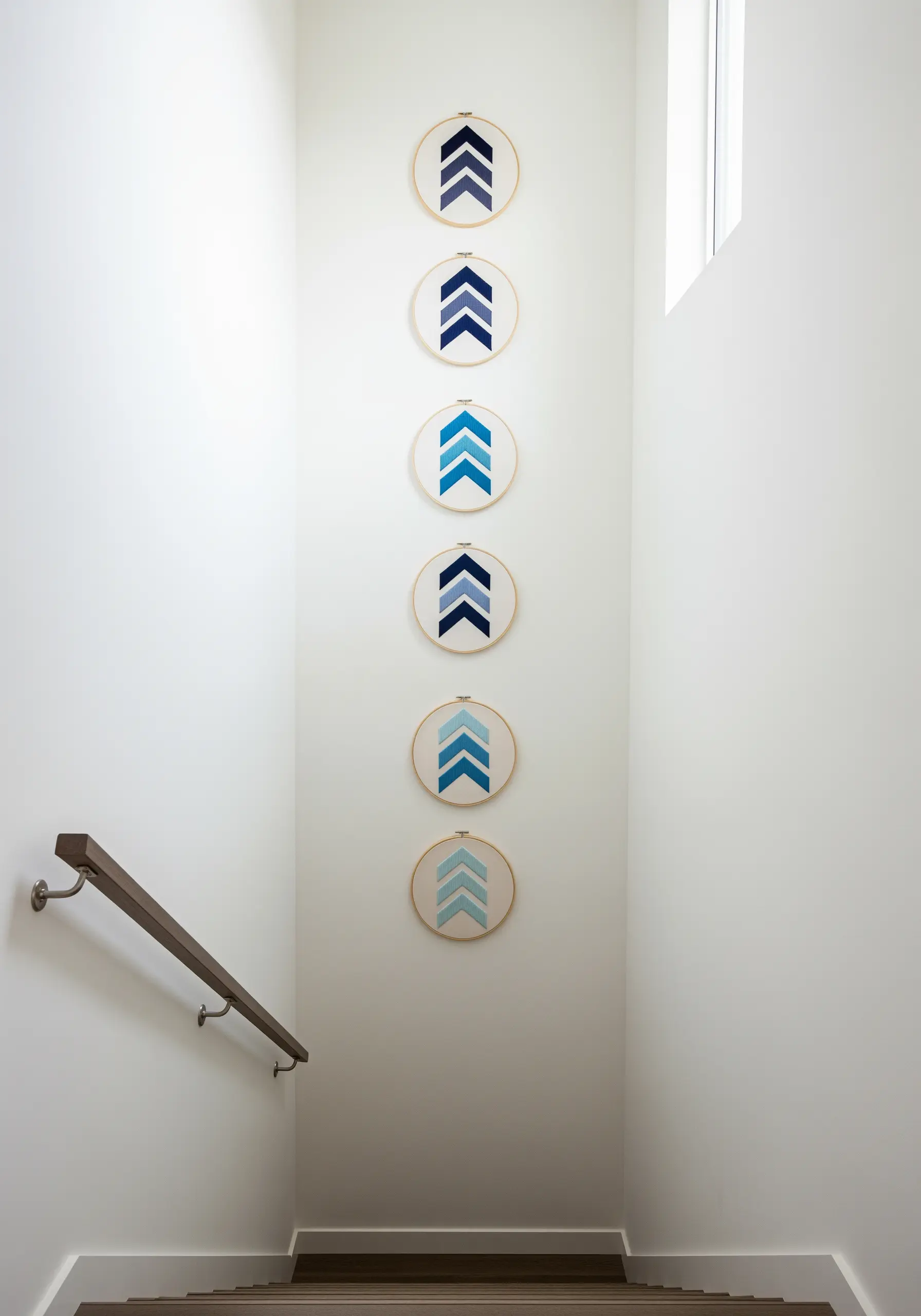
A tall, narrow space like a staircase is the perfect canvas for a vertical art installation.
Stitch a simple chevron pattern in each hoop, using a progressive gradient of a single color family, from light to dark.
This creates a powerful sense of motion and cohesion, drawing the eye upward. The clean, repeating shape ensures the display feels intentional and modern, not cluttered.
This is a beautiful application of gentle gradient embroidery designs for peaceful, sleep-friendly decor, adapted for a dynamic space.
22. Emulate Wood Parquetry with Thread
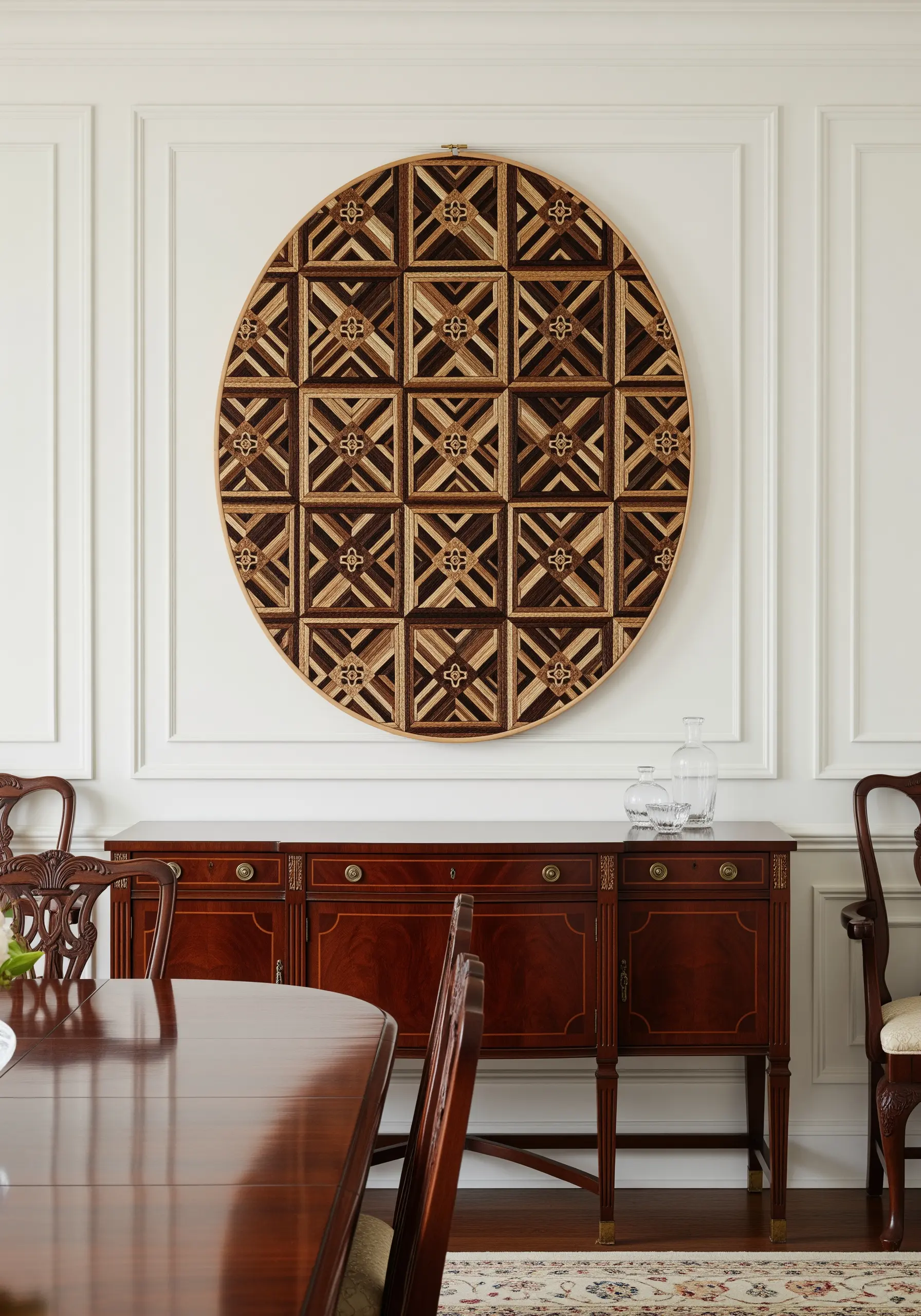
Mimic the luxurious look of inlaid wood by using a palette of brown, beige, and tan threads to fill a geometric pattern.
The secret is varying the direction of your satin stitch for each small shape. This makes the thread catch the light at different angles, creating the illusion of wood grain and depth.
This technique requires patience, but the result is a sophisticated, heirloom-quality piece that showcases how subtle neutral stitch techniques that add quiet depth to wall art can be incredibly powerful.
23. Play with Optical Illusions
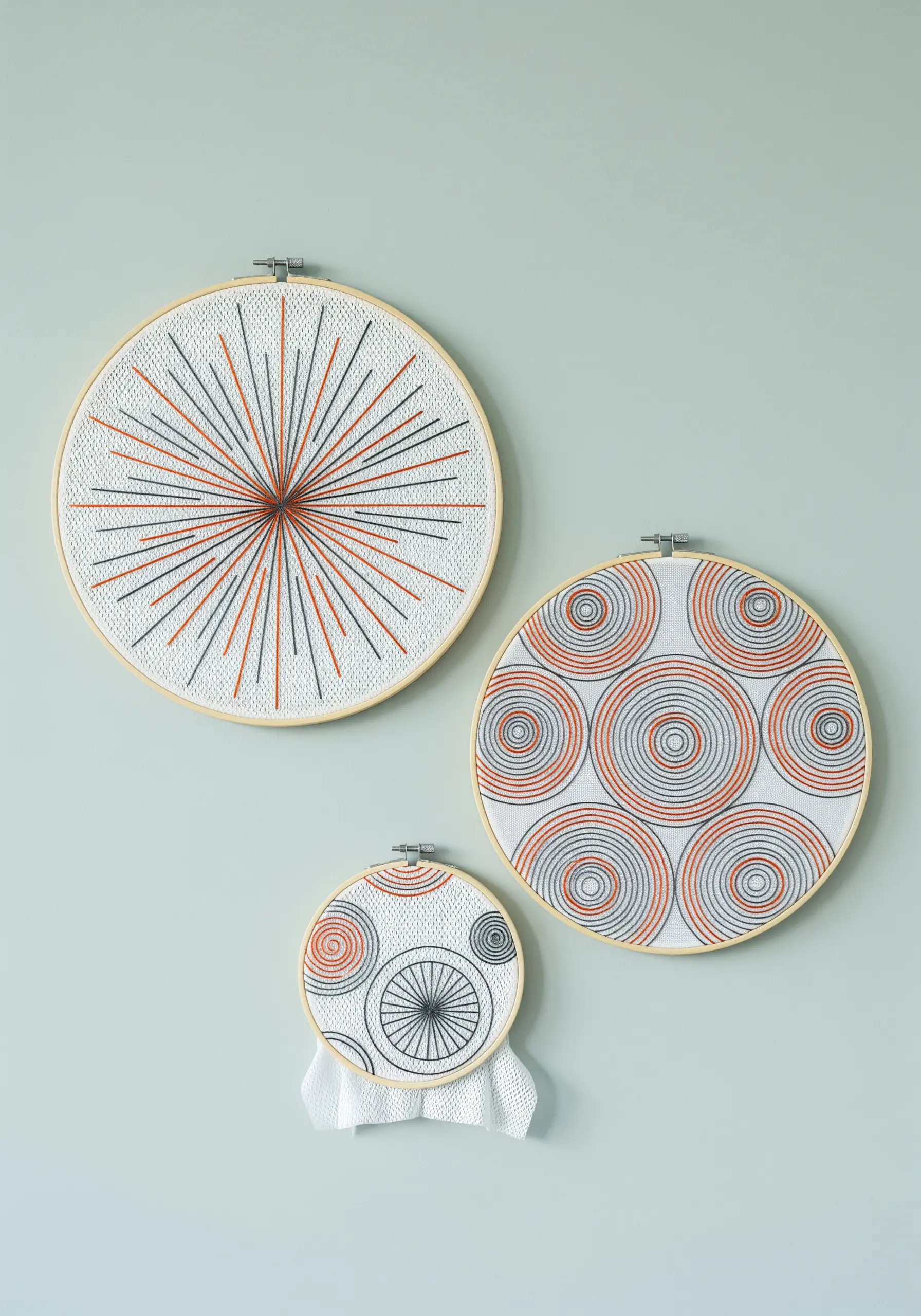
Create mesmerizing op-art by stitching precise geometric patterns on Aida cloth, which provides a natural grid for perfect spacing.
Use contrasting colors like black, white, and a single bright accent to maximize the visual vibration.
Combine dense blocks of cross-stitch or satin stitch with delicate straight stitches to create a sense of depth and movement.
These abstract thread illusion techniques that create depth without complex stitches turn your wall into a dynamic focal point.
24. Explore Monochrome Texture
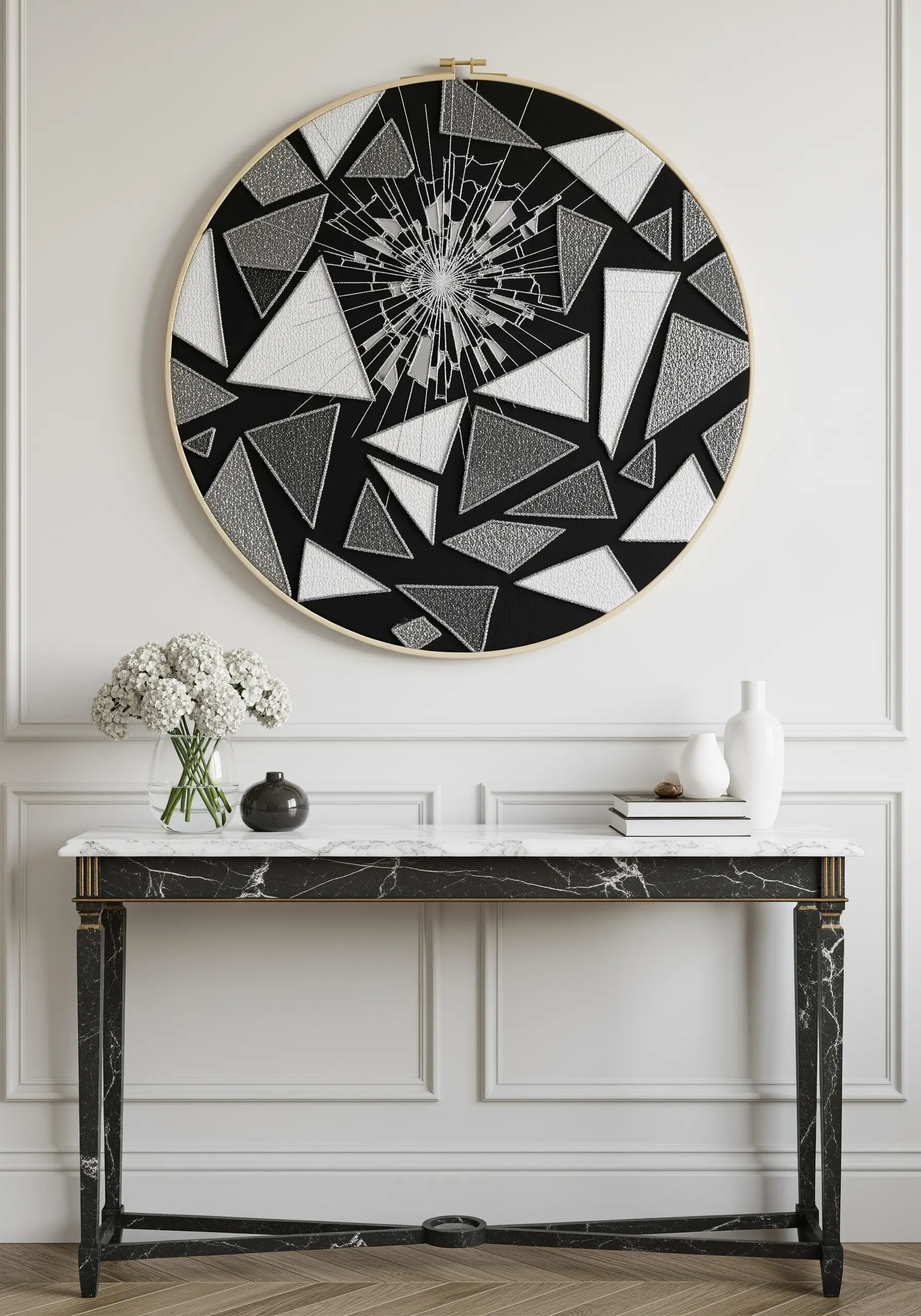
Challenge yourself to create a dynamic composition using only black, white, and gray. The key to success is texture.
Fill each geometric shard with a different stitch: satin stitch for a smooth sheen, French knots for a bubbly surface, long-and-short stitch for a matte finish, and seed stitch for a speckled look.
This approach proves that a limited color palette can be incredibly rich and complex, a perfect example of abstract texture play designs to make monochrome thread look multi-dimensional.


