

A simple tote bag or beach hat is more than just an accessory; it’s a canvas waiting for a story. This summer, let’s move beyond basic stitches and transform everyday items into personal works of art with the vibrant, sculptural beauty of tropical leaves. It’s about more than just adding a motif—it’s about understanding how thread direction, color blending, and texture can create a piece that feels both luxurious and uniquely yours.
Forget the idea that impressive embroidery requires immense complexity. The most impactful designs often rely on a refined technique, not a thousand different stitches. We’ll explore how to make a single monstera leaf look three-dimensional, how to wrap a vine around a straw hat with grace, and how to use color to evoke the feeling of a sun-drenched afternoon. These aren’t just patterns; they are lessons in composition and texture.
Whether you’re packing for a vacation or simply elevating your daily carry, these ideas are designed to give you a tangible result. You will see how a change in thread weight adds depth, or how a perfectly executed satin stitch can catch the light. Let this be the season you stitch with intention, creating accessories that don’t just hold your things, but also hold a piece of your artistry.
1. Master Realistic Leaf Shading
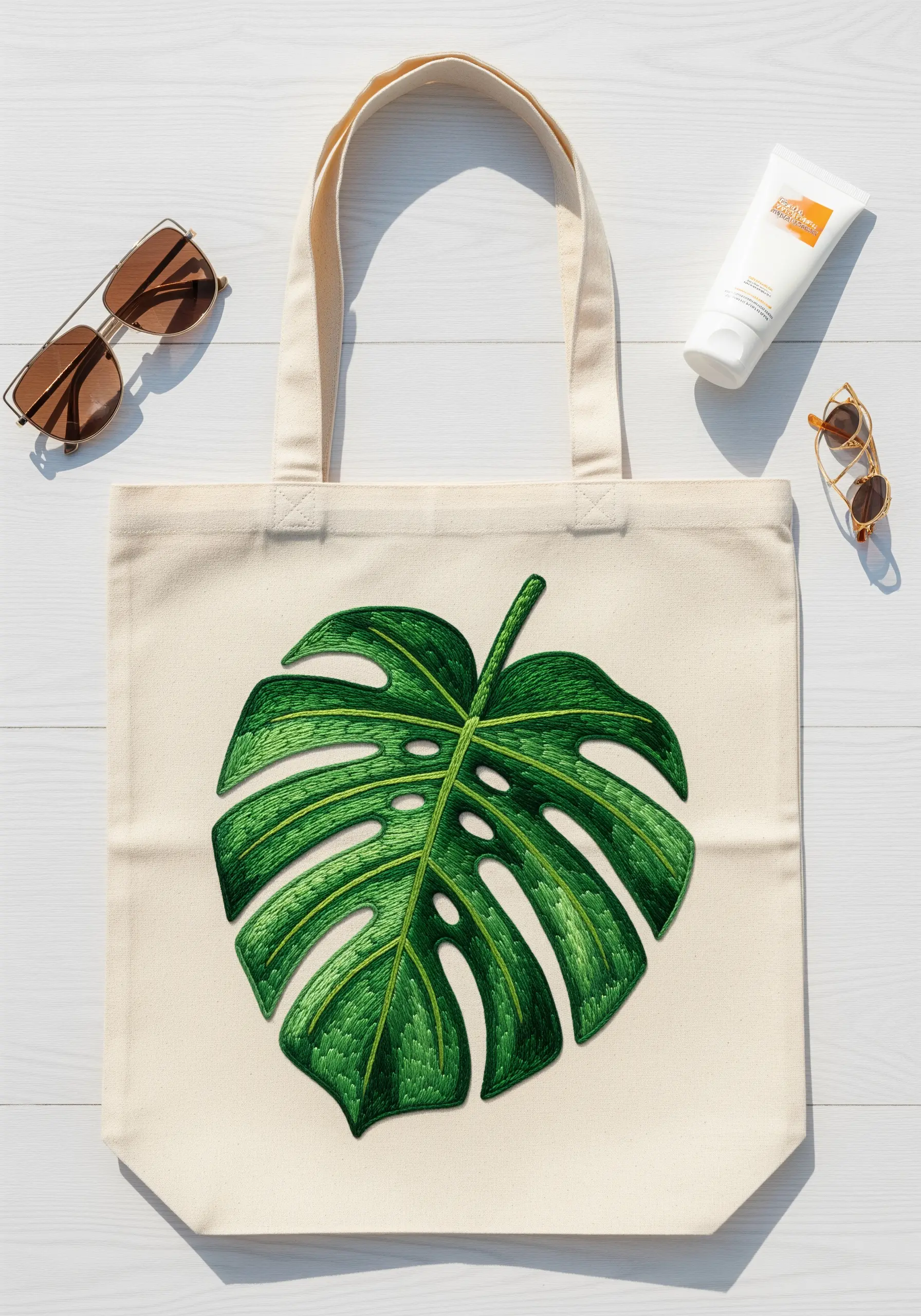
To achieve this sculptural, three-dimensional effect on a monstera leaf, move beyond simple satin stitch and embrace thread painting.
Use a long-and-short stitch, working in sections that follow the natural curves of the leaf segments.
Select at least four shades of green, from a deep forest green for shadows to a bright lime for highlights.
Focus your darkest threads near the central vein and along the shadowed edges of the cutouts, blending outward into lighter tones.
This directional stitching not only blends color but also mimics the way light hits a real leaf, creating depth and realism that makes the design pop off the fabric. Explore other contemporary thread painting techniques to bring your subjects to life.
2. Embroidering on Textured Straw
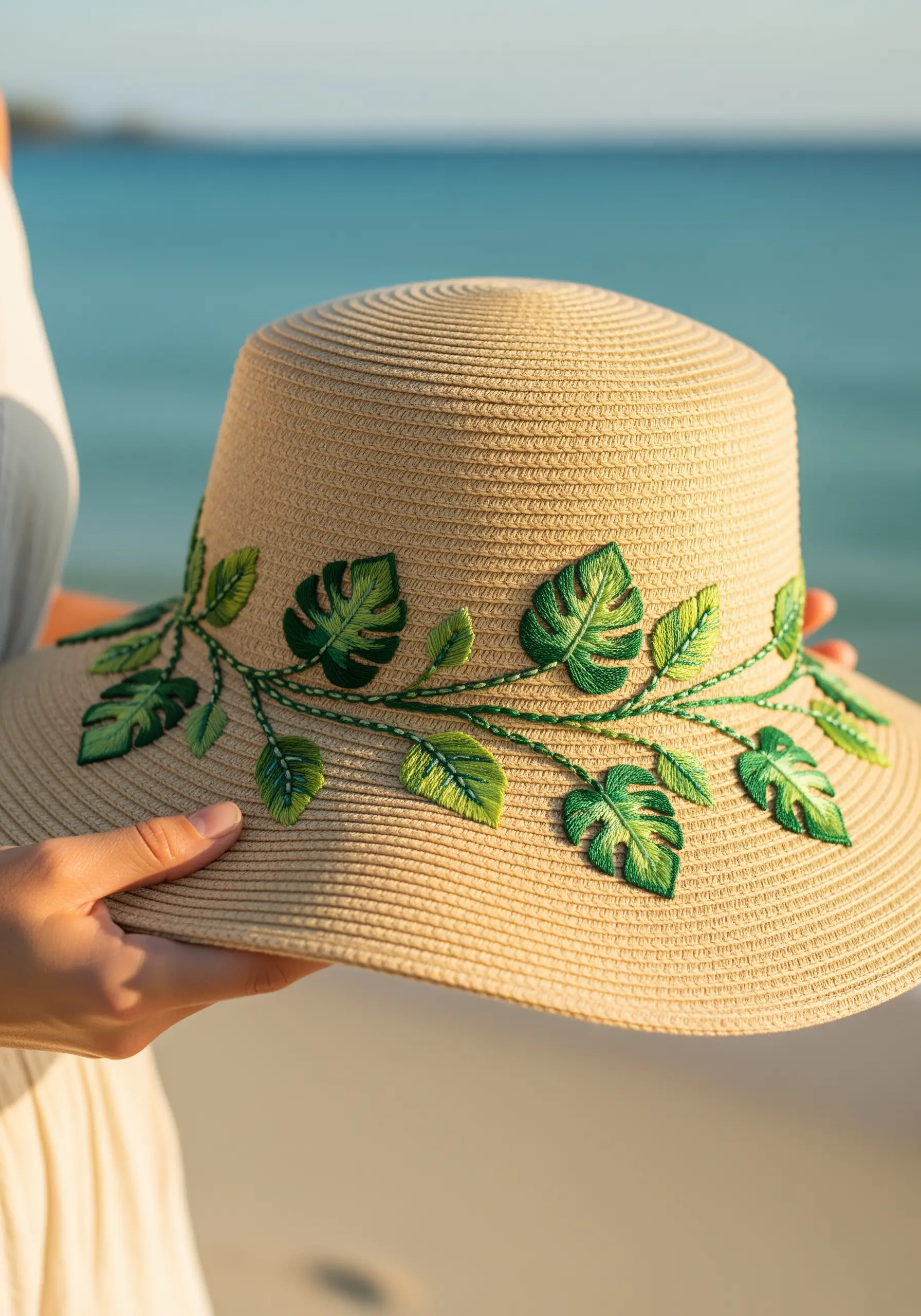
When stitching on a woven straw hat, your biggest challenge is the uneven surface.
Instead of fighting it, use a slightly thicker thread—like a pearl cotton size 8—to ensure your stitches don’t disappear into the weave.
Use a fishbone stitch for the individual leaves; its central spine provides stability and structure, while the angled side stitches create a beautiful, natural leaf shape.
For the connecting vine, a whipped backstitch or a simple stem stitch will give you a clean, raised line that sits proudly on top of the straw texture. Leaf & vine embroidery ideas like this can turn any accessory into a statement piece.
3. Create Lush Palm Fronds on Terrycloth
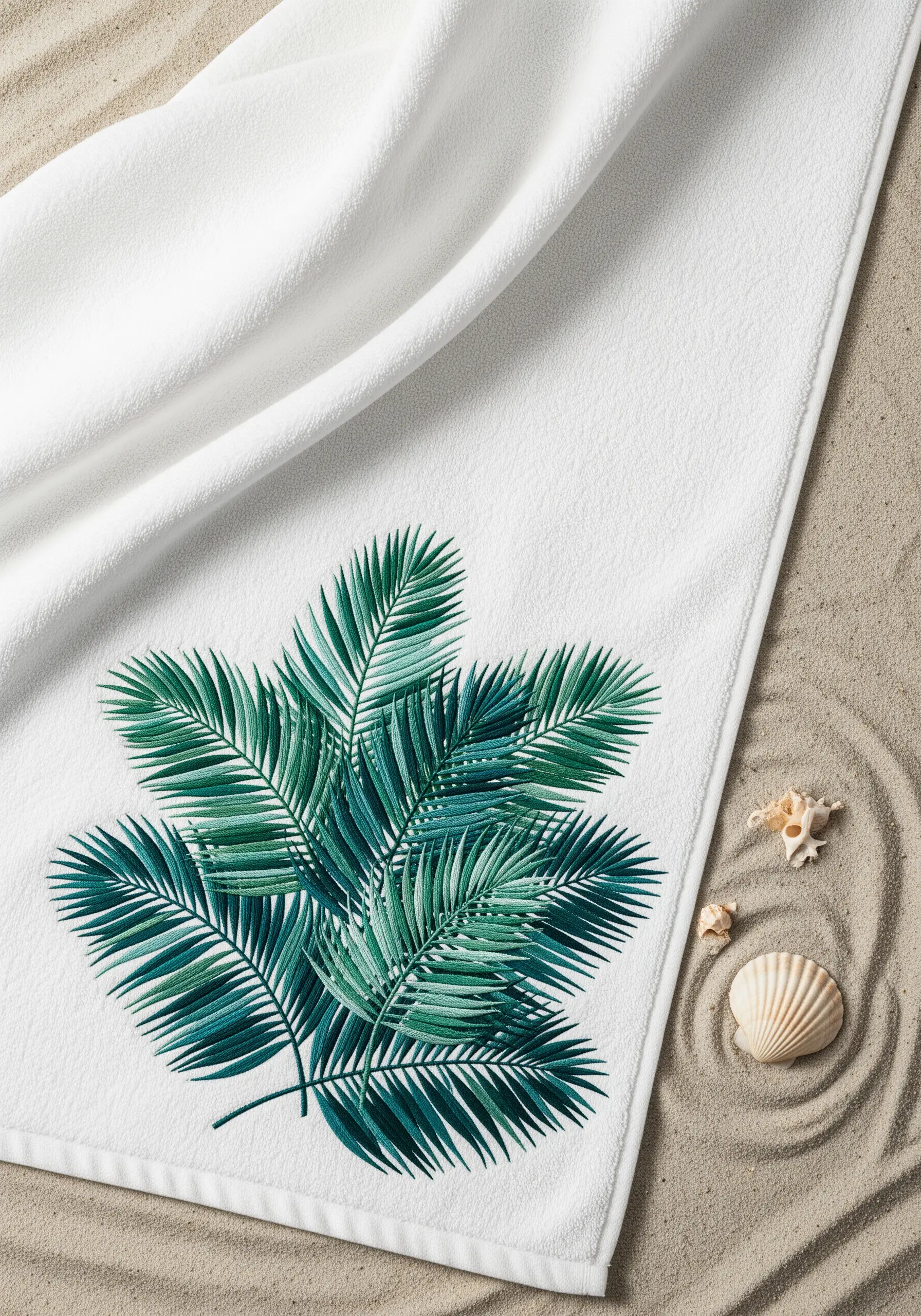
Embroidering on a plush fabric like a beach towel requires a technique that prevents the stitches from sinking into the pile.
First, use a water-soluble stabilizer on top of the fabric; it provides a smooth surface to stitch on and dissolves away later, leaving crisp stitches behind.
For the fine leaflets of the palm, use a series of straight stitches or a very narrow satin stitch, angling them away from the central stem.
Create depth by layering clusters of fronds and using a darker teal for the leaves in the back and a lighter mint green for those in the foreground. This simple color choice is key to making the bouquet feel full and lush, helping you capture nature’s textures even on a flat design.
4. Blend Fiber Art and Embroidery
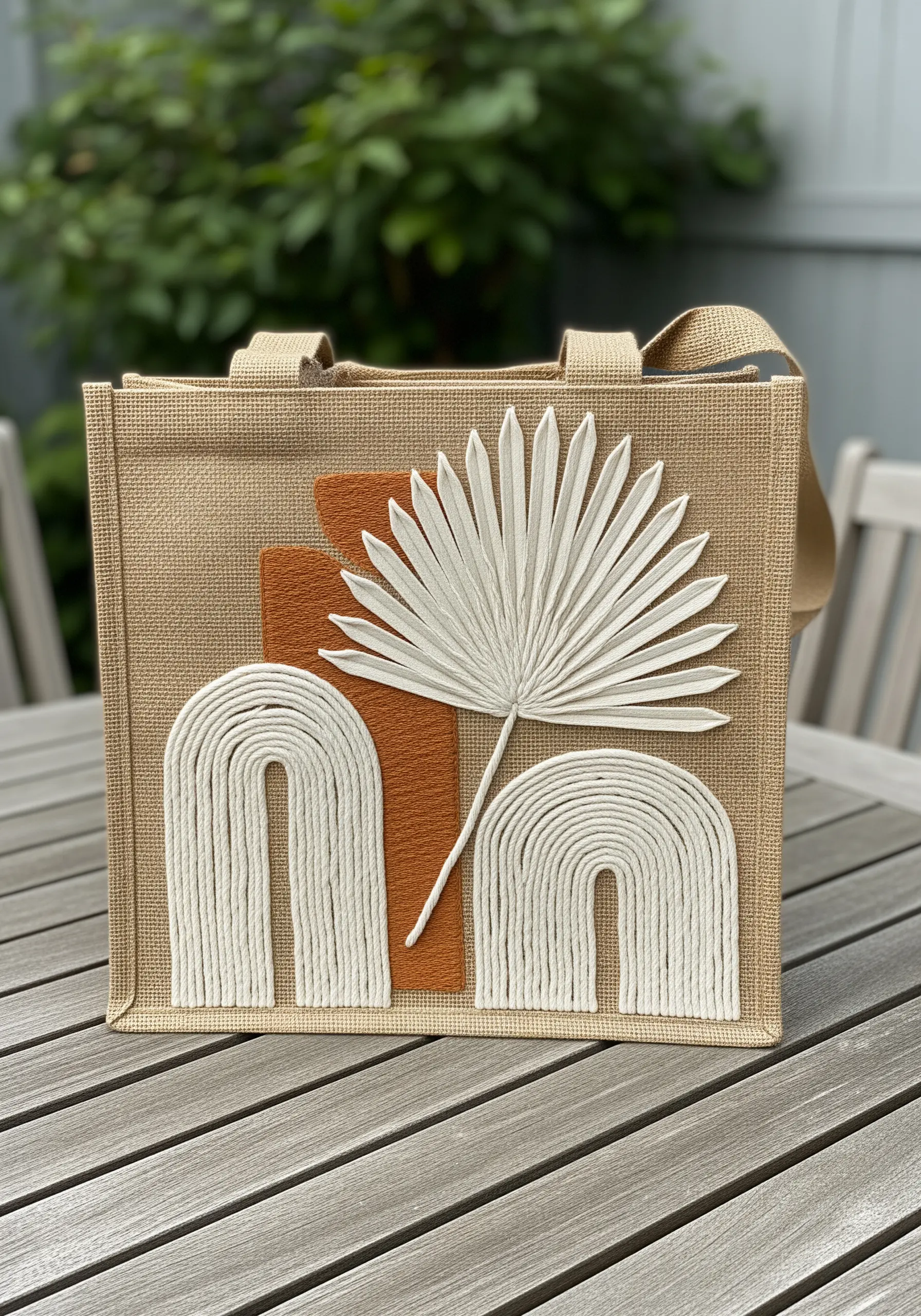
Elevate a simple jute tote by introducing mixed-media elements alongside your stitching.
Create the bold rainbow shapes by wrapping thick cotton cord or yarn around a cardstock template, then couching it onto the bag with a matching thin thread.
For the palm leaf, use a thicker, off-white yarn and a wide satin stitch to create a bold, graphic silhouette that contrasts beautifully with the rustic jute.
Incorporate cut felt pieces for color blocking, attaching them with a simple running stitch around the edges. These abstract mixed-media embroidery ideas transform a basic bag into a piece of tactile art.
5. Stitching Vibrant Tropical Florals on Canvas
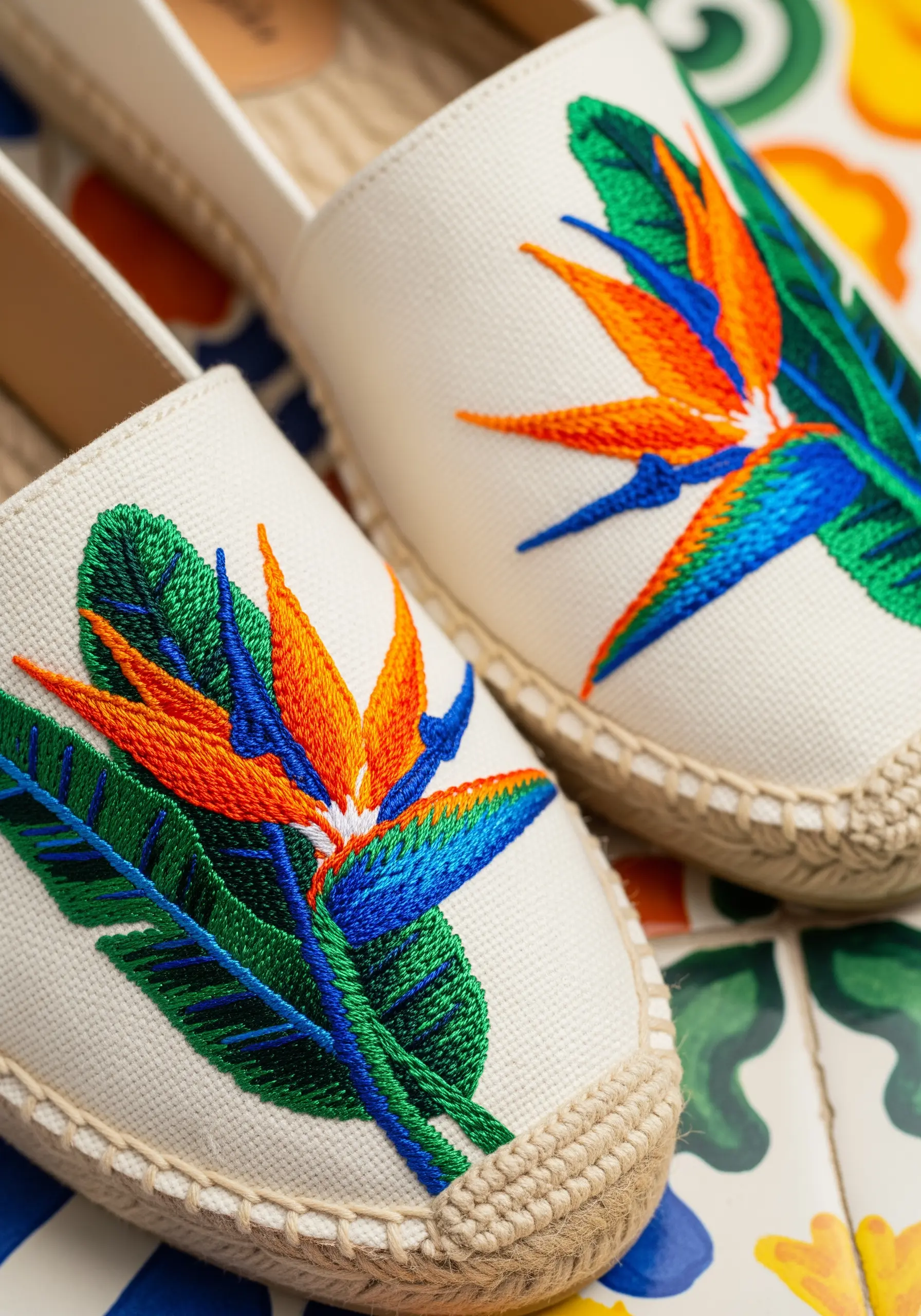
To make the colors of a Bird of Paradise flower truly electrifying, the key is in the blending and direction of your satin stitches.
For the petals, use long-and-short stitch to seamlessly blend the fiery orange into the vibrant red without harsh lines.
When stitching the blue and green elements, make sure your stitches radiate outwards from the center, following the natural growth pattern of the flower. This directional stitching creates a subtle sheen that enhances the color vibrancy.
A split stitch outline in a slightly darker shade will define each shape and make the colors appear even brighter. Tropical flower designs pop when you focus on clean blending.
6. Design a High-Impact, Full-Coverage Pattern
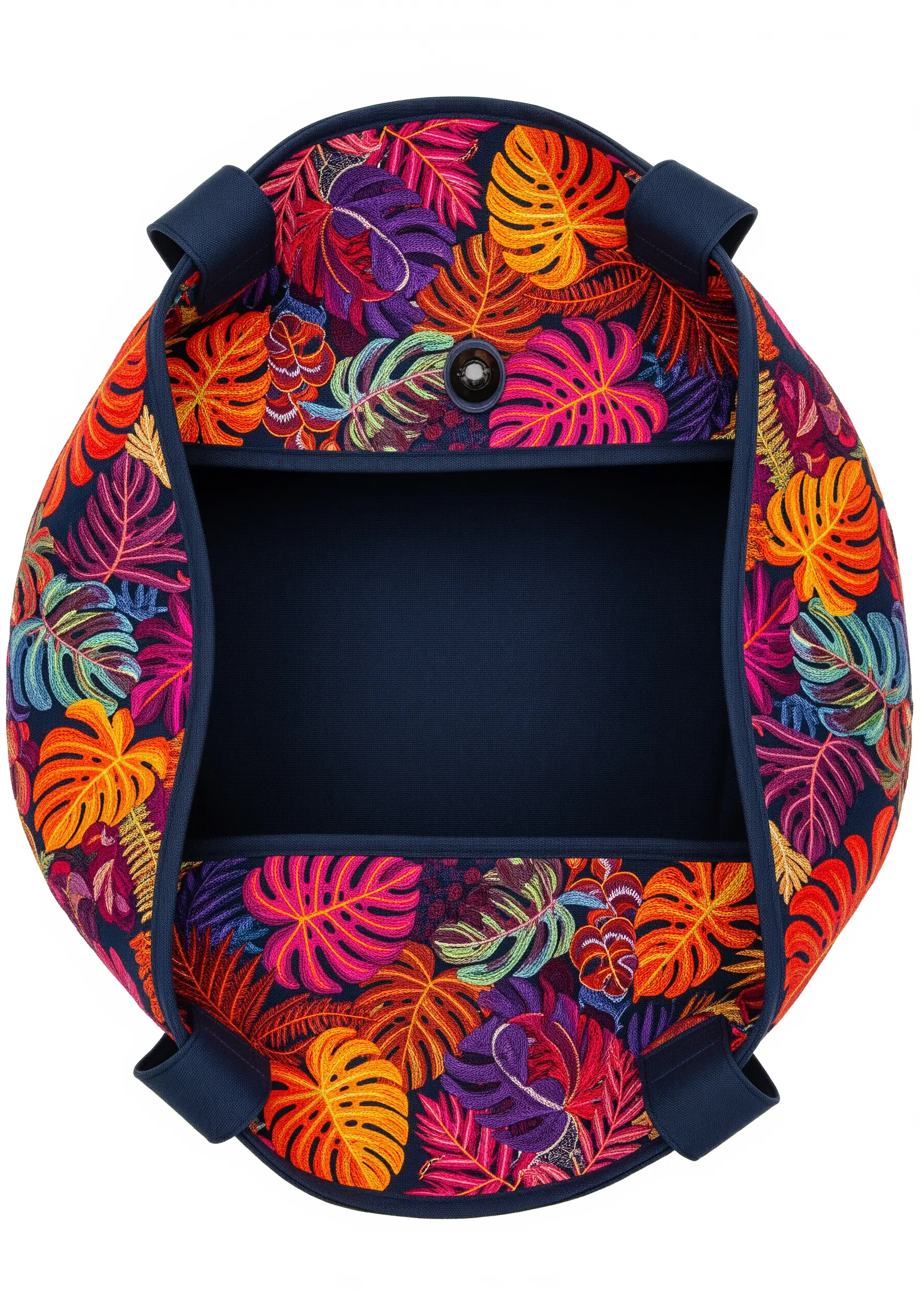
Creating an all-over embroidered pattern requires a balance of color, density, and stitch consistency.
Choose a limited but high-contrast color palette—like these jewel tones against a dark background—to ensure the design feels cohesive rather than chaotic.
Use a consistent fill stitch, like satin stitch or long-and-short stitch, for all the leaves to create a uniform, fabric-like texture.
To avoid puckering on such a dense design, use a sturdy stabilizer and keep your thread tension even. Overlapping the leaf motifs slightly will eliminate gaps and enhance the sense of lush density, similar to techniques used in fabric collage embroidery artworks.
7. Elevate Your Design with Metallic Threads
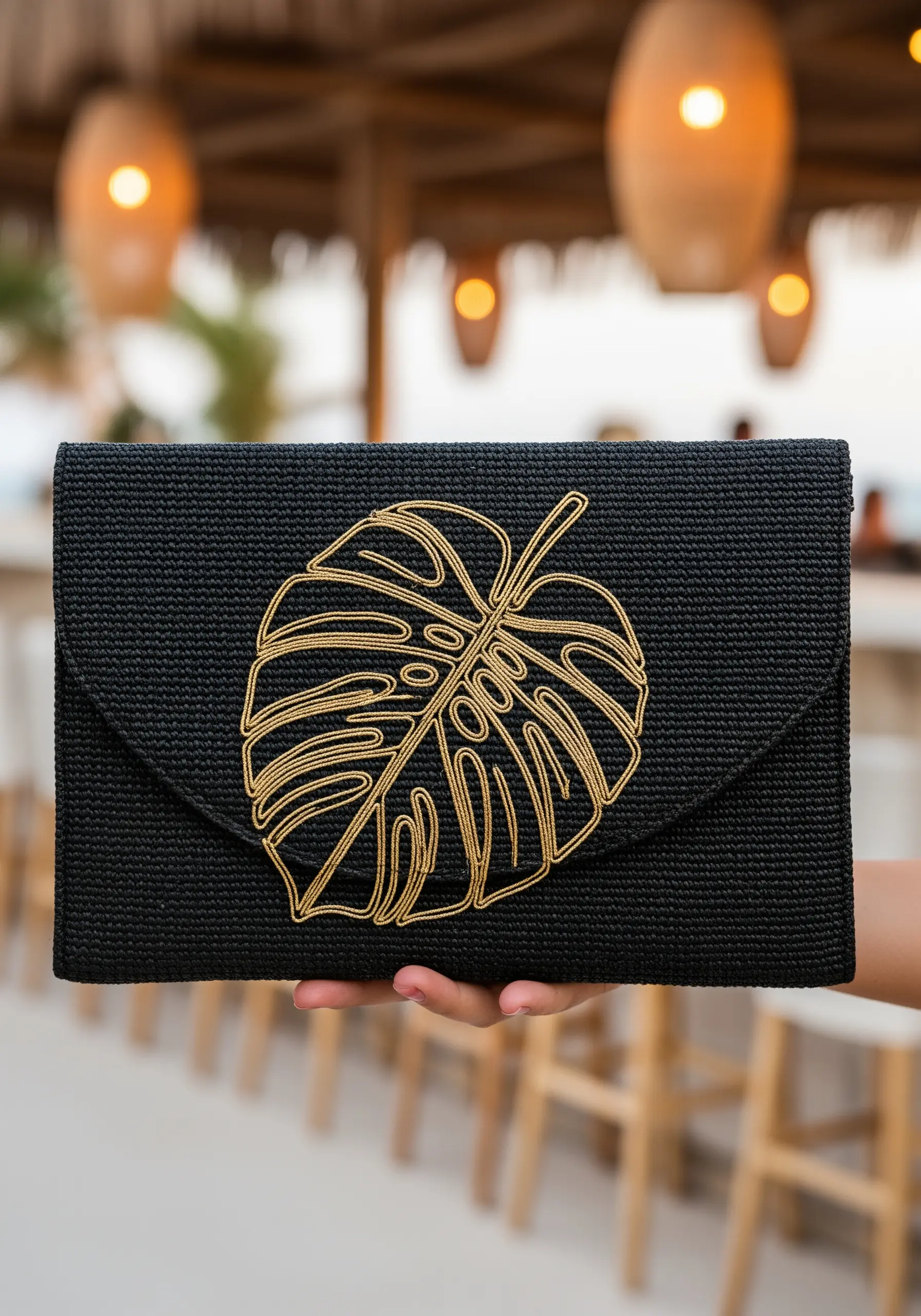
Stitching with metallic thread can be challenging, but the payoff is pure elegance, especially on a dark fabric.
Use a shorter length of thread than you normally would (about 12 inches) to prevent it from twisting and shredding.
A thread conditioner like beeswax can make the metallic floss glide more smoothly through the fabric.
For this clean, graphic look, use a whipped backstitch or a chain stitch for the outlines. These stitches create a raised, cord-like effect that catches the light beautifully, making your design look like fine jewelry. These abstract metallic thread projects always deliver a touch of luxury.
8. Harness the Power of Variegated Thread
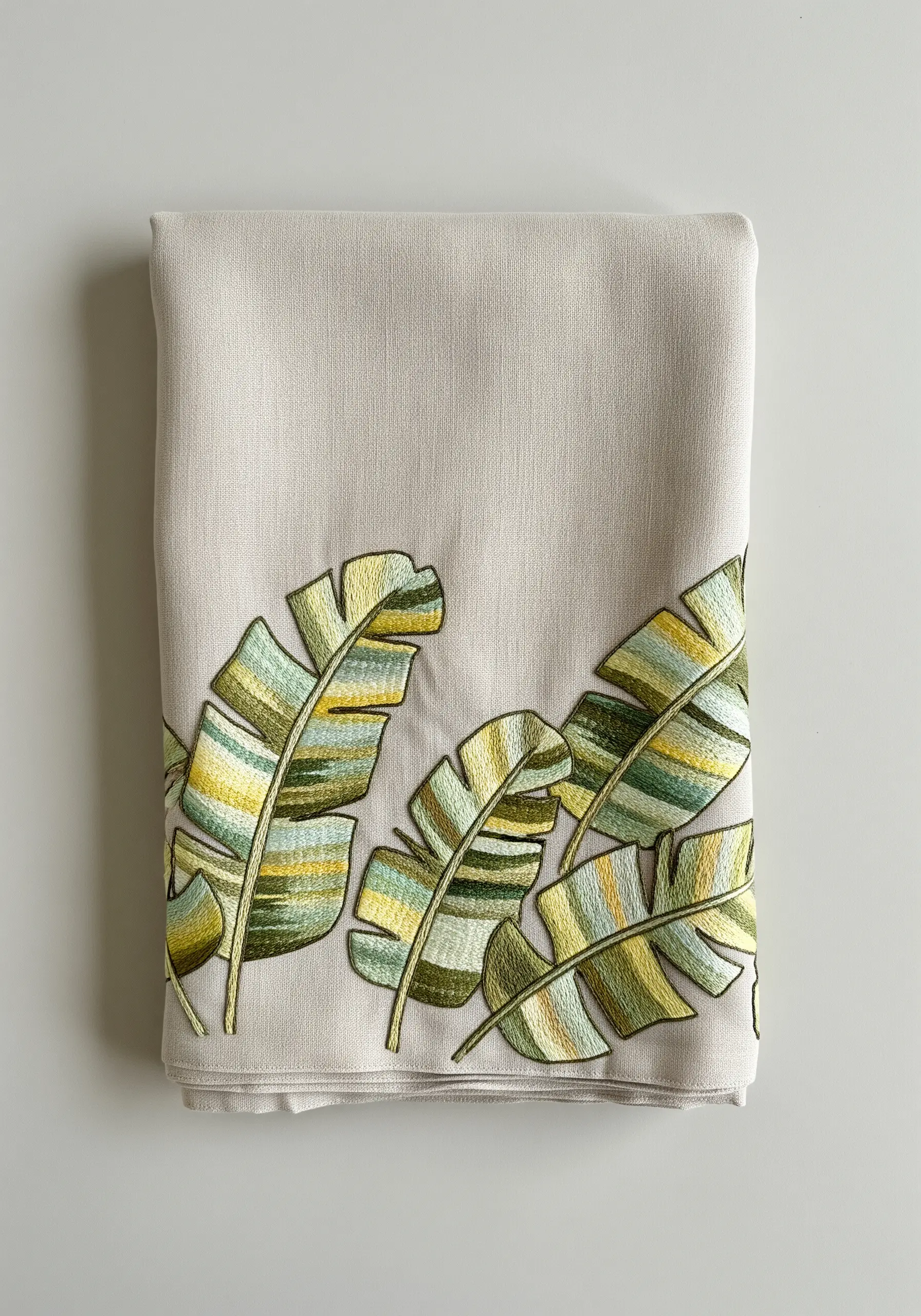
Achieve complex-looking color gradients with minimal effort by using a variegated floss.
The key to a beautiful result is planning your stitch direction to control how the colors lay.
For these banana leaves, a satin stitch worked in horizontal bands allows the thread’s color changes to create a striped, shaded effect naturally.
For a softer, more blended look, you could use a long-and-short stitch. This method lets you create effortless dimension and is one of the most effective texture-rich thread art ideas.
9. Create a Curated Botanical Collection
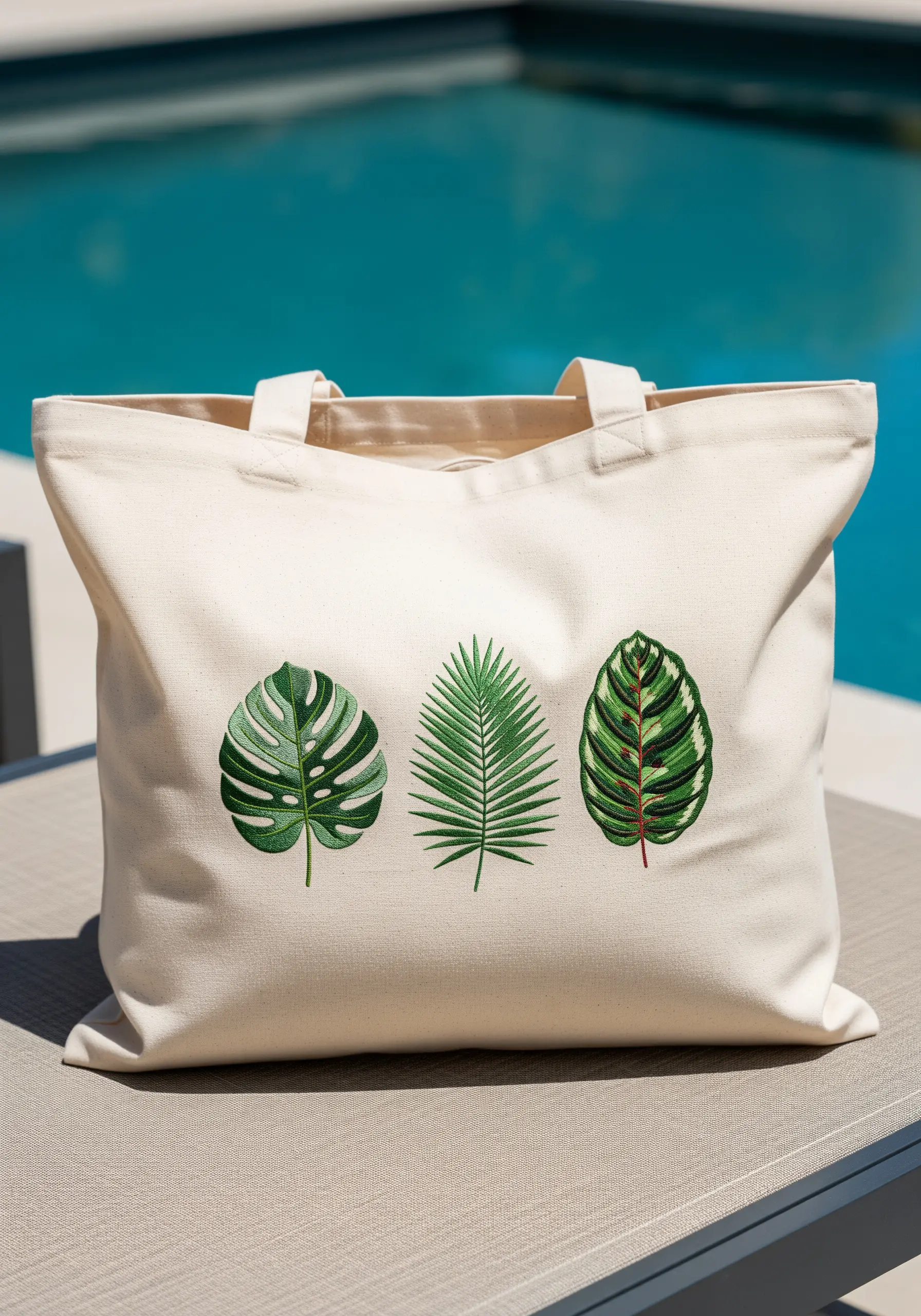
Showcase different leaf forms by grouping them as a trio of botanical studies.
Assign a distinct stitch technique to each leaf to highlight its unique texture. For example, use directional satin stitch for the smooth monstera, tiny straight stitches for the feathery palm, and long-and-short stitch for the patterned calathea.
Using consistent lighting and shading across all three motifs—as if they were lit from the same source—will make the composition feel unified and intentional.
This approach transforms a simple tote into a piece of curated art. Botanical line art embroidery patterns are perfect for this clean, illustrative style.
10. Perfect the Tiny Repeating Motif
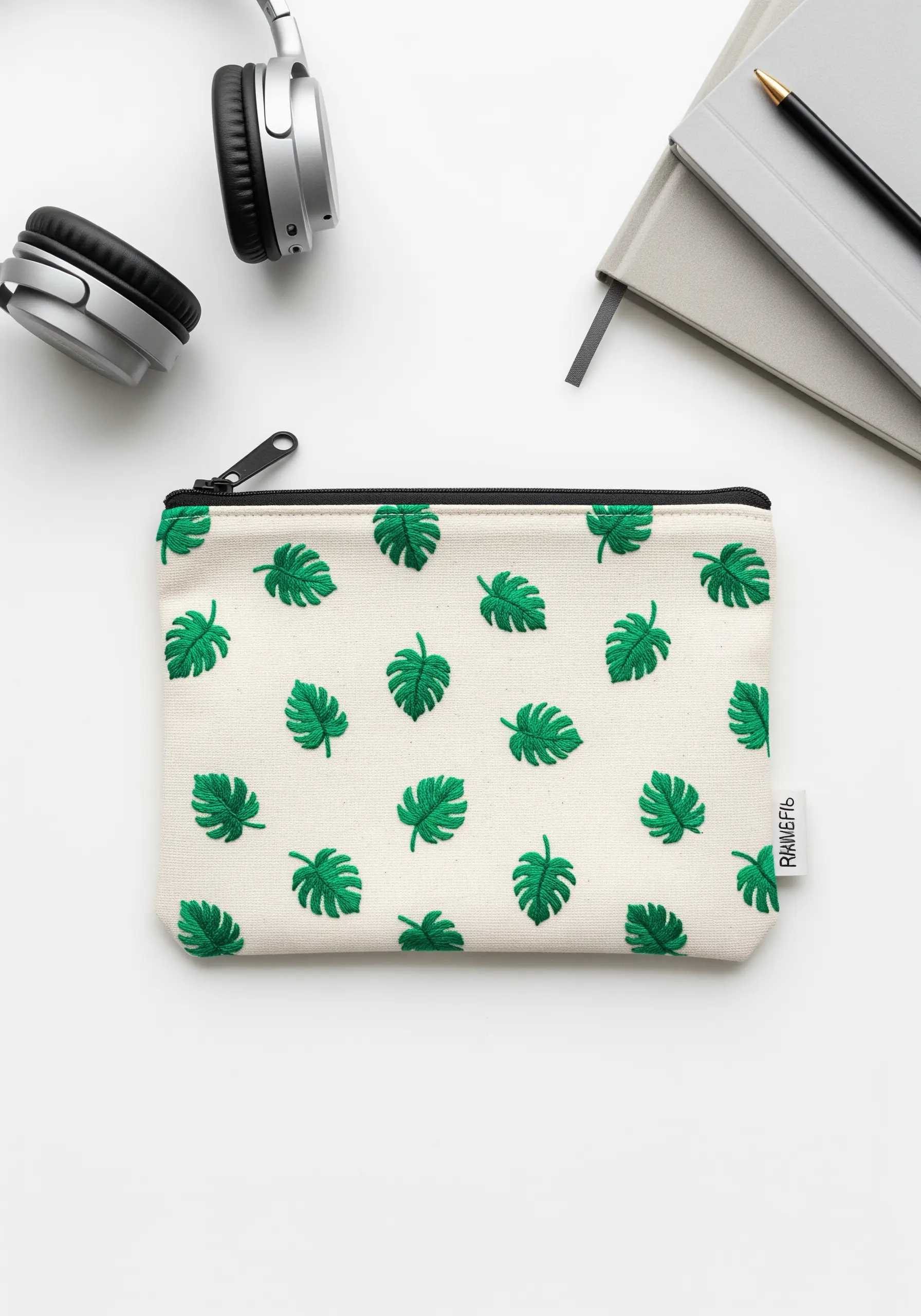
When embroidering a small, repeating pattern, consistency is more important than complexity.
Choose a simple leaf silhouette that is easily recognizable even at a small scale. The monstera is perfect for this.
Use a satin stitch or fishbone stitch, and count your stitches or use a template to ensure each leaf is roughly the same size and shape.
A water-soluble transfer pen is invaluable for marking the placement of each leaf, ensuring a balanced and evenly distributed pattern across your pouch. Tiny embroidery motifs like these add a touch of bespoke charm.
11. Integrate Embroidery with Unique Framing
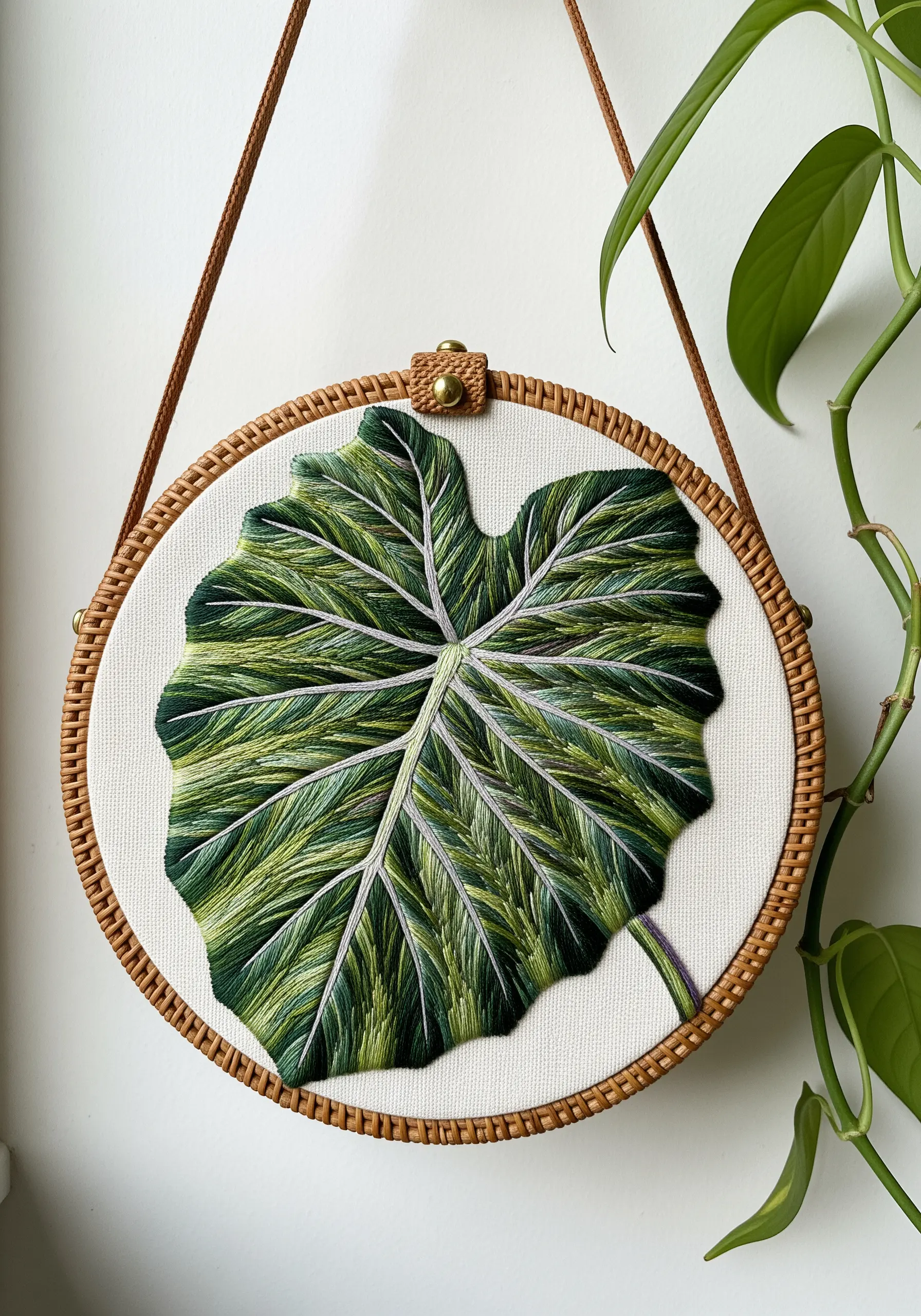
Transform your embroidery from a simple craft into a piece of decor by choosing an unconventional frame, like this rattan circle bag.
The thread painting on this leaf is exceptional, with dozens of shades creating hyper-realistic highlights and shadows.
To replicate this, pay close attention to the direction of your stitches, ensuring they follow the path of the leaf’s veins. Use a single strand of floss for the finest details.
The trick to making the veins pop is to stitch them last, using a slightly lighter color and a simple backstitch on top of the filled sections. This is how you can embroider realistic shadows and highlights for maximum impact.
12. Craft a Bold Appliqué Wreath
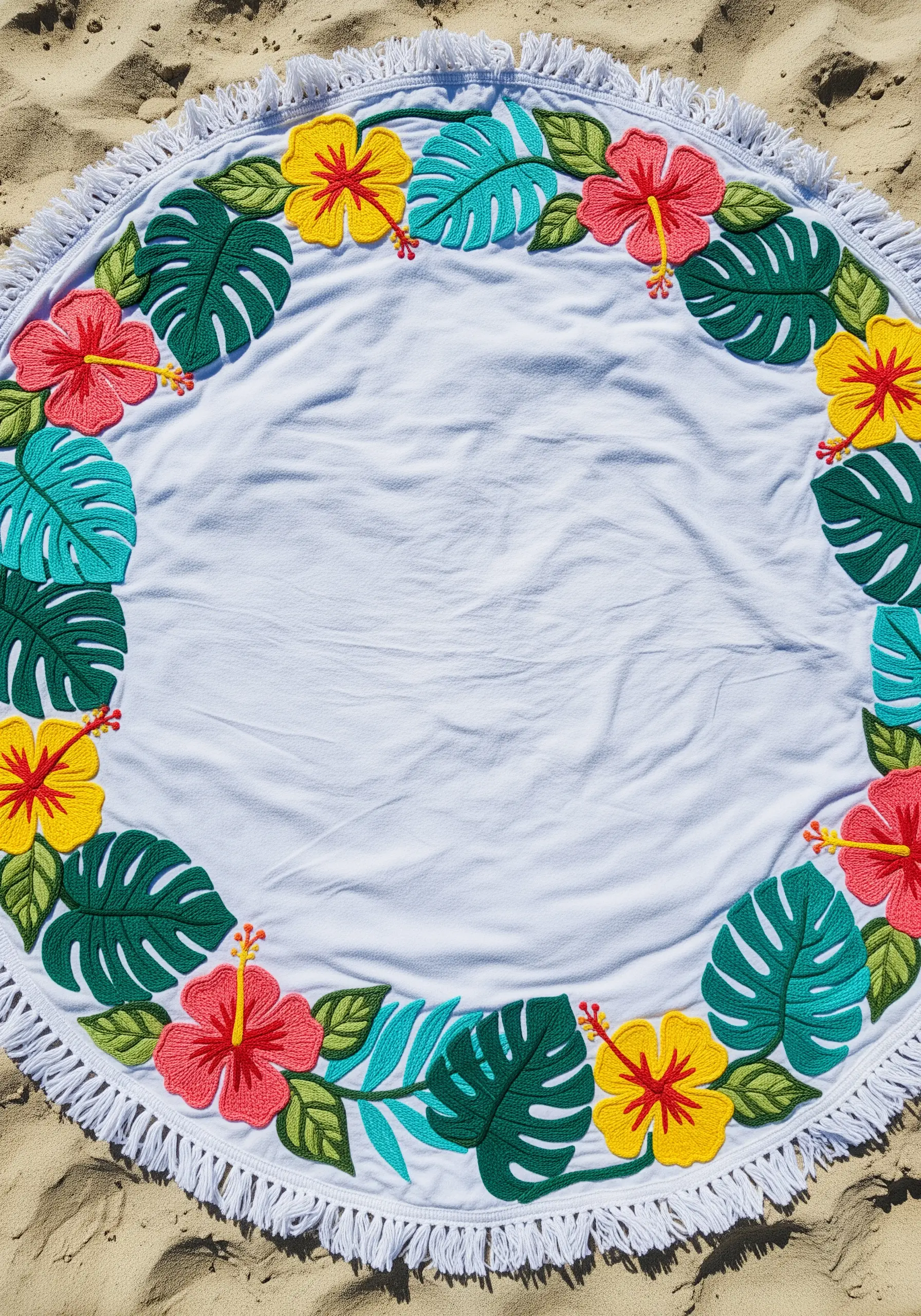
For large-scale designs on items like beach blankets, appliqué is a fast and impactful alternative to dense embroidery.
Cut your leaf and flower shapes from high-quality felt, which won’t fray at the edges.
Attach each shape to the blanket with a tight, neat satin stitch border in a contrasting thread color. This not only secures the felt but also gives each element a clean, graphic outline.
Add small embroidered details, like the flower stamens, directly onto the felt shapes before you attach them. This combination of techniques is perfect for creating wild botanical wreath patterns with bold, graphic appeal.
13. Explore Pattern with Blackwork Fills
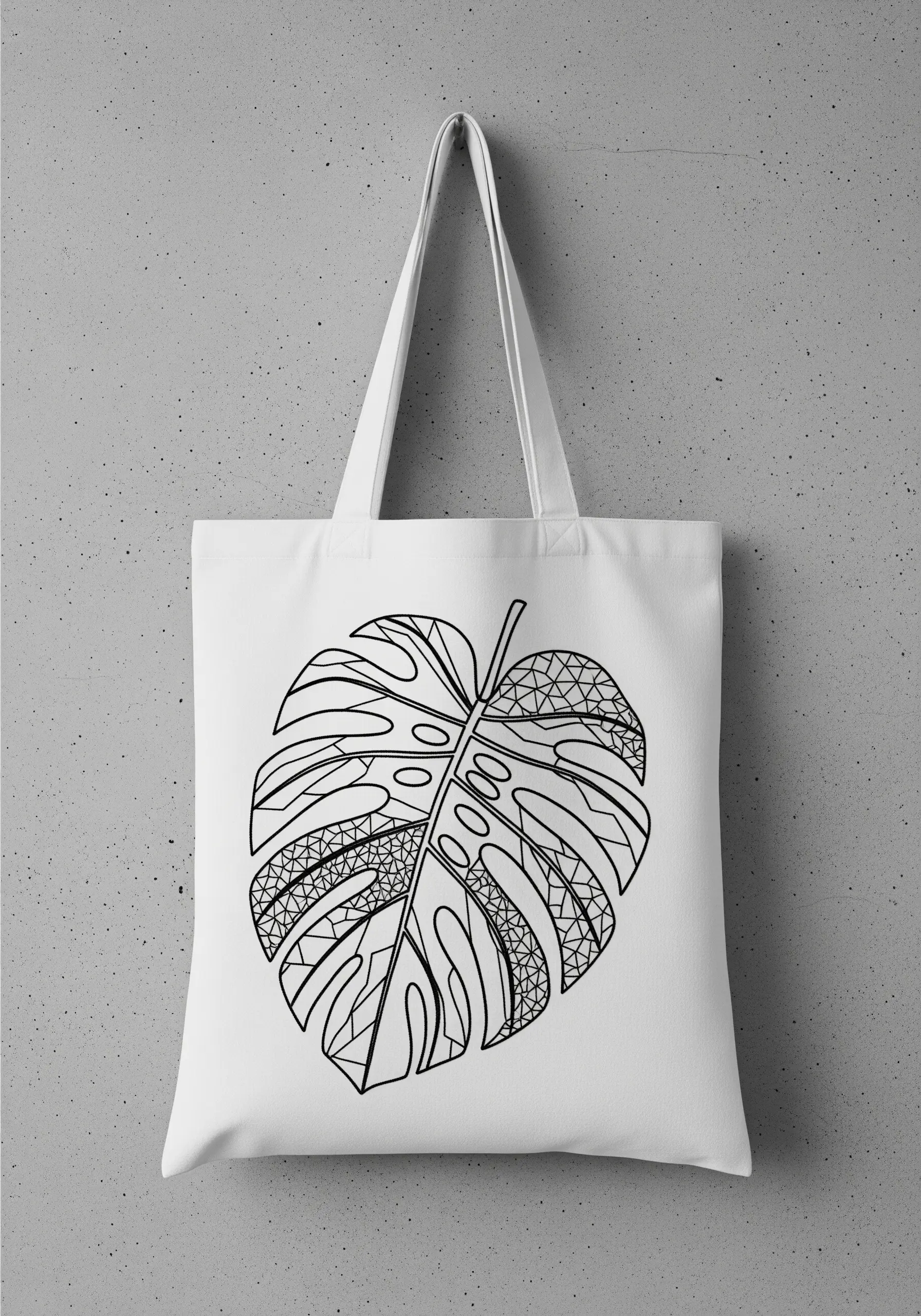
Instead of filling a shape with solid color, use blackwork or other geometric fill patterns to create visual interest and texture.
Divide the leaf into distinct sections with a clean backstitch outline.
Fill each section with a different repeating pattern: try checkerboards, diagonal lines, or small geometric motifs like triangles or dots.
This technique turns a simple leaf silhouette into a complex, captivating design using only a single color of thread. It’s a modern take on traditional techniques, and these monochrome black thread designs are always striking.
14. Make a Statement with Pop-Art Colors
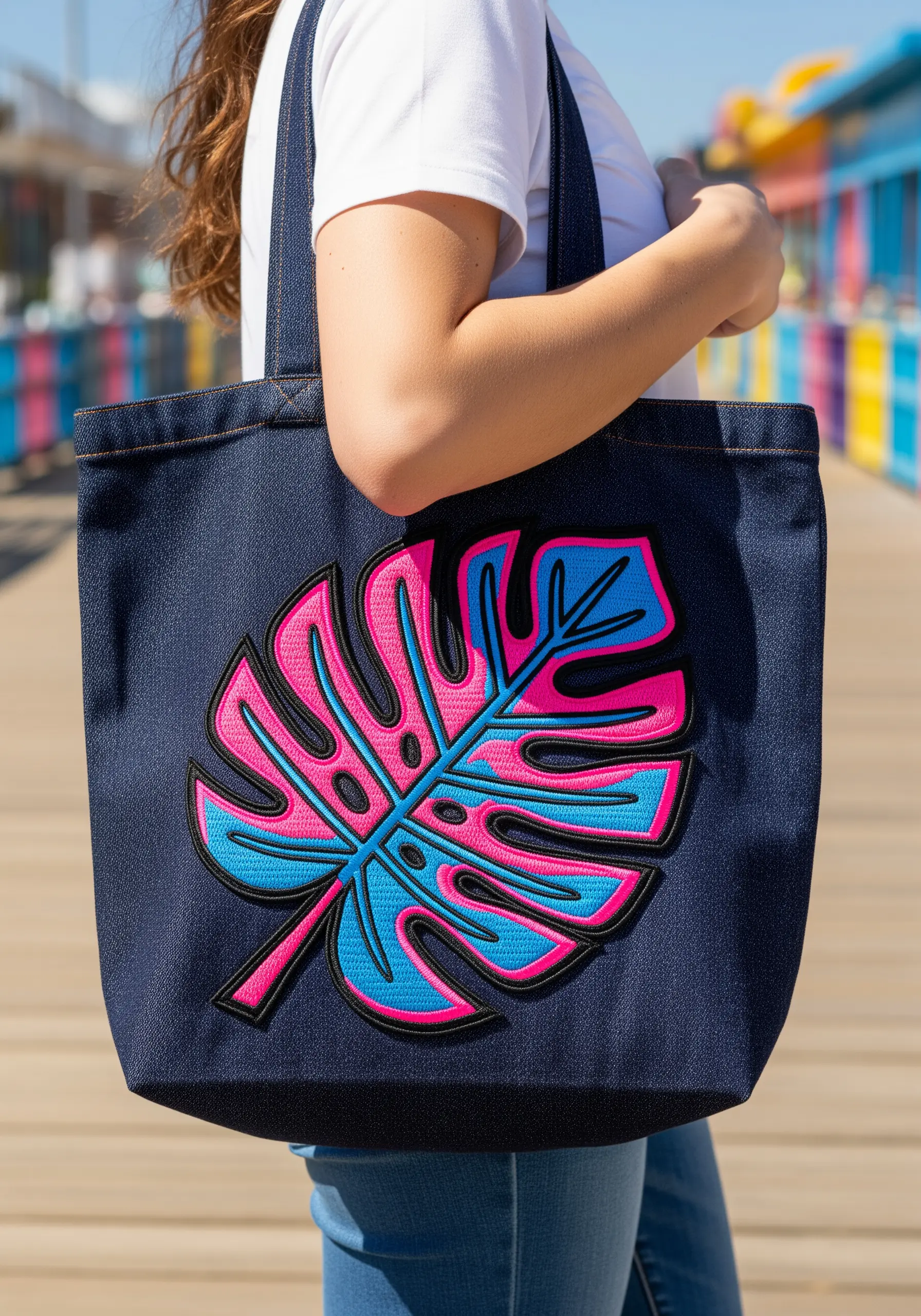
Achieve a bold, graphic look by using unexpected, high-contrast color combinations and distinct color blocking.
Fill large sections with a smooth, dense satin stitch, ensuring all your stitches lie in the same direction for a uniform sheen.
Create a heavy, raised outline by going over a backstitch or split stitch line with a satin stitch. This technique, called a padded satin stitch, makes the edges pop and separates the colors cleanly.
This style embraces vibrant, unnatural colors to create an energetic, eye-catching design, tapping into abstract color psychology stitch ideas to express a playful mood.
15. Embrace Minimalist Elegance on Linens
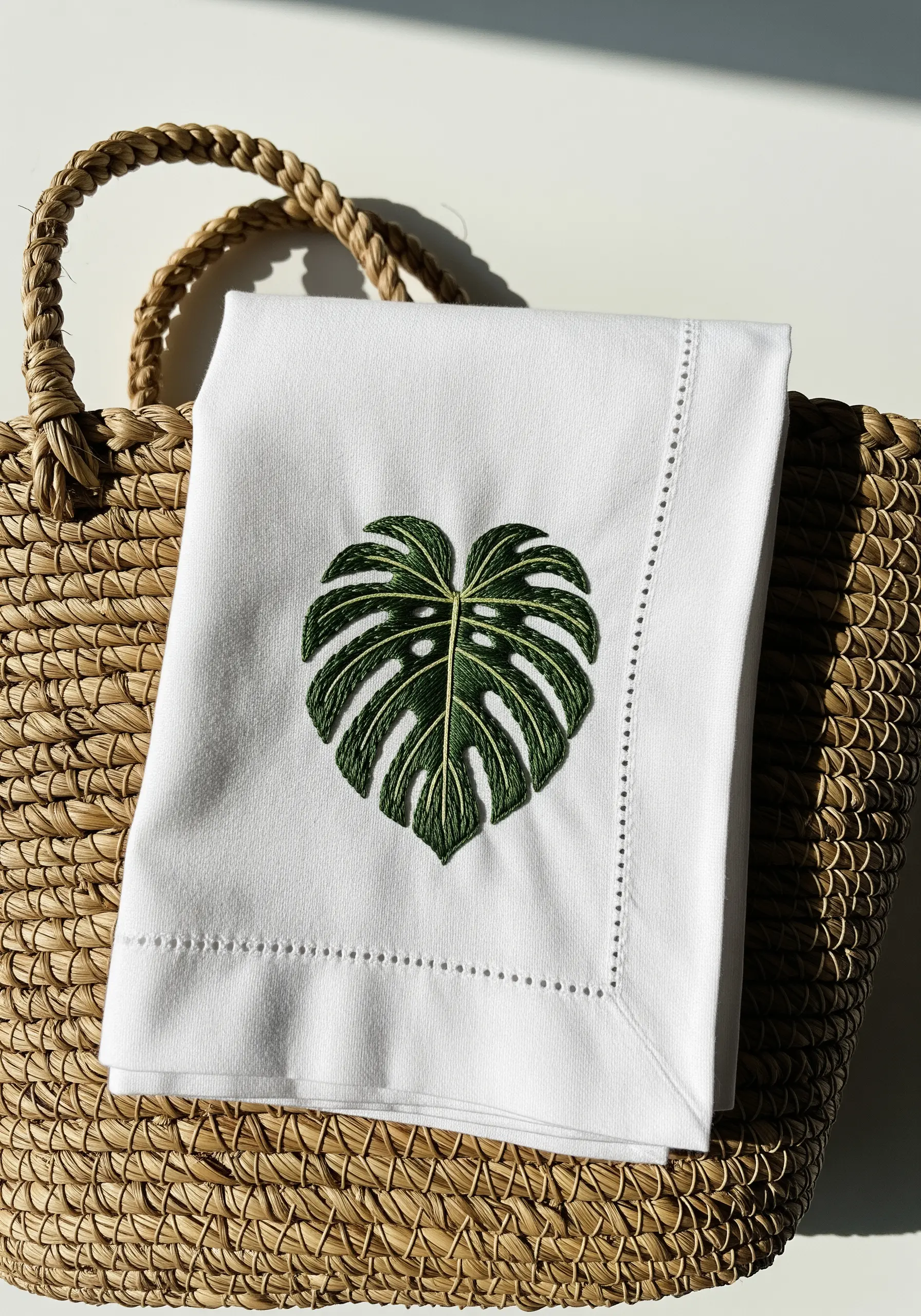
Sometimes, the most sophisticated statement is the simplest one. A single, perfectly executed motif on a high-quality linen napkin is timeless.
The key here is precision. Ensure your satin stitches are smooth, even, and tightly packed with no fabric showing through.
Choose a thread color that complements the linen but still has enough contrast to be visible, like this deep forest green on crisp white.
The hemstitching on the napkin’s border frames the embroidery beautifully. This focus on placement and quality is central to modern minimalist table linen embroidery ideas.
16. Create a Playful Neon Scatter
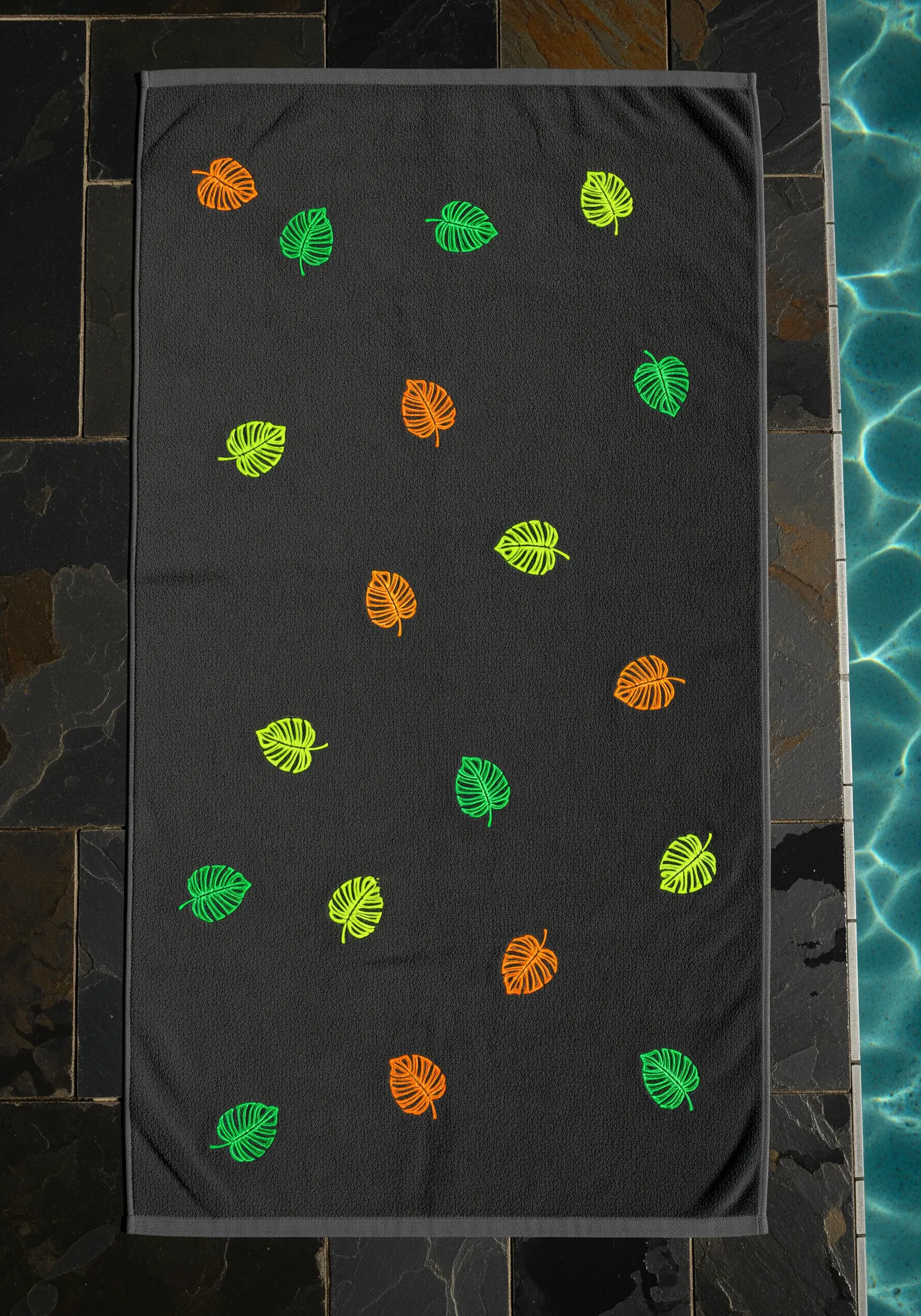
Give your beach towel a modern, energetic twist with a scattered pattern of simple motifs in neon colors.
The success of this design lies in its simplicity and the power of color contrast.
Use a basic outline stitch like a backstitch or stem stitch for each leaf. This is quick to execute and looks clean against the dark, textured towel.
Choose three or four vibrant, complementary neon threads. The random placement and varied colors create a dynamic, playful effect that feels spontaneous and fun, proving that even tiny stitching ideas that add a pop of color can have a huge impact.
17. The Power of a Single, Centered Motif
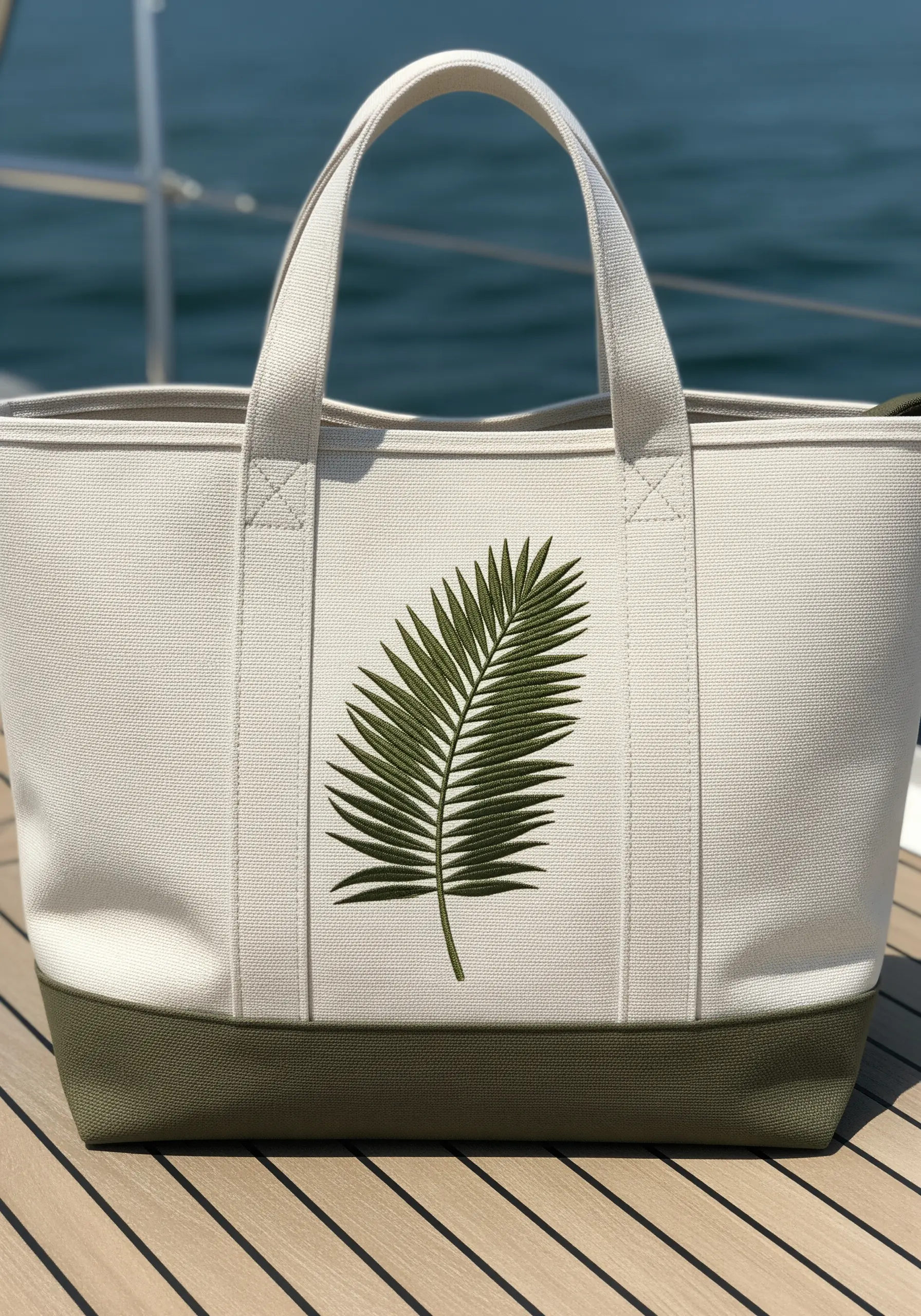
On a structured, color-blocked tote, a single, well-placed embroidered motif acts as a sophisticated focal point.
The elegance of this design comes from its restraint. The palm frond is stitched in a muted, earthy olive green that harmonizes with the bag’s canvas and trim.
Use a satin stitch for the leaflets, angling them sharply from the central stem to create a clean, graphic shape.
This approach demonstrates that you don’t need a complex or colorful design to make an impact. This is one of those minimalist embroidery ideas where perfect execution is everything.
18. Embellish Functional Elements like Straps
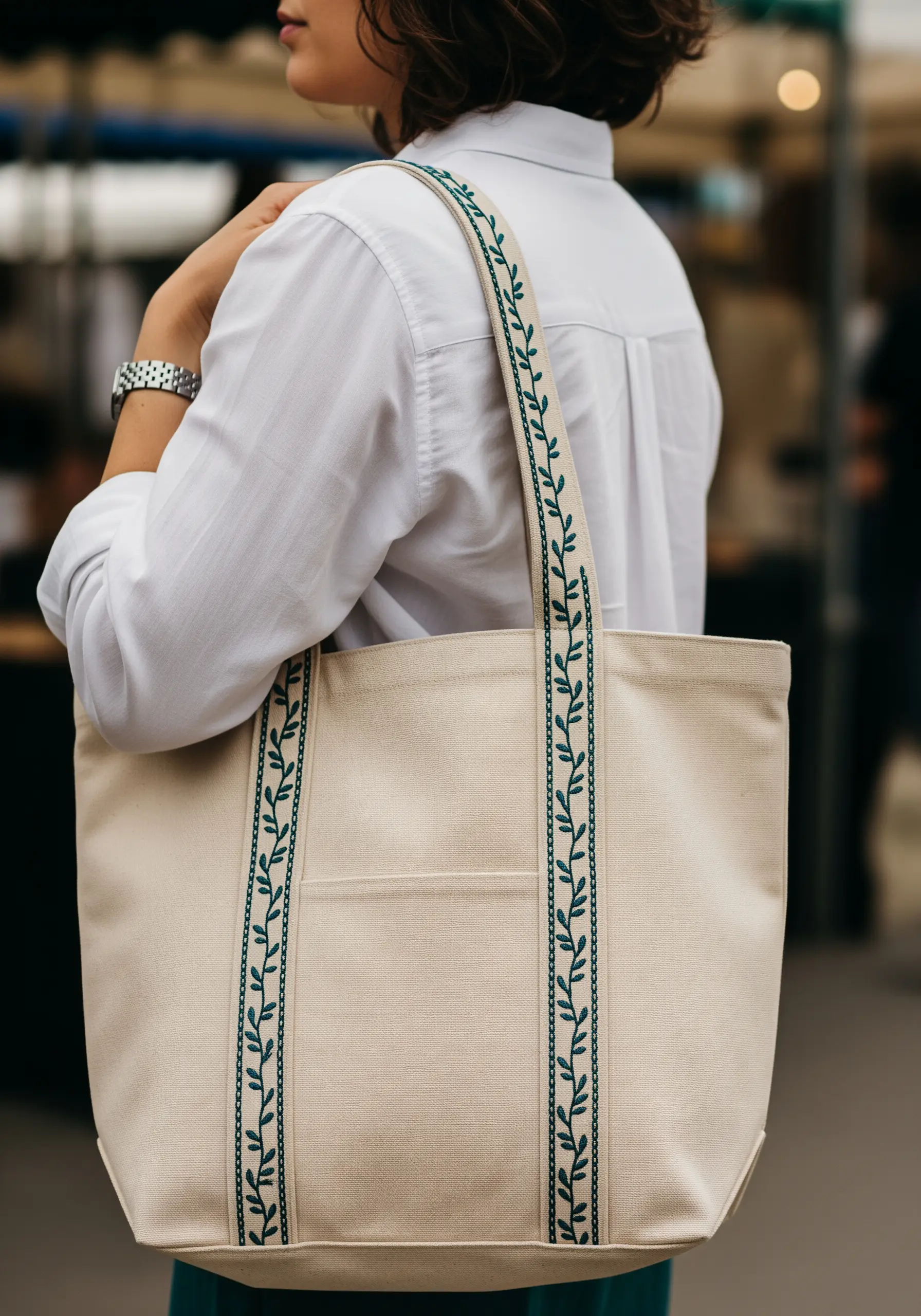
Elevate your entire tote bag by focusing your embroidery on an unexpected area: the straps.
A simple, repeating vine or leaf pattern creates a beautiful, ribbon-like effect.
Use a detached chain stitch or lazy daisy for the leaves and a simple stem stitch for the connecting vine. These stitches are durable and well-suited for a high-wear area like a strap.
Choosing a thread color that contrasts with the strap’s border adds another layer of detail, turning a functional element into a decorative highlight. It’s a subtle way to apply intricate botanical border designs.
19. Replicate Botanical Illustrations with Thread
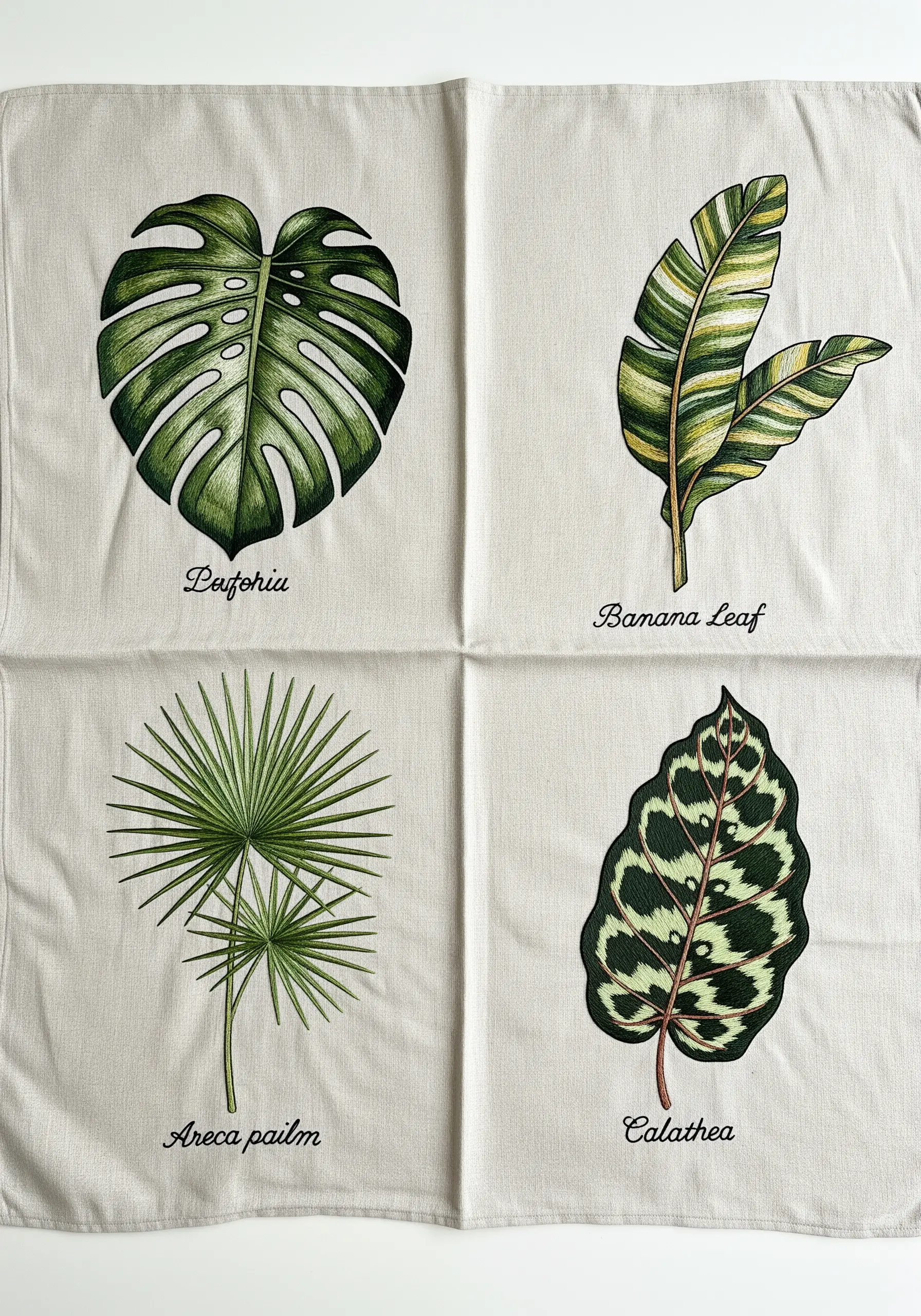
Capture the charm of vintage botanical illustrations by treating your embroidery like a scientific drawing.
Use a very fine single strand of black or dark brown thread for the outlines to mimic the look of ink.
For the color, use a light hand with your long-and-short stitches, creating a soft, watercolor-like wash rather than a solid fill. Allowing some of the fabric to show through is key to this delicate style.
Adding calligraphic labels underneath each leaf completes the scientific, specimen-sheet aesthetic. You can adapt any hand embroidery leaf patterns to this refined style.
20. Play with Appliqué and Negative Space
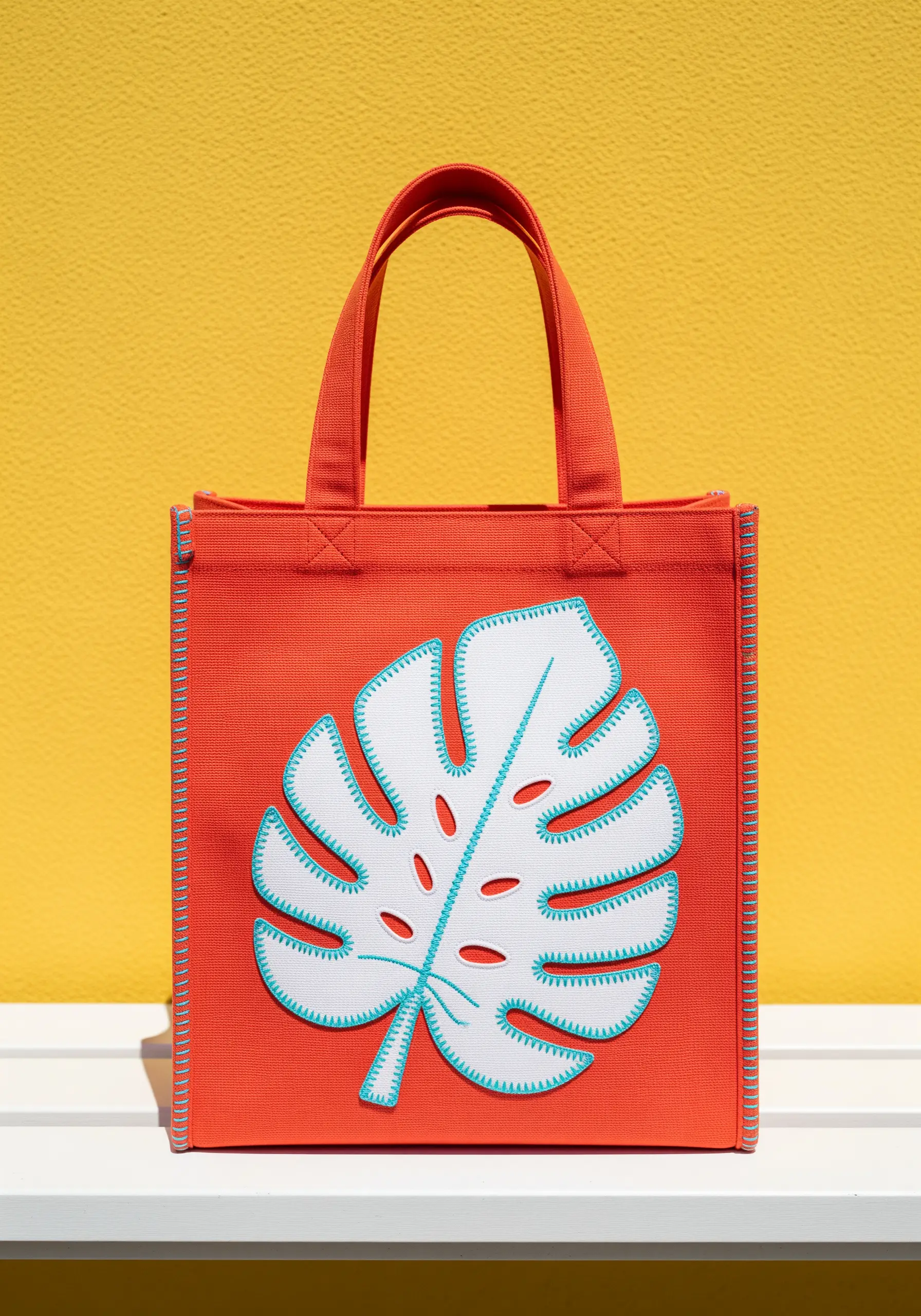
Create a bold, graphic statement by combining appliqué with decorative stitching and negative space.
Cut the main leaf shape from a solid white fabric. Instead of embroidering the veins, let the colorful fabric of the tote bag show through the cutouts.
Secure the appliqué piece with a decorative edge stitch, like a blanket stitch, in a contrasting color. This adds a handmade, textural feel.
Stitch the central vein directly onto the appliqué piece to complete the design. This approach is a clever twist on abstract fabric collage embroidery ideas.
21. Create a Cascading Botanical Design
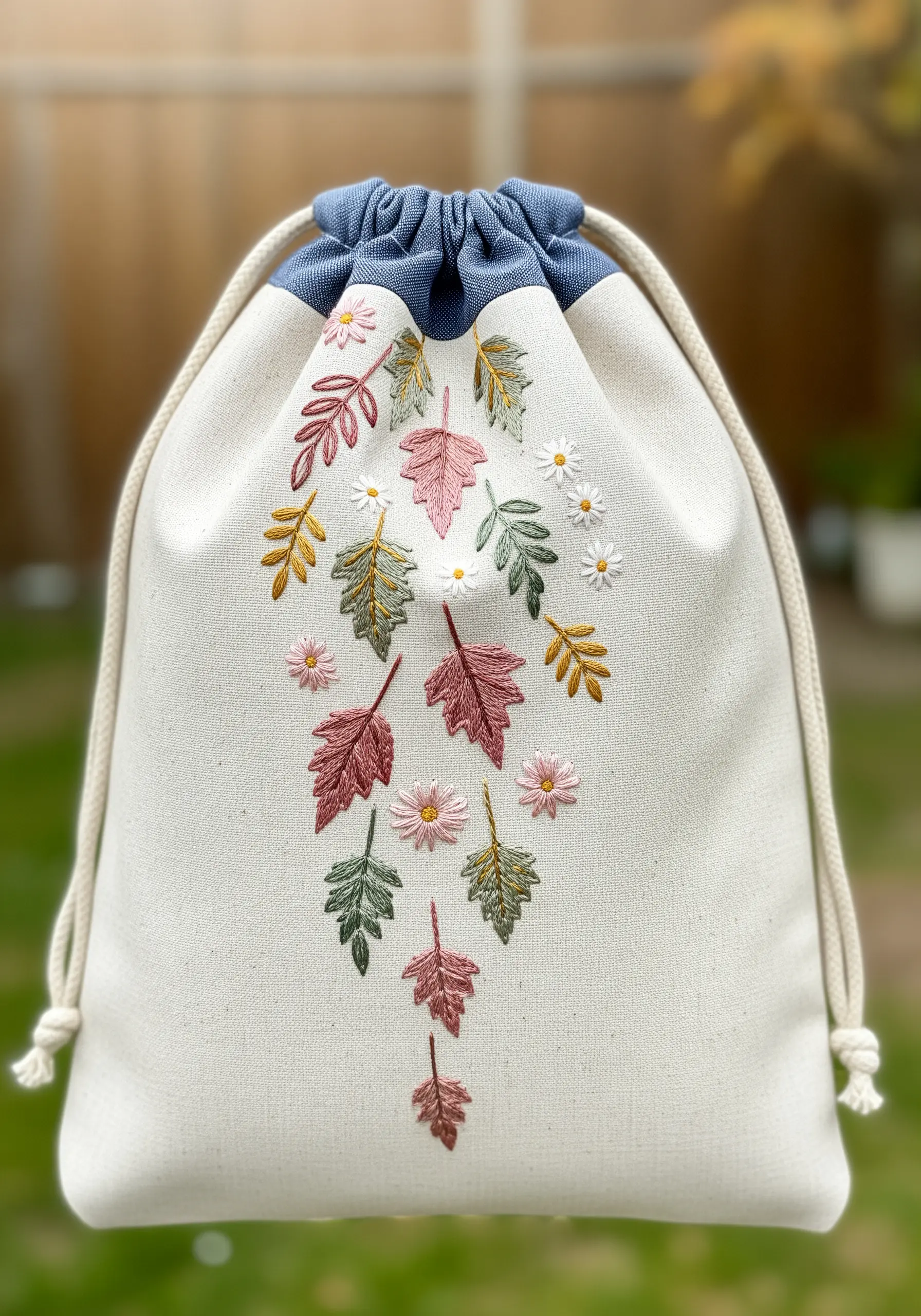
Give your design a sense of gentle movement by arranging leaves and flowers in a cascading or falling pattern.
Vary the size, color, and type of leaf to create a more natural, organic feel. A mix of fishbone stitch, satin stitch, and lazy daisy stitch will add textural variety.
Stitch the motifs at different angles and overlap them slightly to enhance the illusion of depth and movement.
Adding tiny, simple flowers like these lazy daisy stitch daisies provides a delicate counterpoint to the leaves. This style is perfect for adding charm, much like cottagecore floral patches.
22. Add Sparkle with Bead Embroidery
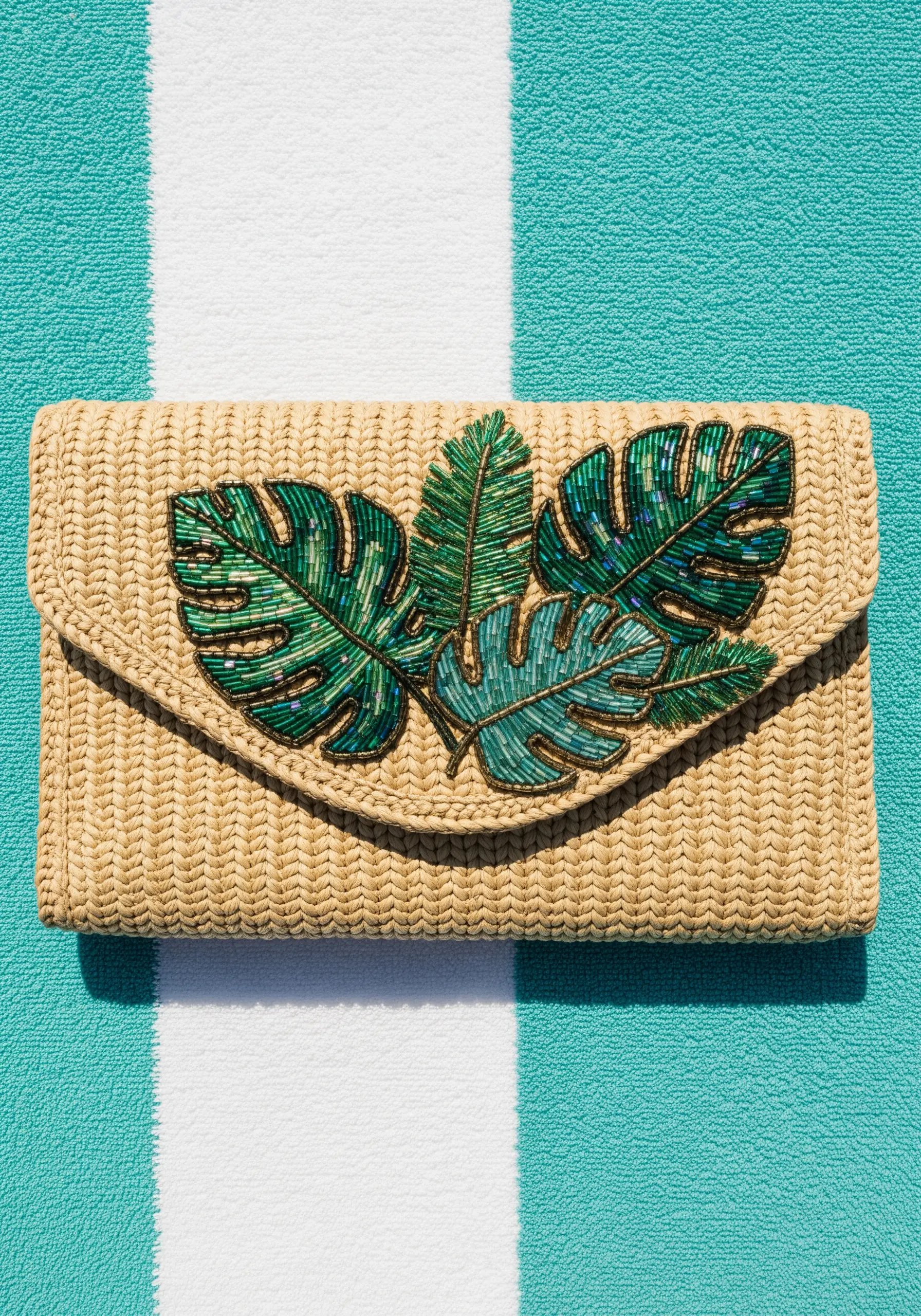
Introduce glamour and texture to your embroidery by incorporating beads.
Outline your leaf shapes with a simple backstitch to serve as a guide. Then, fill the interior with tiny seed beads, attaching them with a matching or contrasting thread.
You can either stitch them on one by one for a dense, pavé effect, or couch down entire strands of pre-strung beads.
Use a different color or finish of bead—like the translucent and opaque greens here—to create shading and dimension within the leaf. This is a hallmark of mixed media contemporary embroidery designs.
23. Create Texture with Tone-on-Tone Stitching
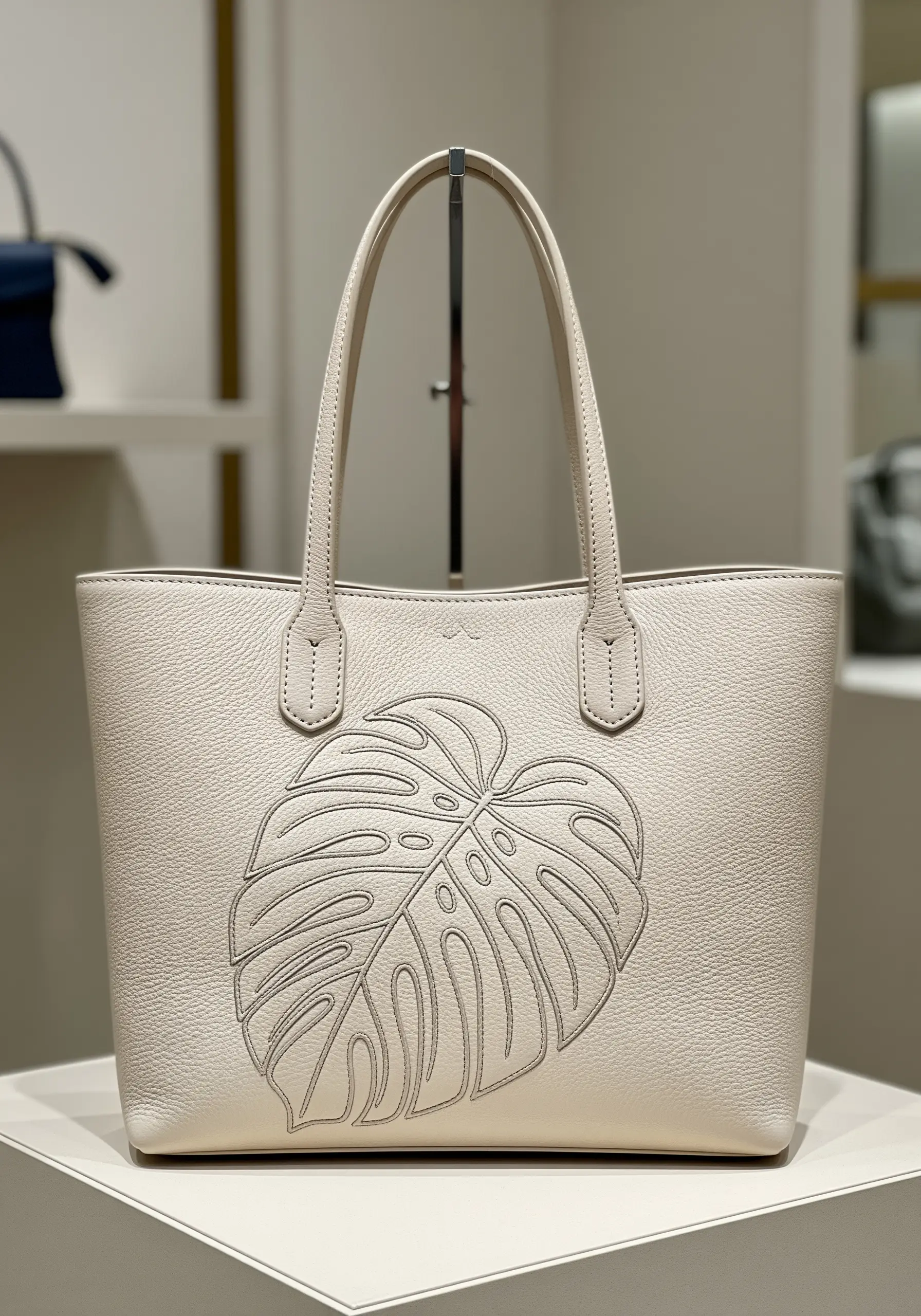
Achieve a subtle, luxurious look by using a thread color that closely matches your base material.
On a material like this pebbled leather tote, the design is defined by texture rather than color.
Use a simple backstitch or a double running stitch (also known as Holbein stitch) to create clean, graphic lines.
The raised quality of the thread against the leather creates a debossed or quilted effect that is both tactile and visually sophisticated. Minimalist stitch designs like this are all about quiet confidence.
24. Turn Your Stitches into Wearable Patches
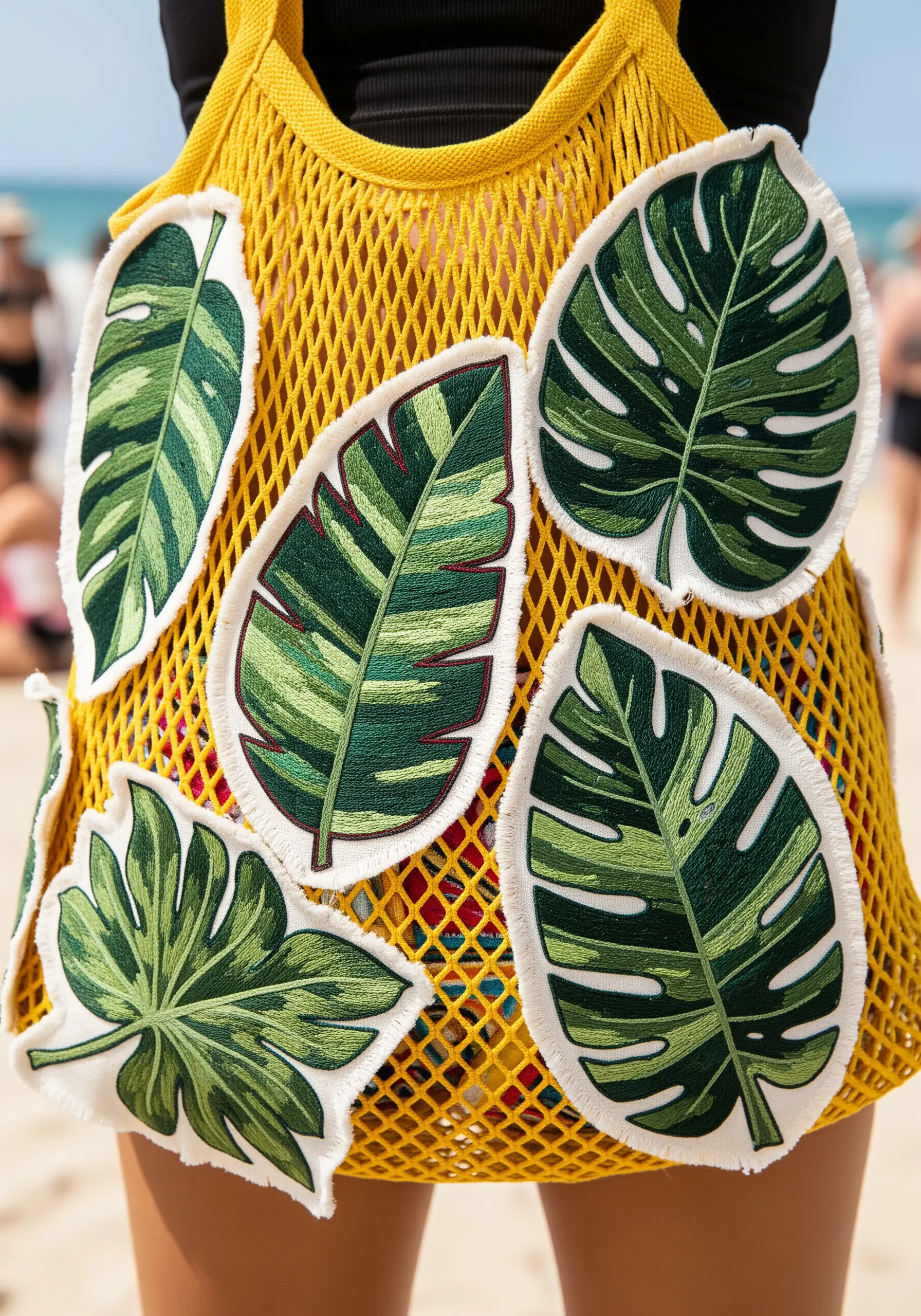
Instead of embroidering directly onto a difficult fabric like mesh, create embroidered patches that can be applied anywhere.
Stitch your leaf designs onto a sturdy piece of felt or canvas. Once complete, carefully cut out the shape, leaving a small fabric border.
You can either finish the edge with a tight satin stitch or, for a more rustic look, gently fray the edges as shown here.
Attach the patches to your bag with a few secure stitches, allowing you to create a layered, collage-style design. This is one of the most versatile aesthetic embroidery ideas for customizing any item.
25. Design a Symmetrical Leaf Mandala
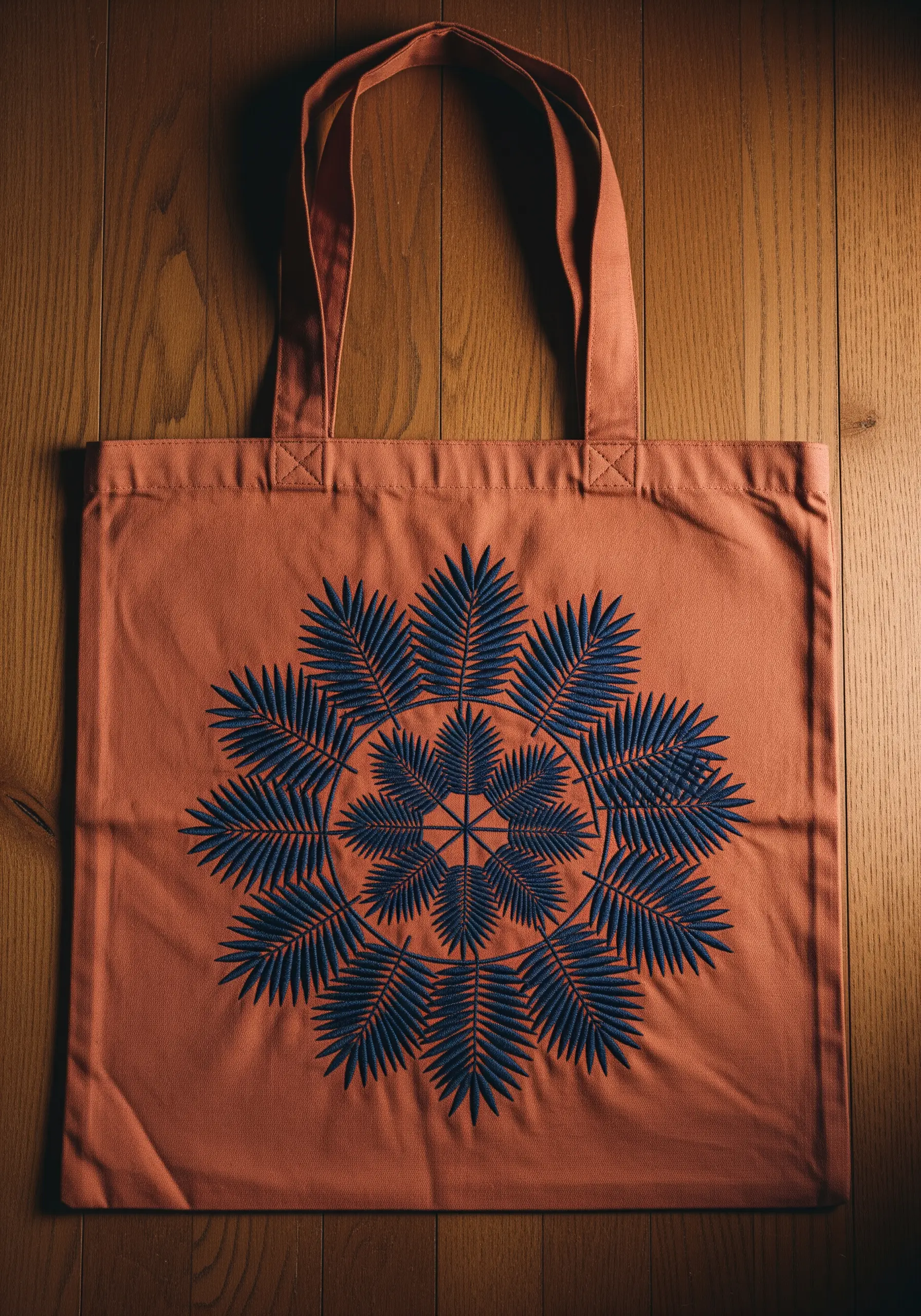
Combine the organic shape of a palm frond with the structured beauty of a mandala for a striking, modern design.
The key to a successful mandala is perfect symmetry. Use a fabric marker and a protractor to divide your circle into equal segments before you begin stitching.
Use a single, clean stitch like a satin stitch or a chain stitch to maintain the graphic quality of the design.
A high-contrast color combination, like this dark navy on terracotta, emphasizes the sharp, geometric lines of the pattern. This approach is a beautiful example of modern thread mandala ideas.
26. Evoke a Mood with a Muted Palette
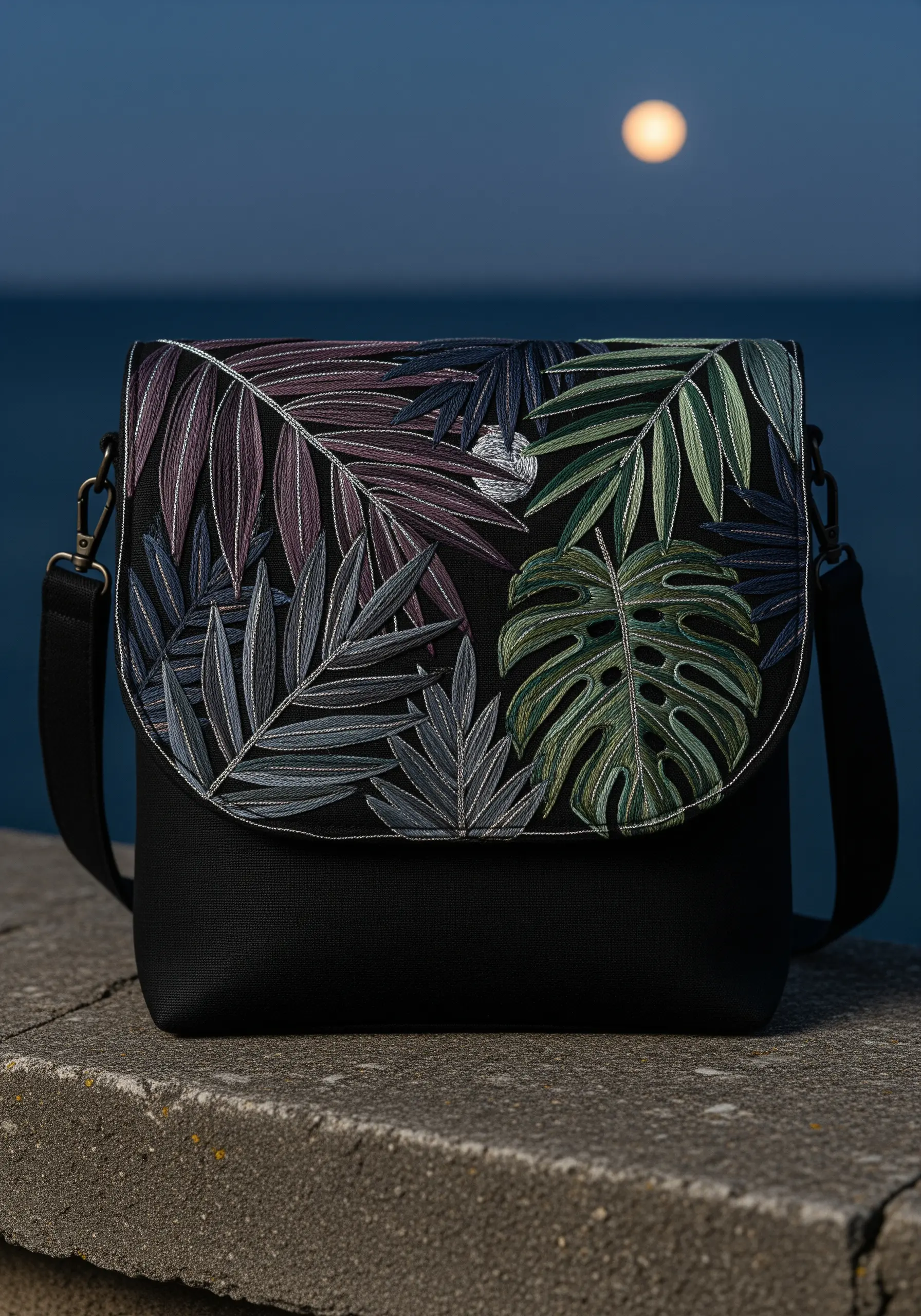
Your color choices can completely change the mood of a design. To create a sophisticated, moonlit jungle feel, swap bright tropical greens for a palette of muted tones.
Work on a dark background fabric, like this black canvas, to make the softer colors stand out.
Combine dusty purples, slate blues, soft moss greens, and silvery greys to create a serene and mysterious atmosphere.
A single pop of a lighter color, like the white thread used for highlights, will act as the ‘moonlight’ in your composition. These Night garden embroidery ideas are perfect for a more subtle take on tropical.
27. Go Big with High-Texture Fiber Art
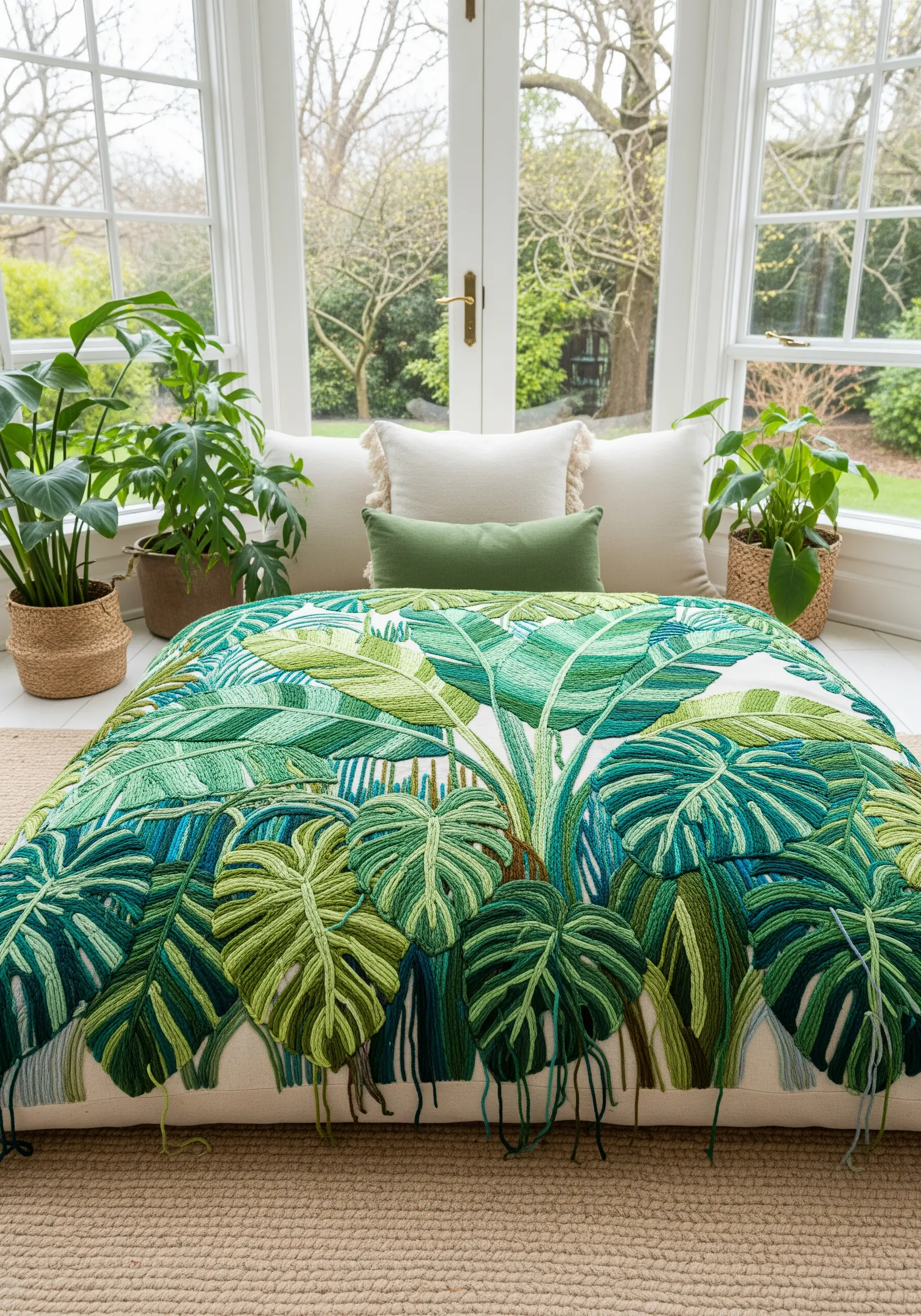
For a truly statement-making piece, think beyond floss and embrace chunky yarns and high-texture stitches.
This design uses techniques like loop stitch and turkey work, which create a dense, shag-like pile. You stitch the loop and then can choose to leave it or snip it for a different effect.
Work on a very sturdy backing fabric to support the weight of the dense yarn.
Leaving the threads long at the bottom adds a dramatic, deconstructed fringe that enhances the piece’s artistic, handmade quality. These are the ultimate texture-rich embroidery ideas for maximum impact.
28. Achieve a Classic, Hand-Tinted Look
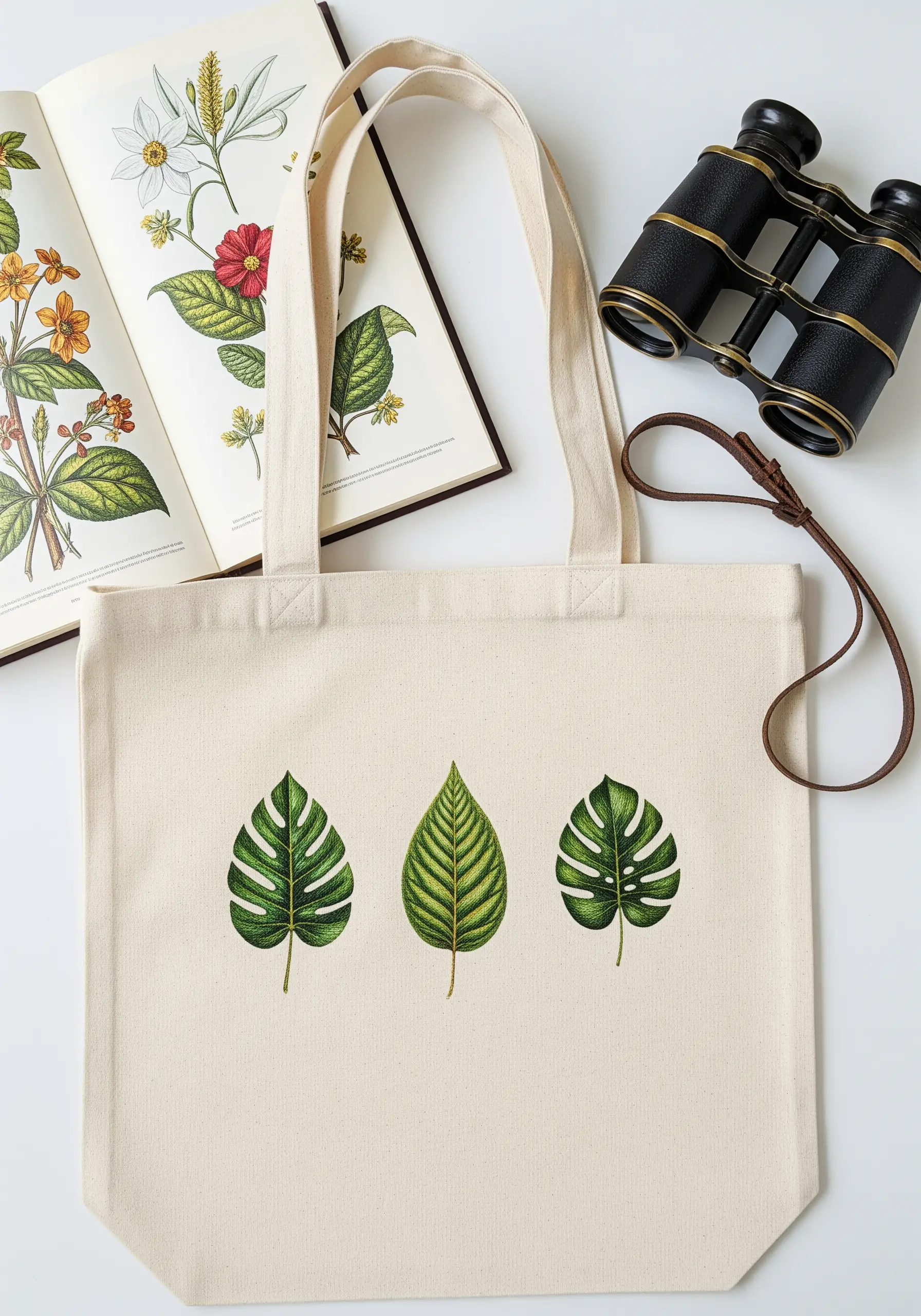
Capture the charm of a vintage hand-colored print by focusing on delicate shading and precise linework.
First, stitch the fine veins and outlines of each leaf using a single strand of dark thread and a simple backstitch.
Then, use a very light long-and-short stitch to add soft washes of color, blending the greens and yellows subtly.
The key is to not completely fill the shapes, allowing the base fabric to show through, which gives the embroidery a translucent, airy quality reminiscent of classic vintage botanical pillow embroidery patterns.
29. Master High-Contrast Graphic Linework
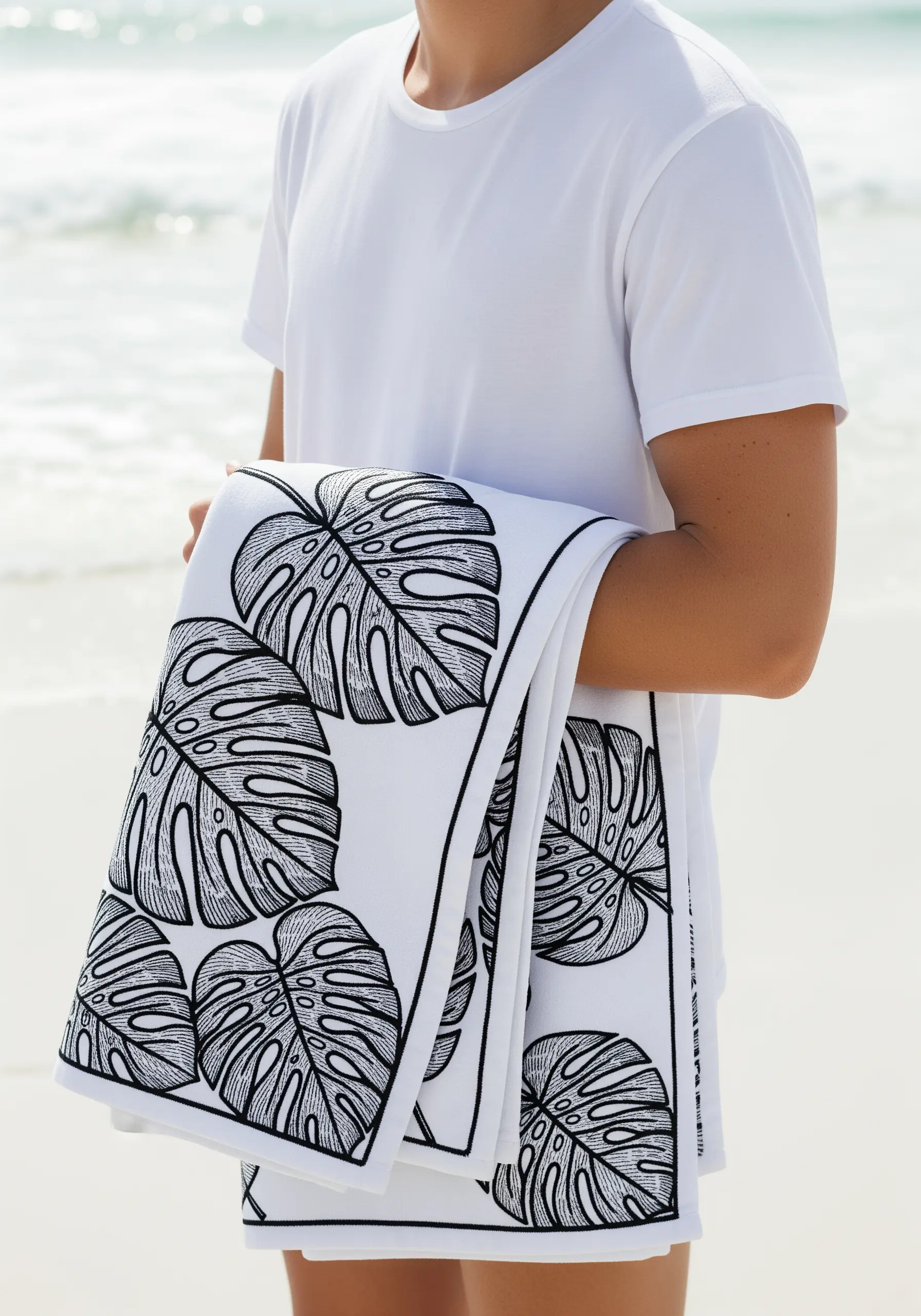
Create a powerful, modern statement using nothing more than a bold outline and a single color of thread.
This style, reminiscent of woodblock prints, relies on clean, confident lines and a strong sense of negative space.
Use a thicker thread, like a size 5 pearl cotton, and a consistent stitch like a stem stitch or split stitch to create substantial, uniform outlines.
The stark contrast between the black thread and the white fabric makes the design incredibly eye-catching and graphic. This technique proves that impactful simple line art… motifs don’t require color to be compelling.
30. Curate a Cohesive Color Story
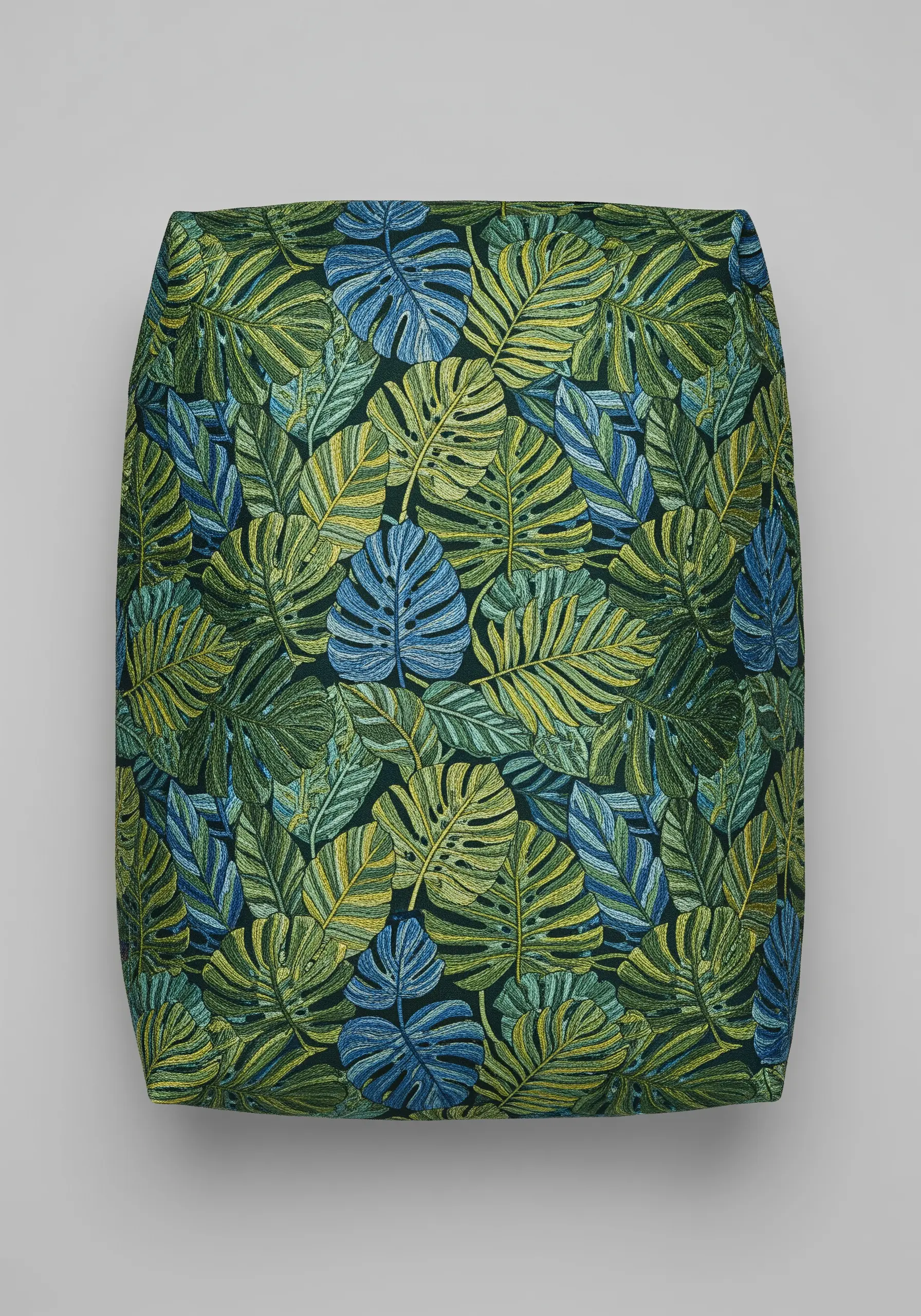
When creating a dense, all-over pattern, a disciplined color palette is essential for a harmonious result.
This design uses shades of just two core colors—green and blue—along with their tints (lighter versions) and shades (darker versions).
By limiting the palette, the eye can focus on the shapes and textures of the leaves without being overwhelmed. The occasional yellow-green leaf adds a touch of warmth and acts as a highlight.
This considered use of color is what elevates a simple repeat pattern into a sophisticated textile design, making it one of the best tropical leaf & flower combination patterns.
31. Incorporate Macrame and Tassels
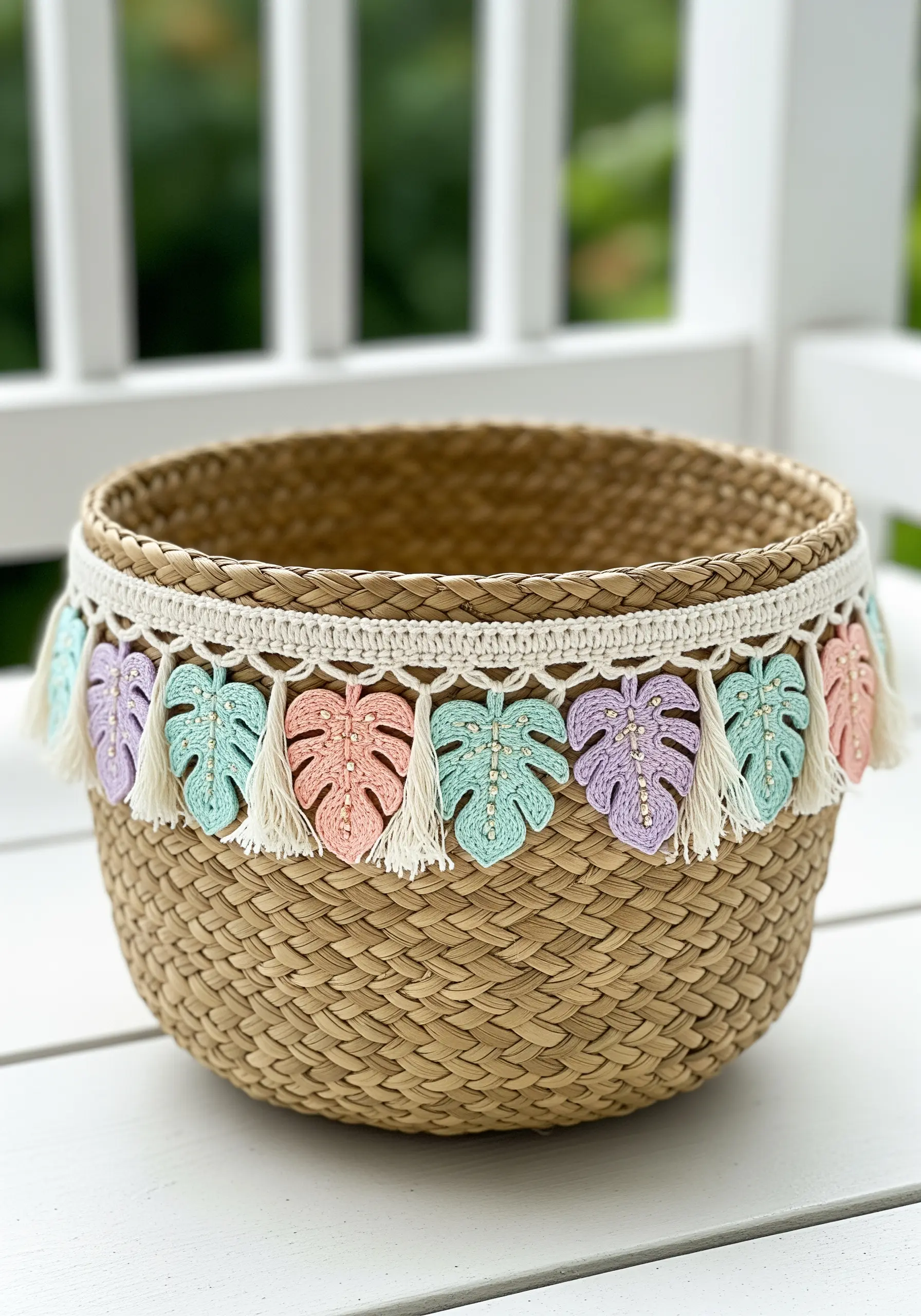
Add a bohemian touch to your project by combining embroidery with other fiber craft techniques like macrame and tassel-making.
Create the pastel monstera leaves using a padded satin stitch on a separate piece of fabric, then cut them out.
Stitch them onto a macrame-style trim, like this braided band, and intersperse them with simple handmade tassels.
This approach adds layers of texture and dimension, turning a simple seagrass basket into a unique piece of boho decor. Explore more mixed fiber creations inspired by nature to expand your craft.
32. Paint with Thread for a Watercolor Effect
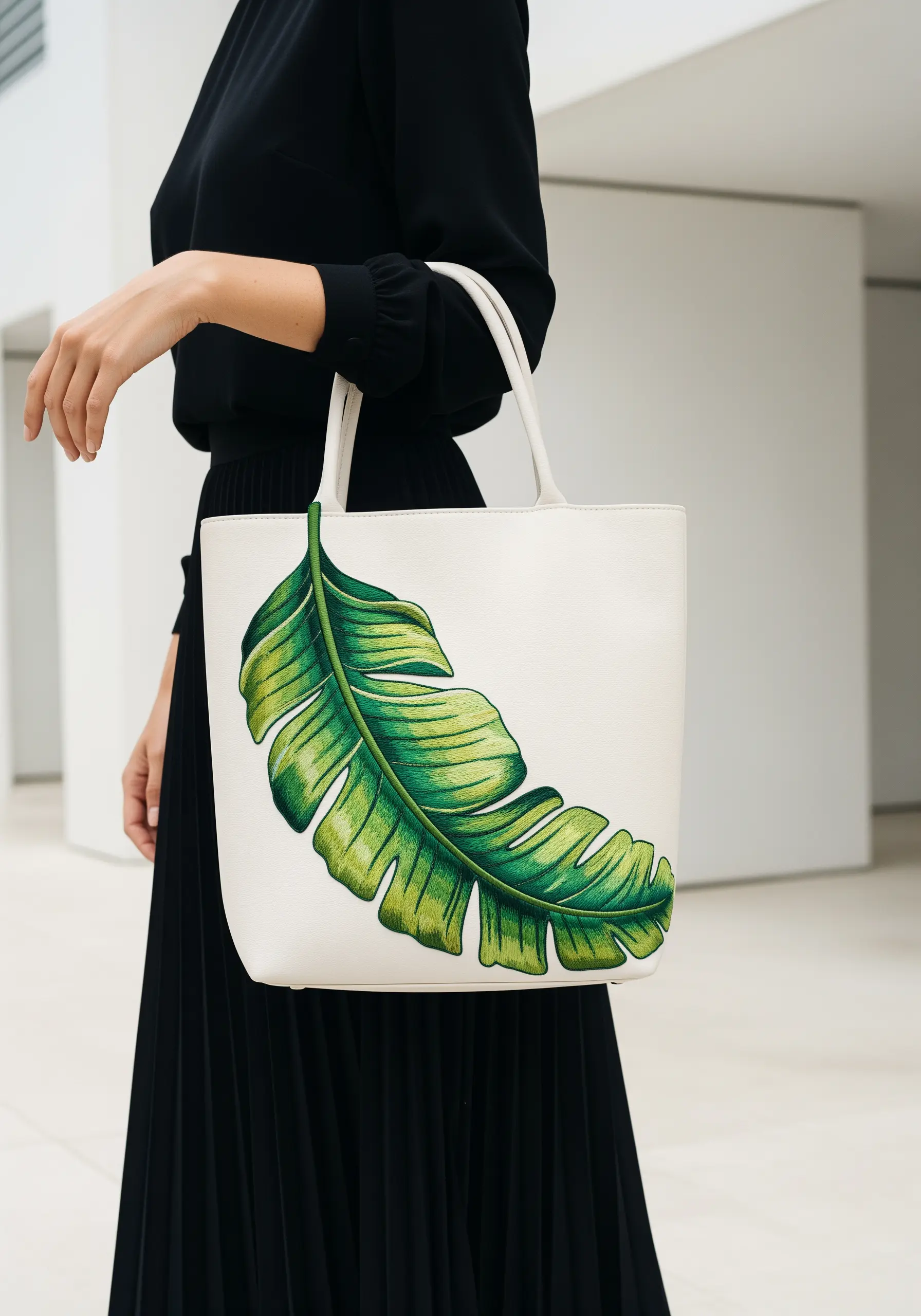
Mimic the soft, blended look of a watercolor painting by using a strategic long-and-short stitch technique.
Instead of creating solid blocks of color, use single strands of floss and allow your stitches to be slightly more sparse and overlapping.
Choose a range of analogous colors—colors that are next to each other on the color wheel, like yellow-green, green, and blue-green—to create smooth, natural transitions.
A dark outline in a split stitch will define the shape and prevent the soft colors from bleeding into the background, perfecting these watercolor-style leaf embroidery blends.
33. The Elegance of Tone-on-Tone Texture
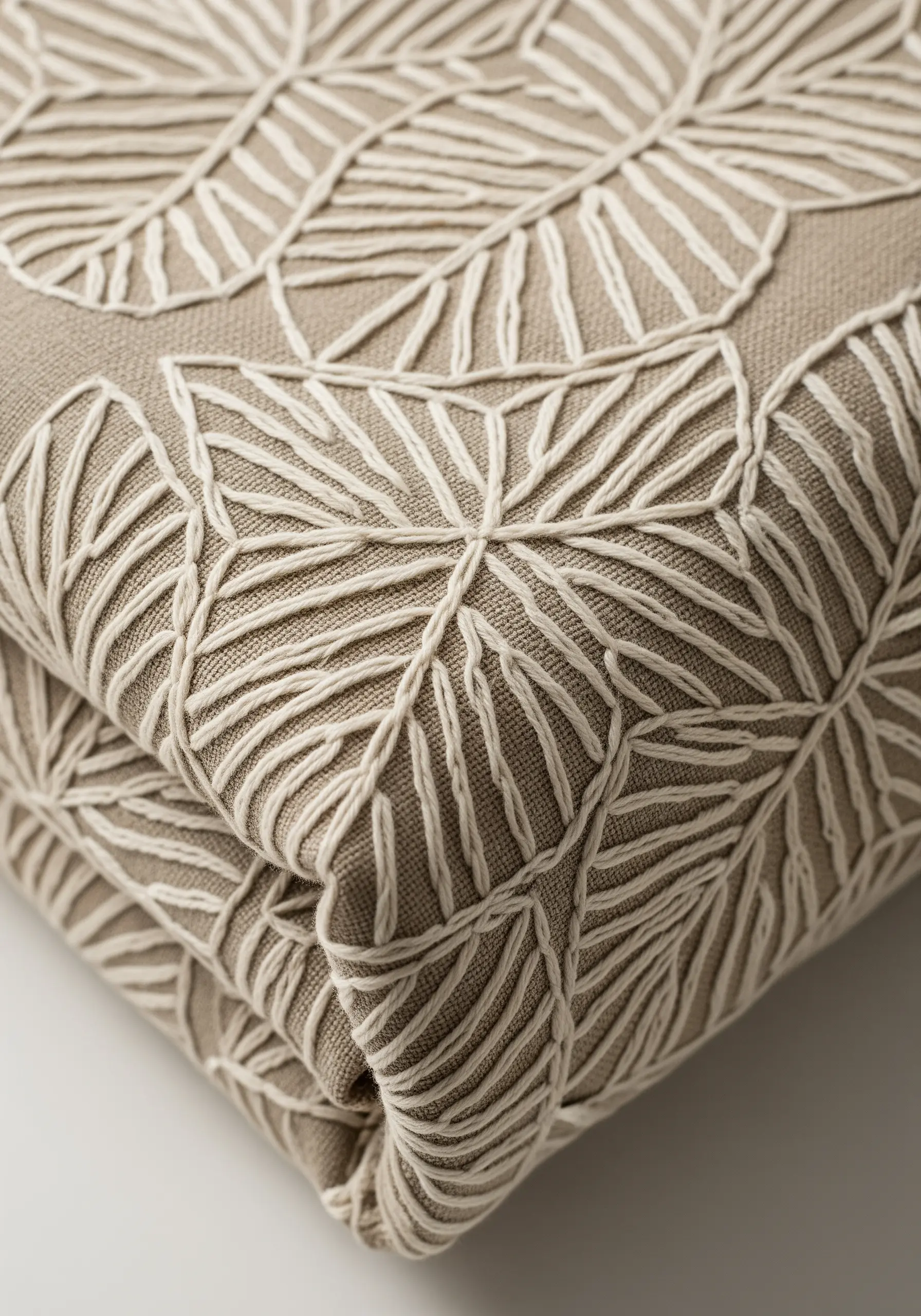
For a design that whispers rather than shouts, explore the beauty of tone-on-tone embroidery.
Choose a thread that is only one or two shades lighter or darker than your base fabric. Here, an off-white thread on a neutral linen creates a subtle, textural pattern.
Use a simple, linear stitch like a backstitch or stem stitch to focus attention on the clean lines of the leaf pattern.
This minimalist approach creates a sophisticated, high-end look where the play of light on the raised stitches is the main attraction. It’s a perfect example of how subtle neutral embroidery designs can be incredibly impactful.


