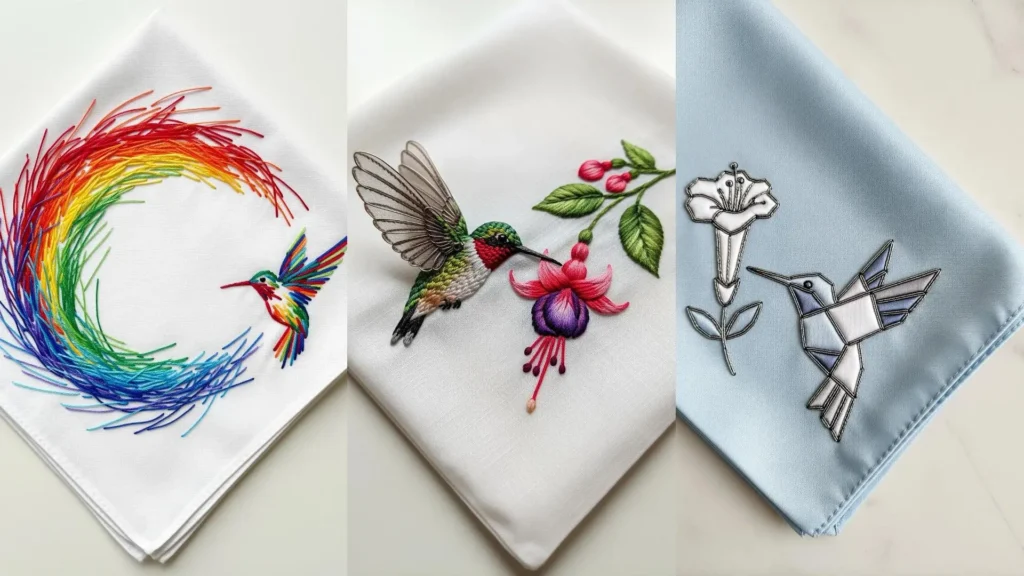
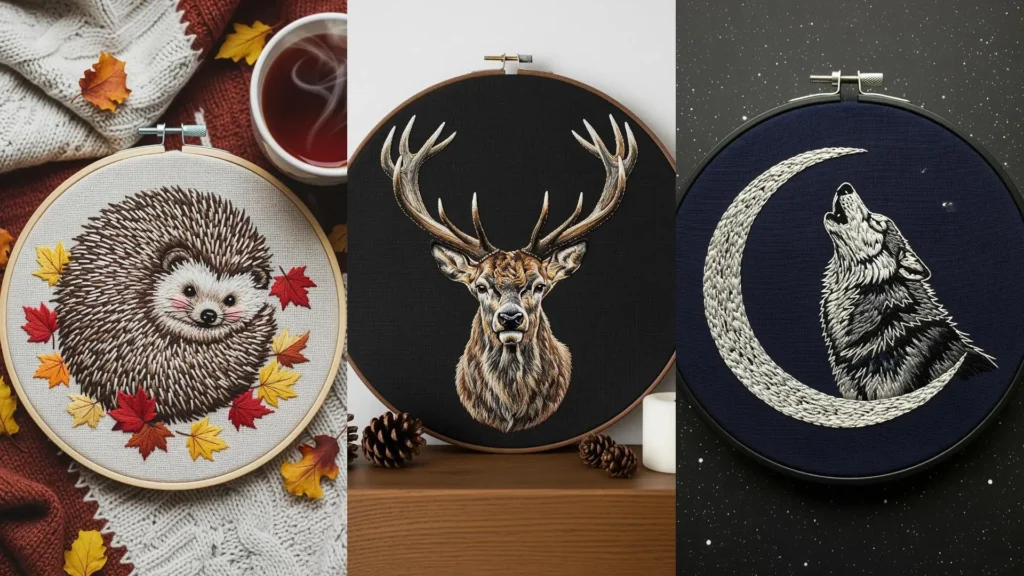
Before you thread your next needle, I want you to reconsider the humble leaf. It’s more than just a simple shape to fill with green; it’s a chance to practice texture, movement, and light. With a few intentional adjustments to your stitching, you can transform a simple garment into a piece of handmade art that tells a story.
These ideas are not about complexity for its own sake. They are about choosing the right stitch for the right effect—a padded satin stitch to make a berry feel plump, a single thread to trace a delicate vein, or a mix of tones to give a leaf a sun-dappled glow. This is how you elevate your work from craft to art.
Let this collection give you the confidence to turn a plain collar, cuff, or hemline into a showcase of delicate texture and personal style. You have the skill; now it’s time to stitch with intention.
1. Frame a Collar with a Delicate Ivy Vine
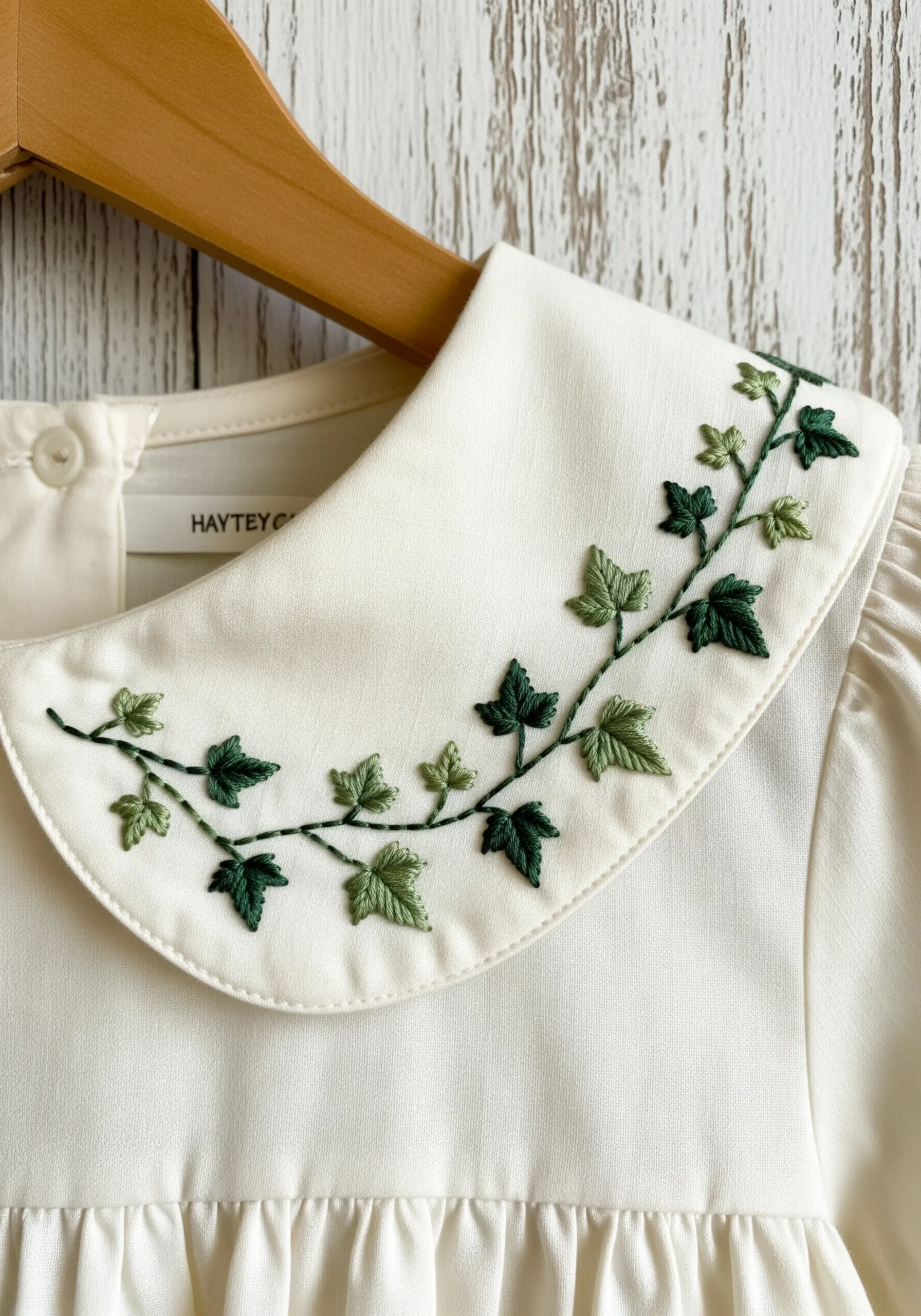
Transform a simple Peter Pan collar by stitching a creeping ivy vine that follows its curve.
Use a stem stitch for the vine, which gives you a rope-like texture that guides the eye naturally.
For the leaves, work with a directional satin stitch, angling your stitches to follow the leaf’s natural growth.
Alternate between two or three shades of green—a deep forest, a mid-tone olive, and a bright spring green—to give the vine realistic depth and prevent it from looking flat.
2. Stitch a Fern and Daisy Meadow on Linen

Create the look of a miniature woodland floor by combining detailed ferns with scattered lazy daisy flowers.
Use fishbone stitch for the fern leaves; this creates a central vein and gives each leaflet a subtle, realistic dimension.
Contrast the intricate fern with simple white lazy daisy stitches for the flower petals and a single yellow French knot in the center.
This pairing of complex and simple stitches adds a gentle, realistic botanical touch without overwhelming the garment.
3. Create a Painterly Autumnal Hemline
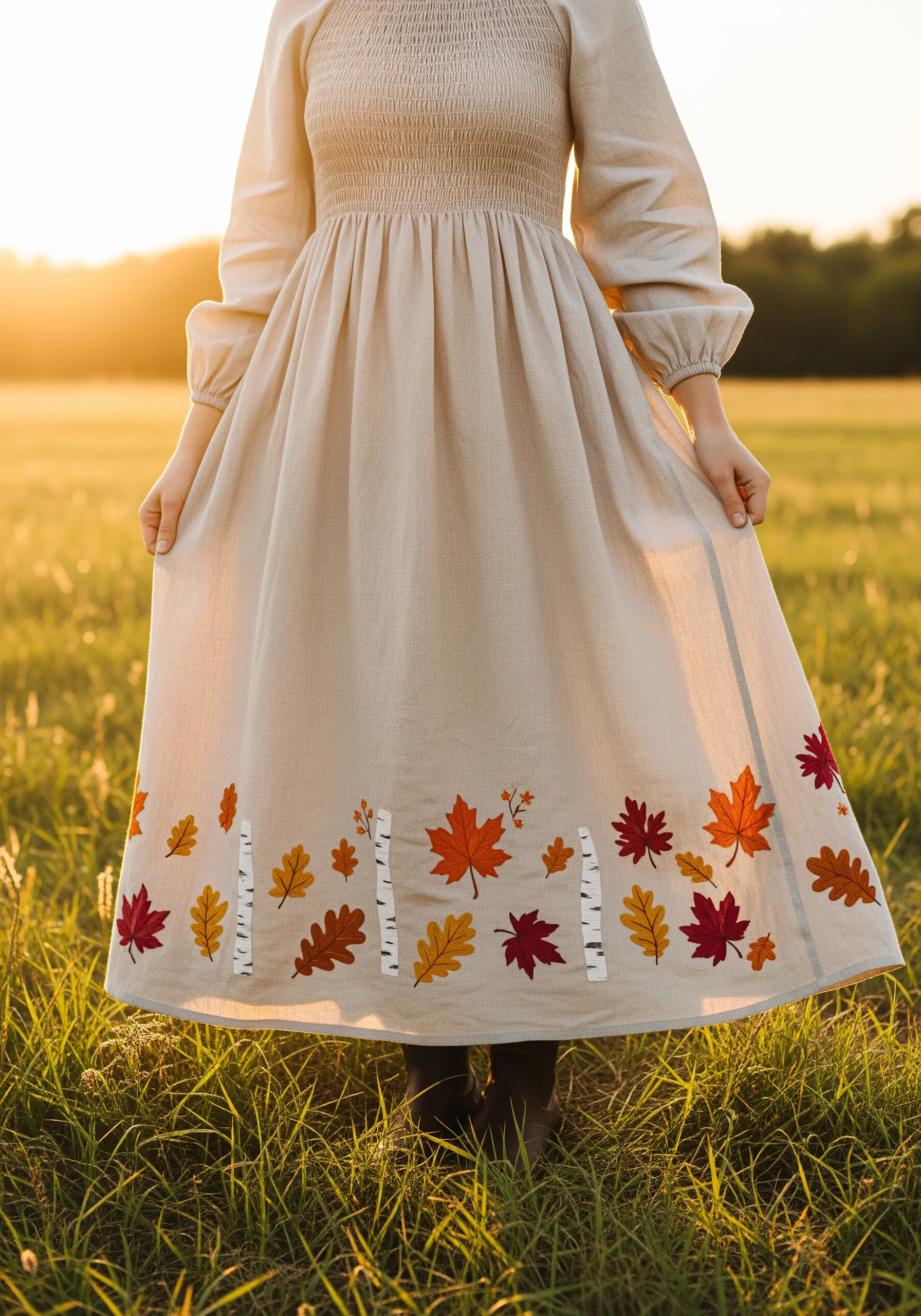
Evoke the feeling of a walk in the woods by scattering autumn leaves along the hem of a linen dress.
Instead of a solid fill, fill each leaf using a directional long-and-short stitch, creating painterly gradients that mimic nature’s imperfections.
Use a palette of rust, gold, crimson, and brown, blending two or three colors within each leaf for a realistic effect.
Intersperse the leaves with graphic birch trunks—simple white satin stitch bars with black straight stitch details—for a modern compositional break.
4. Add a Bold Ginkgo Motif to a Pocket

Make a statement by filling a dress pocket with a tightly clustered bouquet of ginkgo leaves.
Use a single, bold color like marigold yellow to create a strong graphic impact against a contrasting fabric like denim or chambray.
Fill each fan-shaped leaf with a dense satin stitch, ensuring all stitches flow from the stem outwards to mimic the leaf’s natural veins.
This technique creates a design that feels less like delicate embroidery and more like a custom, high-end appliqué.
5. Scatter Two-Tone Eucalyptus Sprigs
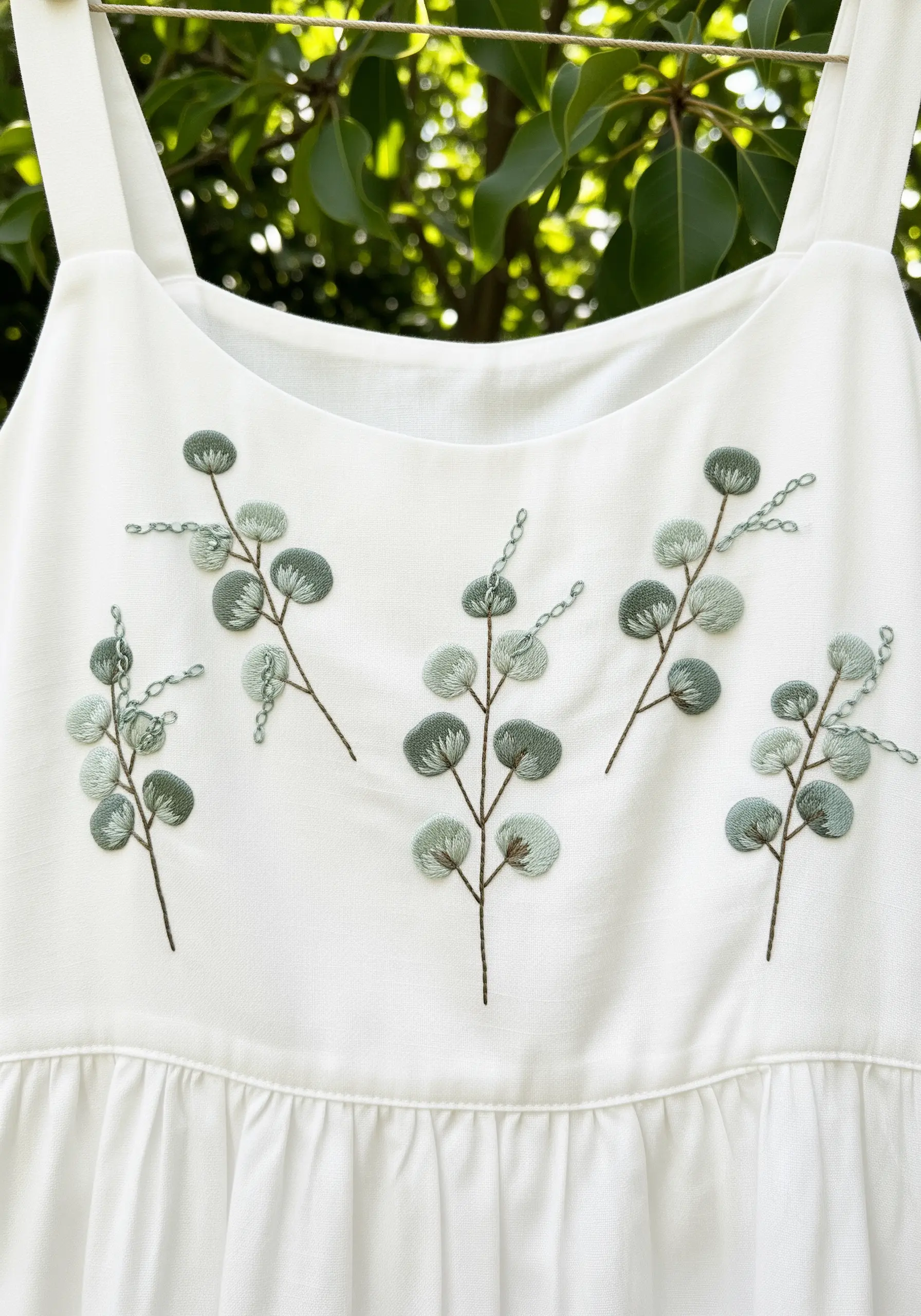
Achieve a soft, ethereal look with delicate eucalyptus branches scattered across the bodice.
For each circular leaf, use a split satin stitch: fill the top half with a dusty sage green and the bottom half with a slightly lighter, silvery green.
This two-tone approach adds depth and realism, making the leaves feel rounded and alive.
Use a fine backstitch for the brown stems and a detached chain stitch for the delicate seed pods to vary the texture.
6. Add Monochrome Texture to a Sleeve

Create an incredibly elegant and sophisticated look by stitching a detailed leaf motif using thread that matches the fabric.
This tone-on-tone technique shifts the focus from color to texture, highlighting the artistry of your stitches.
Use a raised fishbone stitch for the leaves, pulling the thread taut to create deep grooves and shadows that catch the light.
This technique creates texture that captures the subtle weight and movement of willow leaves, making it perfect for a flowing sleeve.
7. Drape a Wisteria Garland Across the Neckline

Frame the décolletage with a romantic, draping wisteria vine for an instantly elegant cottagecore statement.
Use French knots in varying shades of purple and lavender to build up the wisteria clusters, creating a rich, pebbled texture that contrasts beautifully with the smooth leaves.
For the foliage, use a light fishbone stitch in a soft sage green, and connect everything with thin, curling stem stitches to suggest a wild, organic vine.
8. Scatter a Lucky Clover Field
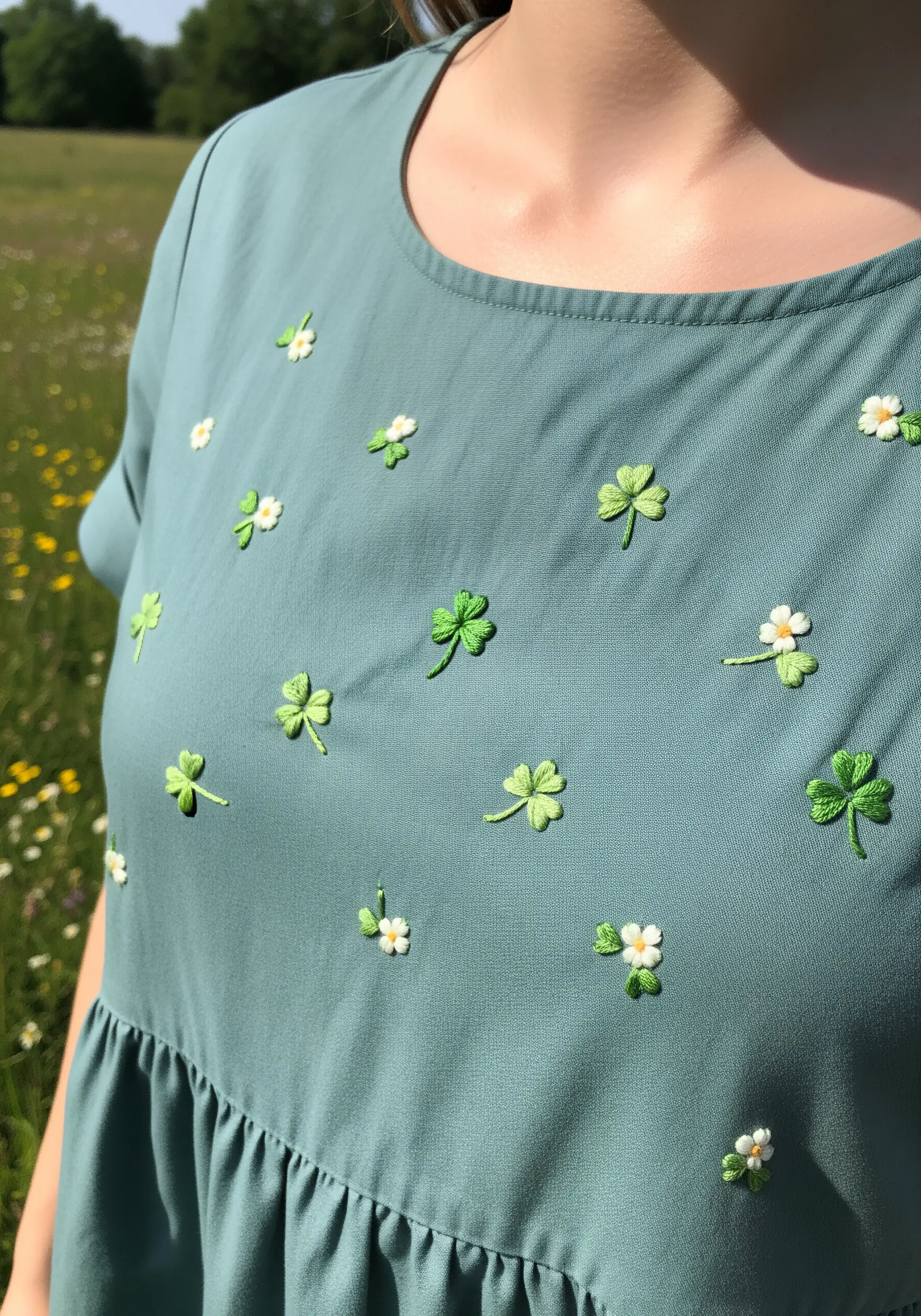
For a sweet and subtle pattern, scatter tiny clovers and micro-flowers across the bodice of a dress.
Create each clover with three detached chain stitches (lazy daisies) in a bright spring green, meeting at a central point.
Add visual interest by mixing in four-leaf clovers and tiny white flowers made from five lazy daisy stitches around a yellow French knot center.
The random, airy placement prevents the design from feeling heavy and gives the fabric a playful, meadow-like quality.
9. Contrast White Leaves on Dark Corduroy
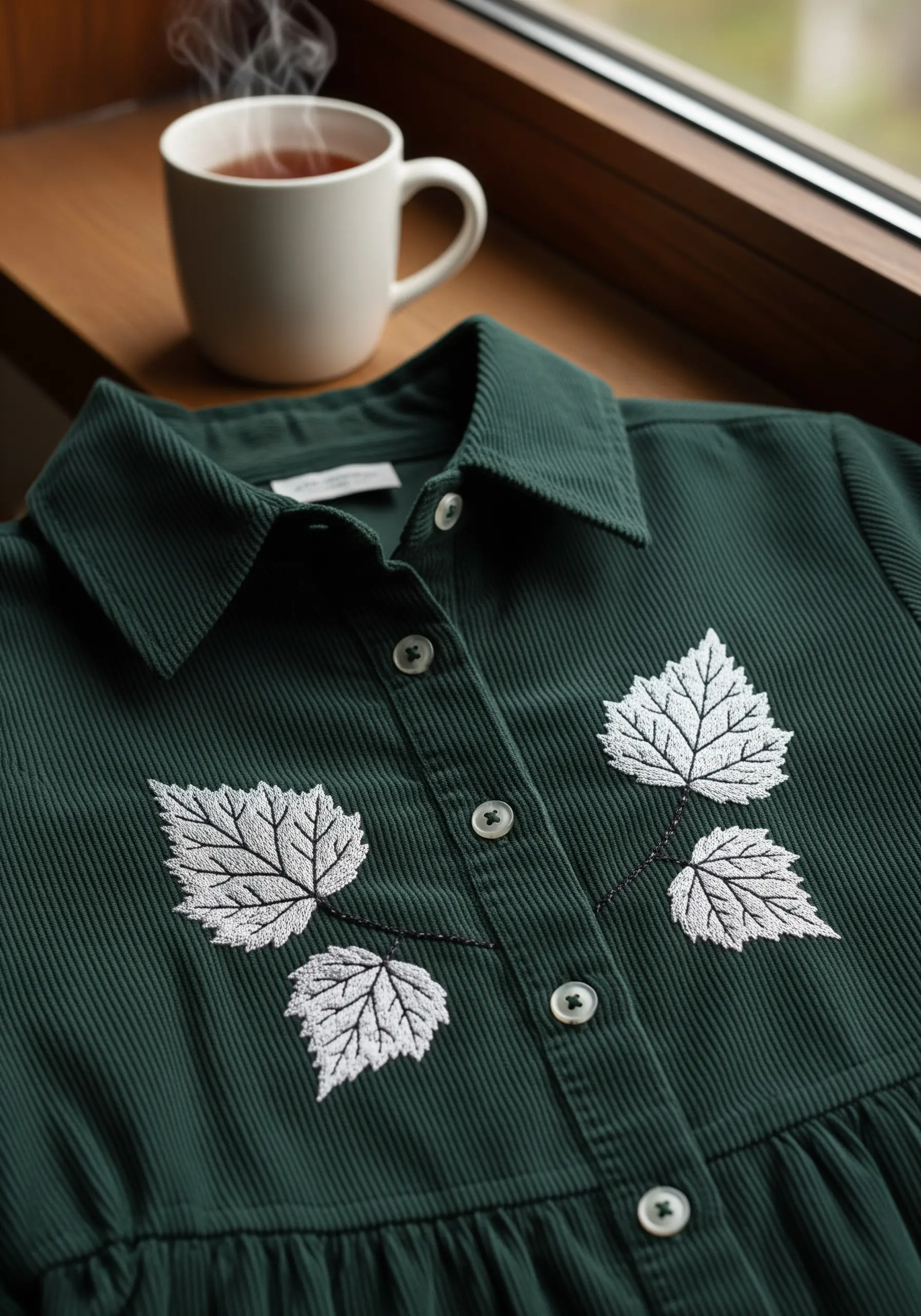
Embroidering on a textured fabric like corduroy requires a specific approach to ensure your stitches stand out.
Use all six strands of your white embroidery floss or even a fine Perle cotton to create stitches that sit proudly on top of the fabric’s ridges.
Outline the leaf shape with a split stitch first, then fill with a dense satin stitch. The outline acts as a dam, keeping your fill stitches clean and defined.
The high contrast between the bright white thread and dark fabric makes this design a striking minimalist statement.
10. Stitch a dimensional Oak and Acorn Motif
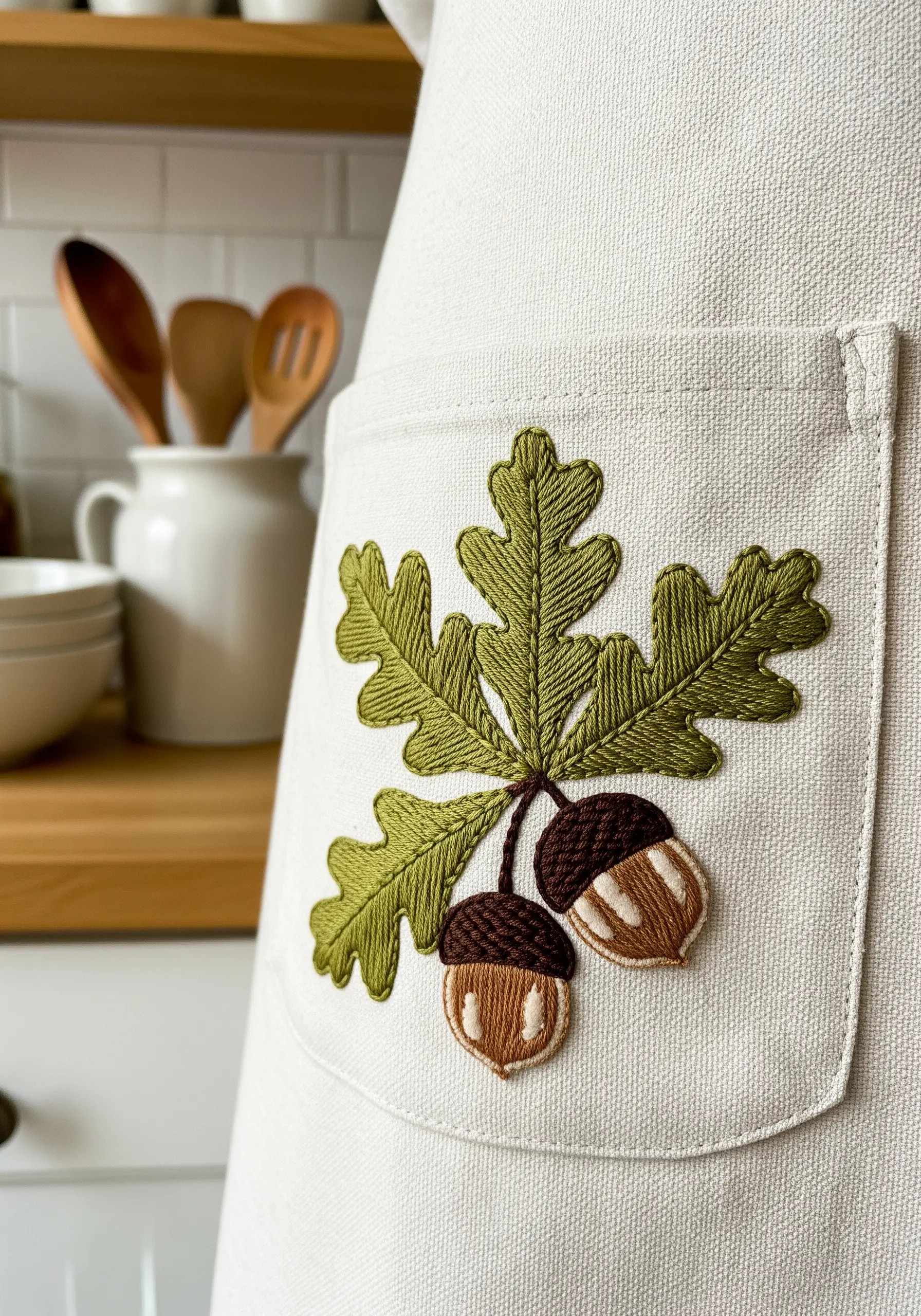
Give your design a tactile quality by combining flat stitches with three-dimensional techniques.
Use a classic fishbone stitch for the oak leaves to create the central vein and gentle texture.
For the acorns, use a padded satin stitch for the nut and a woven wheel stitch (or dense French knots) for the cap to create a truly three-dimensional, tactile effect.
This mix of textures makes the design more engaging and lifelike, perfect for an apron pocket or skirt corner.
11. Outline a Bold Monstera Leaf
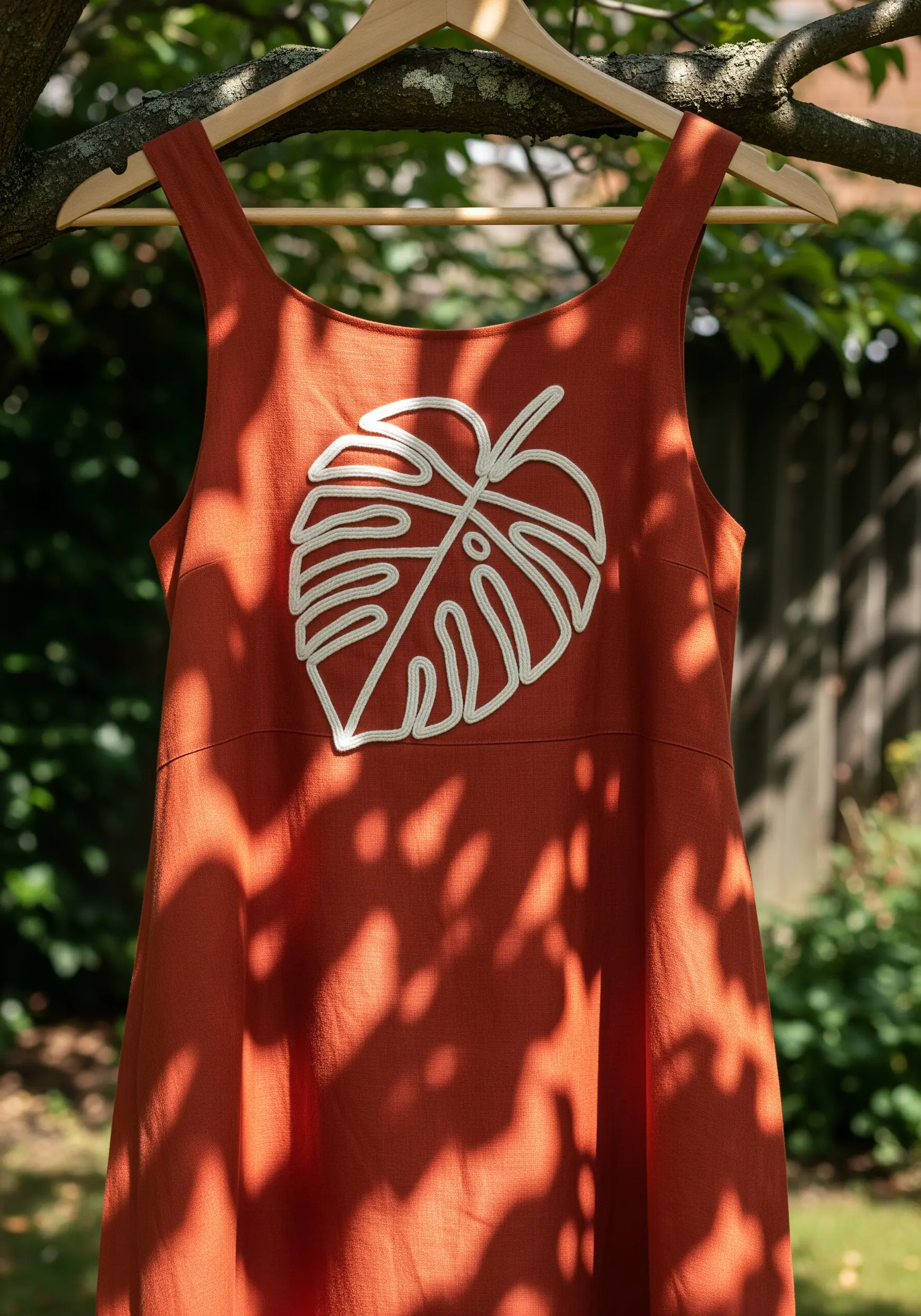
Embrace a more modern, graphic style with a single, bold monstera leaf outline.
Instead of filling the leaf, trace its iconic shape using a thick, raised stitch like a whipped backstitch or a heavy chain stitch.
Using a bright white or off-white thread against a rich, earthy fabric like this terracotta linen creates a stunning visual pop.
This transforms the leaf into an abstract botanical silhouette, perfect for a modern, bold look on linen.
12. Add a Touch of Gold on Velvet

Elevate any garment by embroidering with metallic thread on a luxurious fabric like velvet.
To prevent snagging, use a fine, sharp needle and shorter lengths of thread. A thread conditioner like beeswax can also reduce friction and tangling.
Use precise fishbone or fly stitches for the fern leaflets and a clean stem stitch for the central stalk.
The way metallic thread catches the light against the deep, matte pile of velvet creates a truly opulent and timeless effect.
13. Create a Symmetrical Olive Branch Neckline
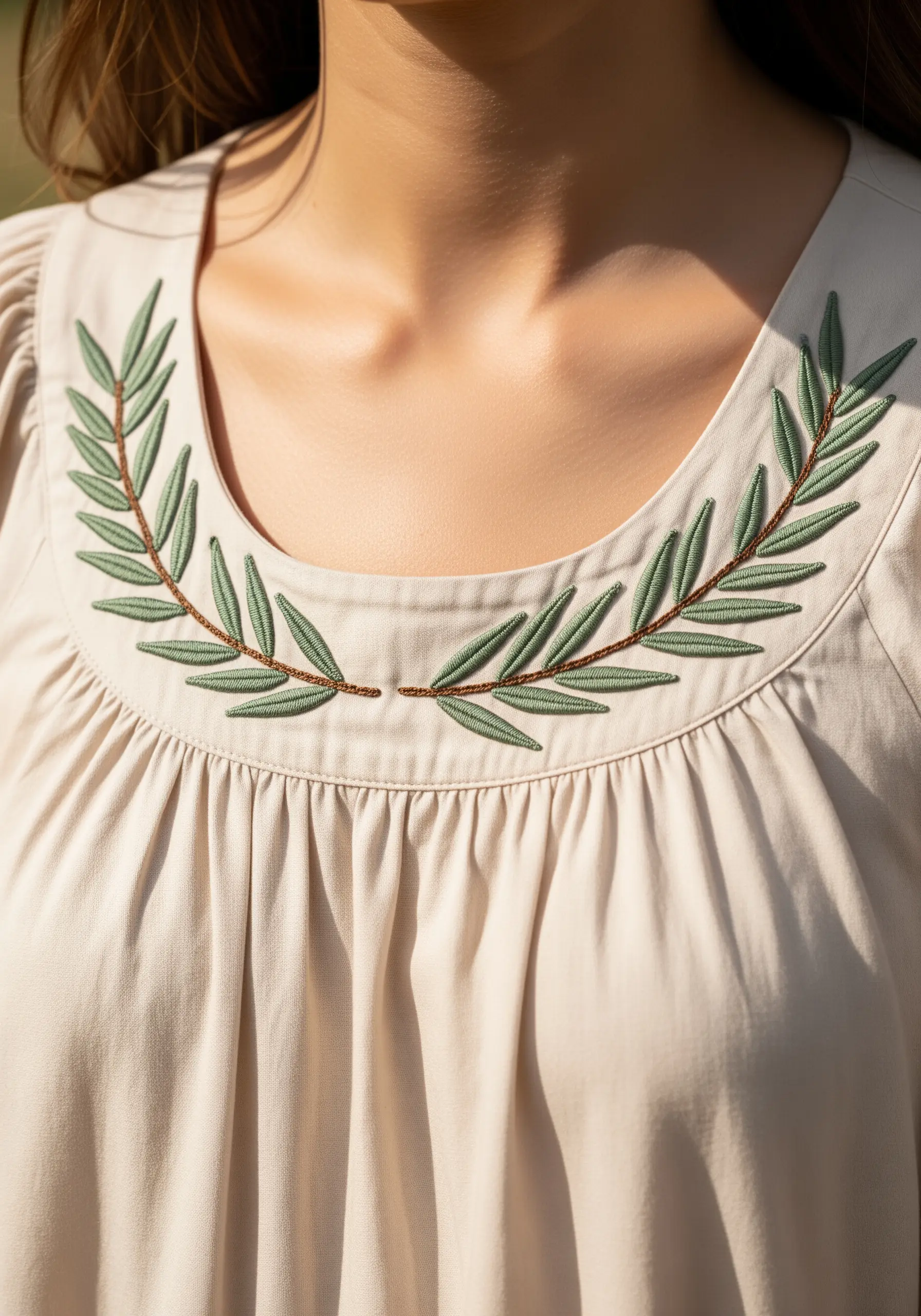
Achieve a classic, Grecian-inspired look with a perfectly symmetrical olive branch wreath framing the neckline.
Lightly trace your design onto the fabric, ensuring both sides are a mirror image for a balanced, harmonious look.
Stitch a central branch with a whipped backstitch for a raised, clean line, then add opposing leaves using a simple fishbone stitch.
This structured, symmetrical placement feels intentional and elegant, instantly elevating a simple gathered bodice.
14. Capture Dandelions in the Wind
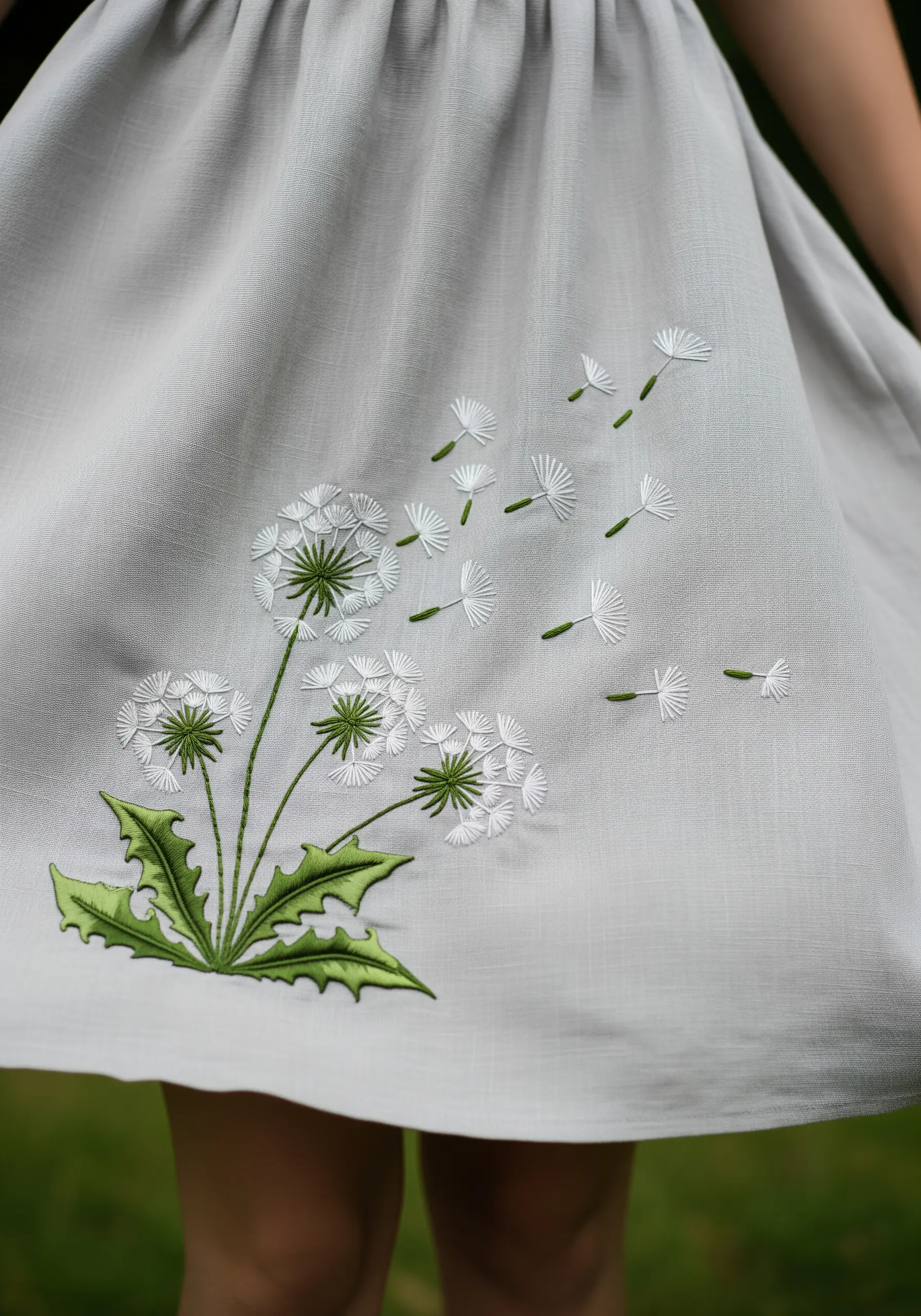
Add a sense of movement and whimsy to a skirt by stitching dandelion clocks with their seeds scattering in the breeze.
For the main flower head, use straight stitches radiating from a central point. Create the floating seeds with a single V-shaped fly stitch topped with a tiny straight stitch.
Arrange the floating seeds in a gentle, sweeping curve to create a convincing illusion of wind.
This technique captures a fleeting moment, adding a sense of narrative and magic to the fabric.
15. ‘Paint’ a Realistic Maple Leaf with Thread
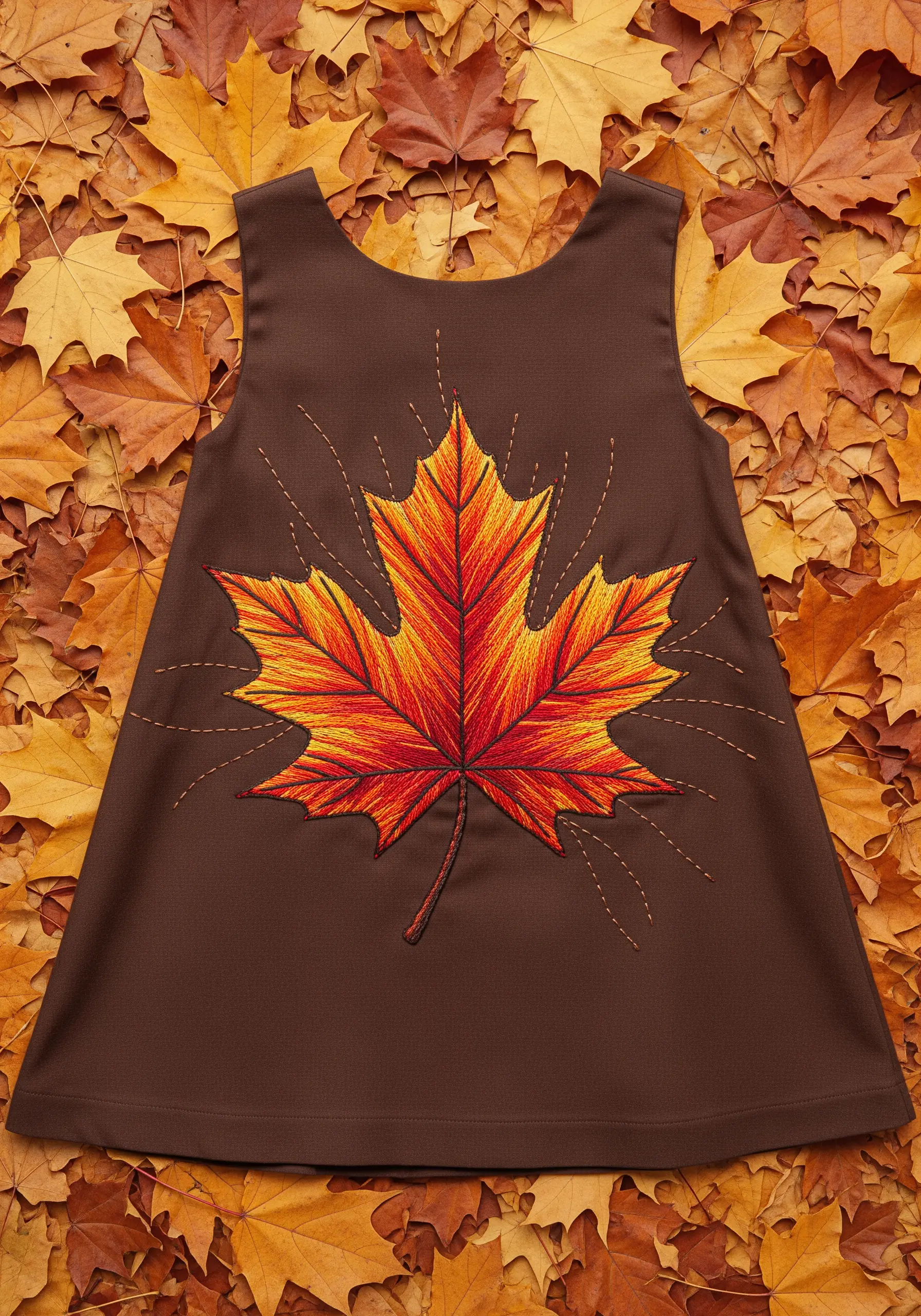
For a true showstopper, use the thread painting technique to create a single, hyper-realistic maple leaf.
This method involves using long-and-short stitches with a single strand of floss to blend colors seamlessly, just like paint.
Start with yellow at the center and gradually introduce shades of orange, red, and deep crimson toward the tips of the leaf.
Mastering this technique allows you to ‘paint’ with thread, achieving stunning gradients and lifelike detail.
16. Design a Thorny Blackberry Border
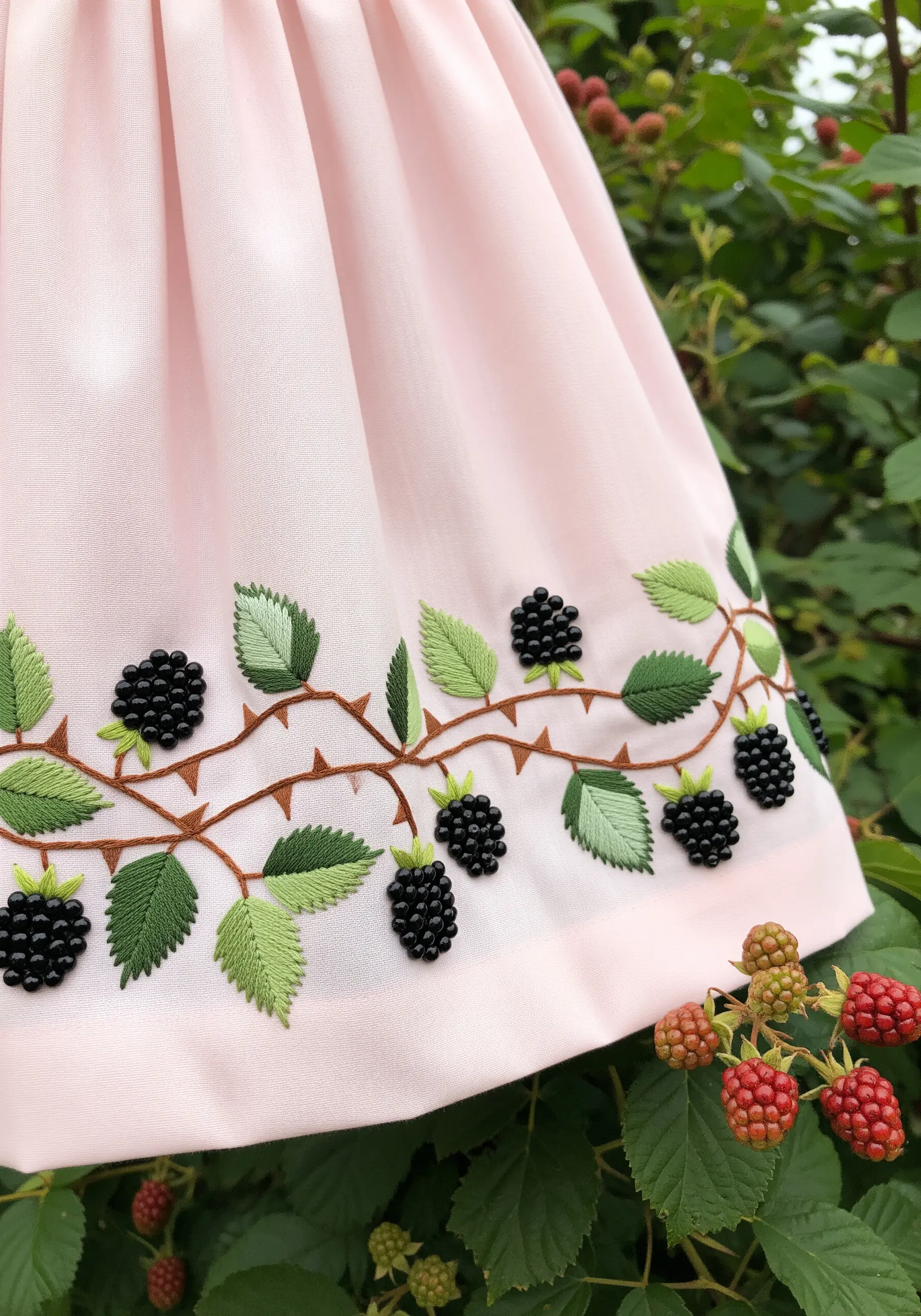
Create a charming and textural border along a hemline with a winding blackberry vine.
Use a thorny stem stitch for the vine—this is a standard stem stitch with tiny, sharp straight stitches added at intervals for the thorns.
Combine two different greens for the satin-stitched leaves to add dimension.
For the most realistic effect, use dimensional stitches like French knots or sew on small black seed beads for the blackberries to give them a juicy, raised texture.
17. Embellish a Cuff with Golden Vines

Turn a simple sleeve cuff into a piece of jewelry with an intricate, encircling vine.
Use a combination of off-white and pale gold threads for a subtle, elegant shimmer that isn’t overwhelming.
Work the leaves in a padded satin stitch to give them a slightly raised, pillowy effect. Outline the delicate, swirling vine with a simple backstitch.
This focused placement draws attention to the hands and adds a bespoke, considered detail to the garment.
18. Apply Felt Leaves for Quick Texture
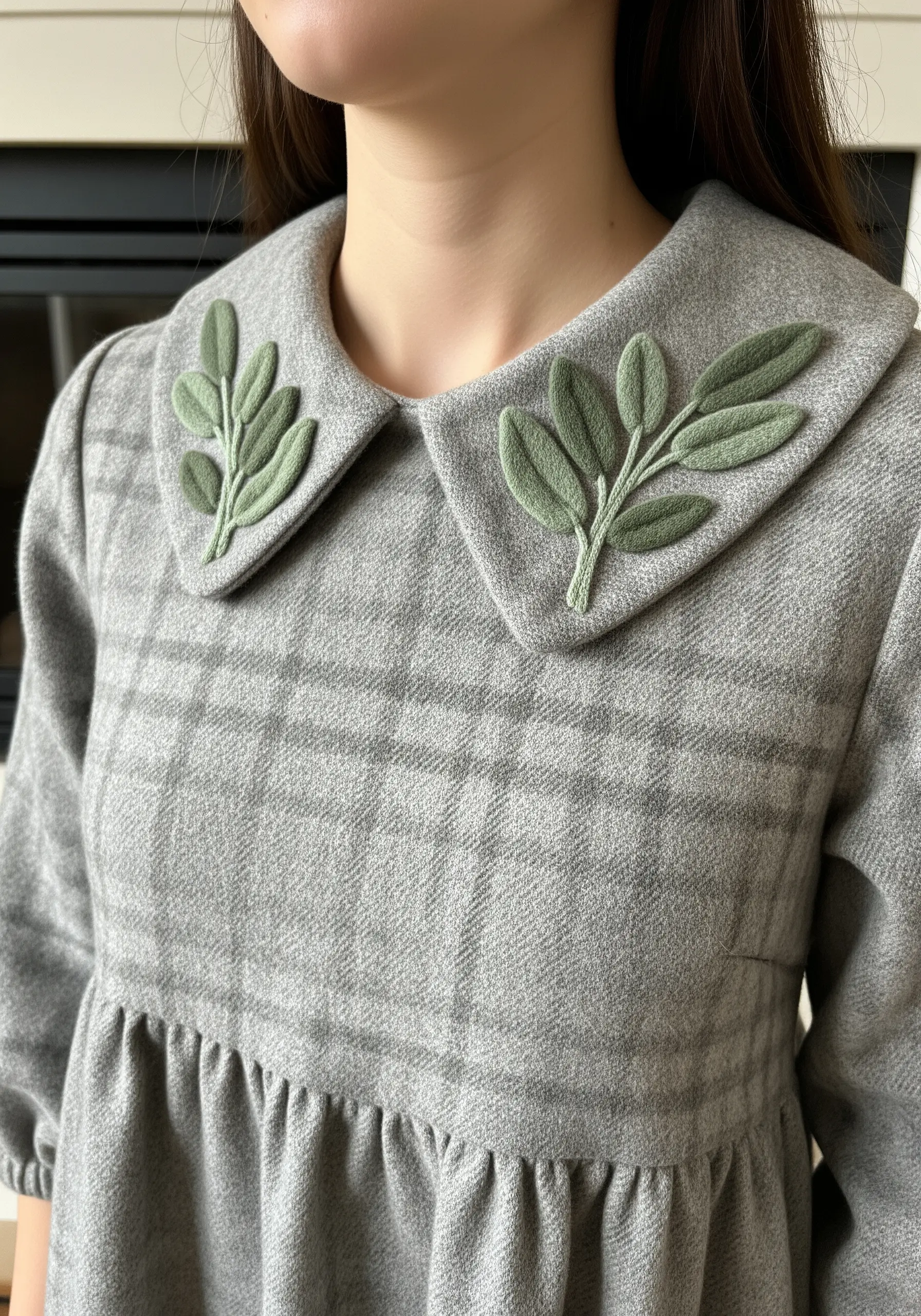
For a fast yet impactful result, combine embroidery with felt appliqué.
Cut your leaf shapes from a piece of felt in a complementary color. Pin them in place on the collar or garment.
Secure the felt pieces with a decorative blanket stitch or a simple running stitch around the edge, then add a central vein and stem with a backstitch.
This is a wonderful way to add bold shapes and soft texture quickly, creating a beautiful mixed-media effect.
19. Craft a Freestanding Embroidered Belt

Create a stunning, detachable accessory by stitching a belt of overlapping leaves.
This can be achieved by embroidering a dense leaf pattern on a strip of water-soluble stabilizer. Once the stabilizer is washed away, you are left with a flexible, lace-like piece of embroidery.
Alternatively, stitch directly onto a sturdy fabric belt base.
Add a single line of metallic gold thread for each leaf’s central vein to catch the light and add a touch of glamour.
20. Stitch an Airy Cilantro Bouquet
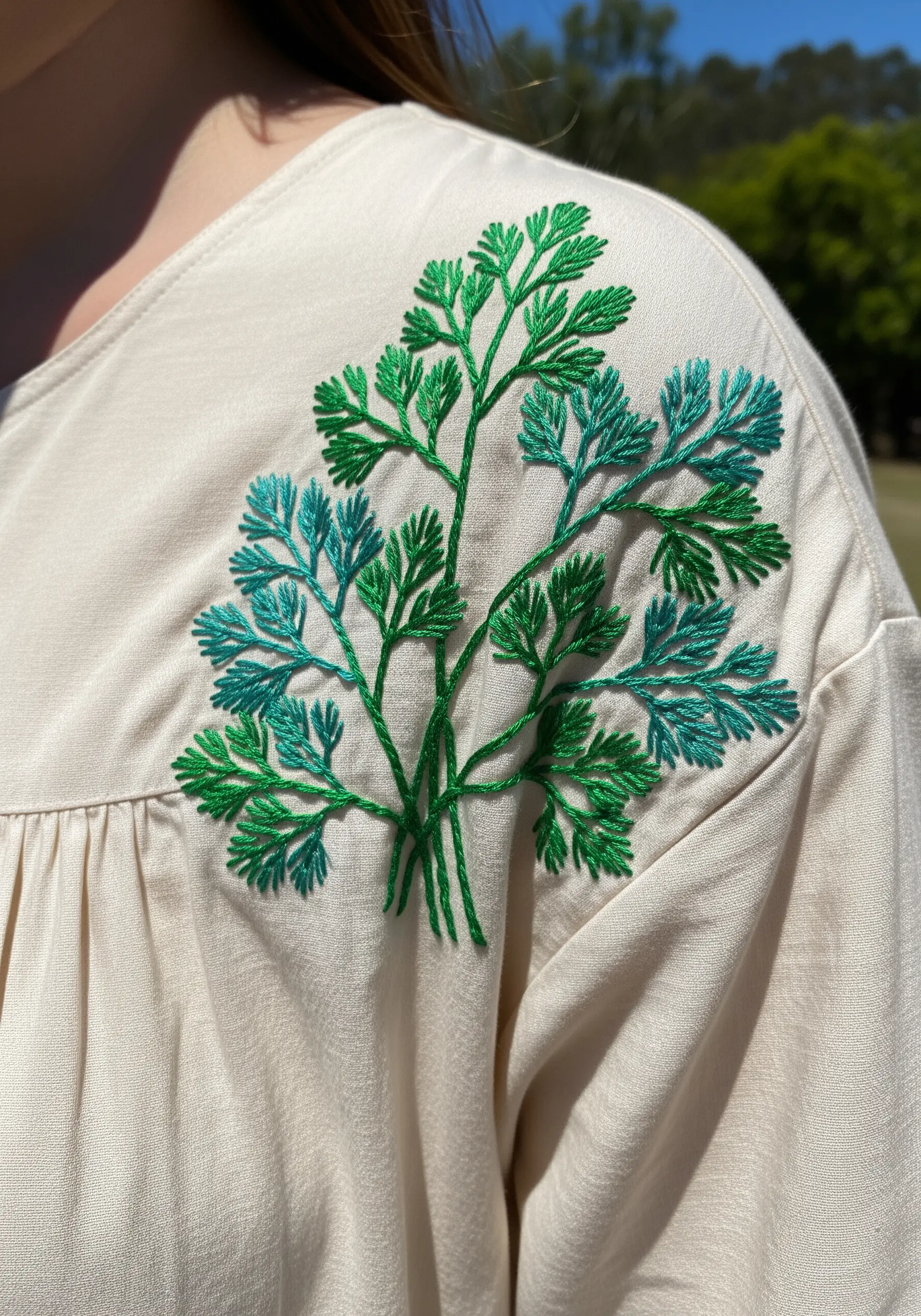
Capture the delicate, almost fern-like quality of herbs like cilantro or parsley with open, light stitching.
Instead of dense satin stitches, use simple fly stitches or small straight stitches to create the leafy clusters.
This technique keeps the design airy and light, preventing it from becoming a solid, heavy patch on the fabric.
A mix of bright green and turquoise thread adds a vibrant, fresh feel perfect for adding a touch of understated natural beauty to a shoulder or yoke.
21. Cultivate a Strawberry Patch on a Pocket
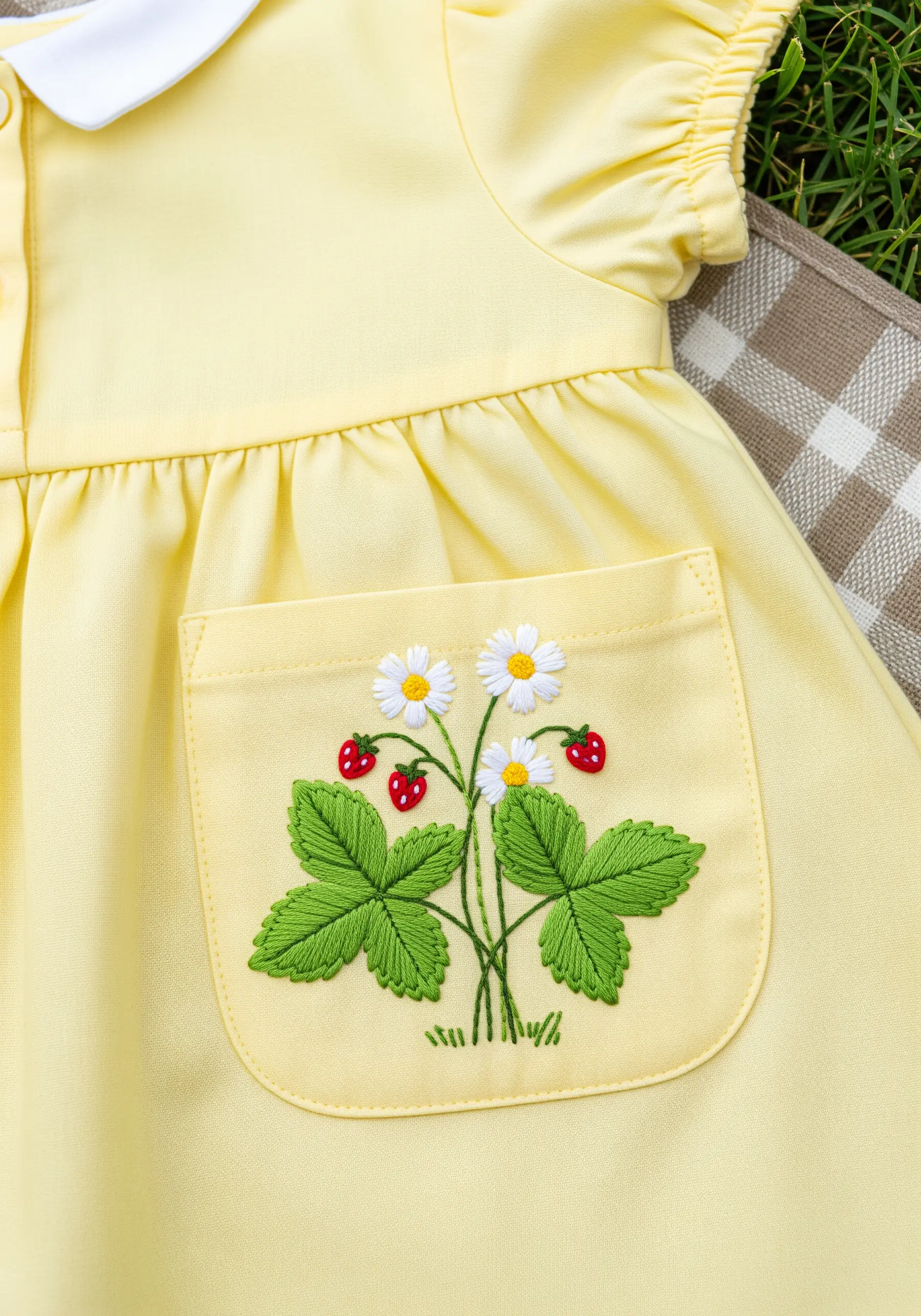
Tell a complete story in a small space by combining leaves, flowers, and fruit in a single design.
Use a classic fishbone stitch for the distinctively shaped strawberry leaves. Create the flowers with white lazy daisy stitches around a yellow French knot center.
For the strawberries, use a padded satin stitch in bright red to make them plump and three-dimensional, adding tiny white or yellow seed details with small straight stitches.
This combination creates a charming vignette, perfect for cottage garden-inspired themes.
22. Arrange Stylized Leaves on the Shoulder
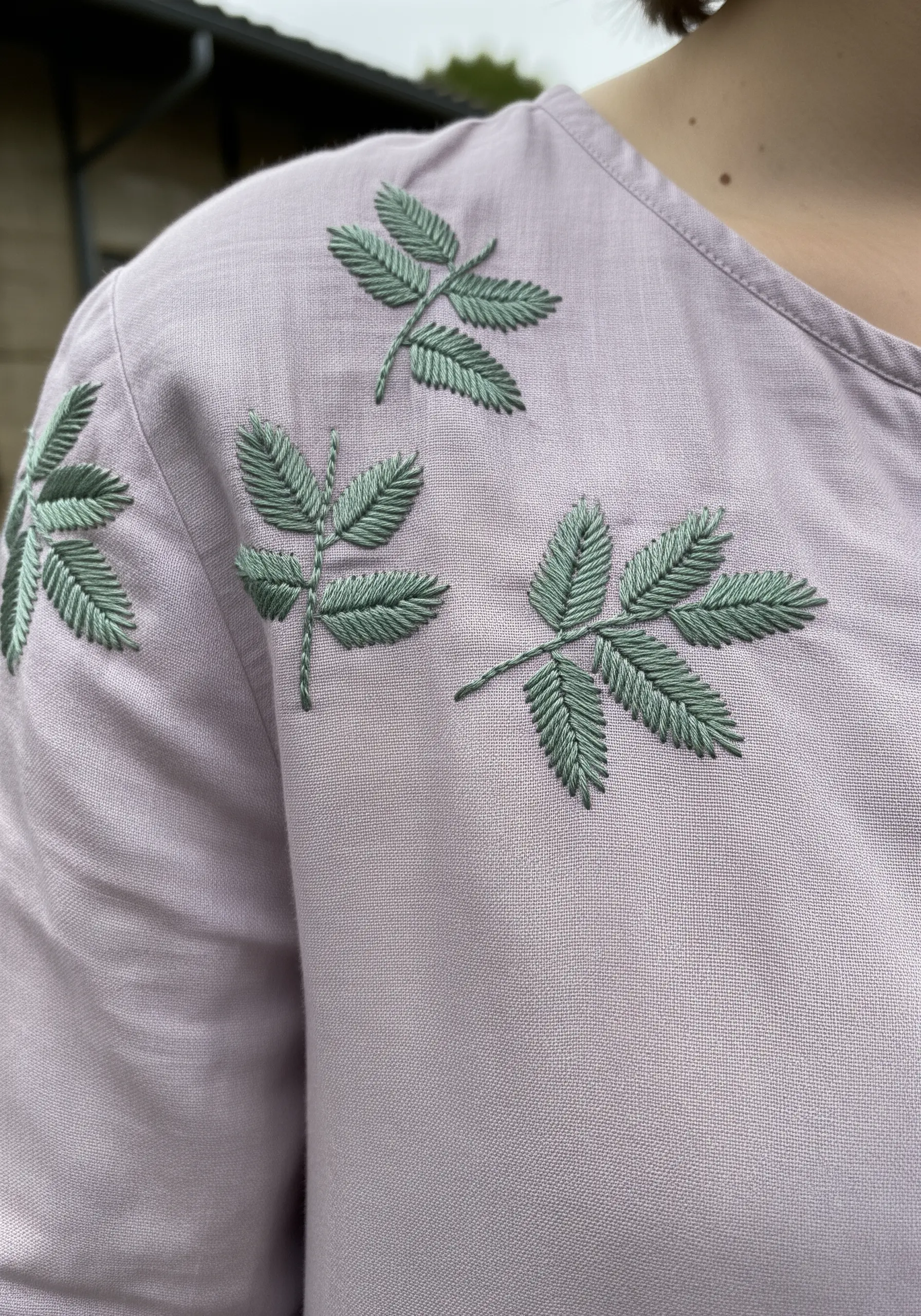
Create a modern, graphic look by placing stylized leaves asymmetrically across the shoulder and neckline.
Use a clean, precise fishbone stitch, ensuring the central spine remains as a distinct line and that the stitches on either side are uniform in angle and length.
The deliberate spacing between the leaves gives the design room to breathe and feels more contemporary than a dense cluster.
The beauty of this style lies in its clean lines, offering a modern, almost Scandinavian interpretation of a classic leaf.
23. Capture a Begonia’s Metallic Sheen

Challenge your thread painting skills by recreating the complex colors and textures of a Rex Begonia leaf.
Work with a single strand of floss to achieve the finest detail, blending shades of silver-green, deep green, and crimson to mimic the leaf’s natural variegation.
Pay close attention to the direction of your long-and-short stitches to create the illusion of light hitting the leaf’s metallic surface.
This advanced project turns a dress bodice into a stunning piece of botanical art.
24. Design a Simple Leaf-Printed Belt
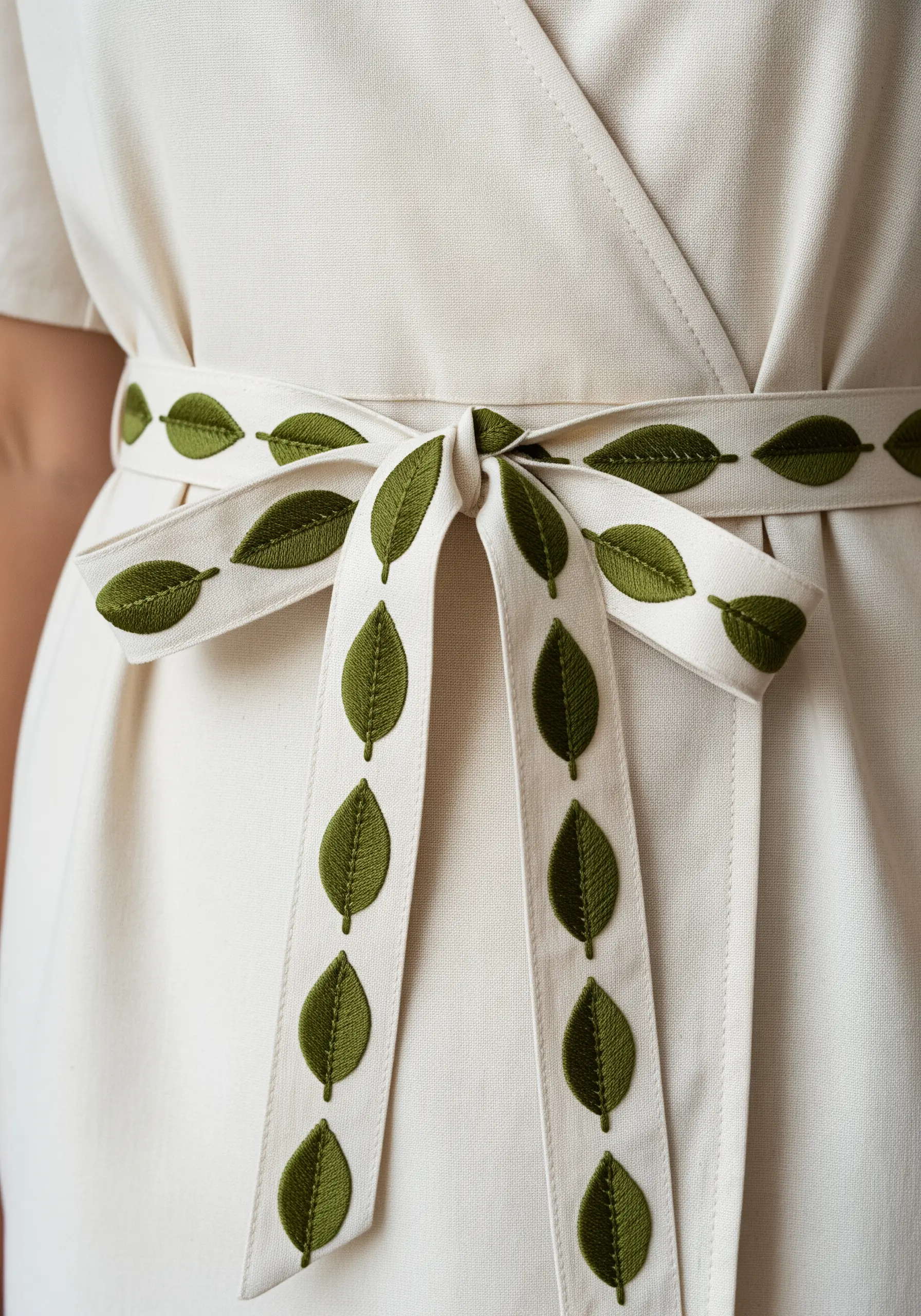
Achieve the look of a custom block-printed fabric with simple, repeating embroidery.
Use a solid satin stitch to create uniform leaf shapes, and add a clean backstitch outline in a slightly darker shade to make each leaf pop.
The key to this design is consistency in stitch direction and length, creating a clean, rhythmic pattern that feels both handmade and impeccably polished.
This is a perfect way to customize a simple fabric belt or trim a hemline.
25. Let a Hops Vine Climb the Skirt

Create a dynamic, asymmetrical design by stitching a vine that appears to grow up the side of a dress.
This placement draws the eye upward and adds an element of organic movement to the garment.
Combine fishbone stitch for the leaves with woven picot stitches or layered bullion knots for the hop cones to create a variety of textures that feel amazingly real.
Varying the size and direction of the leaves will enhance the natural, untamed feel of the vine.
26. Blend Autumn Colors on Corduroy
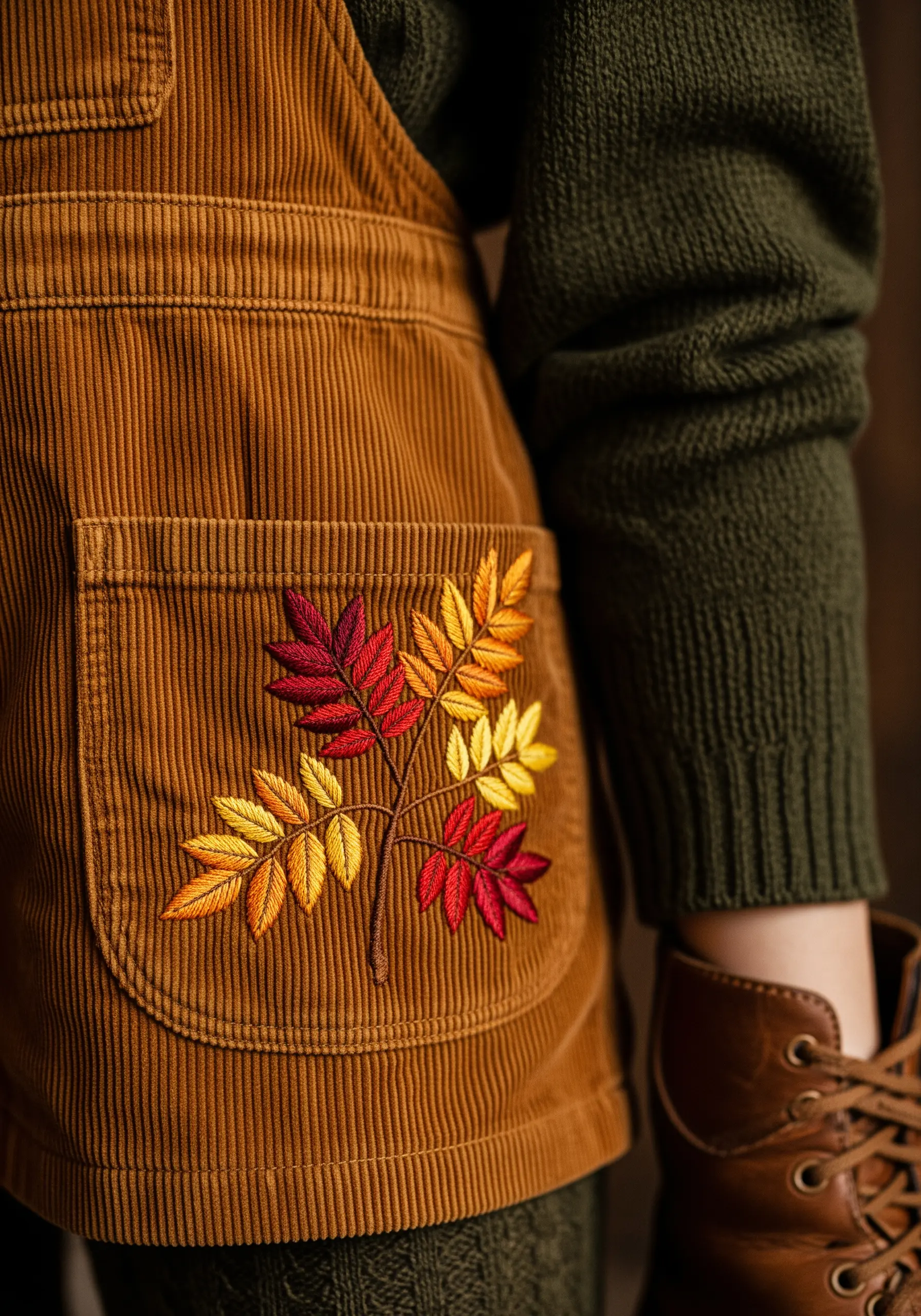
Bring warmth to a fall garment by embroidering a small branch of colorful leaves on a textured fabric like corduroy.
To create the color gradient within each leaf, use the long-and-short stitch technique, blending shades of yellow, red, and orange.
Use just two or three strands of floss to avoid overwhelming the fabric’s texture, allowing the corduroy’s lines to complement your stitching.
This approach adds a soft, painterly touch that harmonizes beautifully with cozy autumn fabrics.
27. Add Minimalist Sprigs to a Collar
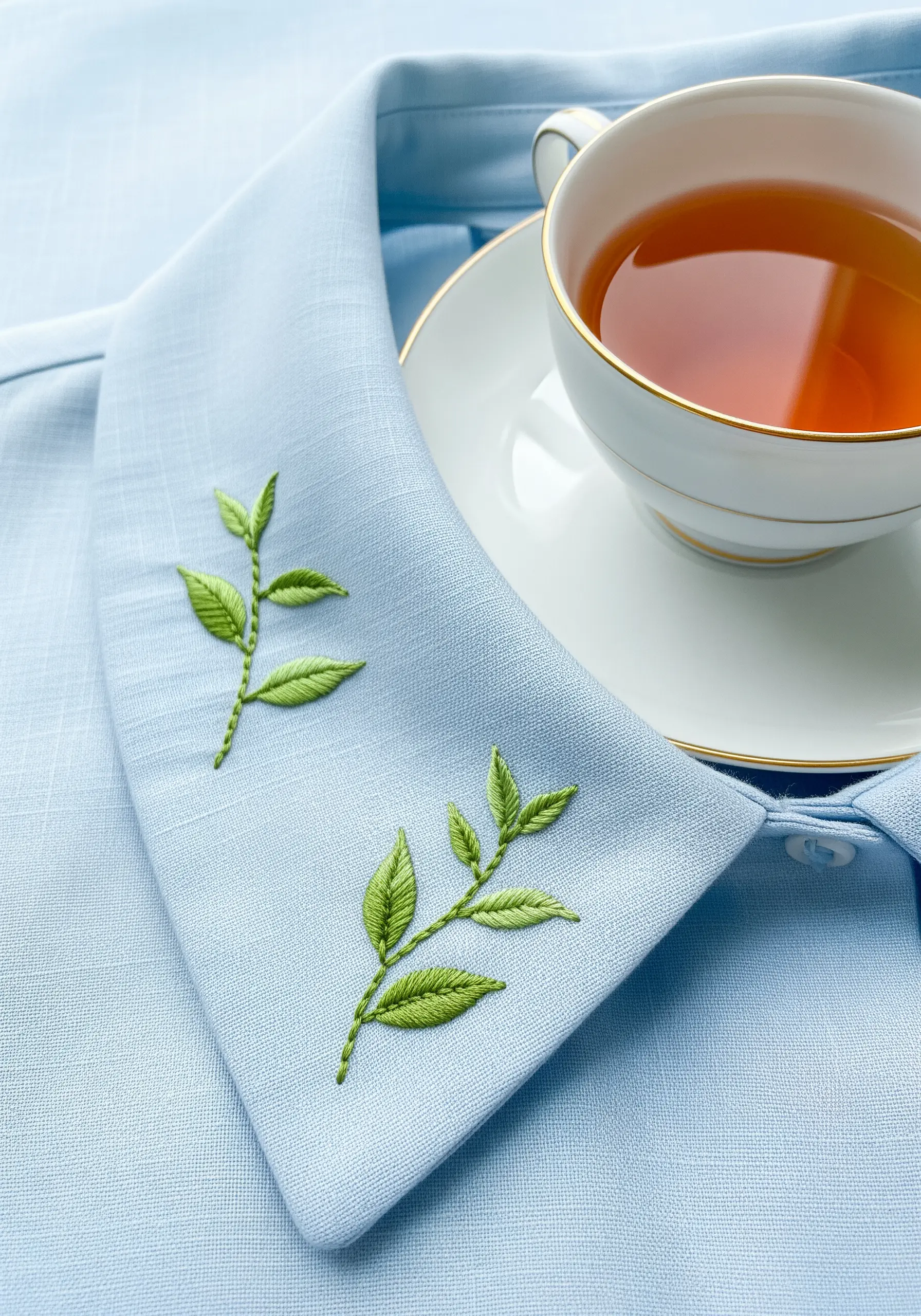
Sometimes, the most elegant statement is the most understated one.
Place two small, delicate sprigs symmetrically on the points of a shirt collar for a touch of refined detail.
Use a simple fishbone stitch for the leaves and a two-strand backstitch for the stem. The key is clean, precise execution.
This restrained approach is perfect for adding a subtle, handmade touch without dominating the garment, making it suitable for everyday wear.
28. Trace a Skeletal Leaf with a Single Thread
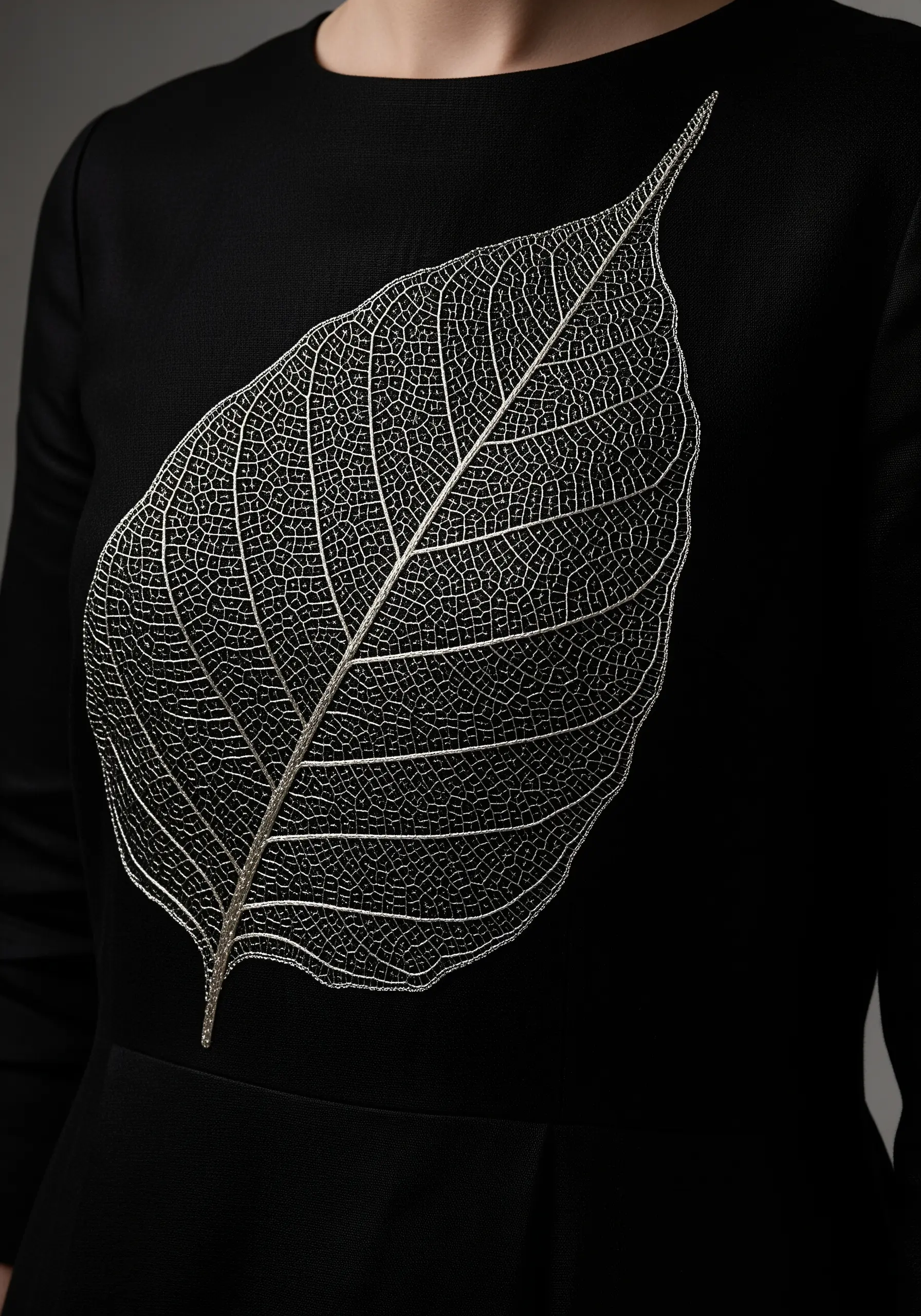
Create a stunningly intricate design by focusing on line work instead of color and fill.
Trace the delicate, web-like veins of a skeletal leaf using a single strand of metallic or contrasting thread.
Use a fine backstitch or whipped backstitch to create clean, unbroken lines that capture the fragile structure of the leaf.
This technique celebrates the beauty of structure over color, creating an intricate, almost scientific illustration on fabric that is both modern and timeless.
29. Create Botanical Texture with Smocking
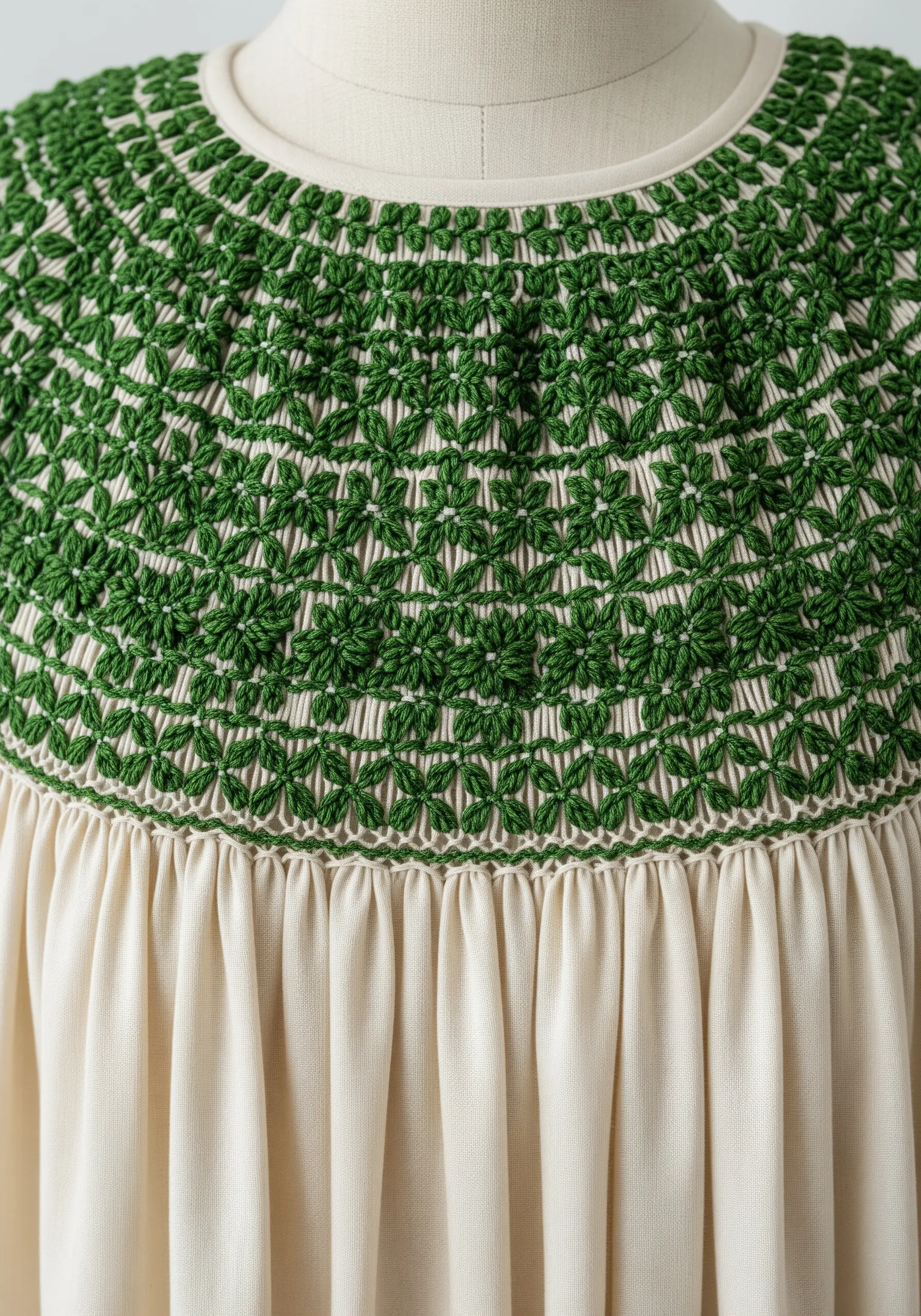
Explore a different kind of stitching by using smocking to create a leaf-like pattern across a yoke.
Smocking is an heirloom technique that involves stitching across pleated fabric to create texture and elasticity.
By combining stitches like the cable stitch and trellis stitch in a repeating pattern, you can form geometric designs that resemble stylized leaves or flowers.
This method creates a rich, integrated texture that is part of the fabric’s structure itself, not just an embellishment on top.
30. Appliqué a Variegated Philodendron Vine
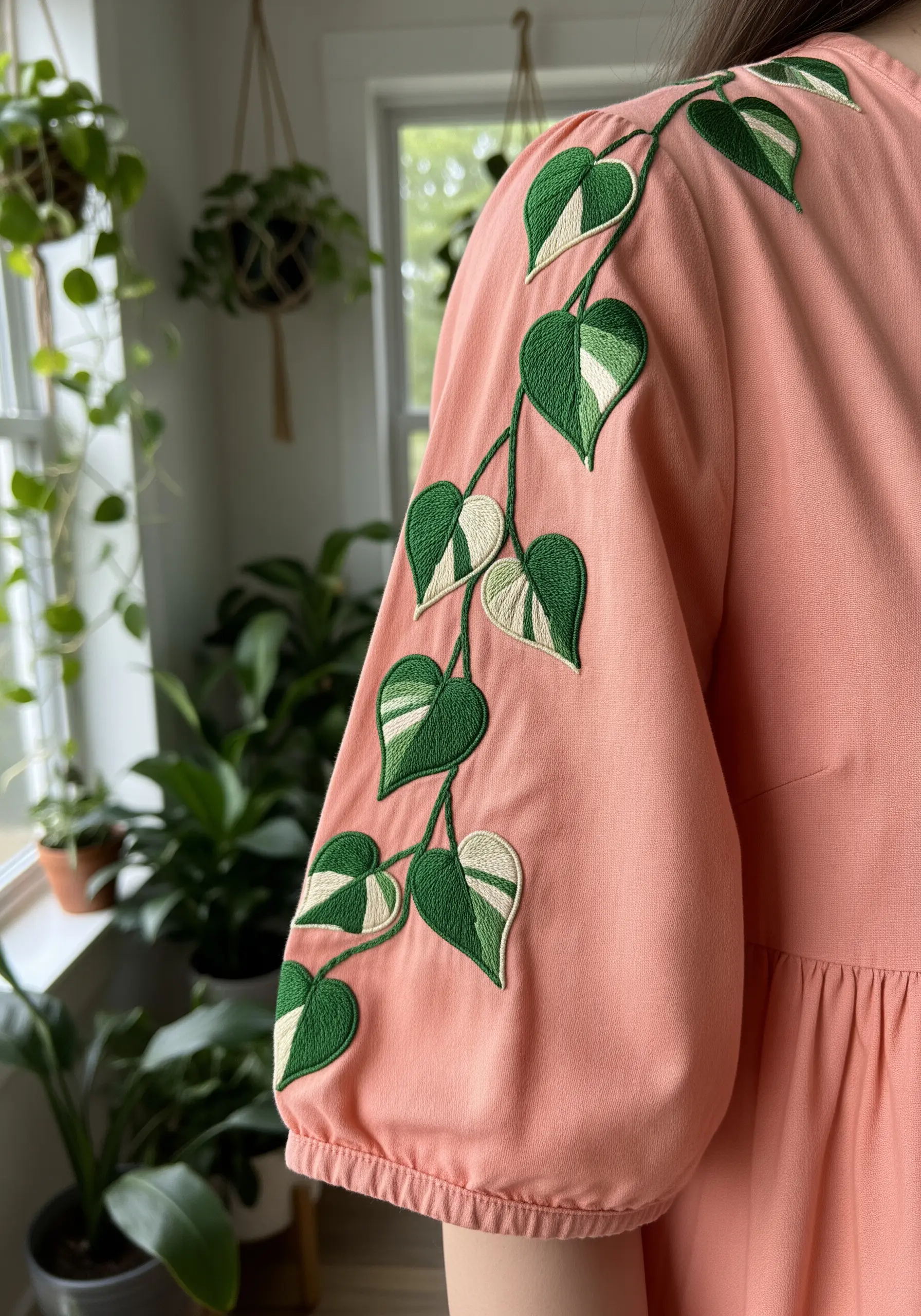
Capture the bold, graphic quality of a variegated leaf with sharp, clean color blocking.
This can be achieved with fabric appliqué or by carefully outlining each color section with a split stitch before filling with a dense, smooth satin stitch.
The split-stitch outline creates a raised border that prevents the white and green threads from blending, ensuring a crisp, defined edge.
Let the vine crawl naturally up a sleeve for a dynamic and eye-catching botanical statement.
31. Stitch a Grapevine Hem with Depth and Shadow
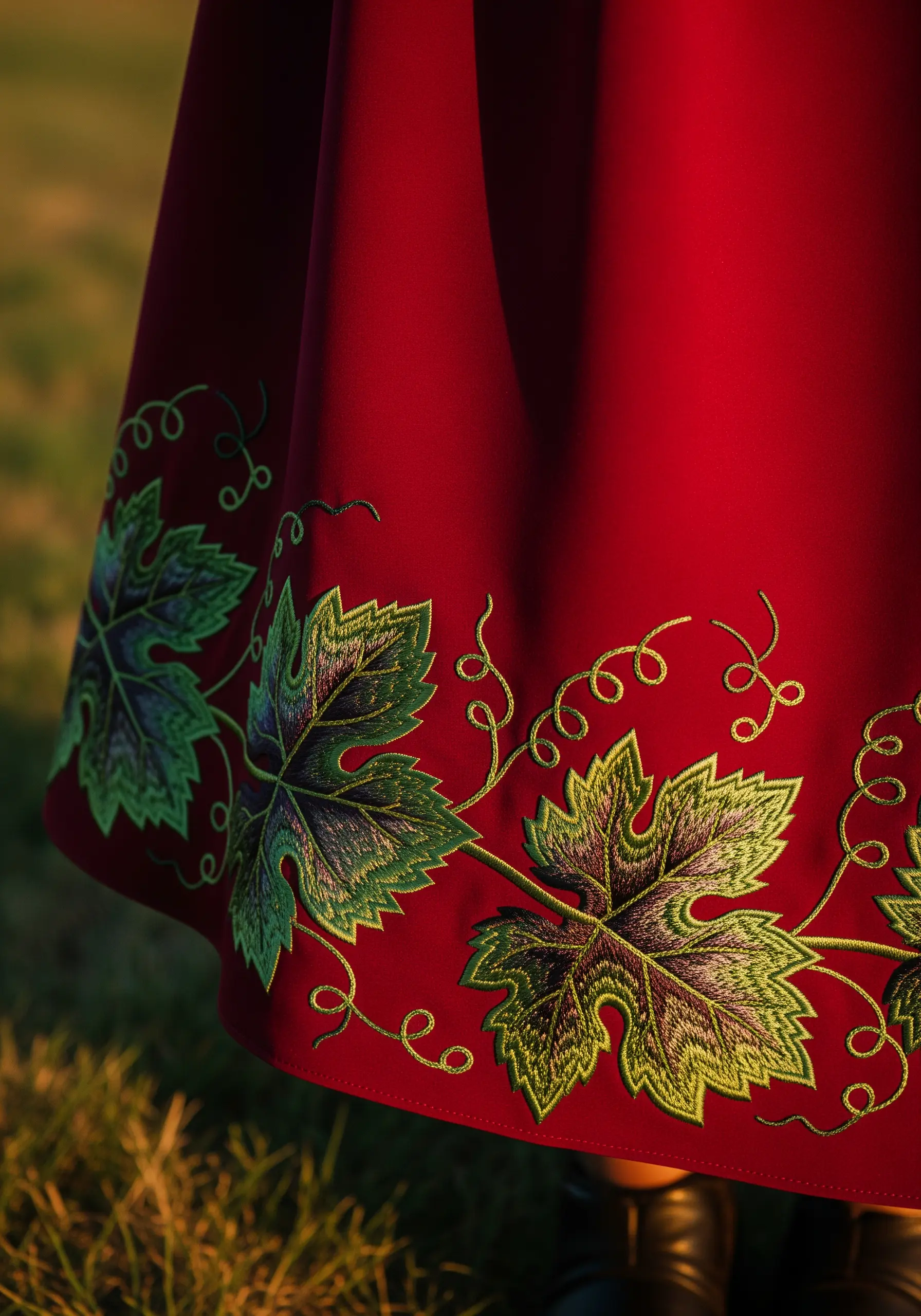
Make your embroidered leaves look three-dimensional by using multiple shades to create highlights and shadows.
For these grapevine leaves, use a base of mid-tone green, then add highlights with a pale, minty green and create shadows with a deep forest green using the long-and-short stitch technique.
Focus the lighter shades on the raised parts of the leaves and the darker shades in the crevices to enhance the illusion of depth.
A few swirling tendrils made with a simple backstitch add a final touch of wild, organic beauty.
32. Embellish Mistletoe with Pearl Berries
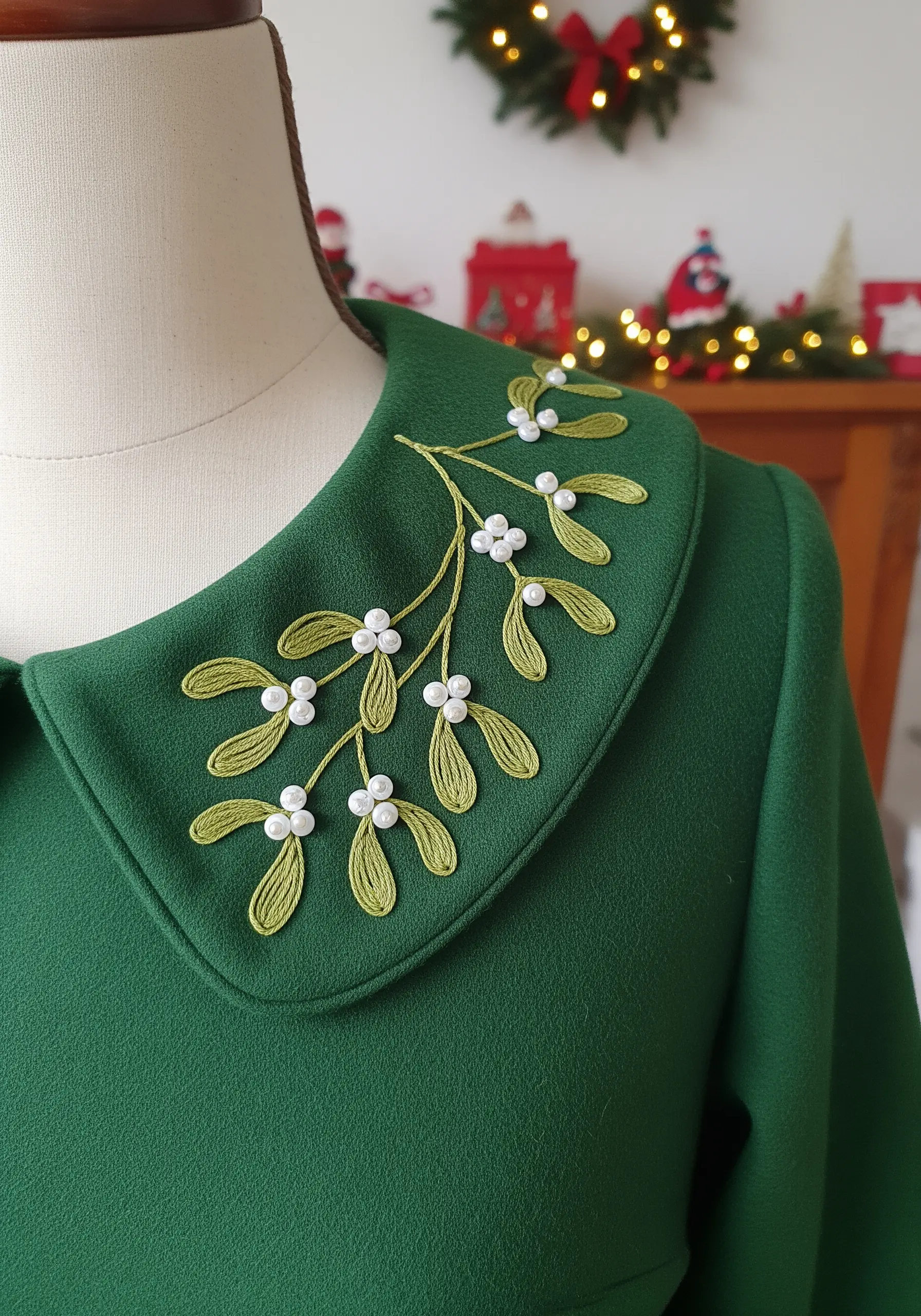
Combine embroidery with beadwork for a festive design that is rich in texture and elegance.
Use a simple open lazy daisy stitch or a clean fishbone stitch for the pale green mistletoe leaves.
Instead of using French knots for the berries, securely sew on small white pearl beads. This adds a beautiful luster and a raised, three-dimensional element.
The smooth, lustrous pearls contrast beautifully with the matte texture of the thread, adding a touch of festive dimension perfect for a holiday garment.
33. Create a Modern Herbal Pattern with Rosemary
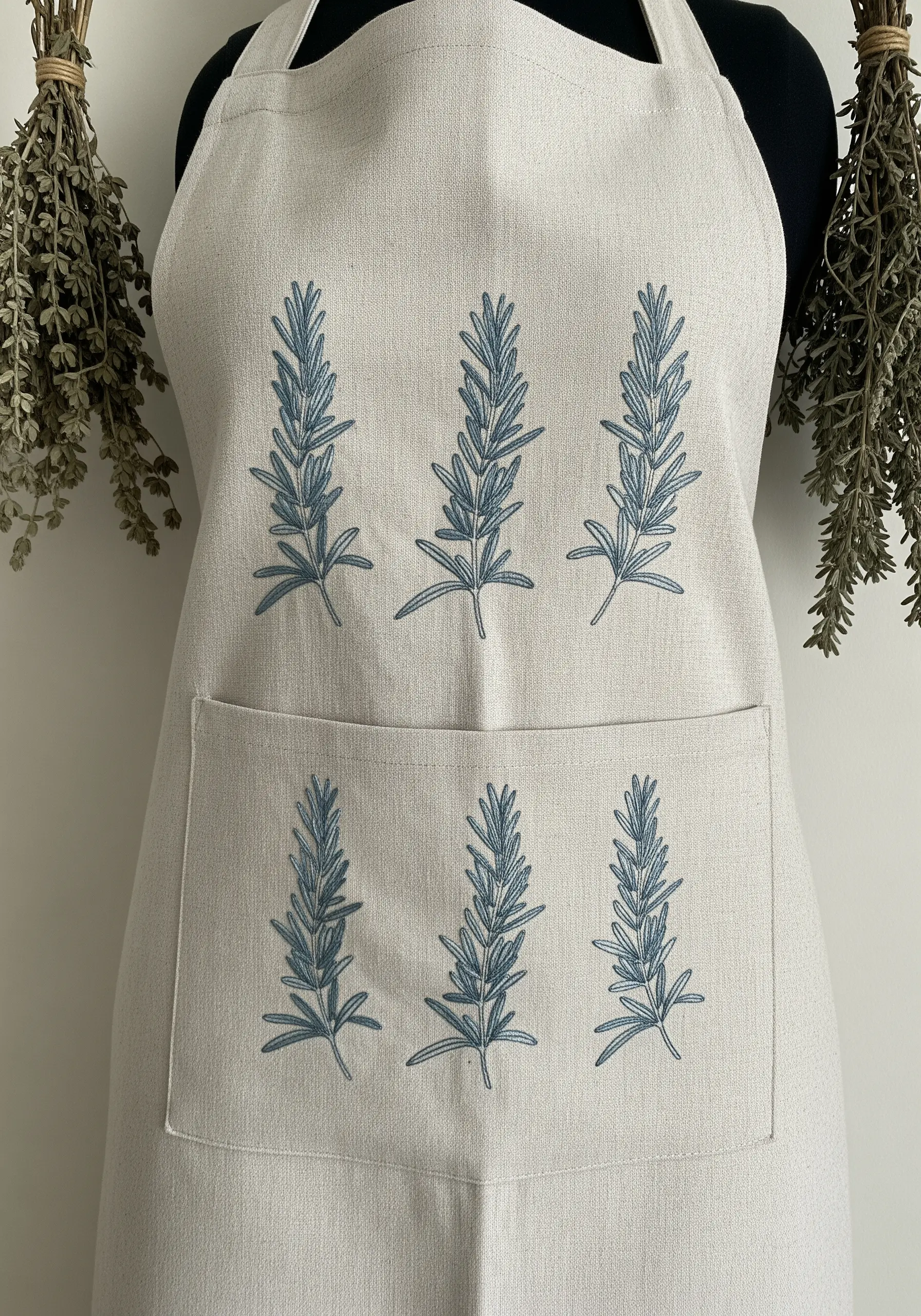
Design a chic, contemporary pattern using the simple, graphic shape of rosemary sprigs.
Use a single, muted color like this dusty blue for a sophisticated, minimalist aesthetic on natural linen.
Create each sprig with a central stem stitch line, then add the needles with short, angled straight stitches on either side.
Arranging the sprigs in a neat, repeating grid on an apron or pocket gives the piece a clean, modern, and artisan feel.