Your denim jacket is more than just a piece of clothing; it’s a canvas waiting for your story. If you’ve been looking for a way to move your embroidery beyond simple patterns and into the realm of personal art, you’re in the right place.
Transforming your work isn’t about learning dozens of complex stitches. It’s about making intentional choices: selecting the right stitch for a petal’s texture, understanding how thread weight creates depth, and seeing how placement can turn a simple garment into a cohesive design.
Here, you won’t just find inspiration. You’ll find the specific techniques that make a design feel polished, professional, and uniquely yours. Let’s pick up a needle and turn that blank denim into a wearable wildflower meadow that truly reflects your style.
1. Master the Long-and-Short Stitch for Luminous Petals
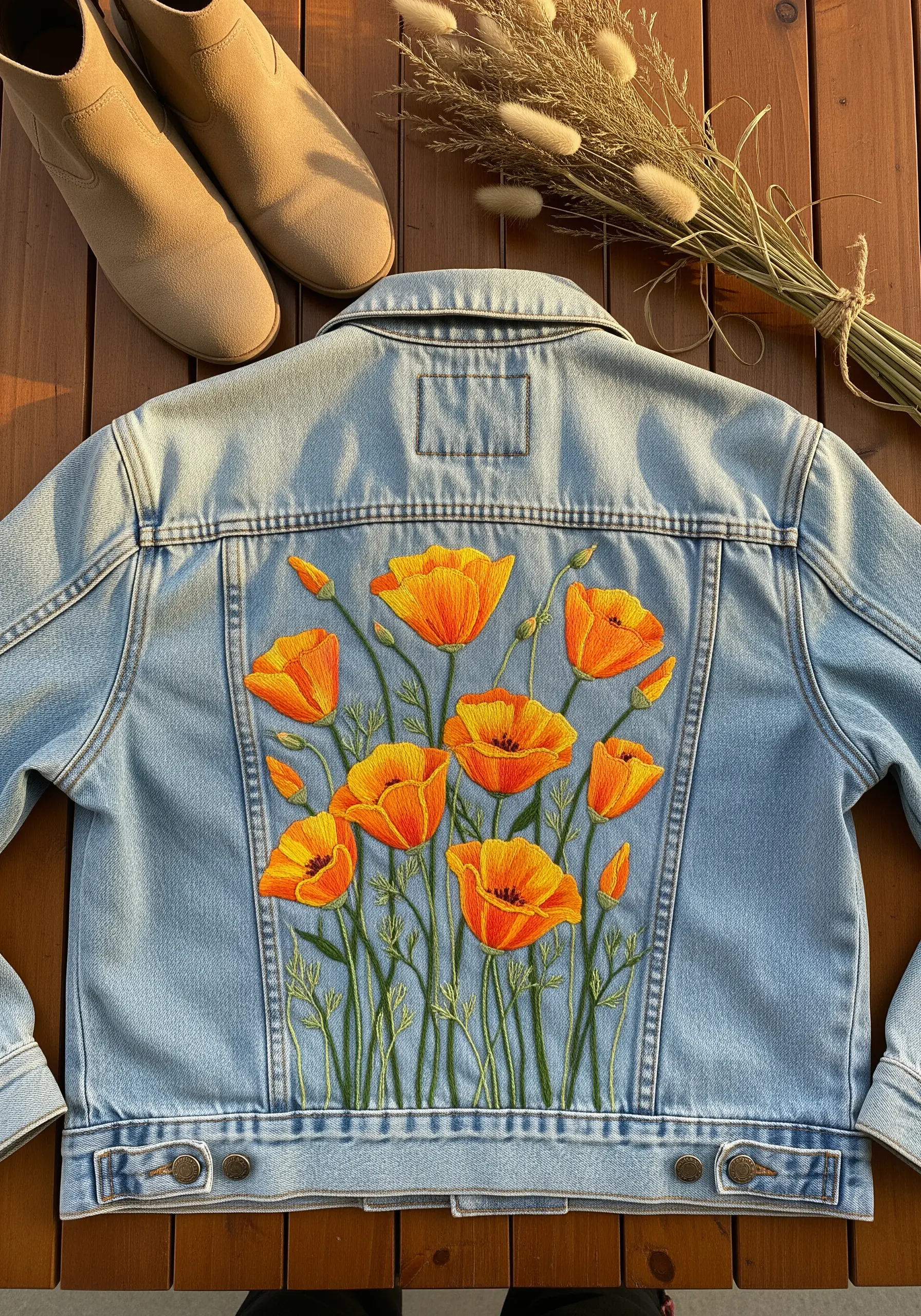
To give your poppies a painterly, realistic quality, move beyond satin stitch and embrace the long-and-short stitch technique.
This method allows you to blend multiple shades of orange, yellow, and even a touch of red, creating a seamless gradient that mimics how light falls on a real petal.
Work with just two strands of floss for the petals to keep the stitches smooth, and drop to a single strand for the delicate black centers to achieve fine detail.
Vary the direction of your stitches slightly, following the curve of each petal, to enhance the illusion of depth and movement.
Consider using a curated set of wildflower thread palettes to ensure your color transitions are harmonious and natural.
2. Frame Your Design with Collar and Cuff Botanicals
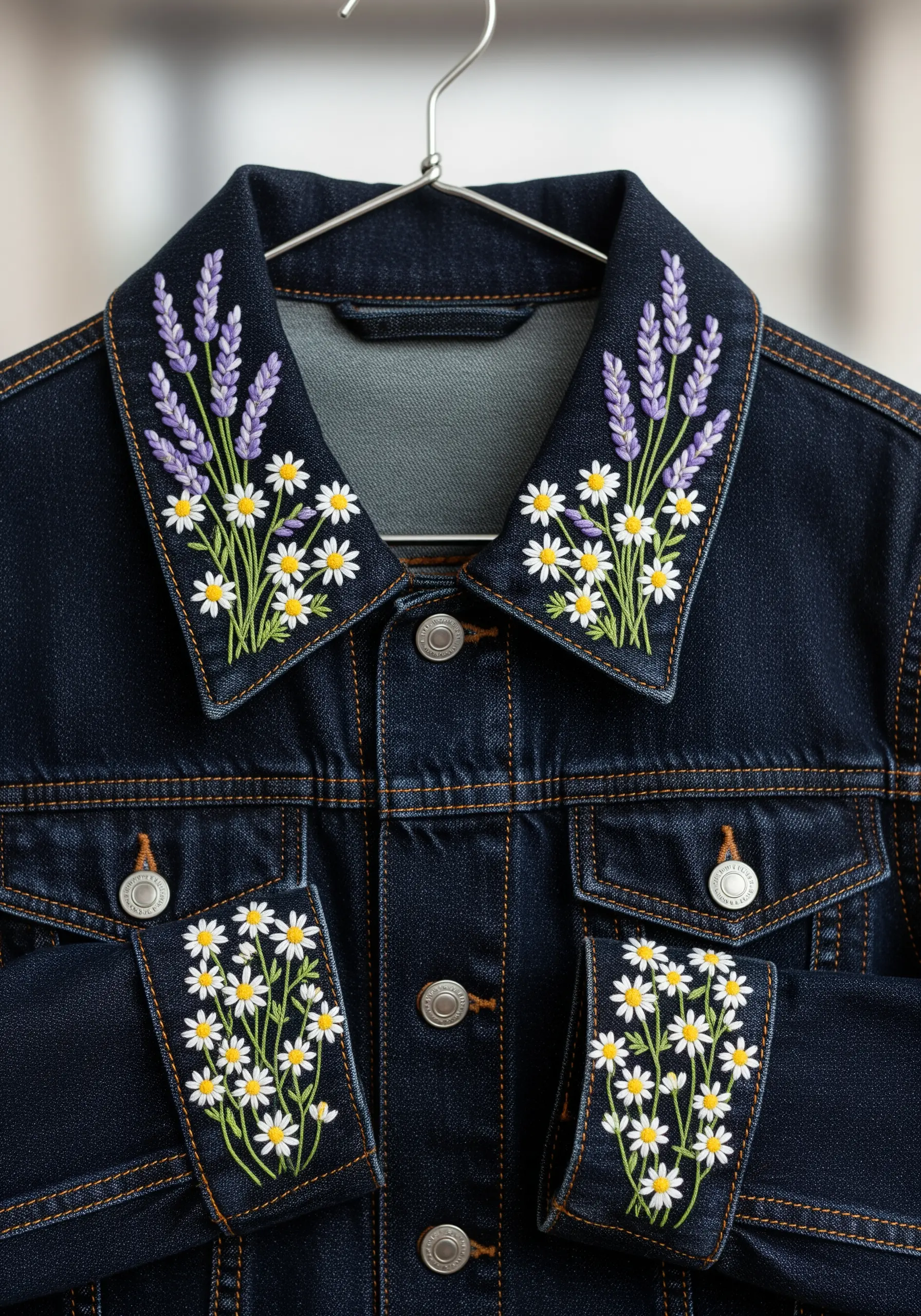
Elevate a standard denim jacket by treating its structural elements as frames for your embroidery.
Placing delicate botanicals on the collar points and cuffs creates a bespoke, high-fashion look that feels intentional and polished.
For the lavender, combine slender straight stitches for the stems with textured French knots for the blossoms.
Create crisp daisies with simple detached chain stitches (lazy daisy) for petals and a single, bold French knot for the center.
Always use a medium-weight cut-away stabilizer on the back of these areas to prevent the dense stitching from puckering the denim.
3. Create Striking Contrast with White Florals on Black Denim
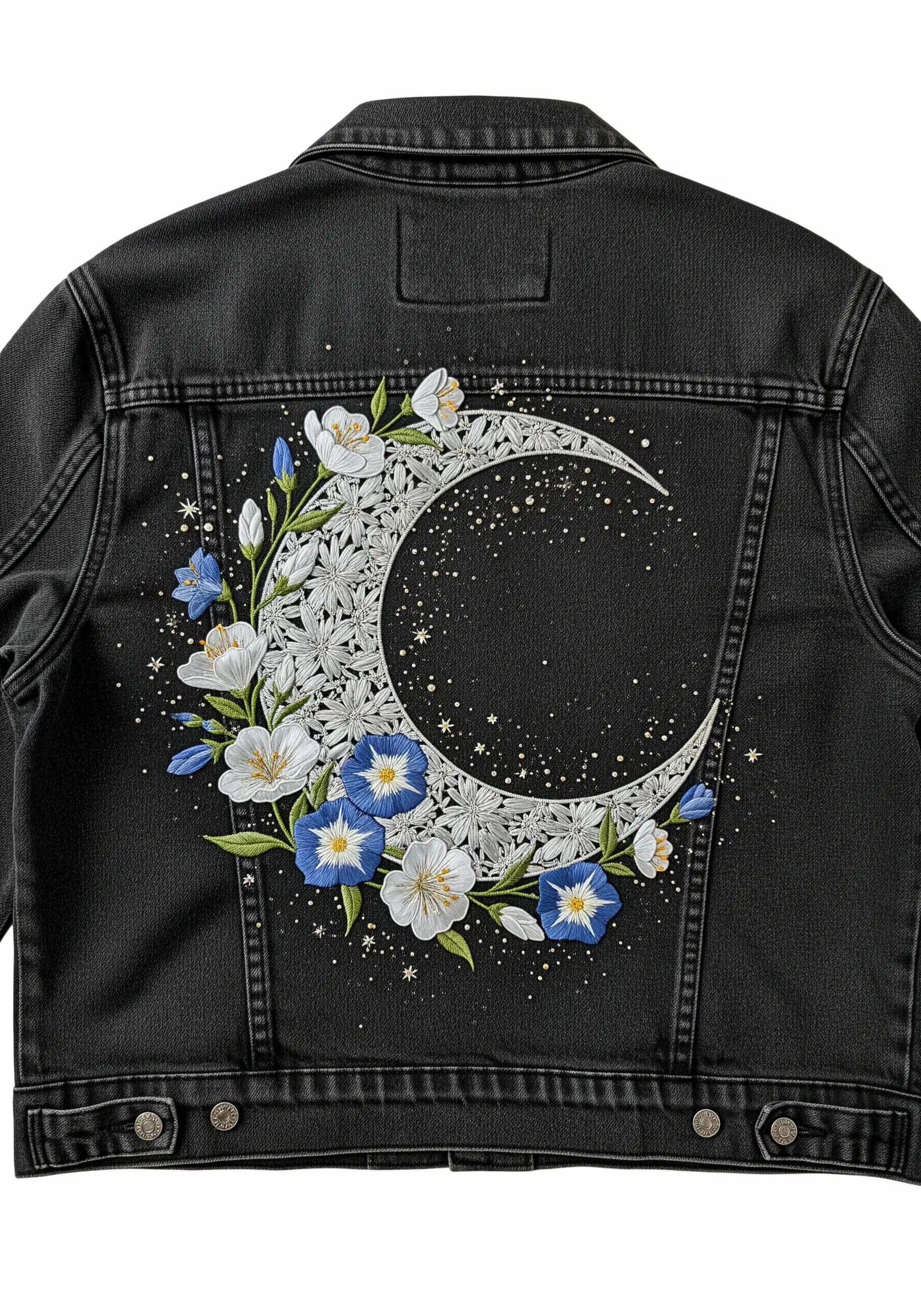
Leverage the drama of a dark canvas to make your stitching command attention.
On black or indigo denim, bright white thread appears more luminous, creating a stunning celestial effect perfect for night-blooming floral stitch themes.
To create the intricate, lace-like fill on the moon, use a delicate, single-strand backstitch in a geometric pattern.
Incorporate a touch of silver metallic thread in the moon’s outline or as tiny scattered French knots to simulate stars, adding a subtle shimmer that catches the light.
4. Build a Sculptural Meadow with Three-Dimensional Stitches
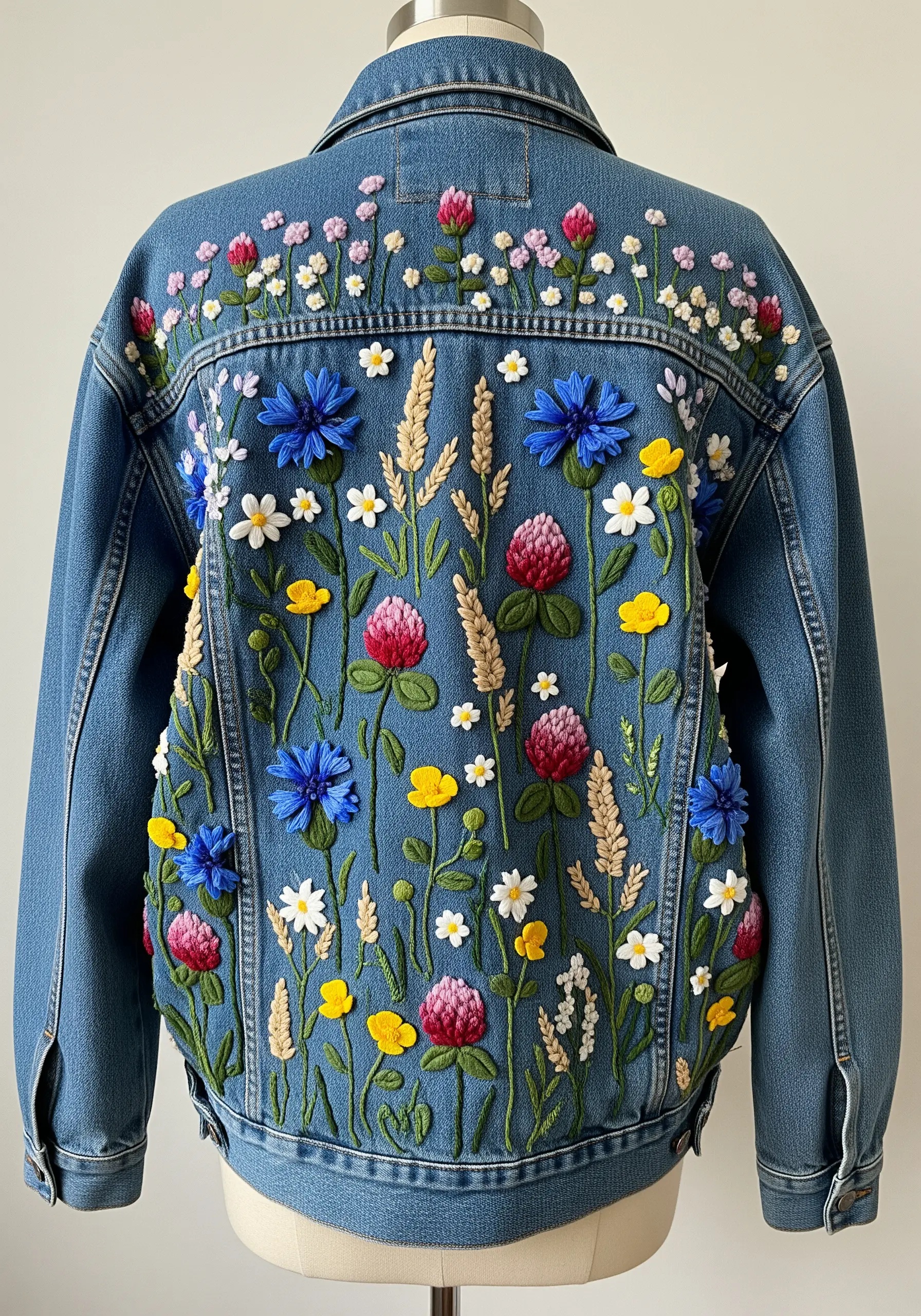
Move beyond flat designs by incorporating stitches that add physical depth and texture to your wildflower meadow.
For the round red clover, use a woven wheel stitch (or spider web rose) to create a raised, plush effect that stands off the fabric.
Form the blue cornflowers by layering detached chain stitches, creating full, fluffy petals.
Introduce different thread weights—such as a thicker cotton perle for the wheat stalks—to create a hierarchy of textures and make certain elements pop.
This technique is a perfect way to explore ways to layer leaf stitching for three-dimensional botanical texture that pops right off the denim.
5. Embrace the Elegance of Single-Color Line Art
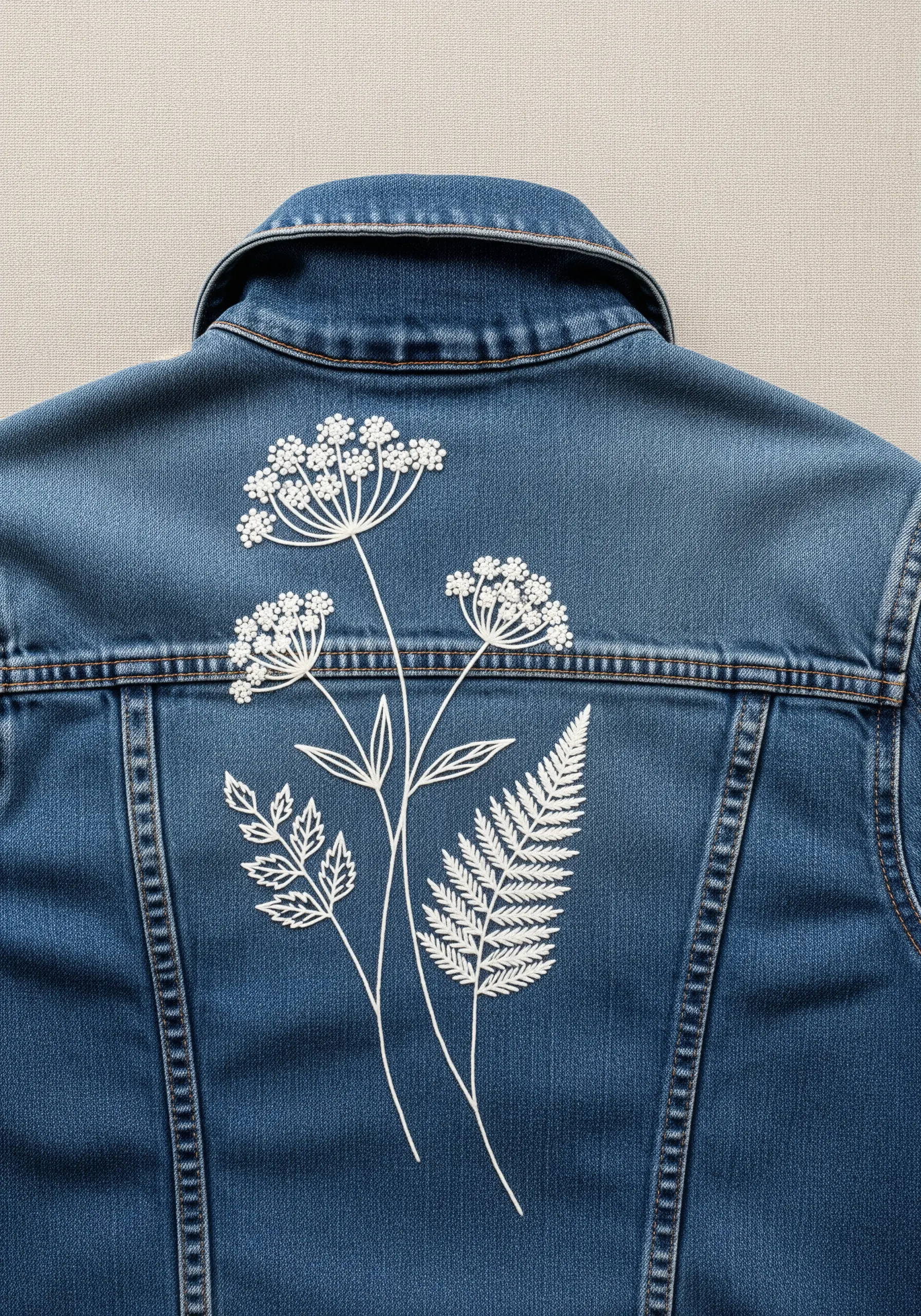
Achieve a modern, minimalist aesthetic by focusing on pure line work rather than color fills.
Using a single color, like crisp white on blue denim, creates a clean, graphic statement that highlights the beauty of the botanical forms themselves.
The key to professional-looking line art is consistent stitch tension; use a backstitch or stem stitch and pull each stitch with the same gentle pressure to avoid puckering the fabric.
For delicate areas like the fern fronds, switch to a single strand of floss, while using two strands for the main stems adds subtle visual weight.
This style is a beautiful application of minimalist line art nature embroidery for wearable art.
6. Design a Playful Pocket Bouquet
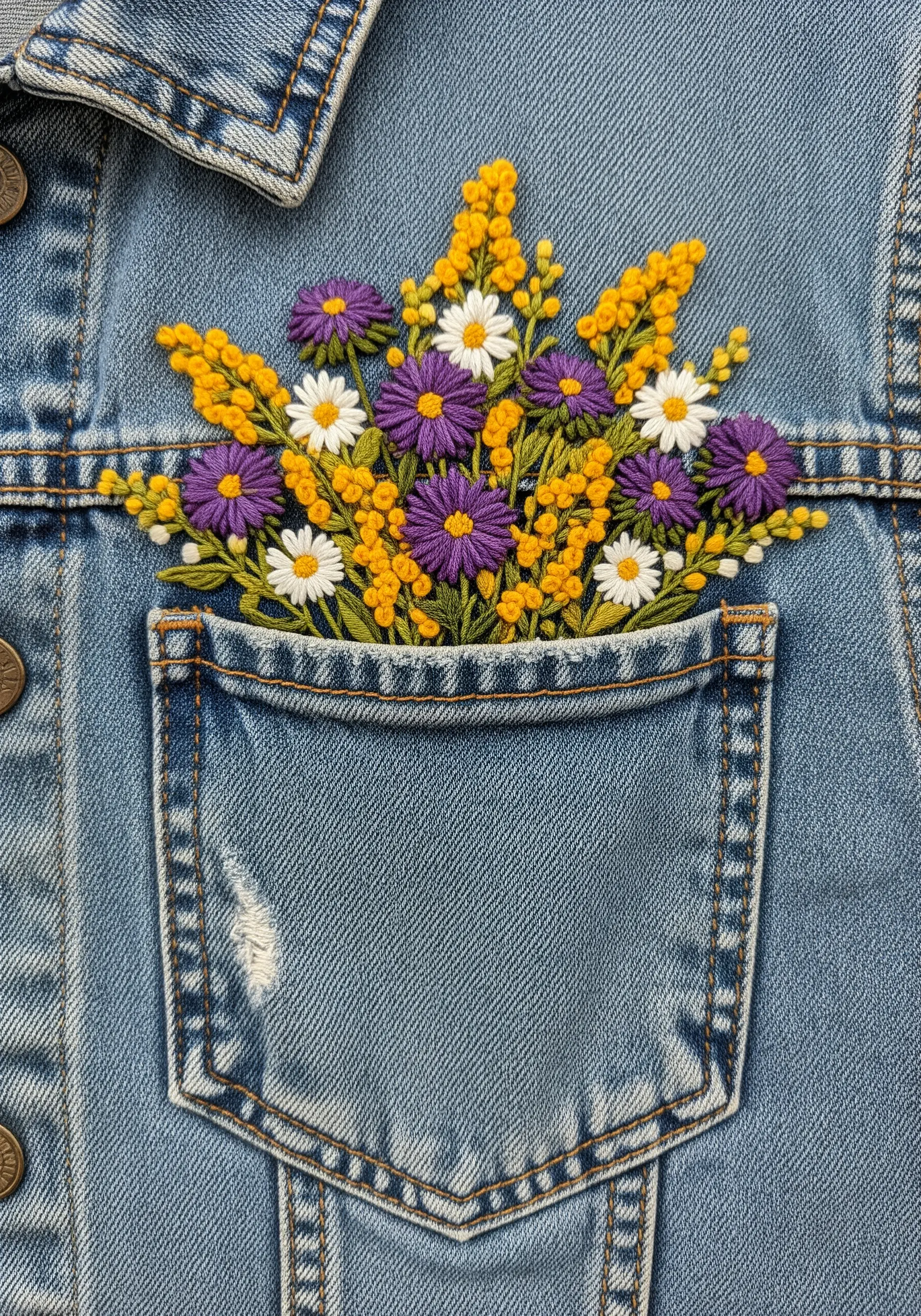
Add an element of surprise and narrative to your jacket by stitching a bouquet that appears to burst from the chest pocket.
This playful composition transforms a functional detail into a focal point.
Create realistic texture for the yellow mimosa flowers by clustering hundreds of tiny French knots together, varying their size slightly.
For the purple and white daisies, use a simple lazy daisy stitch, but intentionally vary the stem heights to give the arrangement a more organic, freshly-picked feel.
These minimalist pocket embroidery ideas transform an everyday garment into a piece with personality.
7. Ground Your Design with a Floral Horizon Line
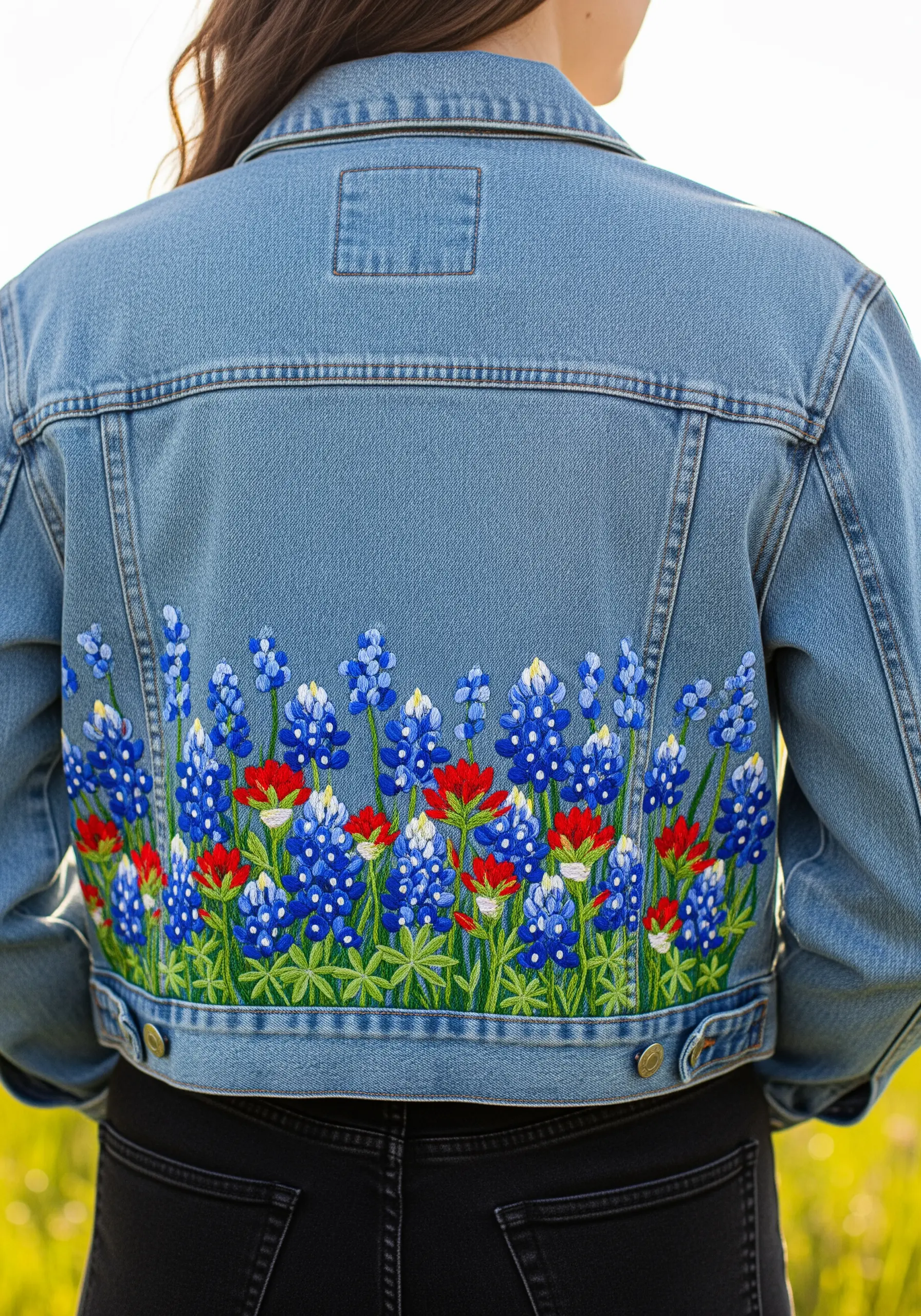
Instead of a central motif, consider stitching a dense border of wildflowers along the bottom hem of your jacket.
This creates a strong visual anchor, like a field of flowers against the horizon, and provides a unique placement that draws the eye.
For shapely flowers like bluebonnets, use a combination of French knots at the top and directional satin stitches below to capture their signature form.
Introduce a bold accent color, like the red Indian paintbrush, to punctuate the design and create a dynamic rhythm.
This approach elevates traditional floral border stitch concepts into a wearable landscape.
8. Capture Ephemeral Movement with Dandelion Seeds

Evoke a sense of whimsy and movement by stitching delicate dandelion seeds scattering in an imaginary breeze.
For the main dandelion head, use radiating straight stitches pulled taught from a central point to create that iconic puffball shape.
The magic is in the floating seeds: use a single strand of white floss to make a tiny V-shape or detached chain stitch for the parachute, attached to a single straight stitch stem.
Place the seeds along a gentle curve to create a convincing illusion of airflow across the back of the jacket.
9. Weave a Narrative with a Desert Scene
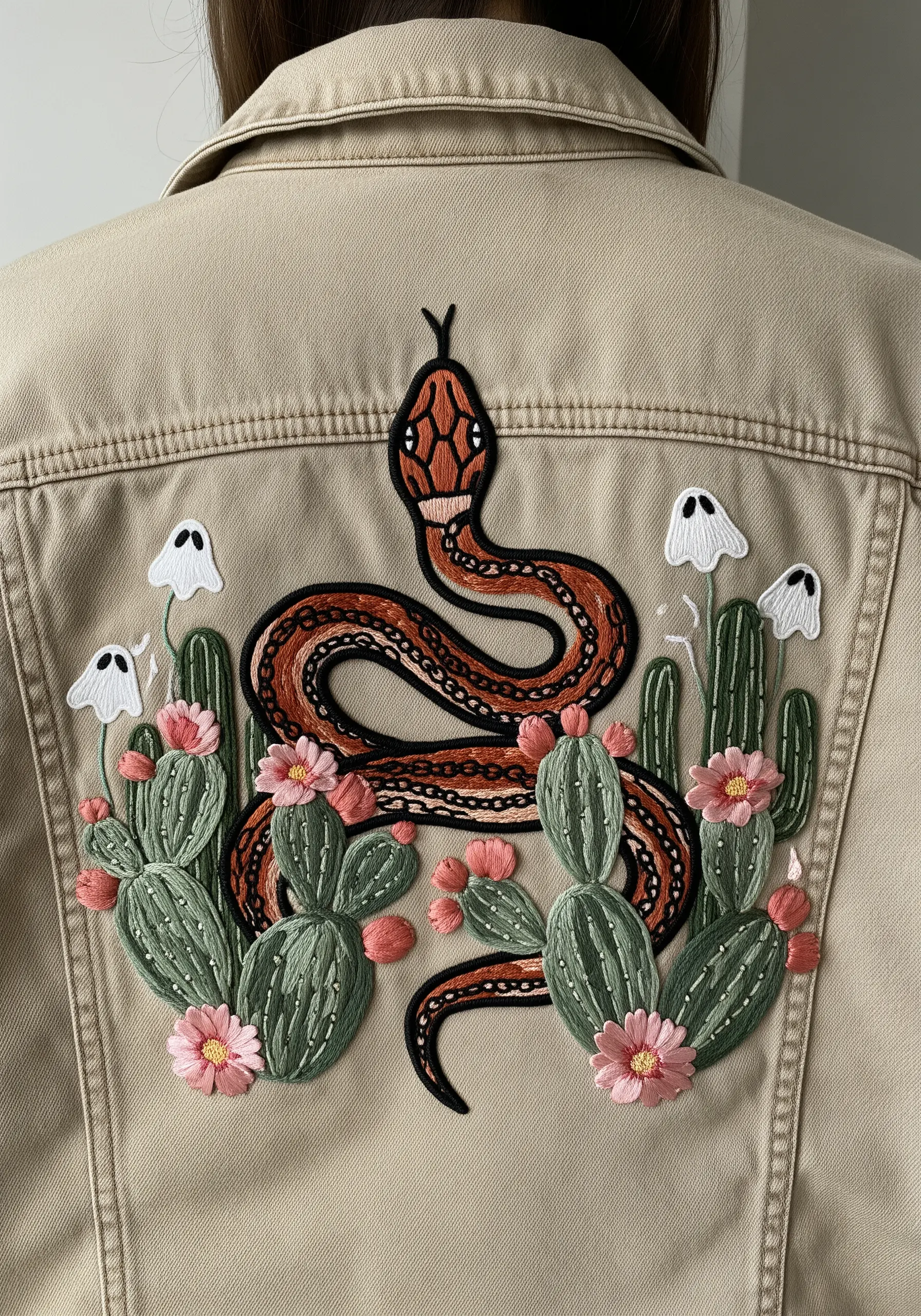
Expand your botanical theme by creating a scene that tells a story, combining flora with other natural elements.
Make the snake the undeniable centerpiece by giving it a bold, thick outline—use a chain stitch or couch a thicker thread around its perimeter.
Fill the cacti with vertical satin stitches, using two or three similar shades of green to create subtle rounding and texture without complex shading.
The addition of whimsical ghost-like flowers, stitched with a simple outline, injects a touch of magic and personality into your design.
This is one of the most creative travel-inspired jacket embroidery ideas you can try.
10. Add Subtle Charm with Dainty Collar Florals
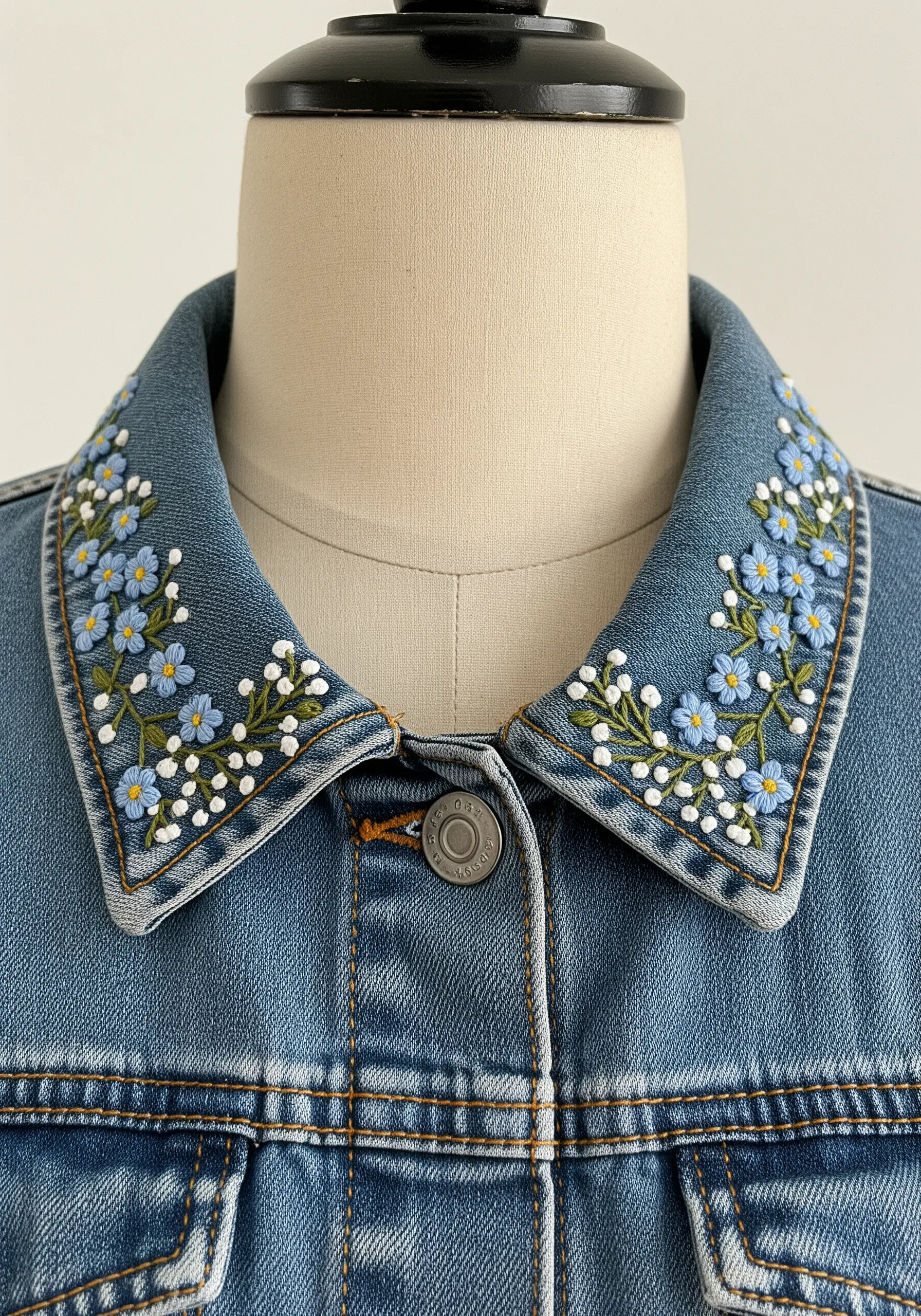
Prove that embroidery doesn’t have to be large to make an impact. A small, carefully placed design on the collar adds a touch of bespoke elegance.
Create perfect, tiny forget-me-nots using five small lazy daisy stitches arranged in a circle, with a single yellow French knot at the center.
Fill the surrounding space with scattered white French knots to suggest baby’s breath. This adds texture and completes the miniature bouquet without overcrowding the small area.
These tiny floral motifs are perfect to fill empty spaces and make your composition look complete.
11. Achieve Breathtaking Depth with Cascading Wisteria

Create a truly show-stopping piece by building layers of texture for a three-dimensional effect.
For the wisteria blossoms, use heavily textured stitches like bullion knots or cast-on stitches, packing them tightly together to form dense, grape-like clusters.
To achieve a realistic gradient, use at least three shades of purple, placing the darkest at the top of each cluster and the lightest at the tip.
Contrast the dimensional flowers with flatter leaves stitched in fishbone or satin stitch. This makes the purple blossoms the undisputed focal point of the design.
12. Experiment with a Mixed-Media Honeycomb Design

Incorporate appliqué to introduce bold, clean shapes and an additional layer of texture to your embroidery.
Cut precise hexagon shapes from yellow and gold felt or quilting cotton. Arrange them on your jacket and secure each piece with a neat, tidy blanket stitch around the edge.
This creates a crisp, graphic backdrop for your embroidered bees.
For the bees’ fuzzy bodies, use the turkey work stitch (or create a dense cluster of French knots) to give them a fluffy, 3D texture that makes them look ready to fly off the fabric.
You can create many whimsical fabric collage embroidery scenes with this technique.
13. Master Asymmetry with a Dynamic Fireweed Bouquet

Create visual energy and a modern aesthetic by placing your design asymmetrically on one side of the jacket.
A lush bouquet emerging from behind the chest pocket draws the eye and feels more dynamic than a centered design.
For the tall fireweed stalks, blend shades of pink and magenta using long-and-short stitch for the larger petals and French knots for the delicate buds at the top.
Ensure the surrounding leaves vary in size, shape, and direction—stitched with fishbone or detached chain stitches—to give the arrangement a full, natural look.
14. Capture Earthy Textures of the Forest Floor
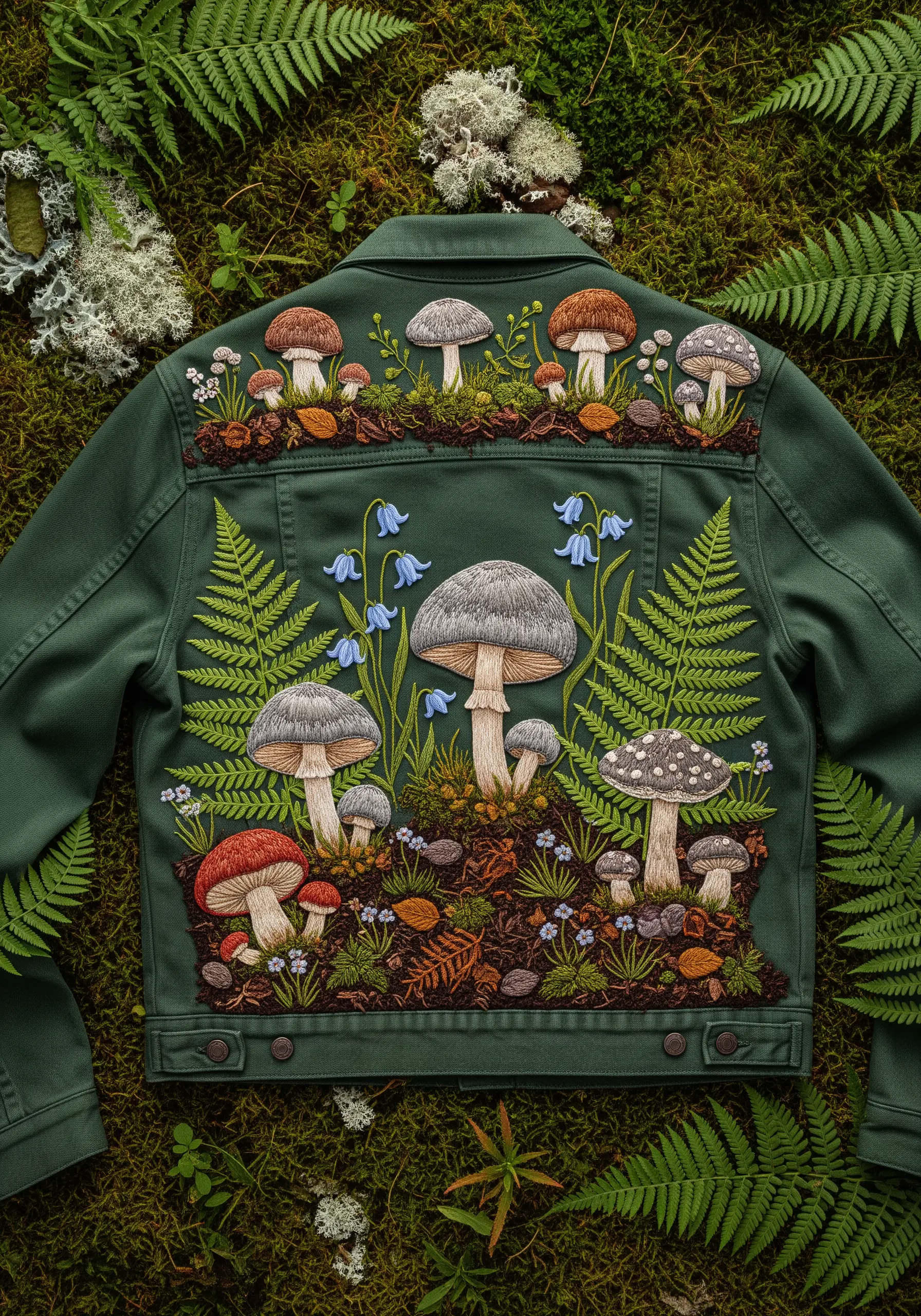
Challenge yourself to replicate the rich, organic textures found in nature with a detailed mushroom scene.
For the mushroom caps, use directional long-and-short stitch in concentric rings to mimic the appearance of gills and create subtle, realistic shading.
Use a scattering of French knots, seed stitches, and single straight stitches in shades of brown and green to represent moss, soil, and fallen leaves on the ground.
The success of these forest-floor botanical stitch ideas lies in a muted, earthy color palette that feels authentic and cohesive.
15. Create Celestial Harmony with a Sun & Moon Wreath

Unify different motifs into a single, powerful design by using a floral wreath as a framing device.
For the celestial faces, use a dense, smooth satin stitch. Add a touch of luxury by using a metallic silver thread for the moon and a shimmering gold for the sun’s rays.
The surrounding wreath of sunflowers and daisies serves to connect the two opposing elements, creating balance and harmony.
Keep the wreath flowers simple (lazy daisy and satin stitch petals) so they frame, rather than compete with, the central sun and moon.
Explore more hand-stitched flower wreath hoop ideas to master this framing technique.
16. Use the Sleeve for a Climbing Morning Glory Vine
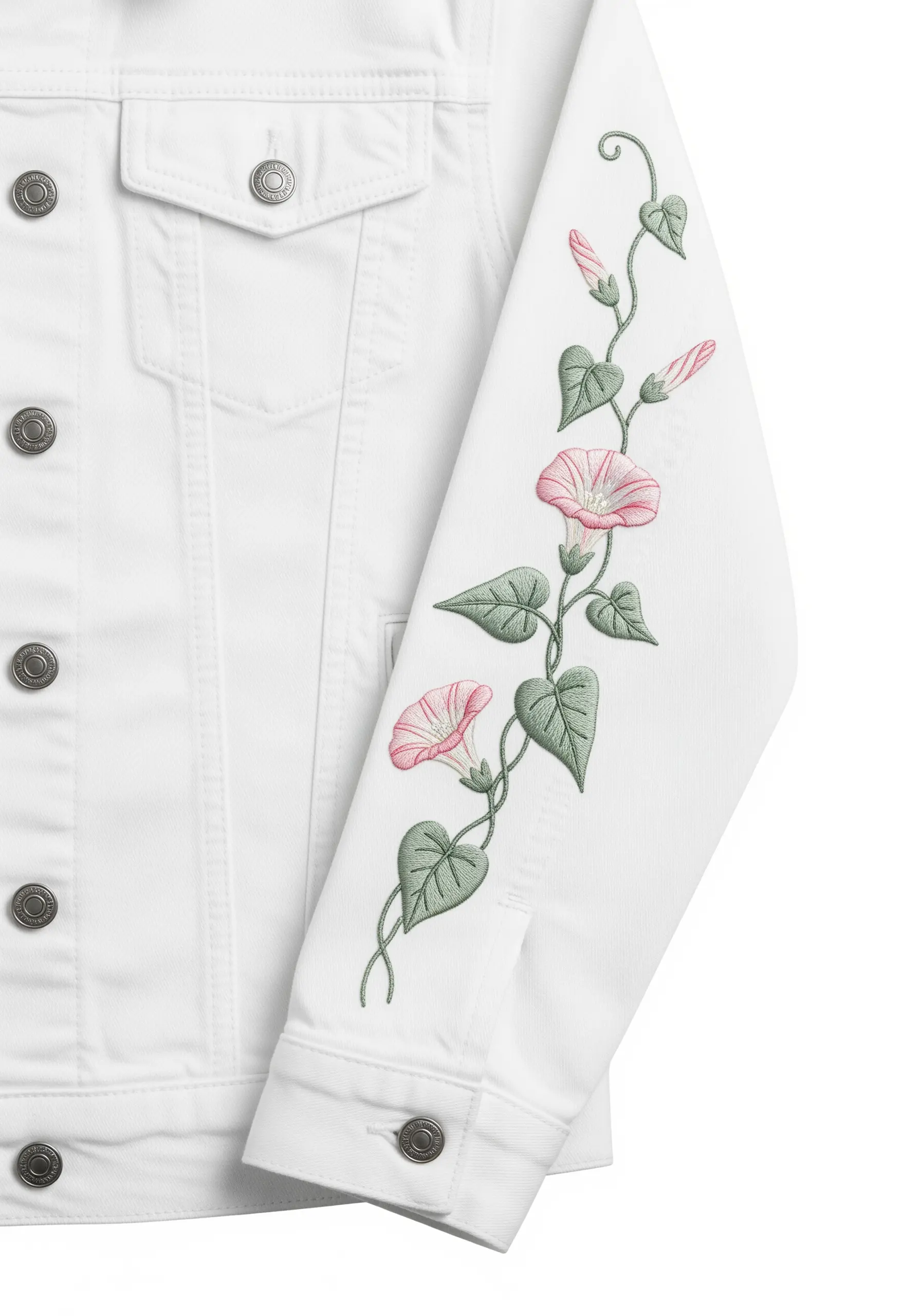
Take advantage of the unique vertical canvas offered by a jacket sleeve to create a design with elegant movement.
A climbing vine composition naturally draws the eye along the length of the arm.
Use a graceful, flowing stem stitch or whipped backstitch for the main vine to ensure it has a smooth, uninterrupted curve.
For the morning glory petals, blend soft pink and white threads using long-and-short stitch. Directing the stitches from the center outwards will enhance the trumpet shape of the flower.
17. Channel Folk Art with Bold Symmetry and Color
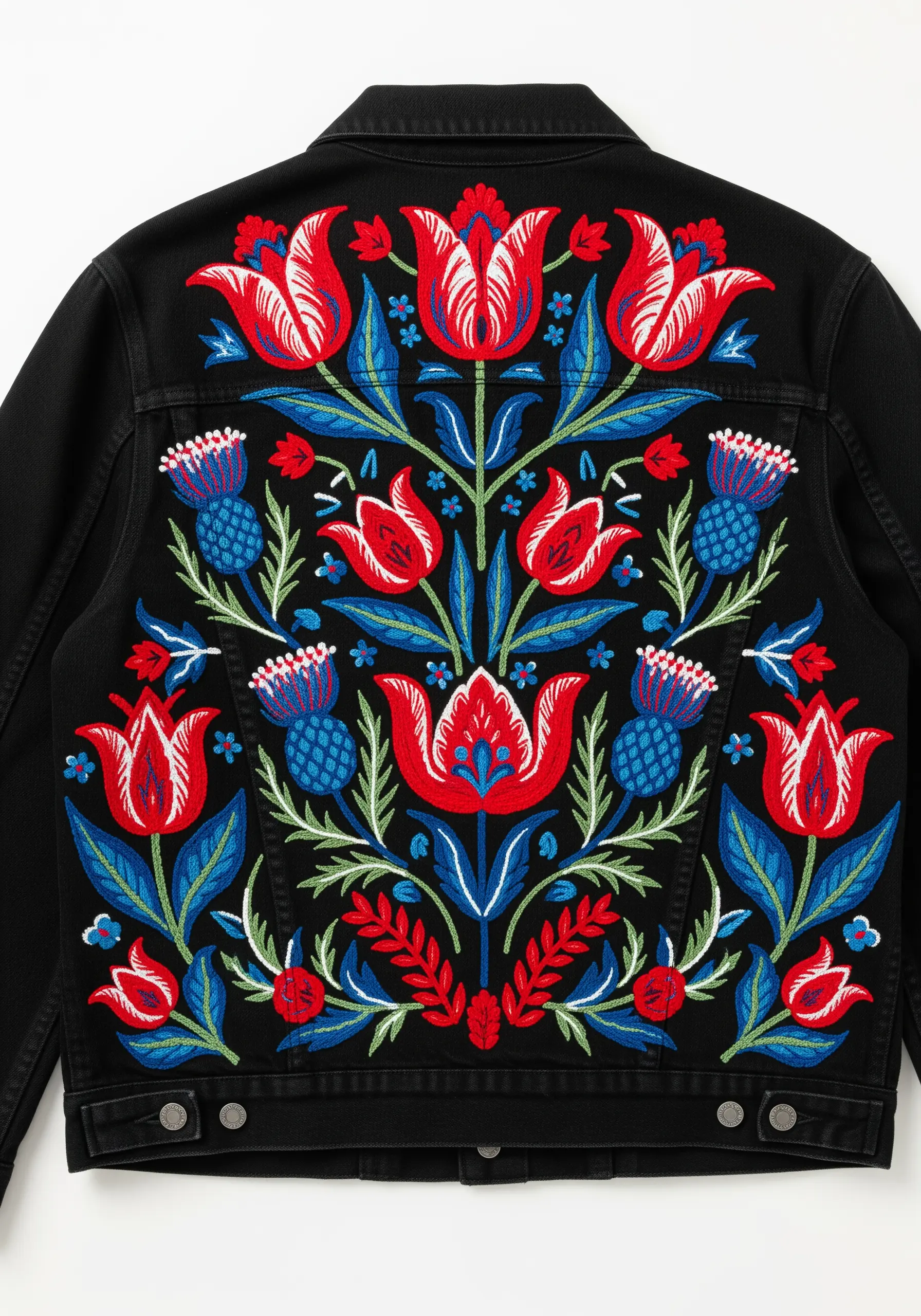
Explore a different aesthetic by embracing the principles of folk art: stylized shapes, bold color, and strong symmetry.
Use a dense, flawless satin stitch to create solid blocks of color, ensuring your stitches lie flat and even.
The power of this style comes from a limited but high-contrast color palette—like this vibrant red and blue against black denim.
A perfectly symmetrical design feels balanced, intentional, and visually powerful, turning your jacket into a piece of wearable heritage art.
This style shares a similar spirit with traditional Indian embroidery wall art ideas rooted in bold, graphic storytelling.
18. Add Dainty Detail with a Strawberry Vine
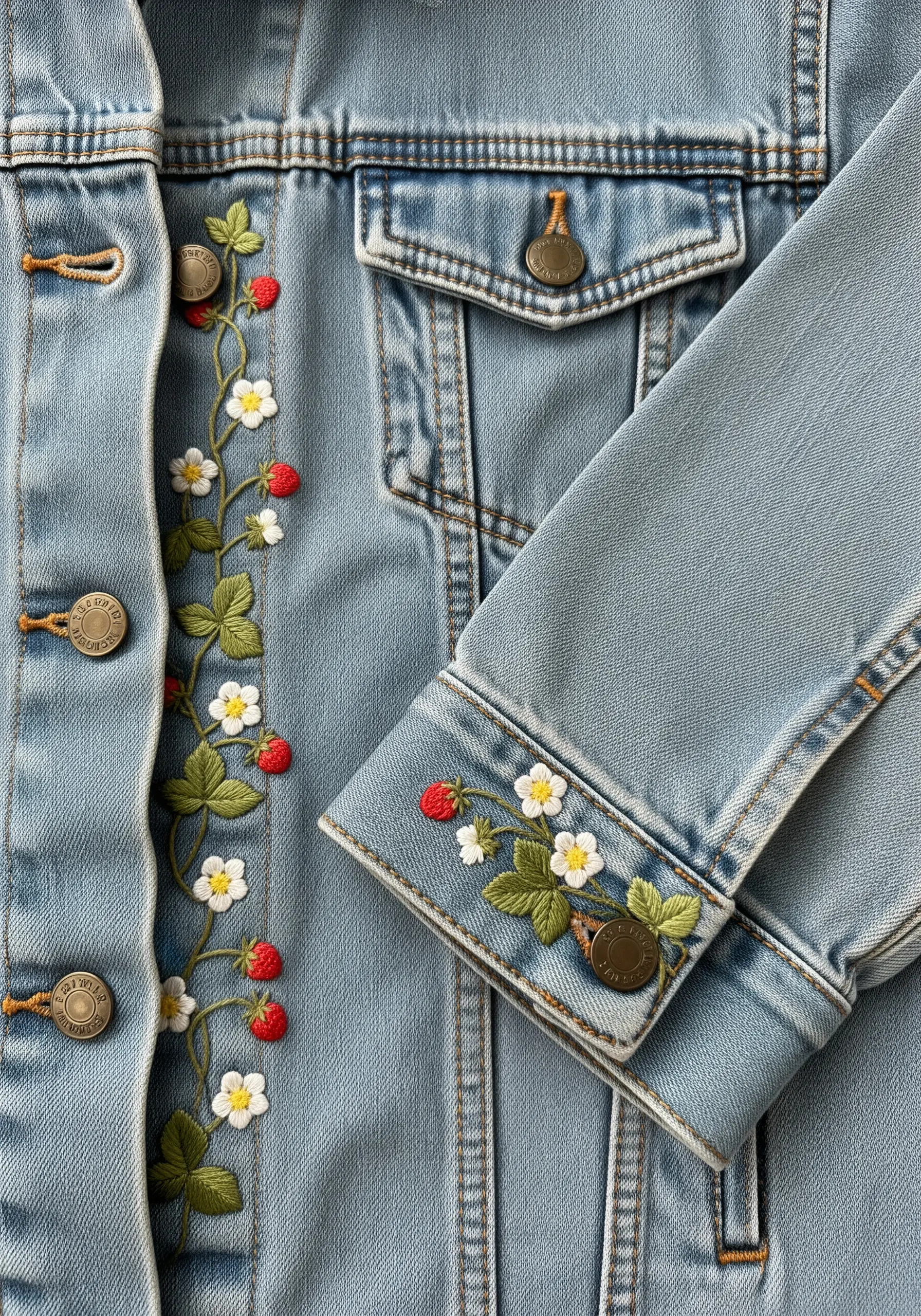
Sometimes the most charming embellishments are the smallest. A delicate vine winding along a cuff or front placket adds a sweet, illustrative touch.
To make the tiny strawberries look plump and three-dimensional, use a padded satin stitch: create a small base of straight stitches, then cover them with satin stitches going in the opposite direction.
A few scattered white or yellow French knots on top create the illusion of seeds and add a final touch of realism.
These small floral embroidery inspirations are perfect for adding subtle personality.
19. Stitch an Underwater Garden with Marine Textures
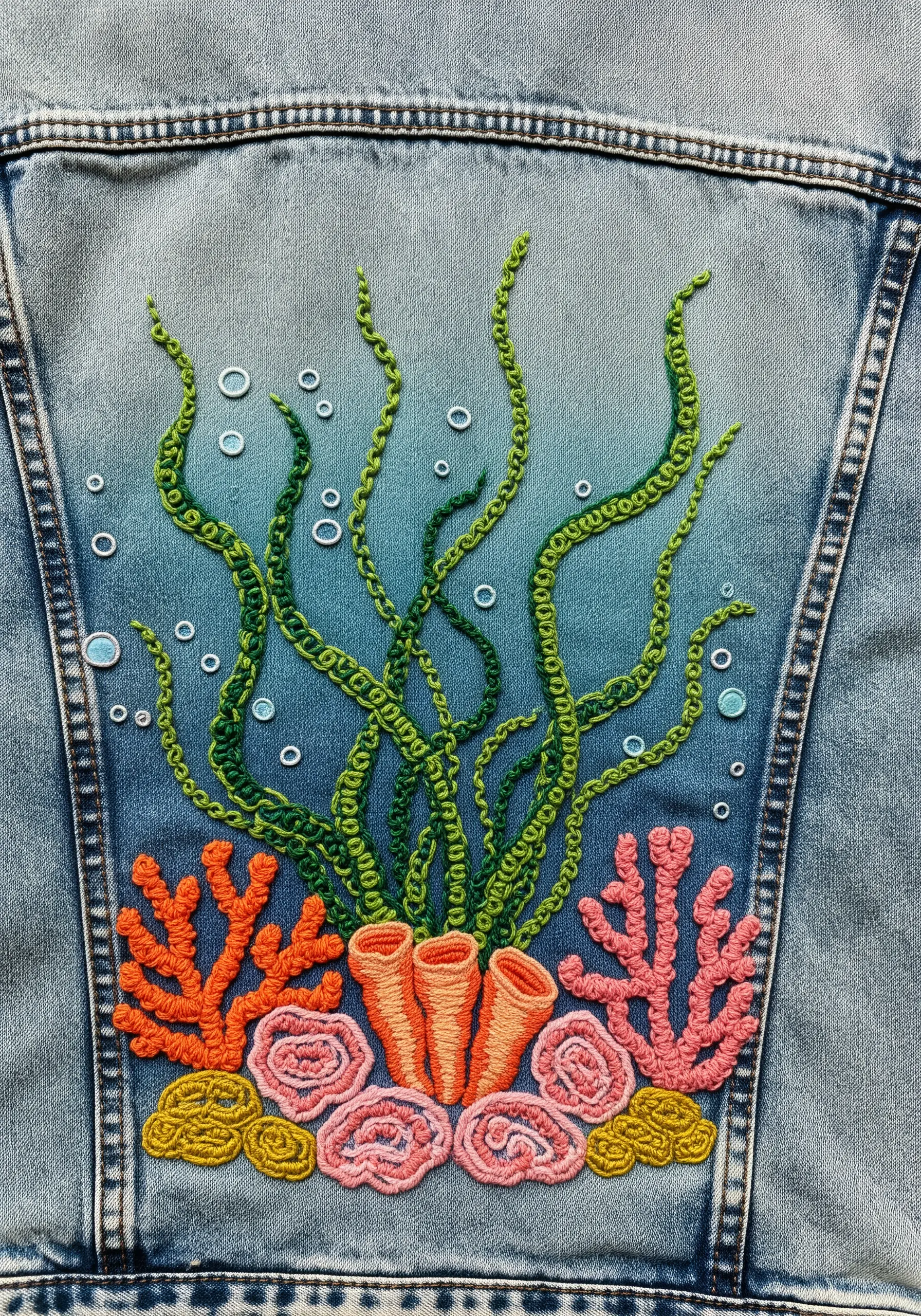
Translate the wildflower concept to an underwater world by using textural stitches that mimic marine life.
Use heavily knotted stitches like the Palestrina knot, bullion knot, or French knot to build up the bumpy, complex texture of coral formations.
For the long, flowing seaweed, couching is an excellent technique: lay down a thicker yarn or multiple strands of floss and tack it into place with small, perpendicular stitches.
Finish the scene with tiny, scattered seed stitches or single white straight stitches to represent air bubbles rising to the surface.
20. Combine Clean Outlines with Textured Fill
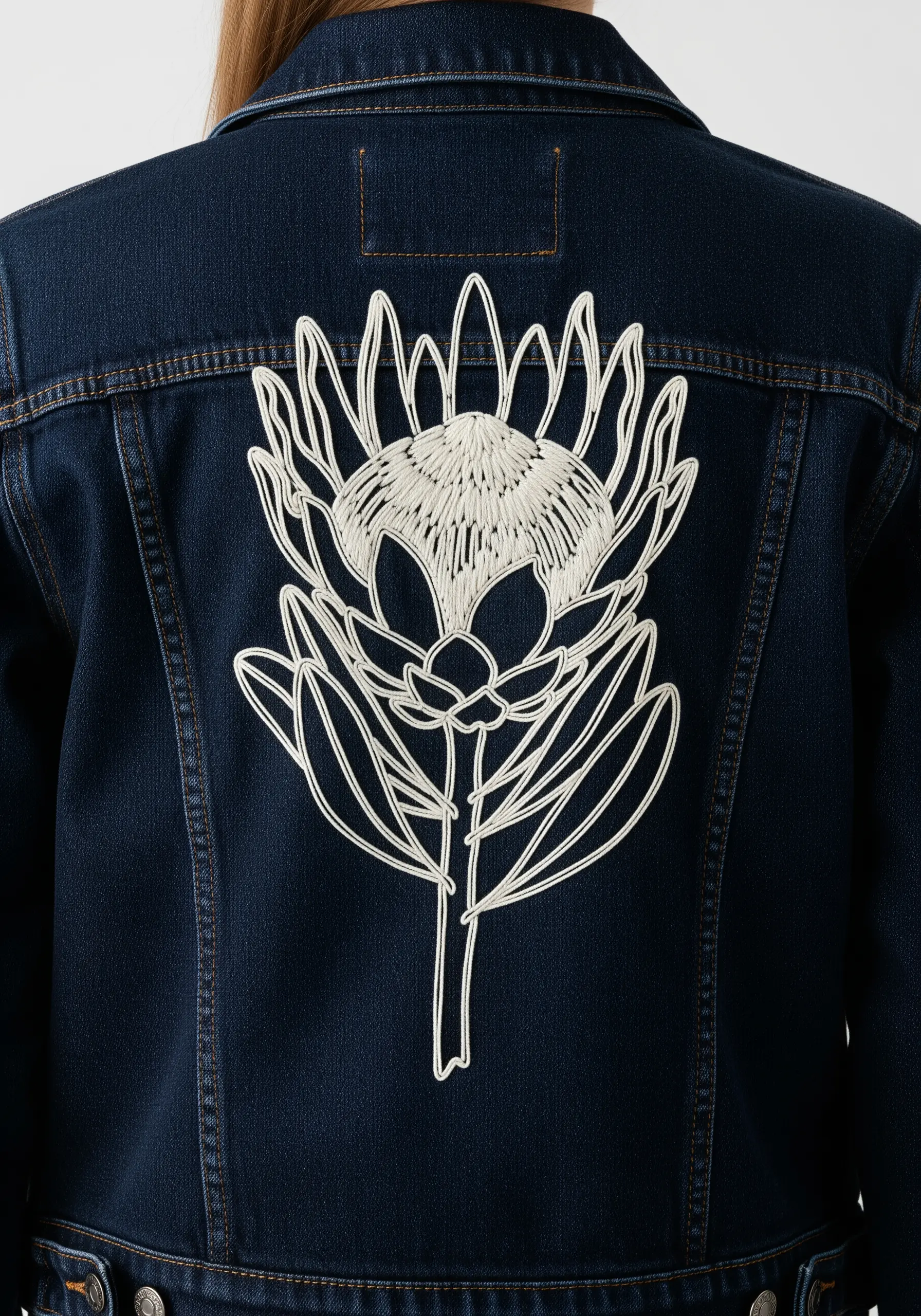
Create a sophisticated, modern floral by blending two distinct techniques: crisp line art and dense textural fill.
First, establish the flower’s shape with a clean, confident outline using a backstitch or stem stitch in a contrasting color.
Then, select a specific area to become the focal point—like the center of this protea—and fill it with a dense field of stitches.
Using a mass of straight stitches or seed stitches in a slightly different shade adds tactile interest and draws the eye inward, making the entire design more dynamic.
21. Create a Scattered Effect with Detached 3D Pansies
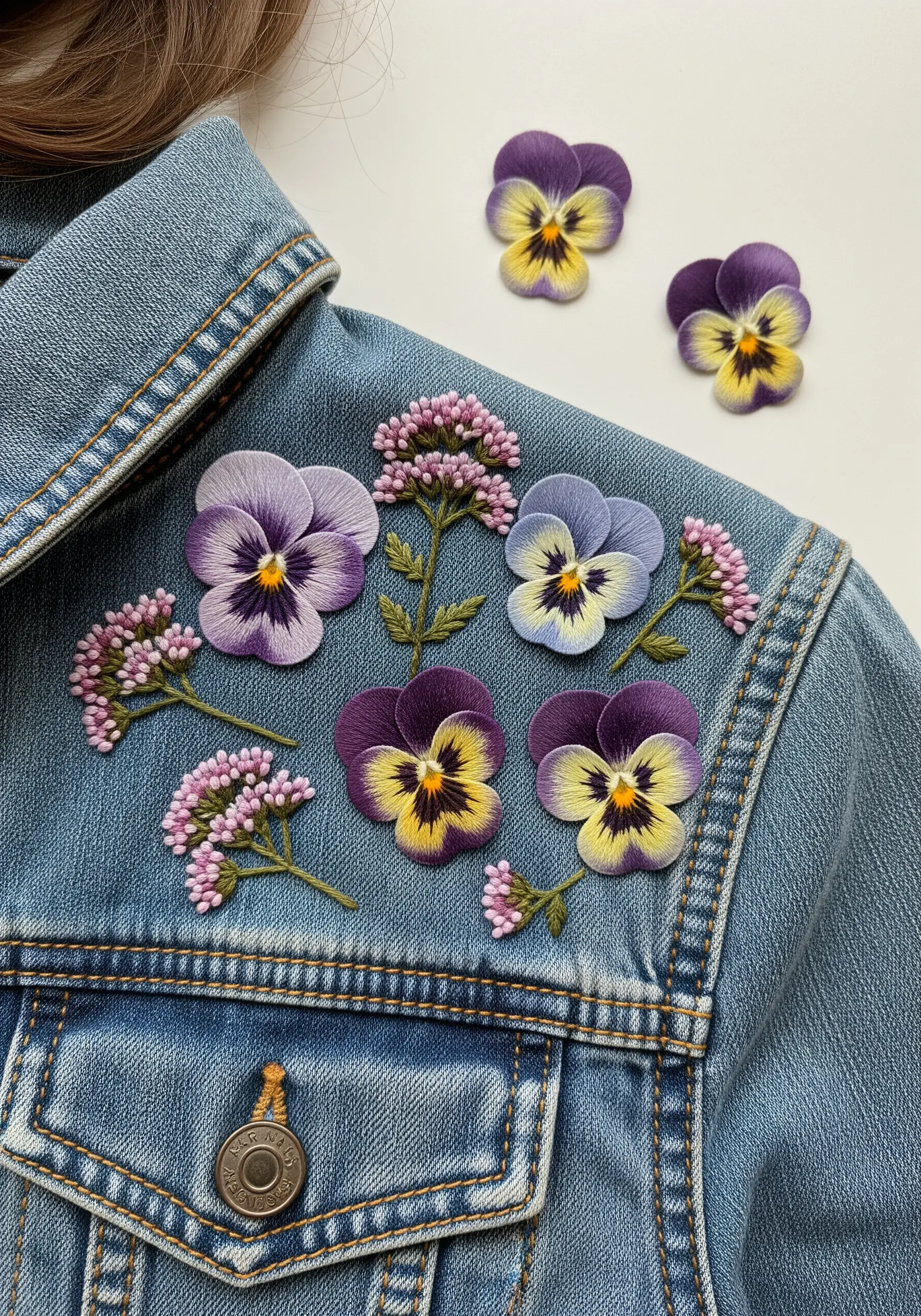
For the ultimate in dimension and realism, take your embroidery off the jacket—at least temporarily.
Stitch each pansy individually on a separate piece of felt or tightly woven fabric. Use long-and-short stitch to blend the purple and yellow shades perfectly.
Once complete, carefully cut each flower out, leaving a tiny fabric border. Then, arrange them on the jacket and appliqué them down with small, hidden stitches around the edges.
This stumpwork-adjacent technique creates a stunning, layered effect where the flowers appear to be floating on the denim surface, much like beautiful botanical patch ideas.