If you’ve ever felt that your embroidery, while lovely, is missing a certain sense of intention or polish, I want you to know that the answer isn’t necessarily more complexity. It’s not about learning a hundred new stitches or buying more supplies. It’s about learning to see.
The shift from ‘craft’ to ‘art’ happens when you begin to make deliberate choices—about texture, about negative space, about the weight of a line. It’s when you understand that the fabric you choose is as important as the thread, and that a single, perfectly executed stitch can carry more weight than a thousand hurried ones.
These ideas are your invitation to explore that shift. They are not just patterns to copy, but principles to absorb. You’ll learn how to use chunky yarns to create sculpture, how to turn a simple seam into a design feature, and how to let negative space speak as loudly as your stitches. Let this be the moment you start stitching with quiet confidence, creating textile art that truly resonates with the calm, clean aesthetic of your home.
1. Architectural Lines on Canvas
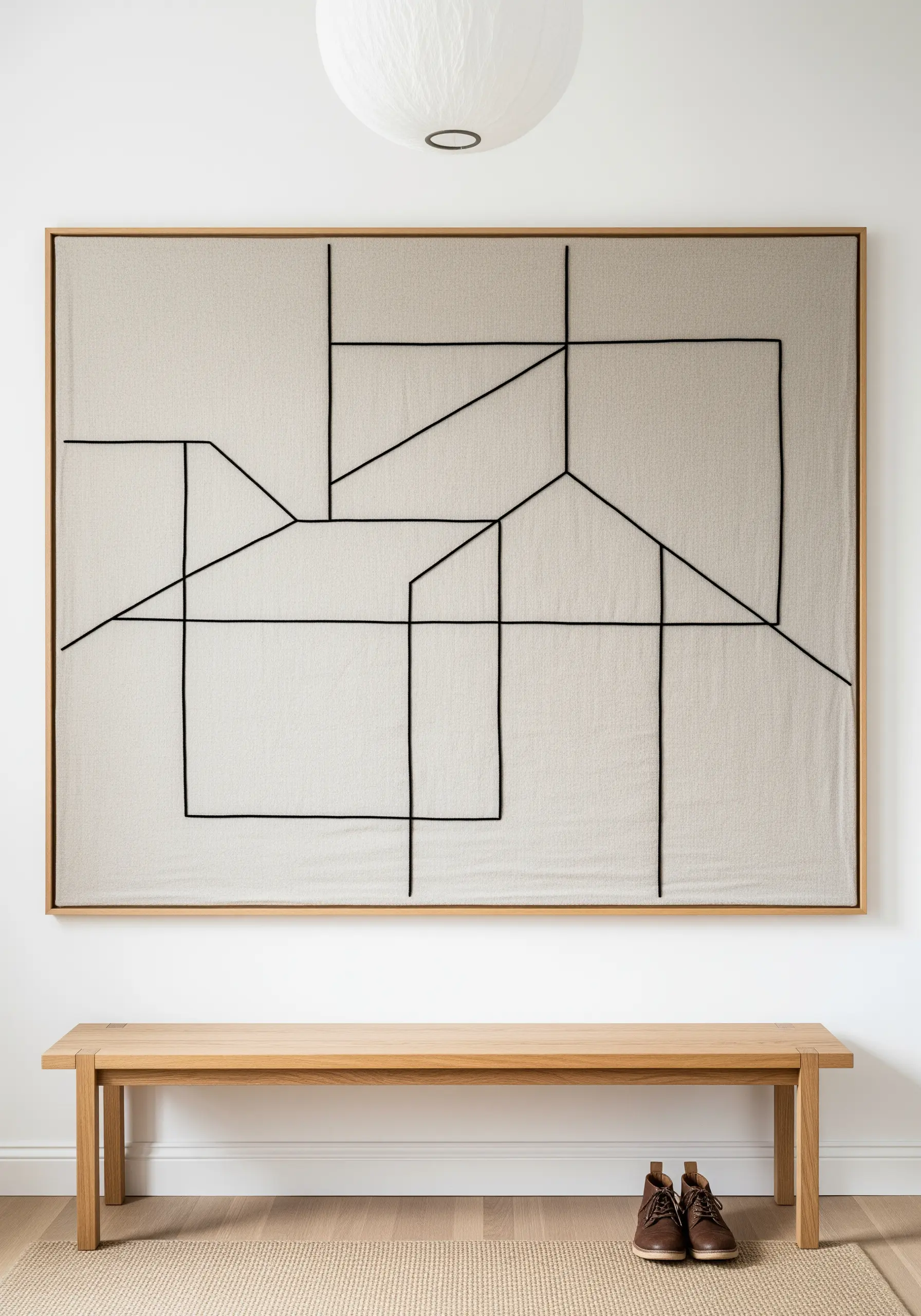
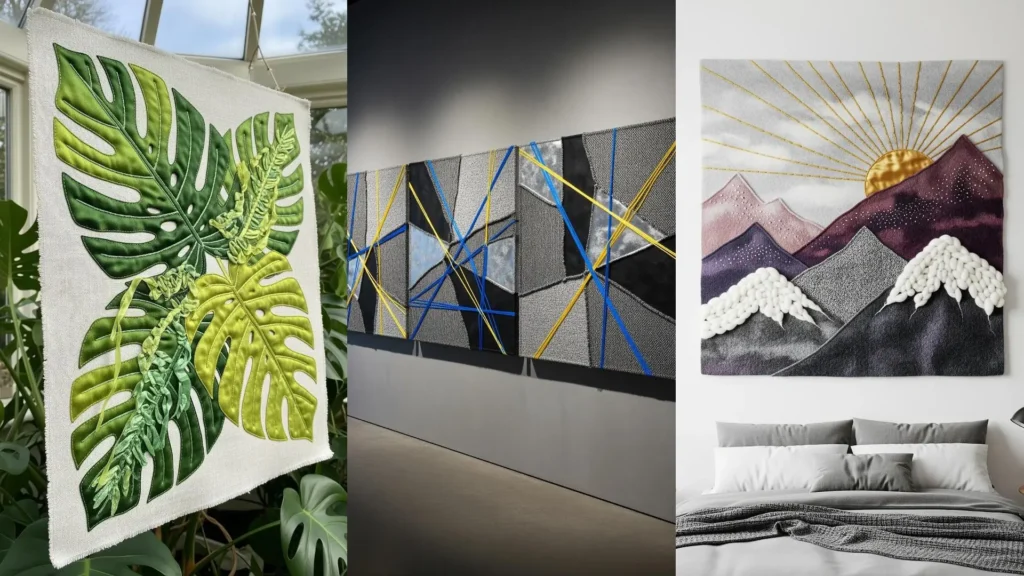
For large-scale impact, couch thick yarn or cord directly onto stretched linen to create bold, architectural lines.
Maintain taut, even tension as you stitch the cord down to ensure your corners and intersections remain sharp and geometric.
This technique allows you to work on a grand scale, turning a simple line drawing into a dramatic piece of textile art where the negative space is just as important as the stitched form.
Using a neutral, textured fabric like a heavy oatmeal linen allows the dark lines to command full attention, creating a contemporary piece that feels both minimal and monumental.
2. Layered Textures in Triptych Form
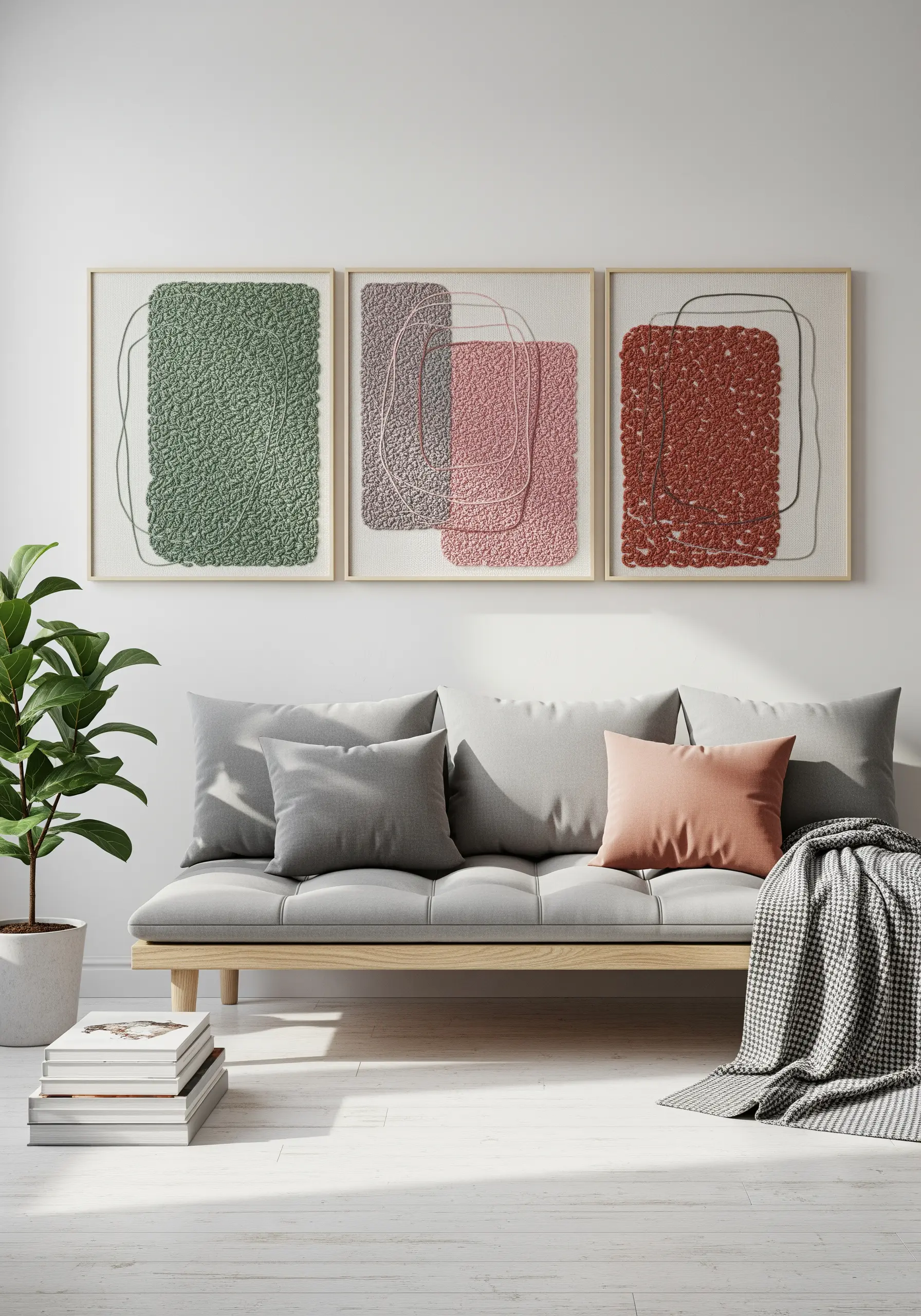
Explore abstract compositions by working across a set of three canvases, or a triptych.
Fill organic, rounded shapes with dense French knots or seed stitches to create a rich, pebbled texture.
By slightly overlapping the shapes and using a cohesive, muted color palette, you build a sense of depth and harmony across the individual panels.
The slightly irregular outlines, created by couching a single strand of yarn, give the work an organic, handmade feel that softens the geometric frames.
3. Rhythmic Waves with Sashiko Stitching
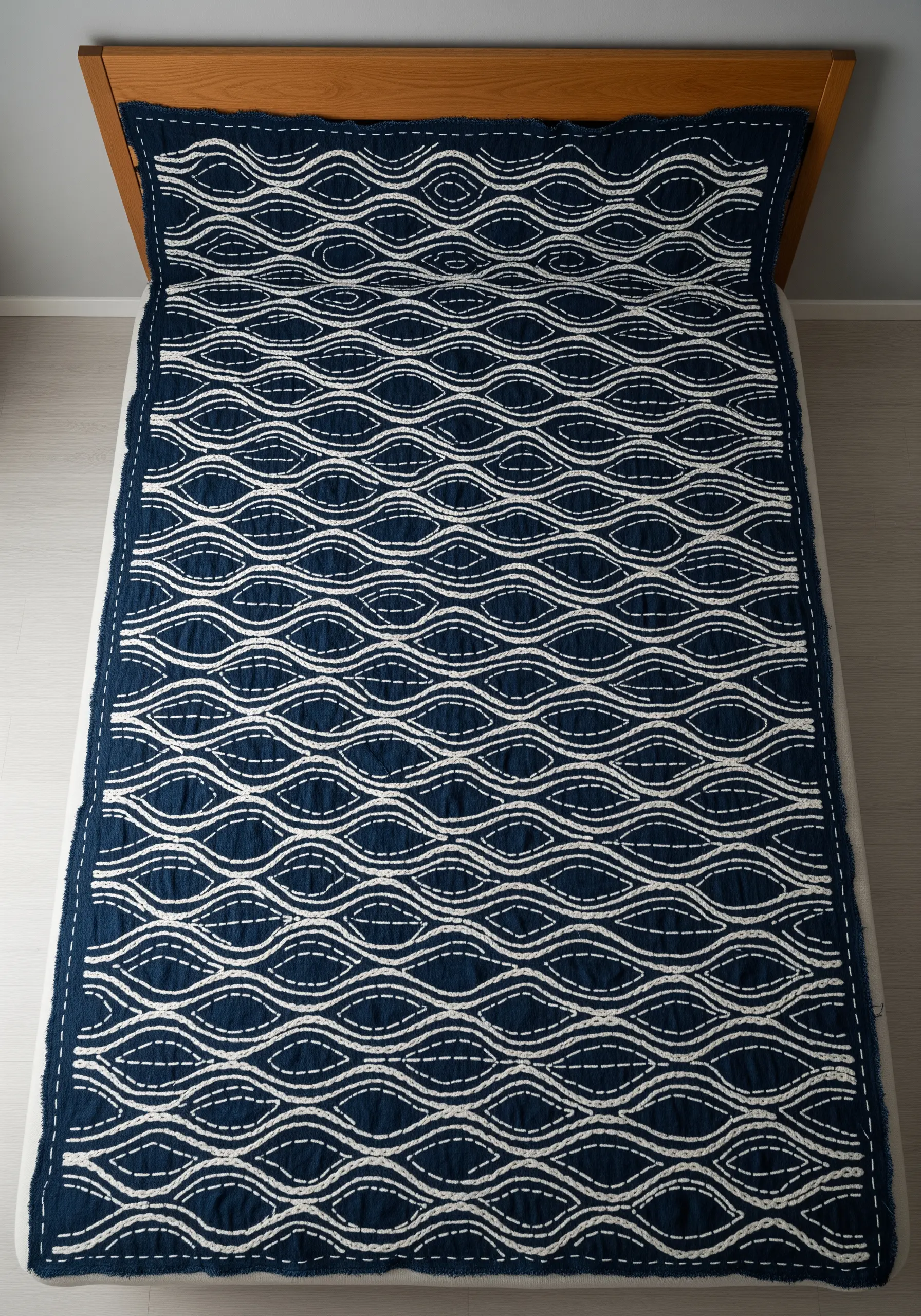
Create mesmerizing, rhythmic patterns using a simple running stitch, inspired by Japanese Sashiko.
The key to a polished look is consistency in your stitch length and spacing, so mark your wave patterns lightly with a water-soluble pen before you begin.
Use a thick, high-contrast thread, like a white cotton perle on a deep indigo fabric, to make the graphic quality of the lines pop.
This meditative technique adds both visual interest and physical texture, turning a simple blanket or wall hanging into a functional work of art.
4. The Elegance of a Single Line Motif
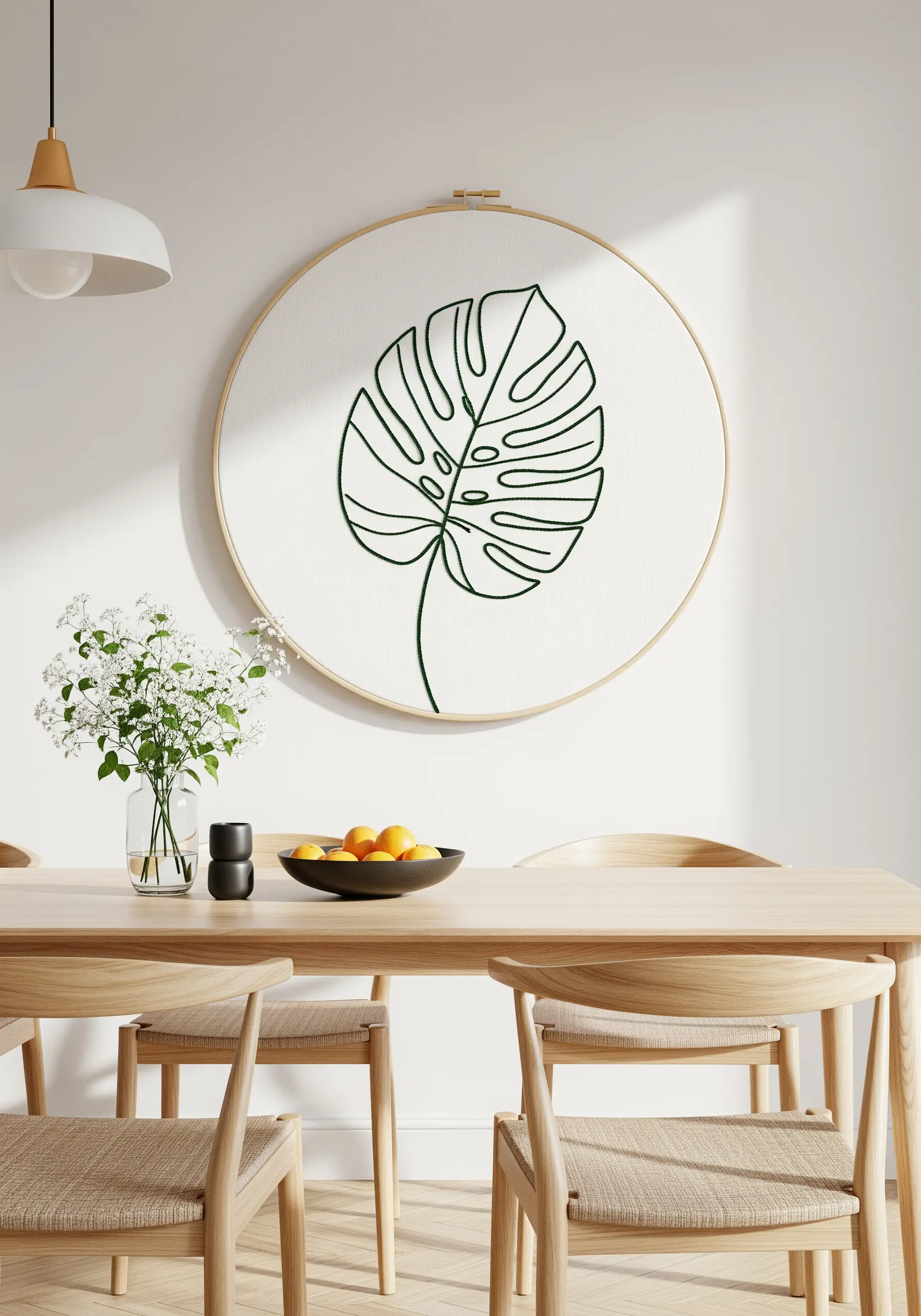
To make a simple line drawing feel intentional and refined, choose a stitch that gives it substance.
A whipped backstitch or a stem stitch will create a smooth, raised line with a subtle, rope-like texture that stands out more than a basic backstitch.
Scale up your design to fill a large hoop—this generous use of negative space is a hallmark of Scandinavian design.
Paired with a high-contrast color scheme, a single, beautifully executed motif becomes a minimal and impactful statement piece.
5. Sculptural Texture with Chunky Yarn
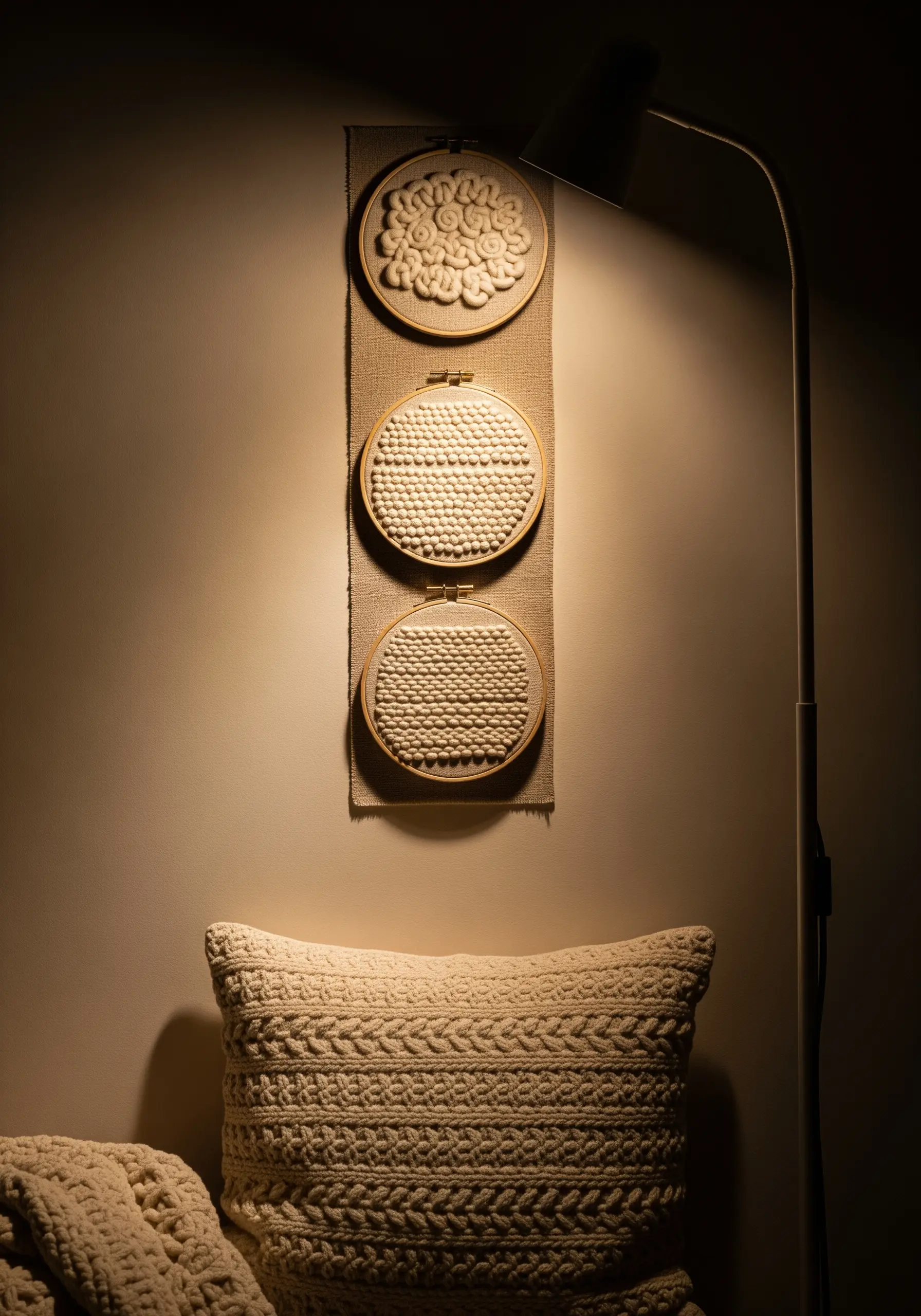
Move beyond embroidery floss and introduce chunky wool yarn or roving to create highly sculptural, tactile art.
Fill hoops with dimensional stitches like oversized French knots, loop stitches, or couched braids to build surfaces that invite touch.
By keeping the color palette monochrome—shades of cream, ivory, and beige—you ensure the focus remains entirely on the rich interplay of textures.
Displaying a trio of hoops on a narrow linen runner transforms them from individual pieces into a cohesive wall installation with a sophisticated, cozy effect.
6. Layered Felt for Graphic Landscapes
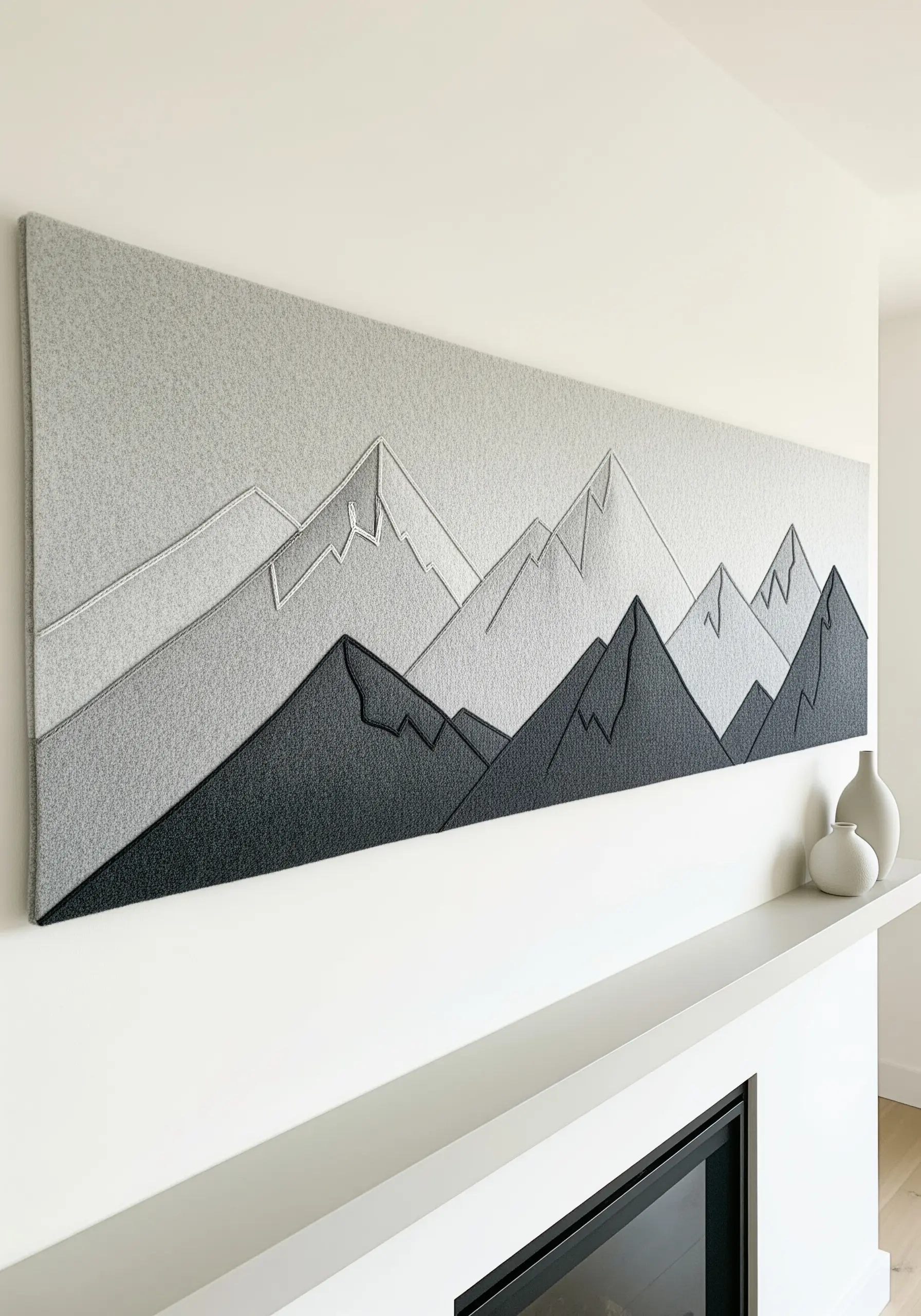
For clean, graphic shapes with a soft edge, work with felt appliqué instead of filled stitches.
Cut layers of felt in a monochrome gradient to build a stylized mountain range, creating depth and perspective through simple layering.
Secure each piece with a discreet running stitch in a matching thread, or use a contrasting color to add a subtle, decorative outline.
Felt provides instant color-blocking and a warm, matte texture that is perfect for minimalist, nature-inspired art.
7. The Intersection of Weaving and Embroidery
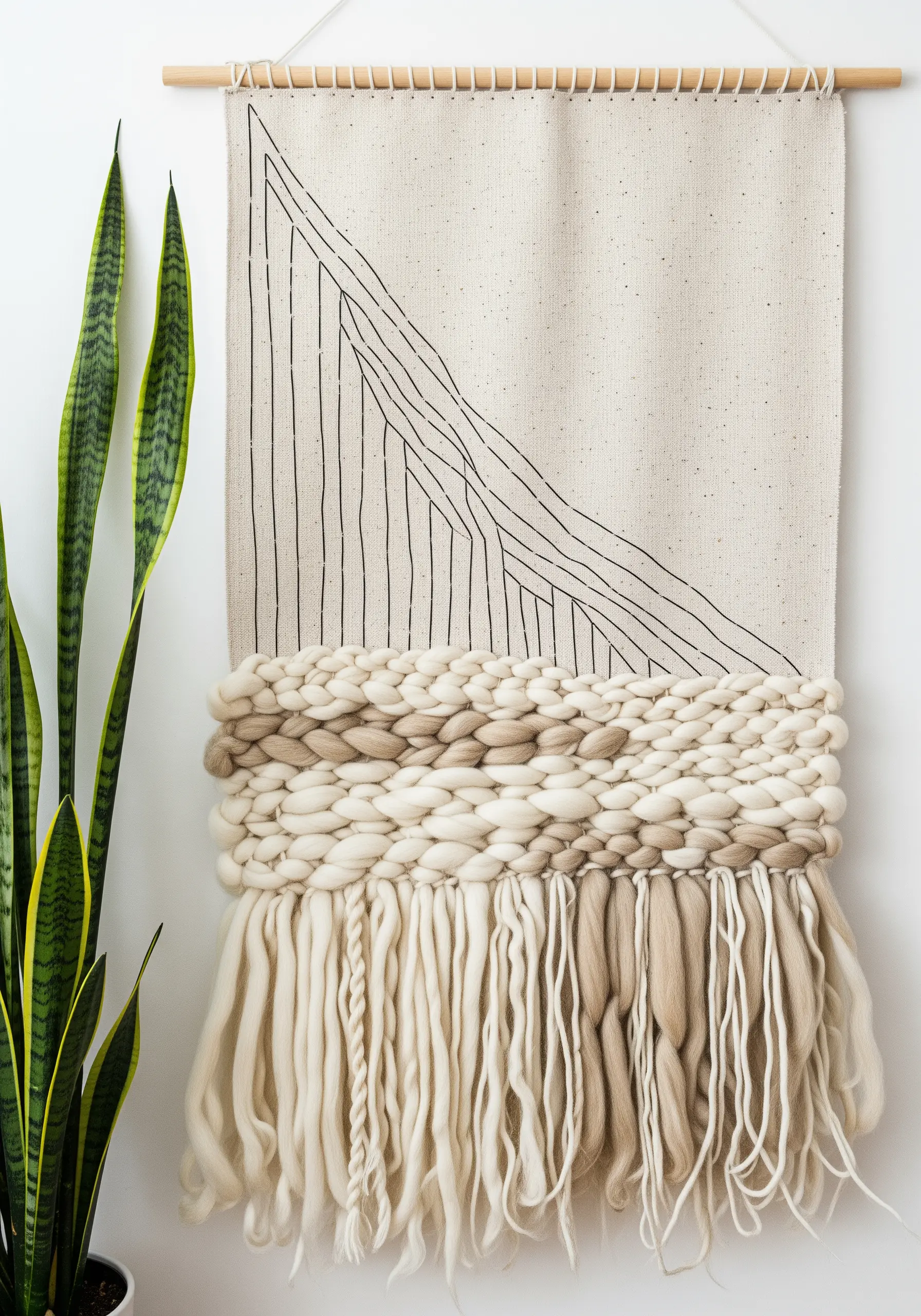
Combine two distinct fiber arts to create a piece rich in textural contrast.
Start with a base of chunky, woven wool for the lower portion of your wall hanging, focusing on organic texture and softness.
Above this, use a simple backstitch on the exposed canvas to add sharp, precise lines that contrast with the bulk of the weaving.
This juxtaposition of thick and thin, soft and sharp, is what gives the artwork its modern, dynamic character.
8. Architectural Forms with Extreme Knitting
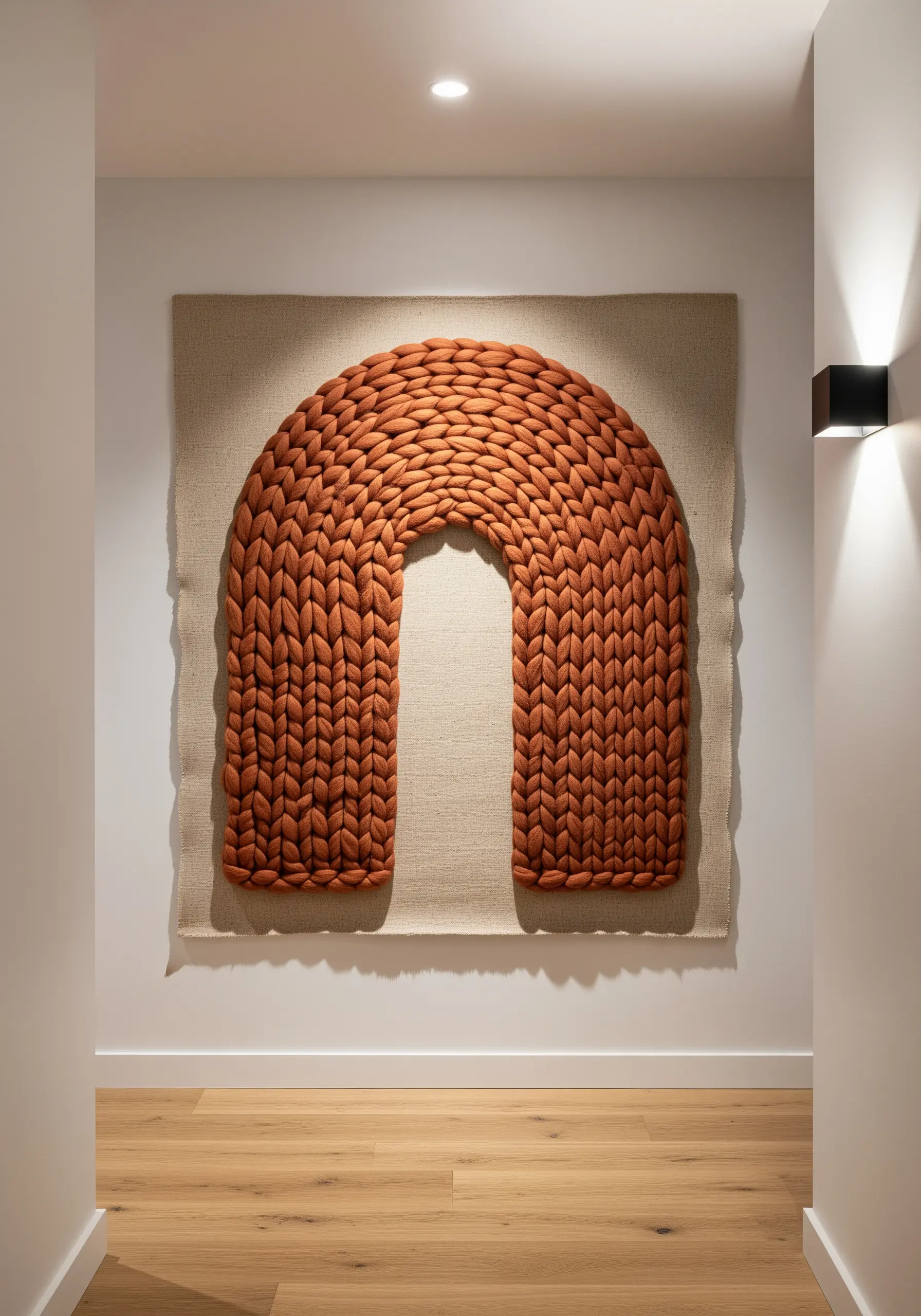
For a truly high-impact statement piece, think beyond the needle and thread and embrace extreme knitting.
Use arm knitting techniques or oversized needles with chunky wool roving to create a thick, structural textile.
Shape this knitted panel into a bold architectural form, like an arch, and mount it onto a large, neutral canvas.
This method turns fiber into a sculptural element, adding dramatic texture and warmth to an entryway or hallway.
9. Repetition and the Power of a Single Knot
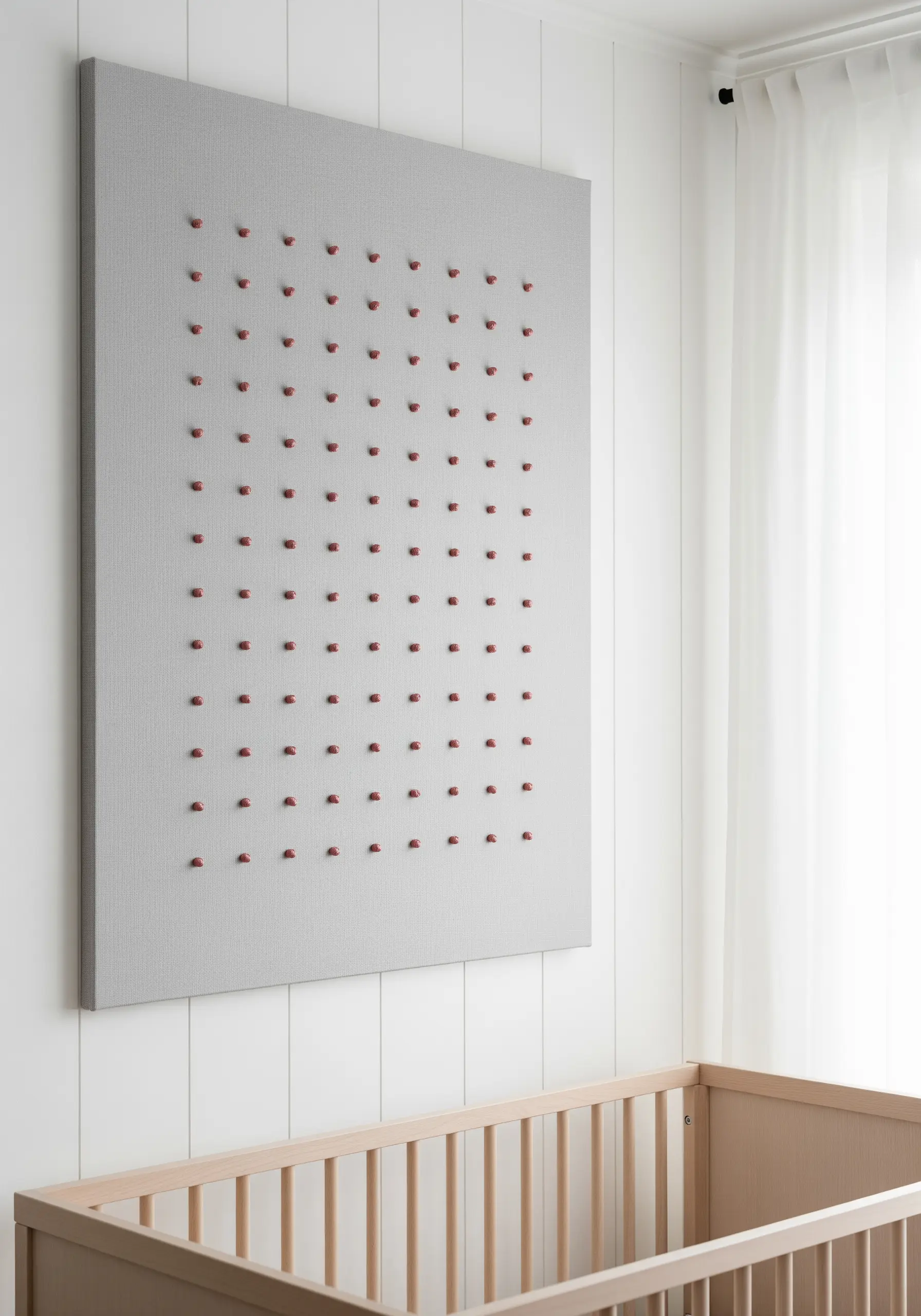
Create a sophisticated, meditative artwork using nothing more than a grid of simple knots.
The key to this design is precision: carefully mark a grid on your fabric and stitch a single, identical French or Colonial knot at each intersection.
Choose a single, bold accent color that will pop against a quiet, neutral background like a pale grey linen.
The visual power comes from the perfect rhythm of the knots and the generous use of negative space, turning a basic stitch into a piece of graphic art.
10. Unspun Wool as a Sculptural Line
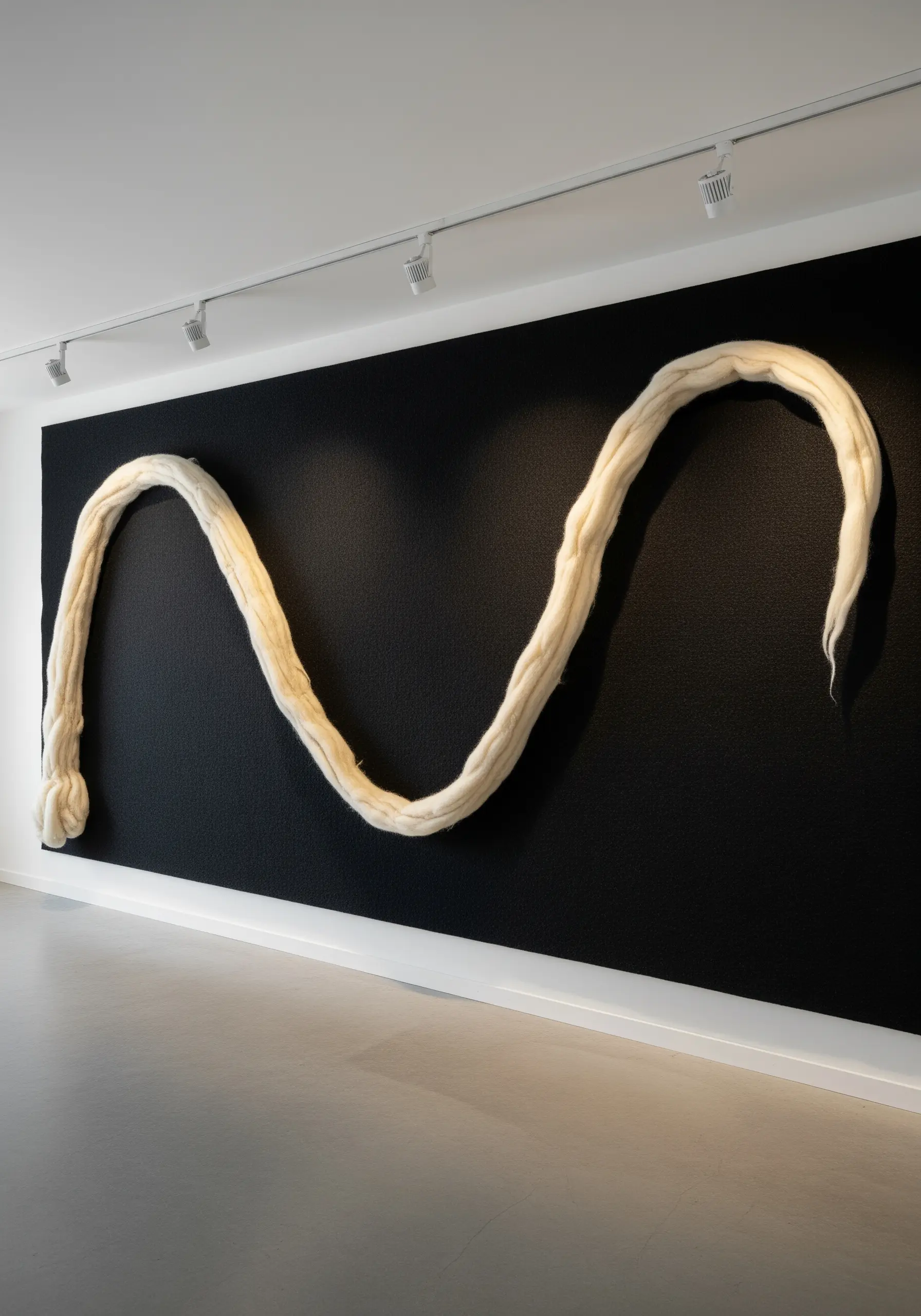
Rethink your materials and use unspun wool roving not as filler, but as a single, expressive line.
Gently couch the thick, soft fiber onto a high-contrast background, like a stark black canvas, to emphasize its form and texture.
Allow the roving to twist and turn organically, celebrating its raw, untamed nature.
This approach is less about the complexity of the stitch and more about letting the material itself become an organic sculpture.
11. Radiant Geometry with Wrapped Thread
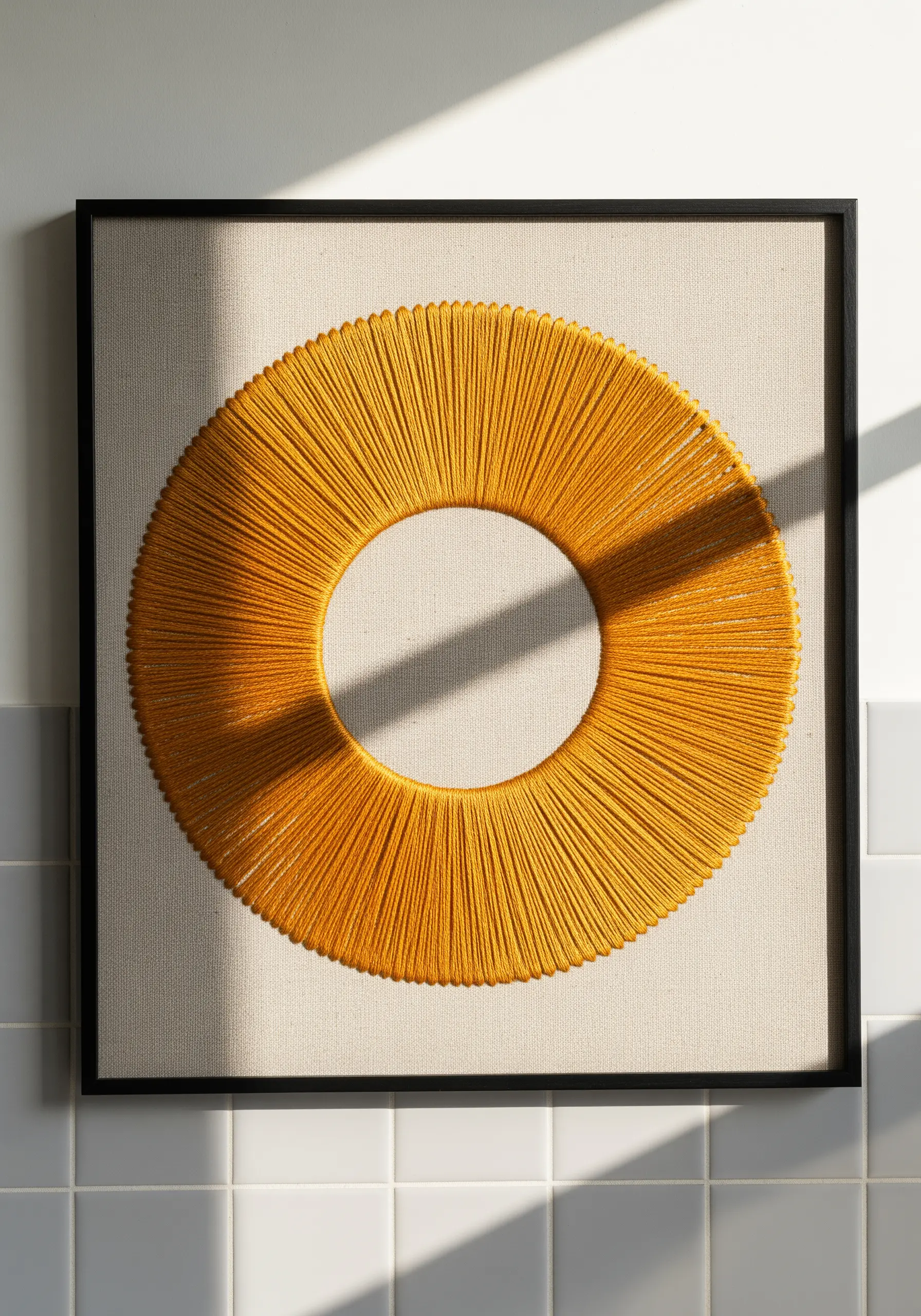
Achieve a stunning geometric effect without making a single puncture in your fabric.
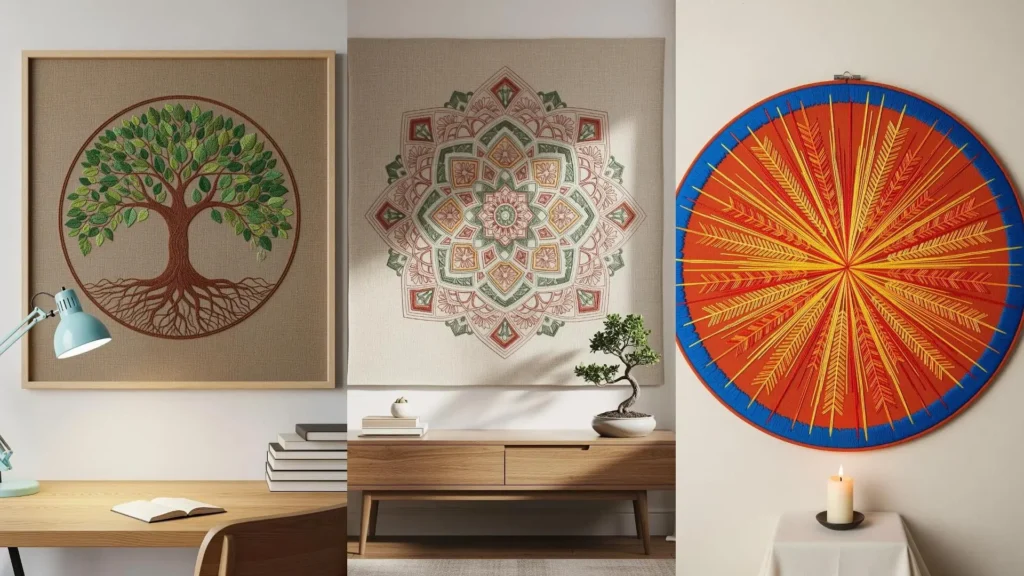
This technique involves wrapping thread or fine yarn tautly around a frame or board, creating radiating lines that converge at the center or cross the open space.
The sharp, clean lines and the illusion of a floating form are created entirely by thread tension.
It’s a perfect intersection of fiber art and geometric precision, ideal for a modern, graphic statement.
12. Topographic Contours in Thread
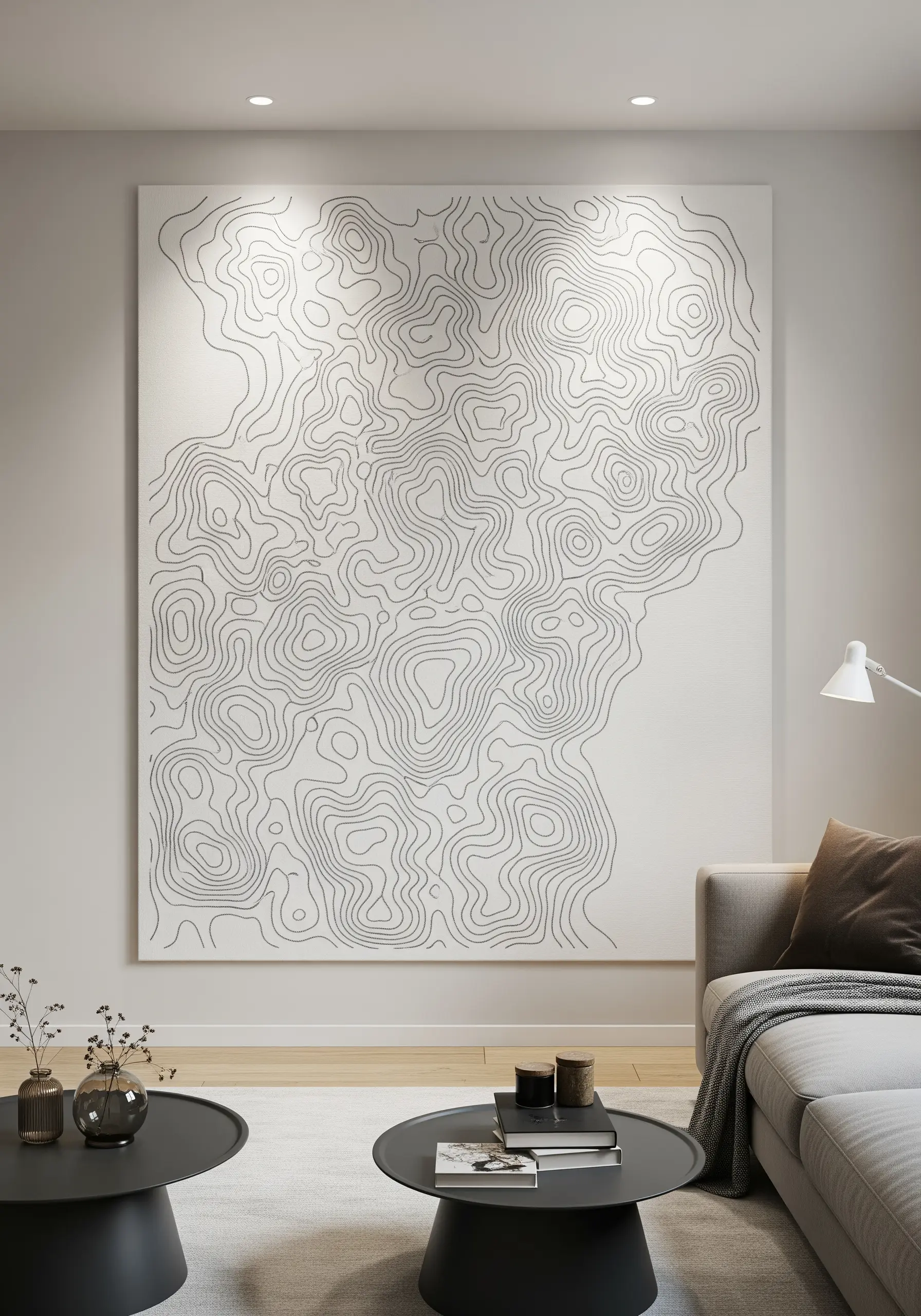
Transform the scientific lines of a topographic map into a large-scale piece of intricate art.
Trace the contour lines onto your canvas and stitch them with a fine, single thread using a split stitch or stem stitch for smooth, continuous curves.
The beauty of this project lies in its organic complexity; the dense, undulating lines create a visual texture that draws the viewer in.
It turns impersonal data into a deeply personal piece of abstract art.
13. The Unbroken Line Across a Triptych
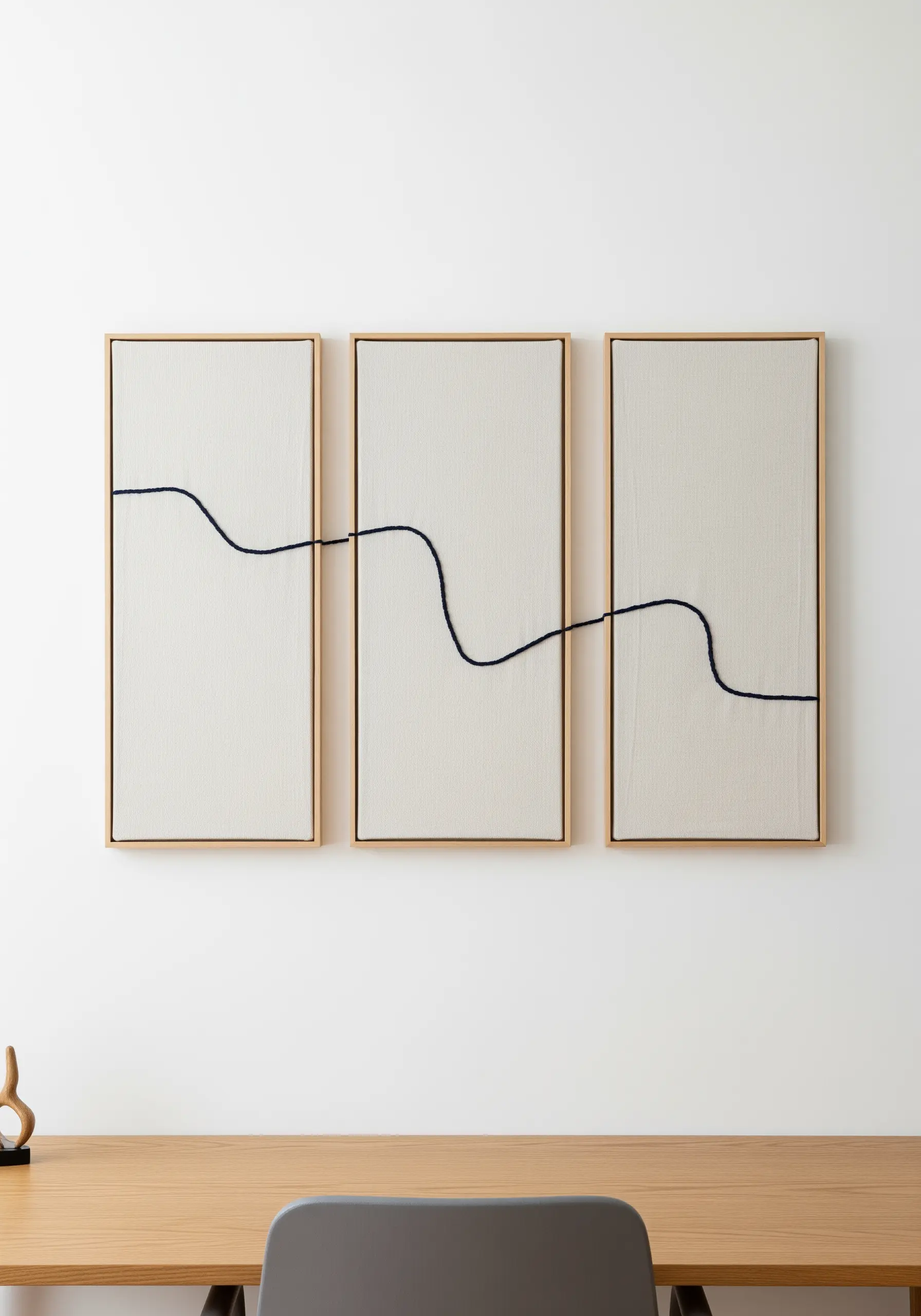
Create a powerful sense of movement and connection by carrying a single, continuous line across multiple panels.
Couch a thick, textured cord or yarn to give the line a raised, three-dimensional quality that stands off the canvas.
The visual tension between the physically separate canvases and the unbroken embroidered line makes for a deeply engaging and modern composition.
This is a wonderfully sophisticated and thought-provoking composition for a minimalist space.
14. Botanical Studies in Satin Stitch
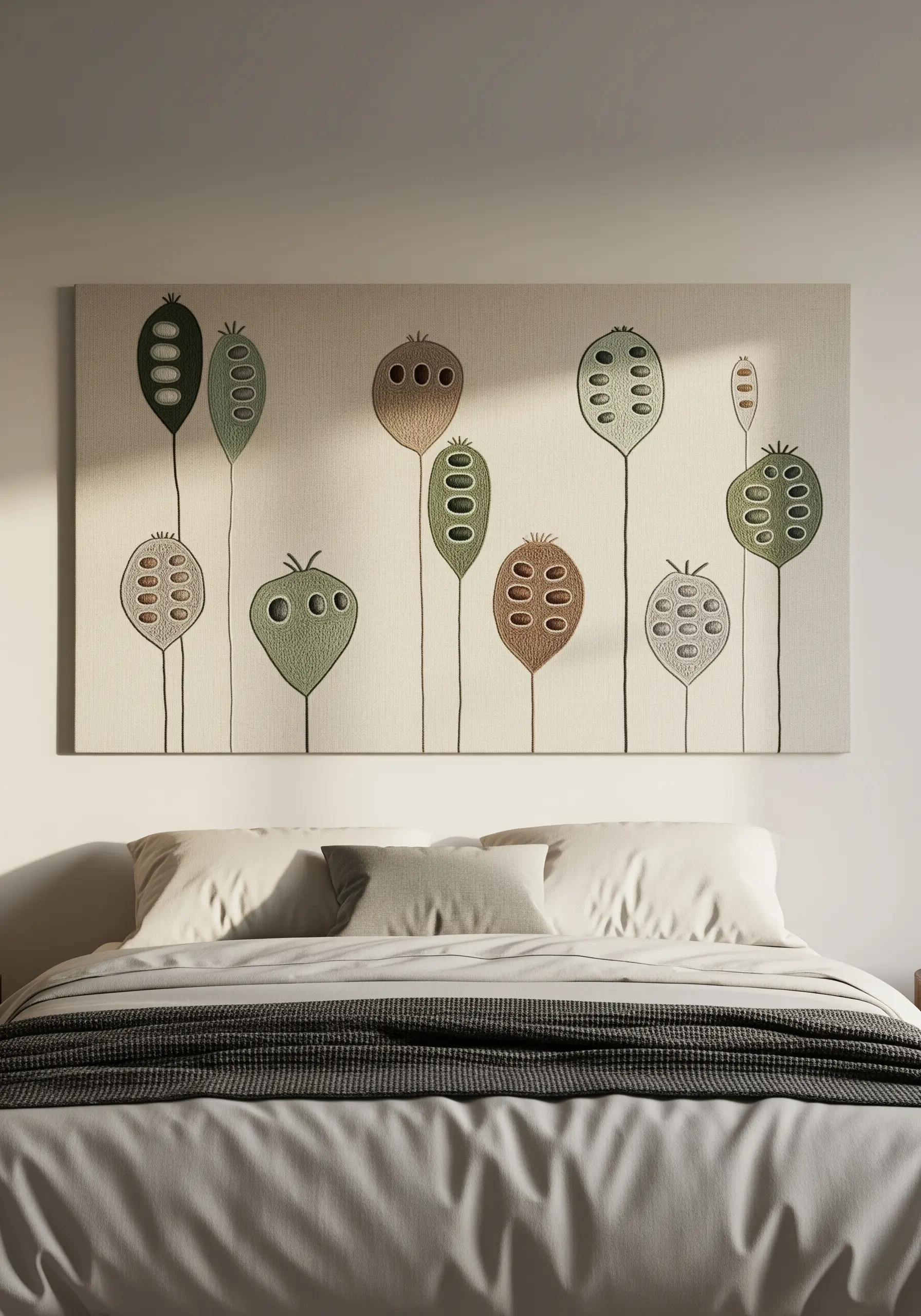
Give simple botanical illustrations a painterly quality by using satin stitch with intention.
Fill the shapes of seed pods or leaves with stitches that follow their natural contours, creating subtle highlights and shadows through the direction of the thread.
Use a crisp backstitch in a slightly darker shade to outline each form, giving it clean definition against the neutral background.
A muted, earthy color palette enhances the design’s serene, organic feel.
15. High-Contrast Geometric Abstraction
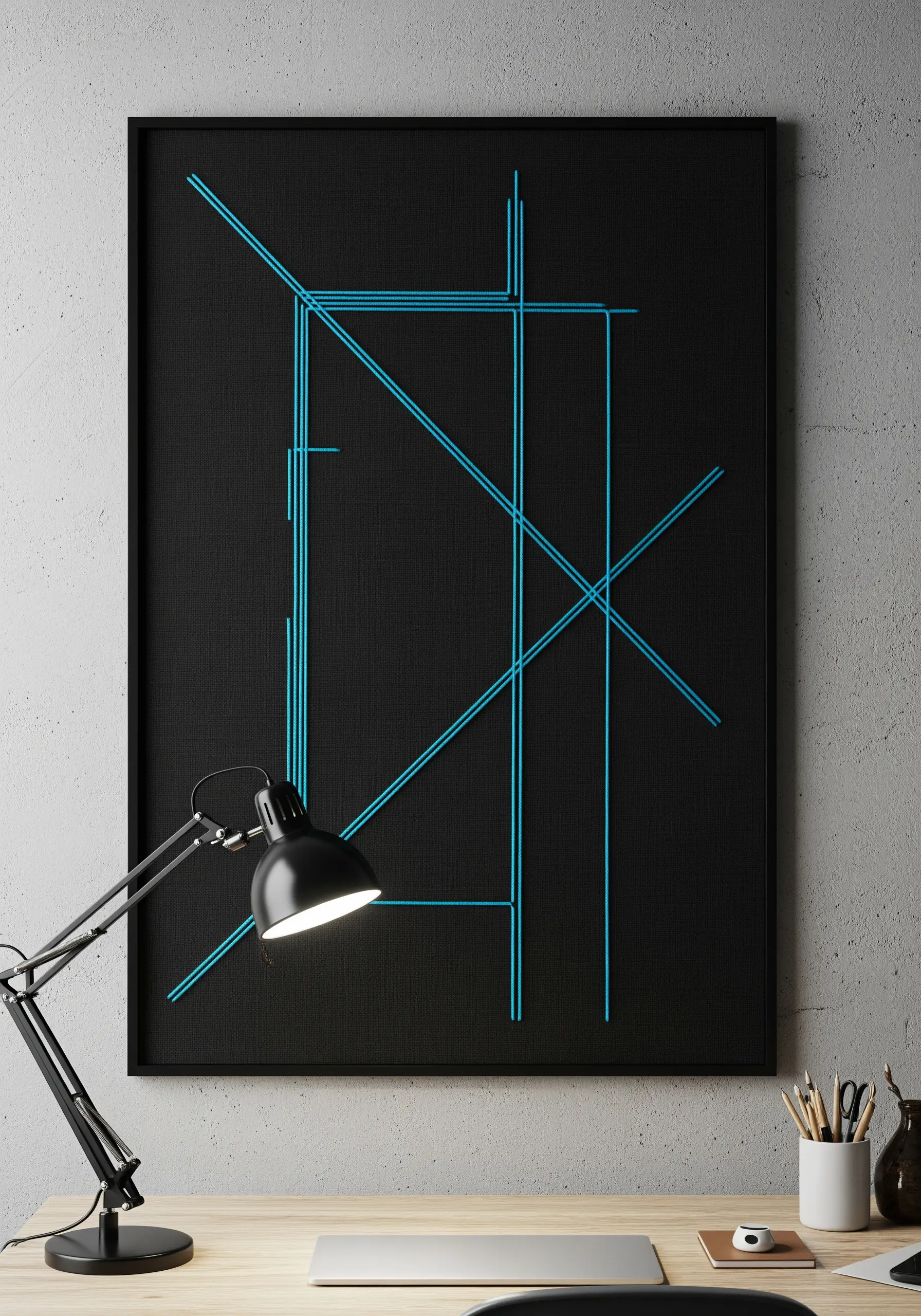
Make a powerful visual statement by pairing a vibrant, electric color with a stark black background.
To achieve perfectly crisp and uniform lines, couch a fine cord or several strands of floss held together.
The deep black of the canvas acts as a dramatic negative space, amplifying the energy of the bright hue and giving the abstract design an architectural quality.
This approach elevates simple lines into dreamy wall gallery pieces with a bold, contemporary edge.
16. A Modern Sampler of Rope Textures
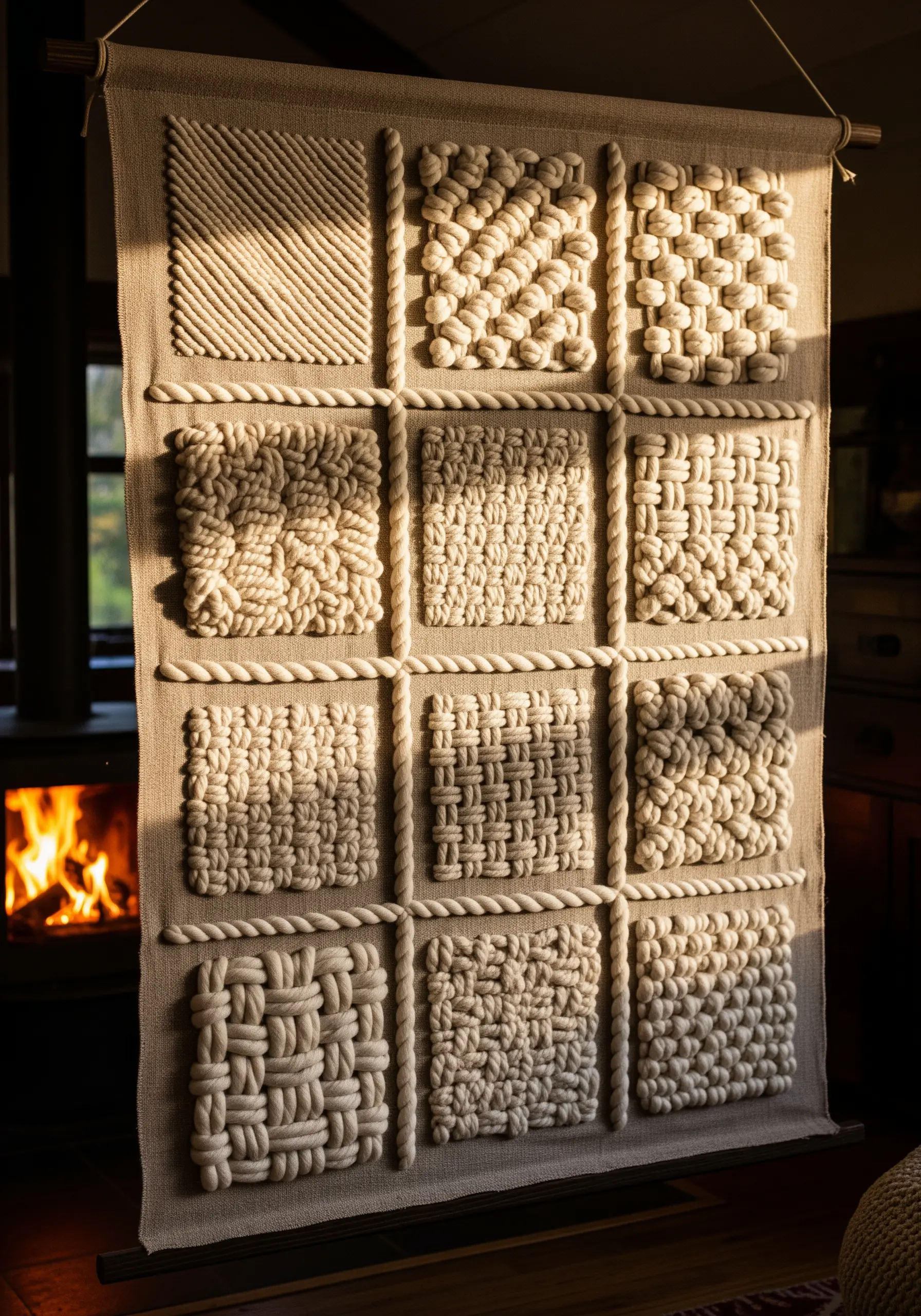
Create a stunningly tactile piece by exploring the sculptural possibilities of cotton rope.
Divide a large canvas into a grid and fill each square with a different woven, knotted, or couched pattern.
Experiment with basket weaves, figure-eight knots, and simple diagonal couching to build a vocabulary of textures.
Working in a single, neutral color allows the rich textures and the interplay of light and shadow to become the main focus of this sophisticated sampler.
17. The Beauty of the Visible Seam
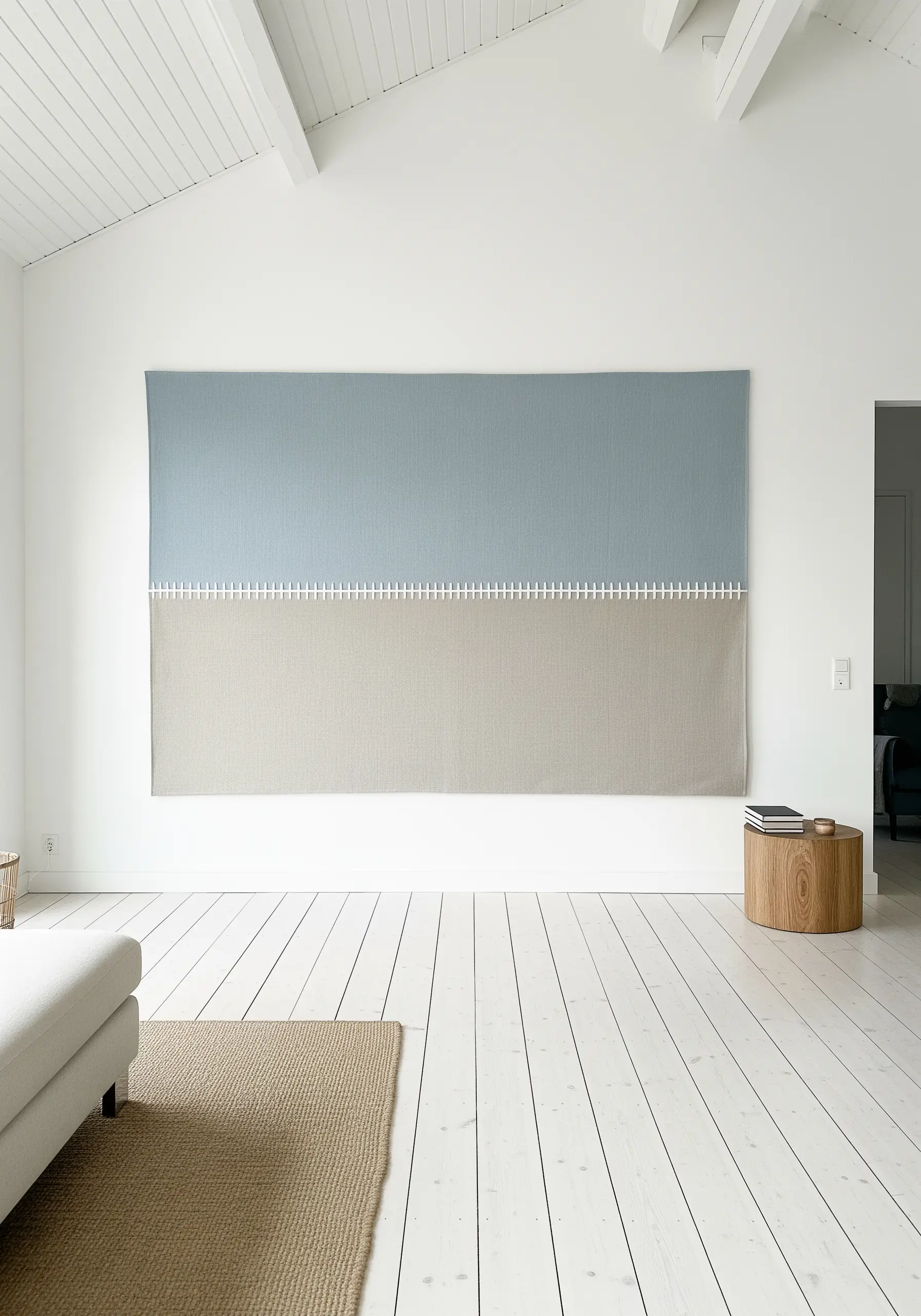
In minimalist design, even functional elements can become beautiful details.
Instead of hiding the seam where two pieces of fabric meet, celebrate it with a contrasting, visible stitch.
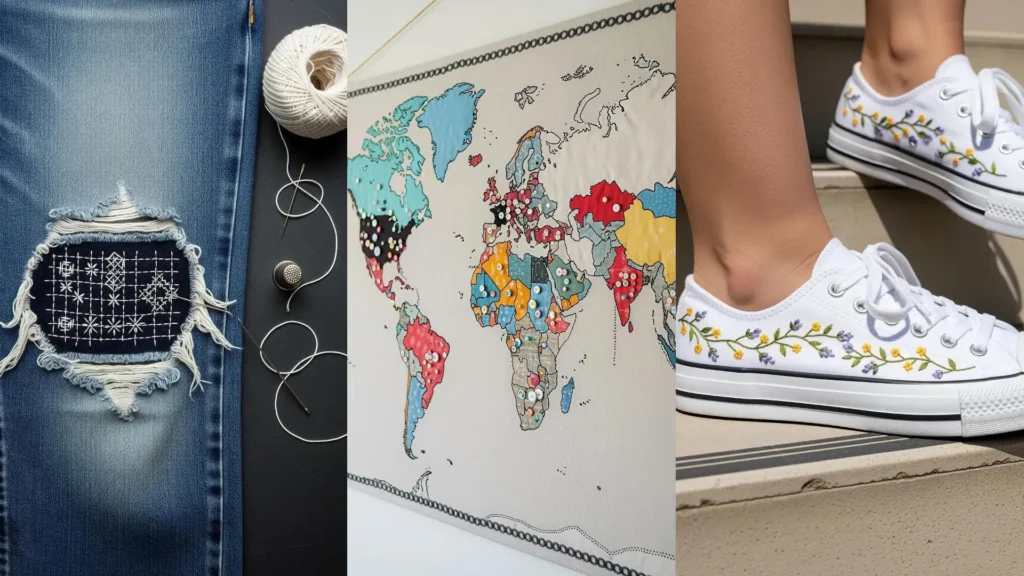
Join two color-blocked panels with a clean, graphic stitch like a blanket stitch or a spaced-out cross stitch.
This honest approach to construction is a core tenet of Scandinavian design principles, turning the seam itself into the artwork’s quiet focal point.
18. Celestial Phases in Seed Stitch
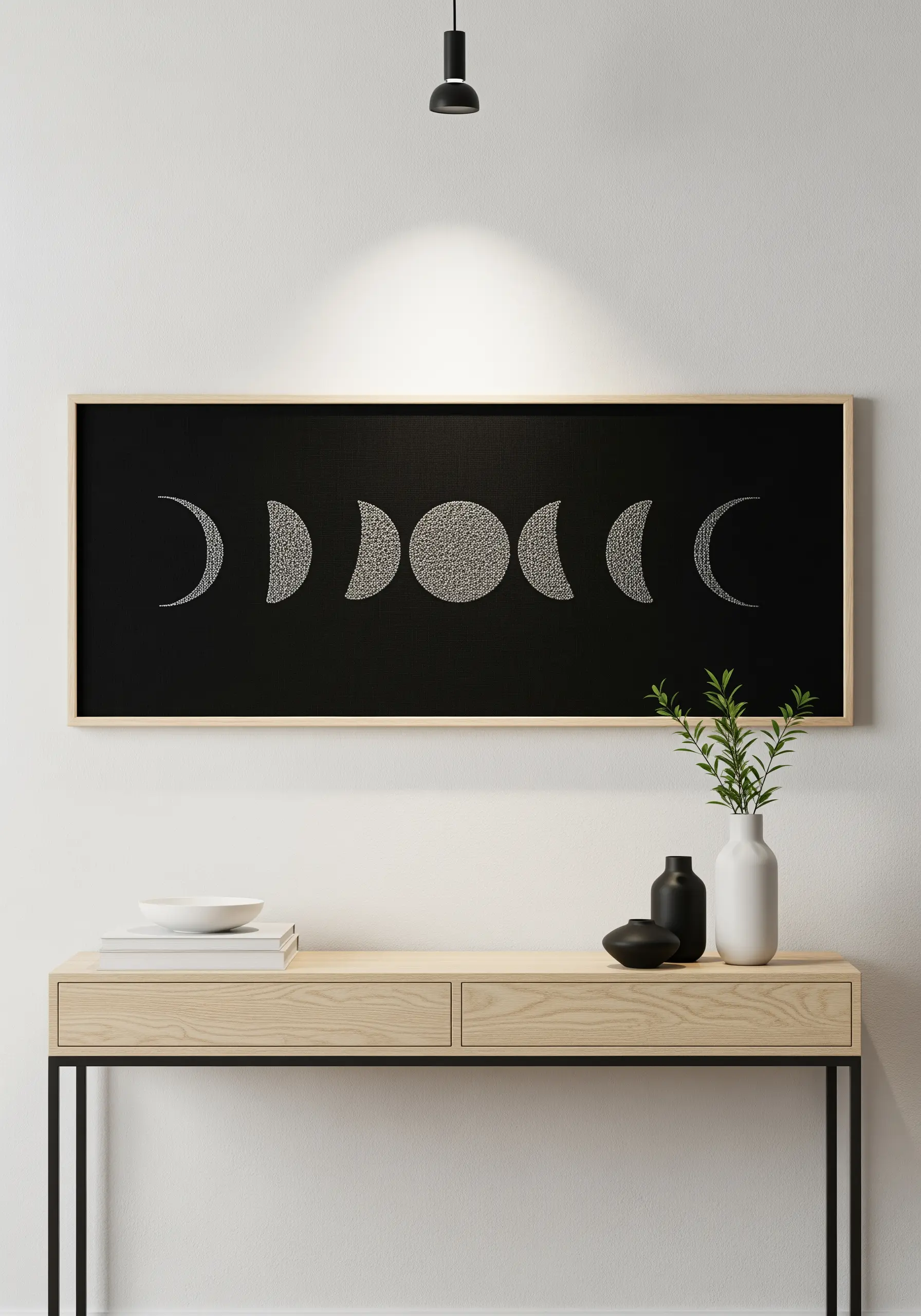
Capture the ethereal glow of the moon by using dense seed stitch as a filling technique.
Instead of a flat fill, vary the density of your stitches—placing them closer together in the center and feathering them out toward the edges—to create a subtle, luminous gradient.
Stitching with a slightly lustrous thread, like a silk blend or a fine metallic, on a dark fabric will enhance the gentle shimmer.
This design creates peaceful bedtime vibes, perfect for an entryway or bedroom.
19. Continuous Line Portraiture with Cord
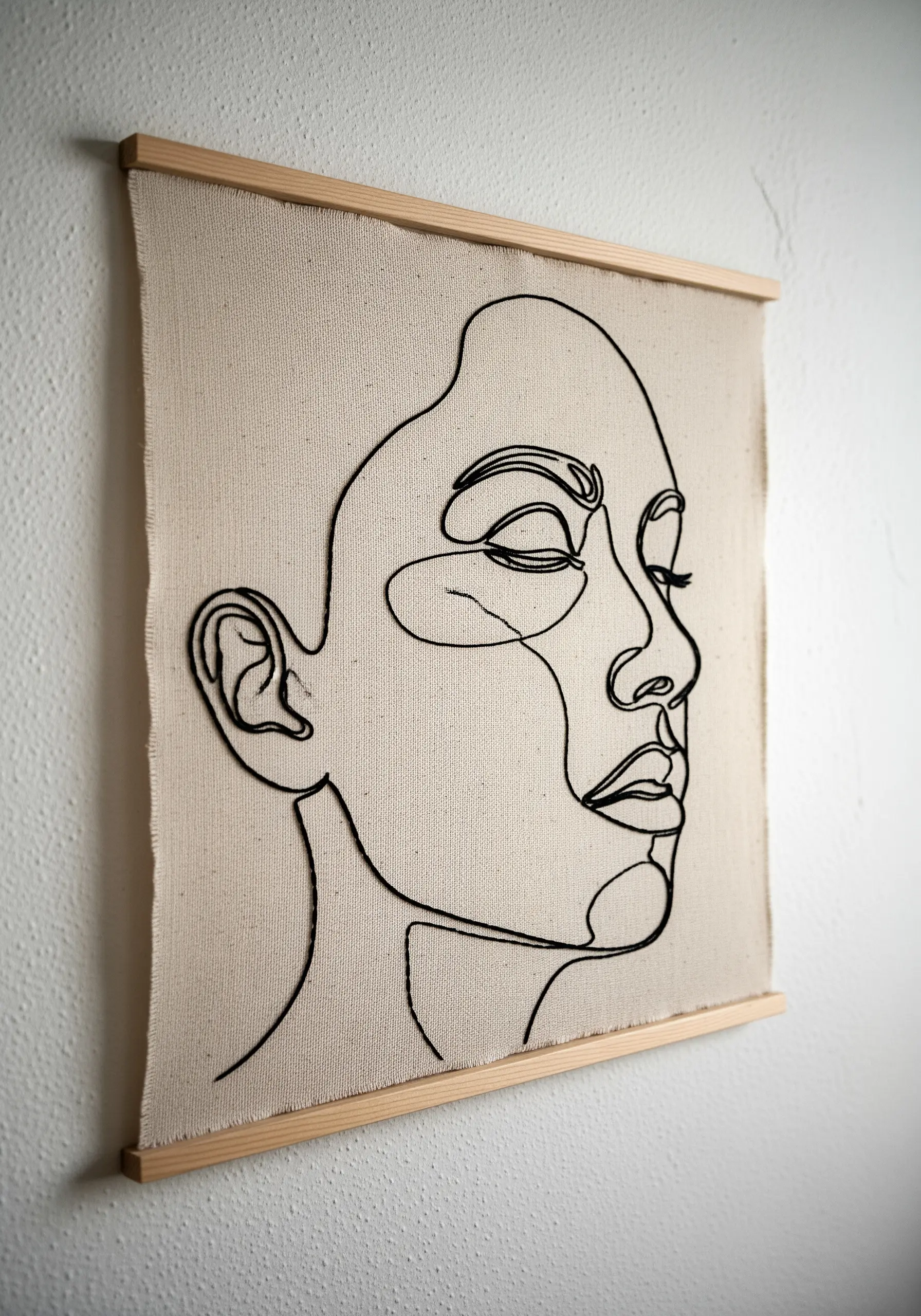
Translate the fluid energy of a one-line drawing into a tactile, three-dimensional piece.
Instead of stitching a line, couch a fine black cord or thick yarn onto the fabric, which allows for smooth, sweeping curves without the jaggedness of individual stitches.
The single, unbroken line creates a sense of movement and effortless grace, turning a simple portrait into a sophisticated work of art.
Mount the finished piece on simple wooden dowels for a clean, modern display.
20. Thread Painting a Minimalist Landscape
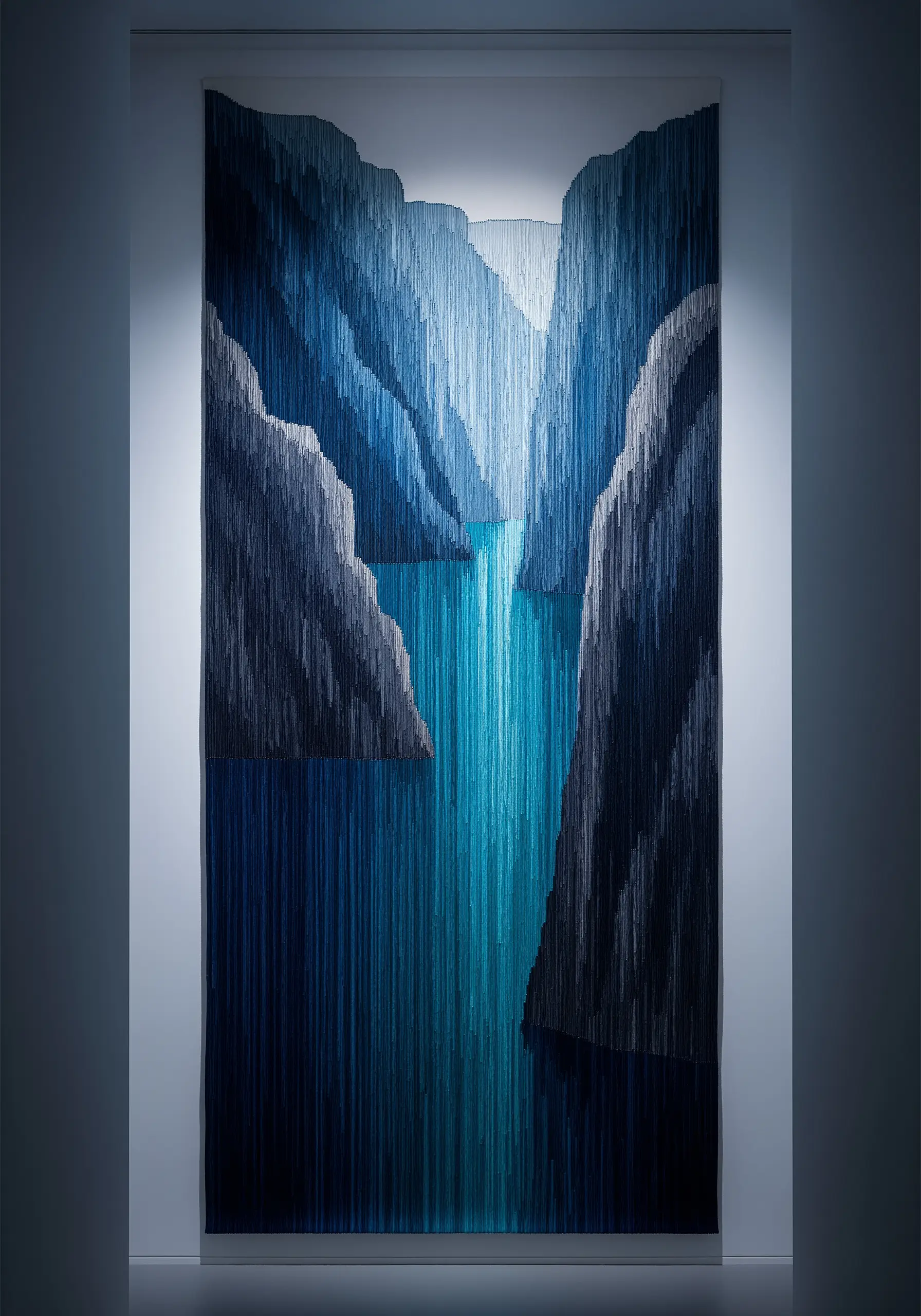
Suggest the grandeur of a landscape with an abstract, painterly approach.
Use long, vertical straight stitches in varying lengths and shades to block in colors and create a sense of depth and light.
This form of minimalist thread painting doesn’t rely on intricate detail, but on the careful placement of color to define form.
Let the direction of your stitches create texture and movement, mimicking the flow of water or the striations of rock.
21. Golden Veins Inspired by Kintsugi
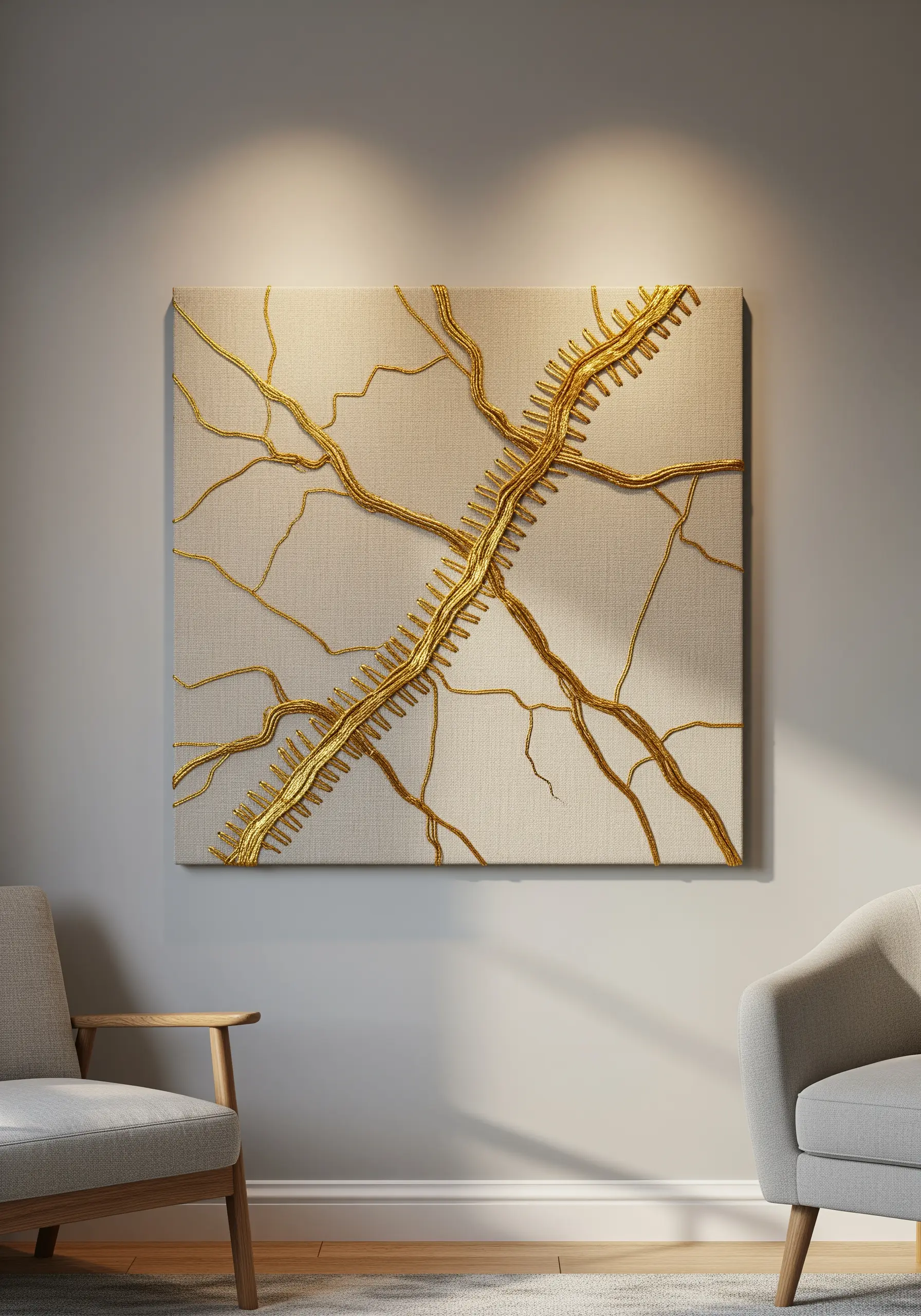
Evoke the Japanese philosophy of Kintsugi—finding beauty in imperfection—through stitch.
Use a brilliant gold metallic thread to stitch crack-like patterns across a neutral linen canvas.
Combine delicate backstitched lines for the fine veins with chunkier, wrapped stitches for the main ‘repair’ lines to create textural variety.
The contrast between the humble fabric and the opulent gold thread creates a powerful metaphor for healing and resilience.
22. Delicate Branches for Vertical Spaces
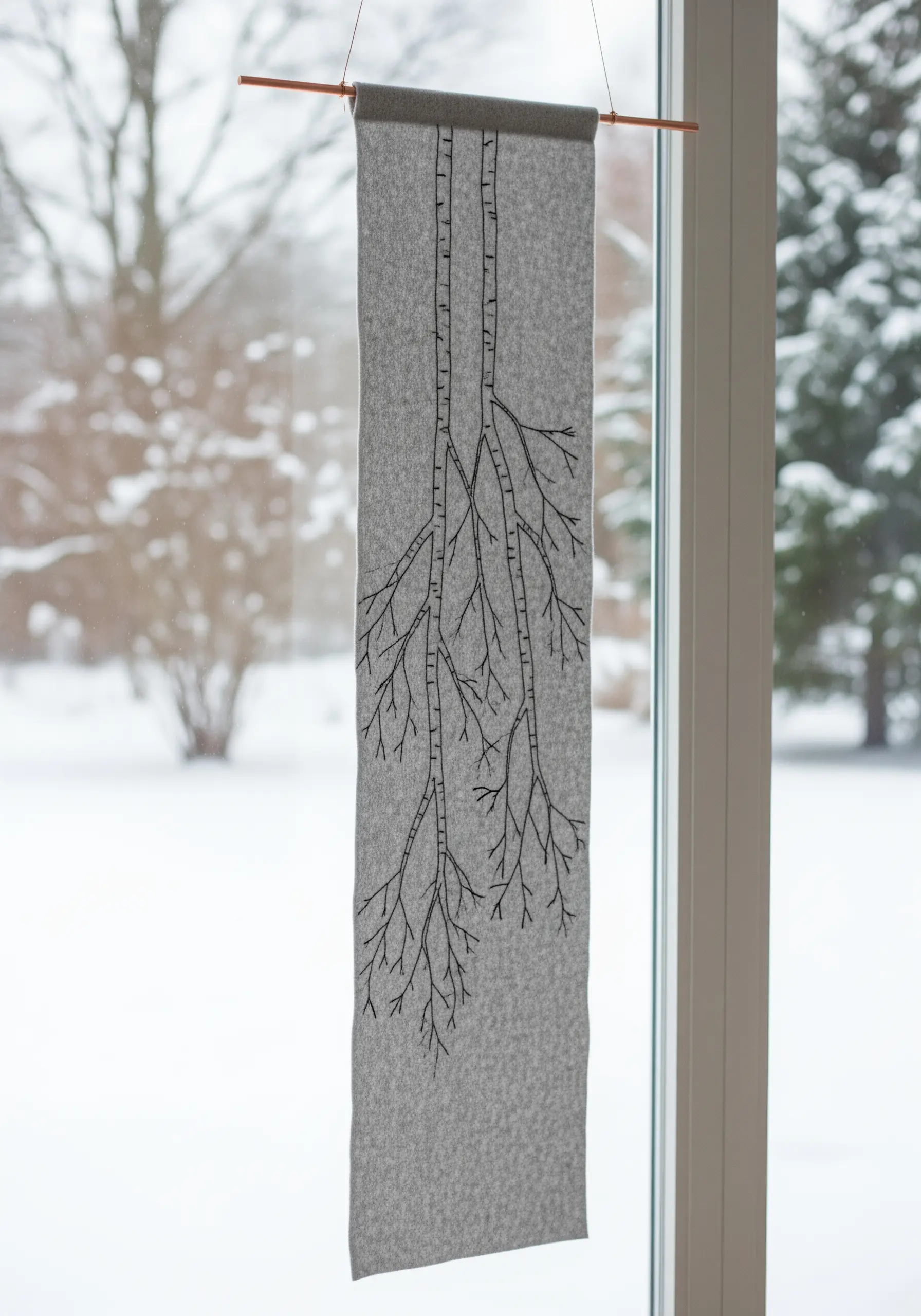
Take advantage of a narrow wall with a long, elegant hanging that draws the eye upward.
For a design like tree branches, use a simple backstitch or stem stitch to create clean, organic lines.
Add a subtle sense of depth and realism to the design by varying the weight of your thread.
Use three or four strands of floss for the main trunk and taper down to a single strand for the finest, most delicate twigs at the tips.
23. Stitching Soundwaves into Visual Art
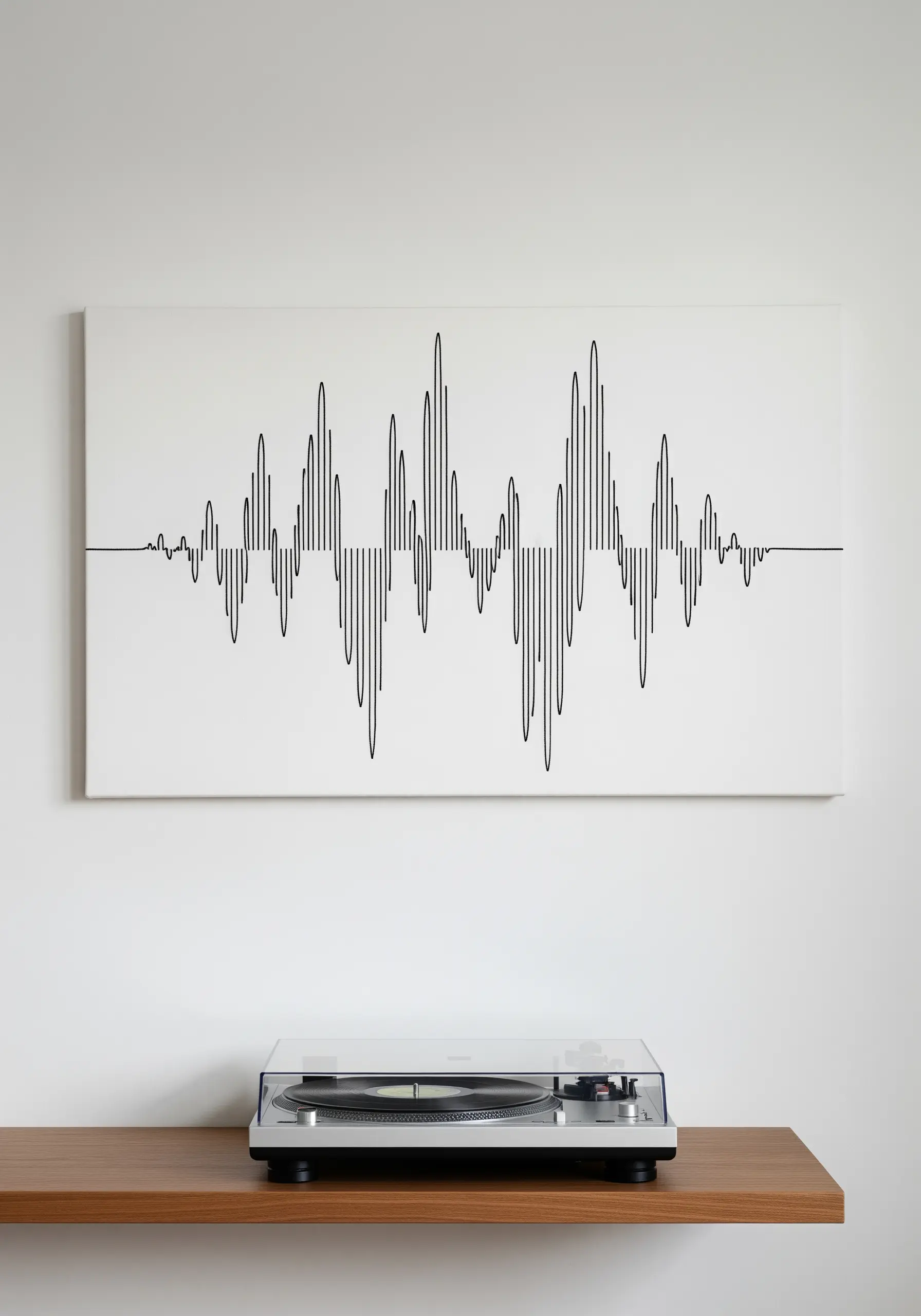
Transform a deeply personal piece of audio into a minimalist work of art.
Capture the soundwave of a favorite song, a line from a poem, or a loved one’s voice, and transfer the pattern onto your canvas.
Use a dense satin stitch or a clean, multi-strand backstitch to accurately render the graphic peaks and valleys of the waveform.
This project turns a fleeting moment of sound into a permanent visual object with immense personal meaning.
24. Appliqué with Decorative Running Stitch
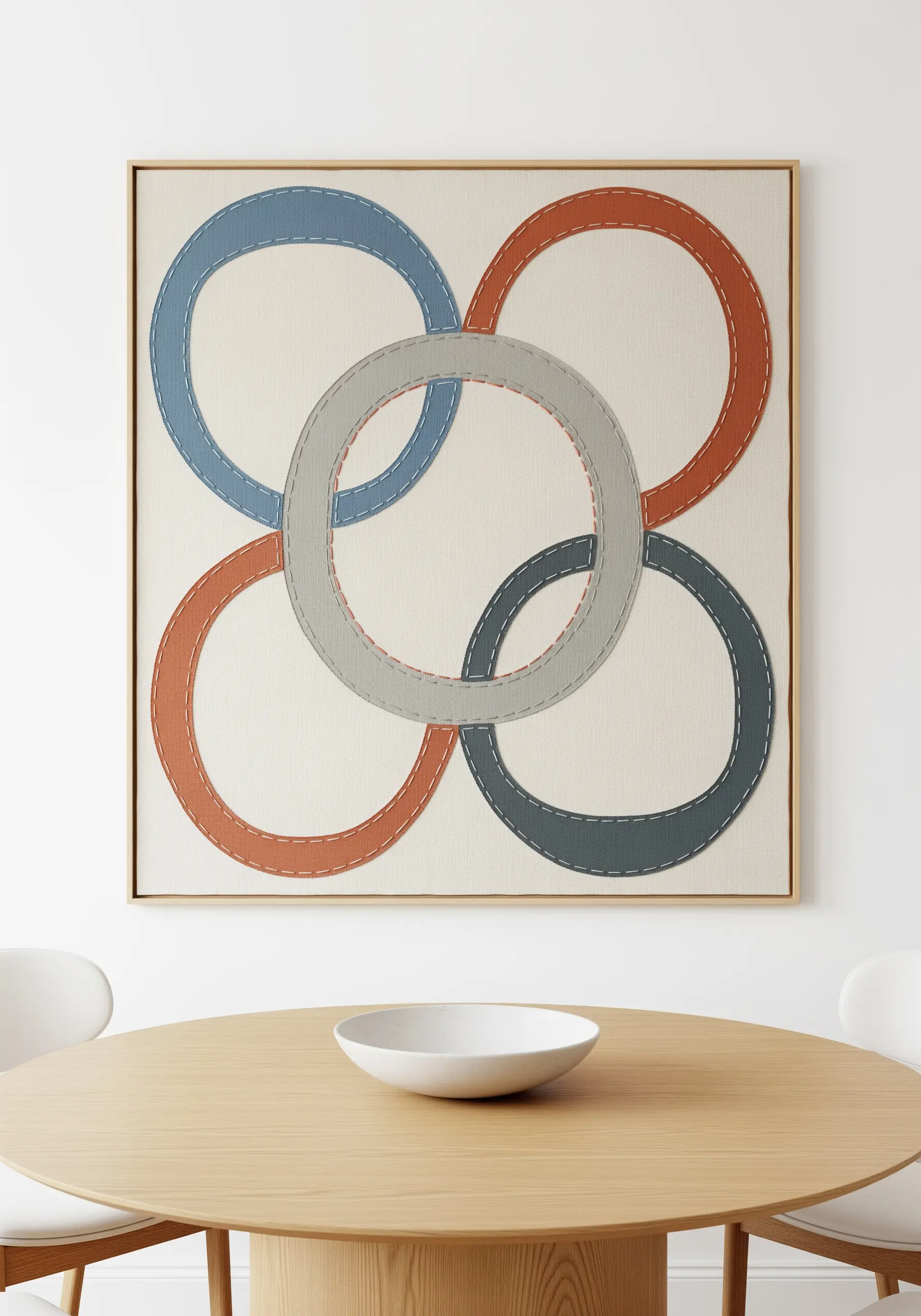
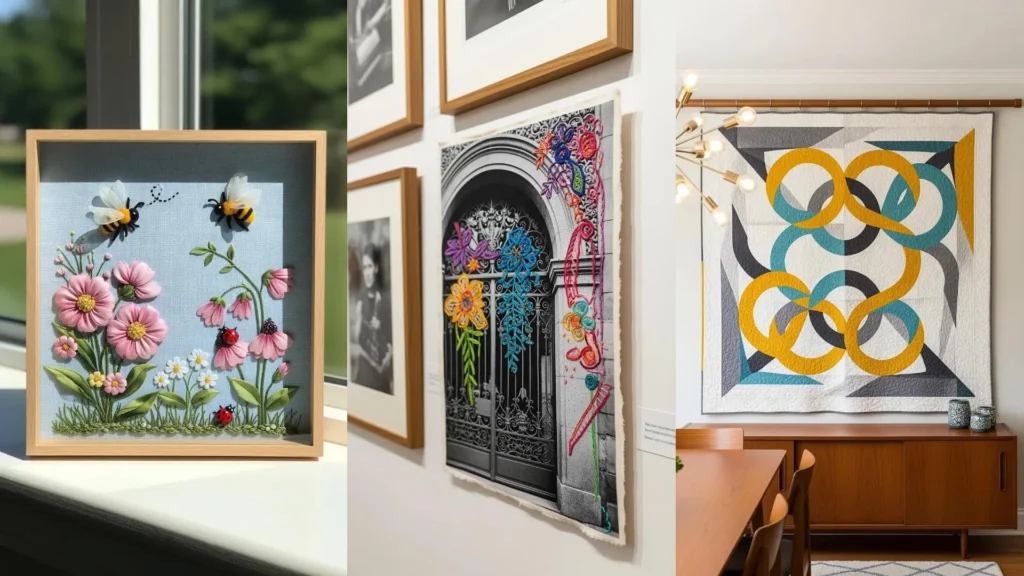
Create a playful, graphic composition by combining appliqué with a bold, visible stitch.
Cut your interlocking shapes from contrasting fabrics like felt or colored linen.
Instead of trying to hide your stitches, make them a feature by using a thick, contrasting thread for a simple running stitch around the edge of each shape.
This technique celebrates the process, adding texture and a charming, hand-stitched aesthetic to the clean, geometric design.
25. Quiet Rhythm with Spaced Satin Stitch
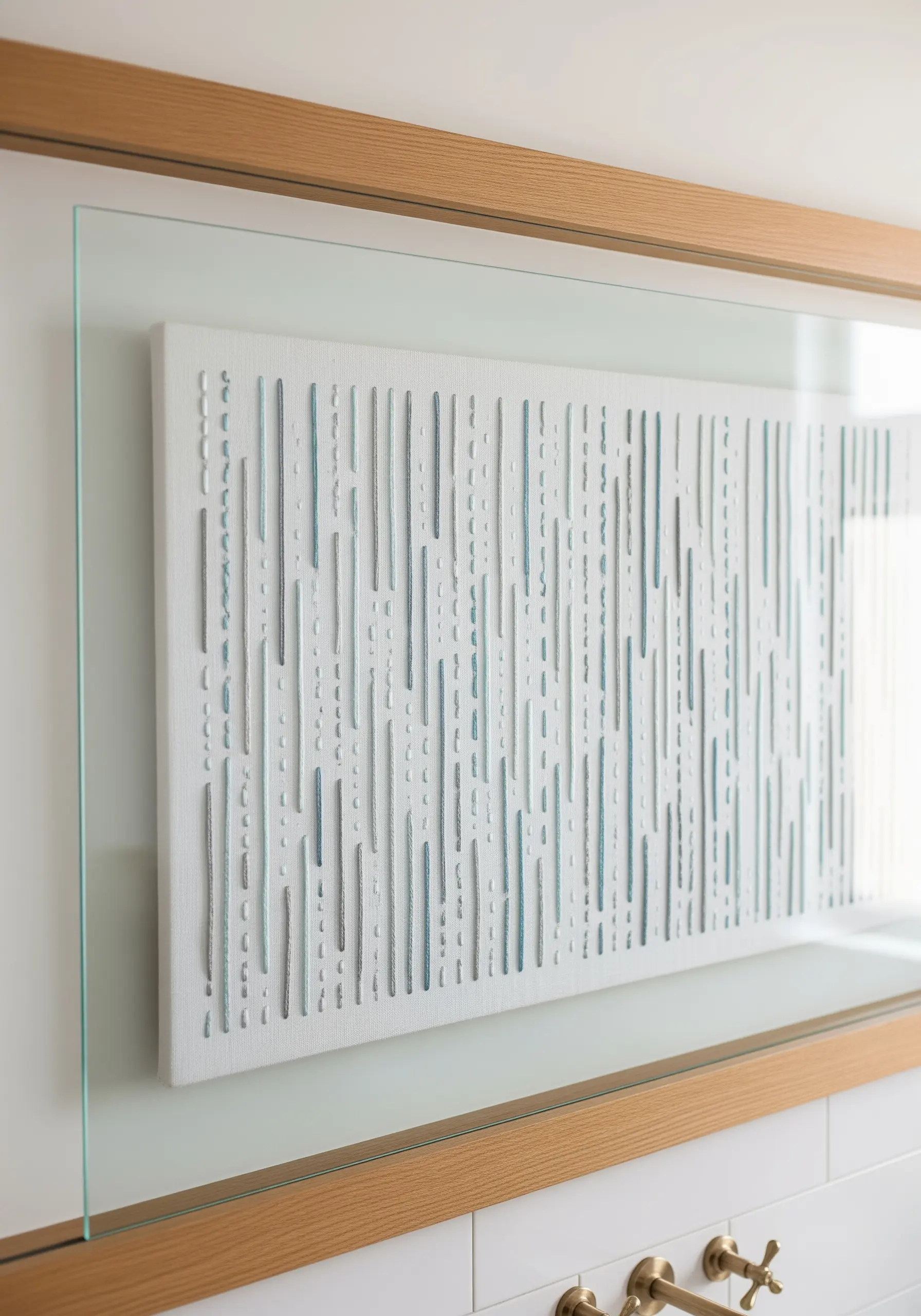
Create a piece that feels calm and ordered by focusing on rhythm and spacing.
Stitch short, vertical bars of satin stitch, leaving intentional gaps of negative space between each one.
Using a tonal palette of soft, muted colors adds to the overall sense of calm and serenity.
In this design, the empty space is just as important as the stitched areas, contributing to a light, airy, and meditative composition.
26. Modern Patchwork with Accent Stitching
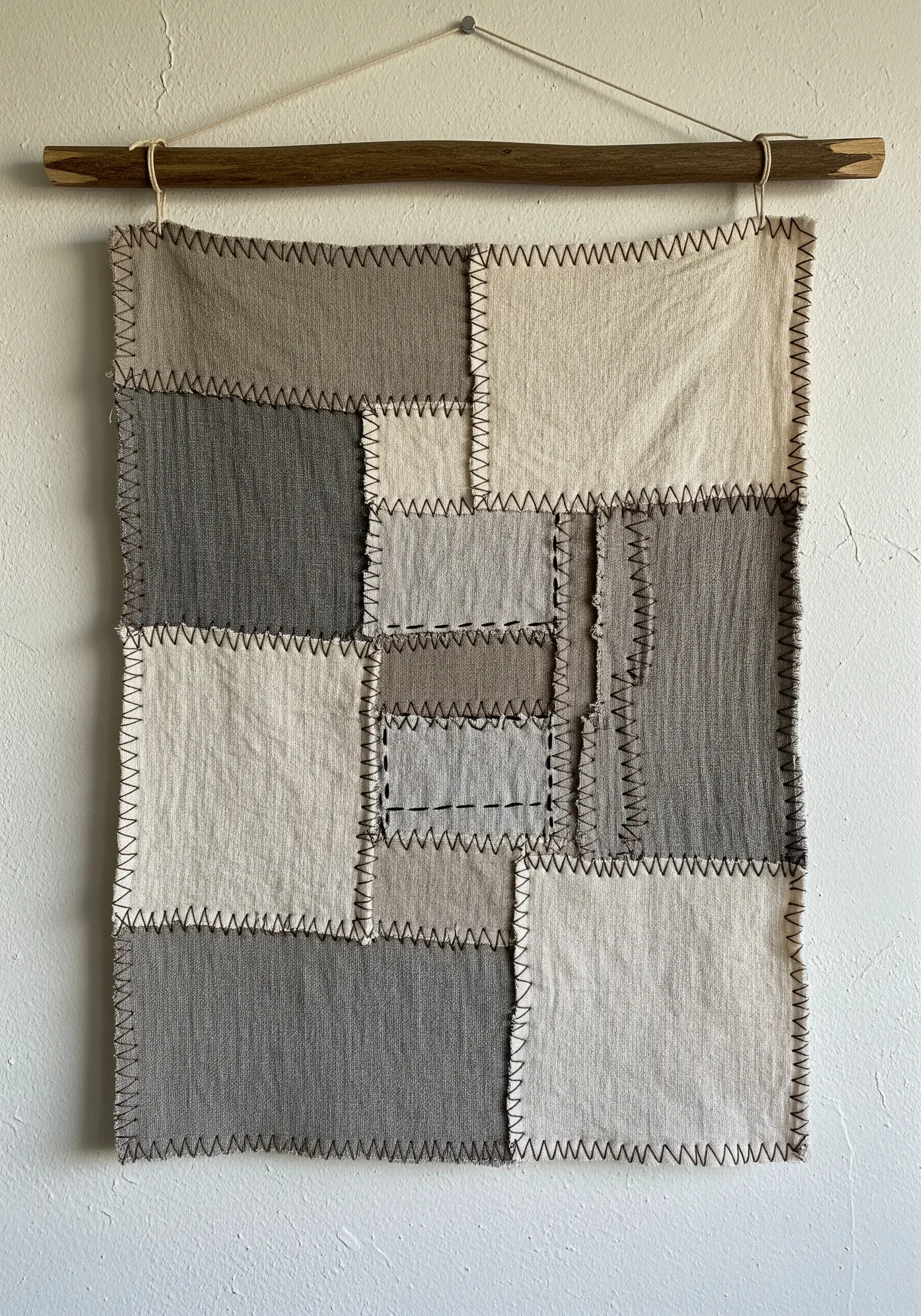
Elevate simple patchwork by making the construction the main decorative element.
Arrange scraps of neutral-toned linen and cotton into a pleasing abstract composition.
Then, instead of a standard seam, join the pieces with a bold, contrasting whipstitch or blanket stitch that sits on top of the fabric.
This visible mending technique adds a layer of graphic texture and celebrates the handcrafted nature of the piece.
27. Sculptural Abstraction with Dense Thread
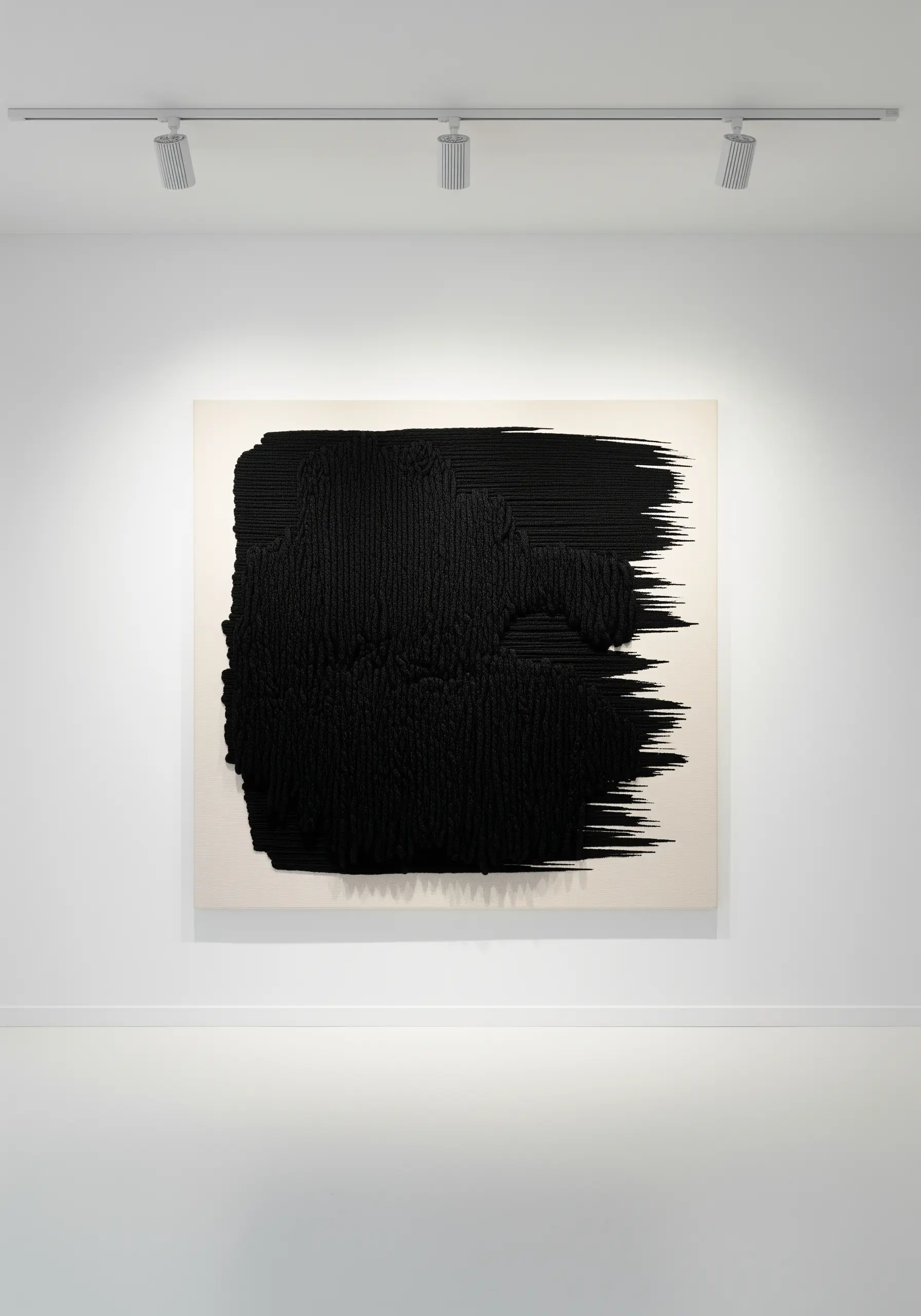
Build a powerful, tactile form by using thread en masse to create a truly sculptural surface.
Fill a large, abstract shape with thousands of tightly packed horizontal stitches using a thick yarn or cord.
The sheer volume of thread creates a raised, dense texture that interacts dramatically with light and shadow.
Leaving a raw, feathered edge where the block of stitching ends adds an expressive energy, making this one of the most impactful statement textured embroidery techniques.