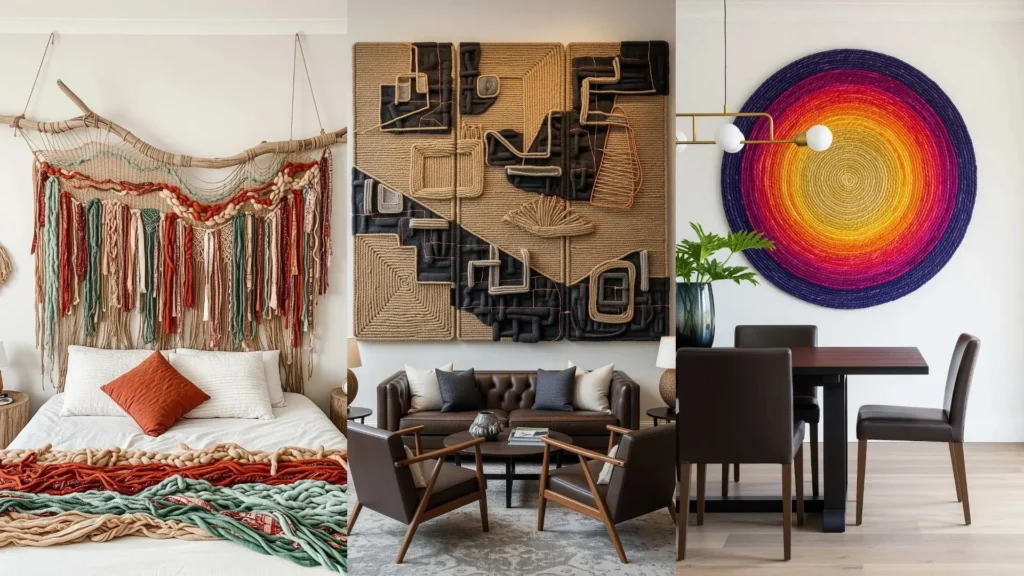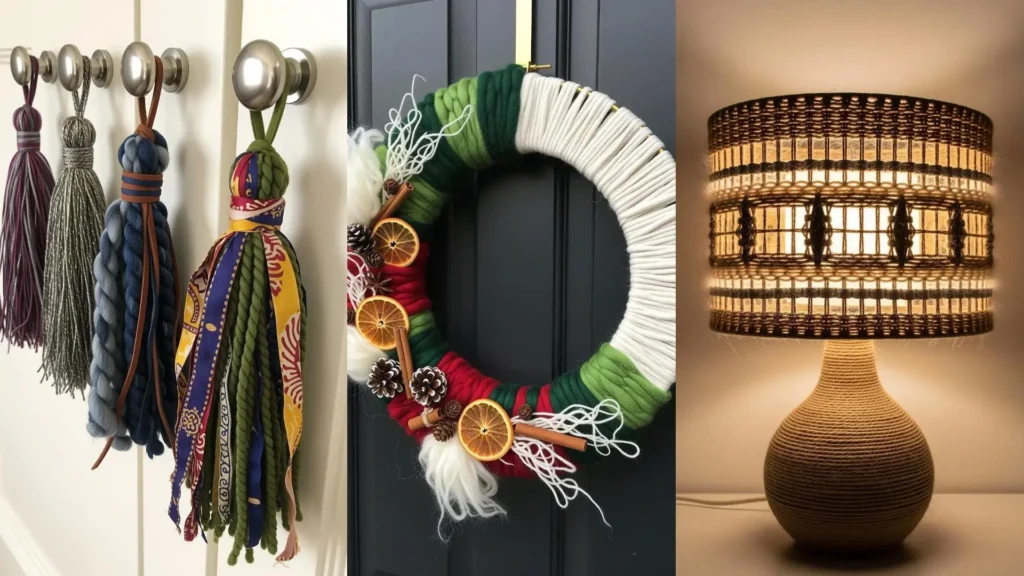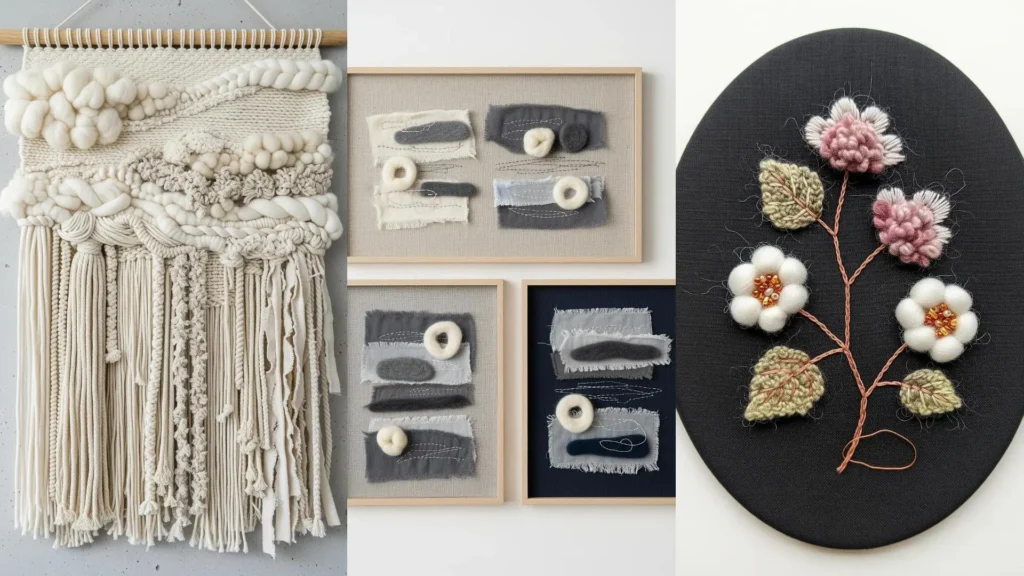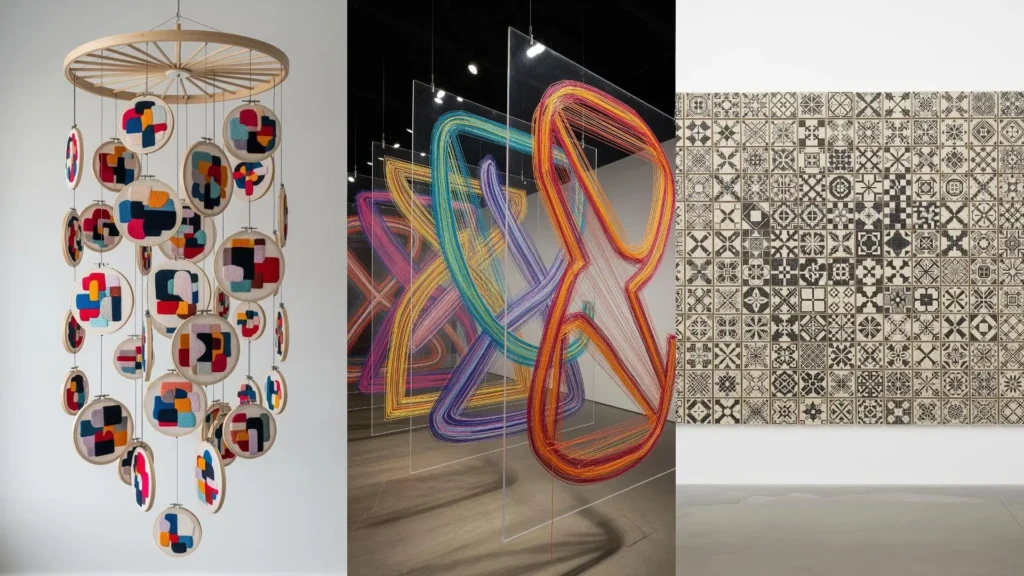
Have you ever finished a piece and felt it was missing… something? A certain polish, a feeling of intention that separates a simple craft from a piece of art? Often, the answer isn’t in a more complicated stitch or a more expensive thread.
The secret lies in the art of the unexpected combination. It’s about pairing soft with hard, structured with organic, or rustic with refined. By learning to see your materials not just for what they are, but for how they can interact, you can create work with incredible depth, texture, and sophistication.
These ideas are designed to shift your perspective. They invite you to play with fiber in ways that go beyond the needle and thread, transforming everyday materials into creations that look and feel truly luxurious. You have everything you need to begin right now.
1. Master Geometric Macrame with Sharp Color-Blocking

You can create this structured look by dividing your dowel into distinct sections before you begin knotting.
Assign a different knotting style and color to each geometric block to build visual interest.
Use diagonal double half-hitch knots to create those sharp, clean lines that separate the colors, and fill the larger shapes with classic square knots for texture.
To achieve a truly high-end finish, combine standard macrame cord with a contrasting fiber, like chunky yarn or even strips of jersey fabric, to introduce an unexpected softness.
This method transforms a simple wall hanging into a sophisticated piece of textile art.
2. Weave Sculptural Forms with Upcycled Denim and Wire

Begin by cutting old jeans into uniform strips to use as your warp and weft on a simple frame loom.
The transformation happens when you introduce a malleable material, such as copper or aluminum craft wire, as part of your weft.
As you weave the wire through the denim strips, you can bend and shape it, forcing the fabric to hold sculptural waves and contours.
The wire acts as both a decorative, metallic accent and a structural skeleton, allowing you to transform old denim from a flat textile into a three-dimensional object.
3. Embed Sea Glass into Soft, Wet-Felted Wool

This technique relies on the magical shrinking and interlocking properties of wool fibers during the wet felting process.
As you work your wool roving with warm, soapy water, wait until the fibers just begin to mesh together into a cohesive fabric.
At this stage, carefully press smooth objects like sea glass, polished river stones, or even ceramic fragments into the surface.
Continue to gently felt around them; the wool will shrink and tighten, securely locking the hard, luminous glass into its soft, matte embrace.
This creates a beautiful artifact that feels both natural and intentional.
4. Add Graphic Embroidery to a Simple Coiled Basket

Start by creating a sturdy basket by coiling a thick cotton rope and securing it with a simple crochet stitch or by wrapping it with a thinner cord.
The element that provides the expensive, designer look is the addition of a bold, graphic embellishment.
Using a contrasting color of flat t-shirt yarn or ribbon, wrap sections of the basket to create sharp, geometric blocks of color.
This surface embroidery technique adds a layer of refinement and intentionality, turning a basic container into a decorative object.
5. Suspend Sculptural Wool Roving on an Unconventional Grid

Think beyond the canvas and use an unexpected object, like a piece of fishing net or garden trellis, as the foundation for your fiber art.
Instead of meticulously stitching, you can work with loose, unspun wool roving, which is both inexpensive and impactful.
Gently shape the roving into organic, cloud-like forms and attach them to your grid by simply threading them through the openings.
The open structure of the net creates negative space, giving your composition a light, airy quality and making the soft, voluminous wool appear to float.
6. Integrate Dried Botanicals with Minimalist Stitching

First, stretch a neutral-toned fabric, like linen or cotton canvas, in a hoop or over a frame.
Stitch a simple, continuous-line drawing of a botanical form using a dark, contrasting thread like a black pearl cotton.
The final, transformative step is to add real, dimensional elements.
Select delicate dried flowers or seed pods and attach them strategically with a tiny, invisible dot of fabric glue, allowing them to overlap and interact with your stitched lines.
This interplay between the flat, graphic embroidery and the fragile, three-dimensional botanicals creates a piece with quiet sophistication.
7. Craft Textured Pendants with Jute and Light
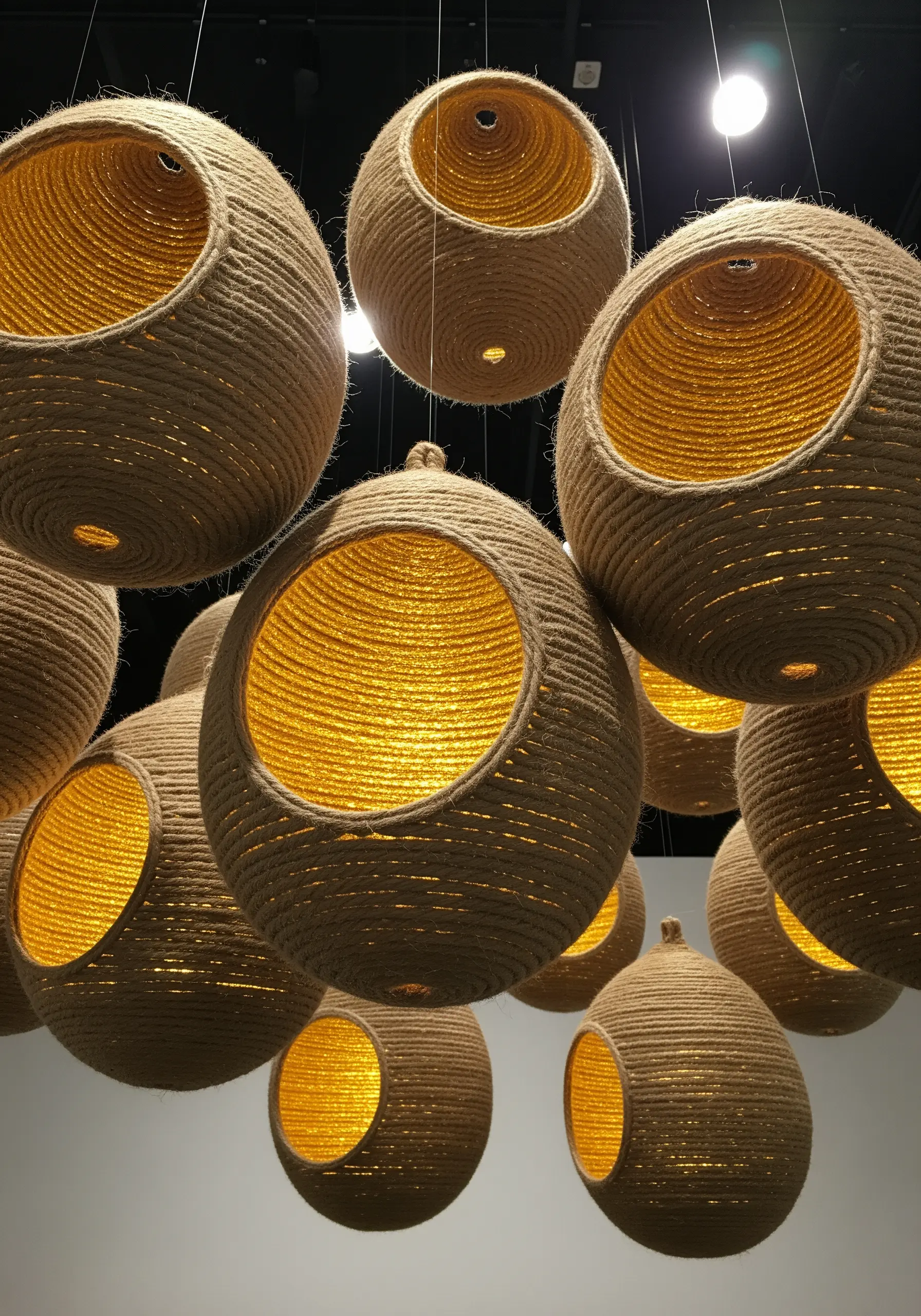
You can achieve this designer look using an inexpensive inflatable beach ball as your mold.
Mix white craft glue with a bit of water to create a thin paste, then coat your jute or twine in the mixture as you wrap it tightly and randomly around the ball.
Once the sphere is fully dry and rigid, simply deflate and remove the ball from the inside.
The hardened jute will hold its shape perfectly, creating a lightweight yet sturdy orb.
Insert a simple, low-wattage pendant light kit to craft sculptural, high-end lighting that casts beautiful, textured shadows.
8. Add Dramatic Volume with Unspun Fiber Inclusions

When weaving on a simple frame loom, you can dramatically alter the texture by working with unspun fibers.
Alternate your sections of traditional, flat-woven yarn with thick, airy lengths of wool roving or mohair.
Instead of weaving these soft fibers tightly, simply lay them between the warp threads and gently pat them down, allowing them to billow and puff out.
This technique adds instant, cloud-like volume and creates a stunning tactile contrast against the more structured, woven areas of your piece.
9. Fuse Upcycled Plastic with Unexpectedly Luxe Velvet

Create your own unique textile by layering scraps of colorful plastic bags between two sheets of parchment paper and pressing them with a hot iron.
The heat fuses the plastic into a crinkled, durable, and surprisingly beautiful fabric.
To elevate this humble material, introduce a texture that is its complete opposite: plush velvet.
Stitch or glue thick velvet ribbon in bold, graphic waves across the plastic canvas.
The combination of low-fi, upcycled material with a traditionally luxurious one creates a compelling and modern piece of art.
10. Combine Rustic Couching with the Luster of Pearls

On a coarsely woven fabric like burlap, create a flowing, organic outline using a thick cotton cord or yarn.
Instead of trying to stitch through this thick fiber, use a technique called couching: lay the cord on the surface and use a thinner, matching thread to tack it down with small, perpendicular stitches.
This preserves the cord’s bold, rounded profile.
Then, fill the empty spaces within your design by stitching in a dense cluster of inexpensive freshwater pearls or mother-of-pearl beads.
The contrast between the rustic cord and the quiet luxury of pearls is what makes the piece feel so special.
11. Weave Feathers into a Geometric Spoke Wheel
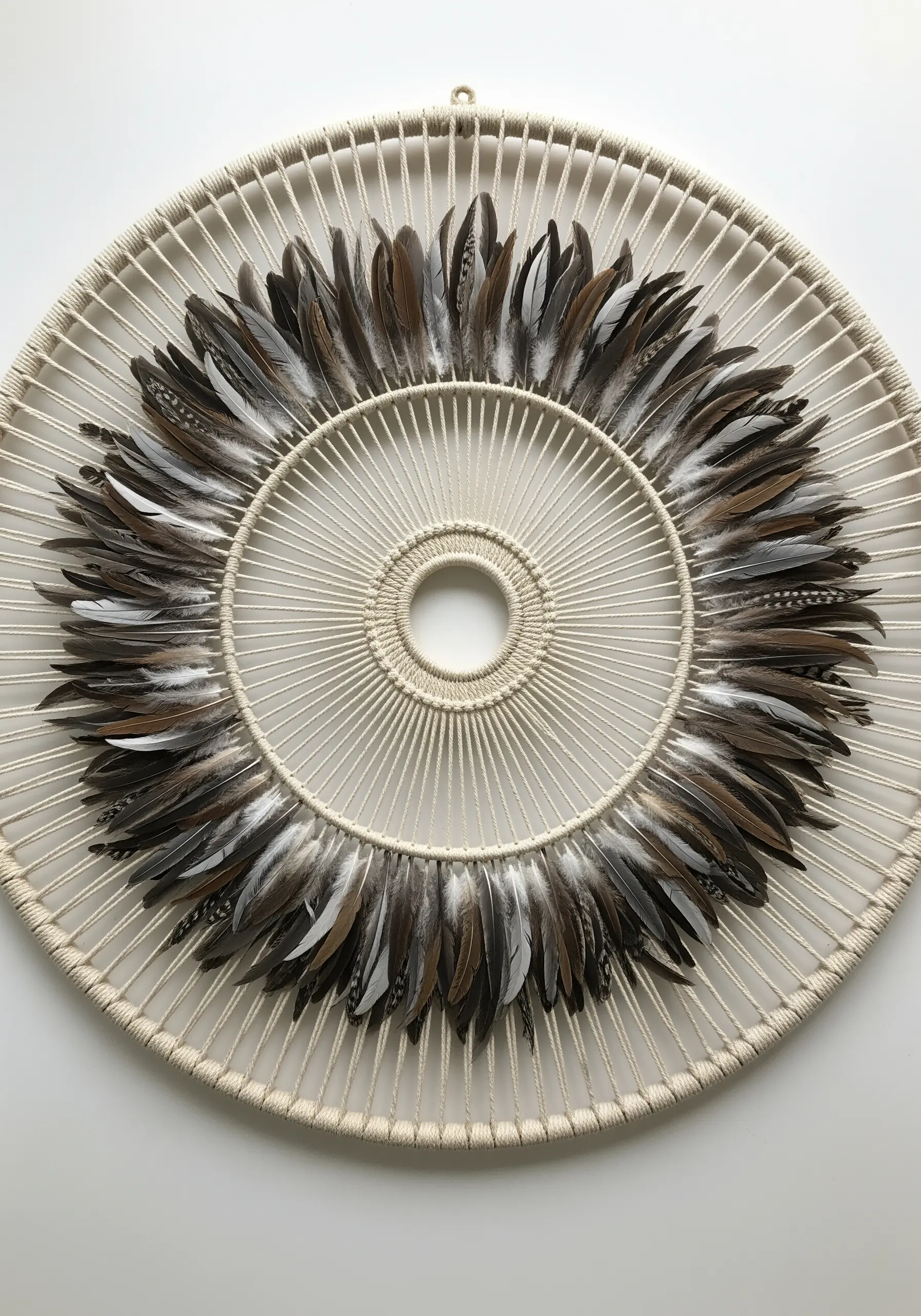
This design gains its power from the contrast between soft, natural textures and sharp, man-made geometry.
Start with a large metal hoop and create a loom by wrapping a strong cord tightly across it, forming a series of radiating spokes.
This precise, graphic structure becomes the foundation for your design.
You can then carefully weave delicate feathers into the spokes, securing their quills between the taught cords.
The rigid lines of the loom provide a modern framework that highlights the soft, wild texture of the feathers.
12. Juxtapose High-Gloss Sequins with Raw, Imperfect Canvas

You don’t need a pristine, expensive canvas for this high-impact technique; in fact, a painter’s drop cloth or any piece of stained, worn fabric works better.
The raw, imperfect background provides the perfect stage for a moment of intense, disciplined glamour.
Use masking tape to create a sharp geometric shape—a perfect square—in the center of your fabric.
Fill this shape completely with densely stitched sequins.
Removing the tape reveals a clean edge, creating a powerful artistic statement about order and chaos.
13. Cover an Industrial Wire Frame with Soft Flocked Fiber

Start by creating a three-dimensional abstract shape using a roll of inexpensive wire mesh from a hardware store—it’s easy to cut with tin snips and bend by hand.
This rigid, industrial form is your armature.
To achieve the soft, velvety surface, you can apply a strong adhesive and cover it with flocking fibers or finely chopped yarn.
The flocking completely obscures the wire mesh beneath, transforming a cold, hard structure into a soft, vibrant, and stunning abstract sculpture.
14. Apply Geometric Faux Fur to a Woven Base

The secret to this expensive look is the high-contrast pairing of textures.
Begin with an inexpensive woven base, like a simple jute rug, a seagrass placemat, or even a piece of open-weave burlap.
Then, introduce a material of extreme softness and luxury: faux fur.
Cut the faux fur into clean, geometric strips and arrange them in a minimalist pattern on your woven background.
You can attach them securely using a hot glue gun or a strong fabric adhesive, instantly creating a piece that feels both rustic and glamorous.
15. Create a Curated Cascade from Driftwood and Fabric
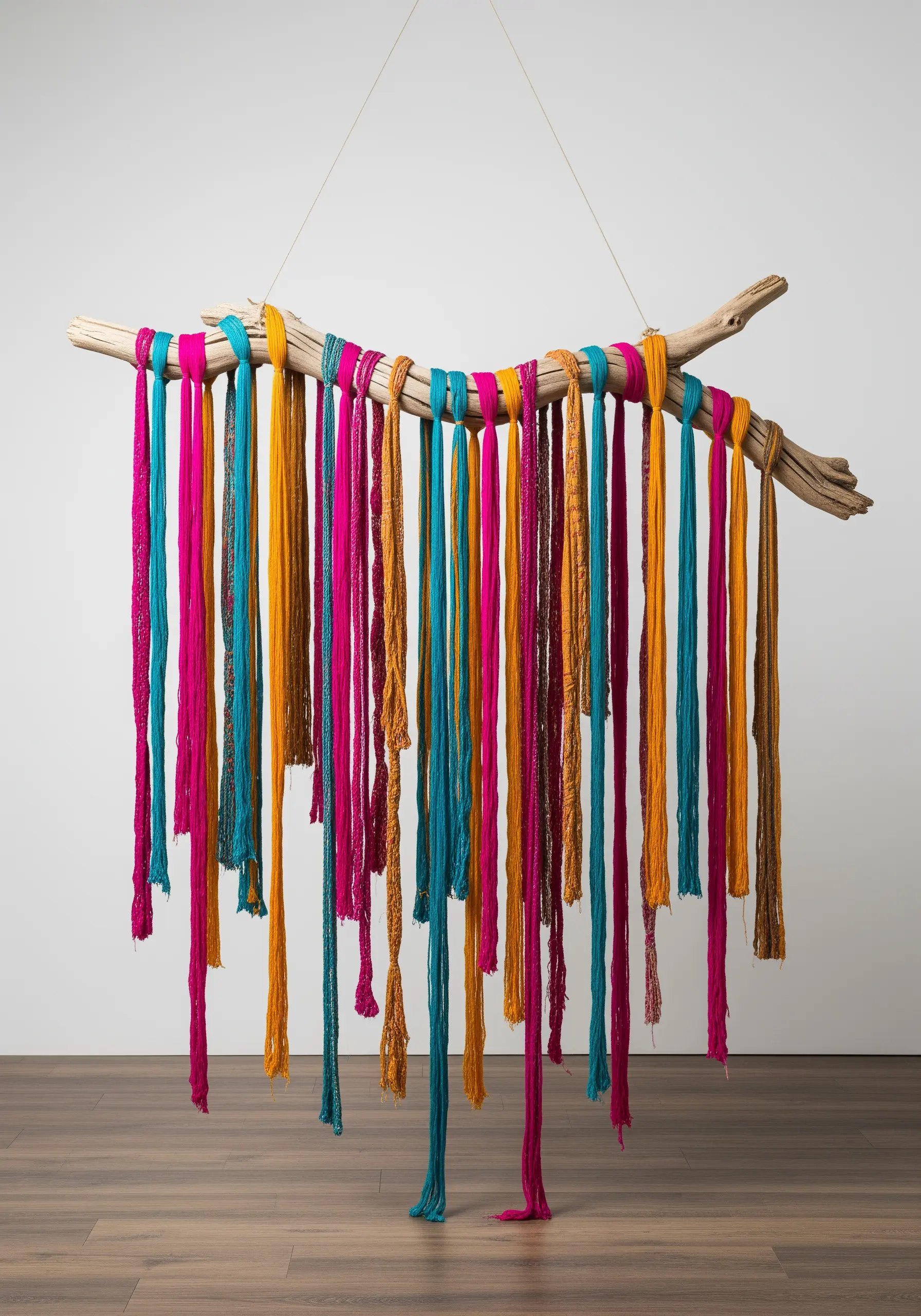
This simple concept is elevated through careful curation and restraint.
Instead of using random scraps, select a thoughtful color palette and choose fabrics with a variety of textures—some matte, some with a slight sheen, some loosely woven.
Old silk saris, strips of linen, and soft cotton jersey work beautifully together.
Find a piece of driftwood with an interesting, sculptural shape to serve as your hanging rod.
The true artistry lies in arranging the colors and textures to create a sense of balance and flow, celebrating the raw beauty of the wood and fabric.
16. Explore the Graphic Precision of Japanese Temari

While they appear incredibly complex, Temari balls are built on simple, meditative principles.
You start with a core, often a styrofoam ball or tightly wound yarn, which you then wrap meticulously with a base layer of sewing thread until smooth.
The intricate geometric patterns are created by dividing the sphere with pins and guide threads, then stitching with colorful pearl cotton.
Begin with a simple C10 (simple 10) division to learn the fundamentals.
It is a slow, rhythmic process where precision and tension are key to the final, stunning result.
17. Layer Open-Knot Macrame Over a Solid Patchwork Base
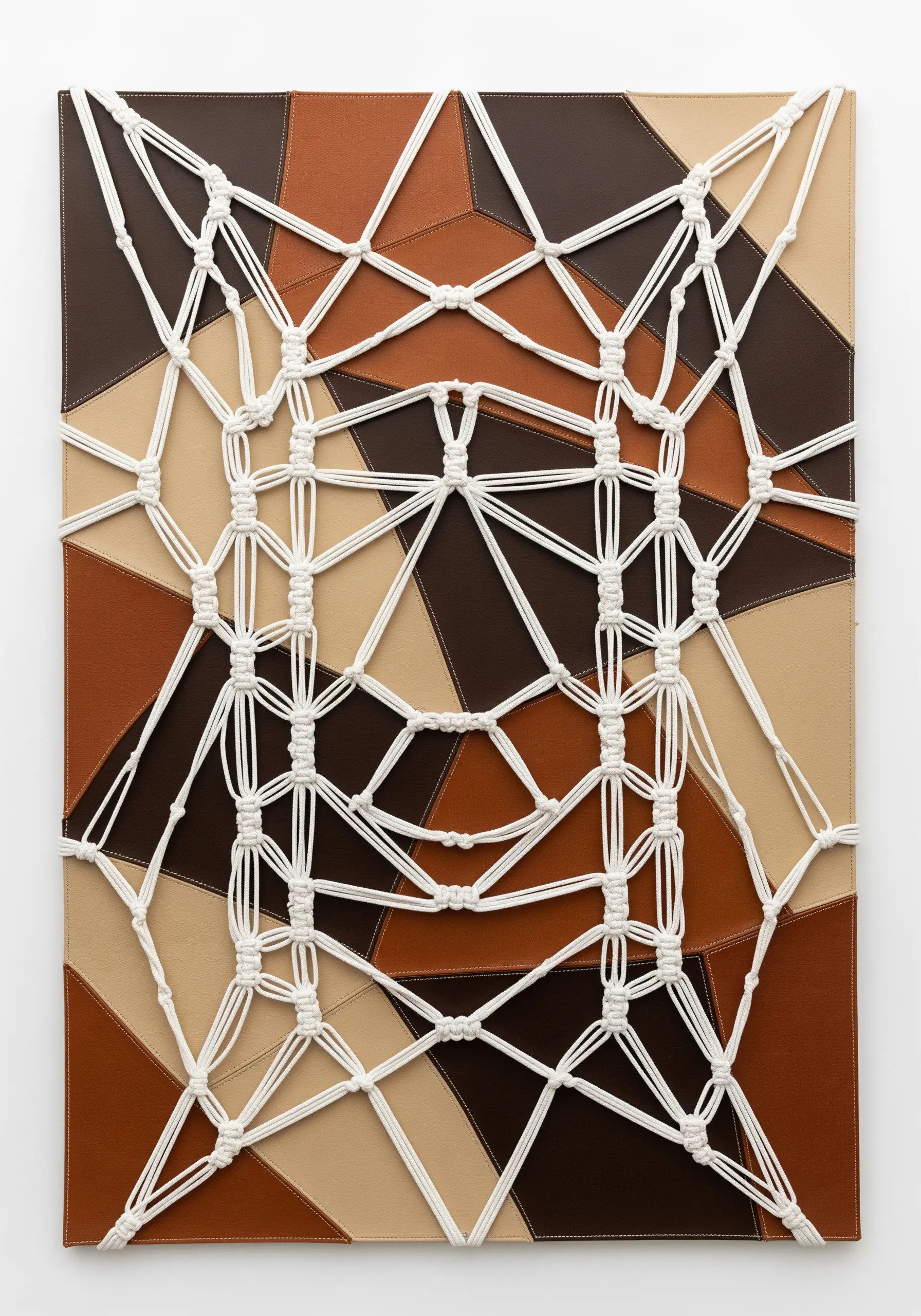
Create visual depth and a compelling interplay of textures by working in layers.
First, craft a background canvas by stitching together geometric shapes cut from non-fraying materials like felt, cork, or faux leather.
Next, create a separate, open-work macrame grid using simple square knots and a light-colored cord.
When you layer the airy, graphic macrame net over the solid, earth-toned patchwork, you create shadows and dimension that make the entire piece feel more dynamic and professionally finished.
18. Stiffen Fabric for Sculptural Forms with Stitched Edges
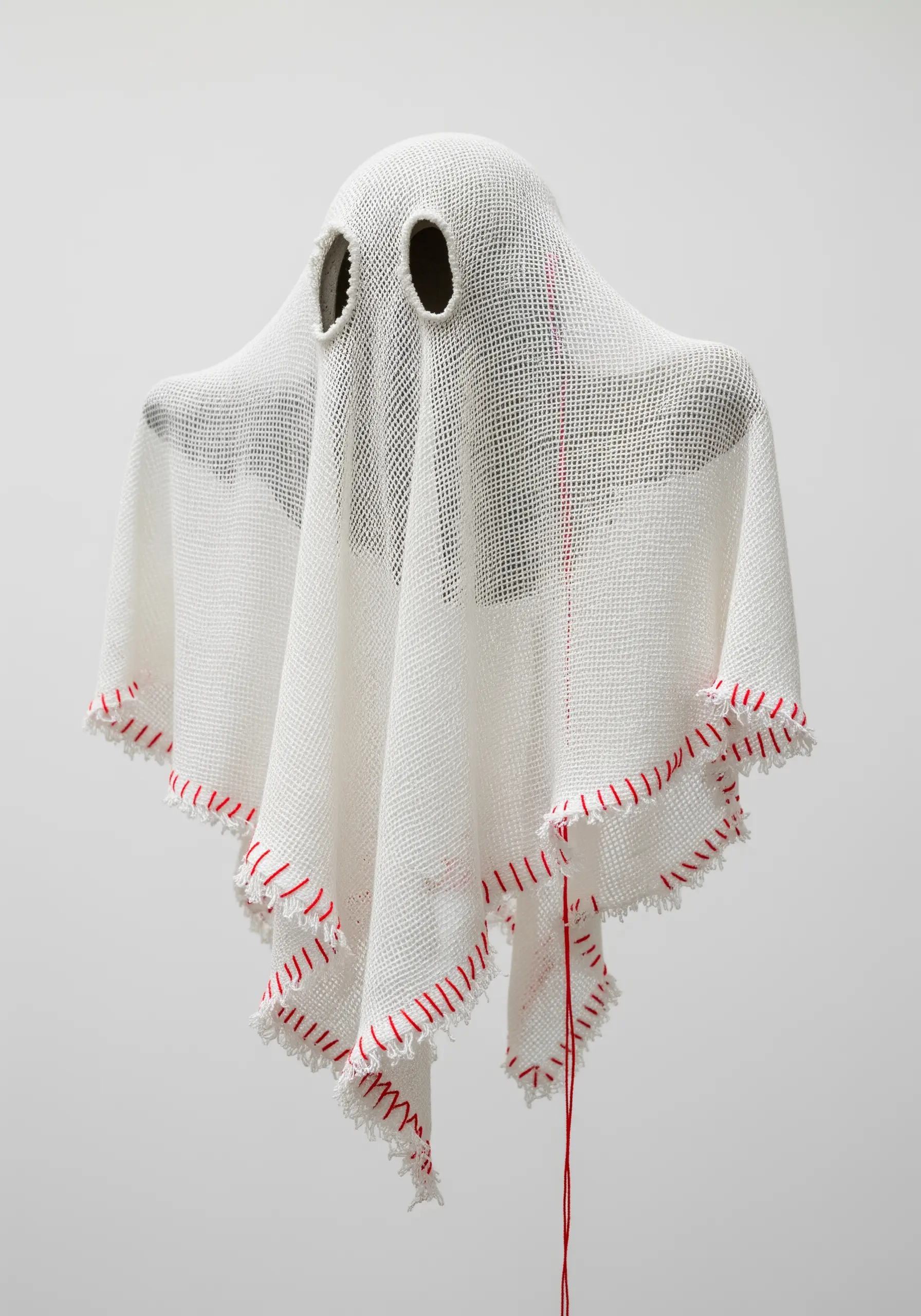
You can create a haunting, sculptural form using a very loose-weave fabric like cheesecloth or scrim and a fabric stiffening agent.
Drape the fabric over any object—a vase, a ball, a mannequin head—to give it a basic shape.
Saturate the fabric with the stiffener and allow it to dry completely.
Once hardened, it will hold its shape, creating an ethereal shape that seems to defy gravity.
Add a simple blanket stitch or running stitch along the raw edges with a contrasting thread to provide a hand-finished detail that grounds the piece.
19. Elevate a Simple Tassel with a Gradient and Beads

To create an oversized tassel with a professional finish, use multiple colors of yarn at once.
Hold two or three strands of different shades together as you wrap them around your cardboard form to create a subtle, heathered gradient.
Before you tie off the top and cut the bottom loops, slide a few metallic or wooden beads onto individual strands of yarn at varying heights.
This unexpected addition of weight, texture, and subtle shimmer instantly makes the tassel feel more like a piece of jewelry for your home.
20. Paint with Wool on a Charred Wood Canvas

This technique creates a breathtaking composition by pairing the softest of fibers with a raw, elemental base.
You can safely char small planks of wood with a culinary torch to create the beautiful, crackled texture known as ‘shou sugi ban’.
Separately, create your landscape by needle-felting colored wool roving onto a sheet of base felt—a process that feels like painting with fiber.
Mounting the finished, soft-focus wool painting onto the dark, dramatic wood results in a powerful piece of art.