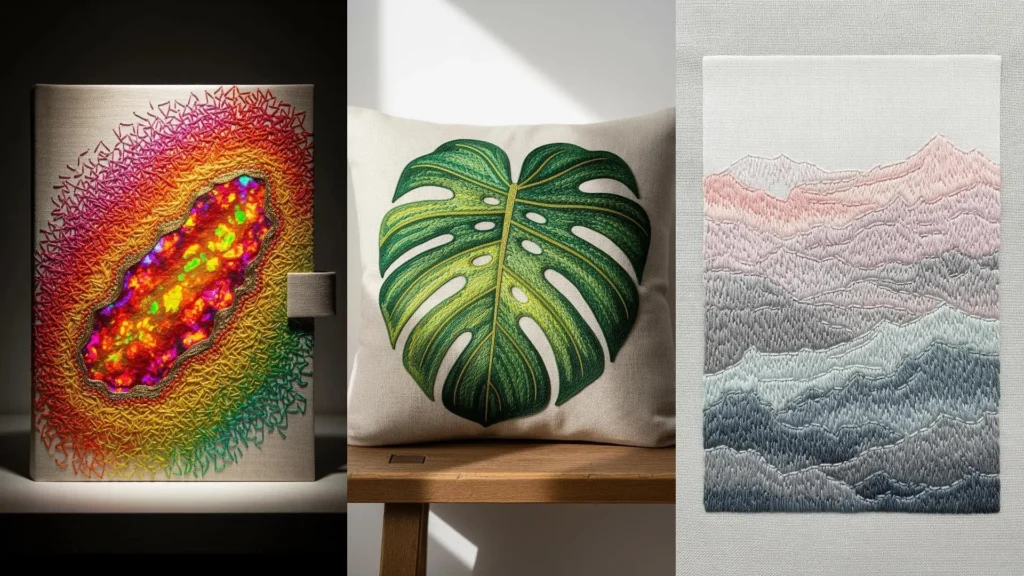
You’ve mastered the stitches, but now you’re looking for that next step—the one that transforms your embroidery from a beautiful, flat image into a piece of art that breathes. It’s time to stop thinking about filling space and start thinking about building form.
Abstract thread sculpting isn’t about learning complex new stitches. It’s a shift in perspective. It’s about understanding how thread can rise from the canvas, how tension can create form, and how texture can tell a story all on its own. It’s about treating your thread not as a line of color, but as a sculptural material with weight, body, and presence.
Here, you’ll find techniques that push your work into the third dimension. You’ll learn to build with knots, weave with yarn, and carve illusions with simple lines. This is your invitation to create art that casts its own shadow, that invites touch, and that feels truly, tangibly alive.
1. Sculpt Topographical Forms with High-Density Yarn
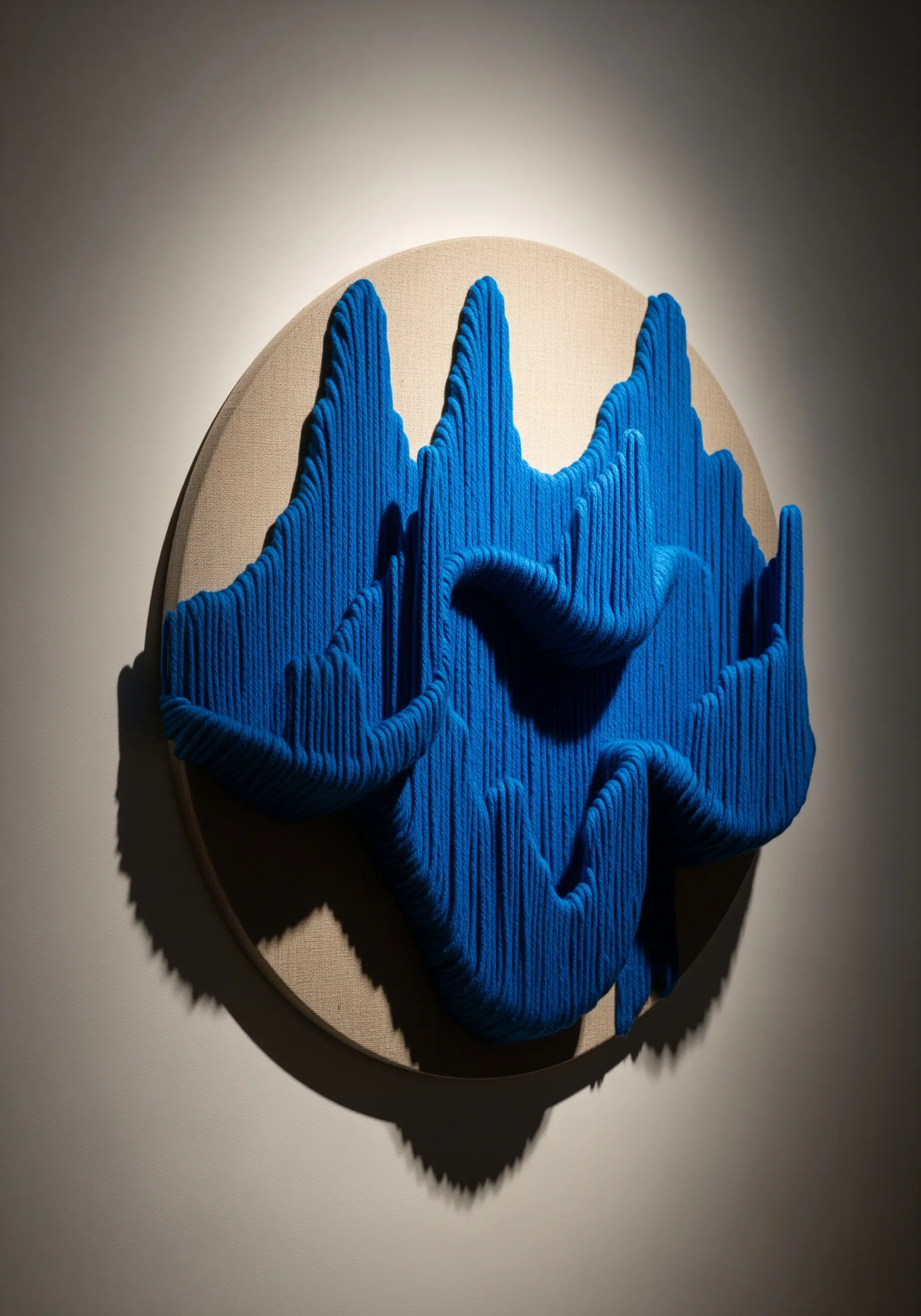
Create dramatic, 3D landscapes by using thick yarn or multiple strands of embroidery floss to build up vertical stitches.
Instead of filling a shape with a flat satin stitch, think like a sculptor: vary the height of your stitches to create peaks and valleys.
This technique relies on extreme density—pack the stitches so tightly they support each other and rise from the fabric.
The tension must be firm and consistent to prevent leaning, turning your thread into a solid, touchable form.
This method transforms a simple line drawing into a powerful, abstract relief sculpture.
2. Weave Geometric Gradients with String Art Techniques
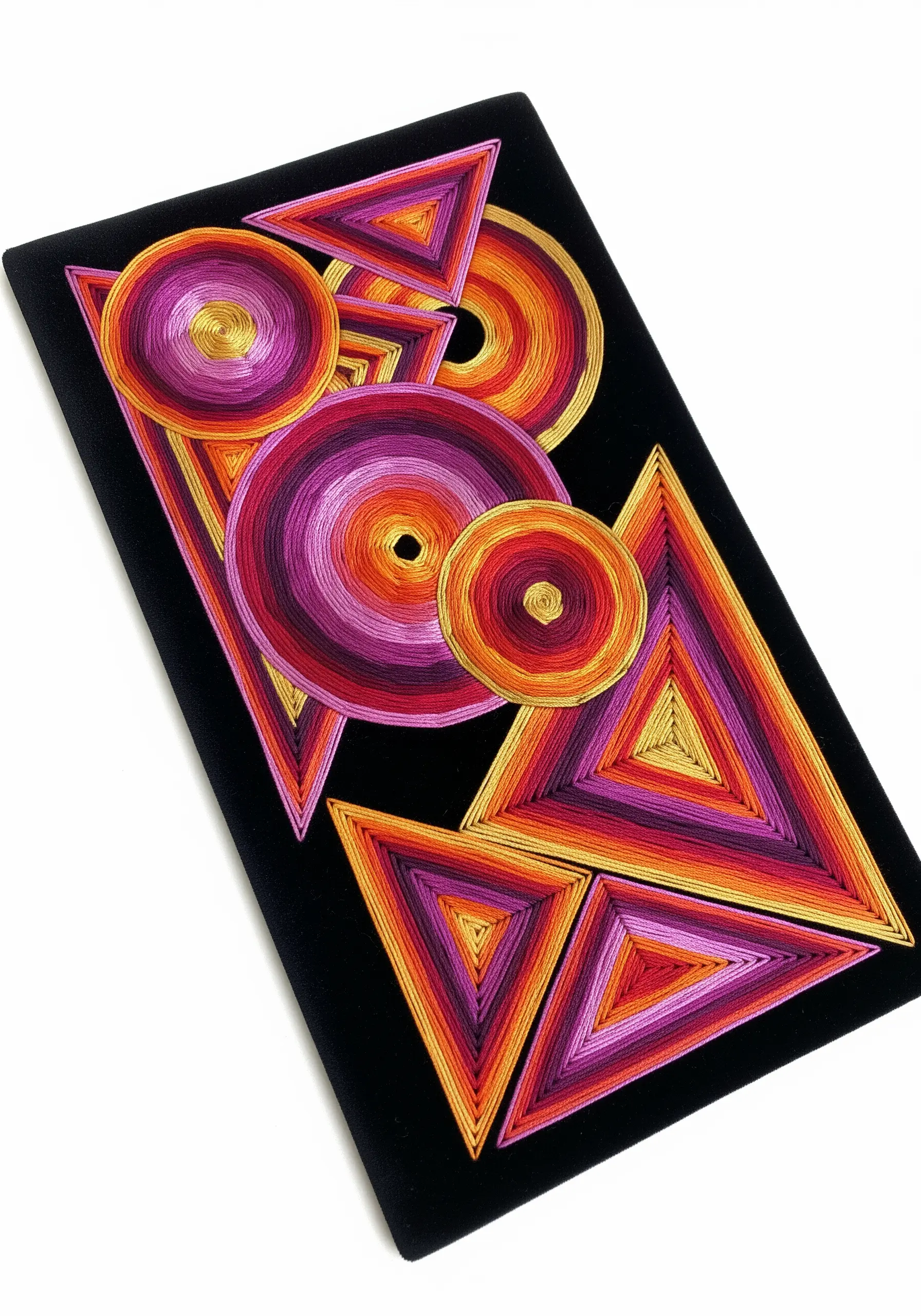
Move beyond the hoop by treating your canvas like a loom.
First, create an anchor point map on a sturdy board using small nails or pins.
Wrap your thread from point to point, layering different colors to generate optical gradients and illusions of curved surfaces from straight lines.
This isn’t embroidery in the traditional sense, but a form of thread sculpting where tension and geometry are your primary tools.
The high contrast between a dark velvet background and vibrant thread makes the geometric forms appear to radiate light.
3. Construct Floating Worlds with Suspended Threads
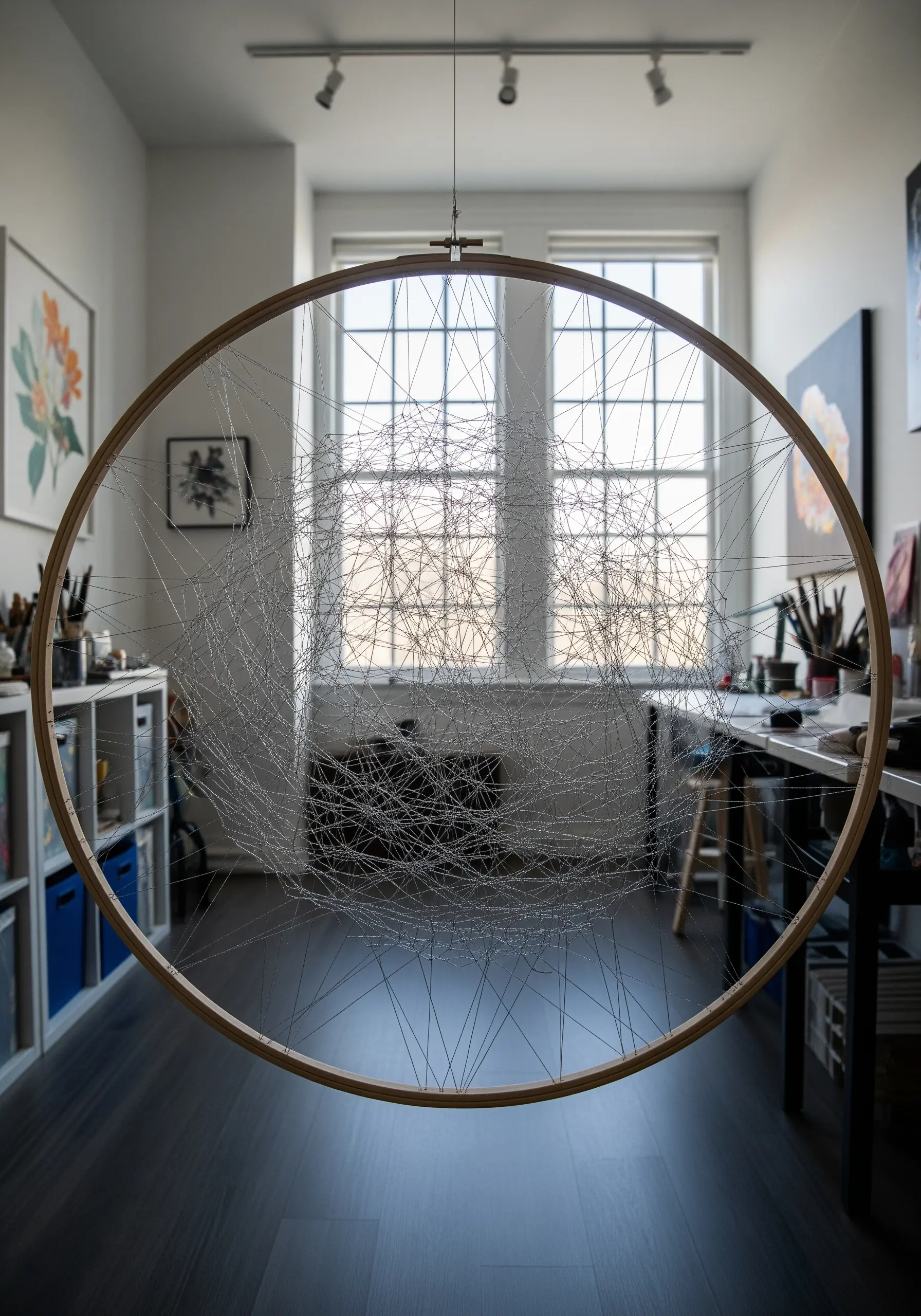
Challenge the need for a fabric background entirely by creating a web of thread suspended within a large hoop.
Work with a single, continuous thread or multiple strands, crossing the open space to build density and form.
This technique is an exercise in tension and balance, where the interplay of light and shadow through the threads becomes part of the artwork.
The result is a delicate, architectural piece that feels weightless and transforms as the viewer moves around it, making it one of the most effective fiber art installations for capturing light.
4. Cultivate a Coral Reef with Clustered Turkey Knots
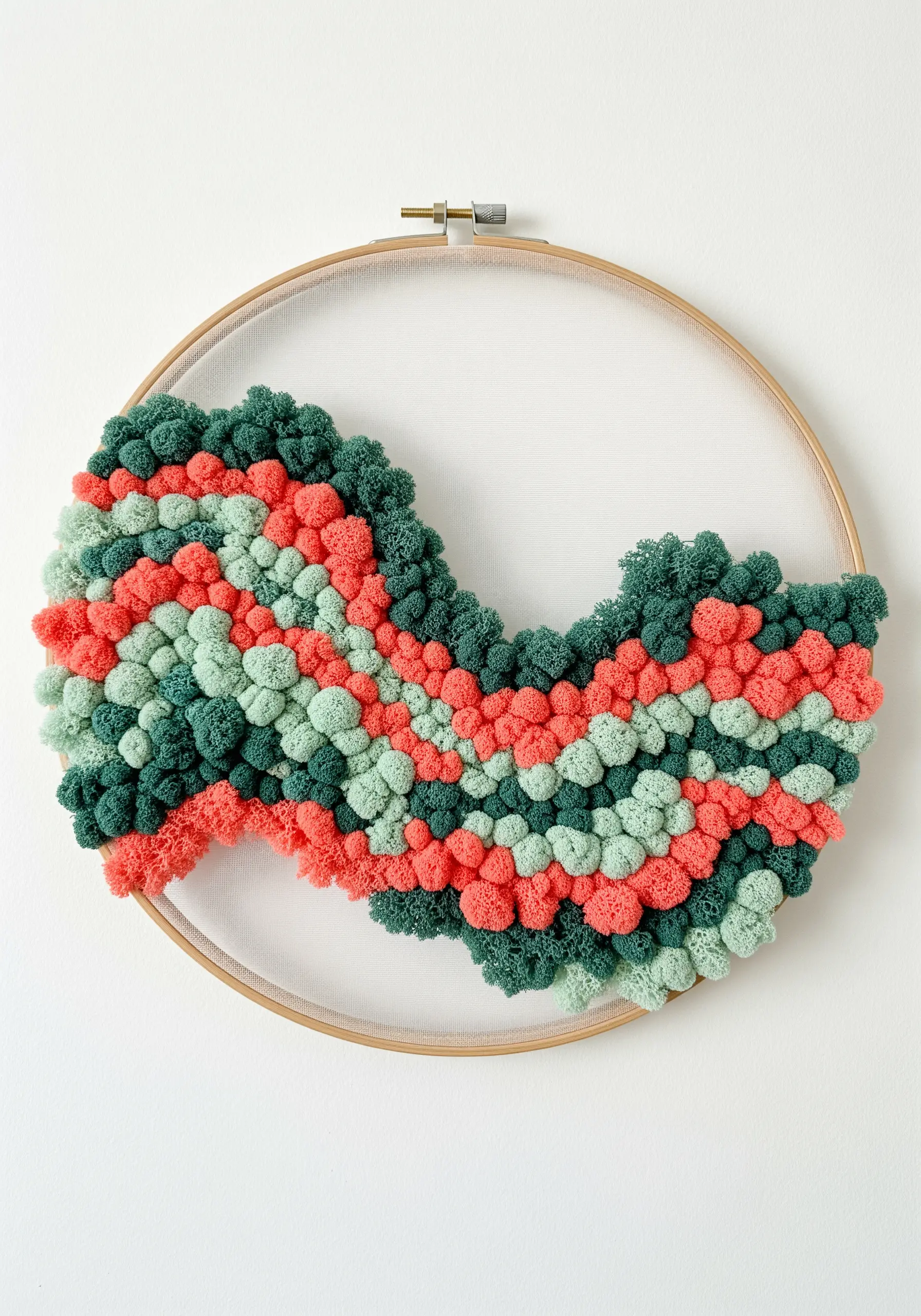
Achieve a lush, moss-like texture by clustering Turkey work stitches so densely they push against each other, forming organic mounds.
After creating the loops, you can either leave them for a bubbly effect or trim them at varying heights for a softer, velvety finish.
Arrange your colors in organic bands or clusters to mimic natural growth patterns, like coral or lichen.
The key is complete coverage of the fabric underneath, forcing the stitches upward and outward to create a truly three-dimensional surface.
5. Design a Gradient Cascade with Dimensional Knots
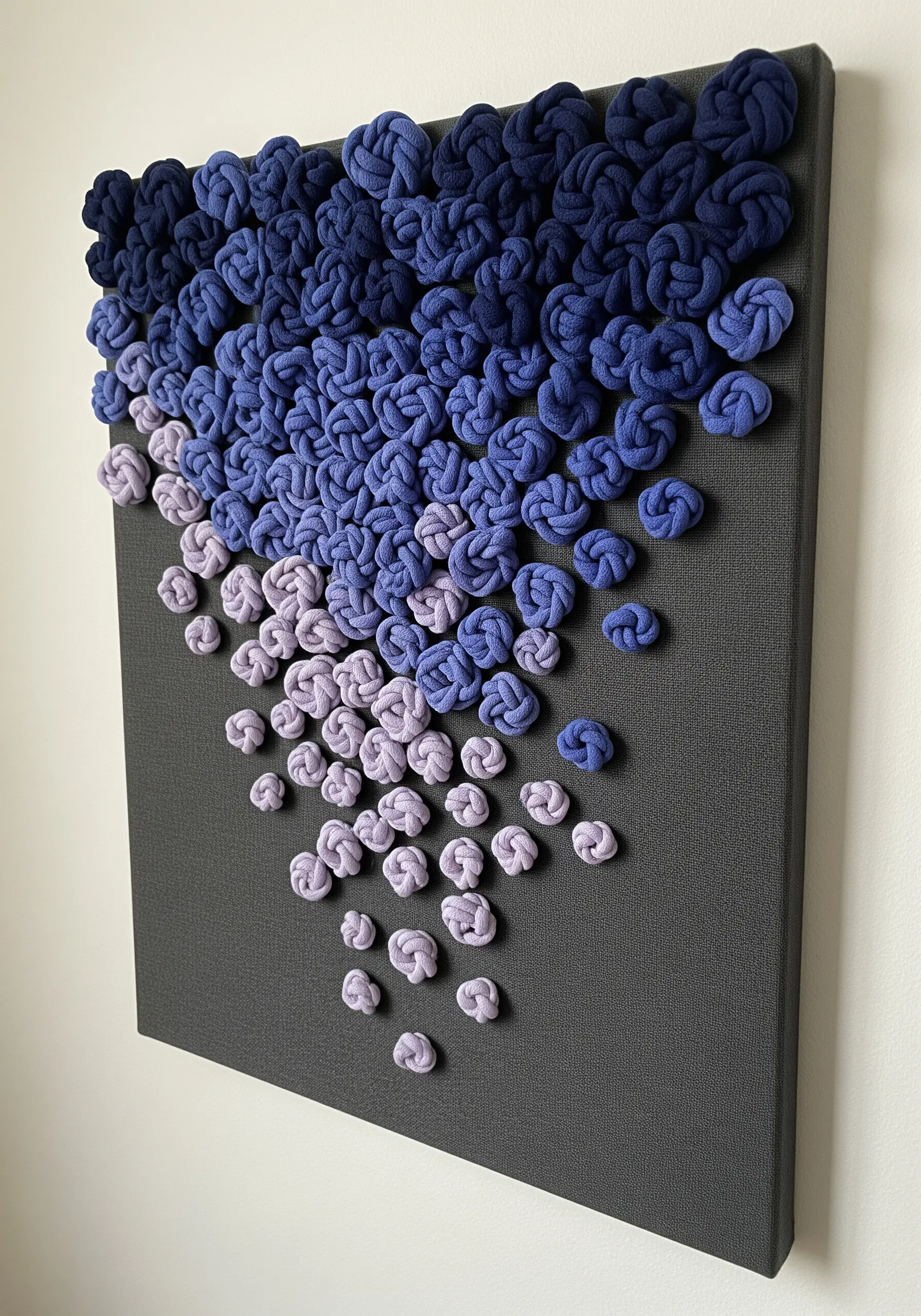
Use sculptural knots, like the Celtic or Josephine knot, as individual modular elements.
Instead of stitching them flat, tie them separately using a thick, soft yarn to give them volume and body.
Arrange these knots on your canvas in a flowing, waterfall-like composition, graduating the color from dark to light to create a sense of depth and movement.
Attach each knot with a few discreet stitches from behind, allowing them to sit proud of the surface for maximum shadow play.
6. Build an Armature for True Thread Sculpture
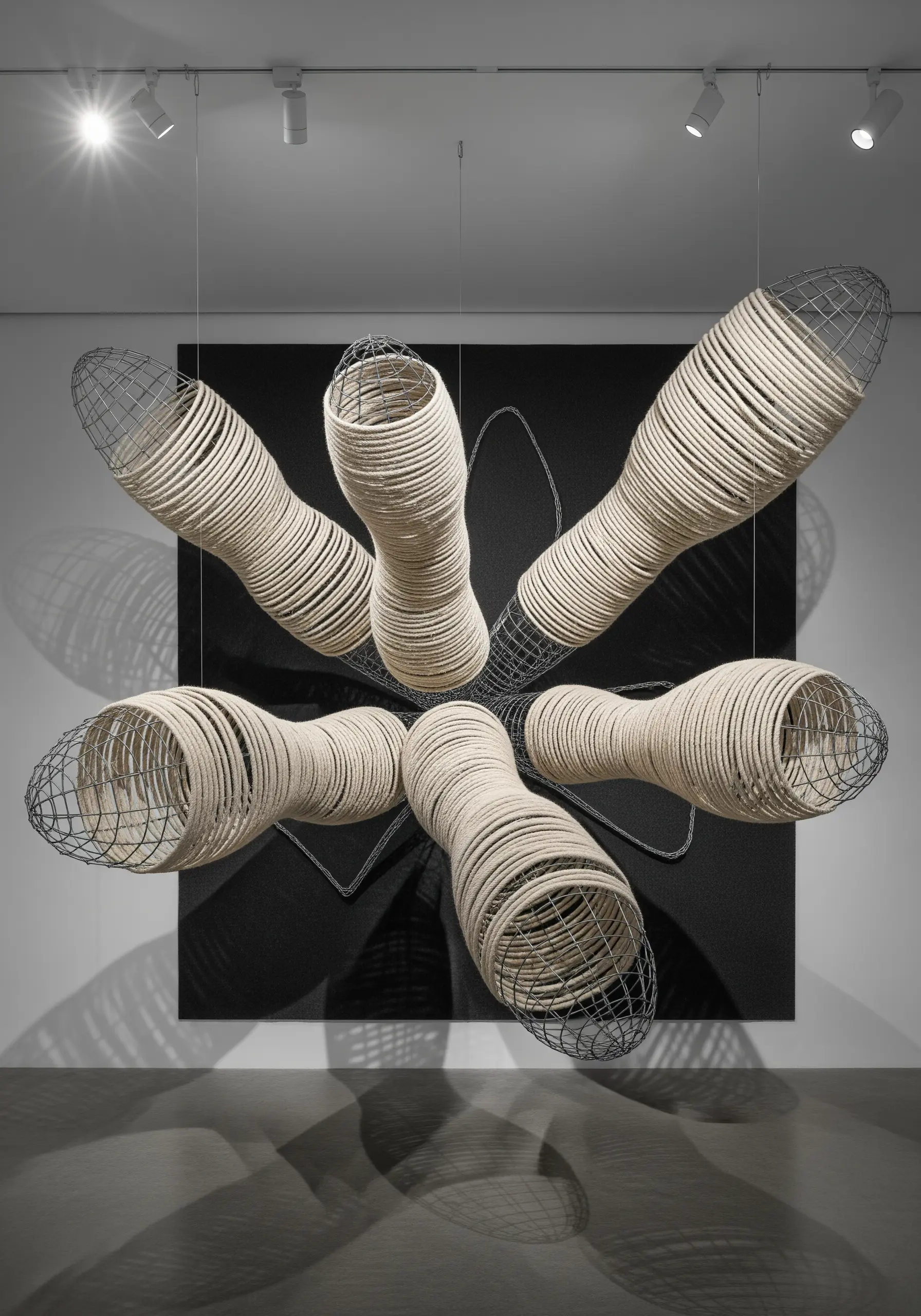
Take your embroidery completely off the wall by constructing a 3D armature from wire mesh or flexible wire.
Shape your structure first—think of it as the skeleton of your piece.
Then, wrap the form tightly and methodically with rope or thick yarn, allowing the wrapping process to define the final surface texture and contours.
This method merges fiber art with traditional sculpture, creating large-scale, self-supporting objects where thread is the skin, not just an embellishment.
7. Create Ethereal Depth with Layered Organza
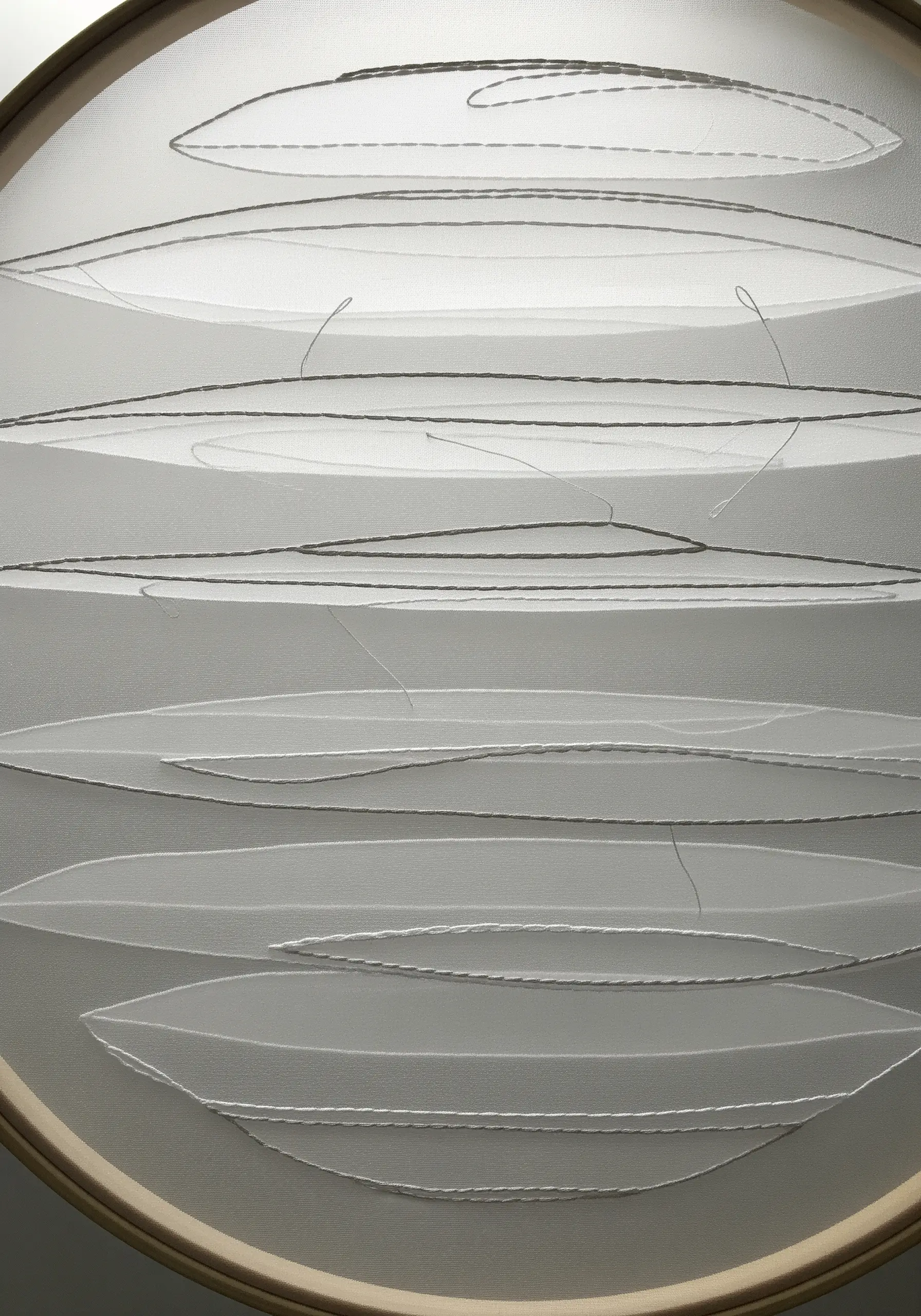
Stitch simple, delicate lines on multiple layers of sheer organza or tulle, then stack them in a single hoop.
The transparency of the fabric creates a holographic effect, where motifs appear to float at different depths.
Play with the spacing between layers to enhance the illusion of perspective.
Using a fine, single-strand thread in a contrasting color will make the lines sharp and distinct, emphasizing their ghostly, suspended quality against the translucent background.
8. Paint with Fiber Using Wool Roving
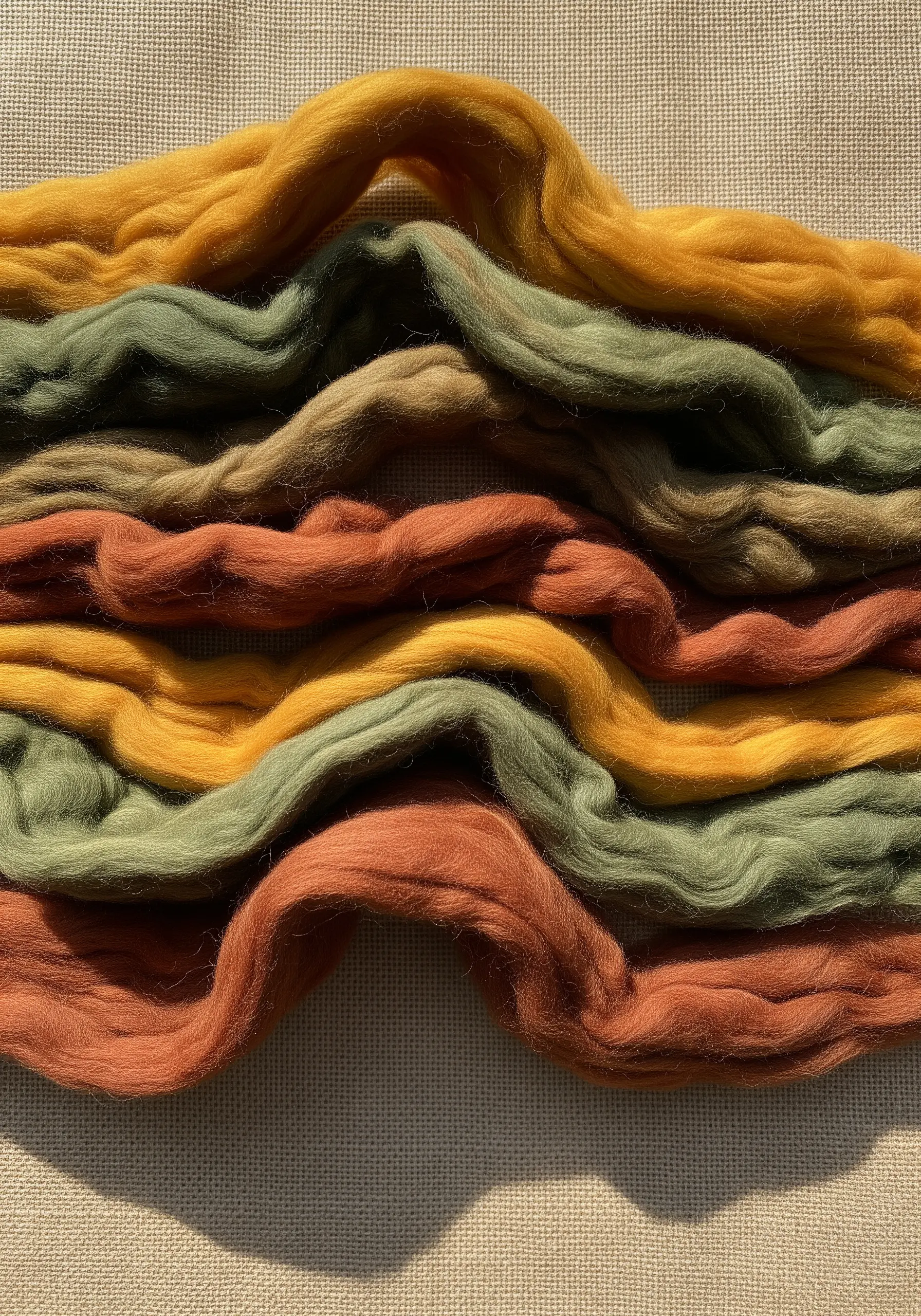
Incorporate needle-felting techniques by applying soft, unspun wool roving directly onto your base fabric.
Instead of stitching, you use a felting needle to blend and sculpt the fibers, creating soft, painterly transitions of color that are impossible to achieve with thread alone.
Lay down waves of different colored roving to build up an abstract landscape.
This is a perfect way to add organic texture and rich, blended color fields with a soft, diffused finish.
9. Elevate Florals with Woven Wheel Roses
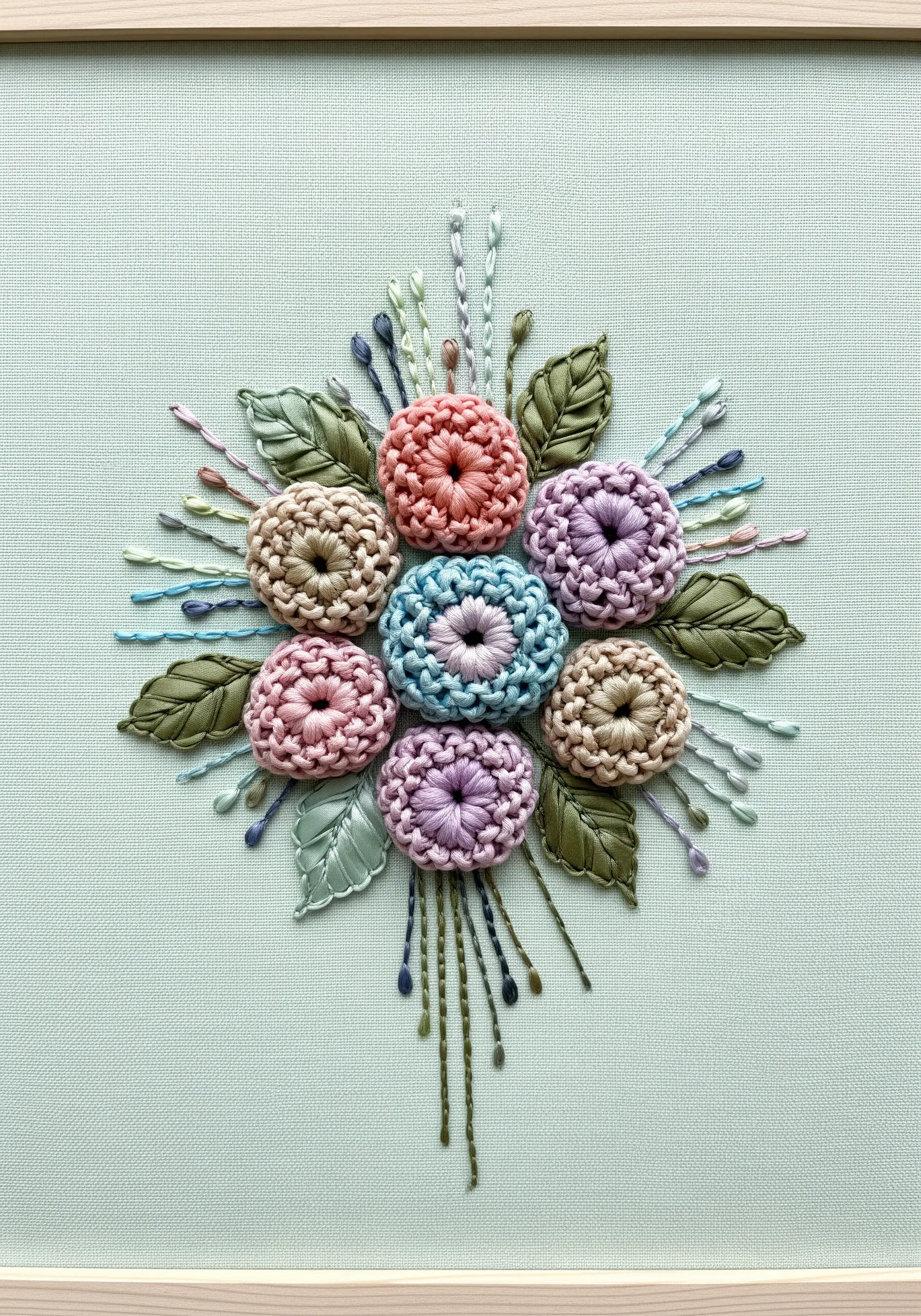
To create highly dimensional, textural flowers, use the woven wheel stitch (also known as the spider web rose stitch).
Work the stitch with a thicker material like silk ribbon or perle cotton to maximize its height and sculptural quality.
Don’t pull the weave too tight; a looser wrap allows the thread to build upon itself, creating a plush, rounded blossom that rises significantly from the fabric.
Combine these with delicate satin stitch leaves and straight stitch stems to create a dynamic contrast in texture and dimension.
10. Carve Optical Illusions with Precise Lines
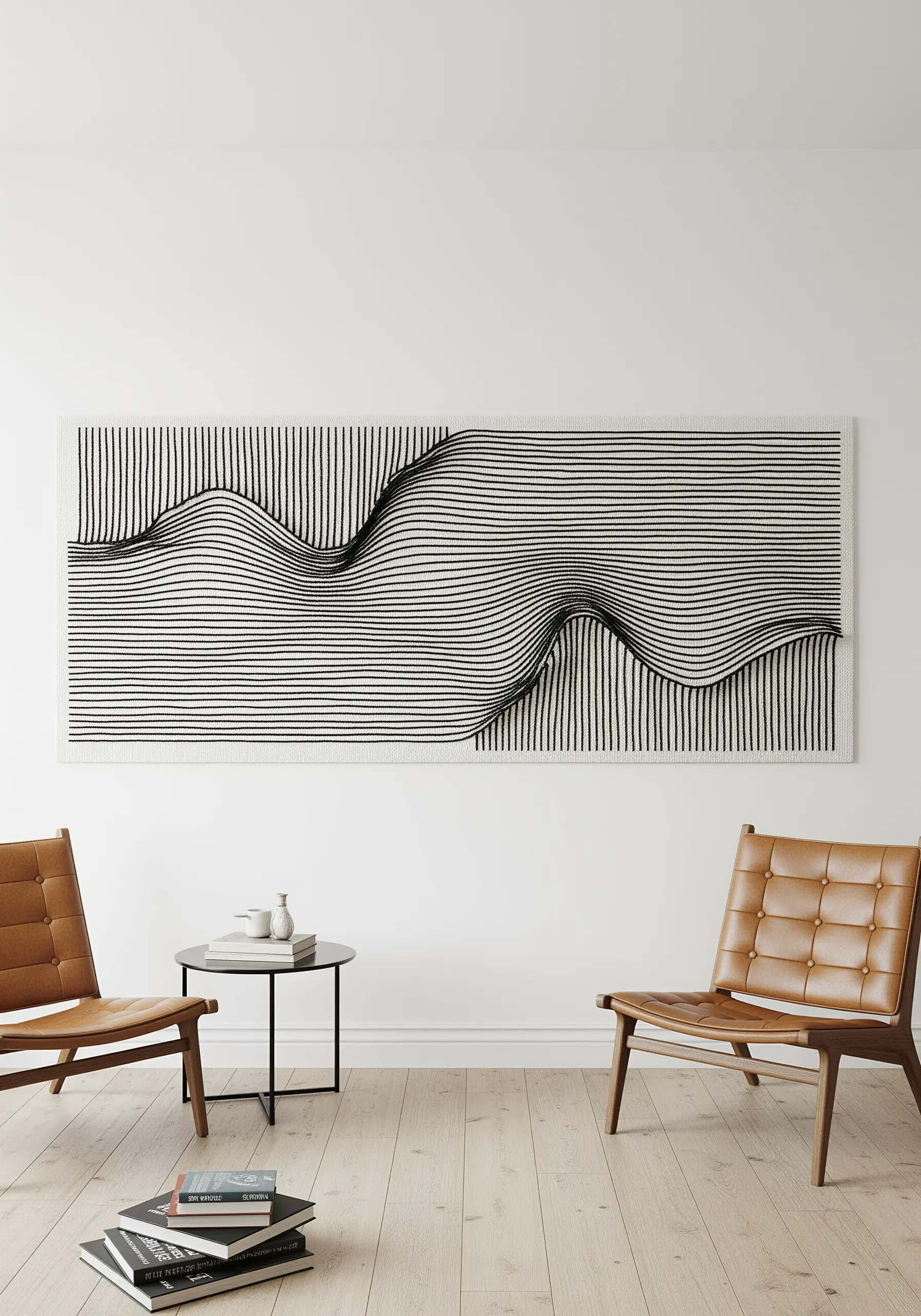
Create the illusion of undulating surfaces using nothing but straight, parallel lines.
First, build a subtly curved, padded form underneath your fabric using foam or felt.
Then, stitch over it with perfectly spaced vertical threads.
The way the straight lines wrap around the hidden curves creates a hypnotic, moiré-like effect of depth and movement.
This technique turns a flat surface into a kinetic piece of modern minimalist textile wall art.
11. Stitch Self-Supporting Lace with a Soluble Stabilizer
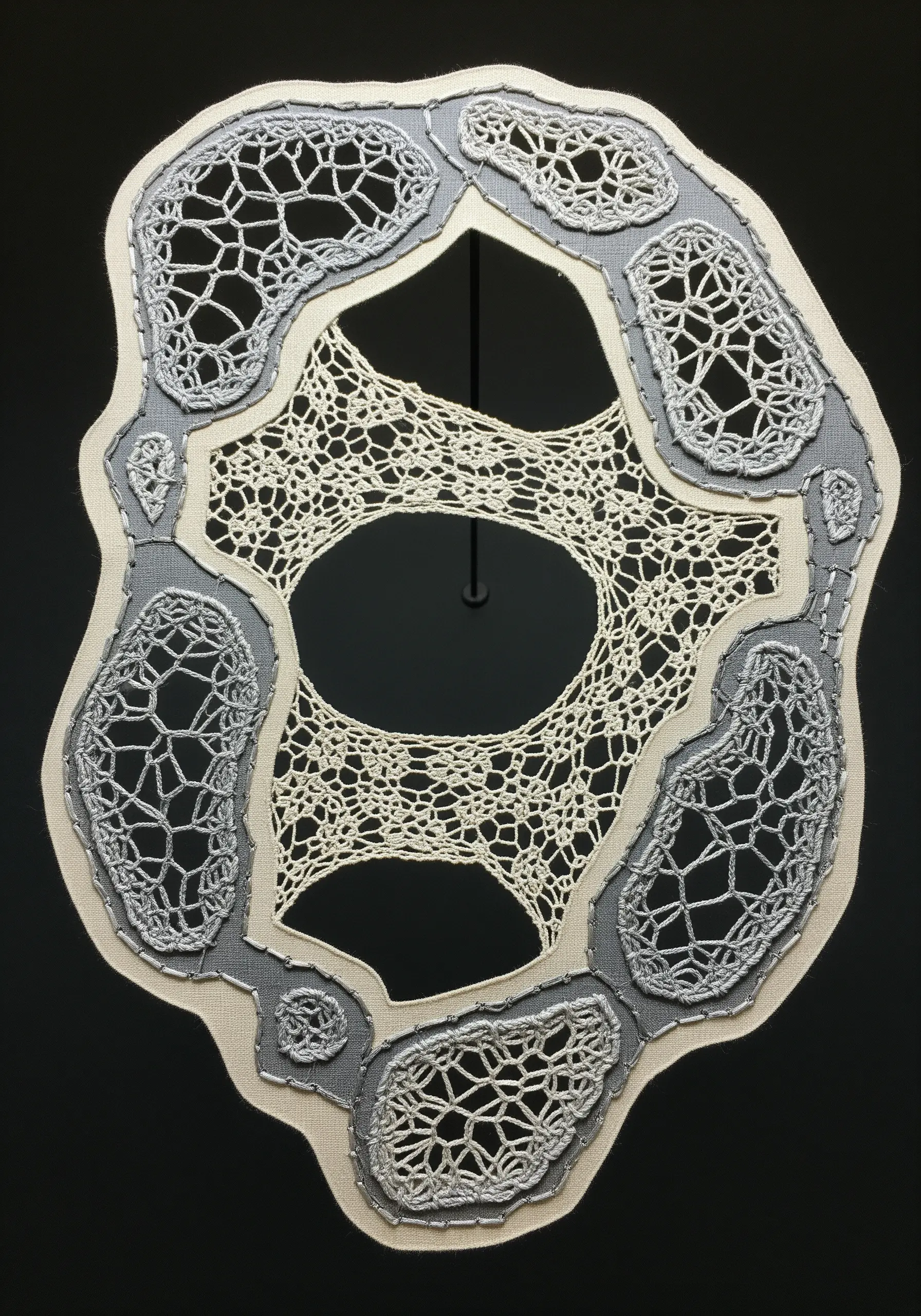
Create delicate, fabric-like structures made entirely of thread using a water-soluble stabilizer as your temporary base.
Draw your design onto the stabilizer and fill it with a dense, interconnected network of stitches—think of it like building a spiderweb where every thread must connect to another.
Once you rinse away the stabilizer, you are left with a freestanding lace form that you can shape, layer, or mount for a sculptural effect.
This technique allows you to explore the structural integrity of thread itself.
12. Build a Vibrant Reef with a Collage of Knots
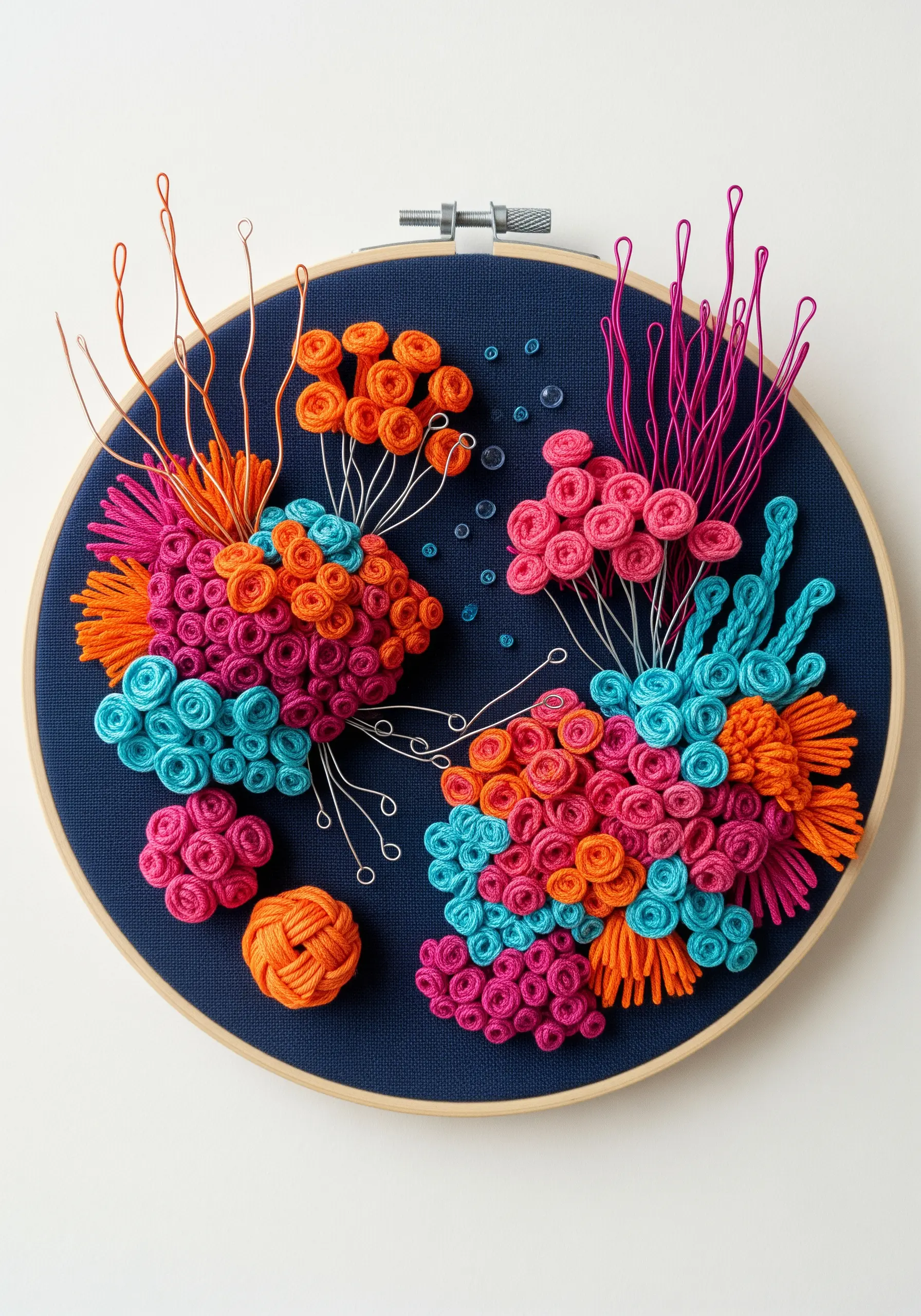
Combine a multitude of dimensional stitches to create a rich, tactile ecosystem in your hoop.
Use tightly packed French knots for coral clusters, long bullion knots for sea anemones, and cast-on stitches for textured spirals.
The key to this statement textured embroidery is variety and density—don’t be afraid to let different stitch types and vibrant colors overlap and crowd each other.
Incorporate thin wire or stiffened thread for tentacles that extend beyond the hoop, breaking the traditional boundary.
13. Engineer Sharp Spikes with Stiffened Thread
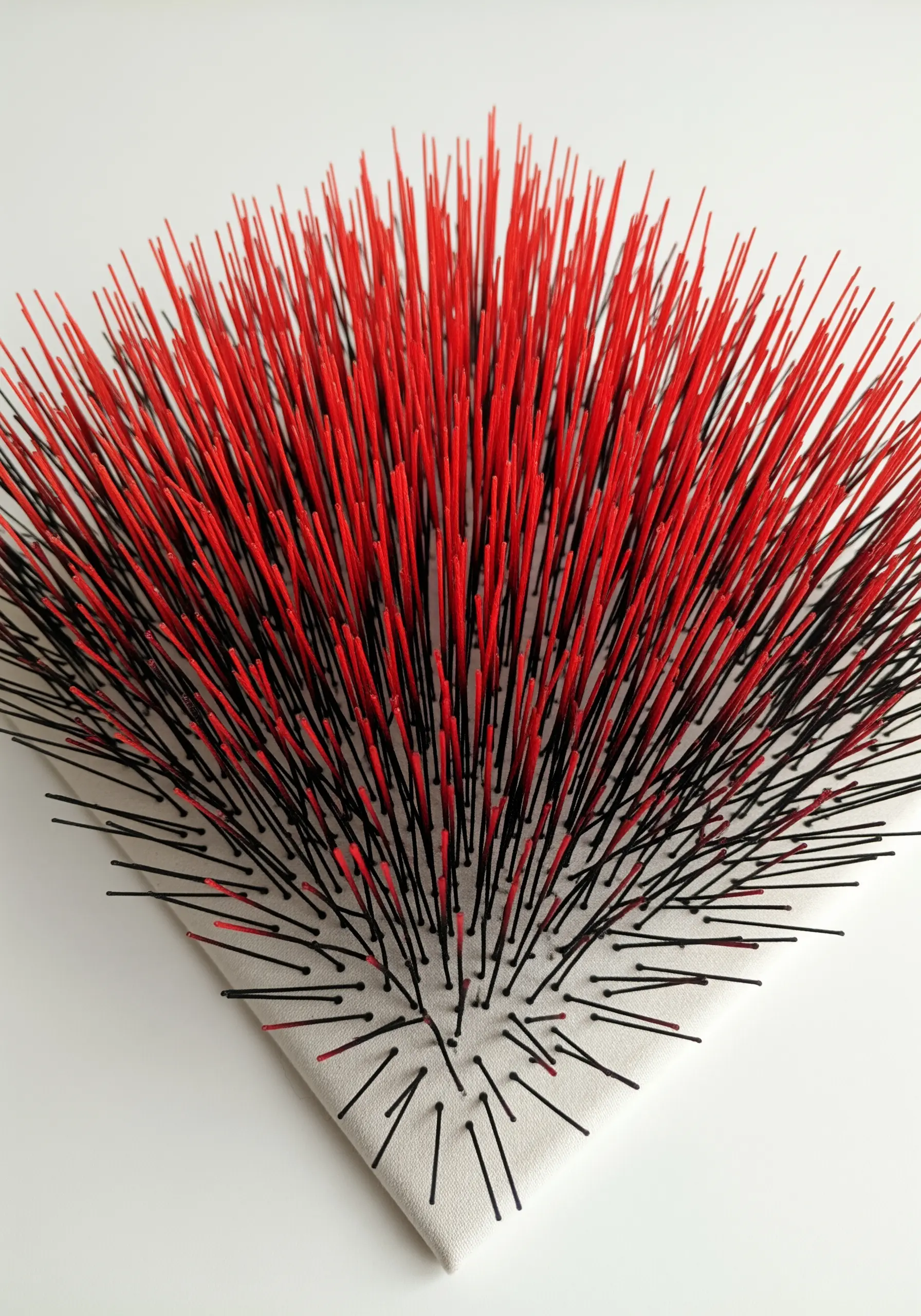
Achieve a dramatic, urchin-like texture by creating stitches that stand rigidly up from the canvas.
Work your straight stitches over a small dowel or pencil to ensure uniform length, leaving a loop.
After securing the stitch, apply a fabric stiffener or a clear-drying craft glue to each thread and let it dry completely before removing the guide.
The result is a field of sharp, graphic spikes that create an aggressive yet captivating texture and play dramatically with light and shadow.
14. Recreate Crystal Facets with Metallic Thread
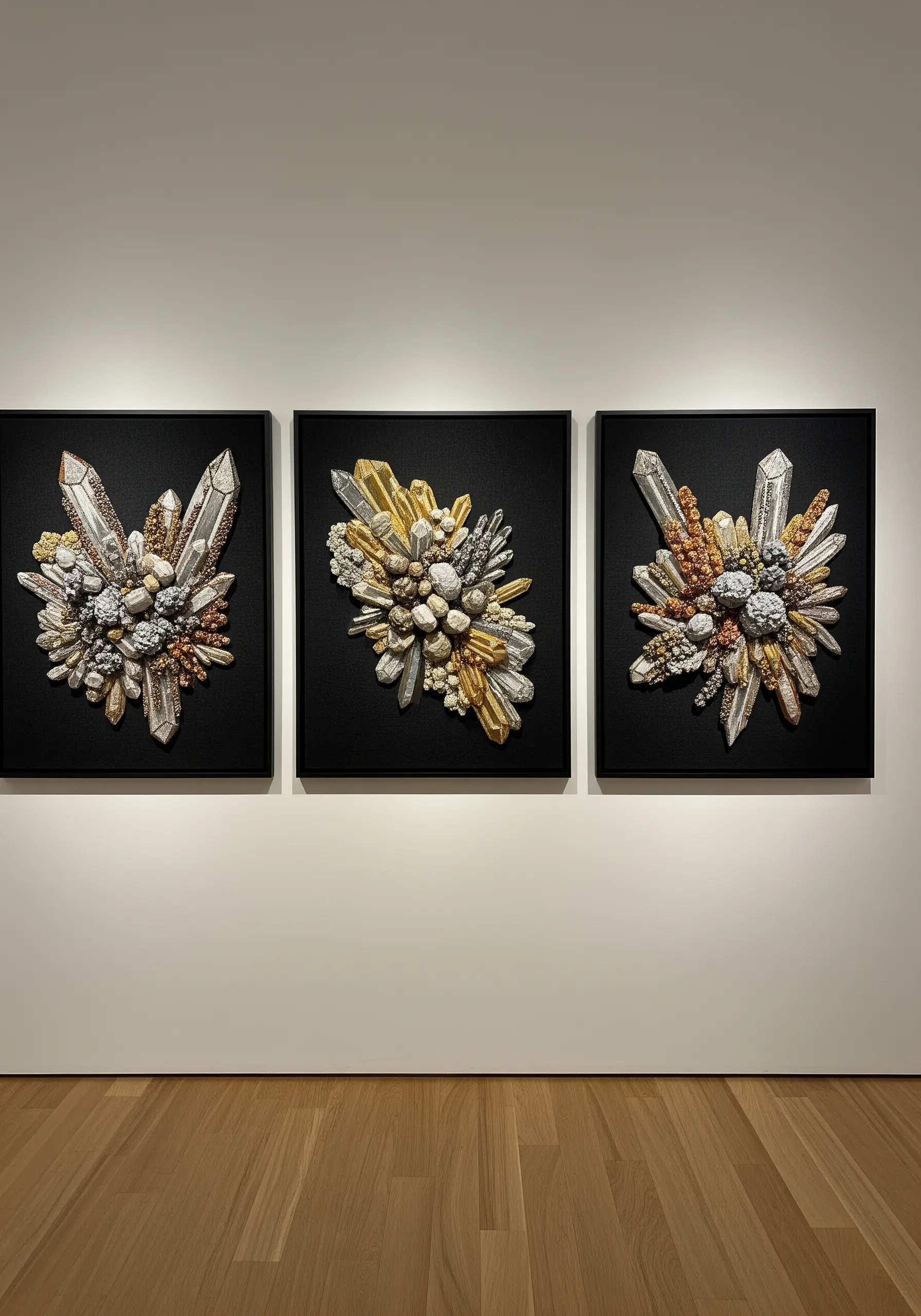
Mimic the geometric planes of mineral formations by using satin stitch in distinct, angular blocks.
Choose a range of metallic and silk threads in similar tones (golds, silvers, coppers) to represent different crystal facets.
Vary the direction of your satin stitch for each block; this will cause them to catch the light differently, creating the illusion of a multi-faceted, reflective surface.
This is a masterful way to turn flat stitches into something that feels hard, geometric, and precious.
15. Hypnotize the Eye with Wrapped Spirals
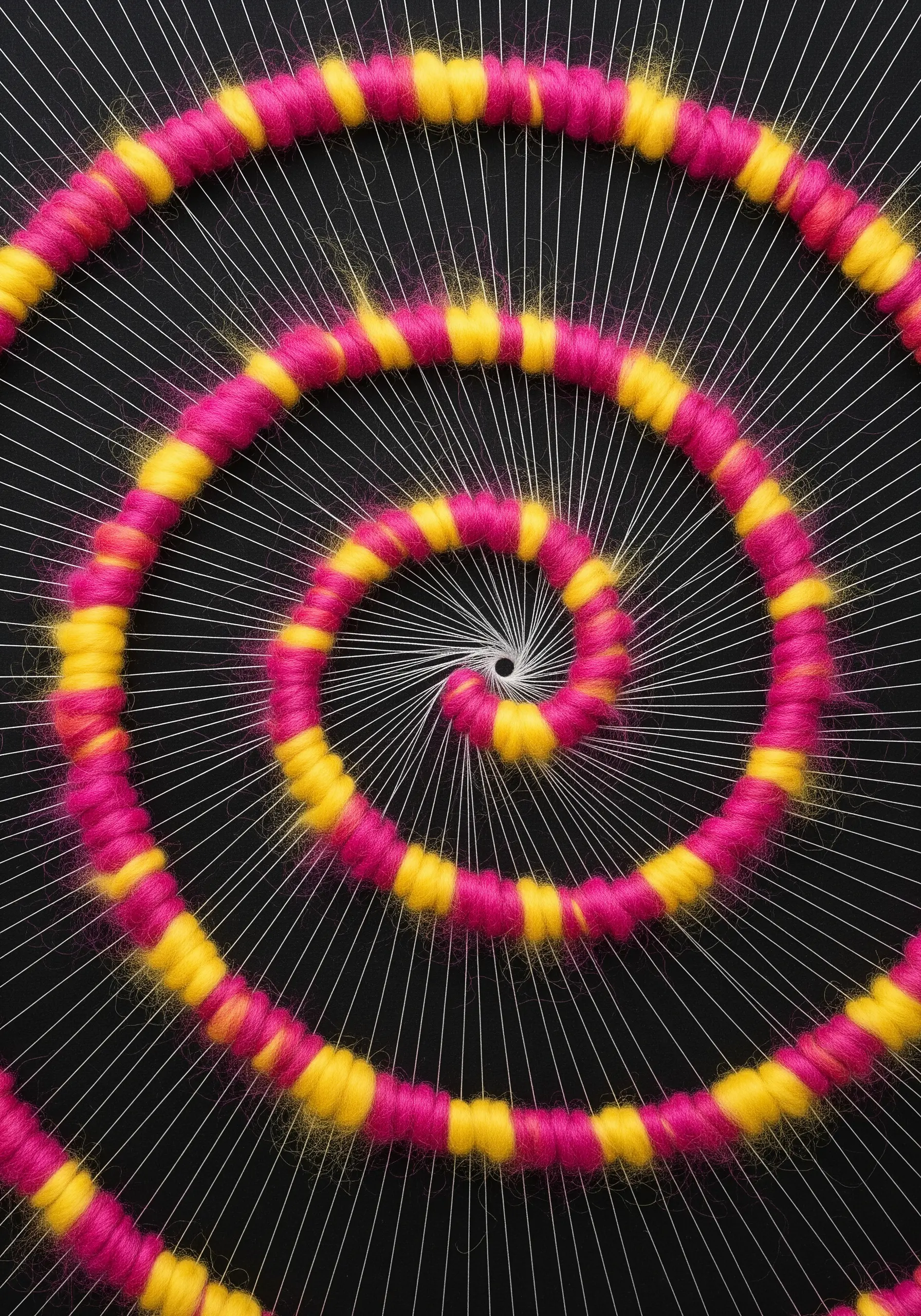
Combine the principles of string art and weaving to create bold, graphic spirals.
First, create a radial structure of straight stitches, like spokes on a wheel, using a strong, thin thread.
Then, take a thick, fuzzy yarn (like wool or mohair) and weave it over and under the spokes, spiraling out from the center.
Using a variegated or multi-colored yarn for the weaving element will create automatic color blocking and add another layer of visual vibration to the piece.
16. Sculpt Cumulus Clouds with Needle Felting
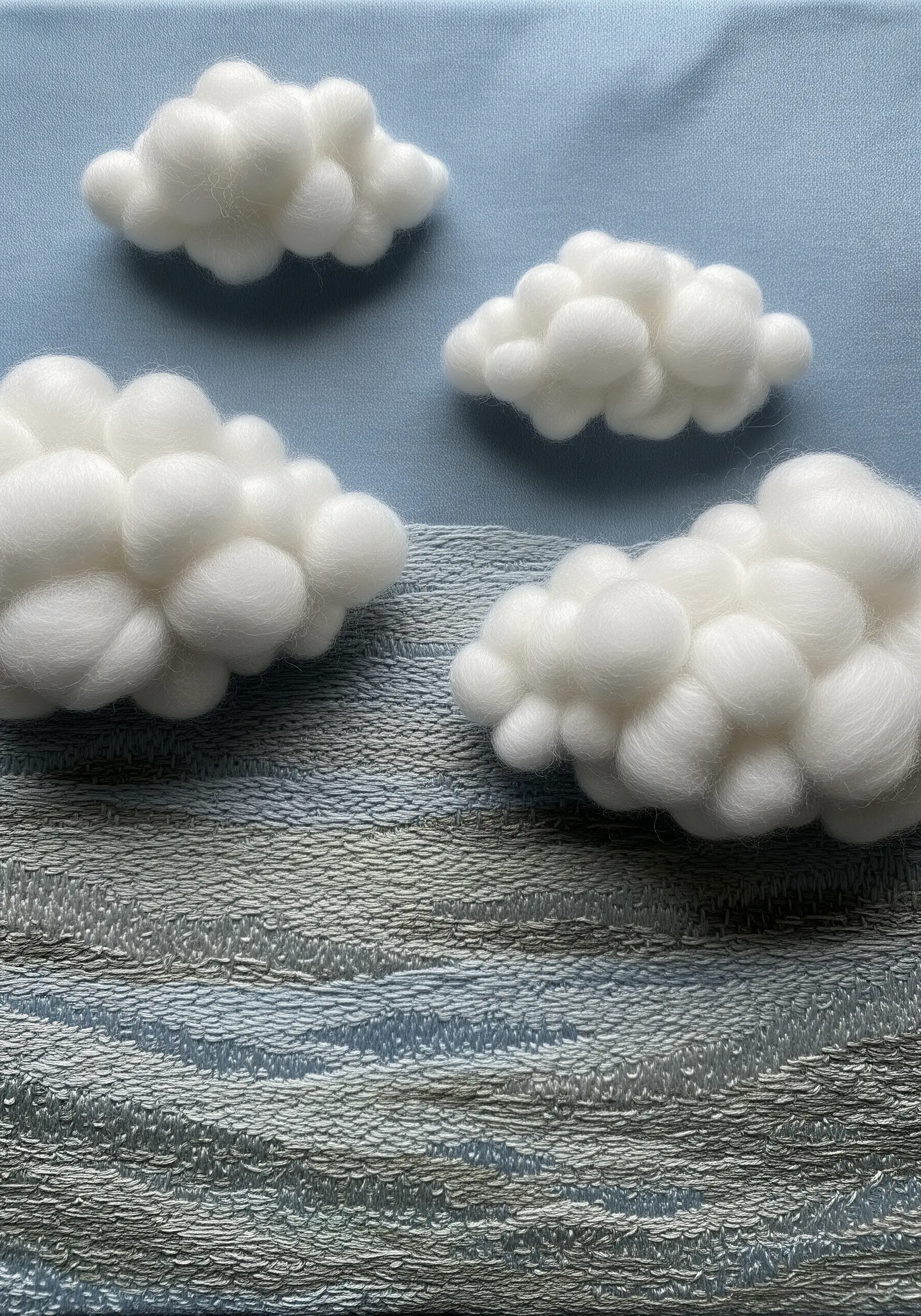
Create unbelievably soft and realistic 3D clouds by sculpting wool roving and attaching it to your fabric with a felting needle.
Pull apart and shape tufts of white wool, layering them to build up the billowy, voluminous forms of cumulus clouds.
Once you have the shape you want, gently tack it onto your background fabric with the felting needle.
This adds a dreamy, ethereal layer that contrasts beautifully with the flat, woven texture of the underlying fabric or embroidery.
17. Weave Interlocking Paths with Couched Cord
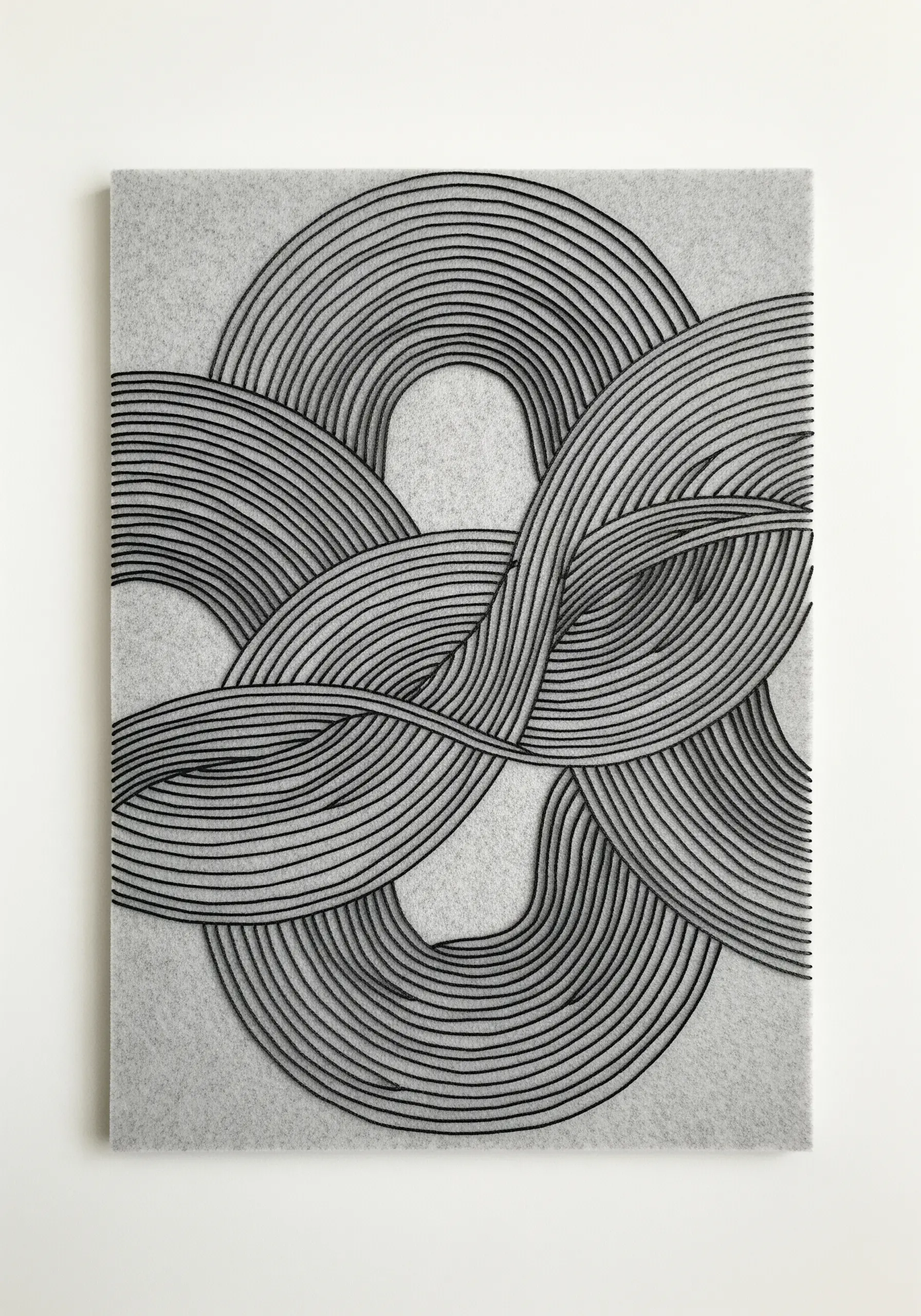
Create a sense of deep, interwoven movement by couching thick cord or yarn onto your canvas.
Plan a continuous, overlapping path for your cord, and then use a thinner, matching or contrasting thread to tack it down at regular intervals.
The visual power comes from the density of the lines and the way they appear to weave over and under each other.
This technique transforms a simple line into a bold, graphic texture that has both visual and physical weight.
18. Construct a Kinetic Mobile with Thread Forms
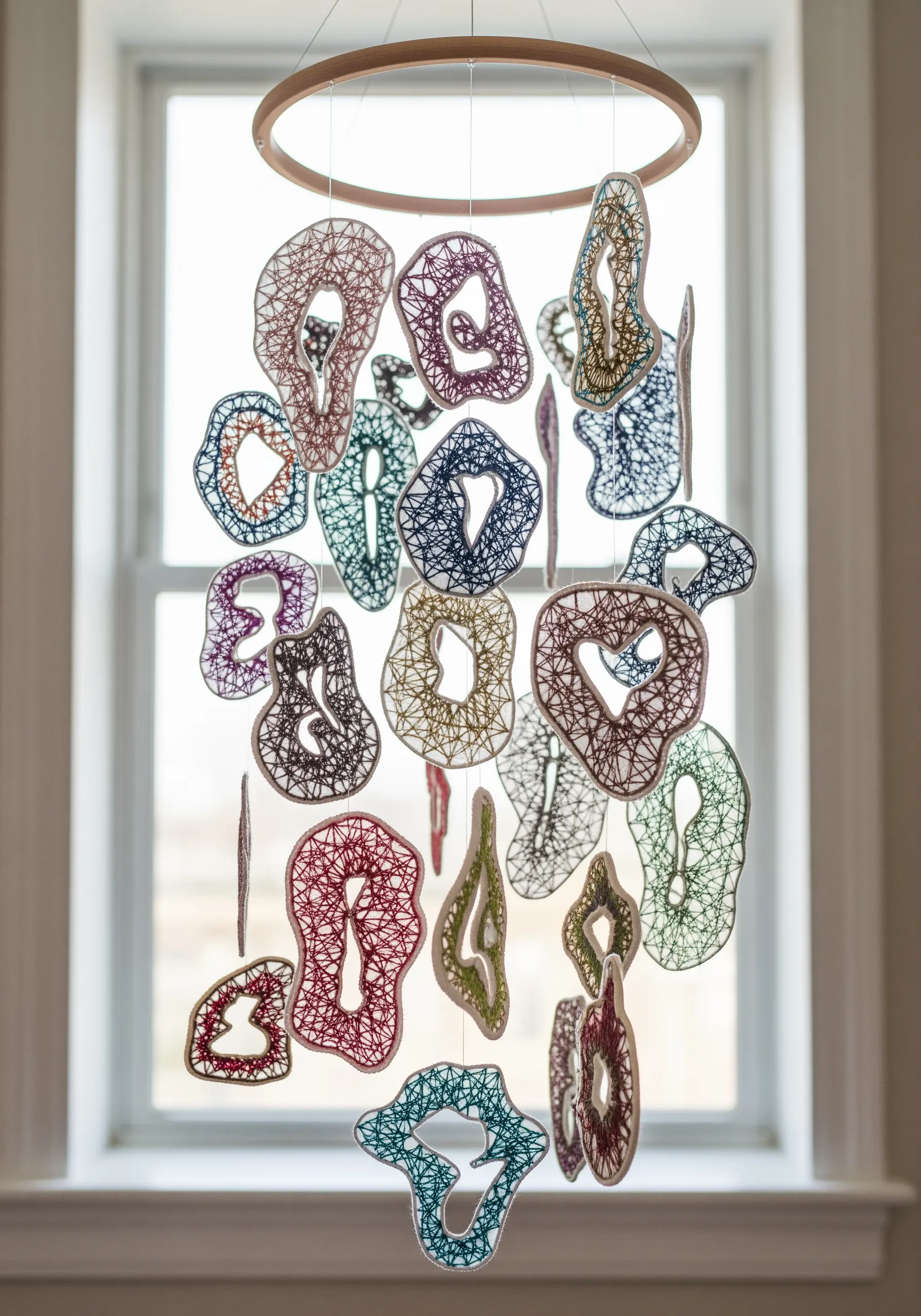
Take your embroidery off the wall and into the air by creating a suspended mobile.
Create individual organic shapes using a free-standing lace technique on water-soluble stabilizer, or wrap thread around wire frames.
Once you have a collection of these thread-based charms, connect them with fine, strong thread and hang them from a hoop or dowel.
The result is a constantly shifting piece of art that interacts with the light and air currents in the room, making it a truly living sculpture.
19. Frame Your Work with a Sculptural Braid
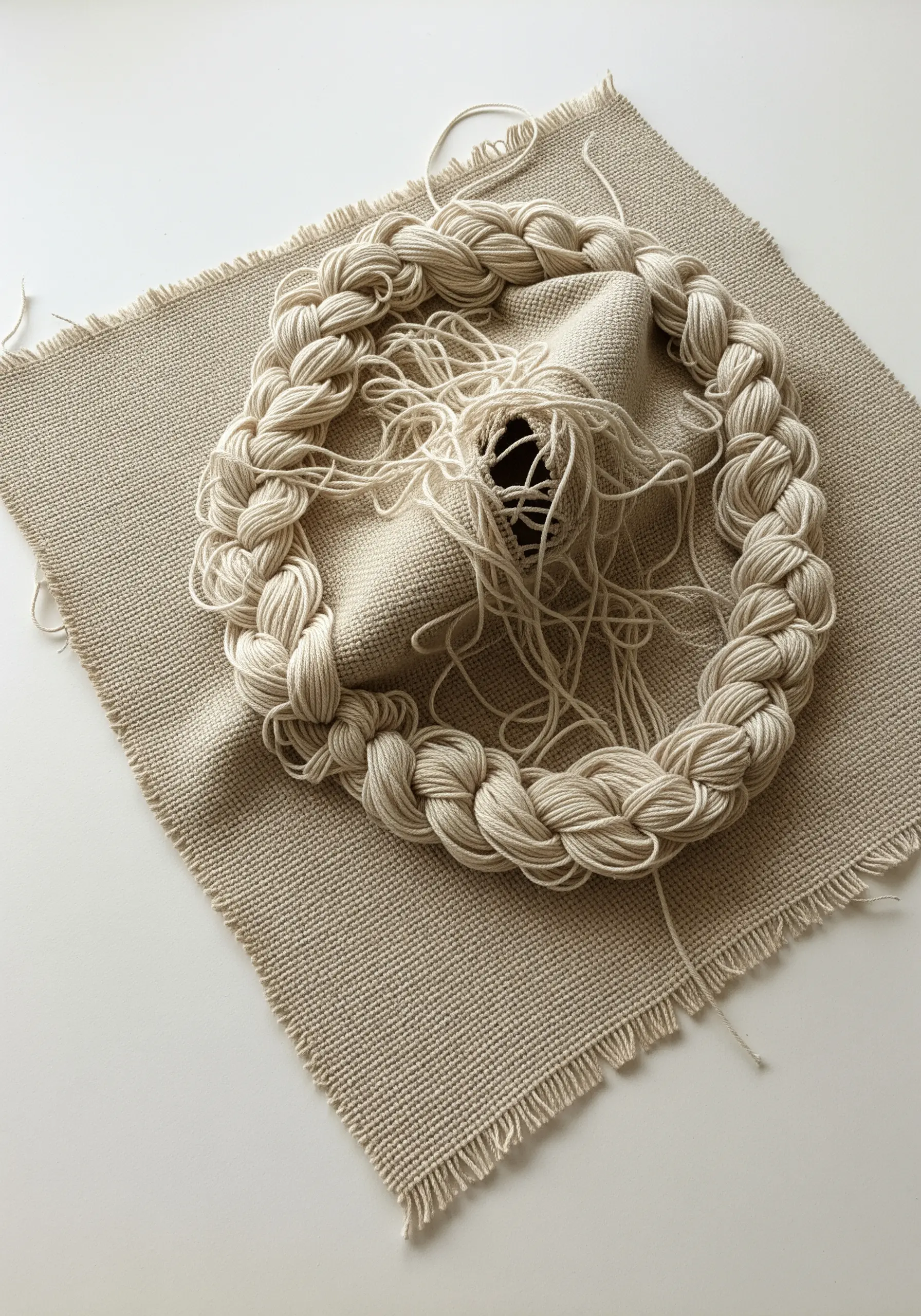
Turn the frame into part of the artwork by creating a thick, sculptural braid from yarn or rope.
Make a long, heavy braid and then stitch it directly onto your fabric, allowing it to break the plane of the canvas by rising up or even wrapping around an inner structure.
This technique deconstructs the idea of embroidery being contained within a boundary, making the thread both the image and its own disruptive frame.
20. Fuse Soft and Hard Textures in Wearable Art
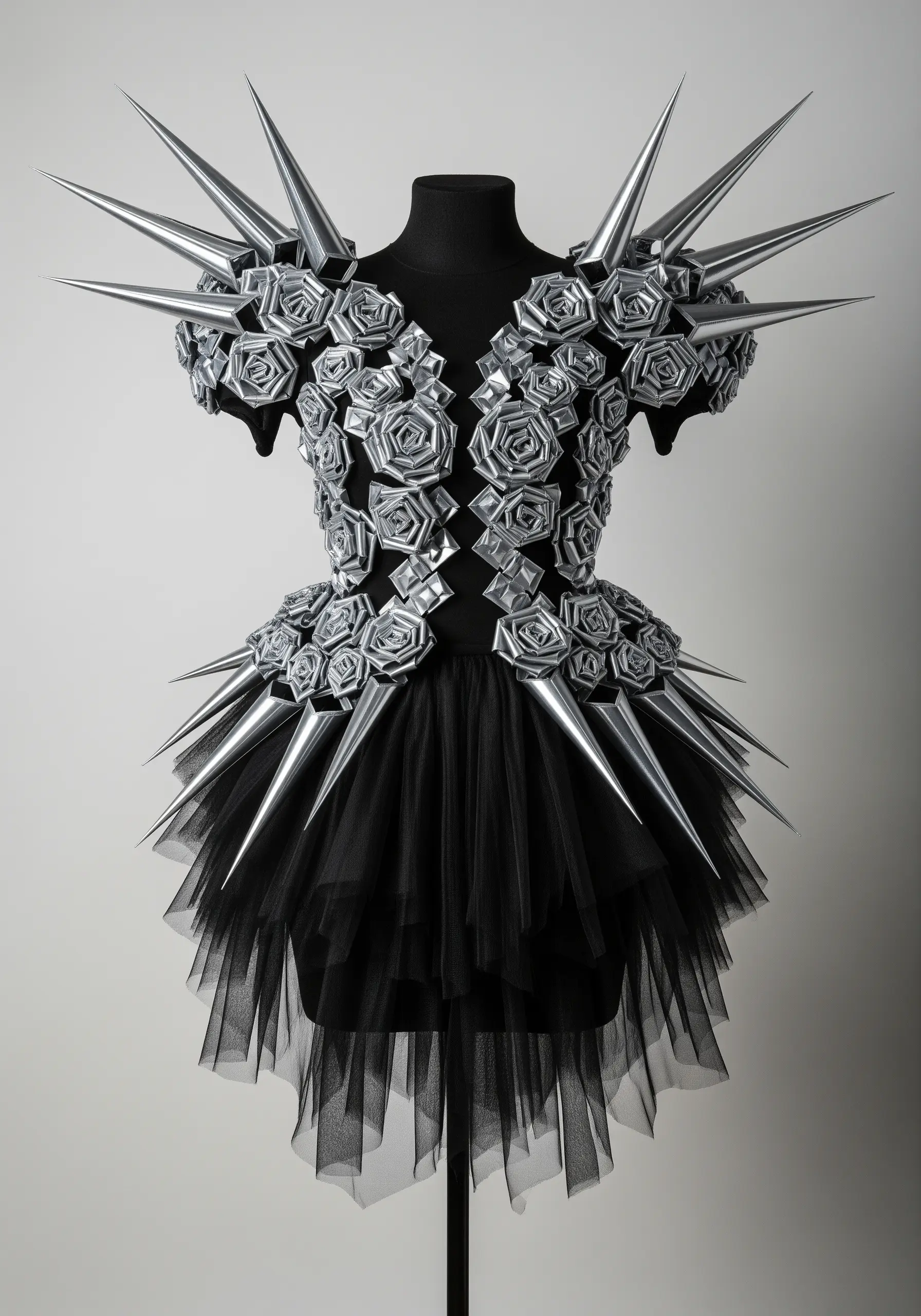
Create a dramatic statement by combining traditional soft embroidery techniques with hard, unexpected materials.
Construct dimensional elements like ribbon roses, but integrate them into a structure that includes rigid components like metal spikes or acrylic shards.
This juxtaposition of textures—the soft, light-absorbing quality of thread against the hard, light-reflecting quality of metal—creates a powerful visual tension.
It pushes embroidery beyond decoration and into the realm of avant-garde fashion sculpture.
21. Animate Your Art with Glow-in-the-Dark Thread
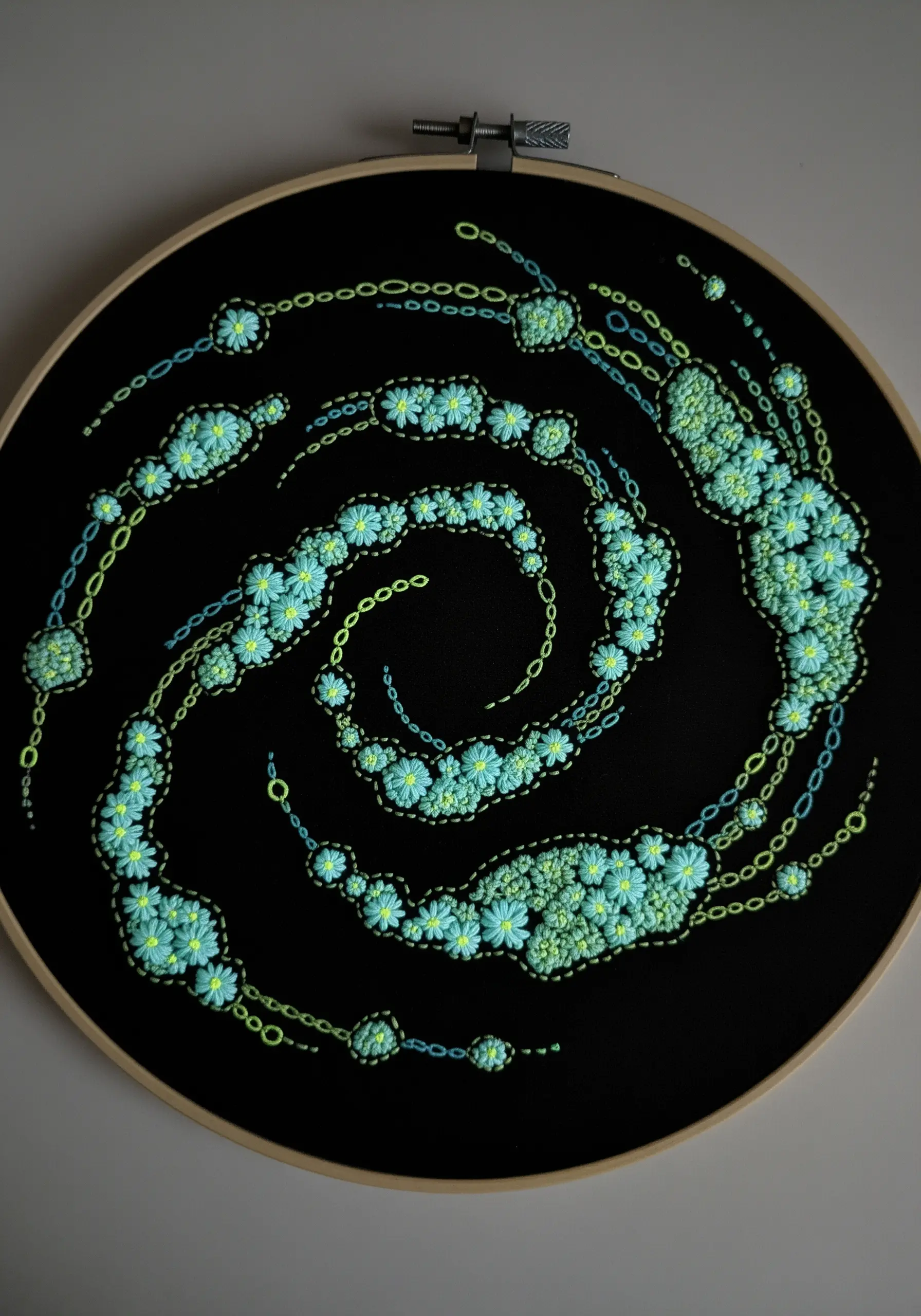
Design a piece that has a second life after the lights go out by strategically using glow-in-the-dark embroidery floss.
Use it for key details within a larger design—the centers of French knot flowers, the outline of a constellation, or the veins of a leaf.
Against a dark fabric, the glowing thread will create a secret, ethereal image that only reveals itself in darkness, transforming your embroidery into an interactive, magical object.
22. Build with Folded and Stitched Felt
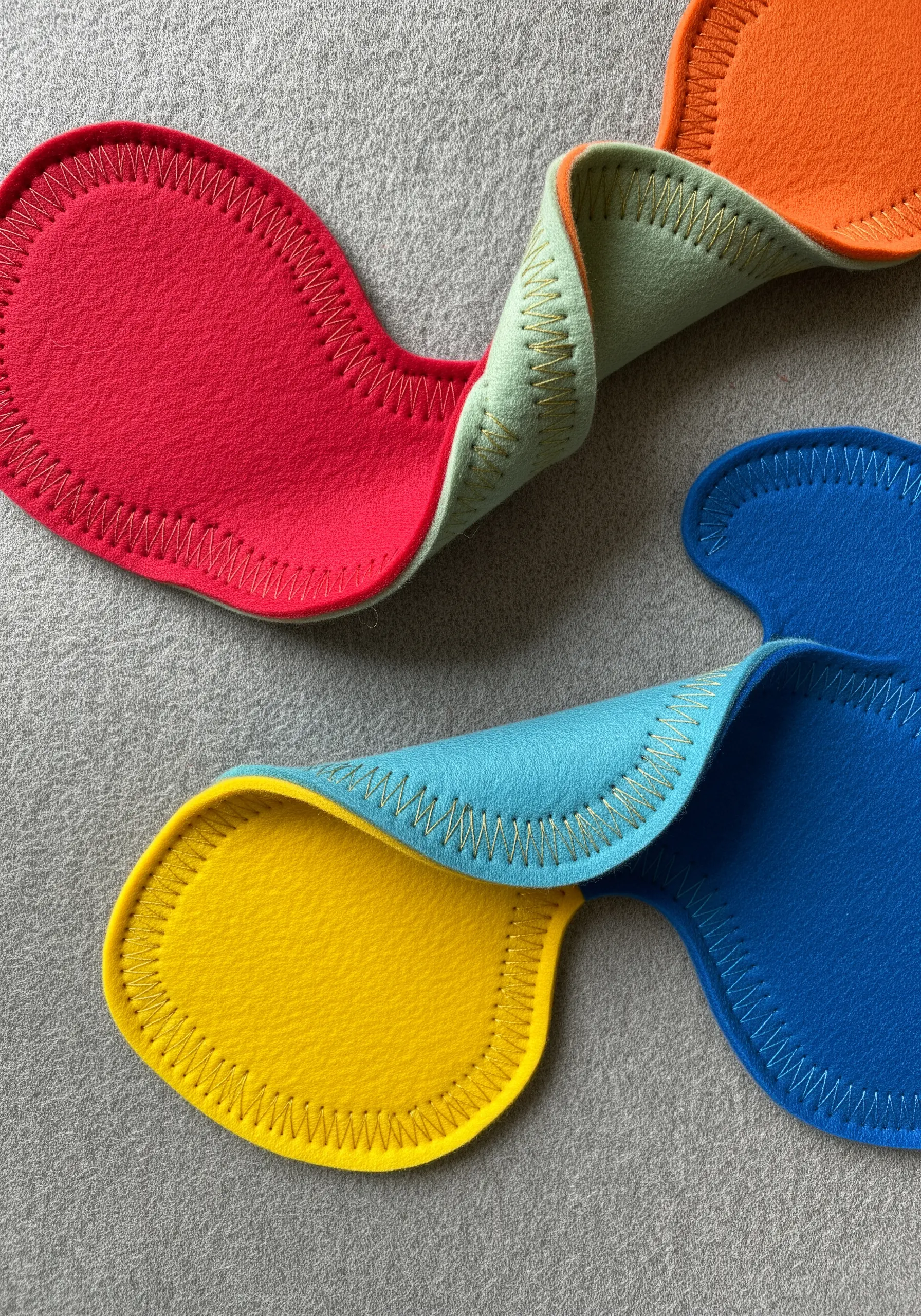
Use industrial or craft felt as a building block for sculptural forms.
Cut organic shapes from different colored felt, then use a simple running stitch or whipstitch along the edges to join them, creating gentle curves and folds.
The stitch here is both decorative and structural, defining the edge while also holding the 3D shape.
This is a fast and effective way to create bold, graphic pieces with a soft, textile finish that pops from the surface.
23. Transform a Room with Architectural Thread Installations
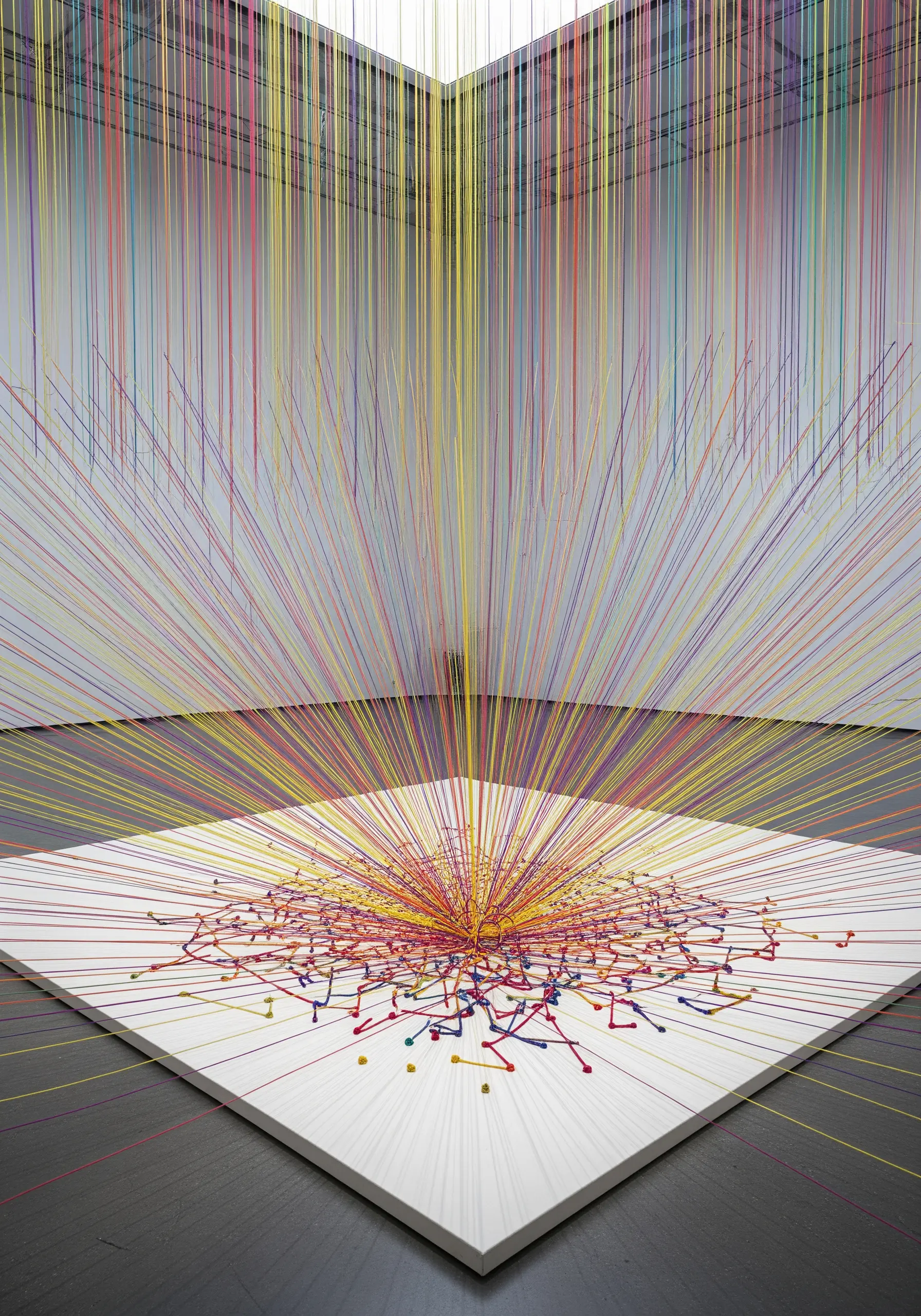
Think beyond the canvas and use an entire room as your frame.
Anchor threads to walls, floors, and ceilings to create immersive, architectural string art.
Plot your anchor points carefully to create perspectives, vanishing points, and geometric forms that redefine the space.
This technique turns thread from a decorative element into a powerful tool for spatial design, creating an environment that people can walk through and experience from multiple angles.
24. Create Tactile Fields with Tufting Techniques
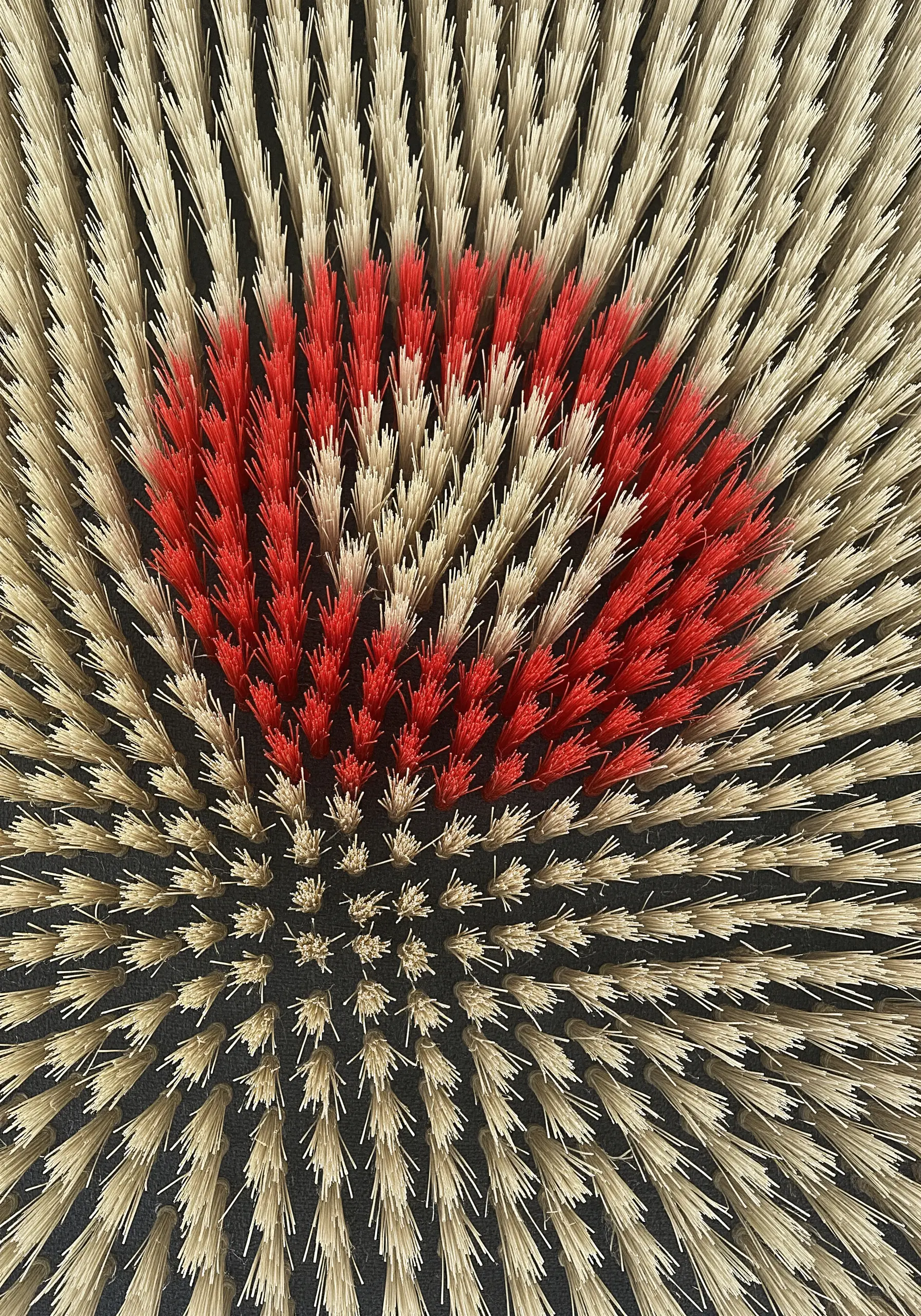
Use a punch needle or tufting gun to create a dense, pile texture that is deeply sculptural.
Instead of creating a uniform, carpet-like surface, vary the height of your loops to build up shapes and create contrast.
A section of high, dense loops next to an area of flat stitches or even bare canvas creates a powerful tactile and visual dynamic.
The result is a piece that invites touch and explores form through its plush, bristly surface.
25. Achieve Weightlessness by Stitching on Tulle
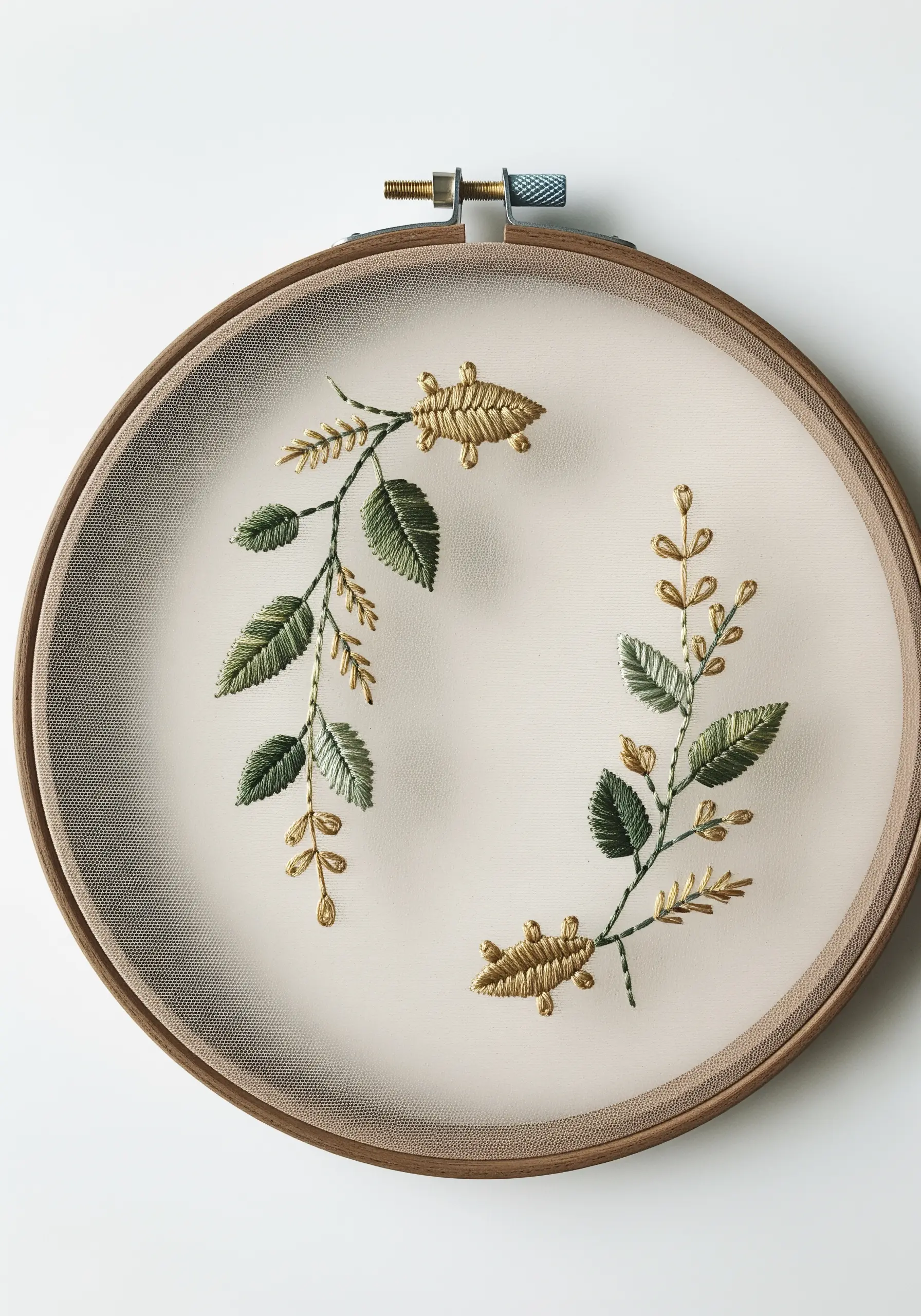
Make your embroidery appear to float in mid-air by using fine, transparent tulle as your base fabric.
The nearly invisible grid of the tulle disappears from a distance, leaving only your stitches suspended in the frame.
This technique is perfect for delicate botanical drawings or minimalist line art.
Use a light touch and secure your thread tails meticulously, as every part of the stitch will be visible from both sides.
26. Construct 3D Lettering with I-Cord
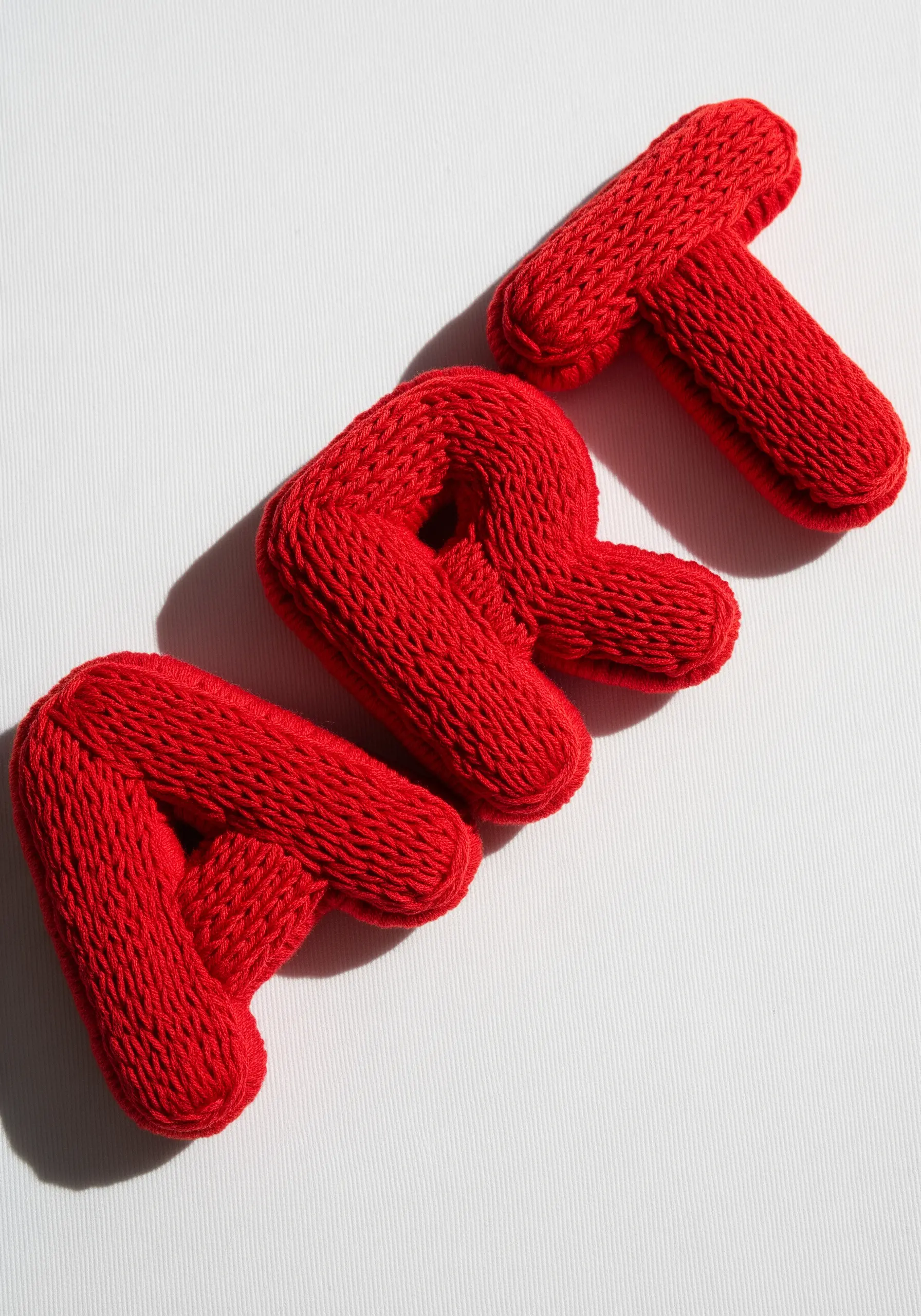
Give your embroidered text physical volume and a soft, rounded form by using knitted I-cord.
You can either knit the cord yourself or create a faux version by wrapping yarn tightly around a wire or rope base.
Shape your plush letters and then carefully stitch them onto your background fabric.
This technique gives typography a playful, tactile quality, transforming flat words into soft, sculptural objects.
27. Layer Light with Stitched Translucent Fabrics
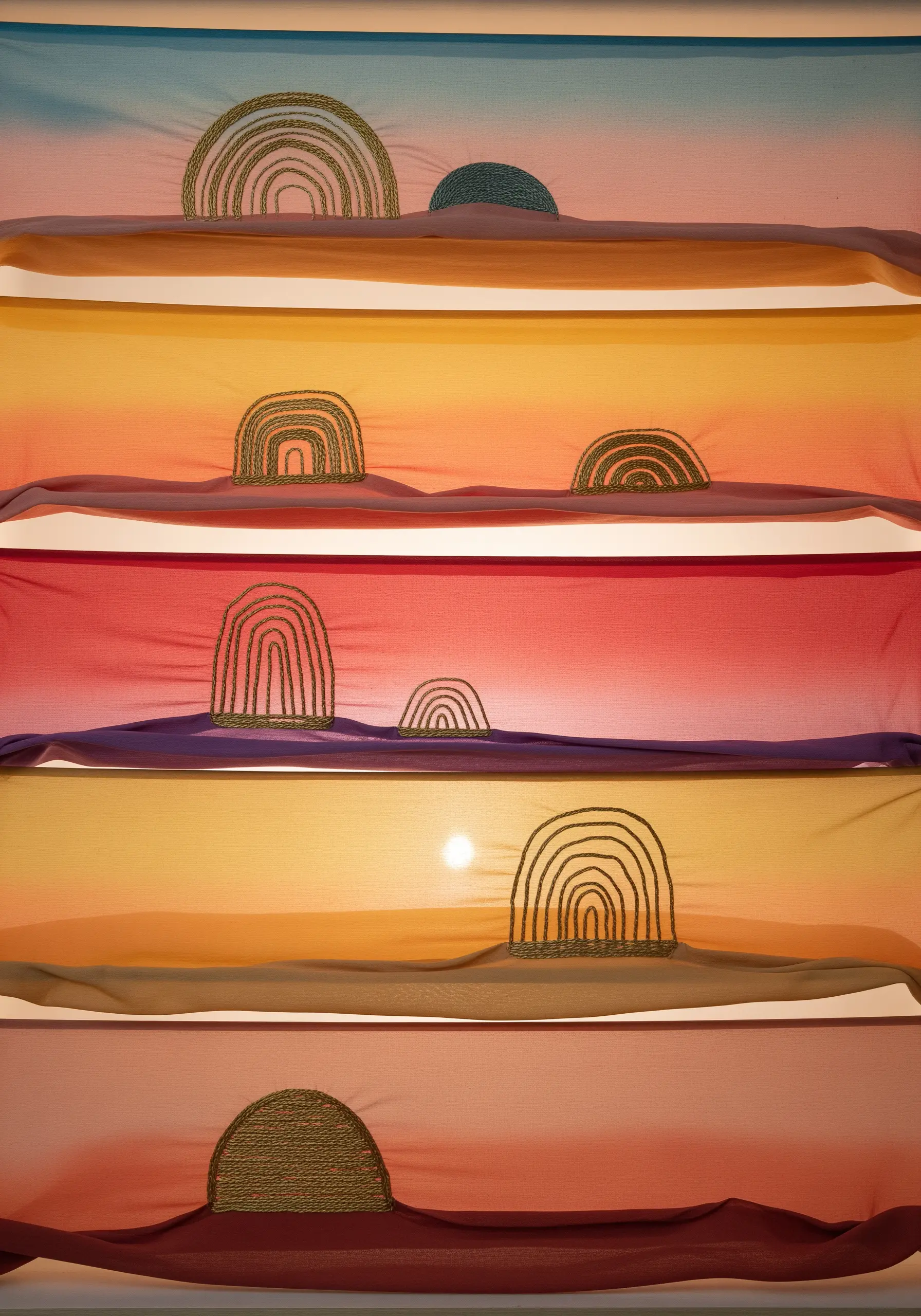
Create a luminous, layered landscape by stretching bands of semi-translucent, colored fabric across a frame.
The overlapping colors will blend and create new tones, mimicking the soft gradients of a sunset.
Add minimal stitch details, like simple satin stitch hills or radiating lines, to each layer.
When backlit, the piece glows, and the stitched elements become subtle silhouettes against a field of radiant color.
28. Weave Monumental Waves on a Wire Frame
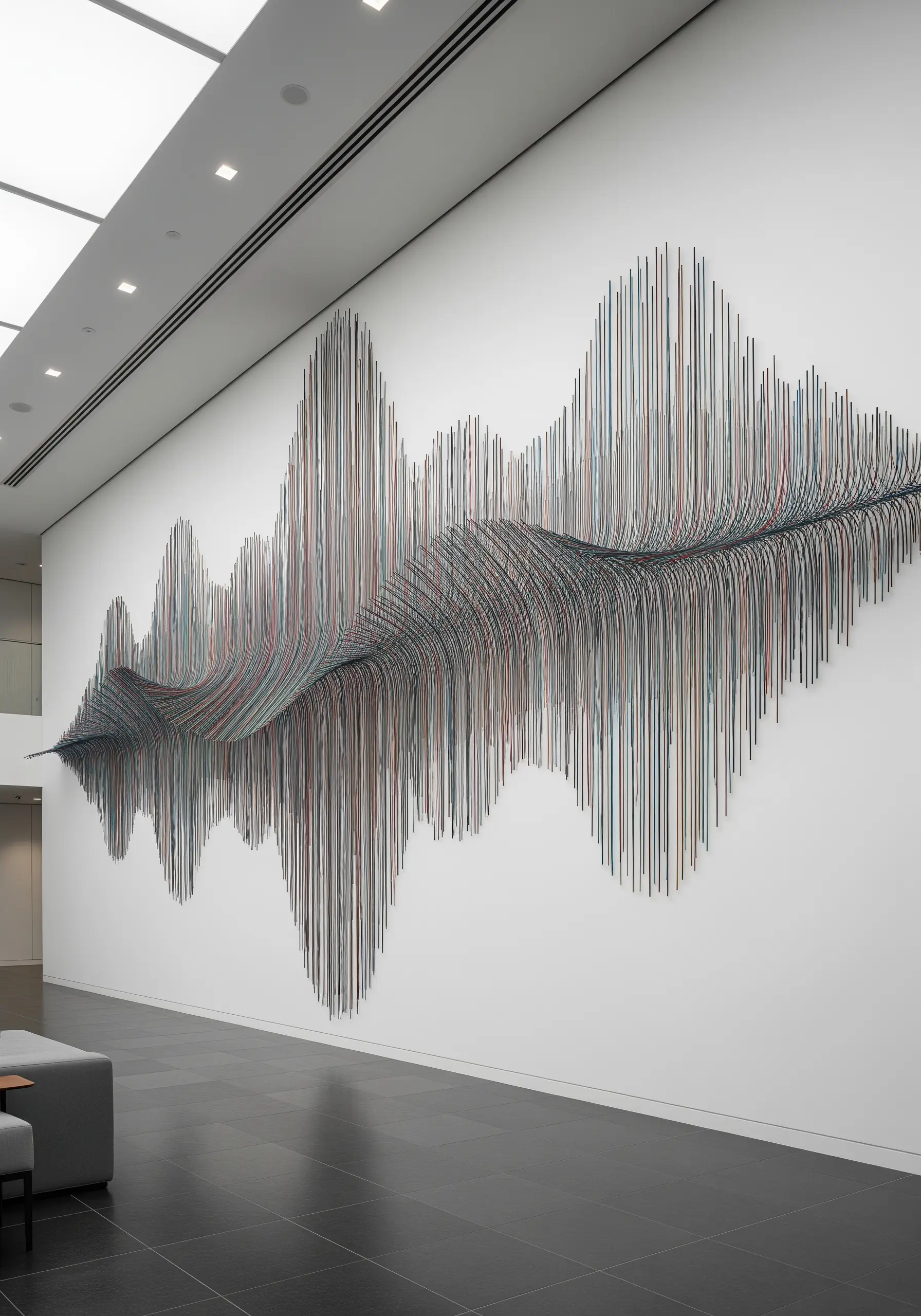
For large-scale, architectural pieces, use metal rods or a wire mesh as a structural base.
Bend the rods into a fluid, wave-like form and mount them to the wall.
Then, stretch hundreds of individual threads across the structure, creating a skin of color and line that follows the underlying contours.
The slight variations in tension and color create a shimmering, kinetic effect, turning a simple wall into a dynamic ocean of thread.
29. Draw Topographic Lines with Couched Yarn
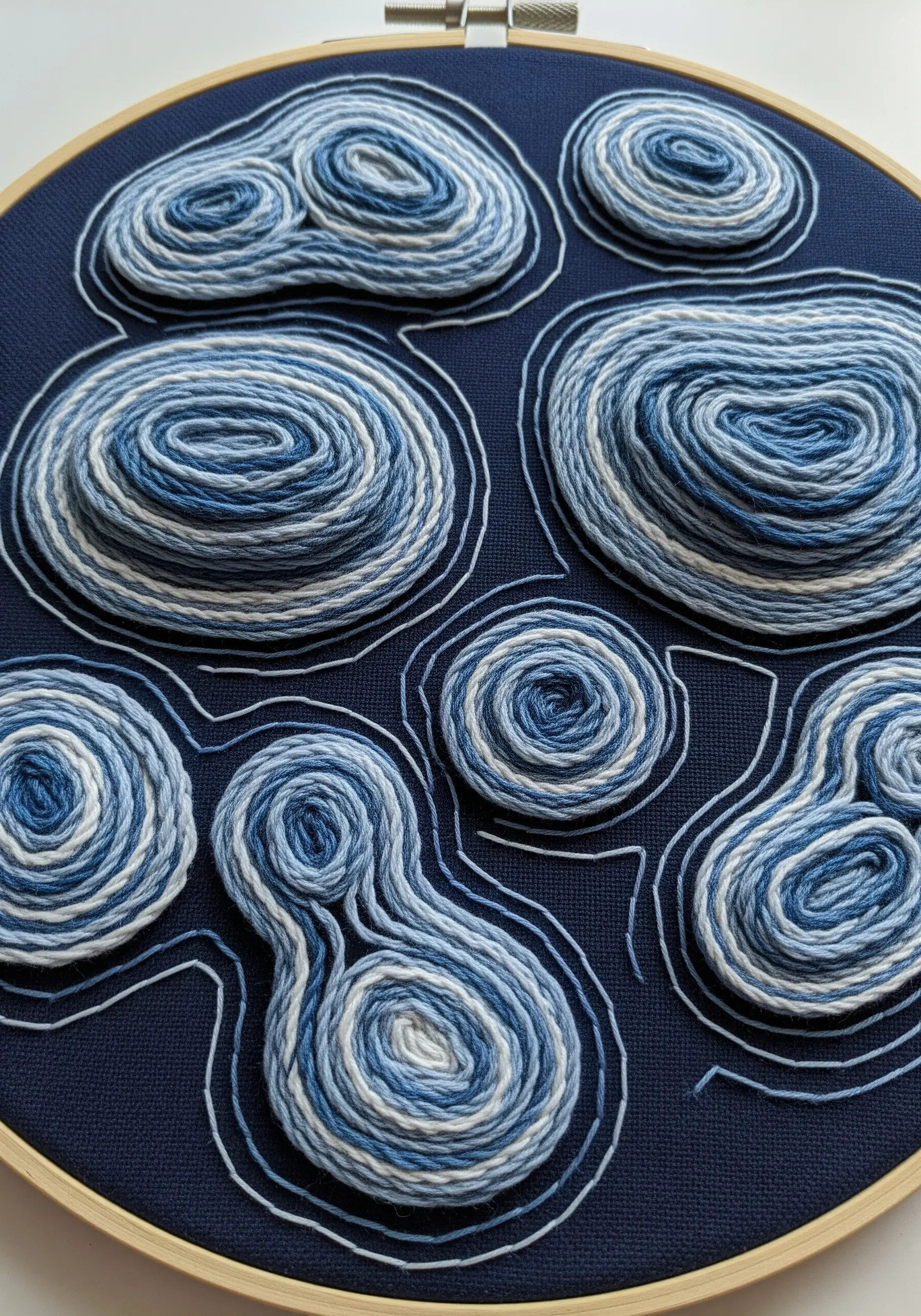
Use couching to create raised, contoured lines that map out an abstract landscape.
Select a thick, textural yarn, perhaps with a variegated color, to be your primary line.
Lay it on your fabric in swirling, organic shapes and use a much thinner, discreet thread to stitch it into place.
The contrast between the thick, raised yarn and the flat background fabric turns simple lines into a tactile, topographic map you can read with your fingertips.
30. Encapsulate Texture in Stitched Tubing
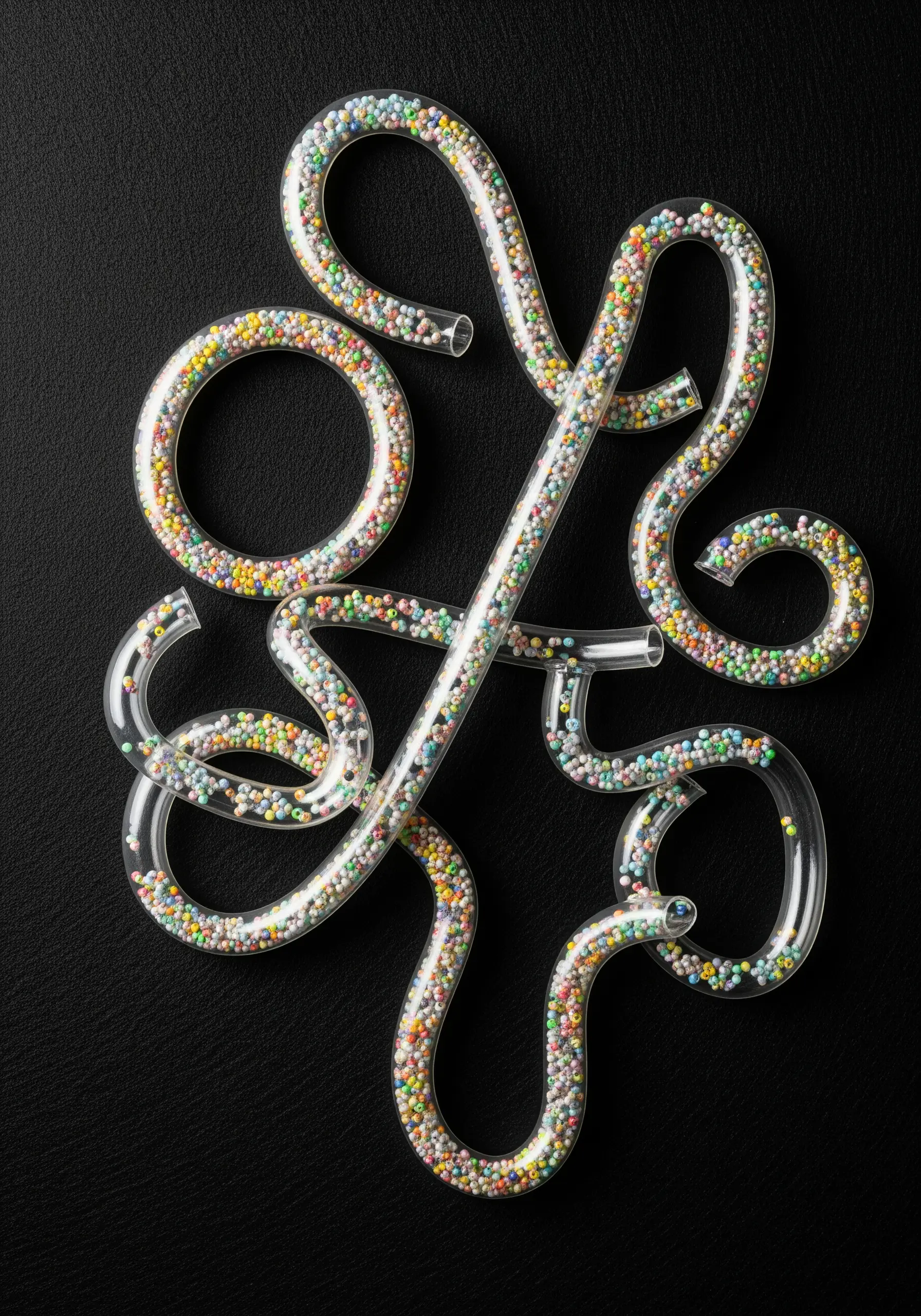
Introduce unexpected materials by filling flexible, transparent tubing with tiny beads, seeds, or even colored sand.
Once filled, you can bend and shape the tubes into organic, looping forms.
Secure them to your background fabric by couching over the tube with a strong thread, essentially stitching the sculptural element in place.
This mixed-media technique transforms your thread into a structural component that holds and frames other textures.
31. Weave Mirrored Webs to Catch the Light
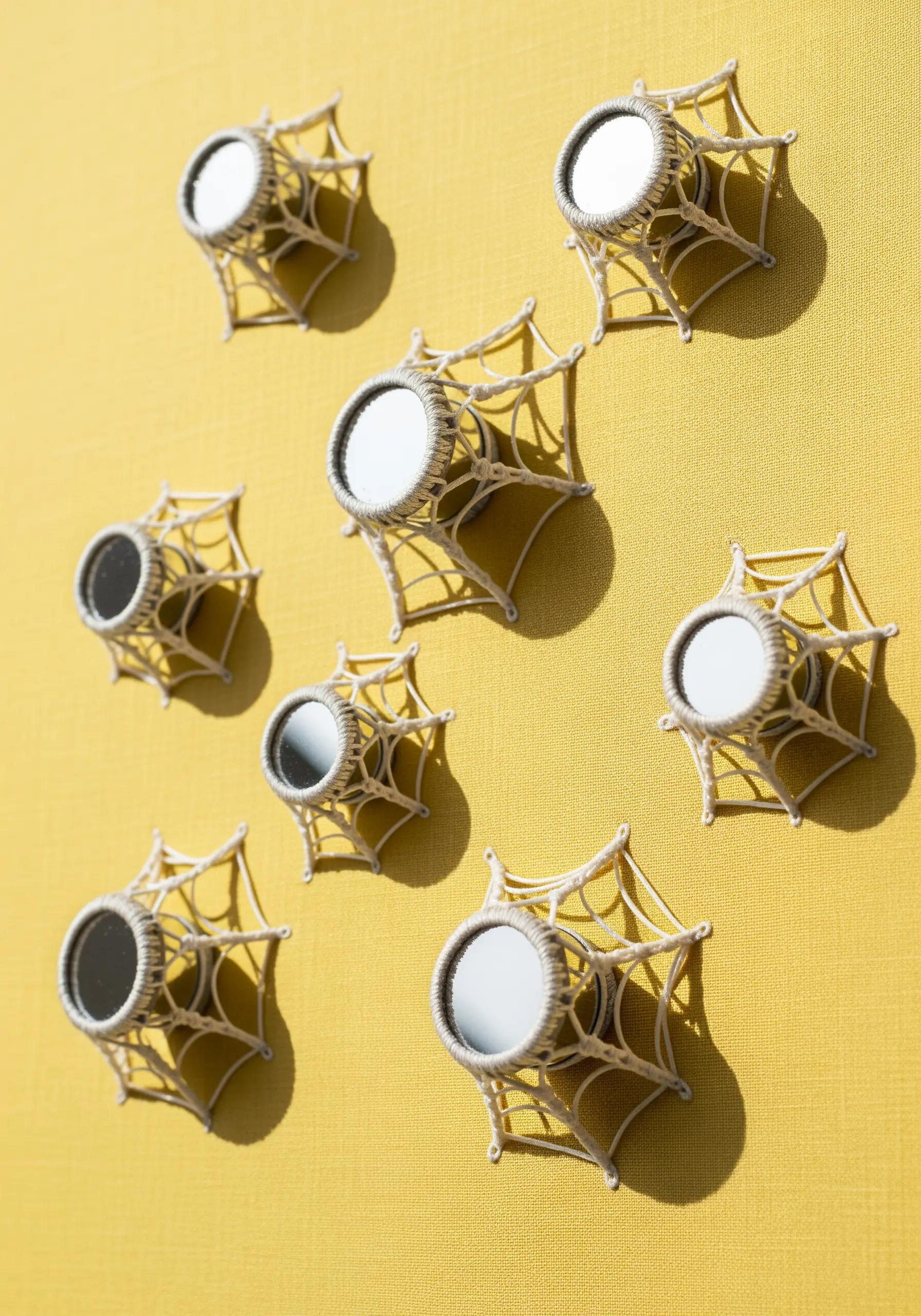
Incorporate small mirrors into your work to add a dynamic element of light and reflection.
Use string art or macrame techniques to create a web-like structure of thread that acts as a bezel, holding the mirror in place.
Arrange these mirrored webs in a cluster on a brightly colored canvas.
The thread provides the texture and structure, while the mirrors fracture the light and reflect the surrounding environment, making the piece feel alive and interactive.
32. Inflate Your Designs with Modern Trapunto
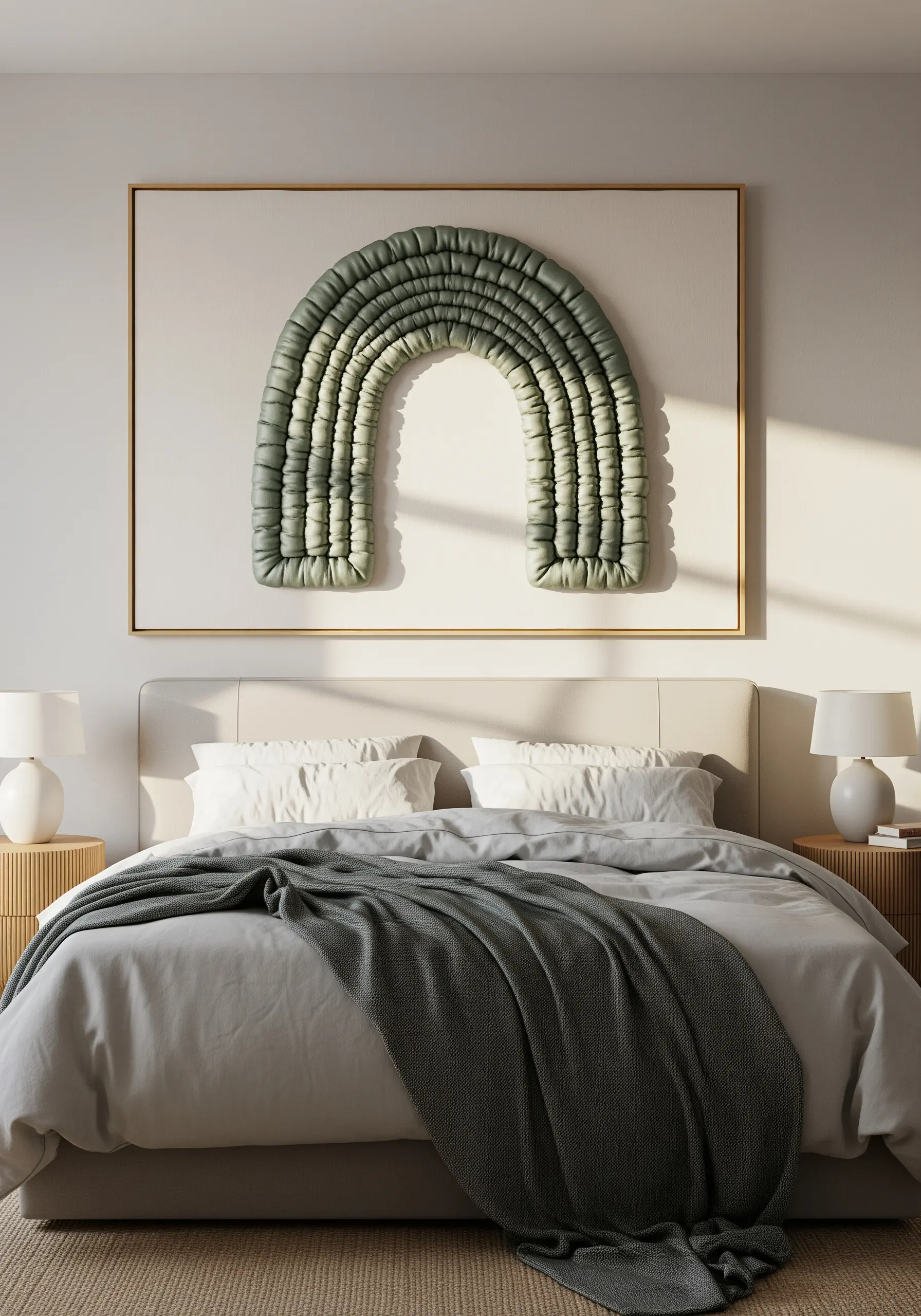
Use trapunto, a form of padded quilting, to create soft, bas-relief sculptures.
Stitch the outline of your design through two layers of fabric, leaving small openings.
Carefully stuff these stitched channels with polyester filling or cotton batting until they are plump and rounded, then stitch the openings closed.
This technique gives your forms a gentle, pillowy volume that creates subtle shadows and a wonderfully soft, tactile appeal, perfect for chic embroidery headboard hacks.
33. Create Liquid Metal Drips with Bullion Knots
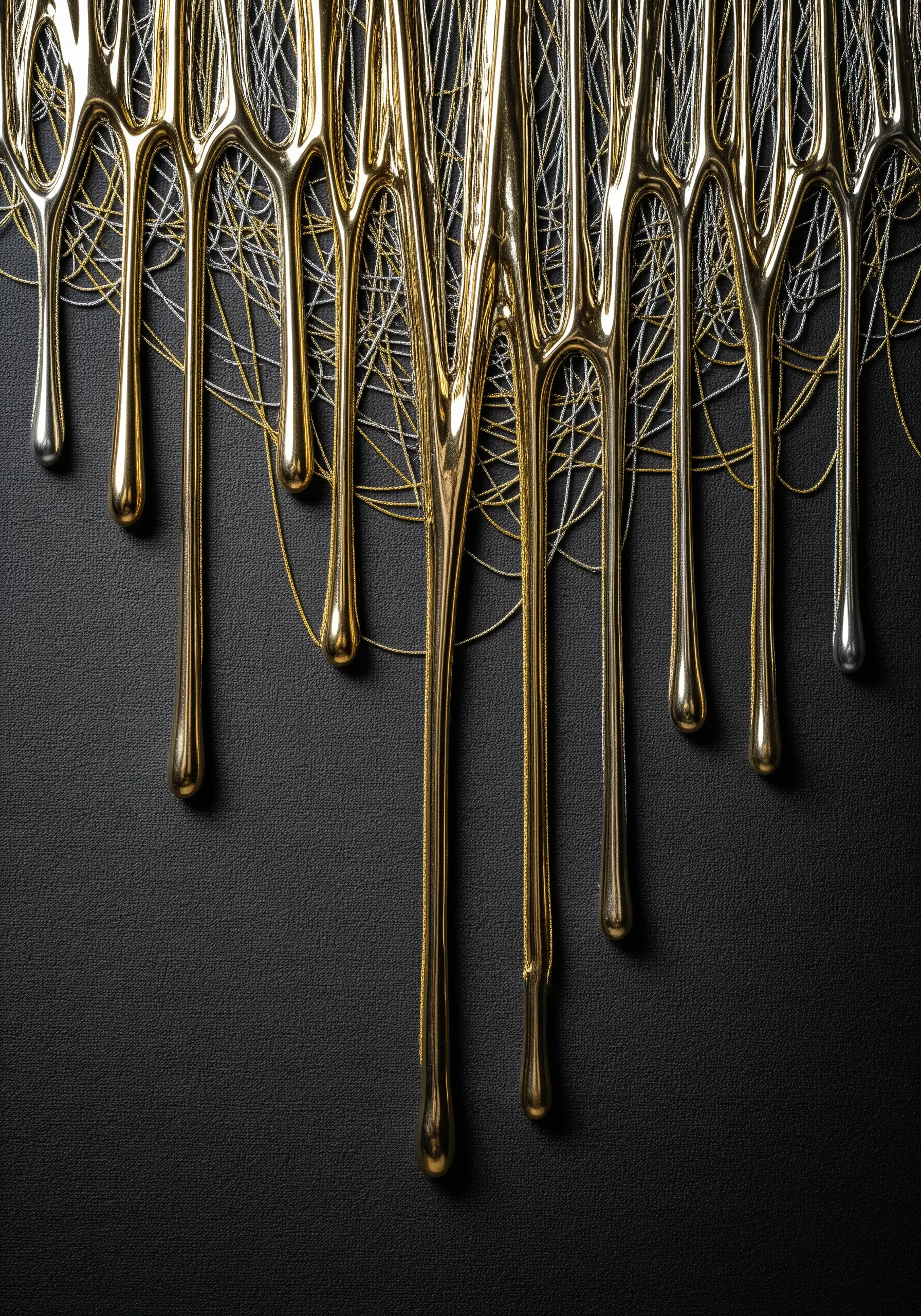
Simulate the effect of molten metal by combining contemporary metallic thread with carefully placed bullion knots.
Create a chaotic web of straight stitches with fine metallic thread as a base.
Then, stitch long, vertical bullion knots of varying lengths over the top using a thicker, high-sheen metallic floss.
The rounded, dimensional quality of the knots looks like heavy drips, creating a dynamic illusion of texture and gravity.
34. Carve a Labyrinth with Punch Needle Texture
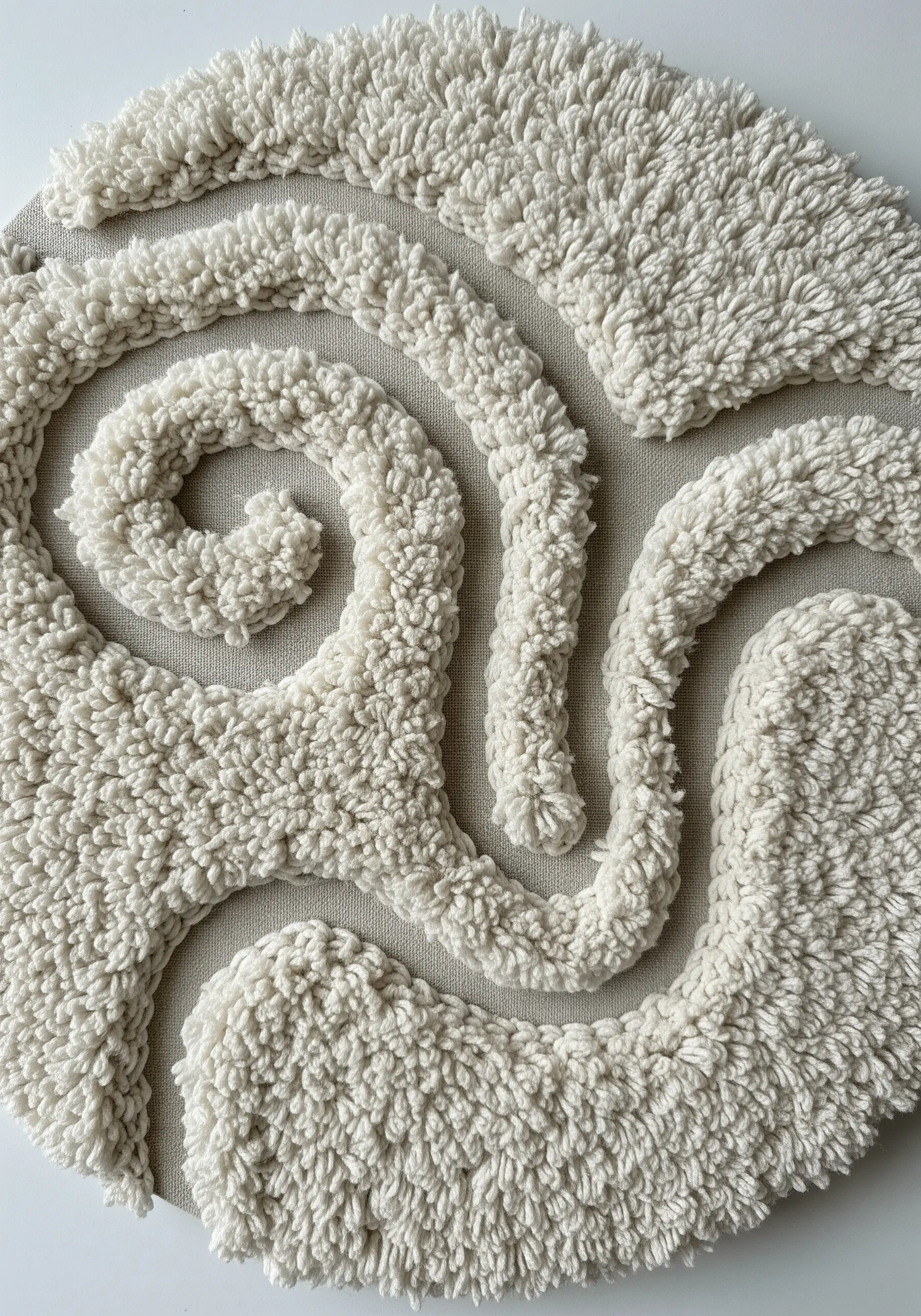
Use a punch needle and a single color of yarn to create a purely textural sculpture.
Instead of filling a shape, create a continuous, meandering line, like a labyrinth or a fingerprint.
The dense, raised loops of the punch needle technique form a highly tactile path.
By focusing solely on the line and texture, you create a minimalist piece that encourages contemplation and the sensory experience of touch.
35. Build a Sculptural Field with Wrapped Fabric
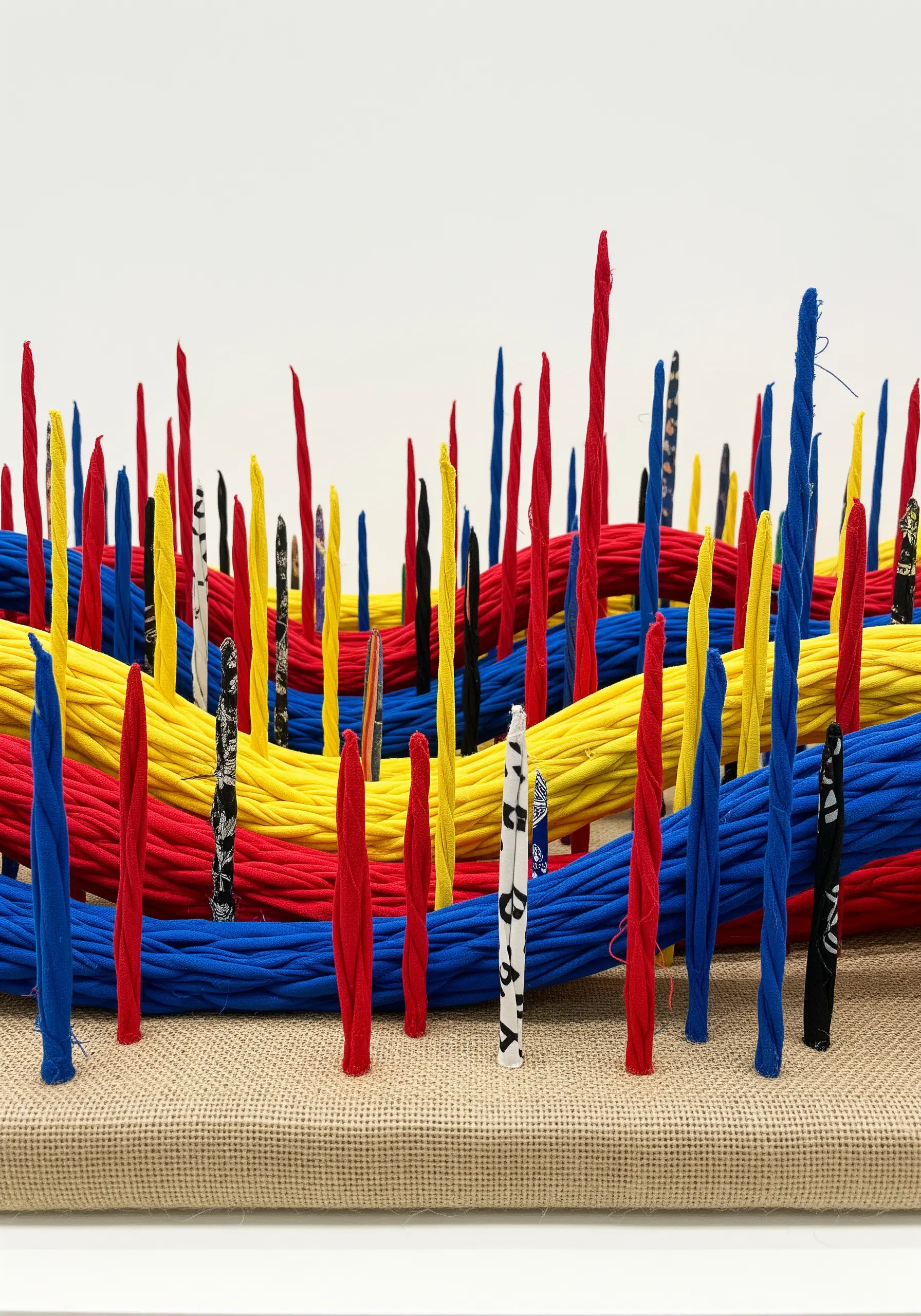
Create a vibrant, textural collage by wrapping scraps of fabric around dowels or stiff cords.
Arrange these fabric-wrapped elements vertically, piercing them through a taught canvas like burlap or hessian.
Vary the heights and colors to create a composition that resembles a dense field of grass or a colorful cityscape.
This is a fantastic way to use up fabric scraps and turn them into a dynamic, 3D tapestry.
36. Capture an Explosion of Light with Radiating Rods
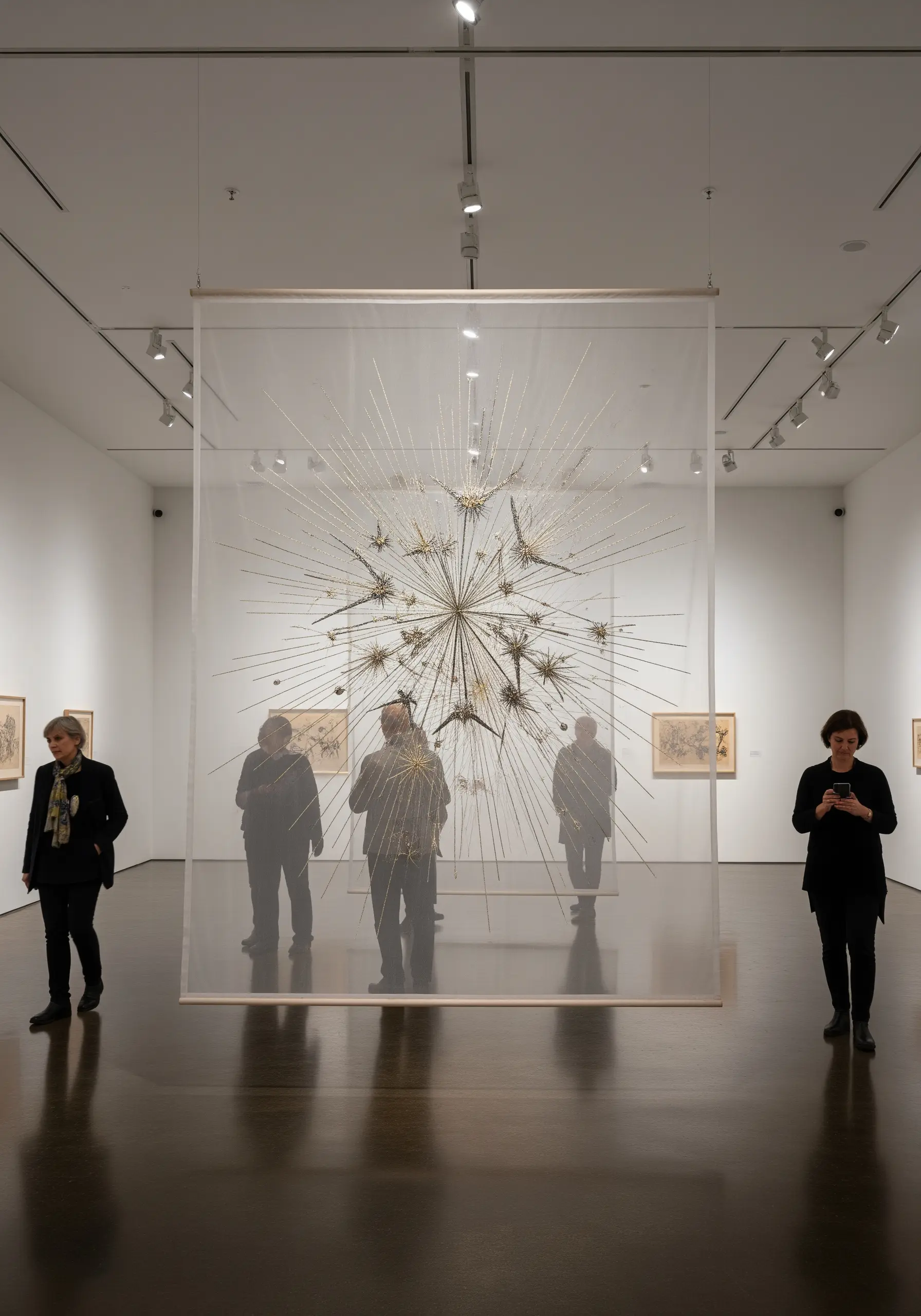
For a truly show-stopping piece, create a suspended sculpture that mimics a starburst or explosion.
Use thin metal rods or stiffened wires as the primary structure, arranging them so they radiate from a central point.
Stretch fine, metallic threads between the rods to create delicate, shimmering planes of light.
When displayed in a case or against a dark background, the structure appears to capture a moment of dynamic energy, turning thread into pure light and form.