There is a quiet intimacy to reading that is mirrored perfectly in the act of embroidery. Both require patience, a slowing down of time, and an appreciation for the fine details that others might miss. If you are looking to personalize your reading accessories, embroidery offers a way to turn a simple fabric sleeve into a tactile extension of your favorite stories.
The challenge, however, often lies in choosing a design that feels sophisticated rather than crafty. You want something that complements the texture of the fabric without overwhelming it—clean lines, intentional negative space, and a thread palette that speaks to your personal aesthetic. The continuous line technique is particularly effective here, offering a modern fluidity that looks polished and professional.
In this collection, we explore designs that range from minimalist line art to textured mixed media. I will walk you through the subtle technical adjustments—thread weight, stitch choice, and fabric handling—that will elevate these motifs from simple patterns to durable, heirloom-quality pieces for your library.
1. Minimalist open book on quilted linen
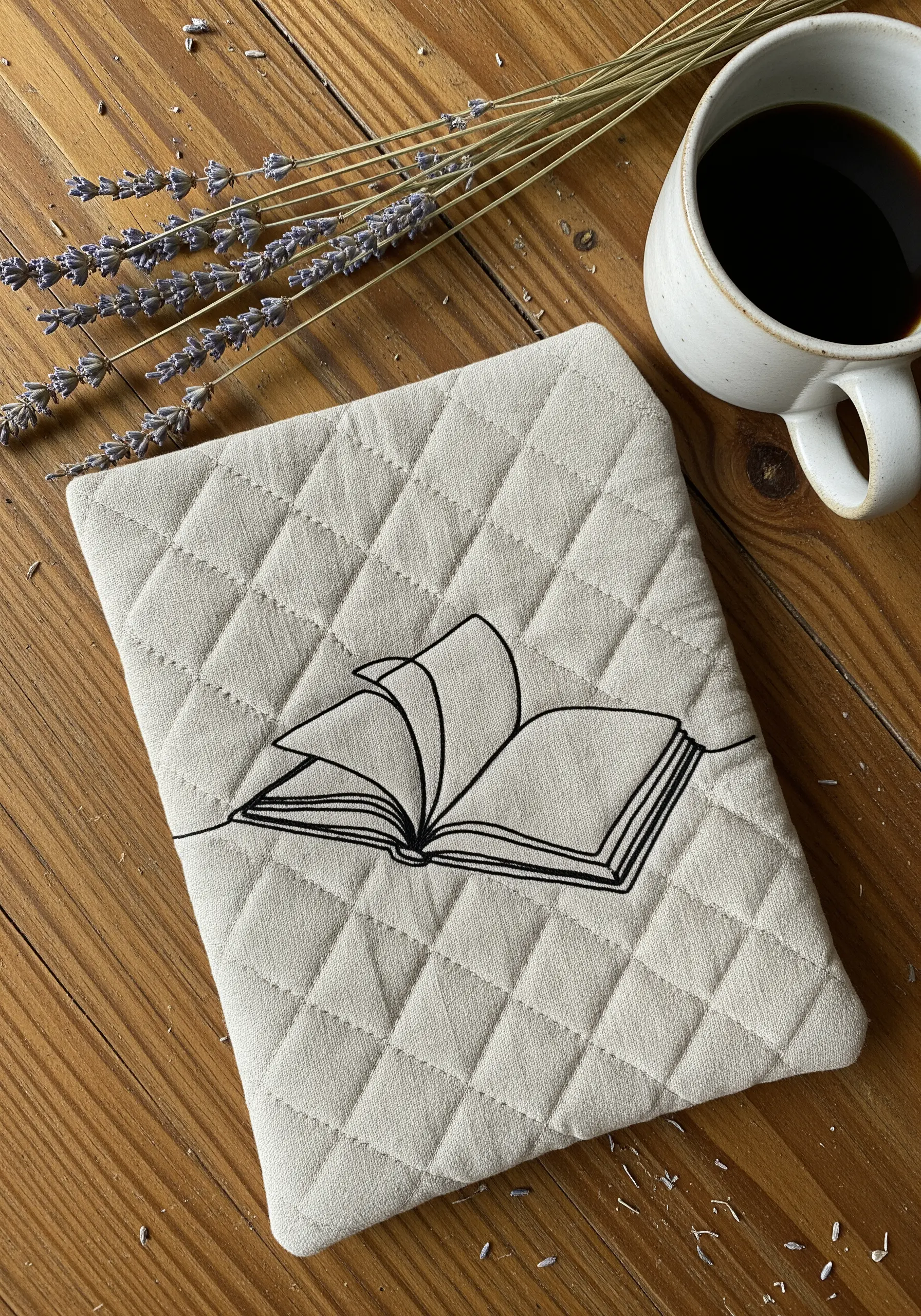
When working with pre-quilted fabric, your biggest challenge is navigating the existing texture without interrupting the flow of your line.
Use a whipped backstitch here; it sits slightly higher on the surface than a standard backstitch, ensuring your design doesn’t get lost in the valleys of the quilting.
Stick to a single strand of black cotton floss to maintain that crisp, ink-drawing aesthetic that contrasts so well with soft texture embroidery projects for cozy headboards and bed runners.
Keep the tension consistent, especially when crossing the quilted seams, to prevent puckering.
2. Coffee cup stack with contrast outlines
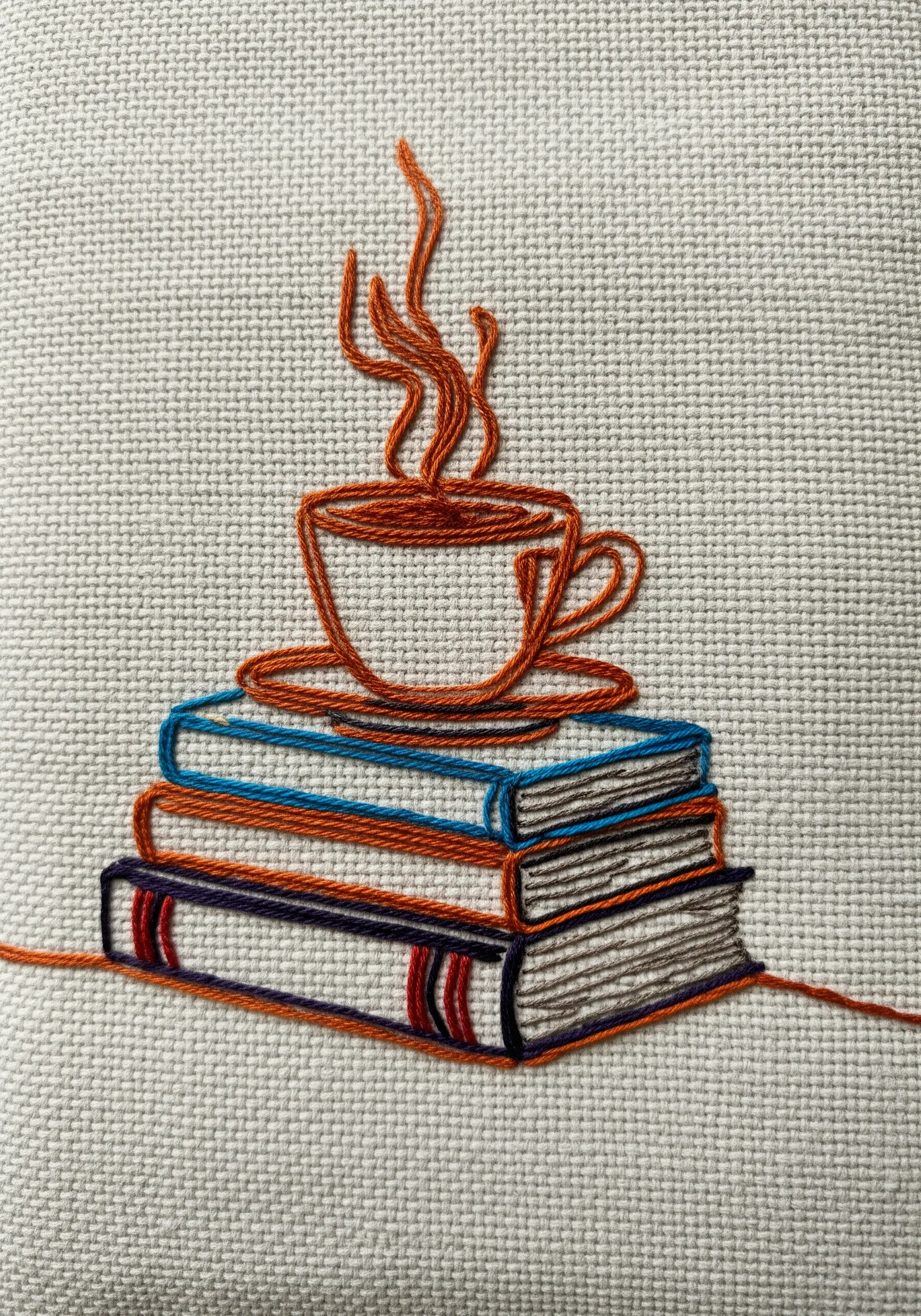
This design relies heavily on the interplay between two distinct thread colors to separate the motifs without shading.
Notice how the orange steam uses a chain stitch for fluidity, while the books utilize a split stitch for structural integrity.
If you are looking for chic and simple stitched patterns for your coffee table decor, replicate this color-blocking technique.
Choose a high-contrast palette against your fabric to ensure the steam lines feel dynamic rather than messy.
3. Elegant goldwork spectacles chain

Metallic thread is notoriously difficult to manage, but the payoff on a velvety green surface is undeniable.
To achieve this look without the thread snapping, use short stitch lengths and a larger needle eye to reduce friction.
This aesthetic mirrors luxury metallic thread wall decor ideas that look straight out of high-end hotels.
For the chain detail, consider a couching stitch where you lay the metallic thread down and tack it with a matching silk thread for a seamless finish.
4. Negative space portrait on dark denim

Embroidering on dark, dense fabrics like denim requires a sharp needle and a bright, opaque thread to make the line art pop.
This design cleverly uses the book cover to mask the face, reducing the complexity of facial features while maintaining emotion.
It is one of those line art portrait embroidery ideas for beginners who love modern minimal aesthetics.
Ensure your white thread is high quality; cheaper threads will look translucent against the navy background.
5. Structured bookshelf with feline details

Geometric lines require precision; even a slight wobble can ruin the illusion of a bookshelf.
Use a ruler to mark your fabric with a heat-erasable pen before stitching, ensuring perfectly parallel vertical lines.
This framing technique pairs beautifully with cat kitten embroidery designs that capture emotion perfect for pet lovers.
A single strand backstitch creates that technical drawing look, which keeps the busy composition from feeling cluttered.
6. Cursive typography on soft felt

When stitching text on felt, the fuzzy texture can sometimes swallow fine lines.
Opt for a stem stitch here; the twisted nature of the stitch creates a rope-like effect that sits proudly on top of the felt.
These are hand stitched word quote wall art ideas for motivating creative spaces that translate perfectly to book accessories.
Pay close attention to the connecting tails of your letters to ensure the word looks handwritten rather than typed.
7. Bright idea filament bulb design

The impact of this design comes from the singular splash of yellow satin stitch against the stark black outlines.
Do not overfill the bulb; the negative space is what makes the ‘glass’ feel transparent.
It’s one of those minimalist embroidery designs that feel effortlessly stylish because of its restraint.
Use a split stitch for the black outline to provide a solid barrier that the yellow satin stitches can butt up against for a crisp edge.
8. Transforming landscape book pages

Blending geometric book pages into organic mountain shapes requires a shift in stitch direction.
Transition from the straight lines of the pages to angled stitches for the peaks to suggest texture change.
If you enjoy nature embroidery ideas to capture real plants you collect on walks, this motif allows you to merge that love with literature.
Using a grey fabric base softens the contrast, making the green trees feel integrated rather than stuck on.
9. Vertical floral spine integration
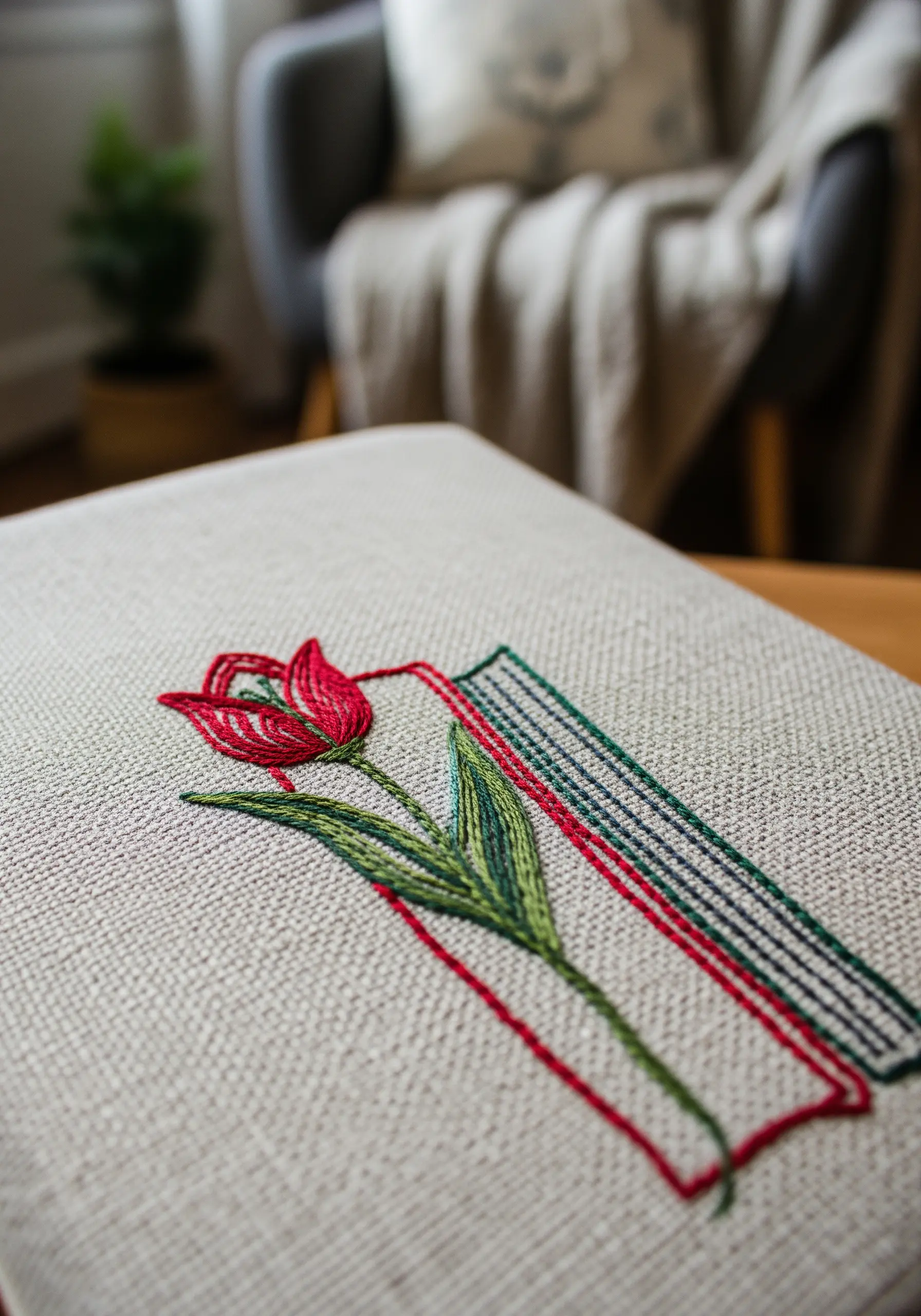
This design utilizes verticality, making it perfect for the narrow spine or edge of a book sleeve.
The red tulip relies on a densely packed satin stitch, while the leaves use a long-and-short stitch for a painterly gradient.
For inspiration, look at one line floral embroidery motifs that make neutral home decor look effortlessly elegant.
Ensure the green stem line is slightly thicker at the base to support the visual weight of the flower head.
10. Anatomical heart with text overlay

Stitching on corduroy is challenging because of the ‘wales’ or ridges in the fabric.
You must increase your needle size to penetrate the thick backing without bending.
This intricate style is similar to modern thread designs that turn simple outlines into emotional love story portraits.
Avoid small, detailed lettering inside the heart; instead, suggest text with horizontal straight stitches to keep the focus on the anatomy.
11. Celestial reading moon on navy

To achieve the glowing effect around the moon, you can use a very subtle dry-brushing of white fabric paint before stitching, or use a lower density of white thread.
The white line work must be continuous and confident to stand out against the deep blue.
Explore moon and stars embroidery ideas for peaceful bedtime vibes for more celestial motifs.
Keep your French knots for the stars loose; tight knots will disappear into the weave of dark canvas.
12. Canvas tote bicycle motifs

Canvas is unforgiving with punctures, so you cannot easily undo mistakes without leaving holes.
Plan your bike wheels carefully; use a template to ensure the circles are true before committing to the backstitch.
This matches the aesthetic of tote bag embroidery designs for coffee lovers who want cafe core style.
Thicker cotton thread (size 5 or 8 pearl cotton) works better here than stranded floss, offering durability for an item that sees daily use.
13. Quill and scroll on watercolor fabric

Using a printed watercolor fabric as a base does half the work for you, adding depth without extra stitching.
Your black outlines should be varied in thickness—thicker on the quill’s shadow side—to mimic calligraphy ink.
This is a great example of creative ways to stitch your way through mixed media art.
Stitch the text last to ensure it sits legibly on top of the paper outline.
14. Minimalist seated reader figure
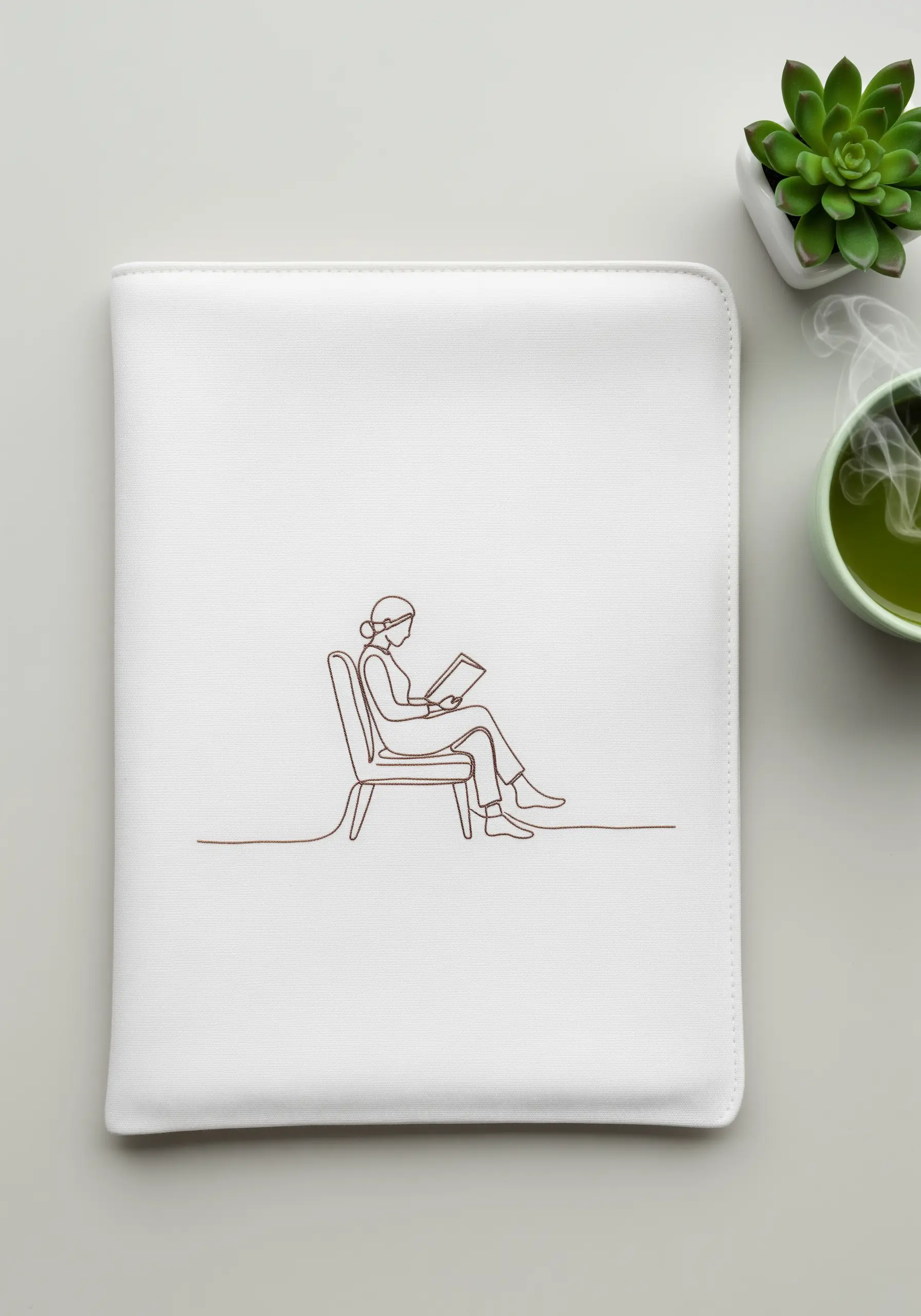
The elegance of this piece lies in the fluid, unbroken line that defines the figure’s posture.
Use a whipped running stitch for the curves of the body to avoid the angular look of a standard backstitch.
This fits perfectly with modern thread art for minimalist bedrooms quiet clean aesthetic stitching ideas.
Do not stitch facial features; the anonymity allows the viewer to project themselves into the peaceful reading moment.
15. Abstract hands on grey felt

Felt doesn’t fray, which allows you to stitch right up to the edge or create bold, graphic shapes without worrying about structure.
The bright pink thread creates a modern vibration against the grey, similar to modern line art hands flowers combo designs to create museum style wall hoops.
Use a chain stitch for the bold lines to give them a slight 3D relief texture that feels good to the touch.
Ensure your thread tension is loose enough that it doesn’t pucker the soft felt.
16. Gradient thread globe stand
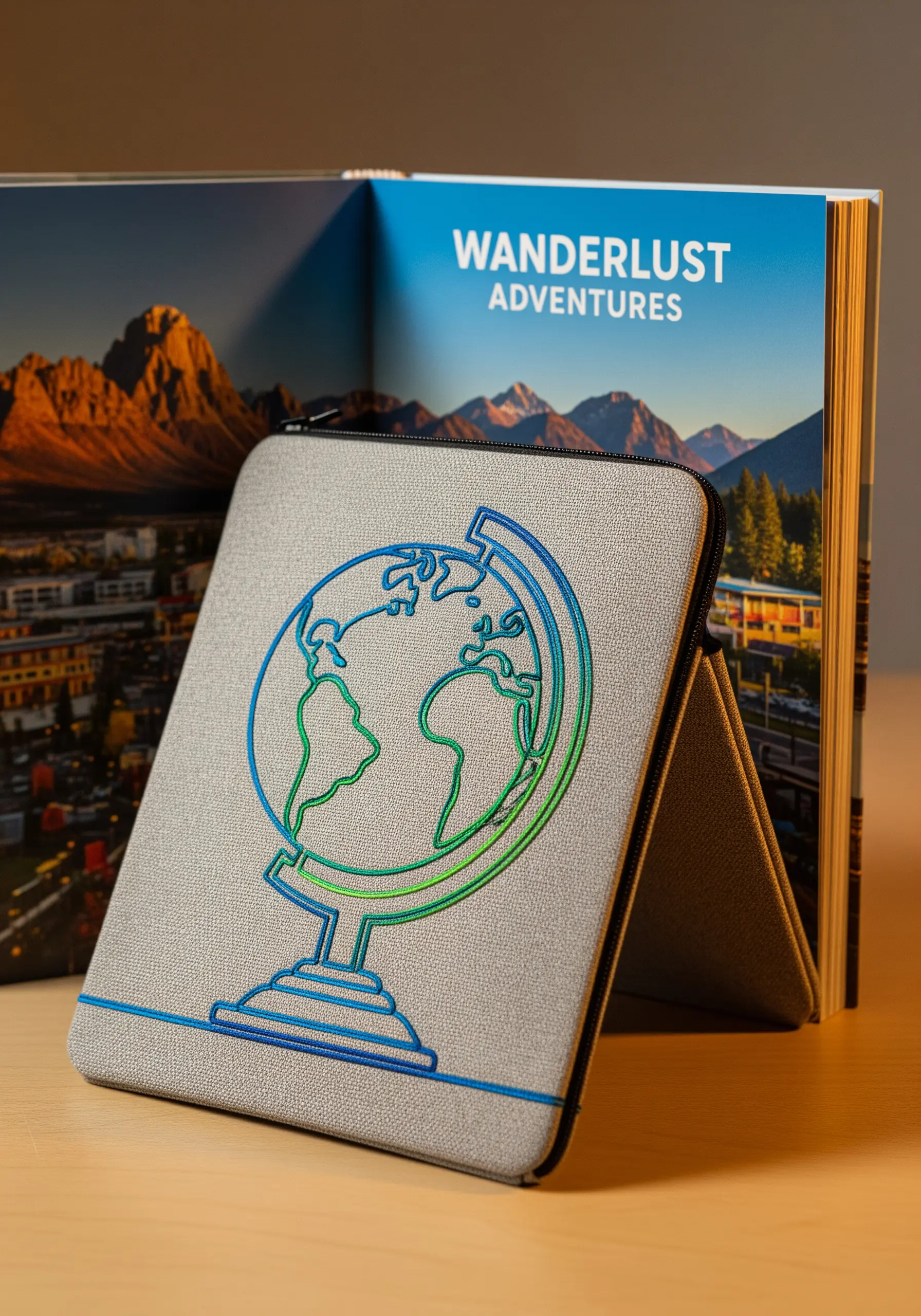
Variegated or gradient thread does the shading work for you, adding dimension to simple line art.
When stitching the globe, ensure your stitches follow the curvature of the sphere to enhance the roundness.
This connects well with artistic embroidery gift ideas inspired by travel and memories.
Be mindful of where the color changes in your thread; try to keep the continents green/blue and the stand a consistent tone if possible.
17. Vintage lantern with lace trim

Incorporating lace trim adds a physical texture that complements the vintage theme of the lantern.
Use a single strand of dark brown or charcoal thread rather than stark black for an aged, antique look.
This style evokes vintage inspired embroidery wall decor that makes any room feel nostalgic.
Focus on the light rays; keep them thin and straight to suggest illumination without dominating the composition.
18. Owl on books on textured burlap
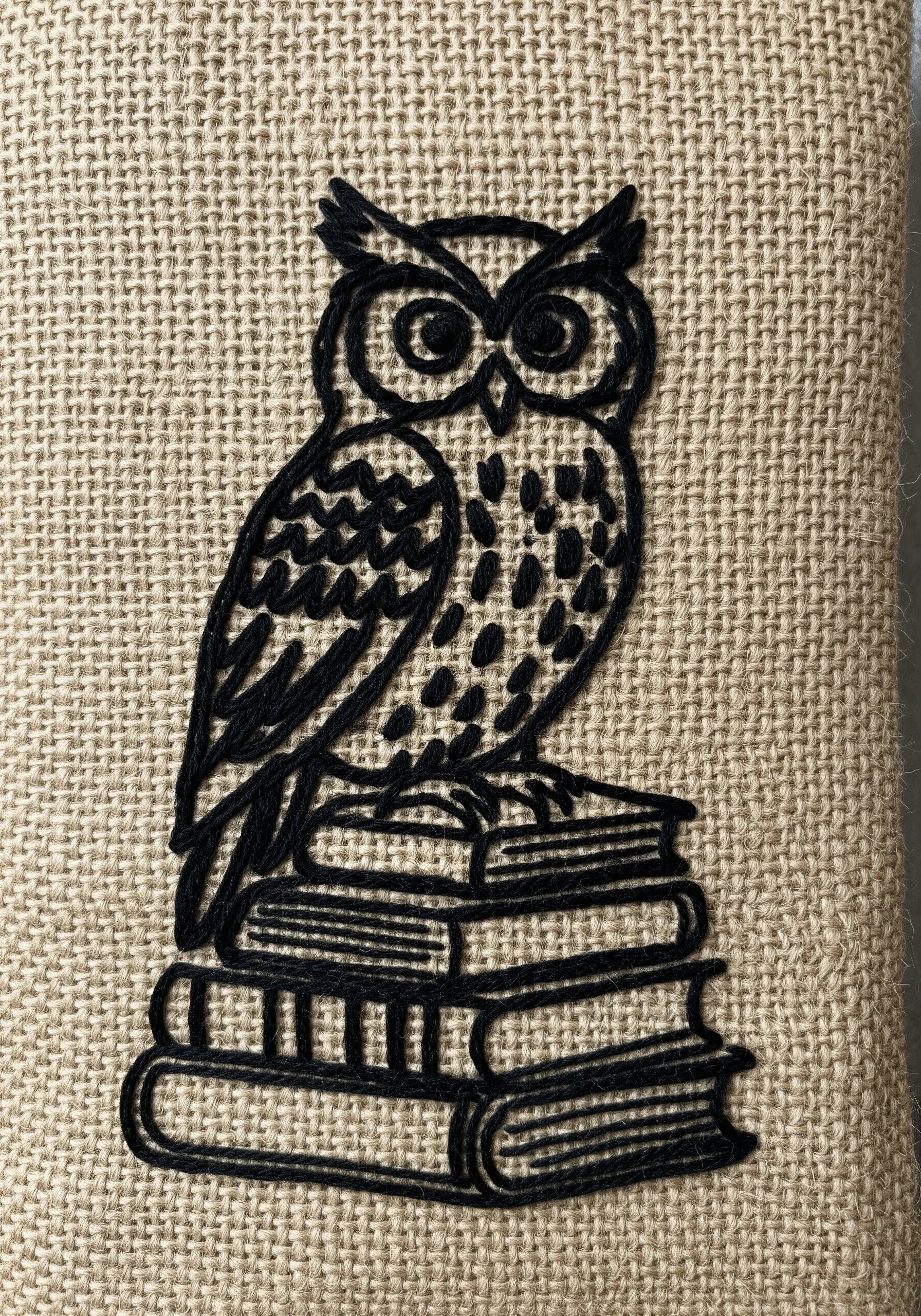
Burlap or loose-weave linen is tricky because threads can slip between the weave.
You must use a thicker thread, like a tapestry wool or full 6-strand floss, to bridge the gaps in the fabric.
It’s a perfect technique for organic texture embroidery designs that look harder than they are.
Avoid tiny details; go for bold outlines and use the fabric’s natural grid to help align your book stack.
19. Architectural book house
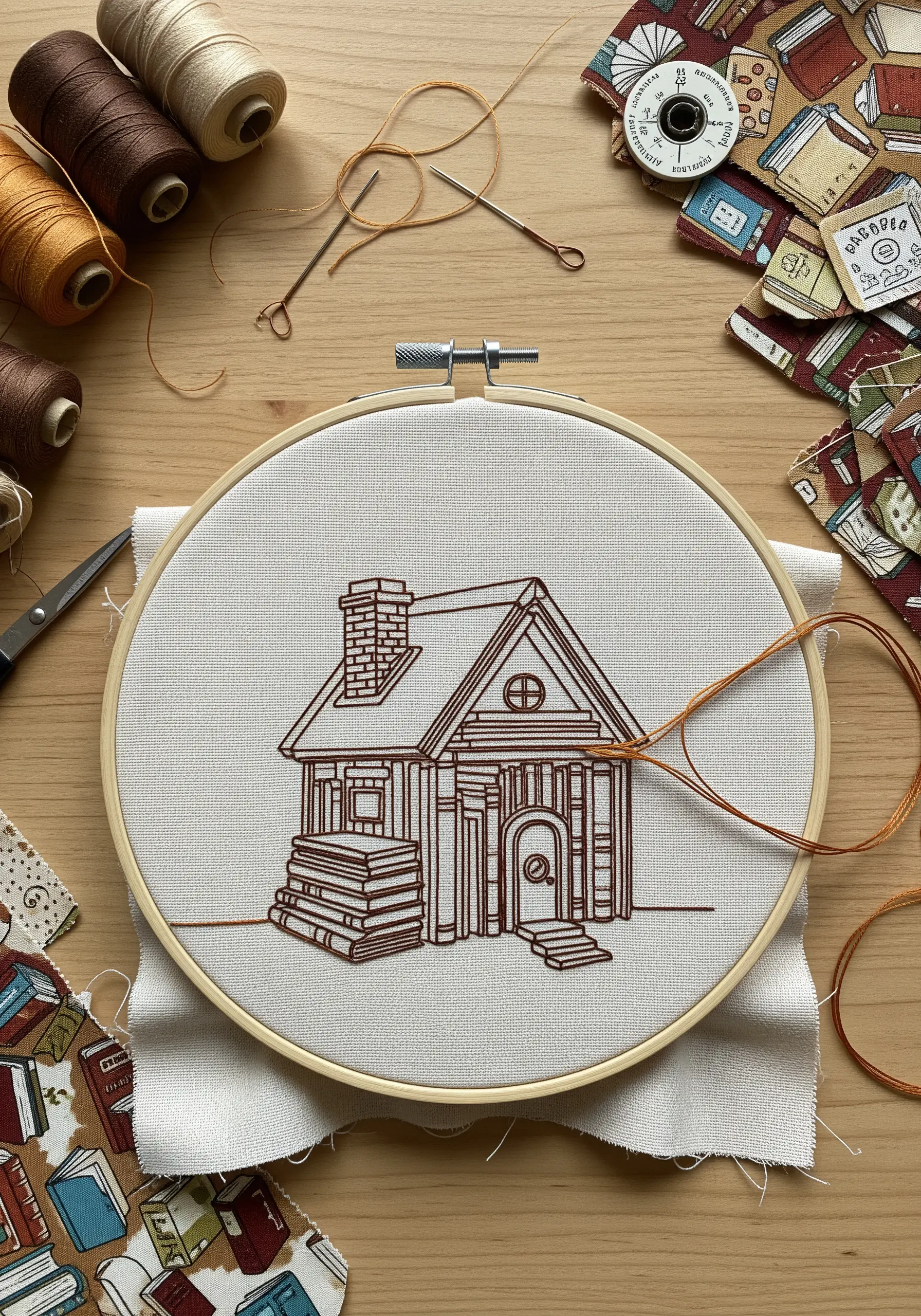
This whimsical concept requires strict adherence to perspective lines to look like a house rather than a pile.
Use a finer thread for the ‘pages’ and brick details, and a slightly heavier weight for the main structural outlines.
This draws from architectural stitch ideas inspired by skyscrapers bridges urban shapes.
Keep your corners sharp; rounded corners will make the structure look unstable and soft.