That pile of fabric scraps you’ve been saving holds more than just color and pattern—it holds potential. Each piece is a remnant of another project, another idea. Instead of seeing it as leftover material, I want you to see it as your personal palette, full of texture, memory, and possibility.
Transforming these fragments into cohesive art isn’t about hiding the seams or pretending they are something they’re not. It’s about celebrating their history. It’s about understanding how to layer a worn piece of denim against a crisp cotton print, or how to use a simple running stitch to turn a chaotic patchwork into a unified landscape.
In the ideas that follow, we’ll move beyond simple stitches. You’ll learn to see your scraps as compositional elements. You will build texture, play with dimension, and use thread not just to decorate, but to define. This is where your needle becomes a paintbrush, and your fabric scraps become your masterpiece.
1. Build a Landscape from Denim Scraps
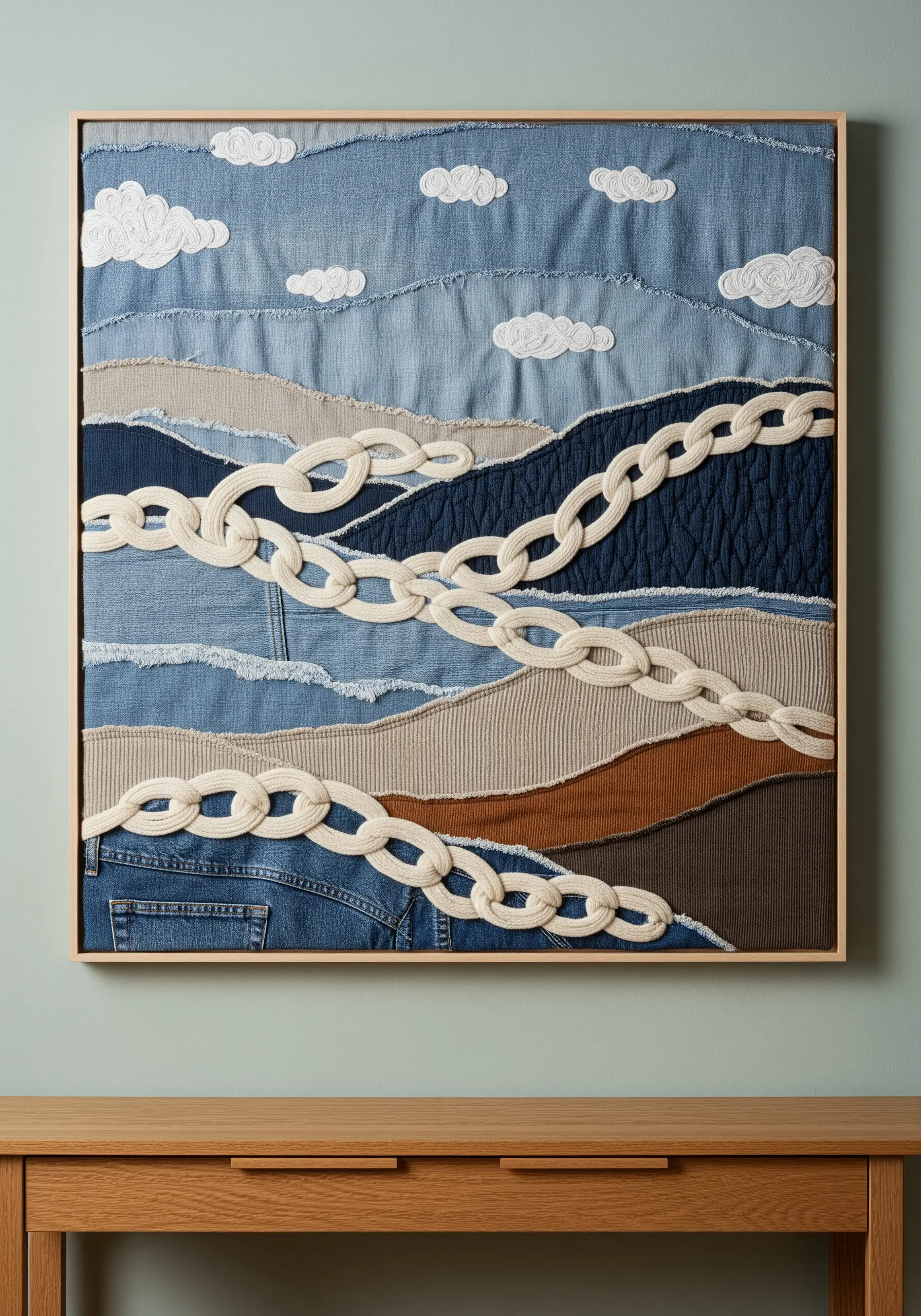
Arrange scraps of denim in varying washes to create the illusion of atmospheric depth in a landscape.
For a soft, natural horizon line, carefully tear the fabric edges instead of cutting them.
To introduce a bold, graphic element, couch a thick, soft rope or cord across your composition, tacking it down with a matching thread color every half-inch.
Finally, add soft, low-contrast clouds using simple satin stitch or felt appliqué to complete the scene without overwhelming the denim textures.
2. Create Graphic Tension with Machine Stitching

Construct a minimalist triptych by stitching blocks of solid-colored fabric onto a neutral base—a technique known as appliqué.
Use a sewing machine to fill specific sections with dense, parallel lines of straight stitching. This adds a layer of graphic texture that contrasts beautifully with the flat, solid fabric blocks.
By varying the direction of your stitched lines—vertical, horizontal, diagonal—you create visual movement and rhythm across the panels.
A severely limited color palette, like red, black, and grey, ensures the final piece feels cohesive, modern, and intentional.
3. Design a Bohemian Mandala with Luxe Scraps
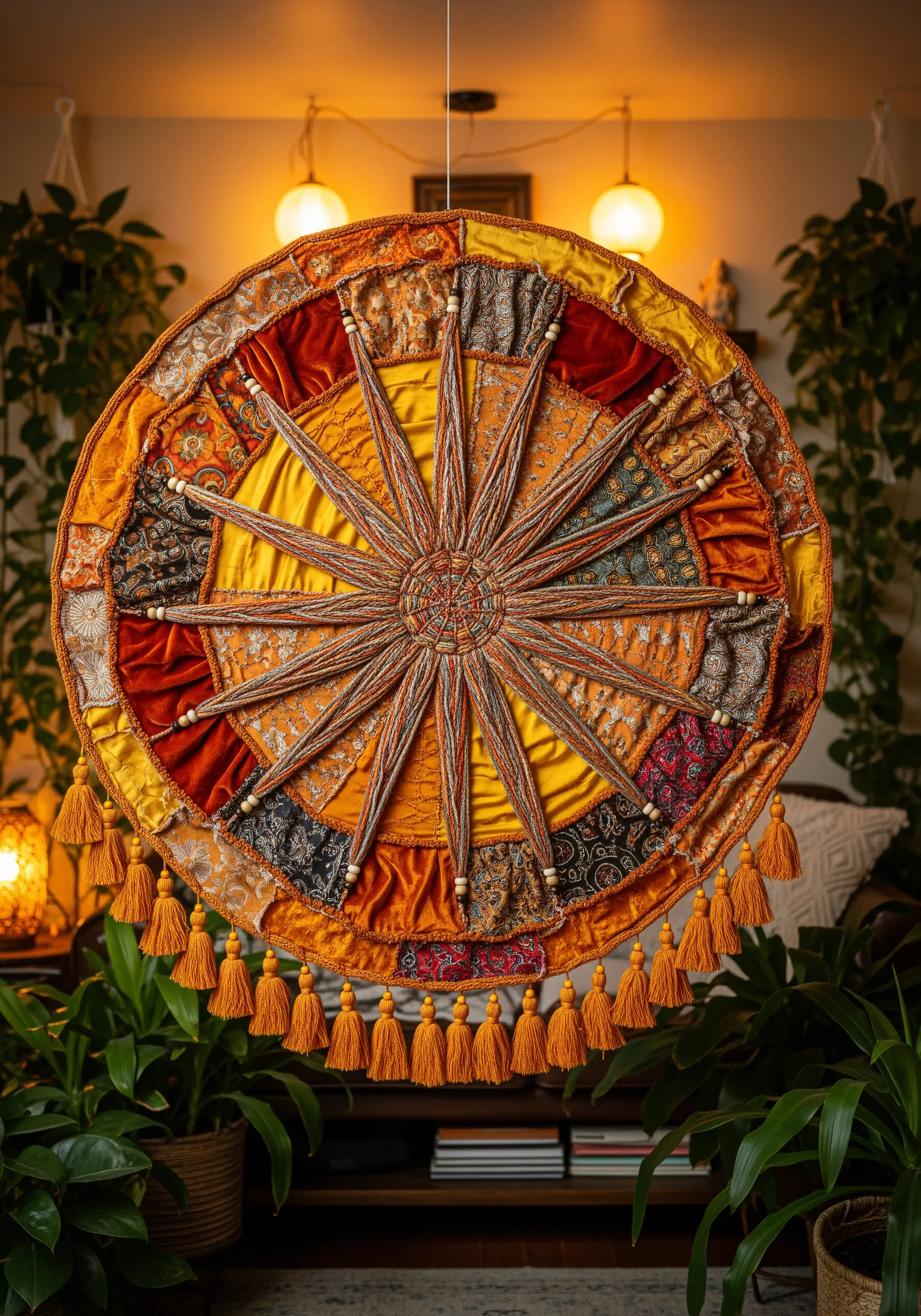
Arrange richly textured fabric scraps like velvet, brocade, and silk in a circular, radial pattern to form the base of your mandala.
Unify the composition by creating spokes with thick, couched yarn, wrapping it around a central point and securing it at the outer edge.
This technique turns a collection of disparate, opulent scraps into a harmonious whole.
Adding tassels not only enhances the boho aesthetic but also gives the piece a satisfying weight and presence.
4. Stitch Clean Line Art on Stretched Canvas
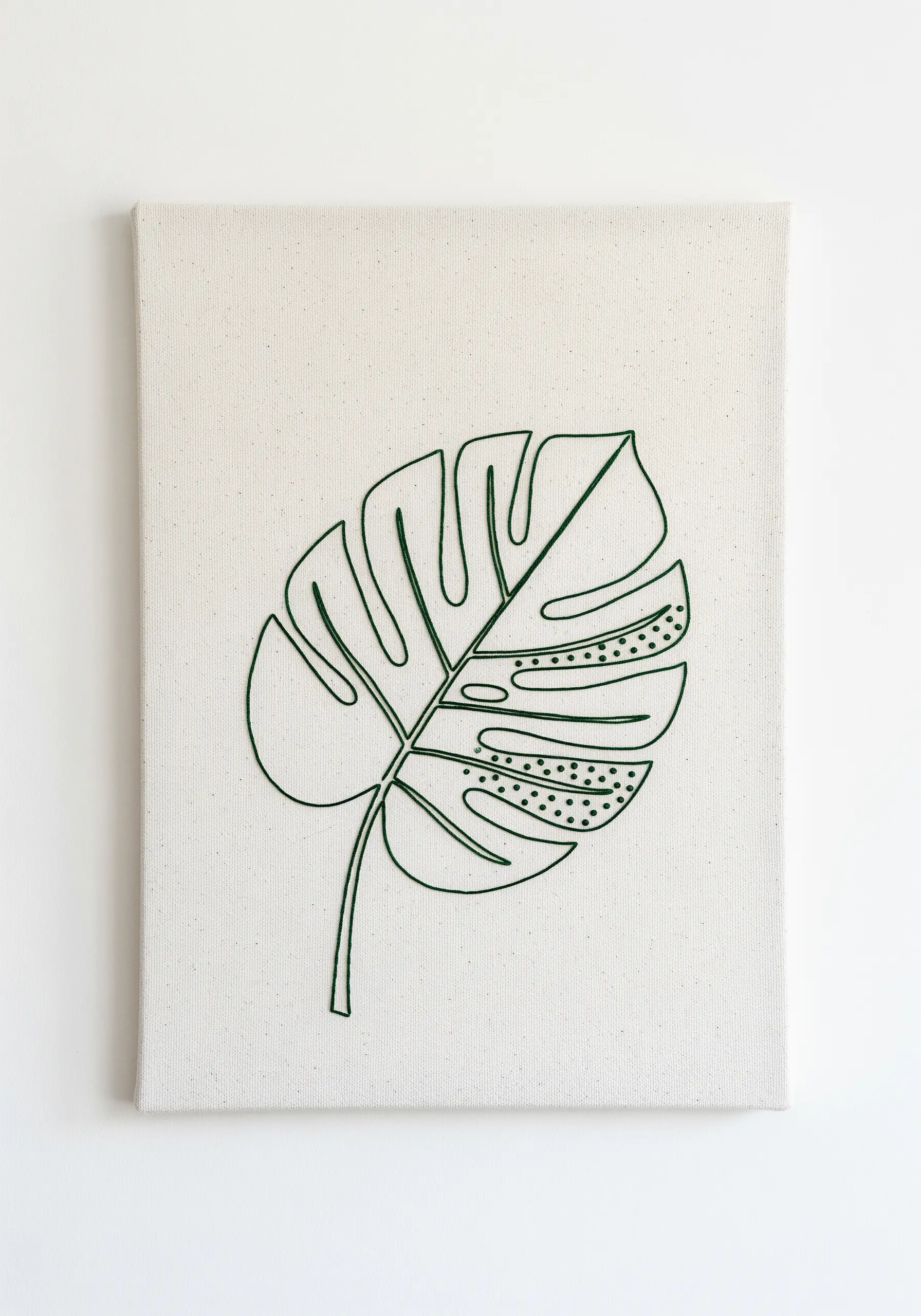
Elevate a simple botanical drawing by stitching it directly onto a stretched artist’s canvas, turning it into minimalist wall art.
Use a single strand of six-strand floss or a fine pearl cotton with a sharp needle to pierce the canvas cleanly.
A meticulous backstitch or stem stitch will give you a smooth, consistent line that looks both hand-drawn and impeccably finished.
Add small areas of seed stitch or French knots to introduce texture, which masterfully breaks the monotony of the outline without sacrificing the clean aesthetic.
5. Craft a Celestial Scene with Appliqué

Create a deep, textured night sky by sewing together strips of dark fabric scraps like corduroy, denim, and cotton twill.
For the moon, choose a fabric with a slight sheen—like satin or sateen—and use a neat whip stitch to appliqué it onto the patchwork background. The luster will make it luminous.
Scatter small, appliqué stars across the sky, then connect them with a simple running stitch in a contrasting thread to map out your own constellations.
This approach combines quilting techniques with embroidery to tell a celestial story.
6. Sculpt Abstract Shapes with Fabric Manipulation
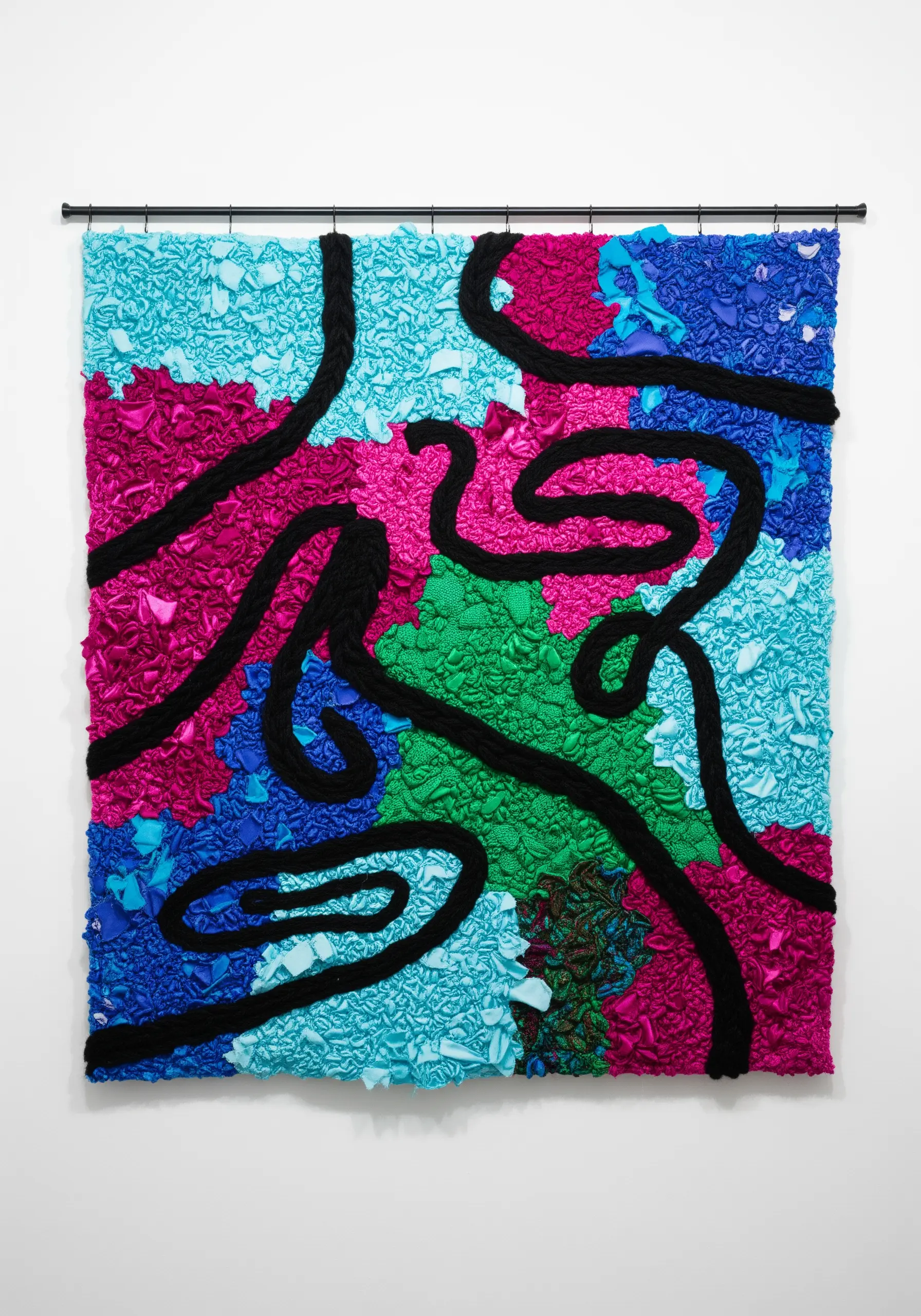
This is an exercise in pure texture. Build a highly dimensional surface by stitching down dense, overlapping clusters of fabric scraps.
To achieve this ruffled, plush effect, pinch or fold small pieces of fabric and secure them to the base with one or two stitches in the center.
Once your textured color fields are complete, couch a thick, contrasting cord or yarn over the top to create a bold line that defines the composition and contains the chaotic energy of the fabric.
7. Create a Woodland Diorama with Layered Felt
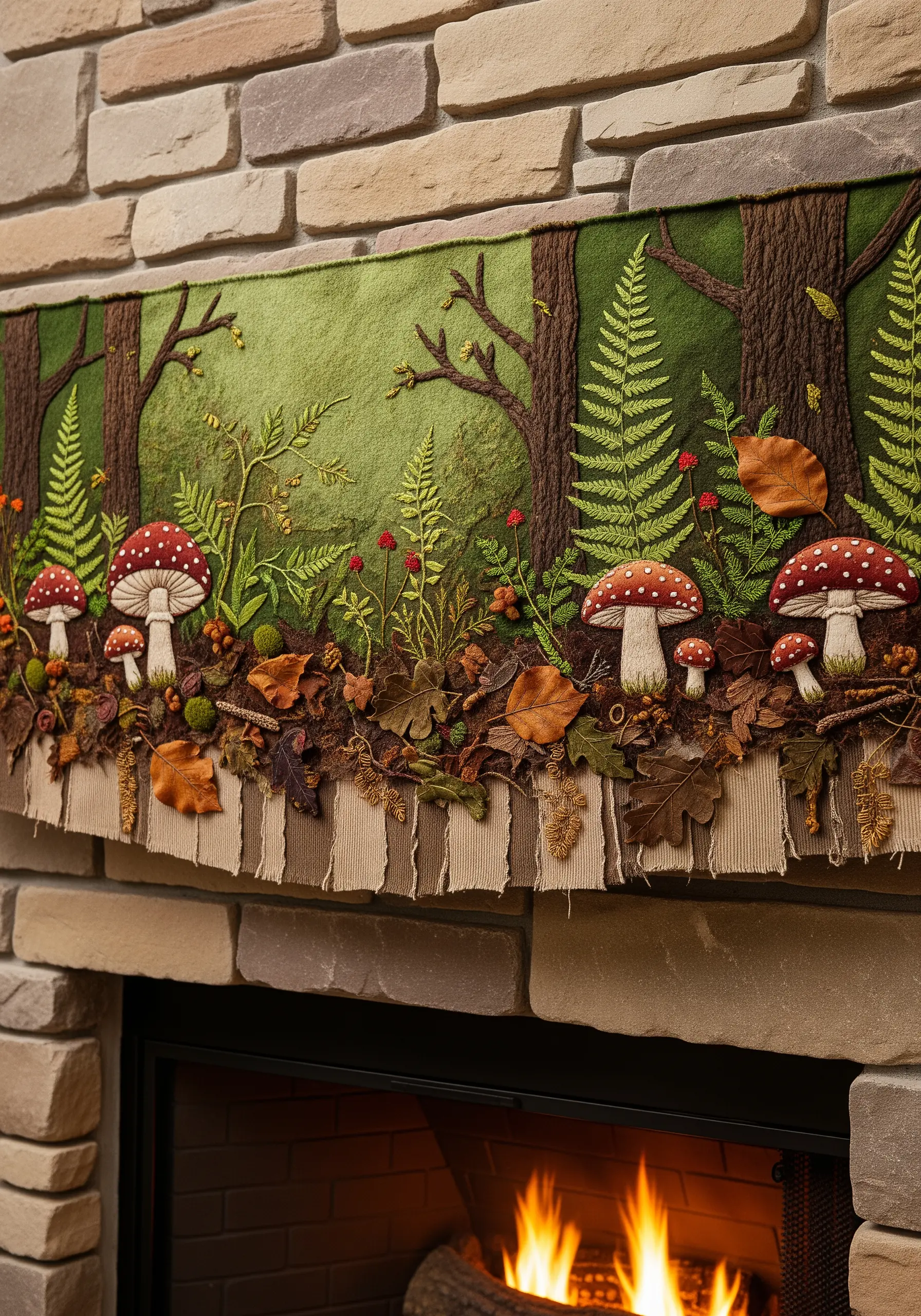
Use felt scraps to build a landscape with a distinct foreground, mid-ground, and background.
Because felt doesn’t fray, you can cut intricate shapes like ferns and tree branches and appliqué them with ease.
Layering these pieces creates a tangible sense of depth that you can’t achieve on a flat surface.
Incorporate dimensional stitches like French knots for moss and turkey work for grassy textures to transform your fabric scene into a miniature world.
8. Illustrate Architecture with Fabric Inlay
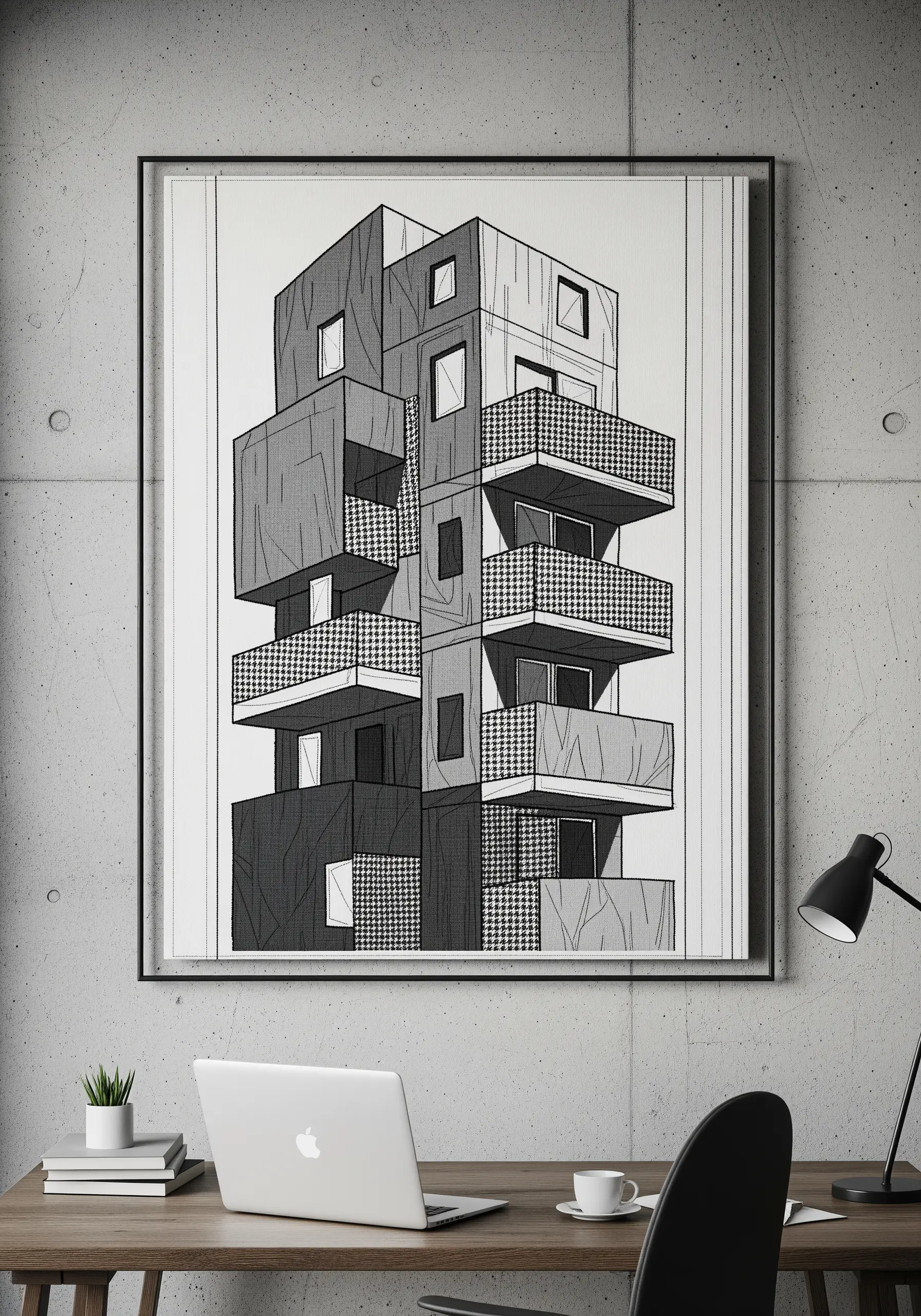
Think of this technique as illustration, where fabric provides the pattern and thread provides the line.
First, complete your line drawing on the base fabric using a simple backstitch.
Then, instead of filling the shapes with stitch, cut pieces of patterned scrap fabric to fit perfectly inside the stitched outlines.
Tack the fabric inlay down with a few hidden stitches. This allows you to add complex textures and patterns with minimal effort, creating a sophisticated graphic effect.
9. Design a Playful Hoop with Reverse Appliqué
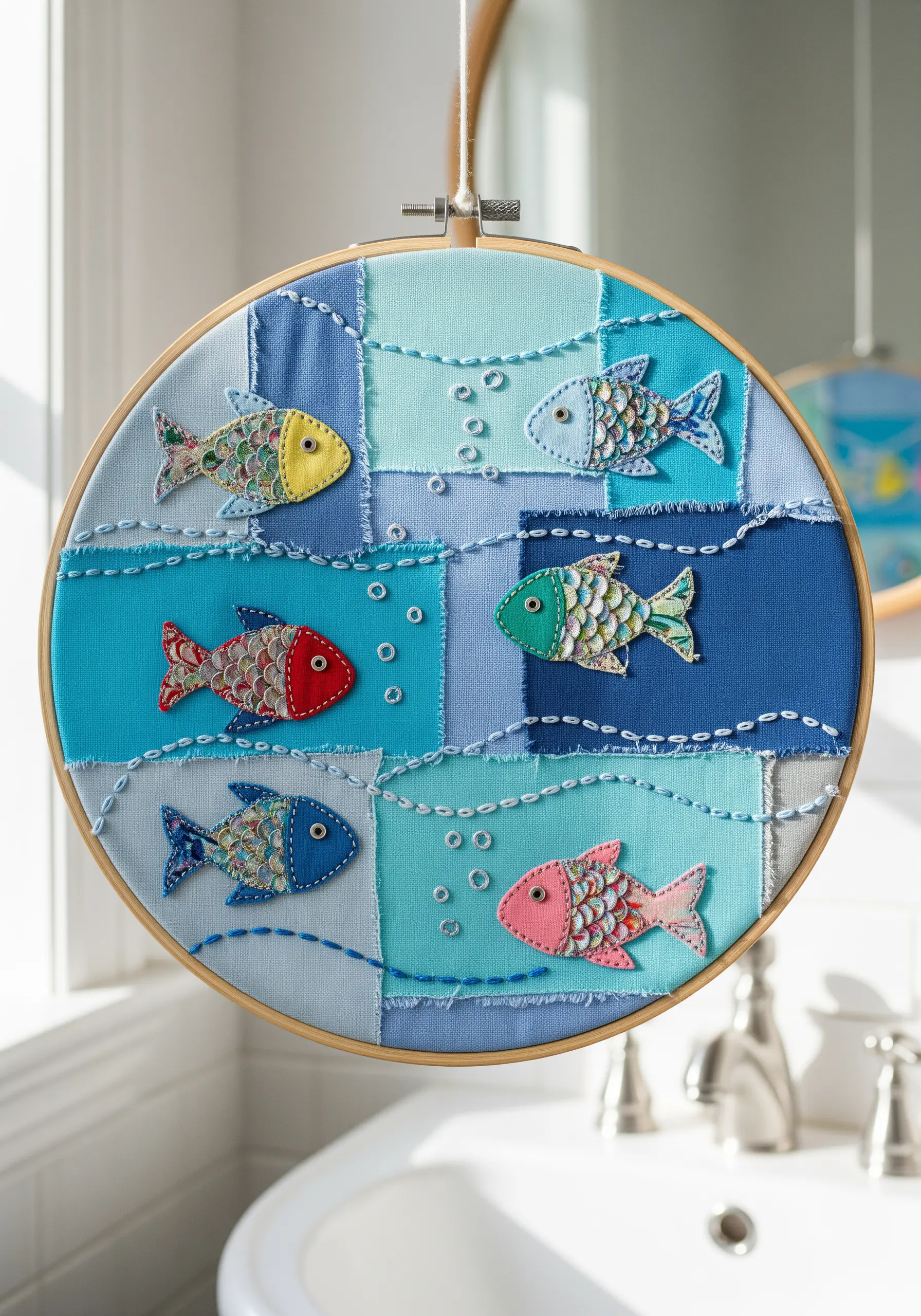
Start by creating a patchwork background from scraps in a similar color family. The visible running stitches used to join the patches add to the piece’s charm.
For the fish, use reverse appliqué. Layer a patterned fabric scrap *underneath* your patchwork base, cut the fish shape *out* of the top layer, and stitch the raw edges down to reveal the vibrant pattern below.
This method produces incredibly clean, sharp shapes that contrast beautifully with the rustic patchwork.
10. Couch Yarn for Sculptural Line Art

For a fast but dramatic piece, use a thick yarn or soft cord to create a continuous line portrait.
This technique, called couching, involves laying the yarn on the surface of the fabric and tacking it into place with a thinner, matching thread.
The result is a bold, raised line that feels more like a sculpture than a drawing.
To enhance the modern, deconstructed feel, use a fabric scrap with raw, unfinished edges as your canvas.
11. Compose an Energetic Fabric Collage
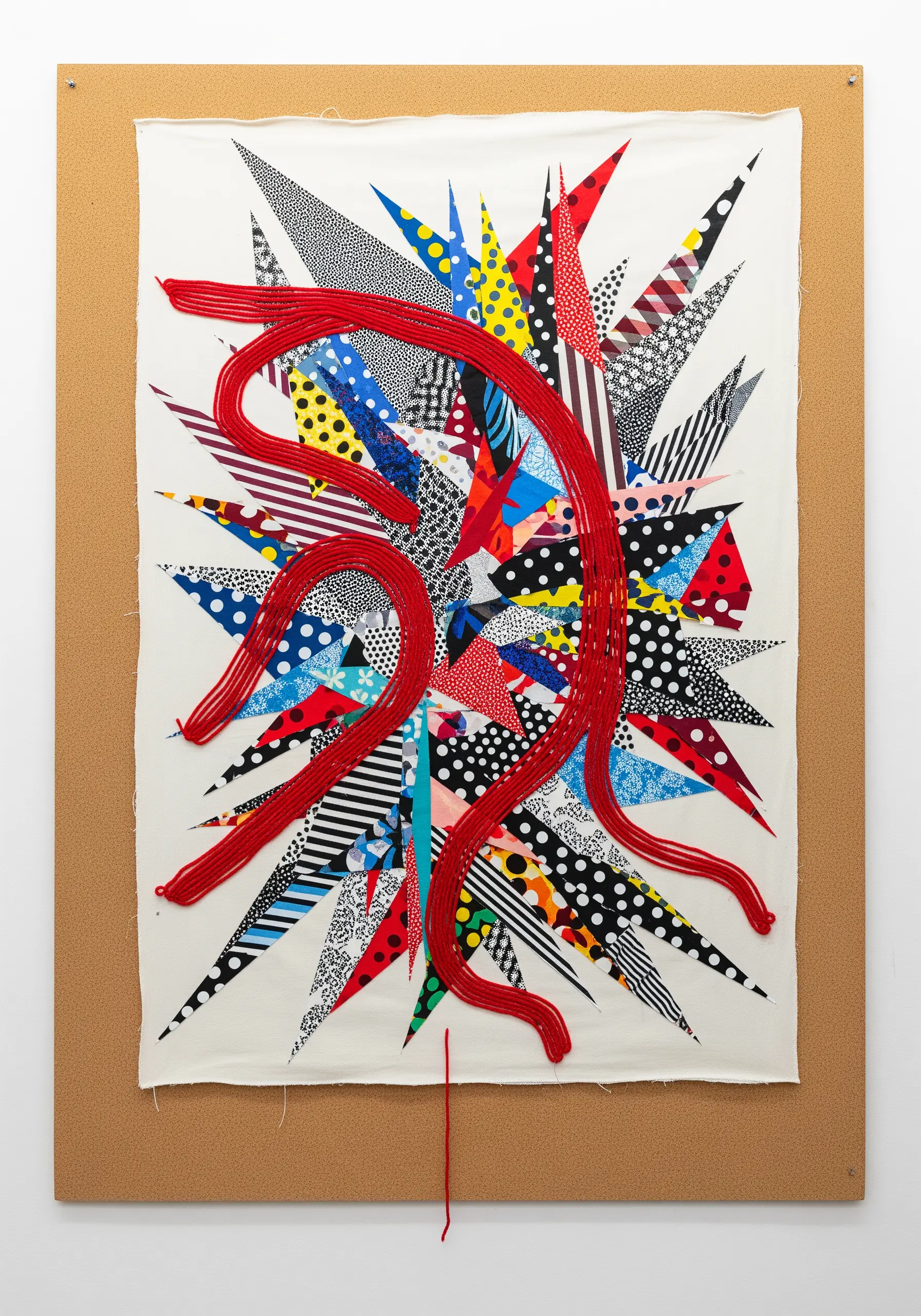
Embrace dynamic composition by arranging sharp, angular scraps of boldly patterned fabric in an explosive, starburst-like shape.
Secure the pieces with simple stitches, allowing some edges to overlap to create depth.
Then, introduce a unifying element by couching a thick, sculptural yarn line that weaves through the composition.
The soft, organic curve of the yarn provides a stunning contrast to the sharp, flat geometry of the fabric collage.
12. Stitch a Topographic Map with Color Gradients
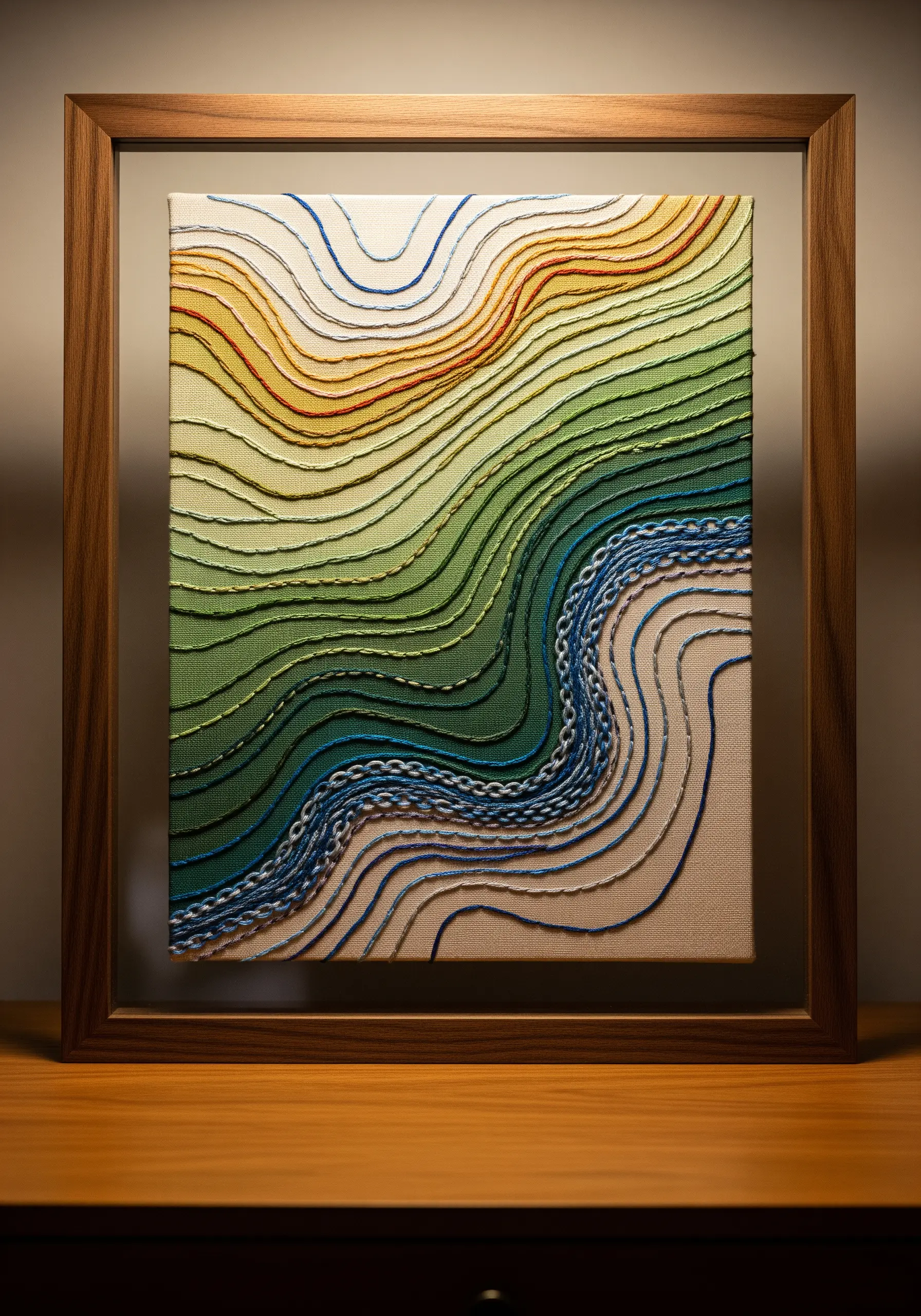
Mimic the contour lines of a topographic map using rows of simple backstitch or stem stitch.
The key to this design is a carefully planned color gradient. Transition your thread color subtly from one line to the next to create the effect of changing elevation.
For areas representing water, switch to a more textured or complex stitch, like a whipped chain stitch or braided stitch, to create a visual and textural contrast that suggests movement.
13. Curate Seasonal Stories in Hoops
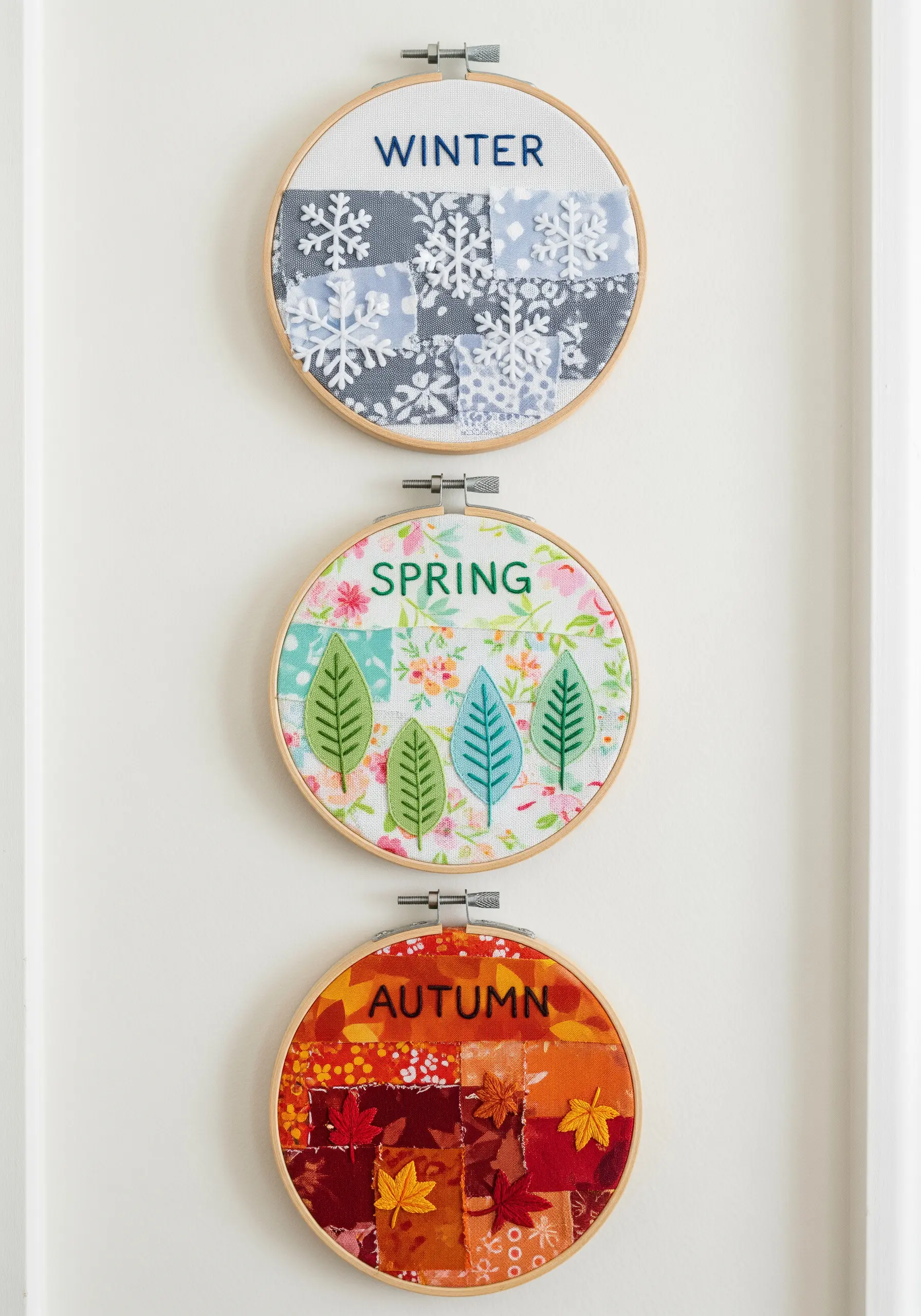
Create a cohesive wall display by dedicating each hoop to a different season.
Build a simple patchwork background using fabric scraps that evoke the colors and mood of each time of year.
Instead of dense embroidery, use simple appliqué shapes cut from contrasting fabrics—like snowflakes or leaves—to represent the seasonal motifs.
Anchor each piece with a cleanly backstitched word. This project is a masterclass in using color and simple shapes to tell a story.
14. Capture a City at Night
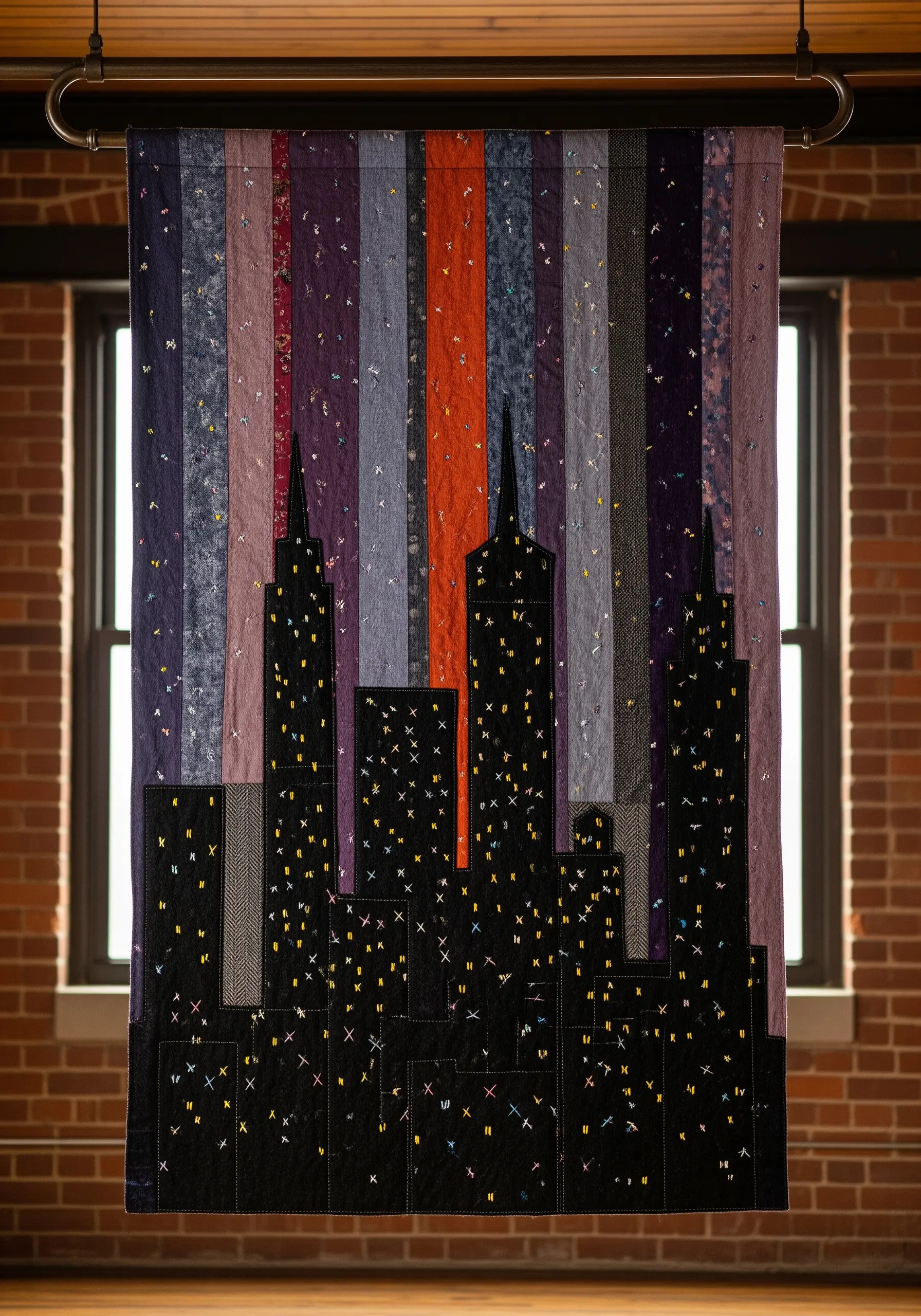
Sew vertical strips of textured, muted fabrics together to create a background that suggests a twilight sky.
Appliqué a stark city skyline using a single piece of black or dark charcoal fabric. The clean silhouette provides a dramatic foreground.
The magic is in the details: use scattered, brightly colored cross stitches or French knots to represent the city lights. Their simplicity and vibrant color make them pop against the dark buildings, creating an impression of a bustling city.
15. Weave a Canvas for Monochrome Florals
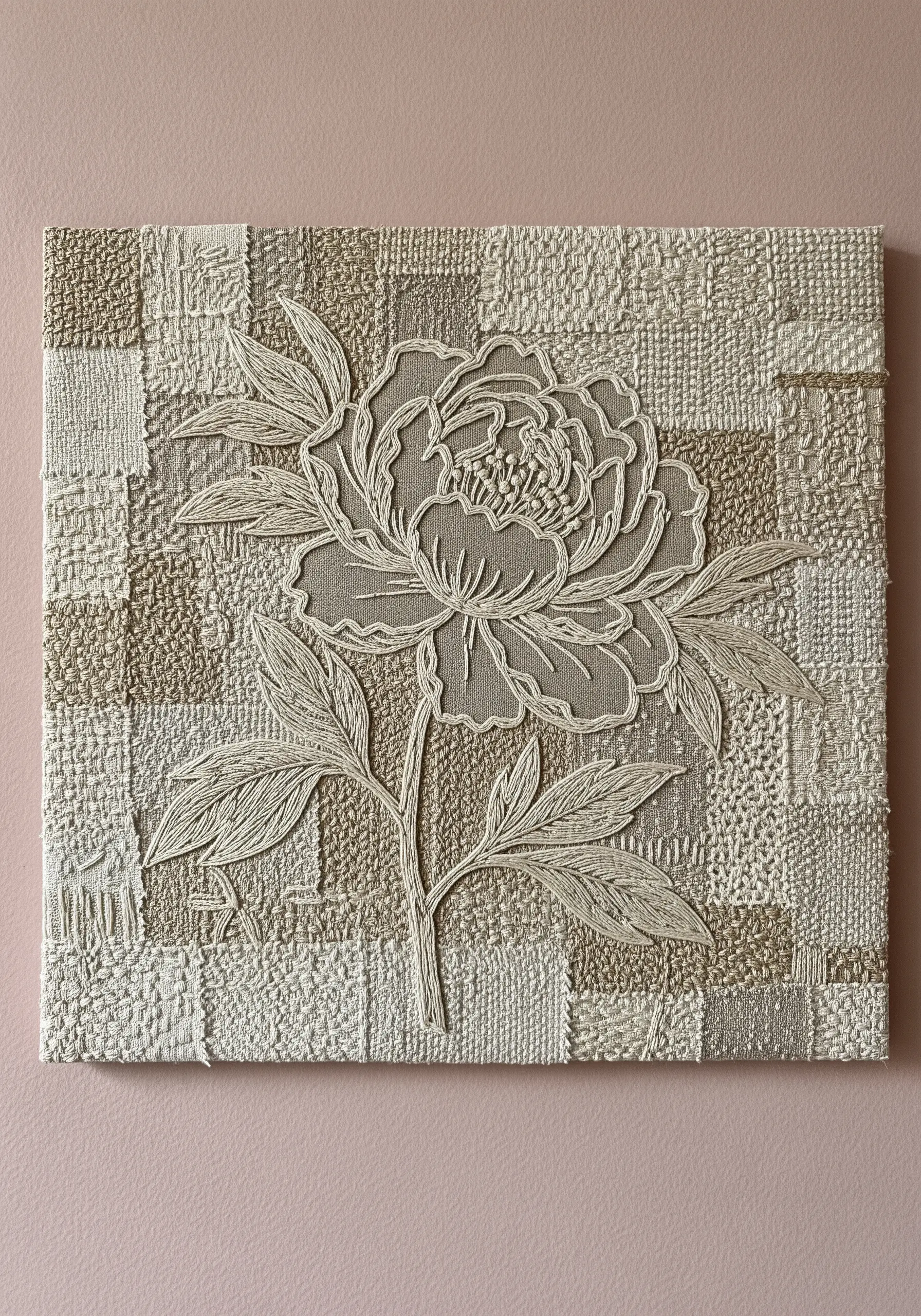
Create your own richly textured canvas before you even thread your needle.
Start by weaving strips of neutral, textured fabric scraps over and under each other to create a stable, checkerboard-like base.
Once your woven background is secure, stitch a clean, elegant floral design directly on top using a single color of thread.
The monochrome thread unifies the piece, while the backstitch provides a crisp outline that stands out against the complex texture of the woven base.
16. Add Dimension to Bold Lettering
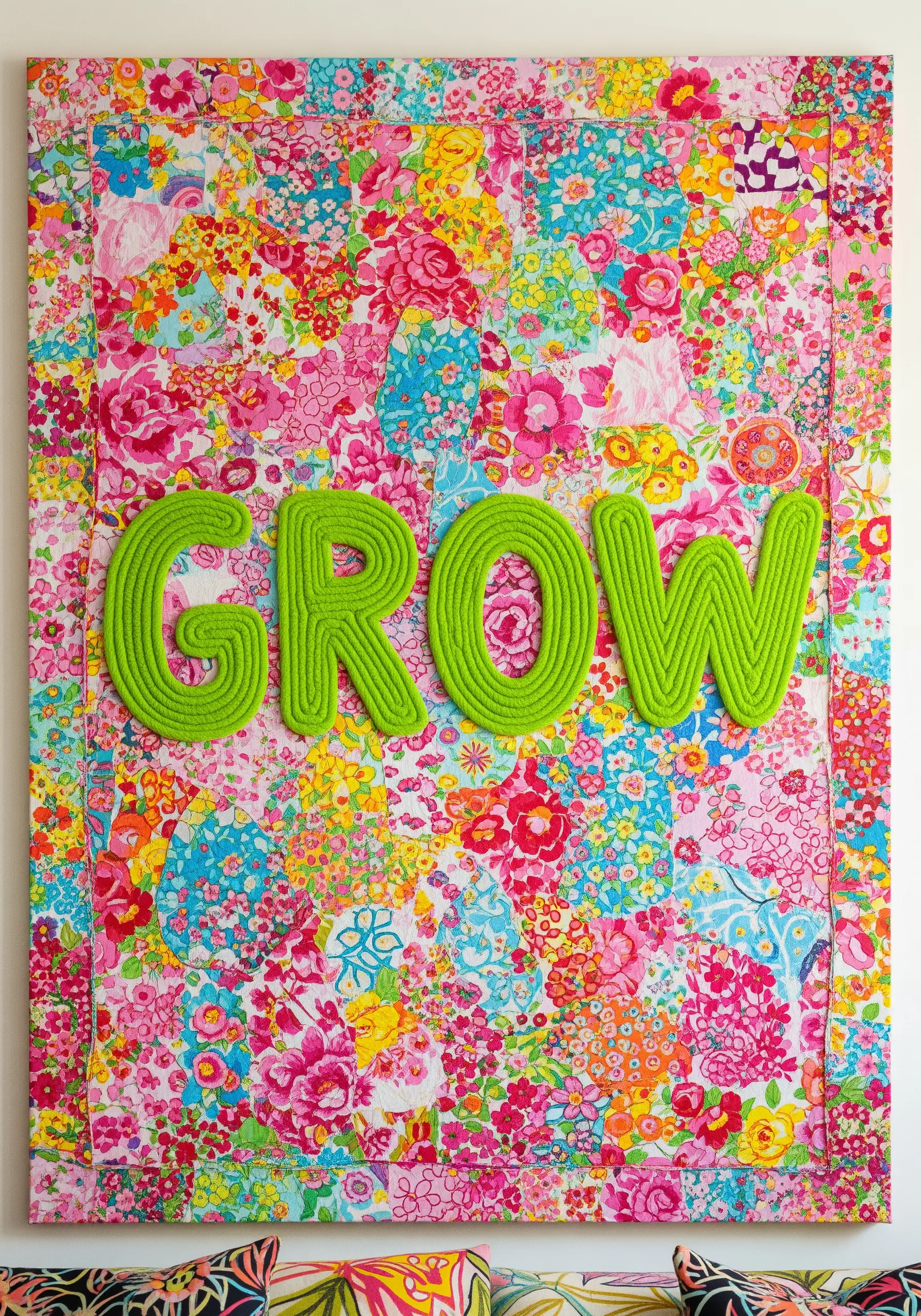
When working with a busy, patterned background fabric, your embroidery needs dimension to stand out.
Instead of stitching flat letters, form your word using a thick cord or yarn. Couch this down with a matching thread, which raises the text off the surface and creates a subtle shadow.
Choose a solid, high-contrast color for your cord. This ensures your message remains clear and legible, preventing it from getting lost in the visual noise of the floral print.
17. Achieve Geometric Precision with Reverse Appliqué

This technique creates flawlessly crisp geometric designs. Start by layering your top fabric (like patchwork denim) over a solid-colored backing fabric (like white cotton).
Instead of adding a design on top, you will cut it away. Carefully trace your geometric pattern, then use sharp scissors or a craft knife to cut out the shapes from the top layer only.
Secure the raw edges of the top fabric with a tiny, neat whip stitch to reveal the clean, high-contrast pattern from the layer below.
18. Paint Portraits with Fabric Scraps
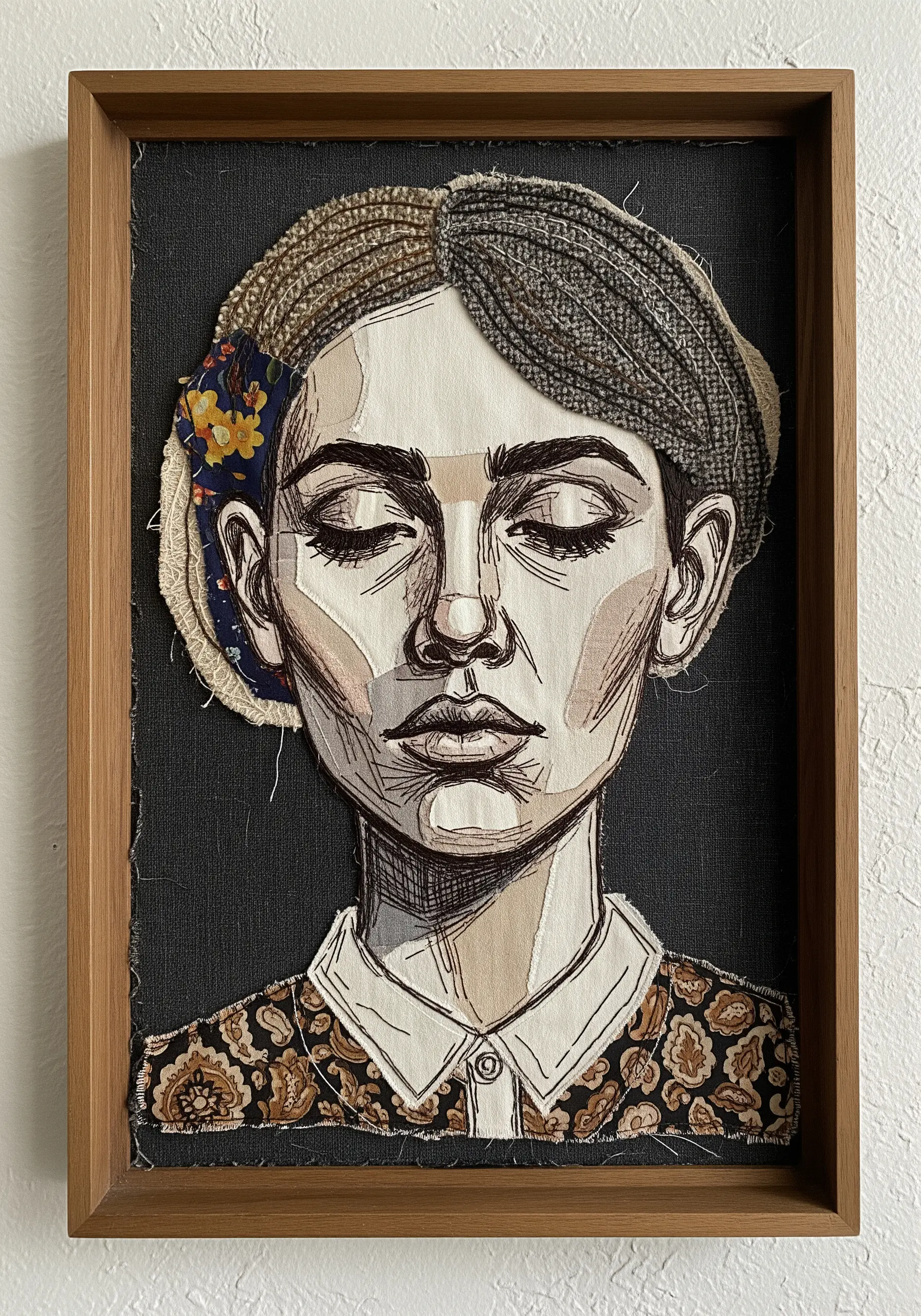
Approach this portrait as if you were painting, using fabric scraps to block in areas of light, shadow, and color.
Cut and layer pieces of differently colored and patterned fabrics to build the form of the face, tacking them down with a few hidden stitches.
Once the fabric collage is complete, use a simple backstitch in black thread—or even a fine-tipped permanent fabric marker—to draw in the defining features.
This mixed-media technique creates deeply expressive results, blending the softness of fabric with the precision of line work.
19. Sculpt 3D Florals from Ribbon and Fabric
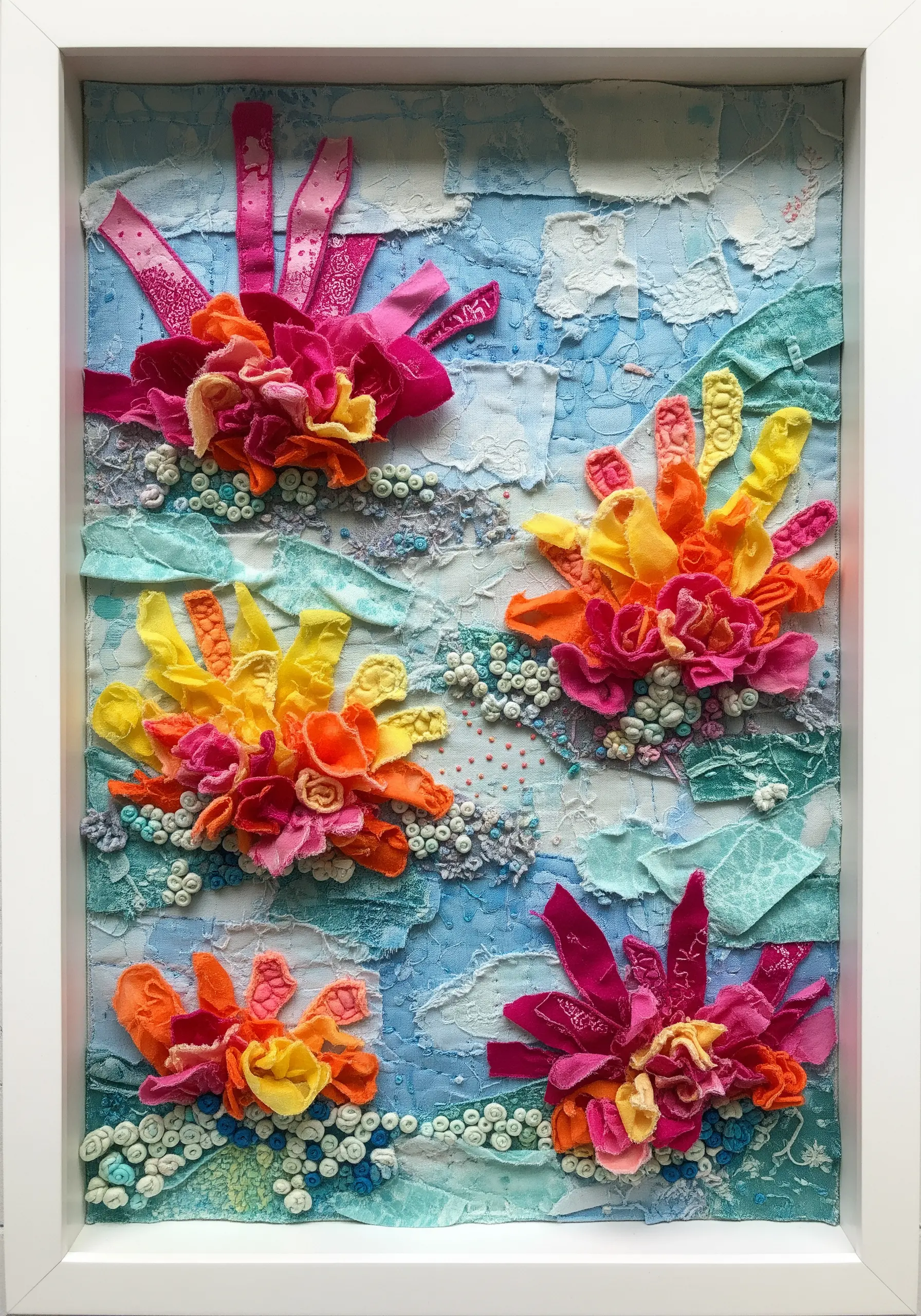
Move beyond flat stitches and create sculptural, three-dimensional flowers.
Form petals by folding, gathering, and ruching scraps of soft fabric or wide ribbon, then stitch them onto your background fabric in circular clusters to build up blossoms.
For a perfect finishing touch, fill the center of each flower with a dense cluster of French knots or small seed beads.
This mixed-media embroidery adds a delightful, touchable quality to your wall art, inviting viewers to look closer.