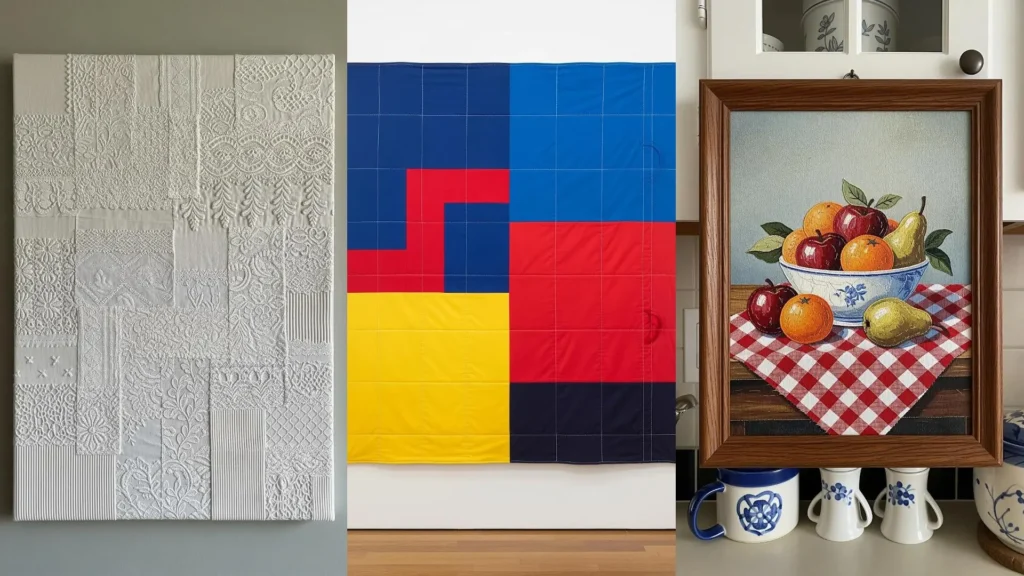
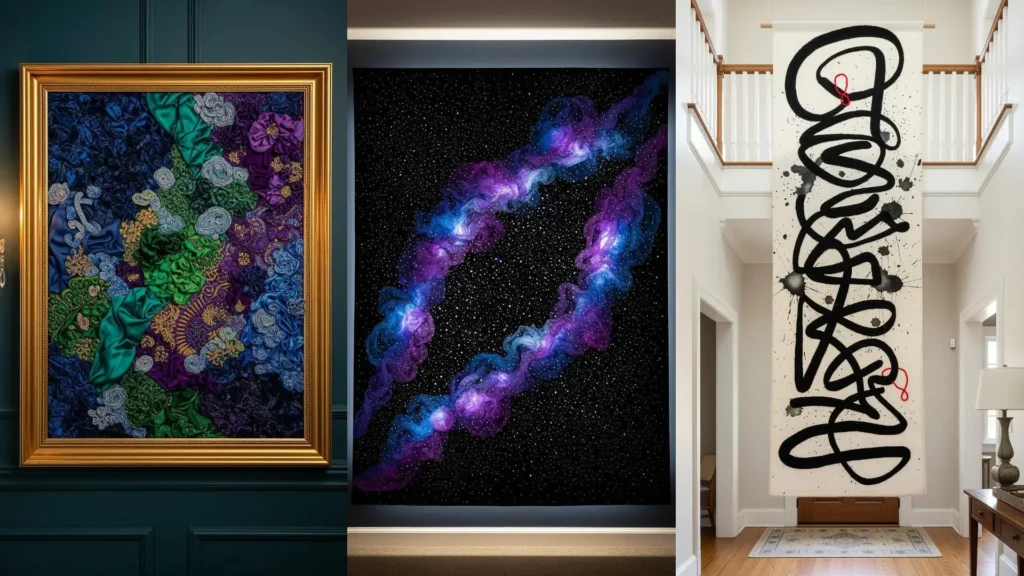
You sit with your needle and thread, and you know the stitches. You can execute a clean satin stitch, a neat French knot, a steady backstitch. Yet, when you finish a piece, something feels missing. You’re ready to move beyond just following a pattern and into creating textile art that feels cohesive, intentional, and truly your own.
The secret isn’t necessarily in learning more complicated stitches. It’s in shifting your perspective—in starting to think like a textile artist. It’s about seeing your fabric not just as a background, but as an active element in your design. It’s about understanding how texture, color, and material can communicate just as powerfully as thread.
Here, you’ll find ideas that invite you to play with different materials and techniques—from weaving and appliqué to punch needle and felting. Think of them not as rigid instructions, but as creative prompts. They are starting points for you to discover how combining thread with other textures can add depth, emotion, and a polished, professional finish to everything you create.
1. Elevate Hoop Art with Fabric Collage and Sculptural Stitches

Begin by layering fabric scraps onto your base fabric to create a modern, color-blocked background.
Don’t worry about perfect edges; the raw, frayed texture of the appliquéd pieces adds a welcome organic quality that contrasts with a clean composition.
Introduce a powerful focal point by couching thick yarn or creating a heavy chain stitch on top of your collage.
This sculptural element breaks the flat plane of the fabric, adding dimension and drawing the eye.
A restrained color palette allows a few bold hues, like coral or mustard, to energize the entire piece without overwhelming it.
Arranging several finished hoops together allows you to turn simple stitches into gallery-style decor, creating a cohesive and impactful display.
2. Weave a Landscape with Roving and Open-Lattice Techniques

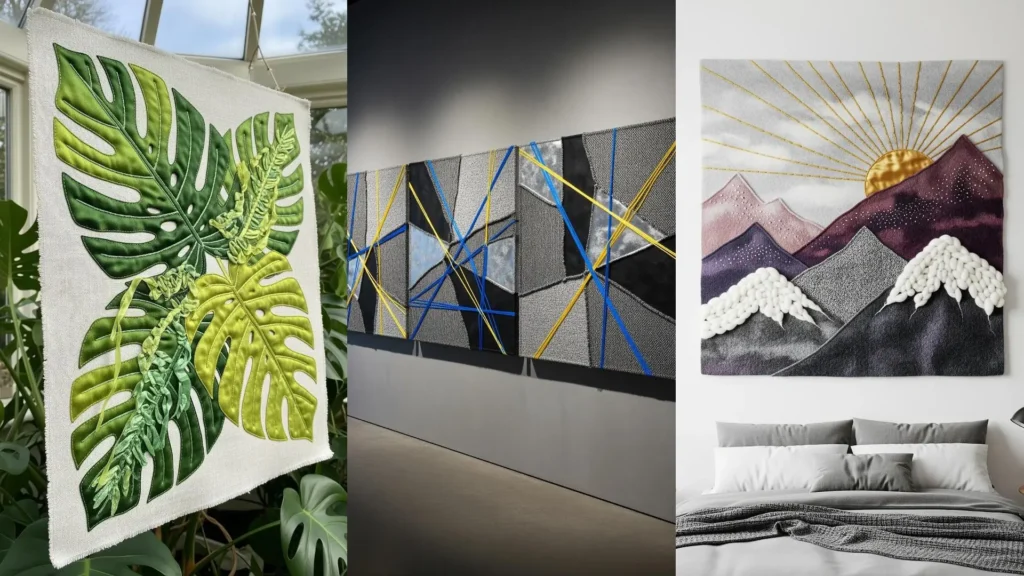
Move beyond the hoop and explore frame loom weaving to create large-scale textile art that fills a room with softness and texture.
Instead of fine thread, work with thick, unspun wool roving to build cloud-like, voluminous shapes that feel incredibly lush and inviting.
Incorporate negative space into your design by using an open-lattice technique like soumak or leno weave.
This creates visual breathing room and a delicate, net-like pattern that contrasts beautifully with the dense, packed areas of roving and yarn.
This balance between density and openness is what gives large modern yarn wall art designs their sophisticated, gallery-worthy appeal.
3. Combine Appliqué and Minimal Stitching for Graphic Impact

To create bold, graphic designs on home textiles, let the fabric do most of the aesthetic work for you.
Cut simple, strong shapes from fabrics with distinct textures—like corduroy, felt, or linen—and appliqué them onto a plain cushion cover.
Instead of filling the shapes with dense embroidery, use a simple, delicate running stitch in a contrasting color to add definition and a quiet, handcrafted feel.
This minimalist approach highlights the interplay between the different fabric surfaces, making the stitches a thoughtful accent rather than the main event.
It’s a perfect way to create handmade pillow cushion embroidery patterns that are both modern and cozy.
4. Transform a Quilt Top with Echo and Free-Motion Stitching

Think of quilting not just as construction, but as a form of drawing with thread that adds a second layer of pattern to your work.
Use echo quilting—stitching lines that run parallel to your appliqué shapes—to create a subtle ripple effect that makes your central motifs stand out dramatically.
In the negative space, add gentle, free-motion stitched swirls or stipples.
This technique creates a soft, uniform texture that compresses the batting underneath, further emphasizing the puffiness of the main design elements.
It transforms a flat surface into a low-relief sculpture, turning abstract broken shape designs into tactile experiences.
5. Build Sculptural Forms with Crochet and Needle Felting

Take your fiber art off the wall and into three dimensions by building sculptural forms.
Use freeform crochet techniques with textured stitches like bobbles, bullion knots, and picots to create organic, coral-like structures.
Combine these with needle-felted wool elements for a contrasting texture that is soft, dense, and painterly.
A simple wire mesh armature provides the underlying structure, allowing you to build your composition outward and upward with confidence.
This mixed-fiber approach allows you to create complex, tactile handmade sculptures that look like they belong in a museum.
6. Integrate Eco-Printing and Stitch for Organic Compositions

Begin your piece not with a blank canvas, but with one that nature has already painted for you.
Eco-print your fabric by bundling it with leaves, flowers, and natural dyes, then steaming or boiling it to transfer the pigments.
This process creates a beautifully subtle and entirely unique background pattern.
Once your fabric is ready, use a single strand of embroidery floss to gently trace or embellish the botanical prints.
This delicate stitching adds a layer of intention and fine detail that honors the organic forms, a perfect way to combine pressed flowers with embroidery for truly unique art.
7. Create Graphic Textiles with Punch Needle Color Blocking

Explore the satisfying technique of punch needle to create plush, highly textured fabric art on a larger scale.
Because it fills areas so quickly, it’s ideal for bold, color-blocked geometric designs for rugs, wall hangings, or cushions.
Sketch out your abstract design on monk’s cloth, then fill each section with solid blocks of yarn color.
For a subtle but professional touch, adjust the needle depth slightly between sections to create different loop heights, adding another layer of tactile interest to your finished piece.
It’s an accessible method for making your own modern embroidered tapestry designs.
8. Achieve Photorealism with Thread Painting on a Grand Scale

To create a portrait with stunning realism, approach it as you would a painting, using thread instead of pigments.
Break your source image down into zones of light, mid-tone, and shadow, selecting several shades of floss for each to allow for smooth blending.
Using a single strand of thread and the long-and-short stitch, you can blend these colors seamlessly to create subtle gradients and lifelike depth.
This meticulous technique, known as thread painting, transforms simple floss into a medium capable of capturing nuance and emotion, making it perfect for hand-stitched portrait wall art ideas.
9. Embellish Denim with a Dense, Botanical Thread Garden

Transform a simple denim jacket into a piece of wearable art by filling the back panel with a lush, dense botanical scene.
The key to achieving this rich, abundant look is layering.
Stitch some leaves and flowers so they overlap one another, creating a natural sense of depth and perspective.
Vary your stitches to add textural diversity: smooth satin stitch for petals, raised French knots for flower centers, and crisp stem stitch for vines.
These are the easy stitches that bring your plain denim jackets to life with personality and style.
10. Craft a Narrative Journal Cover with Layered Textiles

Elevate a simple journal by creating a rich, tactile cover that tells a story.
Collage scraps of meaningful fabrics, vintage lace, and ribbons, allowing the frayed edges to contribute to a rustic, well-loved aesthetic.
Within this textured frame, place a small, finely detailed embroidered motif—like a bird or a flower—as the clear focal point.
The surrounding layers of fabric and trim serve to frame and enhance your stitchwork, turning a simple project into a personal keepsake.
These layered embroidery ideas for your journal covers make for truly thoughtful gifts.
11. Design Organic Wall Sculptures with Freeform Crochet

Break away from rigid patterns and explore the artistic freedom of freeform crochet to create large-scale wall art.
Begin with a central crocheted shape and build outward intuitively, changing colors, stitches, and yarn weights to create undulating, organic forms.
To add structure and a bold graphic element, couch a thick, contrasting cord or yarn over the surface, creating a dynamic line that unifies the different sections.
This technique allows you to create unique abstract thread sculpt designs that stand off the canvas like miniature art.
12. Paint with Wool: Needle Felting Meets Embroidery

Use needle felting as a base to create soft, impressionistic landscapes with beautiful color gradients.
By blending different shades of wool roving directly onto your base fabric, you can “paint” a soft-focus background of skies and rolling hills.
Once this painterly foundation is complete, switch to traditional embroidery floss to add sharp, defining details.
A few carefully placed backstitches for a fence or French knots for sheep will bring the scene into focus, creating a stunning interplay between soft felt and crisp thread.
Explore these mountain landscape thread painting techniques to bring your art to life.
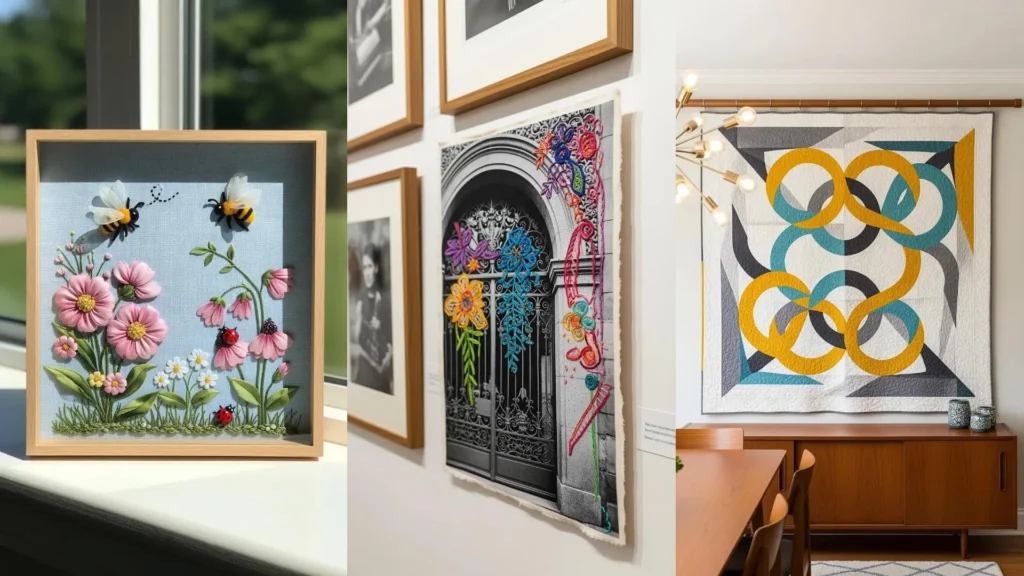
13. Create a Faux Entomology Collection with Raised Embroidery

Craft a stunning, three-dimensional insect collection using stumpwork, a form of raised embroidery.
First, embroider the wings on a separate piece of fabric stretched in a hoop, working over a fine wire outline.
Then, create a padded, stitched body on your main fabric.
Carefully cut out the wings and attach them to the body, bending the wires to give them a lifelike, raised posture.
Arranging these creations in a shadow box results in a breathtaking, cruelty-free display, turning simple bird butterfly embroidery patterns into scientific art.
14. Frame Shibori Patterns with Minimalist Stitching

When your fabric is already a work of art, your stitching should be a quiet complement, not a competition.
Start with fabric you’ve dyed using the Japanese shibori technique, which creates beautiful, organic patterns in indigo and white.
Instead of covering it with dense embroidery, enhance its natural beauty with a simple, elegant border.
Use a single strand of white or off-white floss and a delicate stitch, like a whipped backstitch or a simple running stitch, to frame the design.
This thoughtful finishing touch elevates simple embroidered table runner ideas into bespoke decor.
15. Craft a Gentle Nursery Mobile with Felt and Simple Stitches

Felt is the perfect material for a soft, safe, and charming nursery mobile.
Cut your leaf or animal shapes from two layers of felt and use a neat blanket stitch around the edges to join them, adding a bit of stuffing for gentle dimension.
Add minimalist details with basic embroidery—a simple backstitch for leaf veins or eyes creates a clean, graphic look.
The felt provides the color and soft structure, allowing your simple stitches to add character and a final handmade touch to these dreamy baby clothing embroidery ideas and decor.
16. Achieve Bold Graphic Art with Tufting Techniques

To create large-scale, professional-looking textile art with dramatic texture, explore fabric tufting.
Using a tufting gun allows you to fill in large areas of a design with a dense, carpet-like pile much faster than traditional methods.
This technique is perfect for modern, abstract designs with clean lines and bold fields of color.
The resulting contrast between the sharp geometric shapes and the plush, soft texture is visually powerful and deeply satisfying.
It’s an effective way to translate abstract embroidery patterns into large-format statement pieces.
17. Design a Rustic Pennant Banner with Textured Fabrics

For a quick and charming decorative project, focus on the interplay between fabric and simple motifs.
Choose fabrics with inherent character and texture, like rustic burlap, classic tweed, or sturdy canvas, to create your pennant shapes.
Keep the embroidered designs minimal and iconic—a simple satin-stitched tree, an outlined mountain, or a single star.
Using a high-contrast thread color makes these simple forms pop, turning them into focal points.
This combination of rich fabric and clean stitching is the essence of modern rustic farmhouse embroidery wall projects.
18. Illuminate Your Stitches on a Custom Lampshade

Transform your embroidery into a piece of functional decor by stitching it onto a lampshade.
Work on a flat, self-adhesive styrene panel covered with a light, even-weave fabric like linen before assembling the shade.
A delicate, winding botanical pattern is particularly effective, as it allows plenty of light to shine through.
When you turn on the lamp, the light illuminates your stitches from behind, creating a warm, magical glow and highlighting the texture and color of your work in a whole new way.
These are the kinds of easy embroidery diys that make a space feel truly personal.
19. Construct a Patchwork Tote with Sashiko-Inspired Stitching

Celebrate the beauty of construction by turning your seams into a decorative element.
Create a durable and stylish tote bag by patchworking together scraps of old denim in various washes.
Instead of trying to hide your stitches, make them a feature using the principles of Japanese sashiko mending.
Use a thick, high-contrast thread, like red or white, and a simple running stitch to join your patches.
This technique is not only strong but also adds a graphic, intentional quality to all kinds of creative fabric crafts that transform old clothes.
20. Create Depth and Shadow with Layered Sheer Fabrics

Play with light and shadow by using layers of sheer fabric like organza, tulle, or voile as your canvas.
Stitch different elements of your design on separate layers of fabric, then stack them together in a frame or hoop.
The motifs on the top layers will appear to float above those on the bottom, casting subtle shadows and creating a mesmerizing sense of depth.
This method works especially well for abstract, linear designs, offering a sophisticated way to explore abstract thread illusion techniques.
21. Chart a Personal Narrative with an Embroidered Map

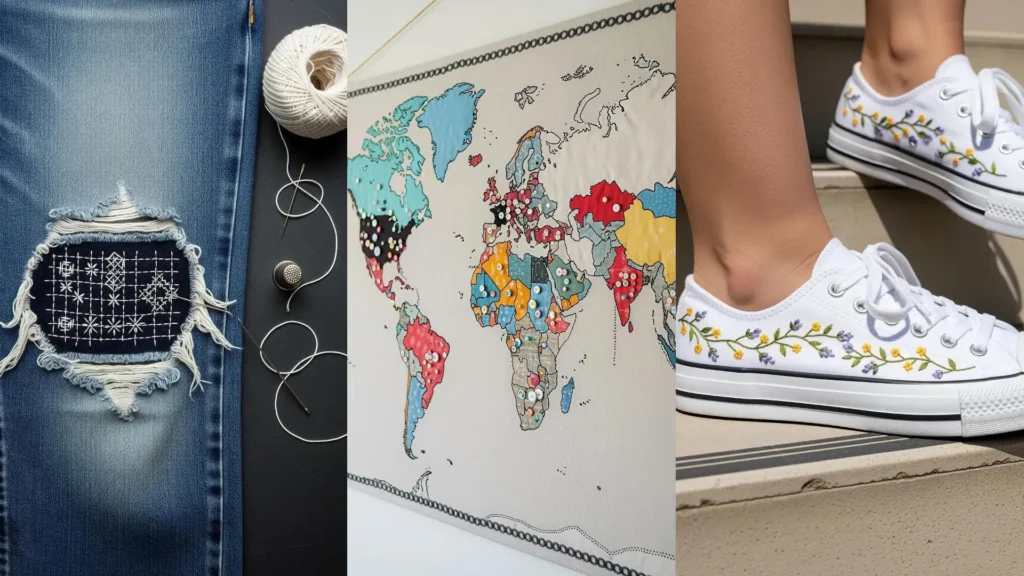
Create a deeply meaningful tapestry by translating a map of a significant place into thread and fabric.
Use appliqué for large areas like parks or landmasses, and then add the fine details with embroidery.
Assign different stitches to different features: a flowing chain stitch for a river, neat backstitch for roads, and tiny French knots for clusters of trees or landmarks.
This project transforms a simple map into a personal story, creating a rich textile artwork that is both a beautiful object and a cherished memory.