There is a specific kind of silence in the forest—a quiet that allows you to notice the texture of moss on a stone or the gradient of a twilight sky. Embroidery offers a similar sanctuary. It asks you to slow down, to observe, and to build something beautiful one stitch at a time.
Bringing woodland motifs into your hoop isn’t just about stitching trees; it’s about capturing that organic imperfection. It’s about learning to layer threads like forest floor debris and using negative space to let your design breathe like a clearing in the woods. You don’t need complex equipment, just a willingness to see texture differently.
In this collection, I’ve curated patterns that move beyond basic outlines. We will explore how to use thread painting for fur, French knots for moss, and color blending for atmospheric skies. These ideas are designed to help you stitch with intention, turning your hoop into a small, handheld piece of nature.
1. Atmospheric Gradient Pines

Capture the serenity of twilight by mastering the long-and-short stitch to create a seamless sky gradient.
You don’t need fifty shades of thread; blending just three or four colors with single strands creates this soft, painterly transition.
For the trees, switch to a denser satin stitch to build a silhouette that stands out against the ombre gradient embroidery wall hangings that add color flow to any room.
Keep your horizon line low to emphasize the vastness of the sky.
2. Textured Moss and Fungi

Texture is the hero here; use smooth satin stitch for the mushroom caps to contrast with the chaotic texture of the moss.
Create the undergrowth using French knots in varying sizes and tensions, mixing different shades of green for realism.
This approach transforms flat fabric into organic texture embroidery designs that look harder than they are.
Don’t strive for perfection in the moss; the irregularities make it feel alive.
3. Floating Botanical Fern
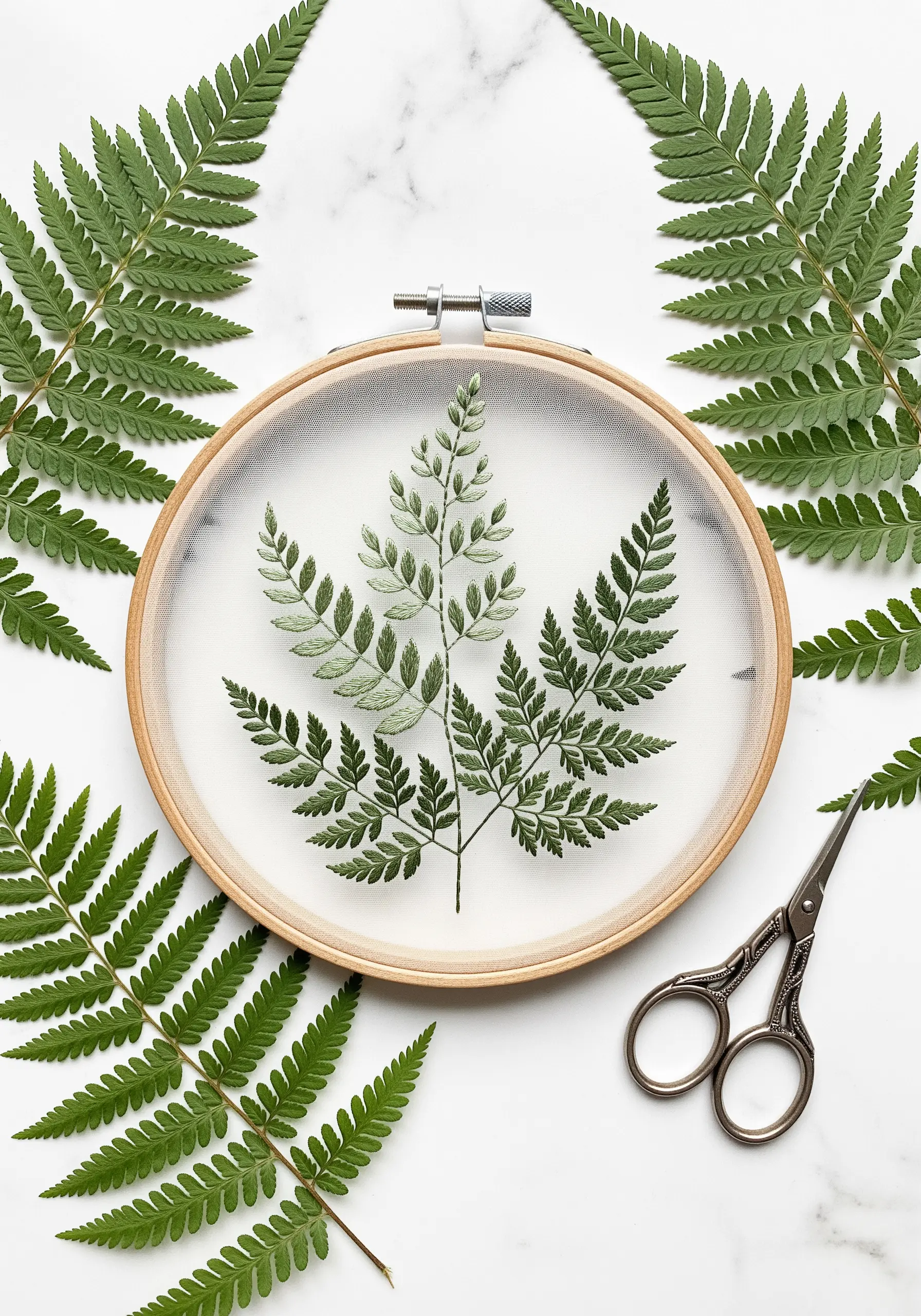
Stitching on tulle or organza creates a magical, floating effect, but it requires careful tension management.
Use a split stitch for the stems to provide a solid foundation that won’t distort the delicate mesh.
These minimalist leaf vine embroidery ideas for beginners who want aesthetic results fast rely on precise needle placement.
Always secure your threads behind the motif to keep the transparency clean.
4. Thread Painted Sleeping Fox

To achieve realistic fur, you must follow the animal’s muscle structure with your stitch direction.
Layer your colors from dark to light using the long-and-short stitch technique to create volume and softness.
These beginner friendly animal embroidery patterns you ll love to stitch become masterpieces when you pay attention to the direction of the fur.
Use a single strand of thread for the finest details around the face and ears.
5. High-Contrast Birch Grove

Utilize the fabric color as your background to create negative space that adds depth without extra stitching.
The white bark pops against the grey linen, while horizontal straight stitches mimic the characteristic peeling bark of birch trees.
Mastering tree bark wood texture stitch ideas for rustic wall art is about suggesting texture rather than filling every inch.
Add small French knots in yellow to suggest falling leaves in the foreground.
6. Velvet Night Sky

Deep velvet fabric absorbs light, making your metallic threads and bright whites shine brilliantly.
Use a couching stitch for the moon to create a spiraling texture that mimics a cratered surface.
Projects like these moon and stars embroidery ideas for peaceful bedtime vibes rely on material choice more than complex stitches.
Keep your star stitches loose enough not to pucker the heavy velvet pile.
7. Mixed Media Blackberries

Incorporate beads to mimic the juicy, light-reflecting texture of berries that thread alone cannot achieve.
Combine these beads with matte cotton thread for the leaves to create a sophisticated interplay of finishes.
Exploring mixed media techniques for embroidery lovers who crave unique art elevates a simple botanical into a tactile experience.
Ensure your beads are stitched securely with a double strand to prevent sagging.
8. Geometric Floral Fusion

Merge the rigid lines of geometry with the organic flow of nature for a modern, artistic aesthetic.
Use a whipped backstitch for the black outlines to ensure they remain sharp and raised against the fabric.
These geometric hoop art designs that make a bold statement on walls work best when you balance the empty space with dense floral fills.
Keep your color palette limited to three or four shades to avoid visual clutter.
9. Cozy Cabin with Wool Smoke

Introduce unspun wool or roving to create puffy, three-dimensional smoke that rises from the chimney.
Contrast this soft texture with the structured satin stitch of the log cabin walls for a tactile variety.
Simple cozy diy embroidery crafts perfect for lazy weekend mornings become special when you mix fiber types.
Tack the wool down sparingly to maintain its loft and cloud-like appearance.
10. Autumn Canopy Perspective

Change your viewer’s perspective by stitching branches radiating inward, creating the illusion of looking up.
Layer darker branches over the colorful leaves to establish depth and foreground interest.
These nature inspired embroidery hoop art ideas to gift eco lovers capture the feeling of forest bathing.
Use a bright blue fabric to represent the sky, saving you hours of background stitching.
11. Layered Mountain Meadow

Build depth in landscapes by using cool, pale colors for distant mountains and warm, vibrant greens for the foreground.
Use French knots and lazy daisy stitches in the front to simulate wildflowers close to the viewer.
Creating landscape embroidery wall pieces that turn fabric into painted scenery requires understanding atmospheric perspective.
Keep the sky stitches horizontal and the mountain stitches diagonal to differentiate the planes.
12. Botanical Wreath Composition
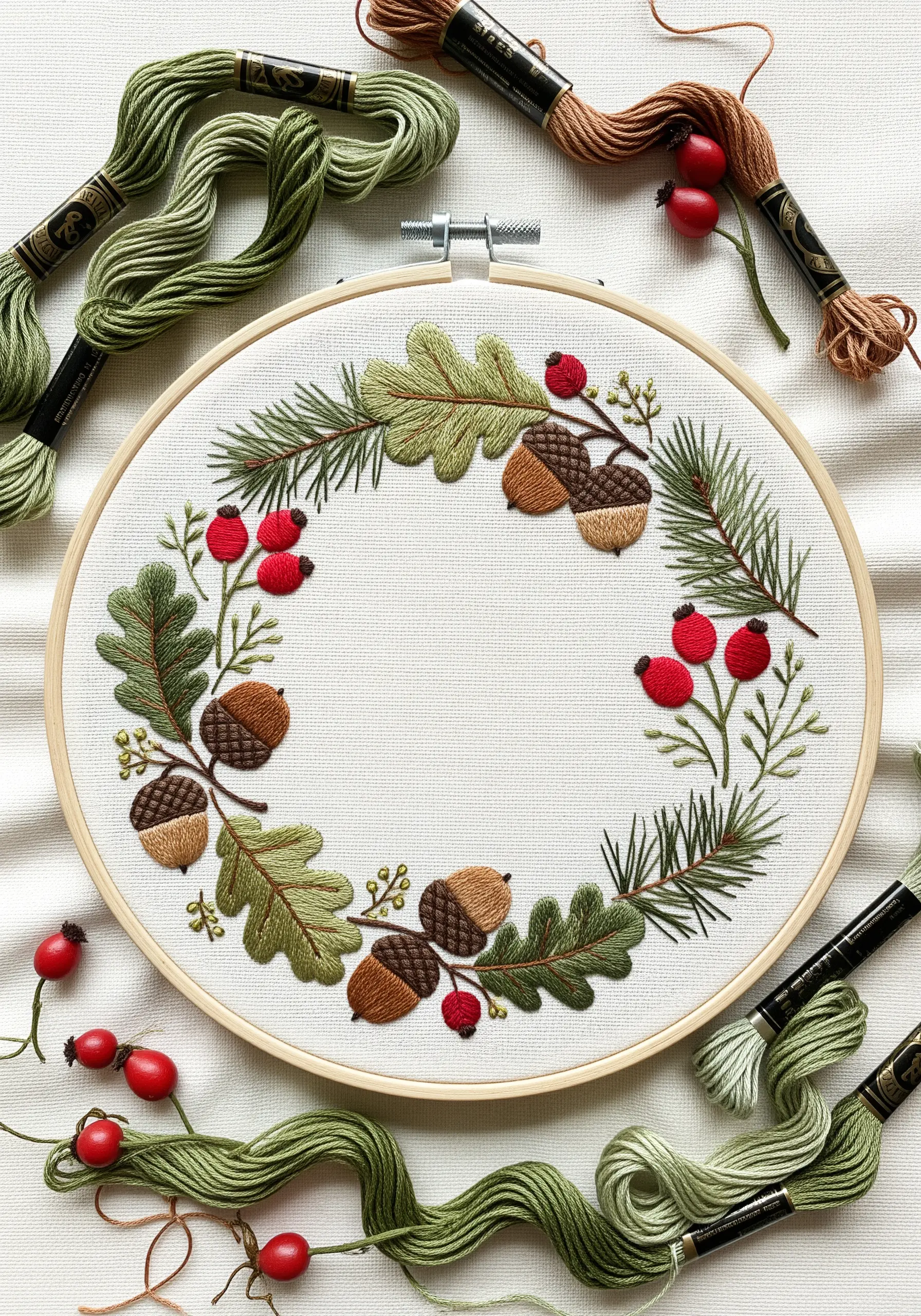
Balance is crucial in a wreath; distribute visual weight evenly by alternating heavy acorns with light pine needles.
Use the fishbone stitch for the oak leaves to give them a central spine and realistic texture.
Classic seasonal framed embroidery pieces to refresh your home decor rely on clean spacing and color harmony.
Leave the center empty for a clean, modern look, or add a meaningful quote.
13. Abstract Moss Sampler

Treat your hoop like a petri dish of textures, combining bullion knots, woven wheels, and French knots.
By sticking to a monochromatic green palette, you emphasize the tactile differences of each stitch.
You can create organic texture embroidery designs that look harder than they are by simply clustering basic stitches.
Vary the number of wraps in your French knots to create an uneven, natural surface.
14. Detailed Barn Owl Portrait

Capture the softness of feathers by using short, overlapping straight stitches rather than long satin stitches.
Pay attention to the white space on the face; the fabric can do some of the work for you.
Refined pet portrait embroidery ideas that help beginners capture fur texture like pros apply perfectly to wildlife.
Use seed stitches on the chest to create the speckled pattern typical of a barn owl.
15. Geometric Wood Rings
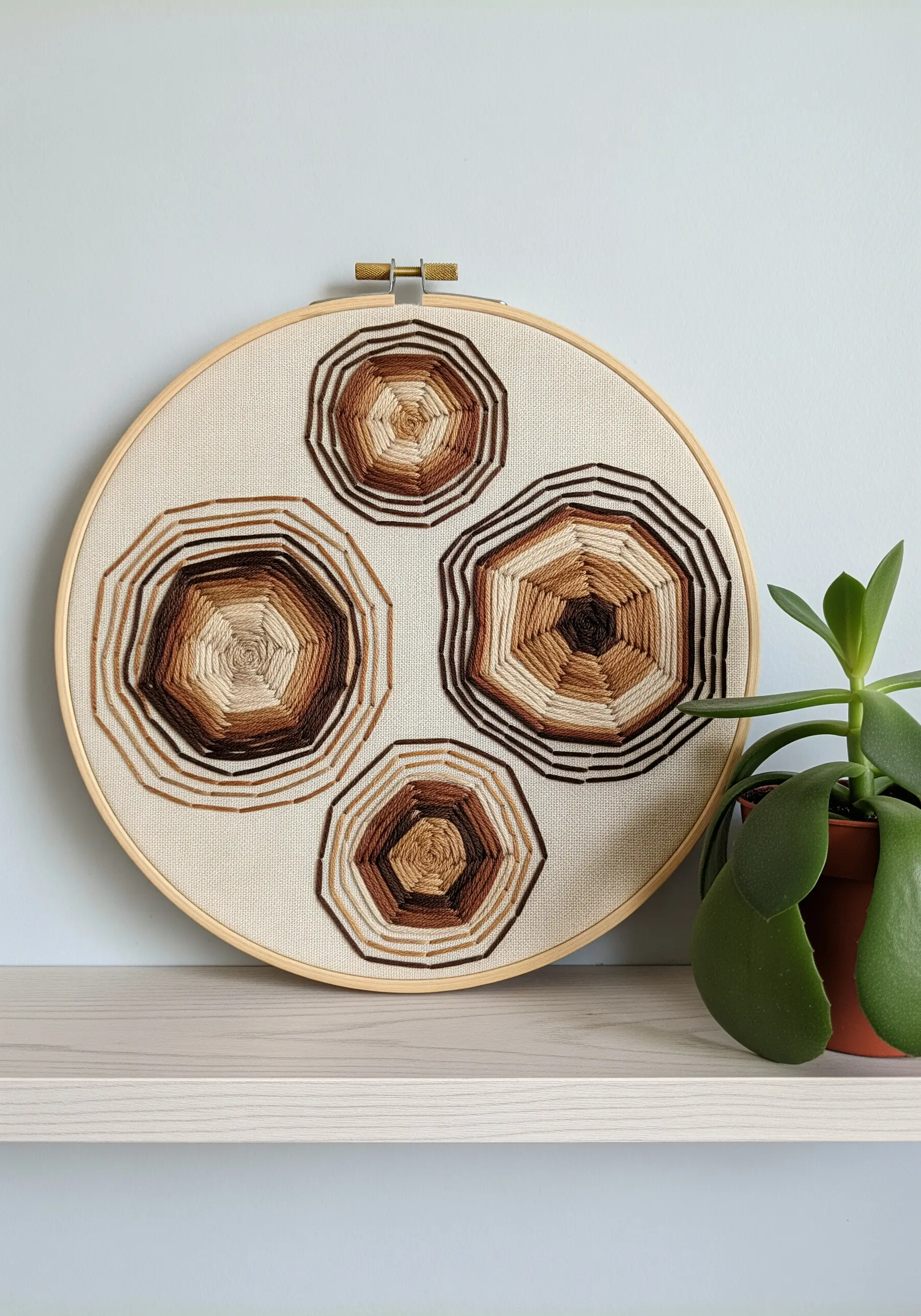
Use a whipped spider web stitch or a woven picot variation to create these concentric, wood-like patterns.
Variegated thread does the heavy lifting here, automatically creating the color shifts of tree rings.
Try these abstract thread sculpting tricks to create 3d textures without special tools for a modern, rustic vibe.
Keep your tension consistent to ensure the ‘rings’ remain circular and flat.
16. Moody Florals on Black

High contrast is the secret to drama; purple and green vibrate beautifully against a black background.
Use a split stitch outline before filling with satin stitch to ensure your edges remain crisp against the dark weave.
These dramatic dark thread embroidery designs for moody high contrast walls make colors appear more luminous.
Ensure you have excellent lighting while stitching, as black fabric hides needle holes.
17. Negative Space Leaf
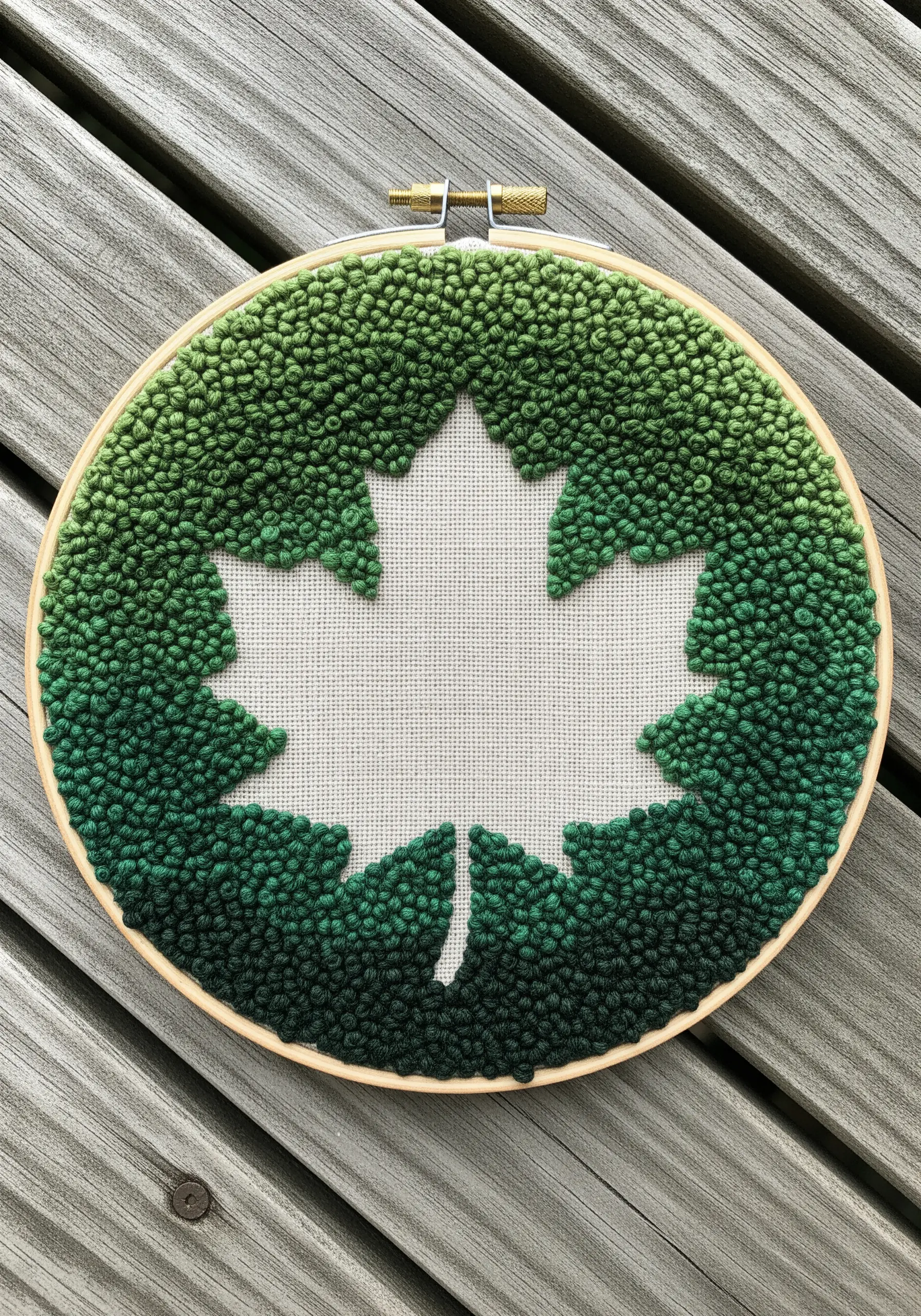
Define a shape not by stitching it, but by stitching everything around it.
Densely pack French knots at the edge of the leaf shape to create a sharp, recognizable silhouette.
These negative space stitch ideas for striking contemporary canvas embroidery are perfect for meditative crafting.
Fade the density of the knots as you move away from the center to create a vignette effect.
18. Fluffy Squirrel Tail

Exaggerate the texture of the tail by using a thicker thread or looser tension compared to the body.
Layer shades of rust, orange, and brown to give the animal volume and rounded form.
Whimsical hedgehog squirrel embroidery patterns perfect for cottagecore linen decor bring warmth to any room.
Use a tiny highlight of white in the eye to bring the squirrel to life instantly.
19. Vertical Meadow Garden
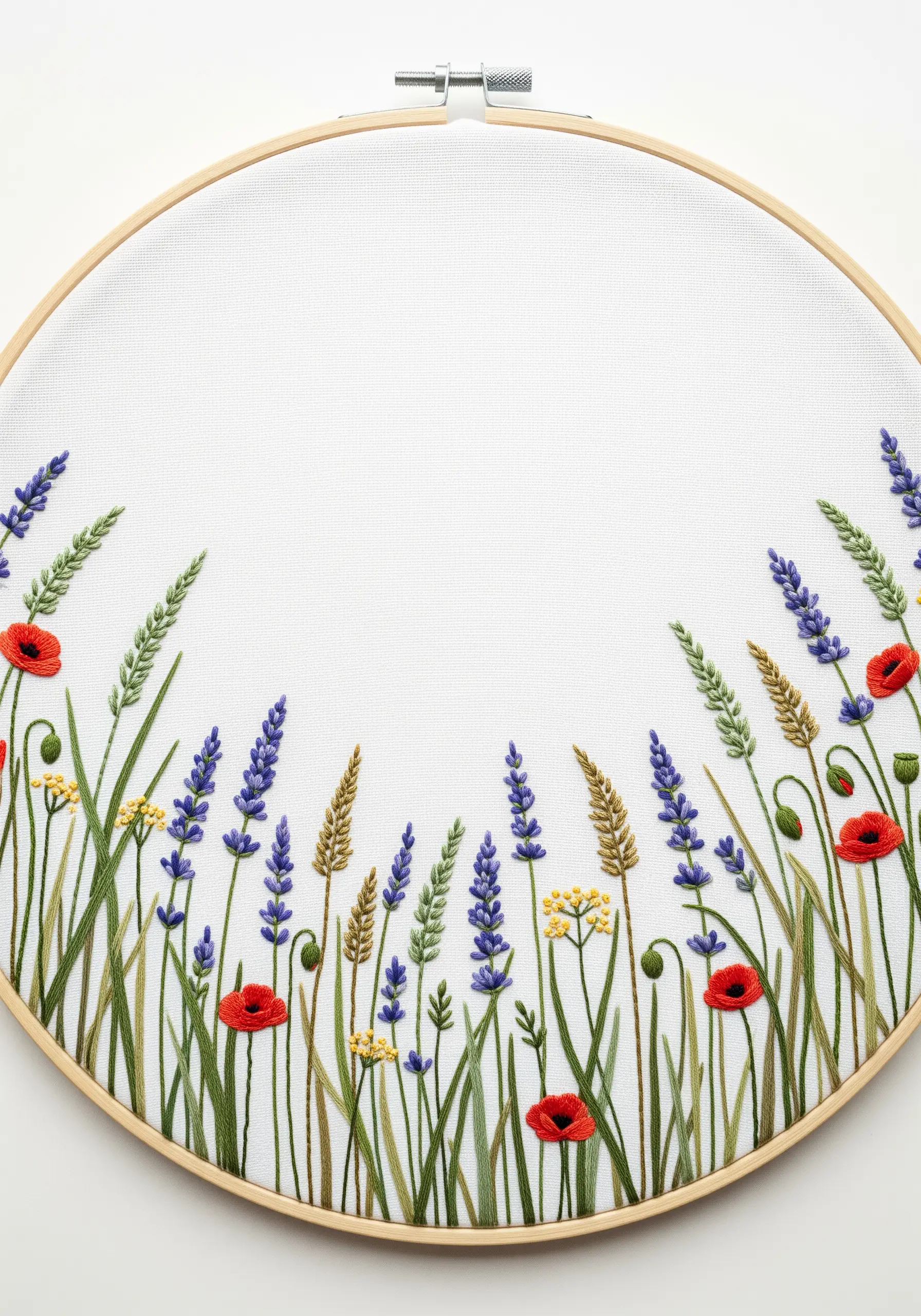
Create a natural rhythm by varying the heights of your flower stems, avoiding a uniform fence-like look.
Mix stitch types—lazy daisy for petals, stem stitch for stalks—to keep the eye interested.
Such wildflower hoop art projects that look like miniature meadow paintings for your wall breathe life into small spaces.
Allow some stems to cross over others to mimic the chaotic beauty of a wild meadow.
20. 3D Stumpwork Beetle
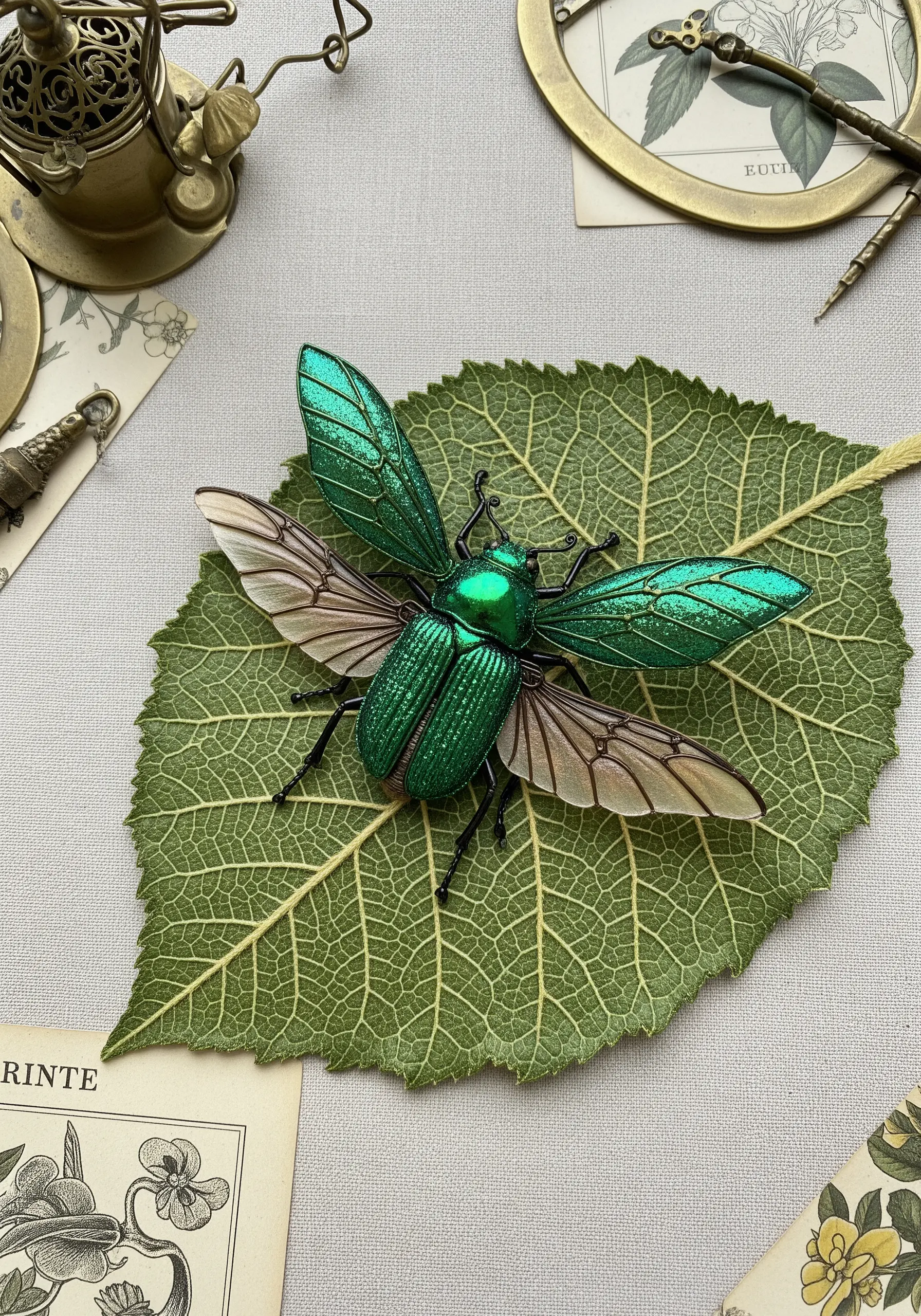
Lift your embroidery off the fabric by using padding or wire armatures for the insect wings.
Metallic thread is essential here to capture the iridescence of a beetle’s shell.
Advanced 3d embroidery wall art pieces that look so real guests will want-to-touch them require patience but offer stunning results.
Attach the 3D elements last to prevent snagging them while you work on the background.
21. Entwined Typography
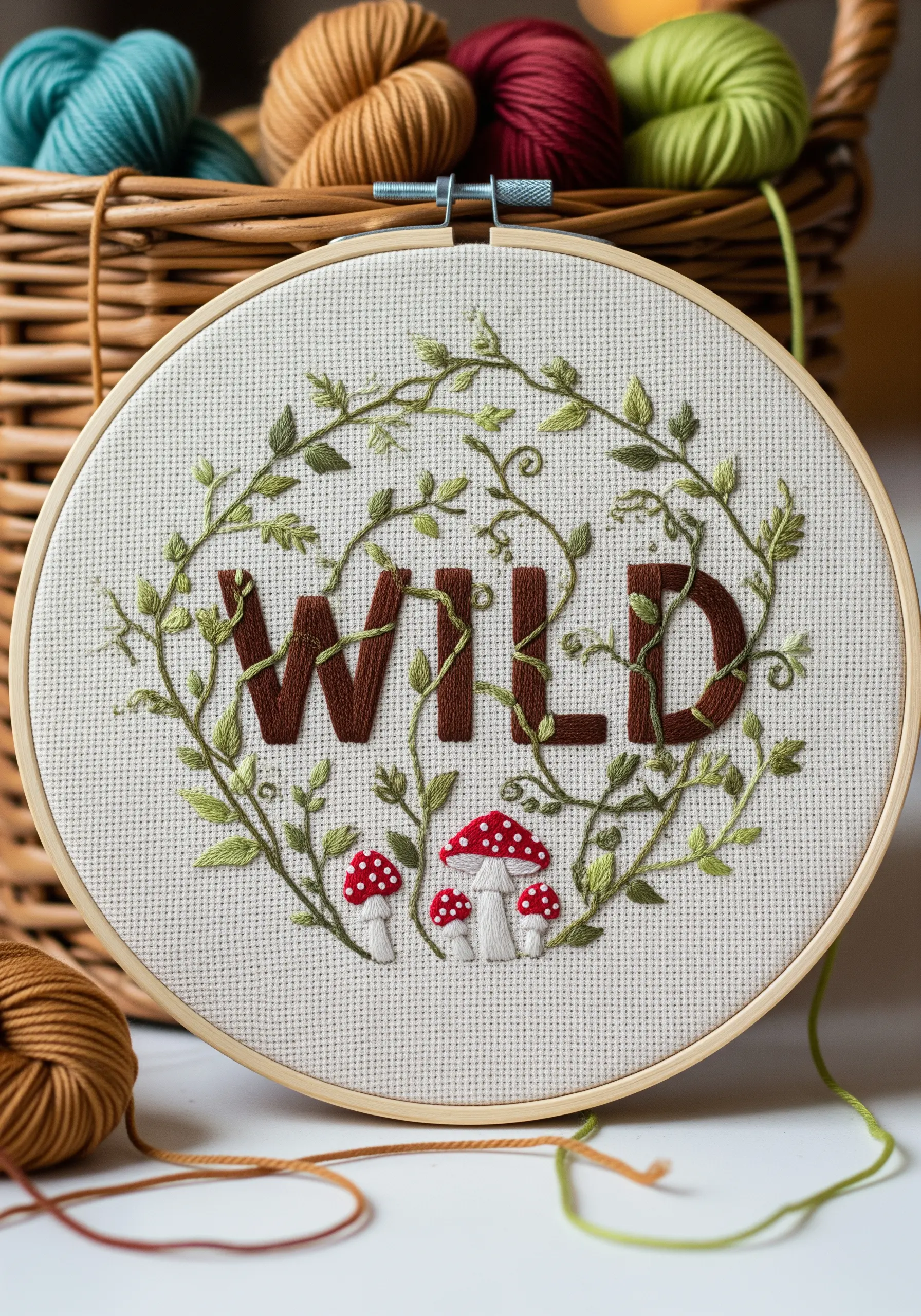
Integrate text with nature by weaving vines through the letters, stitching some leaves over and some under.
Use a brick stitch or satin stitch for the letters to give them a solid, bold weight.
Personalized botanical stitch art ideas to transform plain tote bags into garden inspired masterpieces start with this weaving technique.
Keep the vines thin and delicate so they don’t obscure the legibility of the word.
22. Flowing River Texture
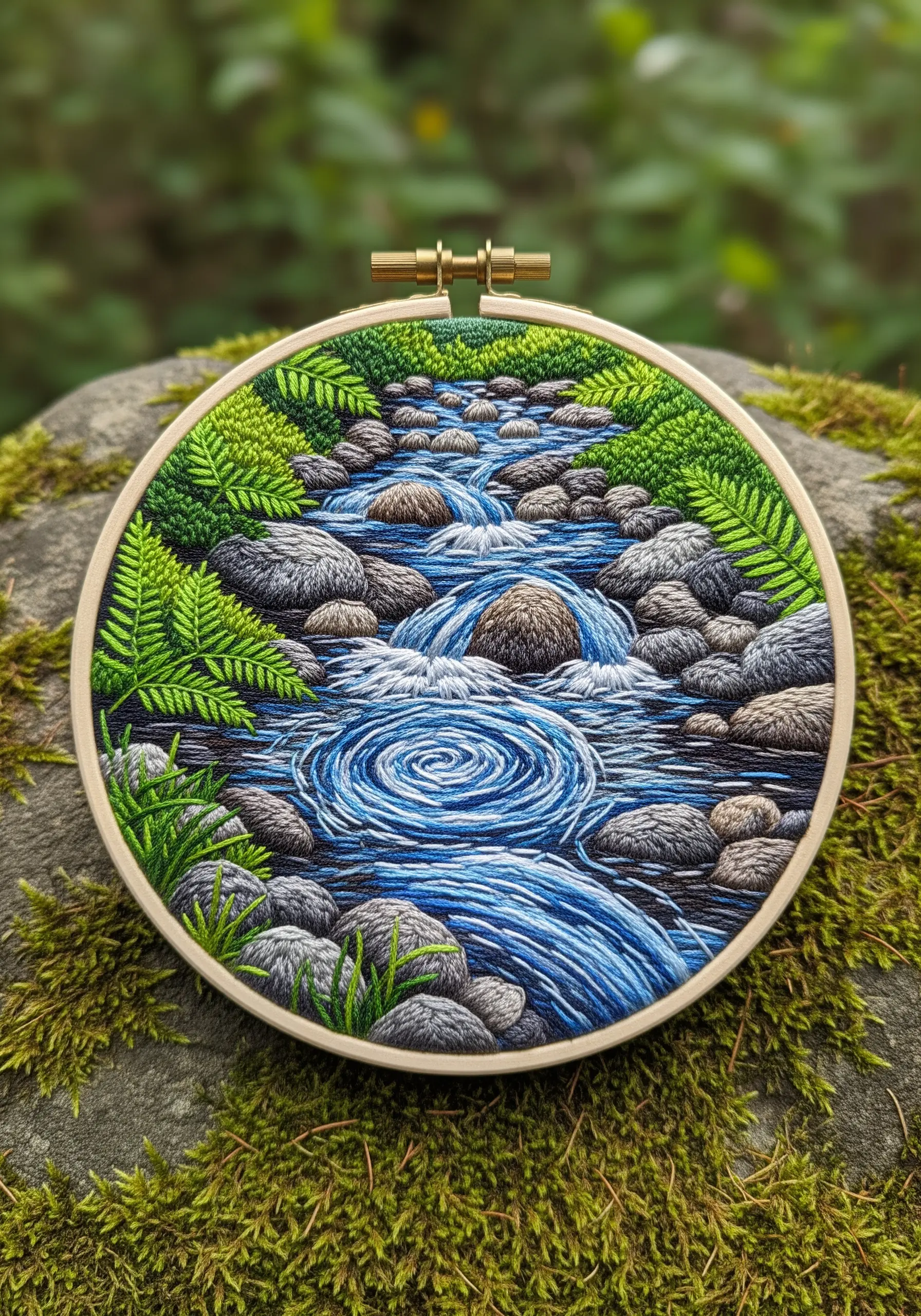
Convey movement by stitching along the current lines of the water, not just horizontally across.
Use a chain stitch or stem stitch to create fluid, continuous lines that mimic rippling water.
You can master abstract thread flow patterns that mimic water fire wind by observing how real water moves around rocks.
Add touches of white thread around the rocks to simulate foam and turbulence.