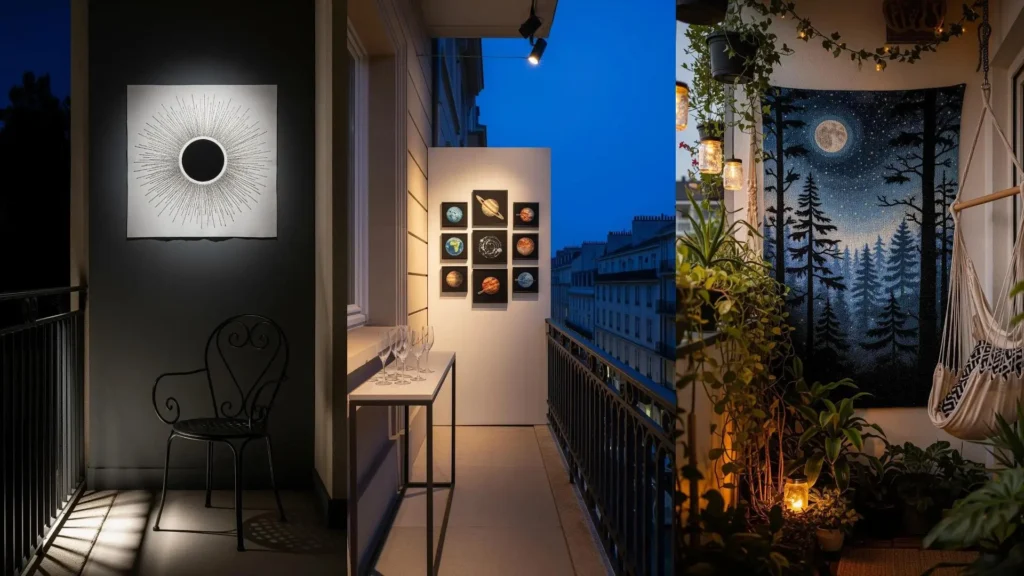
In a small space, every object needs to earn its place. Your embroidery is no different. It’s not about filling your walls with color, but about creating quiet moments of beauty that make your home feel thoughtful and calm.
Forget complex patterns and dozens of floss colors. The most impactful embroidery often comes from restraint—a limited palette that forces you to focus on what truly matters: the rhythm of a stitch, the weight of a line, and the elegant conversation between thread and fabric.
Here, you’ll discover how to use texture, composition, and simple stitches to create pieces that feel both modern and personal. This is about making art that doesn’t shout, but speaks with confidence, adding a layer of handmade warmth that no store-bought decor can replicate.
1. The Topography of Texture
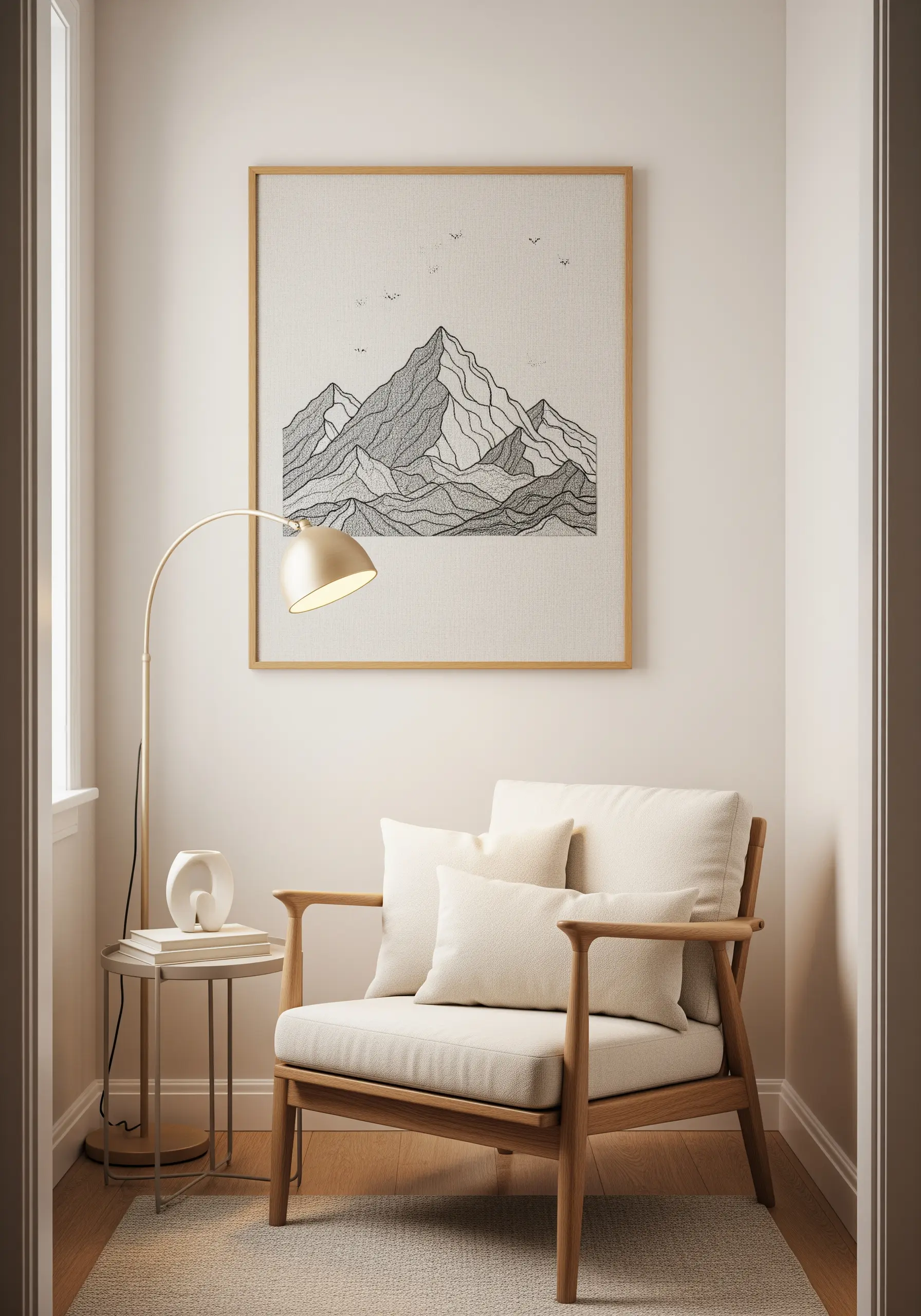
Create depth in a monochrome landscape not with color, but with varied fill stitches.
Use dense seed stitches for darker, shadowed areas and sparser stitches for lighter planes.
This technique allows a single thread color—like a soft charcoal on natural linen—to convey incredible dimension and visual weight.
The goal is to feel the landscape’s texture, transforming a simple line drawing into an immersive piece.
2. The Curated Hoop Art Trio
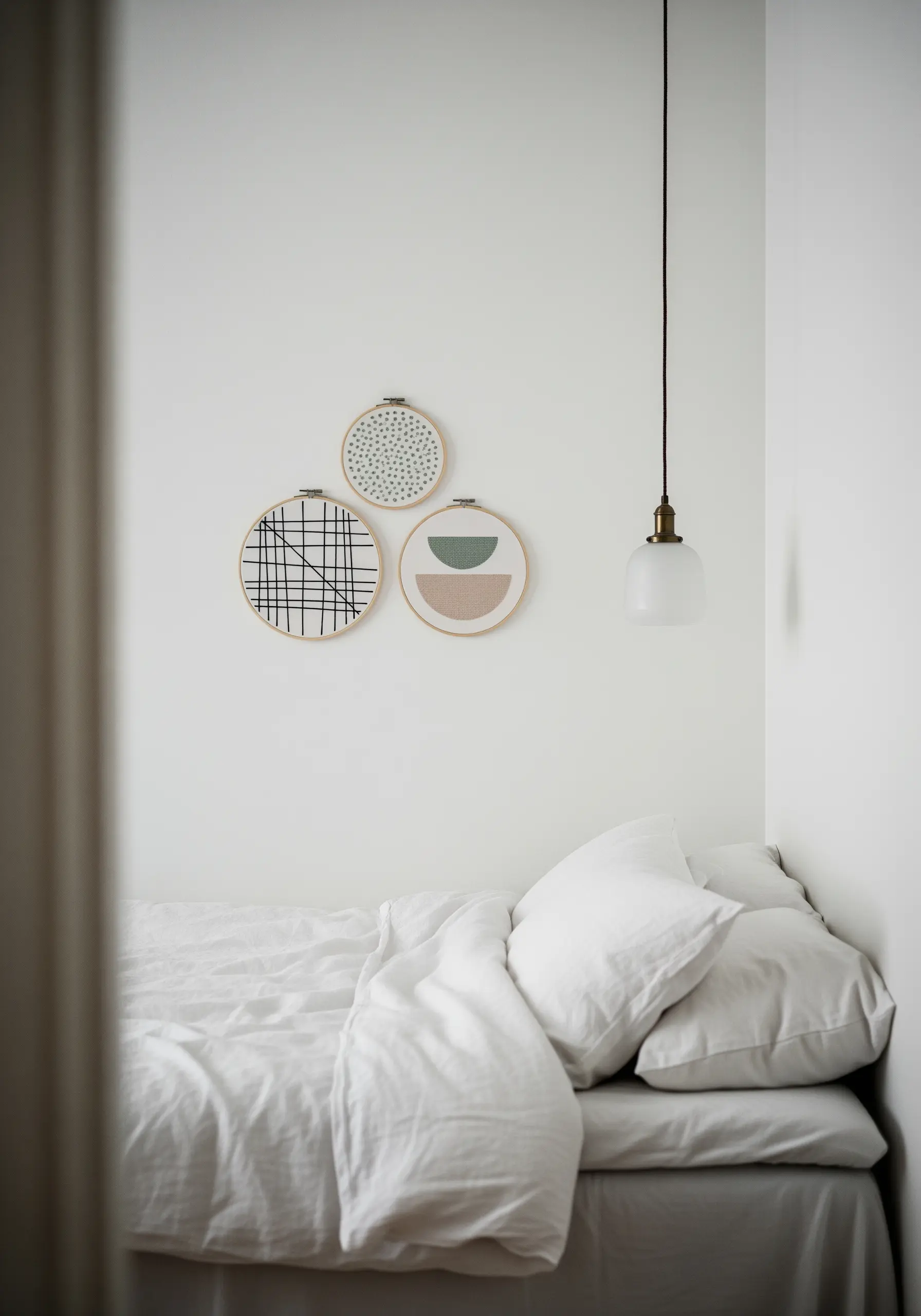
Grouping small hoops creates a gallery effect that feels intentional, not cluttered.
To ensure cohesion, work within a strict, three-color palette—like sage, sand, and black—across all pieces.
Vary the composition in each hoop: one with a tight geometric grid, one with open color blocking, and another with a scattered pattern.
This contrast creates visual rhythm and makes the collection feel more dynamic and sophisticated.
3. The Power of a Single, Bold Outline
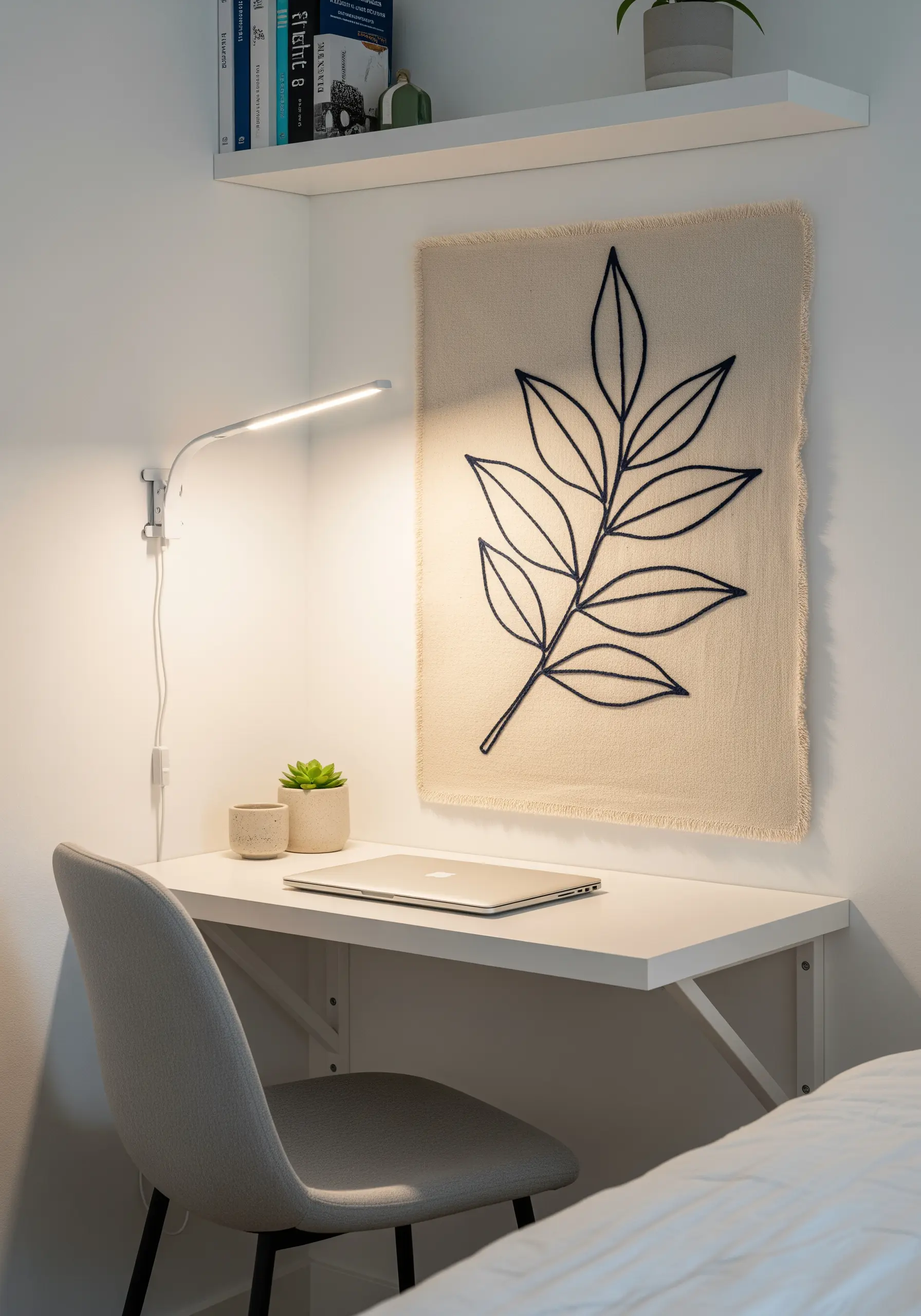
Let the outline be the hero of your piece instead of filling it in.
Use a thick thread, like pearl cotton or all six strands of floss, and a heavy backstitch or stem stitch to create a clean, graphic statement.
Mount your work on a piece of canvas with naturally frayed edges; the soft, organic frame provides a beautiful contrast to the crisp stitched line.
This approach celebrates negative space and the simple elegance of form.
4. Sculptural Coiling with Yarn
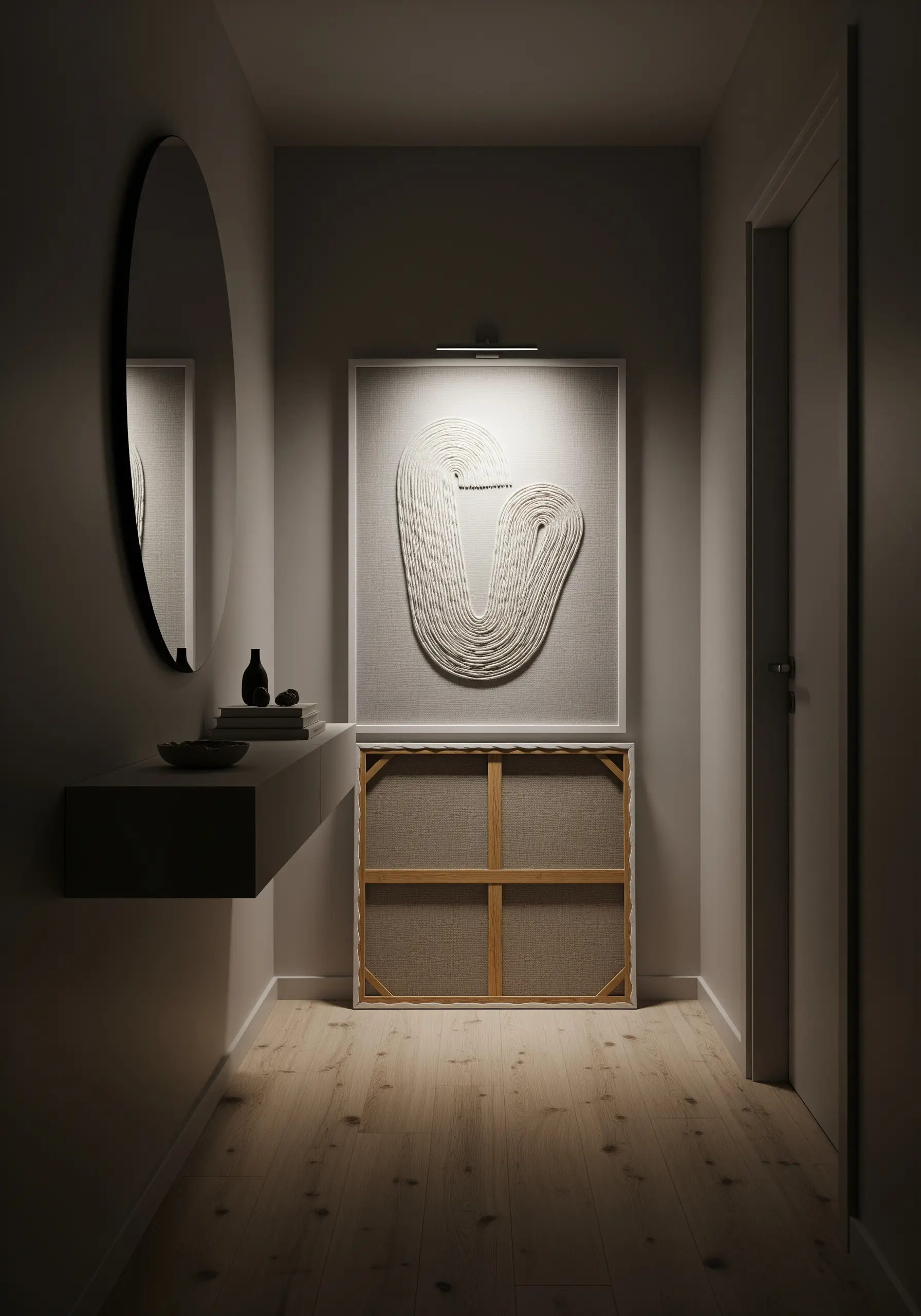
Move beyond thread to create dramatic, raised textures that interact with light.
Secure thick yarn or soft cotton rope onto a sturdy canvas using the couching technique.
Use a standard, matching floss to tack down the yarn every half-inch, allowing you to build bold, three-dimensional forms quickly.
This method adds a sculptural quality to your wall art, creating depth and shadow.
5. The Rhythm of Repetitive Marks
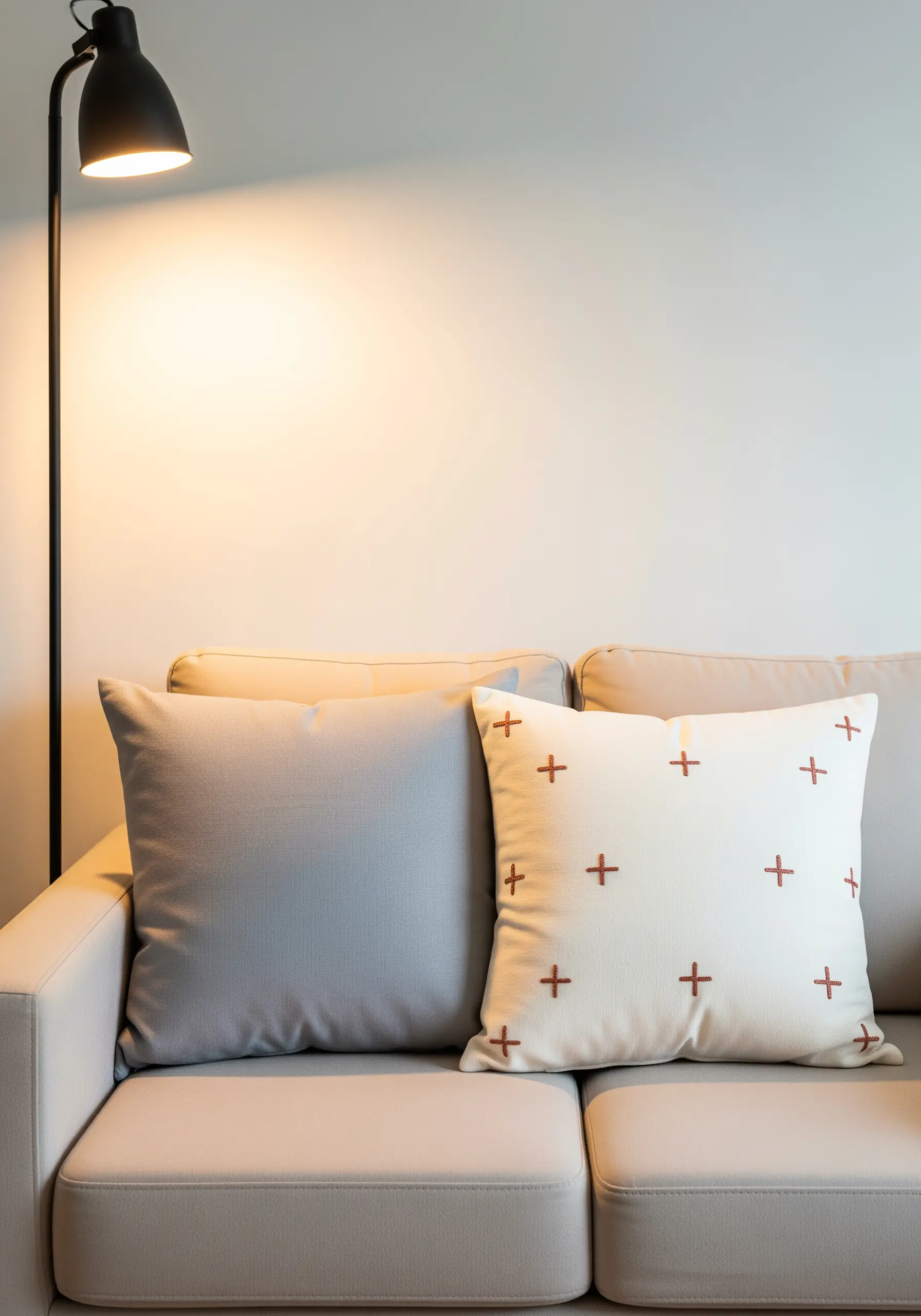
Elevate a plain cushion cover with a pattern built from simple, repeating motifs.
Use two small, overlapping straight stitches to form a plus sign, then repeat it in a precise grid.
The key to a professional finish is meticulous spacing—use a water-soluble marker and a ruler to plan your layout before you begin.
A tone-on-tone palette, like rust thread on a cream fabric, keeps the effect subtle and sophisticated.
6. Linear Definition for Vertical Space
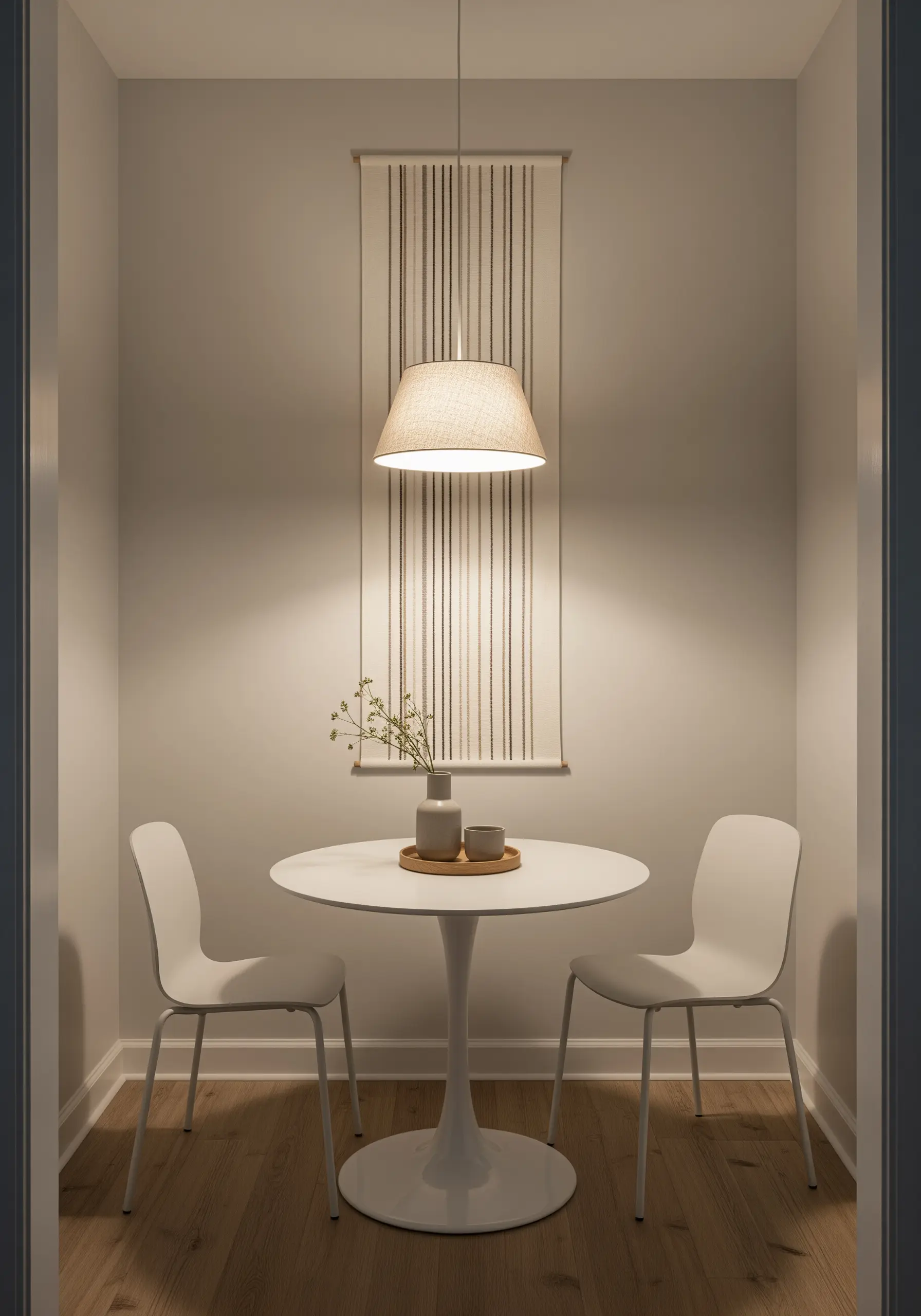
In a room with low ceilings or limited floor space, draw the eye upward with a tall, narrow wall hanging.
Use clean, long straight stitches to create a series of vertical lines, which adds an immediate sense of height and order.
To prevent the fabric from puckering under the tension of long stitches, use a stable, medium-weight linen and avoid pulling your thread too tightly.
Finishing with a simple wooden dowel at the top and bottom ensures it hangs perfectly straight.
7. Botanical Grace in a Single Line
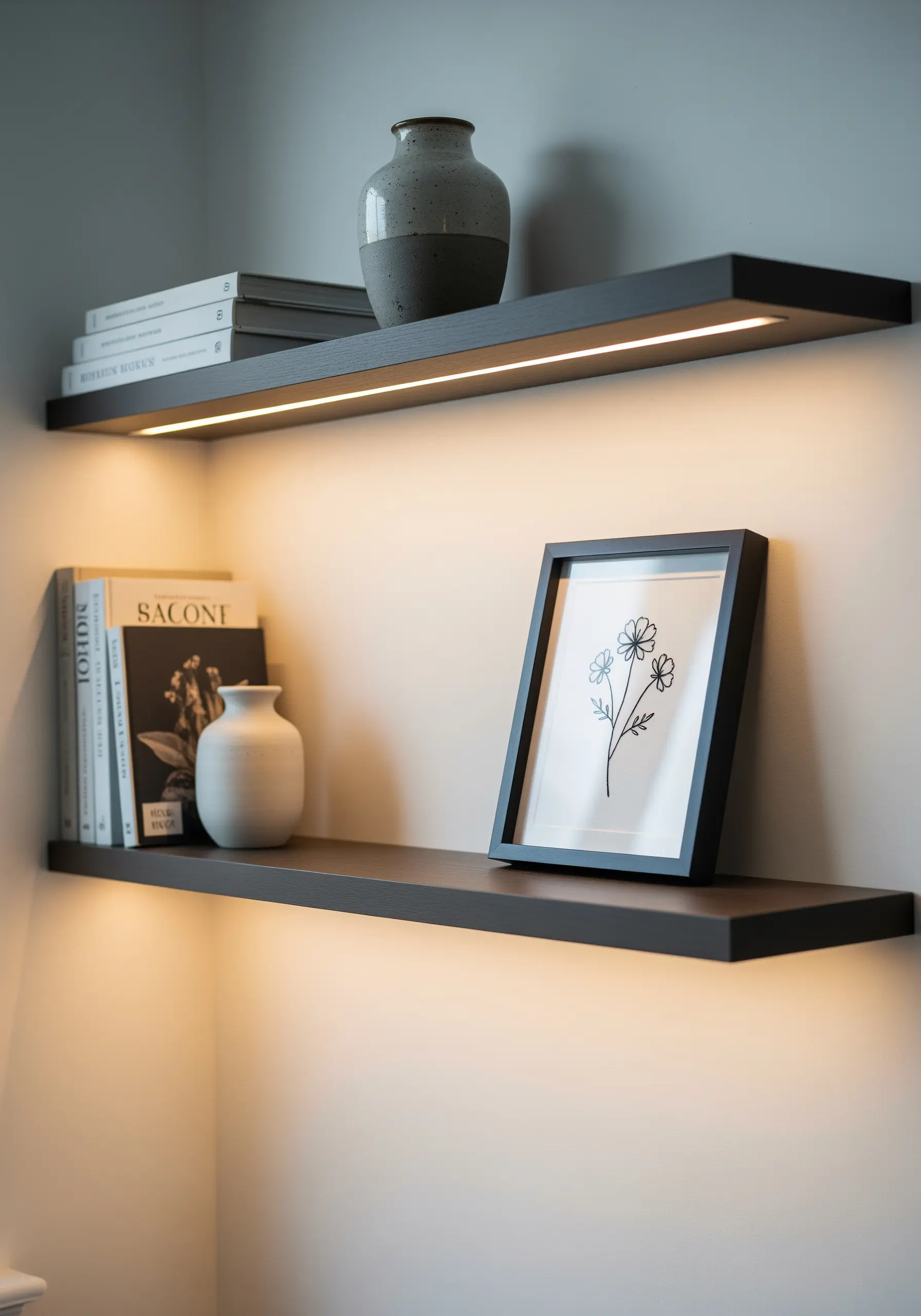
Capture the essence of a flower using a single, continuous line.
With just one strand of black floss, use a delicate backstitch to trace the form, as if you were creating a blind contour drawing.
This technique strips the subject down to its purest form, focusing on movement and silhouette.
The result is a piece that feels both minimalist and deeply expressive, perfect for a moment of quiet focus.
8. Tone-on-Tone Textural Blanket
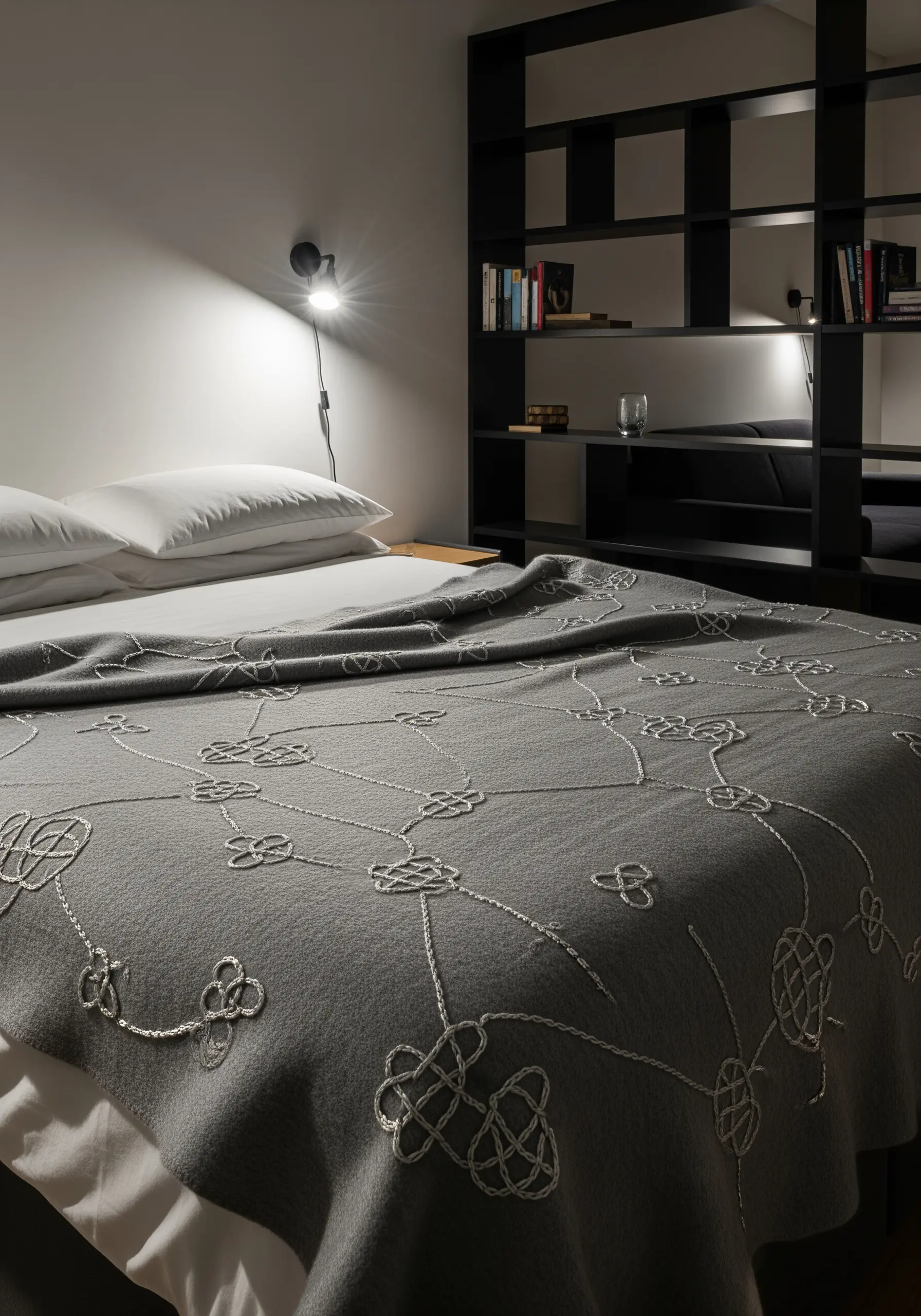
Add subtle luxury to a plain wool or fleece blanket with tone-on-tone embroidery.
Select a yarn or thick floss that is just a shade lighter or darker than the blanket itself.
Use textured stitches like the chain stitch or couched cords to create raised, Celtic-knot-inspired patterns.
This approach adds rich, tactile interest that invites touch without disrupting the calm of a monochrome color scheme.
9. Functional Art for the Kitchen
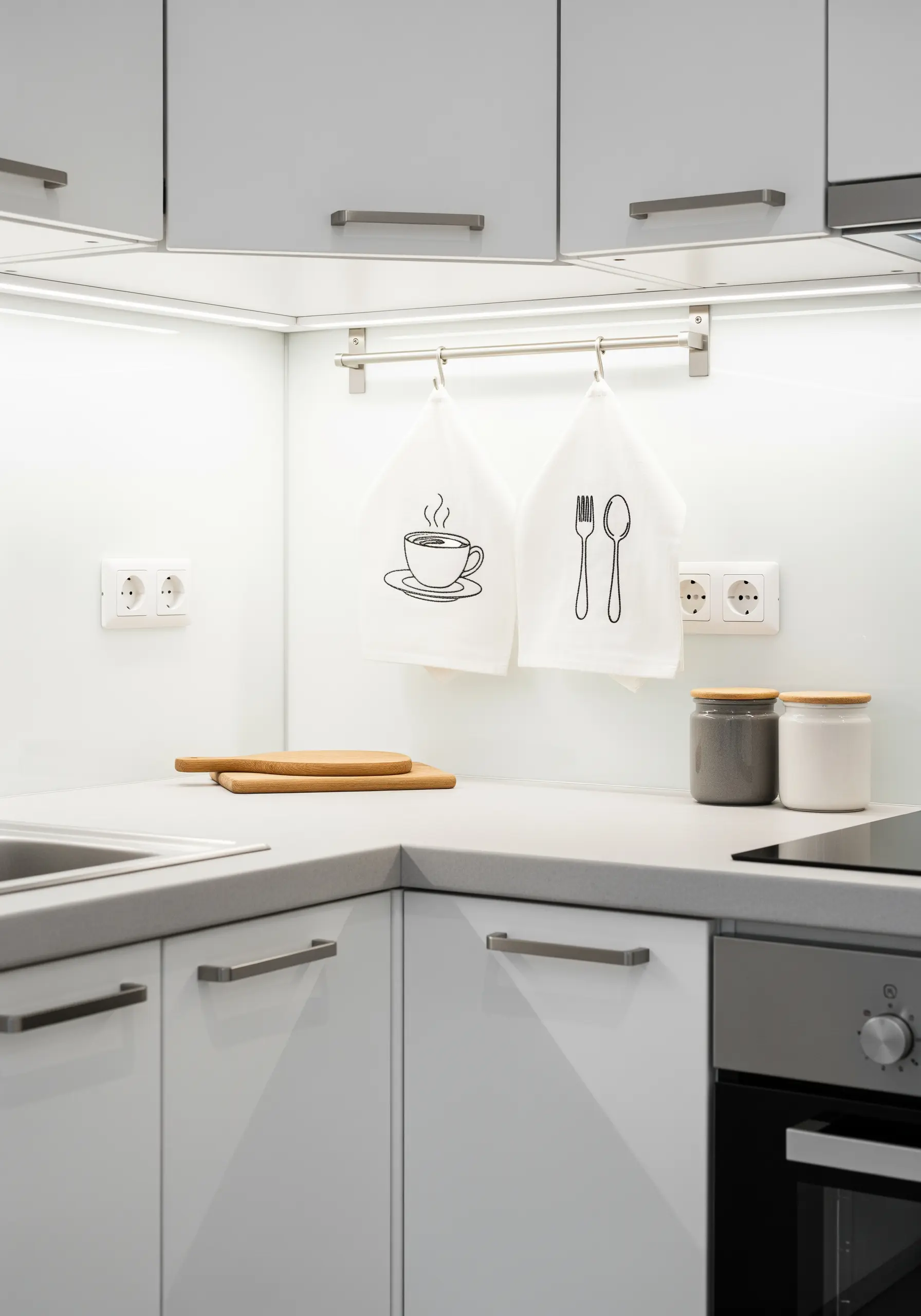
Turn everyday kitchen towels into small statements of personal style.
Choose simple, universally recognizable outlines—a steaming coffee cup, a fork and spoon—and render them with a clean backstitch.
Using two strands of crisp black floss on white linen or cotton creates a timeless, graphic look.
This is a quick and deeply satisfying way to bring handmade charm to the most practical corners of your home.
10. Woven-Look Wall Art with Chunky Yarn
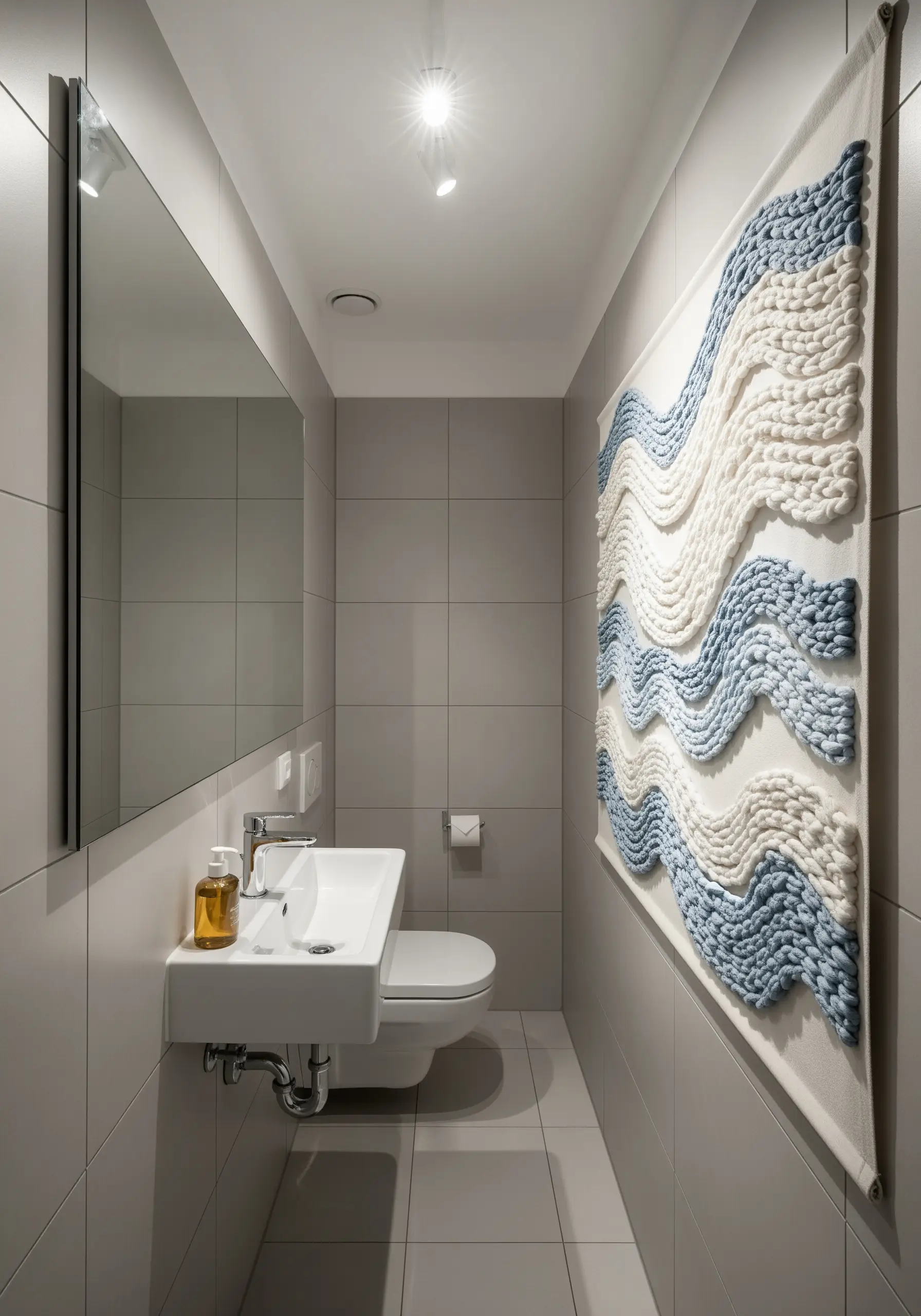
Achieve the high-impact look of a woven wall hanging using simple embroidery techniques.
Couch thick, chunky yarn in organic, wavy lines across a heavy canvas backing.
Create dynamic, ocean-inspired movement by alternating textures—placing a smooth merino wool next to a looped bouclé yarn, for example.
This project delivers immense textural presence and is surprisingly quick to complete relative to its scale.
11. The Art of Color-Blocked Thread Painting
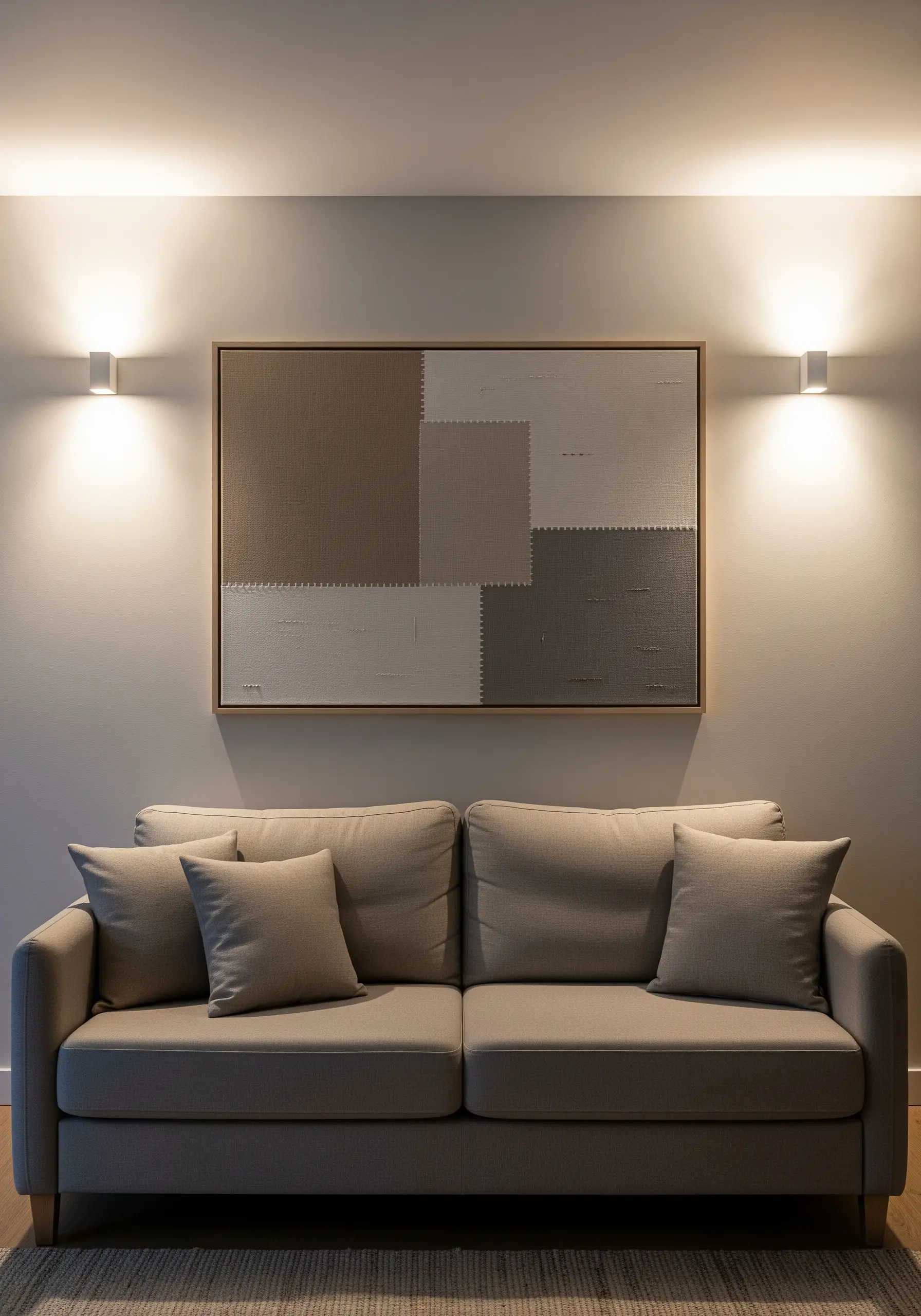
Explore color relationships by creating solid blocks of thread that resemble paint swatches.
Use a long-and-short stitch with a single strand of floss to fill geometric shapes, which eliminates harsh lines and creates a seamless, soft finish.
Select a harmonious palette of three to four muted tones, such as dusty rose, taupe, and slate grey.
This methodical approach transforms simple shapes into a sophisticated study of color and texture.
12. A Bold Geometric Border
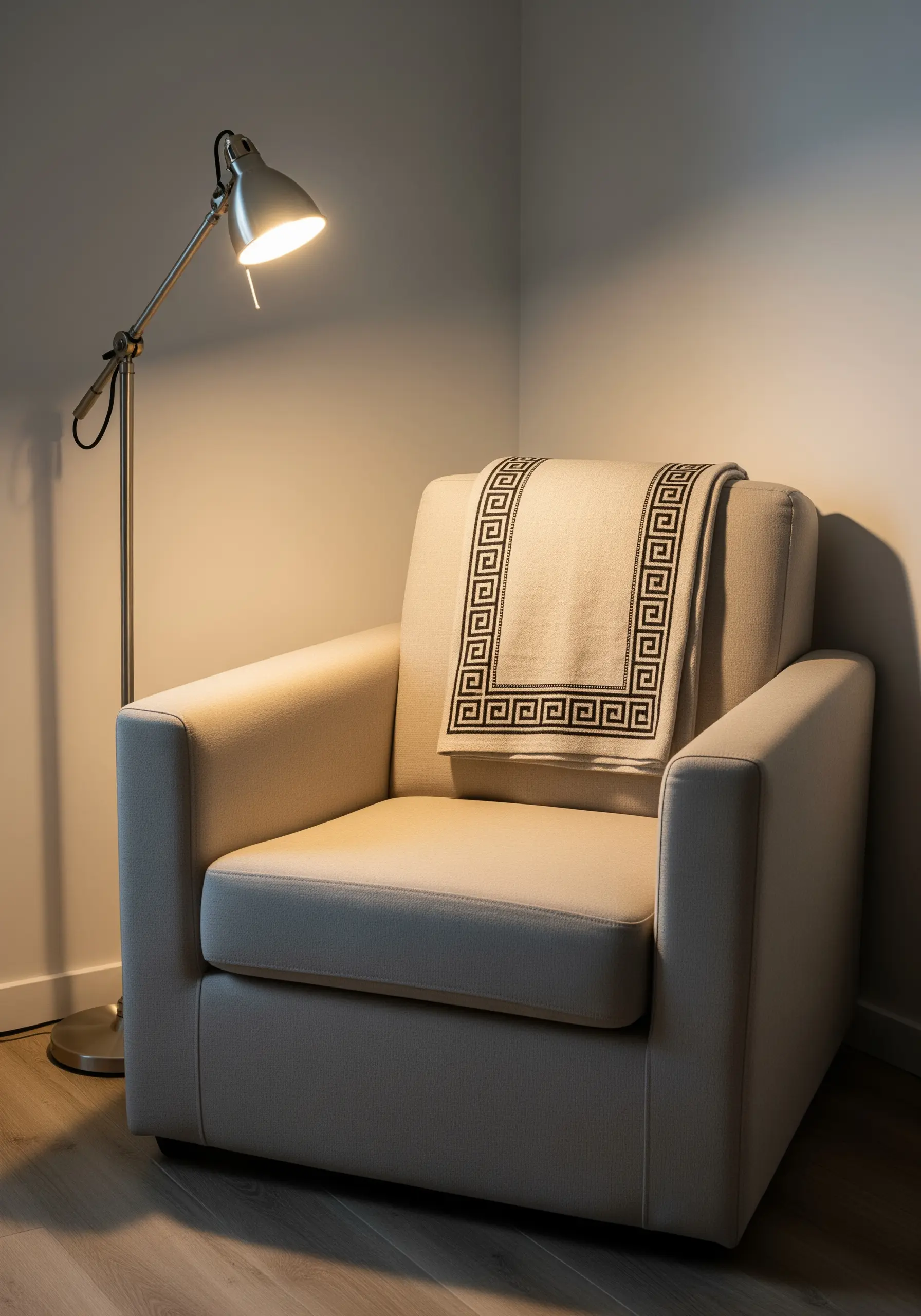
Frame a simple throw blanket or cushion with a striking geometric border.
A classic Greek key or a repeating triangle pattern, rendered in a high-contrast color like black on cream, adds instant architectural elegance.
Use a dense satin stitch to ensure the design is bold and fully opaque, making it the dominant feature.
This technique is a powerful way to transform an inexpensive textile into a high-end decor piece.
13. The Stitched Grid Memo Board
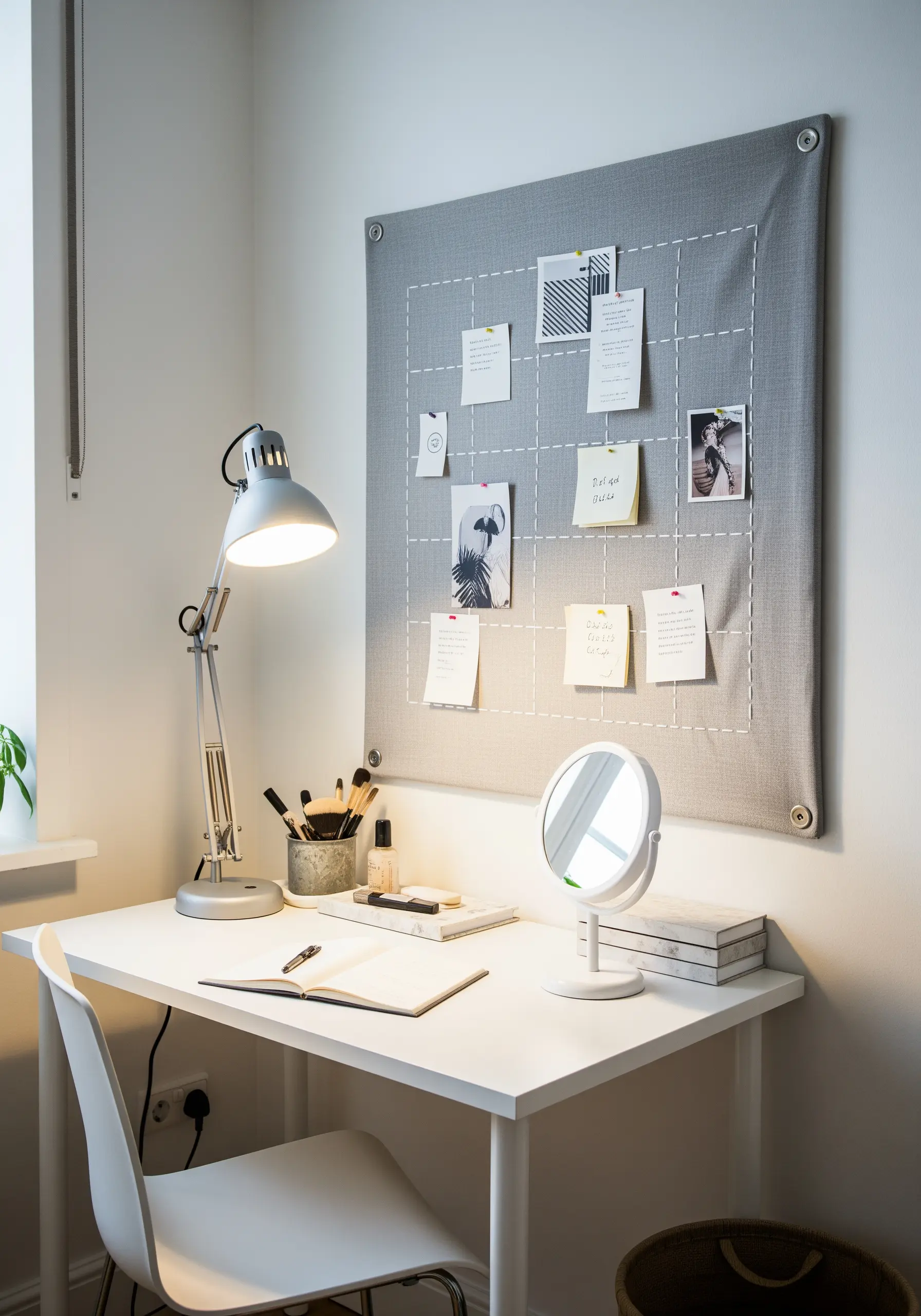
Create a functional piece of art for your workspace that is both beautiful and useful.
Stretch a neutral-colored linen over a corkboard, then use a simple running stitch with a contrasting pearl cotton to create a clean grid.
The stitched lines offer a soft, tactile alternative to a metal or plastic grid, adding handmade warmth to your organizational system.
14. Elegant Hand-Lettered Typography
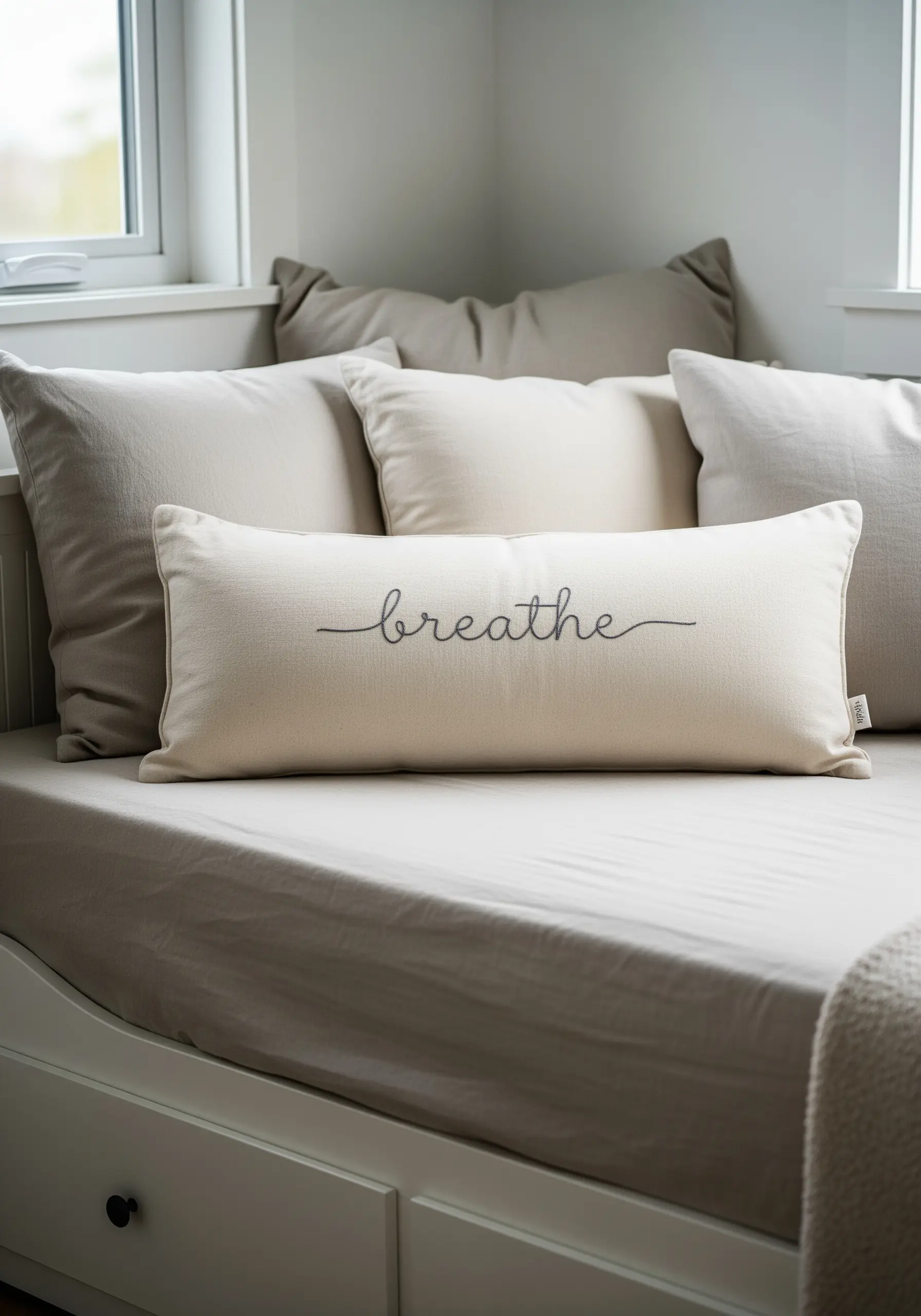
Stitching a single, resonant word transforms a simple pillow into a personal statement.
To achieve a fluid, calligraphic line, use a whipped backstitch or a stem stitch, both of which create a smooth, raised line that mimics ink.
Choose a calming thread color and a word that serves as a gentle reminder, like “breathe,” to create a piece that feels both restorative and beautiful.
15. The Radiating Energy of a Sunburst
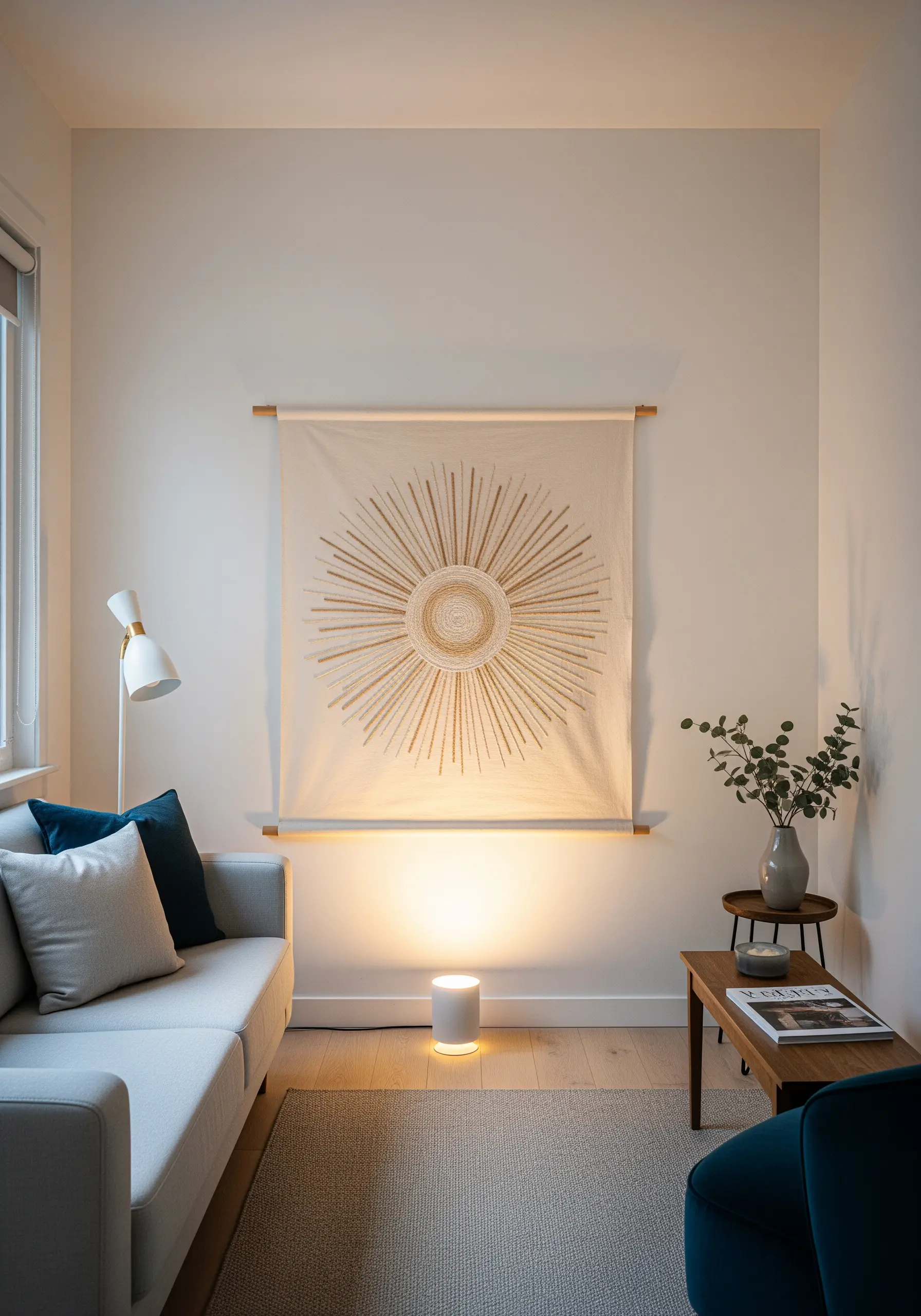
Fill a large canvas with radiating straight stitches to create a powerful sunburst motif that energizes a room.
Start with a central circle filled with satin stitch, then work outward with lines of varying lengths and thicknesses to create a sense of movement.
Incorporating a metallic thread alongside your standard floss will catch the light, adding a sophisticated shimmer that enhances the feeling of radiance.
16. A Windowsill Botanical Collection
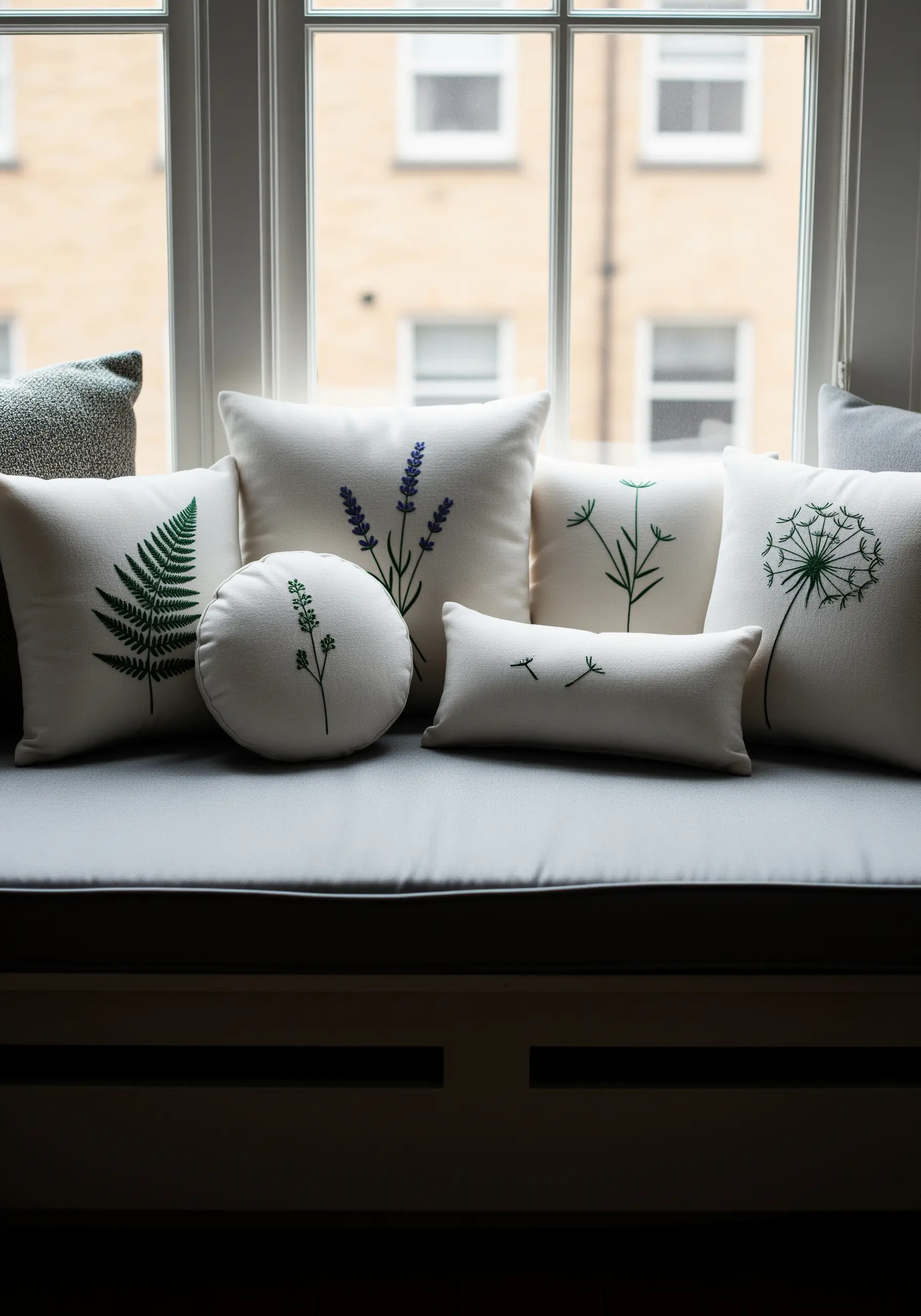
Create the feeling of an indoor garden by stitching a collection of botanical pillows.
To ensure the group feels cohesive, stitch different motifs—a fern, a dandelion, a sprig of lavender—using the same limited color palette.
Using just two shades of green and one muted accent color across all designs ties them together beautifully.
This allows each plant to have its own identity while contributing to a harmonious whole.
17. The Monochrome Texture Study
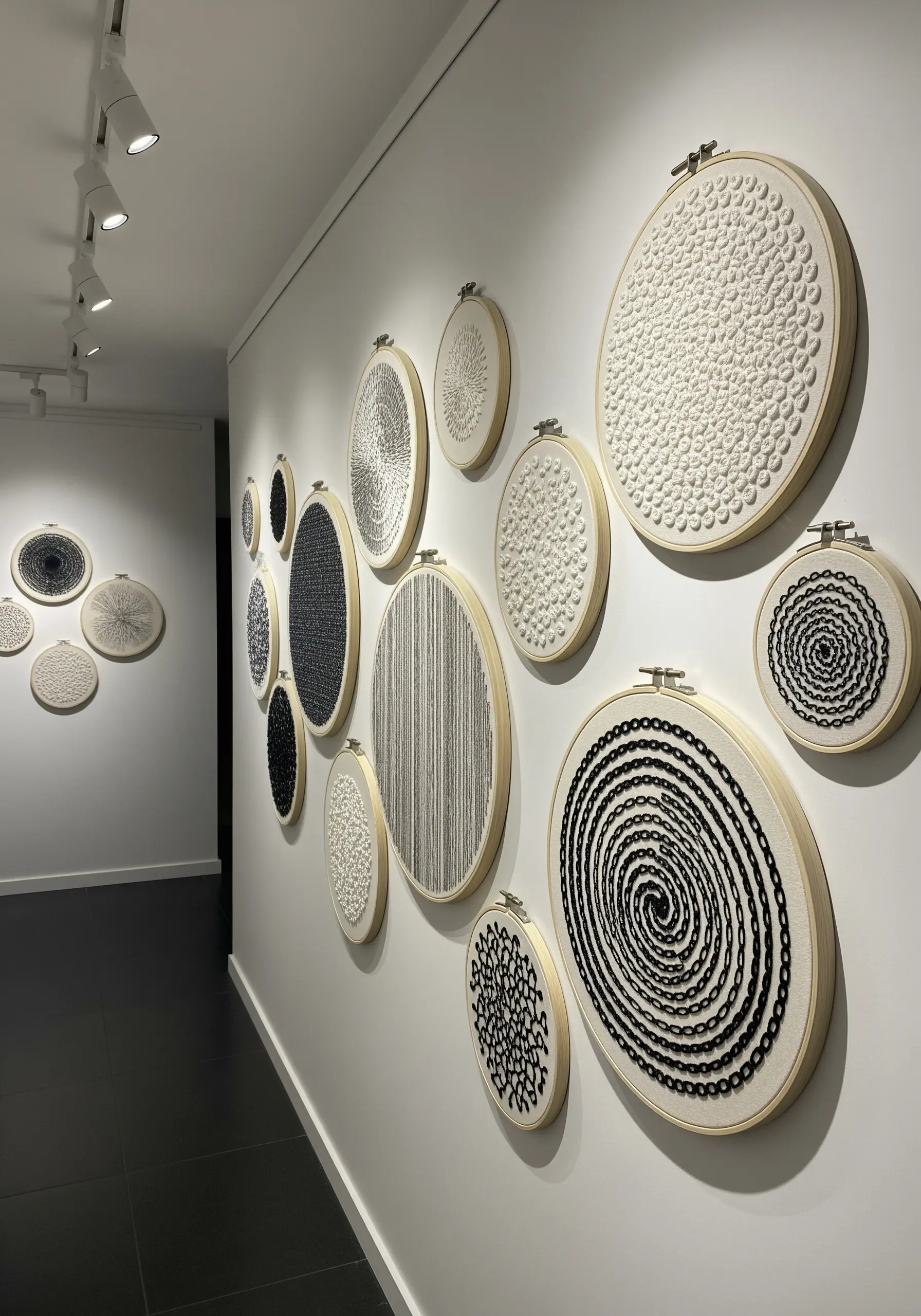
By limiting your palette to only black and white, you force yourself and the viewer to focus entirely on texture and pattern.
Create a gallery wall of hoops, each one a study in a different stitch: dense French knots for a pebbled surface, long straight stitches for a linear feel, or chain stitch spirals for hypnotic movement.
This exercise elevates the thread itself into the subject of the art, celebrating its tactile qualities.
18. Geometric Fauna Silhouettes
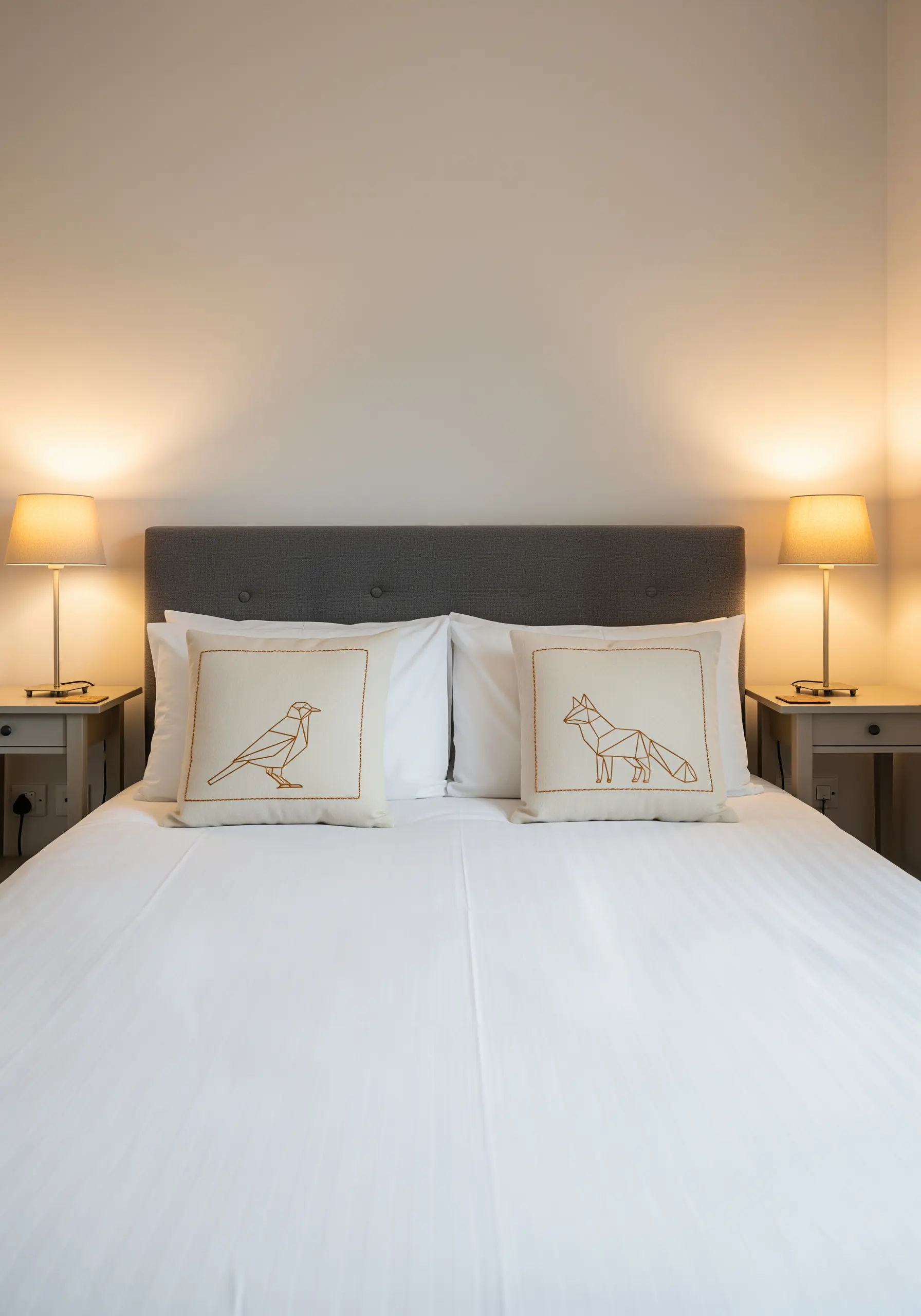
Reimagine animal forms with clean, angular lines for a modern, almost crystalline effect.
Instead of soft curves, use straight stitches and sharp angles to construct the silhouette of a fox or a bird.
This minimalist, origami-like approach feels incredibly contemporary.
Stitching with a warm ochre thread on an off-white linen background gives these geometric lines a soft, organic quality that feels inviting.
19. A Flowing Line Across Panels
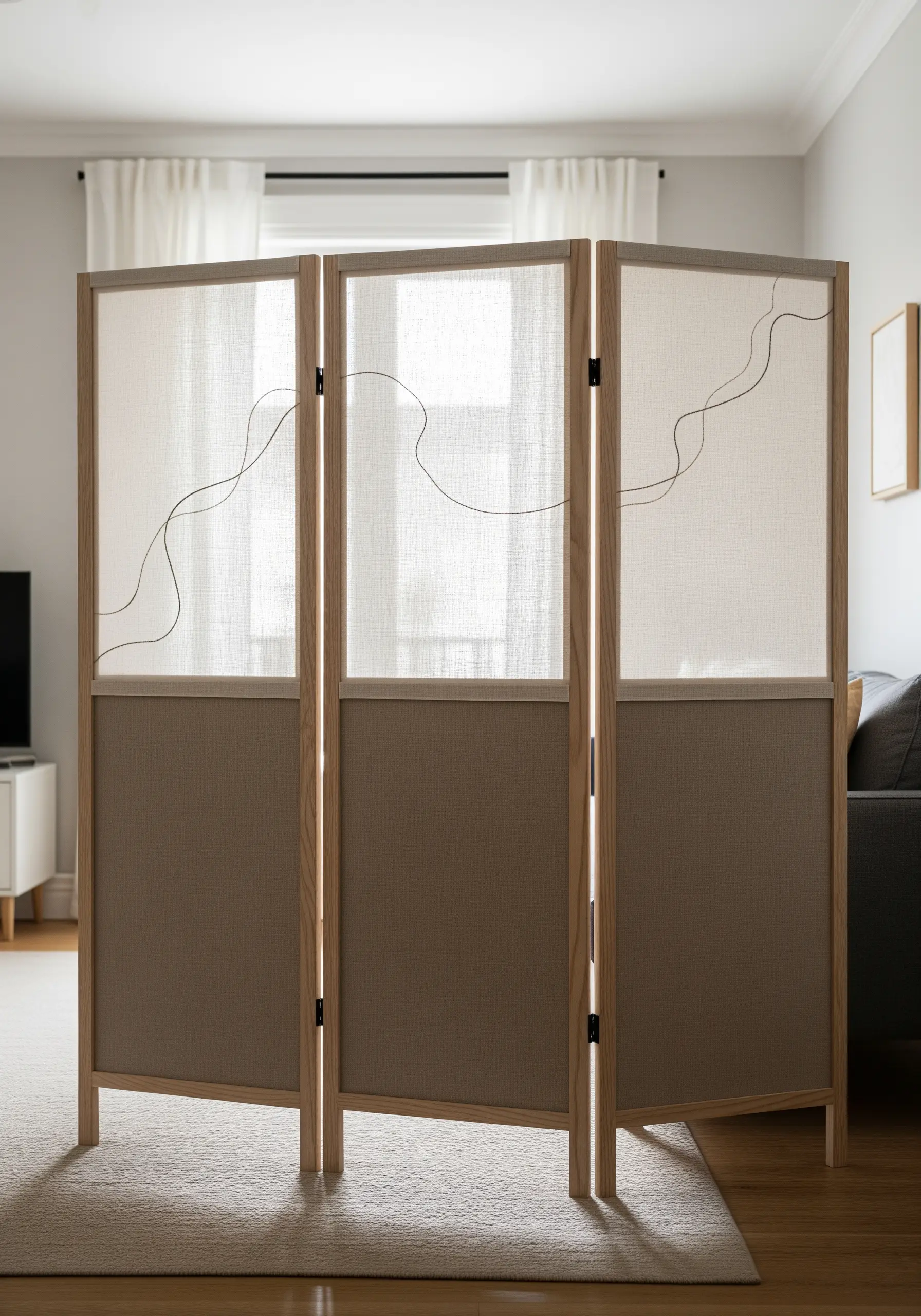
Use embroidery to unite separate objects into a single, cohesive piece of art.
A simple, meandering line stitched across the panels of a room divider turns a functional item into a focal point.
The key to success is perfect alignment; trace your full design across all panels before you begin stitching to ensure the line flows seamlessly.
This technique allows you to connect separate elements into one thoughtful composition.
20. The Single Subject Still Life
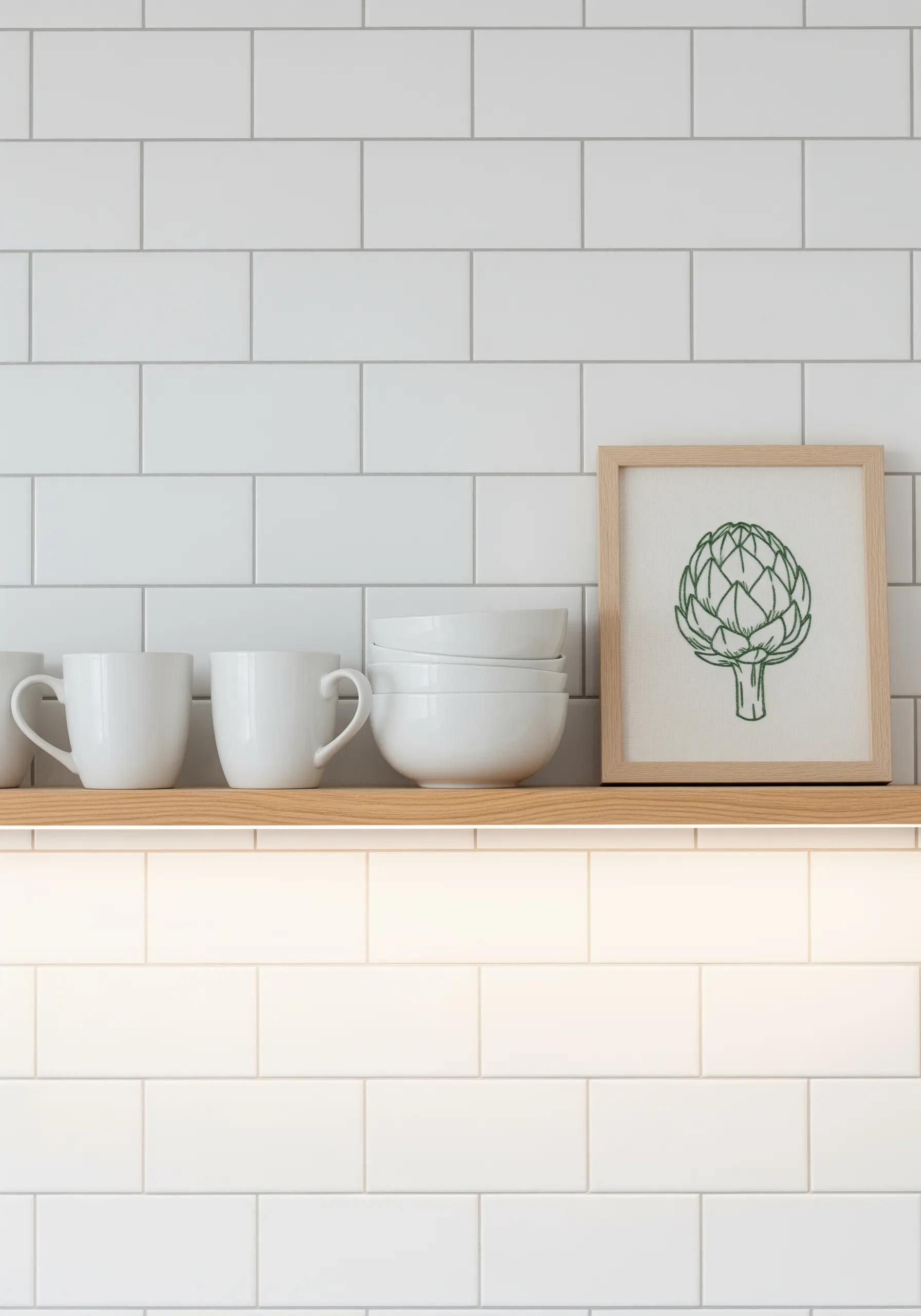
Celebrate the quiet beauty of an everyday object by making it the sole focus of your piece.
An artichoke, a pear, or a single leaf, rendered in a clean outline stitch, can be incredibly powerful in its simplicity.
Using a single, vibrant color on a neutral background allows the form of the object to take center stage.
This approach is a wonderful exercise in mindful observation.
21. Raised Stitches for 3D Rainbows
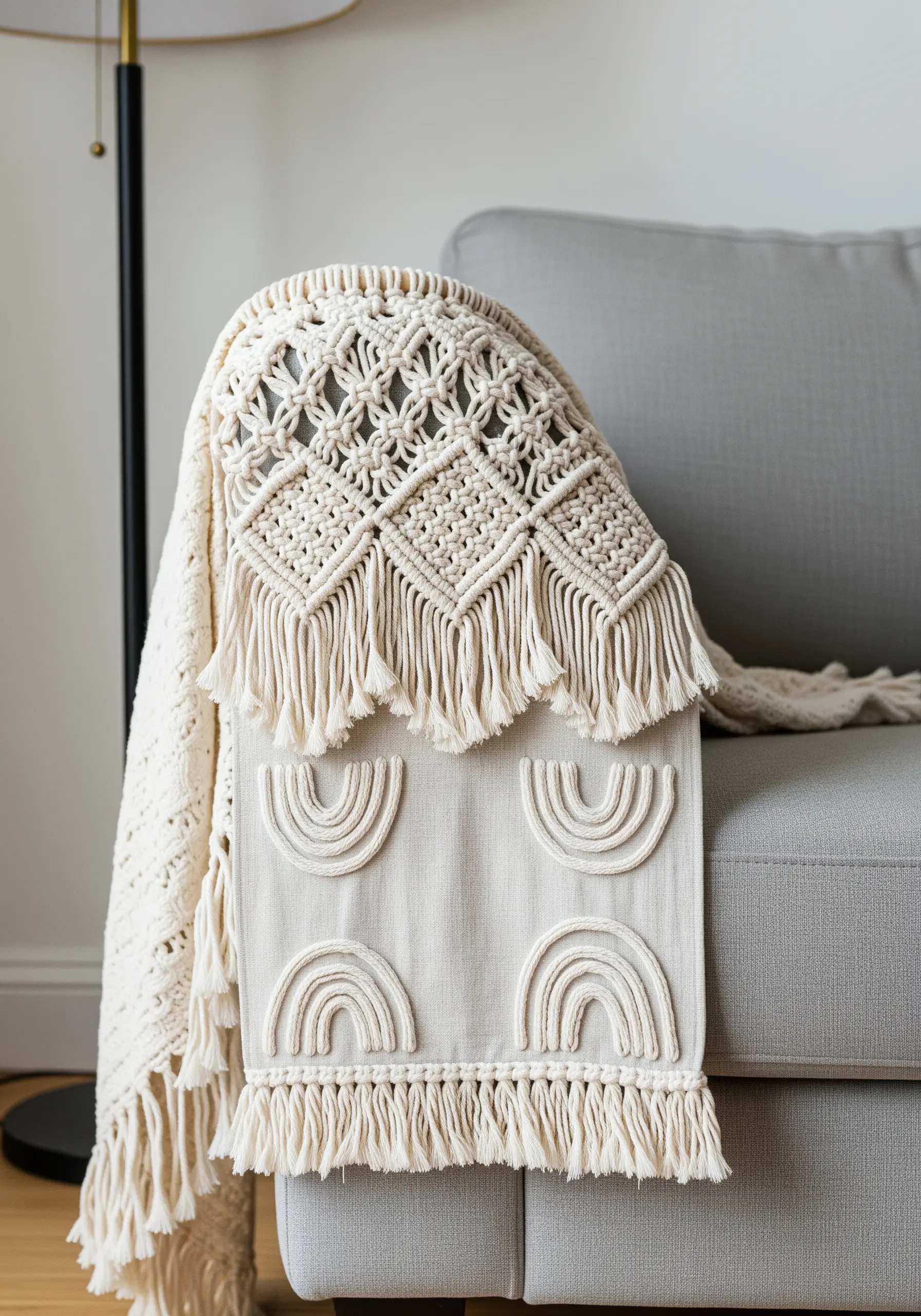
Add playful, touchable texture to a throw or pillow using raised stitches that create a sculptural effect.
Form simple rainbow arches with a padded satin stitch or a series of densely packed chain stitches.
Using a thick, soft yarn in a single neutral color keeps the design sophisticated and modern, emphasizing the 3D form over color.
22. Embroidered Labels for Chic Organization
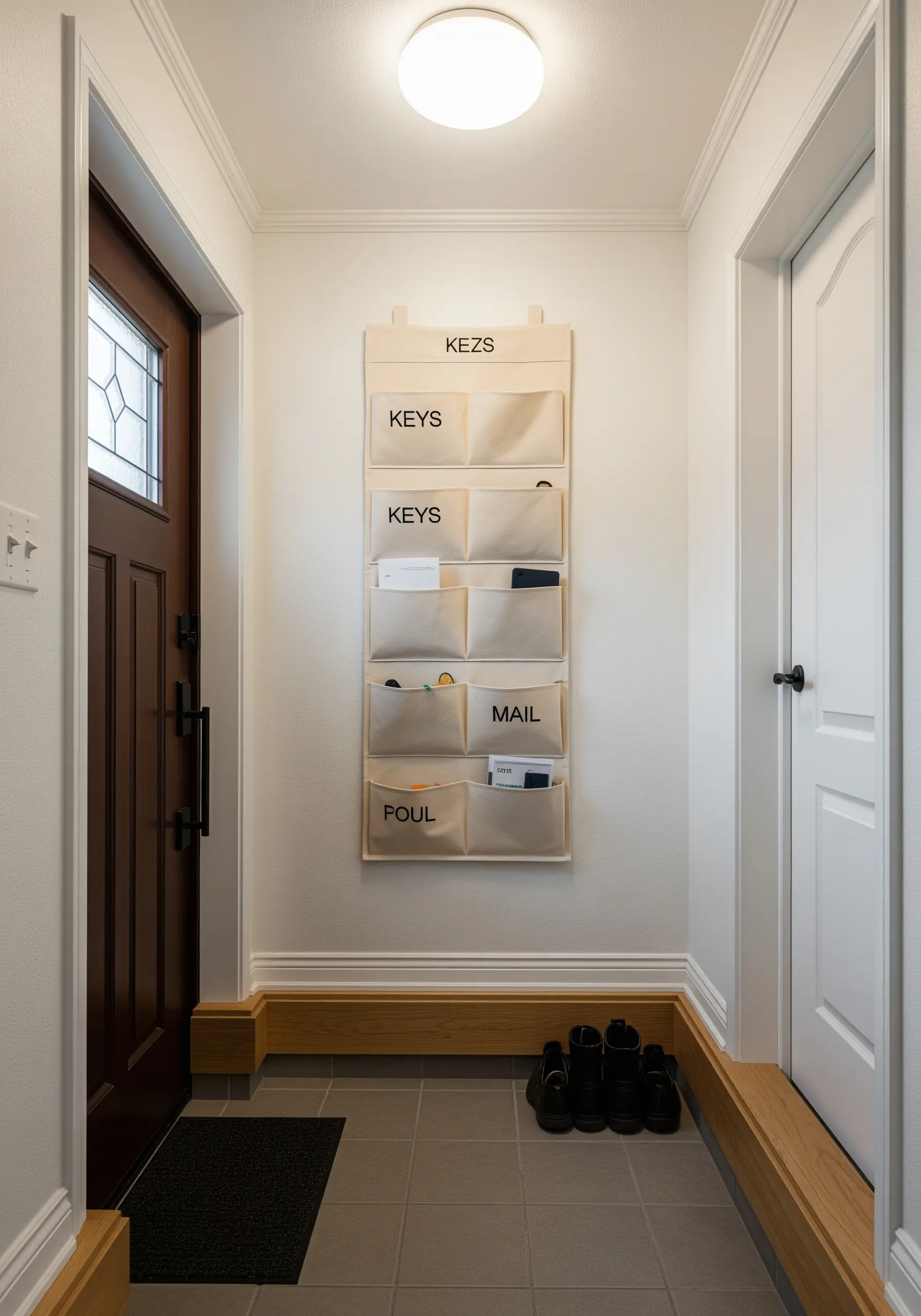
Elevate a simple fabric wall organizer with custom embroidered labels.
Use a neat backstitch and a classic sans-serif font to add clear, minimalist text like “KEYS” or “MAIL.”
This small detail introduces a high-end, bespoke feel to an otherwise utilitarian object.
It’s a functional upgrade that makes a significant aesthetic impact in an entryway or office.
23. The Minimalist Starburst Motif
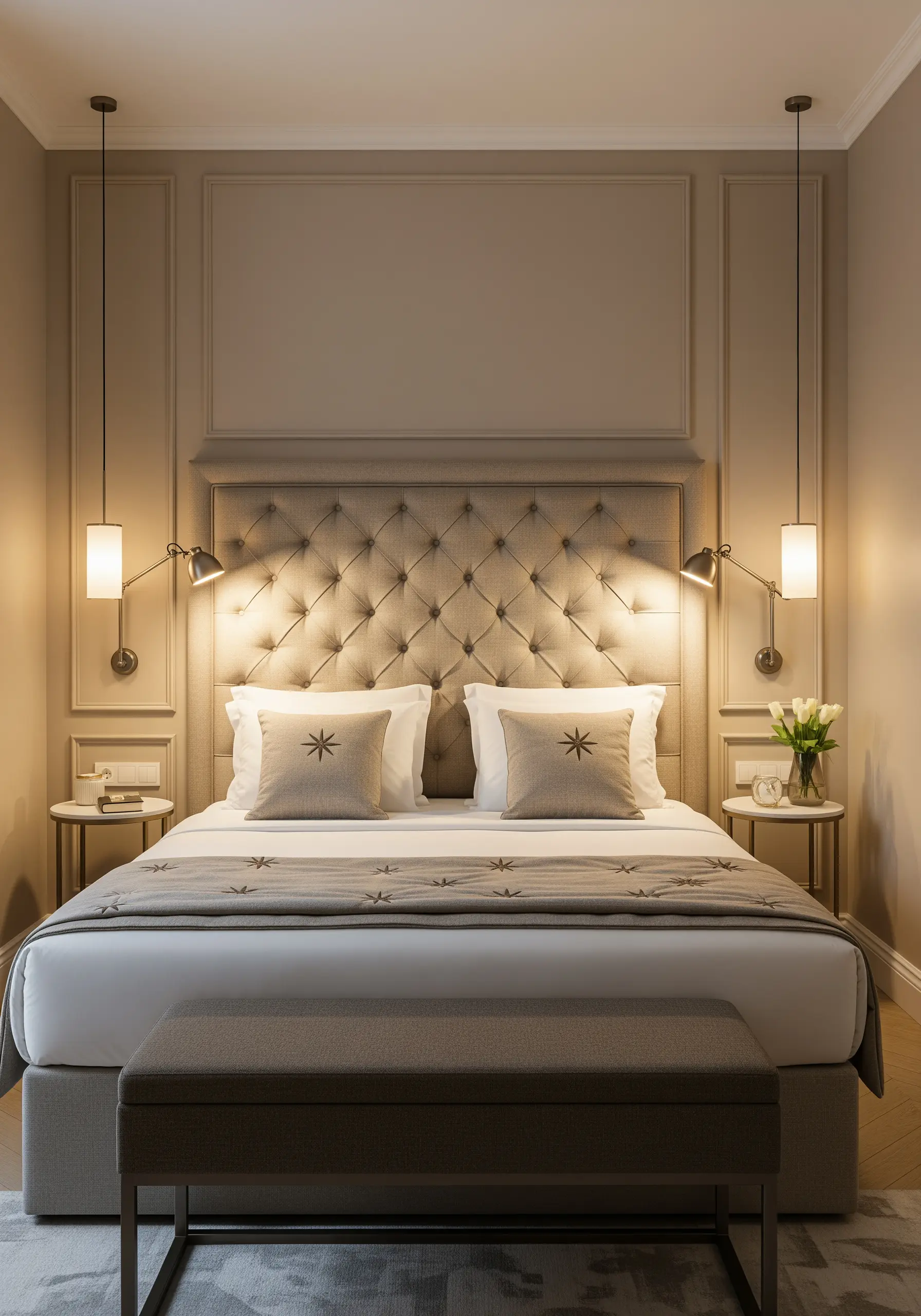
Create an elegant accent on pillows or linens with a simple starburst motif made from a few intersecting straight stitches.
For a subtle, luxurious effect, use a thread that is only a shade or two lighter than your fabric.
This tone-on-tone approach adds a hint of texture and pattern that feels calm and refined.
It’s the perfect detail for creating a serene bedroom environment.
24. Illuminating Stitches on a Lampshade
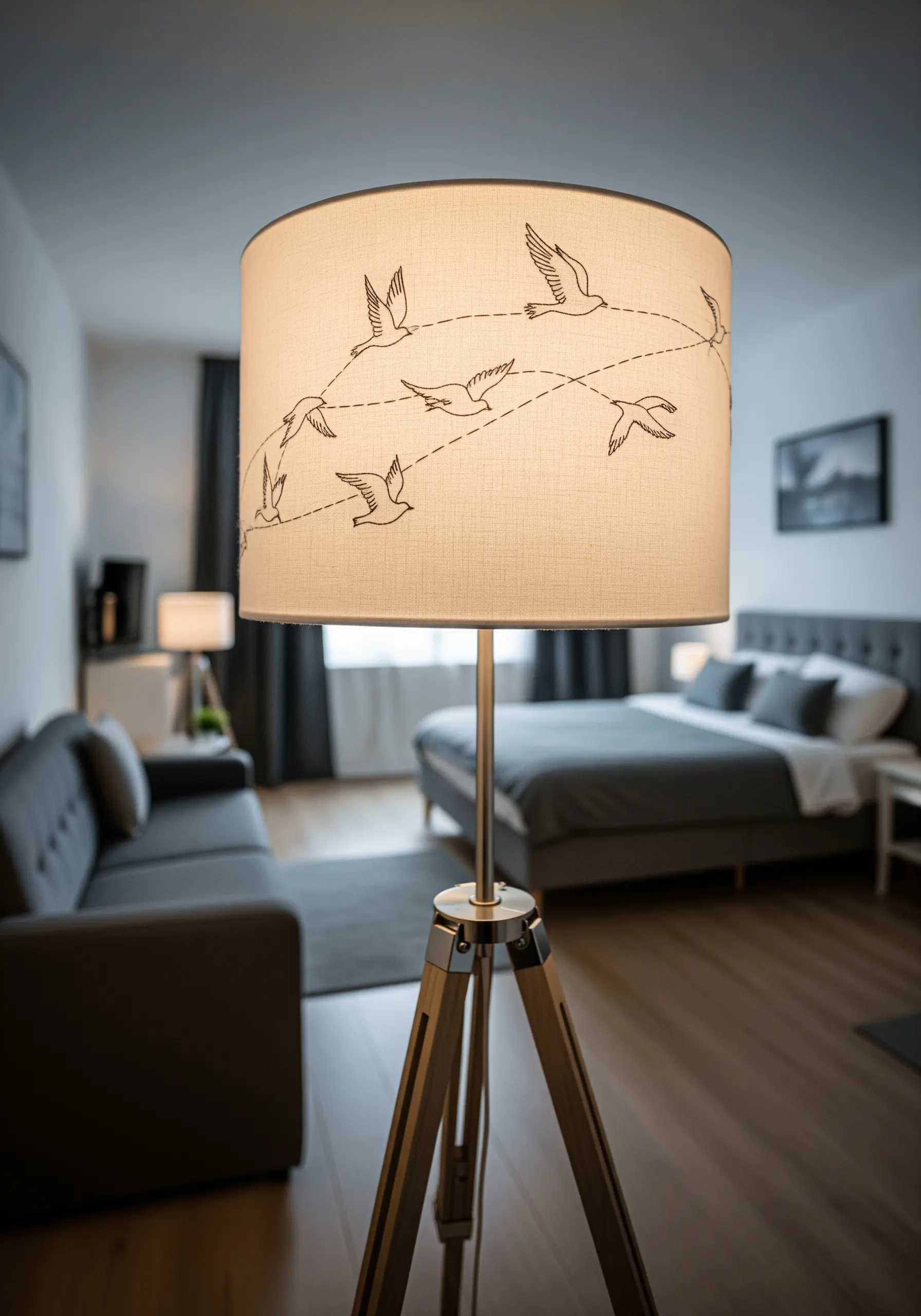
Turn a plain fabric lampshade into a piece of narrative art where the design is revealed by light.
Stitch silhouettes, like birds in flight, using a simple backstitch; when the lamp is on, they will be beautifully illuminated.
Because you are working on a taut, curved surface, use a sharp needle and small, deliberate stitches to avoid puckering.
The result is a dynamic scene that comes to life with light.
25. A Celestial Study in Seed Stitch
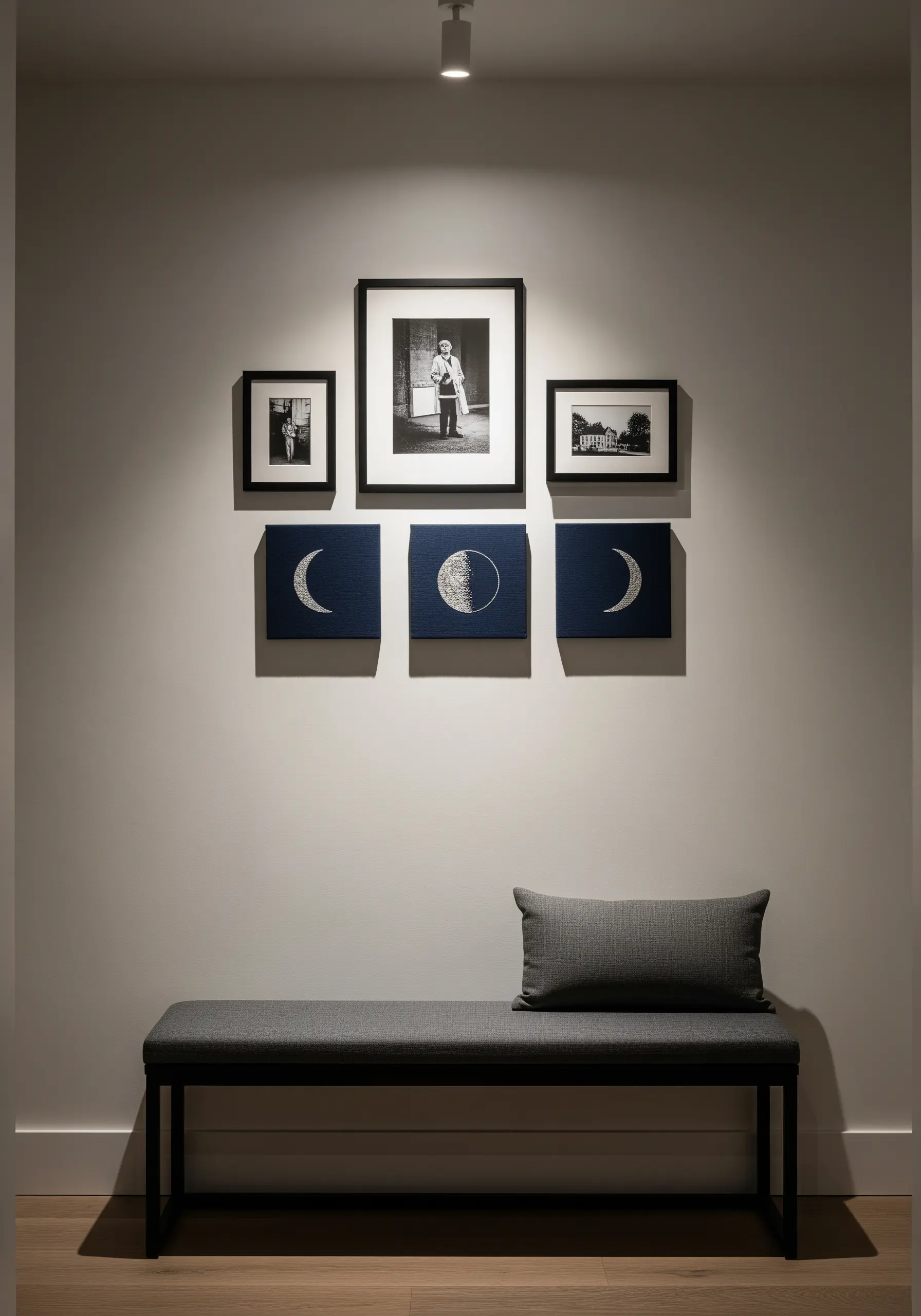
Capture the textured surface of the moon by filling its phases with dense seed stitch.
Use a silvery-white or pale gray thread on a dark navy background for a dramatic, cosmic contrast.
By varying the density and direction of your stitches, you can create the illusion of craters and shadows on the moon’s surface.
Grouping the different phases creates a serene and compelling gallery display.
26. Ghost Stitching on Sheer Fabric
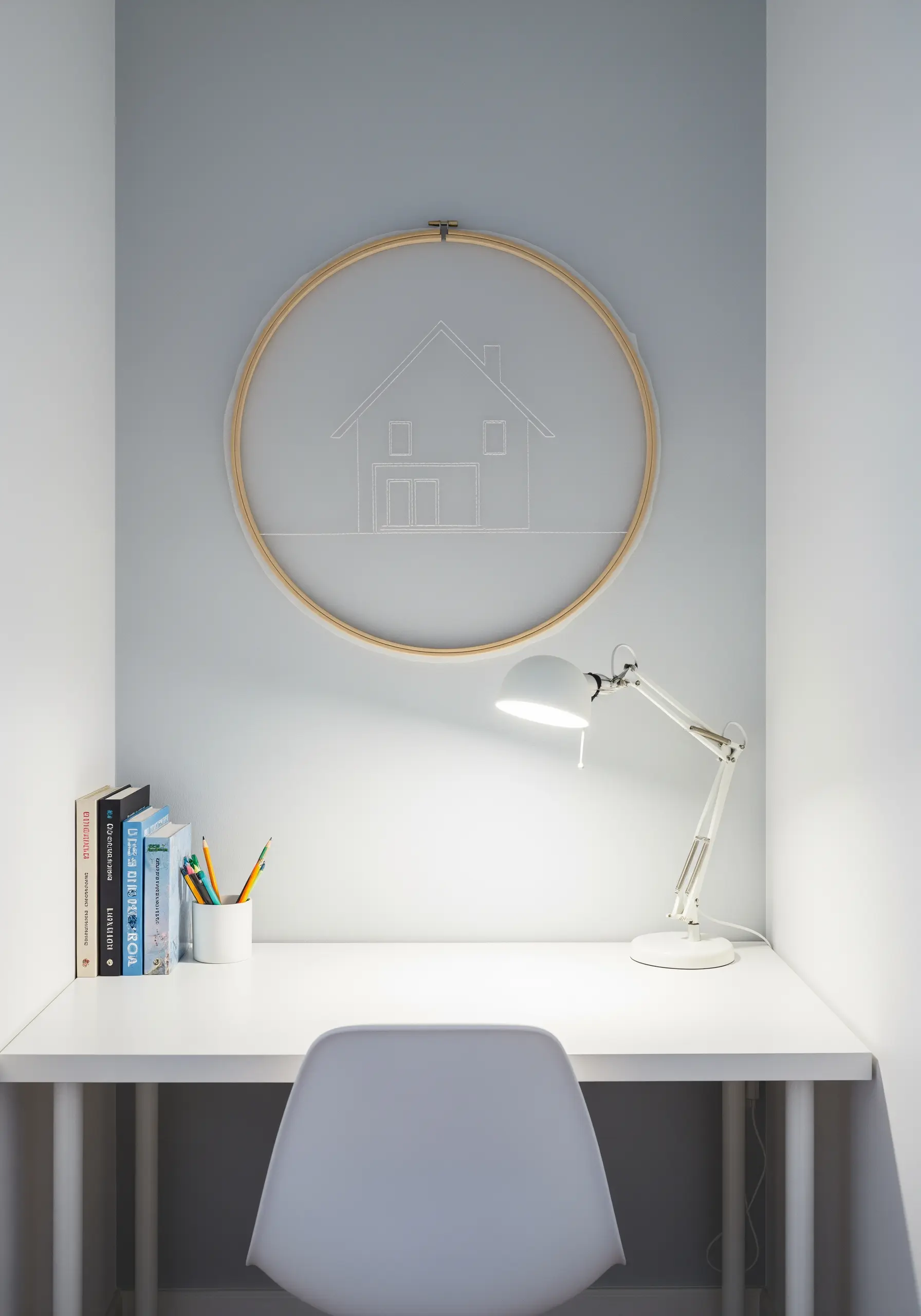
Create a delicate, ethereal effect by stitching on a sheer fabric like tulle or organza.
A simple outline of a house, stitched in white thread on a translucent ground, will appear to float weightlessly within the hoop.
This technique powerfully utilizes negative space, and the finished piece will cast beautiful, subtle shadows on the wall.
Remember to handle the delicate fabric gently to avoid snags and pulls.
27. The Triptych: A Story in Three Parts
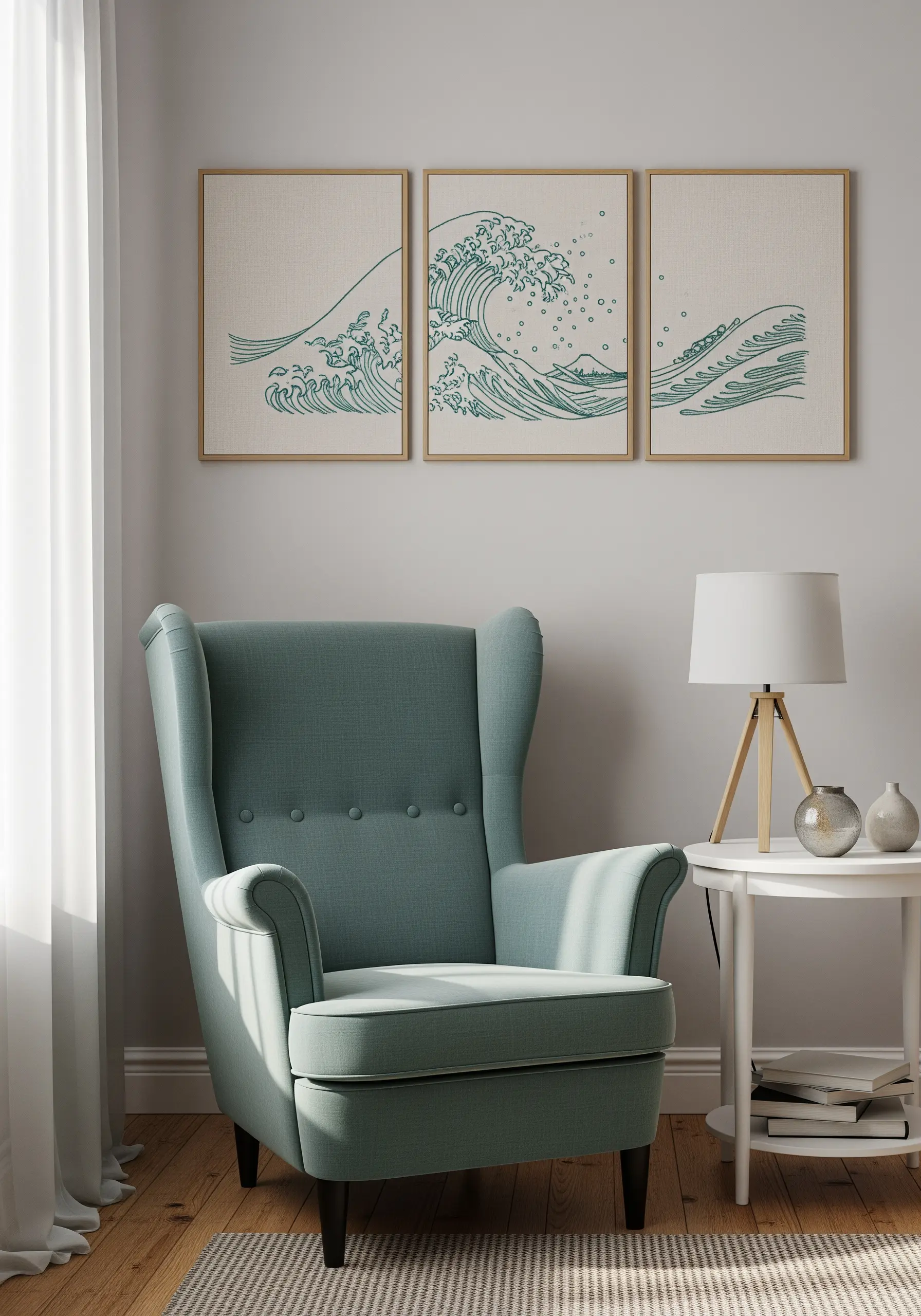
Amplify the impact of your work by splitting a single, continuous design across three separate frames.
This triptych format adds a sophisticated, gallery-like quality to your embroidery.
For a wave motif, use varying line weights and stitch styles—like backstitch for outlines and French knots for sea spray—to create texture and movement.
Maintaining a consistent color palette across all three panels is crucial for a cohesive final piece.
28. Textural Coils as Sculptural Objects
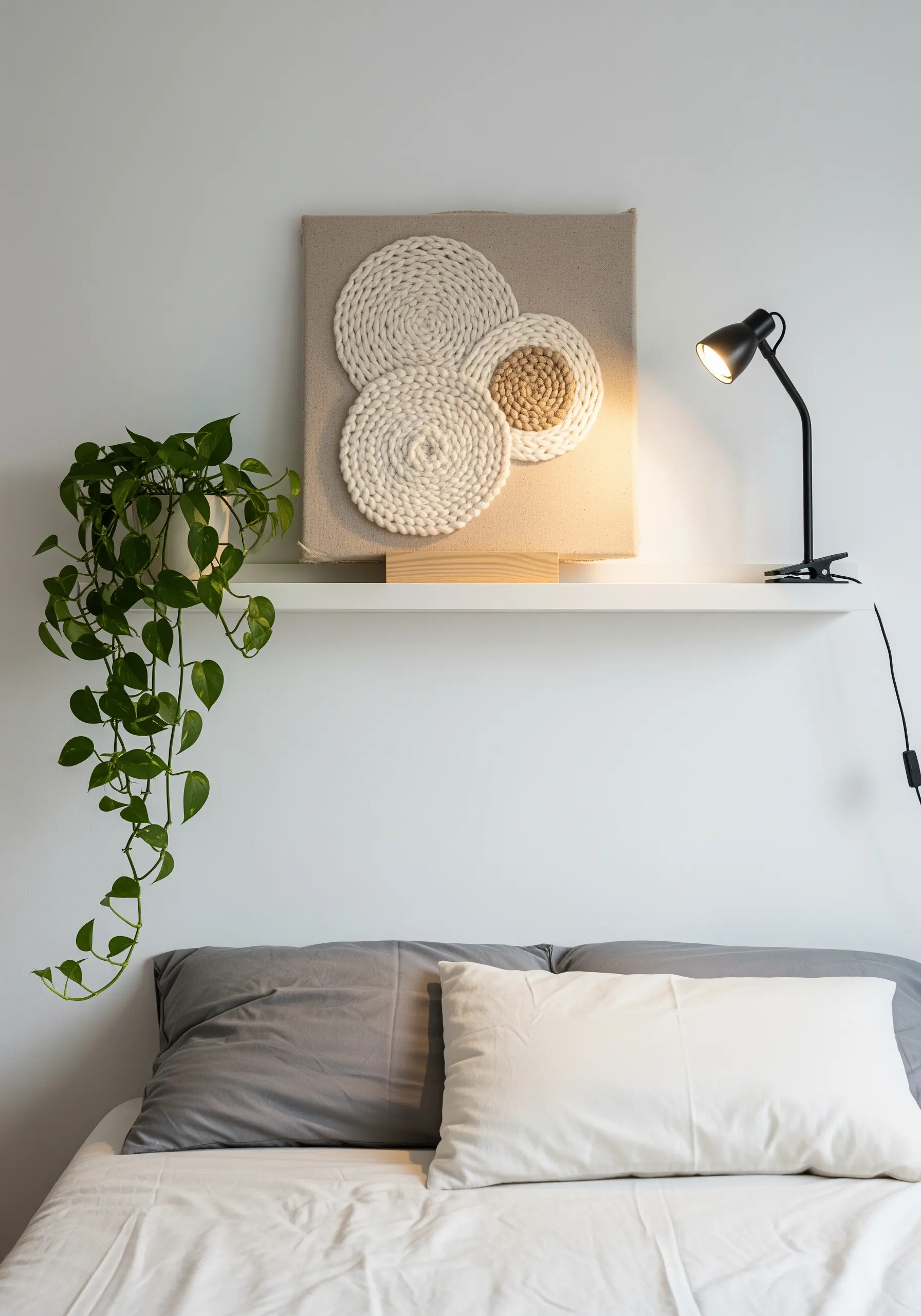
Create small, sculptural pieces by coiling and stitching thick rope or yarn, then displaying them as three-dimensional objects on a shelf.
Instead of mounting the coils flat, let them exist as tactile art that invites touch.
Wrap sections of the rope with different colored threads as you work to add subtle accents and visual interest.
This technique beautifully bridges the gap between embroidery and sculpture.
29. The Unexpected Pop of Color
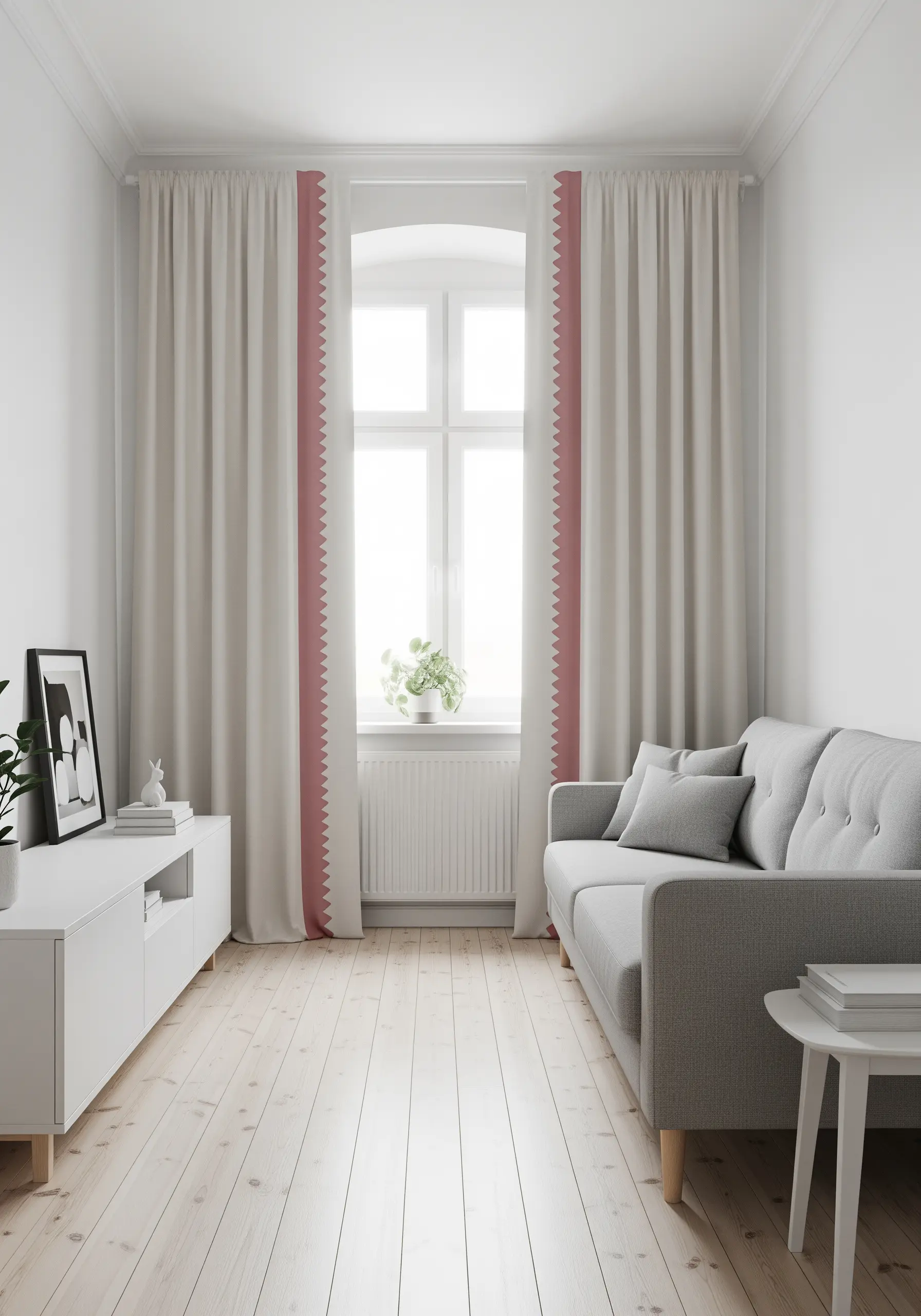
In an otherwise neutral room, an embroidered border on a curtain can serve as a stunning focal point.
Choose a single, bold color that contrasts with your muted surroundings.
A simple geometric pattern, executed with a thick satin stitch along the leading edge of the curtain panels, will draw the eye and add a custom, designer feel without overwhelming the calm of the space.
30. The Texture of Calligraphy
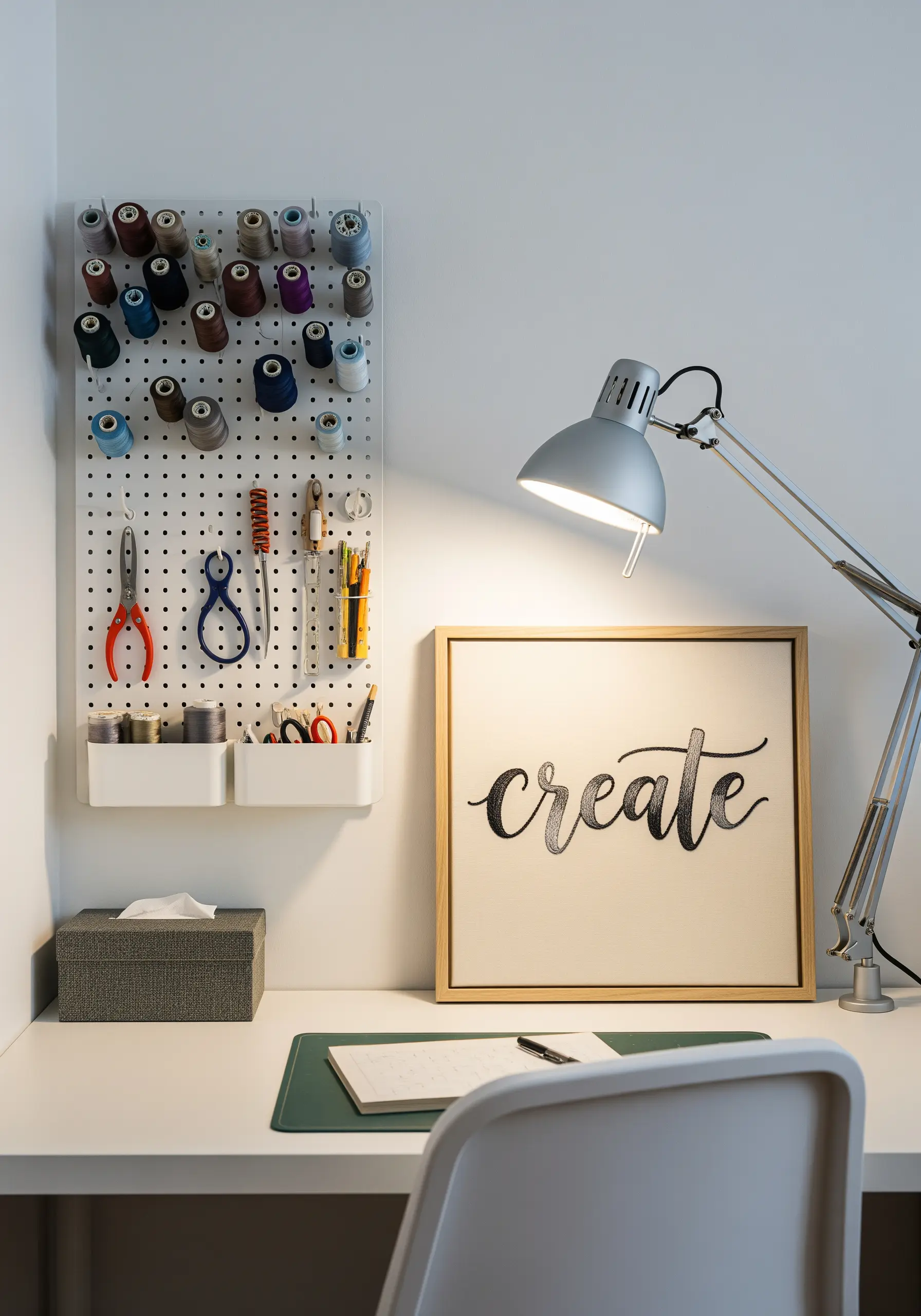
Recreate the look of ink calligraphy by filling in letters with dense, directional stitches instead of a simple outline.
Use a split stitch or short satin stitches to fill the wide strokes of each letter, ensuring your stitches follow the natural curve of the form.
This technique gives the word a rich texture and depth that a simple outline lacks, turning typography into touchable art.
31. Stitching on Unconventional Surfaces
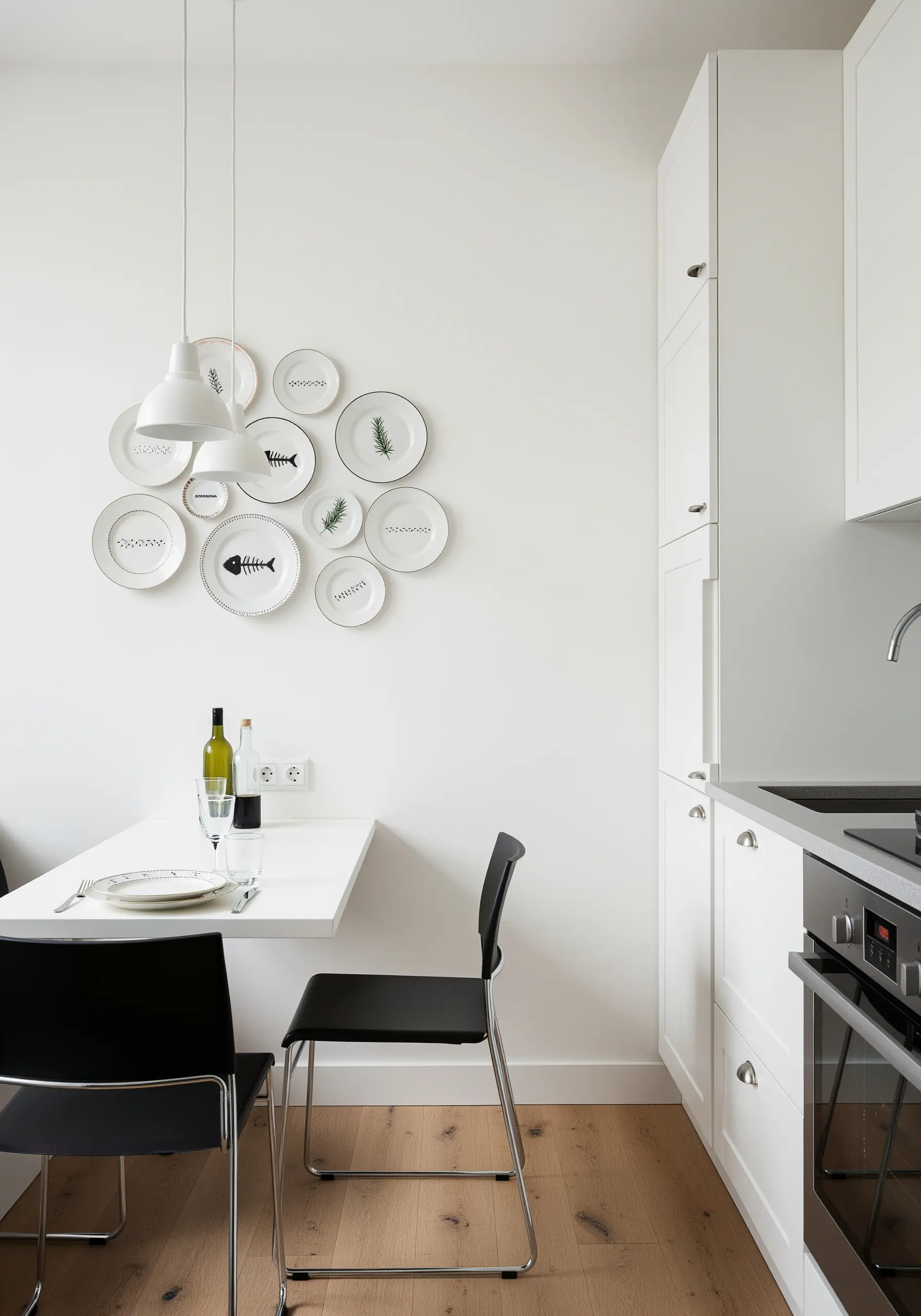
Create a surprising and playful gallery wall by embroidering on paper plates.
This unexpected canvas challenges the viewer’s expectations of what embroidery can be.
Use simple, graphic motifs like fishbones or herb sprigs stitched in a single, high-contrast color.
It’s an affordable and imaginative way to create a collection of art that feels both classic and completely unique.
32. The Meditative Maze Headboard
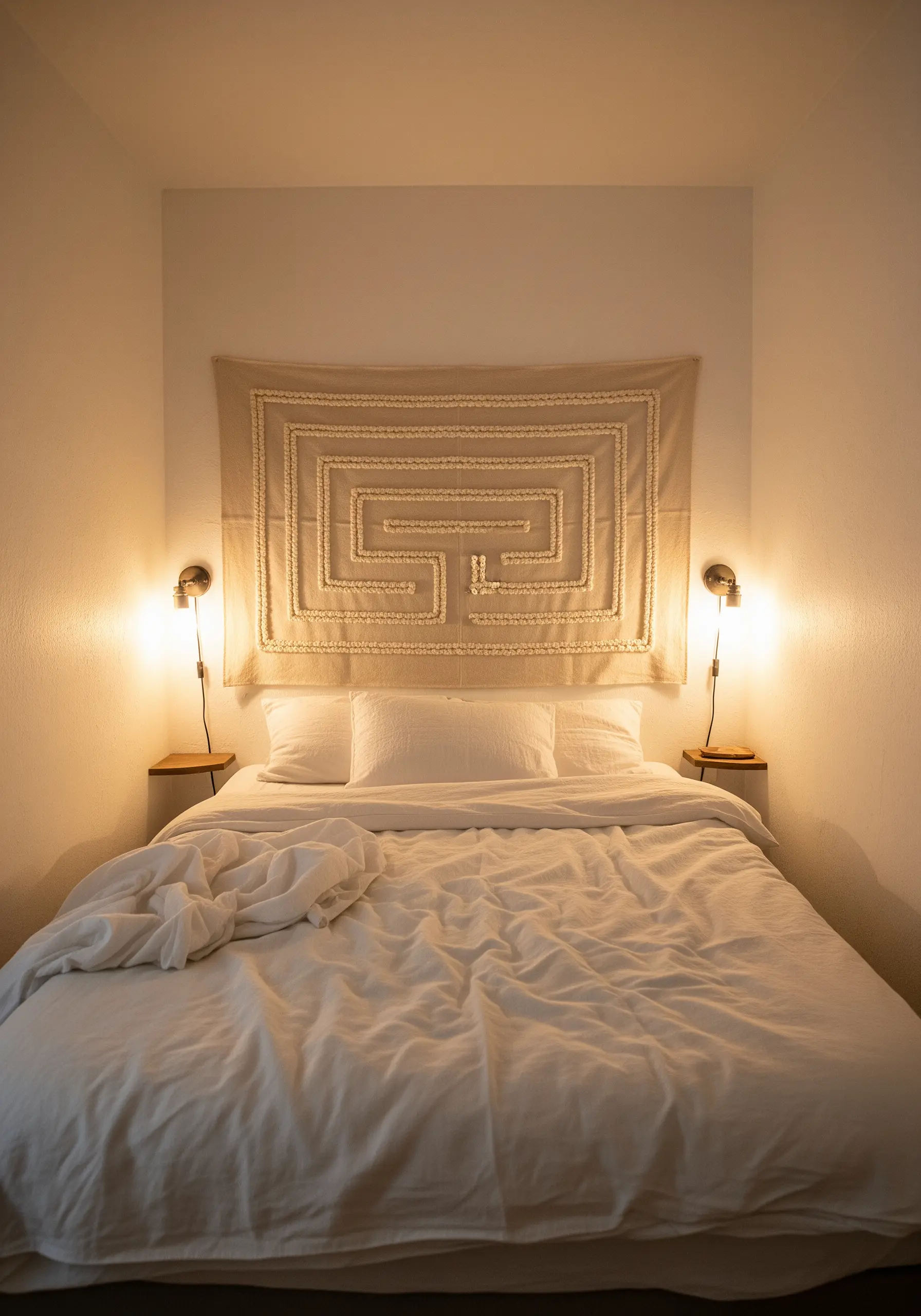
Transform your bedroom with a large, embroidered wall hanging that doubles as a headboard.
A continuous, maze-like pattern stitched with thick yarn creates a calming and meditative focal point.
Use a couching stitch to secure the chunky fibers to a heavy linen background.
The impressive scale and textural quality add softness and warmth, turning your bedroom into a true sanctuary.