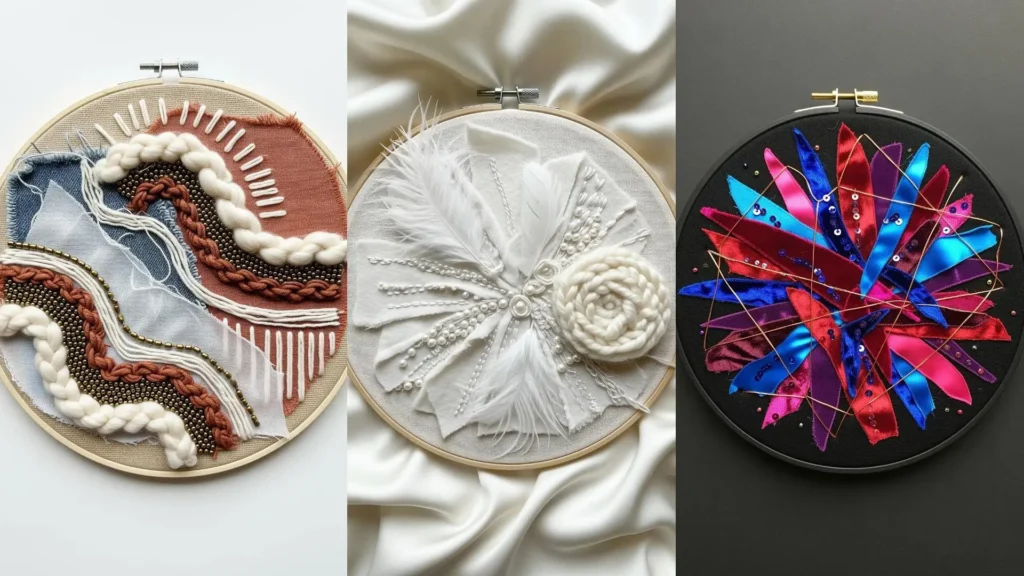
Perhaps you’ve found yourself looking at a finished cross-stitch piece and feeling like something is missing. The stitches are neat, the colors are right, but it doesn’t quite have that modern, artistic spark you were hoping for.
It’s a common feeling—the sense that you’re caught between the cozy nostalgia of a traditional craft and the desire to create something that feels truly contemporary and personal. You don’t need to abandon the simple, meditative joy of the ‘X’ stitch to get there. You just need a new perspective.
Think of the grid not as a limitation, but as a foundation for innovation. In the ideas that follow, you’ll discover how a simple change—switching your fabric color, playing with negative space, or stitching on an entirely new material—can transform your work. These are not just different patterns; they are different ways of thinking about what cross-stitch can be.
1. Master Geometric Abstraction

Move beyond intricate shading by embracing bold, geometric color blocking.
Use solid fields of color to define shapes, creating a clean, graphic landscape that feels modern and intentional.
Select a tight, curated color palette—like deep teal, mustard, and cool grays—to ensure the composition remains cohesive and sophisticated.
This technique relies on the power of shape and color harmony, proving that simplicity can have a greater impact than complexity.
2. Electrify Your Art with a Black Canvas
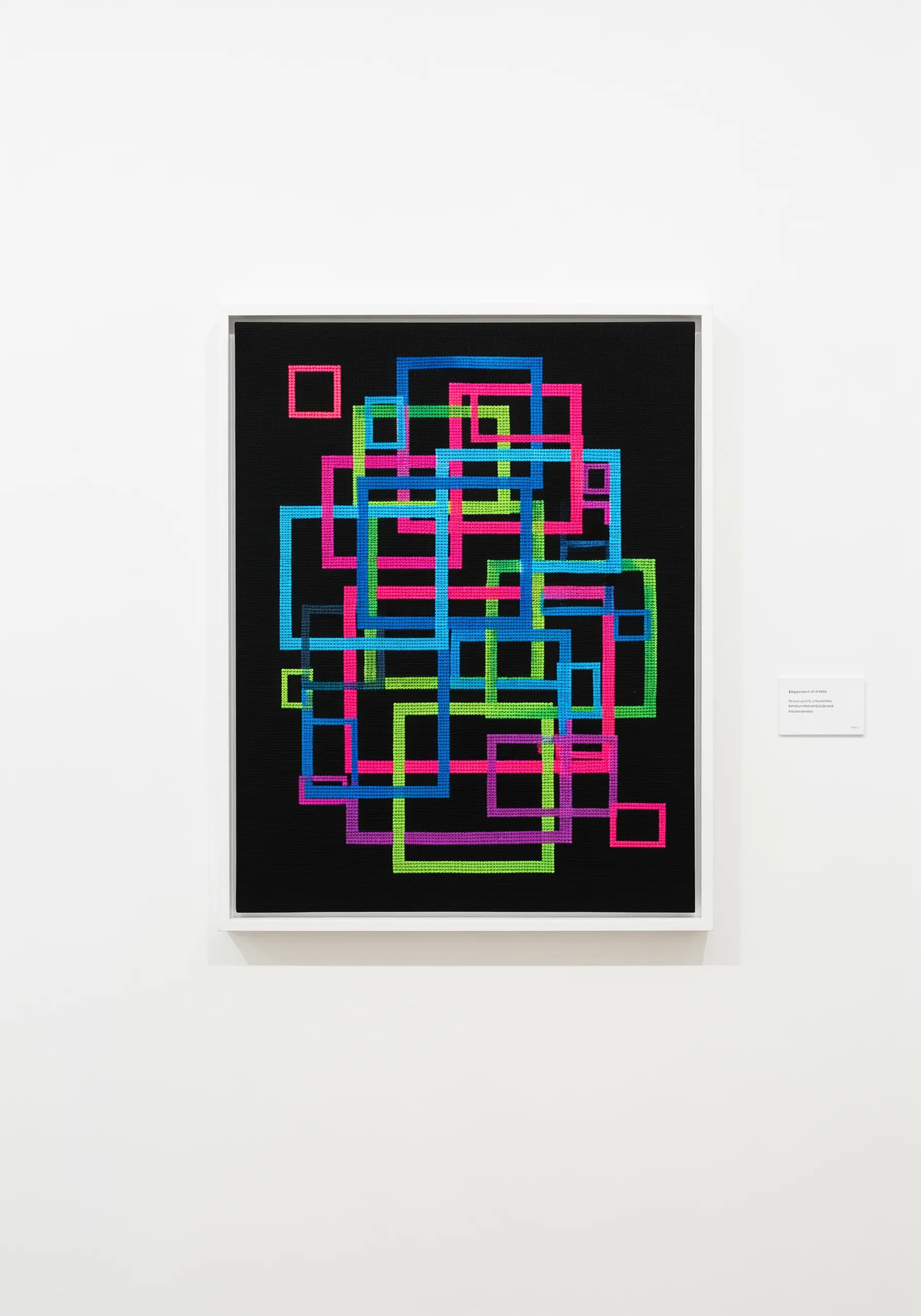
Swap traditional white Aida for black fabric to instantly make your colors vibrate with energy.
Neon or brightly saturated threads appear more luminous against a dark background, creating a high-contrast effect that demands attention.
When stitching on black, ensure you have good lighting to reduce eye strain and keep your stitches neat.
This is a simple switch in materials that fundamentally changes the mood of your piece, turning a simple geometric pattern into a dynamic work of abstract thread shapes.
3. Take Your Stitches to Denim
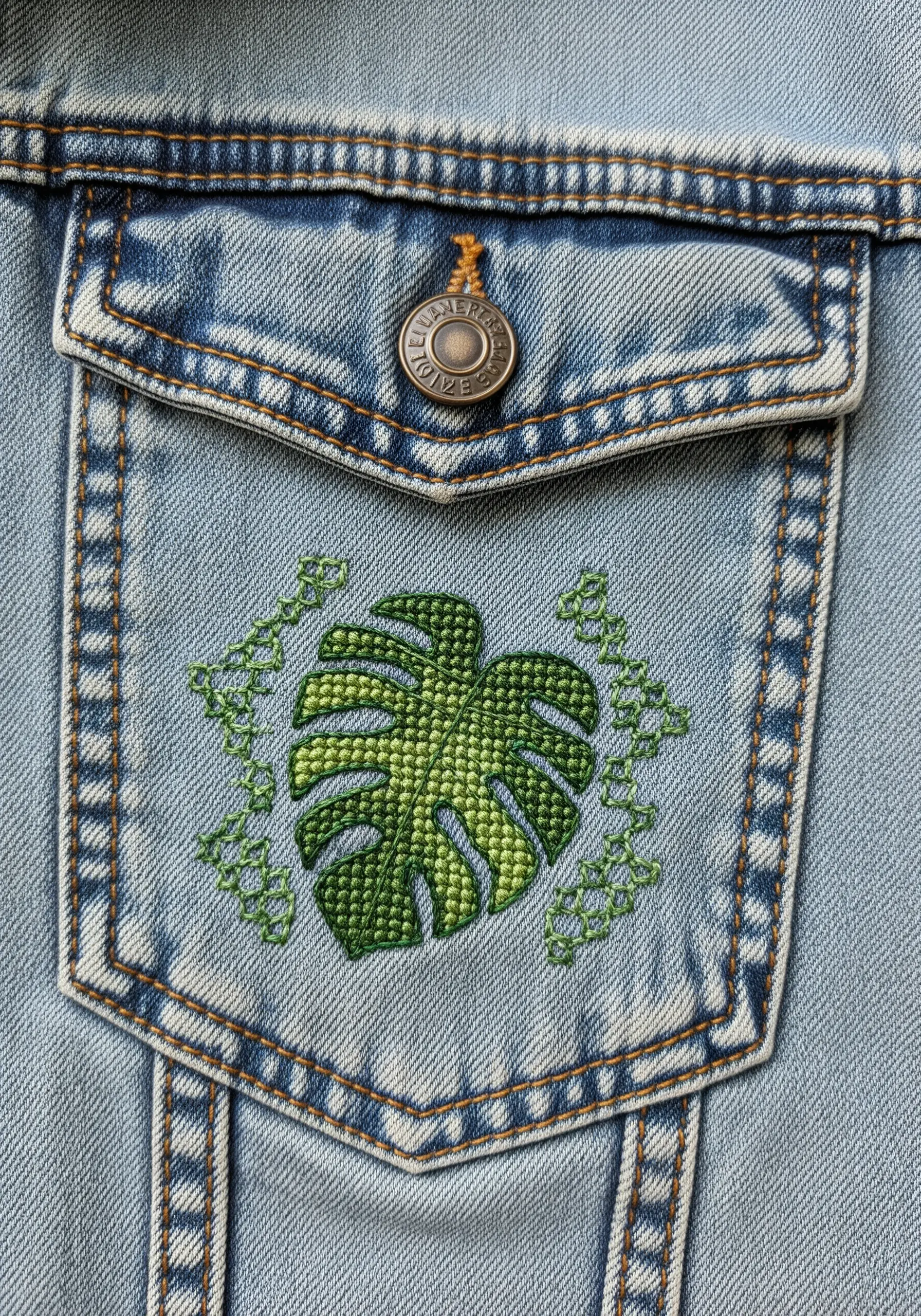
Embellish your favorite denim jacket by stitching directly onto the fabric.
To create a grid on non-Aida fabric, use waste canvas or a water-soluble stabilizer.
You simply baste it onto the denim, stitch your design as you normally would, and then wet or pull away the guide threads, leaving only your work behind.
For the subtle color shifts in the leaf, use two or three closely related shades of green to create a simple, effective gradient.
4. Embrace the Power of Negative Space
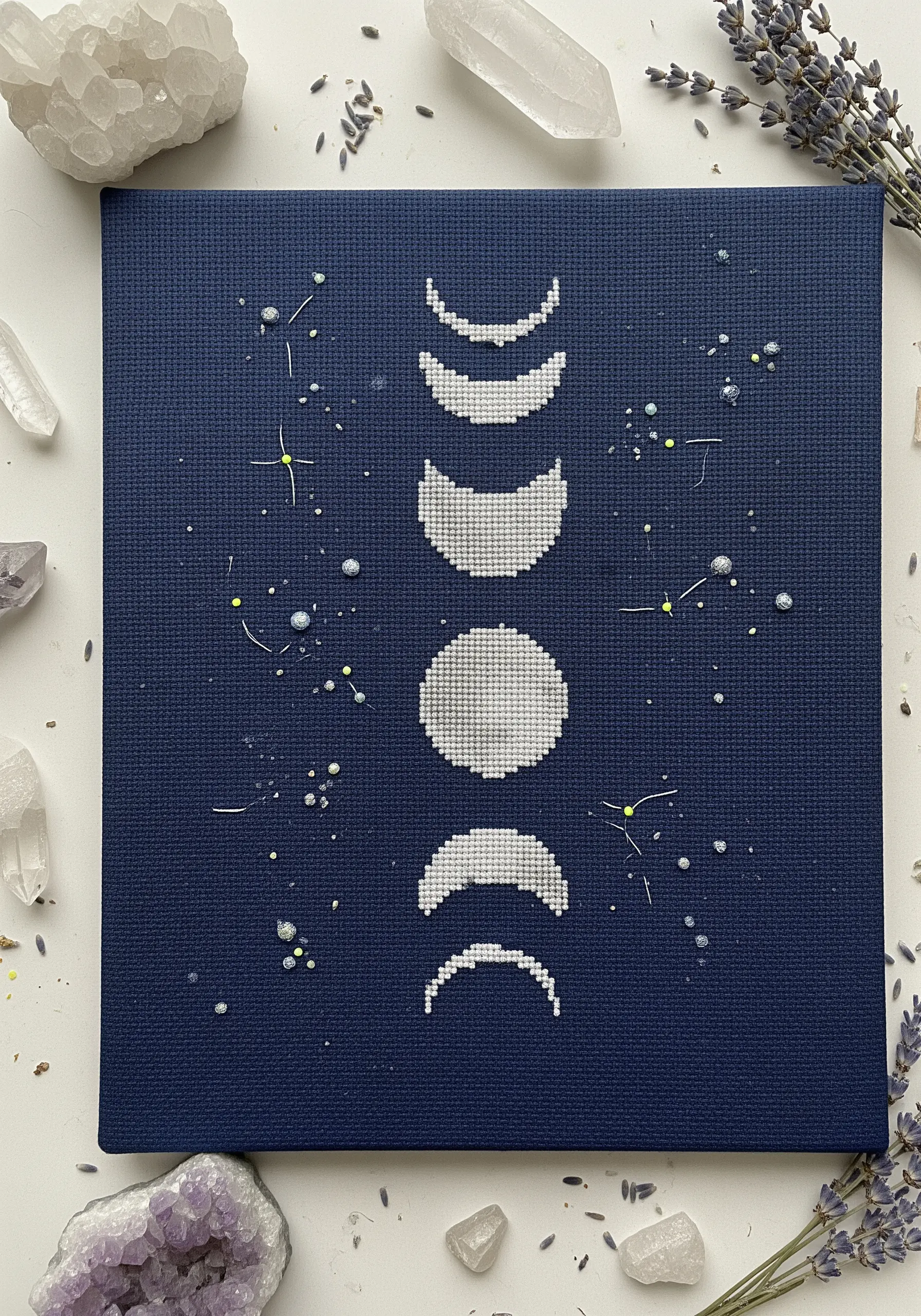
Create a striking celestial design by letting the fabric do half the work.
Stitching a simple motif in white or silver thread on dark navy Aida cloth emphasizes the shapes through stark contrast.
The unstitched fabric becomes the night sky, making your moon phases appear to glow.
Add tiny, scattered French knots or single stitches to represent stars, enhancing the design’s depth without cluttering it.
This minimalist approach is perfect for moon and stars embroidery ideas that feel both modern and serene.
5. Curate a Thematic Hoop Triptych
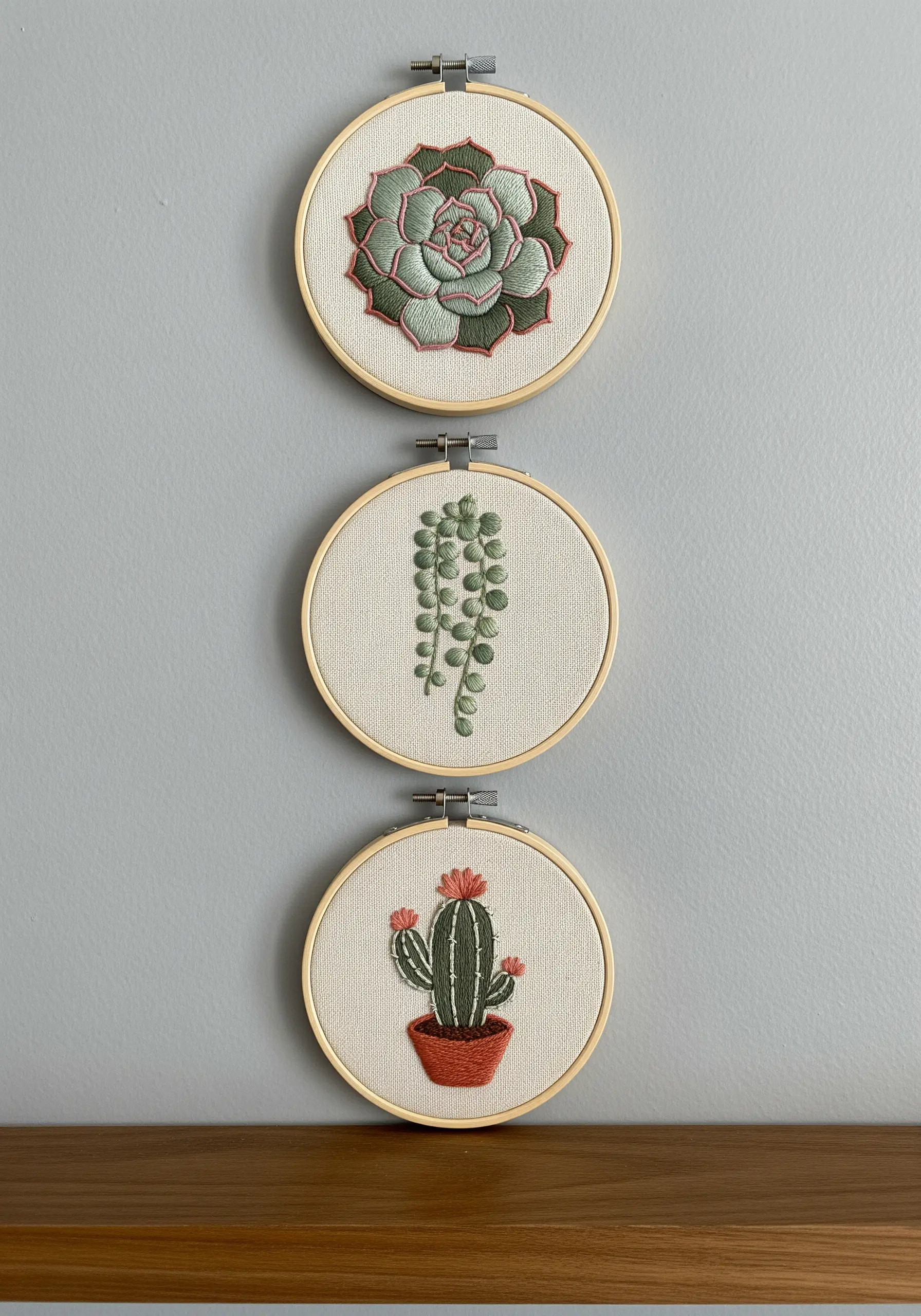
Elevate individual small designs by grouping them into a cohesive collection.
Stitch several related motifs—like different species of succulents—in similar-sized hoops.
Arrange them as a triptych or gallery wall to create a single, impactful art installation.
To give your cross-stitch extra definition, outline the shapes with a single strand of backstitch in a darker shade.
This is one of the easiest ways to create hooped wall collage layouts that look curated and professional.
6. Stitch on Unconventional Materials
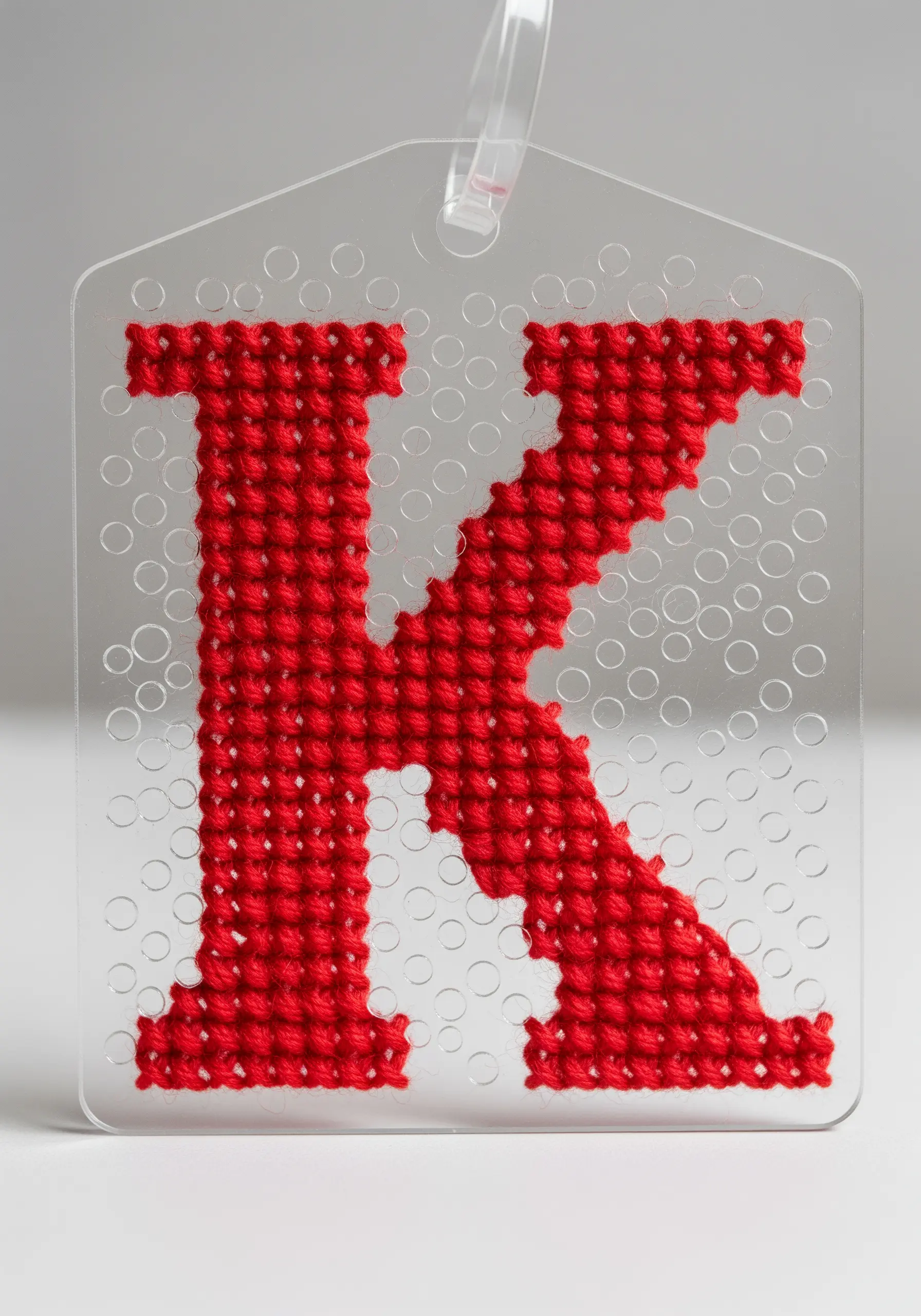
Move beyond fabric and explore materials like perforated plastic canvas.
This rigid surface is ideal for creating durable, functional items like keychains, luggage tags, or ornaments.
Use a thicker thread or more strands of floss than you would on Aida to ensure full, plush coverage.
The result is a sturdy, three-dimensional object that takes cross-stitch off the wall and into everyday life.
7. Design with Deliberate Color Fades
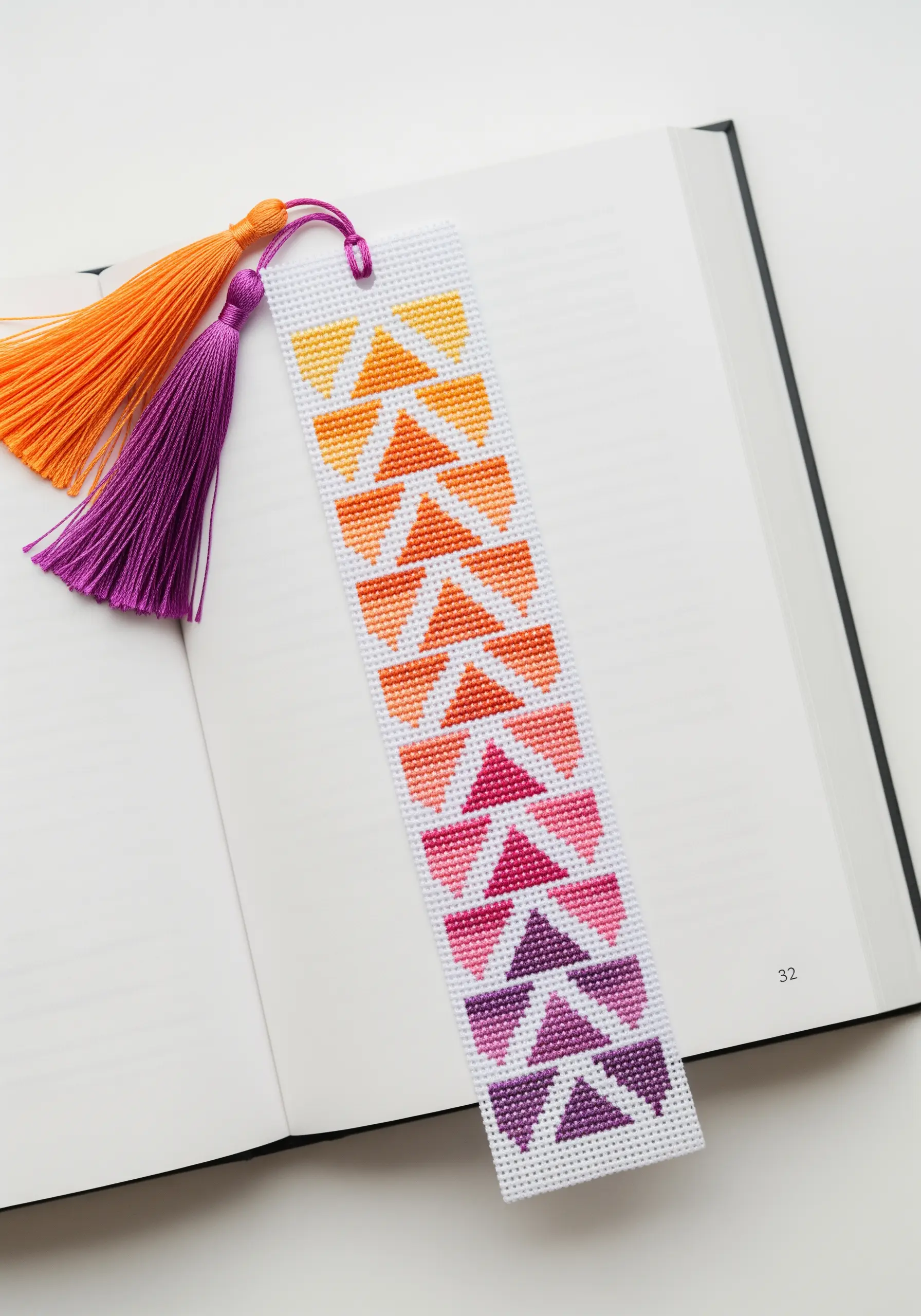
Transform a simple geometric pattern into a sophisticated design by using a gradient color palette.
Plan a smooth transition from one color family to another, like the warm fade from yellow to magenta.
This technique, known as an ombré effect, adds visual interest and a sense of movement to an otherwise static pattern.
Finish your bookmark with tassels that match the colors in your gradient for a polished, professional look.
8. Paint a Cityscape with Light
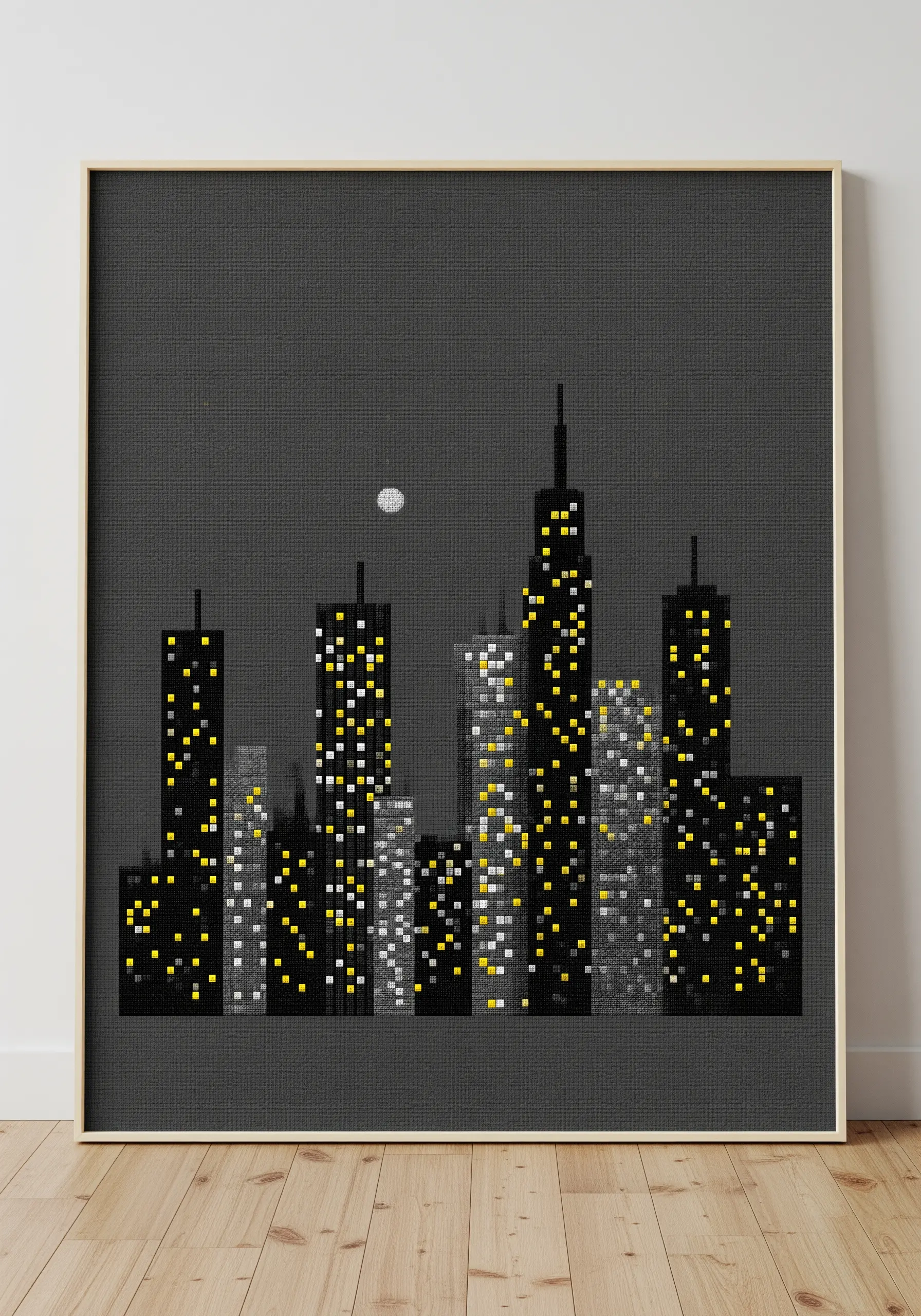
Create a dramatic night scene by using stitches as points of light.
On a dark grey or black Aida, use yellow, white, and pale grey stitches to represent illuminated windows in skyscrapers.
Instead of outlining the buildings, let their silhouettes be defined by the negative space of the fabric.
This clever use of contrast and minimal color creates a powerful sense of atmosphere and depth.
9. Blend Modern Text with Classic Borders
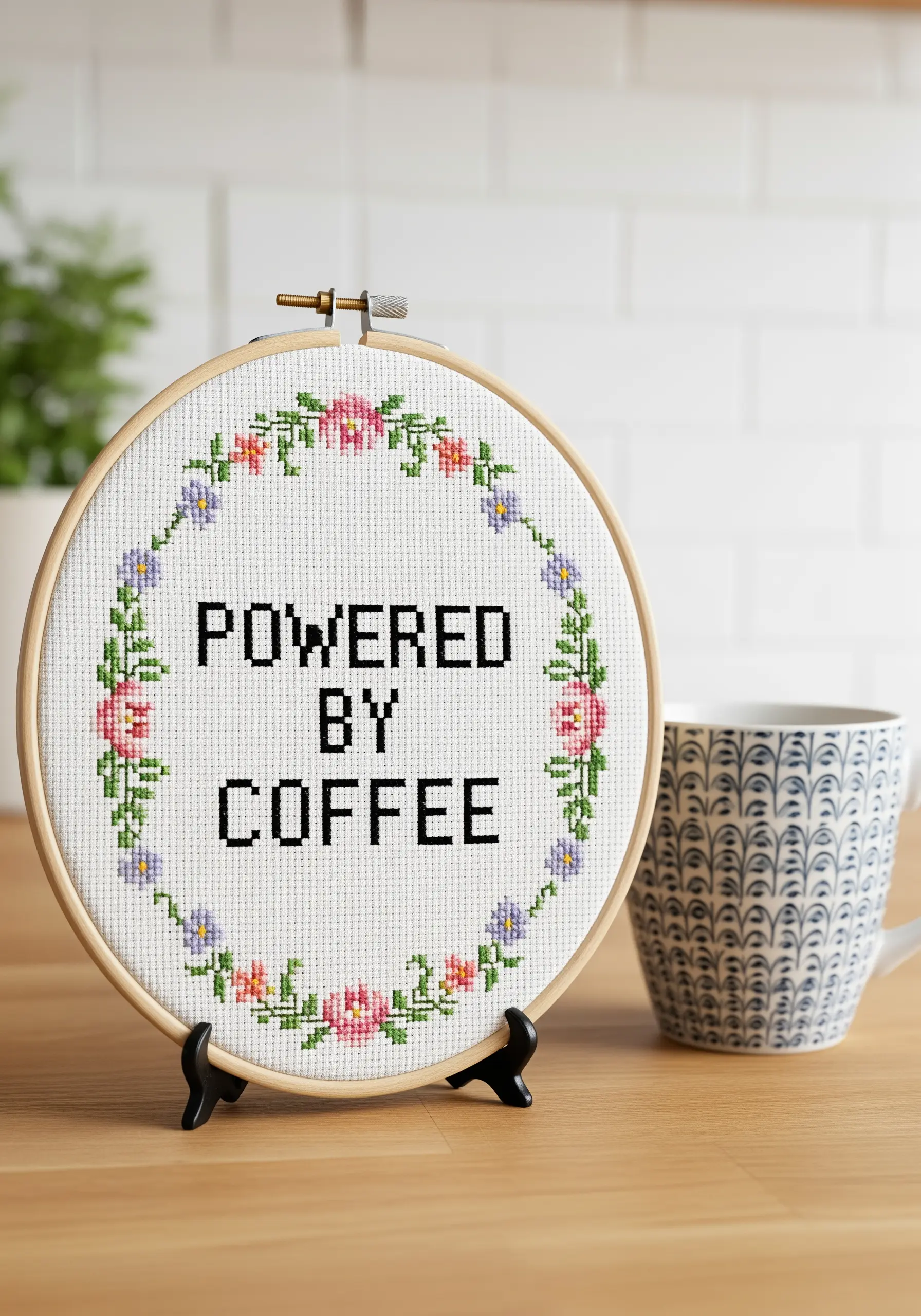
Give the traditional sampler a contemporary update by combining classic floral motifs with clean, bold typography.
Choose a modern, sans-serif font for your text to create an interesting contrast with the softer, more organic floral border.
This juxtaposition of styles feels fresh and personal, allowing you to express a modern sentiment with a nod to traditional craft.
It’s a perfect way to make inspirational quote embroidery wall hangings that fit a contemporary home.
10. Explore Stitching on Perforated Wood
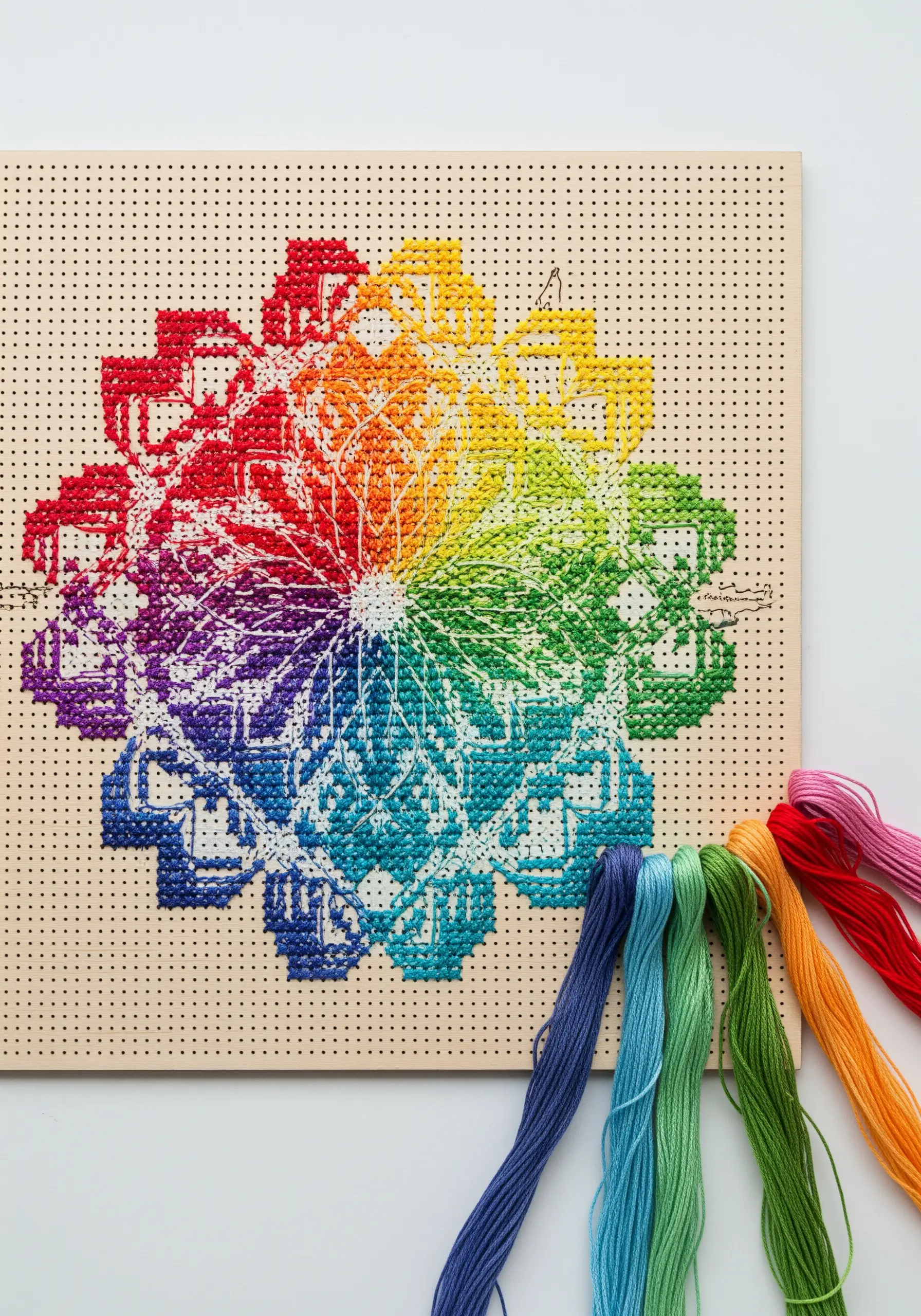
Take your cross-stitch three-dimensional by working on a perforated wood base.
These laser-cut wood blanks offer a sturdy and unexpected canvas for your thread art.
Let the natural wood grain show through as part of your design by using negative space intentionally.
The rainbow color wheel design pops against the organic material, creating a beautiful contrast between the soft thread and the hard wood.
11. Create Dimension with Appliqué
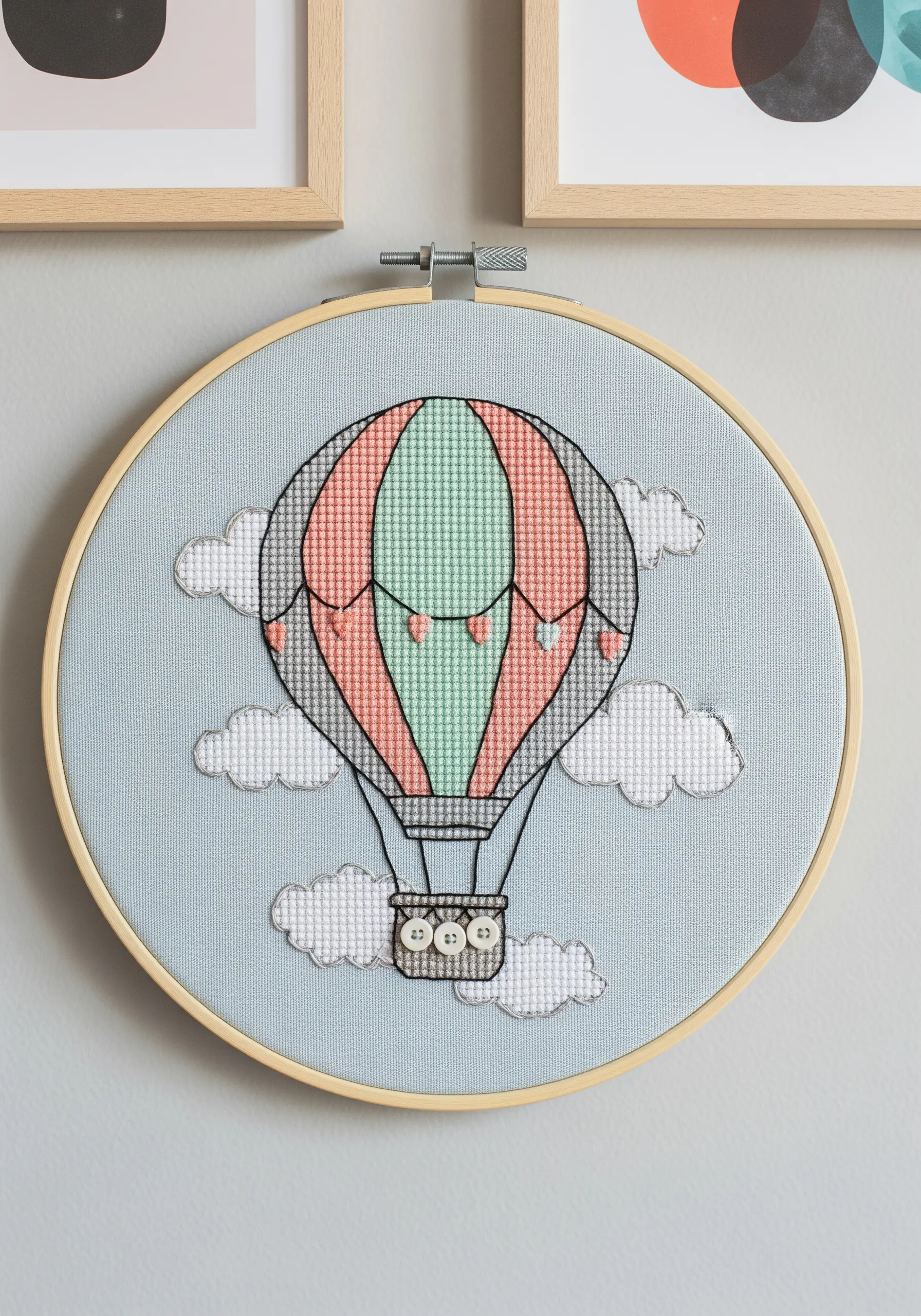
Add depth and texture to your work by incorporating appliqué techniques.
Stitch your main subject, like the hot air balloon, on a separate piece of Aida or gingham fabric.
Carefully cut it out, leaving a small border, and then sew it onto your background fabric for a raised, 3D effect.
Adding small embellishments like buttons for the basket enhances the mixed-media quality of the piece.
12. Make a Statement with a Single Motif
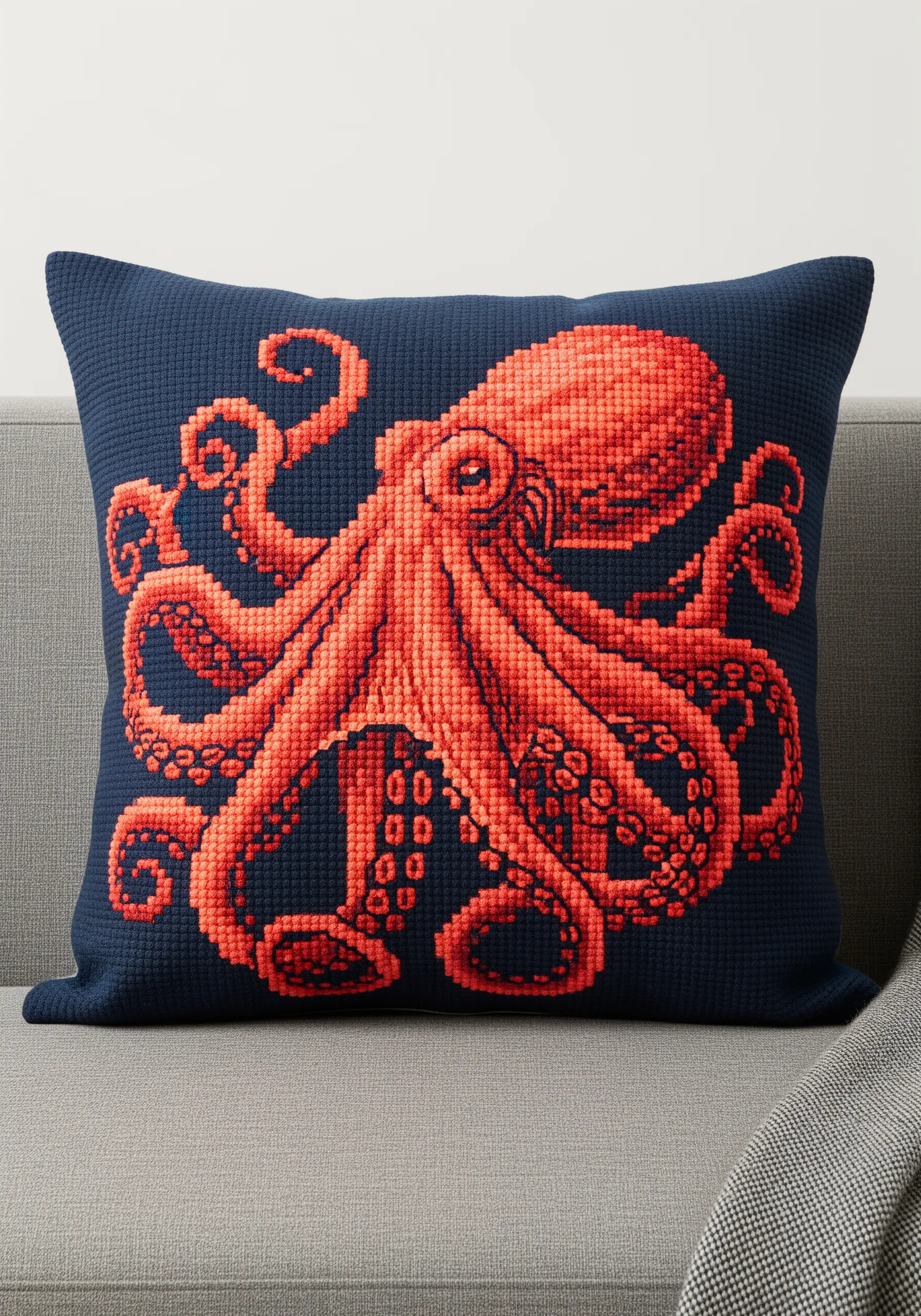
Transform a simple home accessory, like a cushion cover, into a piece of statement art.
Choose a large, dynamic subject and stitch it in a single, high-contrast color against a dark background.
The sheer scale of the octopus and the vibrant coral thread command attention, making the design feel bold and luxurious.
This approach proves that you don’t need a complex color palette to create a dramatic impact.
13. Stitch Your Personal Sound Wave
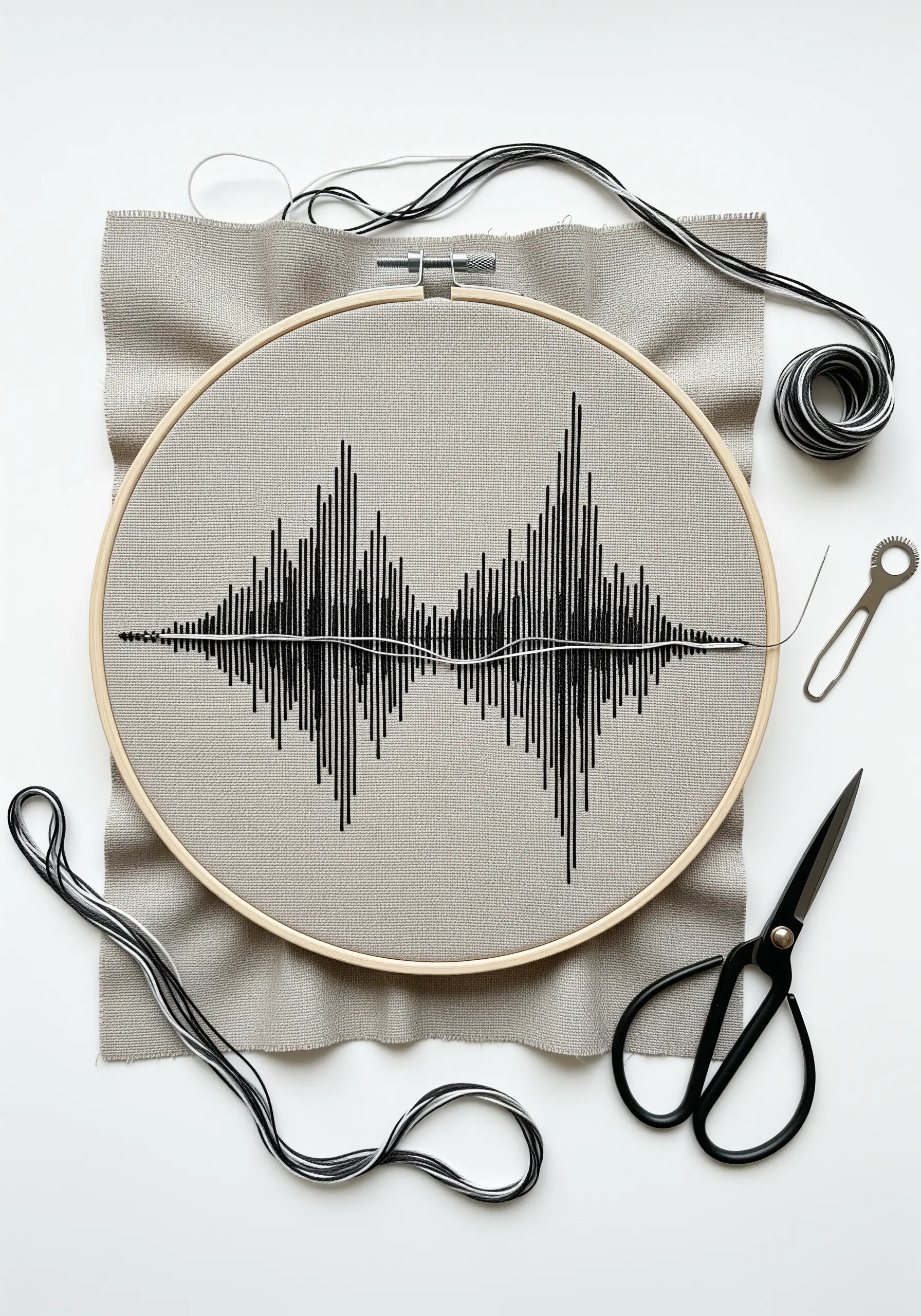
Turn personal data into a unique piece of abstract art.
Record a short audio clip—a loved one’s laugh, a favorite line from a song, or a baby’s heartbeat—and use a free online tool to generate its sound wave image.
Translate that visual into a pattern of black vertical stitches on a neutral fabric.
This project transforms a fleeting moment into a tangible, deeply personal piece of abstract stitch maps art.
14. Design Your Own Iron-On Patches
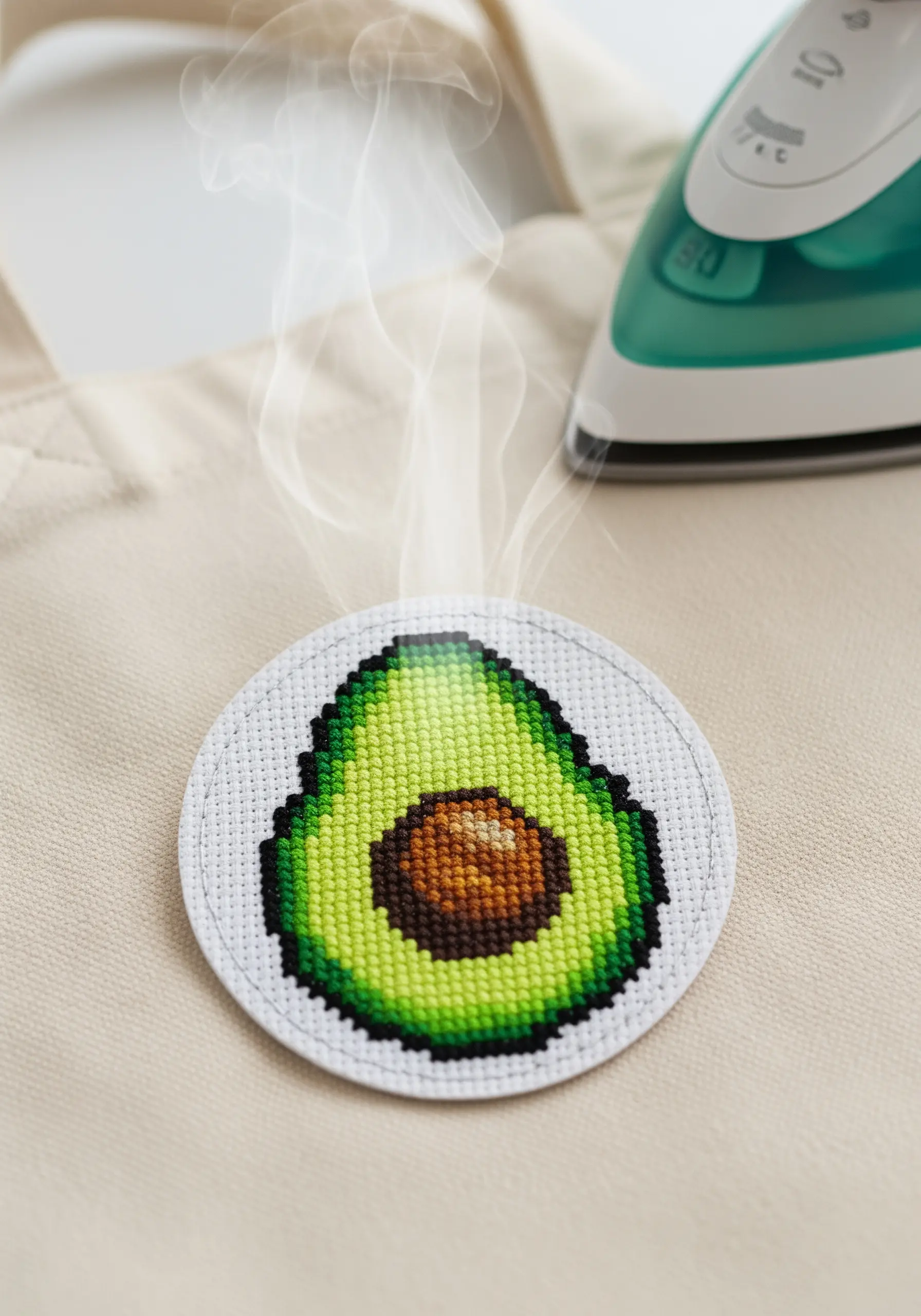
Create custom embellishments by turning your cross-stitch into a patch.
After finishing your design on a piece of Aida, apply a sheet of iron-on adhesive to the back.
Carefully cut out your shape, peel off the paper backing, and iron it onto any fabric surface—a tote bag, a jacket, or a backpack.
This is a fantastic way to make your art portable and personalize your belongings.
15. Achieve a Painterly, Watercolor Effect
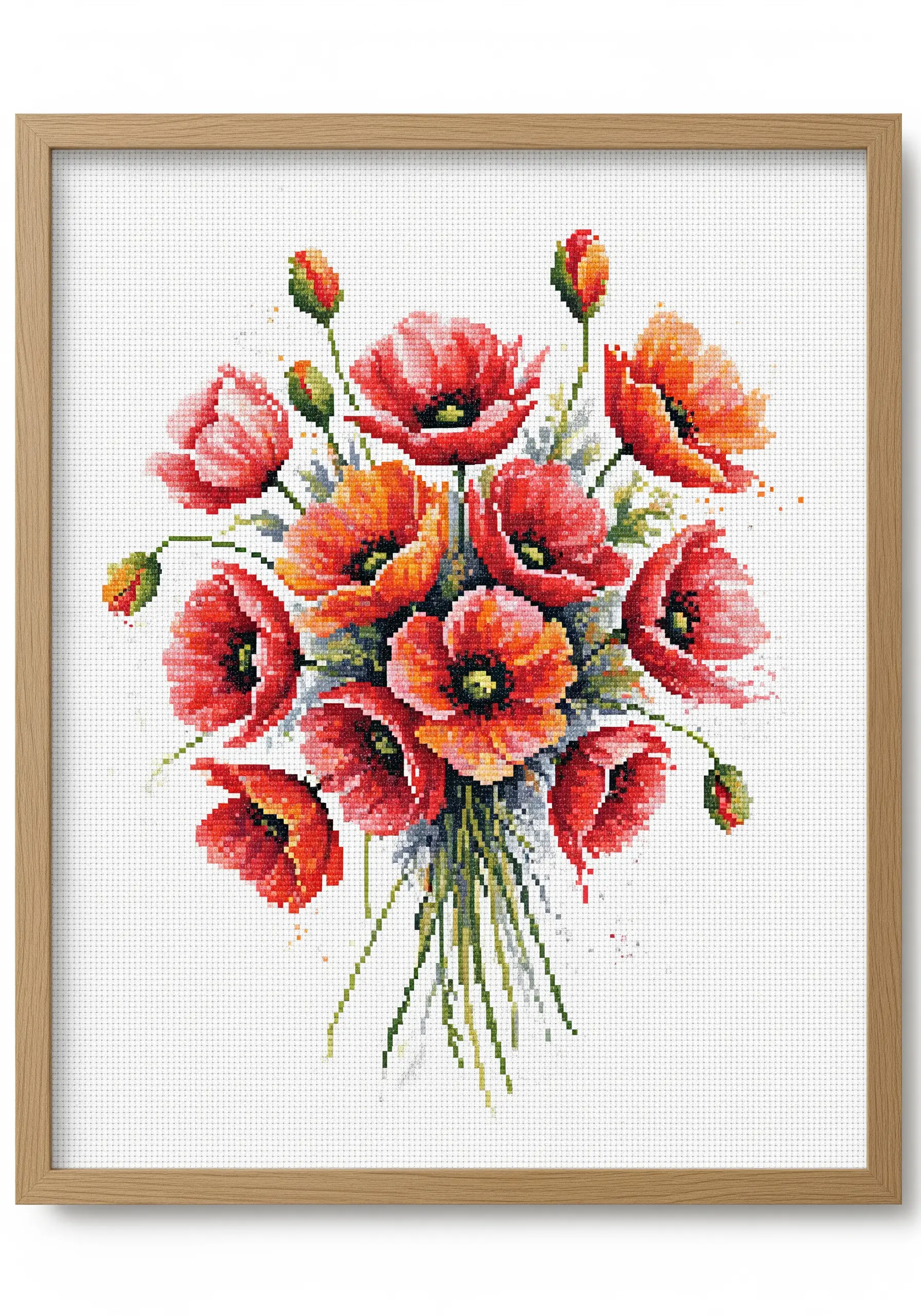
Soften the blocky nature of cross-stitch to create a more organic, painterly look.
This is achieved by using ‘confetti’ stitches—individual, scattered stitches of various shades—to blend colors seamlessly.
Instead of solid blocks, the colors mix and mingle, mimicking the way pigments bleed together in a watercolor painting.
This technique gives floral arrangements like these poppies a beautiful, delicate, and realistic quality.
16. Add Elegance with Metallic Threads
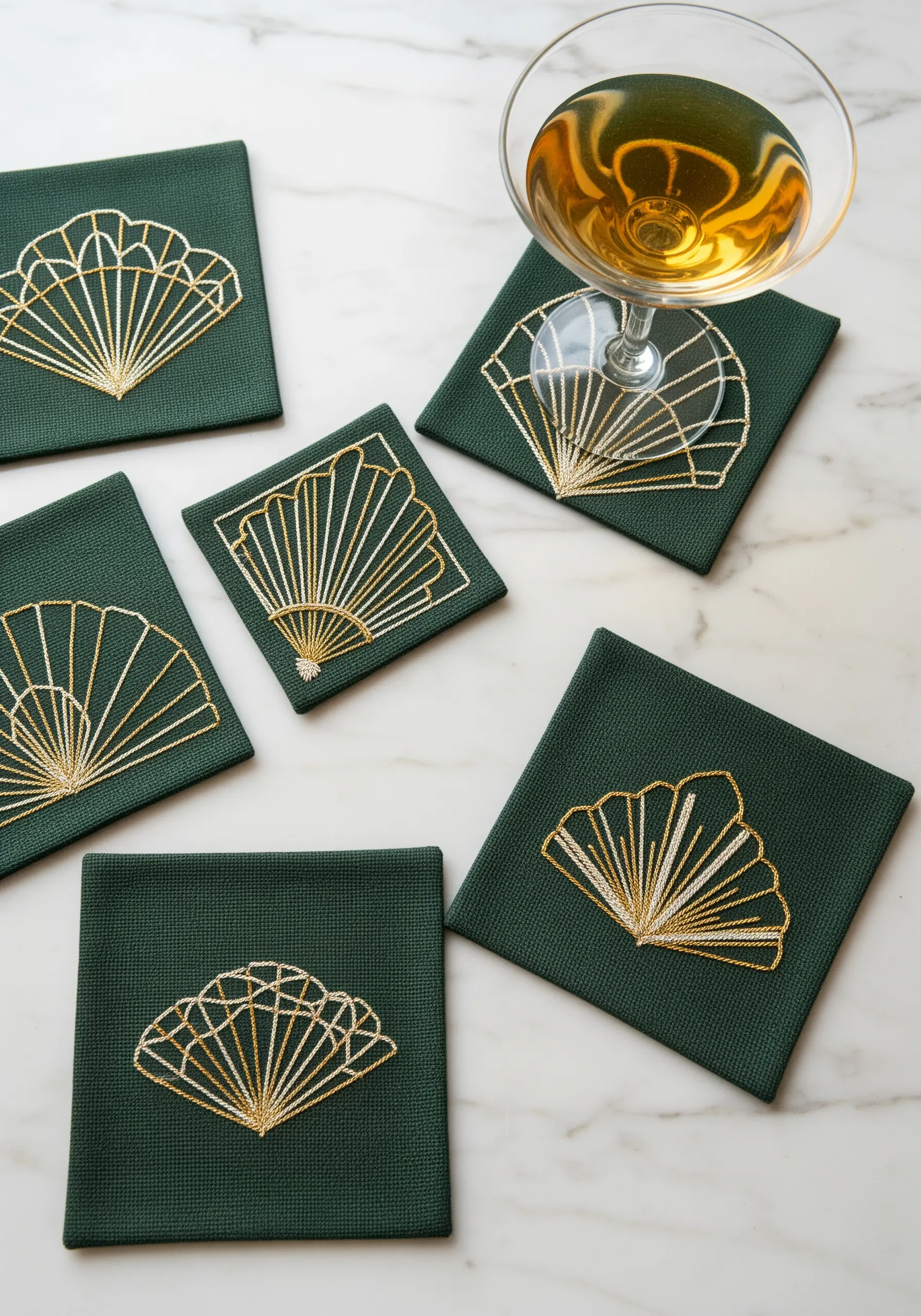
Elevate functional items like coasters with a touch of Art Deco glamour.
Use a fine metallic thread to stitch clean, geometric lines on a dark, rich fabric like forest green linen.
The shimmer of the gold thread against the matte fabric creates a look of quiet luxury.
When working with metallics, use a shorter length of thread and a thread conditioner to prevent tangling and fraying.
This is one of the best unexpected ways to use metallic thread for modern artwork.
17. Redefine Lines with Backstitch Portraits
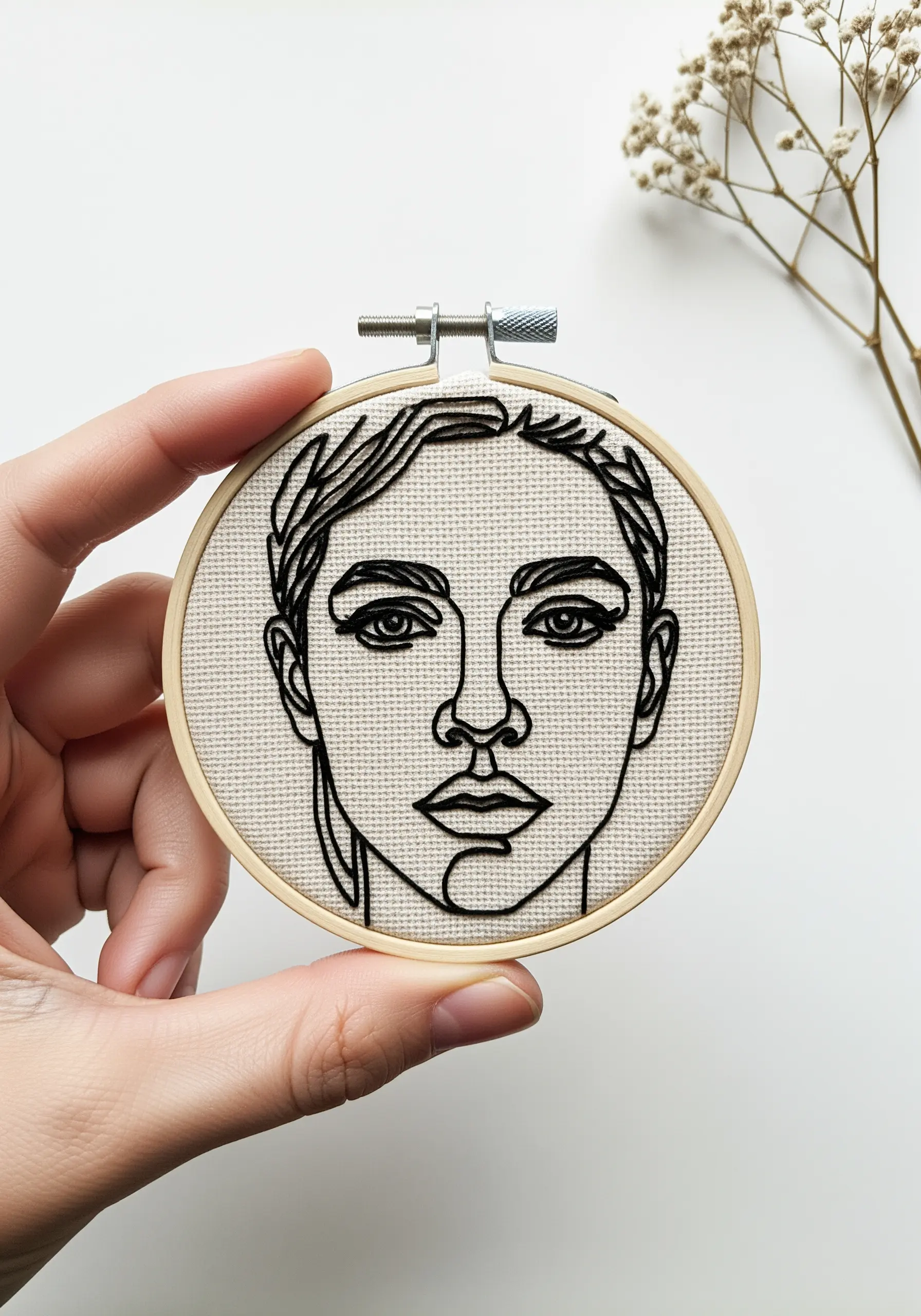
Challenge the grid by using Aida cloth as a base for line art.
Instead of filling squares with ‘X’s, use backstitch or stem stitch as your primary technique to draw fluid, continuous lines.
This allows you to create elegant, minimalist portraits that feel more like illustrations than traditional cross-stitch.
It’s a perfect fusion of the precision of the grid and the freedom of drawing.
18. Juxtapose Soft Thread with Hard Materials
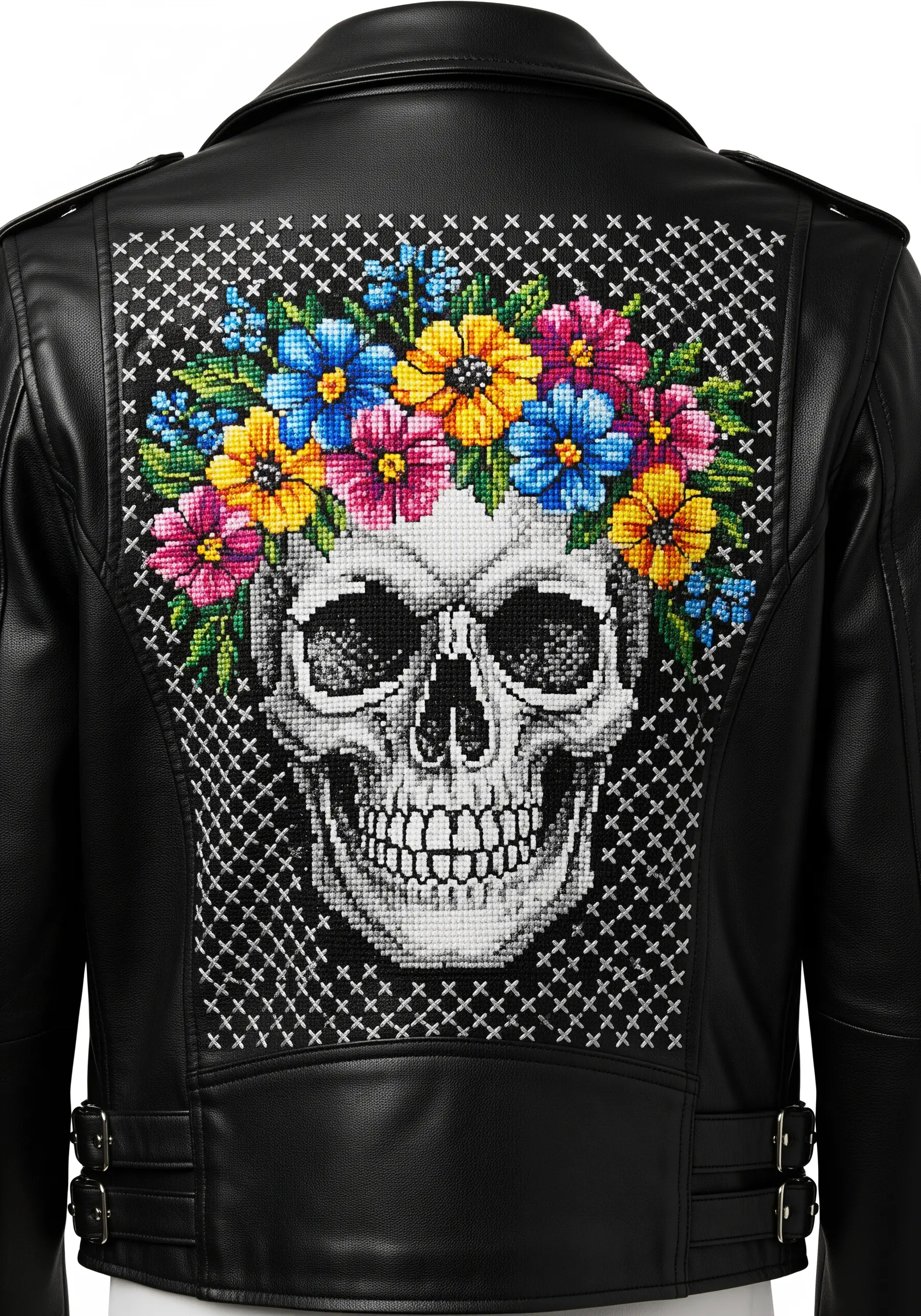
Create a striking visual and textural contrast by stitching on an unexpected material like faux leather.
Secure waste canvas to the back of a jacket, use a strong needle to pierce the material, and stitch your design.
The combination of the soft, colorful floral crown and the tough, monochrome skull on a leather jacket is a powerful aesthetic statement.
This technique pushes cross-stitch into the realm of alternative fashion and edgy wearable art.
19. Energize Your Work with a Retro Palette
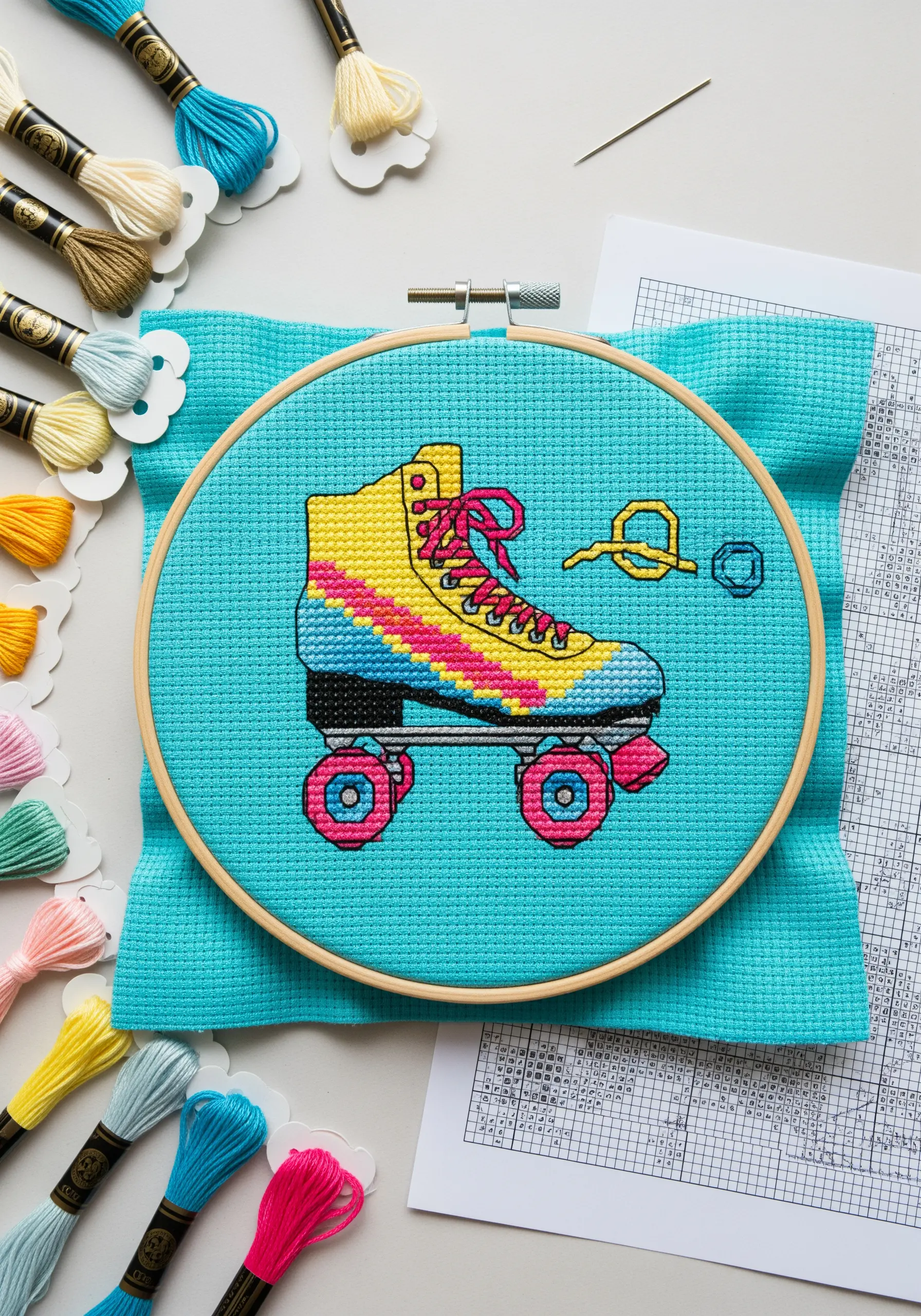
Evoke a sense of fun and nostalgia by choosing a vibrant, retro-inspired color palette.
Bright yellows, hot pinks, and electric blues against a turquoise background instantly give this piece a playful, 80s vibe.
Don’t be afraid to stitch on colored Aida; a bold fabric choice can enhance your theme and make the entire design more cohesive.
Such pieces make bold and colorful framed embroidery patterns that feel joyful and dynamic.
20. Play with Typographic Hierarchy
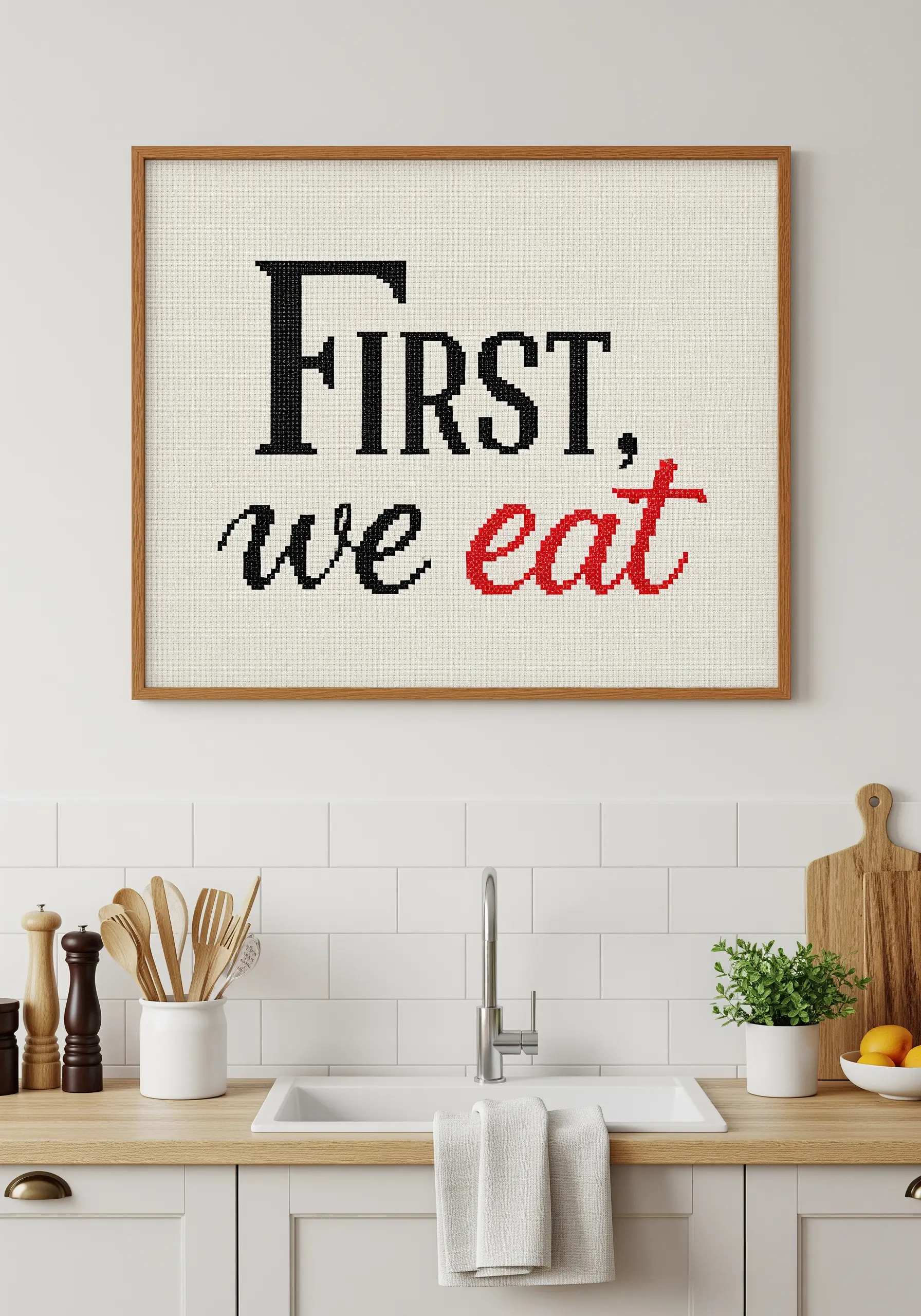
Treat your text-based patterns like a graphic designer would approach a poster.
Combine different font styles—like a bold serif with a delicate script—to create visual interest and emphasize certain words.
Using a contrasting color for a key word, like the red ‘we eat’, also draws the eye and adds a punch of personality.
This thoughtful approach to typography elevates a simple phrase into a well-composed piece of art for your kitchen.
21. Combine Solid Fills with Linear Details
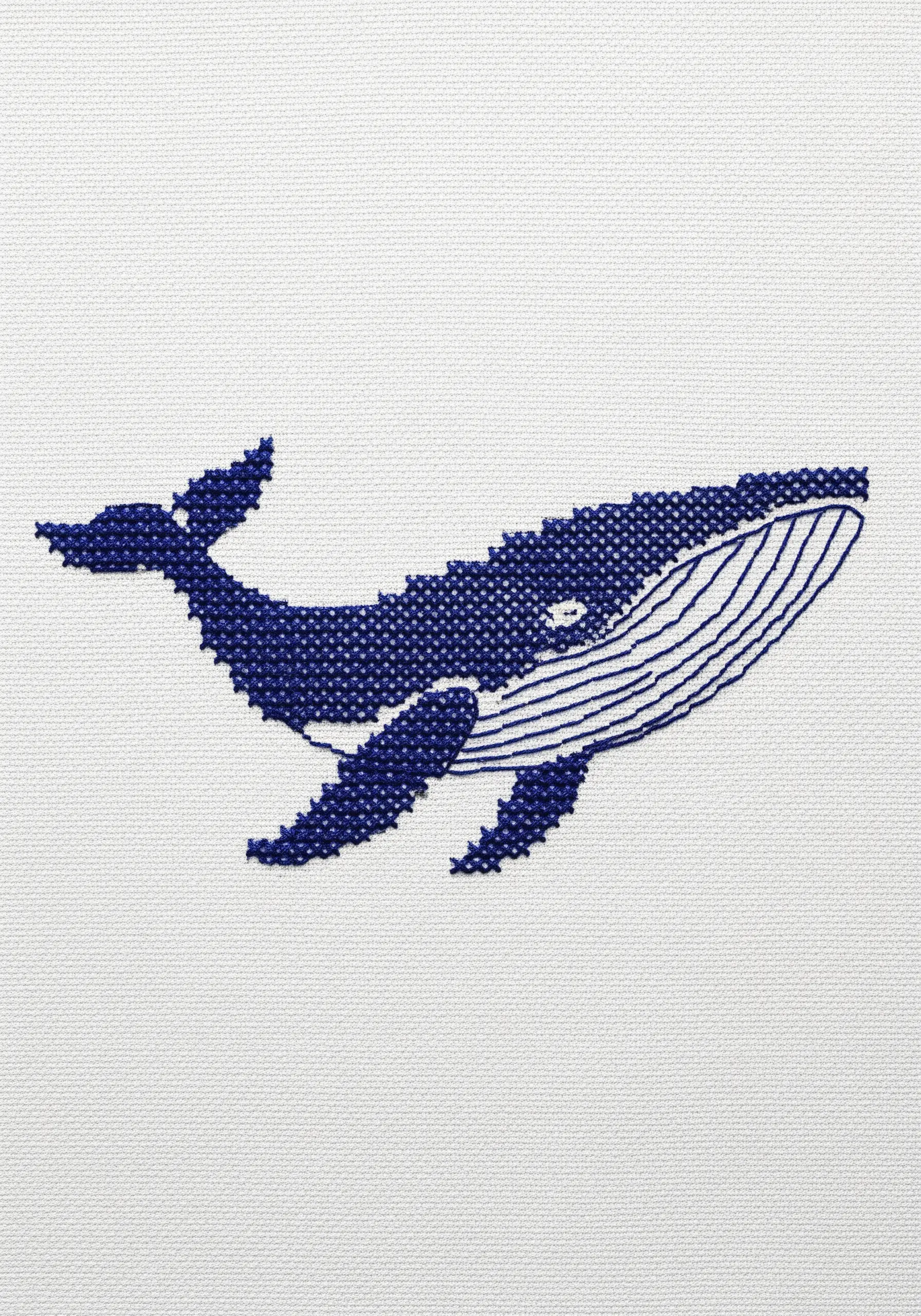
Add definition and texture to your motifs by mixing stitch types.
Use traditional cross-stitches to create the solid, filled-in body of the whale, giving it weight and presence.
Then, switch to a simple backstitch to add the fine, linear details of the underbelly and eye.
This combination allows you to achieve both broad color coverage and delicate, illustrative lines within the same piece.
22. Design a Modern Sampler Map
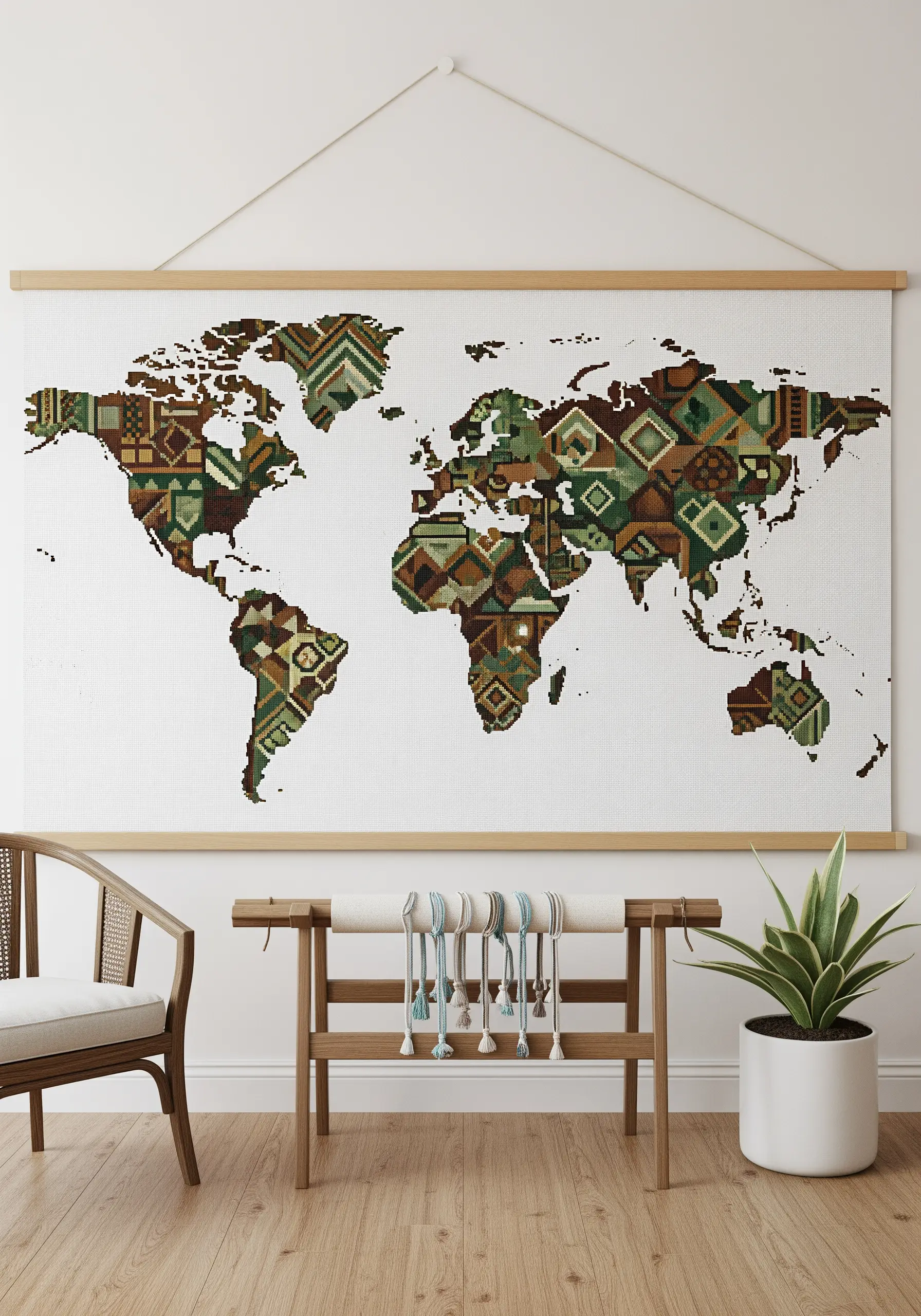
Reimagine the traditional sampler by filling a large-scale map with a variety of geometric patterns.
Instead of practicing letters or numbers, each continent becomes a canvas for a different stitch pattern or color combination.
This creates a stunning, bohemian-inspired tapestry that is both personal and worldly.
Stitching on a large roll of canvas and displaying it as a wall hanging gives it a relaxed, modern feel.
23. Find Art in Scientific Diagrams
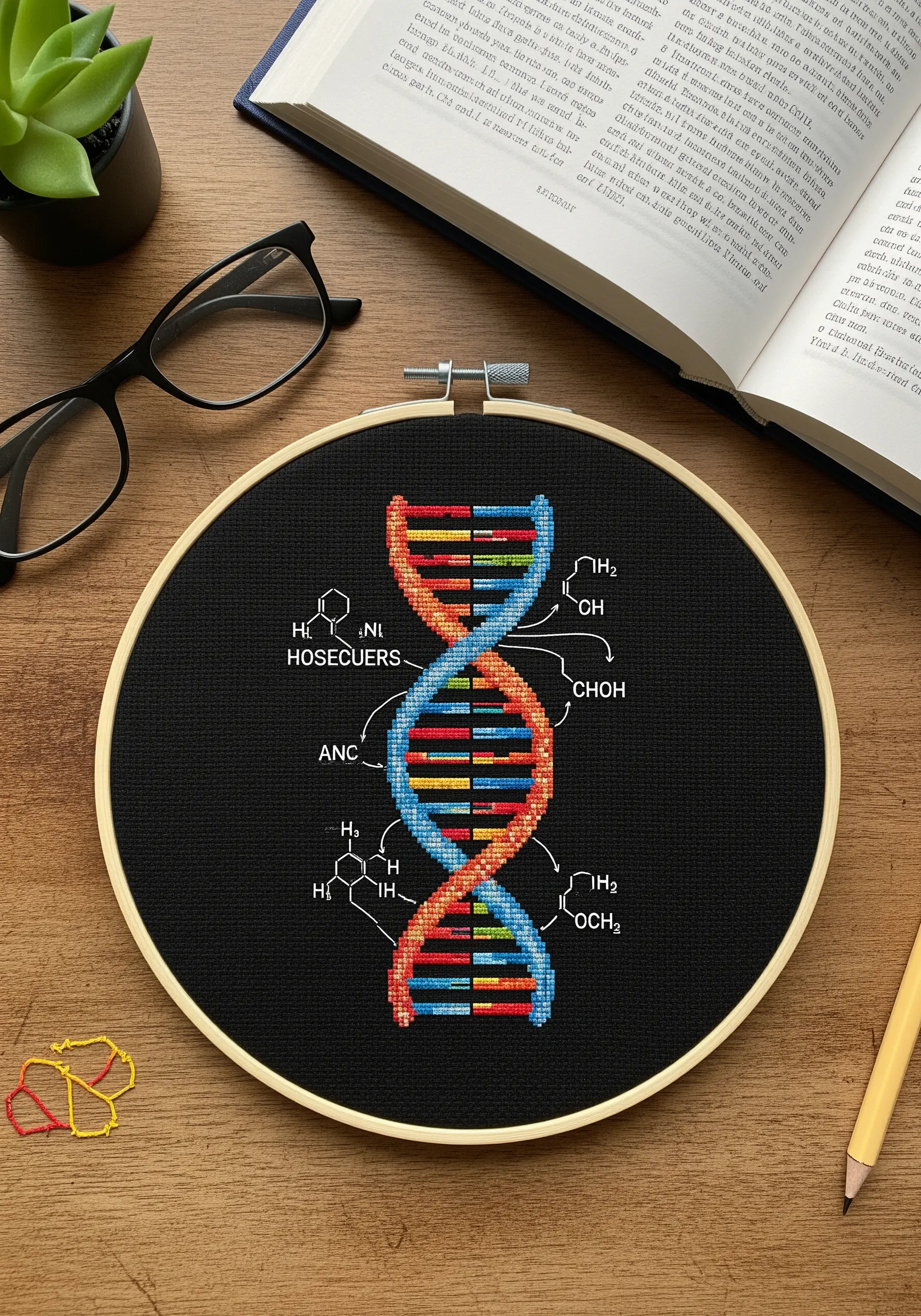
Draw inspiration from unexpected sources, like scientific illustrations.
A complex structure like a DNA helix becomes a beautiful and intricate pattern when translated into cross-stitch.
The precise, grid-based nature of cross-stitch is perfectly suited for rendering technical diagrams with clarity and color.
This approach allows you to create unique DIY art objects that reflect your passions, whether they are in the arts or the sciences.
24. Add Subtle, High-Fashion Embellishments
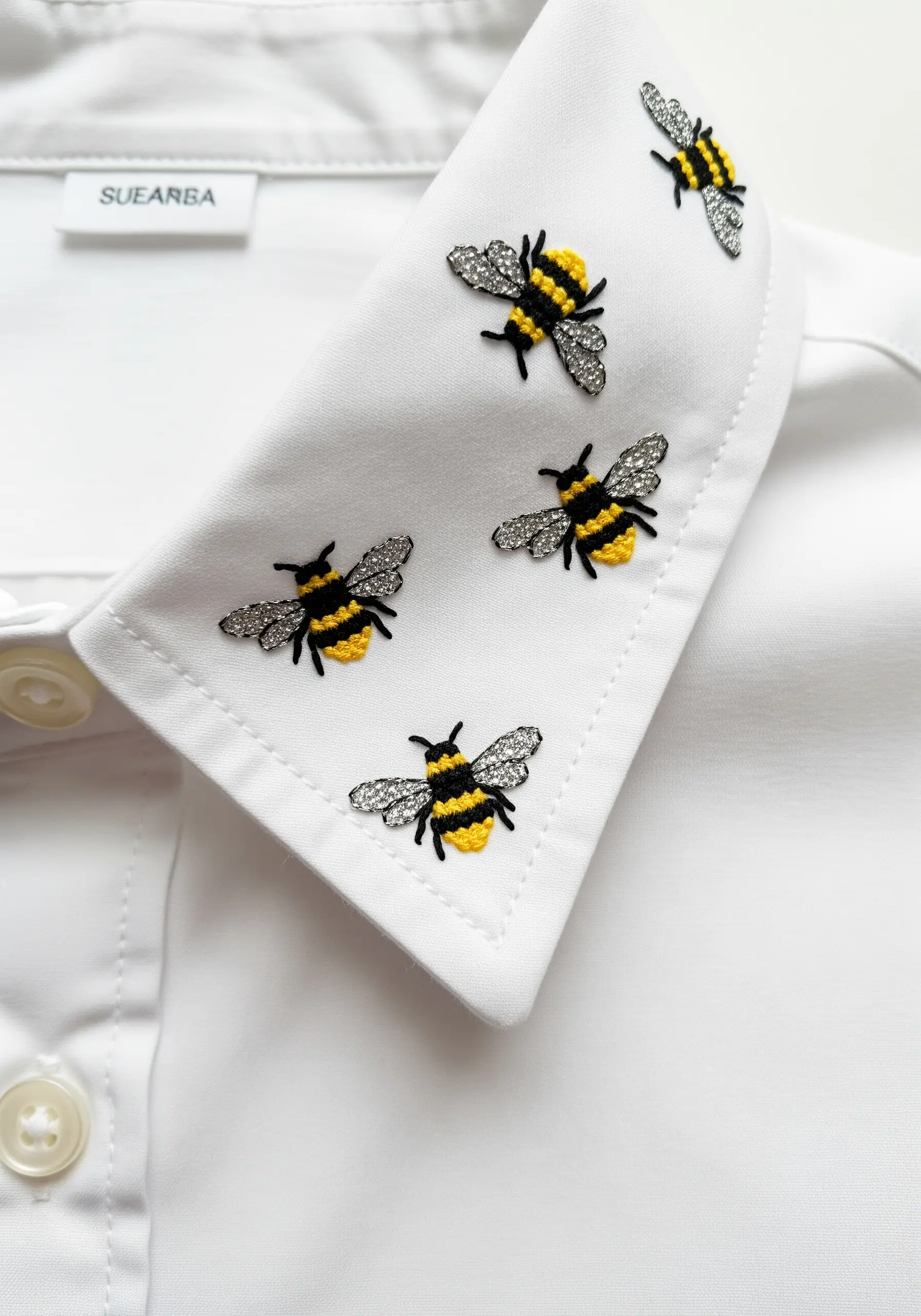
Elevate a simple piece of clothing with tiny, impeccably stitched motifs.
Use waste canvas to add a scatter of detailed cross-stitched bees to a shirt collar for a touch of whimsical luxury.
For an extra bit of sparkle, incorporate small beads or metallic thread for the wings.
This type of micro-embroidery mimics the details found in high-end couture, turning a basic garment into a custom piece.
25. Embrace the Art of the Pixel
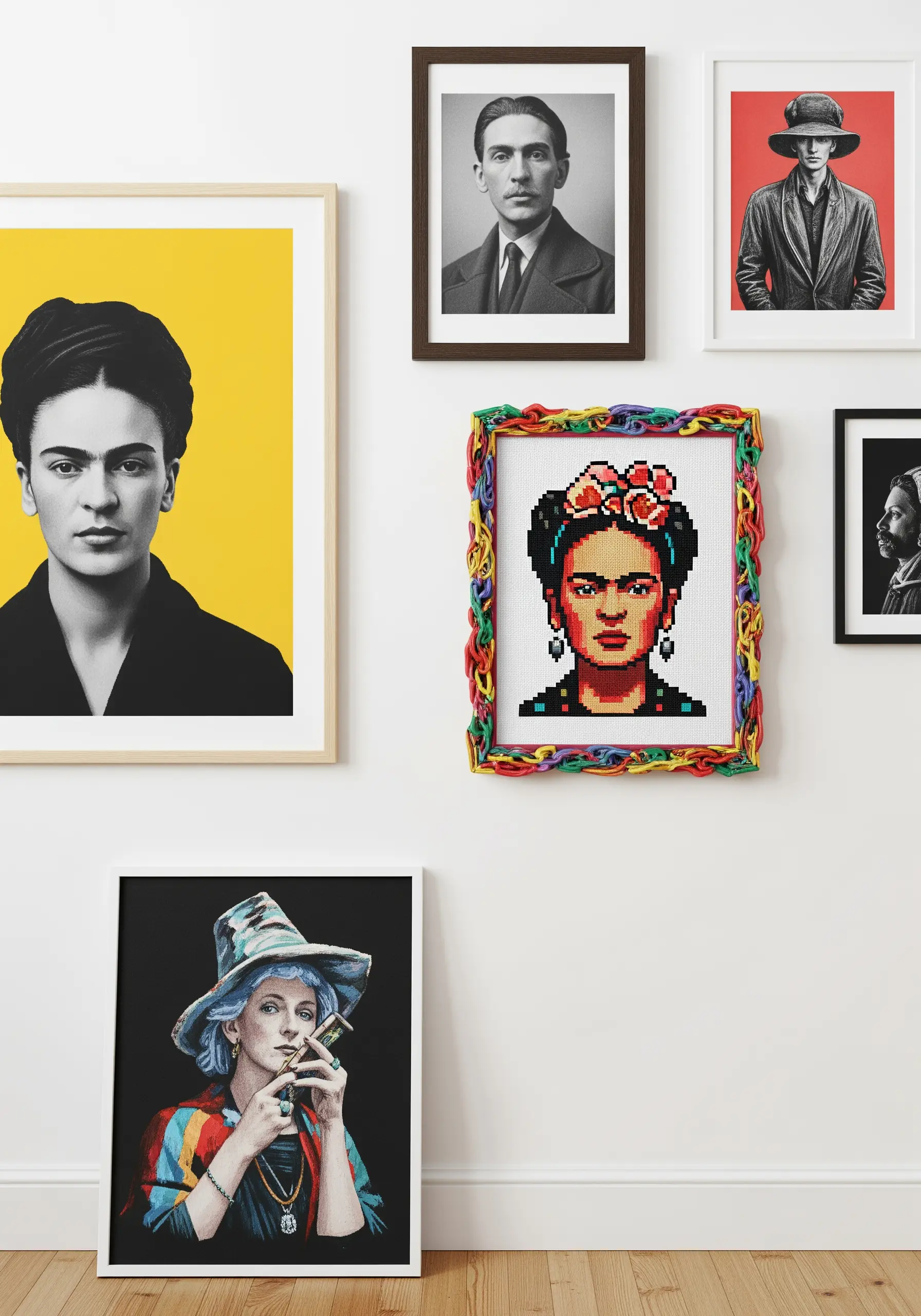
Recognize that cross-stitch is the original pixel art and use it to your advantage.
You can translate any pixelated image, from 8-bit video game characters to iconic portraits like Frida Kahlo’s, into a cross-stitch pattern.
Each ‘X’ stitch perfectly represents one pixel, allowing you to recreate digital-style art with thread.
Complete the look by choosing a frame that complements the artwork’s bold, graphic style.
26. Experiment with Scale and Texture
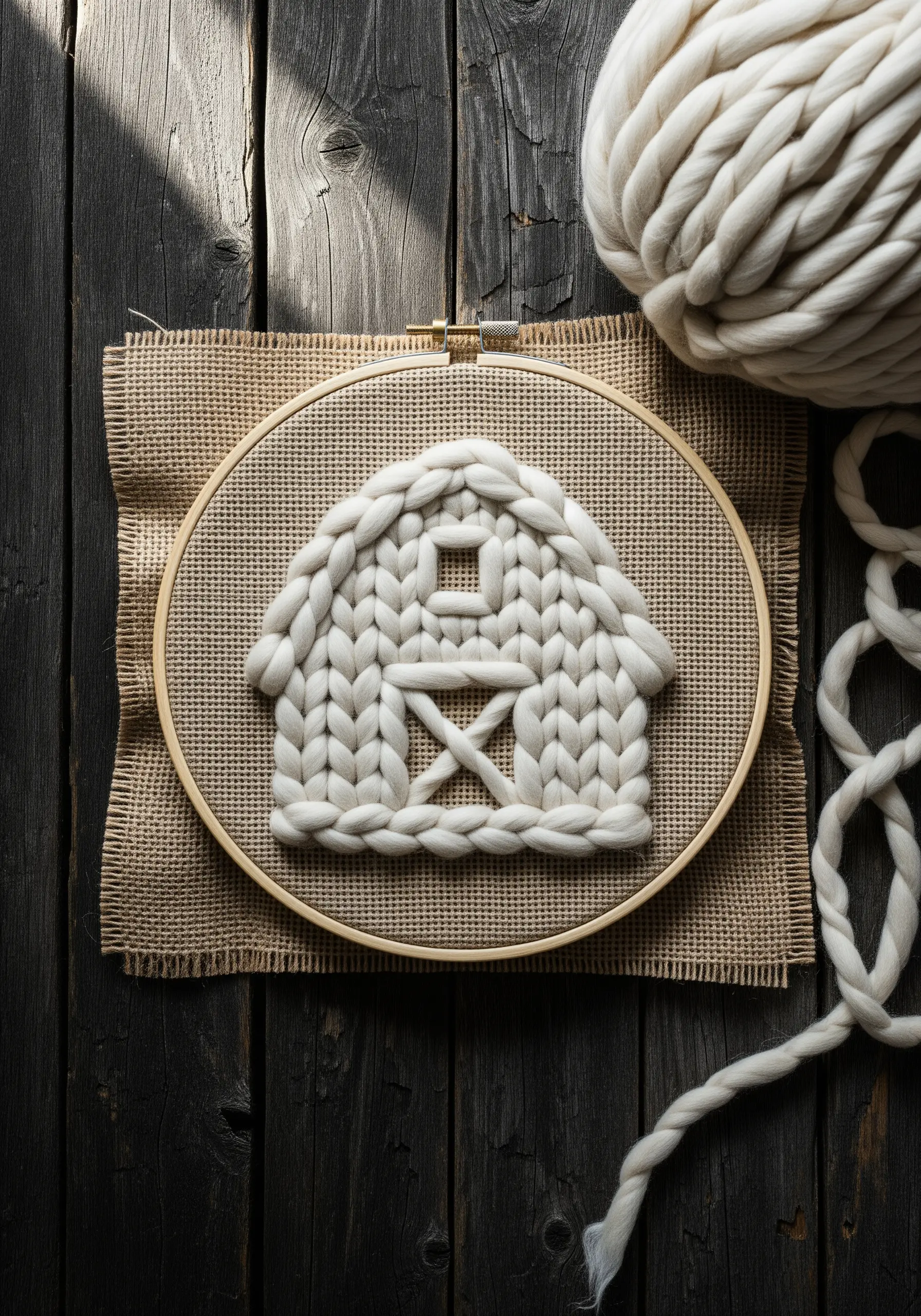
Move beyond standard embroidery floss and explore chunky, textured fibers.
Use thick wool roving or chunky yarn on a wide-gauge canvas like burlap to create a piece with dramatic texture and scale.
Instead of tiny ‘X’s, you’ll be making large, plush stitches that have a cozy, sculptural quality.
This technique blends cross-stitch with weaving and yarn wall art techniques, opening up a new world of possibilities.
27. Celebrate Typographic Simplicity
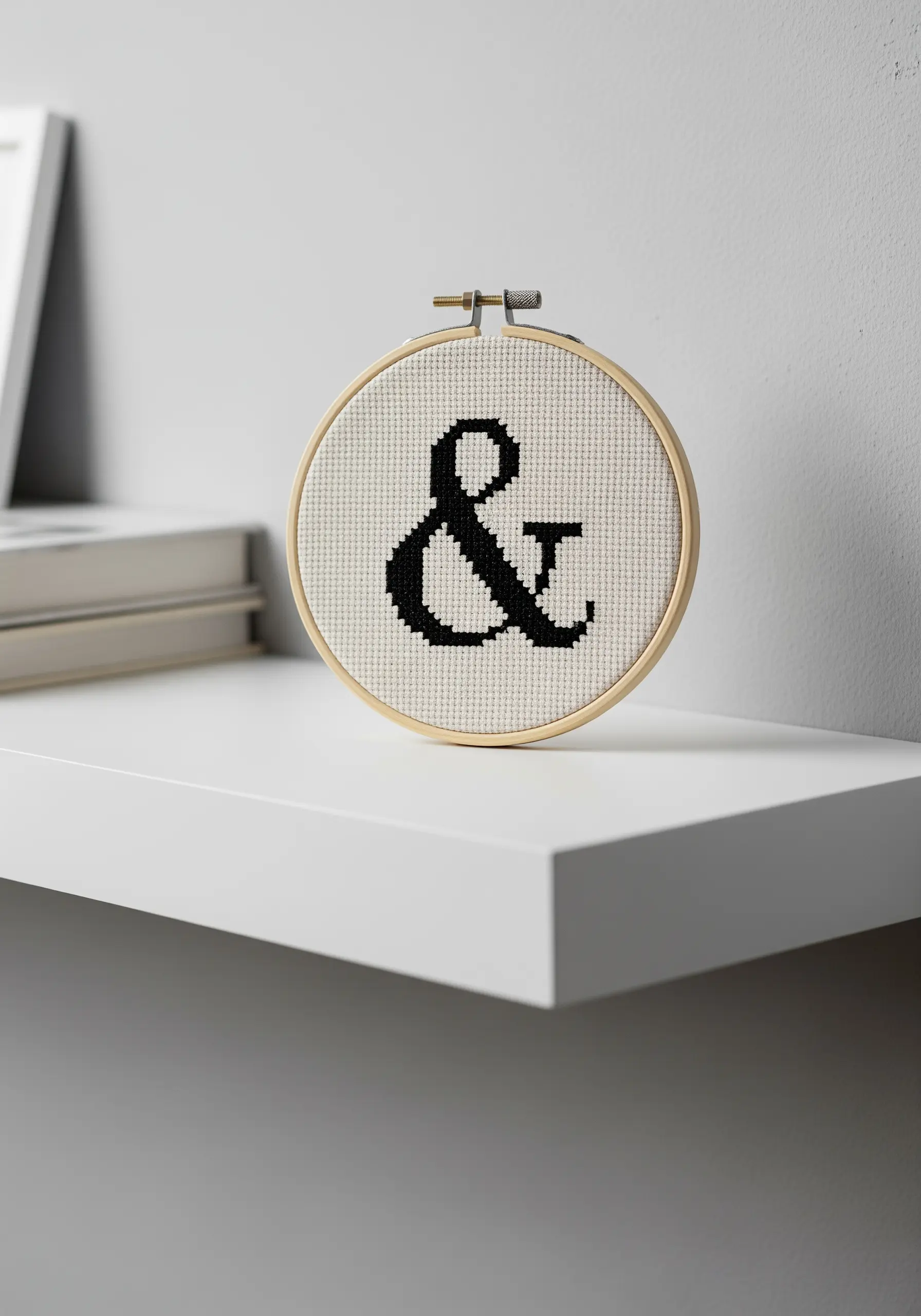
Harness the elegance of a single, beautifully formed character.
Stitching a classic ampersand or a monogram in a clean, bold font makes a powerful statement through its simplicity.
The negative space around the symbol is just as important as the stitches themselves, creating a balanced and sophisticated composition.
Displayed on a minimalist shelf, this type of piece becomes a small but impactful piece of simple embroidery decor.
28. Stitch on Objects That Interact with Light
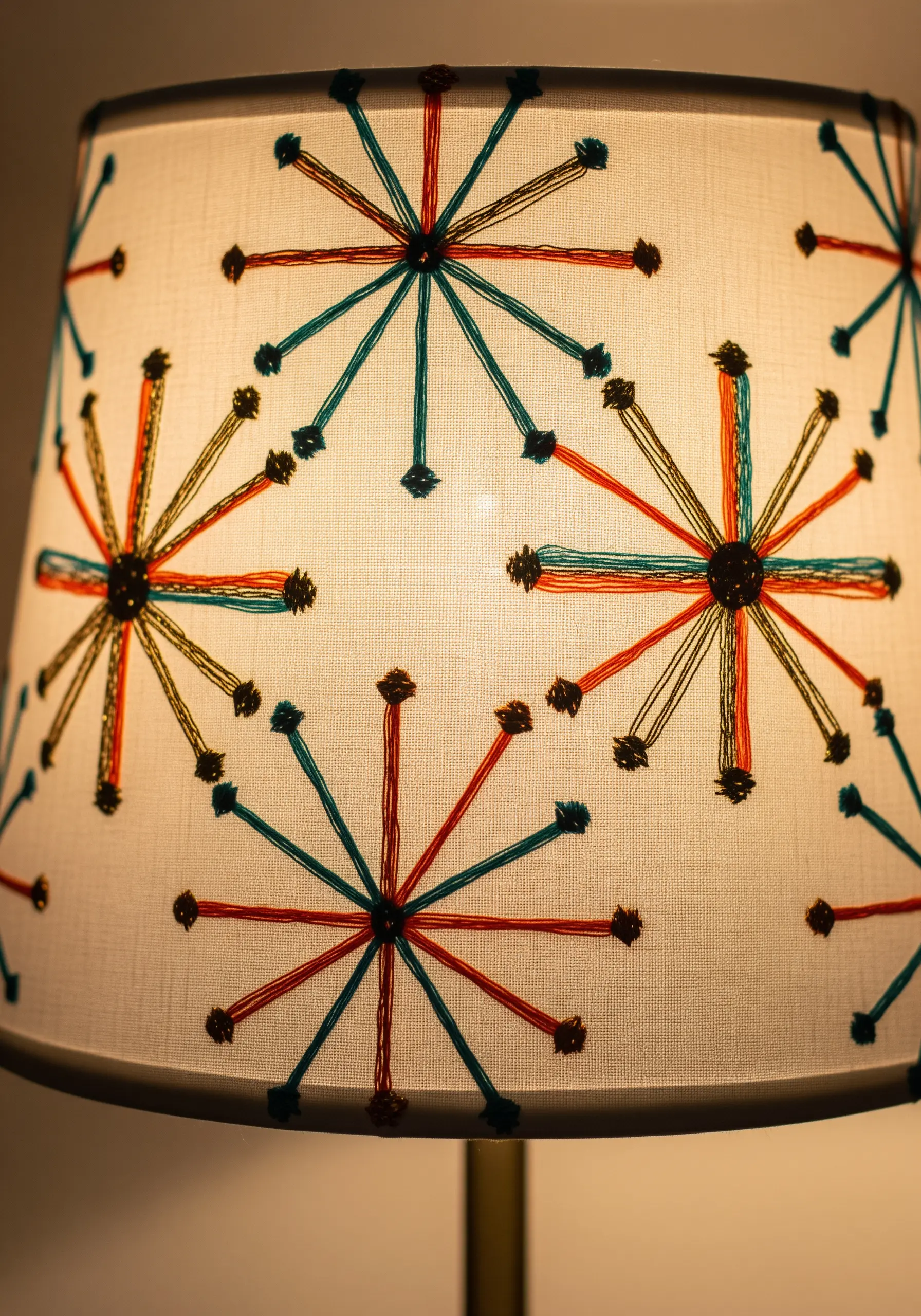
Take your embroidery off the wall and apply it to functional objects like a lampshade.
You can carefully perforate a paper or fabric shade with a needle and use simple straight stitches to create a pattern.
When the lamp is turned on, the light will shine through your stitches, transforming the design and creating a warm, ambient glow.
This innovative application turns a simple household item into a unique piece of interactive art.
29. Mount Your Stitching for a Polished Finish
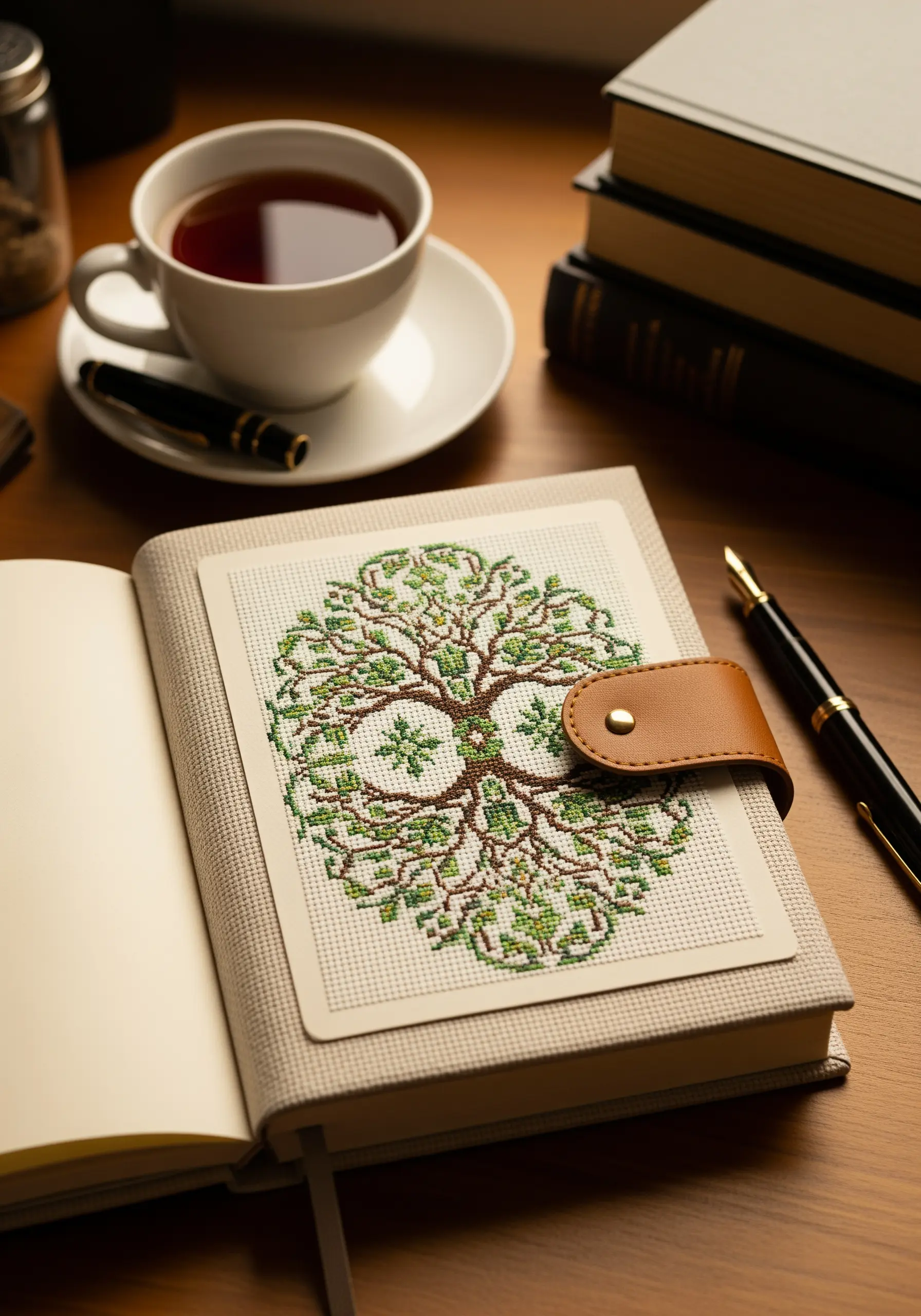
Give your finished cross-stitch a professional look by mounting it onto other objects.
Stitch your design on a piece of card-stock-like perforated paper or stiff Aida, then attach it to the cover of a journal or sketchbook.
This not only protects your work but also turns it into a beautiful, functional item.
It’s an excellent way to create thoughtful and personalized embroidered gifts you can make in a weekend.
30. Embrace a Deconstructed Aesthetic
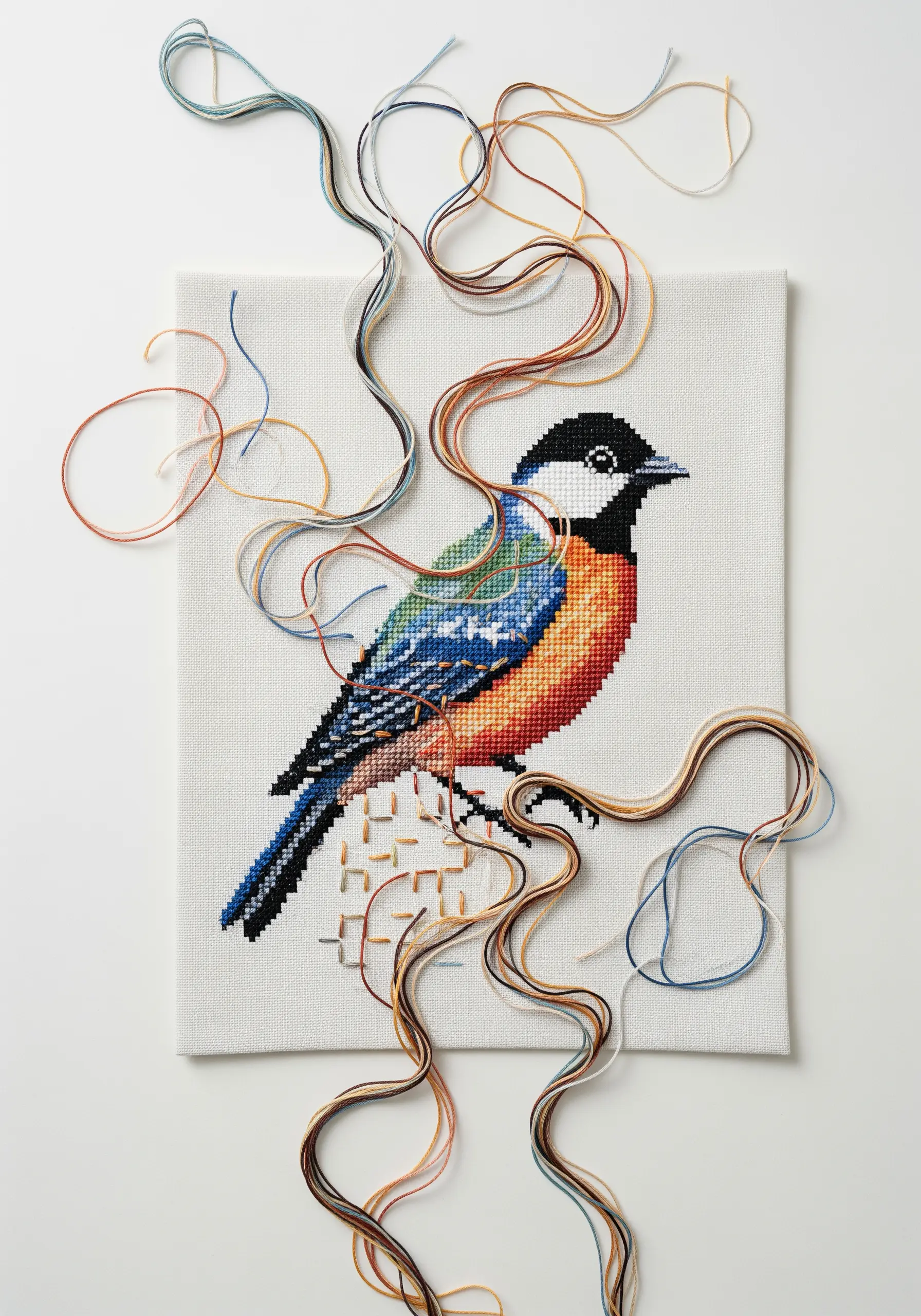
Challenge the notion of a perfectly finished piece by intentionally leaving your process visible.
Allowing threads to hang loose or showing the faint grid lines of your canvas can be a deliberate artistic choice.
This ‘in-progress’ or deconstructed look adds a layer of raw, authentic texture to your work.
It tells a story about the making of the piece, connecting the viewer to the hands-on process of the craft.
31. Construct Three-Dimensional Stitched Objects
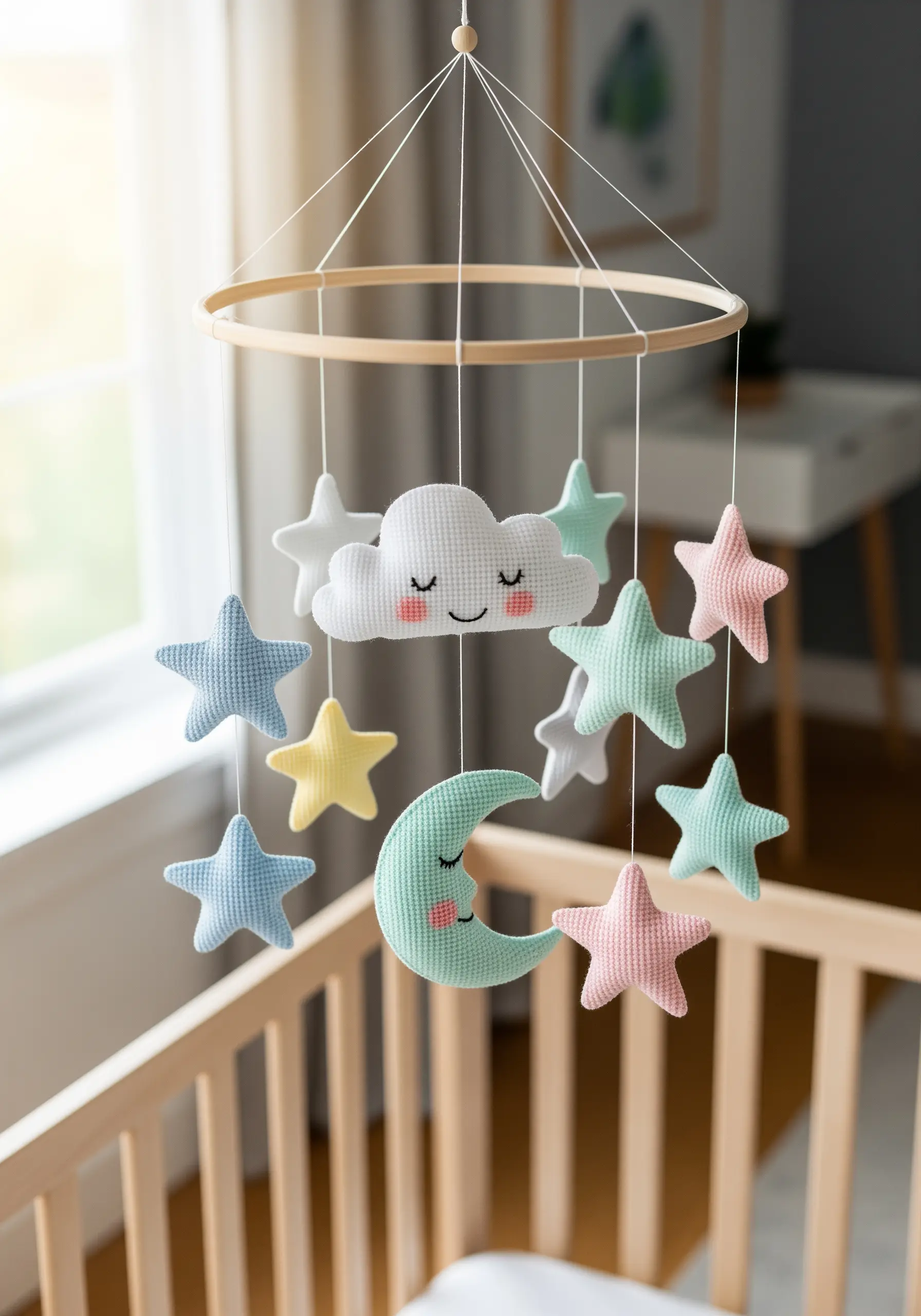
Take your cross-stitch into the third dimension by creating soft, plush objects.
Stitch two identical shapes (like stars or clouds) on perforated fabric or plastic canvas.
Cut them out, place them back-to-back, and whip-stitch the edges together, adding a bit of stuffing before you close the seam.
These adorable, three-dimensional forms are perfect for creating a one-of-a-kind nursery stitch art mobile.
32. Turn Footwear into Wearable Art
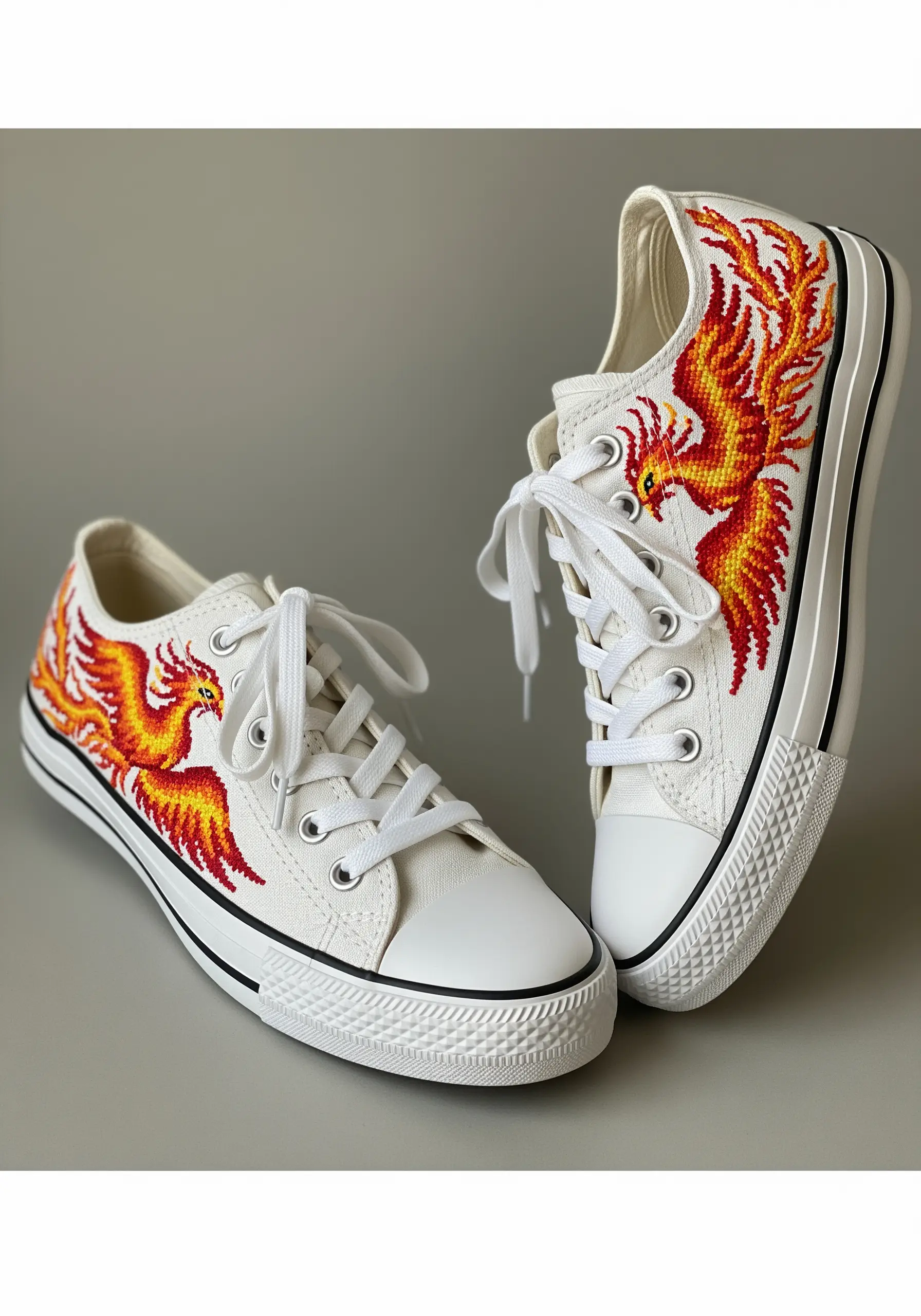
Customize a pair of plain canvas sneakers with a bold, fiery cross-stitch design.
Using a water-soluble stabilizer, you can apply a perfect grid to the shoe, stitch your motif, and then dissolve the stabilizer away with water.
The vibrant, dynamic phoenix design transforms a generic accessory into a unique and powerful statement piece.
This is the ultimate way to wear your art on your sleeve—or in this case, on your feet.
33. Celebrate Your Niche Interests
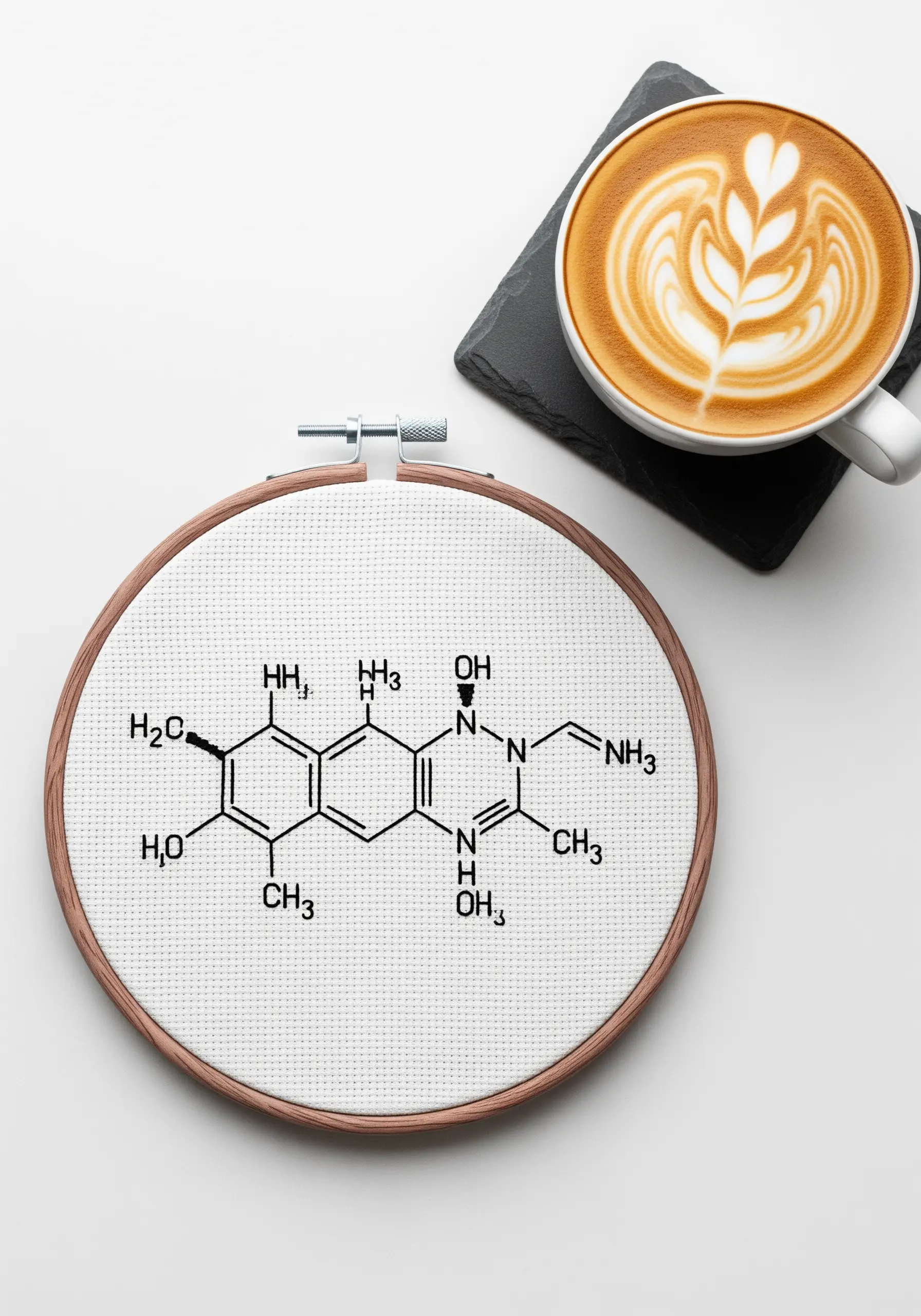
Let your personality shine by stitching patterns that reflect your unique hobbies, profession, or sense of humor.
A pattern based on a complex chemical structure is a perfect example of ‘nerd-chic’ embroidery.
It’s a conversation starter and a deeply personal piece of art that feels more meaningful than a generic floral pattern.
Don’t be afraid to create or seek out patterns that are specific to what you love.
34. Create Custom Upholstery Fabric
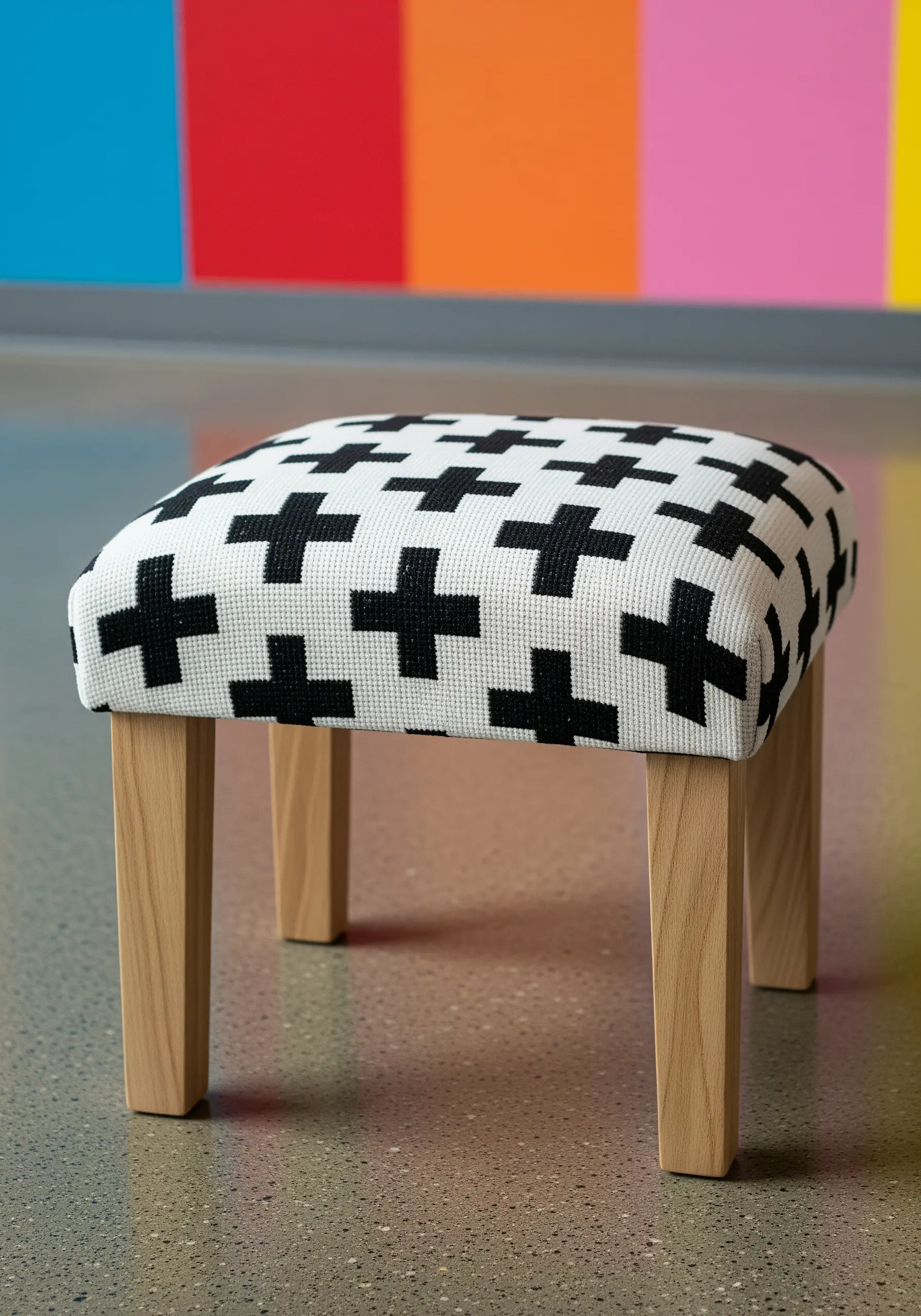
Take cross-stitch to the next level by creating your own custom fabric for furniture.
Using a durable, large-gauge canvas and heavy-duty yarn, you can stitch a repeating geometric pattern large enough to upholster a small footstool or chair seat.
This ambitious project transforms cross-stitch from a purely decorative art into a functional element of your interior design.
It’s a bold move that demonstrates the incredible versatility of this traditional craft.