

Perhaps you’ve mastered the basic stitches, but your finished pieces don’t quite have the clean, intentional look you admire in modern textile art. You have the skill, but you’re seeking the refinement—the subtle shift that turns a hobby into an art form.
Minimalism isn’t about doing less; it’s about making every single stitch count. It’s found in the perfect tension of a single line, the uniform texture of a filled shape, and the quiet power of negative space. It’s an aesthetic built on precision, restraint, and deep respect for your materials.
Here, you’ll find not just inspiration, but the specific techniques to achieve that polished finish. We’ll move beyond patterns and into the principles of composition, texture, and form. This is your guide to creating stitched art that feels less like craft and more like quiet, confident poetry for your walls.
1. The Single Continuous Line Landscape

Create an entire landscape using a single, unbroken line to cultivate a sense of fluidity and calm.
To achieve this, trace your design and use a whipped backstitch or a stem stitch, which conceals the individual stitches and produces a smooth, cord-like effect.
Use a single strand of high-contrast thread, like black on natural linen, to emphasize the purity of the form.
The elegance here comes from restraint—resisting the urge to add more allows the singular line to hold all the visual weight.
Frame it with a raw, deckled edge to complement the organic feel of the stitching.
2. Geometric Studies in Stitch

Transform basic shapes into a sophisticated triptych by focusing on textural fills rather than simple outlines.
Instead of a backstitch, fill your circle, square, and triangle with rows of tightly packed seed stitches or vertical satin stitches.
This technique turns a flat shape into a tactile object with depth and shadow.
Use a single color of thread, like a deep navy or charcoal, on an off-white cotton canvas to maintain a clean, graphic aesthetic.
The consistency in stitch density across all three pieces is what creates a cohesive, gallery-style set.
3. Celestial Phases with Metallic Sheen

Capture the magic of the lunar cycle by pairing high-contrast fabric with light-catching metallic threads.
On a dark, tightly woven fabric like black linen or felt, use a silver or pearlescent white thread for maximum impact.
Work the moon phases in a smooth satin stitch, ensuring your stitches lie flat and parallel to create a uniform sheen.
For the surrounding stars, use tiny French knots of varying sizes to mimic a distant, twinkling galaxy.
This design is one of the celestial micro-embroidery ideas that feels both cosmic and deeply personal.
4. The Art of Suspended Thread

Create a delicate, floating botanical by stitching directly onto fabric and suspending it within a glass frame.
This technique, often called string art, uses straight stitches pulled taut between anchored points to form the shape of the ginkgo leaf.
Choose a fine, lustrous thread like a single strand of silk or a metallic gold floss to catch the light beautifully.
The semi-transparent linen allows light to pass through, making the stitched leaf appear weightless and ethereal.
The key is perfect tension—each strand must be pulled just right to create those sharp, elegant lines without puckering the fabric.
5. Vertical Gradients as Wall Art
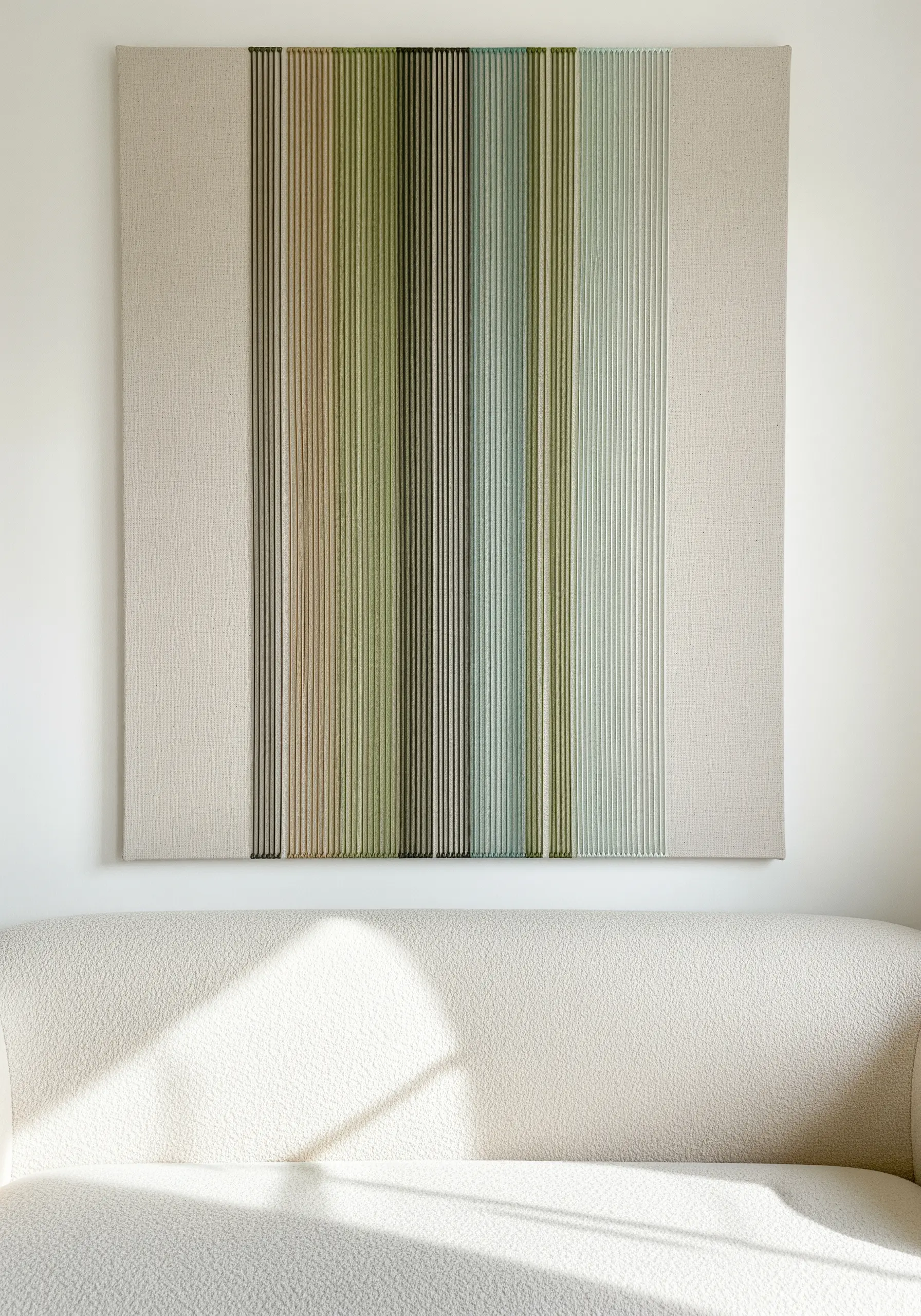
Explore color theory by creating a large-scale piece using only vertical straight stitches.
This is a meditative exercise in precision, where the visual impact comes from the subtle shifts in color and the perfect uniformity of the lines.
Choose an analogous color palette—like these greens, teals, and earthy browns—to ensure a harmonious blend.
Stretch your canvas tightly on a frame before you begin to prevent any sagging, as the tension of hundreds of parallel stitches can warp the fabric.
This is a perfect example of abstract thread embroidery ideas that transform a simple stitch into something monumental.
6. Sculptural Lines with Chunky Fibers

Introduce dramatic, three-dimensional texture to your work by couching thick yarn or braided cord onto your canvas.
This technique involves laying the chunky fiber on the surface and securing it with small, discreet stitches of a matching fine thread.
The contrast between the bold, sculptural yellow braid and the flat, dark background creates an immediate and powerful focal point.
This approach moves your embroidery from a two-dimensional image to a tactile, sculptural object, making it one of those stunning mixed-fiber projects that turn ordinary threads into art.
7. Expressive Minimalism in Portraiture
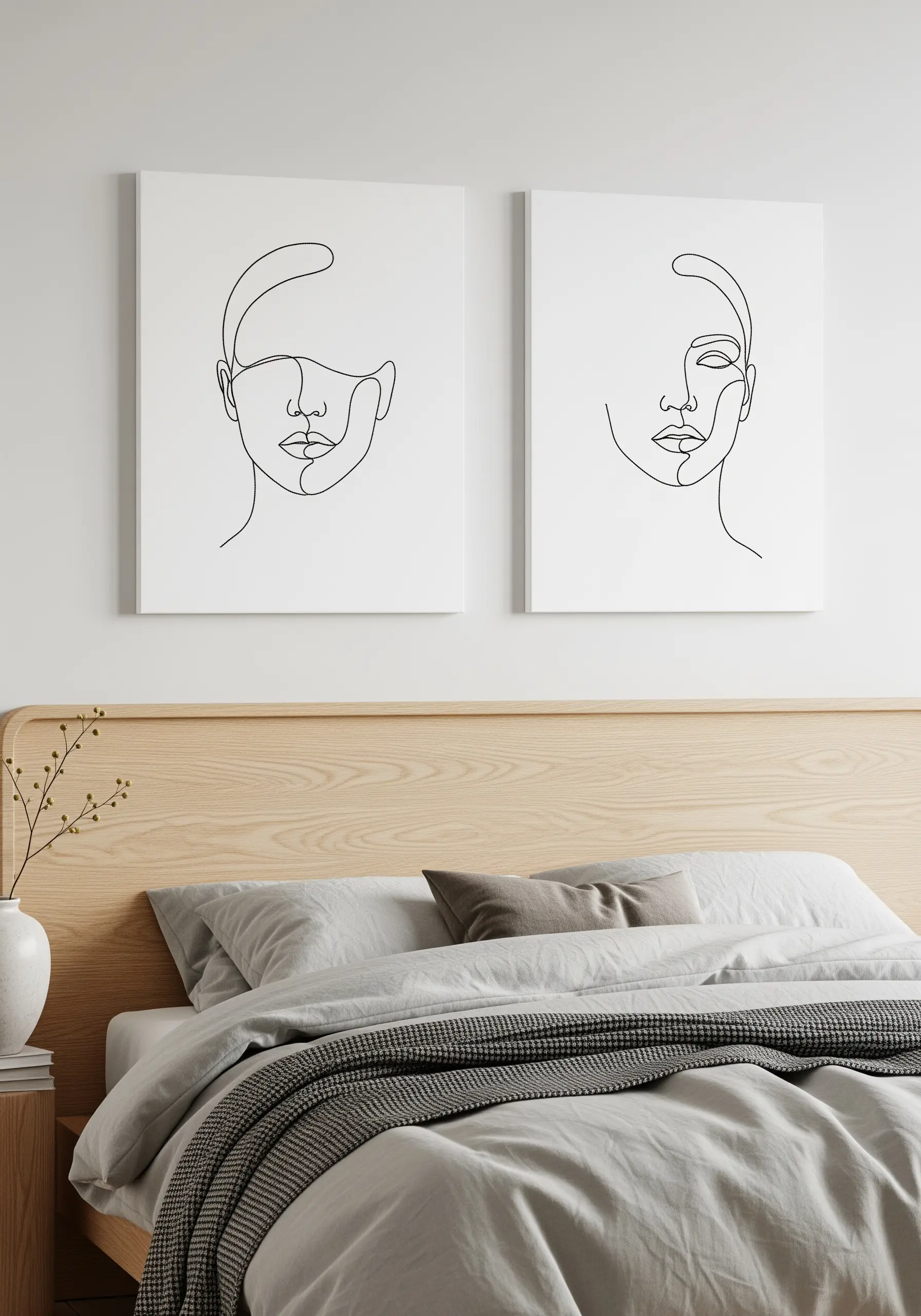
Capture the essence of a face with the fewest possible lines, turning negative space into a powerful compositional tool.
Use a simple backstitch or stem stitch with two or three strands of black floss on a stark white canvas.
The artistry lies in the placement of the line—where it breaks and where it connects suggests form and shadow without explicitly defining it.
Work this as a diptych to explore subtle variations on the same subject, creating a visual conversation between the two pieces.
These abstract face line embroidery designs prove that emotion can be conveyed with incredible economy.
8. Architectural Studies on Raw Canvas
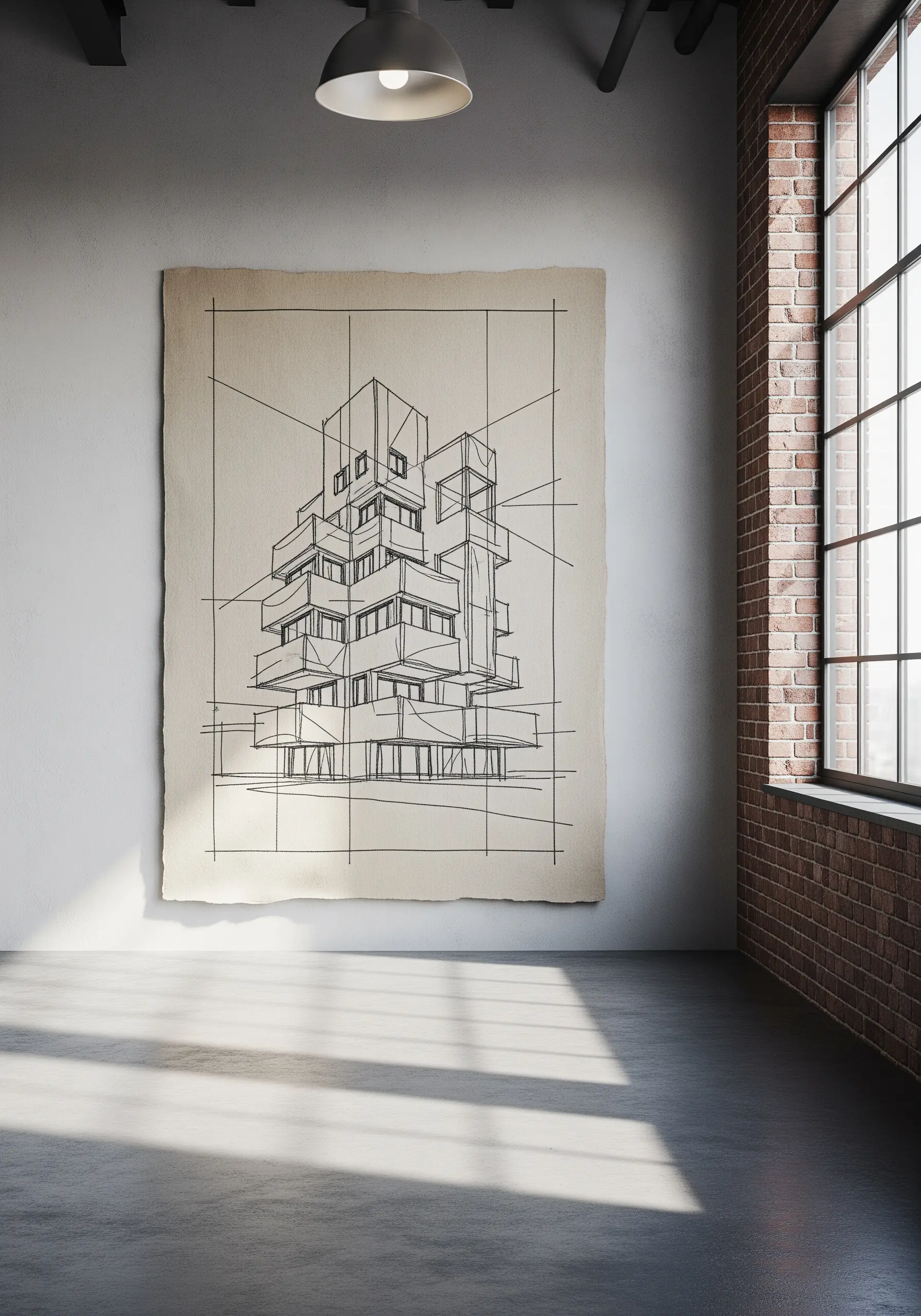
Translate the precision of an architectural sketch into thread by focusing on clean lines and perspective.
Use a single, fine strand of black cotton thread to maintain the crispness of a pen-and-ink drawing.
A simple backstitch is your best tool here, allowing for sharp angles and straight lines that are essential for structural designs.
Work on a large, unstretched piece of raw canvas with frayed edges to give the piece an industrial, blueprint-like feel that complements the subject matter.
9. Visualizing Sound with Thread
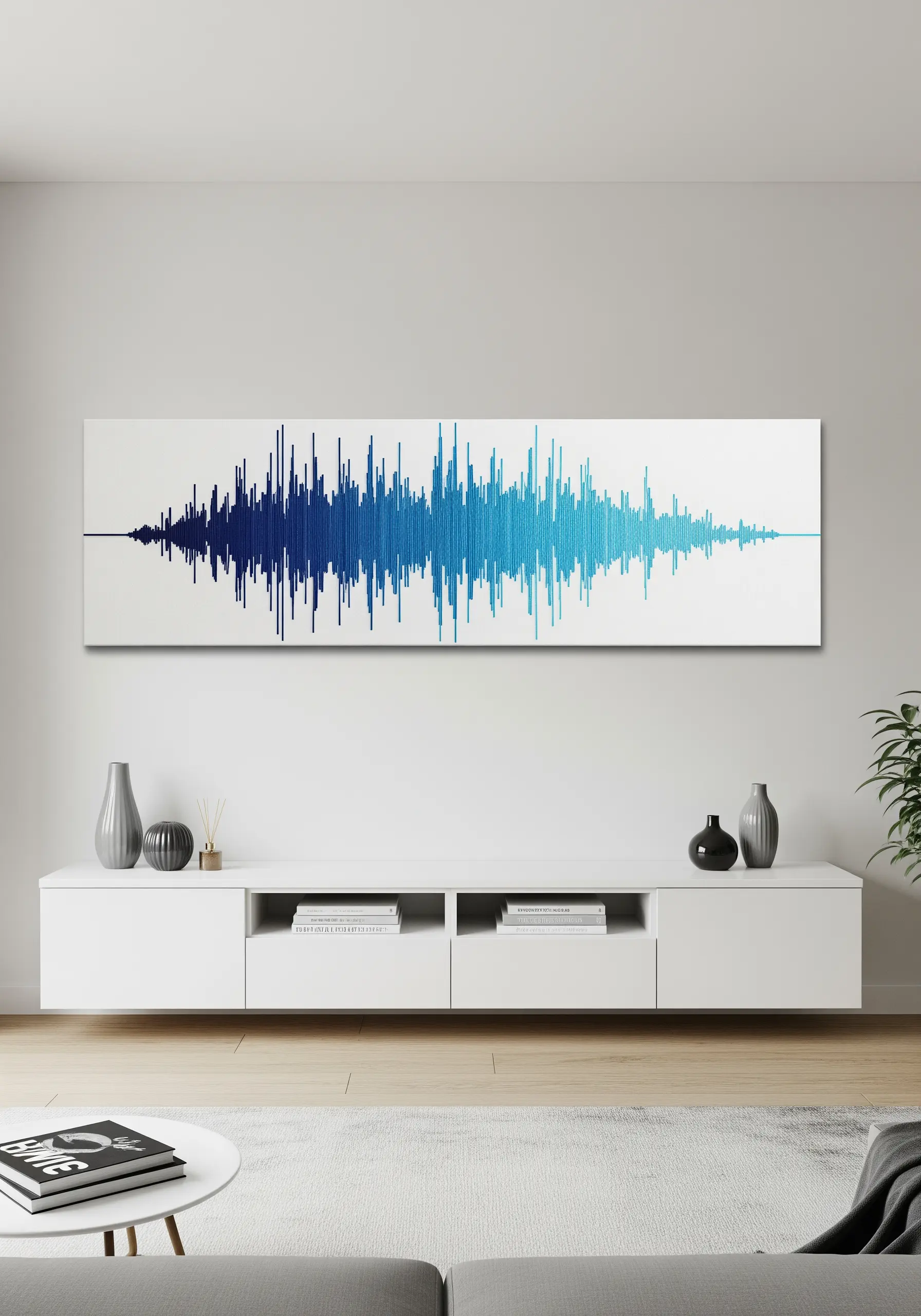
Turn a soundwave—a favorite song, a voice, a heartbeat—into a deeply personal piece of abstract art.
Translate the peaks and valleys of the audio file into vertical satin stitches of varying heights.
Introduce a color gradient, moving from a deep navy to a bright cyan, to add visual flow and emotional depth to the composition.
The key to a polished finish is ensuring all your vertical stitches are perfectly parallel and uniformly tensioned, creating a clean, graphic effect.
This is a modern way to create abstract thread embroidery projects based on music.
10. Textural Accents on Handmade Paper
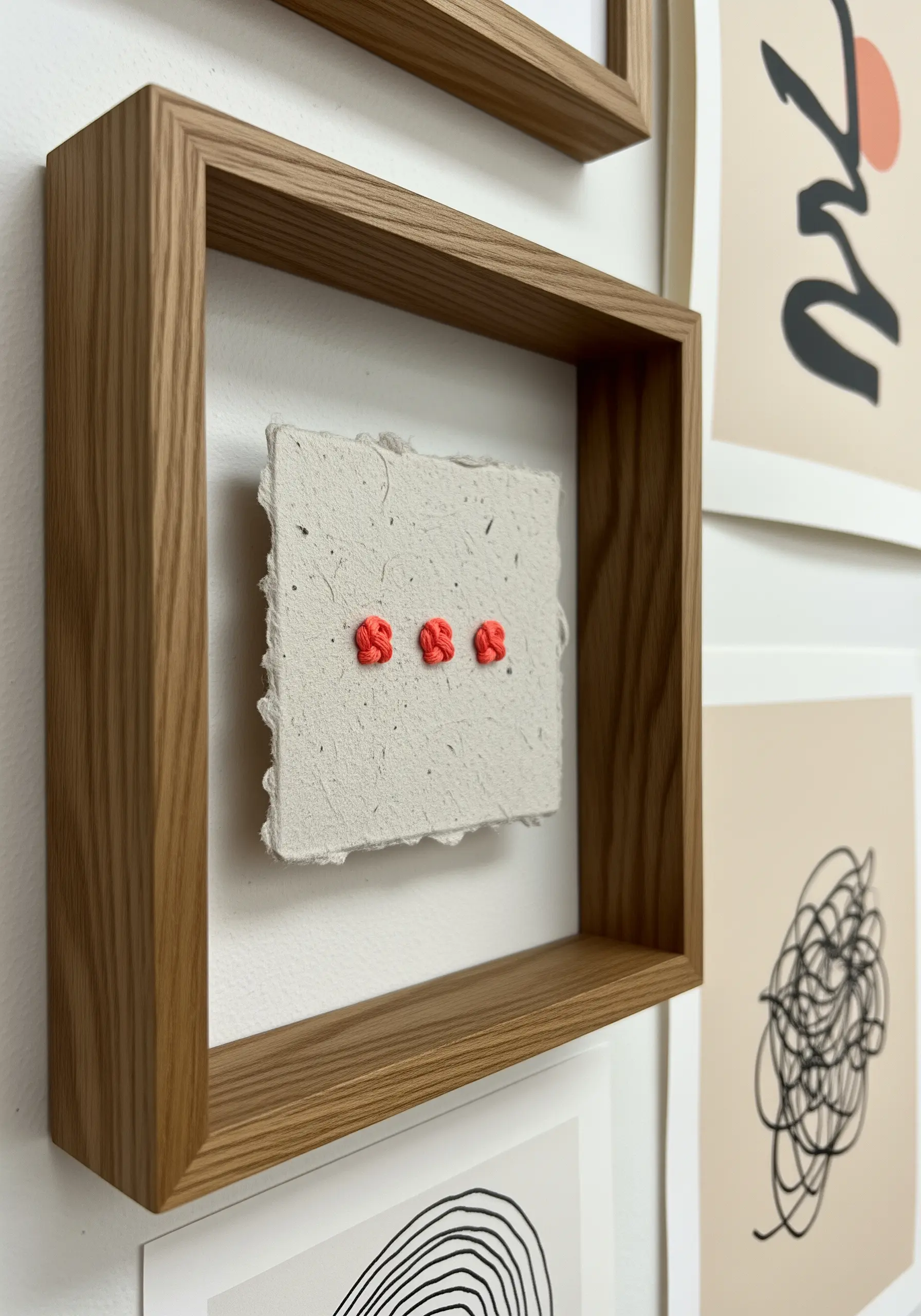
Elevate a simple stitch by taking it off the fabric and onto a more unconventional surface like handmade paper.
Use a thick thread or perle cotton to create dimensional French knots or colonial knots that stand out against the paper’s texture.
Pierce the paper first with a sharp awl or a larger needle to create clean holes for your thread, which prevents tearing.
Mount the finished paper on a backing board within a deep shadowbox frame; this emphasizes the three-dimensional quality of the knots and the raw, deckled edge of the paper.
These are the kinds of paper embroidery projects you can finish in a weekend.
11. Radiating Stitches of a Minimalist Sun

Create the warm glow of a sunrise using radiating straight stitches in an analogous color palette.
Start by stitching a small, dense semicircle at the base using a satin stitch in your darkest color.
Then, work your sunrays outwards, using a simple straight stitch and alternating between warm yellows and oranges to create a vibrant, blended effect.
Mark your endpoints with a disappearing ink pen before you start to ensure your rays are evenly spaced and create a perfect arc.
It’s one of those wonderfully easy-to-make embroidery designs that are surprisingly stunning.
12. The Meditative Power of a Simple Grid
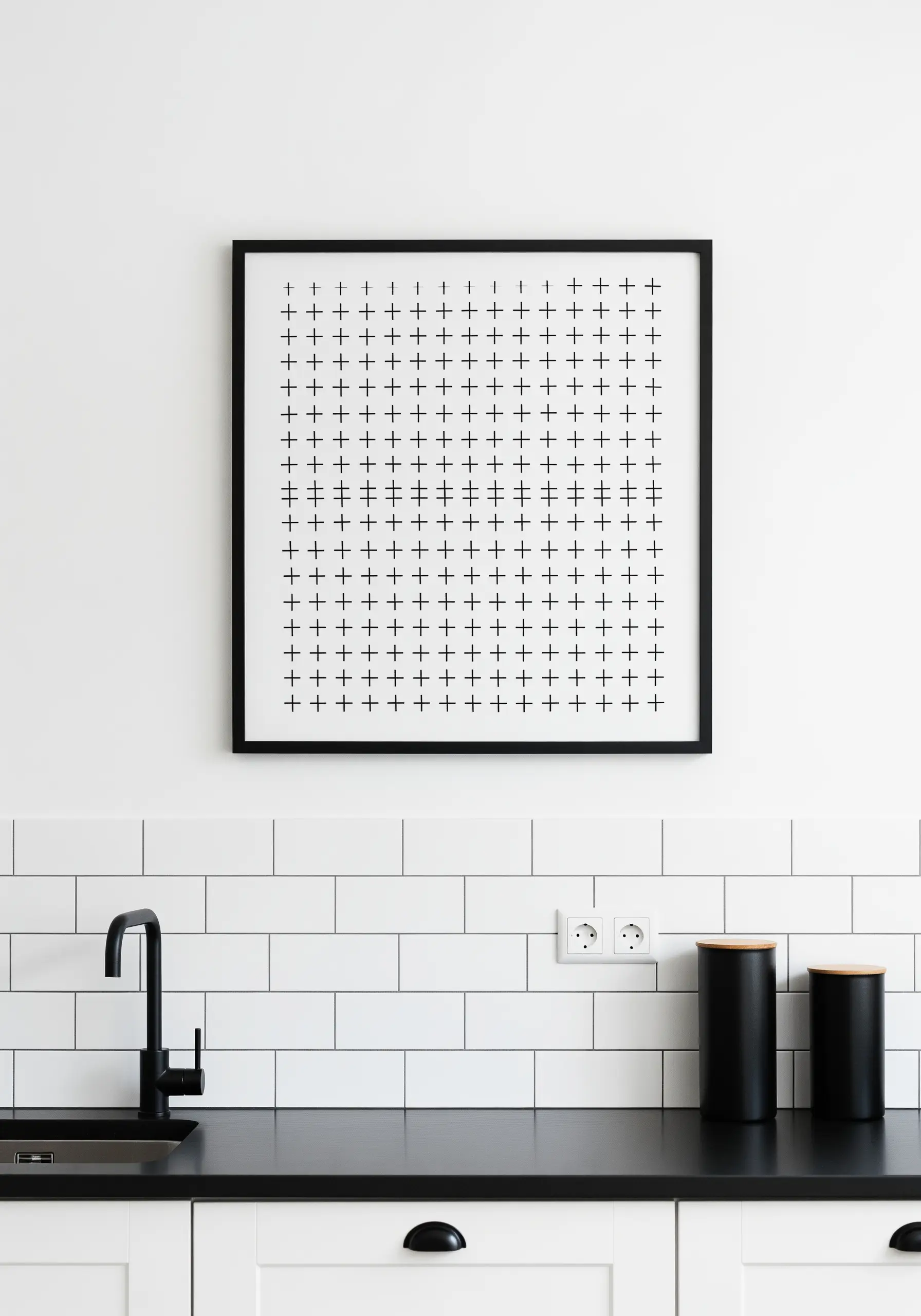
Find artistry in repetition by creating a grid of simple marks, like plus signs or seed stitches.
The effect is not about a single stitch, but the collective power of hundreds working in unison.
Use a template or a water-soluble canvas to ensure your grid is perfectly aligned, as precision is what gives this piece its clean, modern aesthetic.
A single strand of black floss on a crisp white background provides a graphic, high-contrast look that feels both simple and complex.
This is a perfect example of modern grid-dot stitch concepts for a minimalist home.
13. The Elegance of a Single, Sweeping Curve
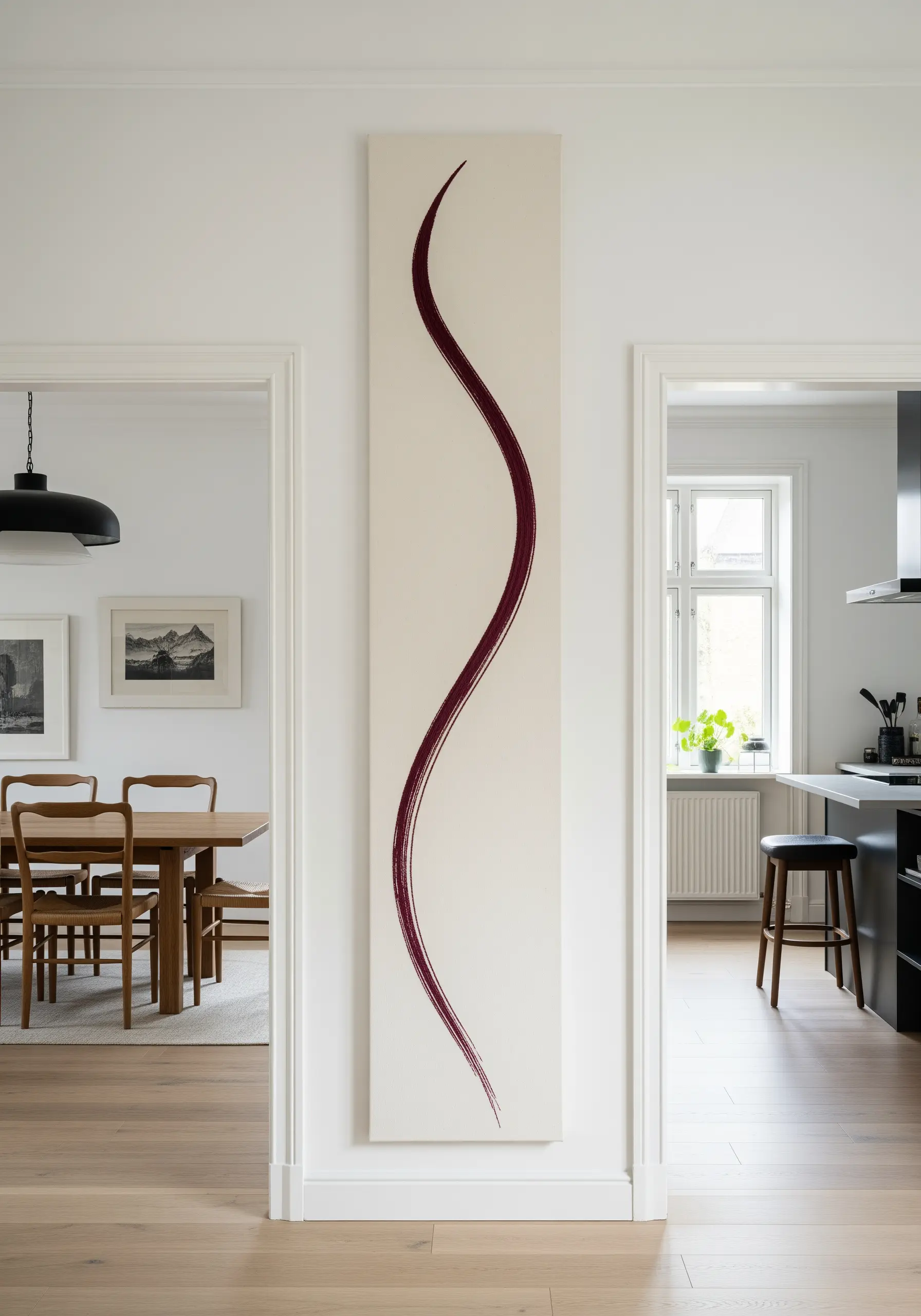
Make a dramatic statement in a narrow space, like a hallway or between two doors, with a single, elongated form.
To create this painted look with thread, use a long-and-short stitch, which allows you to blend stitches seamlessly and avoid the hard lines of a satin stitch on a curve.
Use multiple strands of floss (6 or more) or a thicker thread like tapestry wool to give the line substance and texture.
The choice of a deep, rich color like burgundy against a neutral canvas adds a touch of sophisticated drama.
14. A Modern Collage of Hand-Stitched Mandalas

Create a large-scale, textural composition by stitching and layering multiple circular motifs.
Instead of crochet, interpret this idea with embroidery by creating mandalas using stitches like woven wheels, French knots, and radiating straight stitches in different hoops.
Once complete, trim the fabric and arrange the stitched circles in an overlapping collage on a large linen-covered board.
Stick to a neutral mandala embroidery pattern palette of grays, creams, and charcoals to let the rich textures take center stage.
15. A Serene Landscape in Satin Stitch
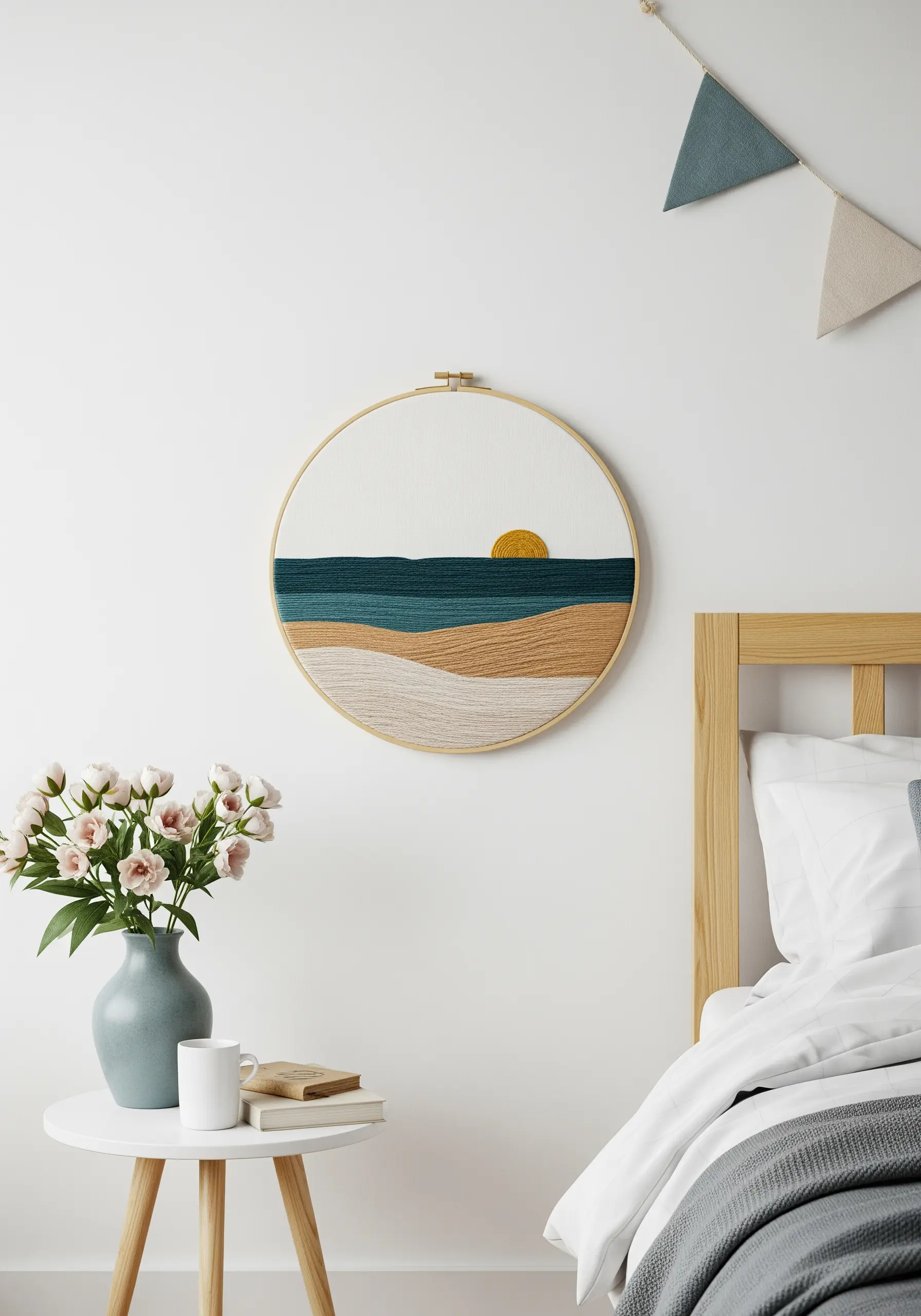
Block out an abstract seascape using broad sections of satin stitch for a clean, graphic, and deeply calming effect.
Vary the direction of your stitches for each color block—horizontal for the water, slightly angled for the sand—to create subtle shifts in texture and light reflection.
To achieve those crisp lines between colors, outline each section with a split stitch first. This creates a raised edge that your satin stitches can tuck up against neatly.
The final piece feels like one of those coastal vibe embroidery projects for bedrooms that brings tranquility indoors.
16. The Dynamic Energy of a Freeform Line

Embrace improvisation by stitching a single, continuous, and chaotic line without a pre-drawn pattern.
This is an exercise in letting go of perfection. Use a simple running stitch or backstitch and let the thread guide your hand across the canvas.
The high contrast of a single white thread on a stark black background is essential here, as it turns the line into a bolt of graphic energy.
This technique is less about representation and more about capturing a feeling—movement, thought, or sound—in its purest form.
17. Typographic Art with Tactile Presence
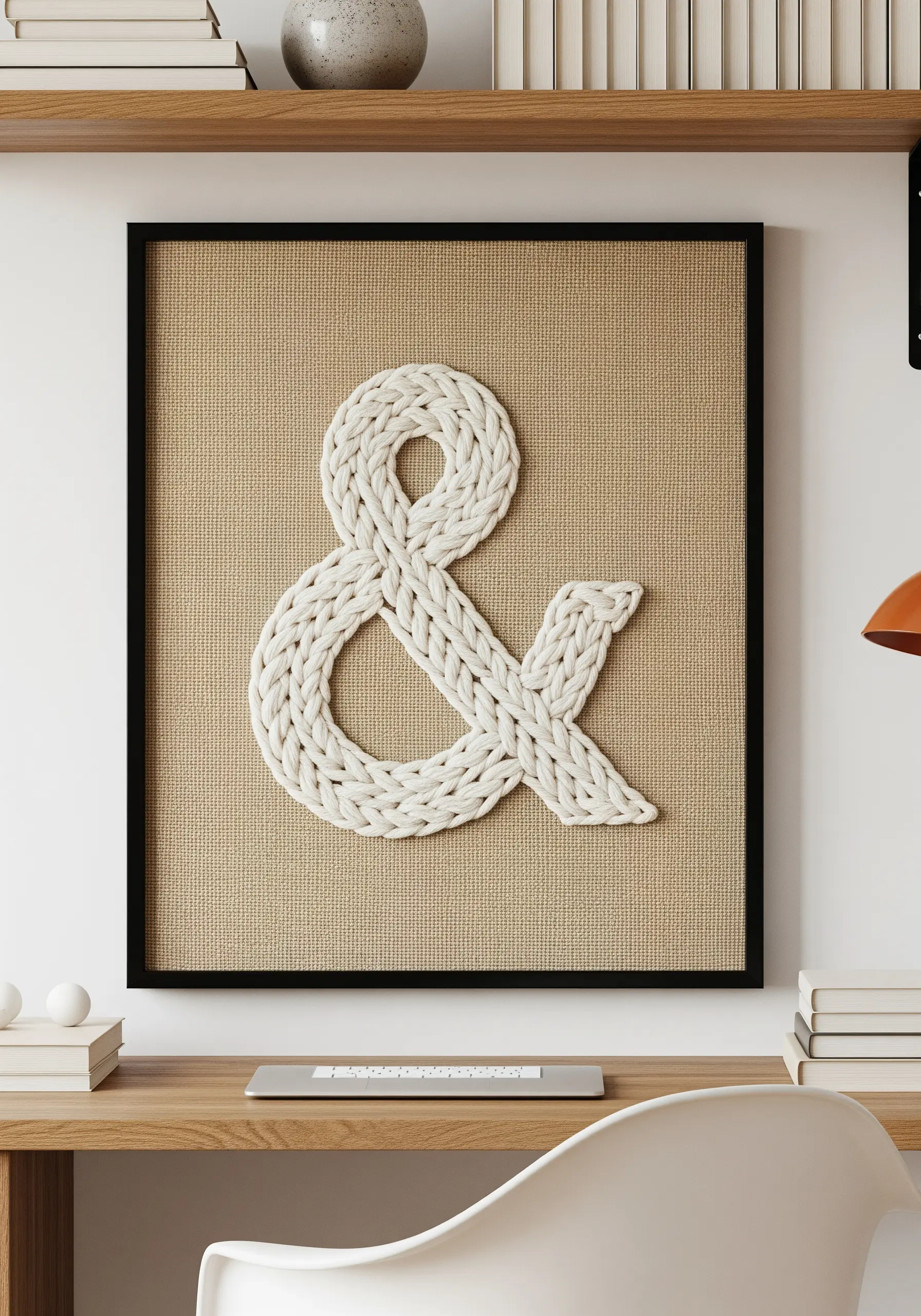
Turn a simple symbol into a piece of statement art by focusing on oversized texture.
Create this chunky ampersand by couching a thick, soft rope or macrame cord onto a coarse background fabric like burlap.
Use a sturdy, curved needle and a matching, strong thread to make the securing stitches, hiding them within the texture of the cord.
The interplay between the soft, loopy cord and the rustic, woven background creates a beautiful tactile contrast that invites touch.
18. Large-Scale Minimalism with Scattered Stitches
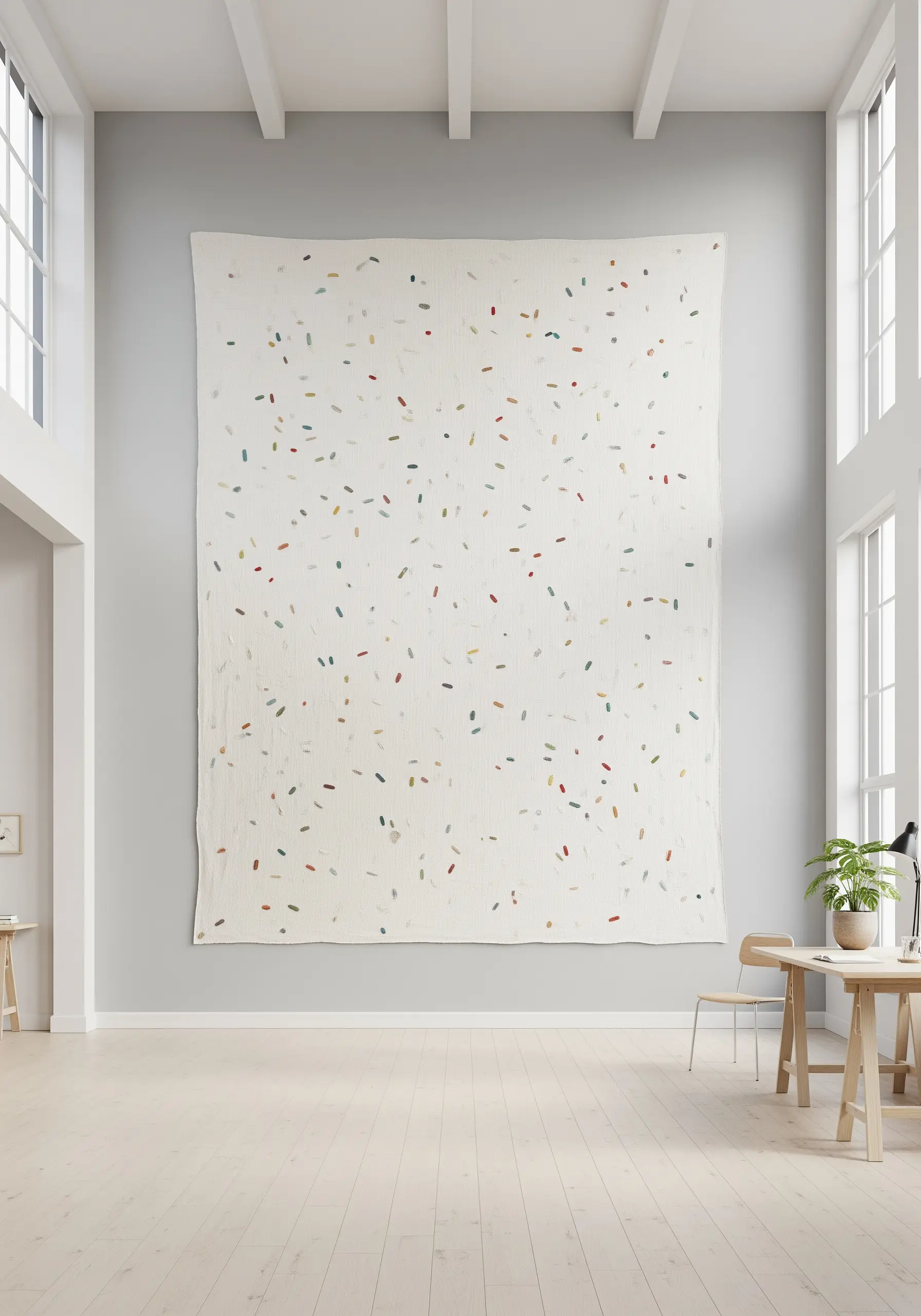
Demonstrate that minimalism can be monumental by using tiny, scattered stitches on an oversized canvas.
This piece uses simple, short straight stitches—like colorful confetti—randomly placed across a vast expanse of neutral fabric.
The key is the negative space; the emptiness surrounding the stitches is what gives them their power and draws the viewer in for a closer look.
This is a perfect project for using up leftover thread scraps, turning them into a cohesive work of art. This is one of the simplest large-scale embroidery tapestries you can make.
19. The Gilded Beauty of Kintsugi Stitching

Evoke the Japanese art of Kintsugi—mending broken pottery with gold—using thread and fabric.
Create the ‘cracks’ with fine metallic gold thread, using a simple backstitch or stem stitch that travels across the dark canvas.
For the repaired sections, build up dense clusters of bullion knots or padded satin stitch to create a raised, molten-gold effect.
This abstract piece is a powerful metaphor for resilience and finding beauty in imperfection, making it one of the most compelling abstract metallic thread projects.
20. Graphic Connection with a Bold Joining Stitch

Create a striking diptych where the design flows seamlessly across two separate canvases.
Use a simple, graphic stitch like a large blanket stitch or lacing stitch to form the intersecting waves.
The minimalism of the design demands precision; ensure the stitch length and spacing are perfectly consistent within each piece and align exactly where the two canvases meet.
This powerful black-on-white composition transforms a humble mending stitch into a bold piece of modern art.
21. A Minimalist’s Guide to the Galaxy
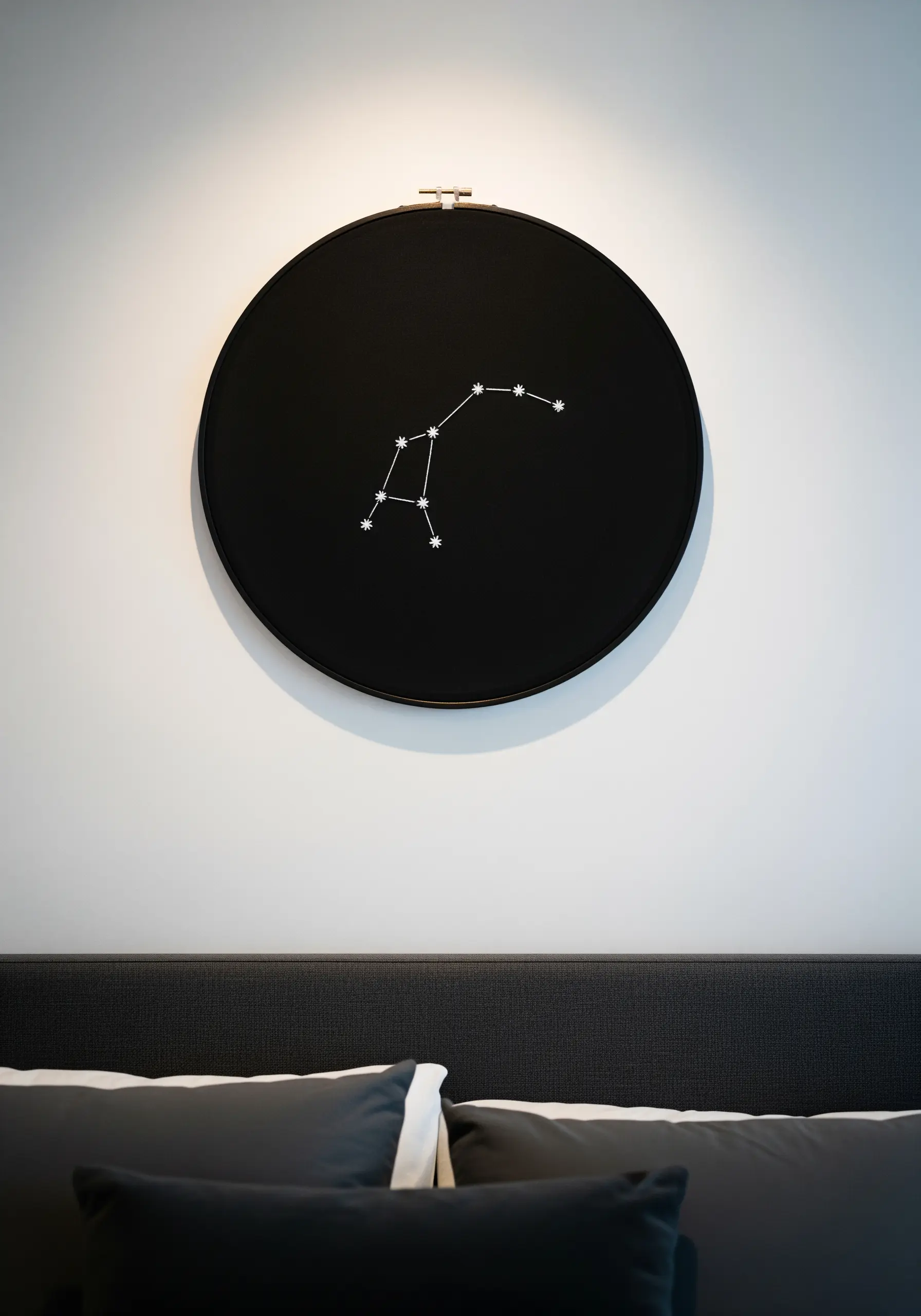
Map out your favorite constellation with the clean precision of a star chart.
On a deep black or navy fabric stretched in a hoop, use tiny, bright white French knots to represent the stars.
Vary the number of wraps on your needle (one for small stars, two for larger ones) to create subtle differences in magnitude.
Connect them with single, taut straight stitches to form the constellation’s shape.
The dark fabric acts as the night sky, making the spare, white stitches pop with celestial clarity.
22. The Tone-on-Tone Texture Compendium

Explore the endless possibilities of stitch by creating a sampler that focuses solely on texture, not color.
Using a single shade of thread—like this elegant ivory on an off-white background—removes distraction and highlights the tactile nature of each stitch.
Dedicate vertical columns to different stitches: French knots, seed stitch, chain stitch, bullion knots, satin stitch, and woven bars.
This is one of the most effective tone-on-tone embroidery techniques, transforming a simple canvas into a rich, sculptural textile.
23. An Abstract Skyline with a Pop of Color

Suggest a dense city skyline using a controlled chaos of vertical straight stitches.
Fill the canvas with black and grey stitches of varying lengths and densities to create a sense of architectural depth and shadow.
Then, slice through the composition with a single, bold horizontal line in a vibrant color like electric blue.
This accent line can be achieved with a perfectly straight satin stitch or by couching a thicker, contrasting thread, immediately drawing the eye and anchoring the piece.
24. The Weightless Feather in White on White
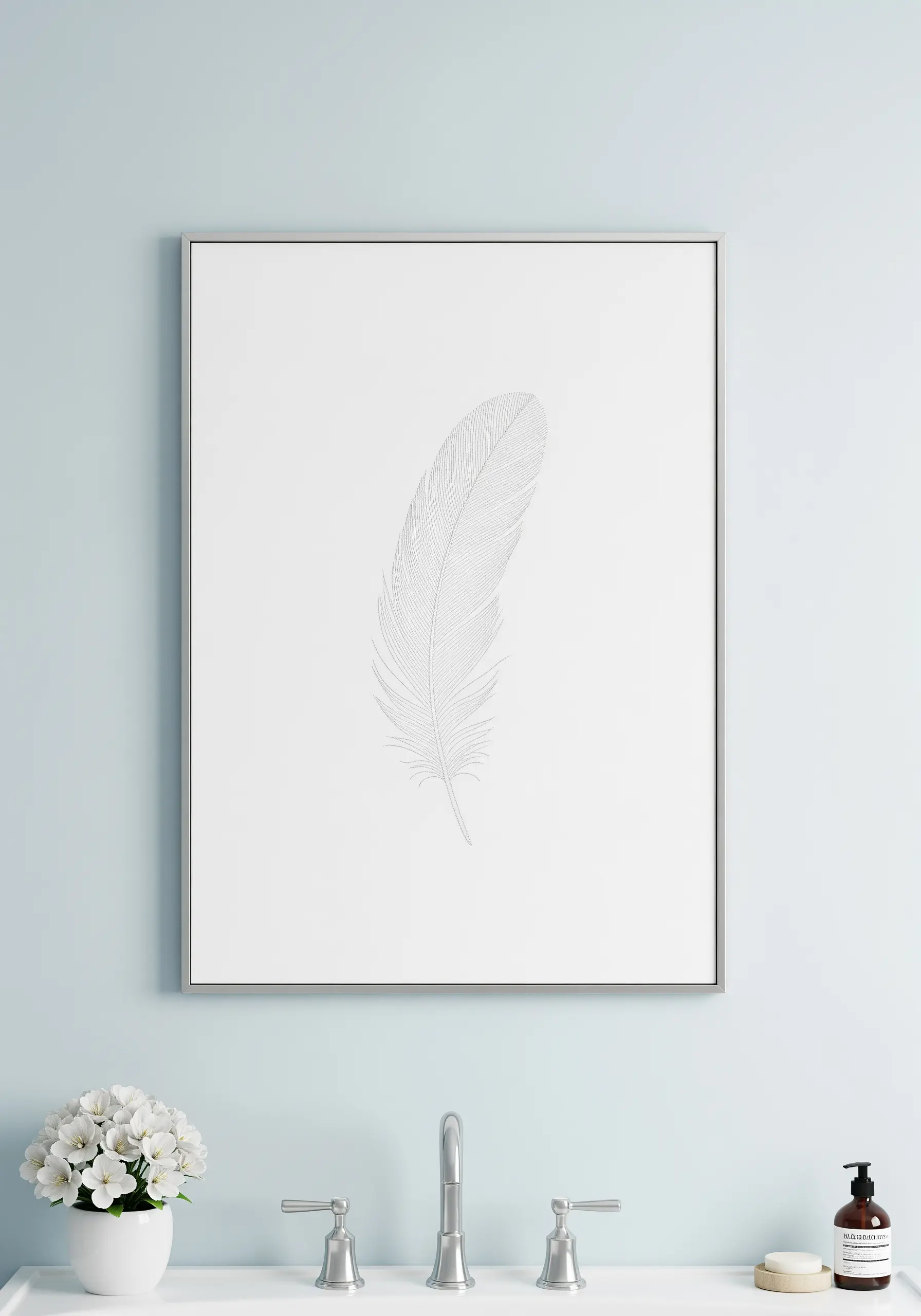
Create an image of extreme delicacy by using a tone-on-tone color palette.
Stitch a detailed feather outline using a single strand of white floss on a crisp white linen or cotton background.
The best stitch for this is the split stitch, which creates a fine, almost unbroken line perfect for capturing the feather’s intricate barbs.
The design is so subtle that it encourages the viewer to step closer, rewarding them with a quiet discovery of texture and form. It’s one of the most subtle embroidery designs that add character without clutter.
25. Bauhaus-Inspired Geometric Composition
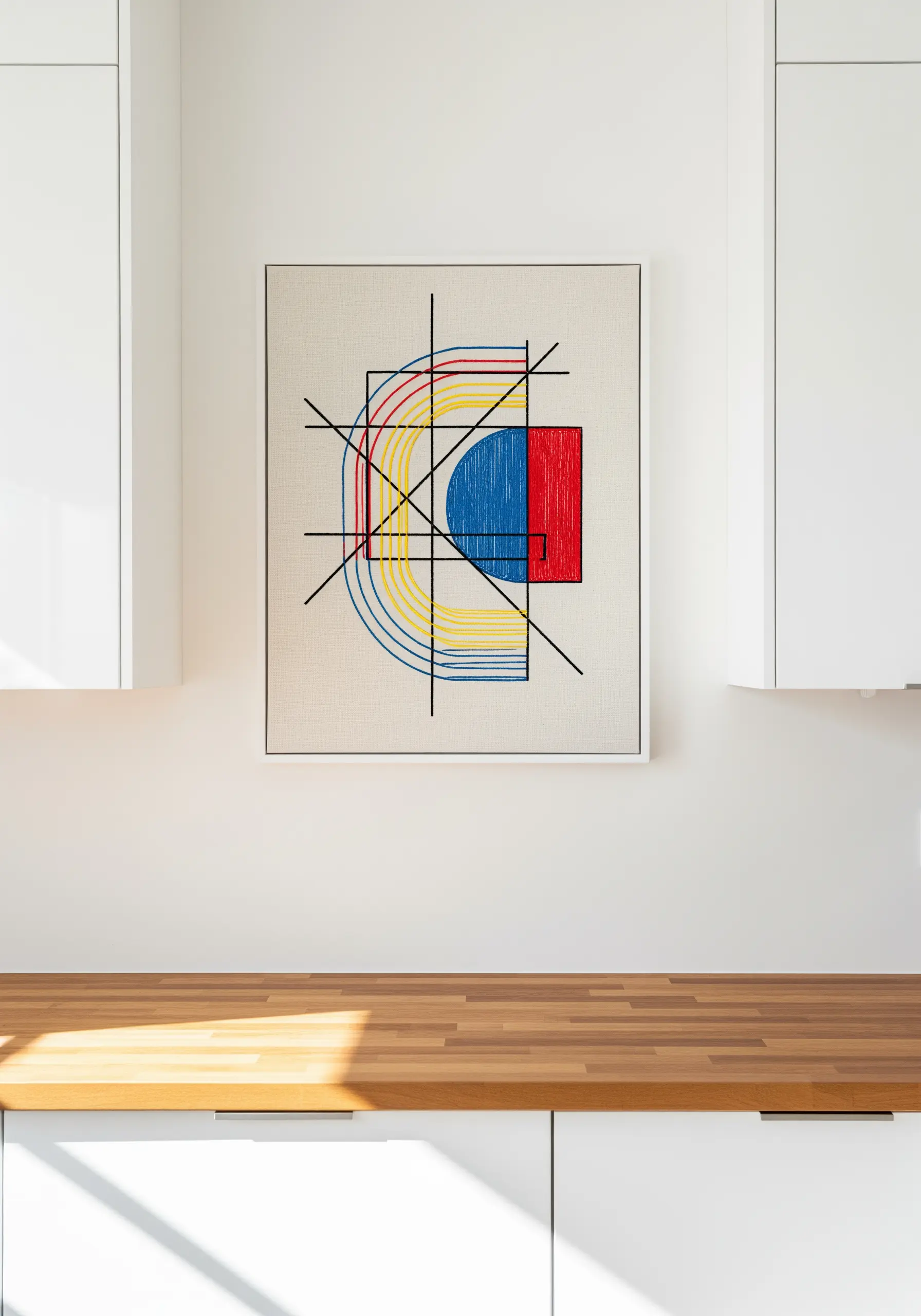
Channel the spirit of the Bauhaus movement by combining primary colors, bold lines, and geometric shapes.
Use a dense, smooth satin stitch to create solid blocks of red, yellow, and blue. To keep the edges perfectly crisp, outline each shape with a backstitch before filling it in.
Contrast these filled shapes with sharp, black lines made using a simple backstitch.
The composition’s success lies in the balance and tension between the elements—the structured lines, the curved arcs, and the flat planes of color.
26. A Graphic Tree Silhouette with Yarn
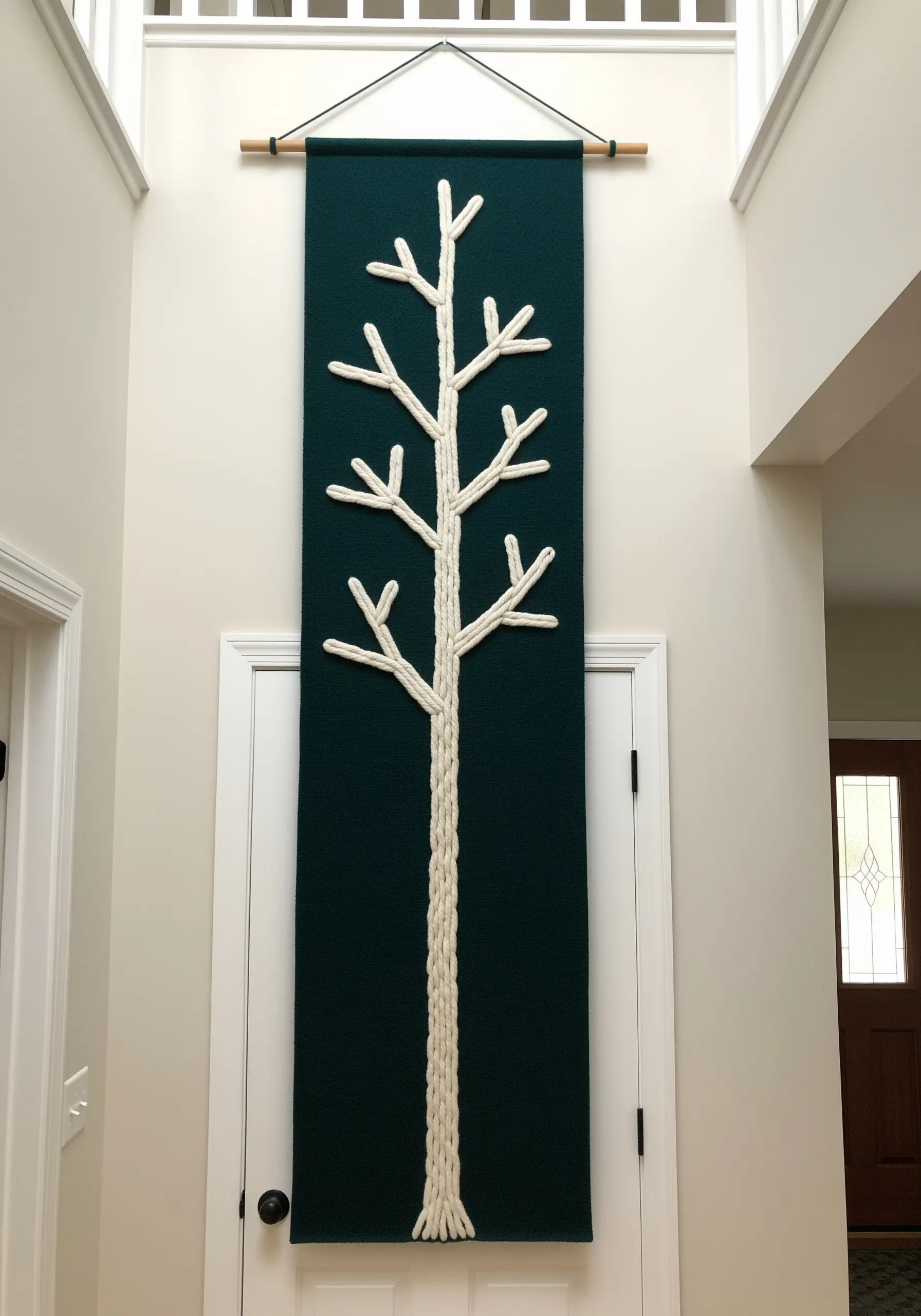
Create a large-scale, graphic wall hanging using thick yarn for a bold, impactful statement.
This minimalist tree is made by couching bulky, cream-colored yarn onto a dark green wool or felt background.
Plan your design, lay the yarn along the lines, and use a matching thin thread to tack it down every half-inch or so.
The contrast between the soft, chunky yarn and the flat, rich color of the felt background gives this simple silhouette a commanding presence.
27. The Poetic Pulse of a Heartbeat

Capture a universally understood symbol of life and emotion with a single, elegant line.
Use a rich, vibrant red thread against a stark white canvas for maximum graphic impact.
A stem stitch or a whipped backstitch will give you a smooth, raised line that has more presence than a simple backstitch.
The beauty of this piece is its universal simplicity; it requires no explanation yet carries immense personal meaning.
This is a perfect example of how minimal embroidery patterns can be incredibly powerful.
28. A Trio of Minimalist Glyphs

Tell a story in three parts using simple, symbolic stitches in a collection of hoops.
Each hoop contains a single, elemental mark: a straight line, a starburst, a solid dot.
This encourages you to think about how the most basic stitches—a satin stitch bar, radiating straight stitches, a single French knot—can become meaningful symbols.
Displaying them together as a triptych transforms them from simple stitches into a cohesive piece of conceptual art. This is how small hoop embroidery ideas create big impact.
29. The Hypnotic Power of Concentric Lines
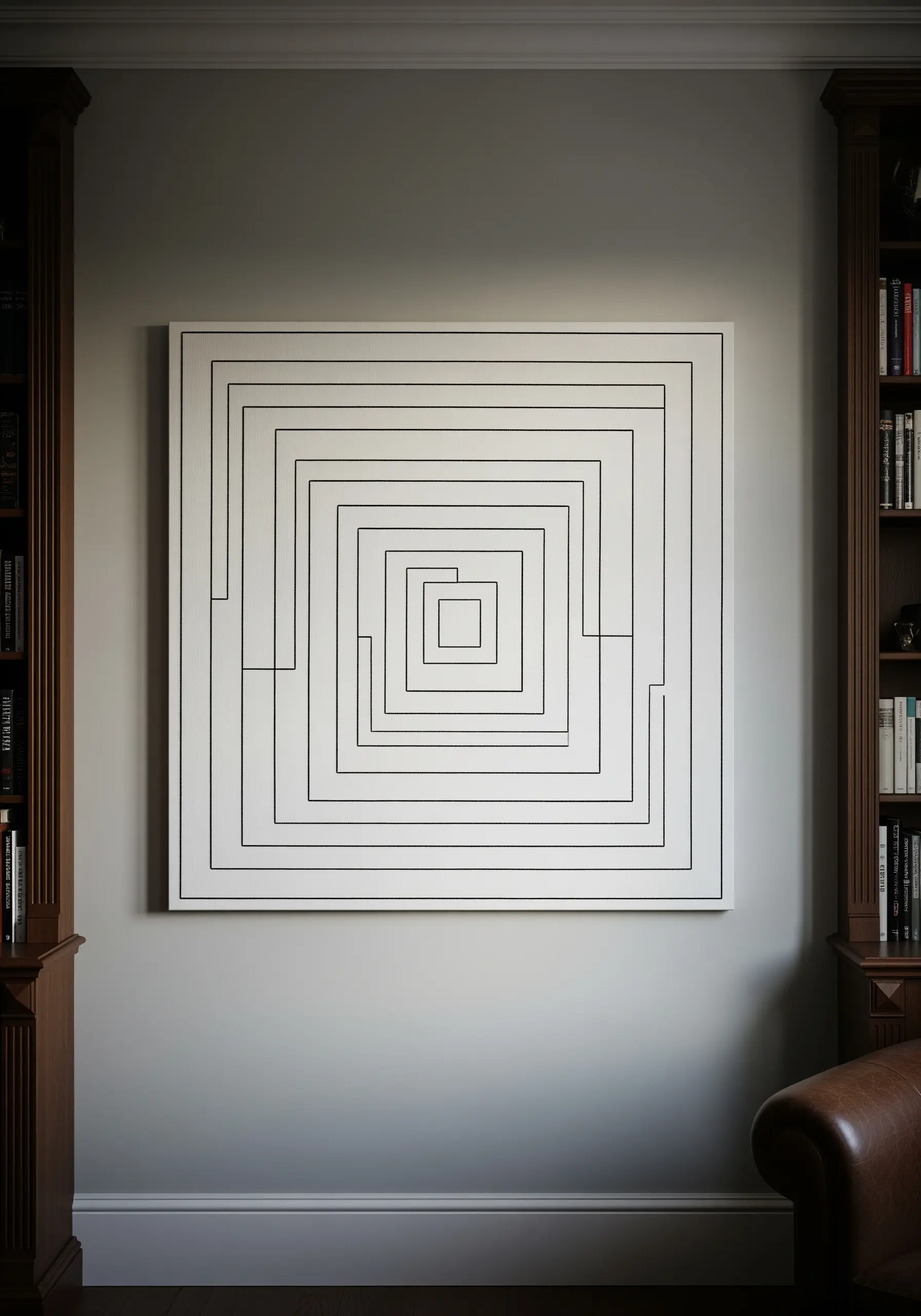
Create a mesmerizing optical effect using a simple series of nested squares.
Use a fine black thread and a precise backstitch to trace the labyrinthine pattern on a white canvas.
While the design appears rigid and geometric, the subtle inconsistencies of hand-stitching will give it a warmth and character that a printed piece could never have.
The visual trick is in the breaks in the lines, which draw the eye inward toward the center of the composition.
30. Liquid Metal Rain in Three Dimensions
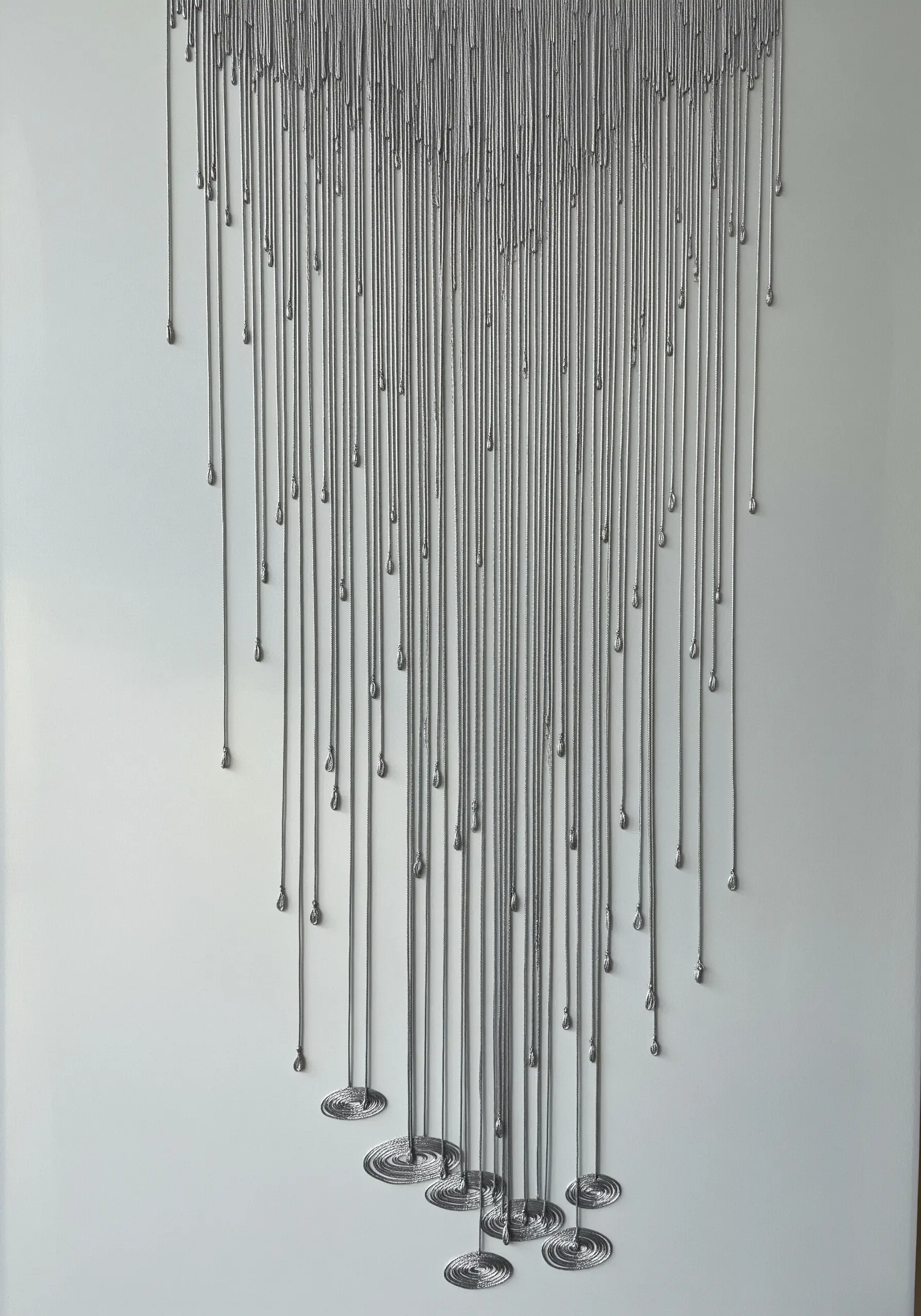
Create a sculptural illusion of dripping metal using advanced thread techniques.
Use a heavy, lustrous metallic thread, like a silver blending filament, held with multiple strands.
Let long, straight stitches hang loosely from the top of the canvas, securing them at the bottom with a cluster of bullion knots or woven picot stitches to create the look of a pooling droplet.
This technique pushes embroidery into the realm of sculpture, playing with gravity, light, and texture.
31. The Architectural Simplicity of the Stitched Arch
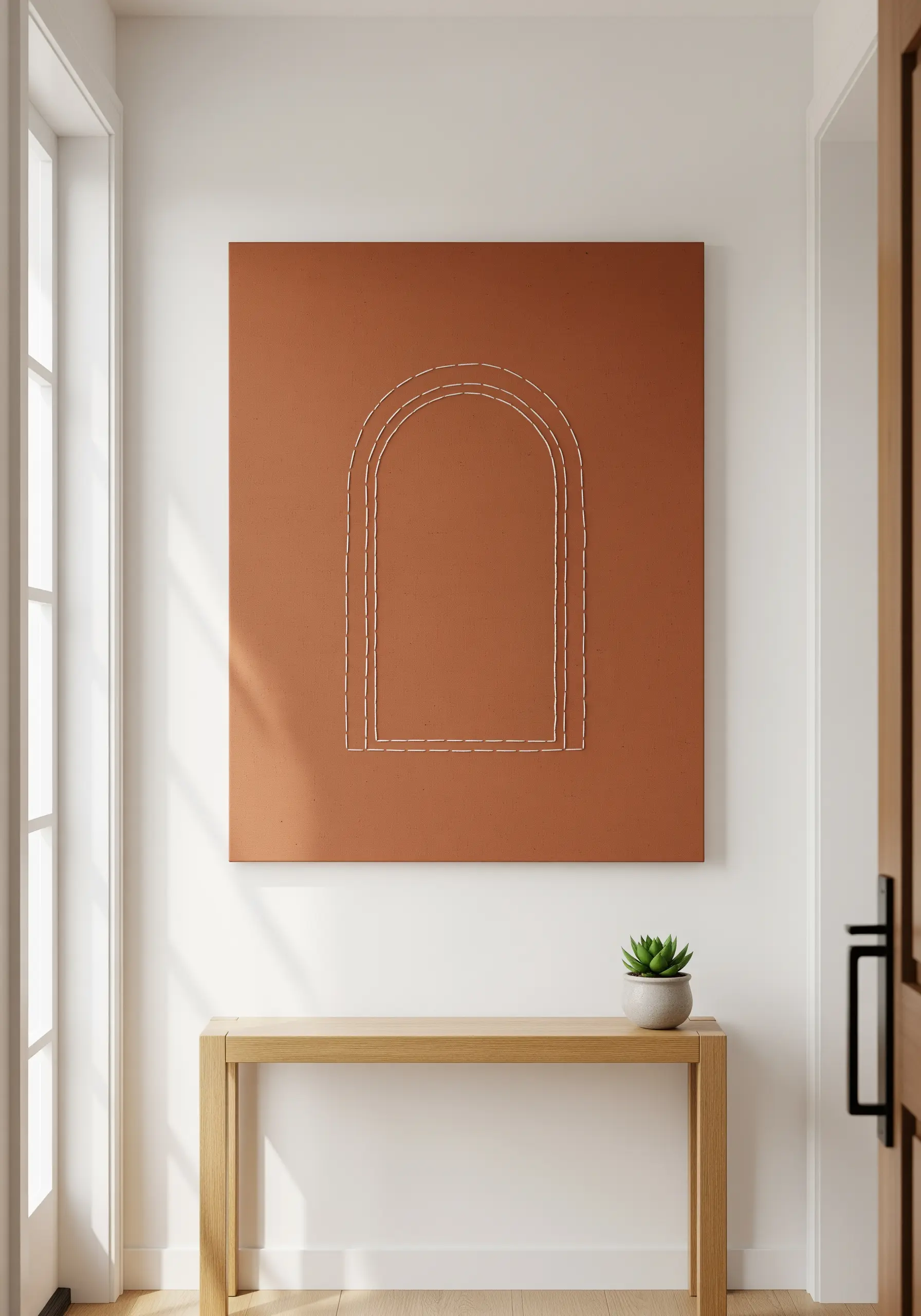
Evoke a sense of passage and structure with the clean, elemental shape of an arch.
Use a simple running stitch with a contrasting off-white thread on a warm, earthy background like this terracotta-colored canvas.
The visible gaps in the running stitch give the piece a light, airy quality, suggesting a sketch or a blueprint rather than a solid structure.
This is proof that the most simple embroidery patterns, when thoughtfully executed, can become compelling statement pieces.
32. Deconstructed Framing with Bold Stitches
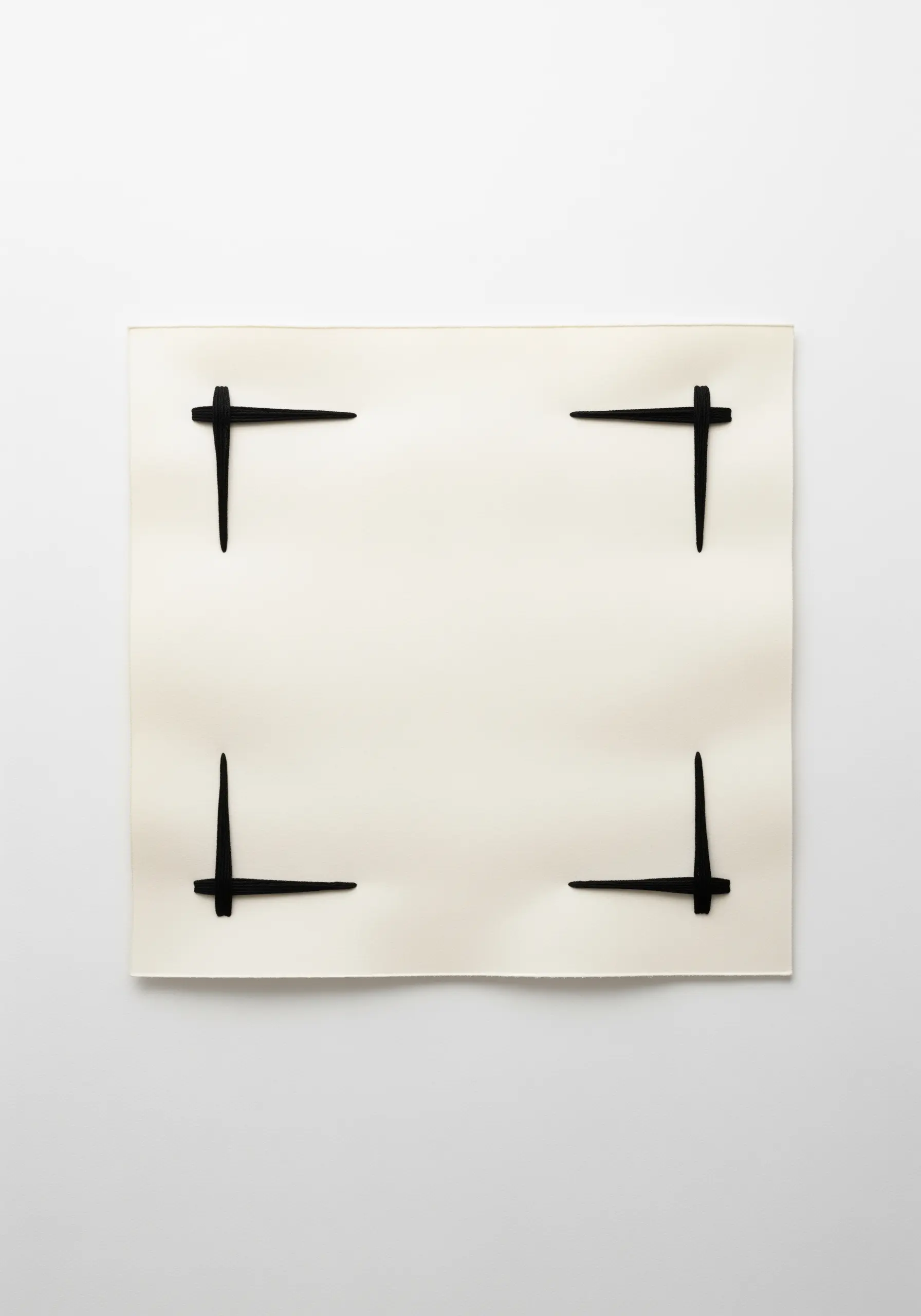
Play with the concept of a frame by stitching bold, graphic marks directly onto the canvas.
Use a thick, black thread and a wide satin stitch to create four corner marks that suggest a boundary without defining it.
This deconstructed approach focuses attention on the negative space within the ‘frame’ and the tactile quality of the stitches themselves.
It’s a conceptual piece that is incredibly simple to execute but feels intellectually and artistically sophisticated.


