You hold the needle, the thread, and a desire to make something beautiful. But sometimes, there’s a gap between the vision in your mind and the piece in your hands. You see other work that looks so effortless, so polished, and wonder what secret you’re missing.
The secret isn’t about more time or more complicated techniques. It’s about small, intentional choices—a different way to lay a thread, a new combination of textures, or a finishing touch that frames your work with confidence.
This is your invitation to try something different. To create pieces that feel as luxurious and complete as they look, often in just a single afternoon. Let’s move beyond the basics and explore the simple adjustments that make all the difference.
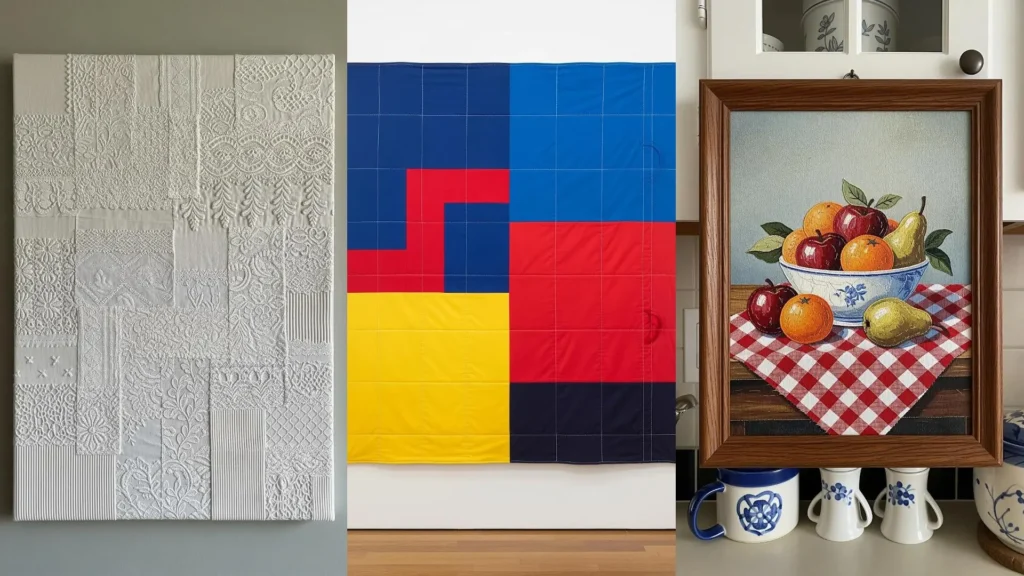
1. Sculptural Fiber Art Wall Hanging

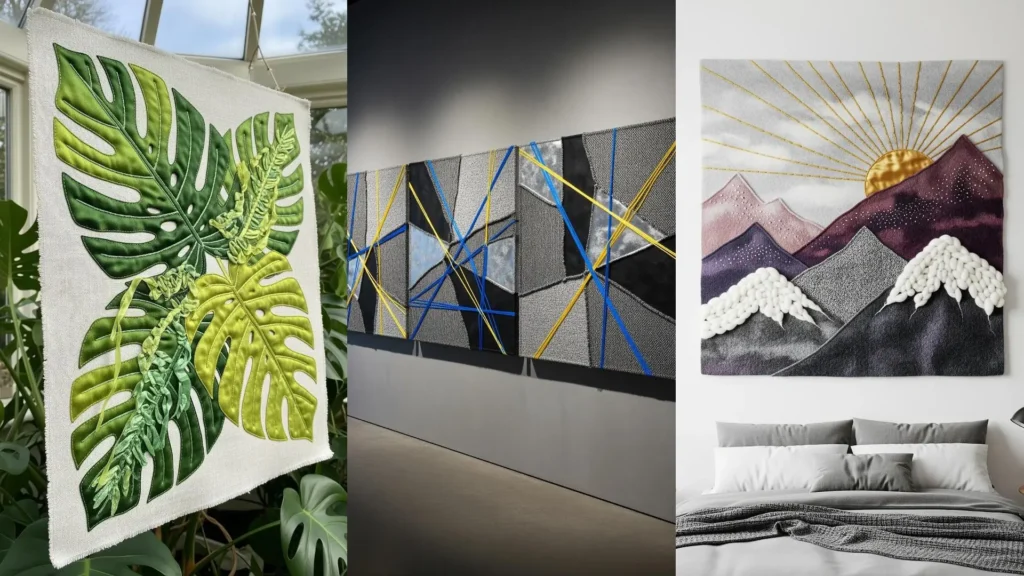
Create a large-scale statement piece by combining appliqué, couching, and simple line work.
The key to this high-impact look is textural contrast—place smooth velvet and delicate lace against a neutral linen base.
Instead of stitching, couch chunky wool roving onto the surface by tacking it down with a finer thread, which adds dimension and visual weight incredibly quickly.
Outline your appliqué shapes with a simple running stitch in metallic gold thread to add a touch of light and unify the disparate elements into a cohesive artwork.
This method builds a rich, layered surface that looks like weeks of work but is assembled in bold, fast gestures.
2. Modern Felt Appliqué Coasters
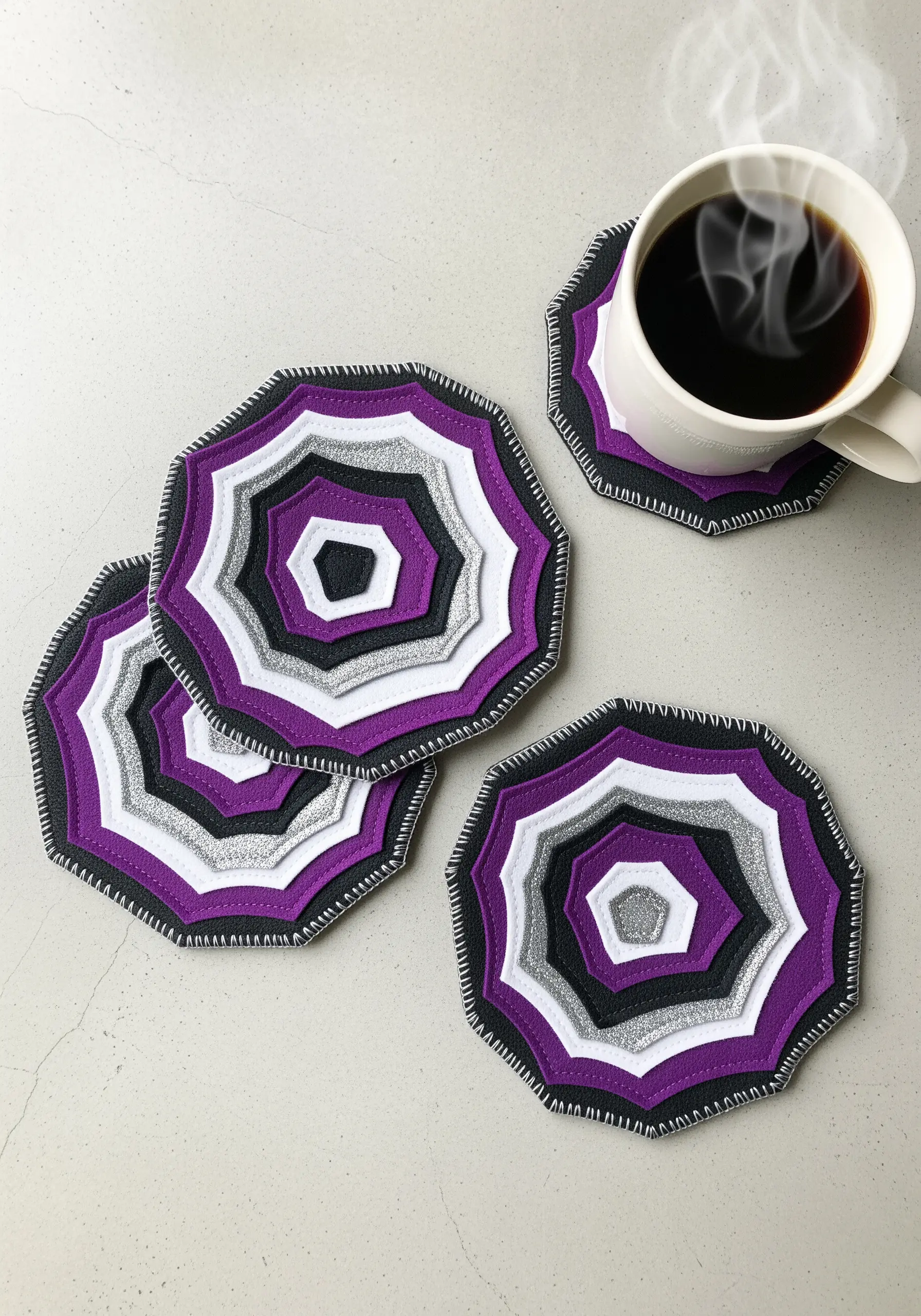
You can make these graphic coasters by layering concentric shapes of craft felt.
Using stiffened felt or adding a layer of fusible interfacing will give them a more substantial, premium feel and ensure they lie flat.
The secret to a professional finish is a clean, even whipstitch or blanket stitch around each outer edge.
Use a contrasting thread color, like black against purple, to turn the functional stitch into a sharp design element.
A single layer of glitter felt introduces a subtle shimmer, elevating the simple materials into a chic set you can finish in under an hour.
3. Punch Needle Color-Blocked Cushion
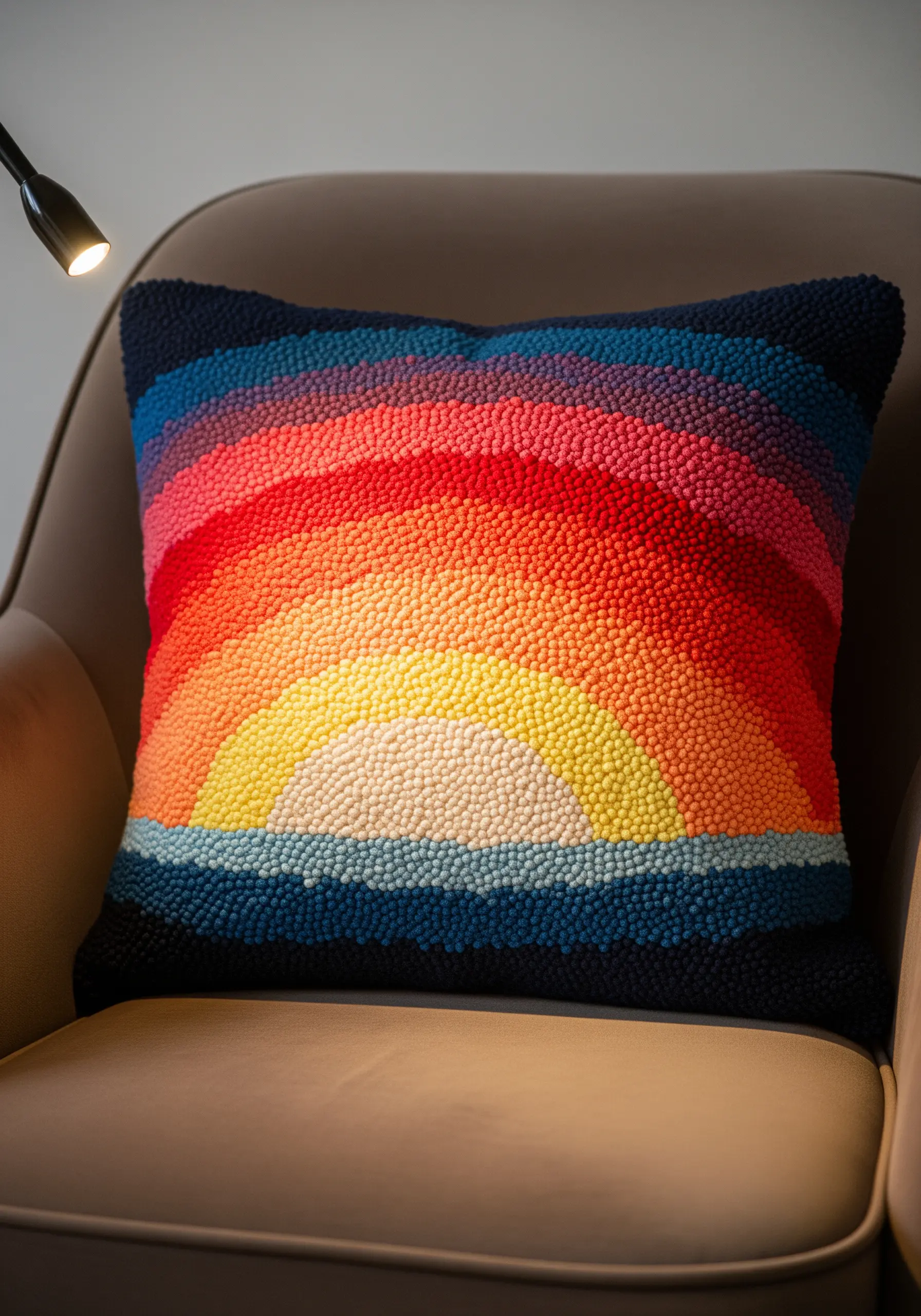
Punch needle is your shortcut to achieving lush, looped texture that looks incredibly time-consuming but comes together rapidly.
The key to a dense, rug-like finish is to pack your loops tightly together, ensuring no backing fabric shows through.
To create the smooth, arched color transitions, complete one full color band before starting the next, always working in the same direction to maintain even loop height and tension.
Using a thicker yarn, like a worsted or bulky weight, will fill the space faster and create a deeply satisfying, tactile surface for a cozy cushion.
4. Geometric Sashiko-Inspired Table Runner
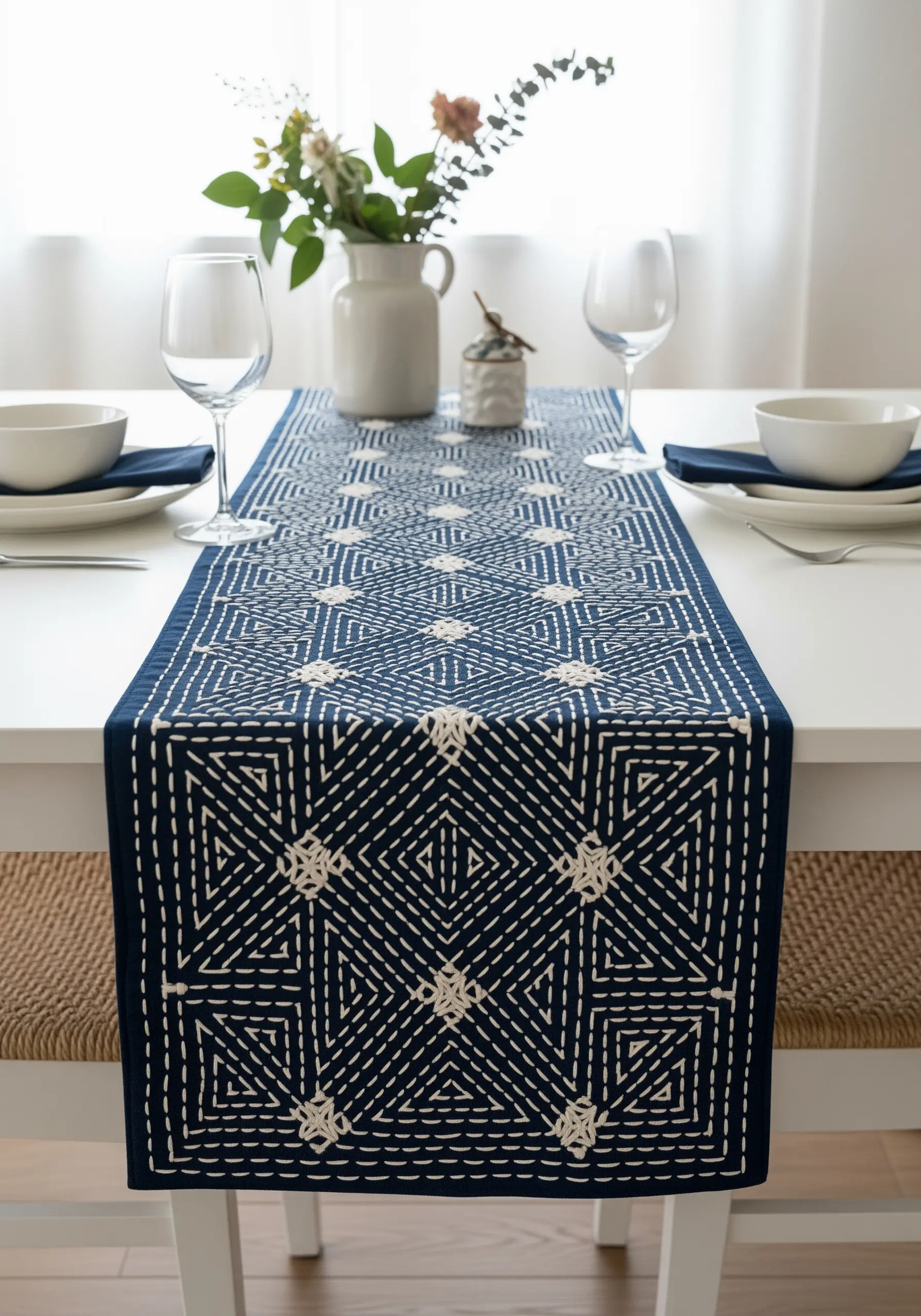
This intricate pattern is built entirely on the simple running stitch, the foundation of Japanese Sashiko embroidery.
The polished appearance comes from stitch uniformity—focus on making each stitch and the space between them as consistent as possible.
Use a thick, high-contrast thread, like a white pearl cotton on a dark navy linen, to make the geometric grid pop.
Before you begin, mark your pattern with a water-soluble fabric pen; this preparation is the key to a flawless result and makes the stitching process meditative and quick.
This is a perfect example of how simple stitches, repeated with care, can create stunning table linen embroidery motifs.
5. Boro-Style Patchwork Denim Jacket
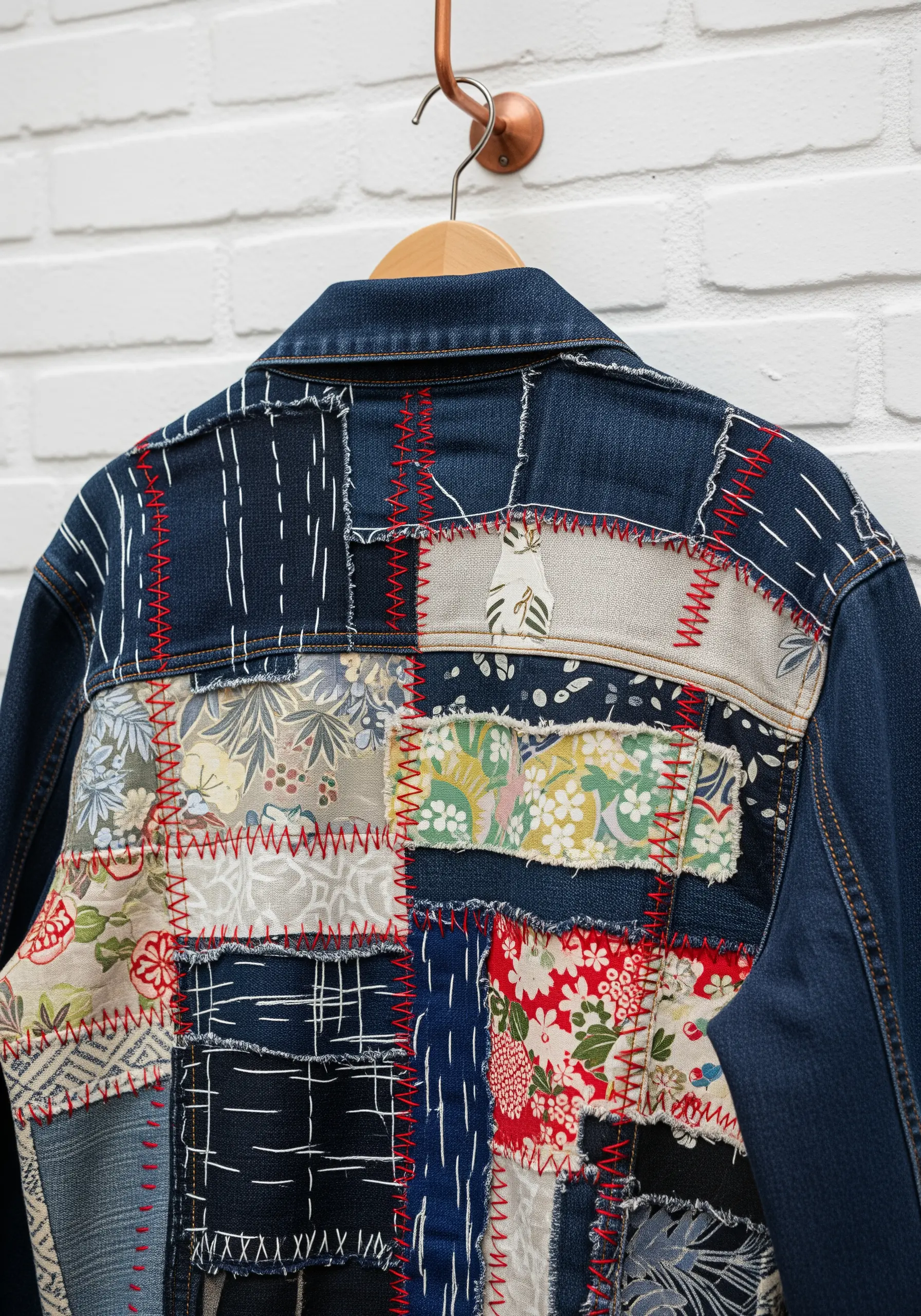
Turn fabric scraps into a statement piece using the principles of Boro, a Japanese visible mending technique.
Arrange patches of varying patterns and textures—like cotton prints and sturdy canvas—onto the back panel of a denim jacket, overlapping the edges.
The magic is in the hand stitching: use a simple running stitch in a bold, contrasting color like red to secure the patches.
Let your stitch lines be organic and slightly irregular; this adds character and authenticity, celebrating the act of repair as a form of art.
6. Watercolor & Stitch Constellation Hoop
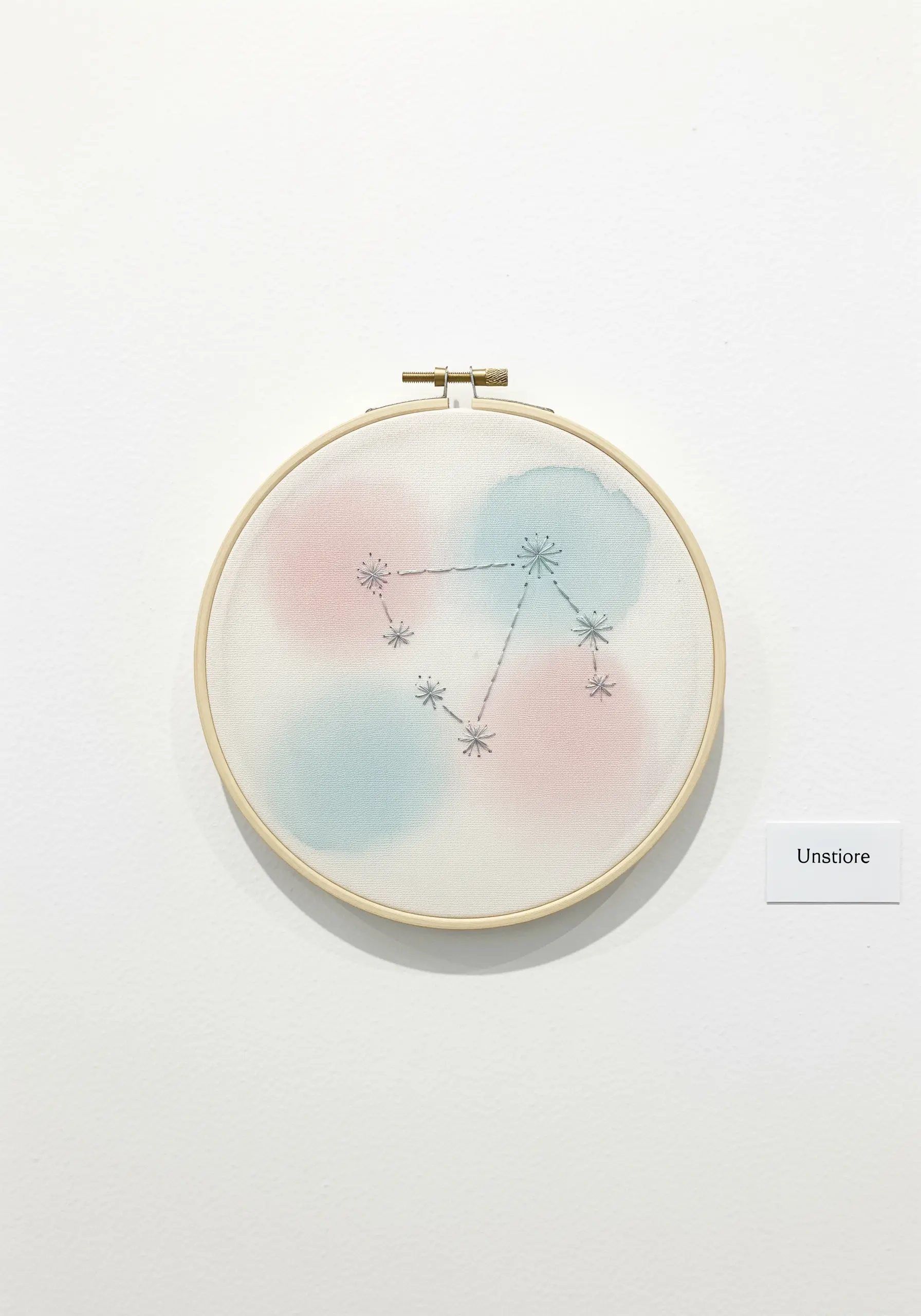
Combine soft watercolor washes with delicate stitches for an ethereal effect that is surprisingly fast.
Apply light dabs of watercolor paint directly onto taut cotton fabric and let it dry completely before you begin embroidering.
For the constellation, use just one or two strands of dark embroidery floss to keep the design feeling light and airy.
A few simple star stitches or tiny French knots are all you need to complete the motif.
The negative space is just as important as the stitching, creating a beautifully balanced composition in minimal time.
7. Layered Leaf Appliqué Tote Bag
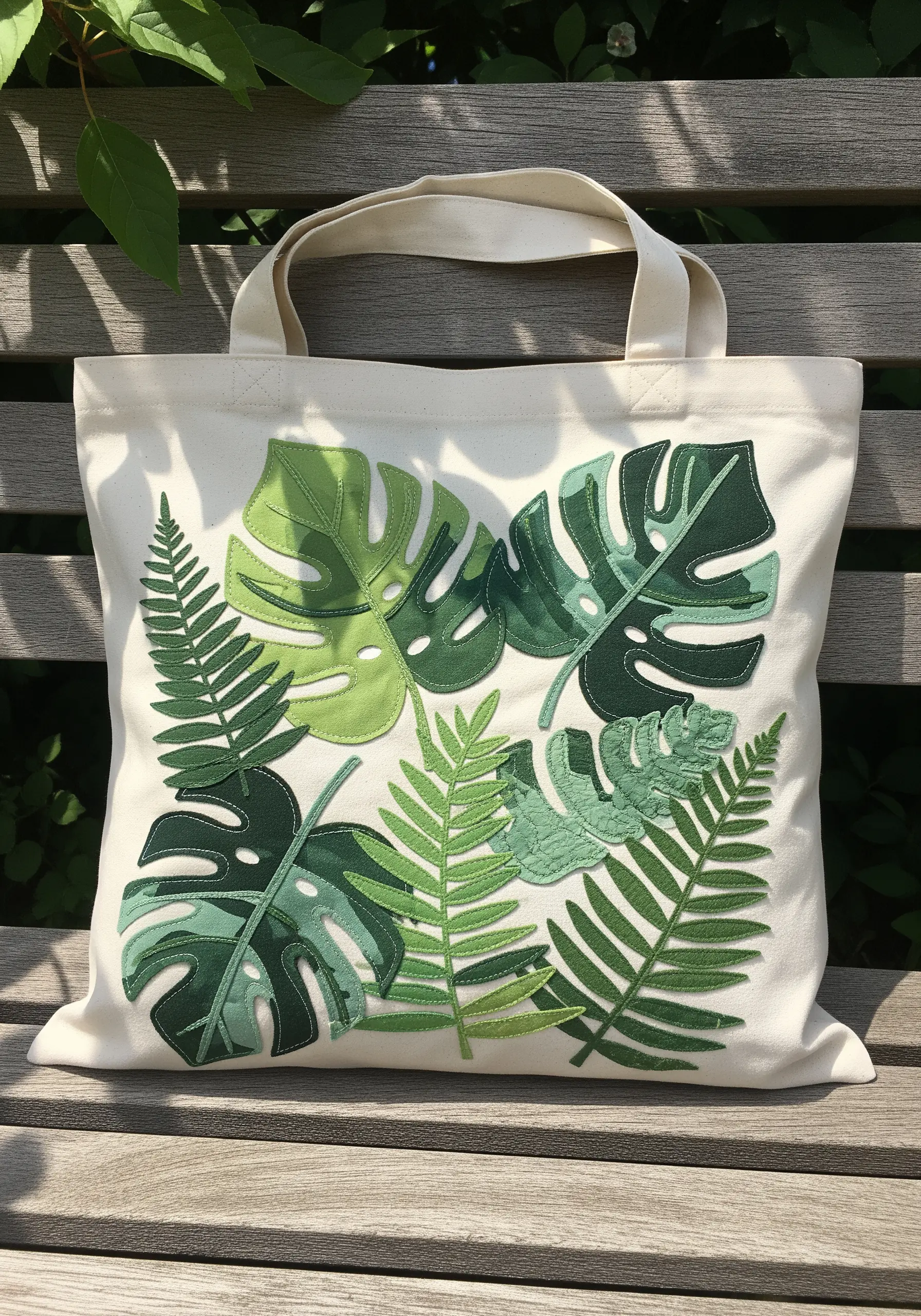
Create this lush, botanical tote with layered fabric appliqué for a result that is bold and fast.
Cut various tropical leaf embroidery designs from different shades of green cotton or felt, then arrange and pin them onto your tote, overlapping some for a sense of depth.
Instead of laborious edge stitching, use a simple straight stitch on your machine (or a neat backstitch by hand) just inside the edge of each leaf.
This technique secures the pieces quickly and adds a clean, graphic detail that defines each shape without requiring any complex embroidery skills.
8. Dimensional Bee Napkin Accent
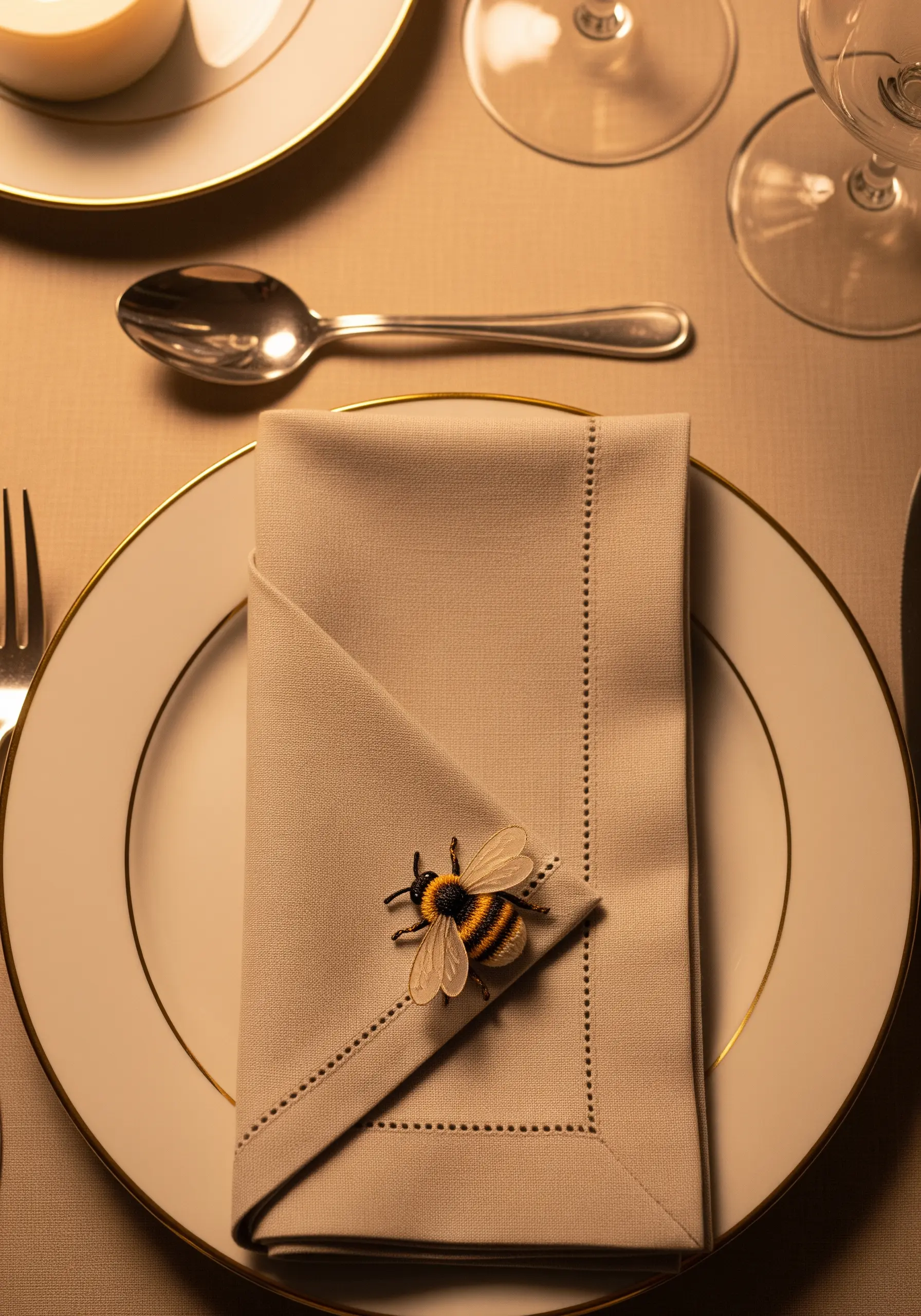
Add a surprising three-dimensional element to your table linens with a stumpwork bee—a technique that looks complex but is based on simple principles.
First, stitch the bee’s body directly onto the napkin using padded satin stitch for a raised effect.
The wings are created separately by stitching onto a scrap of sheer organza that has been hooped; once complete, carefully cut them out and tack them to the body.
This single, dimensional detail instantly transforms plain linen into luxury decor and becomes a memorable conversation starter.
9. Pointillist Landscape with French Knots

Create a stunning, painterly landscape using just one simple stitch: the French knot.
The incredible visual impact comes from massing thousands of knots together, like pointillism with thread, to form shapes and gradients.
Vary the color and density of your knots to create shading and texture for hills, trees, and sky.
To accelerate the process, work with a thicker thread like pearl cotton or use all six strands of embroidery floss.
The technique is meditative and repetitive, yet the final result is a breathtaking piece with immense depth and texture.
10. Minimalist Line Art Cushion
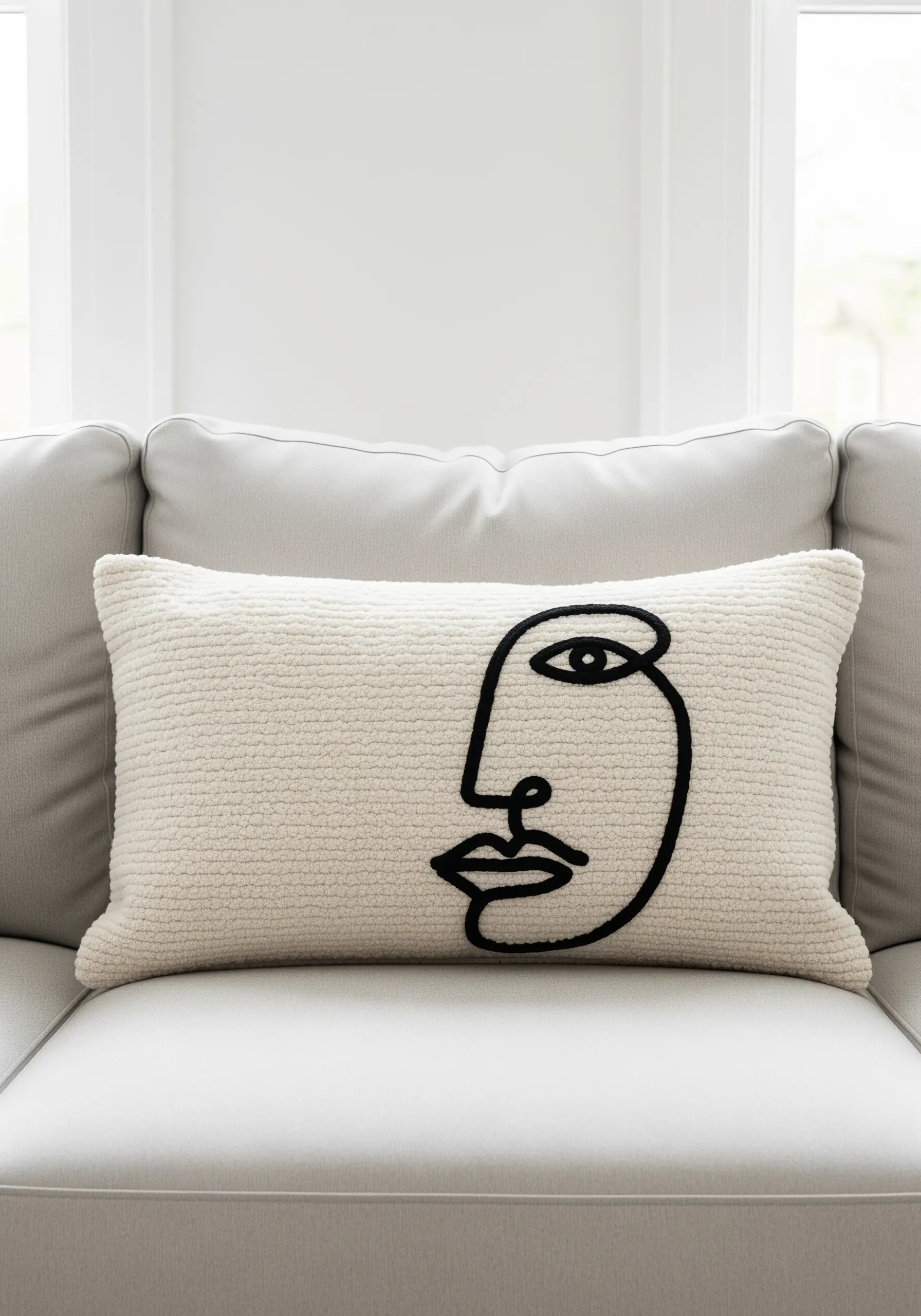
This high-impact, modern line art cushion relies on a simple and fast technique called yarn couching.
Instead of trying to stitch a thick, perfectly smooth line, you simply lay a piece of chunky black yarn on the fabric in your desired shape.
Then, tack it down with a thin, matching black thread every centimeter or so, making your stitches invisible.
This method gives you a bold, clean line with beautiful texture that is much faster and more consistent than attempting a heavy satin stitch or chain stitch.
11. Woven Macrame Plant Hanger
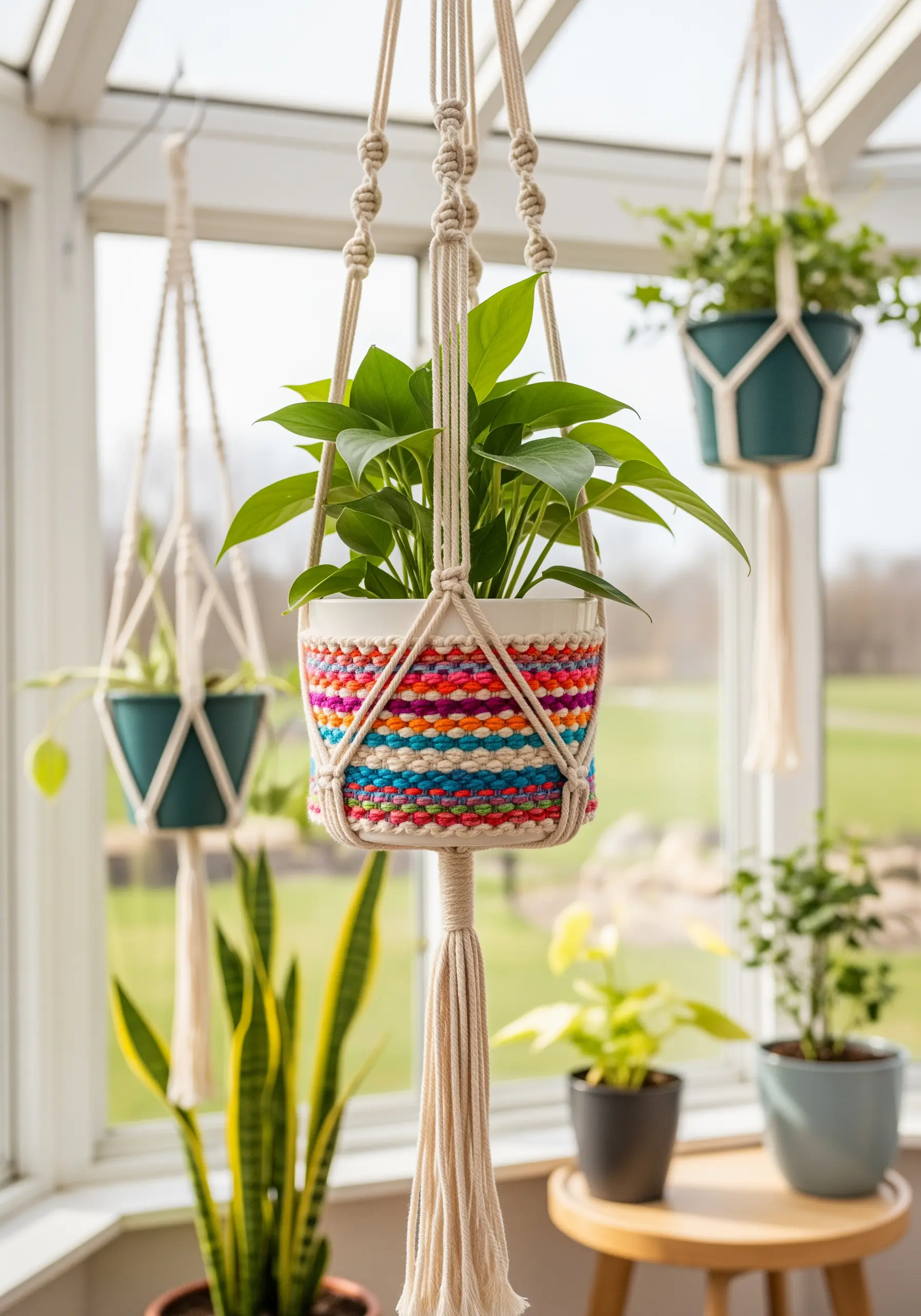
Instantly upgrade a basic macrame plant hanger by incorporating a small section of weaving.
After you’ve knotted the main basket structure that will hold the pot, use a tapestry needle to weave colorful yarn horizontally through the vertical macrame cords.
This is much faster than dyeing the cord itself and allows you to create intricate patterns and color blocks with ease.
Experiment with different yarn textures—like merino wool and cotton—to build a vibrant, bohemian look that personalizes a simple project.
12. Embellished Patchwork Pouch
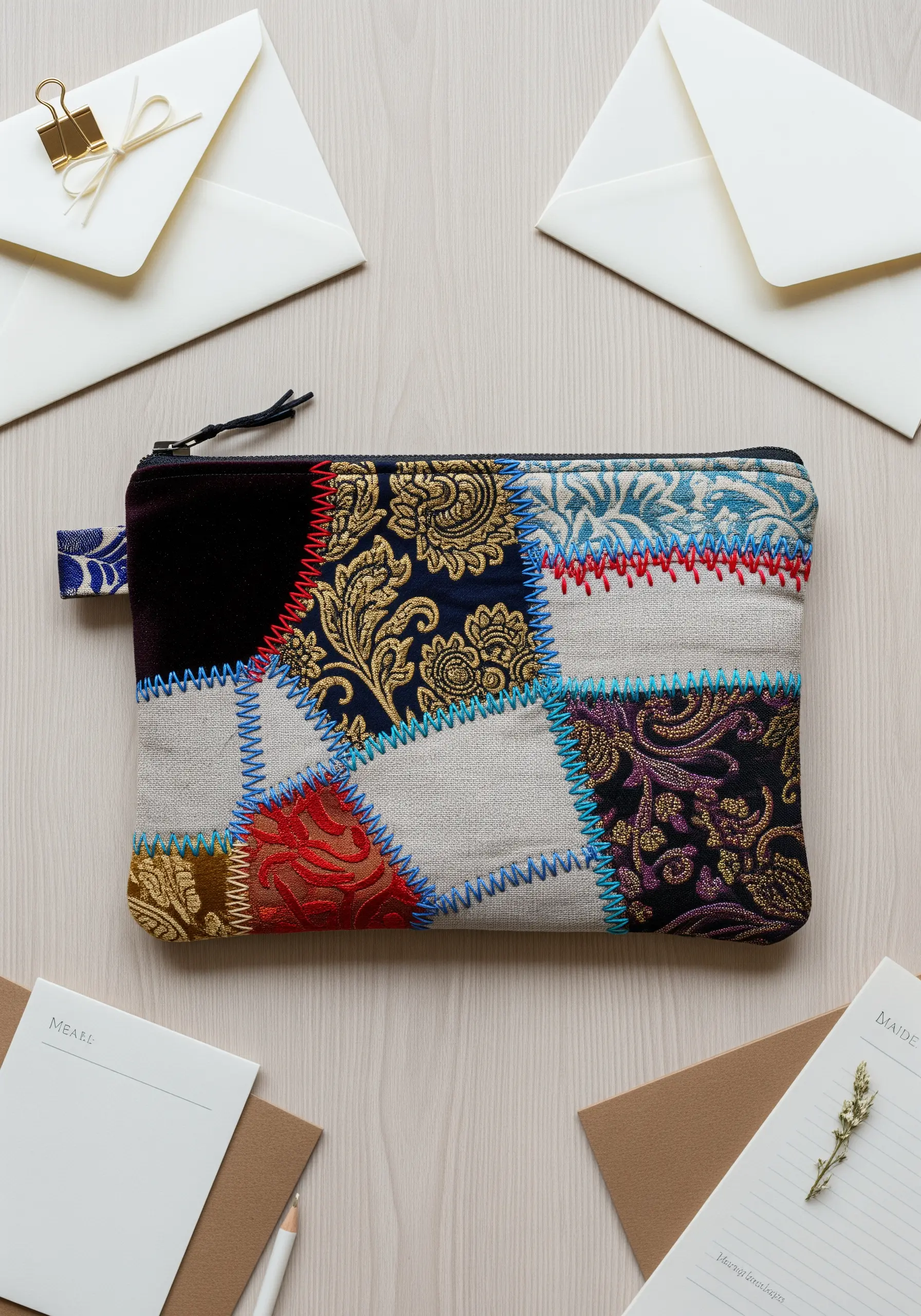
This pouch achieves its rich, curated feel by combining luxe fabric scraps like velvet, linen, and brocade.
The secret to making the patchwork look intentional and cohesive is the decorative stitching that joins the pieces.
Instead of hiding your seams, celebrate them with a bold blanket stitch or herringbone stitch in a bright, contrasting thread.
This functional stitching becomes a primary design feature, giving the pouch a polished, artisanal finish with very small stitches that add instant charm.
13. Beaded Fringe Shibori Scarf

Elevate a simple tie-dyed or Shibori-dyed silk scarf with an elegant beaded fringe.
Instead of adding embroidery to the body of the fabric, the embellishment is focused entirely on the edge, which is much quicker.
Simply string glass seed beads onto a strong thread and loop them along the hem of the scarf, securing them with a small knot at intervals.
The delicate weight of the beads adds a beautiful drape and a subtle, light-catching movement, transforming the piece into a sophisticated accessory.
14. Reverse Appliqué Throw Blanket
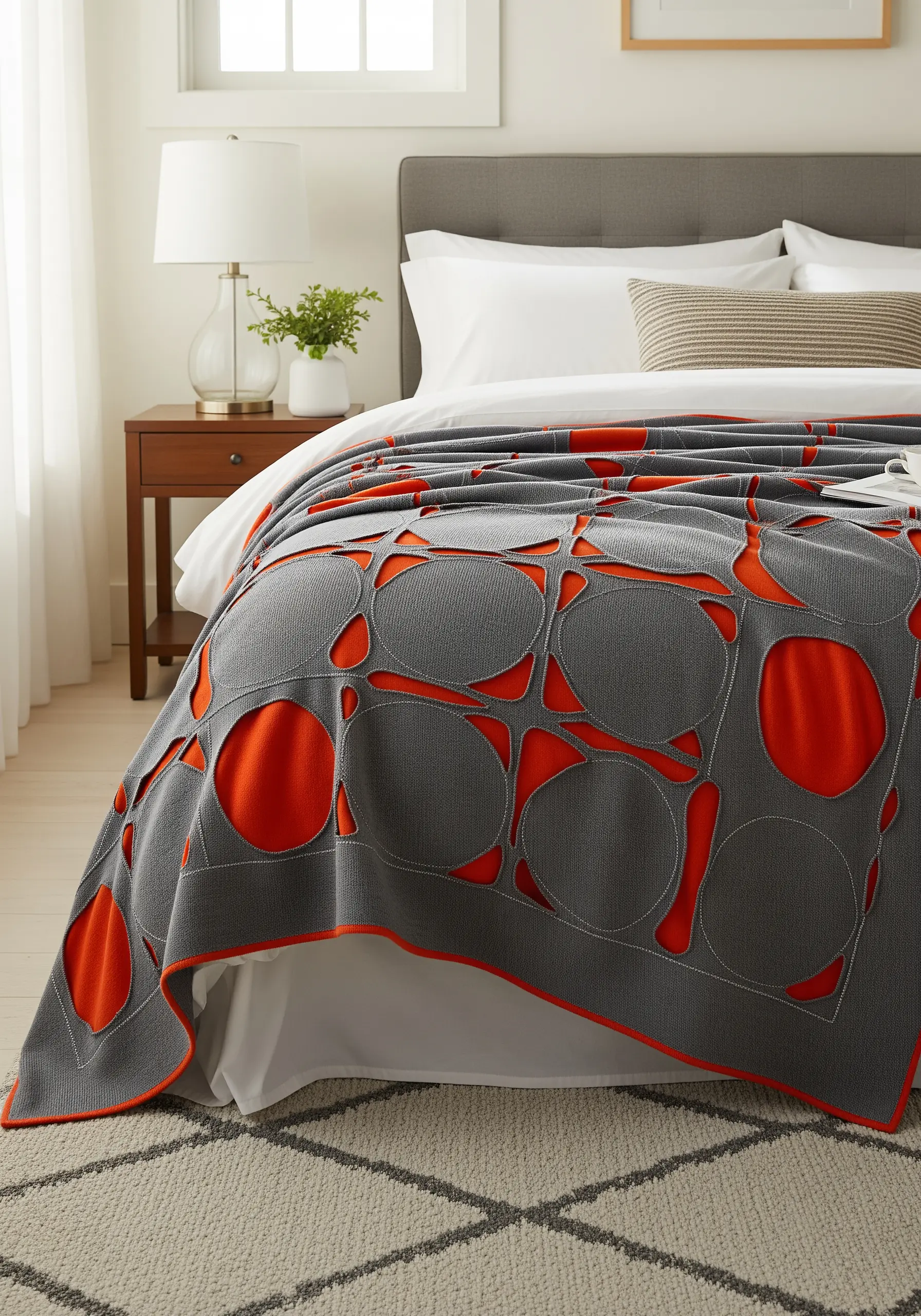
This striking geometric pattern uses reverse appliqué, a clever technique that is simpler than it appears.
First, layer two fabrics—in this case, a grey knit over a bright orange fabric.
Stitch your design outlines (here, interlocking circles) through both layers of fabric using a sewing machine.
Finally, carefully cut away only the top layer of fabric from inside your stitched shapes to reveal the bold color underneath.
This method creates a crisp, graphic effect with perfectly clean edges and minimal effort, making it ideal for large-scale fabric projects.
15. Textured Fabric Patchwork Headboard
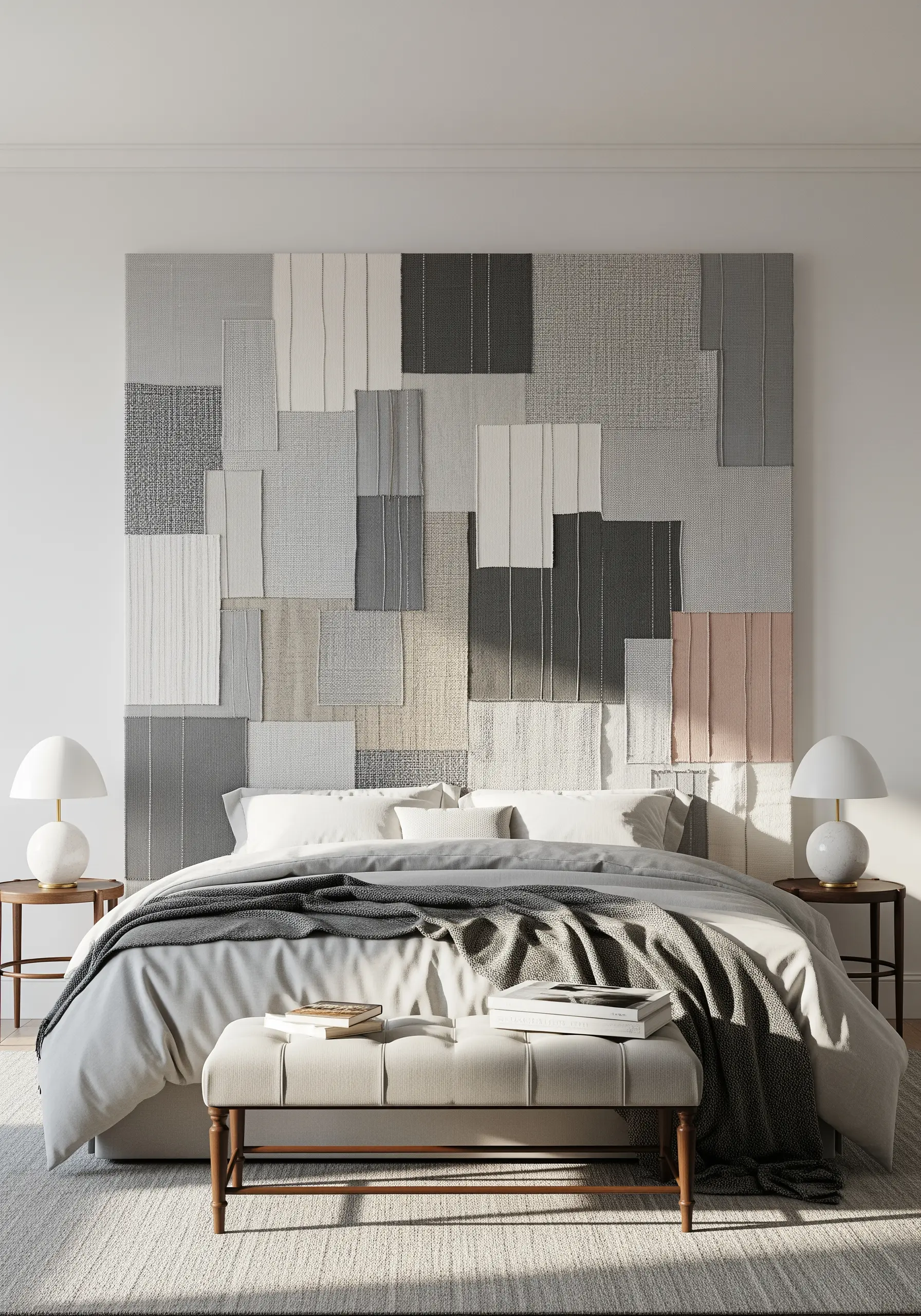
You can create a stunning, high-end headboard using textured fabric remnants mounted on a simple plywood board.
The ‘work’ is entirely in the selection and placement of textures, not in complex techniques.
Choose fabrics within a tight, neutral color palette—like canvas, linen, and tweed in shades of grey, cream, and beige—to ensure the result feels chic and serene, not chaotic.
Simply cut the fabrics into geometric shapes, arrange them in a collage, and staple them to a batting-covered board for a custom piece that looks incredibly luxurious.
16. Celestial Beaded & Stitched Journal
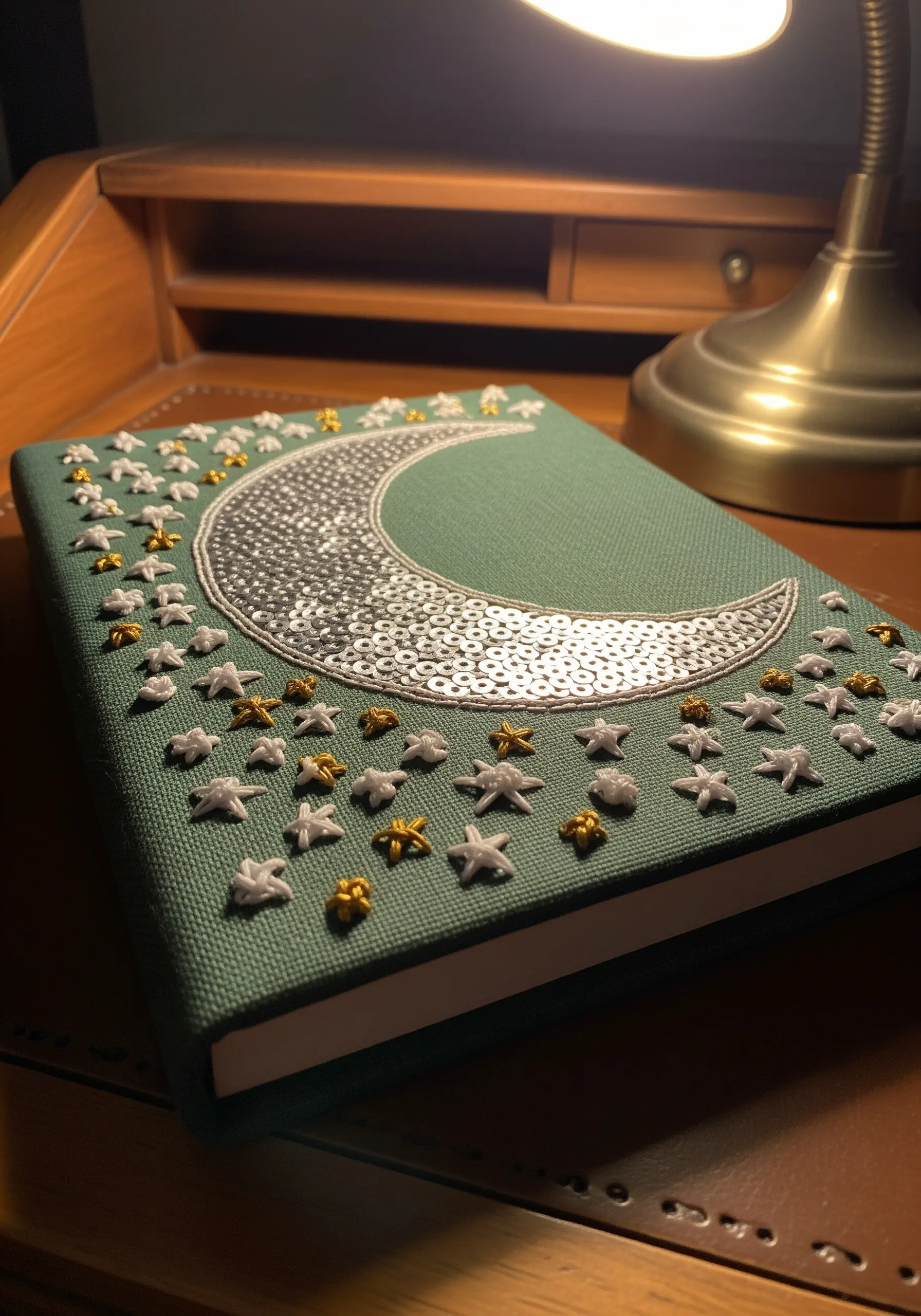
Transform a plain clothbound journal with a mix of sequins, beads, and simple stitches for a high-end look.
To create the crescent moon, couch a line of silver sequins by laying the strand on the cover and tacking it down with a single thread—this is far faster than stitching individual sequins.
Then, scatter simple star stitches in gold and white thread around it, adding a few tiny beads for extra shimmer.
By combining different materials, you create a rich, tactile surface that catches the light beautifully, making it one of the most charming ideas for your journal covers.
17. Abstract Yarn Swirl Hoop Art
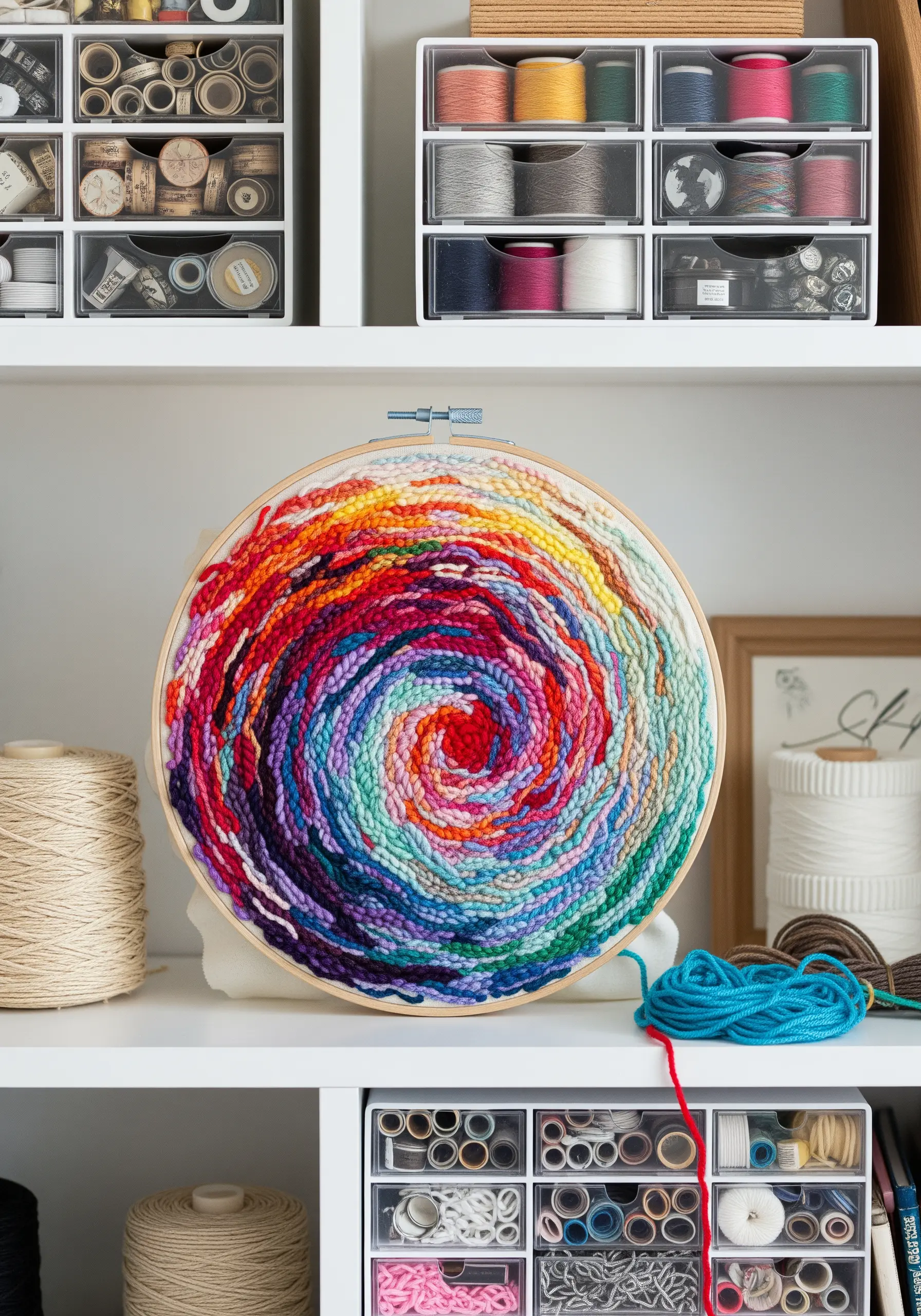
Fill a hoop with vibrant, swirling color using only yarn and a simple couching stitch.
Instead of filling the space with thousands of tiny stitches, you simply guide thick, colorful yarn in a spiral and tack it down with a thinner, less visible thread.
By laying different yarns next to each other, you can blend colors and create incredible texture and movement with minimal effort.
This technique allows you to produce a bold, expressive piece of fiber art that comes together in a single afternoon.
18. Color-Blocked Geometric Placemats
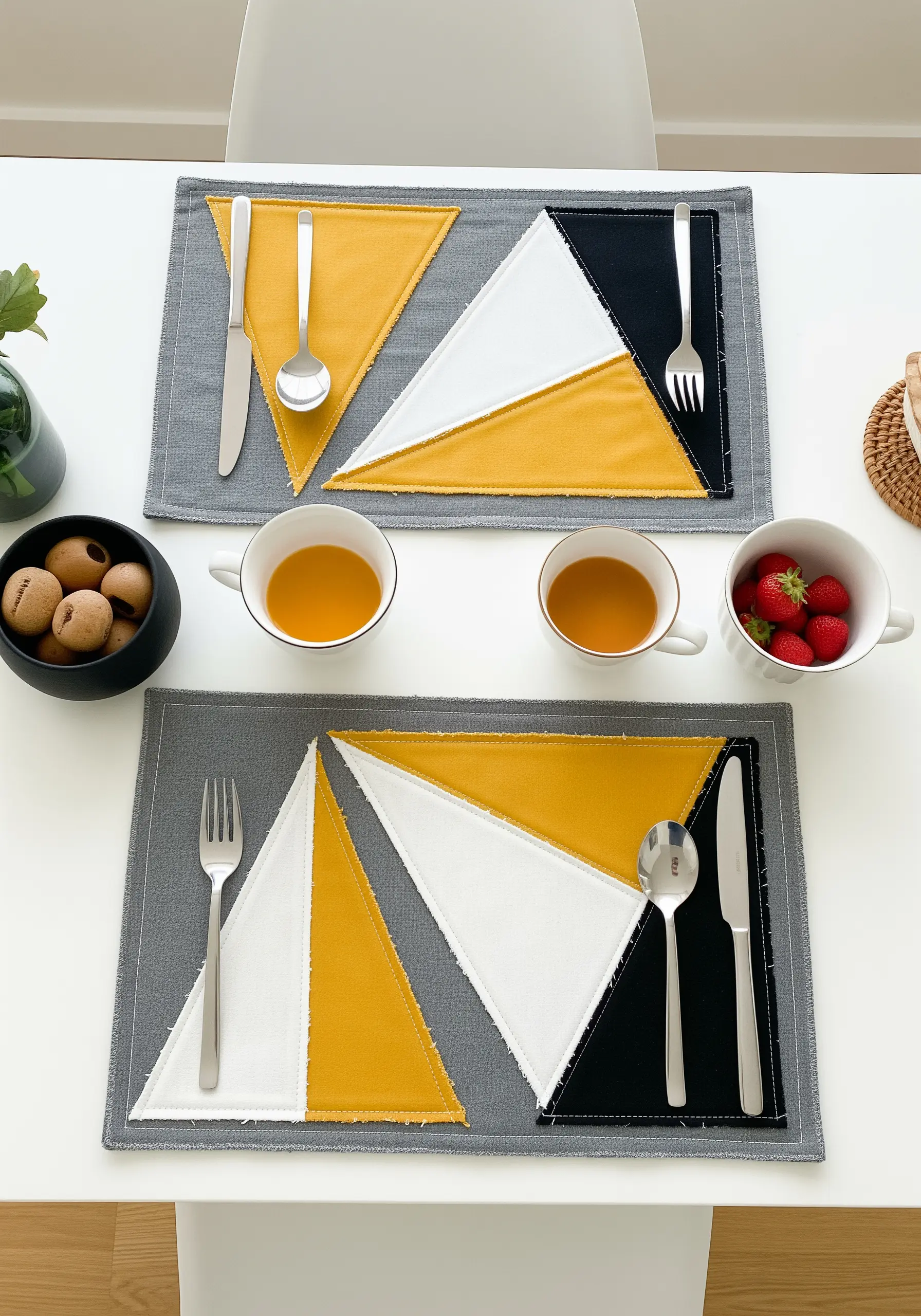
Achieve this clean, modern aesthetic with simple fabric piecing and decorative topstitching.
Cut triangles from solid-colored cotton or linen fabrics and stitch them together on a sewing machine to form a rectangle.
The key to the polished, store-bought finish is the topstitching along the seams and around the border.
Use a contrasting thread and a slightly longer stitch length for a crisp, intentional detail that defines the geometric shapes.
These are impressive DIY fabric crafts that look far more complicated to make than they really are.
19. Tassel-Fringed Wall Banner
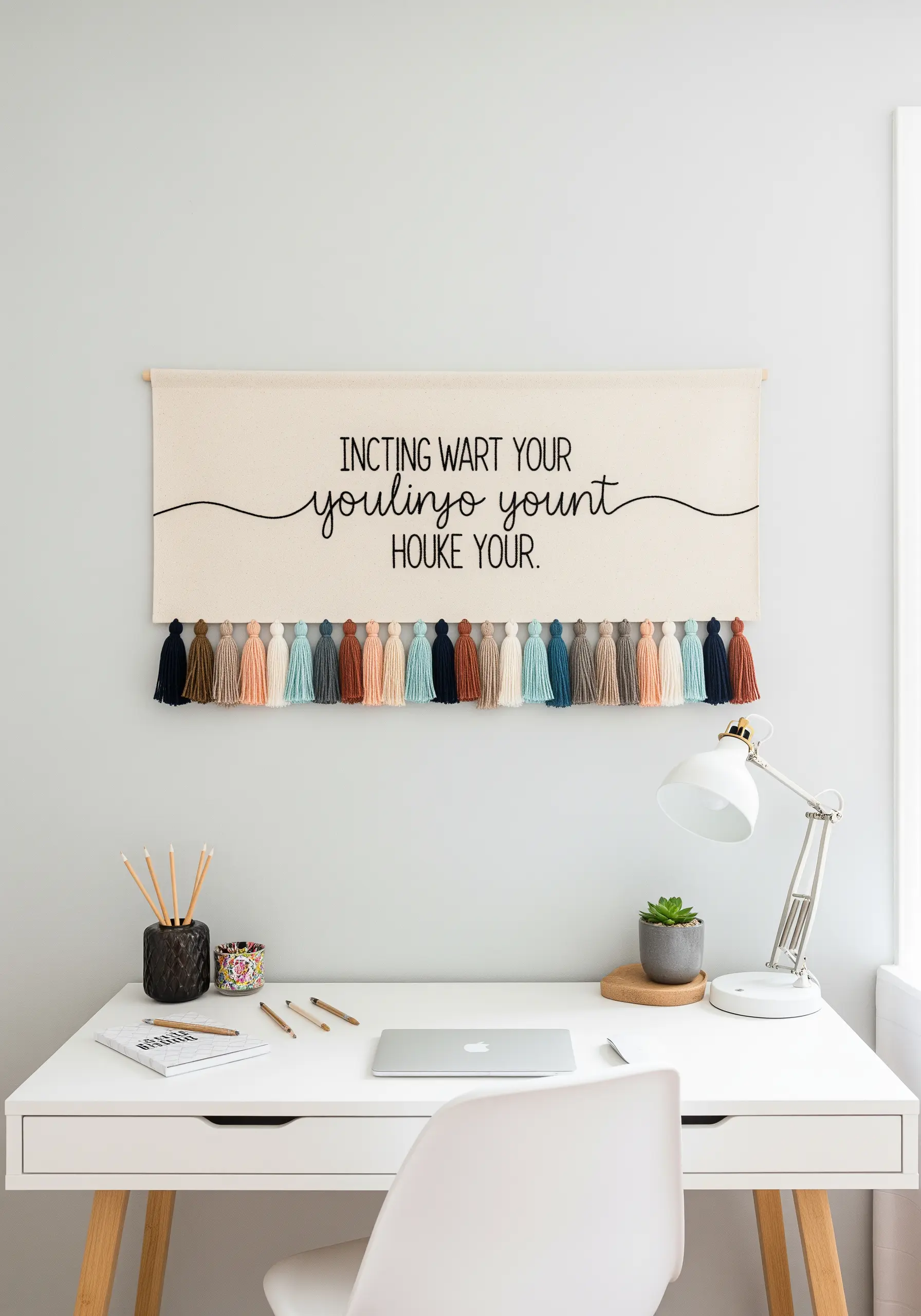
The visual impact of this piece comes from the lush, colorful tassel fringe, not from complex stitching.
The simple text can be applied quickly with iron-on vinyl, a stencil and fabric paint, or a few lines of backstitch.
The ‘wow’ factor is the dense row of handmade tassels.
Make them using various yarn colors that coordinate with your decor, then attach them to the bottom edge.
The textural fringe instantly elevates the simple canvas into a substantial, bohemian-chic wall hanging, making it one of the easiest hand-embroidered wall hangings to create.