Your fabric stash holds more than just material—it holds stories. Those soft, worn linens and the shimmering silks of a treasured old saree are waiting for a new purpose. This is where fabric collage embroidery begins: not with a blank canvas, but with a rich history you can stitch into.
Instead of seeing embroidery as just adding thread to fabric, I want you to think of it as a way to unify, embellish, and transform pieces of cloth into a cohesive work of art. It’s about letting the fabric guide you while your stitches provide the structure, detail, and emotion.
Here, you won’t find overly complex patterns. Instead, you’ll discover how a simple running stitch can create texture, how a sheer layer of organza can build depth, and how a well-placed decorative border can turn a simple collage into a masterpiece. Let’s begin.
1. Stitch a Textured Landscape with Kantha-Inspired Lines
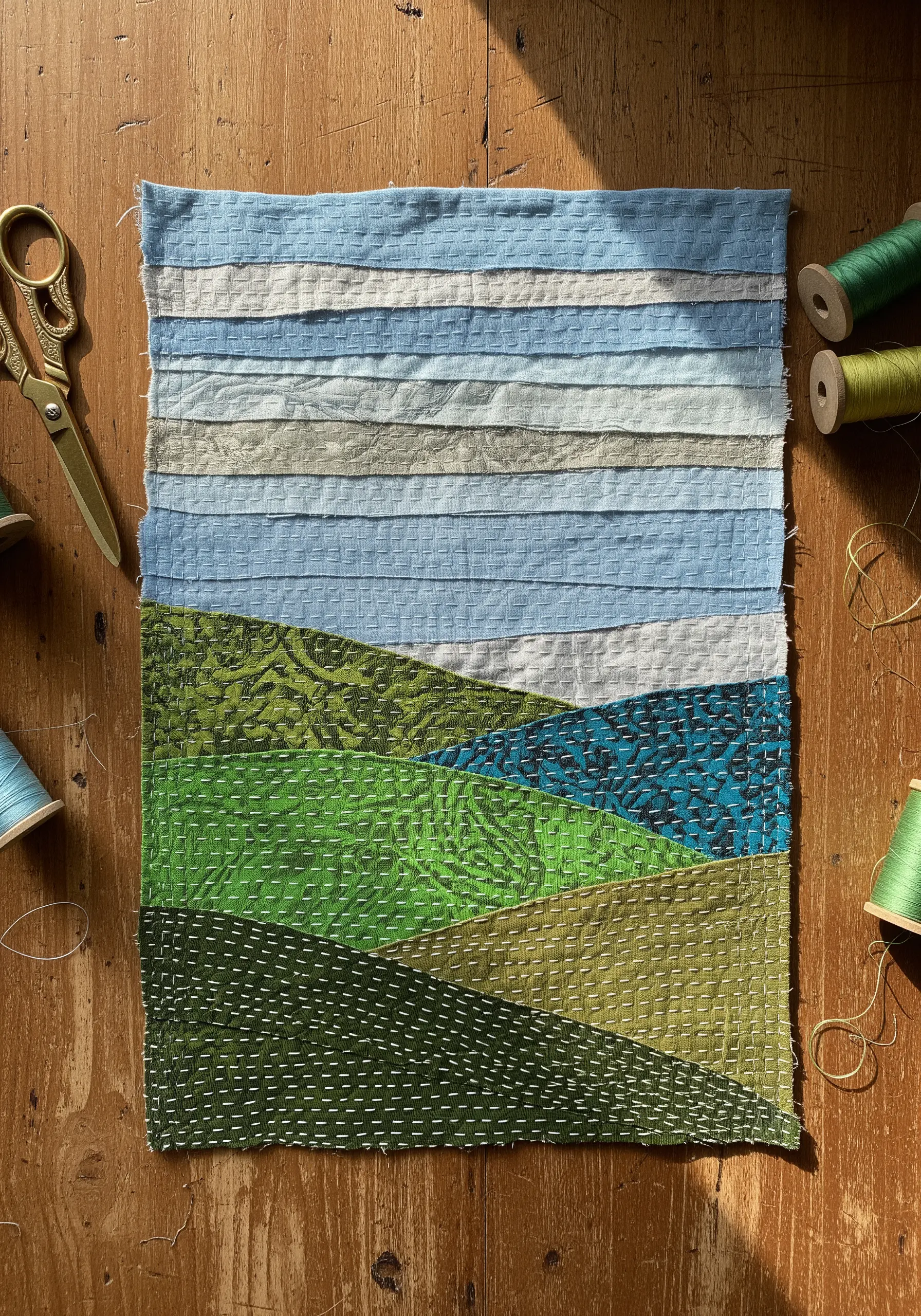
Create an abstract landscape by layering strips of soft linen and patterned saree fabrics.
Instead of hiding your stitches, make them the main feature using a simple running stitch in a contrasting color, like ivory or off-white.
Vary the density of your stitches: closer lines create darker, more saturated areas that suggest shadows, while sparse stitches feel lighter, mimicking light hitting the hills.
This technique unifies disparate fabric scraps into a cohesive whole, turning a simple collage into one of the most expressive abstract thread landscapes.
2. Create Regal Appliqué with Couching Stitches
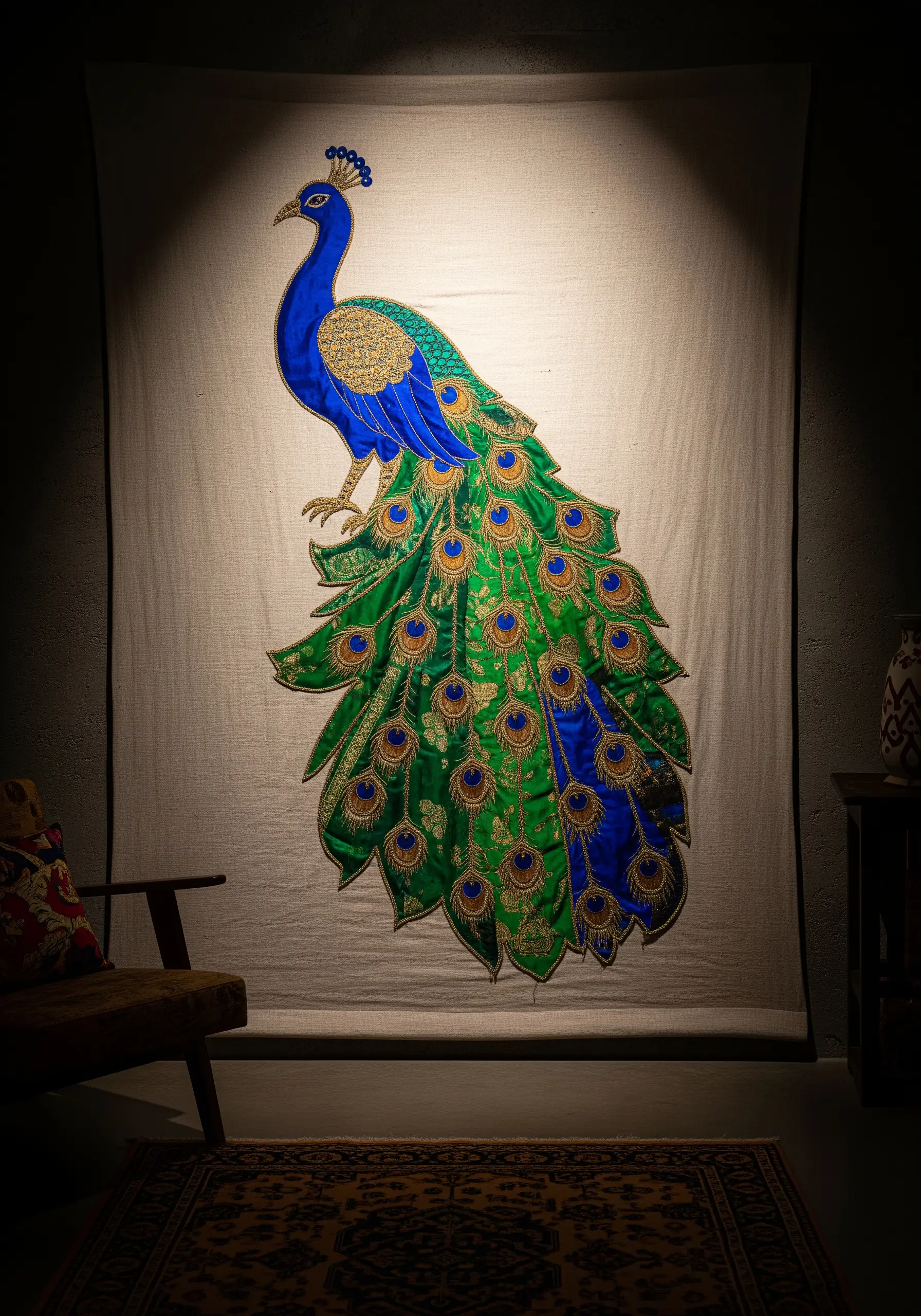
To craft large-scale figures like this peacock, use the appliqué technique with silks from old sarees for their vibrant color and sheen.
For the intricate gold outlines, don’t attempt a satin stitch. Instead, use couching: lay down a thick metallic cord or several strands of metallic floss and tack it in place with small, perpendicular stitches in a matching, thinner thread.
This method gives you perfect control over curves and sharp corners, creating a raised, professional-looking edge that defines your majestic peacock embroidery designs.
3. Elevate Appliqué with Thread Sketching and Frayed Edges

Combine appliqué with delicate line work for a soft, illustrative effect.
After cutting and securing your main fabric shape, use a single strand of dark thread to add fine details with a simple backstitch, treating your needle like a pen.
Mount the finished appliqué onto a slightly larger piece of neutral linen, then gently pull the outer threads to create a soft, frayed border. This frames the central motif beautifully and adds textural contrast against the main background.
This technique transforms recycled fabric into minimal botanical patterns to transform recycled fabric into eco-chic decor.
4. Build Meditative Mandalas with Coiled Fabric Strips

Design a dynamic cushion cover by coiling strips of fabric into concentric circles.
Secure each layer of fabric with a visible, decorative stitch. A chain stitch or a heavy, open blanket stitch in a contrasting thread adds another layer of pattern and texture.
This method doesn’t require perfect precision; slight variations in the fabric widths and stitch sizes contribute to the piece’s handmade charm.
Working in a circular motion with rich, warm fabrics can turn your stitching session into a calming practice, resulting in beautiful soft tone embroidery mandalas.
5. Weave with Fabric Strips for Sculptural Hoop Art

Move beyond the flat surface by weaving thick yarn or torn fabric strips across your hoop.
Start by creating a simple pieced background with linen or cotton. Then, wrap, twist, and anchor thicker fibers over the top, creating tension and an energetic composition.
This approach allows you to build dramatic, abstract thread layer-on-layer creations that have a sculptural quality, making it a perfect use for the decorative borders of old sarees.
6. Frame a Floral View with Structured Appliqué

Create a charming window scene by using fabric choices to tell a story.
Use a sturdy, plain linen for the window frame to give it structure and weight. For the “view” beyond the glass, choose a soft, patterned floral fabric—a piece of a vintage dress or a lightweight saree works perfectly.
Add a final layer of detail with an embroidered ivy vine that climbs over the frame. This small touch breaks the rigid geometry and brings the entire piece to life, making it one of those floral embroidery wall decor projects that feels truly magical.
7. Personalize a Journal with a Miniature Landscape

Transform a simple notebook into a personal keepsake with a fabric collage cover.
Use small scraps to piece together a simple scene: a rich brocade from a saree for the foreground, solid cotton for the hills, and a soft blue linen for the sky.
Secure the pieces with a neat running stitch or a simple machine stitch. A few scattered star stitches made with metallic thread add a touch of whimsy without overcomplicating the design.
These are the kind of quick stitch inspirations to beautify your notebooks and journals and make them uniquely yours.
8. Layer Sheer Fabrics for Ethereal Portraits

Explore transparency and depth by using sheer fabrics like organza, chiffon, or the pallu of a delicate saree.
Cut and layer the sheer pieces to build up form and shadow, allowing the dark linen background to show through in varying degrees.
A simple, clean backstitch is all you need to define the silhouette. The thread provides the structure, while the layered fabric creates an almost ghostly, three-dimensional effect.
This advanced technique produces modern thread portraits that look shockingly realistic and deeply expressive.
9. Craft a Celestial Scene with Mixed Media
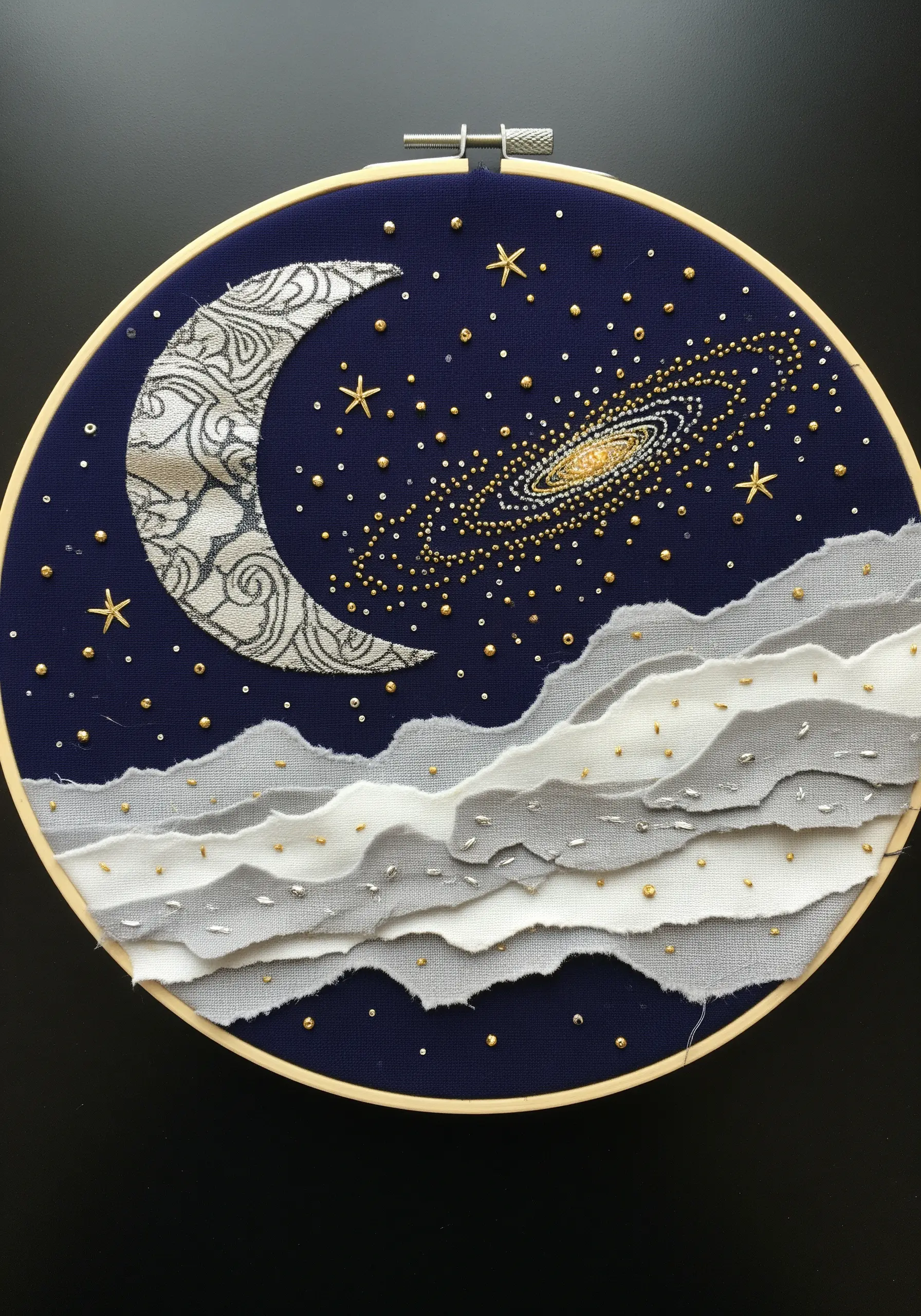
Combine fabric appliqué with beadwork to create a rich, celestial composition.
Use a patterned fabric scrap for the crescent moon to make it a focal point. For the soft, layered clouds, tear—don’t cut—strips of linen to create frayed, organic edges.
Then, stitch your galaxy using a dense scattering of gold French knots and tiny seed beads. This mix of matte fabric, soft floss, and reflective beads gives the piece incredible depth and visual interest.
You can turn simple materials into dreamy galaxy string art concepts with this approach.
10. Embrace Visible Mending with a Patchwork Runner

Celebrate the construction of your piece by making your seams a design element.
Arrange patchwork triangles of vibrant saree fabrics and neutral linens, then join them with a bold, contrasting stitch like a blanket stitch or whipstitch.
Use a thick thread, such as cotton perle #5 or all six strands of embroidery floss, to ensure the stitches stand out. This approach adds a rustic, handcrafted honesty to your table linen embroidery motifs, making the process as beautiful as the result.
11. Unify Patterned Fabrics with a Strong Silhouette
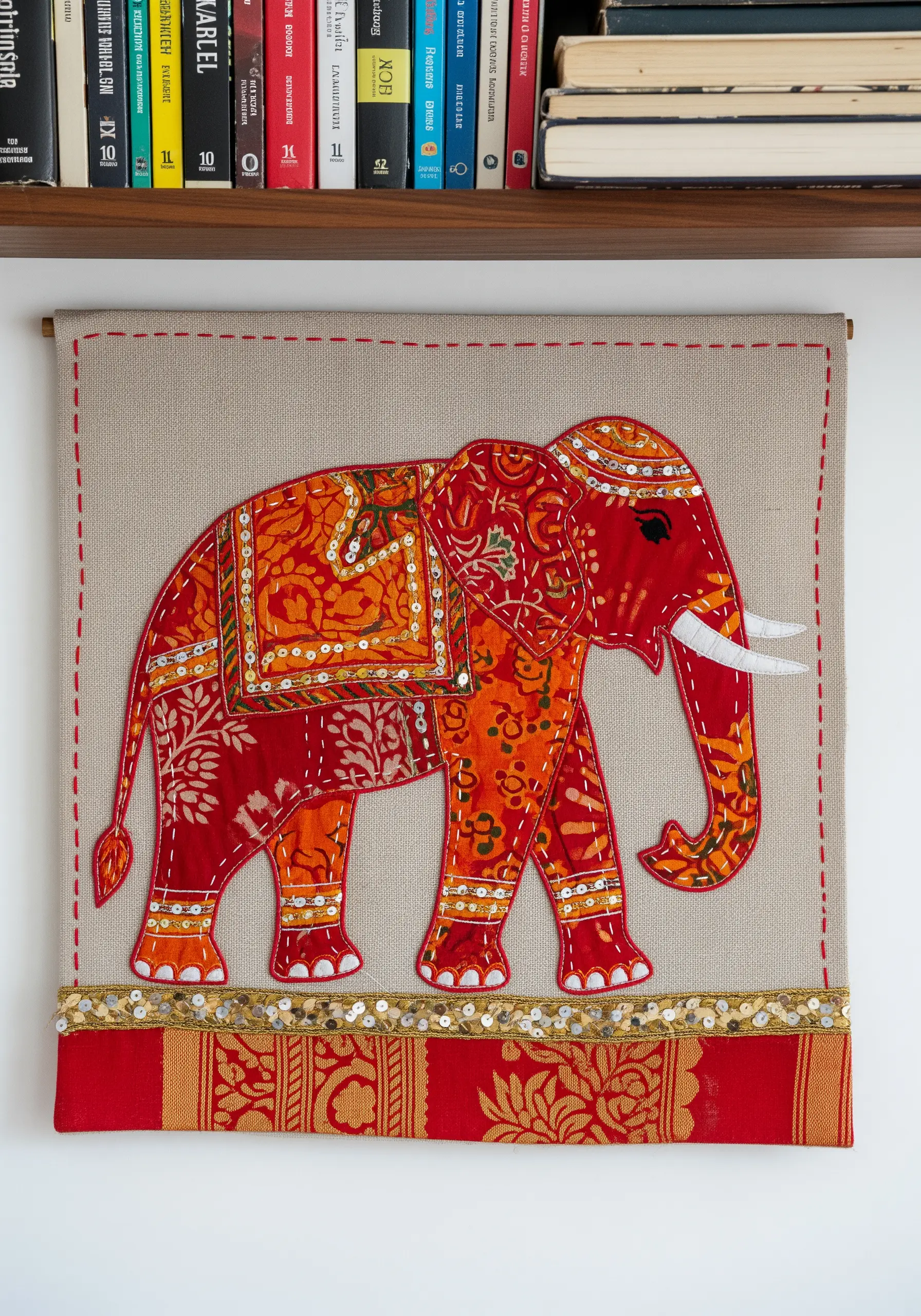
When creating an appliqué with multiple patterned fabrics, a strong, simple silhouette is key to avoiding a chaotic look.
Cut pieces from various saree scraps that share a dominant color—in this case, orange and red—and arrange them within your elephant outline.
Define the entire shape with a clean running stitch or backstitch around the perimeter. This outline acts as a container for the patterns, creating a cohesive and vibrant piece.
This method is central to many traditional Indian embroidery wall art ideas.
12. Frame Small Scraps as a Botanical Triptych

Give tiny, precious fabric scraps the attention they deserve by framing them individually.
Cut bold, graphic leaf shapes from richly colored saree remnants and appliqué them onto a neutral linen background.
Add minimalist veins and branches with a simple stem stitch in a complementary earth tone. Grouping three small, framed pieces together creates a more impactful display than a single, larger work.
It’s an elegant way to practice delicate leaf stitch techniques while celebrating your favorite textiles.
13. Paint an Ocean Scene with Torn Fabric Edges

Capture the organic movement of water by tearing your fabric strips instead of cutting them.
Layer different shades of blue and teal linen, allowing the raw, frayed edges to mimic the foam of ocean waves. Tearing fabric with the grain will give you the cleanest raw edge.
Once your collage is arranged, add parallel lines of white running stitch (Sashiko-style) across the composition. This not only secures the pieces but also suggests the shimmer of light on the water, creating beautiful, coastal-inspired fabric collage embroidery scenes.
14. Let Bold Fabric Choices Simplify Your Stitching
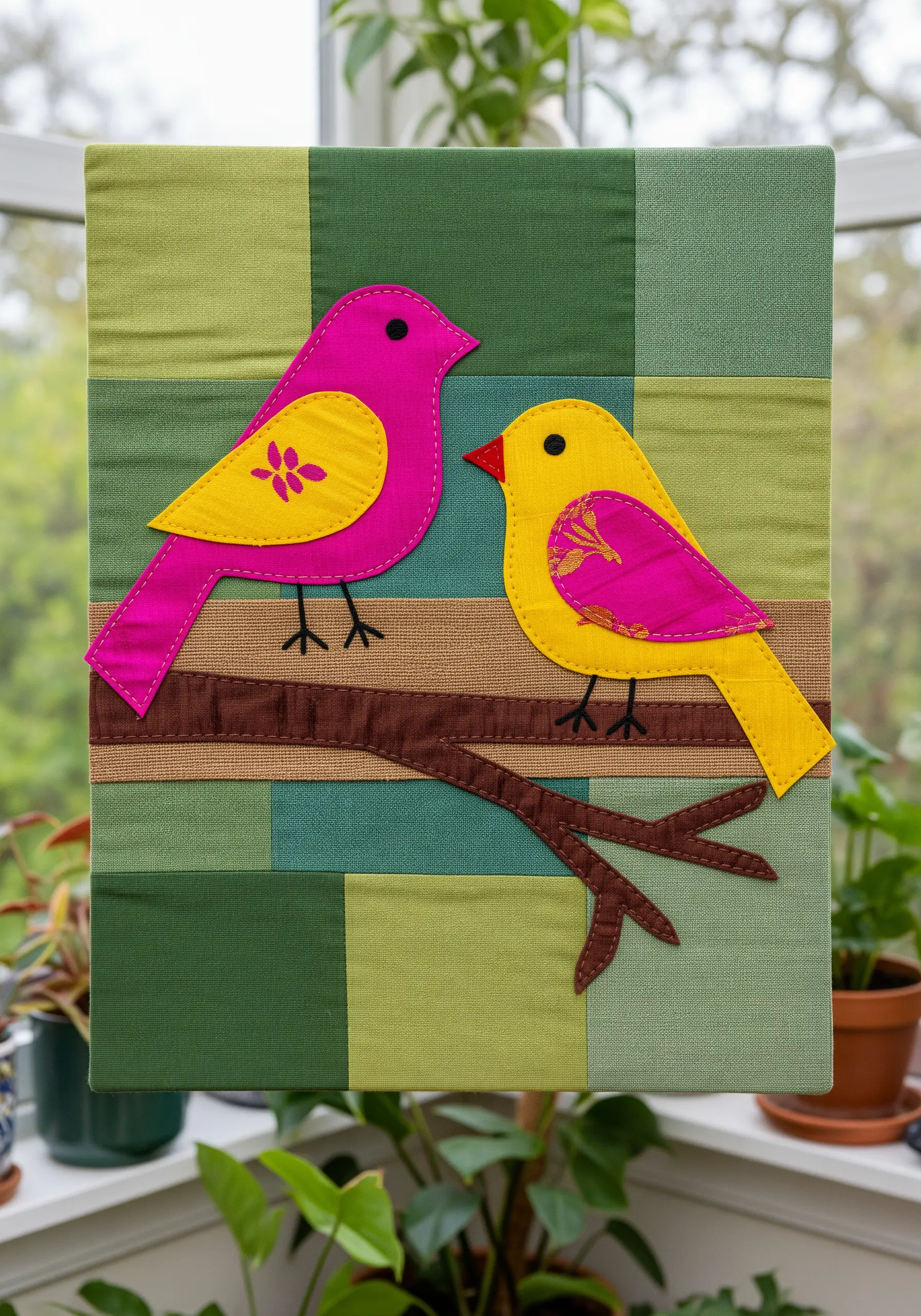
When using vibrant, patterned saree silks, you can keep your embroidery minimal and let the fabric do the talking.
For these appliqué birds, the bright pink and yellow fabrics provide all the color and detail needed. The only embroidery required is a few simple straight stitches for the legs and a single French knot for each eye.
This high-impact, low-effort approach is perfect for creating cheerful bird butterfly embroidery patterns that feel playful and modern.
15. Create Architectural Depth with Ornate Borders
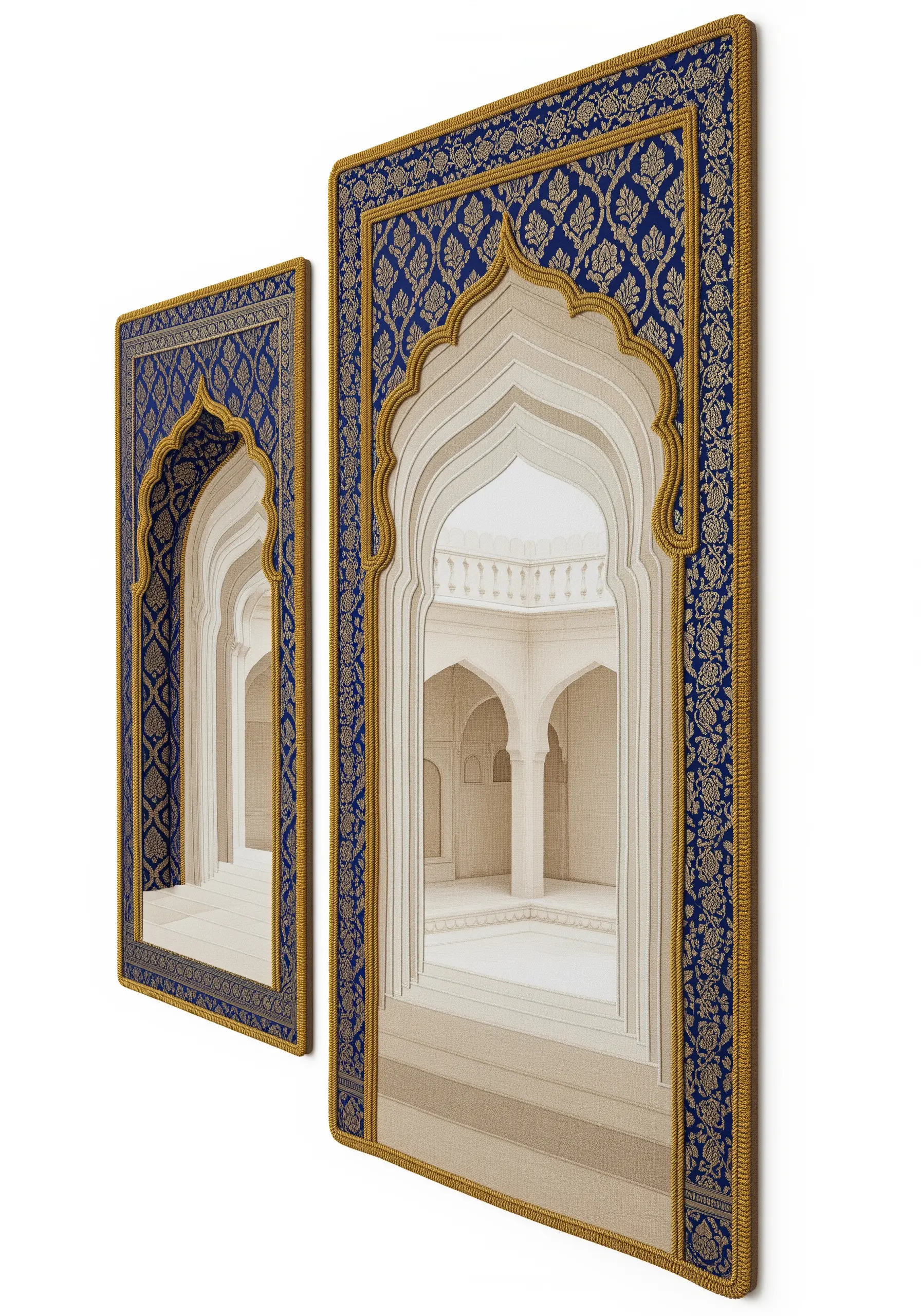
Transform a printed fabric panel or a simple piece of art into a grand statement by framing it with a heavily patterned saree border.
Miter the corners of the border fabric as you would with a wooden picture frame for a clean, professional finish.
Elevate it further by outlining the entire frame with a thick, twisted cord attached with couching stitches. This adds texture and a distinct edge, creating the illusion of a carved architectural frame and resulting in statement size embroidered textile hangings.
16. Explore Texture with a Monochromatic Stitch Sampler
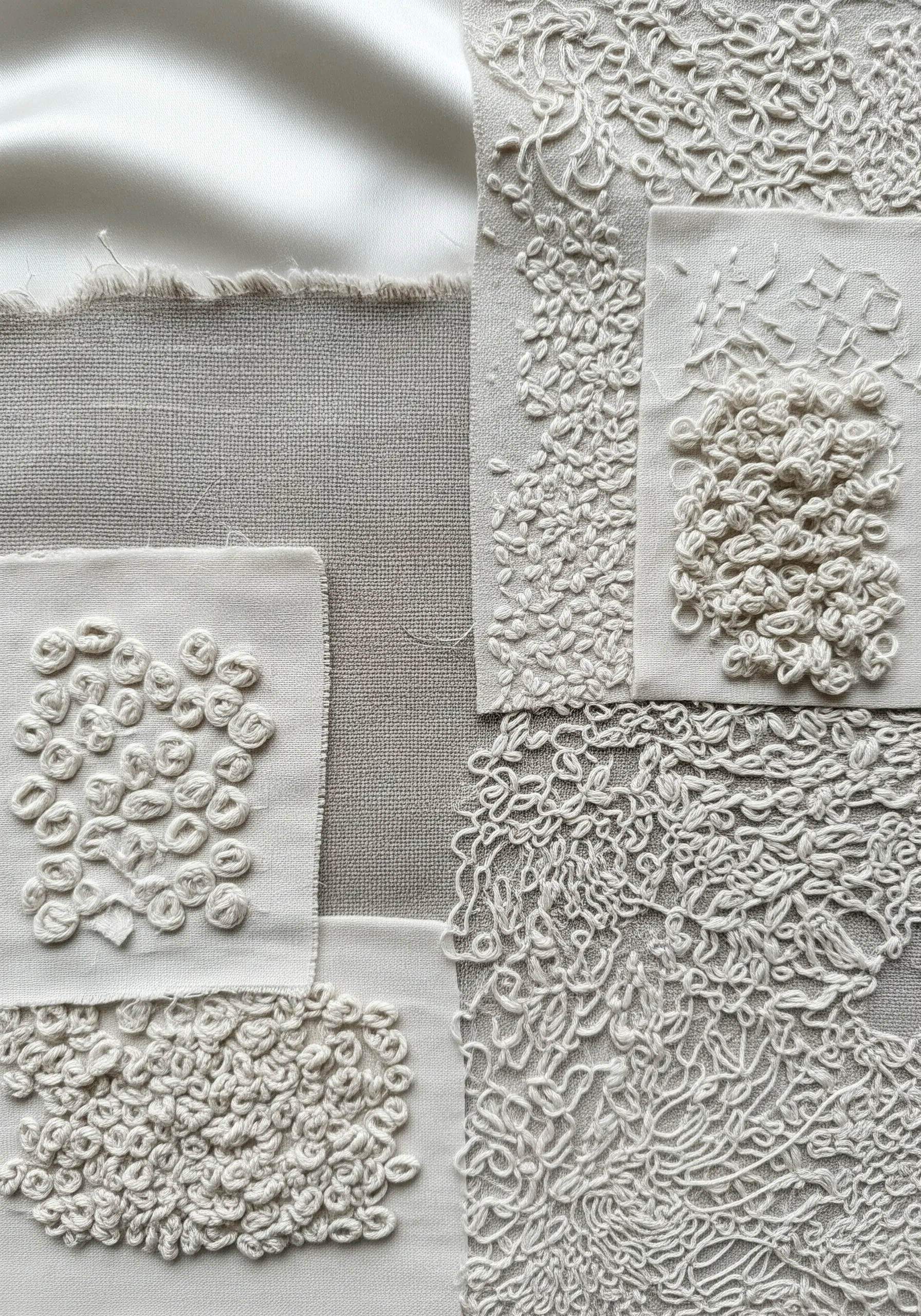
Focus entirely on texture by working with a single color, like ivory or white.
Create small patches of different textural stitches—bullion knots, French knots, woven circles, and tangled thread effects. Arrange these stitched swatches on a neutral linen background to form a collage.
This exercise sharpens your stitching skills and reveals how thread can be used sculpturally. These elegant tone-on-tone embroidery techniques create art with quiet, sophisticated depth.
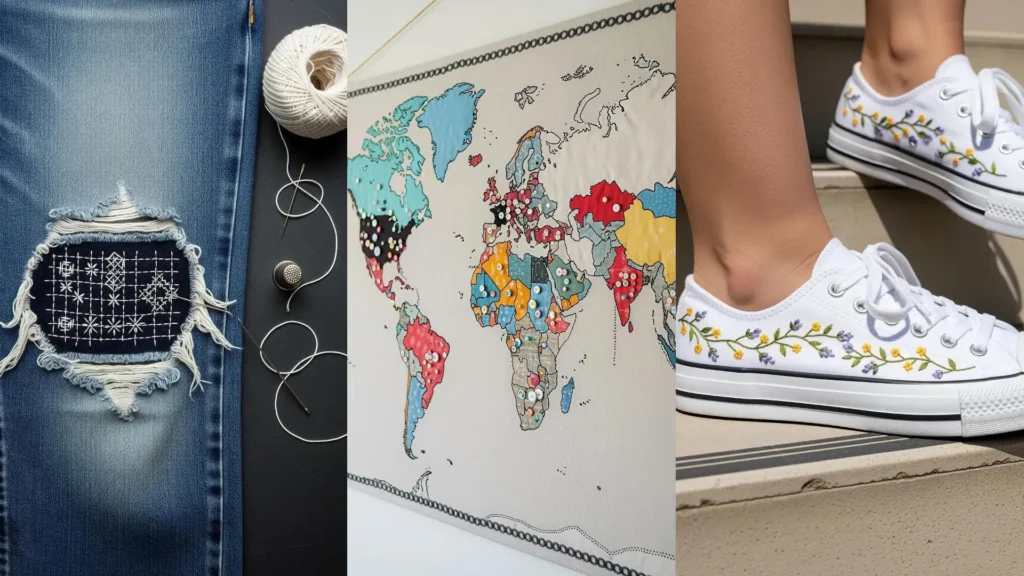
17. Map Your Travels with Meaningful Fabric Scraps

Create a deeply personal world map by using fabric scraps to represent different continents or countries.
Assign fabrics based on color, pattern, or even personal memory—perhaps a scrap from a garment worn on a trip. Trace the map onto a sturdy linen or canvas base, then carefully cut and appliqué each fabric piece.
A simple backstitch to define the coastlines adds a final, delicate touch. It’s one of those fabric collage embroidery ideas that turn scraps into magical wall art with a personal story.
18. Combine Vintage Lace and Ribbon Embroidery

Create a soft, romantic composition by combining different textiles and stitch styles.
Incorporate a piece of antique lace into your fabric collage for instant texture and vintage charm. For the floral elements, use silk ribbon to make woven roses (or spider web roses) and simple lazy daisy stitches for the smaller flowers.
The three-dimensional quality of the ribbon stitches contrasts beautifully with the flat lace and torn linen, making for truly lovely vintage-inspired framed embroidery ideas.
19. Achieve Graphic Precision with Quilting Techniques
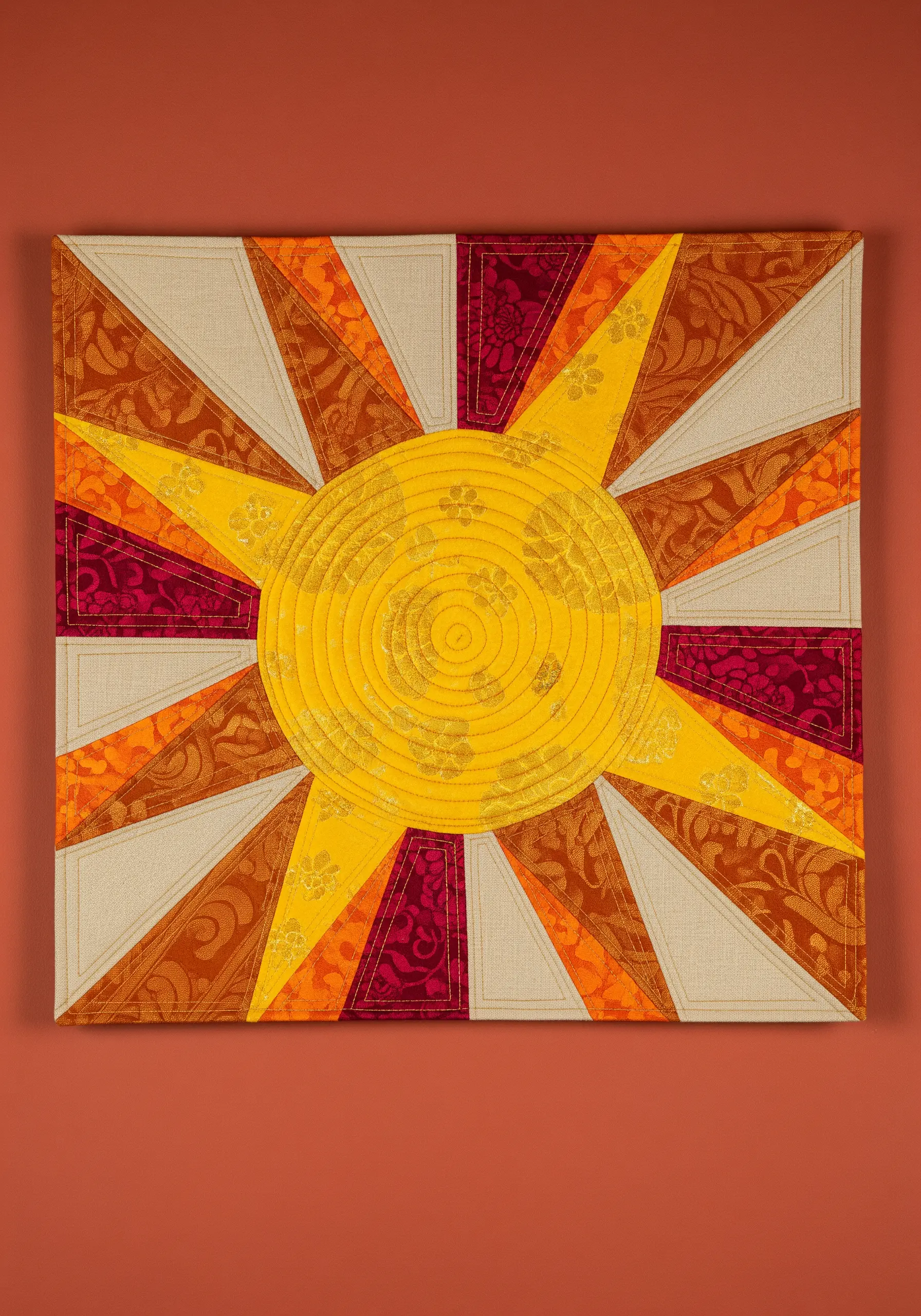
Borrow from quilting to create bold, graphic designs with sharp lines.
Use foundation paper piecing to assemble the sun’s rays with perfect accuracy, alternating between patterned saree silks and solid linens.
Once pieced, add concentric circles of running stitch or machine stitching to the central sun. This quilting adds texture and reinforces the radiating energy of the design.
The combination of piecing and stitching is perfect for creating abstract geometric hoops with a clean, modern feel.
20. Paint a Meadow with Dense French Knots

Create an impressionistic, textural flower field using just a few simple stitches.
Instead of stitching individual flowers, focus on creating dense clusters of color with French knots, colonial knots, and short straight stitches. Vary the number of thread wraps and strands to create flowers of different sizes.
This thread-painting technique gives your work incredible dimension and allows you to blend colors like a painter, perfect for immersive wildflower hoop art projects.
21. Frame Typography with Soft Fabric Folds

Integrate a meaningful word into a soft, abstract background.
Start by stitching your word—a whipped backstitch or a stem stitch works well to create a smooth, cord-like line. Then, arrange soft linen and a decorative saree border around it, creating gentle folds and waves.
Tack the fabric in place from behind to secure the draped effect. The flowing fabric mimics the sentiment of the word itself, making for calming and minimal typography quotes that feel both grounded and serene.
22. Grow a Vertical Garden on a Patchwork Banner
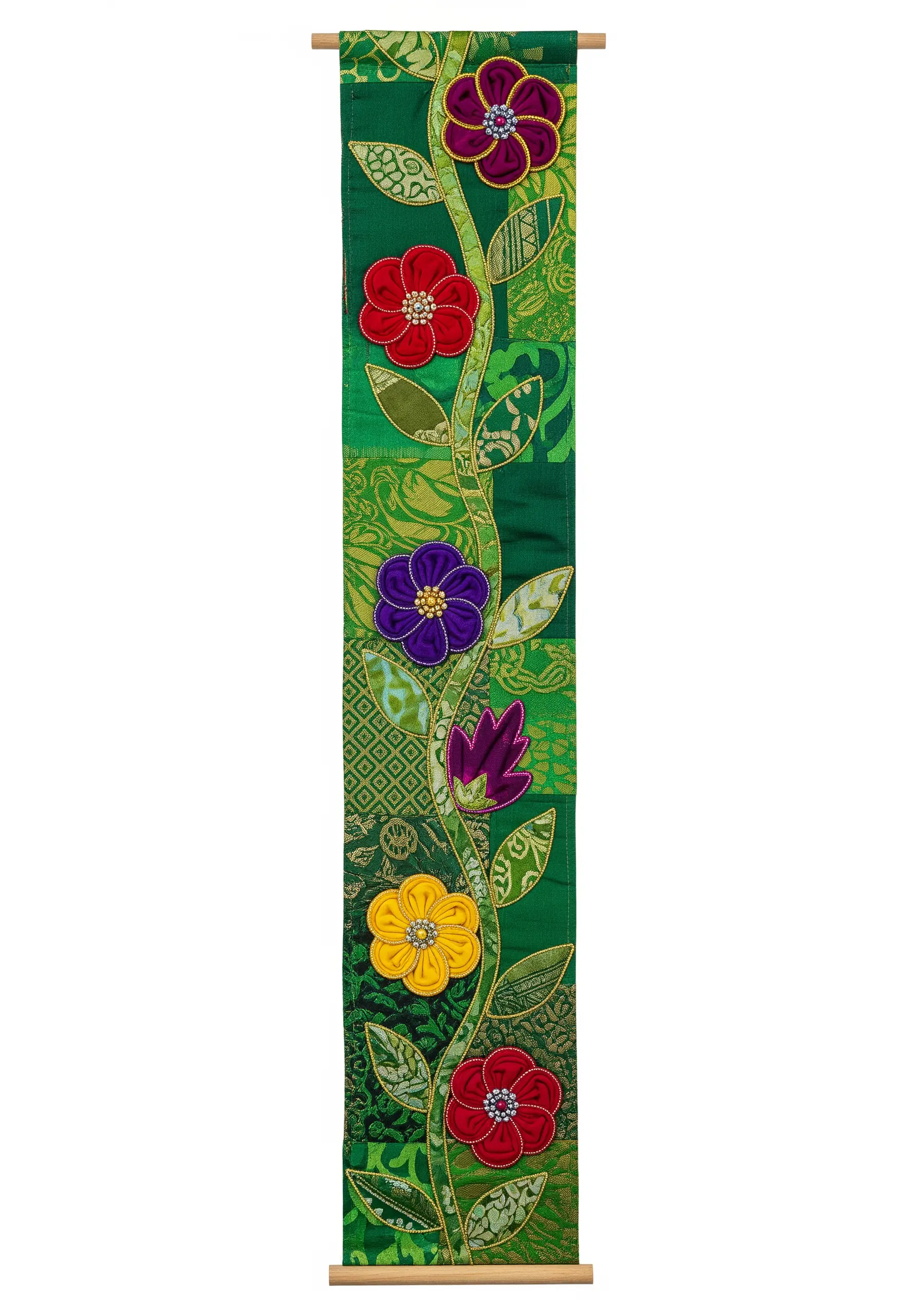
Create a tall, elegant wall banner by building on a patchwork foundation.
Stitch together squares of green-toned saree fabrics and linens to form your background. Then, appliqué a single, flowing vine over the top using a stem stitch or couched cord.
Add bold, contrasting appliqué flowers at intervals along the vine. This vertical composition draws the eye upward and is a wonderful way to showcase botanical fabric collage embroidery ideas in narrow spaces.