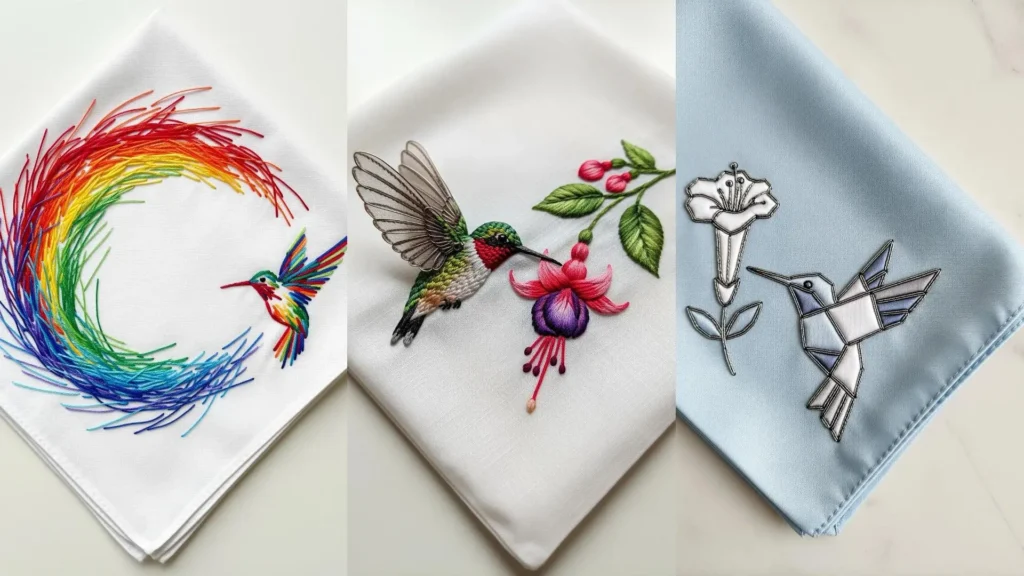
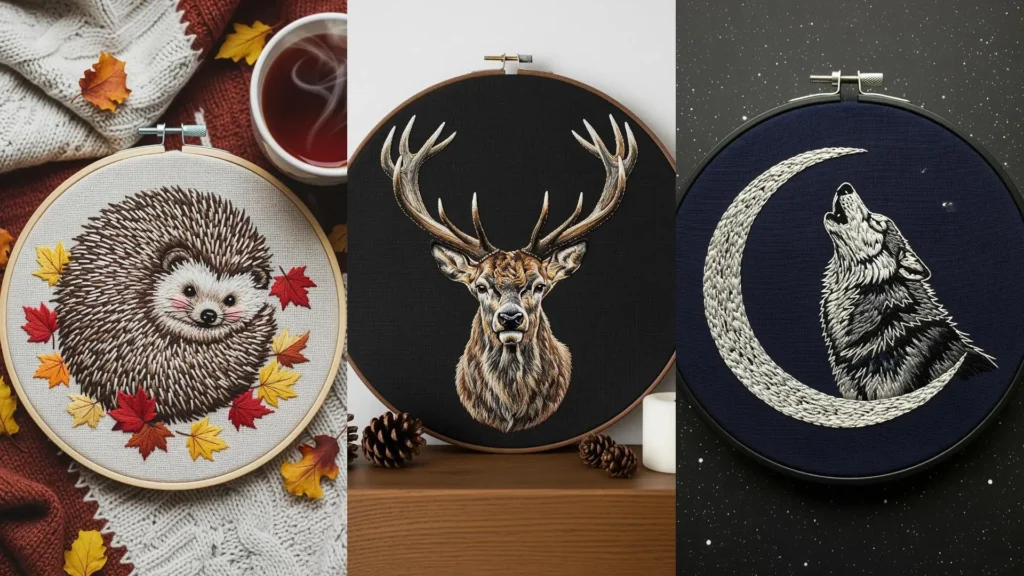
Embroidering on clothing isn’t just about adding decoration; it’s about transforming a simple dress into a personal statement. A flamingo, with its graceful lines and vibrant color, offers the perfect canvas for exploring techniques that feel both timeless and distinctly modern.
Forget perfectionism. Instead, focus on intention. Think about how the direction of a single stitch can mimic the texture of a feather, or how a simple French knot can become the sparkle on the water. These small, deliberate choices are what elevate your work from craft to art.
Here, you’ll find ideas that move beyond the pattern, showing you how to adjust a stitch, blend your colors, or play with composition to make each flamingo uniquely yours. Let’s stitch a dress that doesn’t just look like summer, but feels like it, too.
1. Minimalist Line Art for a Modern Touch
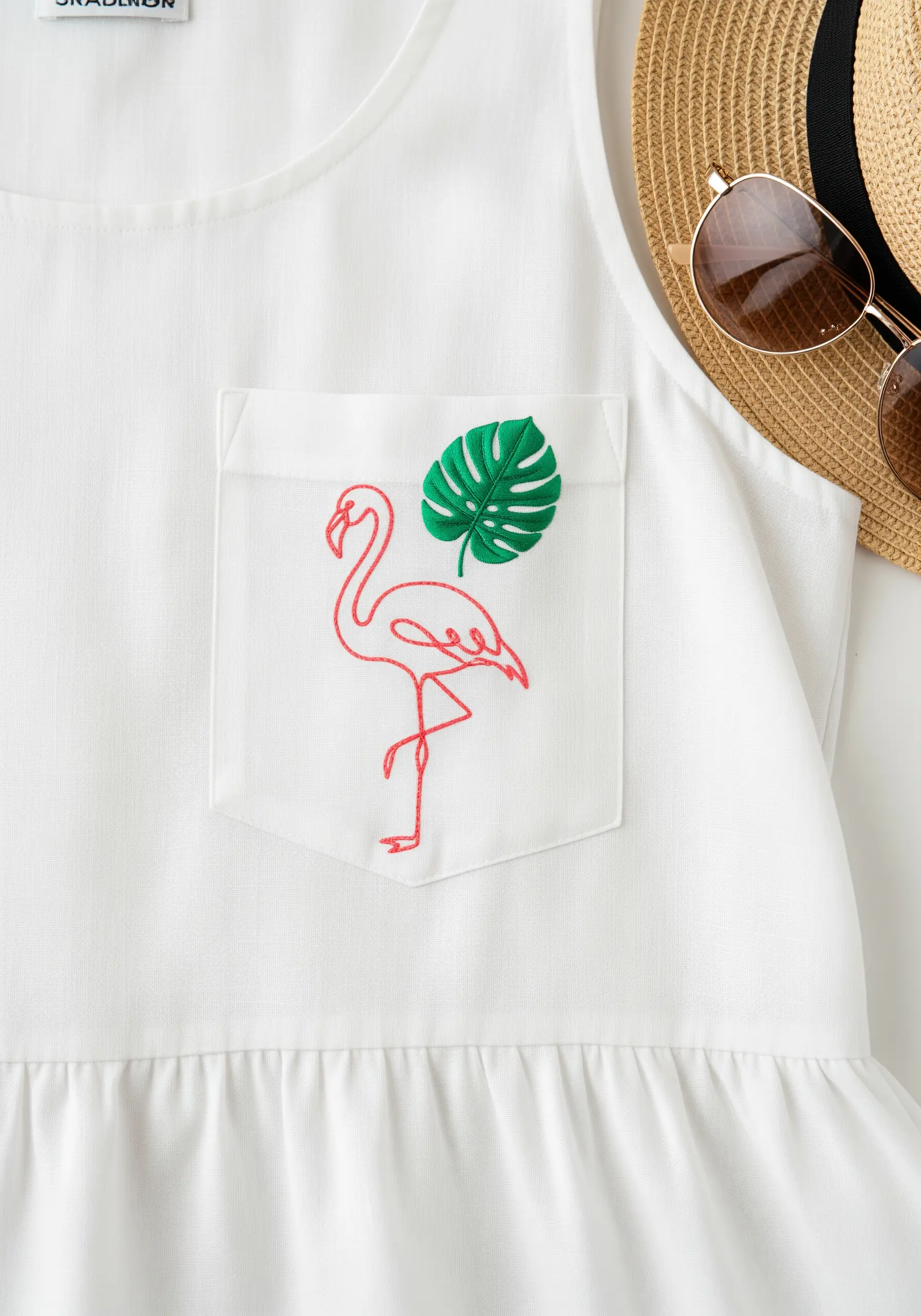
Embrace the elegance of simplicity by stitching a flamingo outline on a pocket or sleeve.
Use a three-strand backstitch or stem stitch for a clean, consistent line that feels both delicate and defined.
For the leaf, switch to a satin stitch using all six strands of floss. This creates a bold, textural contrast against the fine lines of the bird, drawing the eye instantly.
This pairing of techniques—minimal line art with a single solid element—gives your dress a polished, boutique-style finish.
2. Create a Statement Back with Thread Painting

Transform the back of a denim or linen dress into a canvas for a full-scale, painterly flamingo.
Use the long-and-short stitch technique to blend shades of pink, coral, and white, creating realistic feather textures that flow with the bird’s form.
Work with a single strand of floss for the most seamless gradients, especially on the neck and head where details are finest.
For the surrounding foliage, vary your stitch direction and shades of green to create depth, making the flamingo the undeniable focal point.
3. Explore Geometric Form with Satin Stitch Blocks
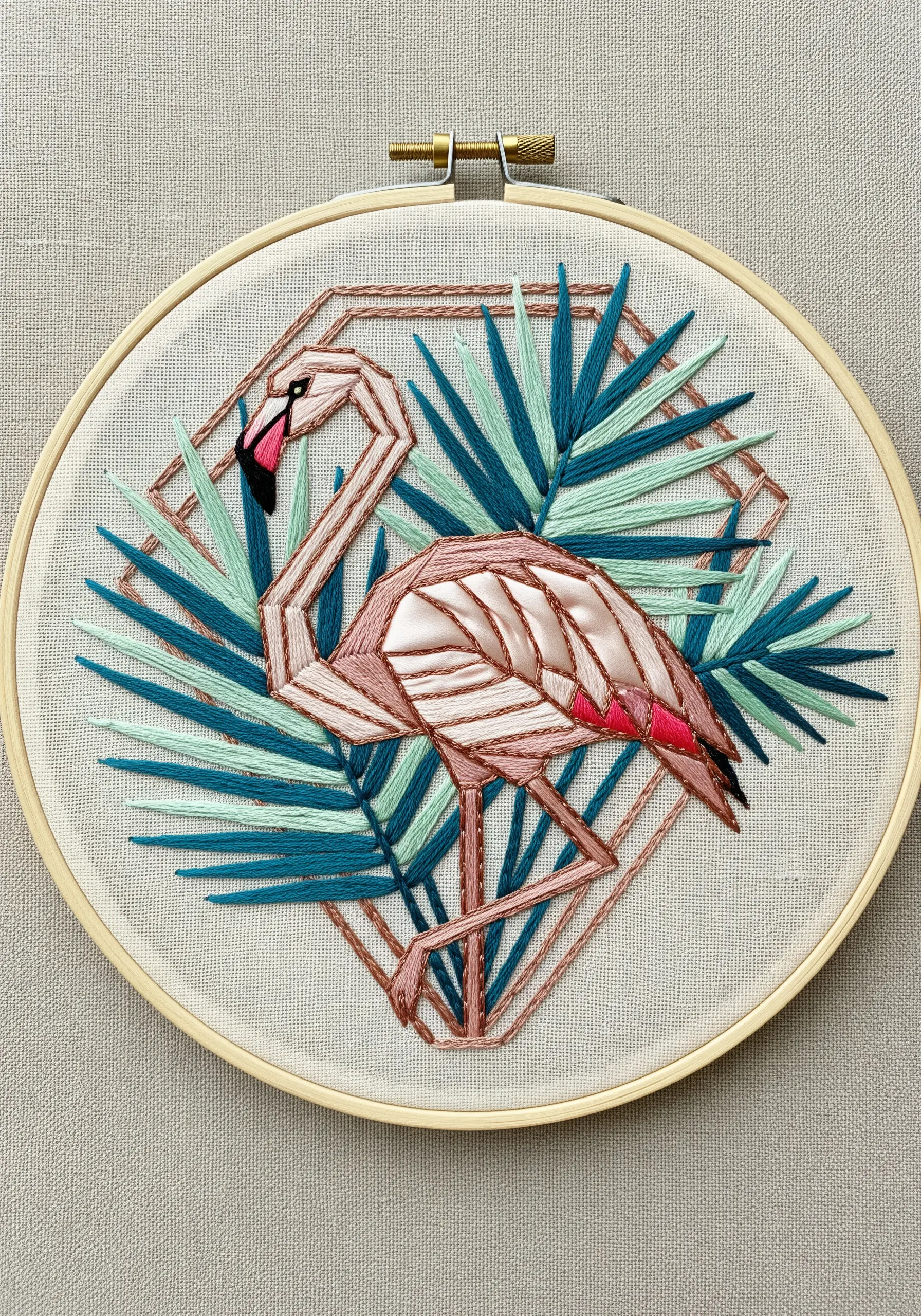
Give the classic flamingo a contemporary twist by breaking its form into geometric sections.
Outline each shape with a precise backstitch, then fill with a perfectly smooth satin stitch.
Alternate the direction of your satin stitches from one section to the next—this subtle shift catches the light differently, adding dimension and structure.
The contrast between the soft blush tones and the sharp teal leaves creates a visual tension that is both modern and artistic.
4. Add Subtle Elegance to Collars
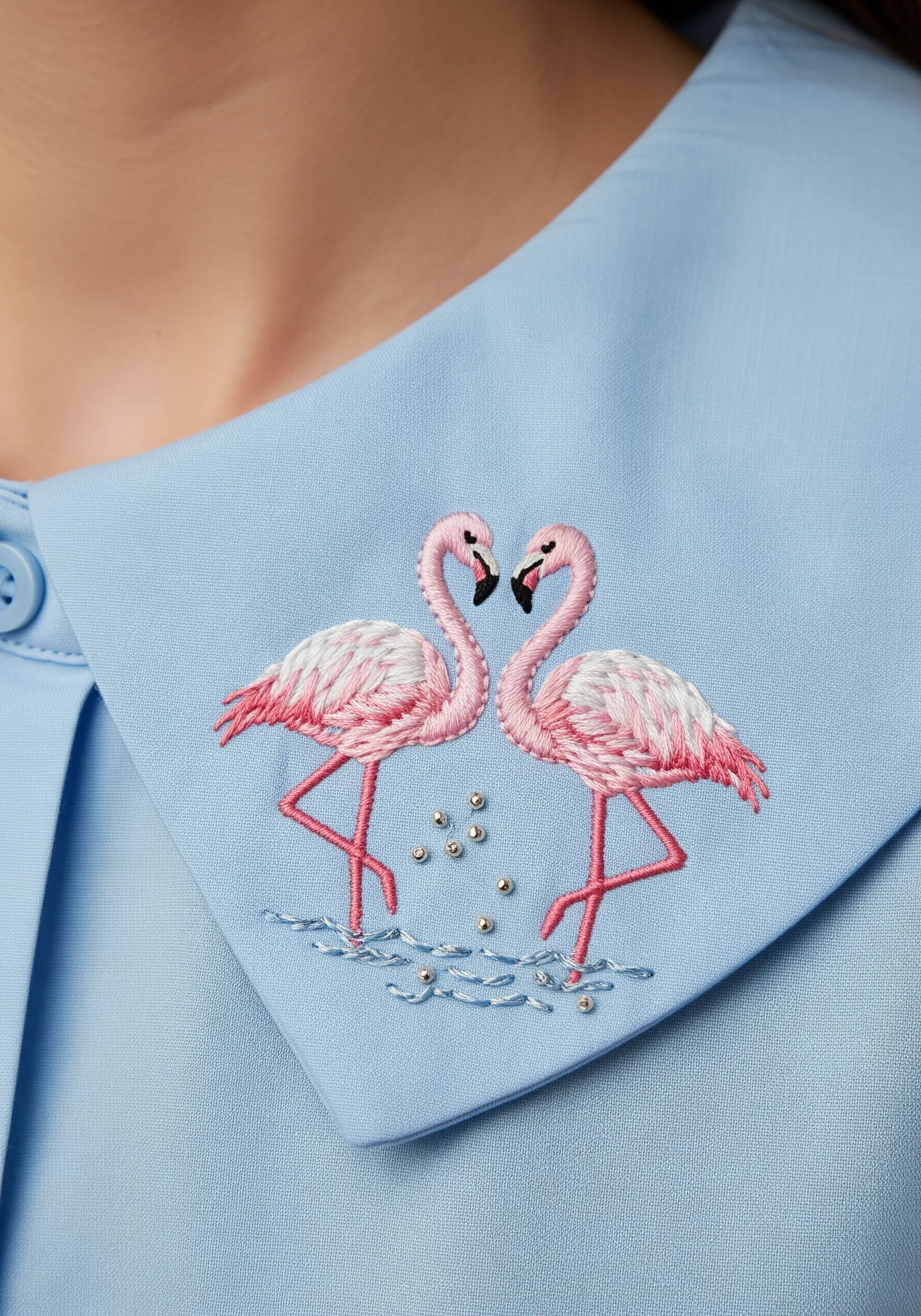
Elevate a simple button-down dress by adding a delicate flamingo pair to the collar points.
Use just two strands of floss to keep the details fine and proportionate to the small space.
Blend white and pink threads in the needle for the wings to create soft, heathered feathers with minimal effort.
Incorporate tiny silver seed beads for the water’s sparkle; this touch of mixed media adds a hint of luxury without overwhelming the design.
5. Blend into a Natural, Earthy Scene
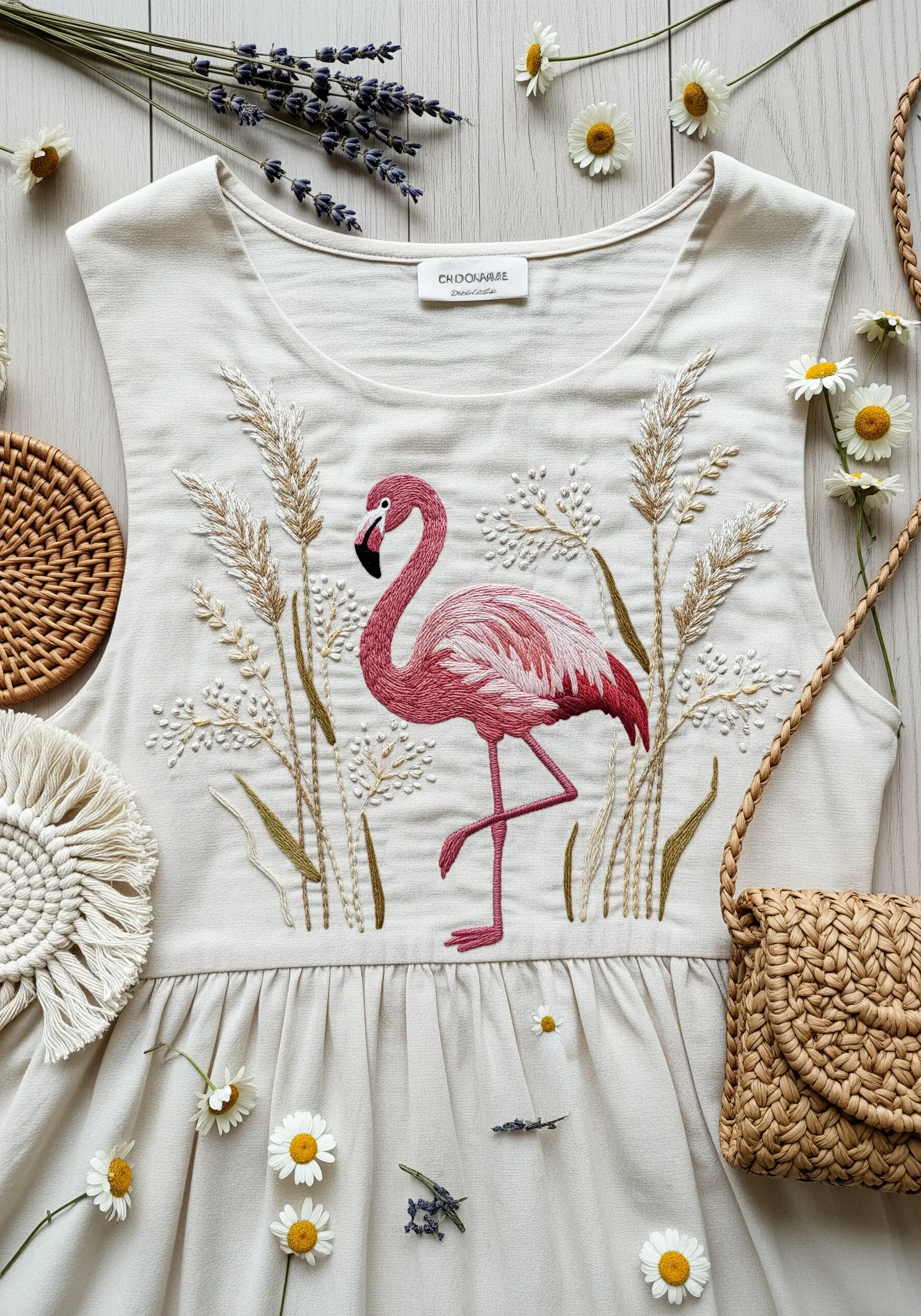
Create a serene composition by placing your flamingo among wispy, textural reeds and grasses.
Use long, vertical straight stitches for the reed stems and detached chain stitches or French knots for the fluffy tops.
This textural variation makes the smoothly stitched flamingo stand out, creating a sense of depth and environment.
Opt for a muted color palette—olive green, beige, and dusty rose—to give your linen dress an organic, hand-crafted feel.
6. Design a Playful Hemline Border
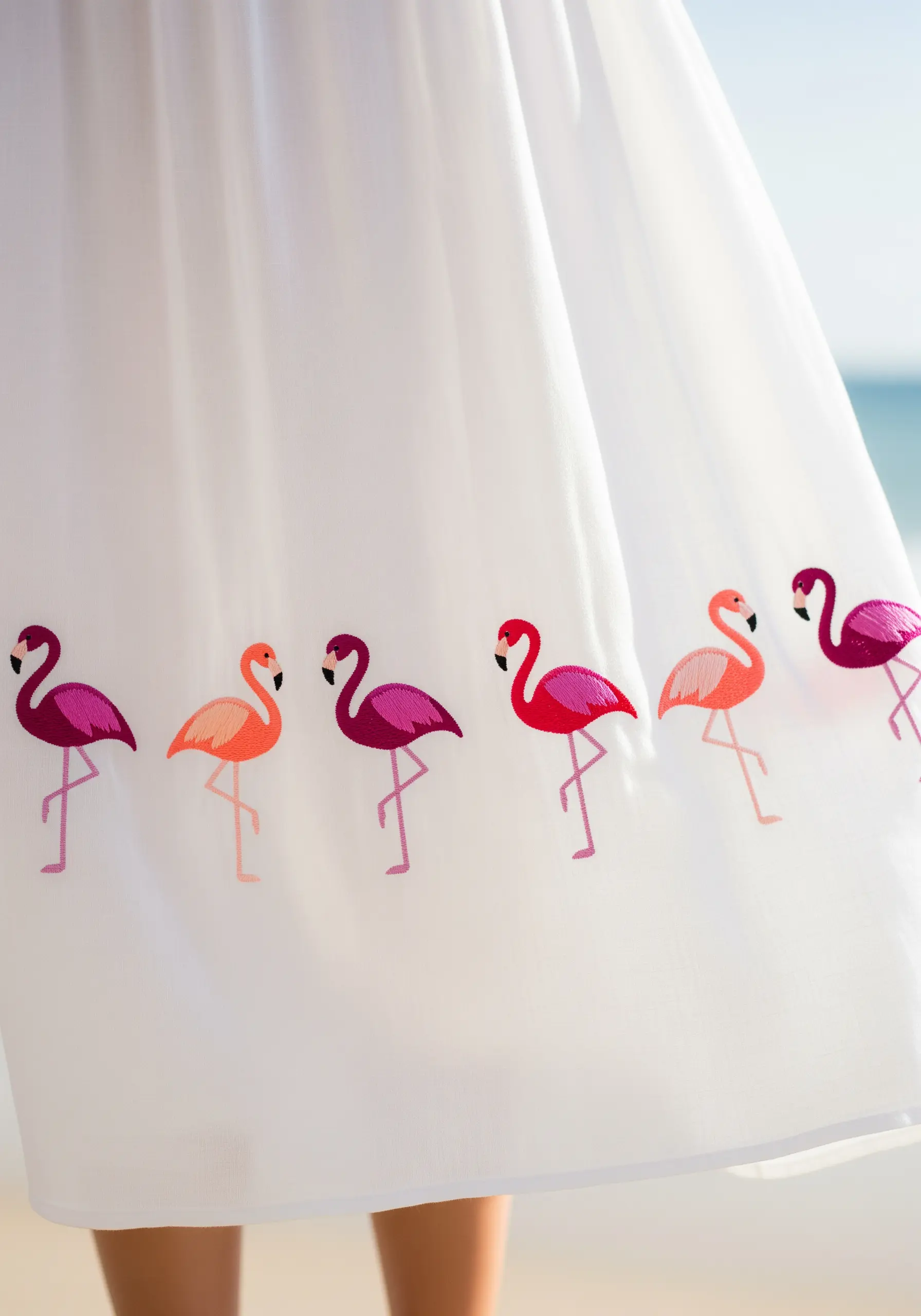
Animate the hem of a simple white summer dress with a repeating pattern of colorful flamingos.
Choose an analogous color scheme—like pinks, oranges, and magentas—to ensure the design feels harmonious rather than chaotic.
Fill each flamingo with a simple satin stitch, which is quick to execute and provides a bold block of color.
This is a perfect way to add a vibrant, playful detail that only reveals itself with movement.
7. Master Realism with Single-Thread Detail
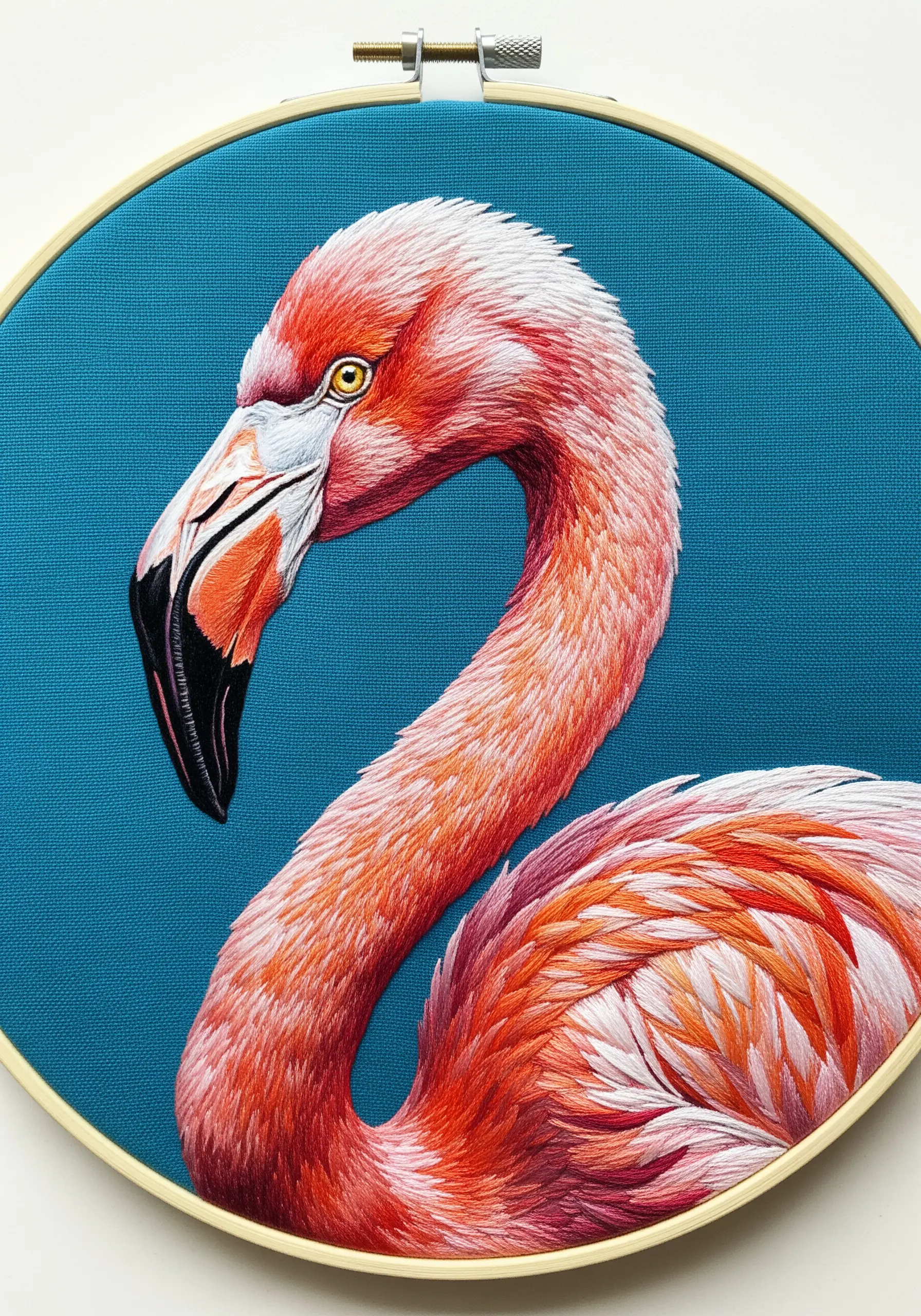
For a truly lifelike portrait, work exclusively with a single strand of embroidery floss.
This allows for meticulous blending and shading, essential for capturing the subtle contours of the flamingo’s face and beak.
Pay close attention to stitch direction; your stitches should follow the natural direction of the feathers to build realistic form and texture.
A high-contrast background, like this vibrant turquoise, makes the warm pinks and corals of the flamingo appear even more luminous.
8. Craft a 3D Stumpwork Patch
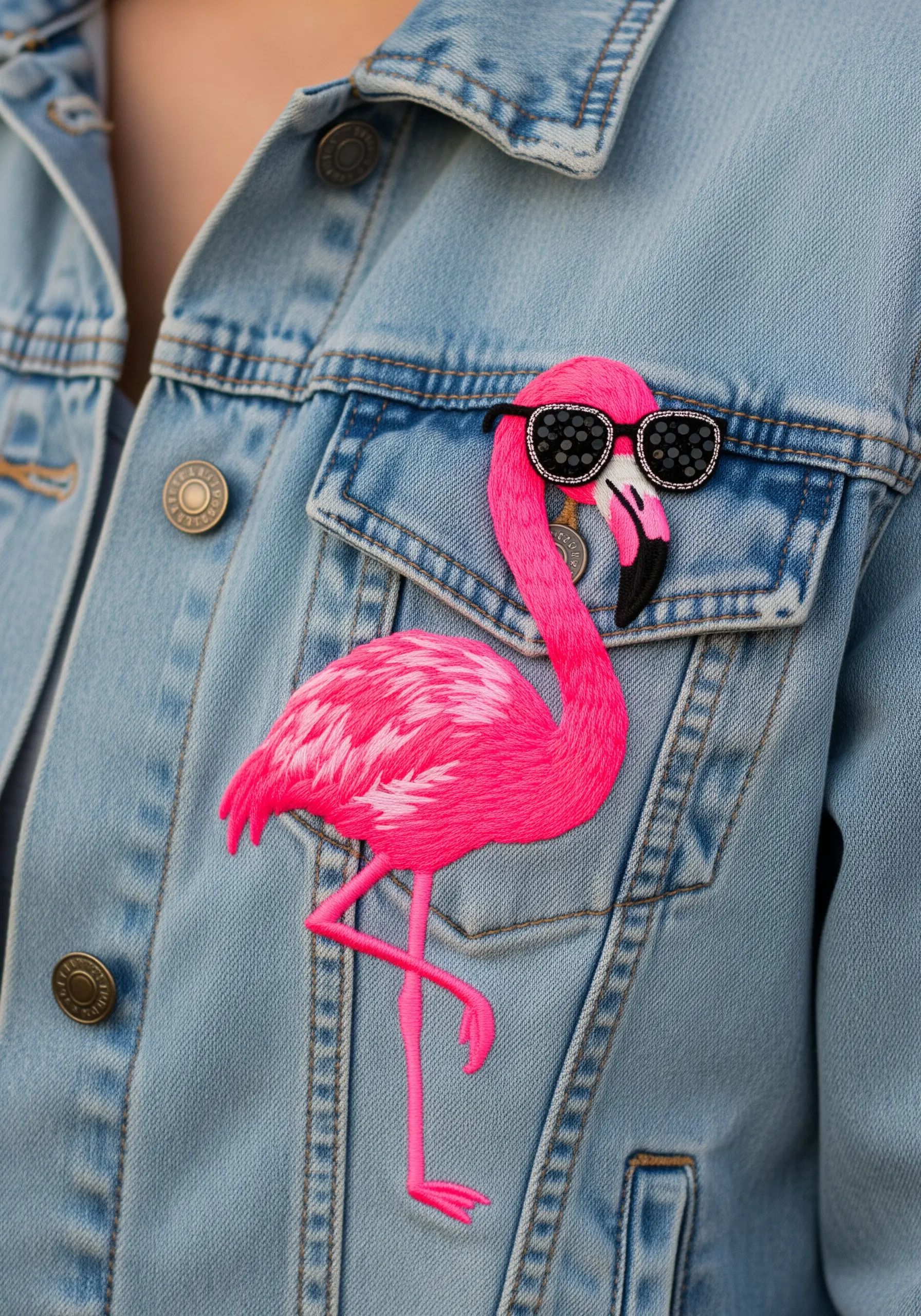
Make your flamingo literally stand out by using stumpwork techniques to create a three-dimensional patch.
First, stitch your design onto a separate piece of felt. Pad the body area with extra layers of felt or cotton batting before covering it with dense satin stitches.
Add playful details like beaded sunglasses for a touch of whimsy. Once complete, carefully cut out the shape and appliqué it onto your denim jacket or dress for a bold, removable accessory.
9. Embrace Abstract Expression with Variegated Threads
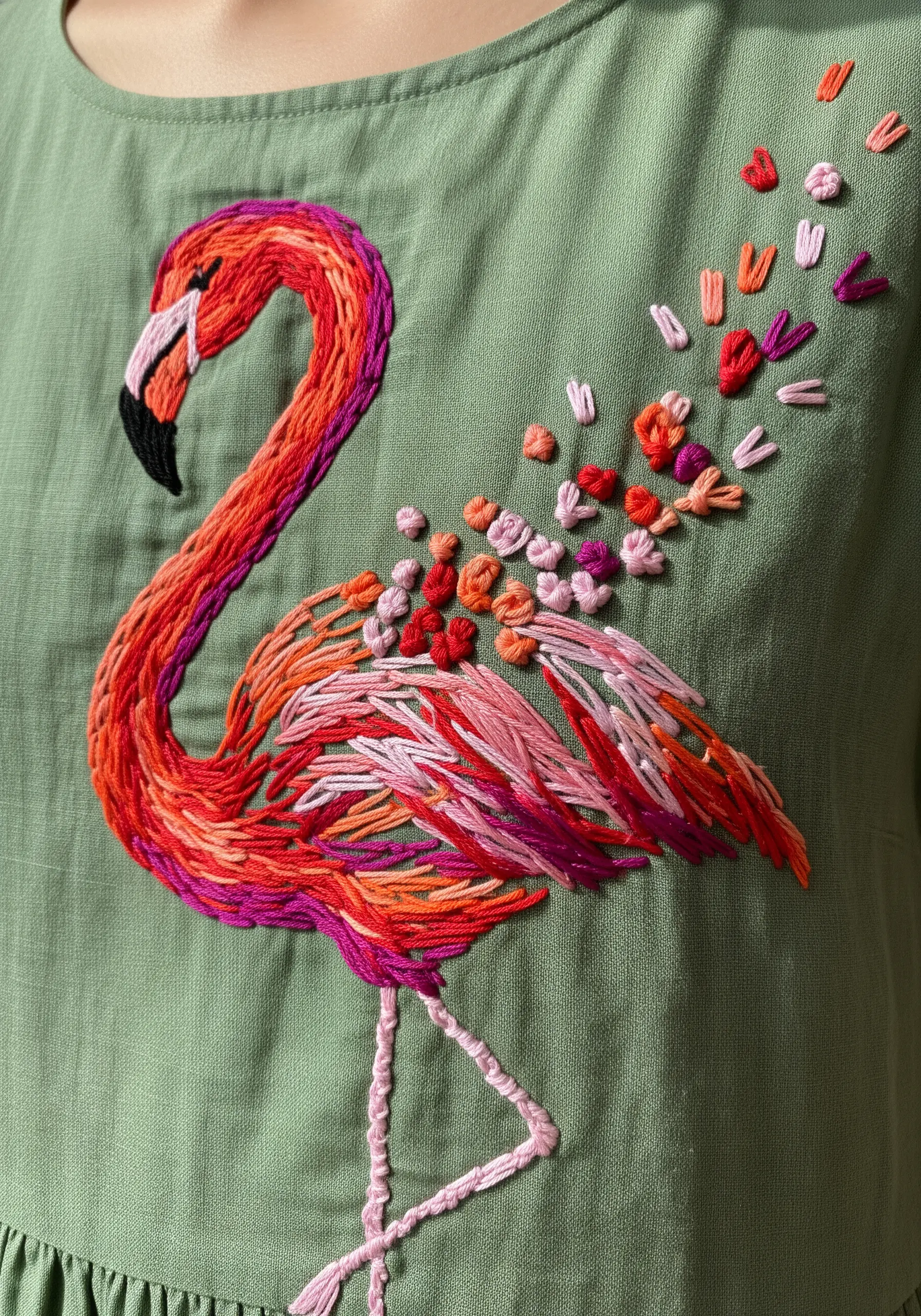
Move beyond realism with an expressive, textural design that celebrates color and movement.
Use variegated floss in shades of pink, orange, and red to fill the flamingo’s body with organic, flowing satin stitches.
Let the thread do the work of blending colors for you. Scatter clusters of French knots and single straight stitches around the wings to create a sense of dissolving energy.
This technique turns a simple shape into a dynamic piece of abstract art.
10. Illustrate Water with Stitches and Knots

Create a convincing water effect with a combination of simple, effective stitches.
Use horizontal straight stitches in varying shades of blue, aqua, and green to represent the calm surface of the water.
Add clusters of white French knots along the water lines to mimic the texture of seafoam or gentle ripples.
This background technique provides a serene setting that grounds your flamingo and completes the narrative of the scene.
11. Stitch a Sunset Silhouette
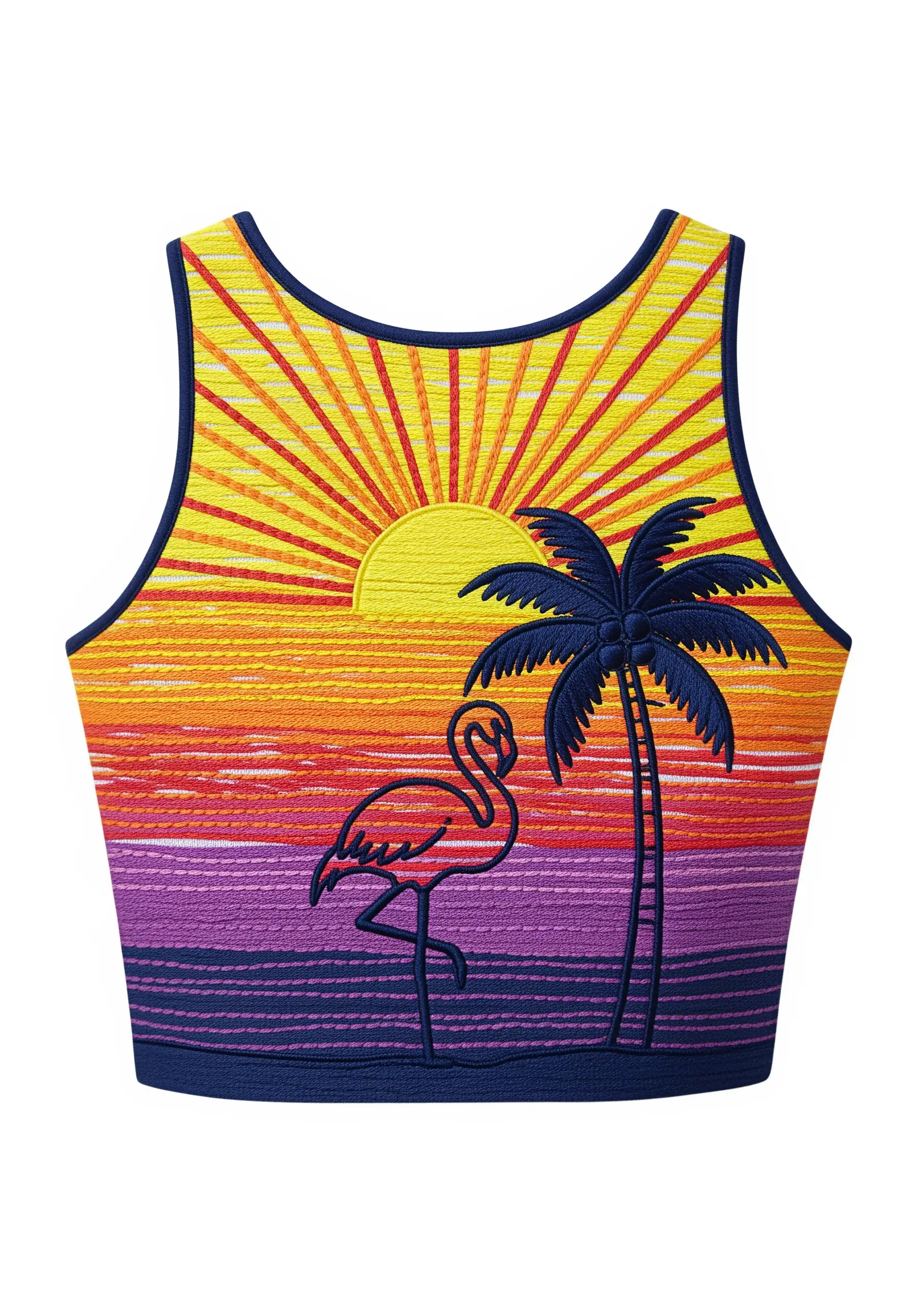
Capture the drama of a tropical sunset by using the entire bodice of a crop top as your canvas.
Fill the background with dense, horizontal satin stitches, transitioning from purple to orange and yellow to create a smooth gradient.
Keep the flamingo and palm tree as simple outlines in a dark, contrasting color. This makes them pop against the vibrant background, turning them into striking silhouettes.
12. Frame Your Motif with Negative Space

Create a playful composition by having your flamingo peek through a large monstera leaf.
Stitch the leaf first, using long-and-short stitch to blend different greens for a realistic look. The holes in the leaf are negative space—an essential part of the design.
Position the flamingo’s head and neck behind the leaf, stitching only the visible parts. This layering technique creates an intriguing sense of depth and context.
13. Fill the Form with Folk Art Florals
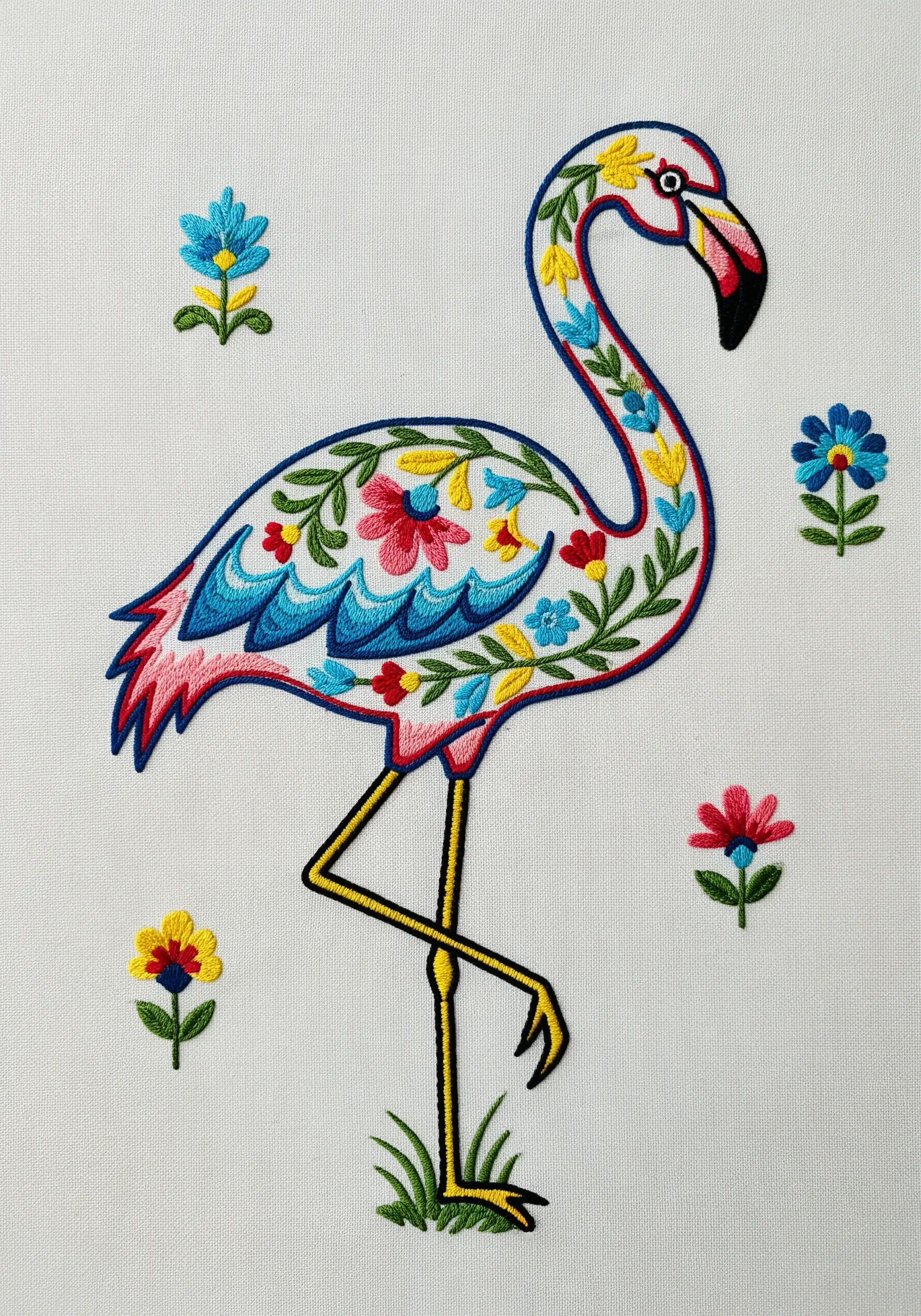
Turn the flamingo’s silhouette into a vessel for a vibrant garden of tiny floral motifs.
Outline the bird with a bold chain stitch, then fill the interior with a variety of small-scale flowers using lazy daisy, satin stitch, and French knots.
Use a bright, primary-adjacent color palette—red, yellow, blue—to evoke a traditional folk art aesthetic.
This approach transforms a simple animal shape into an intricate, pattern-filled masterpiece.
14. Add Glamour with Beads and Sequins
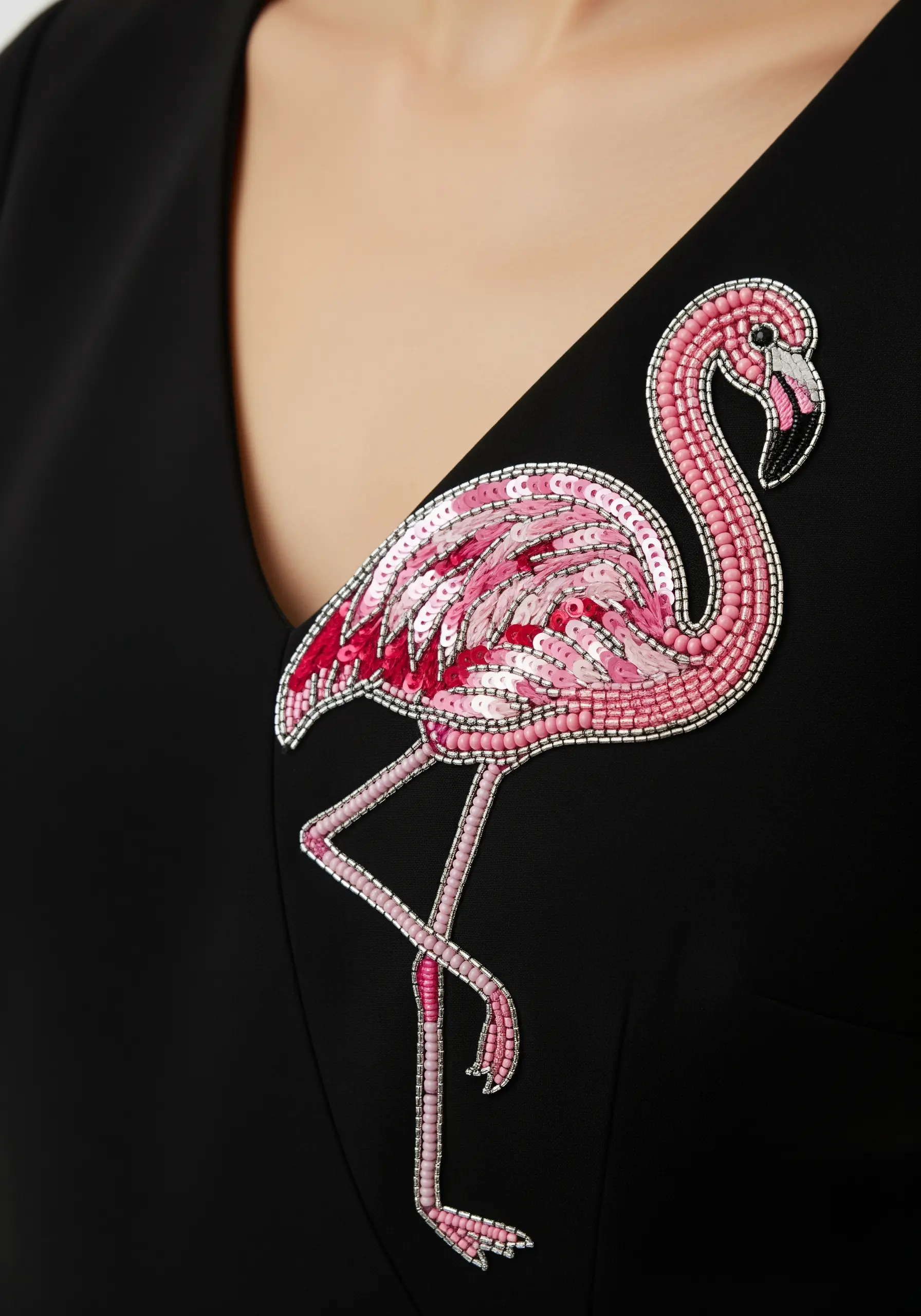
For an evening dress or special occasion piece, embellish your flamingo with beads and sequins for a luxurious finish.
Use seed beads to create a sharp, shimmering outline. Fill the body with a mix of flat sequins and beads, layering them like scales or feathers to catch the light from every angle.
This technique works best on a sturdy fabric like crepe or wool that can support the weight of the embellishments. The result is pure, tactile elegance.
15. Encircle in a Botanical Wreath
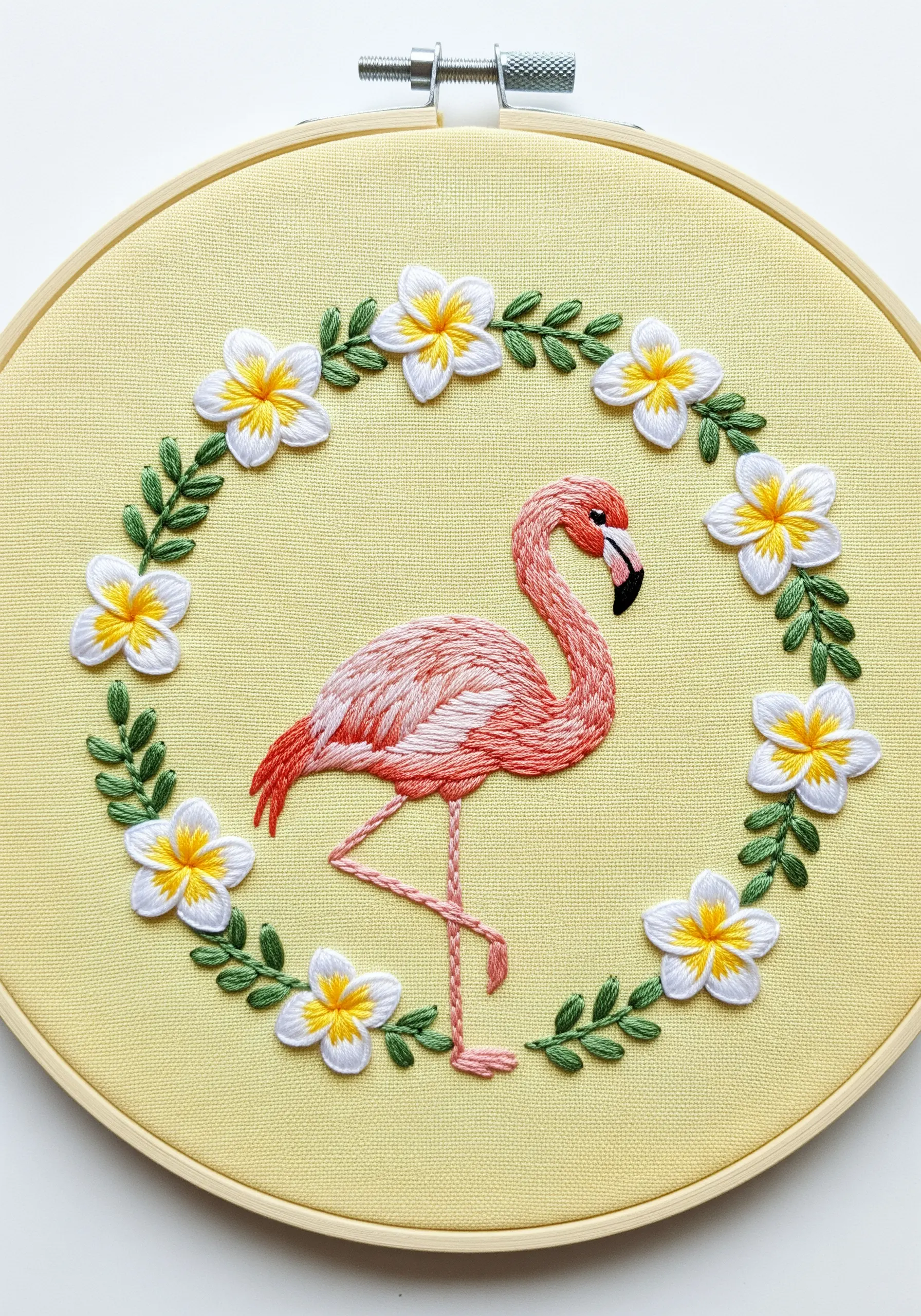
Frame your flamingo with a delicate wreath of plumeria and leaves for a classic, balanced composition.
Stitch the flamingo first using a soft long-and-short stitch. For the flowers, use a simple satin stitch for the petals and bright yellow French knots for the centers.
This design is perfect for the chest of a dress or as a central motif on a linen tote. The circular frame draws the eye inward, highlighting the central subject beautifully.
16. Convey Motion with Concentric Ripples

Suggest movement and stillness simultaneously by placing your flamingo in the center of subtle water ripples.
Use a simple backstitch or split stitch to create a series of concentric, imperfect circles around the bird’s feet.
Stitch each ring in a slightly different shade of pink or coral. This gentle gradient gives the illusion of motion spreading outward on the water’s surface, adding a thoughtful, narrative detail to your piece.
17. Make a Bold Graphic Statement
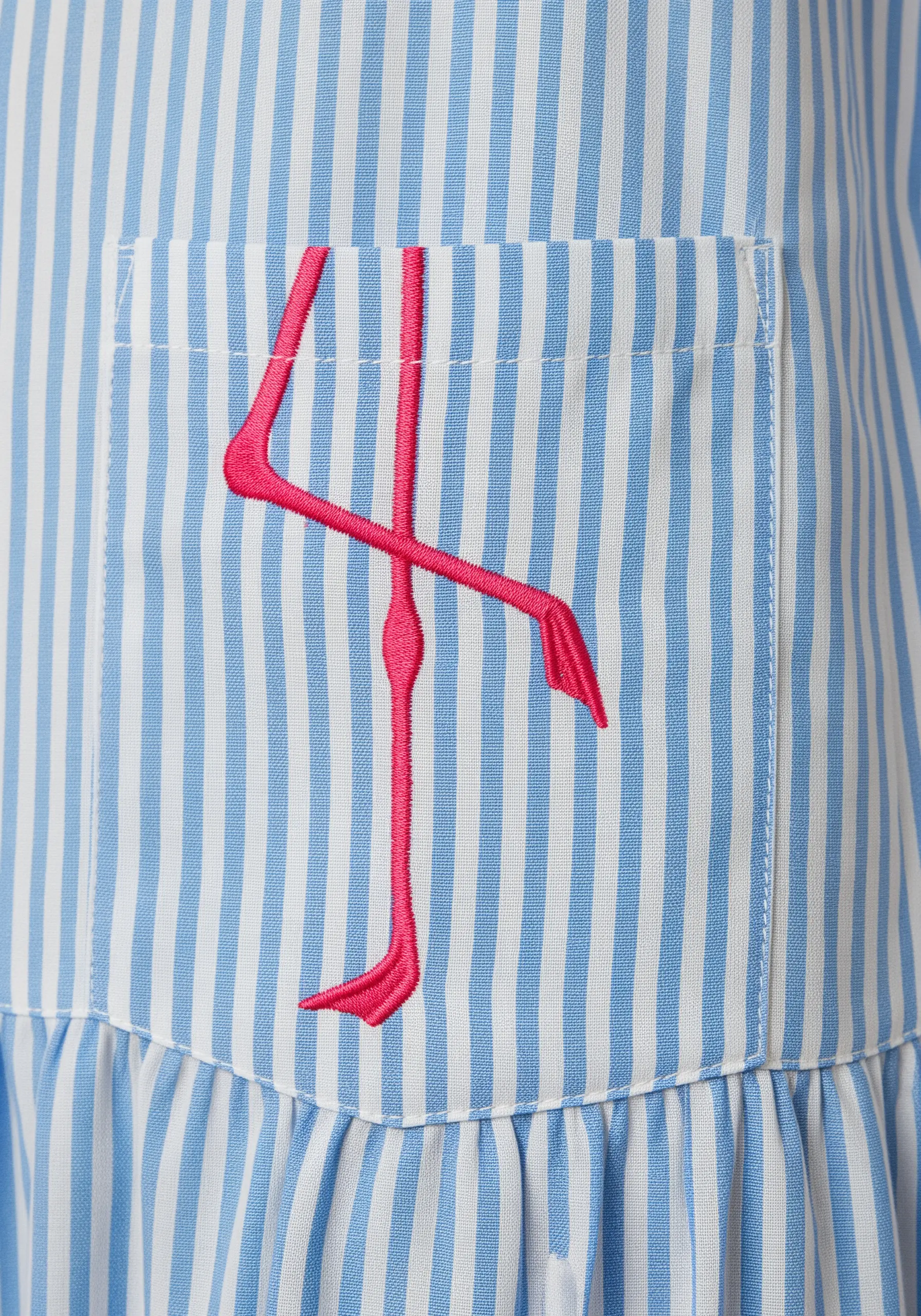
Distill the flamingo down to its most essential lines for a powerful, abstract design.
This minimalist approach works incredibly well on a patterned fabric, like stripes, where a detailed design might get lost.
Use a thick, dense satin stitch in a high-contrast color like hot pink. The clean lines and solid fill create a bold, graphic icon that feels confident and modern.
18. Tell a Sweet Story with a Family Scene
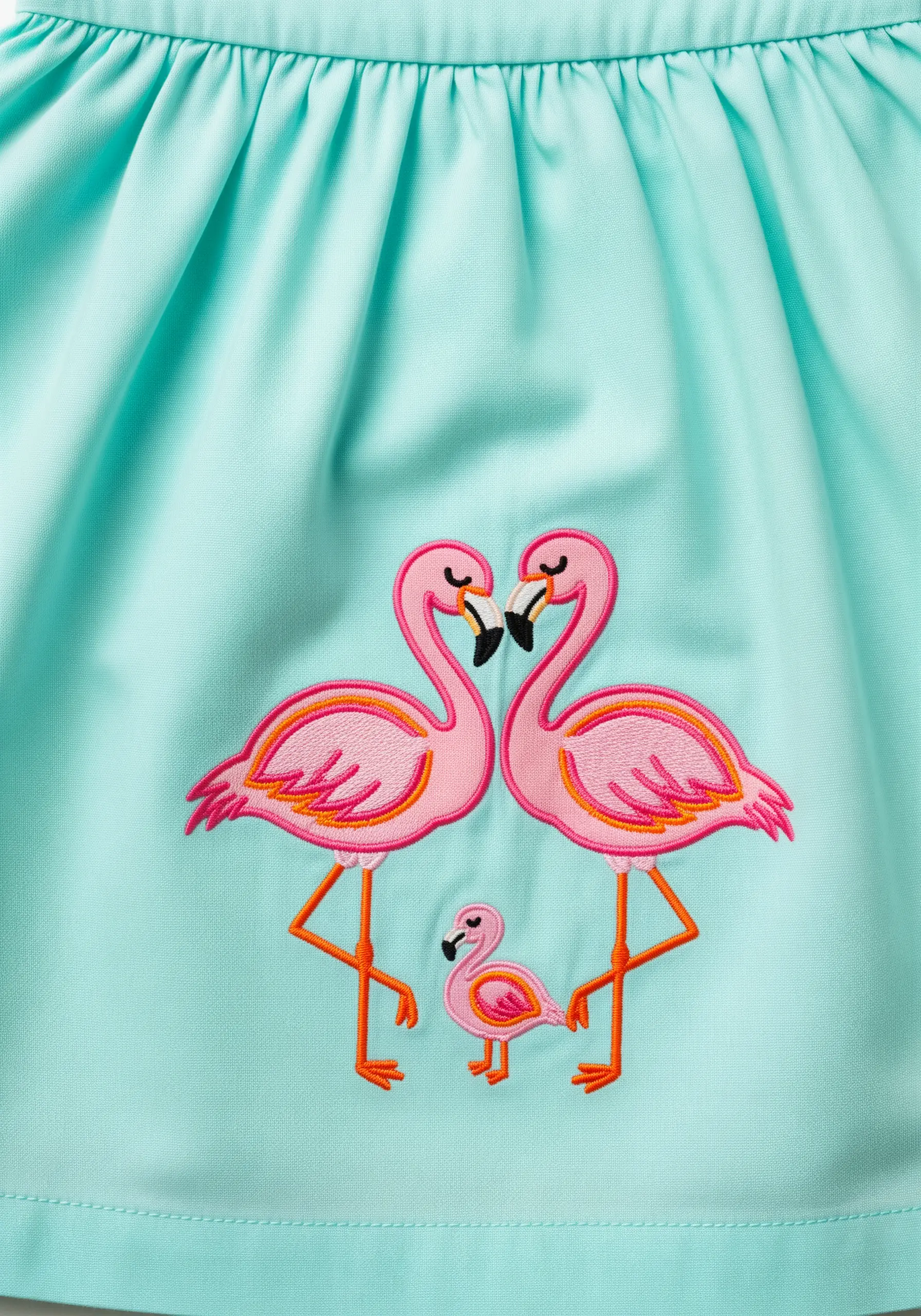
Create a heartwarming motif by stitching a small flamingo family on the skirt of a dress.
Use a combination of satin stitch for the bodies and a crisp backstitch for the legs and outlines. This mix of fill and line work keeps the design from feeling too heavy.
Vary the shades of pink and add a pop of orange on the outlines to create visual interest and define each bird.
19. Build Sculptural Texture with Knots and Loops

Create a stunningly tactile flamingo by using highly textured stitches to build its form.
Use dense clusters of French knots in various pink shades for the neck and body, creating a bumpy, pebbled surface.
For the wings, switch to detached chain stitches (lazy daisies), leaving the loops open and layered to mimic the look of individual feathers.
This advanced, sculptural approach results in a statement textured embroidery piece that invites touch.
20. Create a Vibrant Tropical Fruit Pattern
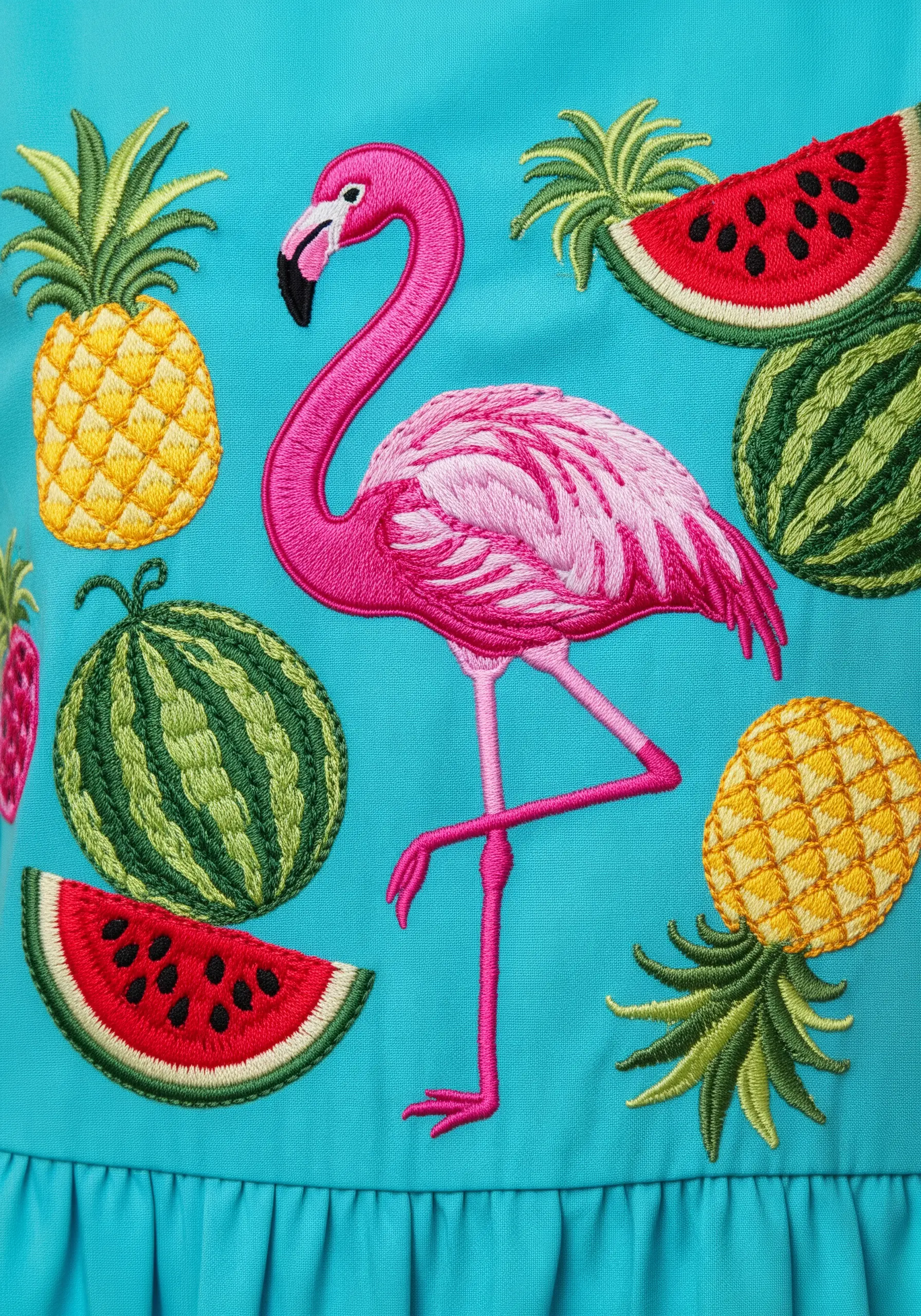
Surround your flamingo with pineapples and watermelons for a fun, high-energy summer pattern.
Use a variety of stitches to differentiate the textures: satin stitch for smooth watermelon rind, French knots for pineapple skin, and tiny black seed stitches for watermelon seeds.
By spreading these small embroidery motifs around a central flamingo, you can fill a large area like a dress bodice with a balanced and joyful design.
21. Reimagine the Flamingo as a Celestial Constellation
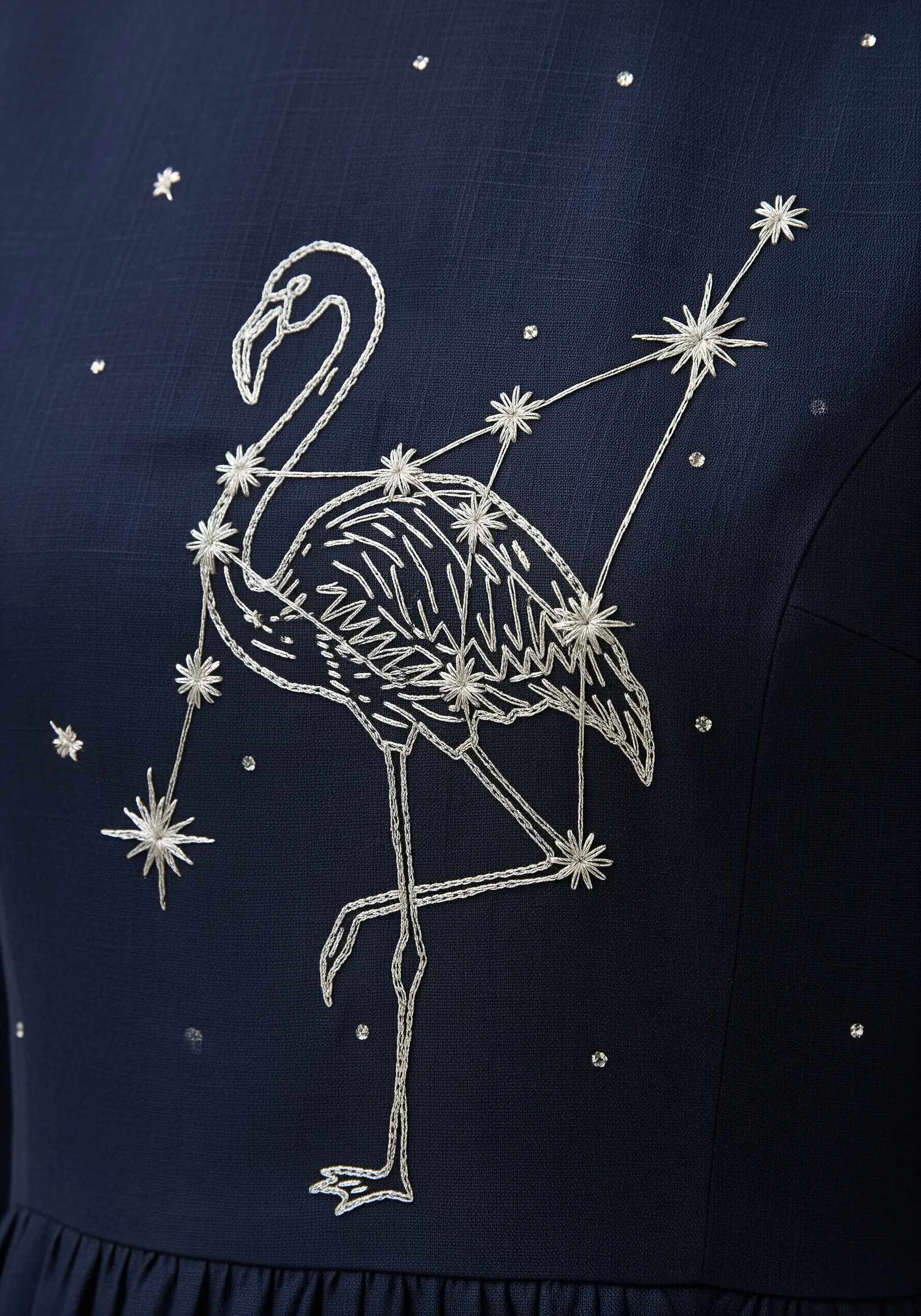
For a unique and elegant design, transform the flamingo into a celestial constellation on dark fabric.
Use a single strand of silver or white metallic thread to connect the stars with a delicate backstitch.
Stitch the stars using a combination of small star stitches and French knots. Add a few scattered single-stitch ‘stars’ around the constellation to fill the space and enhance the cosmic feel.
22. Craft a Serene Water Lily Pond Scene
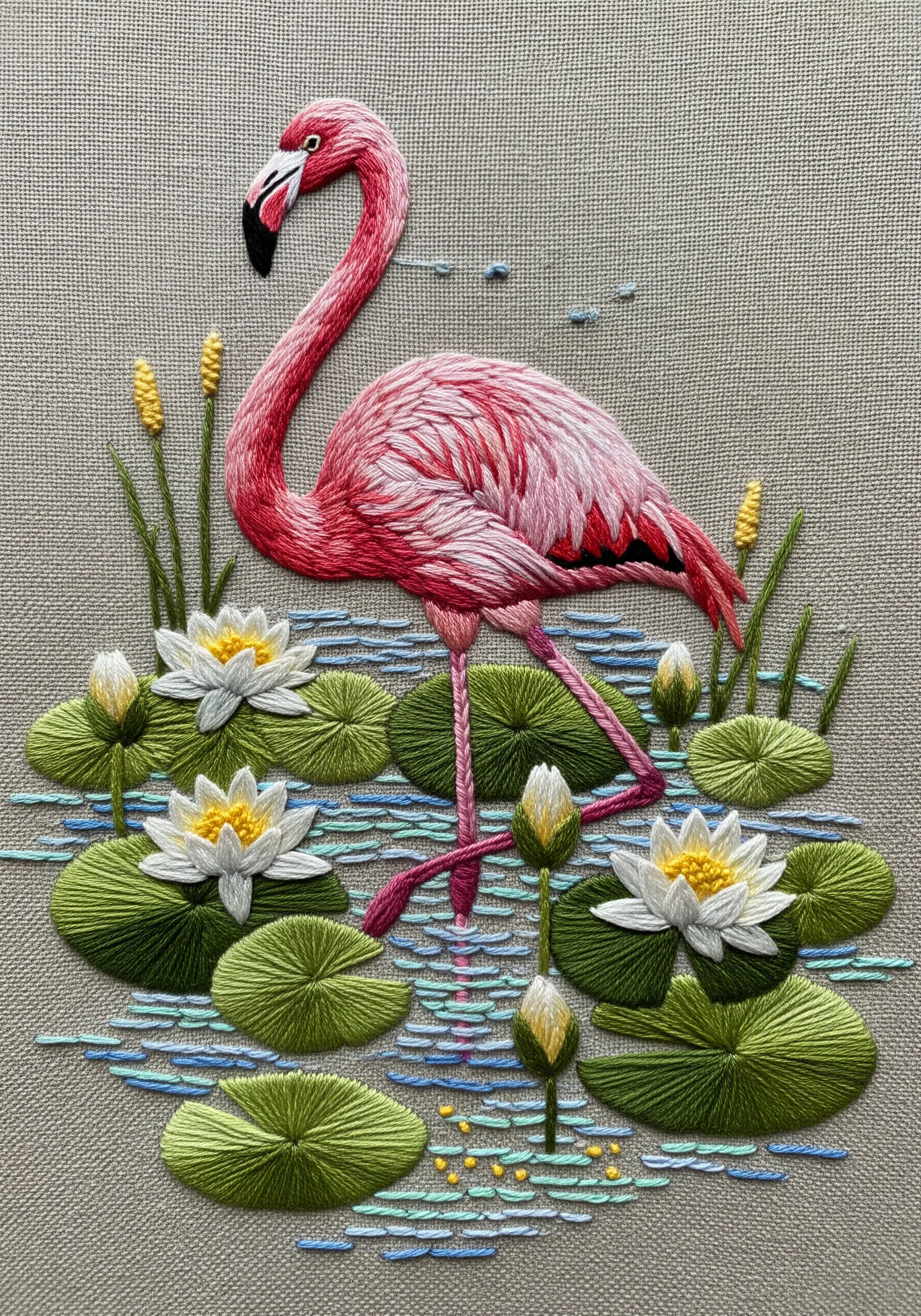
Design a complete, picturesque scene by placing your flamingo in a tranquil pond of water lilies.
Use directional satin stitch for the lily pads, ensuring your stitches radiate from the center outwards for a natural look.
For the water lilies, layer white detached chain stitches for petals and fill the centers with dense yellow French knots.
This immersive design turns the fabric into a window onto a peaceful, painterly world.
23. Achieve a Bold Pop-Art Look with Appliqué
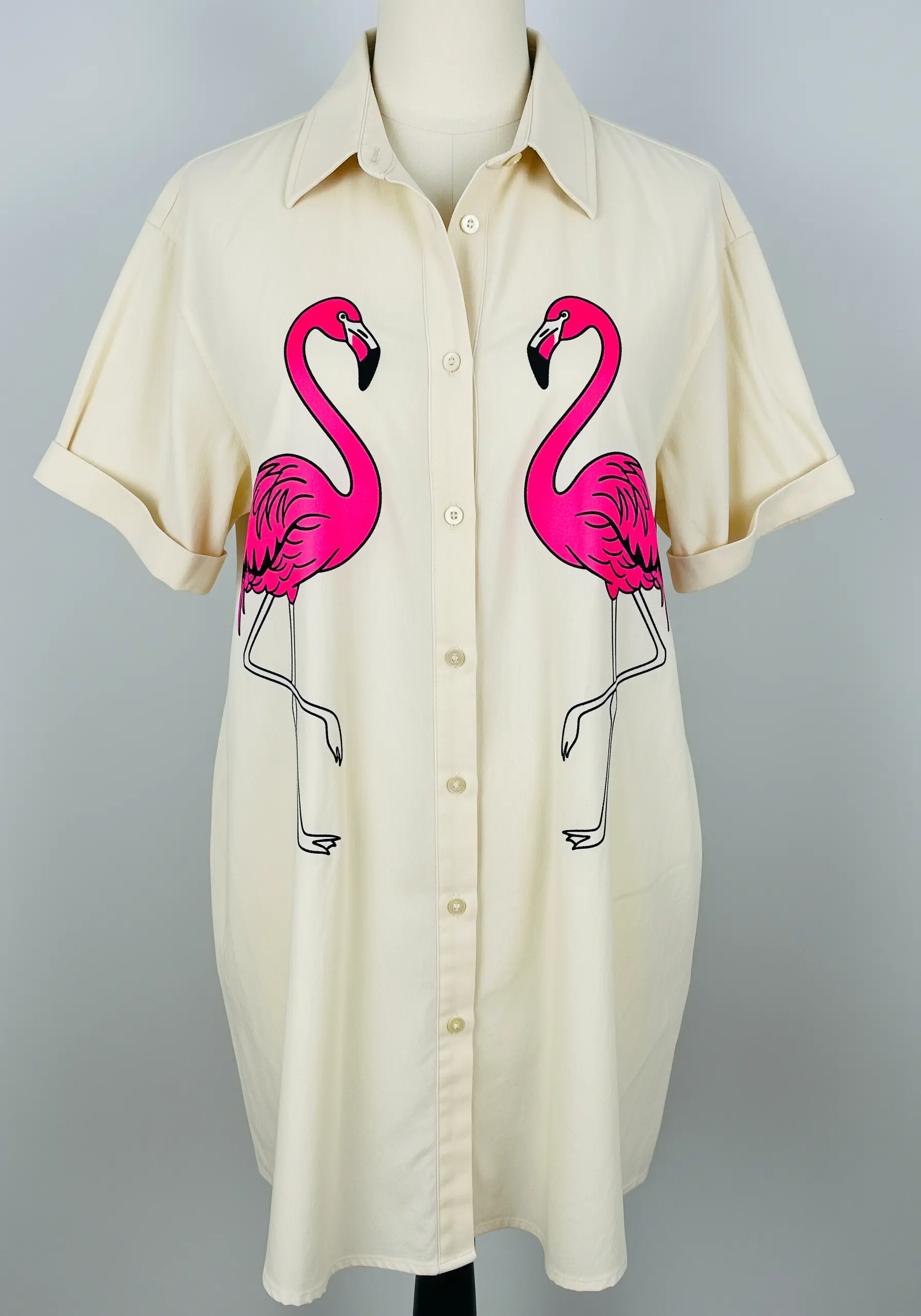
For a fast, high-impact design with perfectly clean edges, combine fabric appliqué with embroidery.
Cut the flamingo shapes from a bright pink fabric, secure them to your dress with an iron-on adhesive, and then stitch a clean black outline around the edge using a tight backstitch or stem stitch.
This technique gives you the bold color blocking of pop art with the refined, handmade touch of embroidery.
24. Weave an All-Over Embroidered Textile

Commit to a maximalist vision by covering the entire fabric surface with dense, textural stitching.
This technique, known as ‘blackwork’ when done in a single color but applicable here with many, relies on consistent stitch density to create a woven, tapestry-like effect.
Use long-and-short stitch to fill every inch of the design, from the flowers to the leaves to the flamingo itself.
The result is a breathtakingly intricate fabric that is a true work of art.
25. Create a Watercolor Effect with Sketchy Stitches

Mimic the look of a watercolor painting or a colored pencil sketch with loose, directional stitching.
Use single strands of floss in a gradient of pink, blue, and purple, laying down short, quick straight stitches that overlap and blend visually.
Don’t fill the shape completely; allow small gaps of the white fabric to show through, which enhances the light, airy, and artistic feel of the design.
This approach is expressive, forgiving, and beautifully unique.
26. Capture Graceful Motion with Spreading Wings
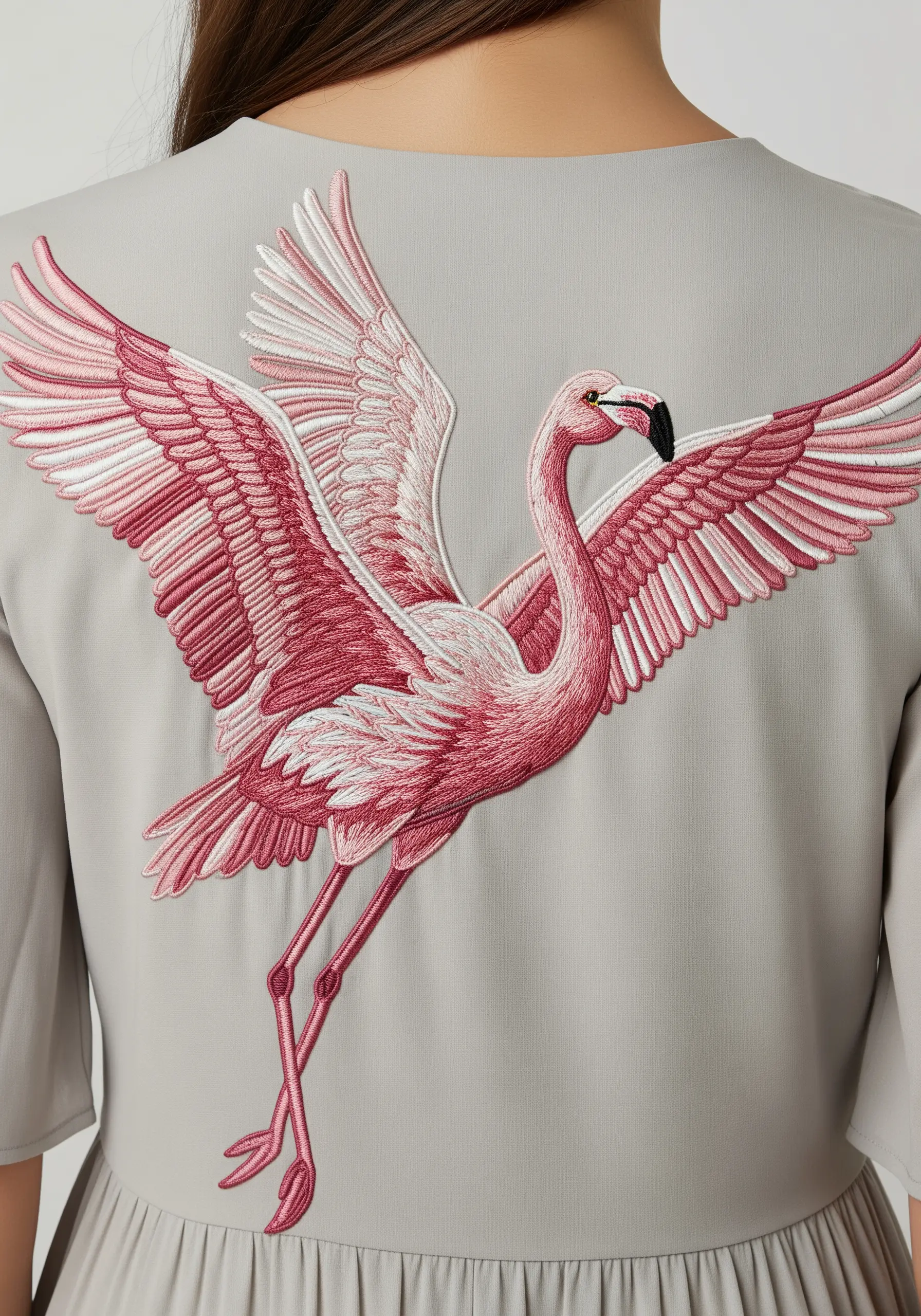
Embroider a flamingo in flight to create a dynamic and powerful statement piece on the back of a dress.
The key to conveying movement is the direction of your stitches. Angle your long-and-short stitches to follow the line of each individual feather, radiating outwards from the body.
Use darker shades of pink for the undersides of the wings to create shadow and dimension, making the bird look like it’s truly taking flight.
27. Frame a Tiny Scene in a Circular Patch

Design a small, self-contained scene and frame it with a clean border to create a polished patch for a sleeve or cuff.
Stitch your flamingo and palm tree first. Then, create the circular border using a raised satin stitch or a tight chain stitch for a rope-like texture.
This framing technique elevates a simple motif, making it feel intentional and complete, like a little embroidered merit badge for your vacation adventures.
28. Combine Bold Typography with Your Motif

Let your embroidery do the talking by pairing a flamingo with bold, cheerful text.
For the block letters, use a vertical satin stitch to create a smooth, solid fill that is highly legible and visually strong.
Use a contrasting color for a thin backstitch outline around each letter to make them pop even more against the background fabric.
This combination of graphic text and an illustrative motif creates a fun, declarative piece perfect for a vacation t-shirt dress.
29. Stitch a Coastal Landscape at the Hem
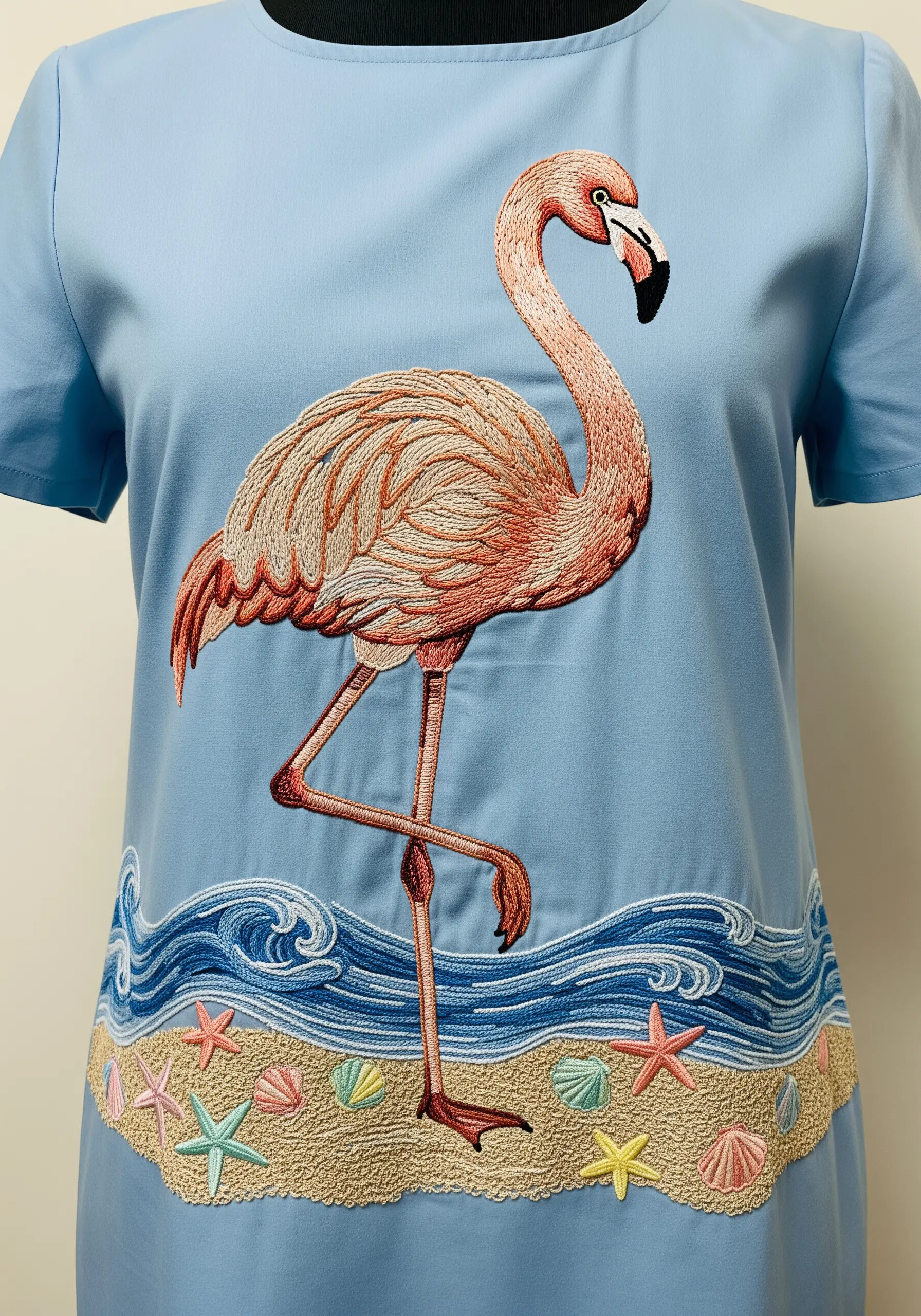
Create an entire seaside world along the bottom of a dress for a beautiful, immersive border design.
Use textural stitches to define each element: bumpy French knots or seed stitches for the sand, and layered, wavy backstitches in blues and white for the ocean waves.
This creates a rich, tactile landscape for your flamingo to stand in, turning the entire hem into a miniature, wearable diorama.