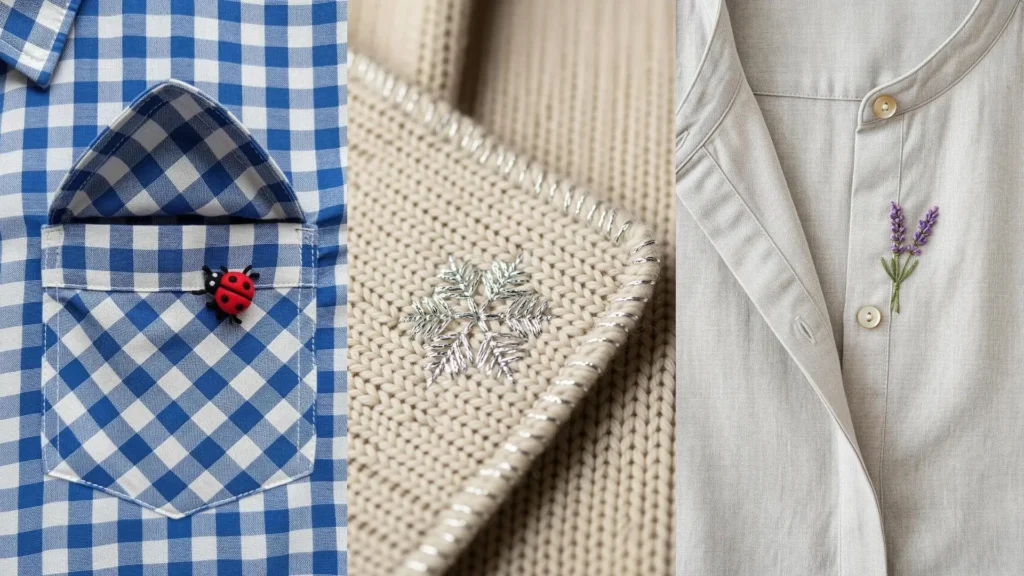
A pillow is more than just a place to rest your head—it’s a small canvas waiting for a story. Instead of swapping out pillows with each passing holiday, I want you to think about them as a subtle, elegant reflection of the season, told through thread.
This is about moving beyond predictable motifs and embracing techniques that add depth, texture, and a quiet artistry to your home. We will explore how a single stitch can mimic the frost on a windowpane or how the right color blending can capture the warmth of an autumn sunset.
Consider this your guide to creating decor that feels both timely and timeless. You have the skills; now it’s time to refine your eye and your touch, turning simple fabric into something that truly resonates with the season’s quiet magic.
1. Sculptural Cherry Blossoms for Spring
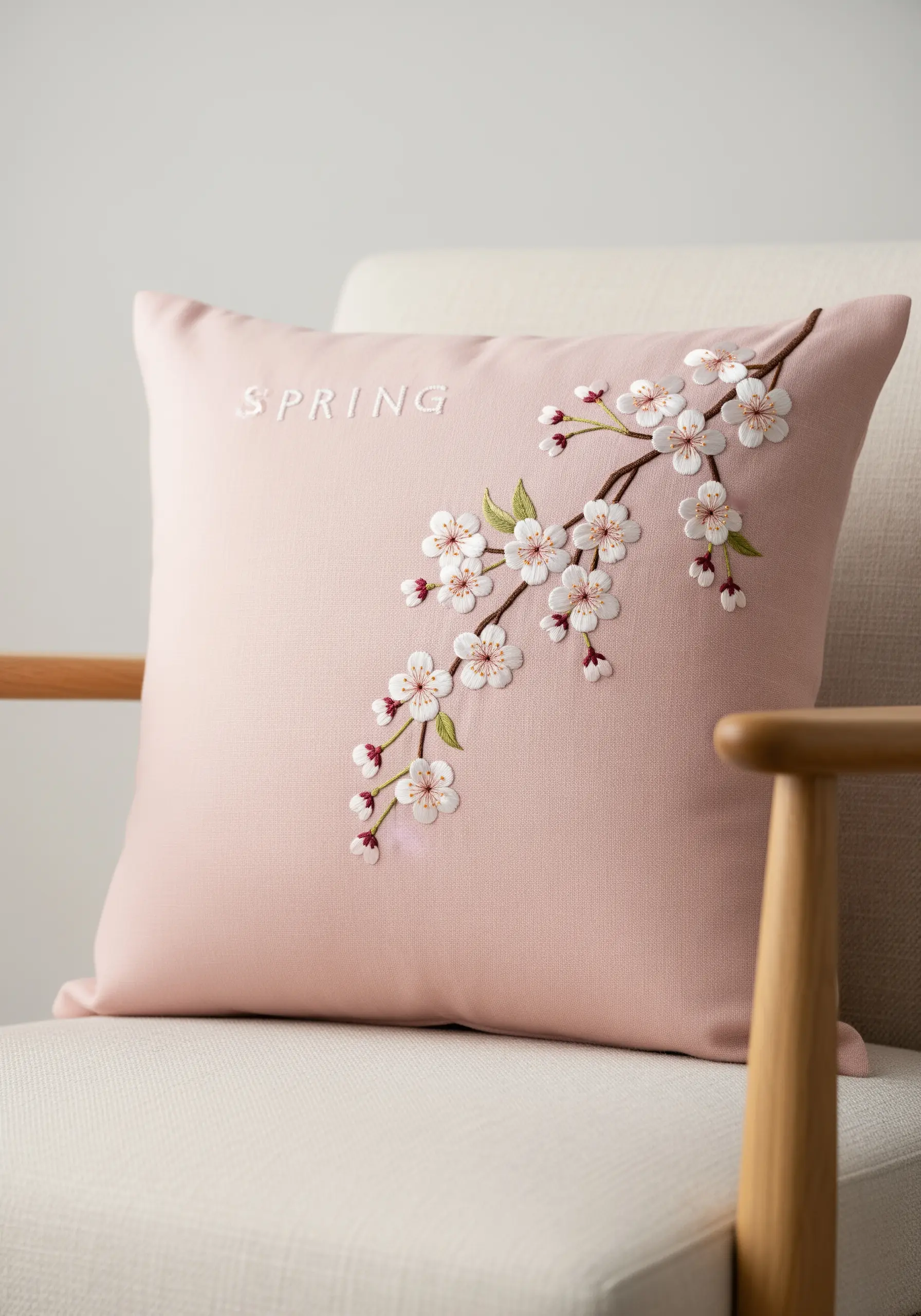
Give your spring florals a lifelike, three-dimensional quality by using stumpwork techniques or detached chain stitches for the petals.
This method lifts the blossoms from the pillow’s surface, creating delicate shadows and a dynamic texture that flat satin stitches can’t replicate.
For the slender branches, use a whipped backstitch to create a smooth, raised line that looks more organic than a standard stem stitch.
Keep the lettering minimal and elegant with a simple, single-strand backstitch—it adds a bespoke touch without competing with the botanical art.
2. Vibrant Tulip Fields with Color Blocking
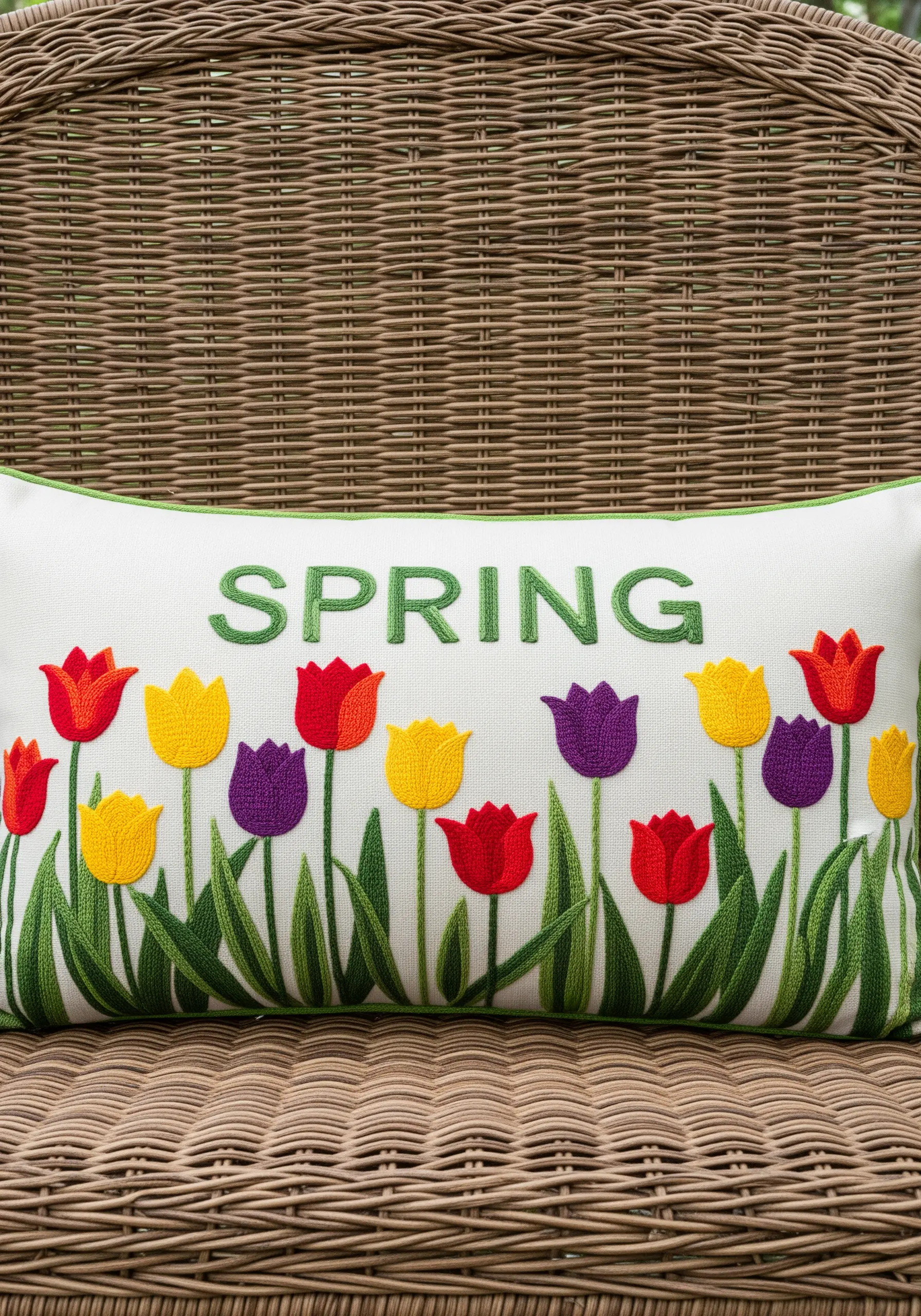
Achieve a bold, graphic look for spring tulips by focusing on impeccable color blocking with a dense satin stitch.
To keep your satin stitches perfectly smooth and uniform on a large shape, first outline the petal with a split stitch. This raised edge acts as a guide and prevents the fill stitches from looking uneven.
Vary the direction of your stitches slightly for each tulip to create a subtle sense of movement across the pillow.
Use a contrasting color for the piped edging to frame the design and give your pillow a professional, finished look.
3. Daffodil Mandala with Textured Centers
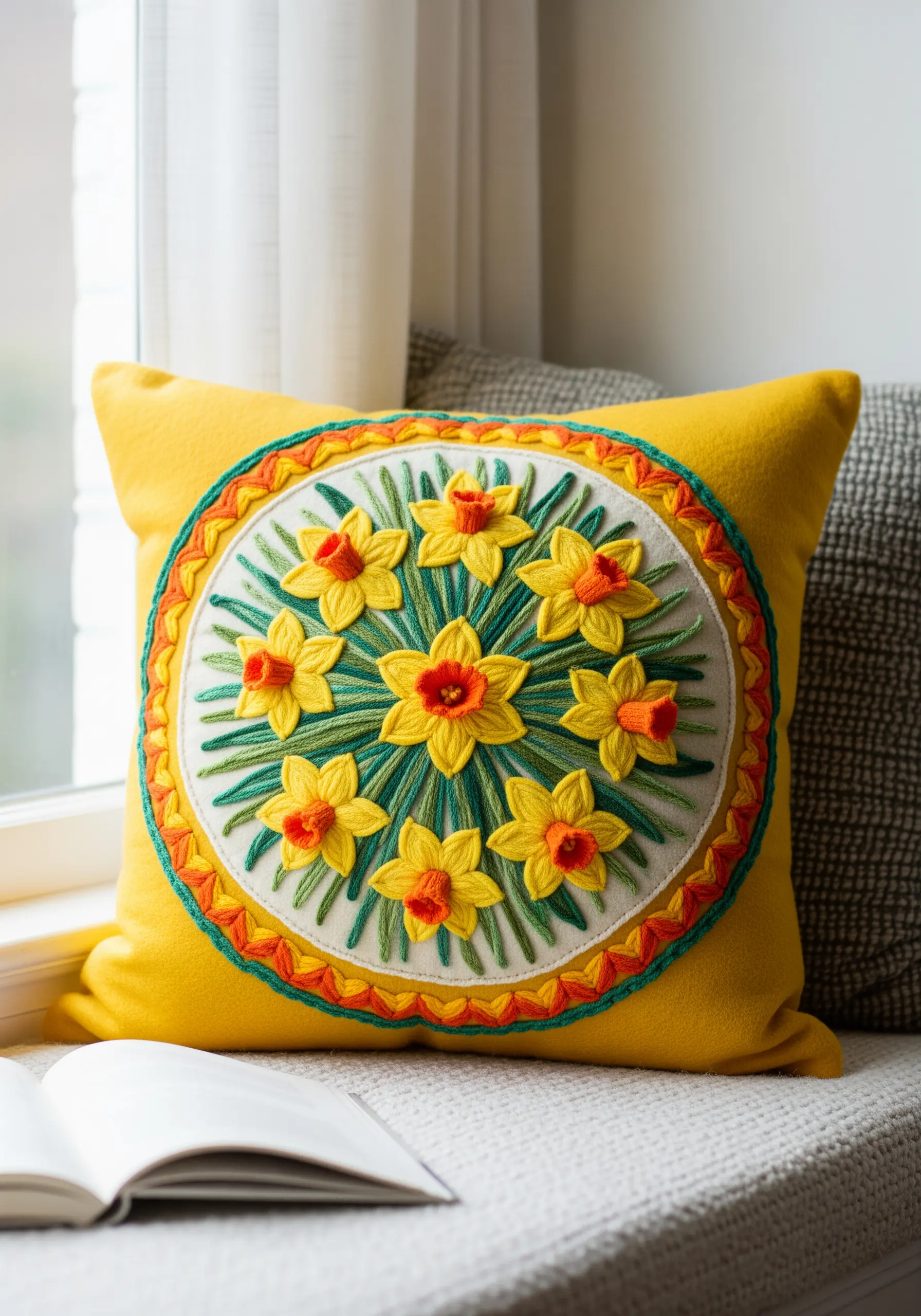
Transform a simple floral motif into a captivating mandala by arranging your daffodils in a radial pattern.
For the trumpet-shaped centers, create a highly textured effect using tightly packed French knots or bullion knots. This contrasts beautifully with the smooth satin-stitched petals.
Build the border with layered stitches like chevron or chain stitch in graduating colors to create a sense of depth and frame the central design.
This approach turns a common spring flower into a sophisticated, almost meditative piece of textile art.
4. April Showers with a Pop of Color
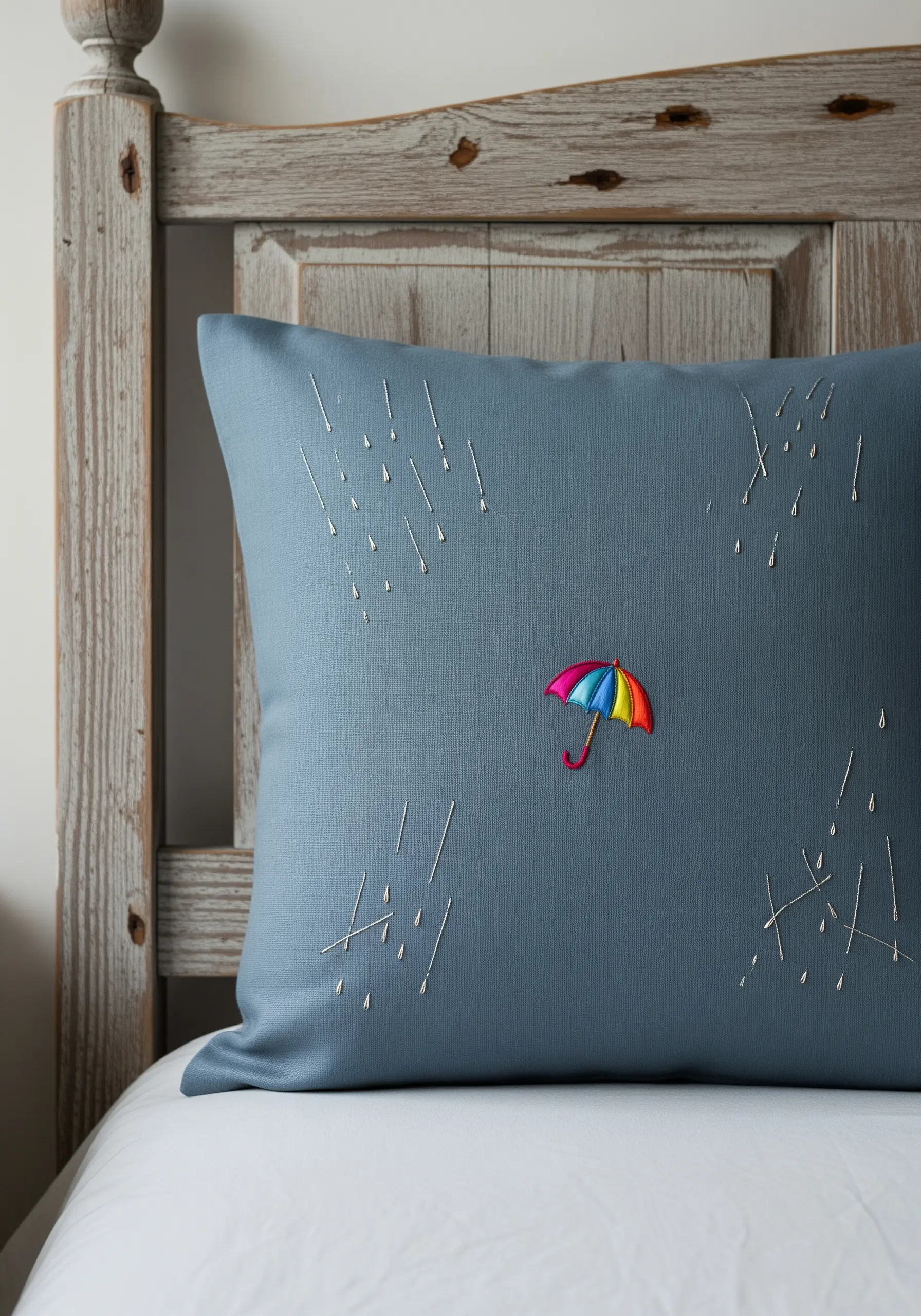
Capture the feeling of a spring shower with minimalist stitches that tell a story.
Use single, long straight stitches with a metallic silver or off-white thread to represent raindrops. Vary the length and angle of each stitch to create a sense of organic movement.
Contrast the sparse, delicate raindrops with a single, vibrant focal point—like a tiny umbrella filled with bold, beautiful satin stitch.
The power of this design lies in its use of negative space, which allows the small embroidered motif to make a significant impact.
5. Soft Textures for a Nursery Lamb
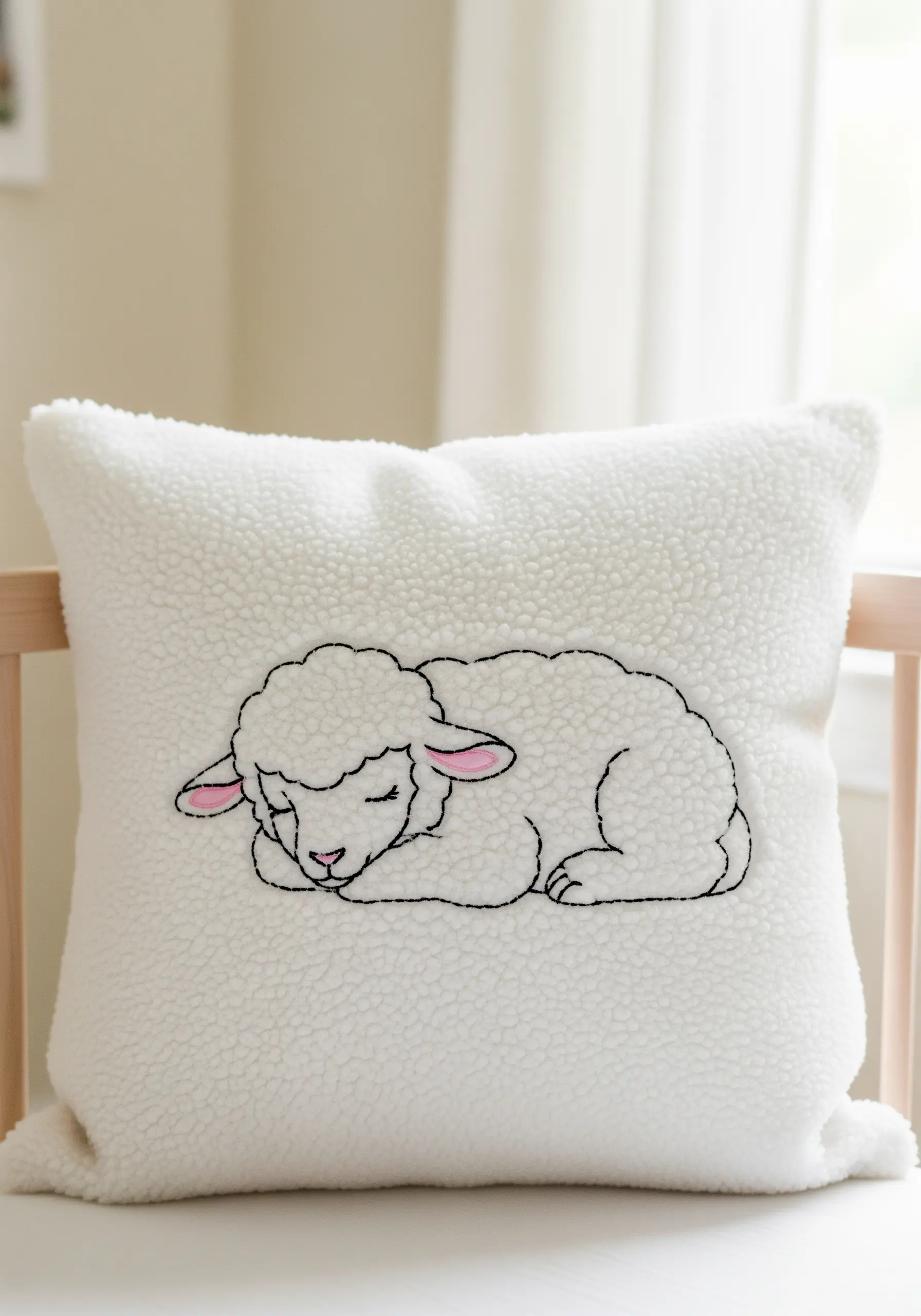
When embroidering on highly textured fabrics like sherpa or bouclé, choose a simple line-art design and a thicker thread.
A basic backstitch or stem stitch using all six strands of floss will ensure your outlines don’t get lost in the fabric’s pile.
Use a water-soluble stabilizer on top of the fabric while you stitch. This provides a smooth surface to draw your pattern on and prevents the loops of the fabric from snagging your thread.
The combination of a soft, cuddly fabric with a simple, clean stitch creates a charming and nursery-friendly textile.
6. Lavender and Bee with Delicate Detail
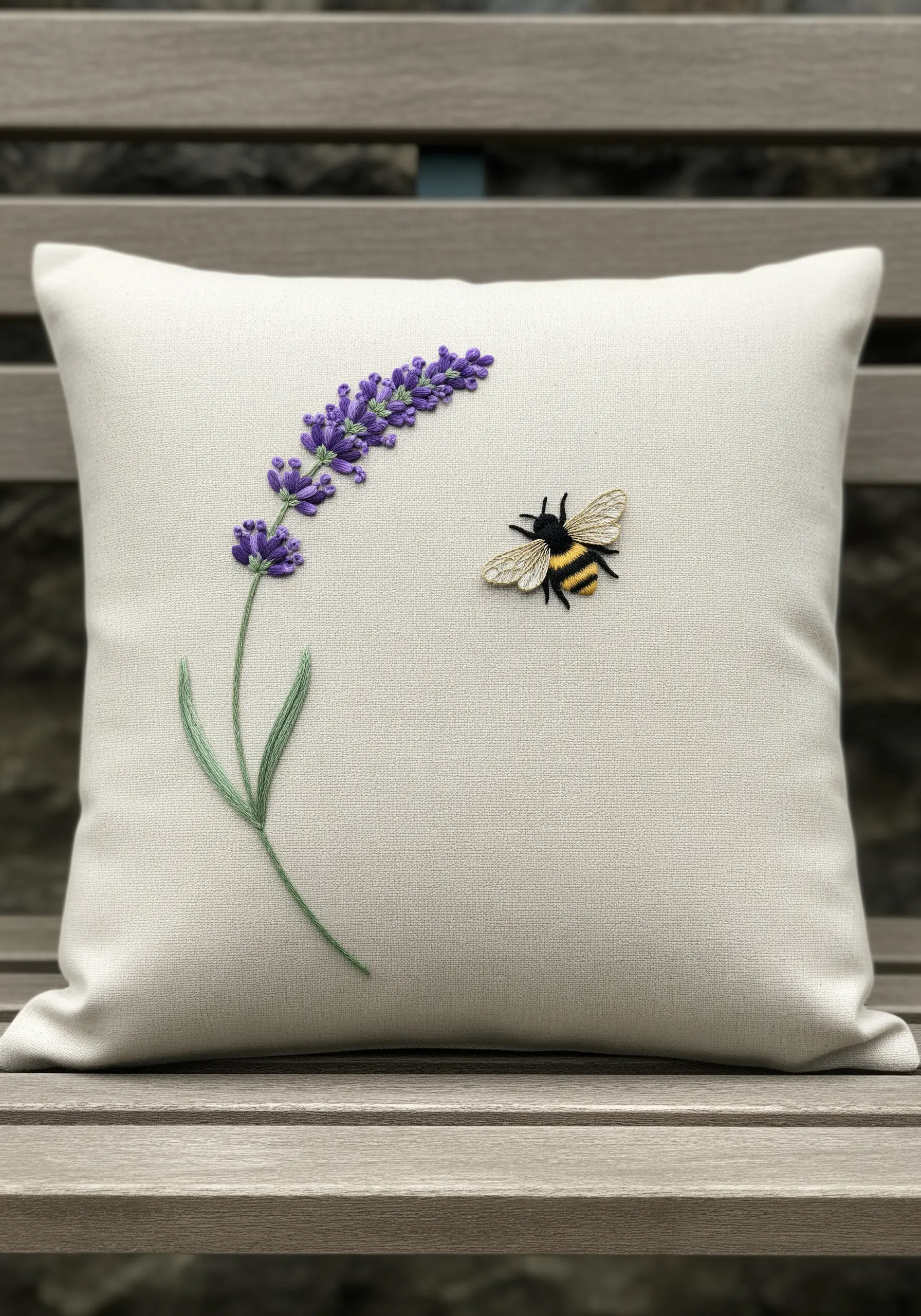
Create realistic lavender florets using layered lazy daisy stitches or very small French knots clustered along the stem.
For the bee, use thread painting (long and short stitch) to blend yellow, black, and white threads for a soft, fuzzy texture. This adds a level of realism that solid colors cannot.
Use a single strand of gray or translucent thread to stitch the wings, giving them a delicate, almost invisible quality.
This pairing of two simple motifs creates a classic, calming botanical scene perfect for any room.
7. Hummingbird Gradients with Thread Painting
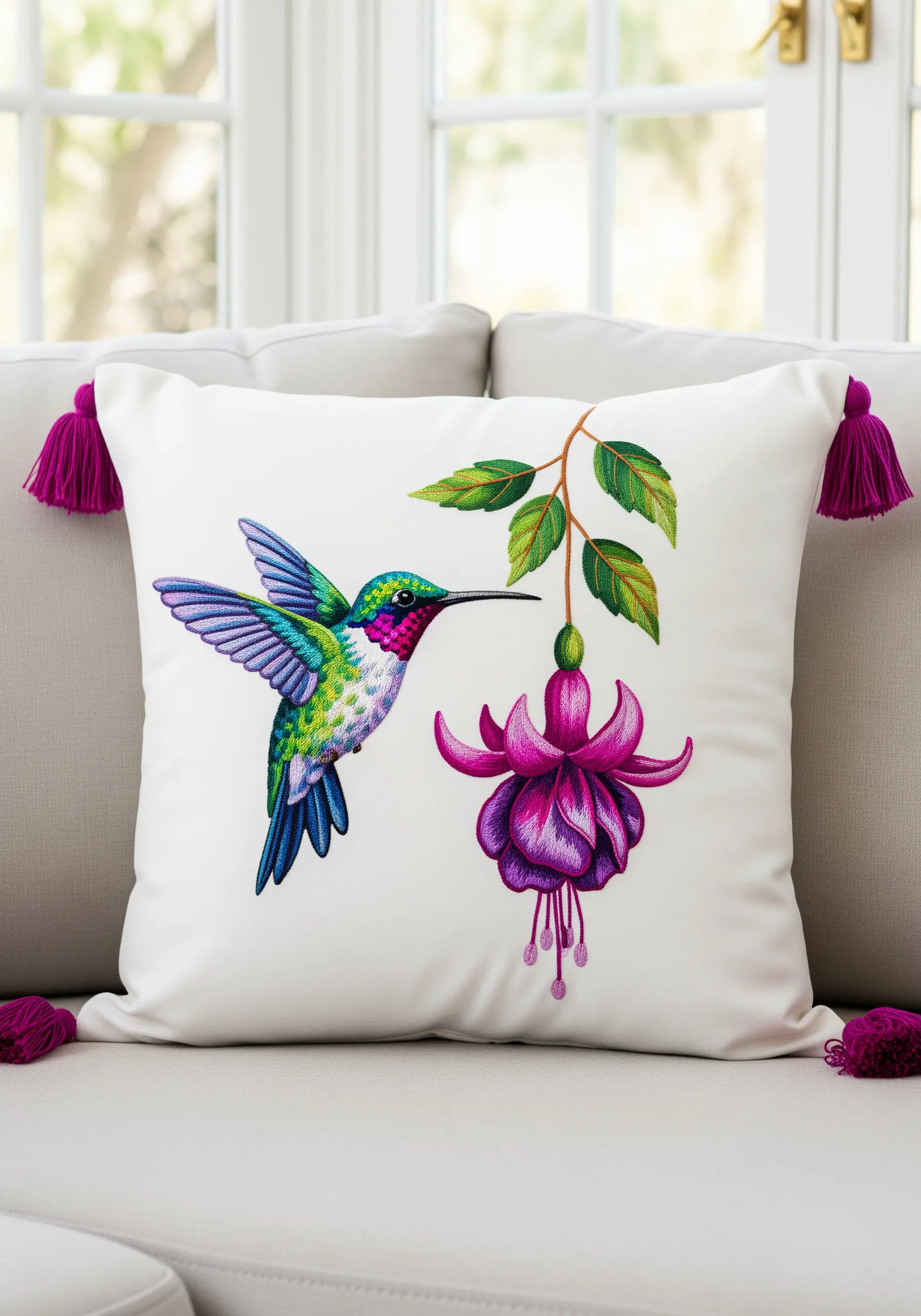
Capture the iridescent quality of a hummingbird’s feathers by mastering the art of color blending with long and short stitch.
Work with a single strand of thread at a time and select at least three shades for each color section—a light, a mid-tone, and a dark.
Angle your stitches to follow the natural contours of the bird’s body and wings. This directional stitching is the key to creating realistic flow and movement.
Adding vibrant tassels that match the fuchsia flower is a brilliant finishing touch that ties the entire pillow design together.
8. Sculptural Sunflower for Summer Sun
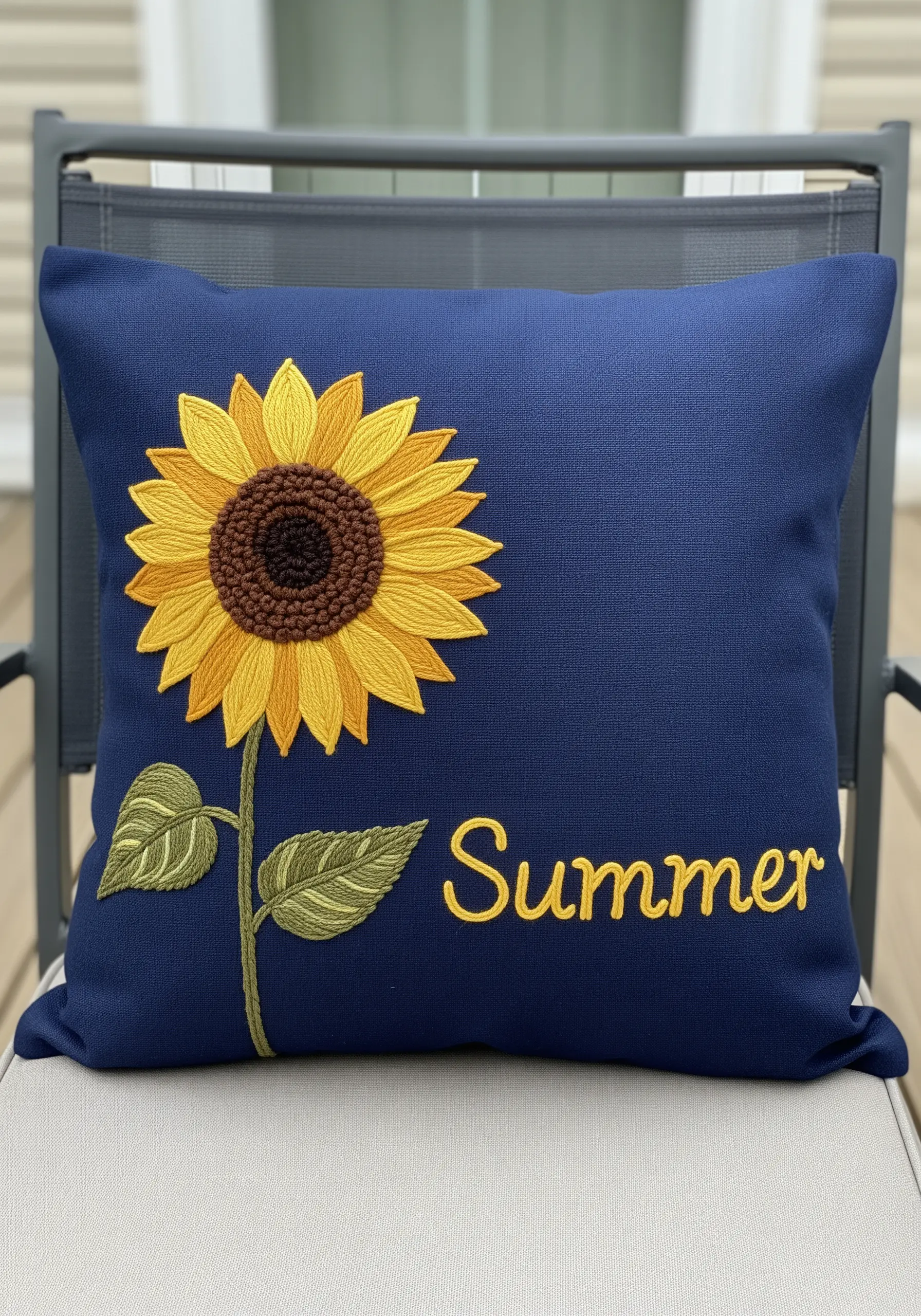
Give your sunflower a powerful sense of dimension by using a combination of raised embroidery techniques.
For the center, fill the area with dense Turkey work and trim the loops short to create a fuzzy, pollen-like texture. This is far more impactful than flat French knots.
Stitch the petals with a long-and-short stitch, but first, lay down a base of felt padding or several layers of satin stitch underneath. This creates a raised, sculptural effect.
The contrast between the fuzzy center and the smooth, raised petals makes the entire flower pop off the dark fabric.
9. Meditative Waves with Repetitive Stitches
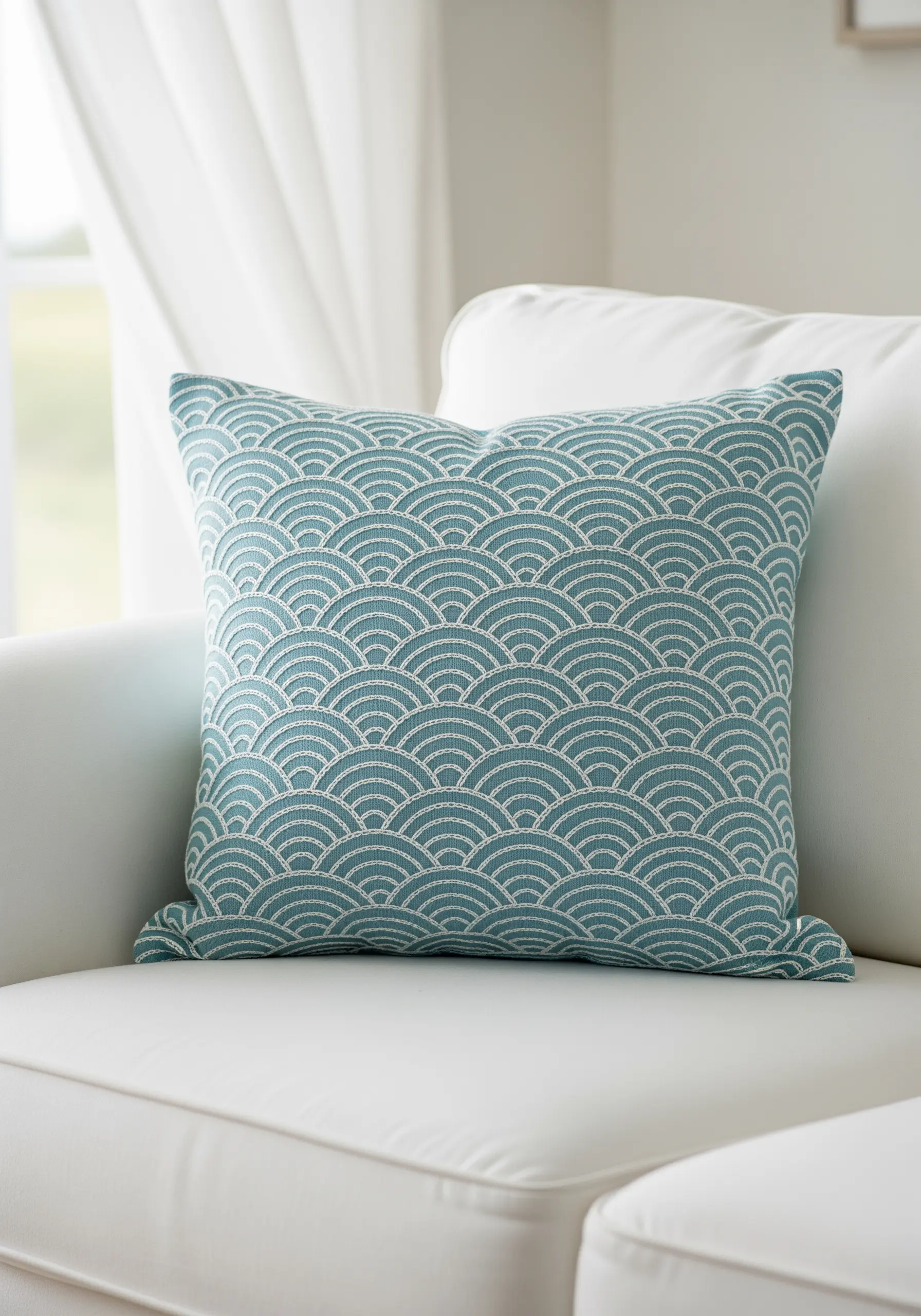
Create a calming, abstract design by filling your entire pillow cover with a repetitive geometric pattern like the Japanese Seigaiha wave.
A simple backstitch or split stitch is all you need. The impact comes from the precision and consistency of your stitches across the whole surface.
To ensure perfect spacing, use a water-soluble fabric pen and a compass or circular stencil to draw your guidelines before you begin.
Choosing a monochrome or two-tone color palette gives this nature-inspired pattern a modern, sophisticated feel.
10. Layered Monstera Leaves on Velvet
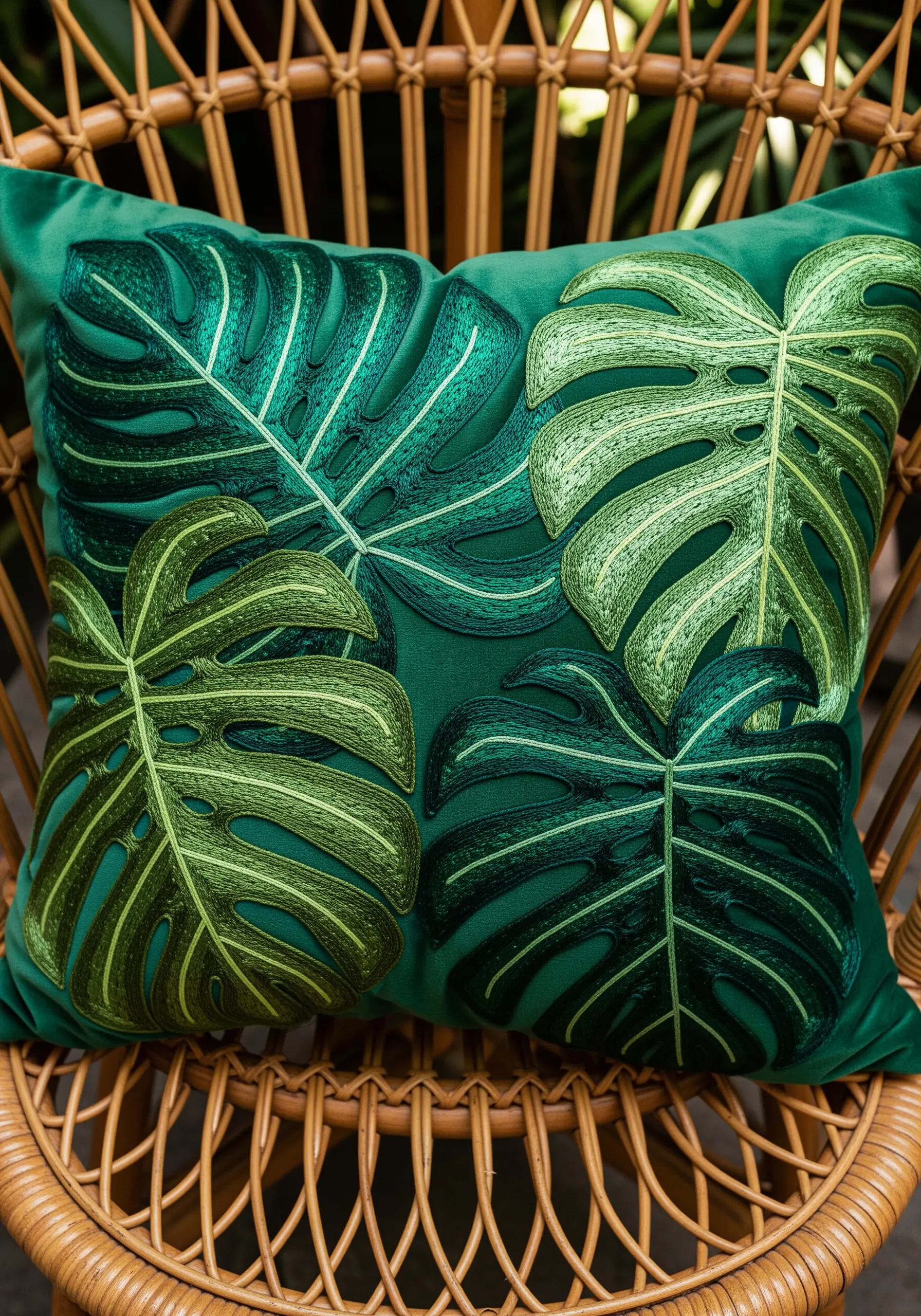
Create a lush, tropical feel by layering monstera leaves, stitching each one as a separate element to build depth.
Embroidering on a rich fabric like velvet requires a stabilizer on the back to prevent puckering. The sheen of the velvet will beautifully contrast with the matte cotton floss.
Use a raised satin stitch or outline your leaves with a thick chain stitch to help them stand out against the dark, textured background.
Varying the shades of green adds realism and prevents the design from looking flat. This is a perfect project for turning blank pillows into living room focal pieces.
11. Zesty Lemon Slice with Beaded Details
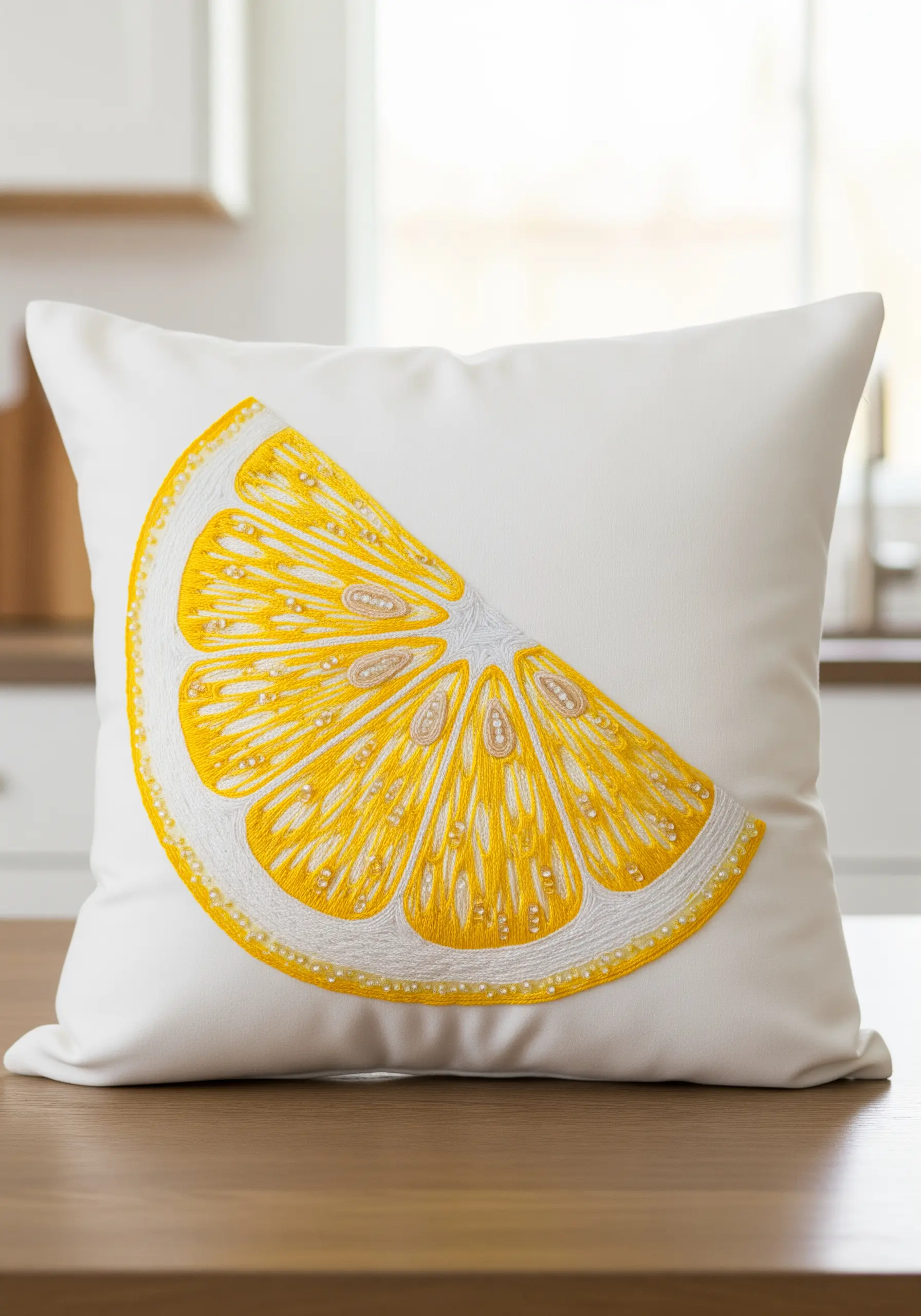
Add a touch of sparkle and texture to a simple fruit motif by incorporating beads into your embroidery.
Stitch the fleshy segments of the lemon using a directional satin stitch, but leave small gaps where you can add tiny seed beads to mimic juice vesicles.
For the pith and rind, use couching—laying down a thicker thread or yarn and tacking it into place with a thinner thread. This creates a clean, bold outline.
The combination of smooth floss, thick couched lines, and delicate beads creates a multi-sensory piece that is visually and texturally interesting.
12. Scattered Wildflower Meadow
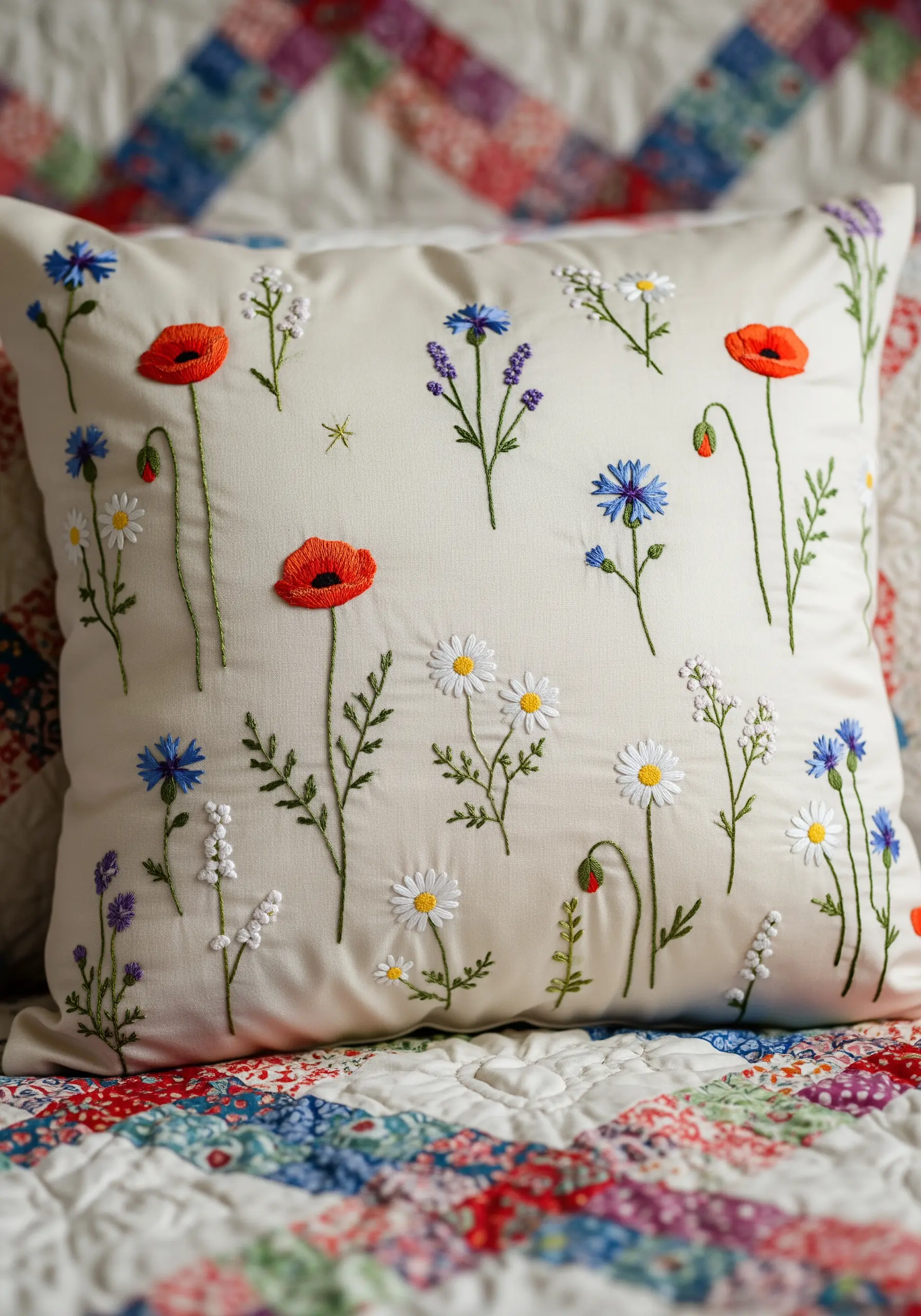
Create the feeling of a summer meadow by scattering small, individual wildflowers across your pillow instead of arranging them in a formal bouquet.
Use a variety of stitches to give each flower type its own personality: woven wheel stitches for poppies, lazy daisies for chamomile, and French knots for smaller filler blossoms.
Vary the height and direction of the stems using a simple backstitch to create a natural, windswept look.
This ‘pattern-less’ approach feels organic and is very forgiving, making it one of those wildflower hoop art projects that feels truly personal.
13. Magical Fireflies with Specialty Threads
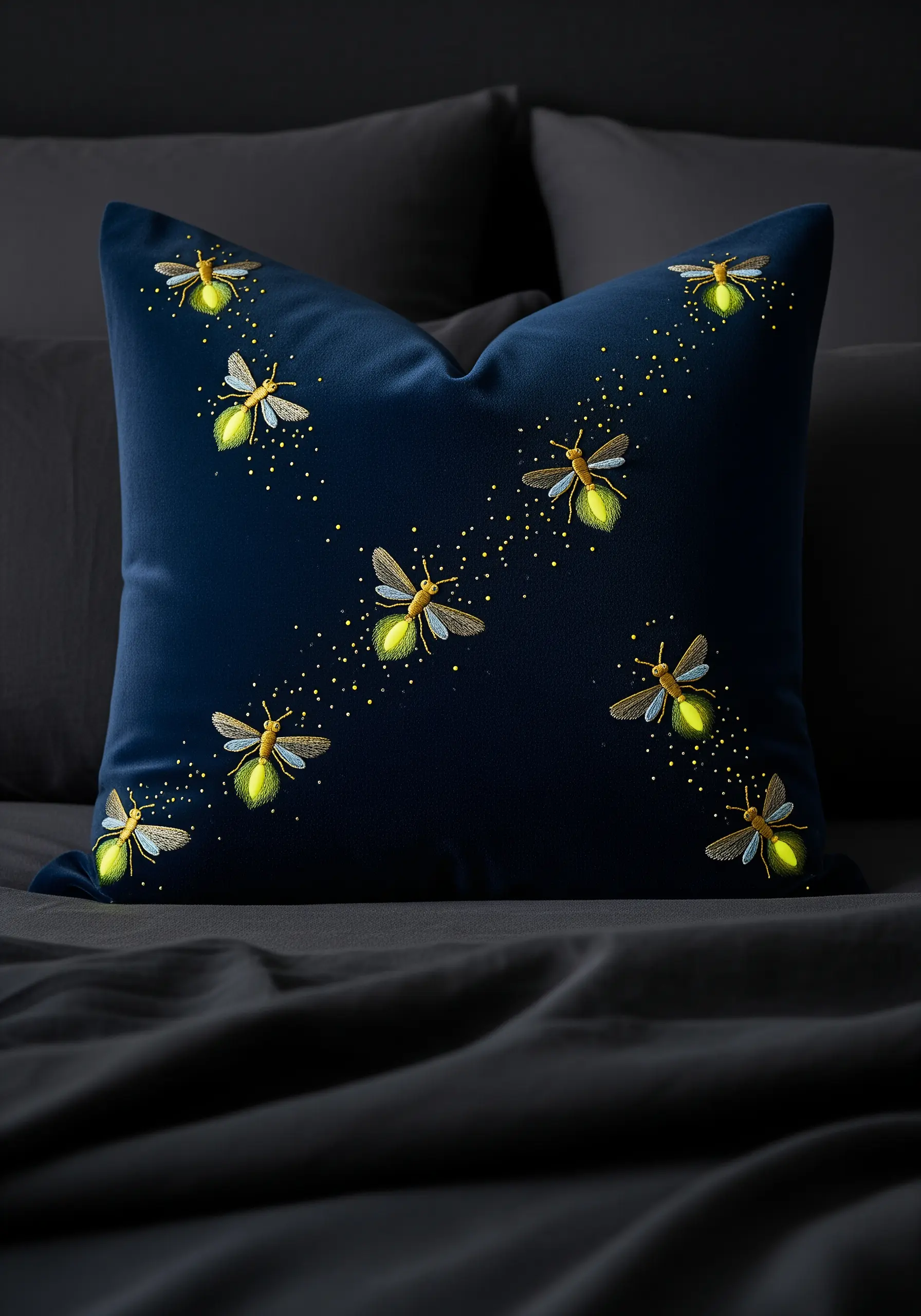
Capture the magic of a summer night by using glow-in-the-dark or fluorescent thread for the glowing part of your fireflies.
Use a dense satin stitch or a cluster of French knots for the glowing abdomen, and charge it under a light for a few minutes to see it come to life in the dark.
For the wings, use a single strand of metallic silver or pearlescent thread to suggest translucency and shimmer.
Scatter tiny gold French knots or star stitches around the fireflies to create a sparkling trail, enhancing the magical effect on a dark velvet or linen base.
14. Textured Coral Reef Scene
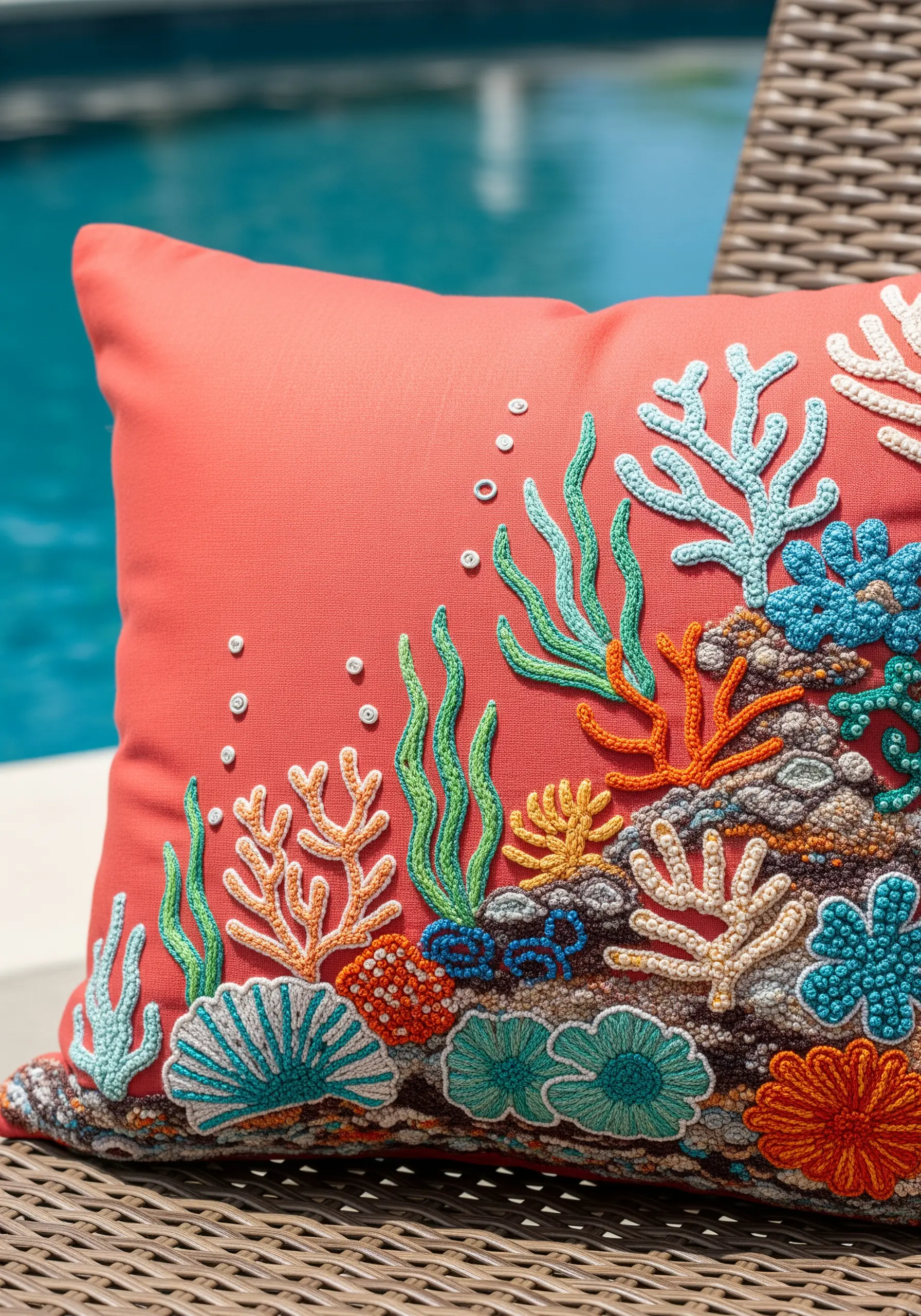
Build an underwater world by focusing entirely on textural stitches to create a vibrant coral reef.
This project is a perfect sampler for advanced stitches. Use bullion knots for tube corals, woven picot stitch for fan shapes, and layered cast-on stitches for anemones.
Don’t be afraid to use chunky yarn or thick cotton perle alongside your standard floss to create variation in scale and texture.
The dense, clustered composition makes the pillow a tactile masterpiece, inviting touch and closer inspection of your intricate stitchwork.
15. Autumn Leaves with Variegated Thread

Effortlessly capture the color transitions of autumn leaves by using variegated embroidery floss.
A single strand of variegated thread contains multiple colors, which will naturally create subtle shifts and gradients as you stitch. This is especially effective with a long and short fill stitch.
Outline each leaf with a darker, solid color using a split stitch. This defines the shape and makes the variegated fill pop, especially on a textured fabric like corduroy.
Arrange the leaves in a cascading pattern to mimic them gently falling, creating a design that has beautiful movement and flow.
16. Chunky Plaited Pumpkins
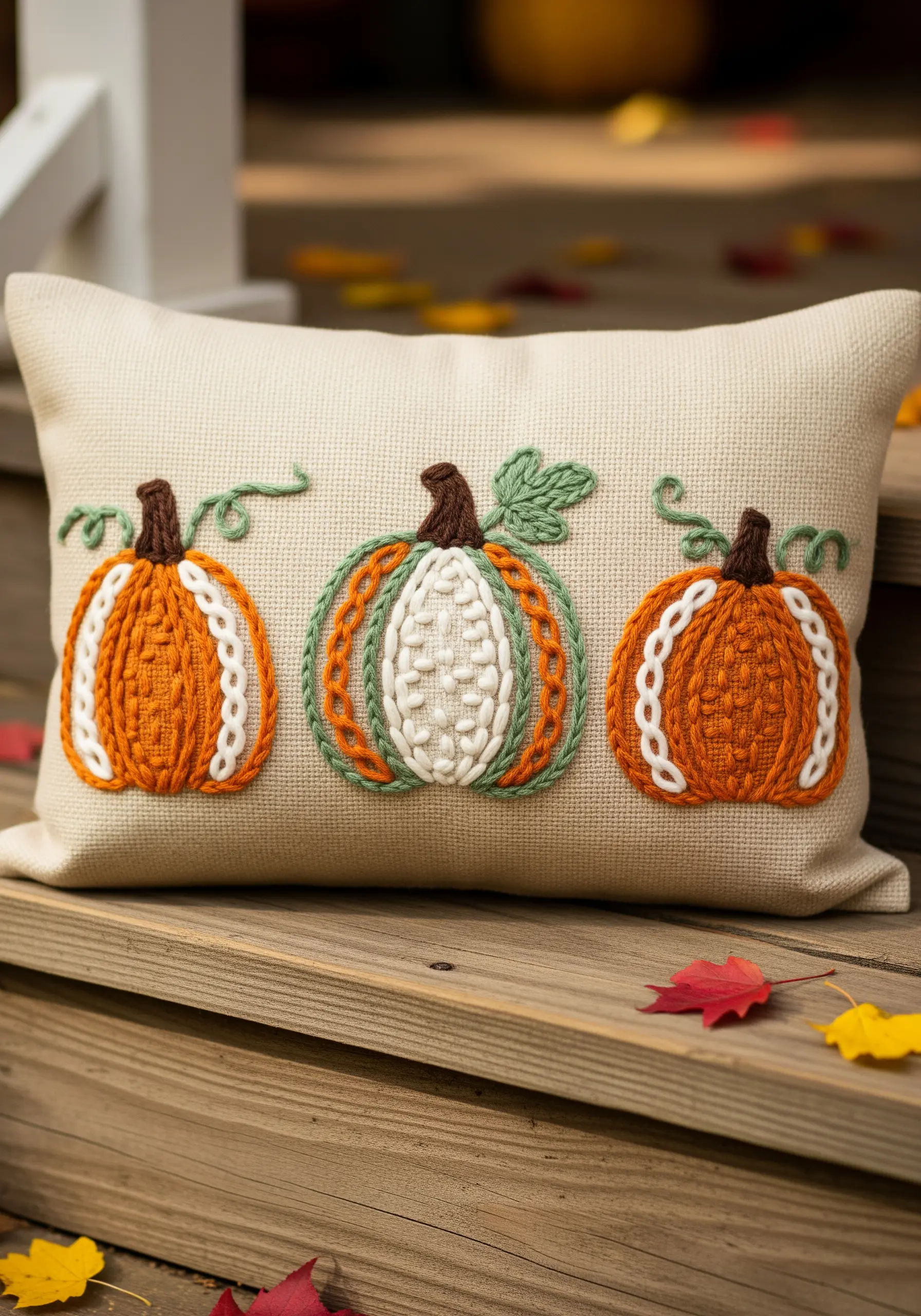
Create bold, graphic pumpkins with incredible texture by using chunky yarn and couching techniques.
Instead of filling the pumpkin sections with traditional stitches, lay down thick yarn or multiple strands of embroidery floss and tack them down with a contrasting, thinner thread.
For the central panel, use a woven stitch—like a basket weave—to create a completely different texture that draws the eye.
This rustic, highly textured style is perfect for farmhouse or cottage-inspired fall decor.
17. Realistic Fox with Fur Stitching
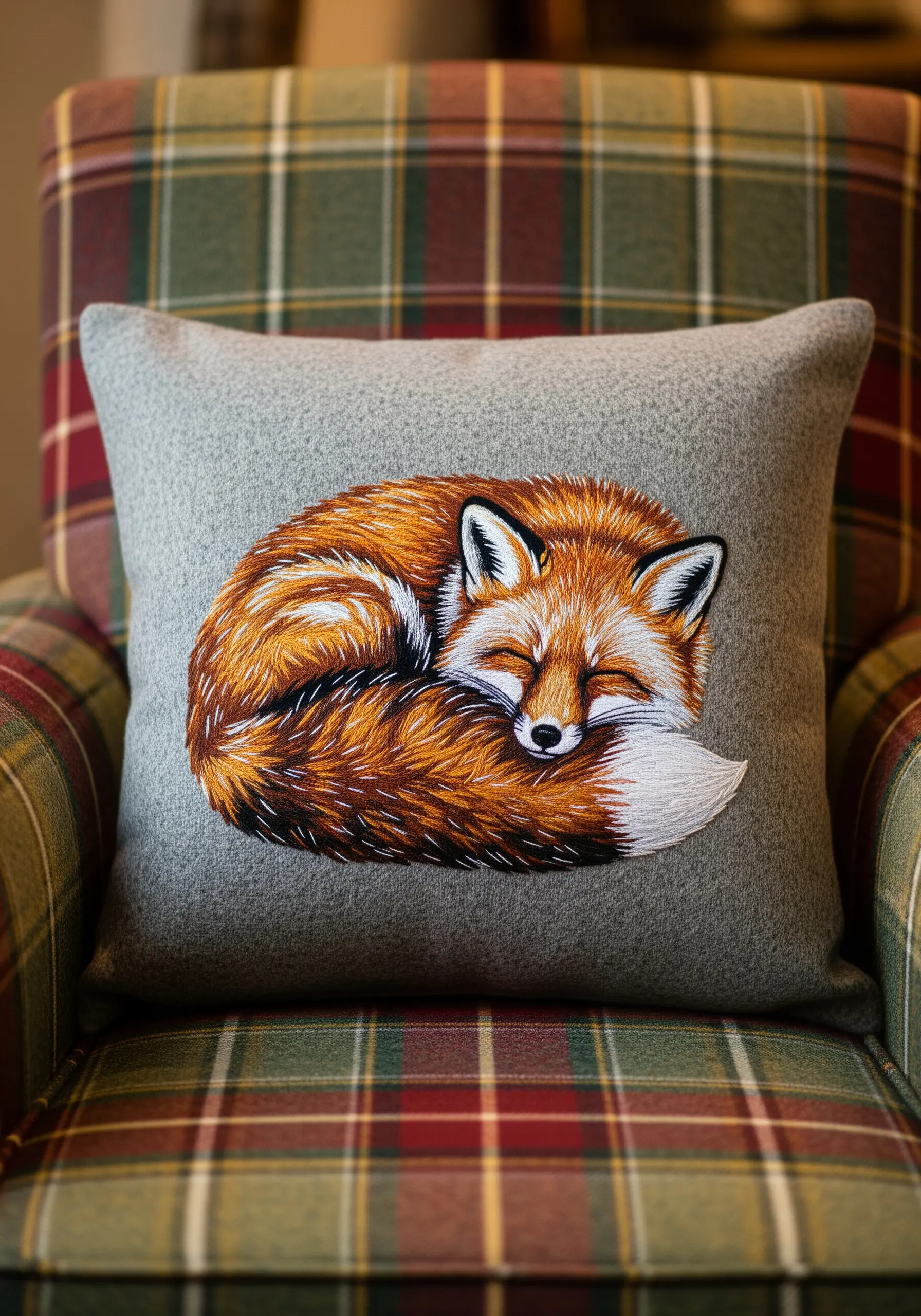
To embroider realistic fur, the key is layering directional long and short stitches with a single strand of floss.
Start with the darkest colors in the areas of shadow and gradually work your way to the lightest colors for the highlights. Always stitch in the direction that the fur would naturally grow.
Introduce a few different shades within the same color family—multiple oranges, browns, and creams—to give the fur depth and prevent it from looking flat.
For the finest details like whiskers, use a single strand of a stiff, metallic thread or even a synthetic filament to ensure they are crisp and delicate.
18. Minimalist Oak Branch for Understated Autumn
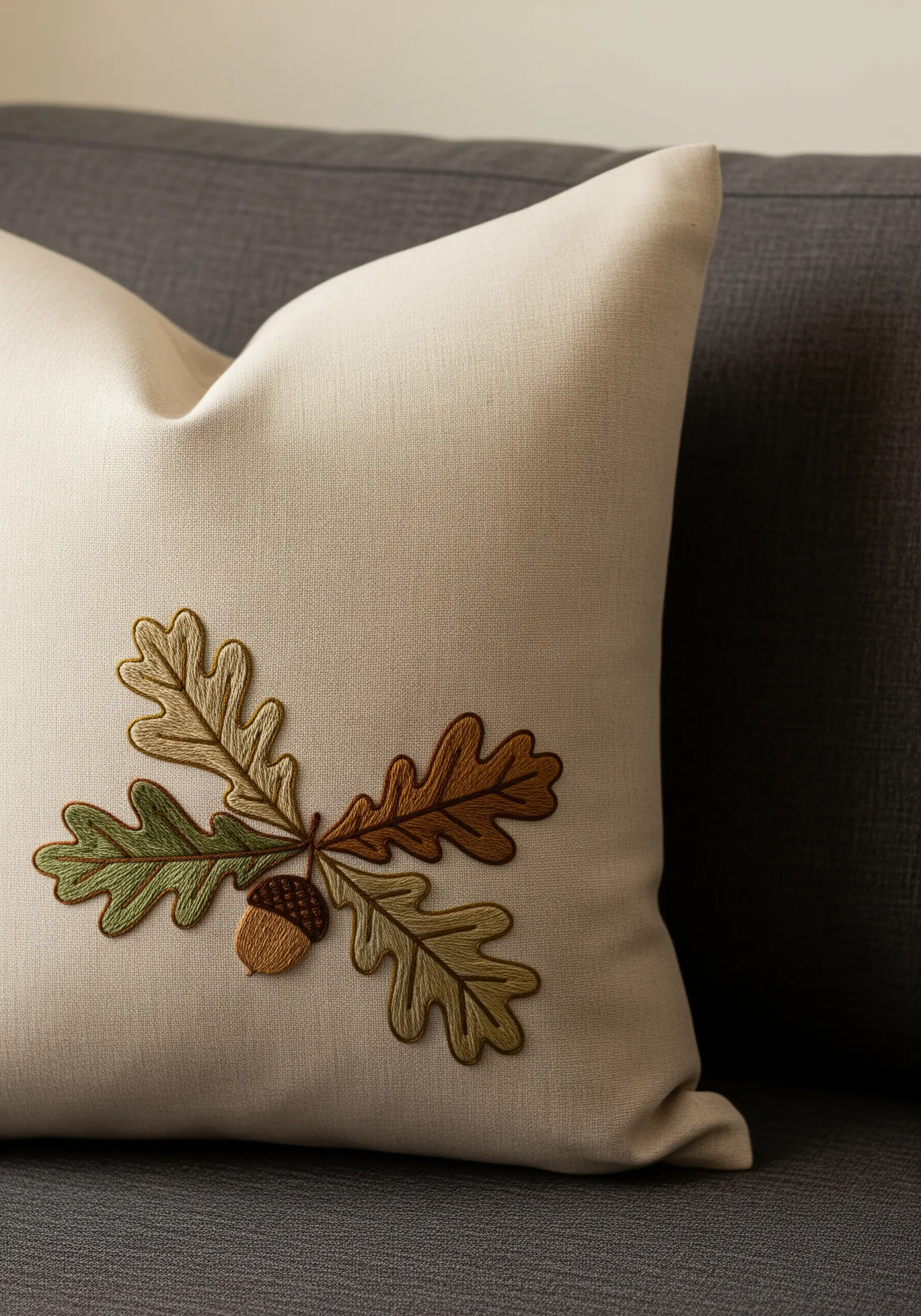
For a modern, understated take on autumn decor, focus on a simple, elegant outline of an oak branch.
Use a satin stitch for the fill but keep the color palette muted and earthy. Combining mossy green, tan, and rust creates a sophisticated look.
The outline is critical here. A perfectly executed split stitch or a fine chain stitch in a dark brown will give your shapes a clean, defined edge.
This design proves that you don’t need a riot of color to evoke a season; sometimes a subtle earth-tone palette is more powerful.
19. Beaded and Sequined Lunar Surface
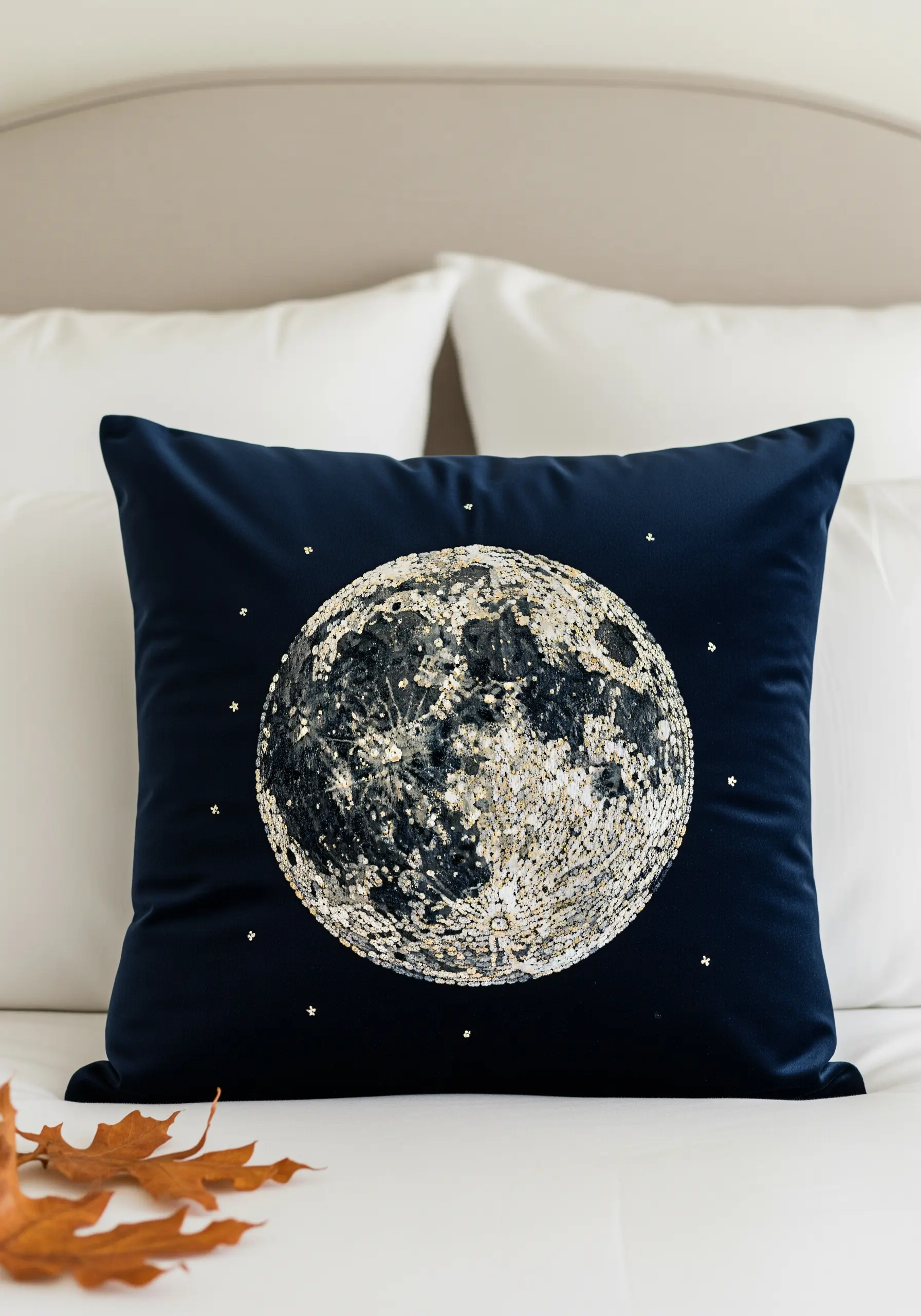
Recreate the cratered, shimmering surface of the moon using a mix of beads, sequins, and metallic threads.
Lay down a base of gray and white thread using random fill stitches to map out the lights and shadows. Don’t worry about perfection; texture is the goal.
Then, embellish the surface heavily. Use silver seed beads, flat sequins, and French knots with metallic floss to create sparkle and dimension.
This mixed-media approach on dark velvet fabric results in a luxurious, celestial design that beautifully catches the light.
20. Faux Cable Knit for Ultimate Coziness
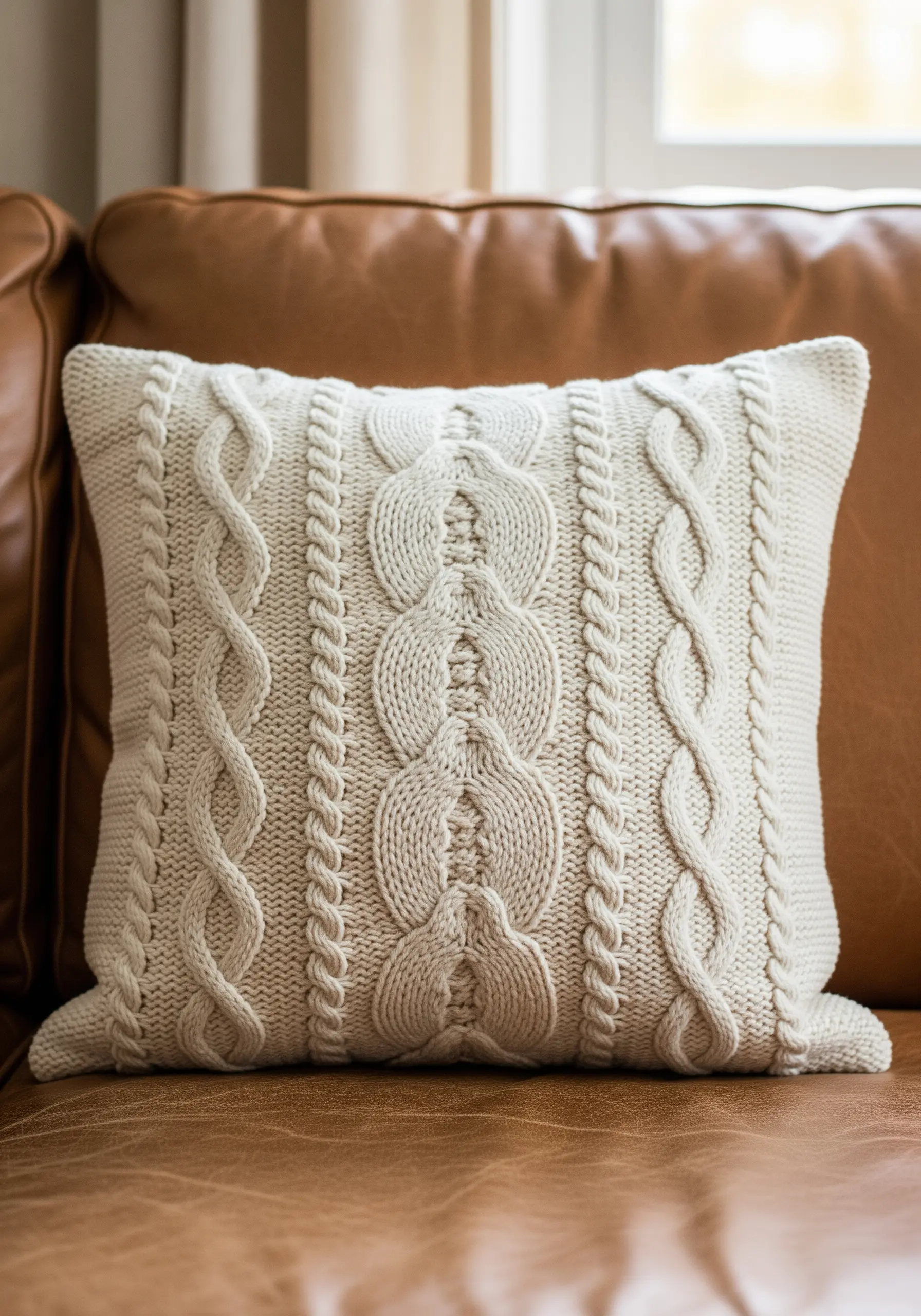
Mimic the texture of a cozy cable-knit sweater using clever, dimensional embroidery stitches.
The key is to use raised stitches. A braided chain stitch, raised stem stitch band, or Pekinese stitch can create rope-like cables that look convincingly knitted.
Work with a thick thread, like cotton perle or even fine yarn, on a fabric with a visible weave like canvas or linen. A tonal color scheme—stitching with cream thread on a cream pillow—enhances the illusion.
This is a sophisticated way to add incredible texture and a feeling of warmth to your decor without ever picking up knitting needles.
21. Woodland Mushrooms with Dimensional Caps
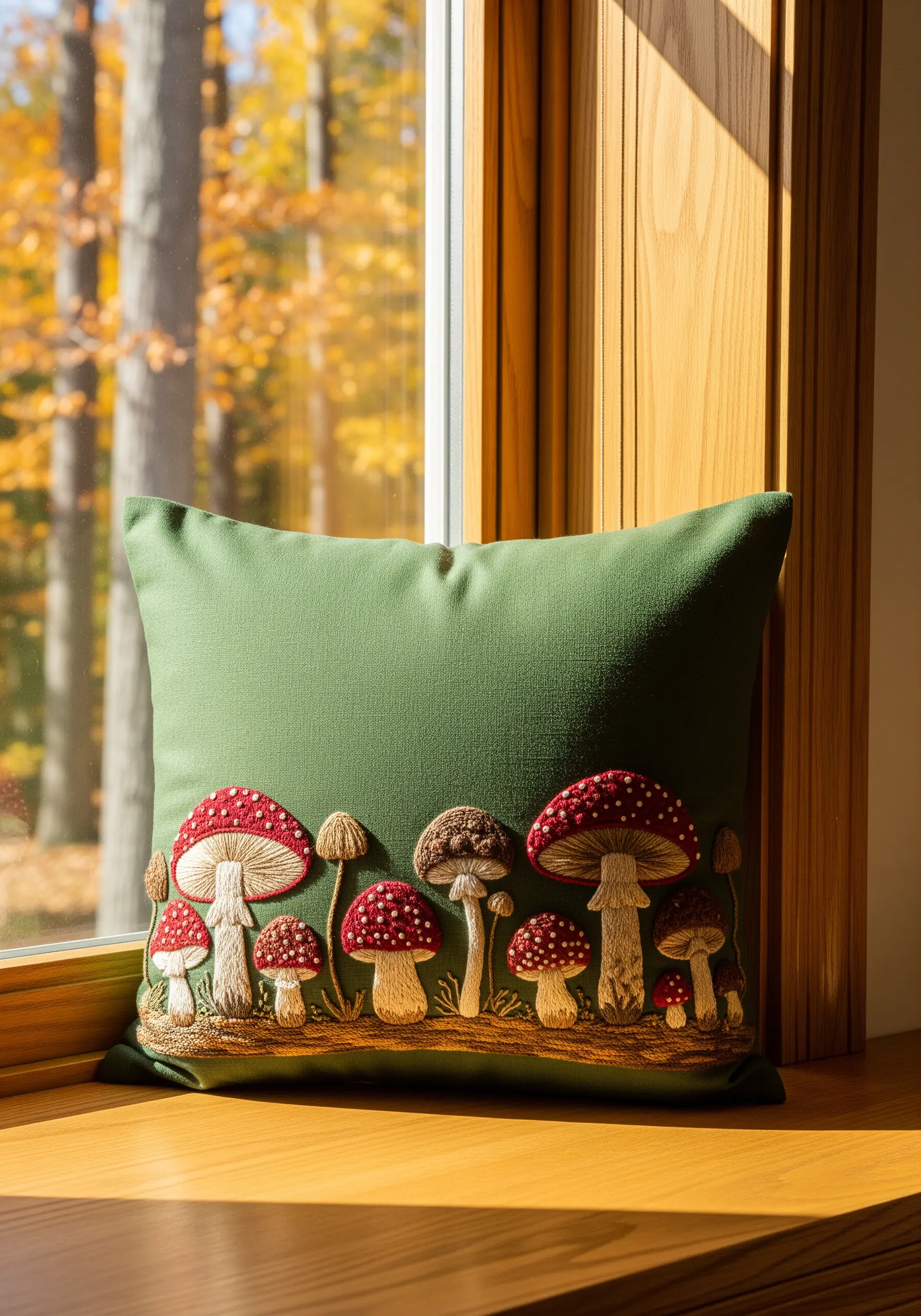
Create a charming woodland scene by giving your mushroom caps a realistic, rounded texture with French knots.
For the underside of the caps, use straight stitches radiating out from the stem to mimic the look of gills. This small detail adds a surprising amount of realism.
Incorporate Turkey work at the base of the mushrooms to create a bed of soft, realistic moss. Stitch it with a mix of green and brown threads for a more natural look.
This project is a masterclass in using different stitches to represent different natural textures all within one cohesive design.
22. Beaded Snowflake on Shimmering Satin
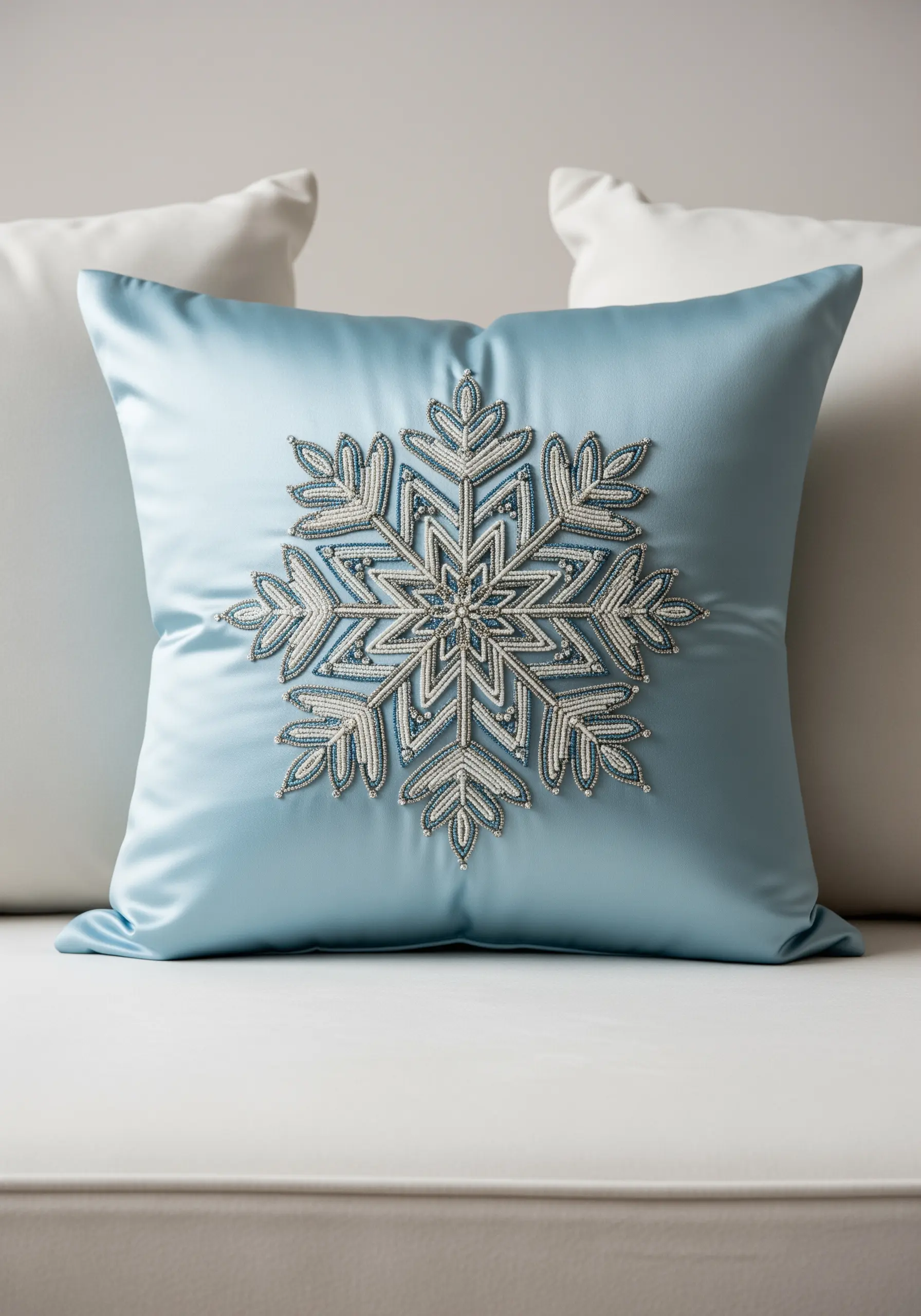
Elevate a classic winter snowflake by stitching it entirely with beads and metallic thread for an icy, crystalline effect.
First, transfer your snowflake pattern onto the fabric. Then, use a single strand of silver metallic thread to couch down lines of shimmering silver seed beads.
Incorporate larger, faceted beads at the intersections or tips of the snowflake to act as focal points and catch the light beautifully.
Stitching on a satin or silk pillow cover enhances the luxurious, frosty feel, making it a truly elegant piece of winter decor.
23. Winter Forest with French Knot Snow
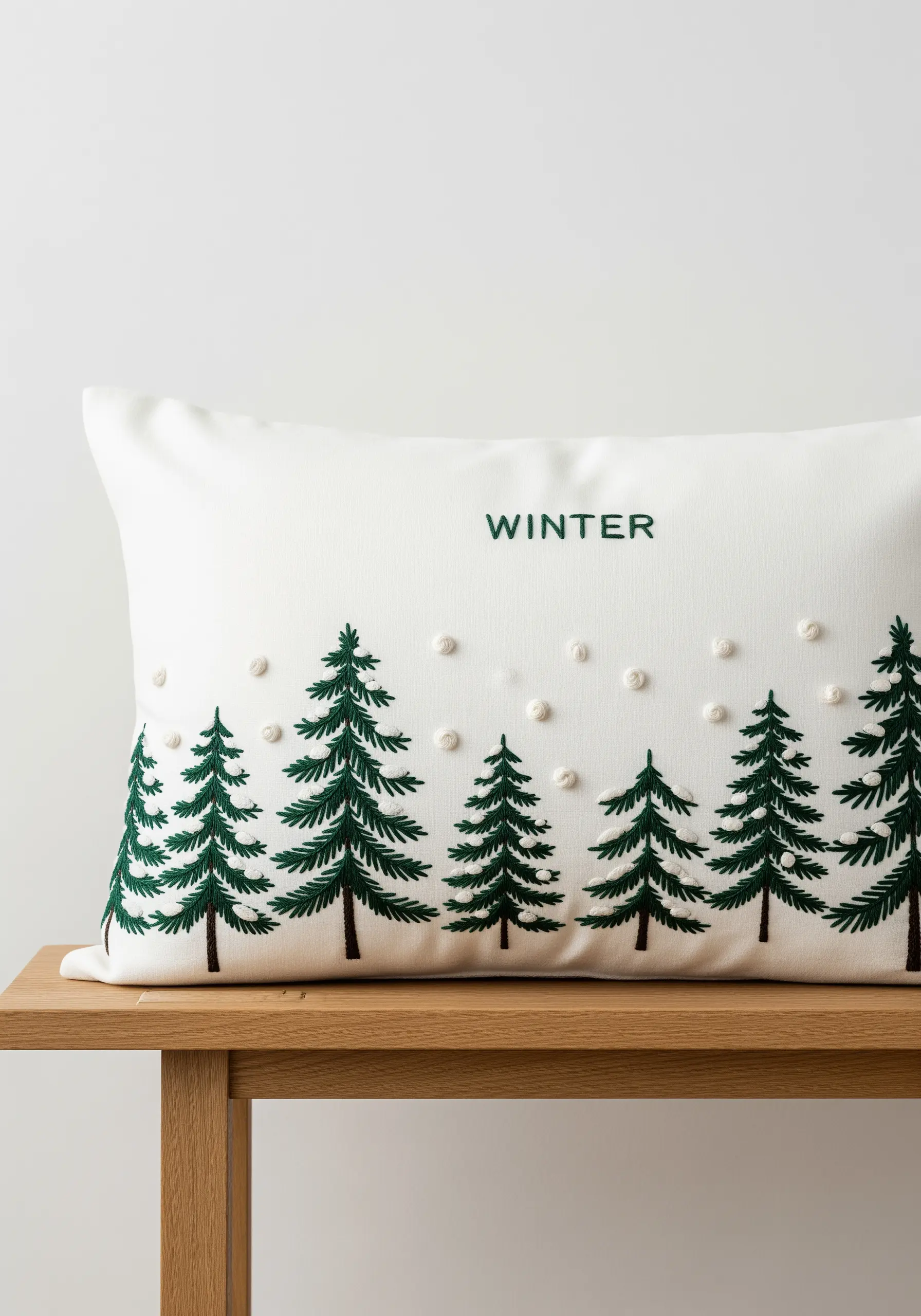
Create a serene winter forest scene with a simple but effective combination of two stitches.
For the pine trees, use a fishbone stitch for the boughs. The overlapping, angled stitches perfectly mimic the look of layered pine needles.
Instead of stitching individual snowflakes, suggest falling snow with scattered clusters of white or off-white French knots. Varying the size of the knots adds a lovely sense of depth.
This minimalist approach feels soft and serene, capturing the quiet peace of a winter’s day.
24. Cardinal in the Snow
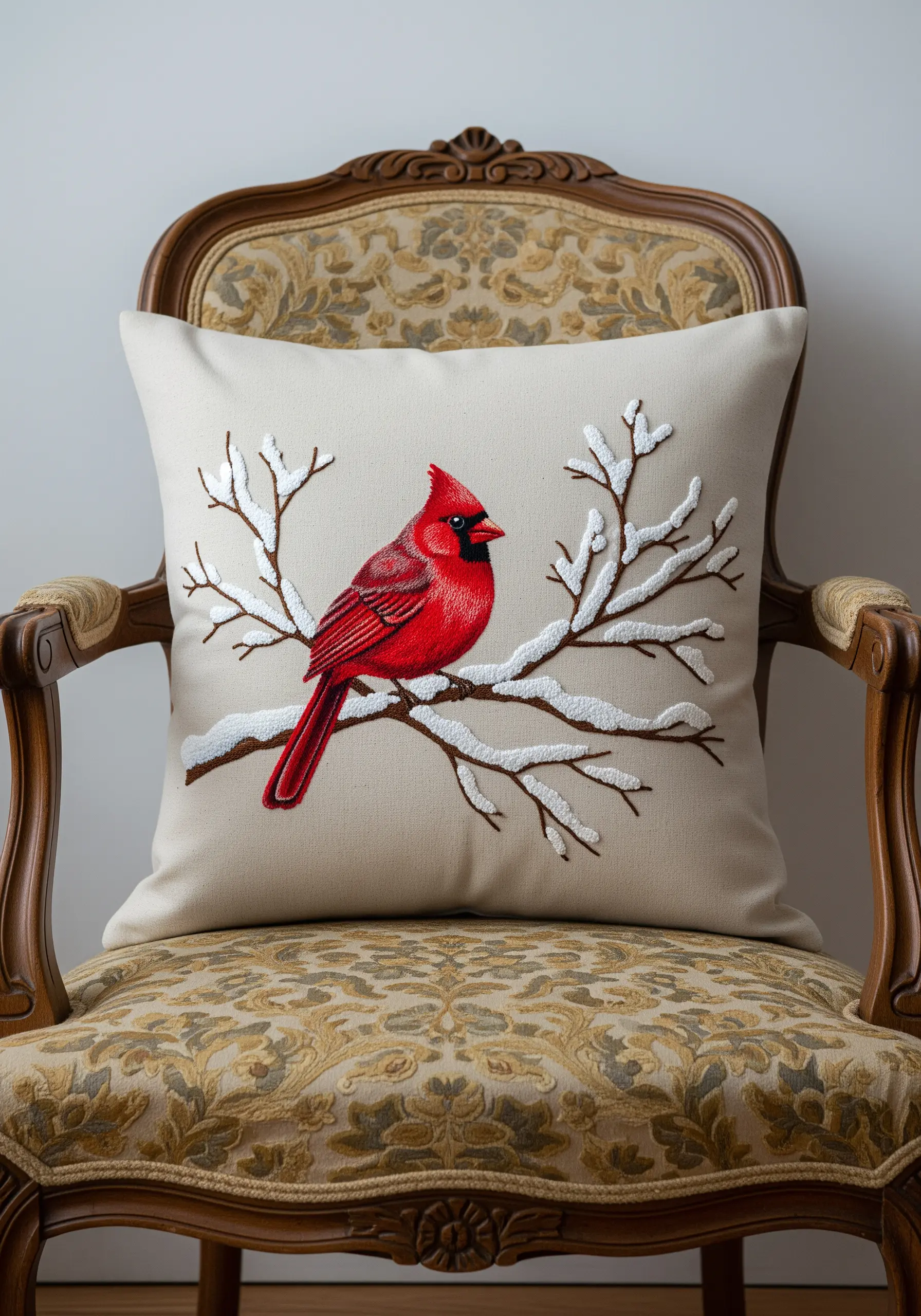
Make a vibrant cardinal stand out against a neutral background by using bold, clean satin stitches in multiple shades of red.
To create a fluffy, just-fallen snow effect on the branches, use Turkey work with white thread and leave the loops uncut. This creates a soft, dimensional texture that looks much more realistic than flat stitches.
For the bird’s body, make sure your long and short stitches follow the direction of the feathers to create a sleek, natural look.
The high contrast between the brilliant red of the bird and the soft white of the snow on a neutral linen base creates a striking winter composition.
25. Woven Holly Wreath with 3D Berries
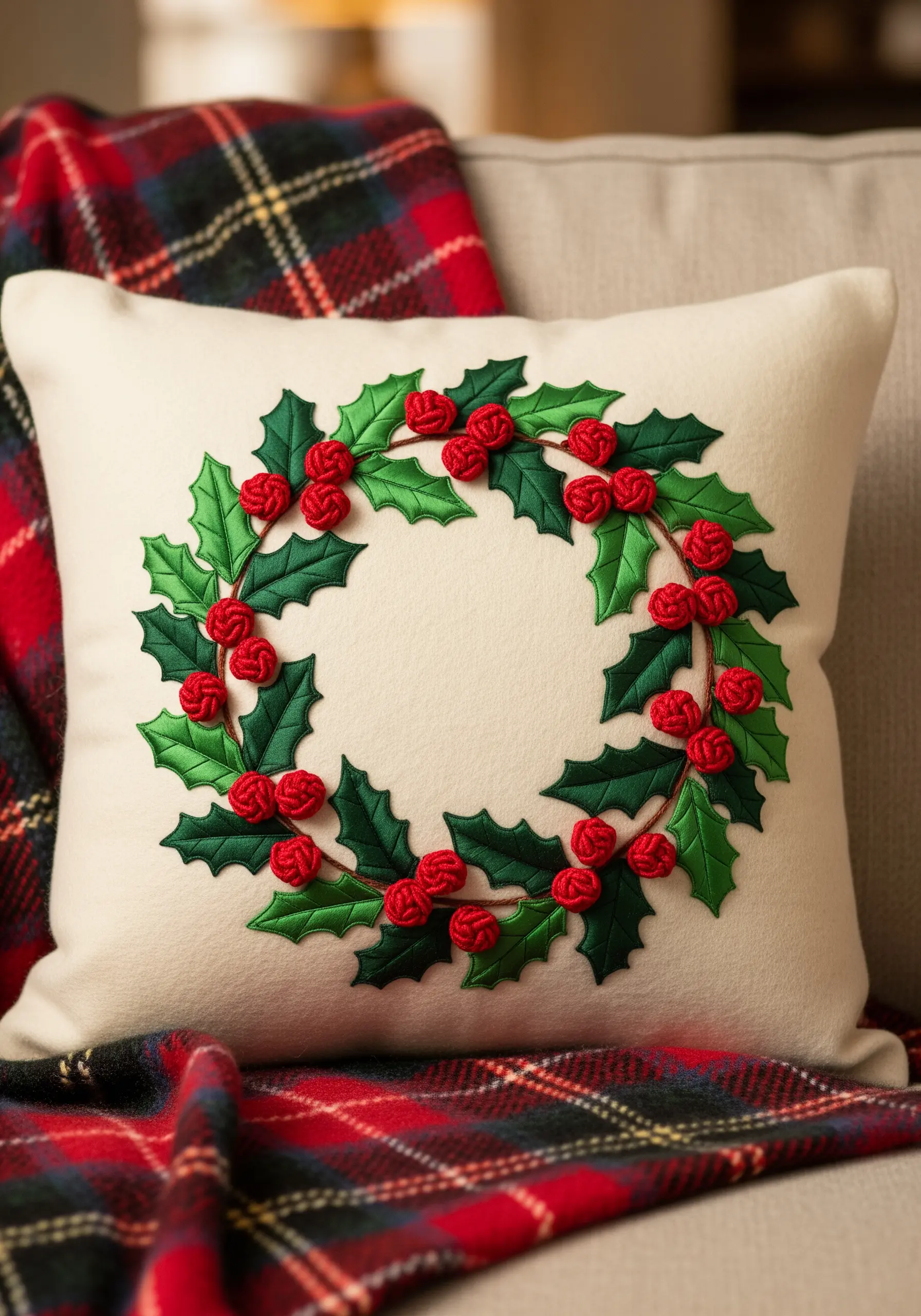
Construct a festive holly wreath that has dimension and texture by using a few key stitches.
For the holly leaves, use a satin stitch, but alternate the angle of your stitches on each side of the central vein to create a subtle, light-catching effect.
The star of the show is the berries. Create them with woven wheel stitches (or spider web roses) using a rich red perle cotton. This makes them perfectly round and raised, like tiny baubles.
This technique elevates a classic holiday motif, making it a tactile and visually engaging piece.
26. Cozy Cross-Stitched Cabin
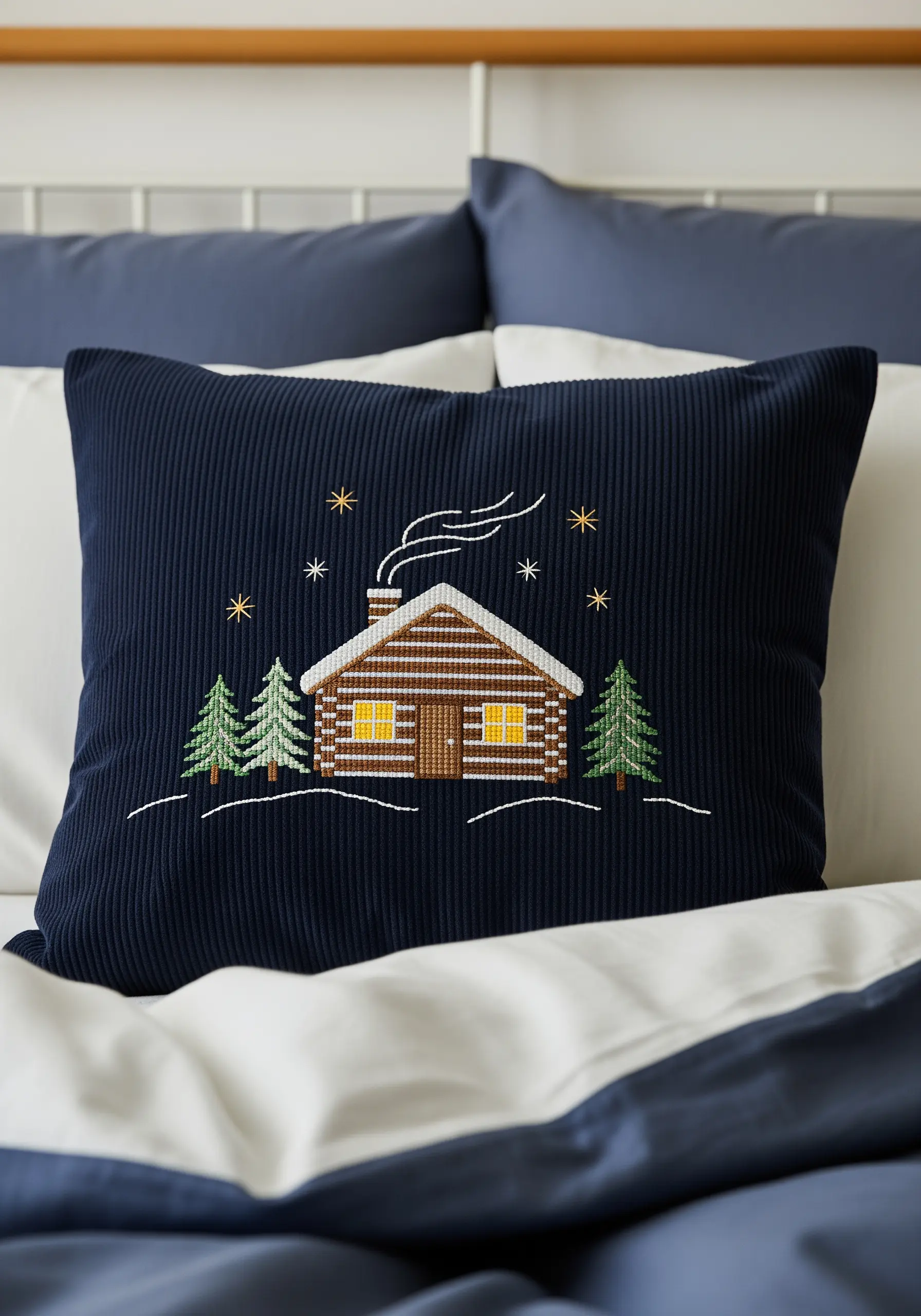
Embrace a rustic, nostalgic winter aesthetic by using cross-stitch to create your design.
The gridded, pixel-like nature of cross-stitch is perfect for depicting architectural subjects like a log cabin, giving it a charming, folk-art feel.
Working on a fabric with a clear weave, like corduroy or Aida cloth inserts, will make counting your stitches much easier.
Use a single backstitch to add fine details like the smoke, stars, and outlines, which will sharpen the design and make it feel complete.
27. Flowing Aurora Borealis
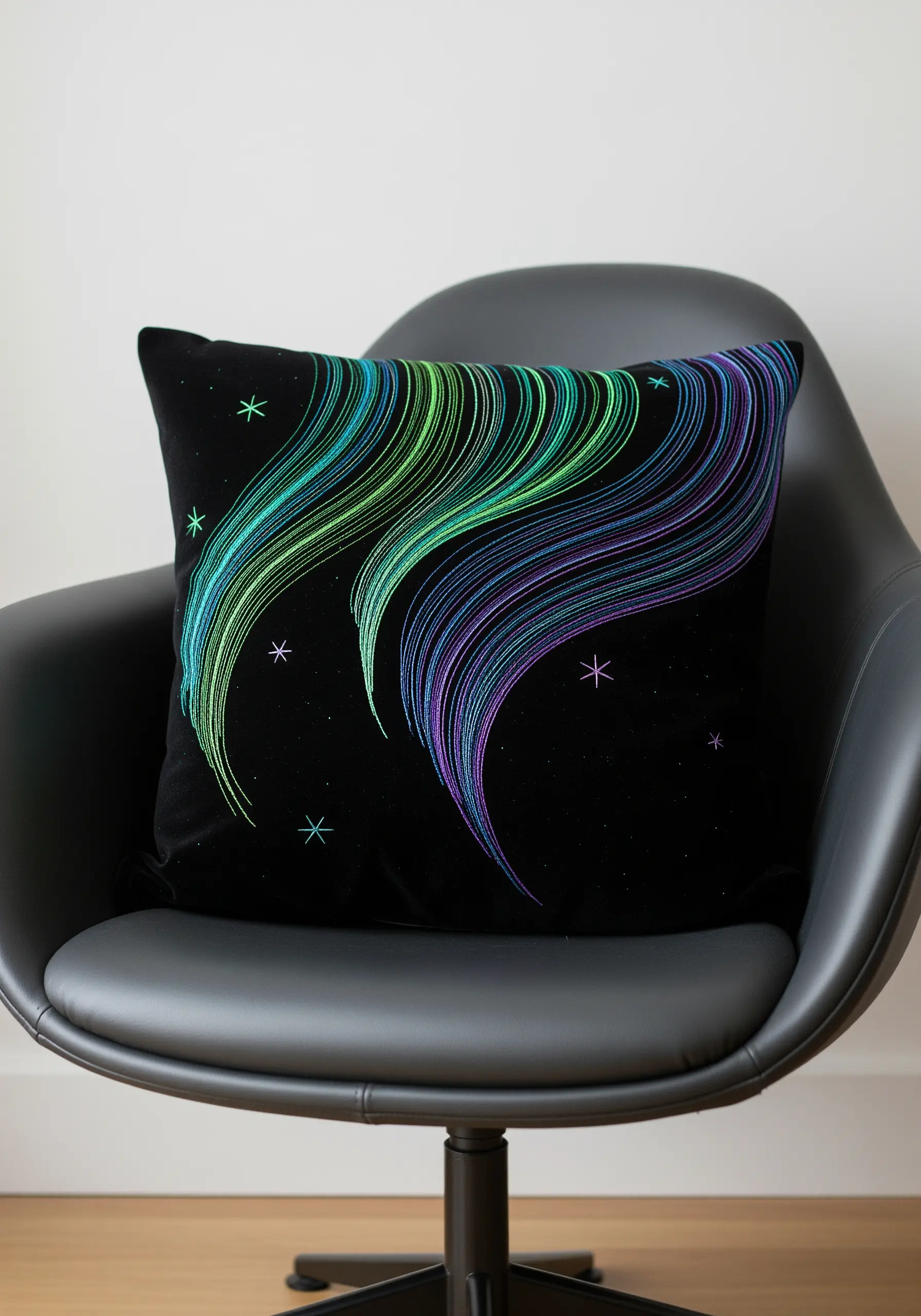
Capture the ethereal movement of the Northern Lights using long, flowing stitches and a blend of vibrant threads.
Instead of standard fill stitches, use contour or outline stitches—like stem, split, or chain stitch—in long, sweeping, parallel lines. This technique allows you to create curves and waves that mimic the aurora’s dance.
Work with multiple needles at once, threaded with different shades of green, blue, and purple, to blend the colors seamlessly as you stitch.
This abstract approach on black velvet creates a dramatic and mesmerizing effect that is pure textile magic.
28. Playful Gingerbread People Pattern
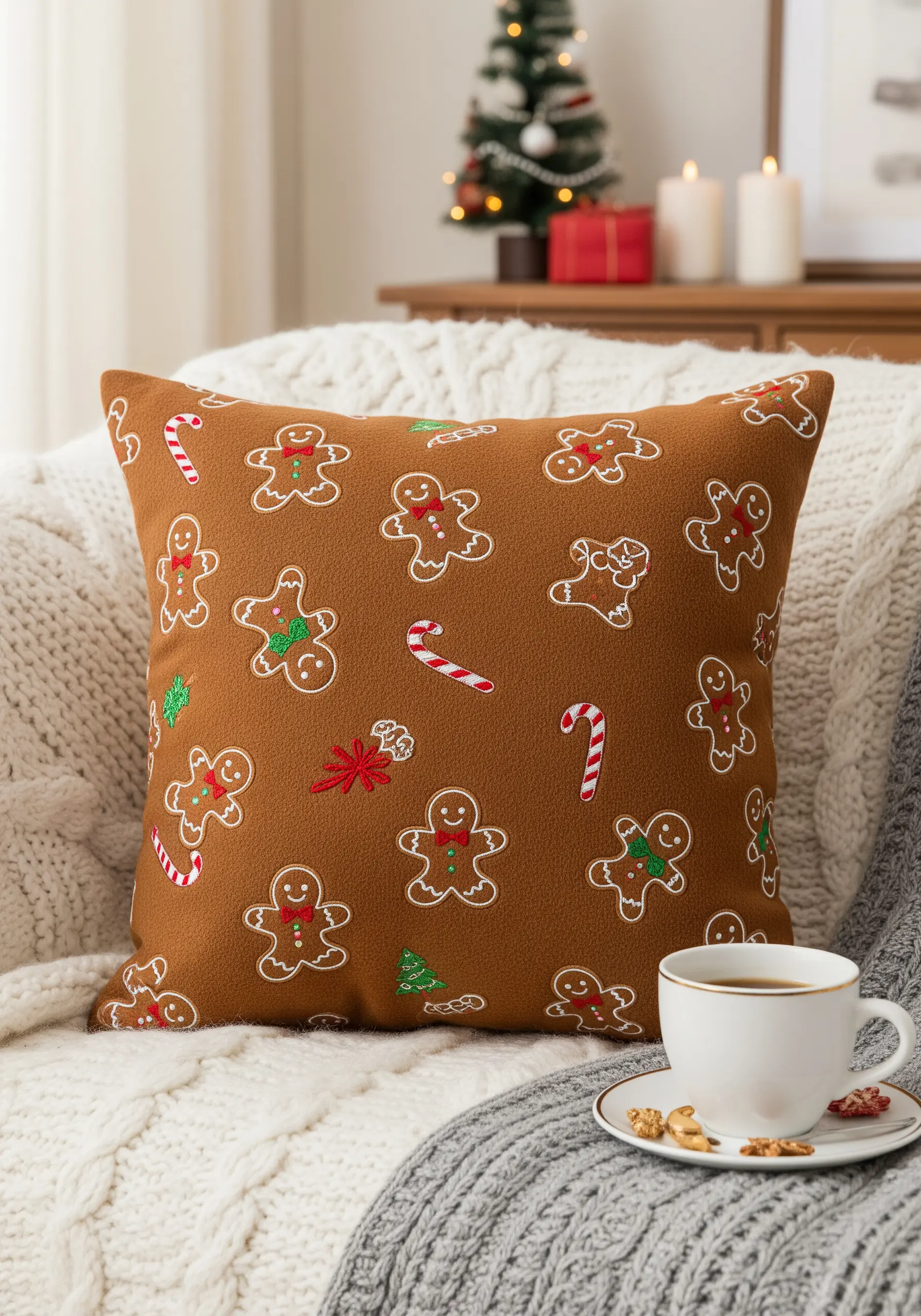
Create a fun, whimsical holiday pillow by turning a simple gingerbread man motif into a repeating pattern.
Keep the stitches simple: a backstitch or stem stitch for the outlines and a few satin stitches or French knots for the details. The charm comes from the repetition, not the complexity.
Vary the orientation and add other small motifs like candy canes to make the pattern feel more dynamic and less rigid.
Embroidering on a soft, textured fabric like fleece or flannel enhances the cozy, festive feeling of the design.