You sit with a needle and thread, ready to create something beautiful, but you worry the result will look… homemade. Not in the warm, artisanal way you envision, but in a way that feels unfinished or lacking in confidence. You want your stitches to look intentional, your designs clean, and your finished pieces polished enough to gift or display with pride.
Minimalist embroidery isn’t about doing less; it’s about making every single stitch count. It’s about understanding that the choice of stitch, the weight of the thread, and the direction of your needle can transform a simple line into a graceful stem or a basic shape into a living, breathing leaf.
These simple leaf and vine projects are your perfect training ground. They invite you to focus on the small, technical details that create massive aesthetic impact. Here, you will learn not just to follow a pattern, but to stitch with intention, turning simple botanicals into quiet works of art.
1. Achieve Realistic Ivy with Directional Satin Stitch

The secret to ivy that feels alive is mastering directional satin stitch for the leaves.
Instead of filling each leaf in one direction, angle your stitches to mimic the natural planes and folds of a real leaf.
Use a fine stem stitch for the vine itself, then switch to three strands of floss for the leaves to give them weight and presence.
For added realism, use two slightly different shades of green, alternating them between leaves to create subtle depth and variation.
2. Create a Sculpted Monstera with Padded Satin Stitch
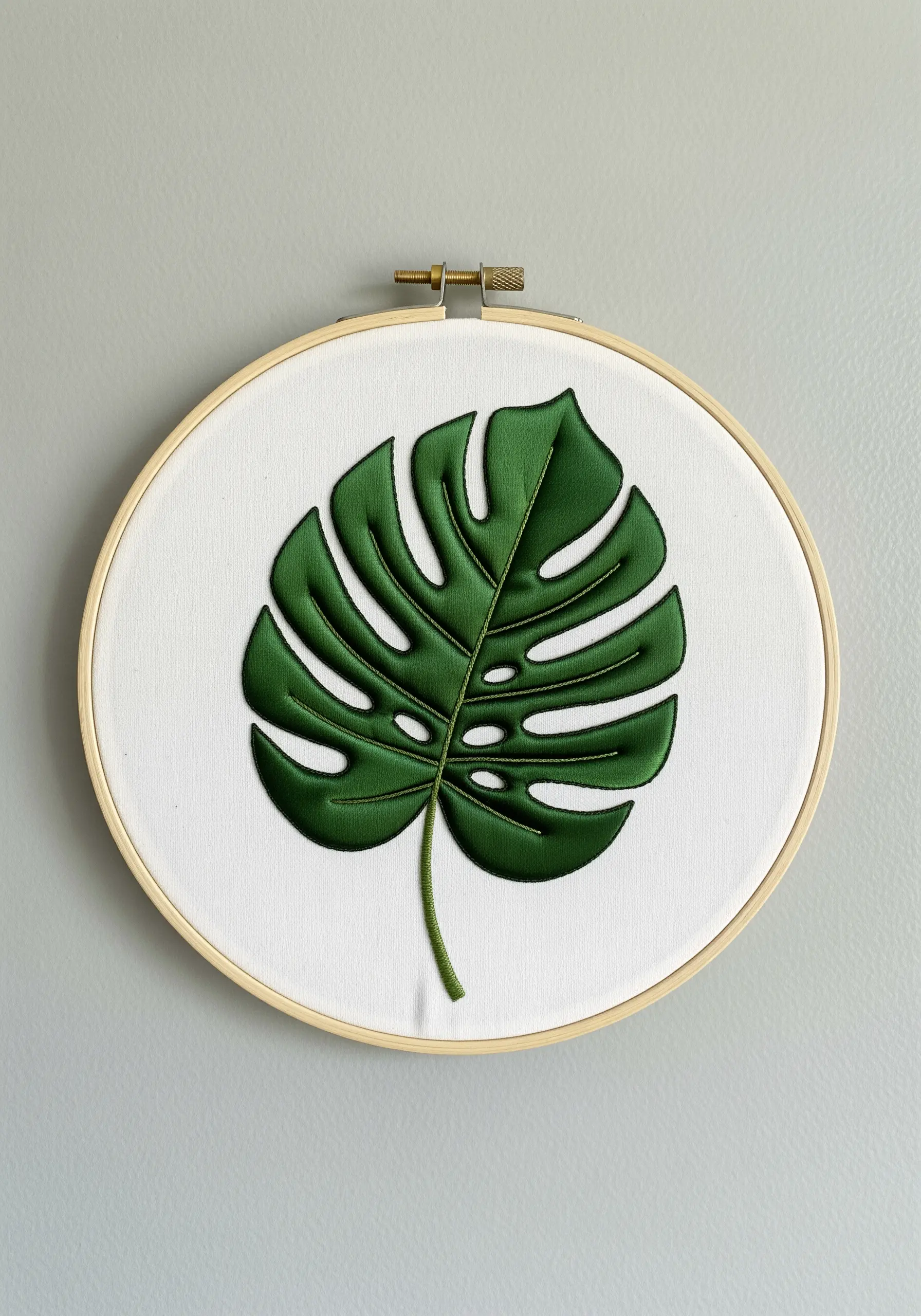
To achieve that impossibly smooth, raised effect on a large leaf, use padded satin stitch.
First, fill each section of the leaf with an underlayer of small, horizontal straight stitches.
Next, work your final satin stitch layer vertically, directly on top of the padding.
This simple preparation lifts the thread, creating a three-dimensional, light-catching surface that makes the leaf pop.
For maximum sheen, use a rayon or silk floss and outline each section with a single, crisp backstitch before filling.
3. Elevate Linens with a Single, Elegant Olive Branch
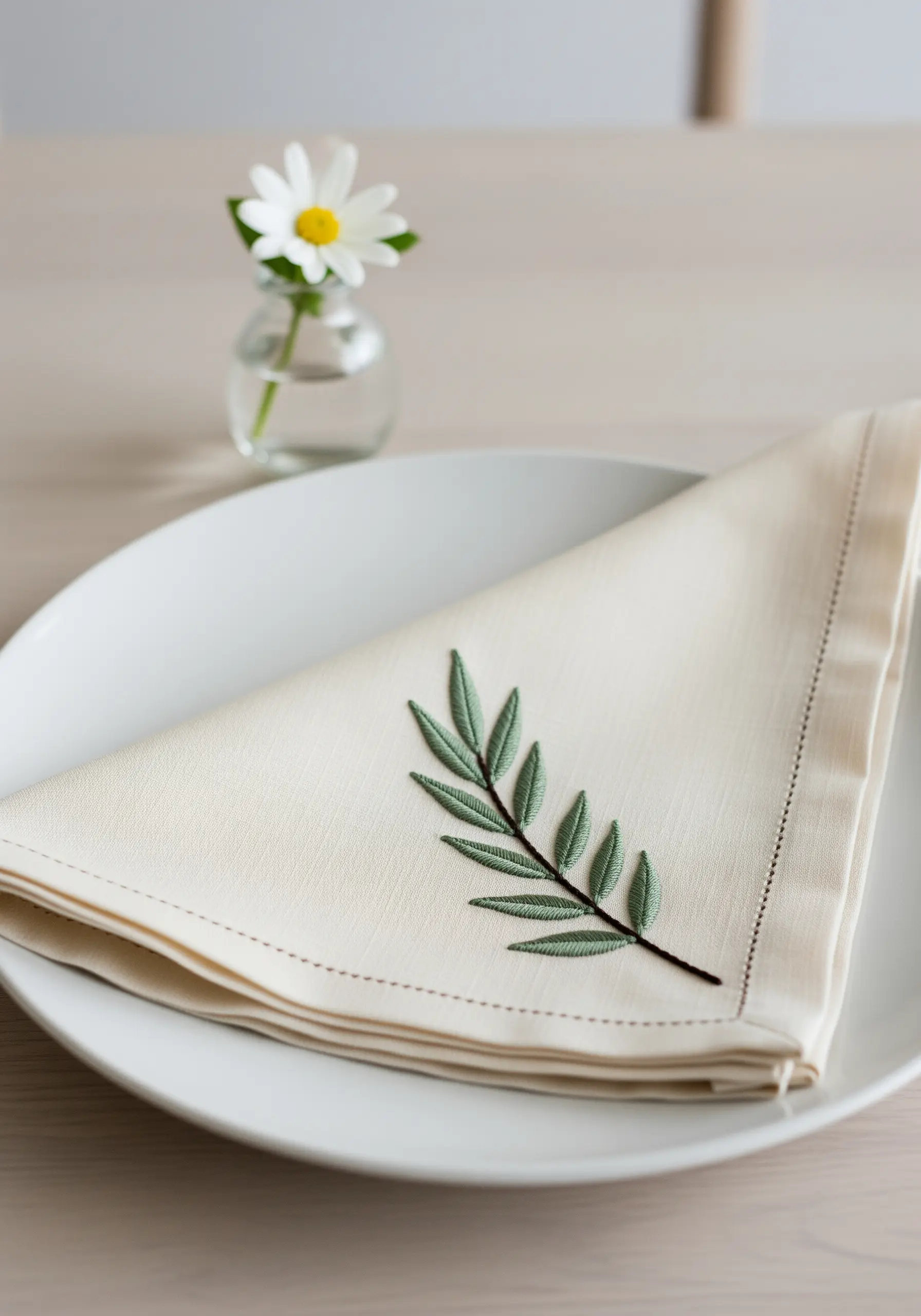
For fine fabrics like linen napkins, a single, perfectly executed motif speaks volumes.
Use fishbone stitch for the leaves—it efficiently creates both the central vein and the angled fill in one fluid motion.
Contrast a darker two-strand thread for the stem with a softer, three-strand sage green for the leaves.
This thoughtful balance of thread weight and stitch choice turns a simple textile into a personal heirloom and shows how minimal stitches that instantly upgrade plain cotton handkerchiefs can feel luxurious.
4. Weave a Soft, Muted Wreath with Simple Stitches
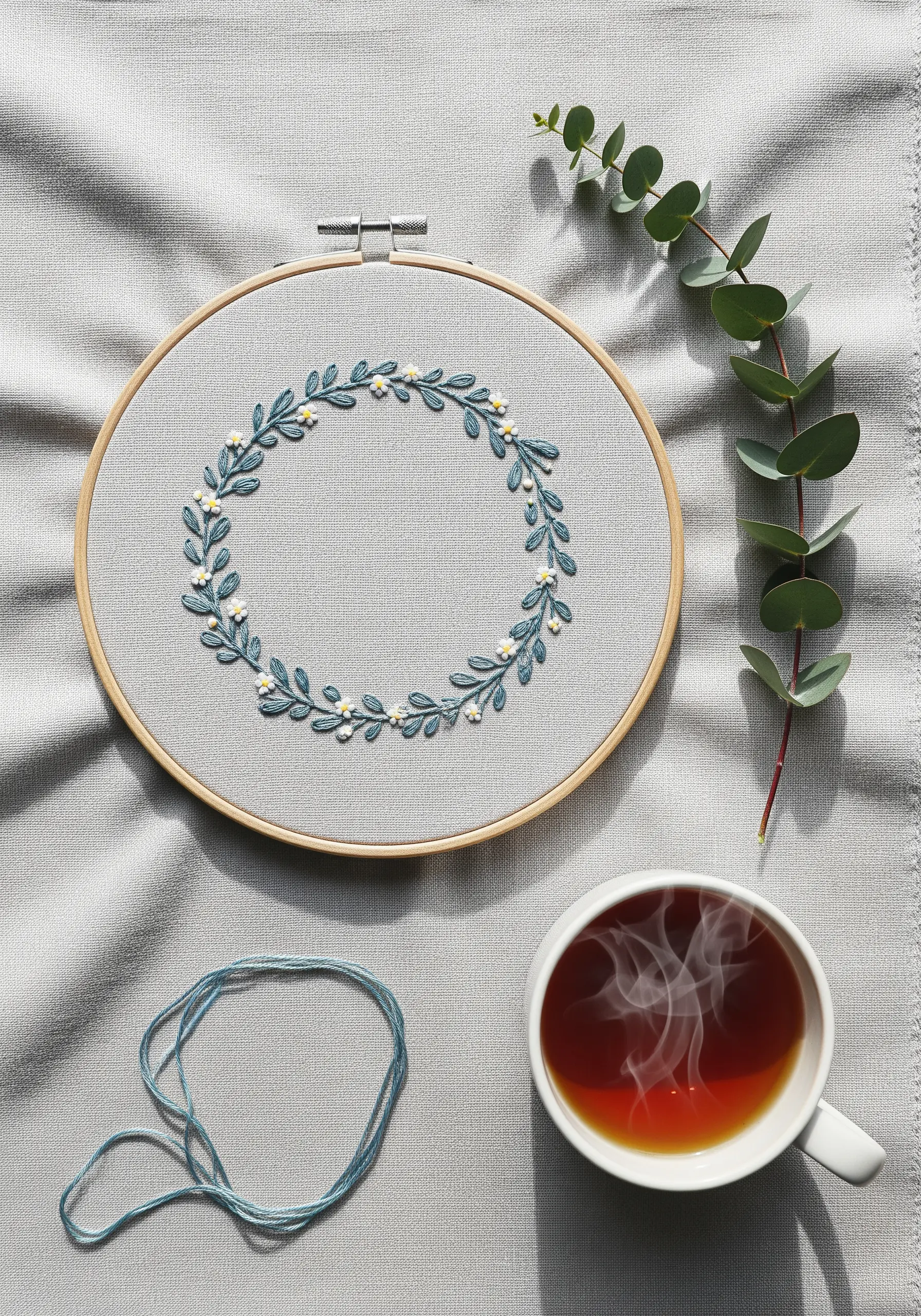
This wreath’s gentle, airy quality comes from a combination of simple stitches and a muted color palette.
Form the leaves with detached chain stitches (lazy daisies) in a dusty teal to give them a soft, rounded shape without heavy fill.
For the tiny flowers, use three small straight stitches radiating from a central point, anchored with a single French knot.
The combination of these open, light stitches prevents the design from feeling dense and creates an effortlessly delicate texture.
5. Master Symmetry and Precision with a Fern Frond
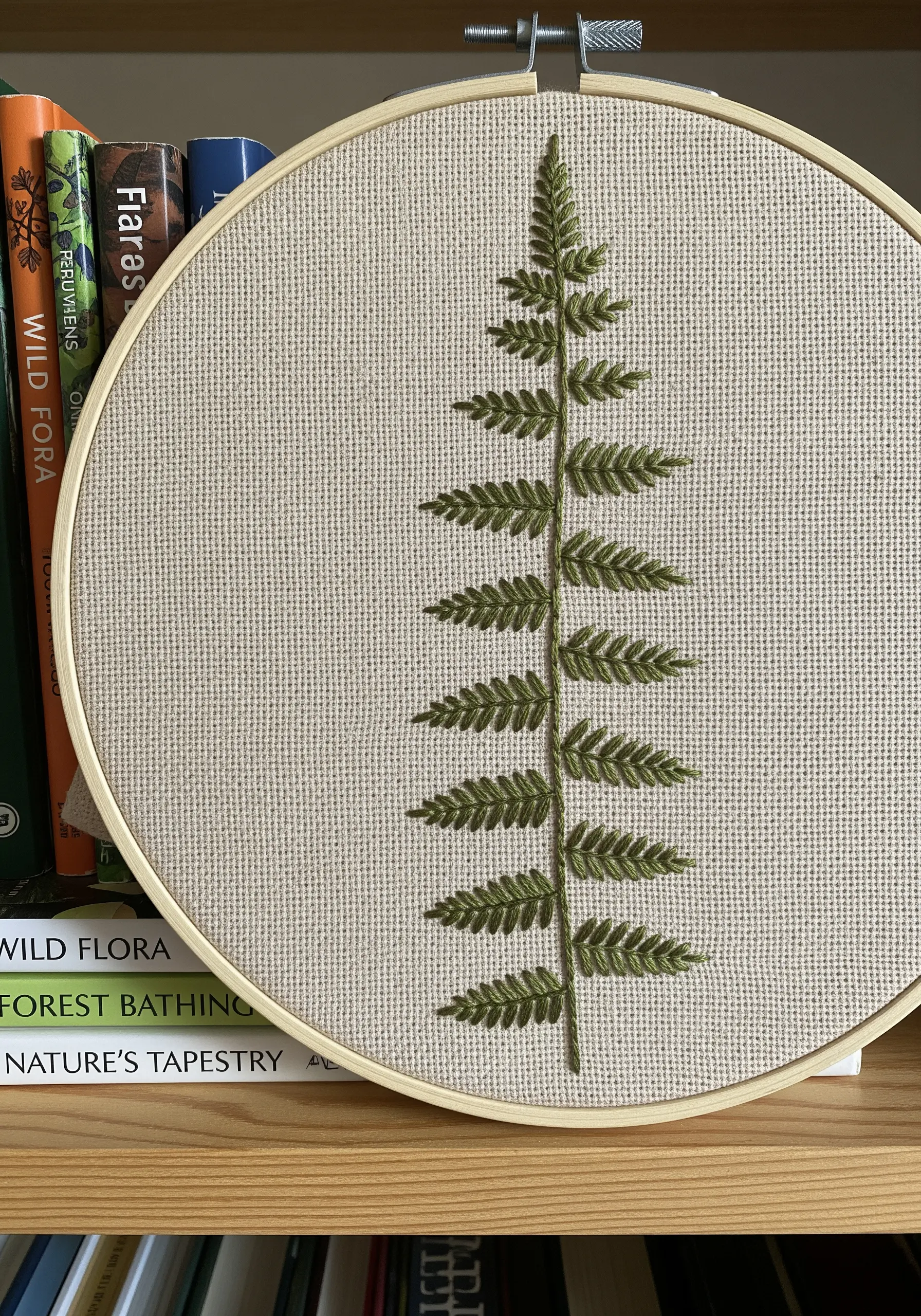
The elegance of a fern lies in its perfect, repeating symmetry—a wonderful exercise in stitch control.
Begin with a central stem stitch line as your guide.
Work each pair of tiny leaves using a fly stitch, pulling the ‘V’ shape taut to create the sharp tip.
Maintaining a consistent stitch length and angle on both sides is what gives the fern its balanced, natural grace.
Using a slightly stiffer fabric like Aida cloth will help your stitches stay precise without puckering the ground fabric.
6. Capture Ginkgo’s Radiance with Straight Stitches
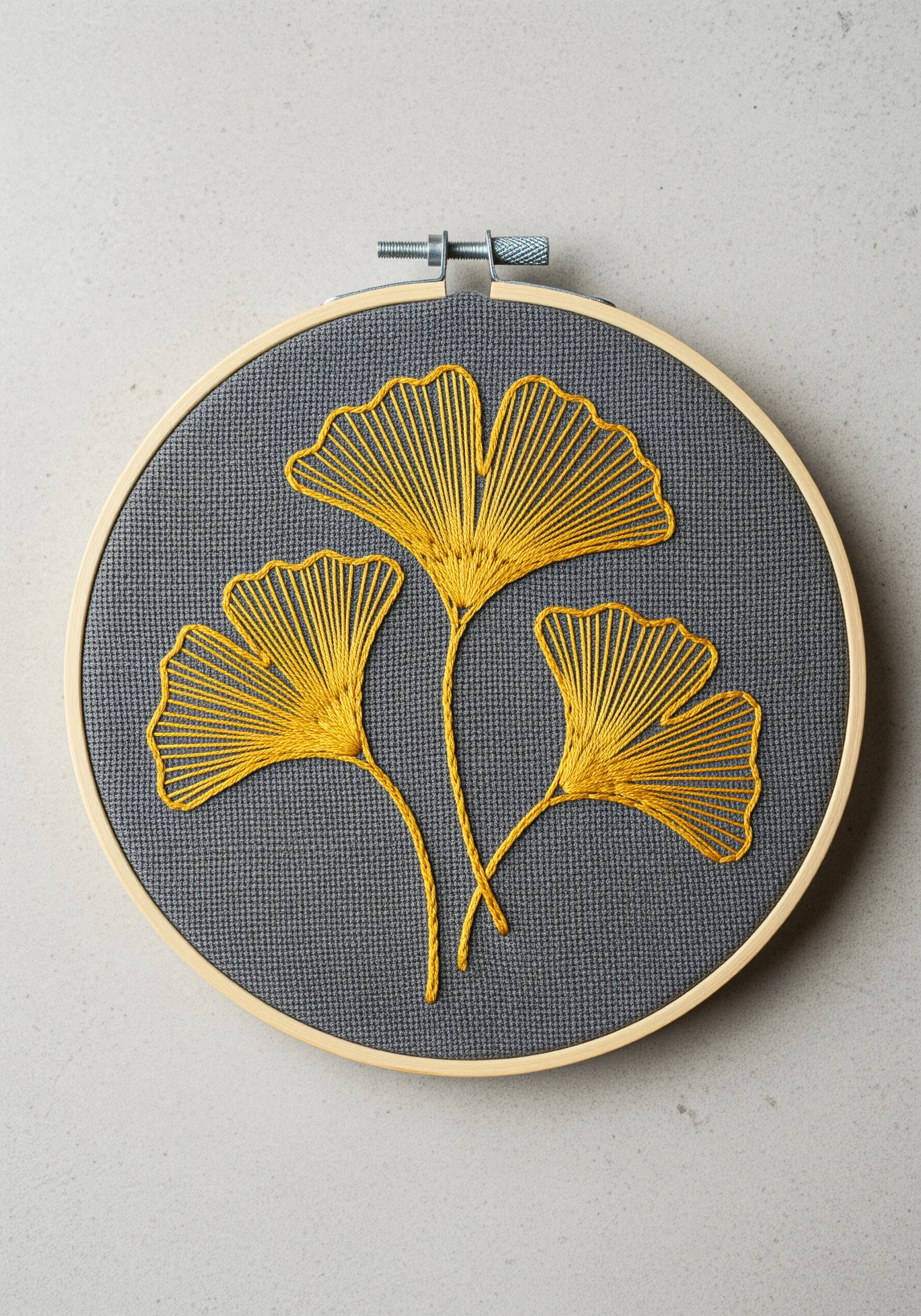
You can capture the iconic fan shape of a ginkgo leaf using only straight stitches and a strong outline.
First, define the scalloped outer edge with a precise split stitch.
Then, fill the interior with long, radiating straight stitches that all originate from the base of the stem.
The magic happens when you pair a high-sheen gold thread with a dark charcoal fabric—the contrast makes the simple lines feel architectural and luminous, turning them into effective modern line art thread designs.
7. Stitch a Durable Vine Border on a Tote Bag

When embroidering high-use items like tote bags, stitch choice is crucial for longevity.
Use a whipped backstitch for the vine; wrapping the initial backstitch makes it smoother and far less prone to snagging.
For the leaves, a simple detached chain stitch (lazy daisy) is perfect because it’s securely anchored to the fabric.
This practical combination is not only fast to execute but ensures your handiwork withstands daily life, proving it’s easy to turn ordinary clothes into art.
8. Play with Light Using Sheer Fabric and Silhouette
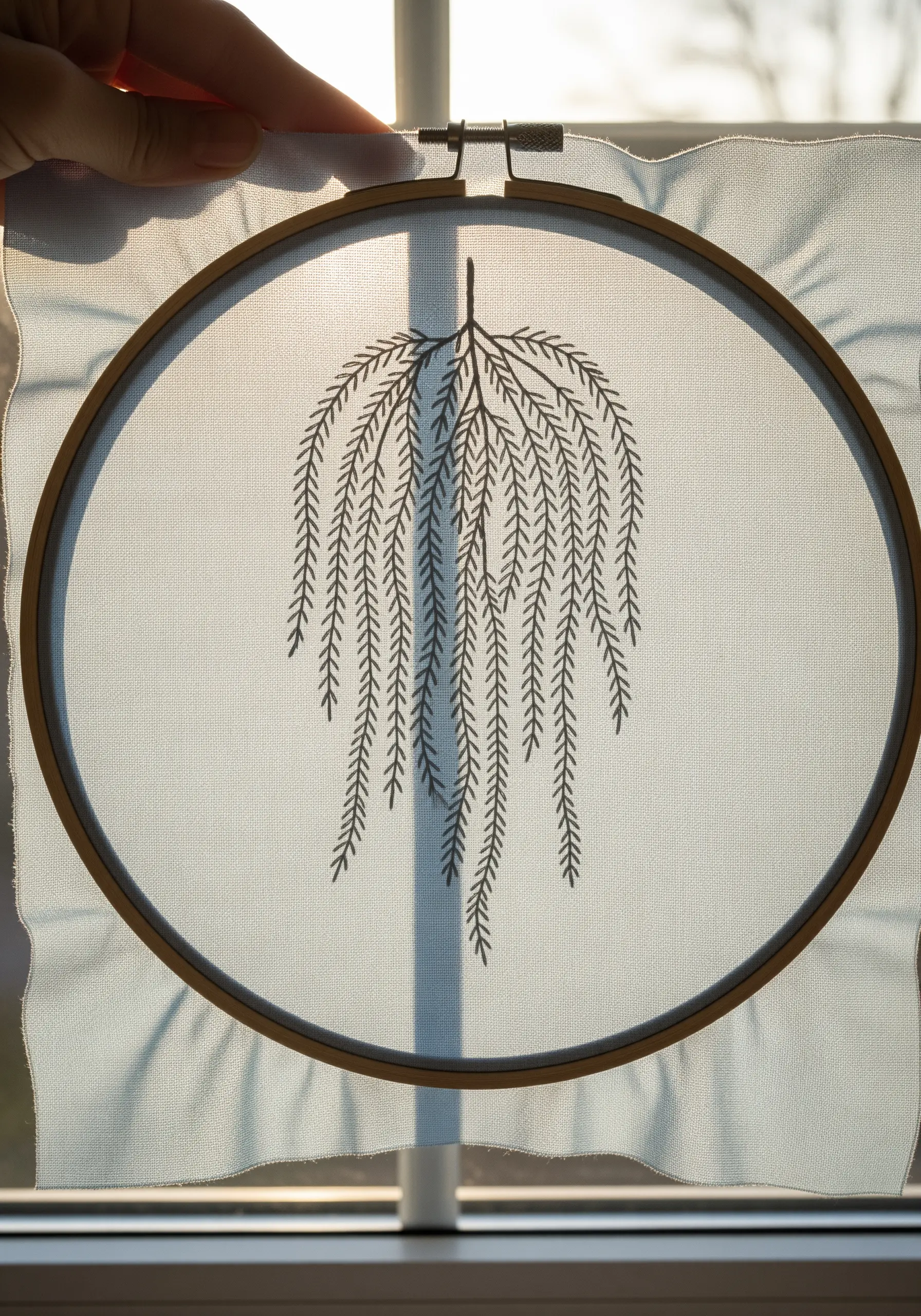
Stitching on translucent fabric like organza or voile allows light to become part of your design.
A simple backstitch outline of a weeping branch is transformed into a dramatic silhouette when held against a window.
The negative space, illuminated by the light, becomes as powerful as the stitched lines.
To keep the delicate fabric from shifting, use a water-soluble stabilizer while you work, then rinse it away for a clean, floating effect. It’s the perfect method for nature-themed embroidery projects for decorating sunlit window corners.
9. Explore Texture and Form with an Autumn Leaf Sampler
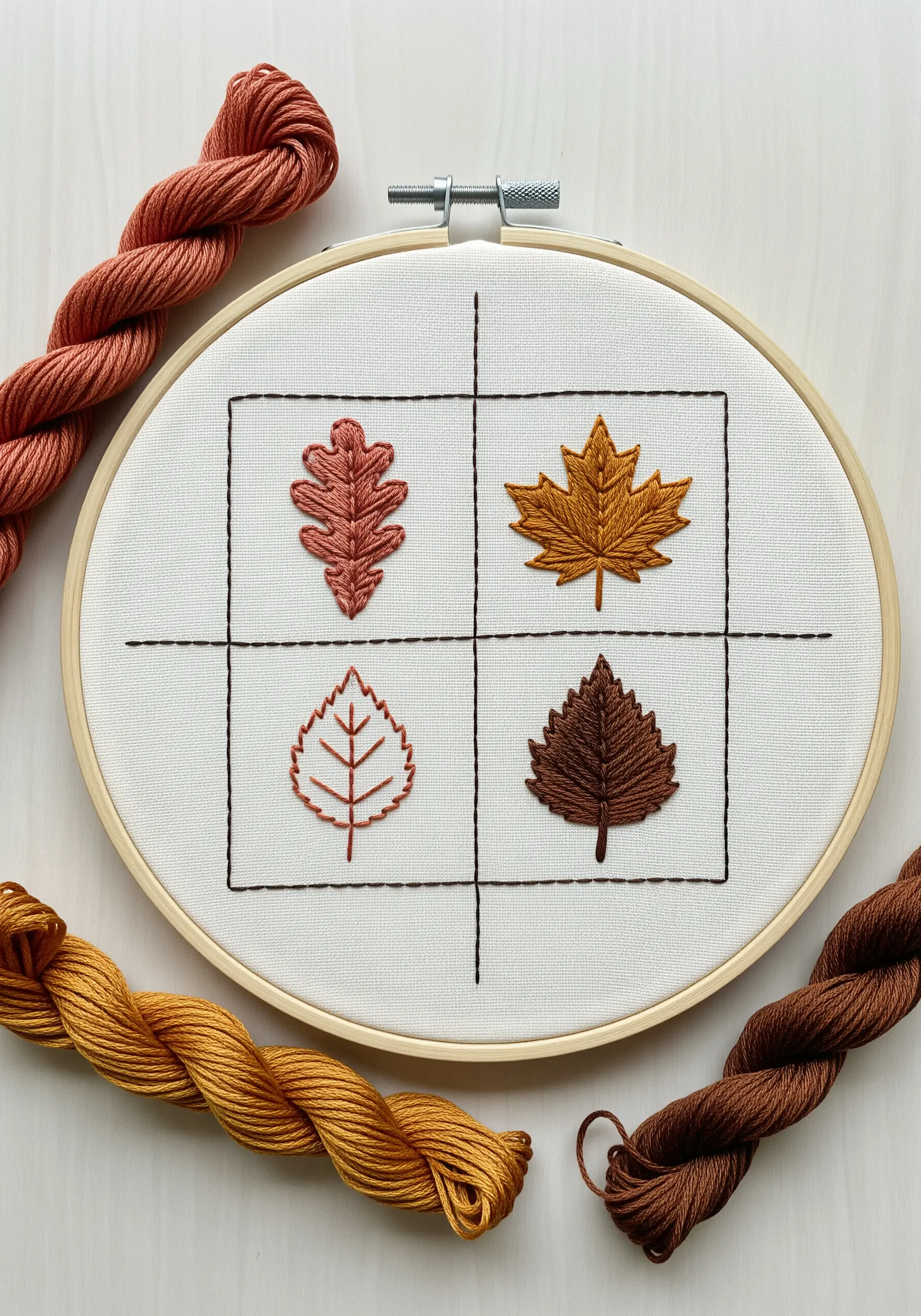
A sampler is a perfect way to practice different stitches while creating a cohesive piece of art.
Challenge yourself to render each leaf with a different technique: a smooth satin stitch, a blended long-and-short stitch, a simple backstitch outline, and a textured fishbone stitch.
Arranging them in a simple grid, drawn with a pencil or heat-erasable pen, gives the composition structure and balance.
This is one of the most satisfying small hoop embroidery projects using only scrap fabric spare thread for a quiet afternoon.
10. Add a Subtle Sprig to a Denim Collar
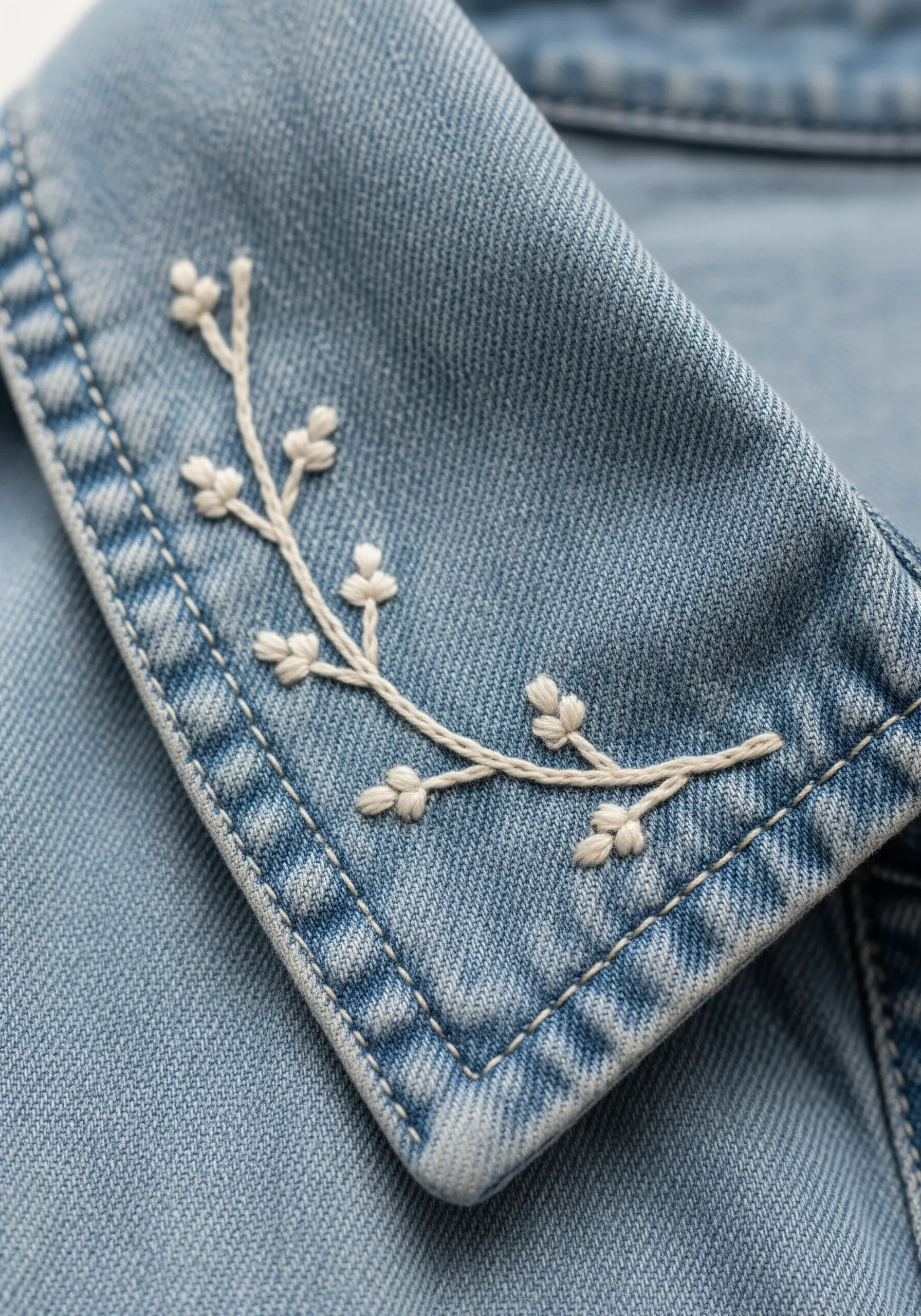
Embroidering on a sturdy fabric like denim offers a beautiful, high-contrast canvas.
Use a clean backstitch for the delicate stem and colonial knots for the flower buds—they are rounder and sturdier than French knots, making them ideal for clothing.
Sticking to a single color, like this soft off-white, creates a crisp, modern aesthetic that feels intentional and chic.
This is a wonderful way to apply the principles of hand-embroidered sleeve ideas to other parts of a garment for a custom touch.
11. Design a Timeless Laurel Wreath on Kitchen Linens
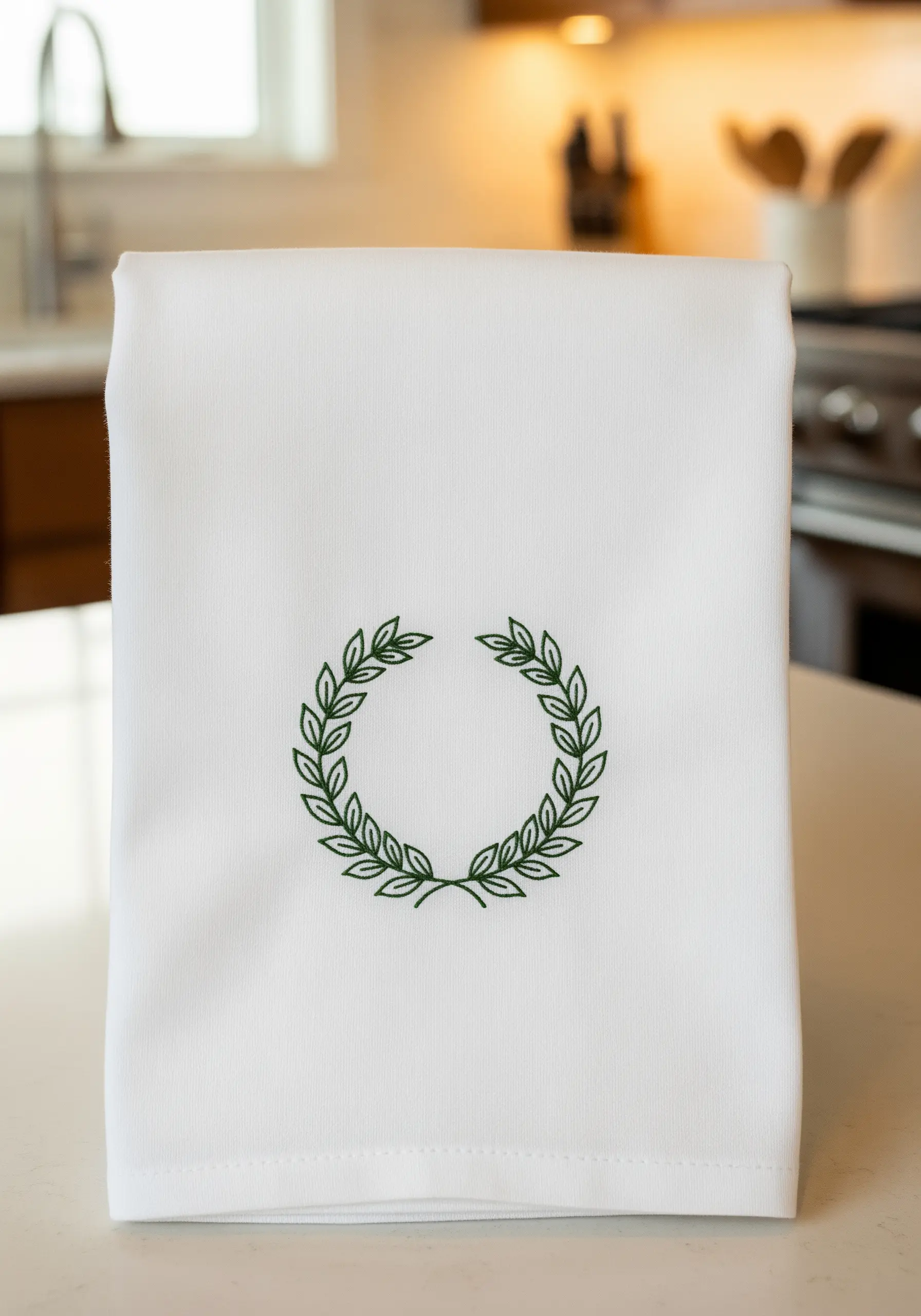
The classic laurel wreath gains its formal elegance from perfect symmetry.
Use a fishbone stitch for every leaf, making sure each one points outward from the wreath’s center line.
Keeping the stitch direction consistent is what creates that clean, unified look.
When stitching on functional items like kitchen towels, always use high-quality, colorfast cotton floss to ensure your work remains beautiful through repeated washing. These mini embroidery patterns that add charm to your kitchen towels are both beautiful and practical.
12. Create a Rich Grapevine with Contrasting Textures

Combine different stitches and threads to create a design that is a feast for the eyes and fingers.
On a rustic fabric like burlap, a thick twisted chain stitch gives the vine a woody, dimensional quality.
Contrast this with smooth, flat satin-stitched leaves and plump clusters of French knots for the grapes.
The interplay between the smooth floss, bumpy knots, and coarse fabric creates a rich, tactile experience and is a great way to explore statement textured embroidery techniques.
13. Capture a Rosemary Sprig in Miniature

When working in a miniature hoop, clarity is everything.
Use a single strand of brown floss for the stem, stitched with a simple backstitch.
Form the rosemary needles with short, angled straight stitches using just one or two strands of dark green floss.
Using fewer strands prevents the tiny design from looking bulky and ensures each needle remains distinct and delicate. These tiny DIY embroidery ideas that make your space look curated and thoughtful.
14. Design a Modern Repeat Pattern with Simple Motifs
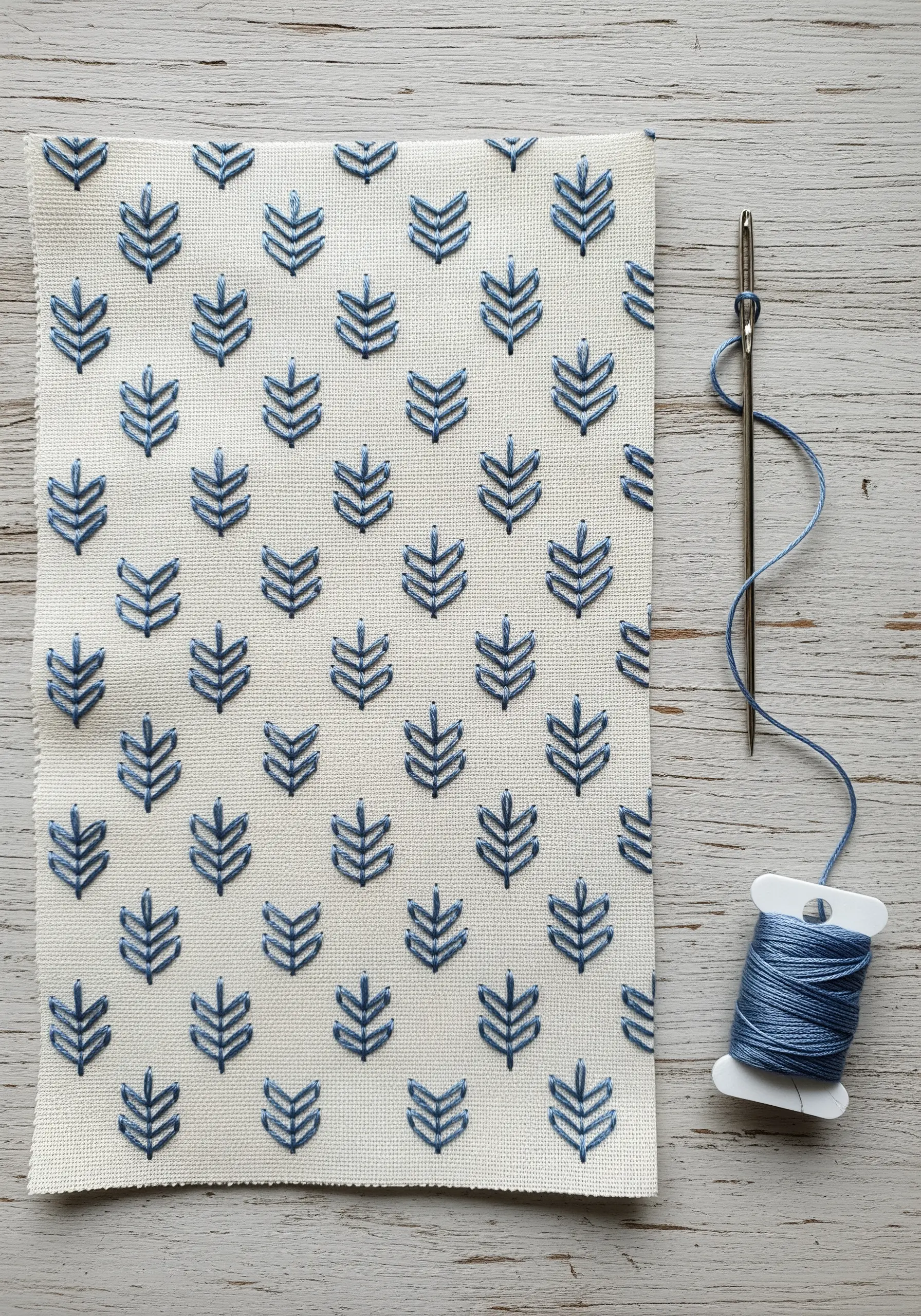
You can create your own custom-patterned fabric with a simple, repeating stitched motif.
This stylized leaf is composed of only a few basic stitches: a central straight stitch for the stem and fly stitches for the leaves.
To ensure your pattern is even, use a water-soluble marker and a ruler to create a light grid on your fabric before you begin.
A single, modern color like this denim blue gives the pattern a sophisticated, block-printed feel, perfect for custom simple stitch ideas that add elegance to your pillow covers.
15. Render a Delicate Skeleton Leaf with Backstitch
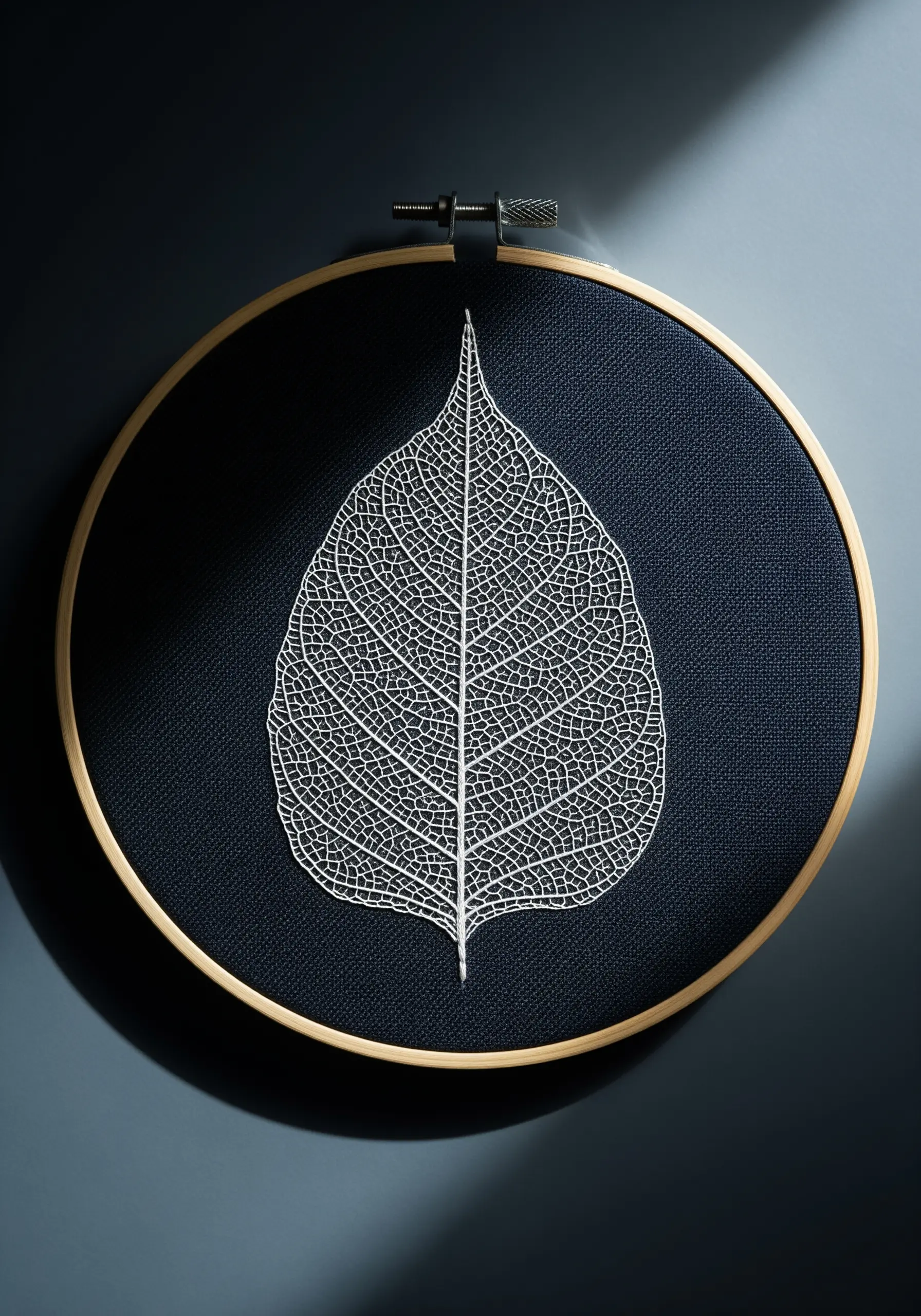
This intricate piece demonstrates that you don’t need complex stitches to create a masterpiece—you need precision.
Transfer a detailed image of a leaf’s vein structure onto dark, tightly woven fabric.
Using a single strand of white or silver thread, meticulously trace every delicate line with tiny backstitches.
The dramatic contrast and the lace-like quality of the finished work show how powerful modern thread designs that turn simple outlines can be.
16. Add Warmth to Bedding with an Earth-Toned Vine
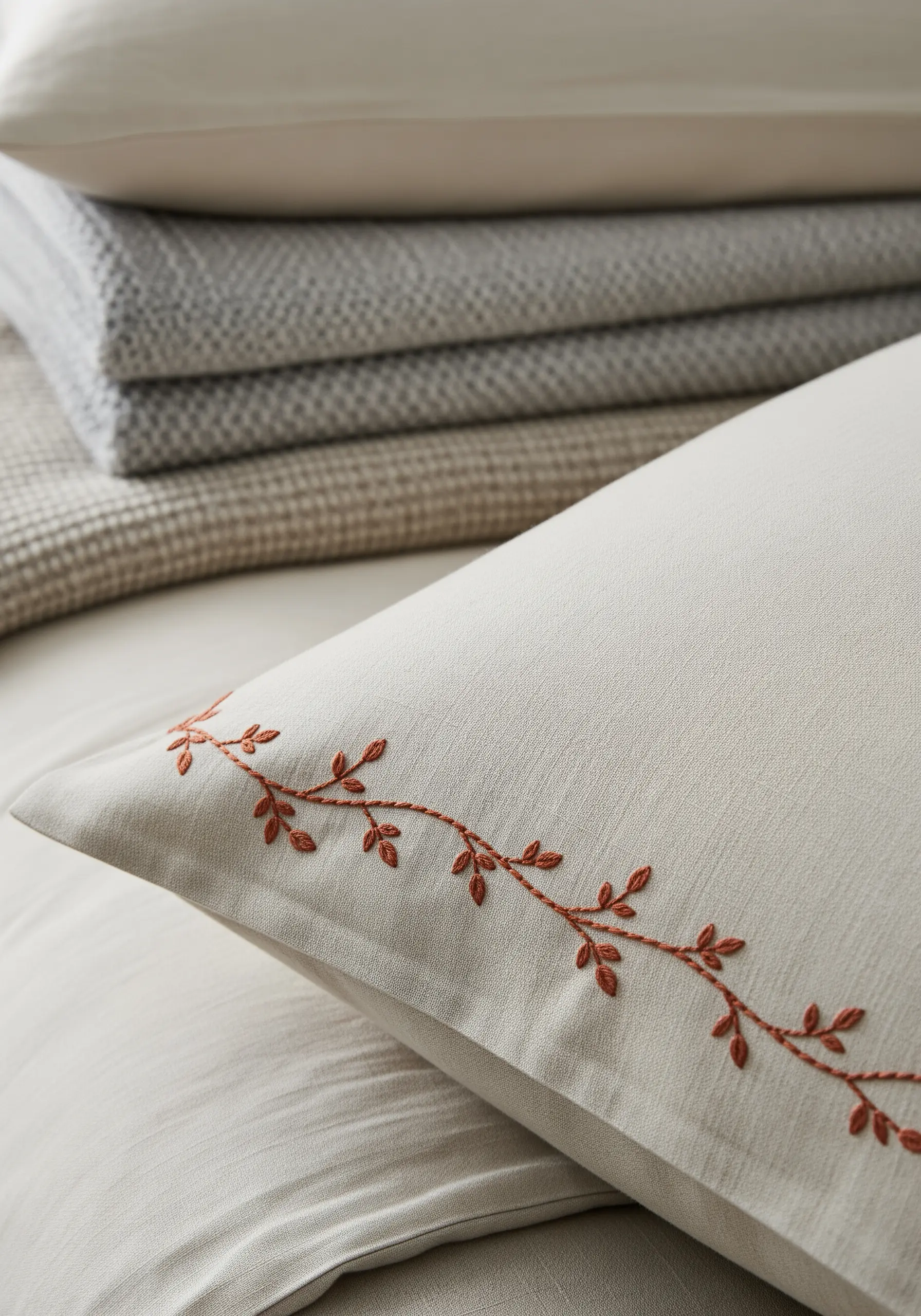
A simple trailing vine stitched along the edge of a pillowcase adds an immediate sense of custom comfort.
Use a stem stitch for the main vine to give it a smooth, rope-like curve, and fill in the small leaves with a simple satin stitch.
By choosing a warm, earthy terracotta thread against a neutral fabric, you create a calming, sophisticated palette.
It’s an ideal choice for simple embroidery projects for a cozy minimalist bedroom that feels both handmade and high-end.
17. Stitch a Study of Wild Grasses in Motion
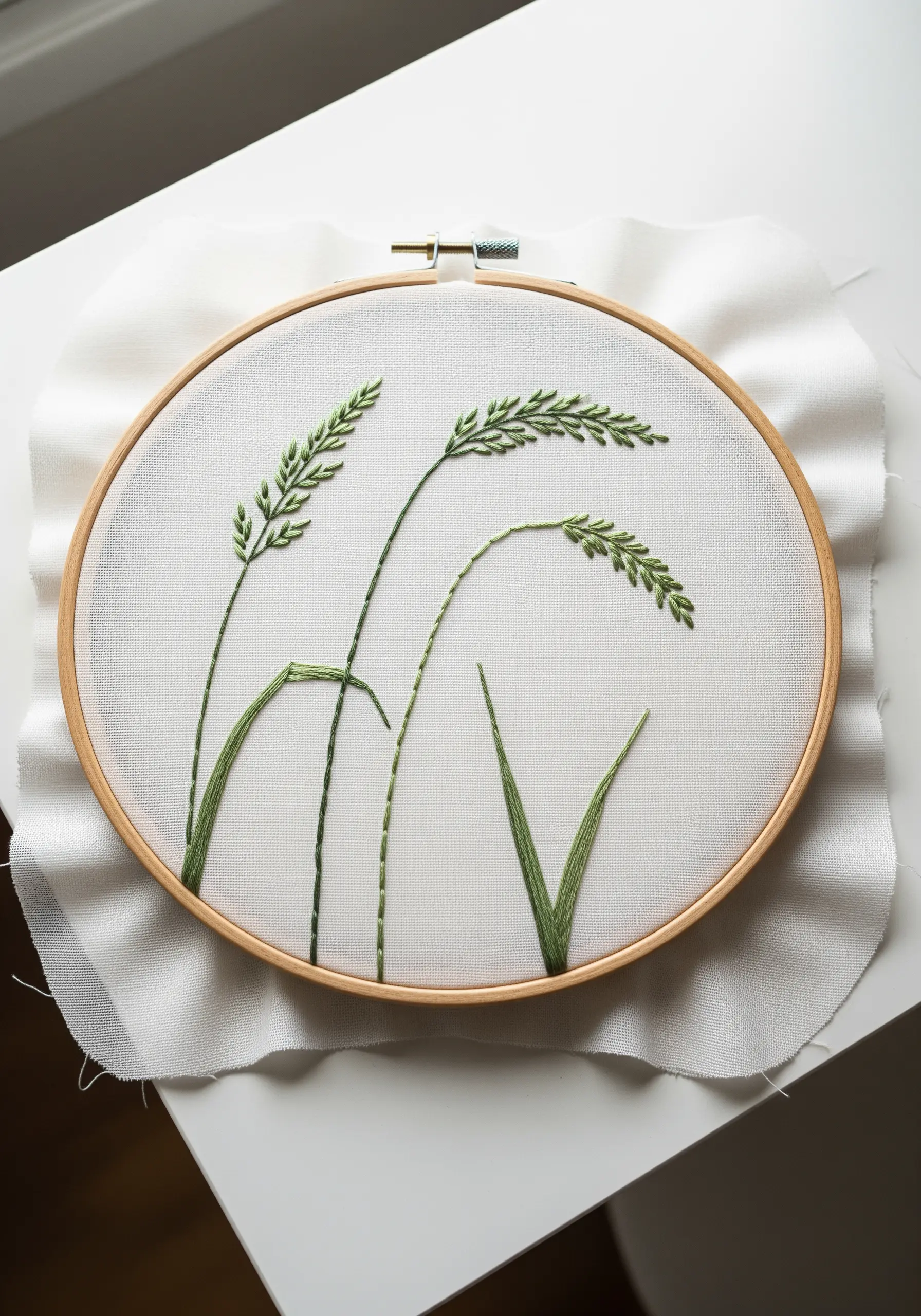
To capture the feeling of wild grasses swaying in a breeze, focus on variety and movement.
Use stem stitch for the stalks, varying their curves to suggest a natural, windblown effect.
For the delicate seed heads, combine different textural stitches like fly stitch, seed stitch, and tiny straight stitches.
Using several closely related shades of green enhances the depth and realism. This is a perfect project to capture soft breezy meadow aesthetics.
18. Create Depth in Clovers with Blended Thread
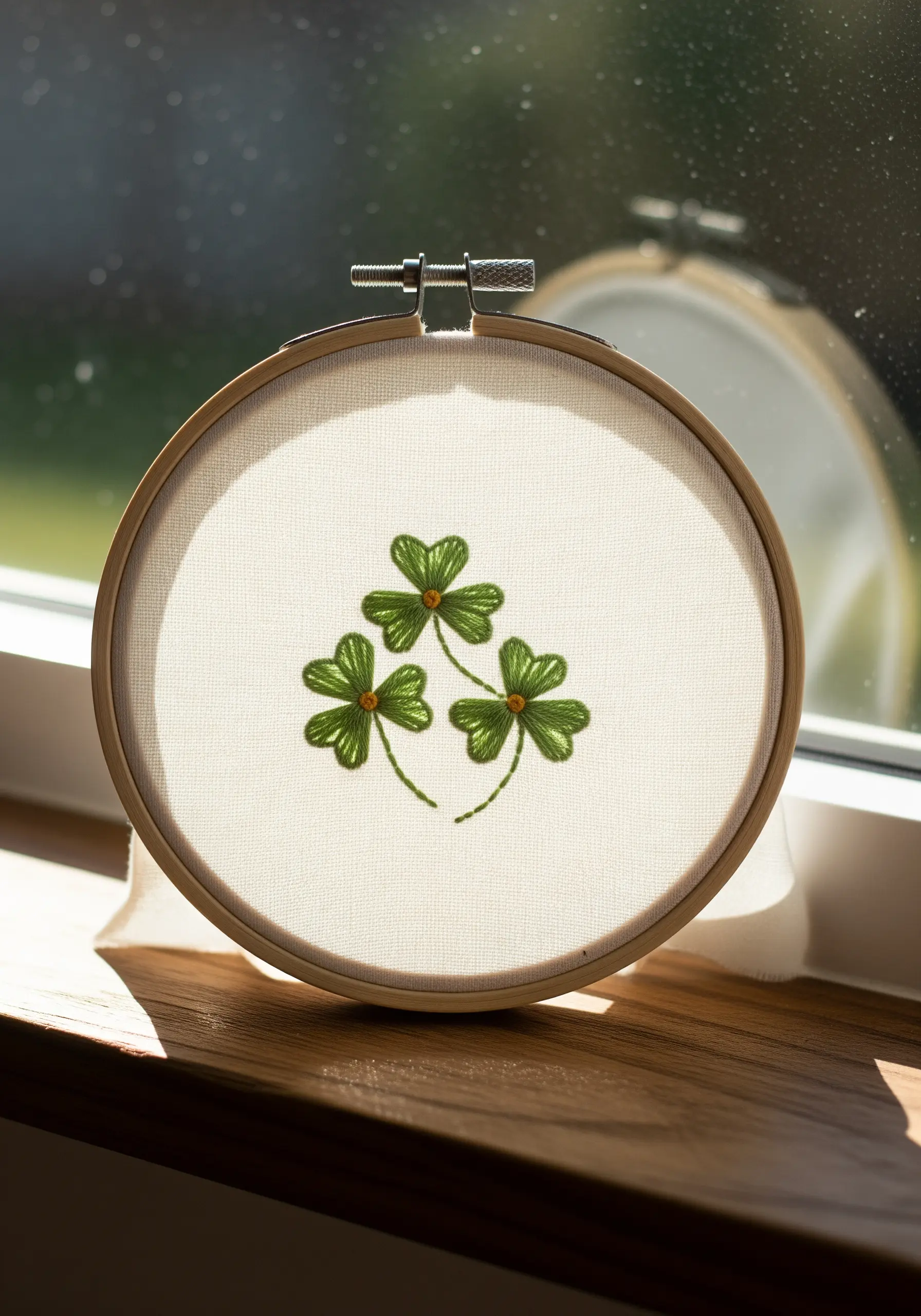
To elevate a simple clover from a flat shape to a dimensional object, use thread blending.
Instead of a solid satin stitch, work each leaf with a long-and-short stitch, using two or three similar shades of green.
Place the darkest shade near the center of the clover and gradually blend to the lightest shade at the outer edge of the leaf.
This subtle gradient mimics how light hits a curved surface, giving the clover a soft, realistic fullness. It’s a key principle in creating plant embroidery color palettes that make your leaves look hyper-realistic.