You have likely stared at those pristine embroidery hoops in gallery shops and thought, “I could never be that precise.” But the secret to museum-quality hoop art isn’t knowing a hundred different stitches; it is about knowing exactly how to use just two.
Minimalism in embroidery is not about doing less work—it is about making every thread count. By stripping away the visual noise of complex shading and chaotic textures, you force the eye to appreciate the tension of a line, the balance of negative space, and the quality of your materials.
In this guide, we are looking at seventeen specific designs that achieve a high-end, curated look using the simplest techniques in your arsenal. Grab your hoop and let’s redefine what it means to stitch with intention.
1. One-line portraiture with a focal point

You do not need to fill every inch of fabric to create a striking portrait; in fact, the empty space often speaks louder. Use a whipped backstitch for the facial profile to ensure the black thread sits prominently on the fabric surface without snagging.
The solid terracotta circle, stitched in a dense satin stitch, anchors the composition and draws the eye immediately. This is one of those minimalist line art embroidery hoops that relies on the confidence of your line work rather than the complexity of your palette.
2. Geometric tension using negative space

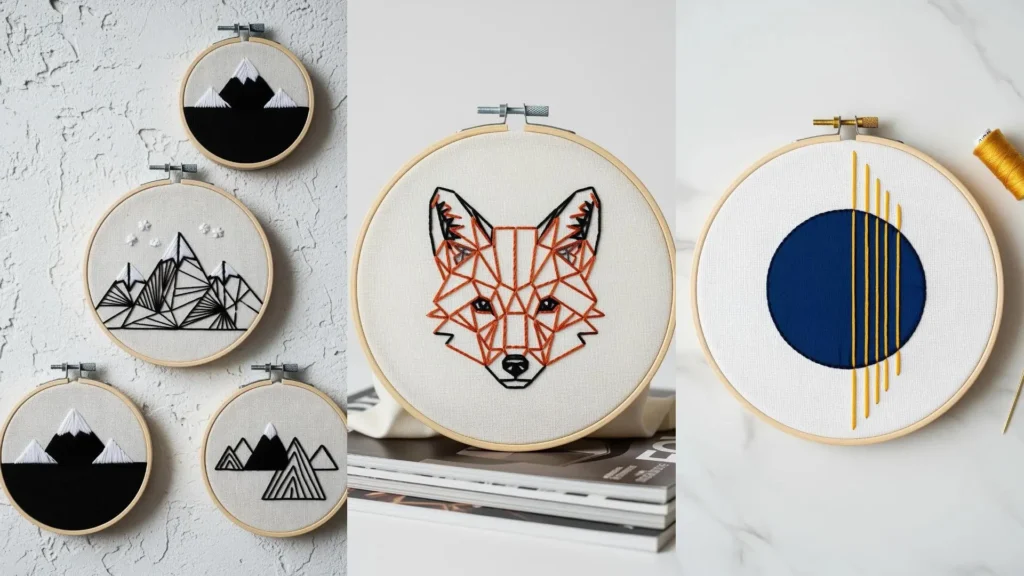
This design works because of the sharp contrast between the dense, matte blue satin stitch and the airy, floating yellow lines. To keep your long satin stitches from loosening, ensure your fabric is drum-tight in the hoop before you begin.
The yellow straight stitches bridge the gap, creating a kinetic energy that feels architectural. Employing abstract negative space techniques like this allows the white fabric to become an active part of the art rather than just a background.
3. Rhythm and repetition in botanical forms

A single fern leaf becomes a design statement when you focus on the uniformity of the stitch angle. Use a simple backstitch for the central stem to provide a solid spine, then switch to single detached chain stitches or straight stitches for the leaves.
Varying the green tones slightly adds depth without breaking the minimalist aesthetic. These plant-inspired embroidery patterns teach you that consistency in spacing is often more impressive than complex shading.
4. Topographic texture on dark canvas

Texture is the hero here, transforming a flat map concept into a tactile experience. By using a split stitch for the blue gradient lines, you create a braided, raised rope effect that stands out against the dark denim background.
The gold french knot clusters act as ‘elevations,’ adding a metallic shine that catches the light. This approach mimics abstract thread sculpting tricks, proving that simple concentric lines can build an immersive, 3D landscape.
5. Architectural sunset with heavy threads
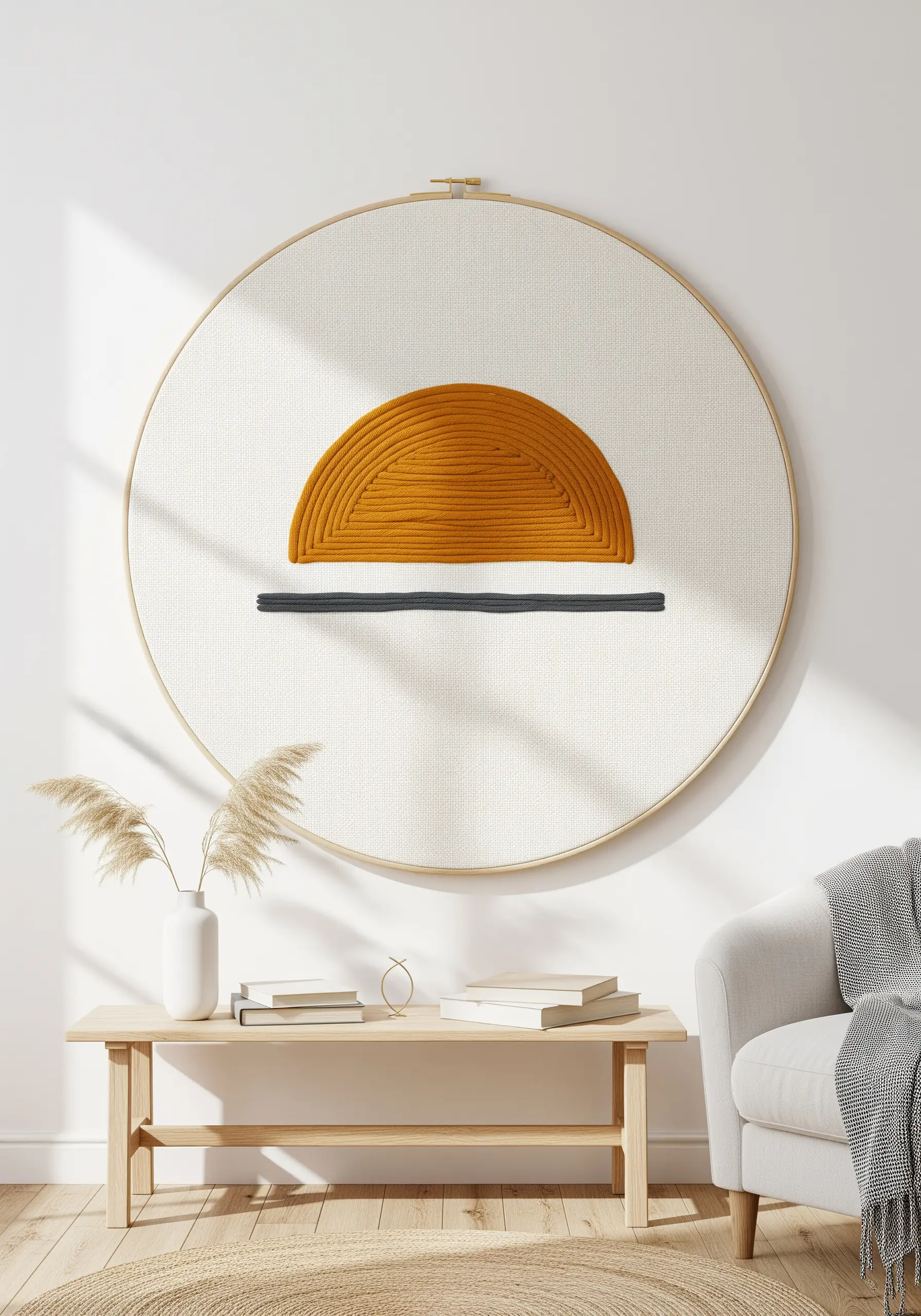
Minimalism often benefits from increasing the thread weight; try using all six strands or even a tapestry wool for the sun to create that rich, ribbed texture. A laid work technique, where threads are couched down, keeps the large orange semi-circle perfectly flat and tidy.
The contrast of the black horizontal line grounds the image instantly. Creating minimalist embroidery art pieces like this requires you to trust that two bold shapes are enough to tell the whole story.
6. Celestial simplicity on velvet

When working with luxurious fabrics like velvet, let the material do the heavy lifting. A simple chain stitch in silver-grey thread creates a defined, rope-like outline for the moon that sits beautifully on the plush pile.
Small star stitches scattered around provide balance without clutter. Explore minimal celestial embroidery wall designs to see how high-contrast thread on dark velvet evokes a sense of night sky depth with minimal effort.
7. Matisse-inspired appliqué illusion

This piece plays with the concept of containment. Instead of filling the shape, use a running stitch to create a dotted boundary that suggests the form of the leaf. The bold blue felt appliqué in the center provides the color punch without hours of satin stitching.
This method of combining dashed lines with solid shapes is a staple in modern framed embroidery designs, offering a contemporary, graphic look that feels like a collage.
8. The single-stem chain stitch study

A tulip doesn’t need to be realistic to be recognizable; it just needs fluid lines. Use a chain stitch for the petals to give them a slightly thicker, sketch-like quality that mimics a marker drawing.
Keep the stem whisper-thin with a single strand of thread in a stem stitch. This restraint is key to simple line art embroidery patterns, where the elegance comes from the confidence of the curve.
9. Modern calligraphy and negative space

Text-based embroidery shines when the script feels fluid and handwritten. Achieve this by shortening your stitch length on the curves of the stem stitch to prevent any jagged edges in the lettering.
Three simple gold french knots add a ‘pause’ that is both visual and conceptual. These inspirational quote embroidery wall hangings work best on crisp, high-quality cotton that supports the precision of the text.
10. Geometric precision landscapes
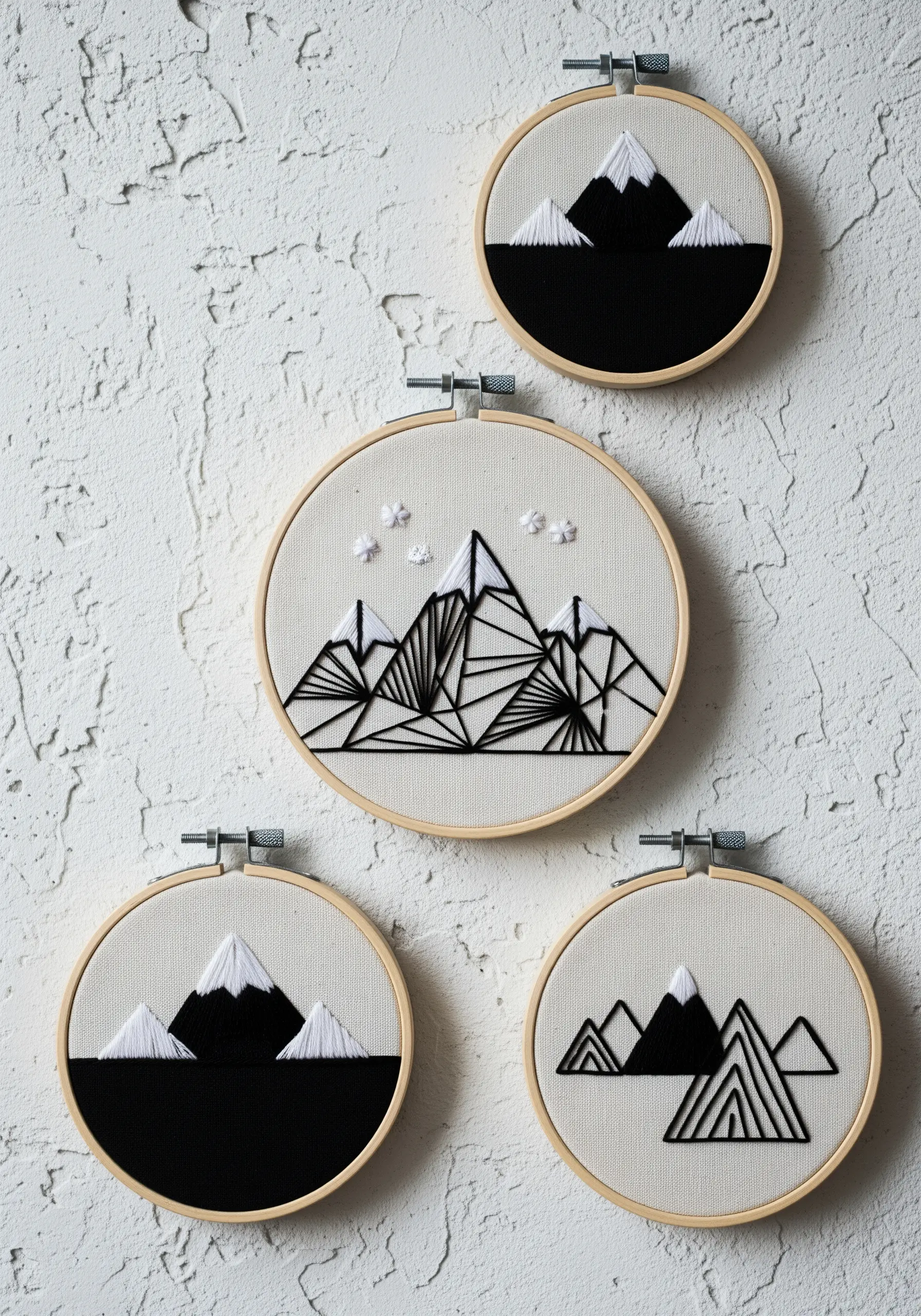
Replace organic shading with sharp geometric angles to modernize a landscape. Use long straight stitches to create the facets of the mountains, changing direction slightly in each section to catch the light differently.
The stark black and white palette emphasizes the structure over the scenery. This style fits perfectly with minimalist embroidery designs for a Scandinavian home vibe, where clean lines and high contrast reign supreme.
11. Zen rain and textured water
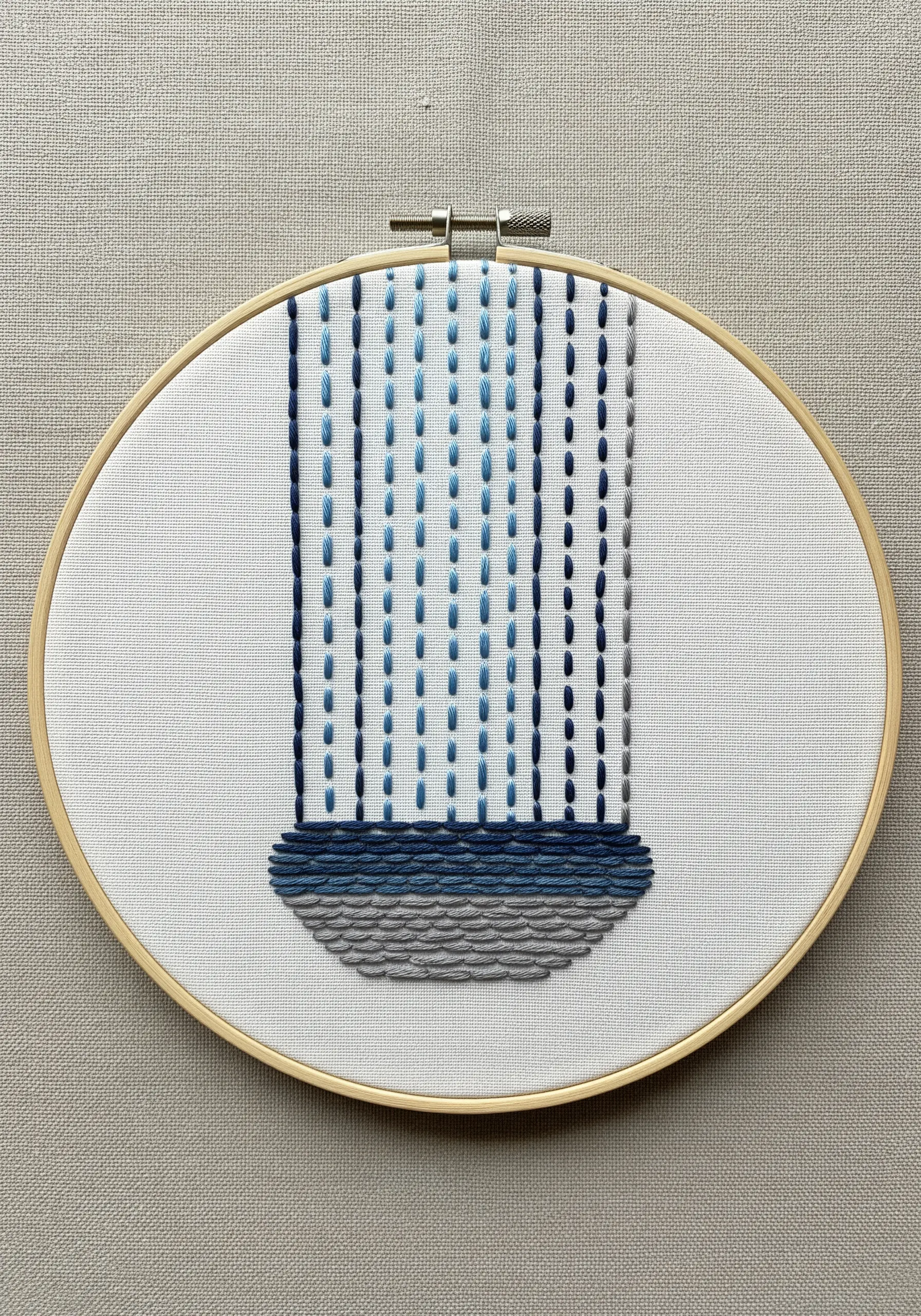
Vertical running stitches are the simplest way to depict rain, but their regularity creates a calming, meditative rhythm. Contrast this verticality with horizontal brick stitching at the bottom to represent the water or vessel.
The gradient of blues connects the two elements seamlessly. These Japanese Zen-inspired embroidery designs show how repetition of the most basic stitch can create a sophisticated atmosphere.
12. High-contrast limited palette

Yellow and grey is a classic modern combination that pops on a neutral background. Use a whipped backstitch for the white pith to create a raised, defined barrier, and fill the segments with a satin stitch that fans out from the center.
Leaving the grey background visible between the segments adds necessary breathing room. Experimenting with minimalist color palette embroidery ideas can turn a simple fruit motif into a piece of graphic design.
13. Connecting the dots in the dark

Black fabric absorbs light, making white thread appear to glow. Create a constellation by connecting small star stitches (or sequins) with long, single-strand straight stitches.
Keep the connecting lines slightly slack or perfectly taut depending on the ‘technical’ look you want. These dramatic dark thread embroidery designs are excellent for beginners because they rely on placement rather than complex stitch manipulation.
14. Texture blocking with seed stitch

This design contrasts the linear, directional flow of the rust-colored stem stitch arch with the chaotic texture of the pink fill. The pink section uses a dense seed stitch (tiny random straight stitches), which builds a rugged, carpet-like surface.
This tactile contrast makes the piece interesting to touch and view. Utilizing organic texture embroidery designs allows you to fill space quickly without the pressure of perfect satin stitch alignment.
15. Greenwork outline with solid accents

A Monstera leaf is iconic, but outlining it in green instead of black softens the look. Use a split stitch for the outline to give it durability and a continuous flow.
Filling only the ‘holes’ (fenestrations) with satin stitch creates an inverted visual interest. Mastering these plant embroidery color palettes involves knowing when to outline and when to fill for maximum graphic impact.
16. The discipline of Sashiko grids

Sashiko uses the humble running stitch to create complex geometric beauty. The key here is consistency in stitch length; ensure your white stitches are exactly the same length as the gaps between them.
The star patterns at the intersections reinforce the grid structure. Practicing modern embroidery stitches every beginner needs often starts with mastering this kind of regular, rhythmic spacing.
17. Low-poly animal geometry
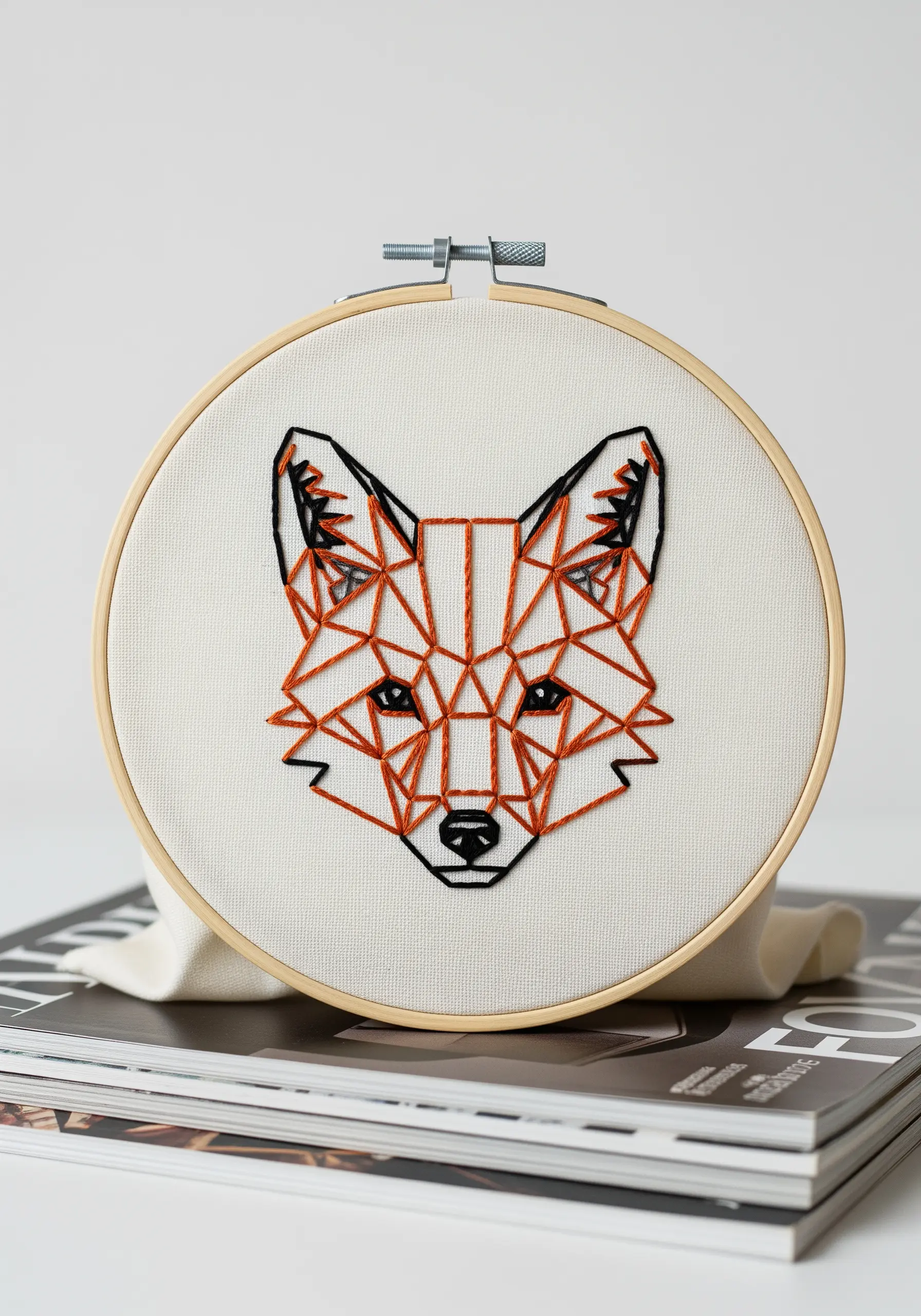
Turn a wildlife portrait into modern art by breaking it down into geometric facets. Use a black backstitch to define the ‘wireframe’ of the fox, creating a sharp, digital look.
Selectively filling only a few triangles with satin stitch suggests form and shadow without needing to color the whole animal. These animal silhouette string art designs are perfect for merging technology aesthetics with traditional craft.