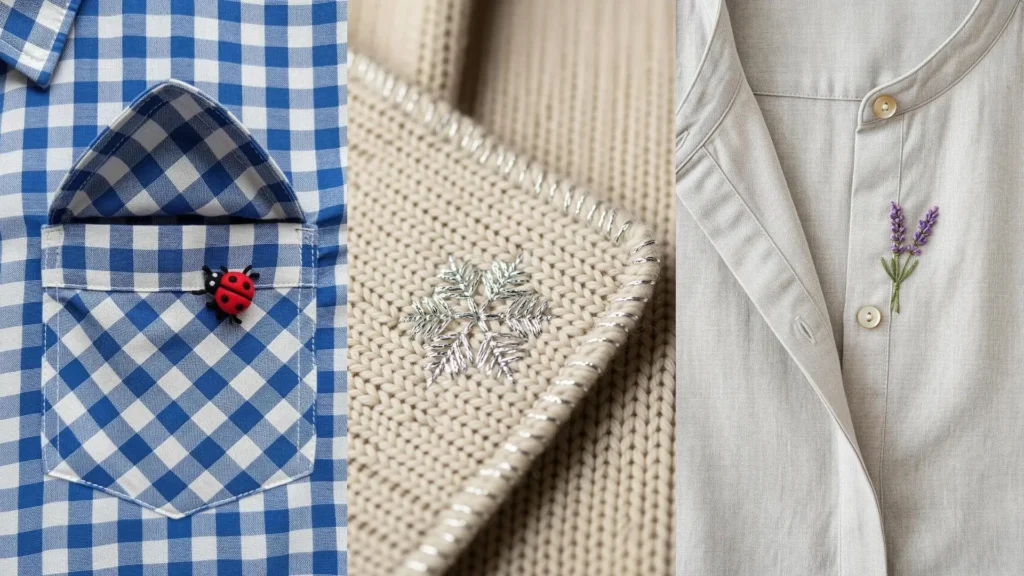
Have you ever looked at a beautifully embroidered piece and wished you could create something with that same sense of intention and artistry? It’s easy to feel stuck with standard patterns, but I want to show you how your table linens can become a canvas for something more personal and expressive.
Abstract embroidery is not about flawless, perfect stitches. It’s about exploring rhythm, texture, and color in a way that feels authentic to you. Each placemat, napkin, or table runner is an opportunity to create a small piece of art that elevates an everyday moment into something special, transforming the simple act of dining.
Think of these ideas not as strict rules, but as invitations to play. I’m here to guide you through the techniques—how to blend colors like watercolor, how to create sculptural forms with thick yarn, and how to use simple lines to build sophisticated patterns. You have a unique creative voice, and it’s time to let it shine through your stitches and elevate your dining space.
1. Dynamic Flow with Layered Couching
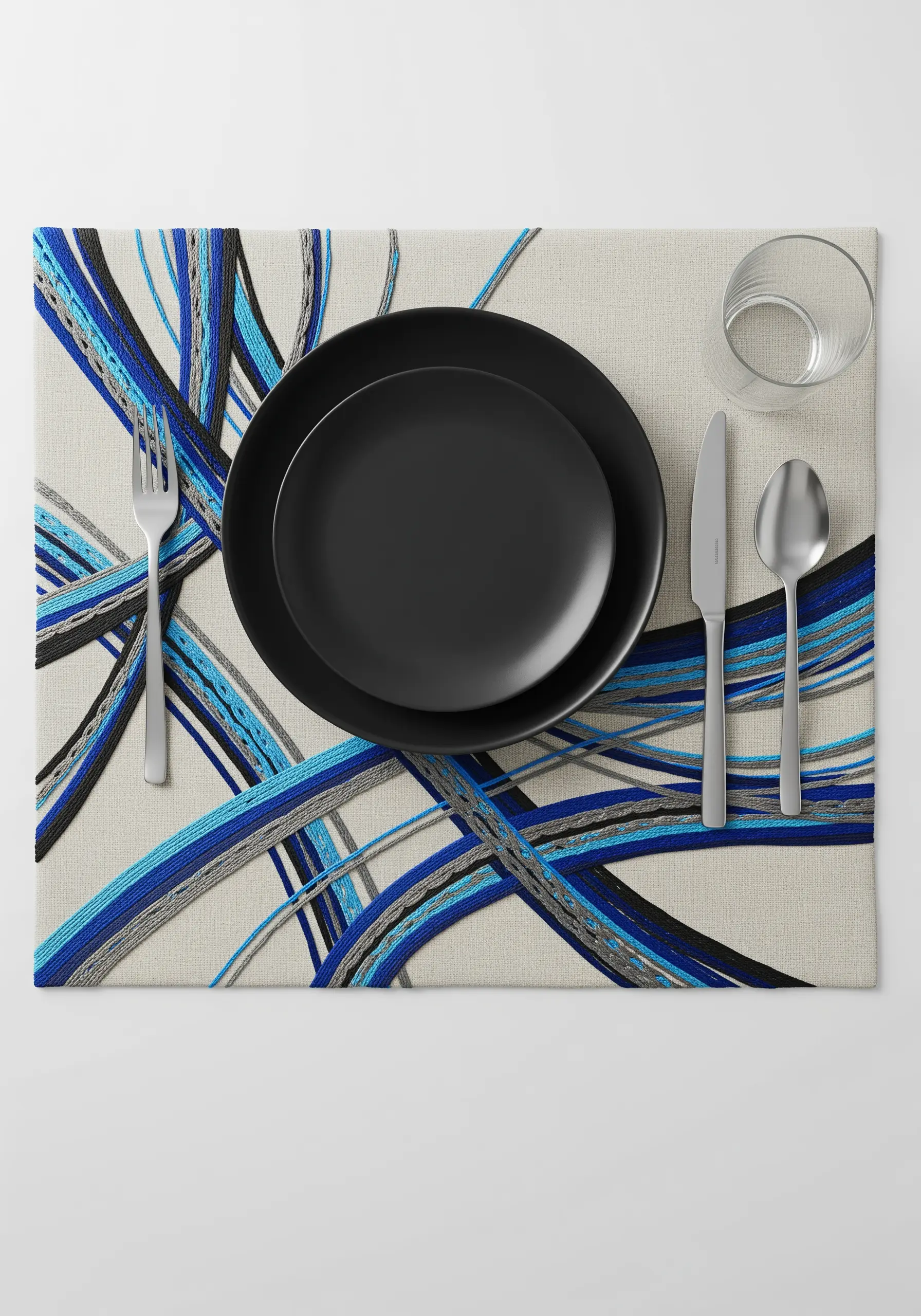
Create a sense of kinetic energy on your placemats by layering threads of varying thicknesses and sheens.
Begin by laying down your thickest yarn in long, sweeping curves, securing it with a thin, matching couching stitch.
Next, weave thinner threads in contrasting colors over and under the primary lines, anchoring them at intersections to build visual depth.
The combination of matte cotton and shiny rayon floss gives the design a subtle texture that catches the light differently from every angle, making the composition feel alive.
2. Scattered Geometry with Metallic Thread
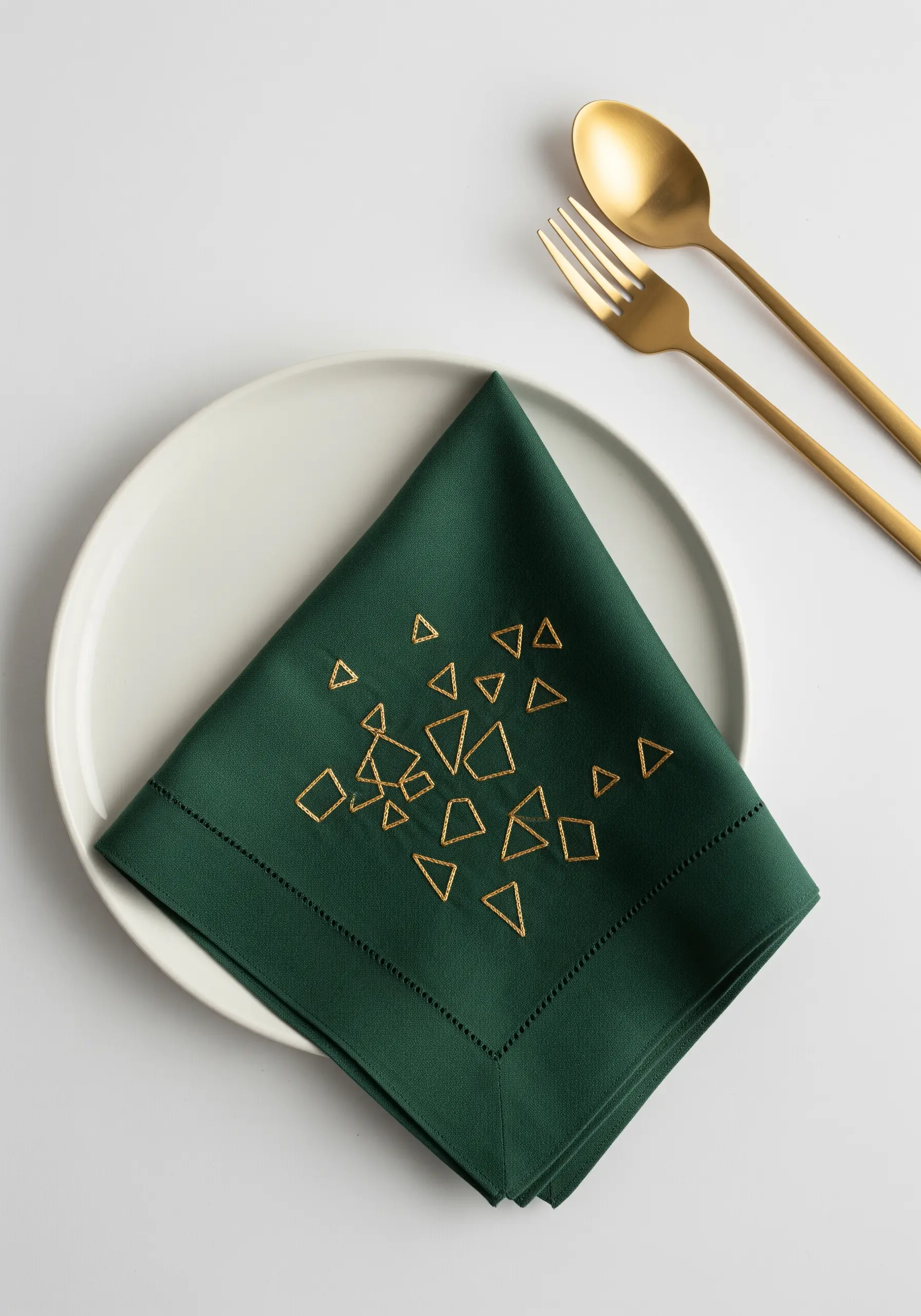
Transform a simple napkin with a constellation of sharp, geometric shapes.
To achieve crisp outlines, first work a delicate split stitch foundation before covering it with a satin stitch using a high-quality metallic thread.
This under-stitching prevents the metallic floss from slipping or looking uneven on the fabric.
Arrange the triangles in a scattered, random pattern to create a sense of effortless modernity, letting the negative space play an essential role in the composition.
Consider how you can use metallic thread to add a touch of luxury to minimalist designs.
3. Architectural Precision with Gridwork
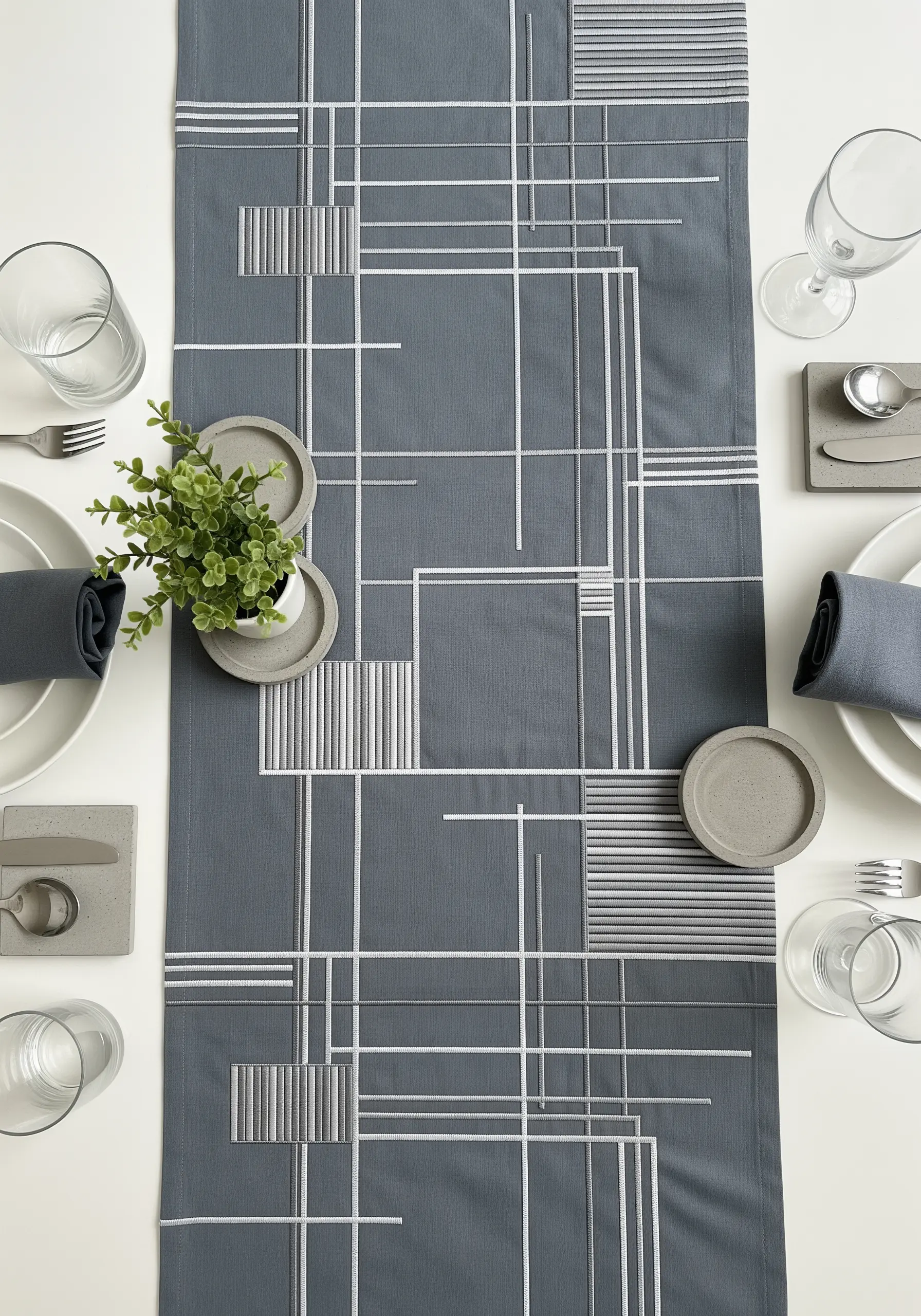
Embrace a clean, architectural aesthetic by combining fine lines with dense, textured blocks.
Use a simple backstitch with two strands of floss for the long, intersecting lines to ensure they remain straight and sharp.
For the rectangular fills, switch to a thicker thread or use all six strands of floss in a tightly packed satin stitch.
This contrast between delicate linework and solid forms creates a sophisticated visual rhythm, turning your table runner into a piece of modern art.
This is a perfect example of minimal line art table linen embroidery that feels both structured and expressive.
4. Organic Coils with Wrapped Yarn
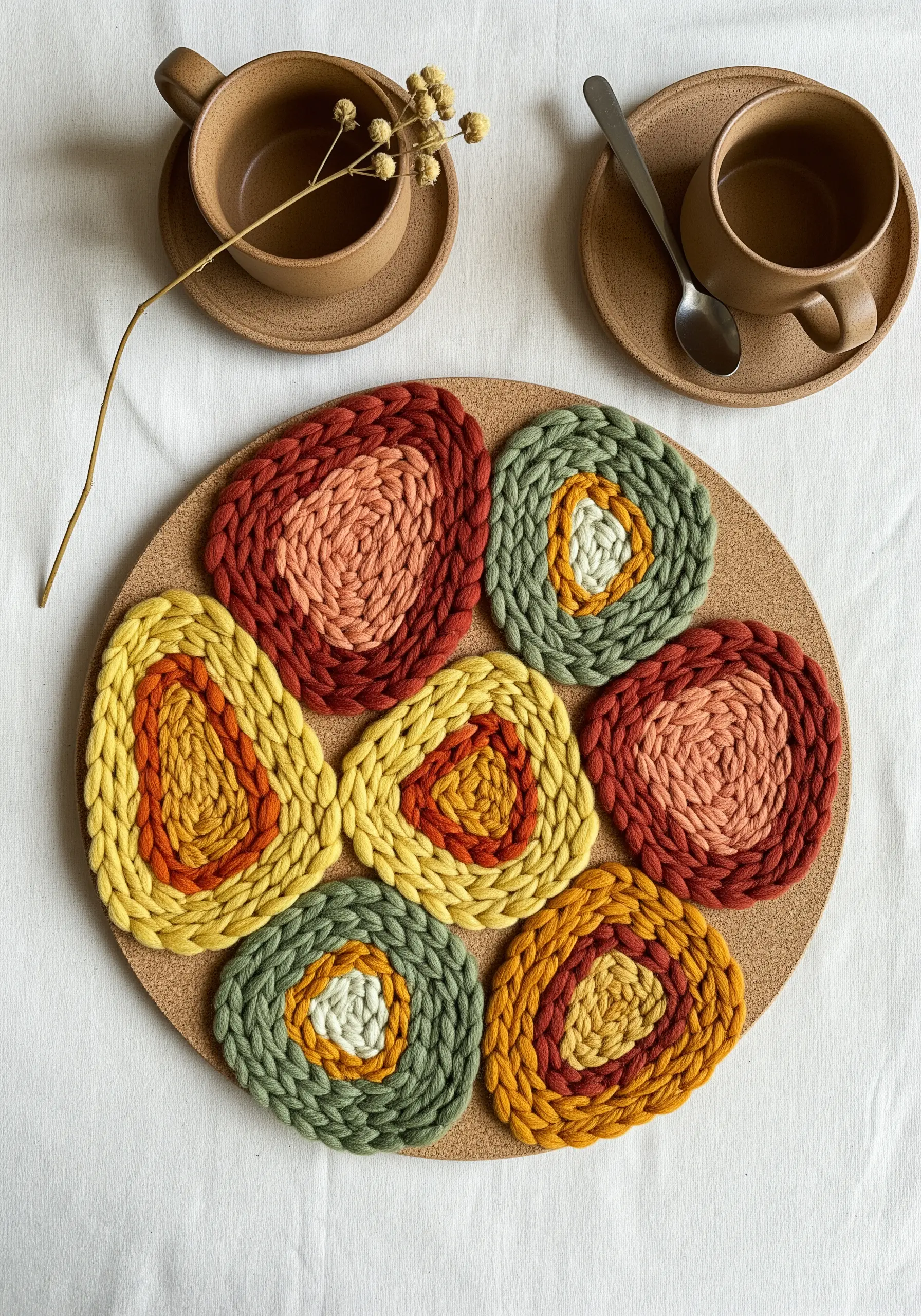
Achieve a bold, sculptural effect by couching thick yarn or cotton rope onto a sturdy base like cork or heavy felt.
To create these organic coasters, simply coil the yarn and use a strong, complementary thread to stitch it down from the back, hiding your stitches completely.
Introduce new colors by laying the end of one yarn next to the start of another and wrapping them tightly together with your couching thread for a seamless transition.
This technique is a form of abstract thread sculpting that adds instant warmth and tactile appeal.
5. Watercolor Washes with Thread Painting
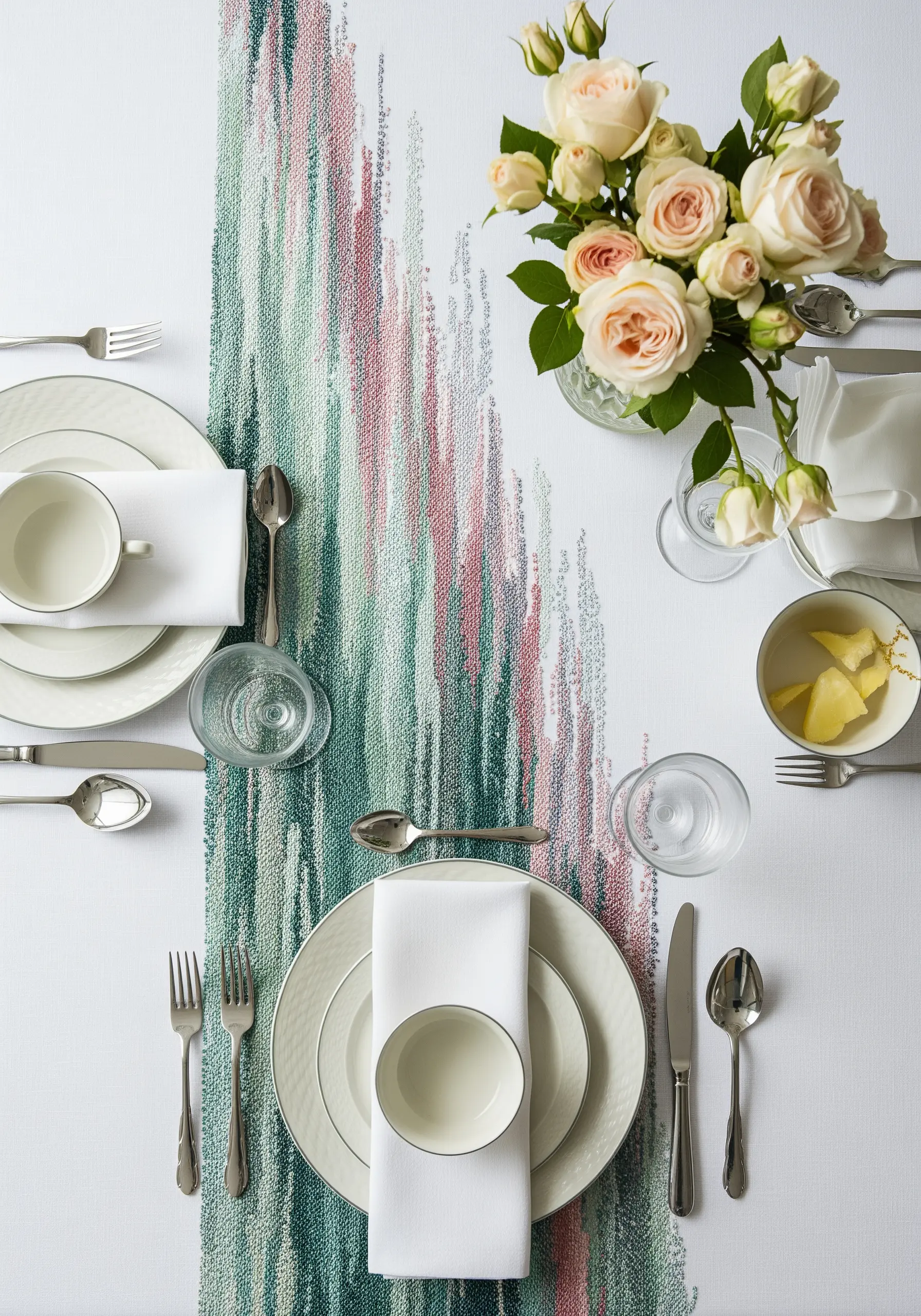
Mimic the delicate blend of watercolor paints using the long-and-short stitch technique.
Work in vertical sections, using single strands of floss to create a soft, ethereal gradient down the center of your table runner.
Choose an analogous color palette—like these soft pinks and greens—and blend them by staggering the length of your stitches and introducing new colors gradually.
This method removes harsh lines, resulting in a soft, atmospheric design that feels hand-painted.
Explore more color blending thread patterns to master this artistic effect.
6. Shattered Forms with Appliqué and Linework
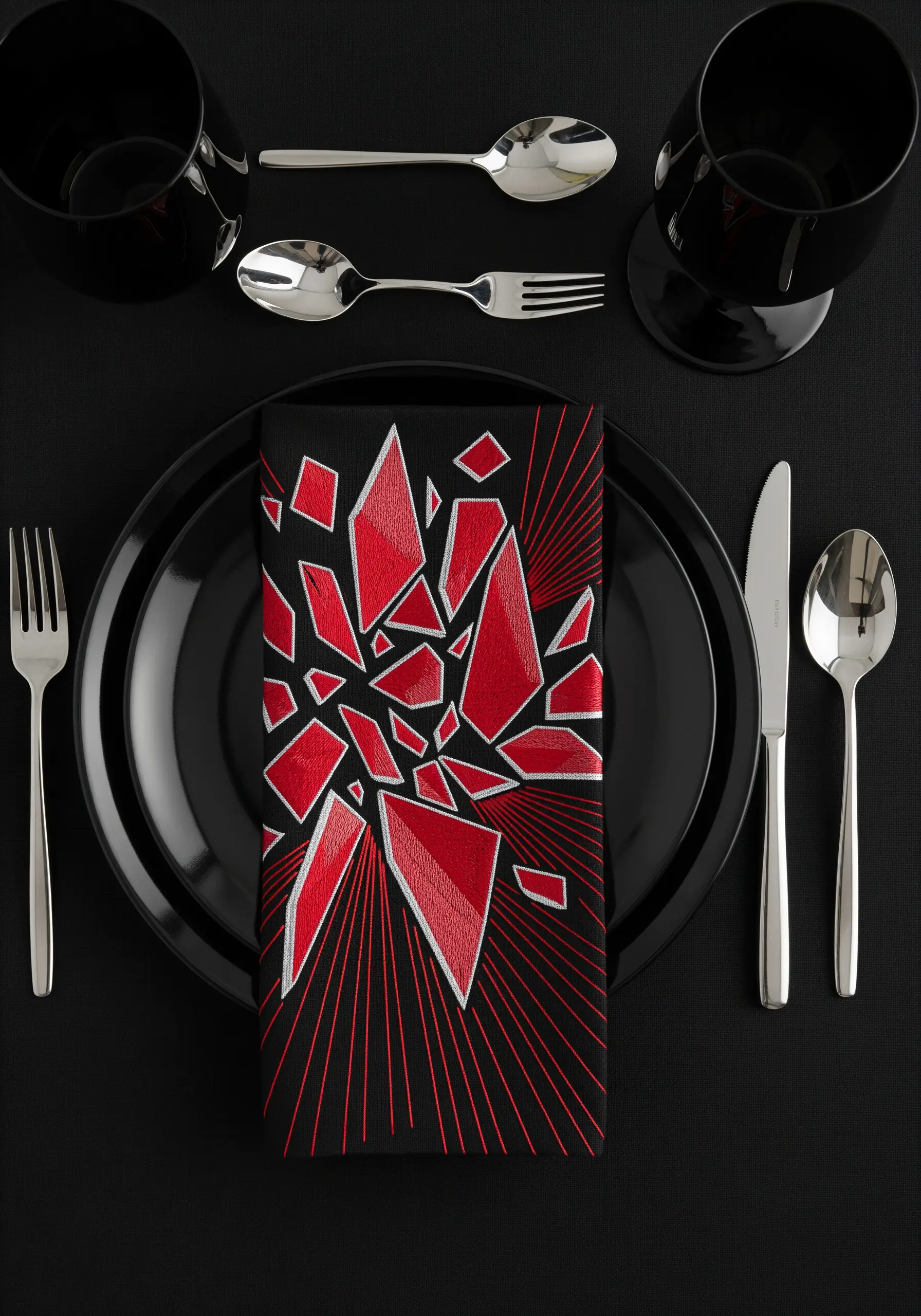
Create a high-impact, graphic design by combining fabric appliqué with sharp, radiating stitches.
Cut angular shards from a non-fraying fabric like faux leather or felt and secure them with a neat running stitch around the edges.
For the explosive effect, use a single, strong line of backstitch radiating from a central point.
The contrast between the solid, light-reflecting appliqué and the fine, matte thread creates a dramatic sense of depth and tension on the dark fabric.
7. Topographic Gradients with Contour Stitching
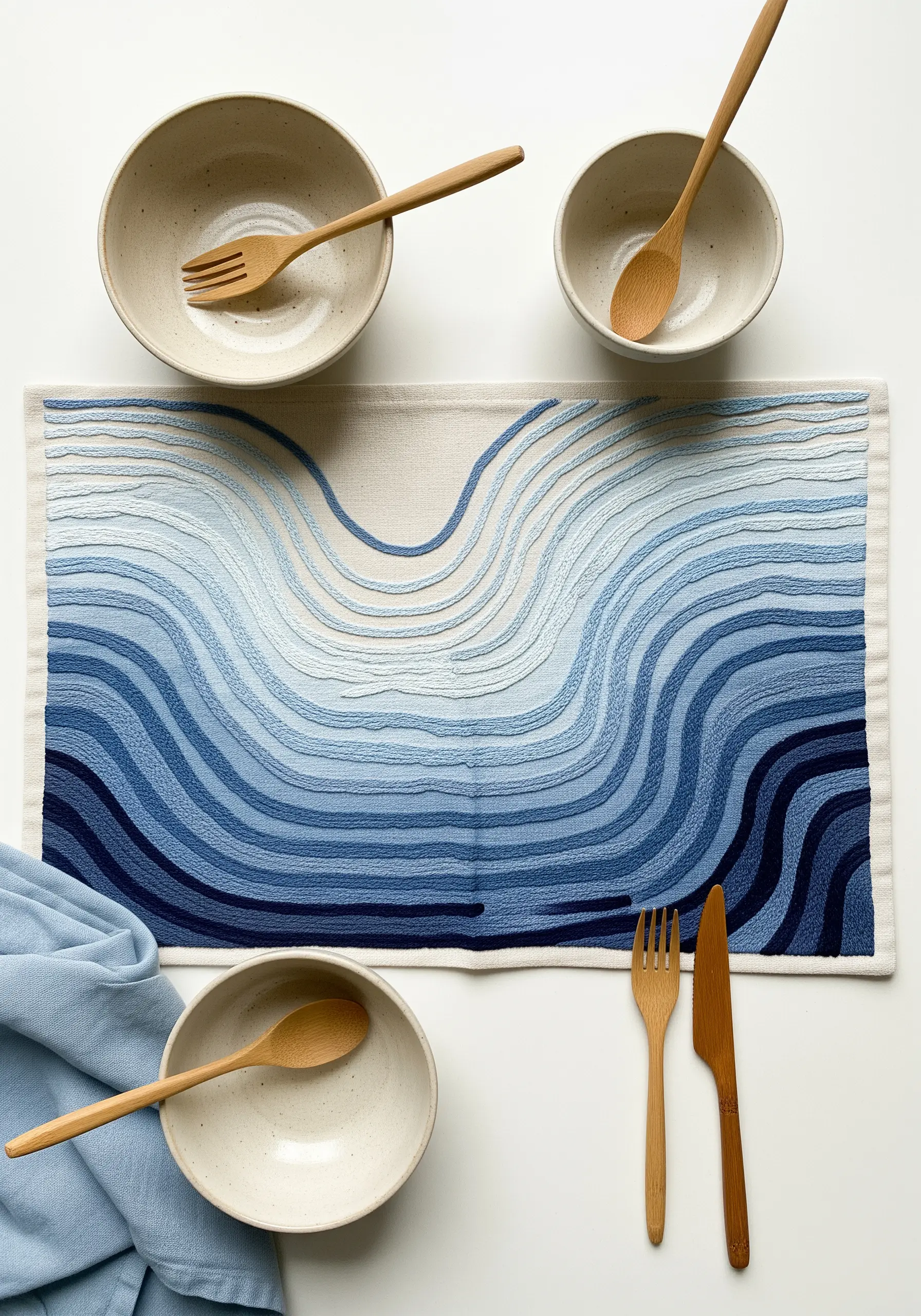
Evoke the serene feeling of ocean waves or topographic maps with contoured lines of color.
Use a simple chain stitch or a heavy backstitch to create raised, flowing lines that follow one another.
Create a smooth gradient by working with five or six shades of the same color, transitioning from darkest to lightest.
The key is to keep the space between your stitched rows consistent, which gives the overall design a clean, rhythmic quality that is deeply calming to the eye.
8. Sculptural Serpentine with Cord Appliqué
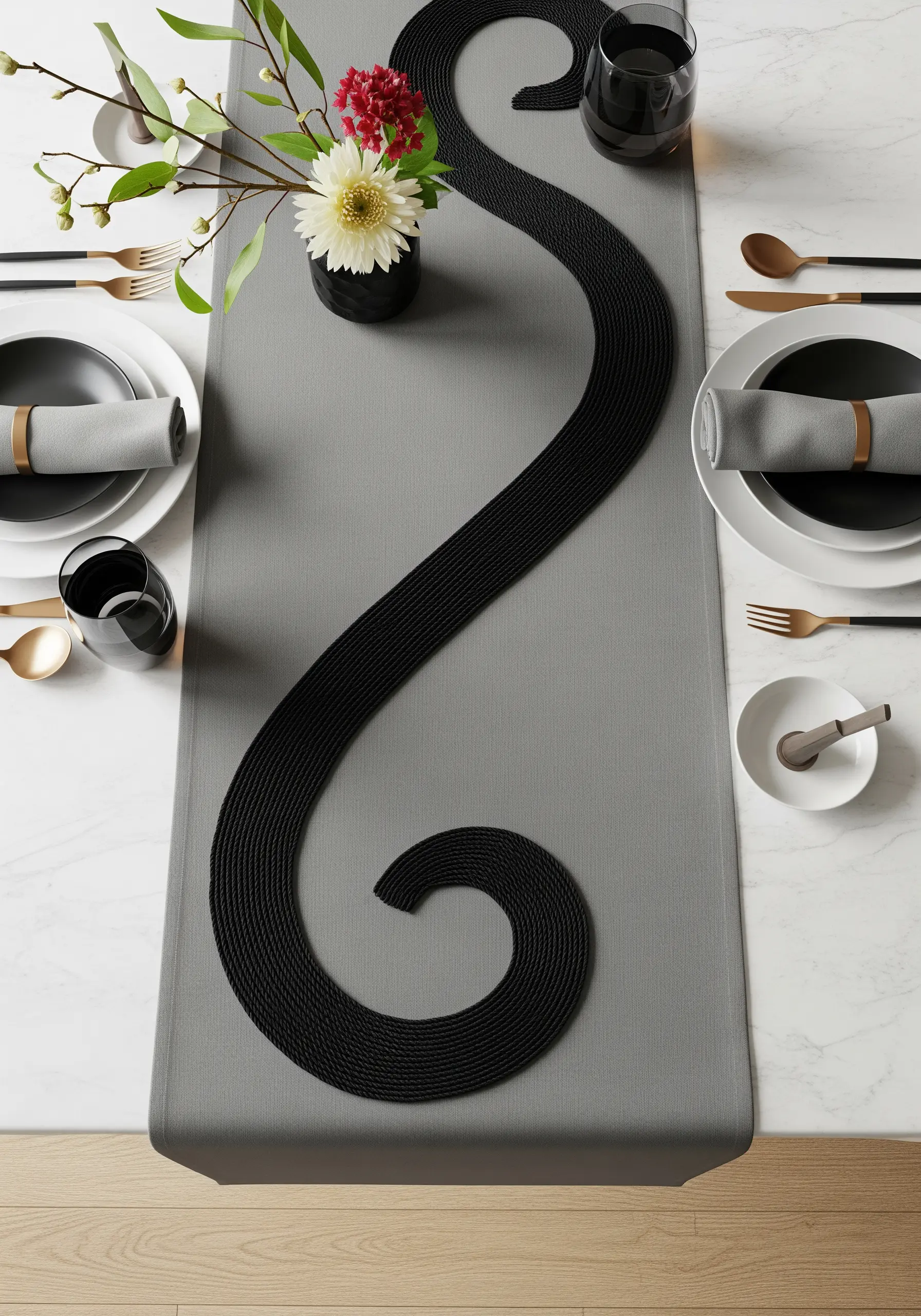
Make a bold, minimalist statement by attaching a single, dramatic element to your table runner.
This design uses a thick, braided cord couched onto the fabric surface with a durable, invisible thread.
To create the smooth, elegant curves, pin the cord in place before you begin stitching, ensuring the form has a natural and fluid rhythm.
This technique elevates a simple shape into a powerful, sculptural focal point, proving that sometimes one perfect line is all you need.
9. Deconstructed Primary Colors with Satin Stitch
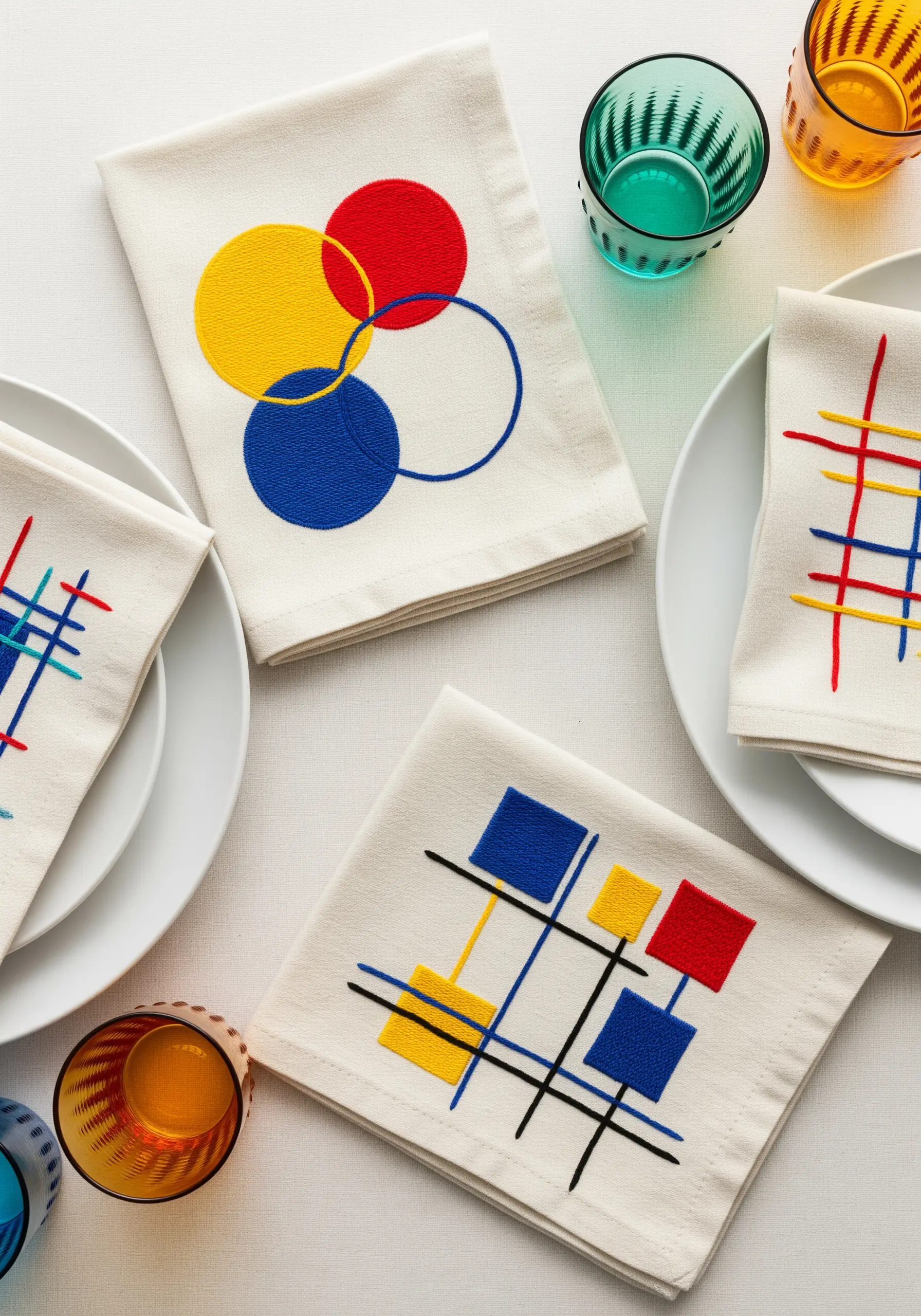
Pay homage to modern art with geometric compositions inspired by Piet Mondrian.
Use a dense, directional satin stitch to fill the circles and squares, ensuring your stitches all lie parallel for a smooth, uniform finish.
For the intersecting grid, a clean backstitch in black provides a strong graphic structure that makes the primary colors pop.
This design works because of its perfect balance of filled shapes, outlines, and negative space, turning each napkin into a miniature abstract canvas.
10. Monochrome Texture Sampler
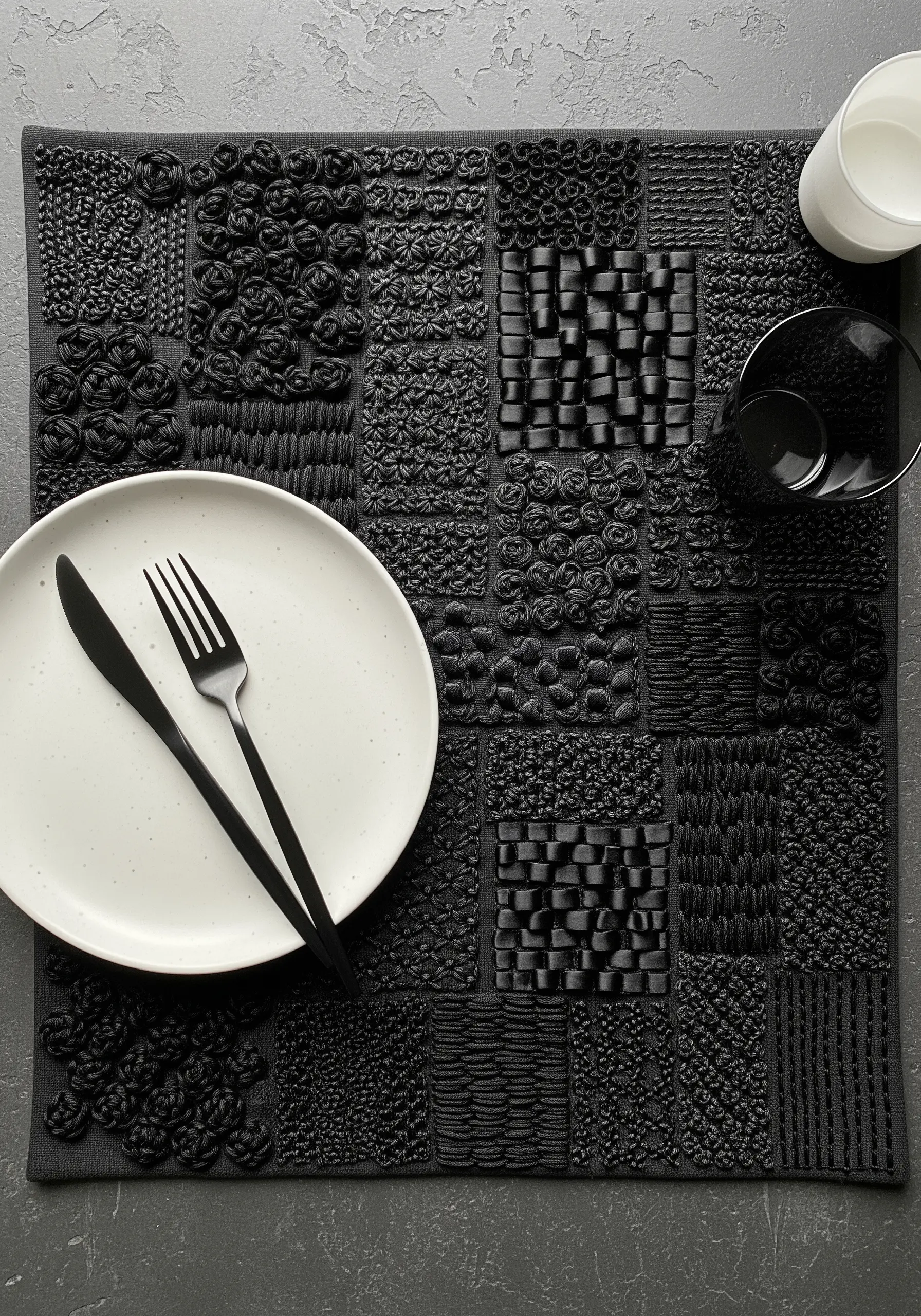
Explore the expressive power of texture by creating a sampler-style placemat using only one color.
Divide your fabric into a grid and fill each square with a different dimensional stitch: French knots, bullion knots, woven wheels, cast-on stitches, or raised satin stitch bars.
Working in monochrome forces you to focus entirely on form and texture, turning the placemat into a sophisticated tactile experience.
These are the kinds of statement textured embroidery techniques that invite touch and closer inspection.
11. Digital Glitch with Neon Blocks
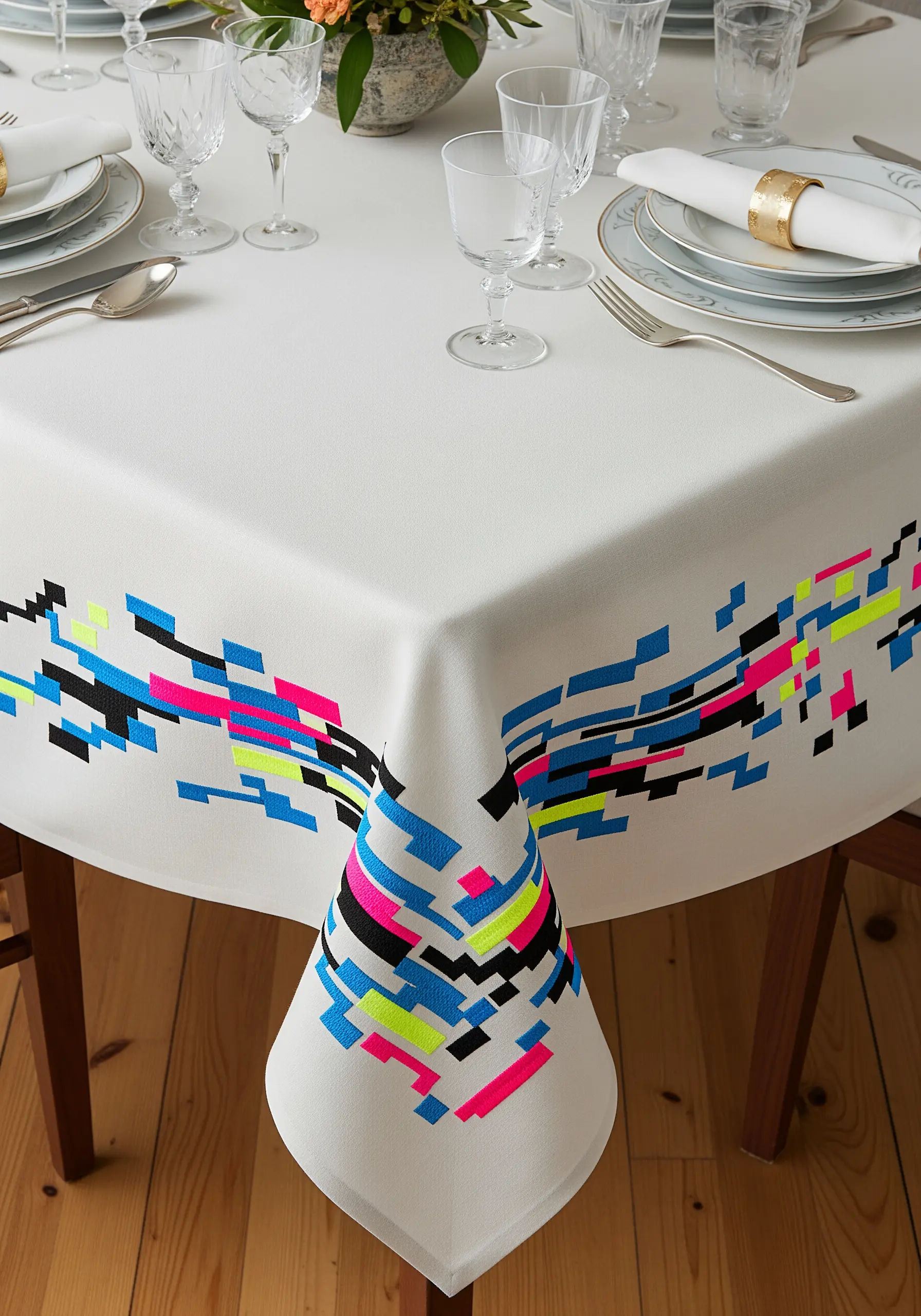
Translate the energy of digital art onto your tablecloth with a vibrant, glitch-inspired border.
Use blocks of satin stitch to create a pixelated effect, intentionally misaligning the squares and rectangles to mimic a distorted screen.
Choose intensely saturated neon threads and set them against a bright, contrasting color like cyan or black to maximize their impact.
This design wraps around the corner of the cloth, creating a dynamic flow that draws the eye and modernizes the entire table setting.
12. Radial Energy with Negative Space
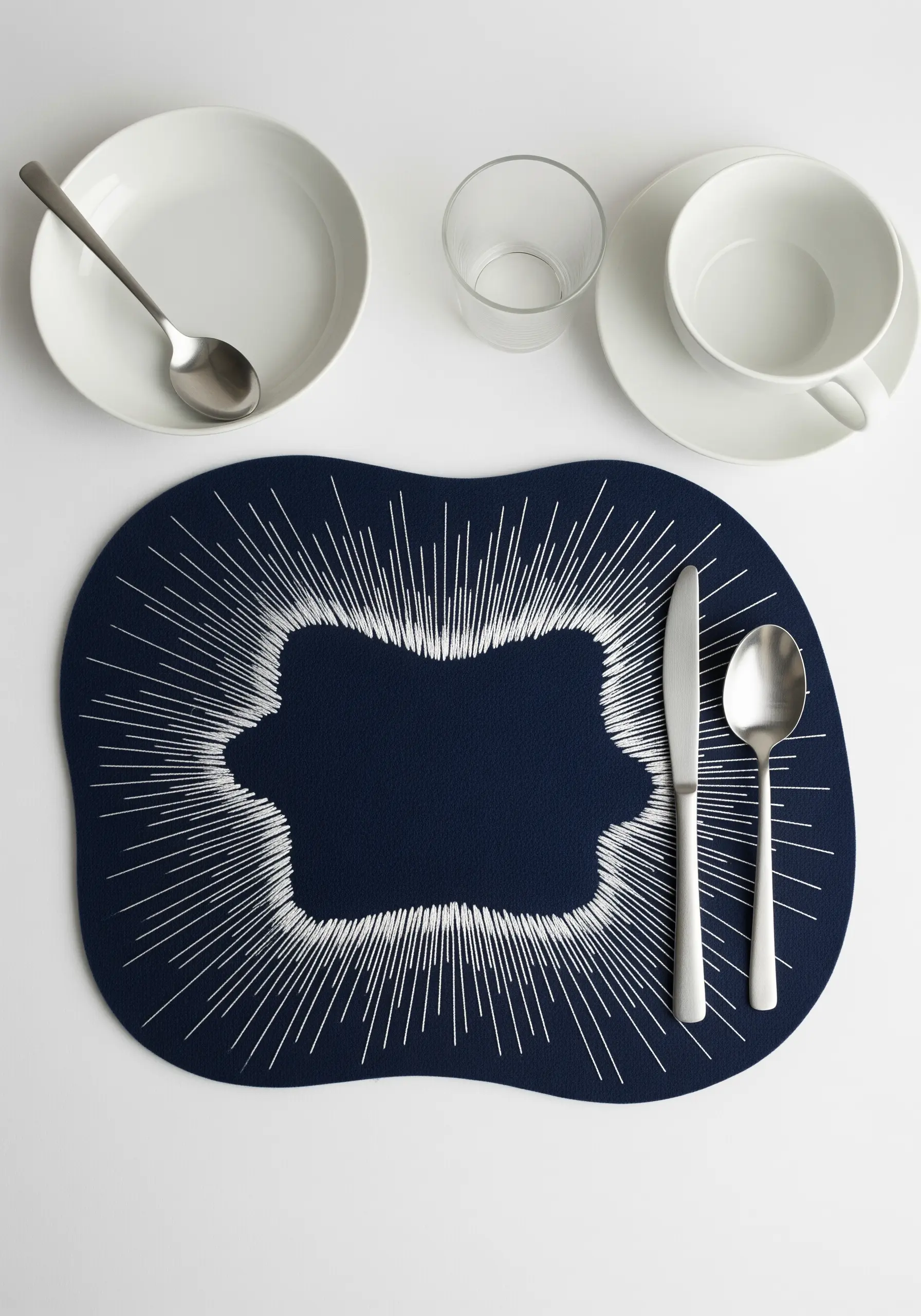
Harness the power of negative space by framing a central void with radiating straight stitches.
Draw your central shape on the placemat first, then use it as a guide for your stitches.
Work with a slightly thicker thread, like a pearl cotton, and pull each stitch taut to create perfectly straight, crisp lines.
The visual energy comes from the high contrast and the dense repetition of lines, which makes the empty center the true focal point of this striking design.
13. Soundwave Rhythm with Vertical Bars
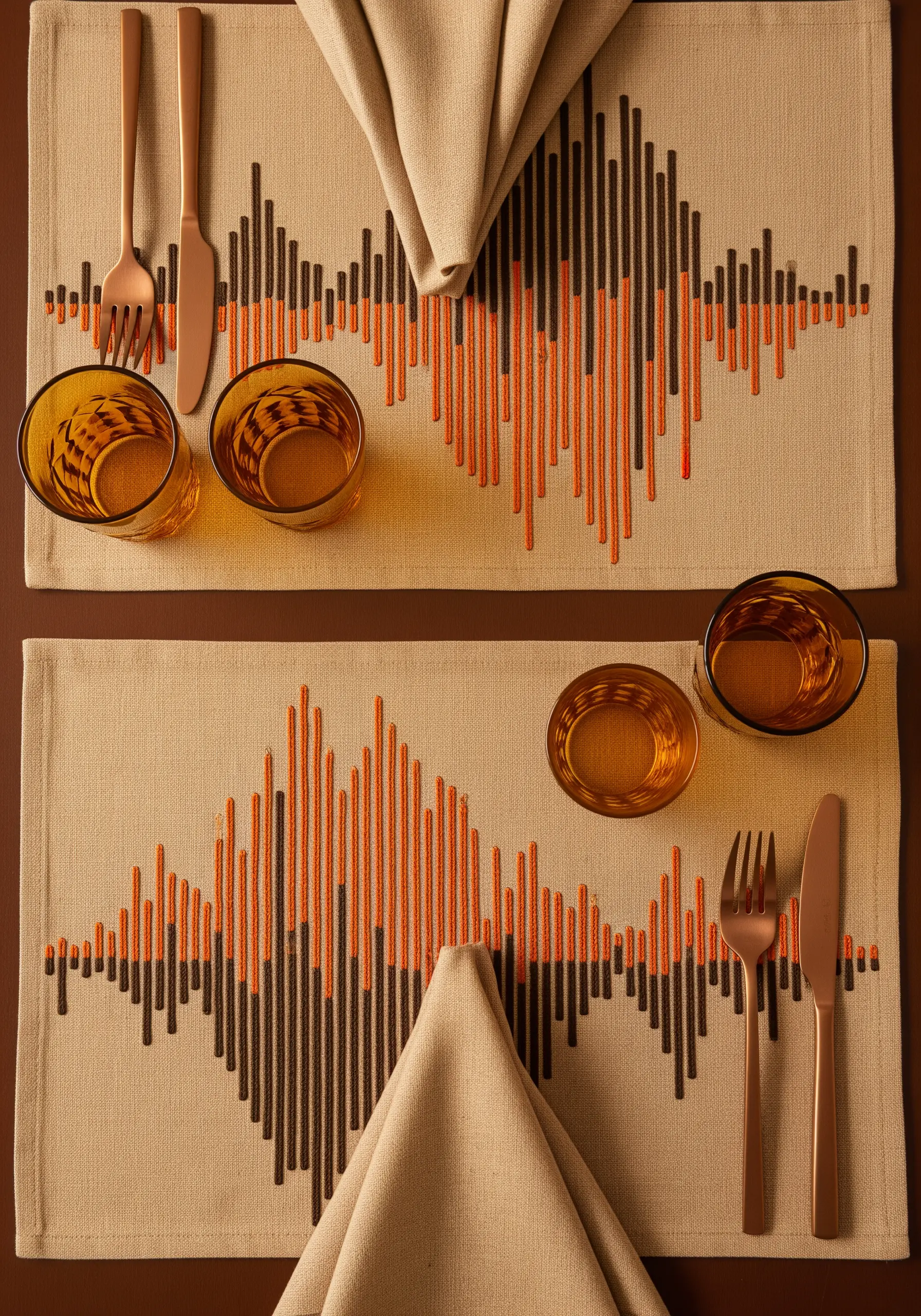
Capture the visual rhythm of a soundwave or a cityscape with vertical satin stitch bars.
Vary the height of each bar to create a dynamic, undulating pattern across your placemats.
To achieve the two-tone effect, simply switch thread colors at the halfway point of the design, creating a horizon line that adds structure and interest.
Using a natural linen fabric provides a warm, textured backdrop that makes the sharp, graphic embroidery stand out.
14. Chromatic Coils in Vibrant Clusters
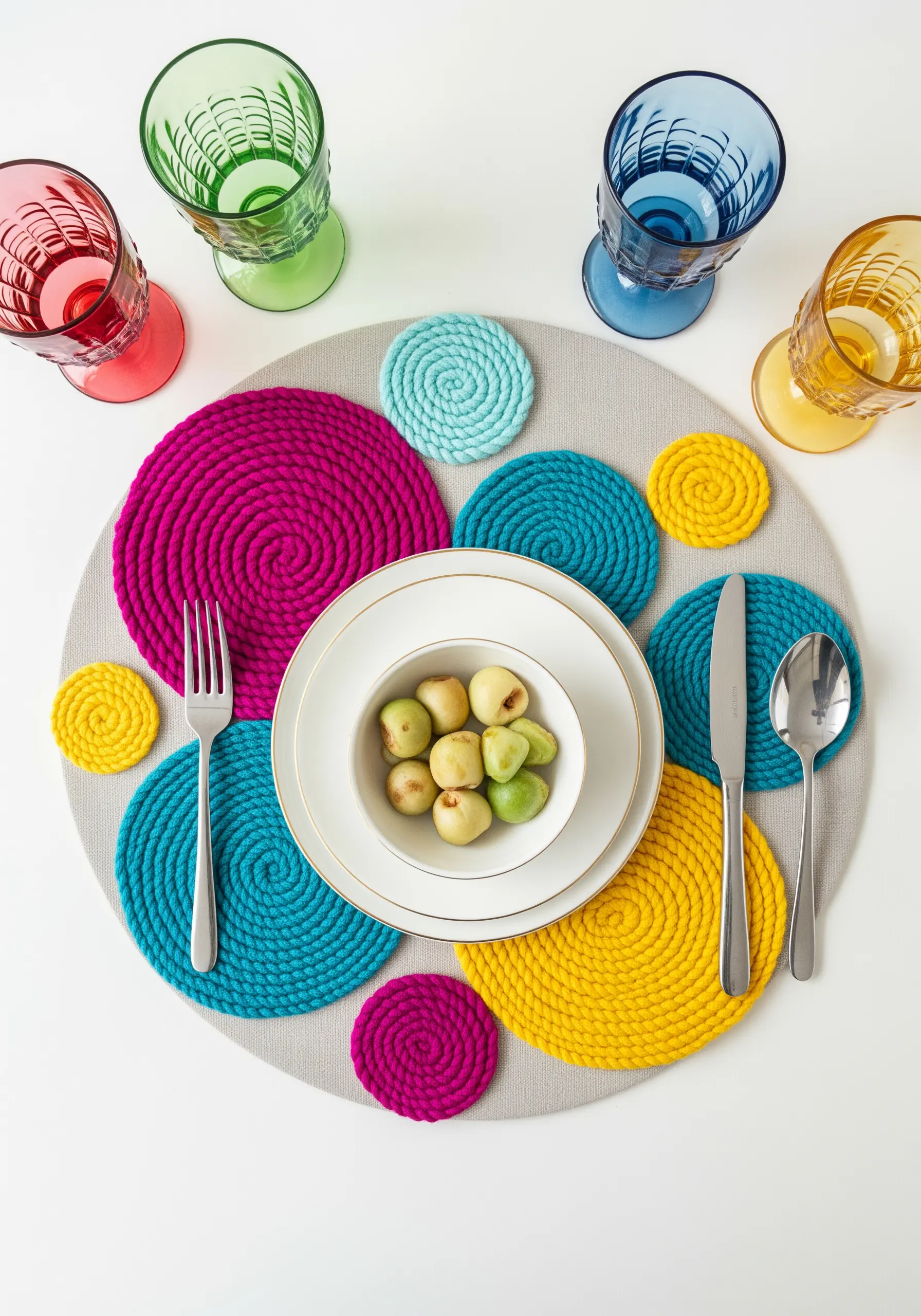
Create a joyful, energetic tablescape by grouping brightly colored, yarn-wrapped coasters.
This technique uses couching to secure thick, vibrant yarn into tight spirals, which can be stitched onto a felt or fabric backing.
The key to this look is the confident use of color—mix bold, saturated hues like magenta, turquoise, and yellow for maximum impact.
Arrange them in an overlapping cluster on a central placemat to serve as a dynamic and functional centerpiece.
15. Delicate Branches with Variegated Thread
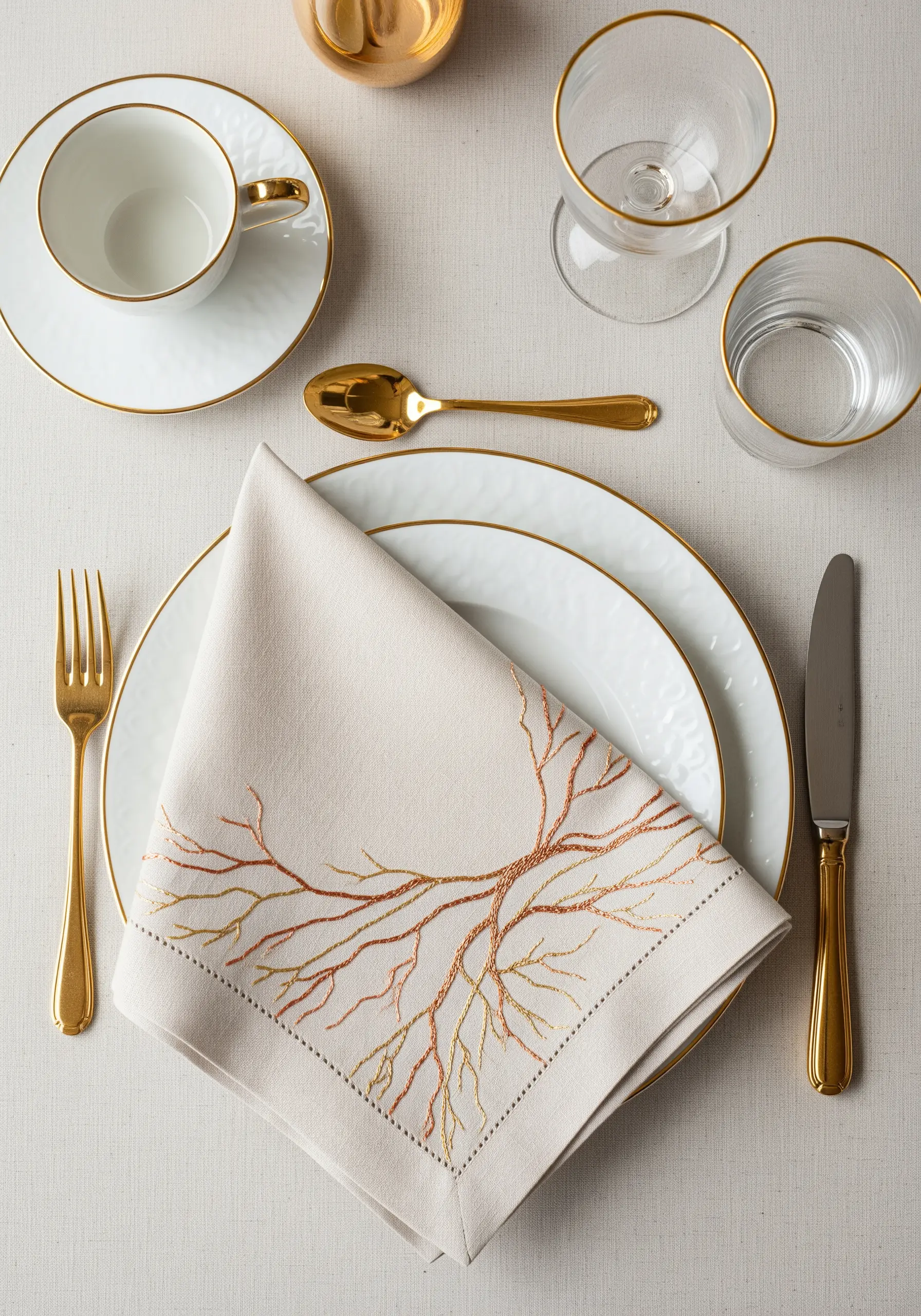
Create the subtle, organic complexity of bare branches using a single variegated thread.
Use a whipped backstitch or a simple stem stitch to embroider the delicate, branching lines across the corner of a napkin.
A variegated floss with gentle, tonal shifts from gold to rust does the color work for you, giving the design natural depth and realism without needing to switch threads.
This approach is beautifully efficient, resulting in organic texture embroidery designs that feel intricate and refined.
16. Amorphous Forms with Layered Knots
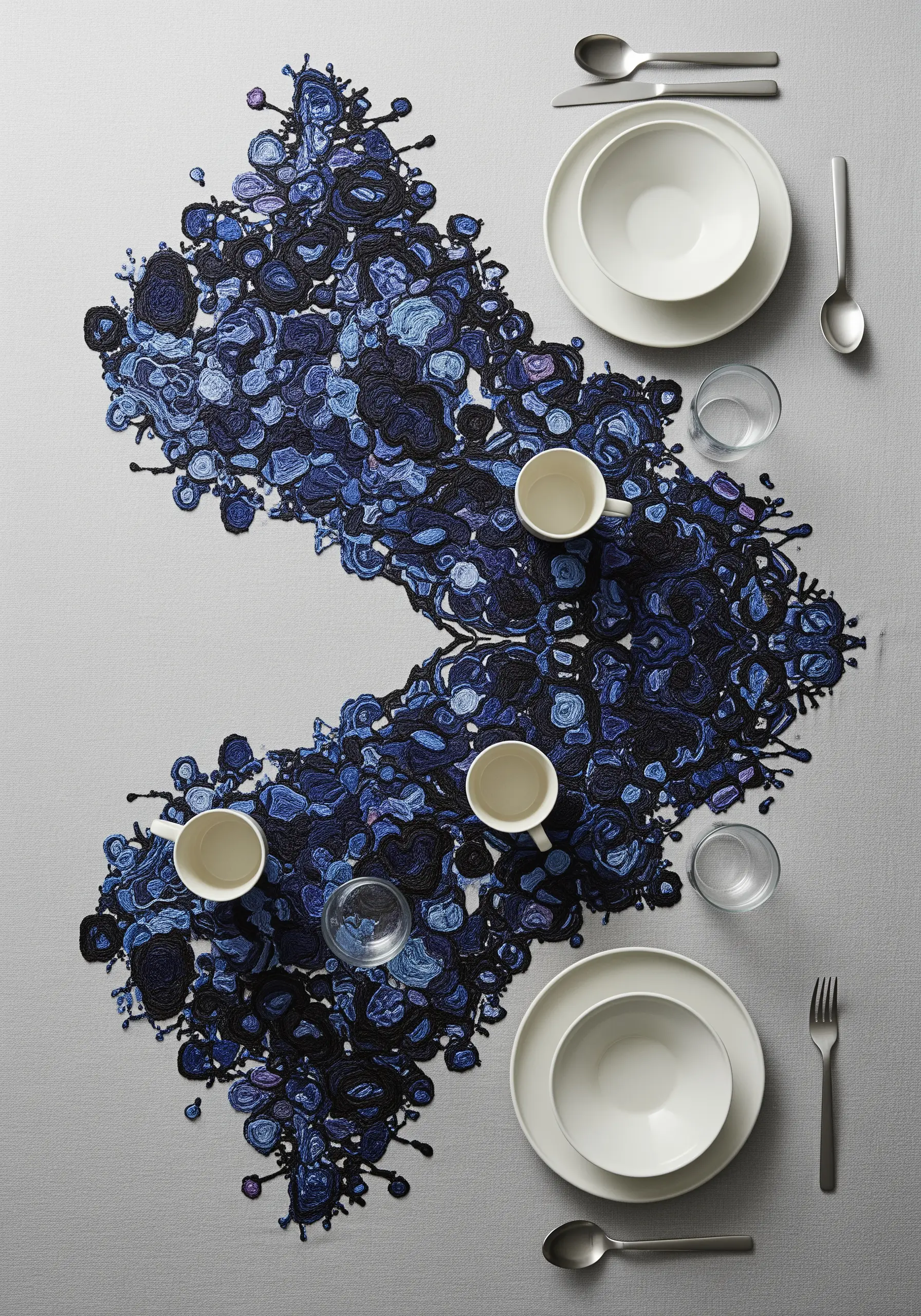
Build a rich, textural landscape on your table runner with dense clusters of French knots and seed stitches.
Create an organic, flowing shape by first outlining it lightly in pencil.
Fill the shape with French knots using various shades of a single color family, like these deep blues and purples, to create a mottled, pointillist effect.
Vary the number of wraps for your knots (one, two, or three) to create subtle differences in size and texture, adding to the design’s organic complexity.
17. Layered Landscapes with Felt Appliqué
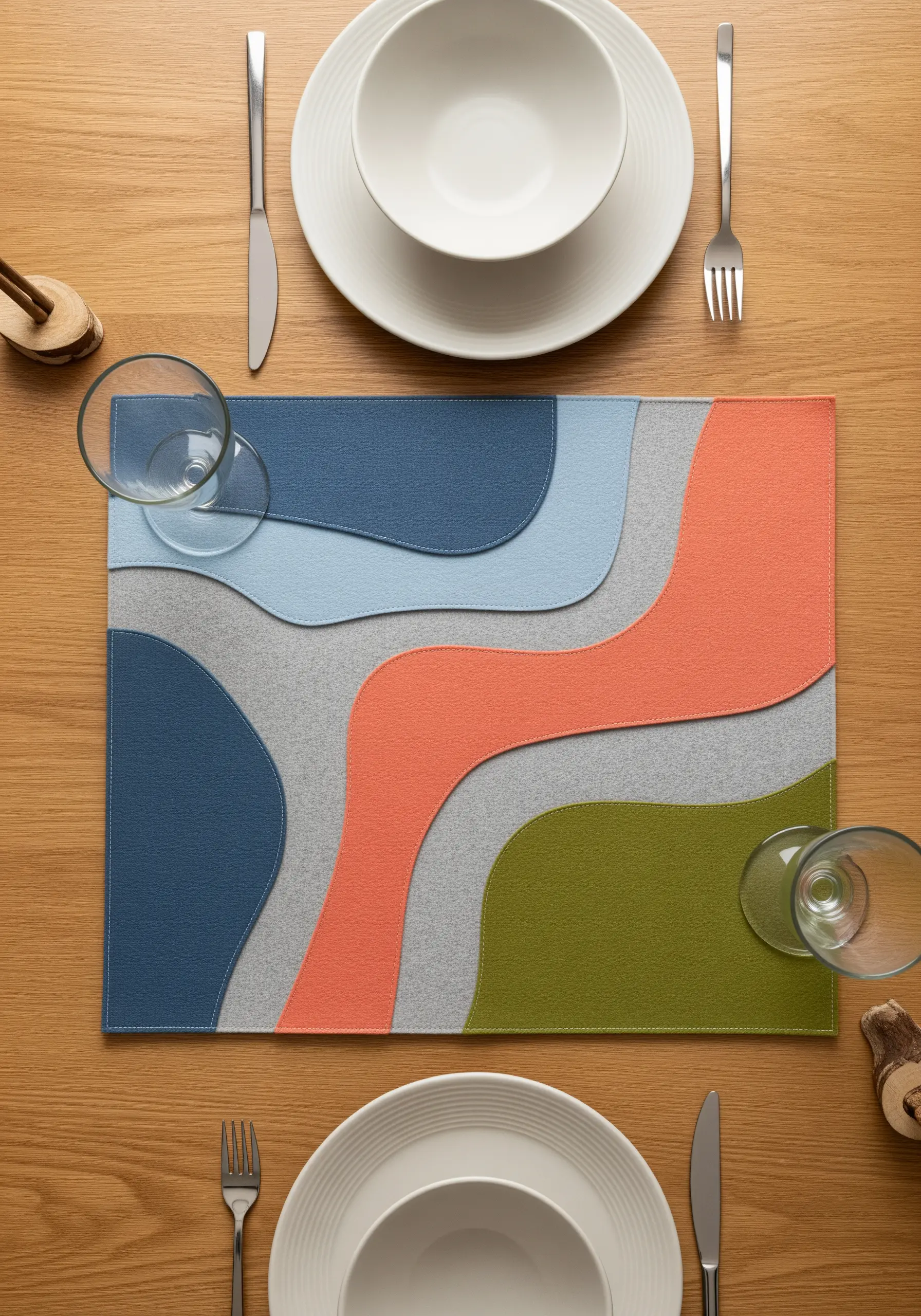
Construct a modern, abstract landscape using layers of colored felt on your placemat.
Cut soft, undulating shapes from different colors of felt and arrange them in overlapping layers to suggest hills or waves.
Secure each piece with a simple, matching running stitch just inside the edge. This not only attaches the felt but also adds a subtle, handmade detail.
This method is a fast and effective way to block in bold fields of color, creating a graphic and contemporary design with minimal stitching.
18. Translucent Geometry with Open Fills
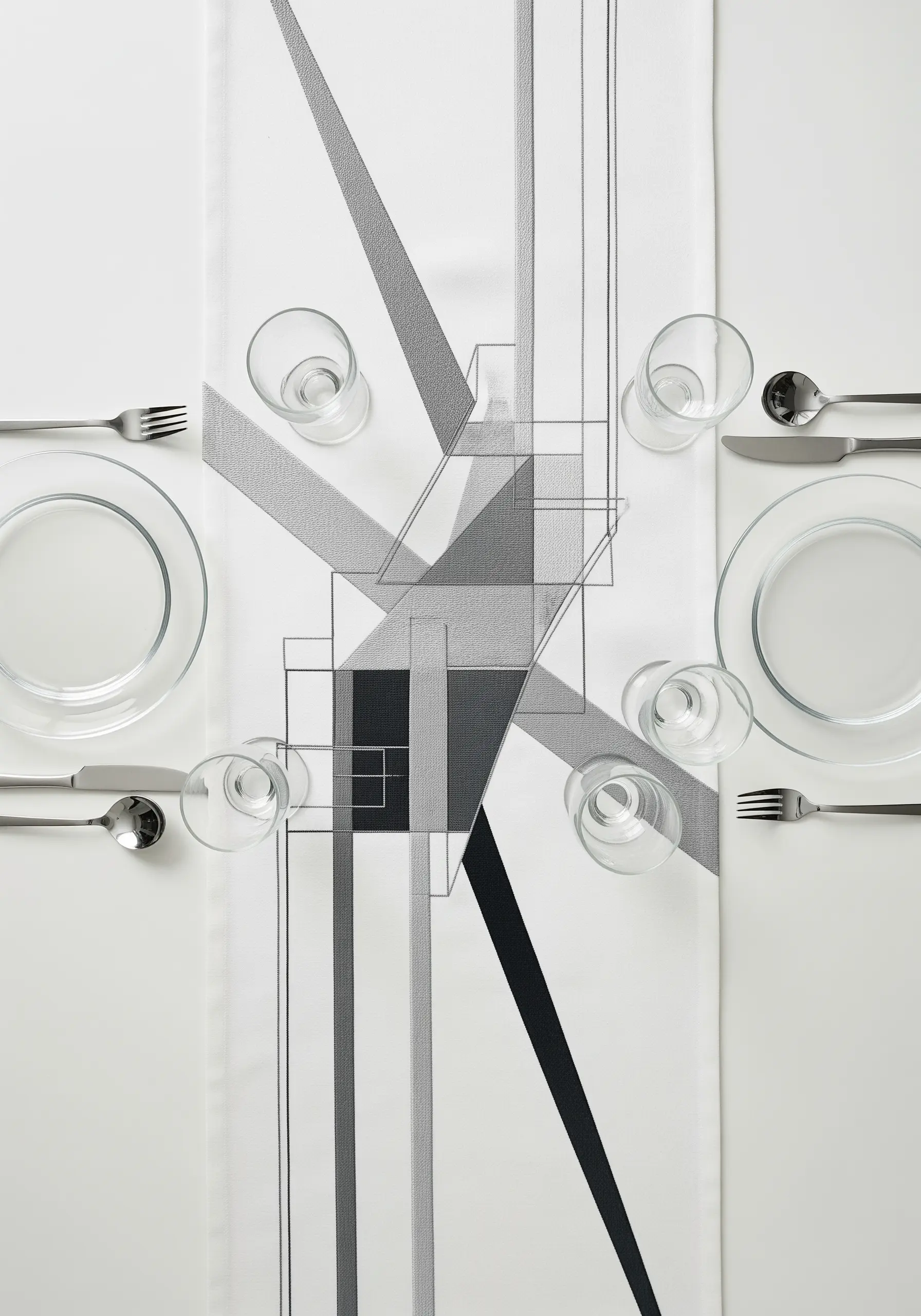
Create the illusion of transparency and overlapping shapes with carefully chosen fill stitches.
Use a dense satin stitch for the solid, opaque areas of your design. For the translucent sections, switch to an open fill like a lattice stitch or spaced-out seed stitches.
Stitching with different shades of grey enhances the effect, suggesting light passing through layers.
This technique transforms a flat piece of fabric into a composition with perceived depth and architectural complexity.
19. Polished Pebbles with Padded Satin Stitch
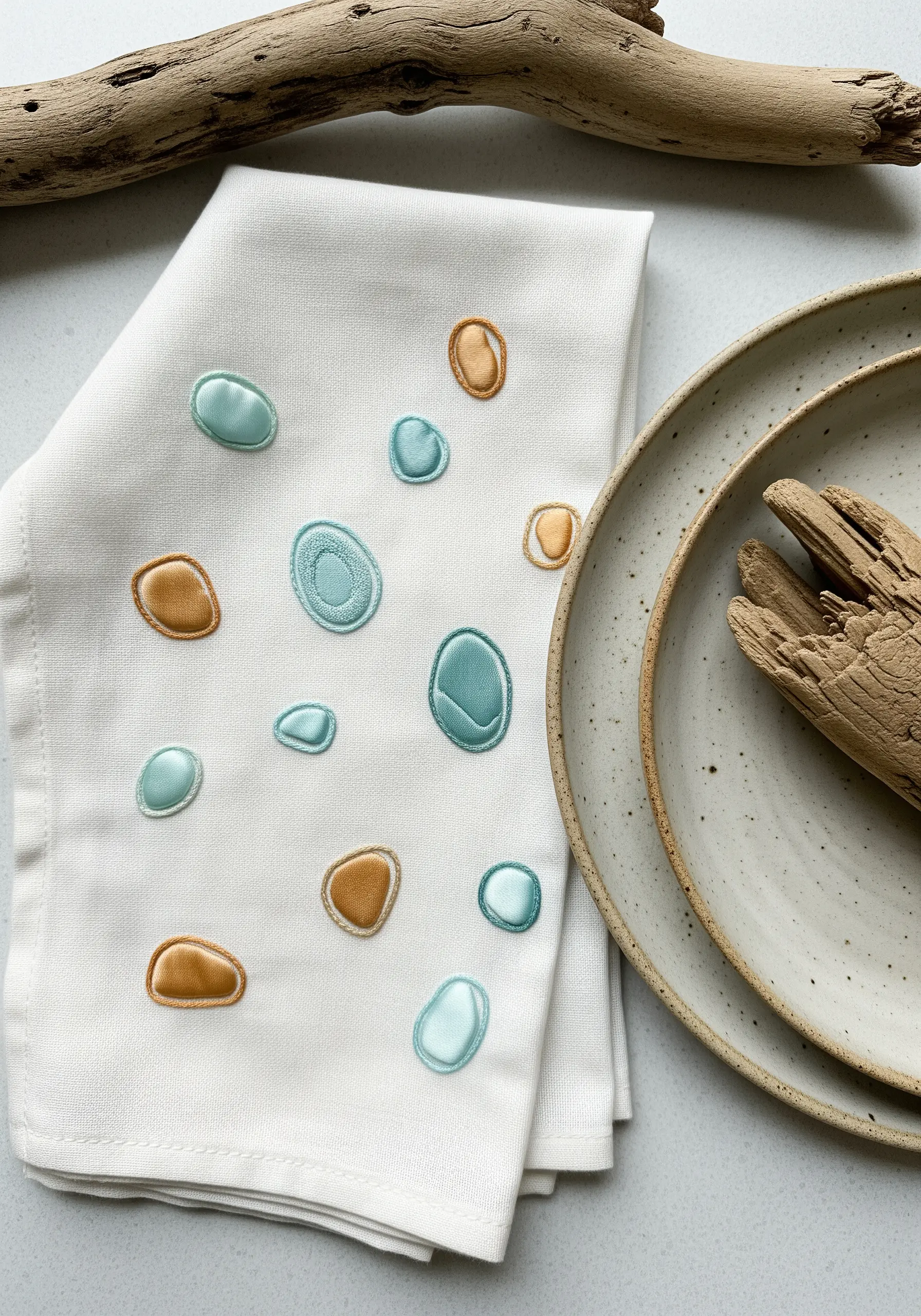
Give your abstract motifs a smooth, three-dimensional form using a padded satin stitch.
First, create a foundation of small, straight stitches within the outline of your shape. Build up two or three layers, running your stitches perpendicular to the direction of your final satin stitch.
Cover this padding entirely with a smooth, tight satin stitch. The raised foundation gives each shape a beautiful, rounded contour that catches the light like a polished river stone.
20. Volcanic Energy with Directional Stitching
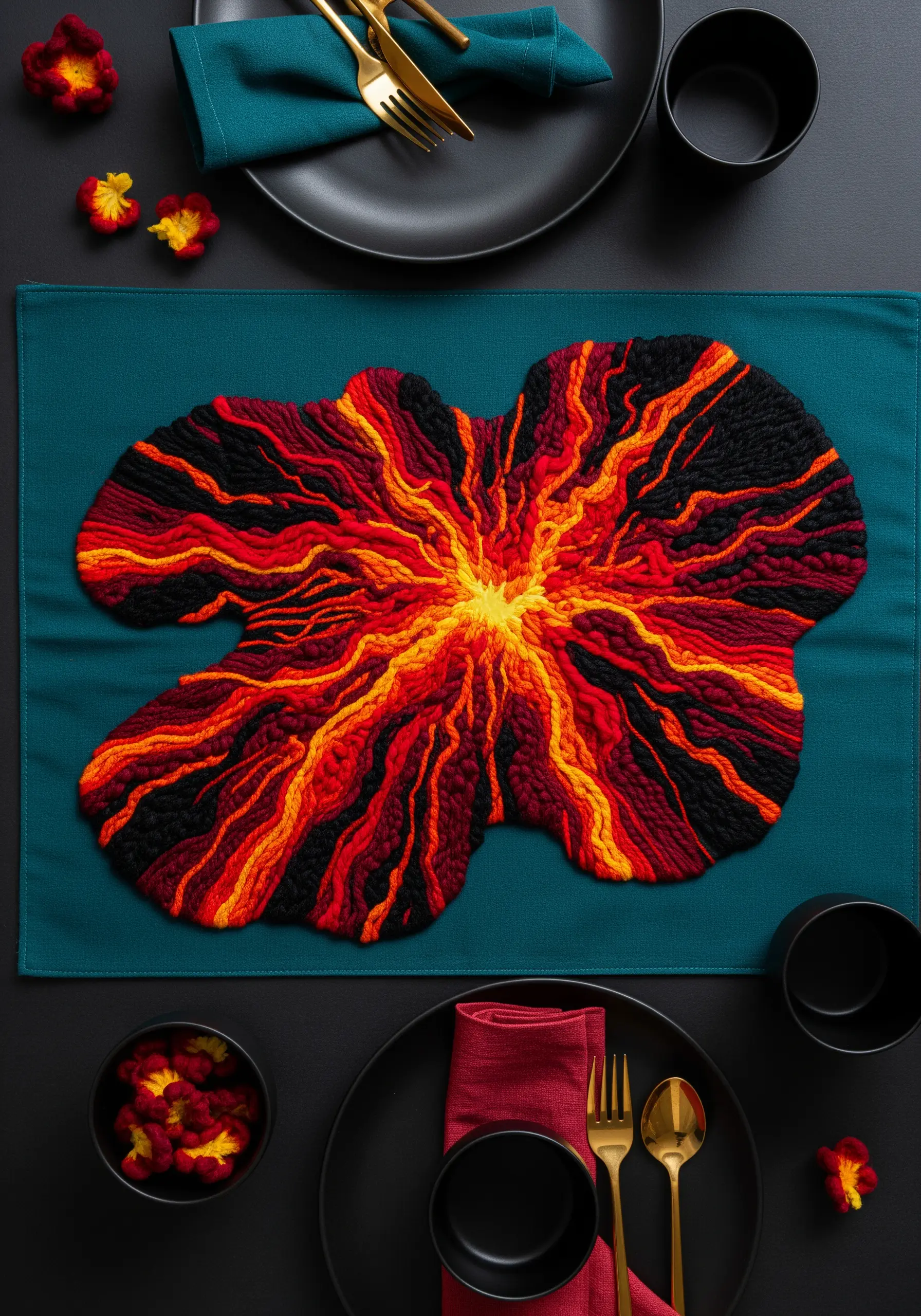
Capture the fiery, flowing energy of lava with directional thread painting.
Start at the center with your brightest yellows and oranges, using short, radiating seed stitches to create a glowing core.
Work your way outward with long-and-short stitches in reds, deep oranges, and black, always keeping your stitches flowing in the direction of the lava’s movement.
This creates a powerful sense of motion and heat, transforming your placemat into a dynamic and primal work of abstract art.
21. Meditative Ripples with Concentric Circles

Create a serene and sophisticated pattern with repeating concentric circles.
To ensure perfect circles, you can trace around cups or lids of various sizes with a water-soluble marker.
Use a simple backstitch or a whipped running stitch with a thread that offers a subtle contrast to the fabric, like this white on dusty rose.
The beauty of this design lies in its quiet repetition and precision, creating a calming ripple effect that spreads across the entire table.
It’s a perfect example of how Scandinavian table linen embroidery motifs can add tranquility to your home.
22. Nautical Knots as Sculptural Centerpieces
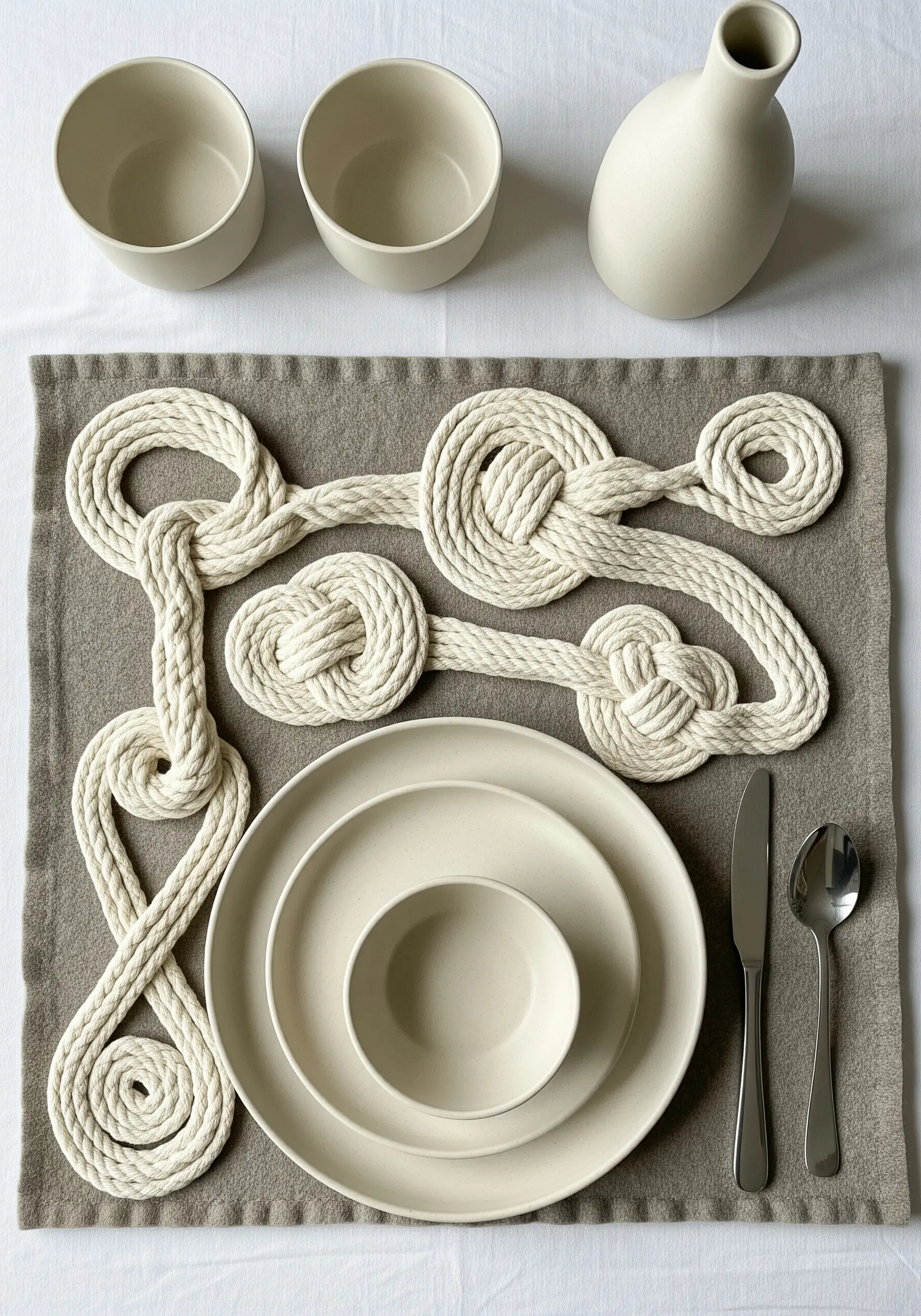
Turn your placemat into a canvas for three-dimensional art by couching thick cotton rope in intricate knots.
Plan your design and tie the knots before laying the rope onto the fabric. Use a strong, invisible thread to meticulously stitch the rope in place, focusing on securing the curves and crossovers.
The stark contrast between the heavy, textured rope and the flat linen fabric creates a stunning sculptural piece that is both rustic and highly refined.
23. Woven Gradients with Color Blocking
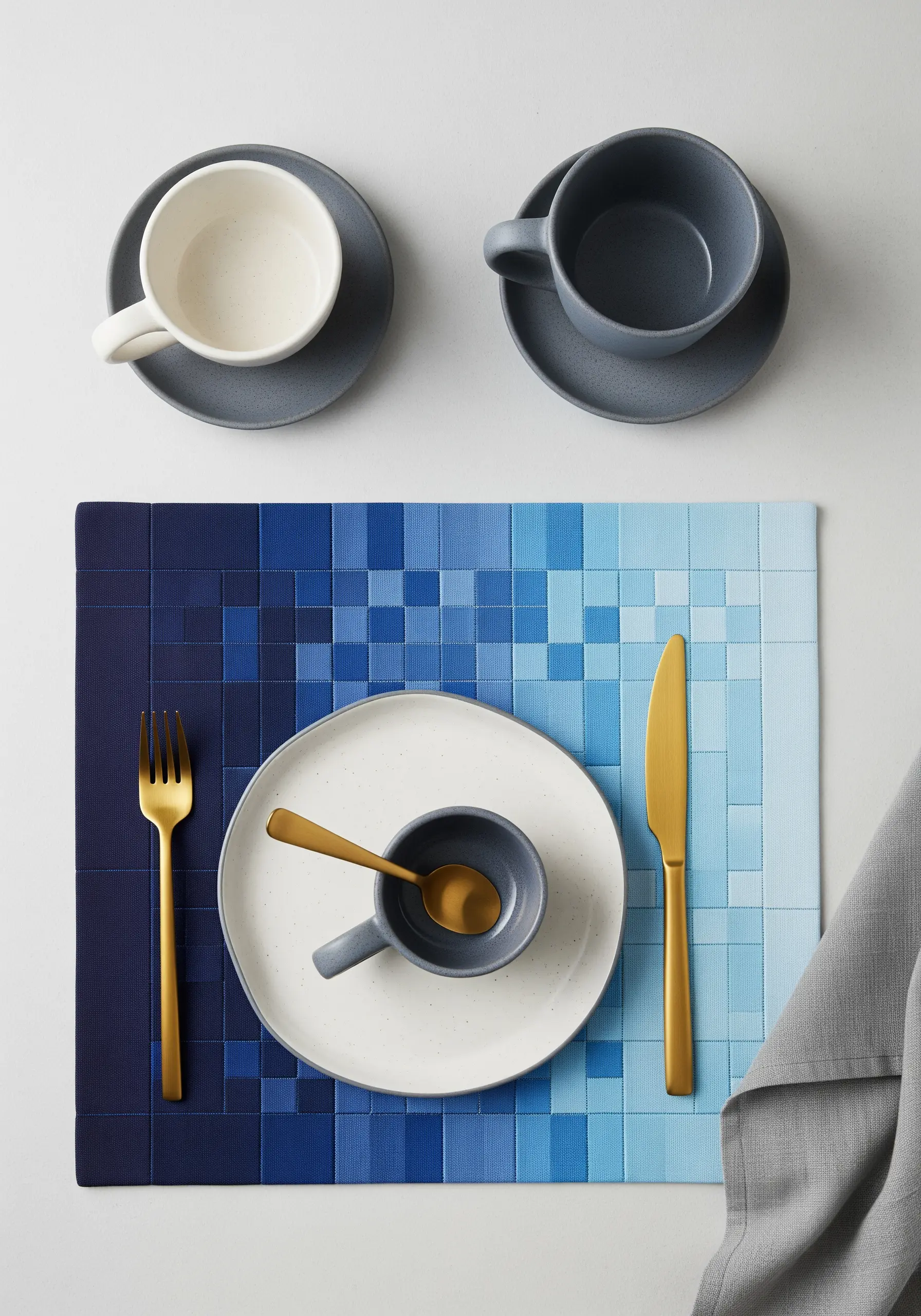
Recreate the look of a woven textile using blocks of precise, perpendicular satin stitches.
Mark out a grid on your placemat. Fill alternating squares with vertical and horizontal satin stitches to mimic the warp and weft of woven fabric.
Create a seamless gradient by choosing several shades of one color family and transitioning them slowly across the grid.
This technique is a masterful illusion, offering the clean, graphic appeal of weaving with the refined texture of embroidery.
24. Celestial Charts for Cosmic Dining
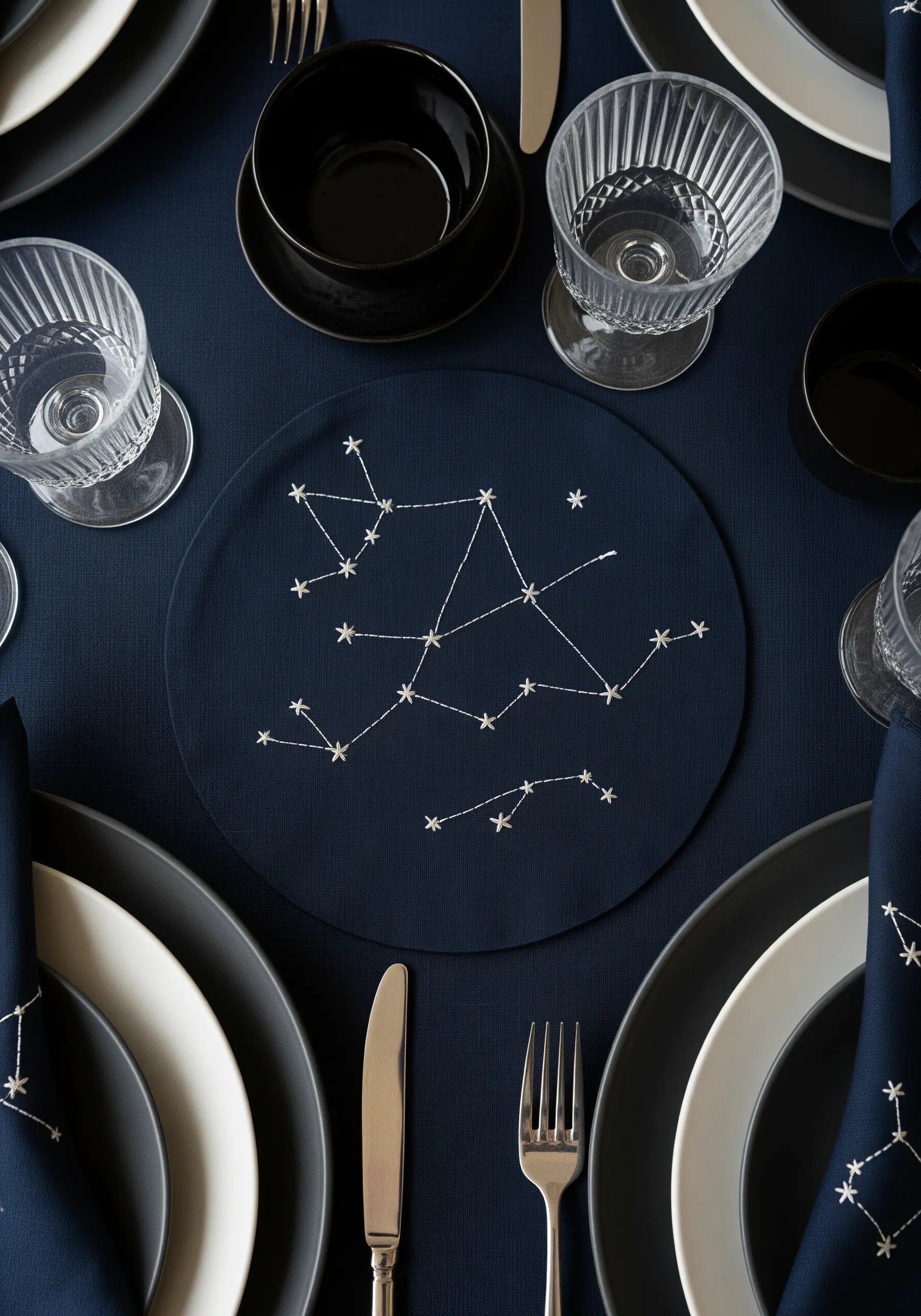
Embellish your linens with the quiet elegance of a starry night sky.
Use small French knots or tiny star stitches for the individual stars, and connect them with a fine, single-strand backstitch to form constellations.
For added magic, consider using a metallic silver or a glow-in-the-dark thread on a deep navy fabric.
This minimalist design is both sophisticated and whimsical, turning your dinner table into a conversation starter about the cosmos.
25. Organic Geometry with Thick Yarn Contours
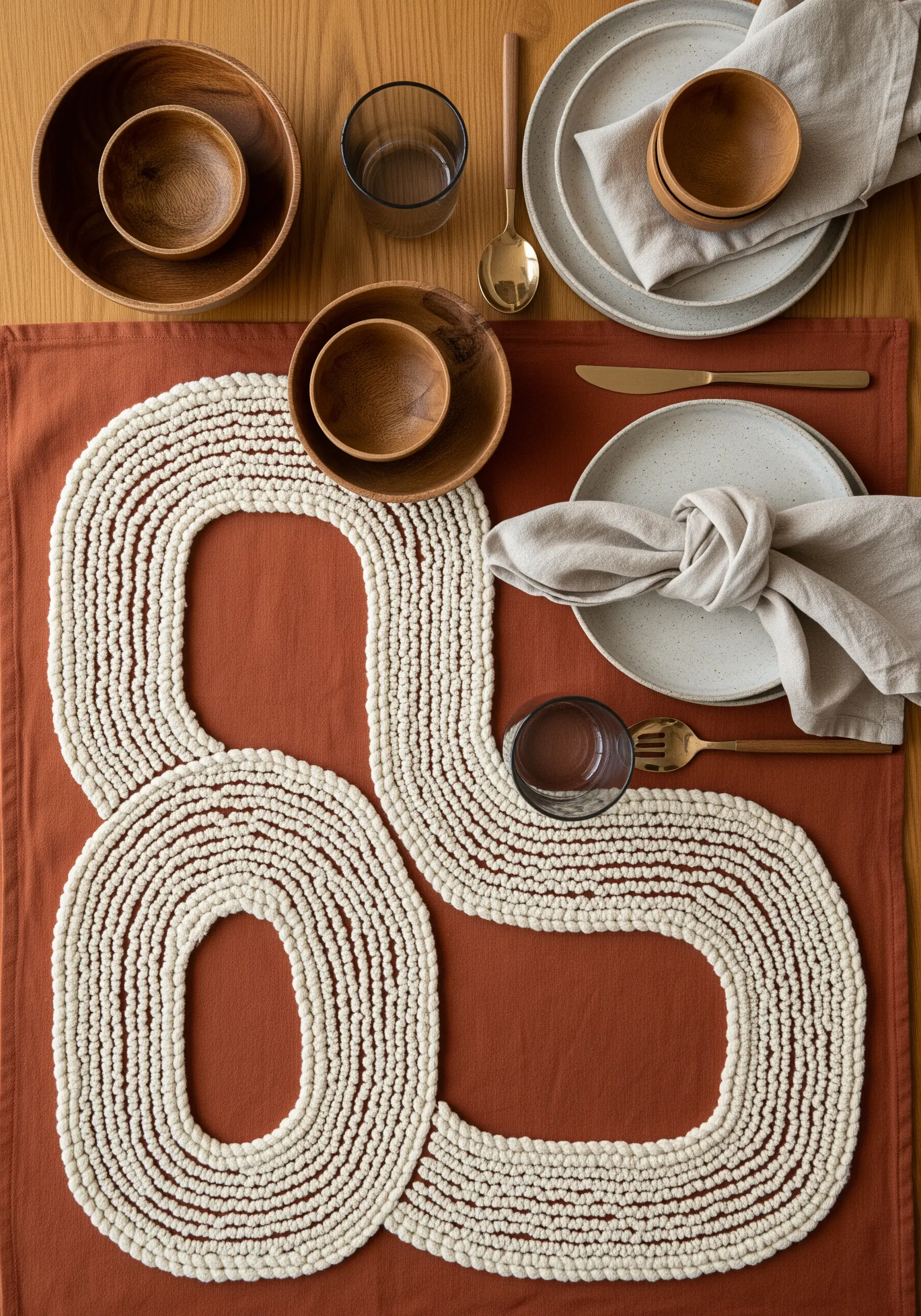
Create a bold, graphic statement by couching thick, soft yarn in continuous, looping lines.
Draw your abstract shape onto the fabric, then carefully lay down the yarn, following the contours.
Use a matching, thinner thread to stitch the yarn in place, hiding your stitches in its fluffy texture. Work from the outside in, keeping the distance between each row consistent for a clean, rhythmic look.
The result is a design that feels both soft and structured, adding a modern, tactile element to your table runner.