Your needle and thread are more than just tools for mending—they are instruments of transformation. With them, a forgotten pair of jeans can become a canvas for your personal style, a story told in stitches.
Forget fleeting trends. We are going to focus on technique, texture, and composition—the elements that turn a simple patch into a thoughtful work of art. You don’t need a complex design to make a powerful statement; you just need intention behind every stitch.
Here, you’ll find twenty ways to rethink floral embroidery on denim. Each one is a starting point, an invitation to see your clothing not as it is, but as it could be. Let’s begin.
1. Master the High-Definition Sunflower
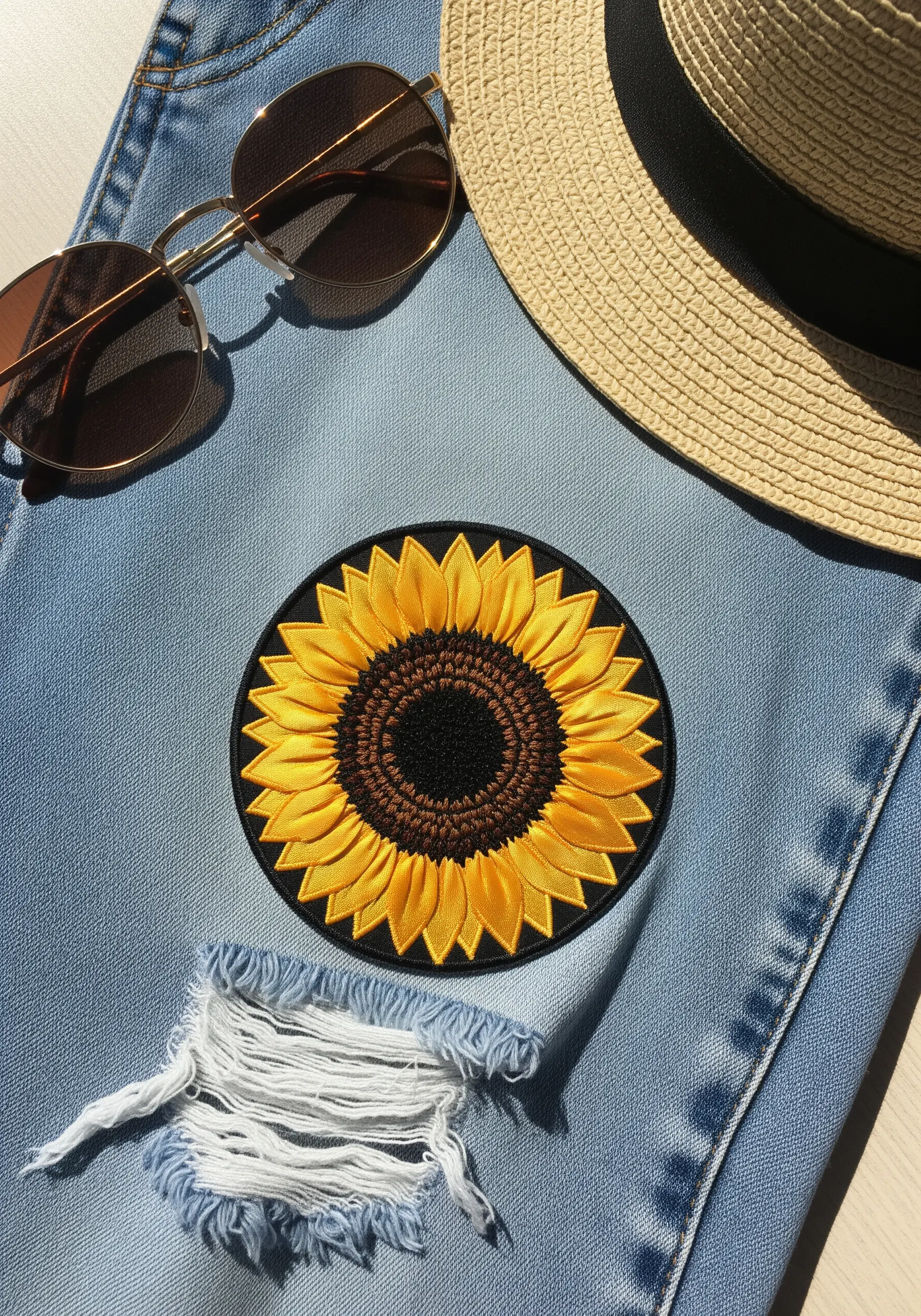
To achieve the sharp, graphic quality of a machine-embroidered patch by hand, focus on stitch direction and tension.
Use a long-and-short stitch for the petals, ensuring each stitch tapers toward the center to create a realistic fan effect.
For the core, fill the outer ring with brown satin stitch and the center with tightly packed black French knots to build dense, touchable texture.
A single strand of black floss used as a split stitch outline will give your patch a clean, professional edge before you apply it to the denim.
2. Elevate Pockets with Delicate Lavender Sprigs

When embroidering on a small, defined area like a back pocket, use the space to guide your composition.
Stitch the lavender buds using French knots or bullion knots with two to three shades of purple and pink floss to create natural-looking volume and variation.
For the stems, use a fine, single-strand stem stitch in a soft green to keep the lines graceful and not bulky.
This contrast between the textured buds and delicate stems is what gives the design its sophisticated, airy quality, making it one of the tiny floral embroidery designs that look stunning on denim.
3. Create a Moody Gothic Rose
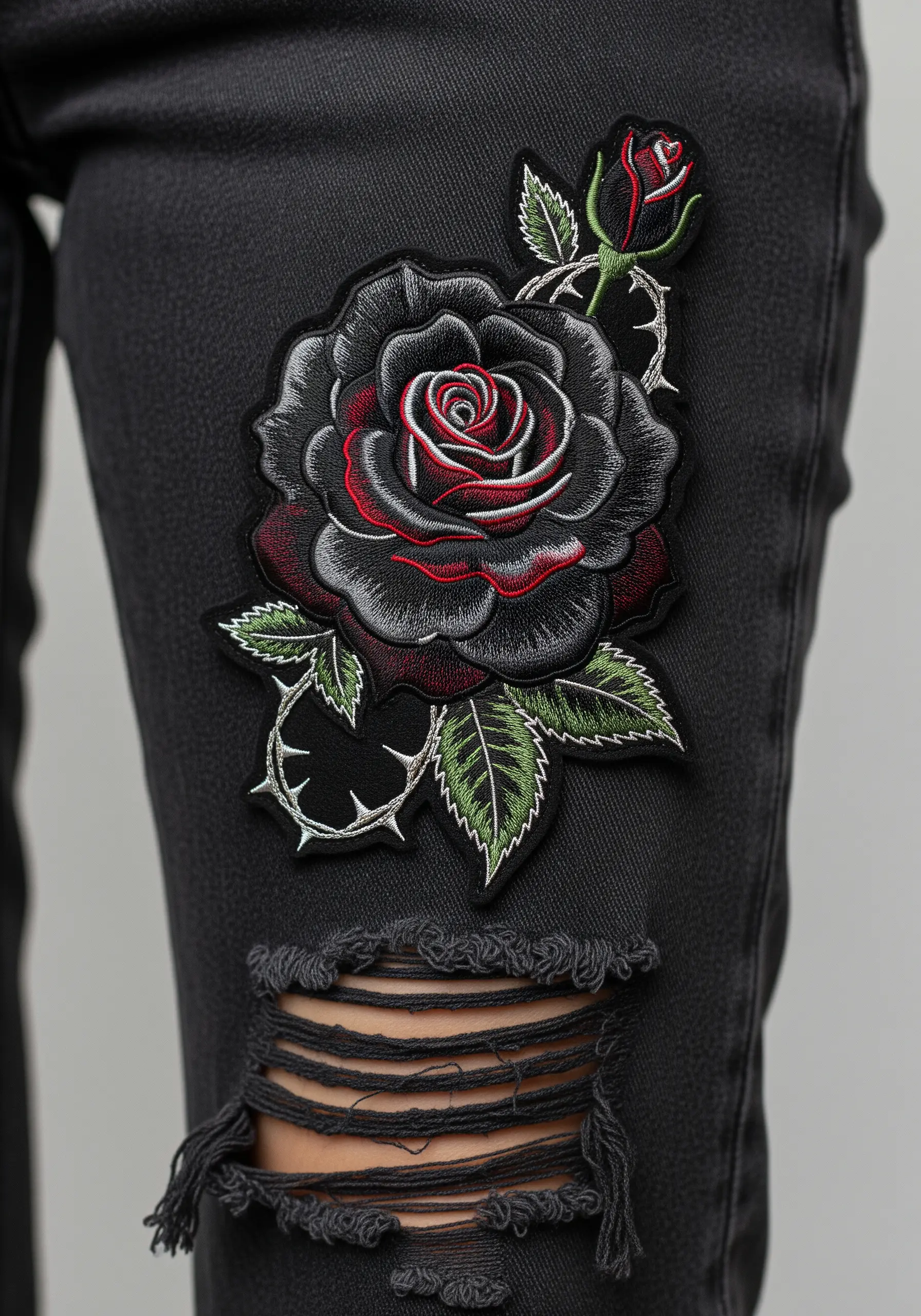
A limited color palette—black, charcoal grey, and a single dramatic accent like red—creates a sophisticated, high-impact design.
Use a split stitch to establish crisp, clean outlines for each petal before filling them with a satin stitch.
Vary the direction of your satin stitch to follow the curve of each petal; this technique reflects light differently across the surface, creating depth and a subtle sheen without adding more colors.
The sharp, thorny vines stitched in a contrasting green provide a perfect frame and anchor the moody floral motif.
4. Add Playful Rhythm with a Daisy Trim
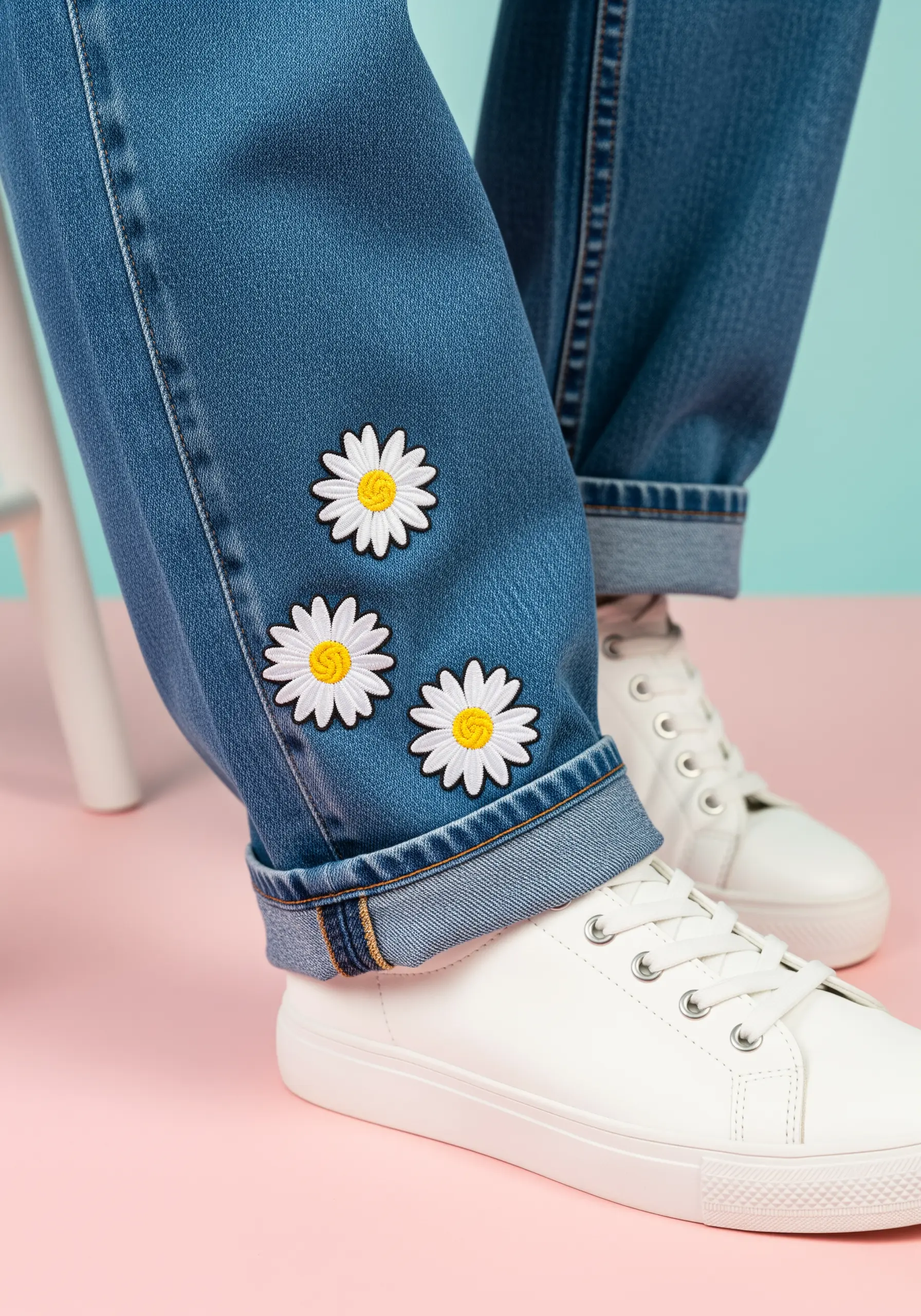
Transform a simple cuff with a repeating pattern of clean, graphic daisies.
For perfectly uniform petals, use a detached chain stitch (lazy daisy stitch) for each one, pulling the thread taut for a sharp, pointed shape rather than a soft loop.
A dense cluster of yellow French knots creates a bold, textured center that contrasts beautifully with the flat white petals.
This methodical placement of tiny motifs that instantly add personality to jeans without overwhelming them makes the embellishment feel intentional and stylish.
5. Design a Botanical Crescent Moon
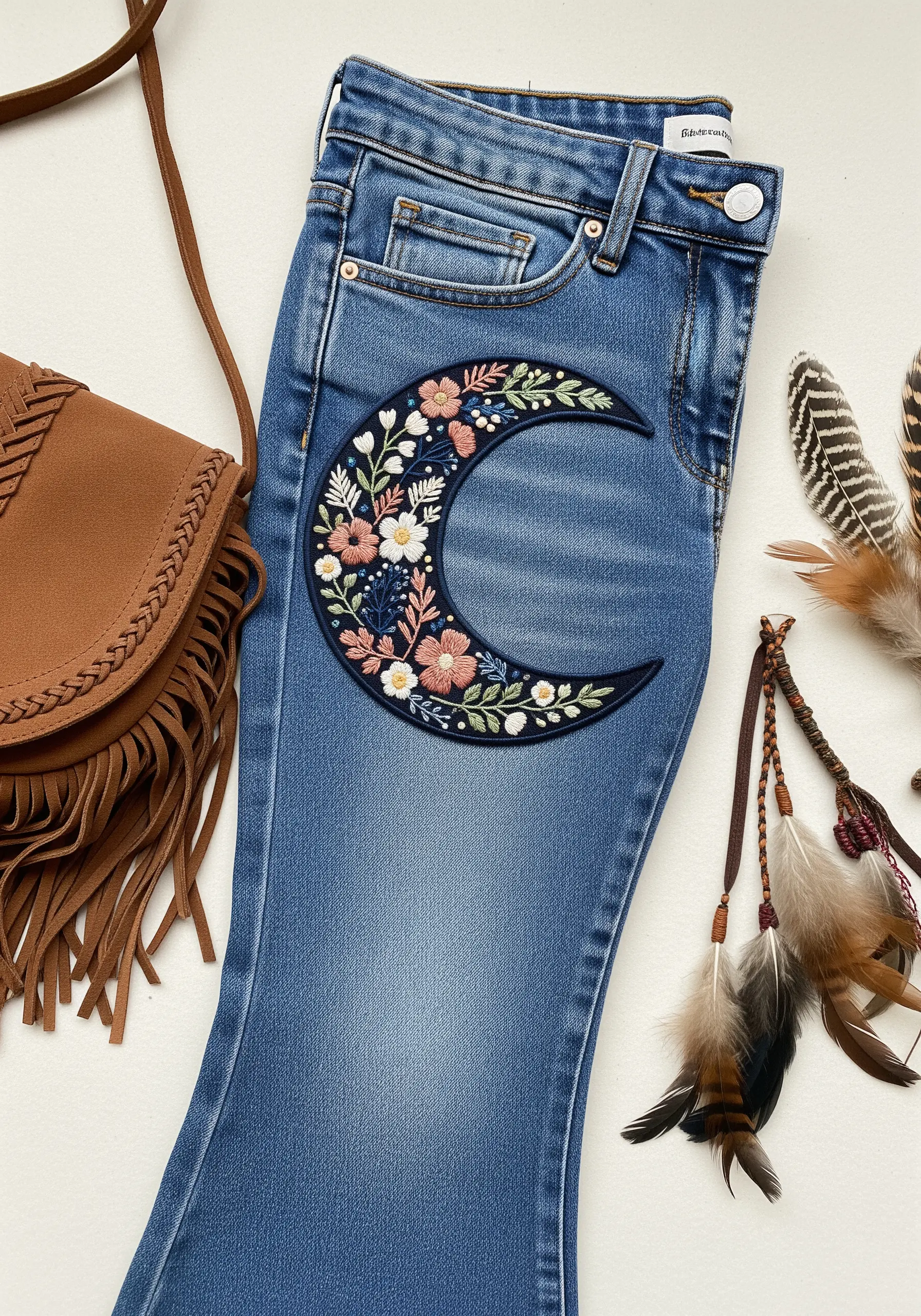
Use a strong silhouette, like a crescent moon, to contain a dense, wild floral pattern for a balanced and striking composition.
Vary the scale of your flowers and leaves, using stitches like woven wheel roses, French knots, and simple straight stitches to create a rich tapestry of textures.
Incorporate a few darker leaves or flowers to create depth and prevent the design from feeling flat.
Finishing the patch with a crisp, black satin stitch border provides a clean visual container, making the intricate wild garden floral embroidery ideas feel cohesive and polished.
6. Integrate Embroidery with Distressed Denim
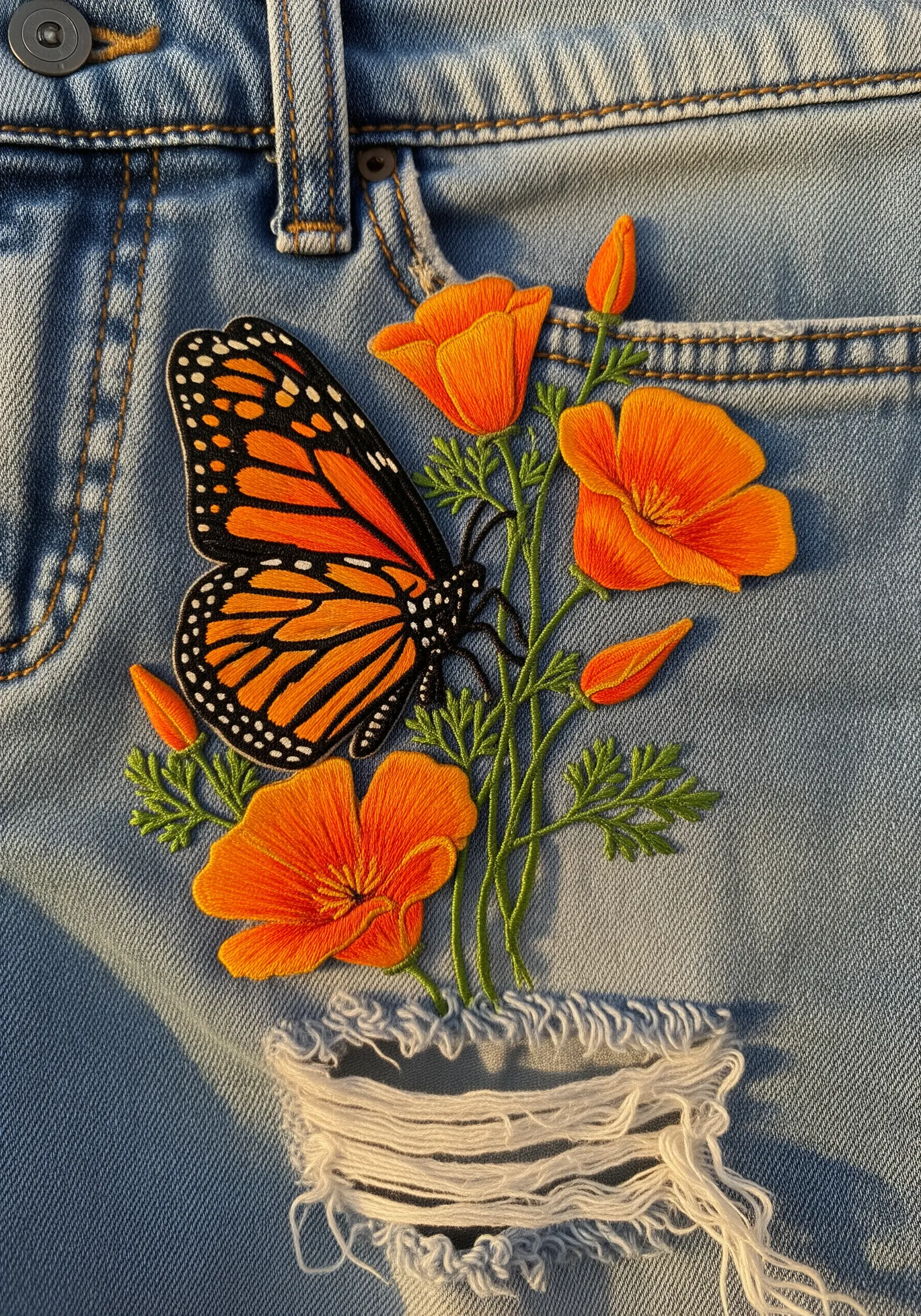
Turn a rip or frayed area into a design element by making your embroidery appear to grow from it.
Stitch the stems of your California poppies so they emerge from behind the distressed threads, creating a seamless, organic connection between the embroidery and the garment.
Master the butterfly’s wings with wildflower thread painting techniques, using a single strand of floss and a split stitch to blend the orange, black, and white threads for a photorealistic effect.
This approach transforms mending into a narrative, making the piece uniquely yours.
7. Achieve Elegance with a Metallic Ginkgo
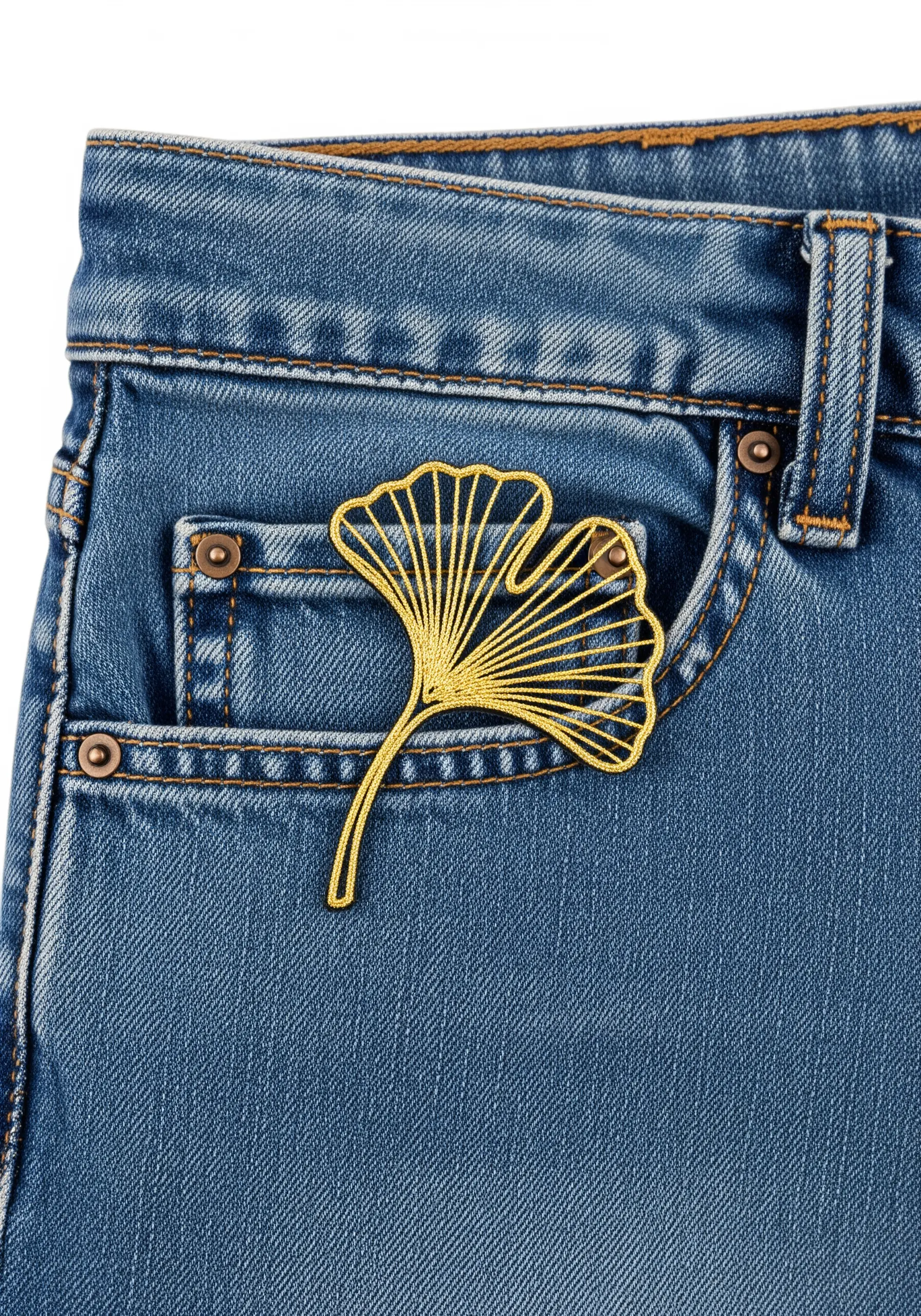
For a minimalist yet luxurious statement, use a single strand of metallic gold thread to create a graphic botanical motif.
To achieve the clean, linear look of this ginkgo leaf, focus on precise stem stitches for the outlines and evenly spaced straight stitches for the veins.
The key to working with metallic floss is to use shorter lengths of thread (no more than 12 inches) and a thread conditioner to prevent tangling and fraying.
This design proves that minimal line art embroidery ideas can offer maximum impact, especially when tucked into an unexpected place like a coin pocket.
8. Stitch Bold Chinoiserie-Inspired Florals
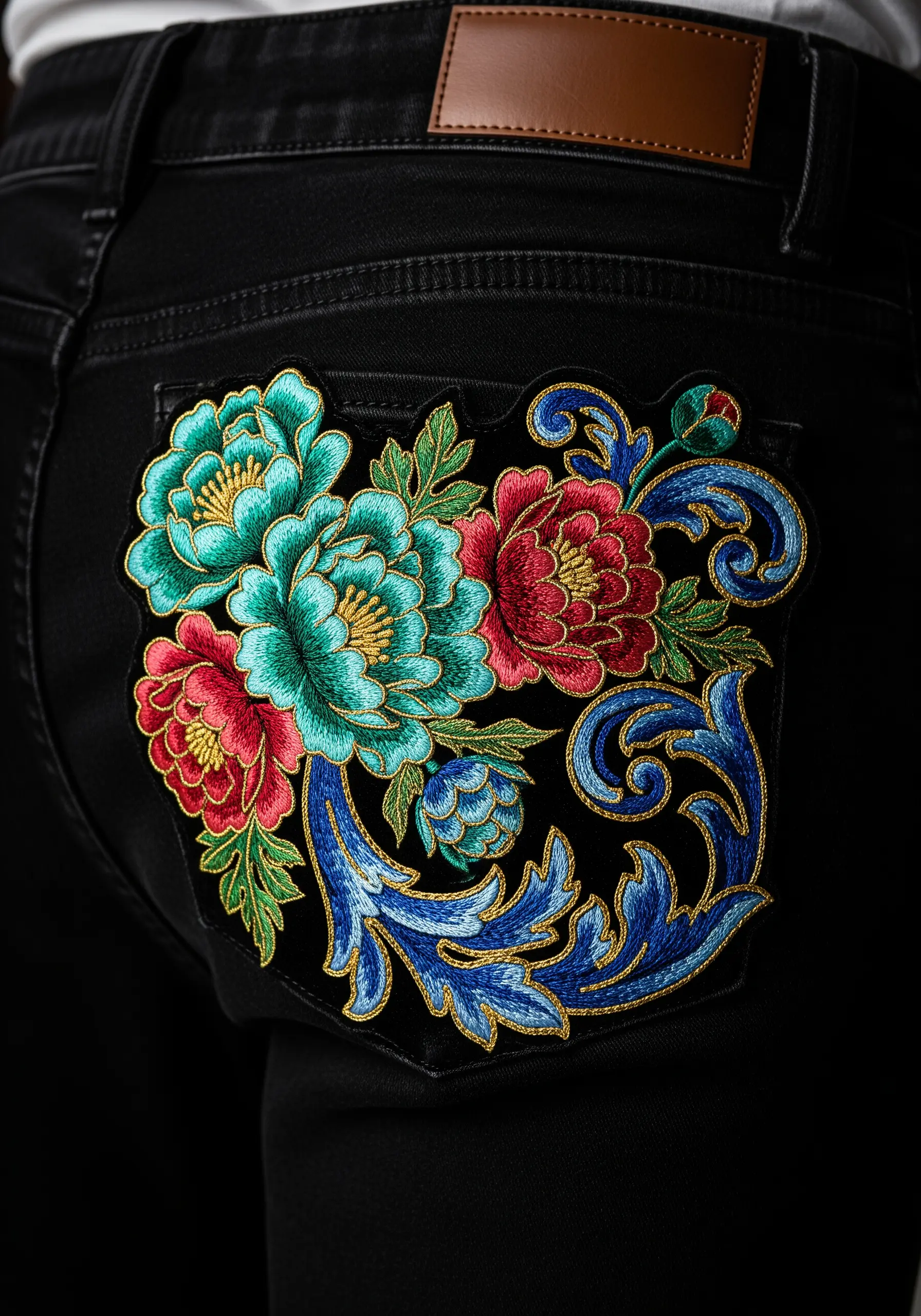
Capture the vibrant, decorative style of Chinoiserie by using bold, saturated colors and strong outlines.
Use a long-and-short stitch to blend jewel tones like teal, crimson, and gold, creating smooth gradients that give the peonies a lush, painted look.
Define each petal and leaf with a contrasting outline—like gold on red or dark green on teal—to make the shapes pop against the dark denim.
The swirling blue acanthus leaves add movement and a traditional flourish, proving that botanical embroidery ideas can transform garments into wearable art.
9. Create a Sweet Strawberry Patch

Capture a charming, illustrative feel with simplified shapes and thoughtful details.
Stitch the strawberries in a bright red satin stitch, then add texture and dimension with tiny yellow seed stitches for the seeds and a single white French knot to suggest a highlight.
For the leaves, a fishbone stitch will create a natural-looking central vein, giving them a more organic shape than a simple satin stitch fill.
This playful design is perfect for overalls or children’s clothing, adding a touch of handmade wholesomeness.
10. Frame a Succulent in a Geometric Border

Contrast a soft, organic botanical with a sharp, modern geometric frame for a contemporary aesthetic.
Recreate the succulent’s texture by using a gradient of two to three shades of green and pink, blending them with a long-and-short stitch that follows the direction of each leaf.
The stark, black hexagonal outline, stitched with a precise backstitch or split stitch, contains the design and makes the soft colors appear even more vibrant.
This juxtaposition of natural and structured forms makes for a truly modern embellishment.
11. Appliqué a Bold Poppy Patch
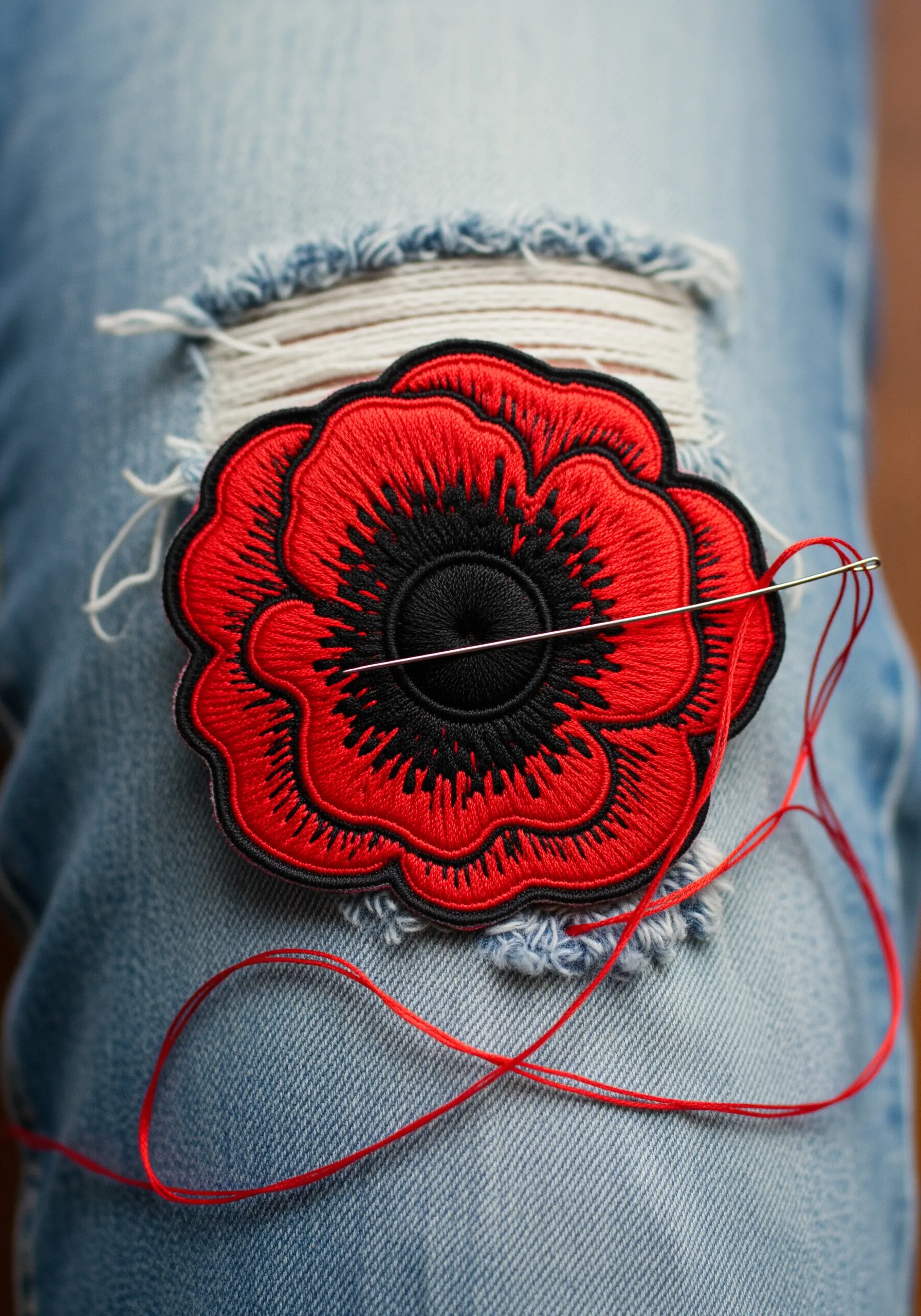
For a patch that stands out with intense color and clean edges, create it on a separate piece of fabric and then appliqué it onto your jeans.
Embroider your poppy on a sturdy base like felt or canvas, using a dense satin stitch to achieve full, vibrant coverage.
Once complete, carefully cut out the shape, leaving a small border.
Attach it to your jeans using a whip stitch with a matching thread for an almost invisible finish, or a contrasting blanket stitch for a more decorative, handmade look. This technique is central to many fun fabric crafts that turn simple textiles into statement pieces.
12. Stitch a Delicate Cherry Blossom Branch

To capture the ethereal quality of cherry blossoms, focus on soft textures and a delicate color palette.
Create each petal with five individual straight stitches arranged in a star shape, using a variegated pink-and-white floss for subtle color shifts.
Use a darker pink or red for the flower’s center, applied with a tiny satin stitch or a single French knot.
For the branches, a slightly thicker brown thread worked in a stem stitch will provide a sturdy, organic contrast to the airy blossoms, making them perfect for hand-embroidered sleeve ideas or pant legs.
13. Design a Whimsical Toadstool Cluster
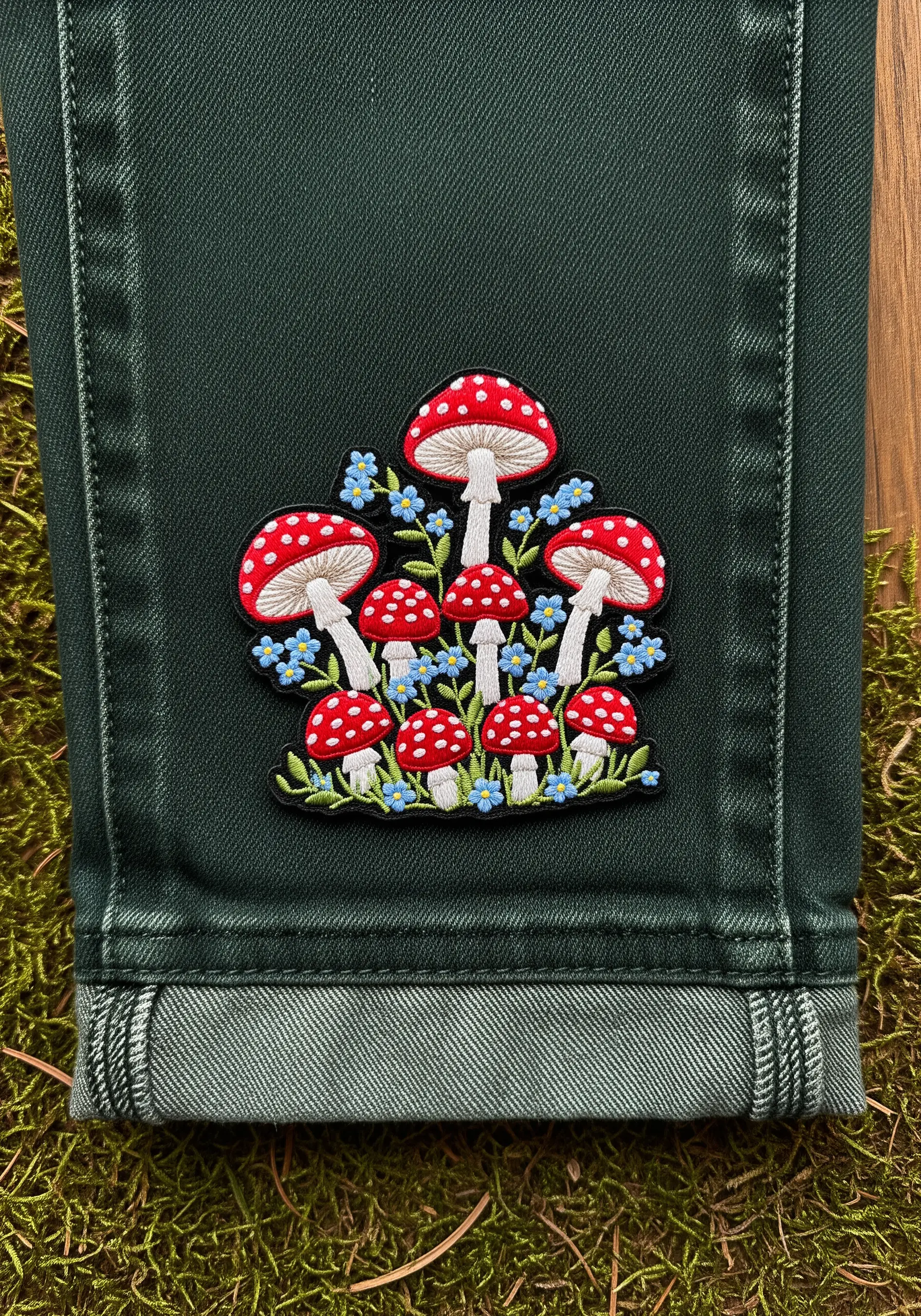
Create a charming woodland scene by clustering different-sized toadstools and adding complementary foliage.
Give the mushroom caps a rounded, 3D appearance by using a padded satin stitch—simply lay down a few foundation stitches before covering them with your final red satin stitch.
The white spots can be made with precise French knots, while the delicate blue forget-me-nots add a contrasting color and shape.
This storytelling approach elevates a simple patch into a miniature illustrated world.
14. Capture a Tropical Bird of Paradise
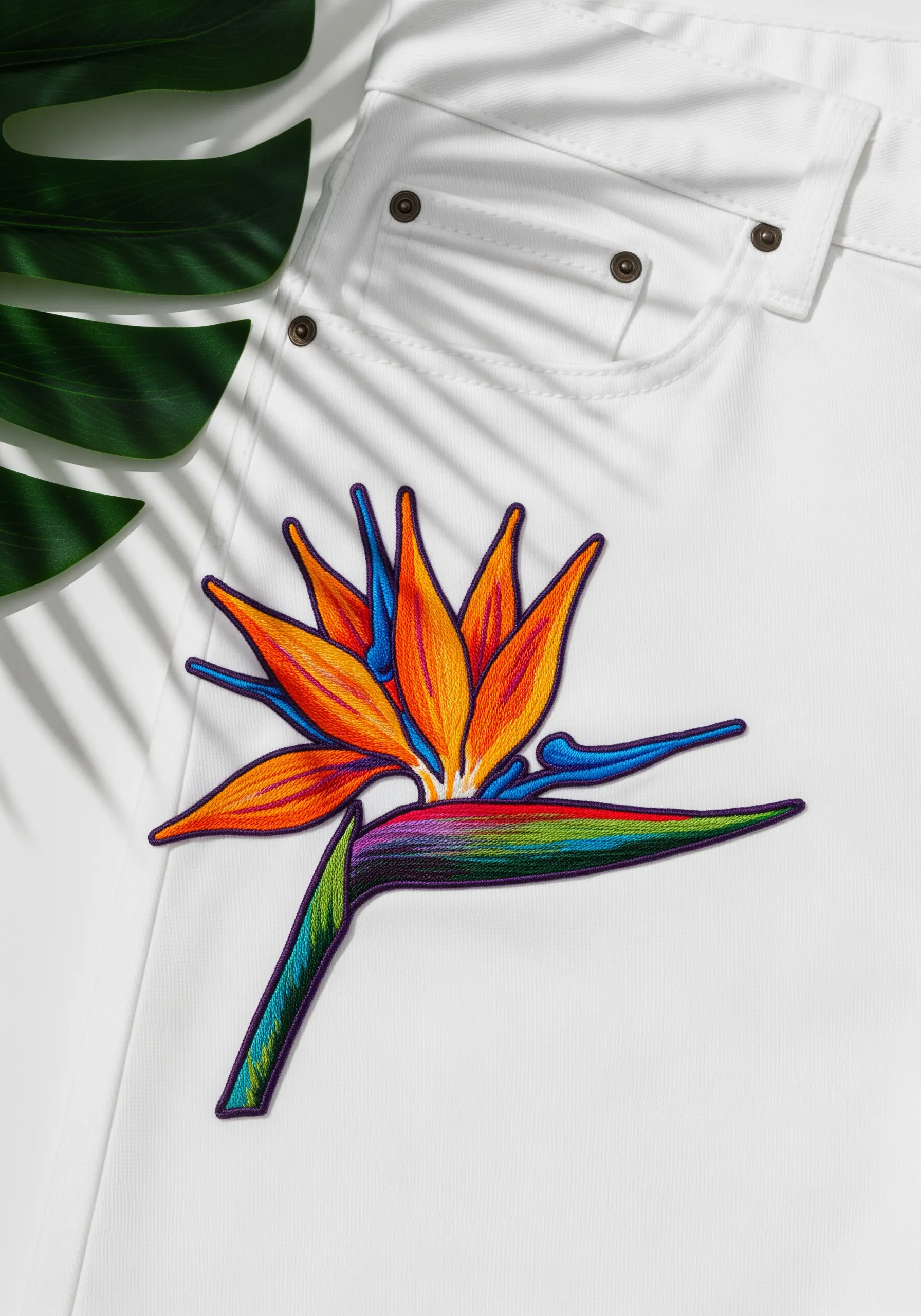
To tackle a complex, multi-hued flower like the Bird of Paradise, map out your color zones before you begin stitching.
Use long-and-short stitch to smoothly blend the vibrant oranges, blues, and purples. The key is to make your stitches interlock like a zipper for a seamless gradient.
Use a crisp split stitch for the outlines to keep each color segment defined and prevent the design from becoming muddy.
Choosing a white or light-colored denim makes these intense tropical colors pop, creating a stunning visual statement.
15. Weave a Heart of Roses
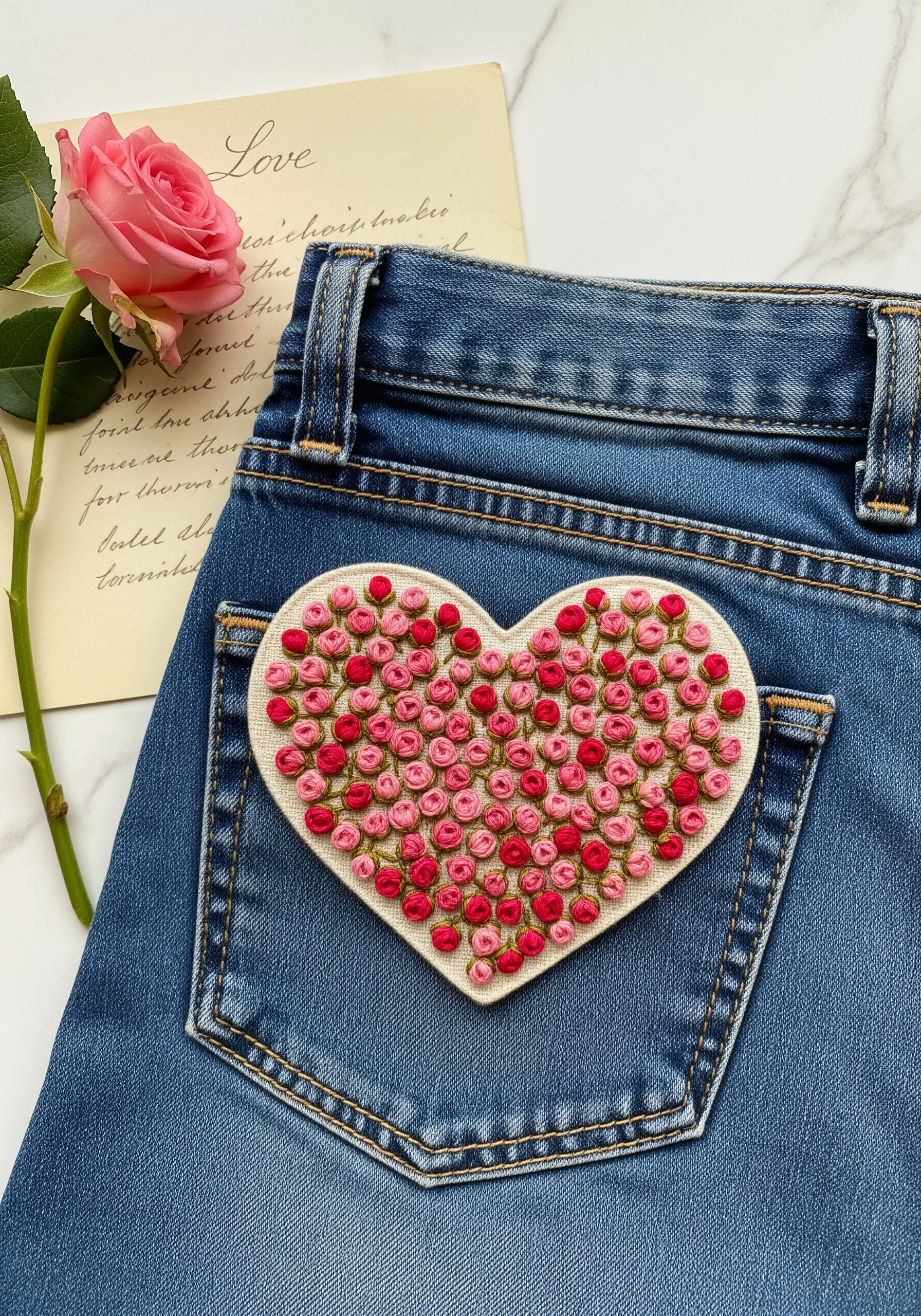
Fill a defined shape with texture by using the woven wheel stitch, also known as a spider web rose.
Create an odd number of straight stitches for the ‘spokes’ of your base, then weave your floss over and under them in a spiral until the spokes are completely covered.
Vary the tightness of your weave and the thickness of your thread (using 3 to 6 strands) to create roses of different sizes and textures.
This dense, sculptural effect transforms a simple heart into one of many DIY embroidery art pieces that double as thoughtful gifts.
16. Embroider an Art Deco Fan Motif
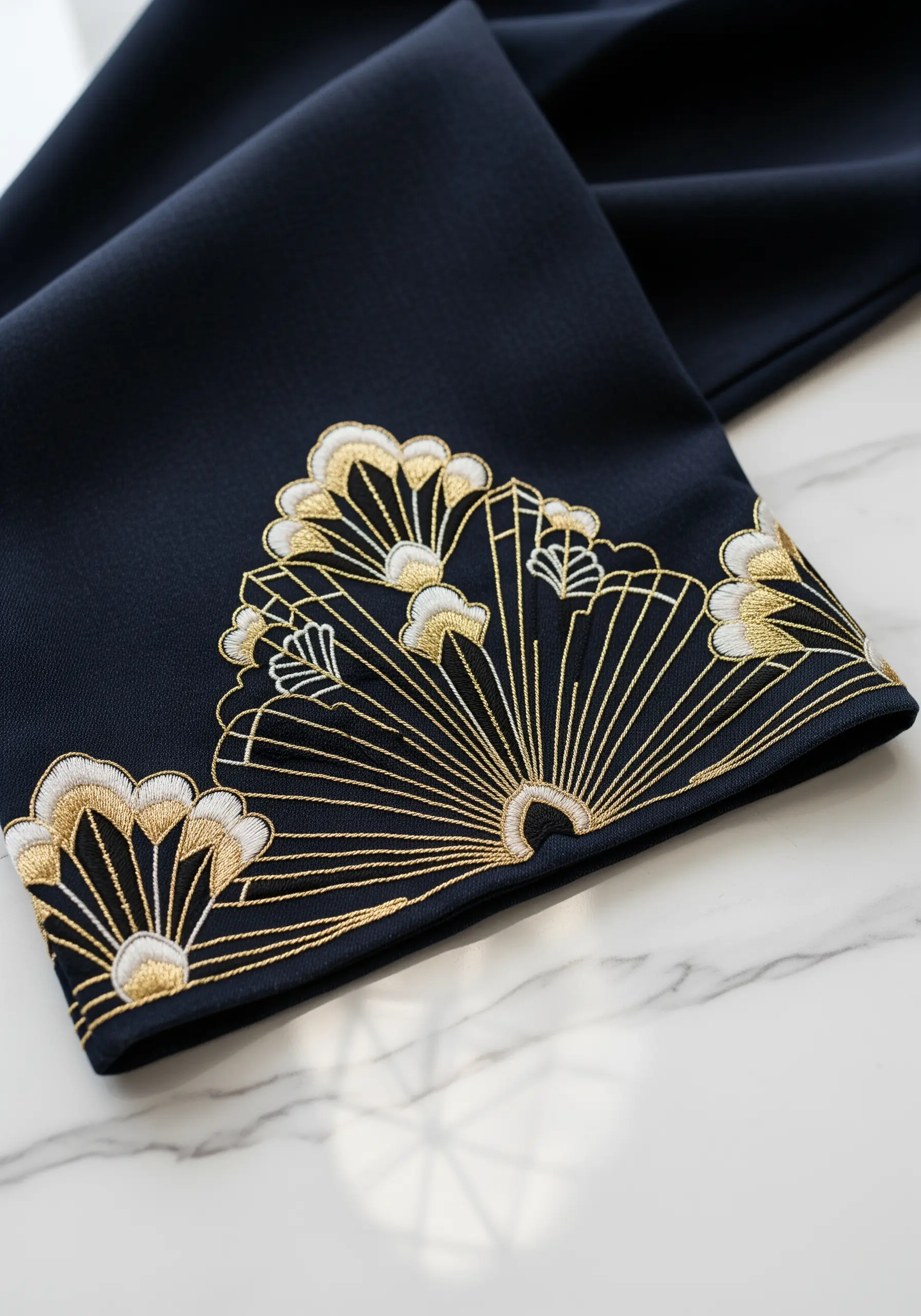
Channel the elegance of the Art Deco era with clean lines, geometric shapes, and a touch of metallic glamour.
Use a high-shine gold metallic thread for the radiating lines, stitched as precise straight stitches. To keep them perfectly straight and taut, you can use a water-soluble stabilizer with your pattern printed on it.
Contrast the linear gold with filled shapes of creamy white satin stitch, ensuring your stitches lie flat and smooth for a silky finish.
This sophisticated design works beautifully on the hem of dark trousers or the cuff of a jacket, adding a touch of vintage luxury.
17. Stitch an Autumnal Oak Leaf
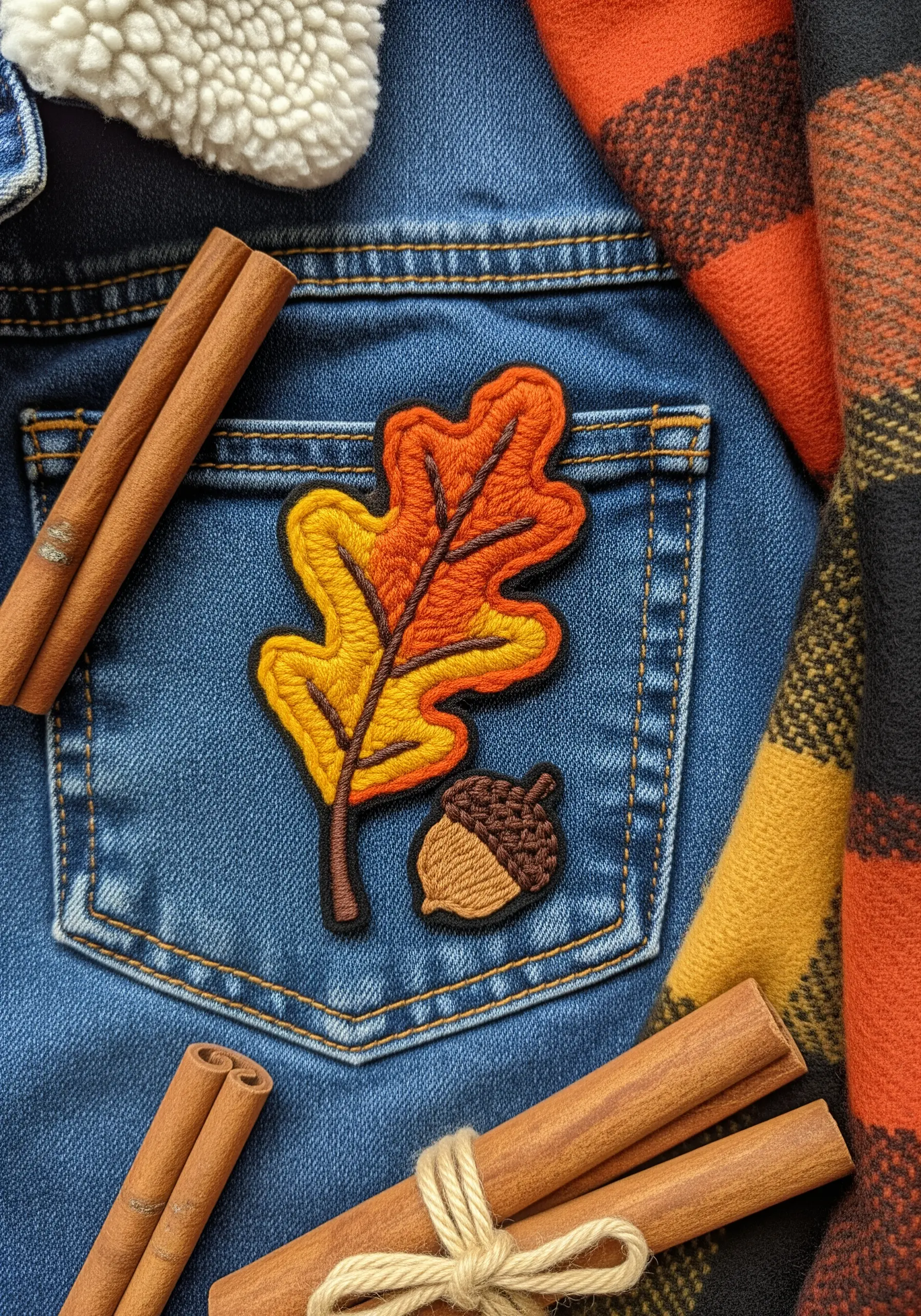
Evoke the warmth of autumn by blending seasonal colors within a single motif.
Create a beautiful gradient on the oak leaf using a fishbone stitch. Start with yellow at the top, switch to orange in the middle, and finish with brown at the stem, allowing the stitches to overlap naturally.
A dark brown stem stitch outline defines the shape and adds a crisp finishing touch.
For the acorn, use a satin stitch for the cap and a vertical straight stitch for the body to mimic its natural texture, creating a perfect nature-inspired framed embroidery design right on your denim.
18. Craft a Blooming Desert Cactus
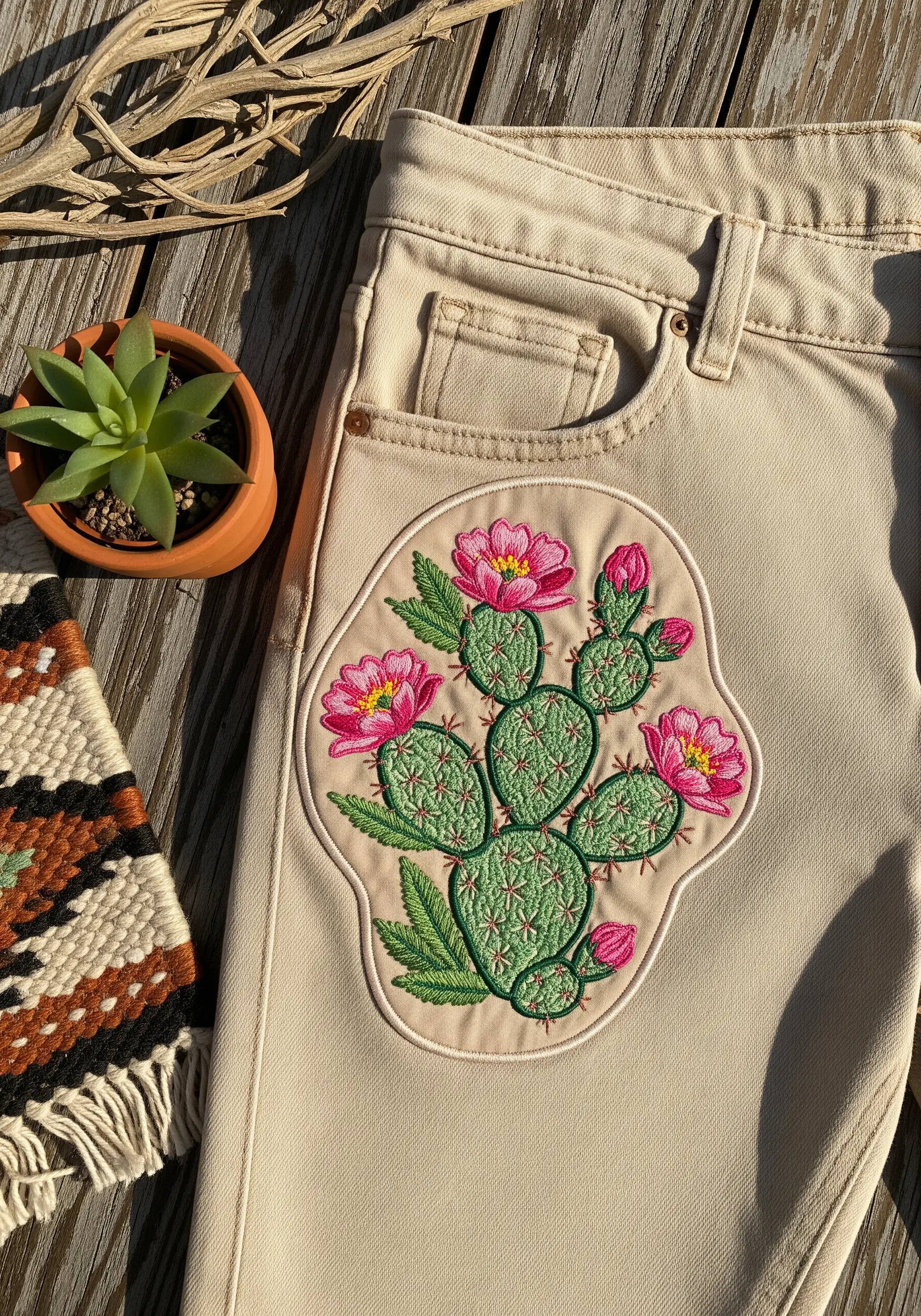
Capture the unique texture of a prickly pear cactus by combining different stitch techniques.
Use short, scattered straight stitches or seed stitches in two tones of green to create the cactus pads, suggesting texture without stitching every spine.
Contrast this with the smooth, vibrant satin stitch of the pink blossoms, which draws the eye and adds a soft element to the design.
Framing the entire piece on a separate piece of canvas before appliquéing it gives the patch a defined, intentional look, as seen in many vintage-inspired fabric collage embroidery ideas.
19. Create a Ghostly Queen Anne’s Lace

For an ethereal, see-through effect, embroider your design on a sheer fabric like organza and then apply it to your jeans.
Use white floss to stitch the delicate florets with a combination of French knots and tiny straight stitches, clustering them to form the flower heads.
After stitching, carefully trim the excess organza around the design, leaving a small, clear border. Attach it to the denim with a few small, discreet tacking stitches.
This technique makes the embroidery look as if it is floating on the surface of the jeans, creating a truly magical effect.
20. Reinvent Ripped Knees with a Hidden Garden
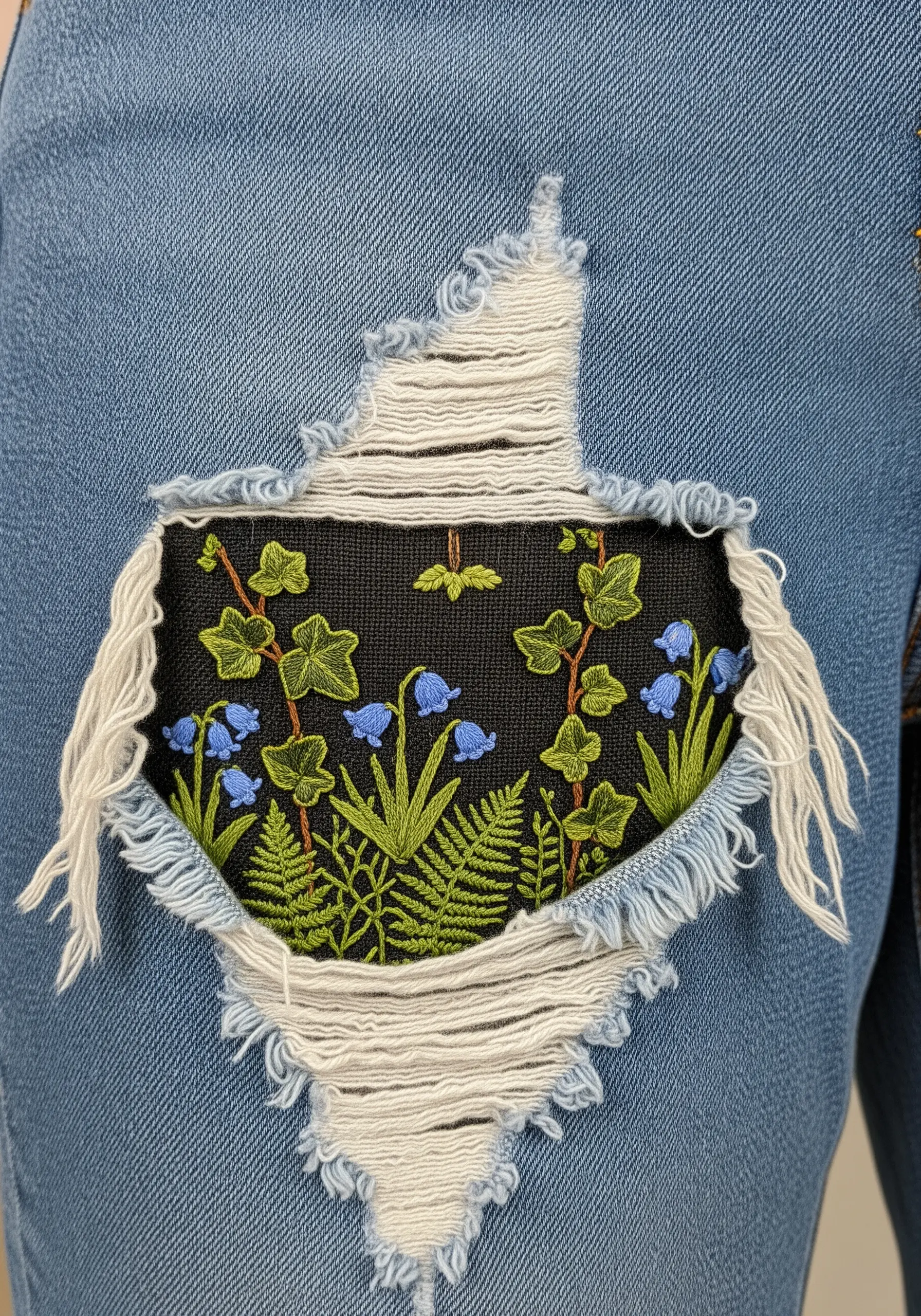
Transform a hole in your jeans into a creative opportunity with the art of visible mending.
First, patch the hole from the inside with a piece of dark, sturdy fabric like black linen or cotton canvas.
Then, use the dark patch as your new canvas, embroidering a small scene of bluebells, ivy, and ferns that appears to be growing inside the opening.
This thoughtful approach not only saves your favorite jeans but turns a flaw into the most interesting detail of the entire garment.