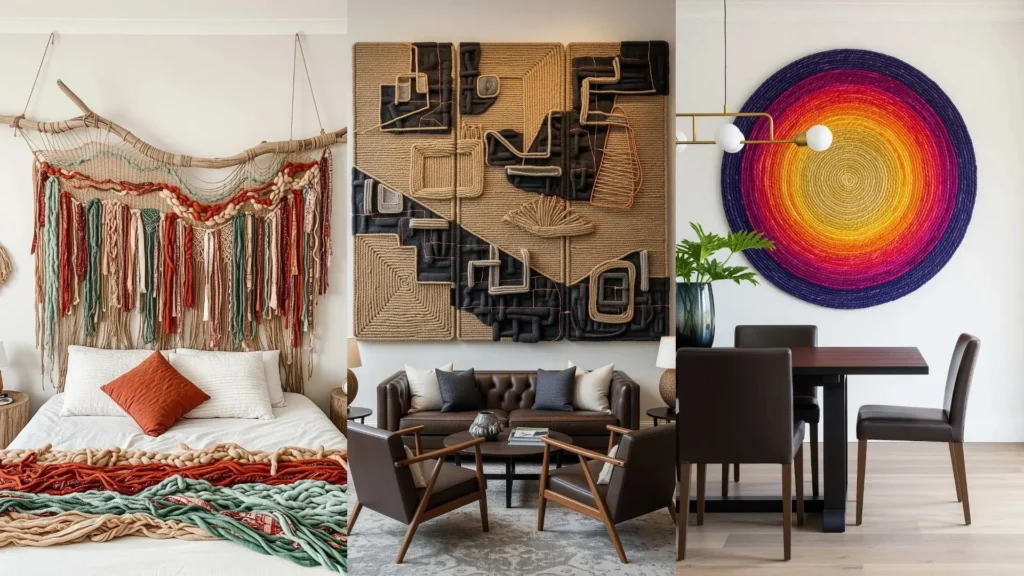
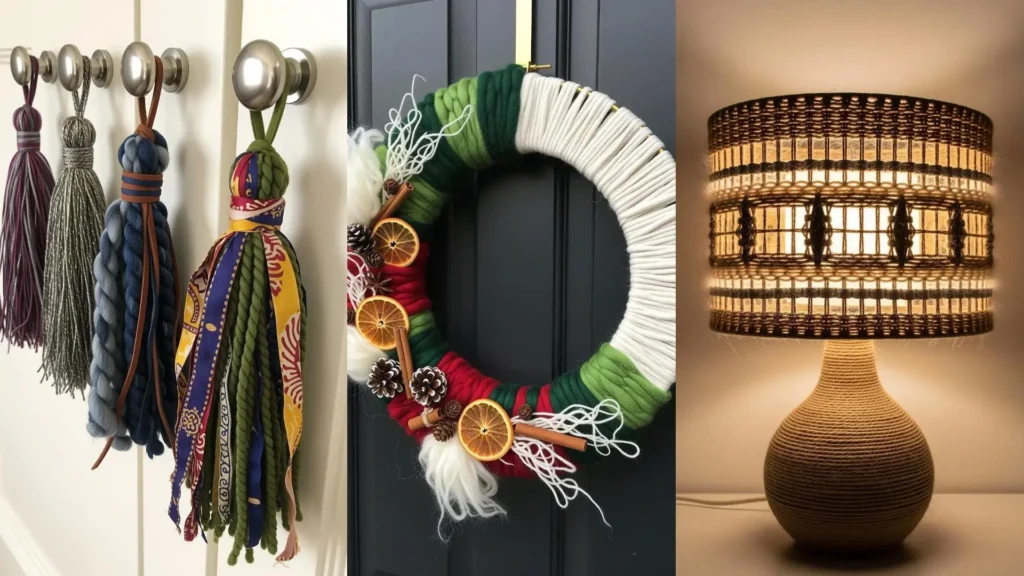
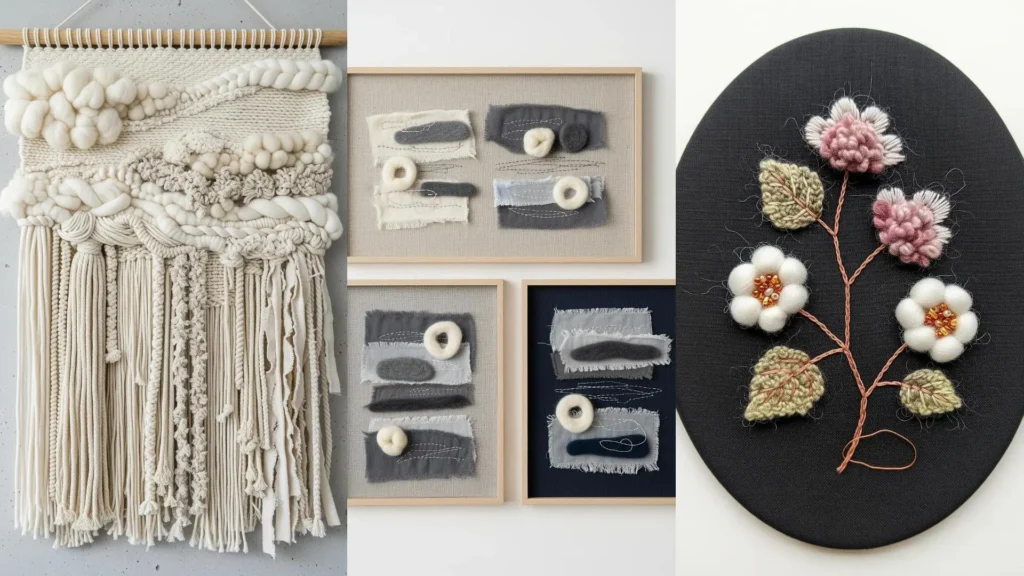
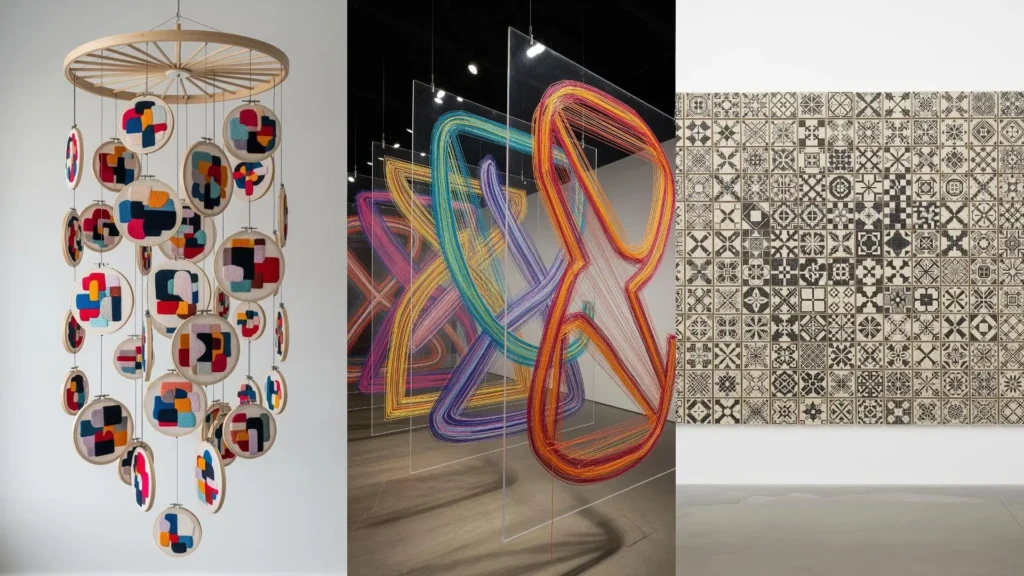
Have you ever looked at a blank ceiling or an empty wall and imagined it transformed by texture and color? Large-scale fiber art can feel intimidating, but the techniques behind these breathtaking installations are often rooted in the same simple stitches and knots you already know.
Think of this not as a gallery of impossible projects, but as a library of ideas you can borrow from. See how a simple knot, repeated thousands of times, becomes a canopy. Notice how a basic crochet stitch, when worked with intention, can mimic the complexity of a coral reef.
Let these artists inspire you to think differently about your own materials. You can scale down these grand concepts to create a stunning wall hanging, a unique mobile, or a piece of functional art for your home. The magic is in the making, and it’s more accessible than you think.
1. Create Organic Forms with Macrame Leaf Cascades

Translate this large-scale canopy into a stunning wall hanging by mastering macrame leaf patterns.
Use a simple diagonal half-hitch knot, varying the number of cords and the tightness of your knots to create different leaf shapes—from long and narrow to broad and full.
Incorporate different materials like cotton rope for structure, jute for a rustic feel, and chunky wool yarn for soft, textural contrast.
Hang your finished leaves from a piece of driftwood at varying lengths to create a sense of natural, flowing movement in your space.
2. Master Thread Tension for Gradient String Art

Recreate this ethereal effect on a smaller scale using an oversized embroidery hoop or a simple wooden frame.
The secret is precise thread tension; each strand must be taut to create that smooth, suspended curtain of color.
Work with multiple strands of embroidery floss or fine yarn held together to build color density faster.
Map out your anchor points around the frame and work methodically from one color to the next, slightly overlapping them to achieve a seamless ombre gradient.
3. Explore Architectural Lines with Geometric Threading

This technique uses straight lines to create the illusion of complex curves, perfect for minimalist wall art.
Start by hammering small nails or pins into a painted board or directly onto a wall in a geometric pattern (like a star, circle, or square).
Use a strong, smooth thread like nylon or waxed linen that won’t fray with repeated wrapping.
Create depth by layering colors—start with a base of black thread and then overlay it with white to define different planes and create a striking optical effect.
4. Craft a Whimsical Mobile with Amigurumi Figures

Bring this playful energy into a nursery or creative space by crocheting your own amigurumi characters.
Work with a tight single crochet stitch to ensure the stuffing doesn’t show through, creating a clean, professional finish.
Experiment with different yarn weights—a chunky yarn creates a bold, graphic character, while a finer cotton yarn allows for more delicate details.
Hang them from a simple embroidery hoop with clear fishing line to make them look like they are floating in mid-air.
5. Design Textured Sound-Dampening Panels

Translate the concept of textural ceiling tiles into functional wall art that also improves room acoustics.
Wrap hexagonal canvases or wooden boards with thick felt, textured wallpaper, or even hand-woven fabric.
To get that crinkled, organic texture, try wet-felting wool roving directly onto a stiff backing or adhering handmade paper to the panel surface.
Arrange the finished hexagons in a honeycomb pattern on your wall for a modern, minimalist wall art piece with practical benefits.
6. Paint with Yarn to Create a Dynamic Wave Tapestry

Capture the motion of a cresting wave in a smaller wall hanging using punch needle or rug hooking techniques.
Choose a range of blue, teal, and white yarns in different thicknesses to build depth and movement.
Use chunky, lofty wool for the seafoam to create a high-pile, 3D texture that contrasts with the flatter, smoother stitches of the water.
This is one of those statement embroidery pieces that relies on texture, not intricate stitches, to make an impact.
7. Weave a Celestial Canopy with Light and Fiber

Recreate this starry night effect by weaving fine, metallic threads or translucent ribbons through a lightweight mesh fabric, like tulle or organza.
Then, entwine delicate battery-powered fairy lights throughout your woven creation.
The sheer fabric diffuses the light, creating a soft, ethereal glow, while the metallic threads catch the light for extra sparkle.
Drape the finished piece from the ceiling in a bedroom or reading nook to create an immersive, magical atmosphere.
8. Juxtapose Textures with Sculptural Rope and Macrame

Create a powerful focal point by combining different scales and textures of fiber in one piece.
Contrast the smooth, intricate patterns of classic macrame with the raw, bold presence of thick, coiled rope.
Use a simple binding knot (or whipping knot) to secure the ends of the heavy rope, turning it into a sculptural element.
This high-contrast approach is perfect for yarn wall art techniques that command attention in a room with high ceilings or large walls.
9. Build a Festive Canopy with Tassels and Pom-Poms

This is a joyful explosion of color and texture that you can easily scale down for a party or a vibrant child’s room.
Use a pom-pom maker for consistency and speed, creating dense, fluffy spheres of yarn.
For the tassels, wrap yarn around a piece of cardboard, tie it off at the top, and cut the bottom loops to create a full fringe.
Combine handmade elements with fabric-wrapped rods or ropes for a dynamic, multi-layered look that radiates energy.
10. Craft Interlocking Forms with Knitted Tubes

Create your own soft sculptures by knitting long tubes of fabric, either by hand, on a circular needle, or using a knitting machine.
Stuff the tubes with soft poly-fil or foam to give them a solid, defined form that you can bend and shape.
Stitch the ends together to form continuous loops, then weave them together to create an interlocking, biomorphic sculpture.
A simple garter or stockinette stitch creates a clean, minimalist texture that emphasizes the form itself.
11. Stitch a Galaxy with Glow-in-the-Dark Threads

Transform a plain piece of dark blue or black linen into a stunning celestial map for your wall or ceiling.
Use glow-in-the-dark embroidery floss to stitch spiral galaxies with simple running stitches or whipped backstitches for smooth curves.
Create stars using a mix of French knots, colonial knots, and tiny seed stitches for varied size and brightness.
For extra dimension, add tiny beads or sequins that will catch the light and mimic twinkling starlight.
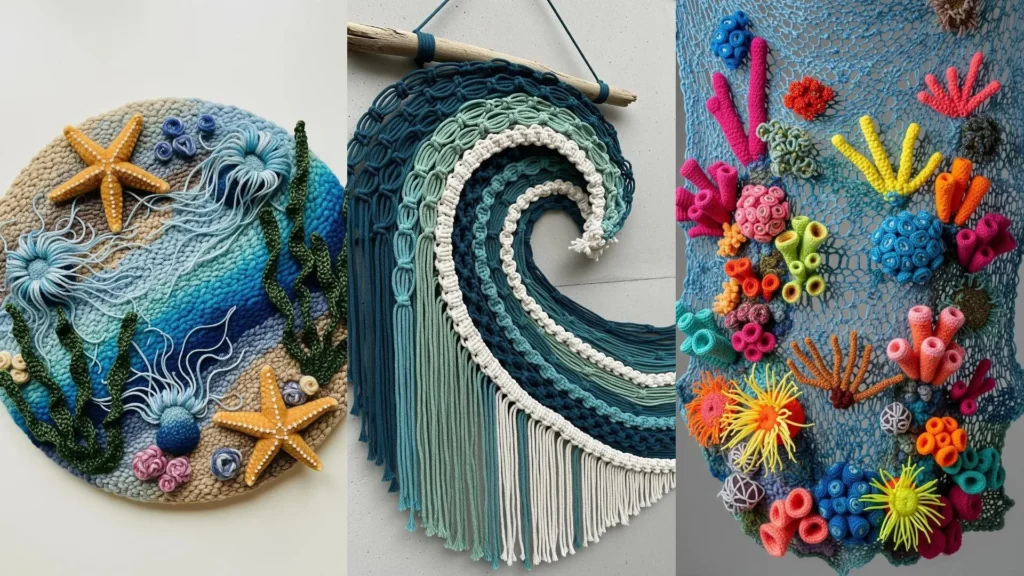
12. Sculpt an Underwater World with Crochet Coral

Mimic the organic, complex shapes of a coral reef using hyperbolic crochet techniques.
This technique involves rapidly increasing your stitches in each row (for example, crocheting two or three stitches into every stitch of the previous row).
The result is a naturally frilled, ruffled fabric that folds and curls in on itself, perfectly replicating the look of coral and sea anemones.
Experiment with vibrant, neon-colored yarns and variegated threads to create a rich and diverse underwater ecosystem.
13. Weave a Cozy Canopy with Chunky Roving

Achieve this warm, textural effect by weaving with super-chunky wool roving on a large, simple frame loom.
Instead of a traditional flat weave, allow the roving to billow and drape between the warp threads to create a soft, undulating surface.
A simple over-under plain weave is all you need; the texture of the thick, unspun wool does all the aesthetic work.
Stick to a warm, analogous color palette—like mustard, rust, and burgundy—to enhance the cozy, inviting feeling of the piece.
14. Construct an Elegant Macrame Chandelier

Transform a simple lighting fixture or a set of metal rings into a grand, bohemian statement piece with macrame.
Work in the round, attaching your cords to a top ring with a lark’s head knot and working your patterns downwards.
Combine sections of square knots for flat, geometric panels with sections of double half-hitch knots to create strong diagonal lines.
Leave long, elegant fringe at the bottom to add a sense of drama and height to these boho masterpieces.
15. Create an Architectural Rainbow Installation

This idea demonstrates the power of repetition and color theory on a grand scale, which you can adapt for a dramatic wall hanging.
Use fabric ribbons or thick, flat yarns and anchor them at two points—one high and one low—to create a sweeping form.
Arrange the strands in a perfect rainbow gradient to create a sense of harmony and visual flow.
The key is keeping each strand perfectly parallel and taut, which turns simple materials into an impressive architectural feature.
16. Sculpt Fluffy Clouds from Wool Roving

Create your own dreamy cloudscape mobile using simple needle-felting or wet-felting techniques.
Start with a core of batting and wrap it with soft wool roving in shades of white, grey, and pale blue.
Use a felting needle to gently poke the fibers together, sculpting them into cloud-like forms. Keep your pokes light for a wispy texture or work it more for a denser shape.
These 3D embroidery wall art pieces are incredibly lightweight, making them easy to hang from any ceiling.
17. Play with Light and Shadow Using Netted Forms

Explore the relationship between a physical object and the shadow it casts with a simple knotted net.
Use a thick, dark cord and a consistent grid of square knots to create a strong, graphic net.
Suspend the net a few feet below a single, direct light source to cast a clear, distorted grid pattern onto the walls and floor.
This technique turns your fiber art into an interactive installation, where the empty space and shadows are as important as the object itself.
18. Carve a Topographical Landscape from Felt

Create a 3D topographical map effect by layering cut pieces of industrial felt.
Choose felt sheets in a gradient of colors to represent changes in elevation, just like on a real map.
Cut each layer into an organic, contour-line shape, making each one slightly smaller than the last.
Stack and adhere the layers together on a backing board to build a tactile, sculptural piece that invites viewers to trace the landscape with their eyes.
19. Drape a Room in Bold, Radiating Color

Make a dramatic, temporary statement by draping long bolts of lightweight fabric from a central point on the ceiling.
Choose fabrics with a beautiful drape, like chiffon, organza, or lightweight satin, in a jewel-toned palette.
Secure the fabric at a central point—like around a chandelier—and let it swag gracefully outwards to the corners of the room.
This technique is perfect for transforming a space for an event, adding a sense of grandeur and vibrant energy without permanent changes.
20. Explore Scale with Giant Arm Knitting

This oversized web effect is achieved through arm knitting, a technique that uses your arms as needles to create massive stitches.
Work with extremely thick, unspun wool roving or ‘giant’ yarn to get that chunky, dramatic texture.
You can create flat panels or work in the round to create baskets and poufs, as seen on the floor.
Suspending a giant knitted piece from the ceiling plays with scale and makes a soft, architectural statement in any modern interior.
21. Design a Celestial Ceiling with a Woven Tapestry

Instead of painting a mural, consider a woven throw or tapestry to create a cozy, celestial ceiling.
Look for jacquard-woven blankets, which have intricate designs woven directly into the fabric, not printed on top.
To mount it, you can build a lightweight wooden frame slightly smaller than the blanket and staple the fabric to the back for a taut, smooth finish.
Adding moon and stars embroidery with metallic thread can further enhance the design and make it your own.
22. Hang a Forest of Macrame Stalactites

Create these elegant, tapered forms by working macrame knots around a central core or dowel.
Start with a small ring or loop at the top and build outwards with decorative knots like the spiral knot or alternating square knots.
Instead of adding more cords as you work down, you let them hang straight, creating a natural taper that resembles a stalactite.
Group them together at varying heights to create a sense of a natural, cave-like formation, playing with density and negative space.
23. Create an Immersive Field of Pom-Poms

This installation achieves its impact through sheer volume and color, a concept you can adapt for a smaller, framed piece.
Create hundreds of small, dense pom-poms in a wide variety of colors using a multi-size pom-pom maker set.
String them onto individual threads and attach them to a mesh grid or canvas, varying the height of each pom-pom to create a textured, 3D field of color.
This is a fantastic way to use up scrap yarn and create bold color pop embroidery without complex stitching.
24. Mimic Organic Growth with Crocheted Structures

Recreate these branching, tree-like forms by crocheting around a wire armature.
First, bend a sturdy but flexible wire into your desired branch shape.
Then, using a simple single crochet stitch, work around the wire, completely encasing it in yarn.
For the web-like canopy, use crochet lace techniques with fine thread, creating open, airy patterns that contrast with the solid branches.
25. Diffuse Light with Open-Weave Panels

Craft your own elegant light diffusers by stretching a loosely woven fabric over a simple wooden frame.
Achieve this open, grid-like texture by using a technique called leno weave, where warp threads are twisted to lock the weft in place.
Alternatively, create a similar effect by weaving with stiff materials like rattan, jute, or waxed linen on a frame loom, leaving deliberate space between each strand.
These panels soften the light from ceiling fixtures, casting a warm, patterned glow and adding a layer of natural texture to a room.
26. Sculpt with Fiber Optics and Raw Wool

Combine natural fibers with modern technology for a truly magical effect.
Create hanging forms from unspun wool roving, gently pulling and shaping it to create ethereal, wispy textures.
Weave fiber optic filaments among the wool fibers. These thin strands will carry light from a hidden source, causing the entire installation to glow from within.
This is one of those fiber art installations using unusual materials that shows how combining textures can lead to breathtaking results.