When you sit down to create, you’re doing more than just stitching. You’re looking for that moment when a simple thread and fabric become something more—something with feeling, intention, and a quiet sort of beauty. You want your work to feel not just finished, but resolved.
Mixing fibers is the key to unlocking that next level of expression. It isn’t about making things more complicated; it’s about making them more interesting. By pairing the familiar softness of yarn with the structure of rope, or the matte texture of felt with the sheen of silk ribbon, you add a depth and tactile richness that a single material often cannot achieve on its own.
These ideas are invitations to play with texture, weight, and form. They are designed to help you create gifts that feel deeply personal and look professionally crafted—pieces that communicate care in every knot, loop, and stitch.
1. Weave with Roving and Natural Forms
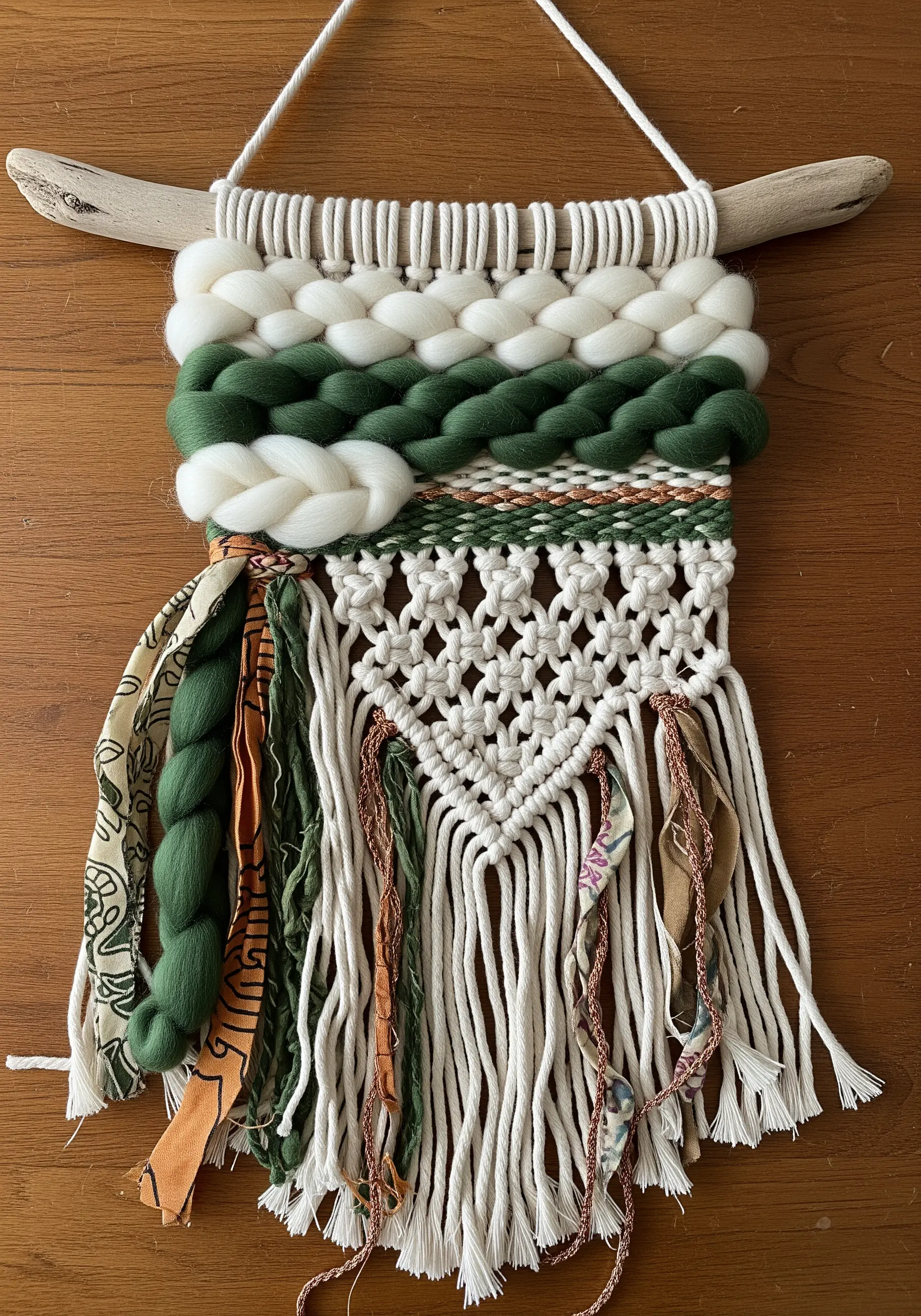
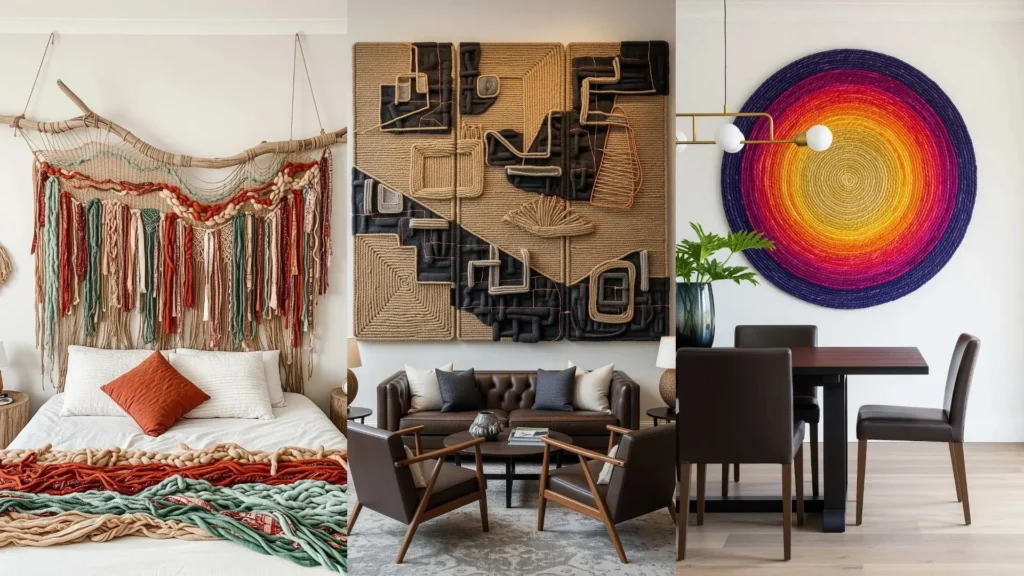
Combine the soft, unstructured texture of wool roving with the defined patterns of macramé to create a piece with compelling visual contrast.
Use a piece of found driftwood as your loom’s anchor; its organic shape provides a beautiful, natural frame that complements the fibers.
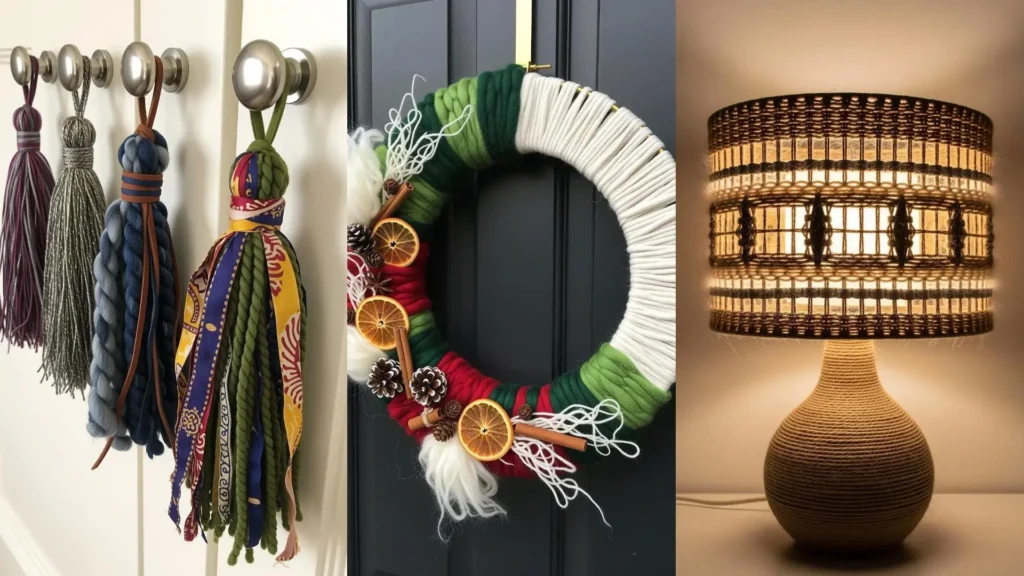
Incorporate strips of patterned fabric into your tassels to introduce color and personality, connecting the woven piece to a broader decor palette.
The key is balancing tight, structured knots against the gentle billows of unspun wool for a dynamic, touchable wall hanging.
2. Paint with Yarn Using Punch Needle
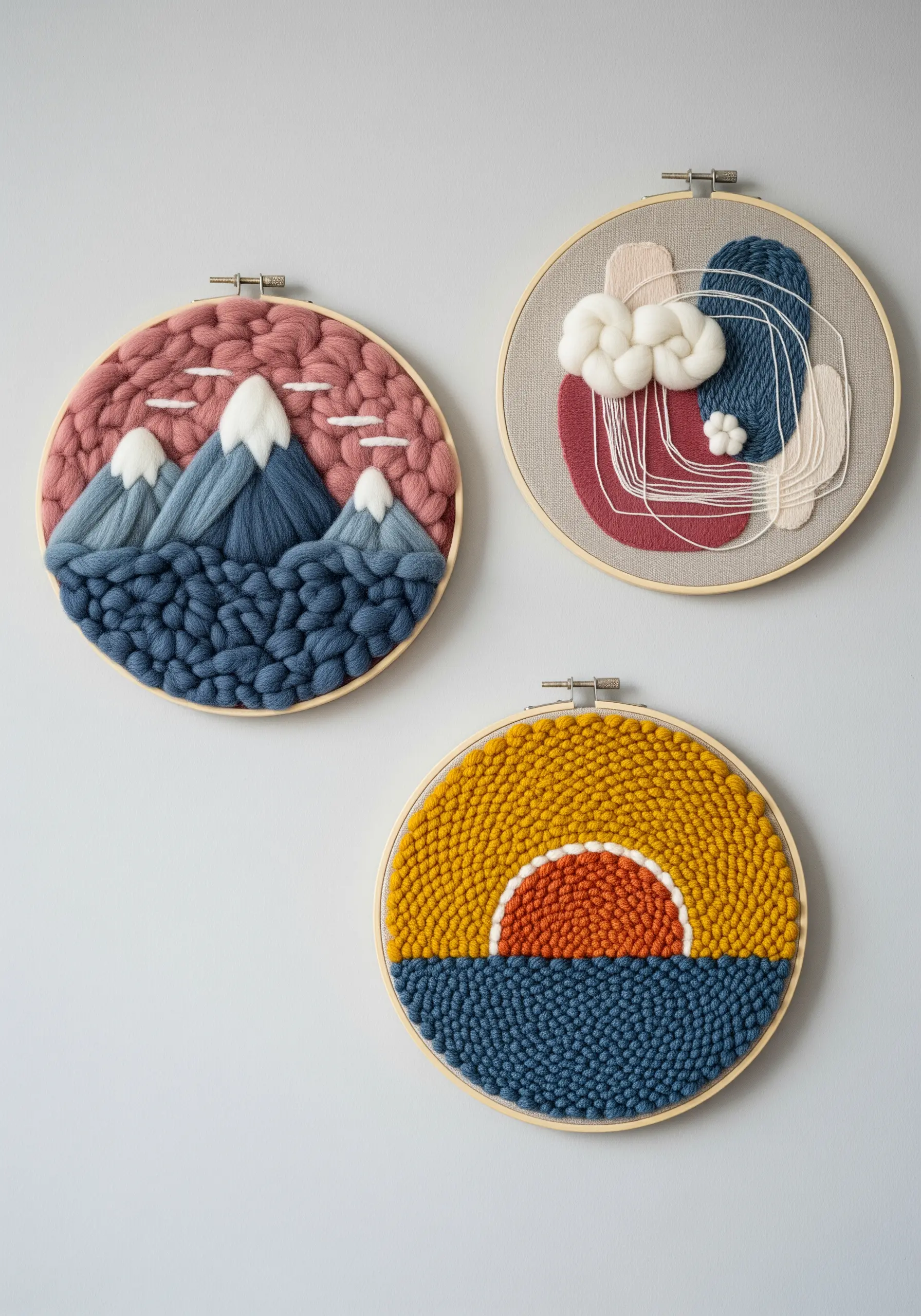
Think of your punch needle as a paintbrush and yarn as your pigment to achieve painterly effects with texture.
Create depth in landscapes by using a higher loop pile for elements in the foreground and a shorter, denser pile for those in the background.
For ethereal details like clouds or sea foam, swap yarn for unspun wool roving, which produces a soft, diffuse texture that beautifully mimics nature.
Outline your shapes with a single line of punch needle stitches first to create a clean boundary before filling them in, ensuring crisp, defined edges.
3. Construct Modern Graphics with Coiled Rope
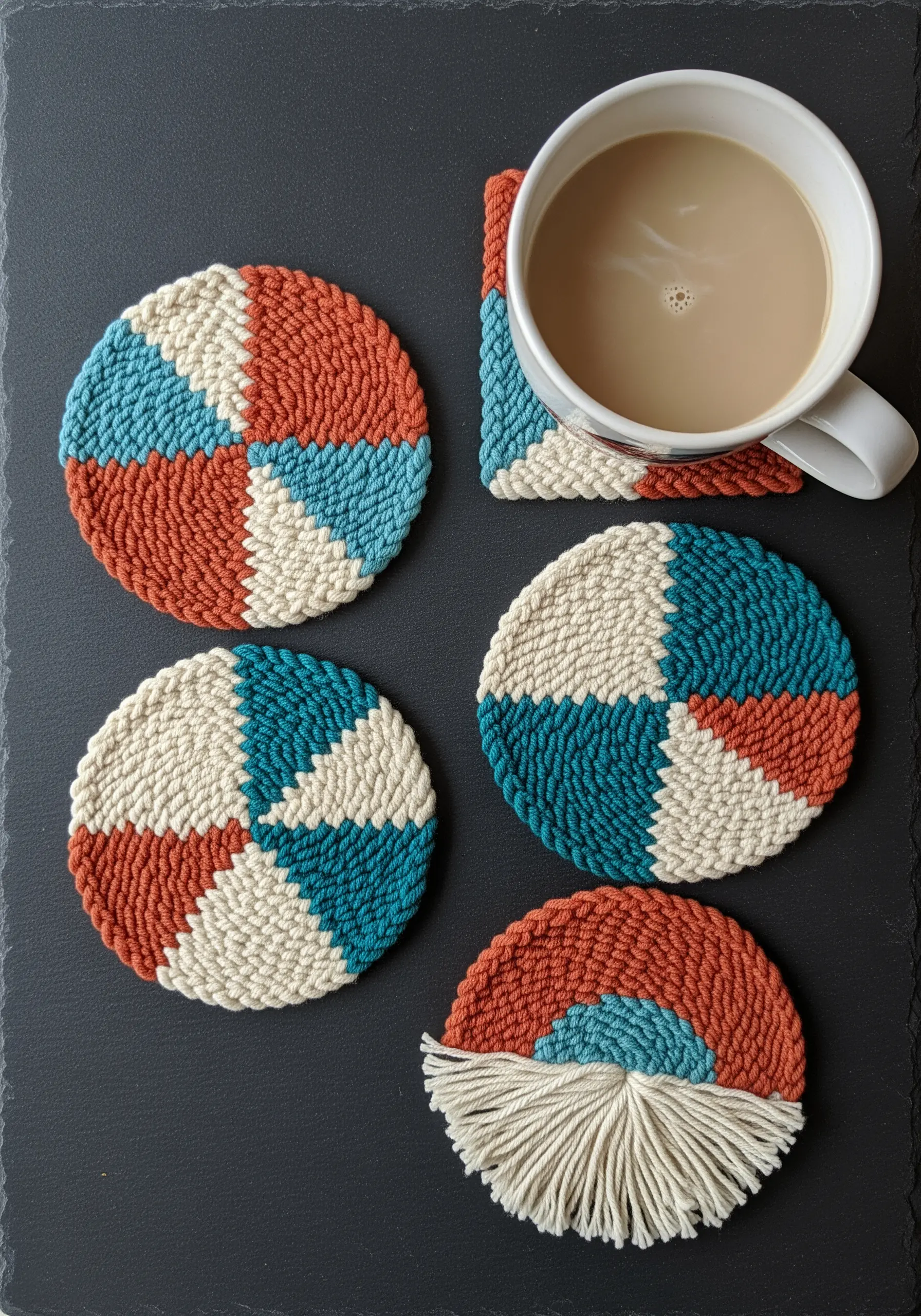
To create durable textiles with coiled rope, use a sturdy cotton cord as your base and wrap it tightly with embroidery floss or thin yarn.
Plan your color-blocking in segments to achieve a clean, geometric design; secure the end of each color with a knot before starting the next.
Use a zigzag stitch on your sewing machine to join the coils for maximum durability, or use a strong hand-stitching needle and coordinating thread for a more handmade look.
For a bohemian finish, leave the end of the rope unwrapped to create a soft, fanned-out fringe.
4. Add a Woven Focal Point to Macramé
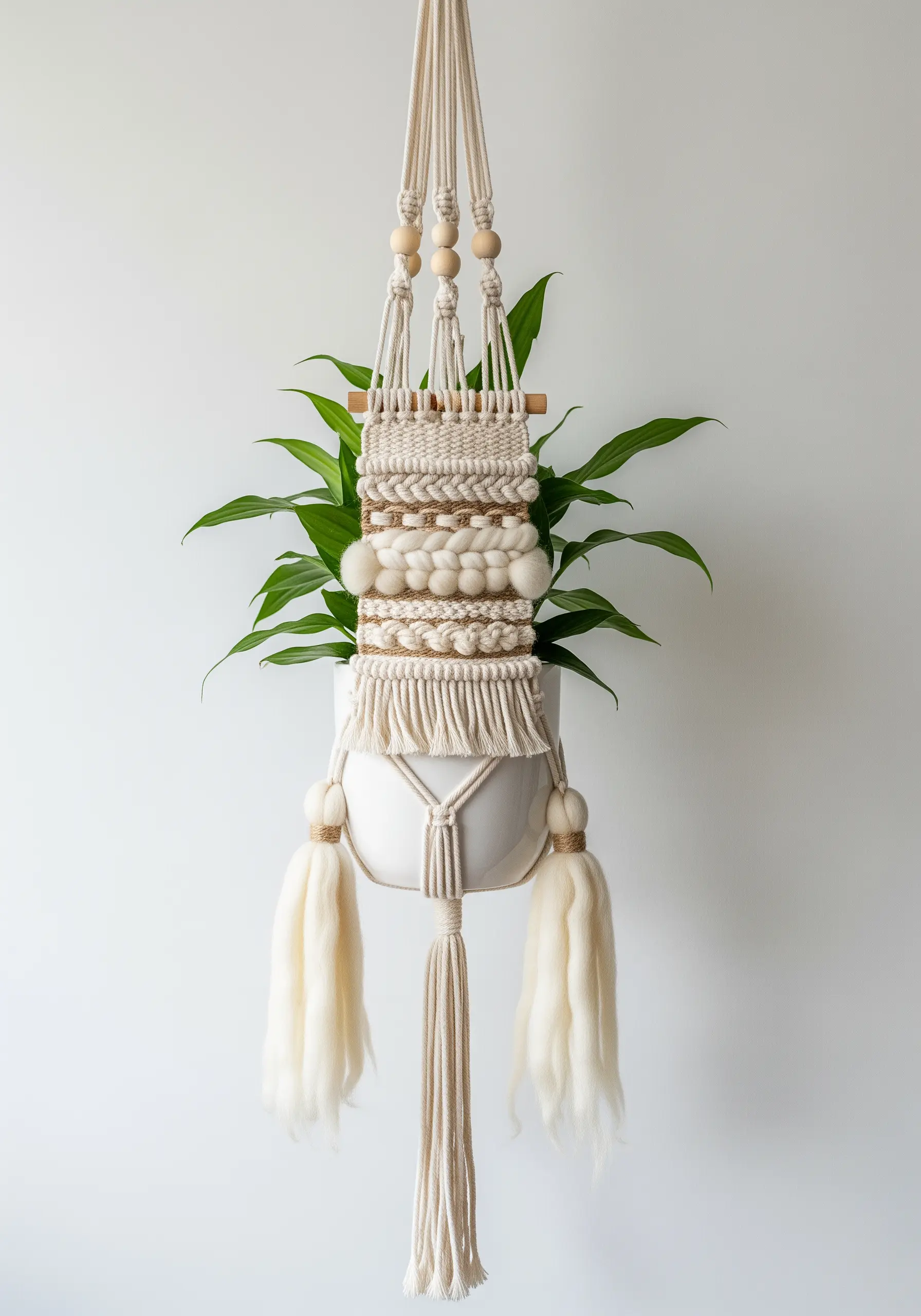
Elevate a standard macramé plant hanger by incorporating a small, tightly woven panel as a central design element.
Warp your threads directly onto two of the macramé cords to create a miniature loom within the structure itself.
Use a mix of textures in this woven section—such as thick roving for puffy clouds and thinner yarns for tight, flat weaves—to draw the eye.
This technique turns a functional item into a decorative art piece, proving that small details can have a significant impact.
5. Craft Statement Jewelry from Wrapped and Braided Fibers

To craft statement jewelry without metalwork, use cording as a base and wrap it tightly with colorful embroidery floss.
Create visual interest by varying the techniques: combine smoothly wrapped sections with braided cords and twisted threads.
Incorporate needle-felted wool beads for a soft, matte texture that contrasts beautifully with the slight sheen of the embroidery floss.
Use brass or gold-plated hardware, like cord ends and clasps, to give your fiber necklace a professional and polished finish.
6. Weave an Intricate Bookmark with Embroidery Floss
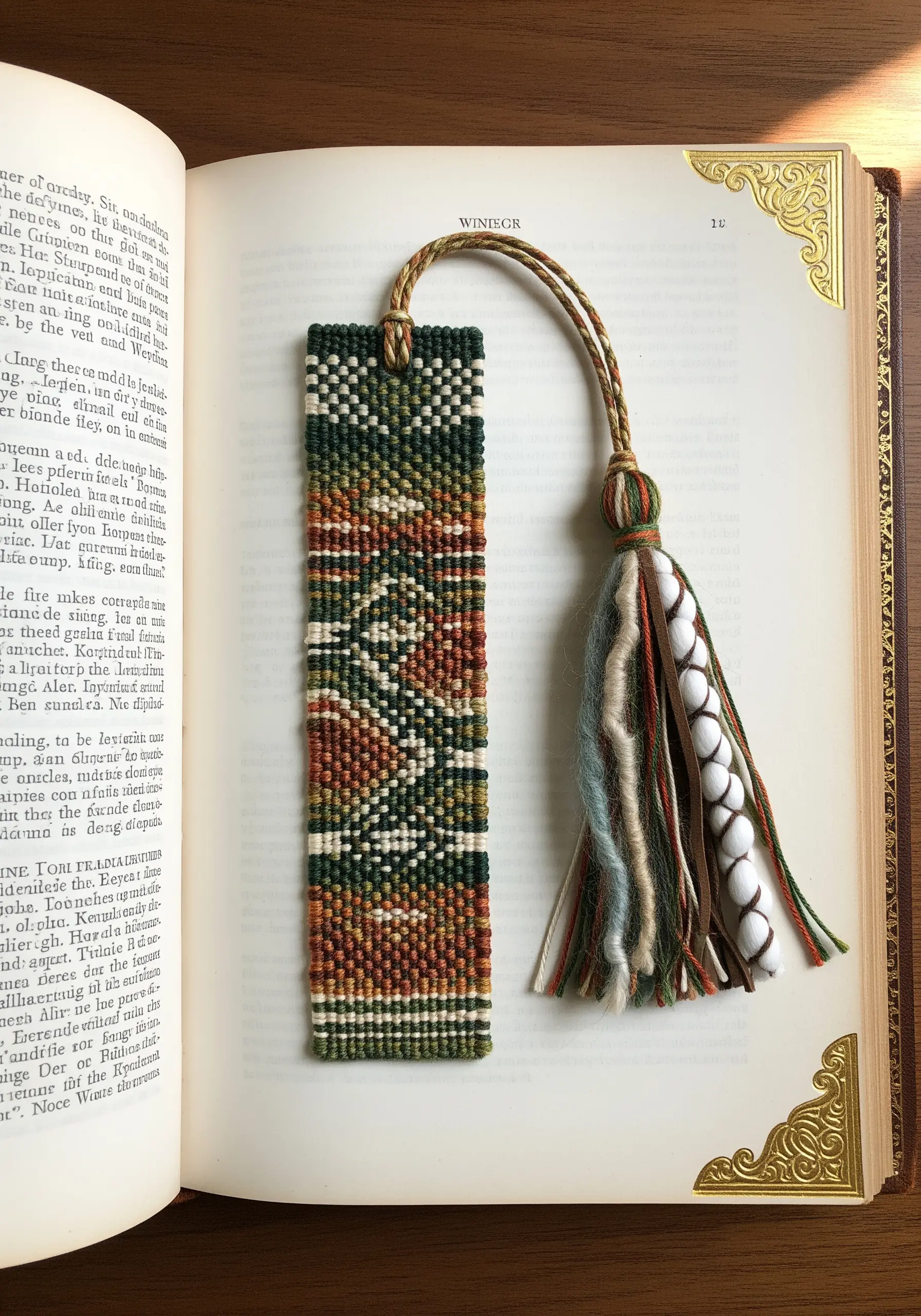
Use embroidery floss to weave intricate patterns for functional art on a small scale, such as a bookmark.
A simple cardboard loom or an inkle loom allows you to create complex geometric designs with precise tension.
Choose a palette of three to five complementary colors to create a design that feels cohesive and intentional rather than busy.
Finish your piece with a multi-textured tassel made from all the leftover yarns and floss from the project, ensuring no material goes to waste.
7. Apply 3D Stitches to Book Covers
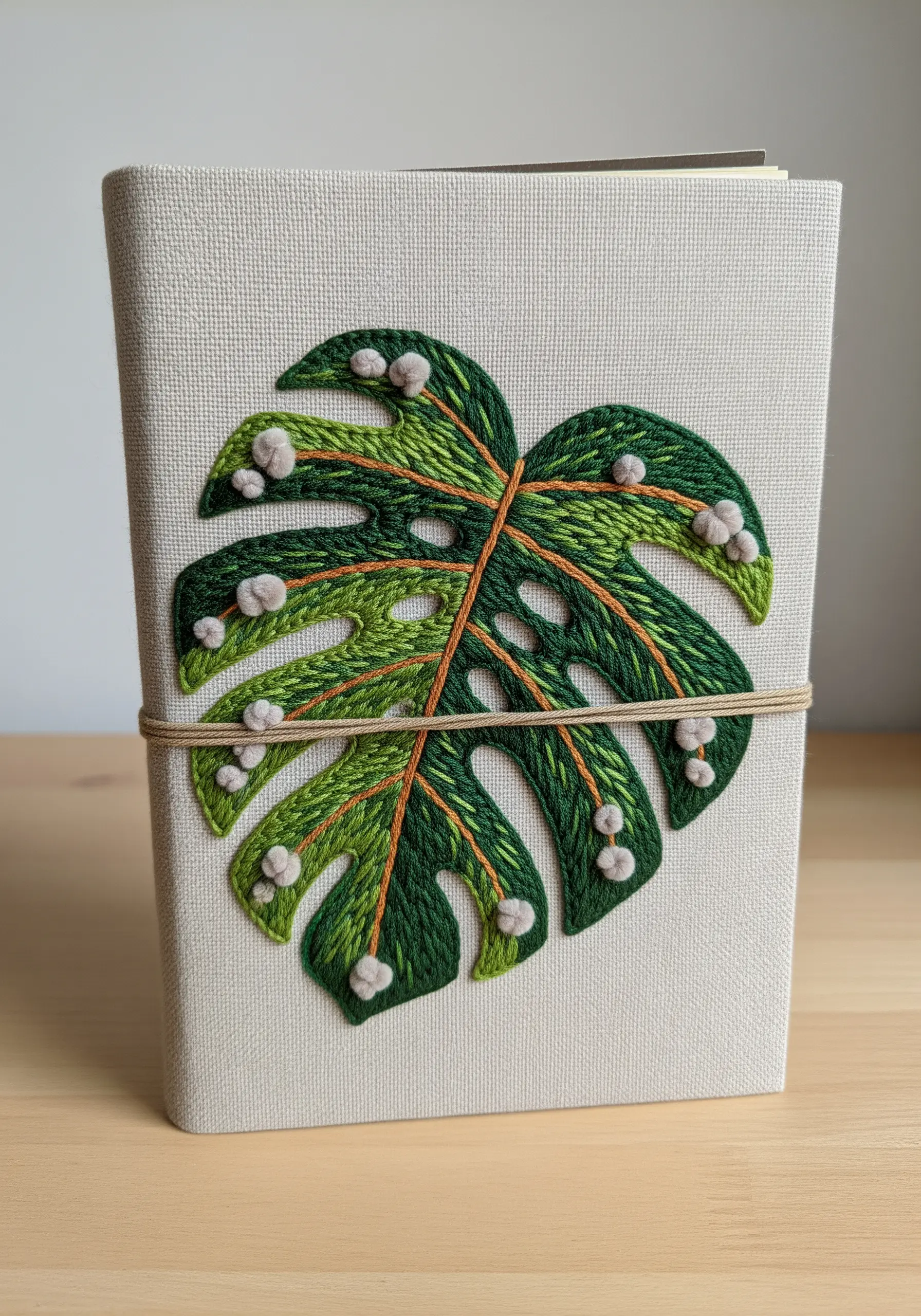
Transform a plain journal into a tactile object by embroidering a design directly onto its fabric cover.
Use a padded satin stitch to give the leaf sections a raised, three-dimensional quality that invites touch.
Incorporate French knots or bullion knots using a contrasting, thicker thread like wool to create textural dots that mimic natural growth or dewdrops.
This approach to surface design ensures the gift is not just beautiful but also a unique sensory experience.
8. Compose a Tactile Landscape in a Shadowbox
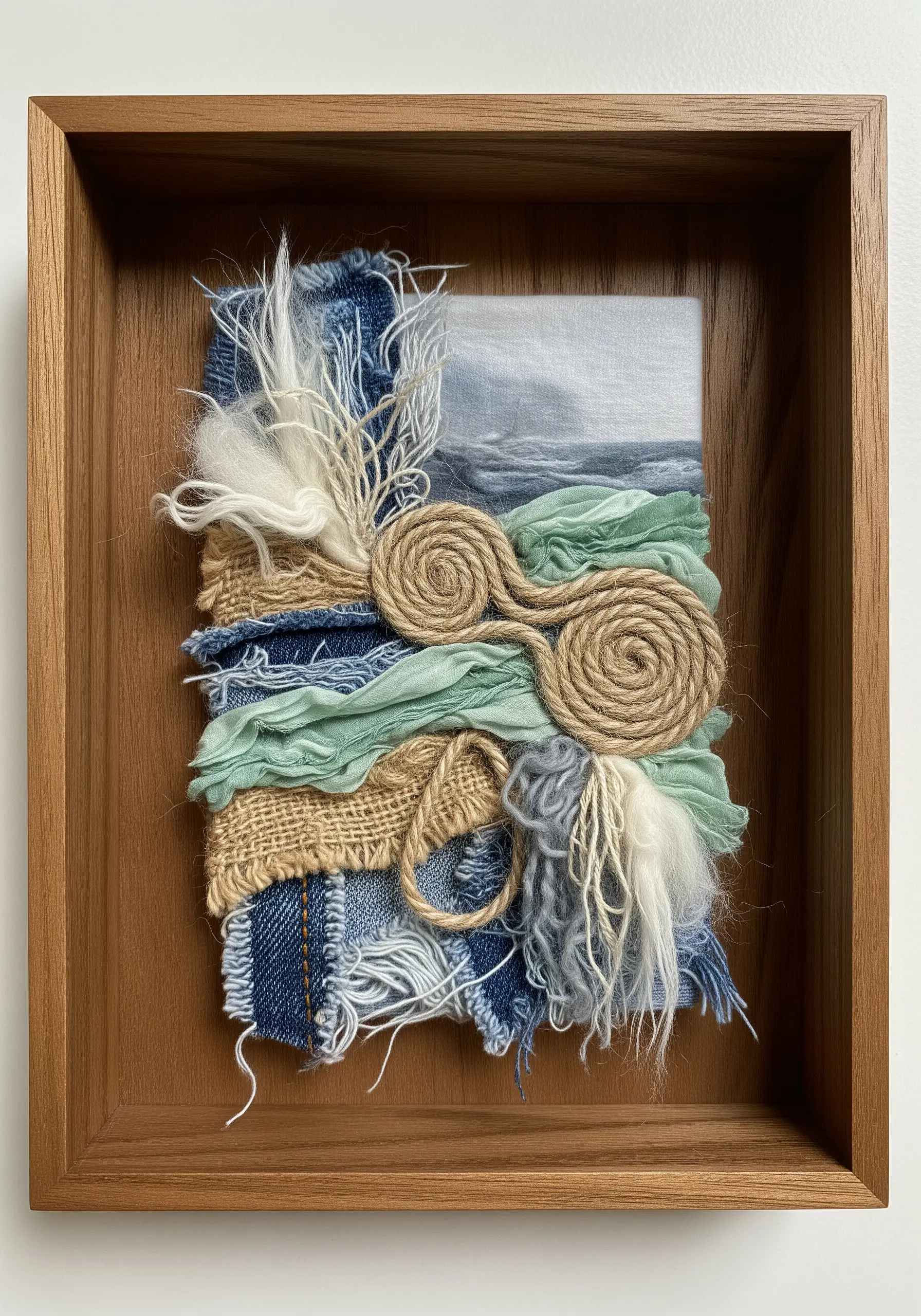
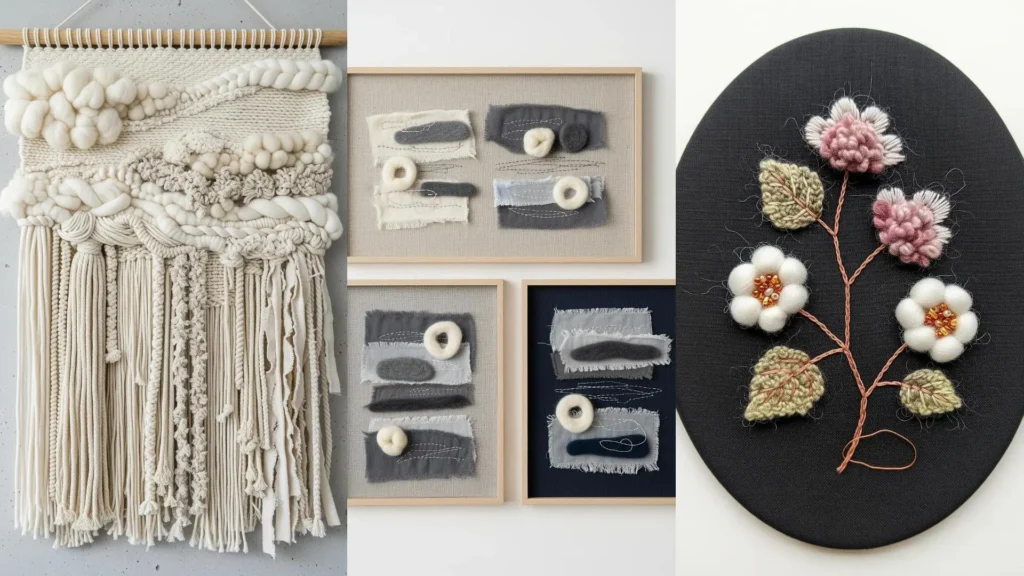
Use a shadowbox frame to build a layered fiber collage with real physical depth.
Start with a fabric or painted background, then add layers of torn denim, raw-edged linen, and gauzy materials to create a sense of distance and texture.
Incorporate natural fibers like jute rope, coiled into spirals, and wisps of unspun wool to mimic elements like crashing waves or swirling clouds.
This method allows you to compose a framed fiber collage that tells a story, capturing the mood of a seascape or landscape.
9. Embellish Felted Ornaments with Delicate Stitches
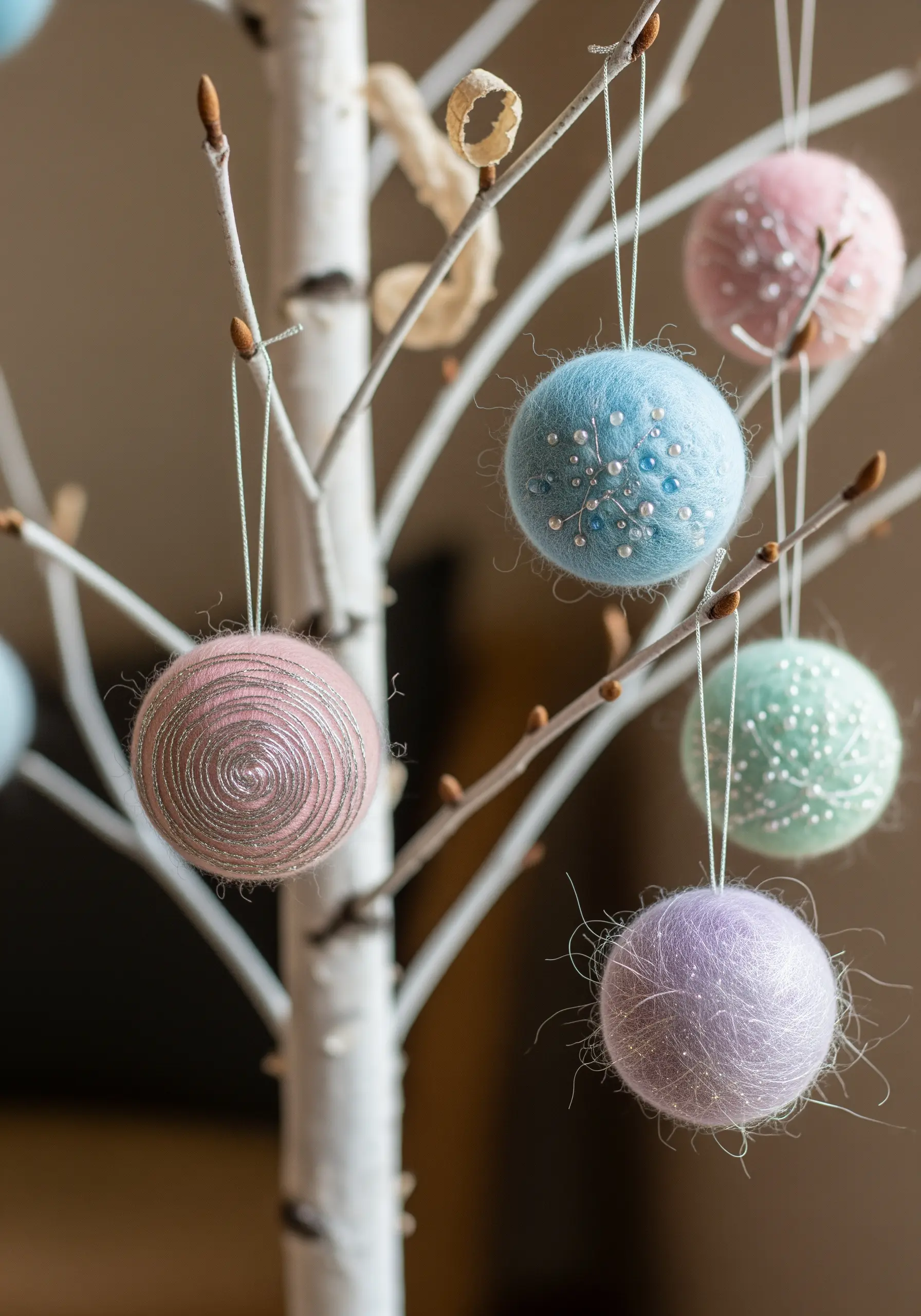
Start with simple, needle-felted wool balls as a canvas for intricate surface decoration.
Use a fine metallic thread to add a touch of shimmer, either by wrapping it around the sphere or stitching delicate patterns like stars or spirals.
Add seed beads for a subtle sparkle and texture, securing them with a single, sturdy stitch to ensure they stay in place.
The beauty of this project lies in the contrast between the soft, matte surface of the felt and the delicate, light-catching embellishments.
10. Add Appliqué to Simple Knits
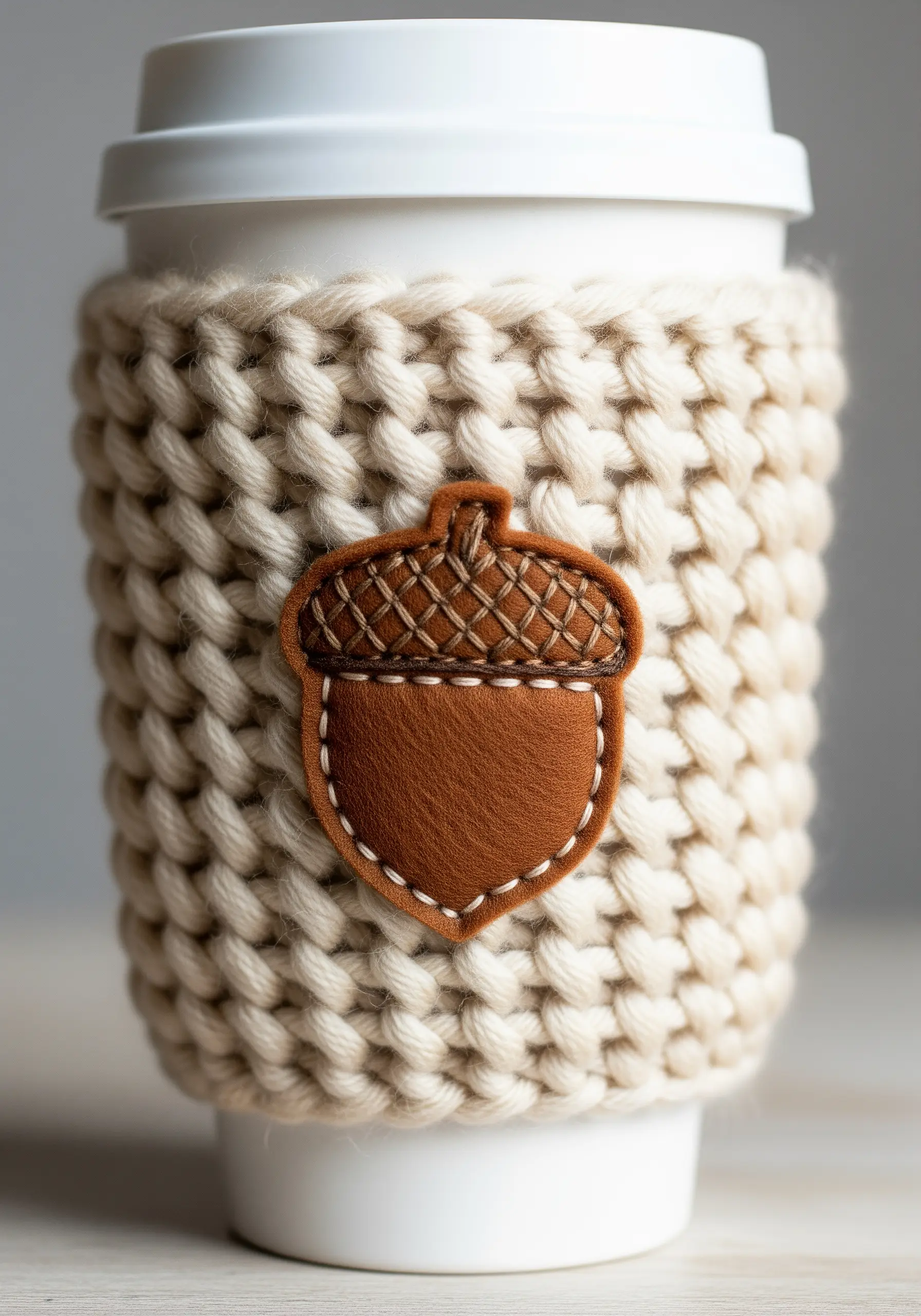
Elevate a simple knitted piece, like a coffee sleeve, with a thoughtful, hand-stitched appliqué.
Cut your shape from a non-fraying material like felt, which provides a clean edge and a sturdy base for stitching.
Use a contrasting color of embroidery floss and a decorative blanket stitch to attach the appliqué, turning the construction into a design feature.
This is an excellent way to personalize a quick-to-make gift, adding a layer of detail and care.
11. Weave Geometric Motifs into Small Mats
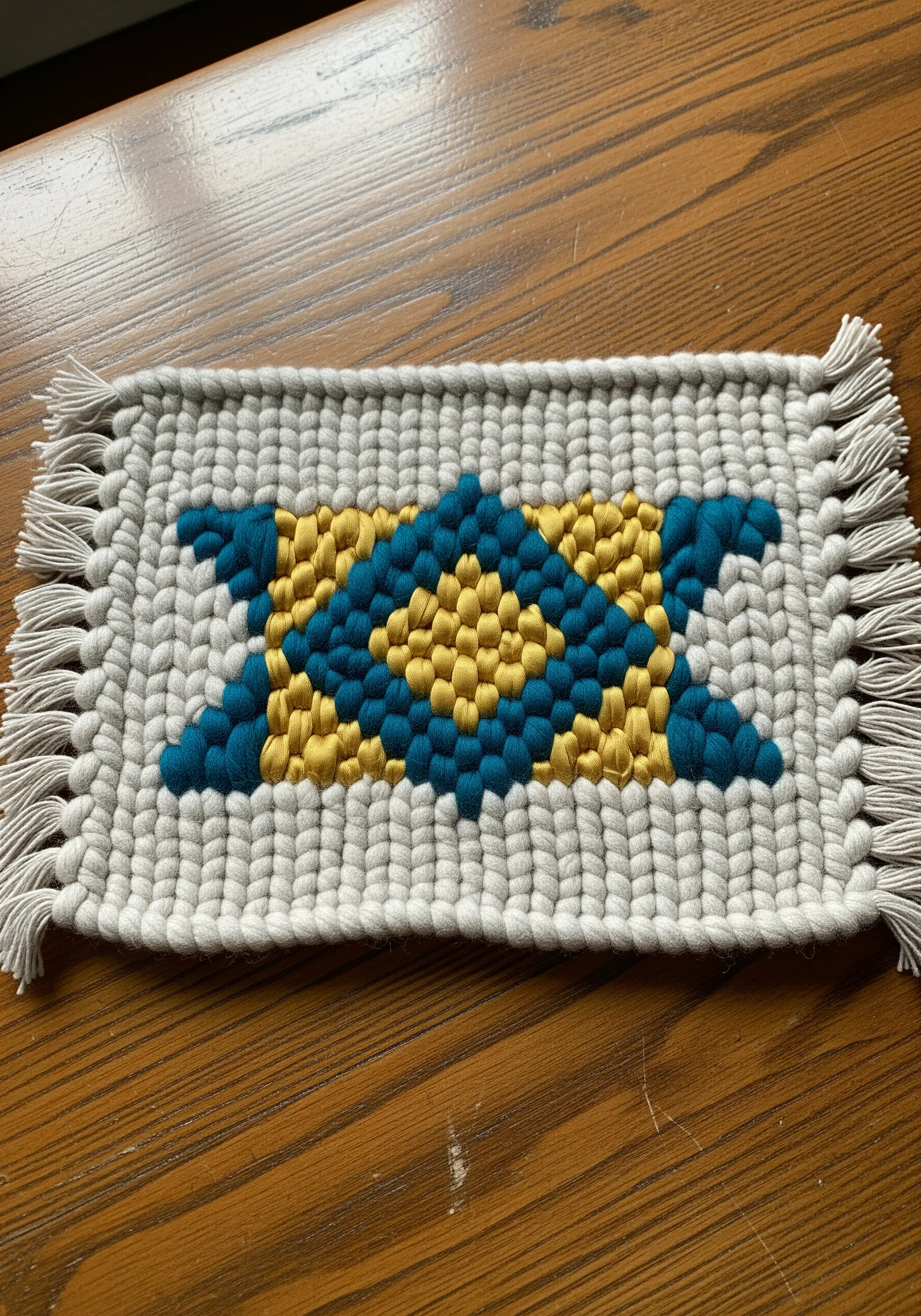
Use the tapestry weaving technique of yarn inlay to create bold, graphic designs on a woven background.
Sketch your design on paper first to plan the color placement and ensure the geometric shapes are balanced and symmetrical.
This project is an ideal way to master geometric tapestry on a small, manageable scale, perfect for a mug rug or small wall hanging.
Keep the background a neutral color to allow the vibrant, inlaid pattern to become the undisputed focal point.
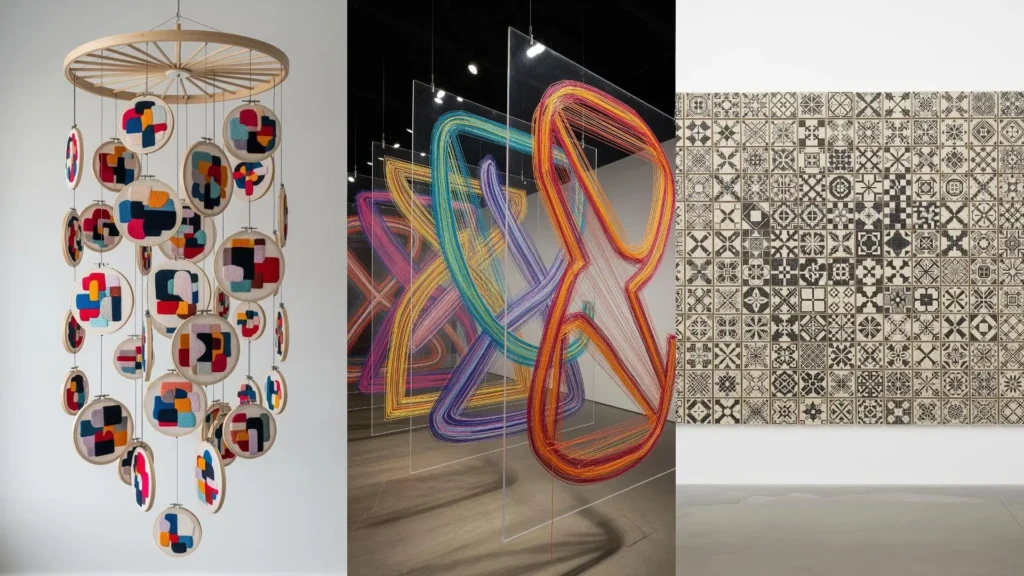
12. Create a Nursery Mobile with Soft Forms

To design soft-sculpture mobiles that are both beautiful and safe, use lightweight materials like felt and yarn.
Create plush, three-dimensional shapes by lightly stuffing hand-stitched felt stars and clouds with poly-fil.
Make yarn pom-poms with a pom-pom maker for a dense, uniform shape, and trim them carefully to get a perfect sphere.
Alternate the felt shapes and pom-poms on strong thread, varying their heights to create a visually engaging and balanced composition.
13. Build a Landscape with Woven Textures
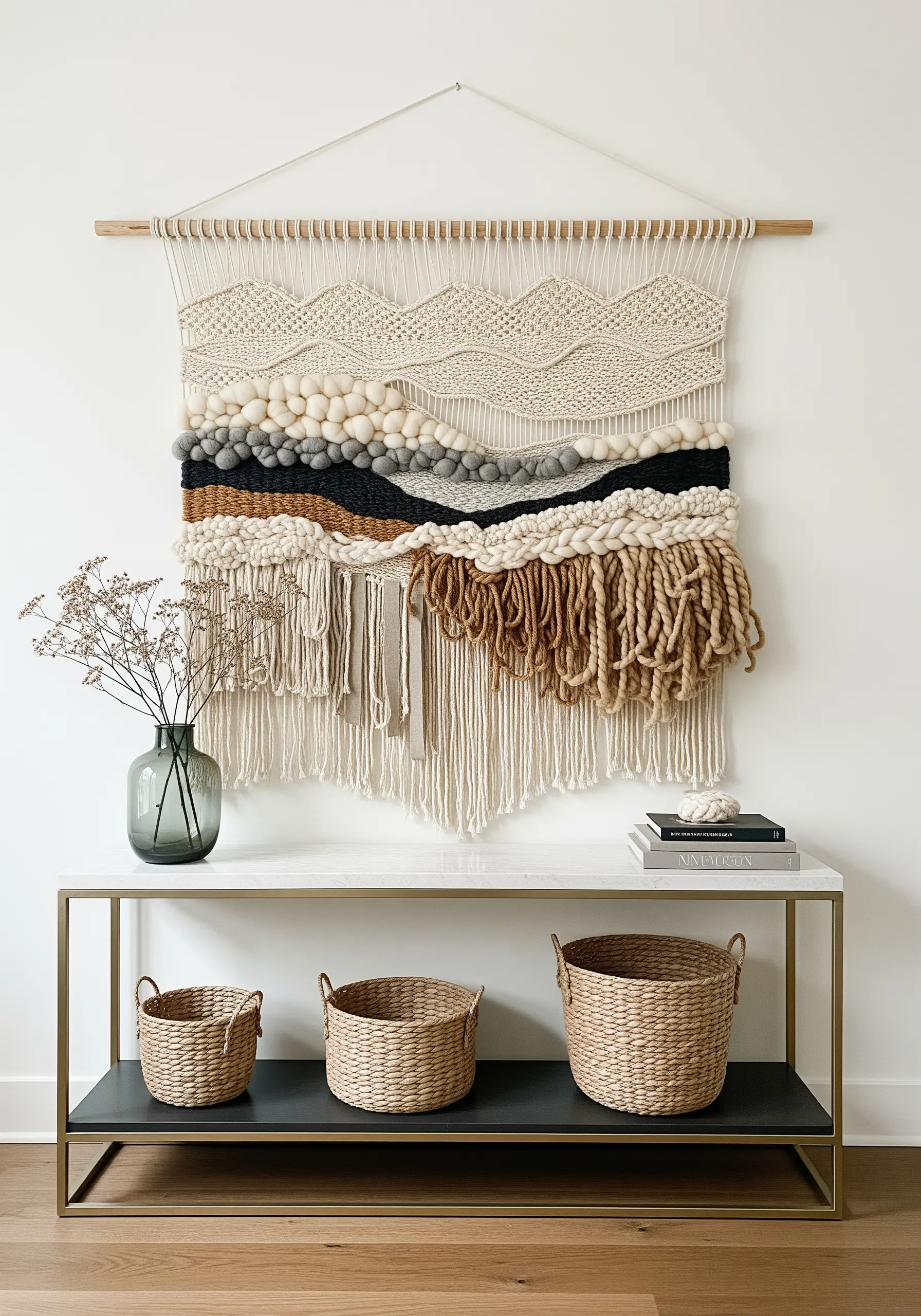
Approach large-scale weaving like you’re painting a landscape, using different techniques to represent different natural elements.
Use rows of puffy bobble stitches or thick, unspun roving to create the soft, rolling shapes of hills or clouds.
Incorporate a Soumak braid to create a raised, linear element that can define a horizon line or the edge of a mountain range.
Allowing the fringe at the bottom to be multi-layered and varied in length adds a final touch of organic, untamed energy to the piece.
14. Personalize a Keychain with a Mini Embroidered Hoop
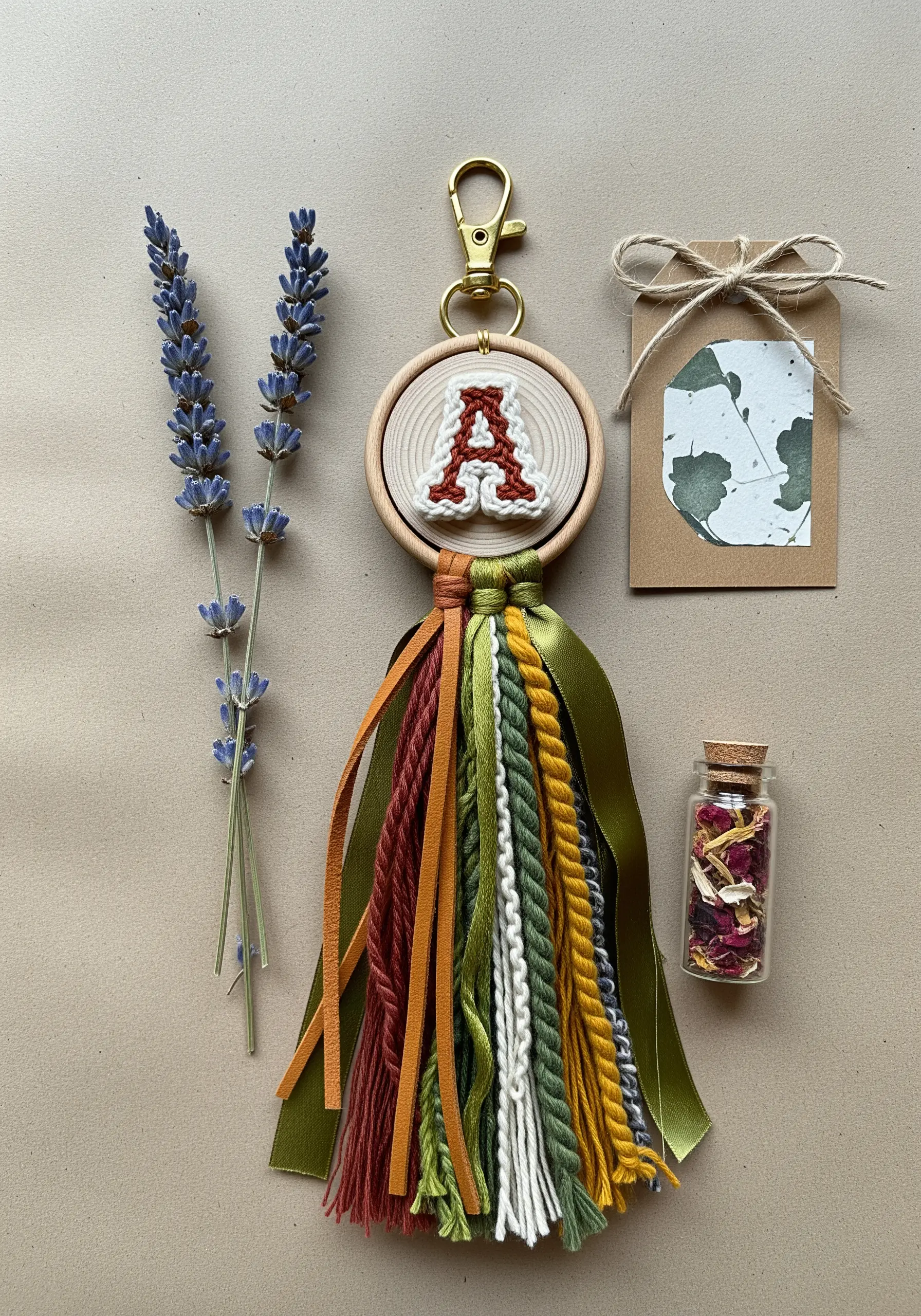
Create a truly personal gift by centering it around a miniature embroidered hoop.
Stitch a simple monogram or a tiny icon onto a scrap of fabric, then frame it in a 1-inch or 2-inch hoop.
Attach a lush tassel made from a mix of materials—satin ribbon, faux suede cord, and twisted yarns—to the hoop’s screw.
This combination of delicate embroidery and a generous tassel turns a simple keychain into a thoughtful, tactile accessory.
15. Block Out Textures on a Punch Needle Pillow

Move beyond uniform loops and explore sculptural texture with punch needle by creating distinct blocks of different pile heights.
Use an adjustable punch needle to create a high, shaggy pile in one section and a low, dense pile in another.
This technique creates a strong visual and tactile contrast, turning a simple color-blocked design into an interactive piece of home decor.
Work your sections from the outside in to ensure clean lines where the different textures meet.
16. Experiment with a Small Frame Loom
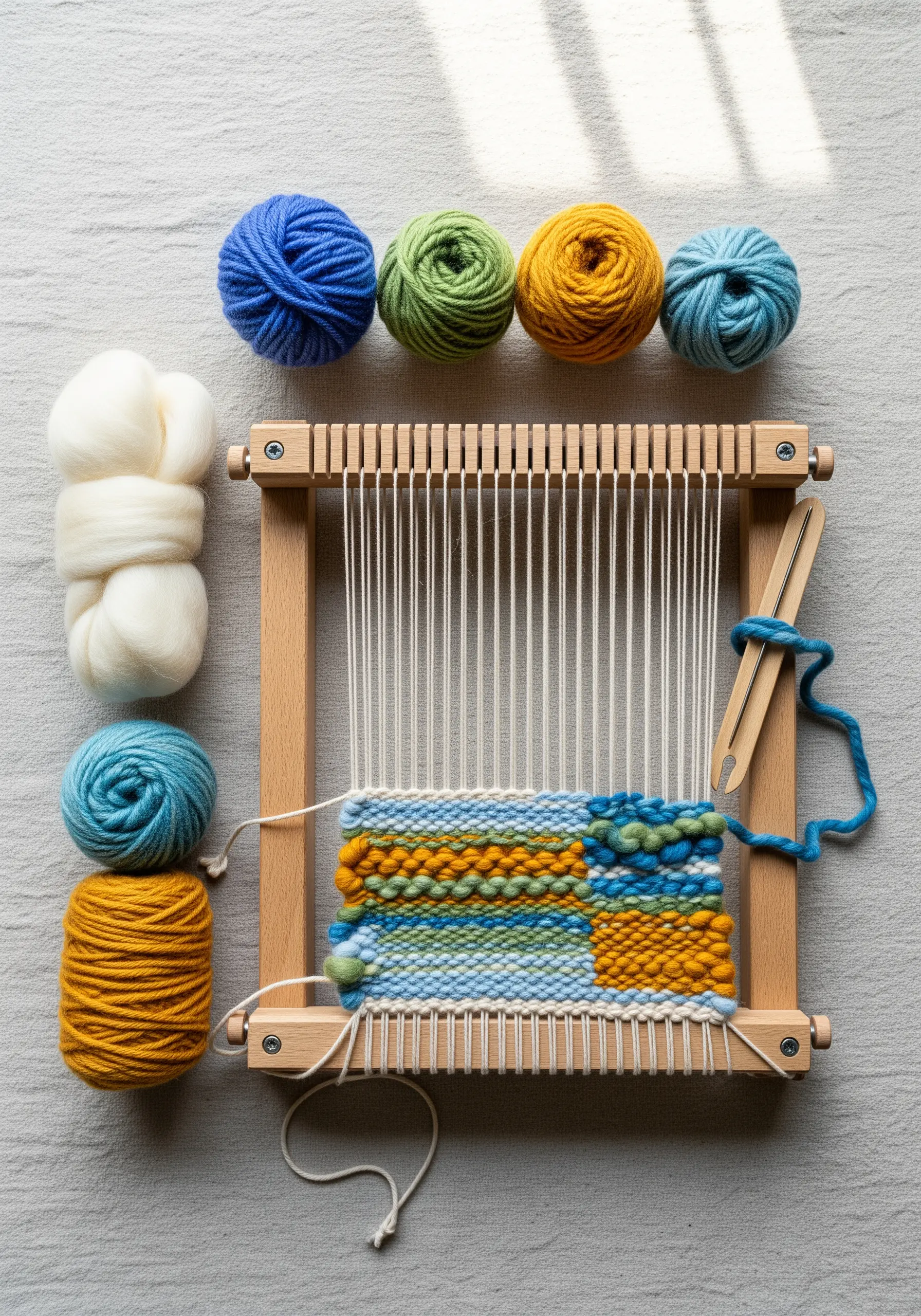
A simple frame loom is the perfect tool for creating small woven studies or swatches that can become gifts in their own right.
Use it to practice color-blocking on a lap loom, experimenting with how different colors and yarn weights interact within a small space.
These mini-weavings can be framed, sewn onto a pillow or bag, or simply hung from a small dowel as a complete piece.
This is a low-pressure way to explore weaving techniques without committing to a large, time-consuming project.
17. Weave Aromatic God’s Eye Ornaments
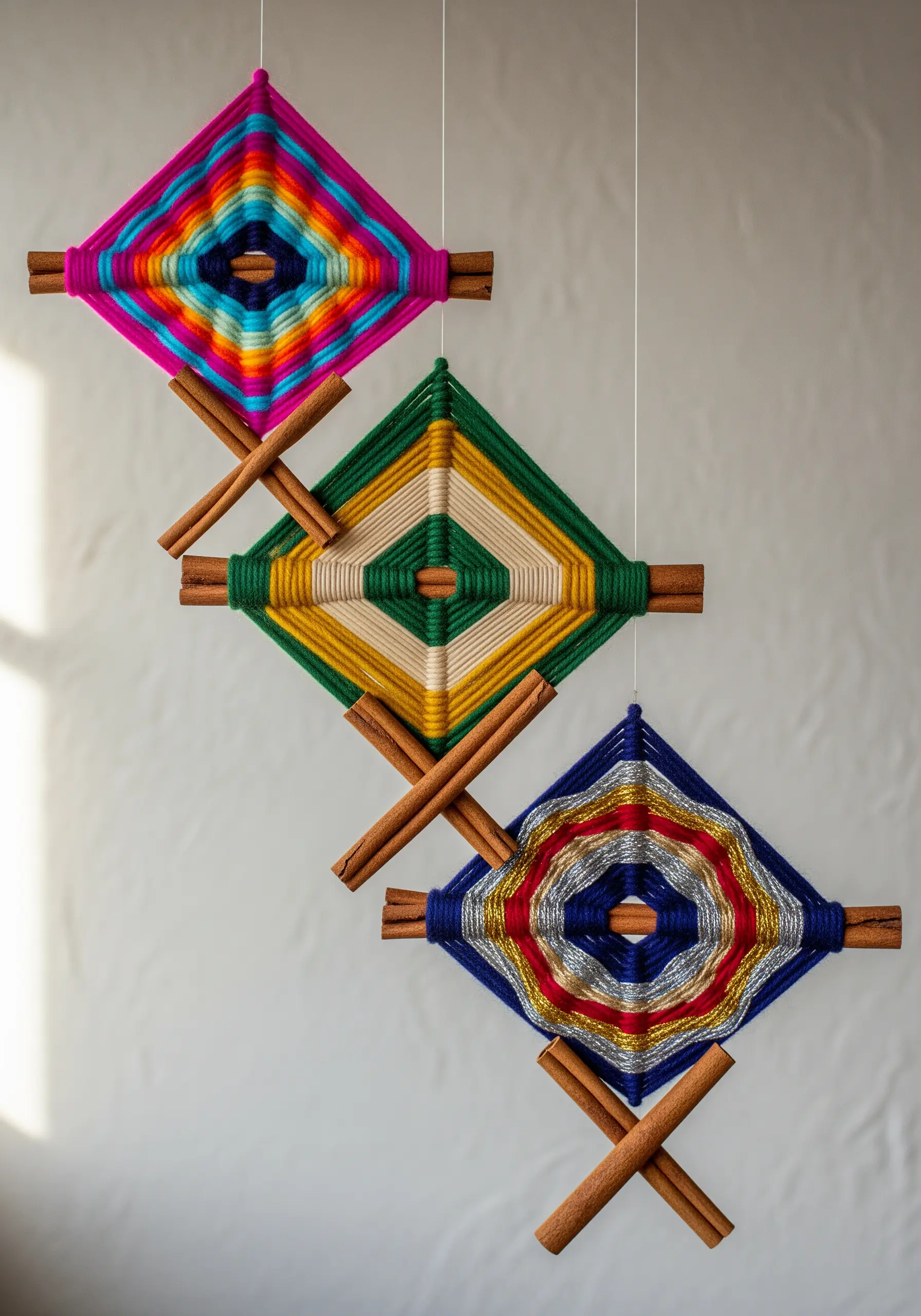
Elevate the traditional Ojo de Dios (God’s Eye) craft by using unconventional materials and sophisticated color palettes.
Instead of popsicle sticks, use cinnamon sticks as your frame; they add a natural, rustic look and a subtle, lovely fragrance.
Choose high-quality wool or cotton yarns in modern, earthy color combinations to give this simple craft a contemporary feel.
A bit of metallic thread woven into the design can catch the light and add an unexpected element of sparkle.
18. Sculpt with Needle Felting and Wire
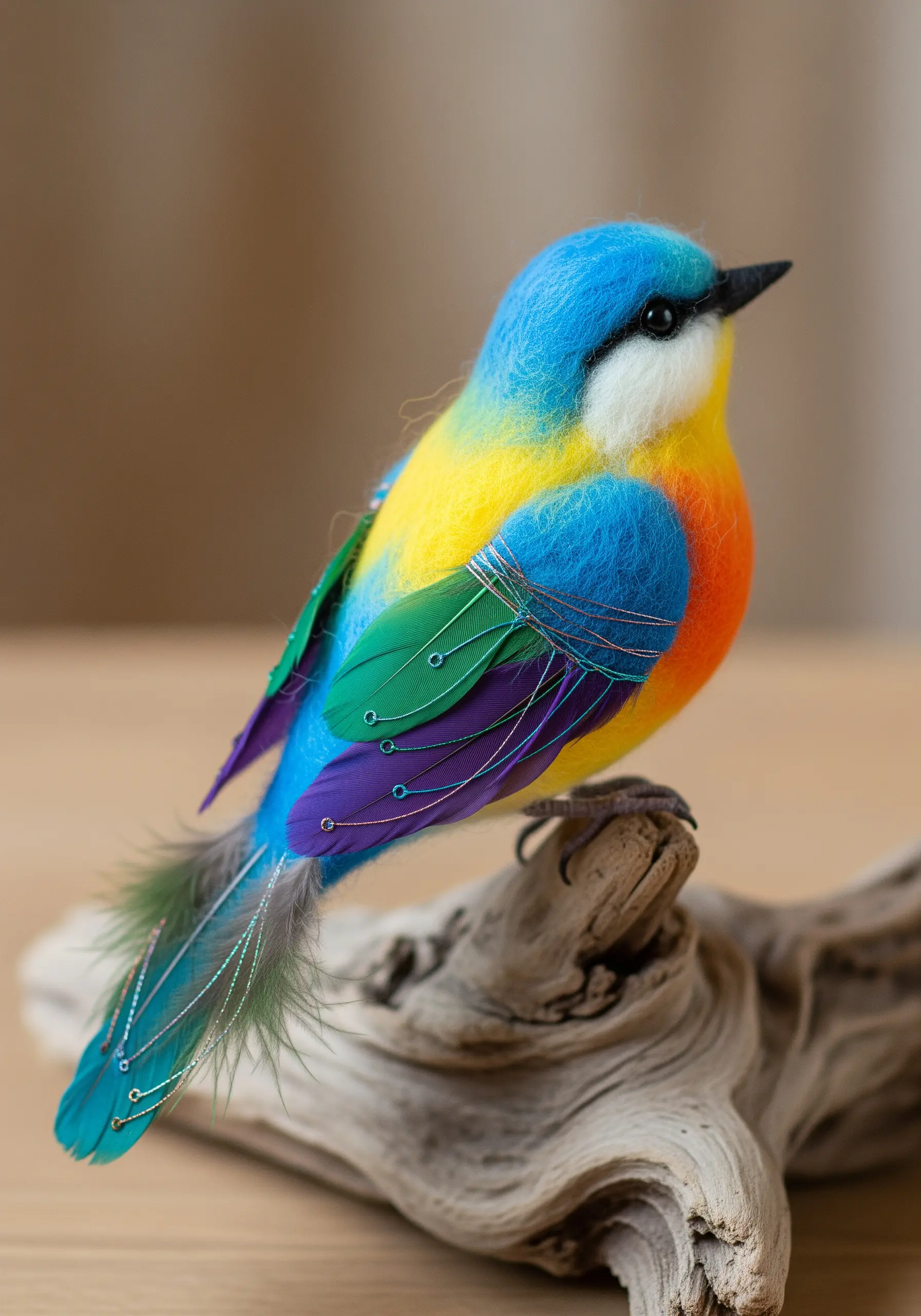
To create detailed, three-dimensional figures, sculpt with needle felting over a simple wire armature.
Build your basic shape with a core wool, then layer on colored roving, using your felting needle to blend the colors seamlessly for a painterly effect.
For fine details like feathers or wings, wrap colored wire with thread or use actual feathers, attaching them carefully to the felted body.
This technique allows you to create remarkably lifelike and expressive sculptures from soft, pliable wool.
19. Make a Plush Throw with Arm Knitting
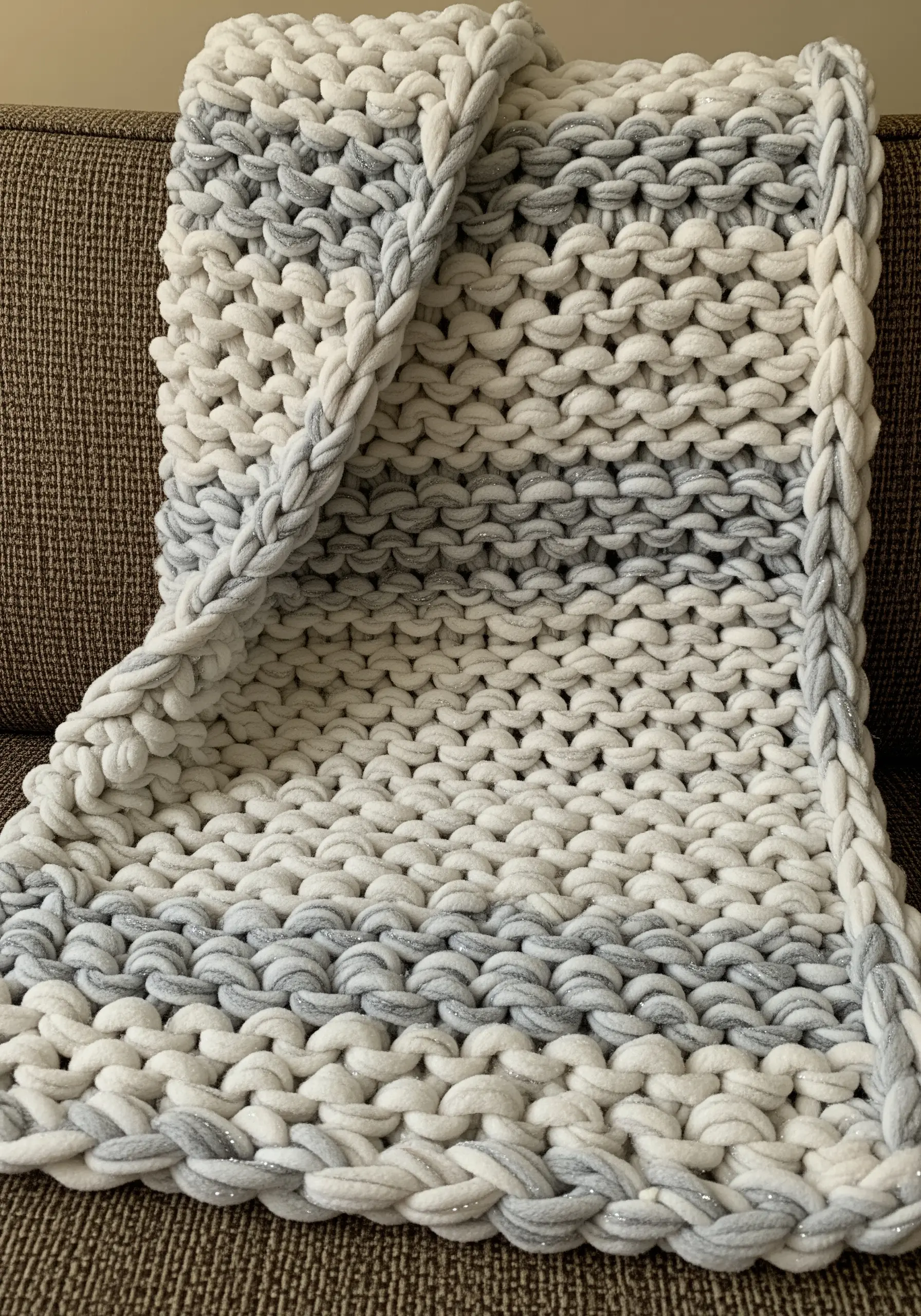
For a gift that offers instant coziness, master arm knitting with ultra-chunky chenille or merino wool yarn.
This technique requires no tools but your own two arms, and it allows you to create a full-sized blanket in just a few hours.
The oversized stitches create a dramatic, cloud-like texture that is both visually stunning and incredibly soft to the touch.
Keep your tension even but not too tight as you work to ensure the finished blanket has a beautiful drape.
20. Design a Minimalist Rope Art Triptych
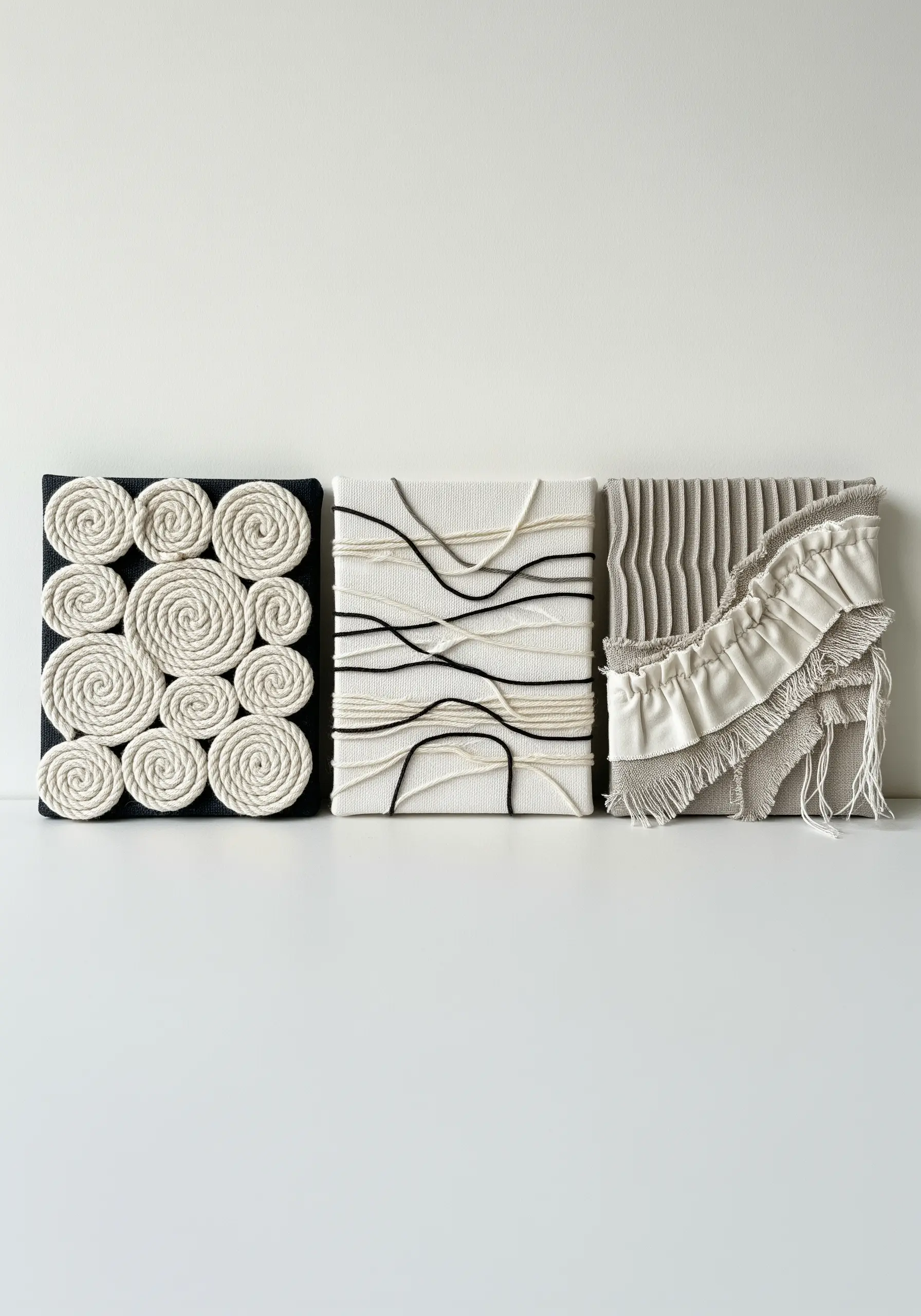
To create a textural triptych with a modern aesthetic, use stretched canvases as your base.
Explore a different composition on each canvas using the same limited palette of materials, like cotton rope and neutral-colored threads.
Arrange the rope in coiled spirals, gentle waves, or straight lines to explore shape and form.
This project allows you to create a sophisticated, coordinated set of art pieces that feel both minimalist and deeply textural.
21. Stitch a Rope Bowl with Fabric Scraps

Give precious fabric scraps a new life when you stitch a coiled rope bowl.
Cut your fabric into thin, continuous strips and wrap them tightly around a cotton rope, securing the ends with a dab of glue or a few stitches.
Coil the wrapped rope into a flat base, then begin building up the sides, stitching the coils together with a strong needle and thread.
Alternate between sections of different fabrics to create a vibrant, colorful pattern that is entirely unique.
22. Adorn Gifts with Mixed-Fiber Embellishments
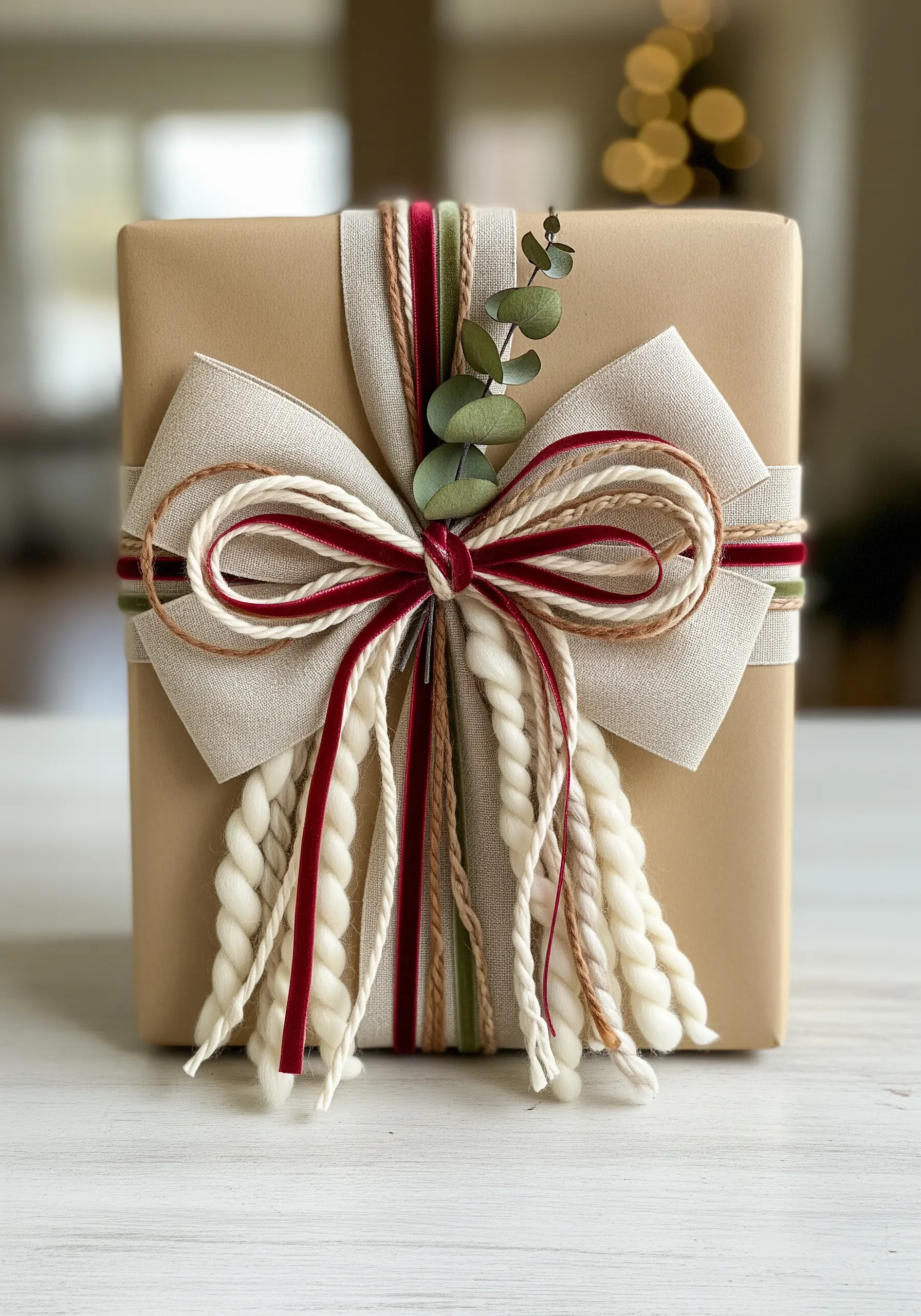
To elevate gift wrapping with fiber embellishments, think in layers of texture and material.
Start with a wide linen or velvet ribbon, then layer thinner cords, twine, and chunky yarn on top.
Create small braids or twists from soft wool roving and tuck them into the knot of the bow for a touch of handmade luxury.
A sprig of dried eucalyptus or lavender not only adds a natural element but also a beautiful, subtle scent.
23. Create a Bold, Woven Table Runner
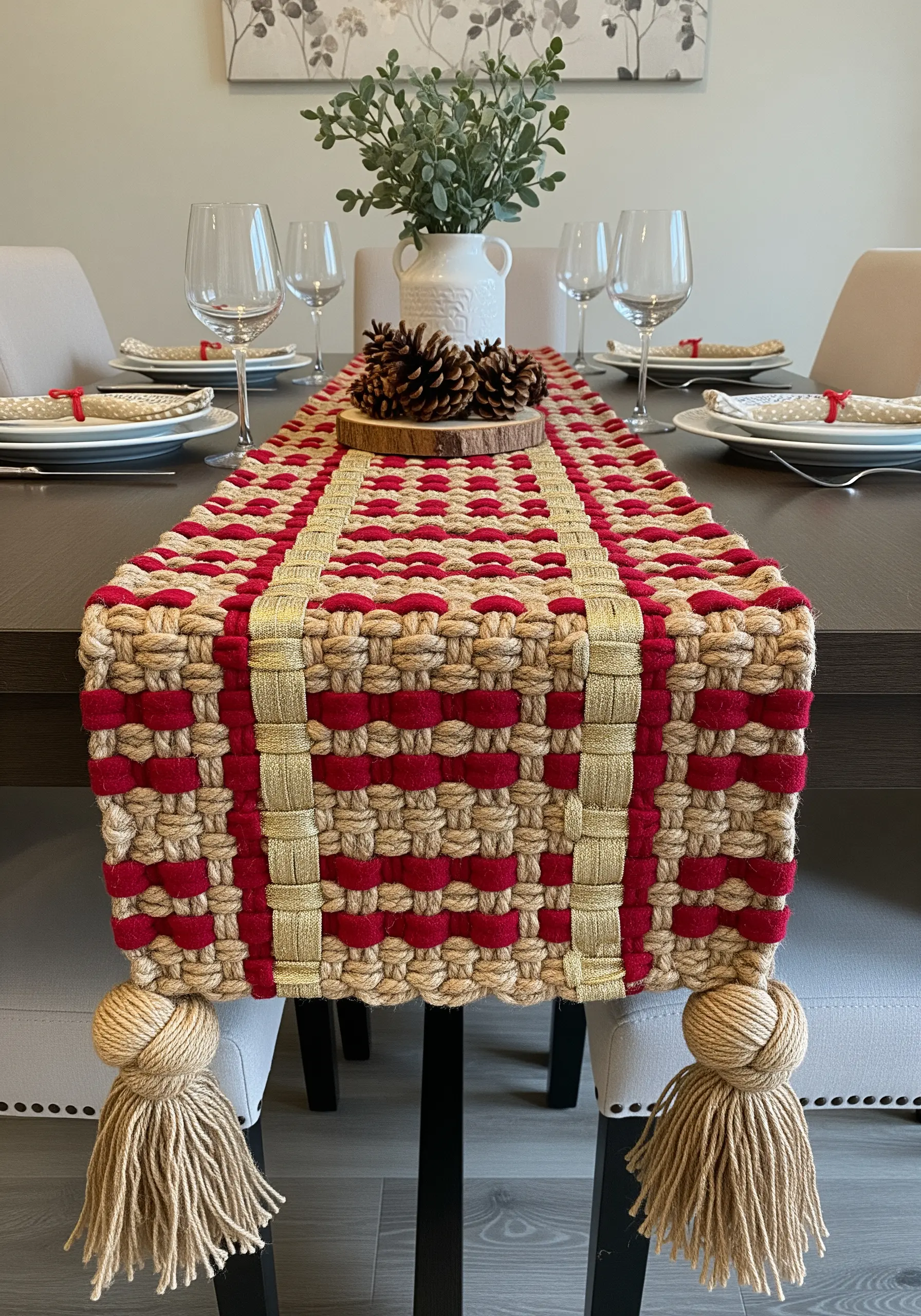
To weave a statement table runner, use a thick, structural cord like jute or chunky cotton rope.
Introduce a flat, contrasting material like a metallic ribbon to create graphic stripes that highlight the woven texture.
This type of simple, large-scale weaving can be done on a frame loom or even pinned to a corkboard for stability.
Finish the ends with large, neatly wrapped tassels to give the runner a satisfying weight and a professionally finished look.