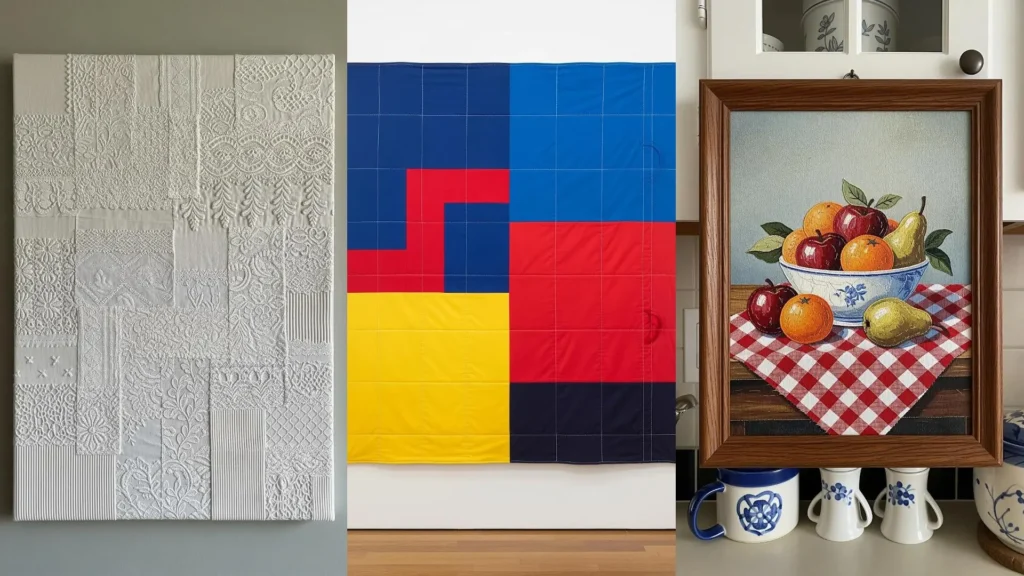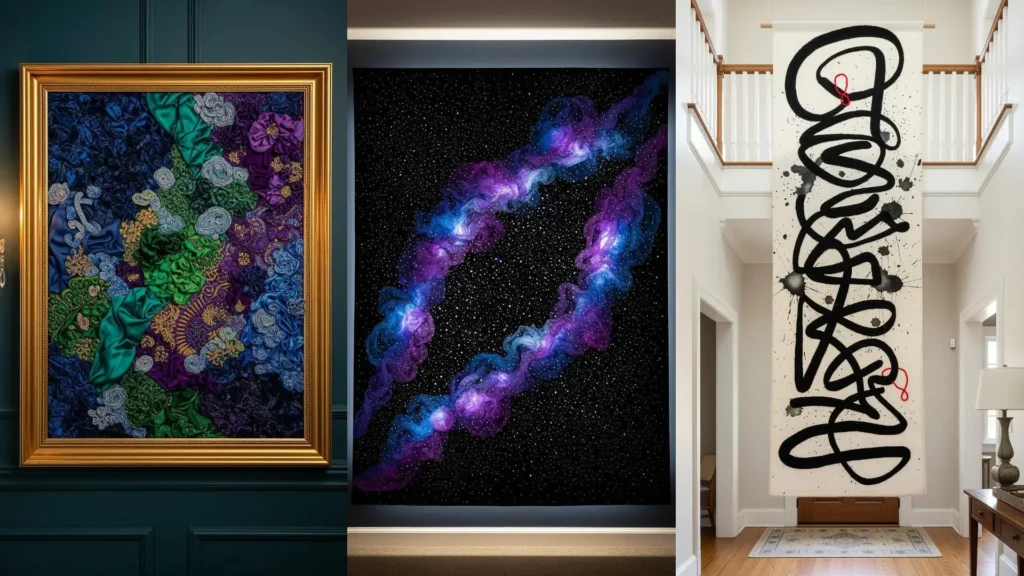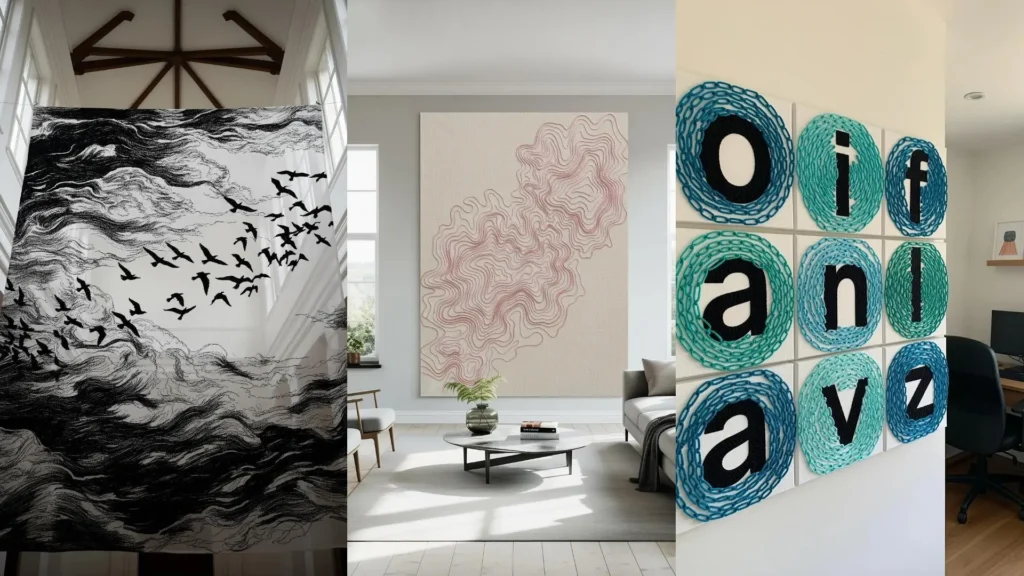
There is a misconception that embroidery must be dense, colorful, and complex to be considered “finished.” I want you to let go of that pressure. The most striking wall art often comes not from filling every inch of fabric, but from knowing exactly where to stop.
By mastering negative space and controlling the direction of your thread, you can turn simple materials into sophisticated, gallery-worthy pieces. It is about texture, light, and the confidence to let the fabric breathe. You don’t need a hundred colors; you just need intention.
In this guide, I have curated ideas that focus on structural stitching and minimalist impact. Whether you are using heavy wool for 3D effects or fine metallic thread for delicate light play, these concepts will help you see your hoop as a canvas for modern art, not just a craft project.
1. The Monochromatic Chaos Sphere
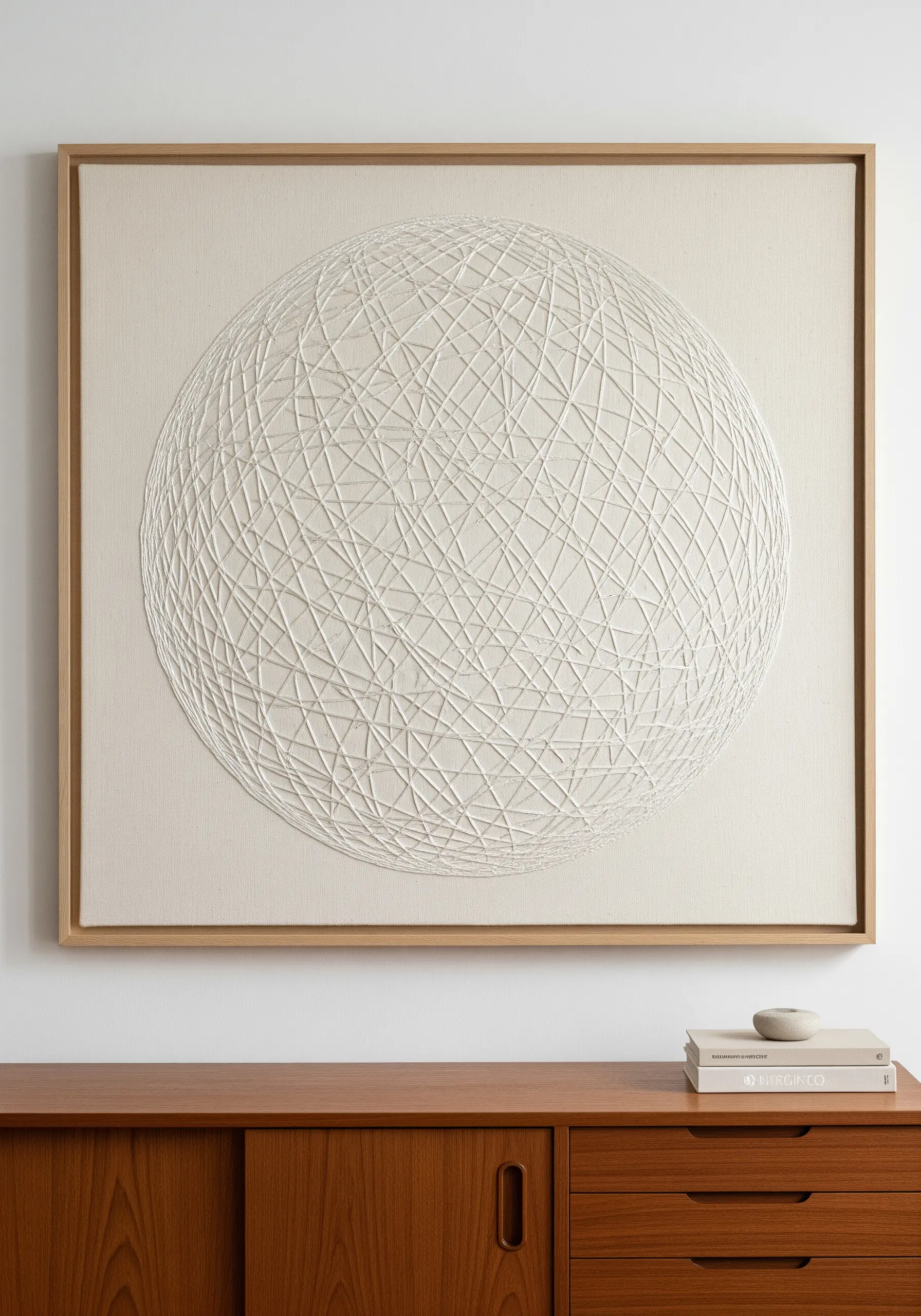
True minimalism does not always mean empty space; sometimes it means complex texture within a singular boundary.
To achieve this sculptural effect, abandon the precision of satin stitch and embrace chaotic, multi-directional layering using a matte cotton cord or heavy thread.
By limiting your palette to white-on-beige, you force the eye to follow the physical relief of the fiber rather than a color pattern.
Keep your tension tight to ensure the circular boundary remains crisp against the negative space.
2. Light-Reflecting Geometric Satin Stitch
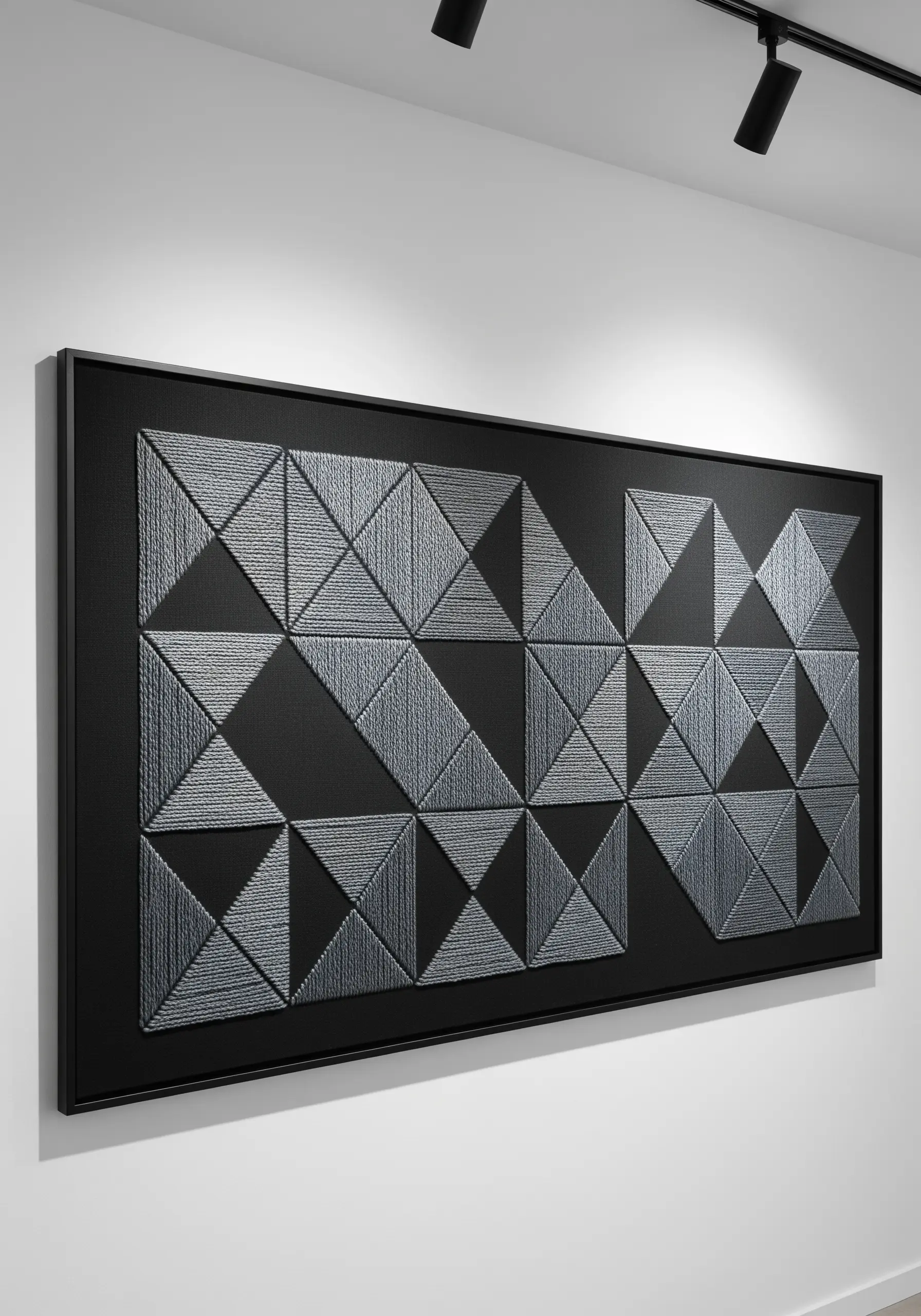
When you work with a single dark color, the direction of your stitch becomes your primary design tool.
These geometric stitch patterns rely entirely on how light hits the thread; by rotating the angle of your satin stitch for each triangular segment, you create distinct shades of grey and black without changing spools.
Use a mercerized cotton or a synthetic silk thread to maximize this sheen.
Ensure your fabric is drum-tight to prevent the heavy density from puckering the corners.
3. The Pointillist Gradient Tapestry
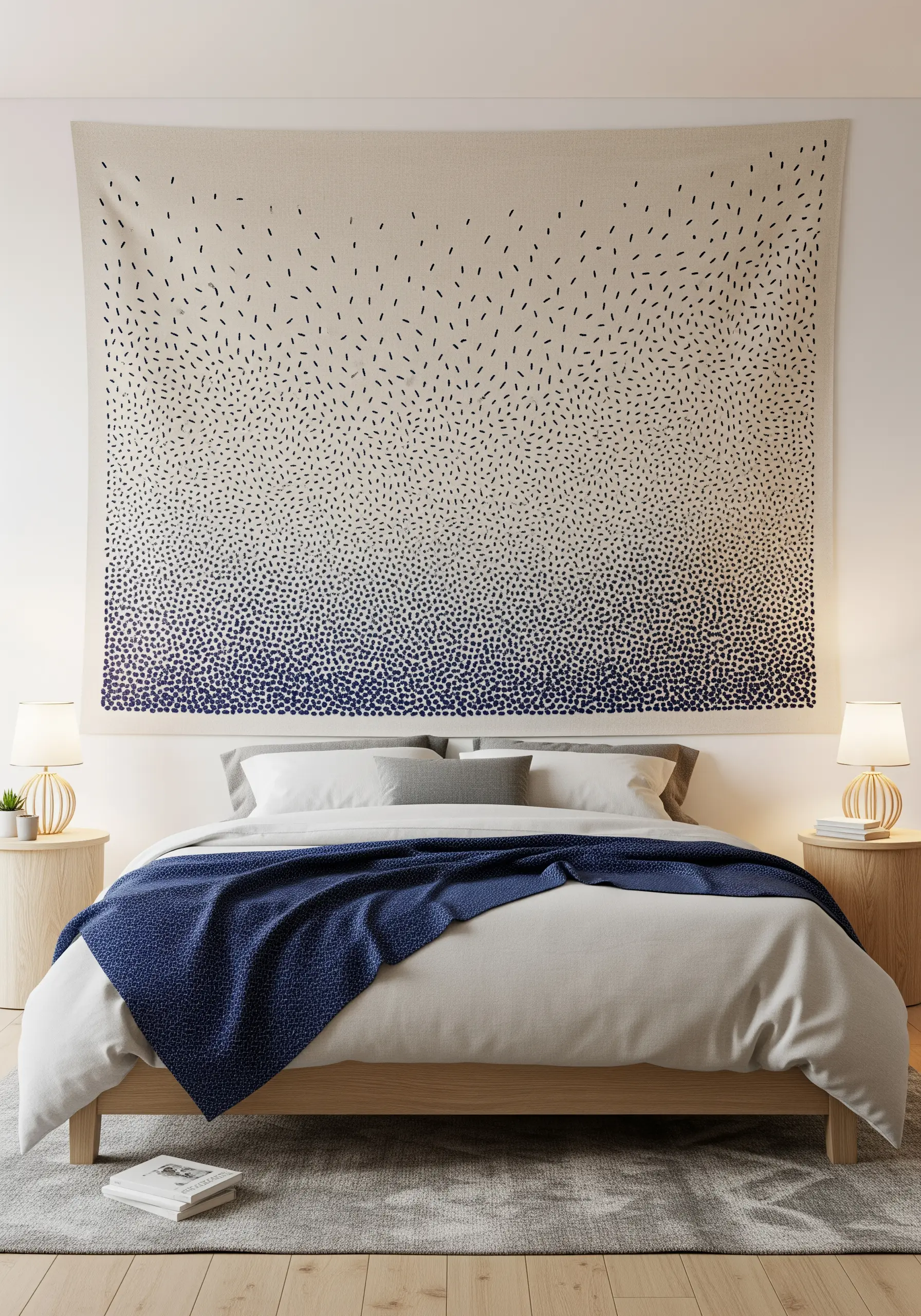
You can create a sense of immense scale and atmosphere by trading solid lines for density-based shading.
Using French knots or colonial knots, stitch a gradient that fades from deep indigo to the natural color of the linen.
This technique mimics ombre gradient embroidery wall hangings, allowing the negative space at the top to feel like an open sky.
Vary the number of strands—using six for the base and two for the upper speckles—to enhance the feeling of dissipation.
4. Sculptural Terracotta Waves

Embroidery is not strictly limited to floss; incorporating tapestry wool or macramé cord allows you to build actual 3D relief.
Couching thick strands in undulating, organic waves creates textured yarn wall art techniques that catch shadows beautifully.
Stick to earthy, warm tones to keep the focus on the rhythmic motion of the lines.
This method is faster than traditional satin stitch and offers a much bolder tactile finish for gallery walls.
5. The Metallic Sketch Moon
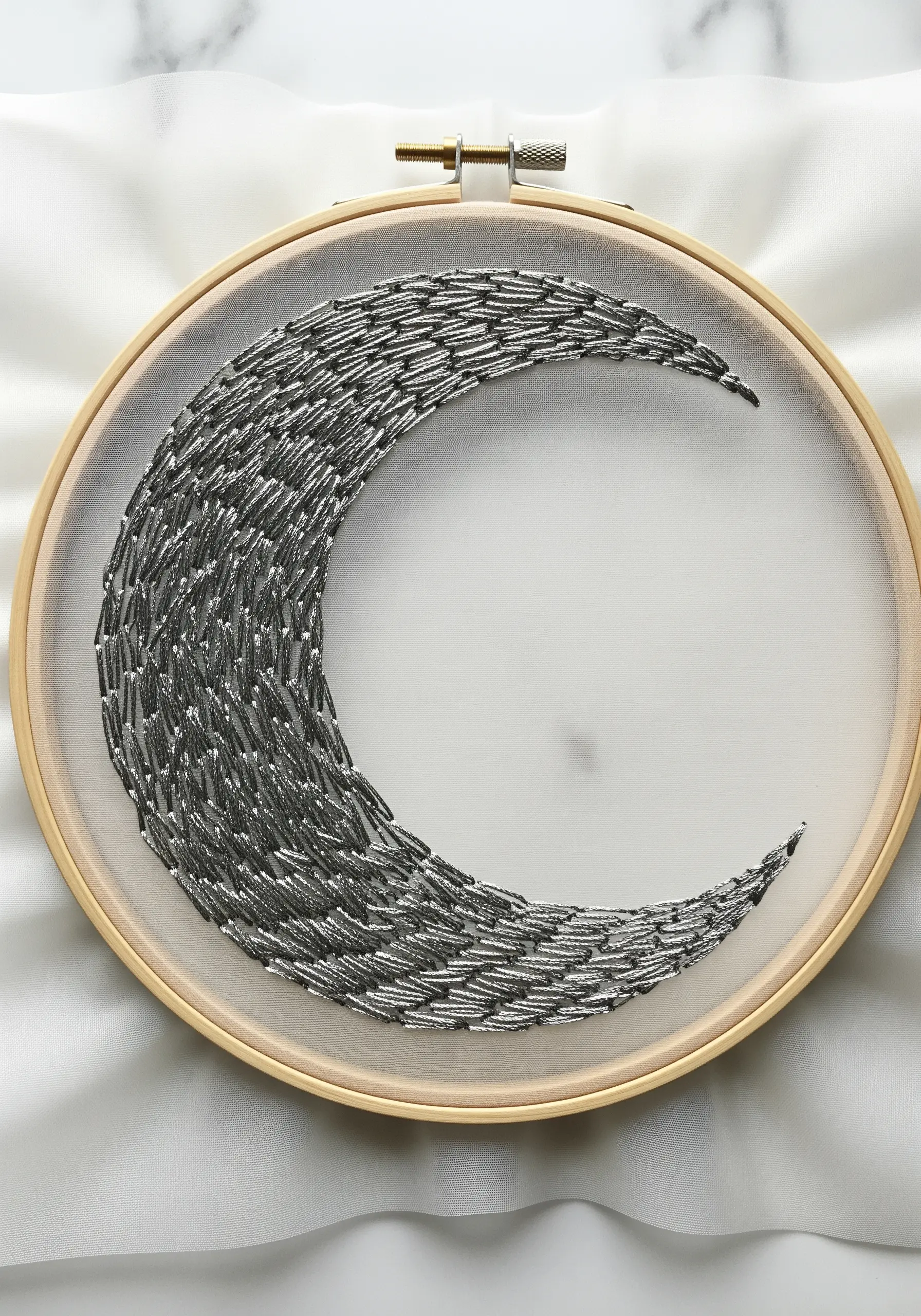
There are unexpected ways to use metallic thread that move beyond stiff, traditional outlines.
Here, a scribble-stitch or chaotic seeding technique fills the crescent shape, allowing the transparency of the tulle or organza to peek through.
The contrast between the rigid metal texture and the delicate, sheer background creates a sophisticated tension.
Use a short needle and thread conditioner to manage the friction of metallic fibers on delicate mesh.
6. Art Deco Labyrinth Panels
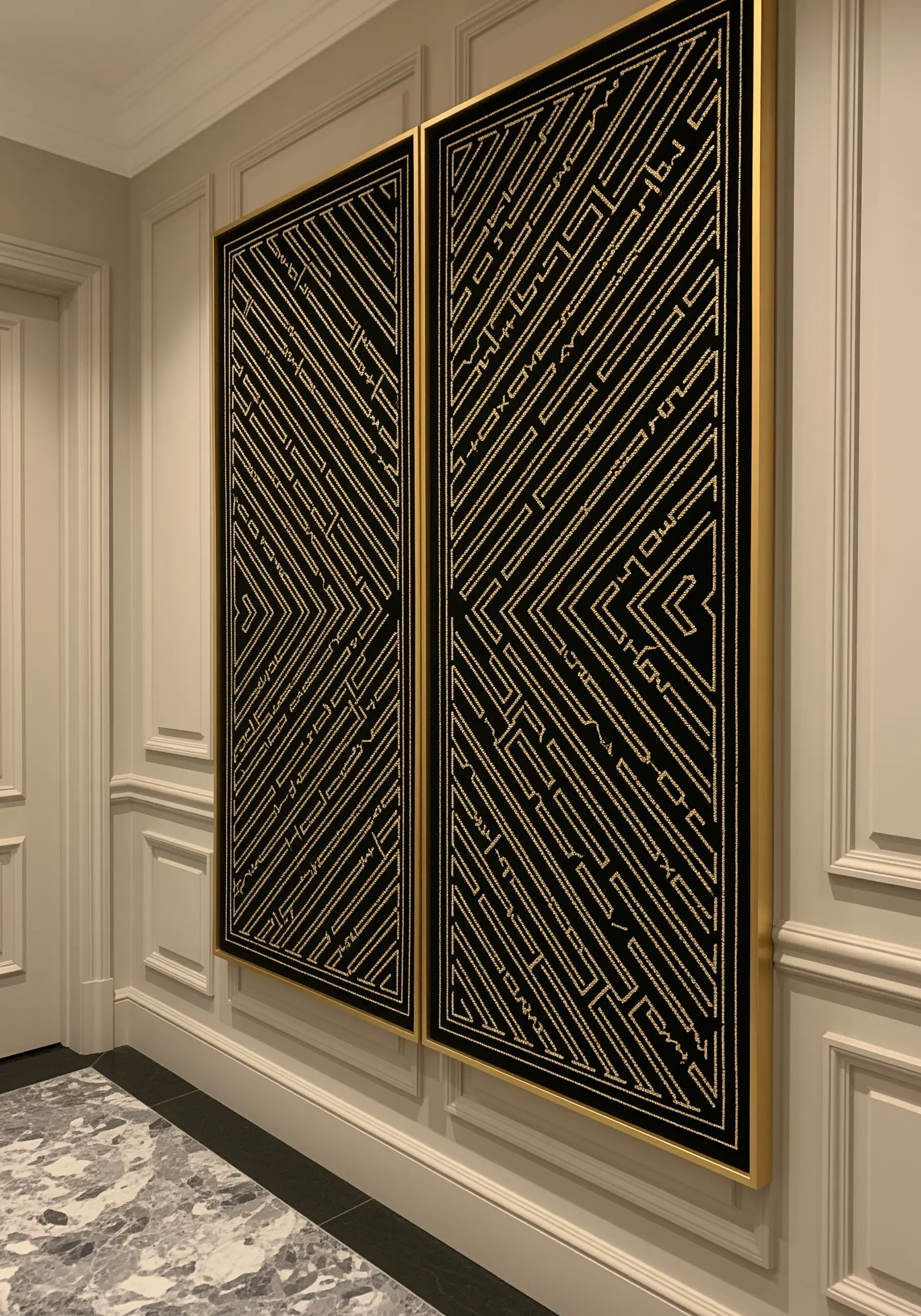
For a look that screams high-end interior design, pair gold thread with a stark black background in rigid, linear pathways.
These minimal gold accent embroidery designs rely on perfect parallelism; use a ruler to mark your fabric before taking a single stitch.
A split stitch or a whipped backstitch will give your lines the necessary solid, continuous cord-like appearance.
This style works best in diptychs or triptychs to elongate a hallway or entryway.
7. Radial Symmetry and The Void
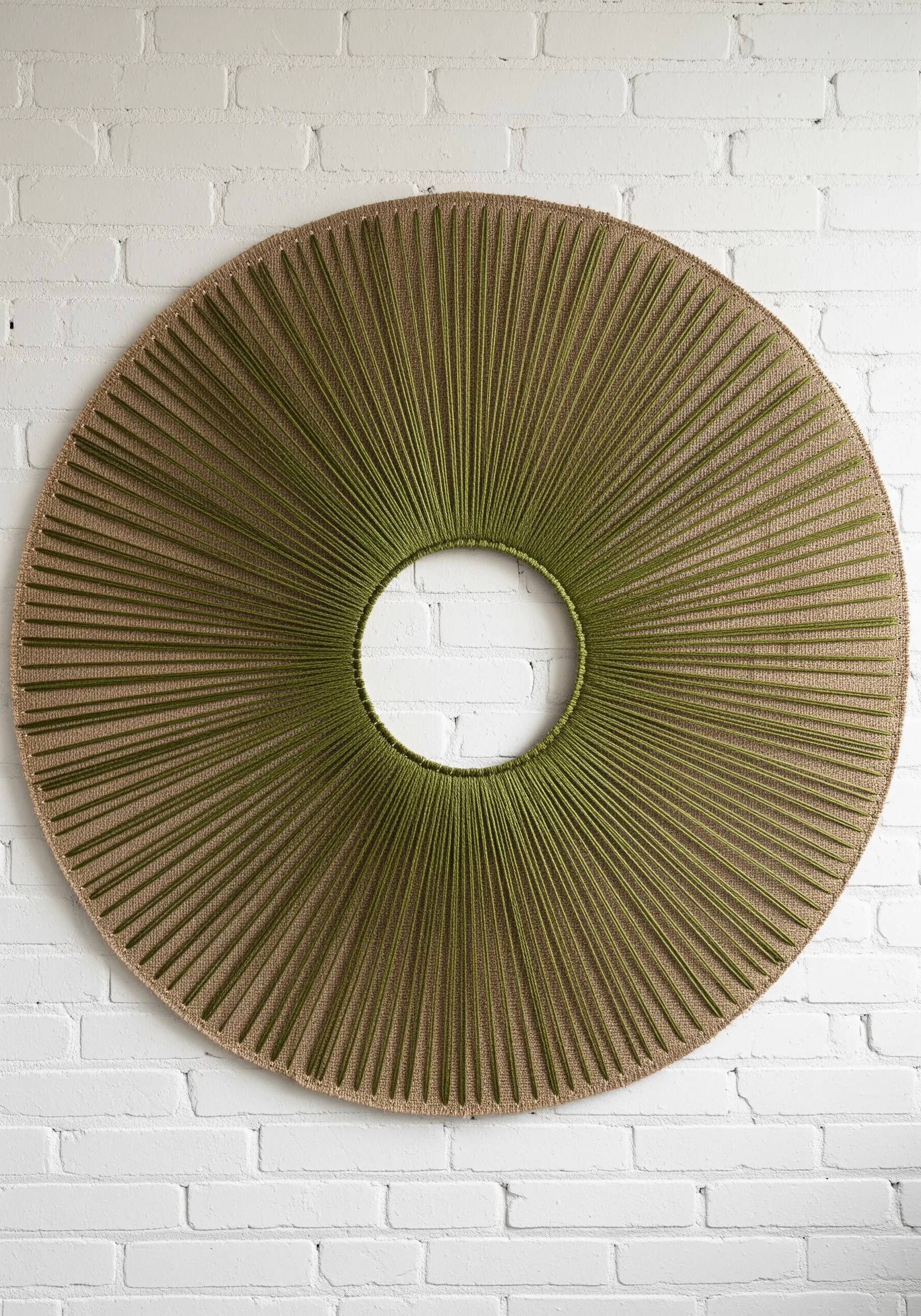
The power of this piece comes not from what is stitched, but from the empty circle left in the center.
By radiating long, straight stitches outward, you direct the viewer’s eye inevitably toward the negative space.
This approach transforms handmade embroidery hoop designs into optical illusions that feel dynamic and expanding.
Use a strong, non-stretch fabric like canvas to handle the high tension of these long spans without warping.
8. Topographic Line Art
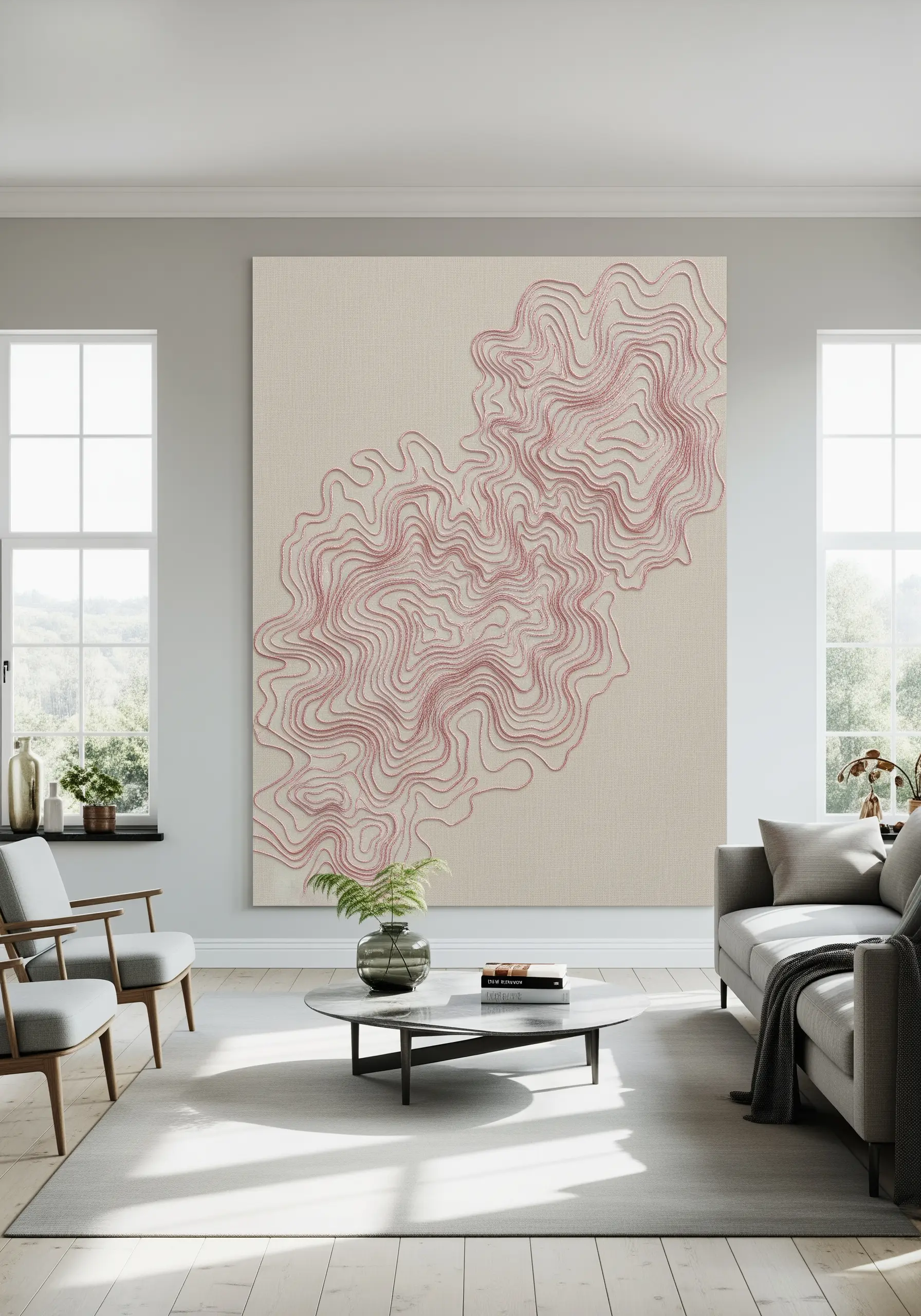
Mimic the natural curves of elevation maps using a simple stem stitch or whipped running stitch.
The beauty of these abstract thread line art creations lies in their organic irregularity; the lines should never touch, yet they must flow in unison.
A soft blush or terracotta thread on neutral linen keeps the aesthetic calm and modern.
Focus on maintaining consistent spacing between the lines to keep the visual rhythm hypnotic rather than messy.
9. Vertical Rain vs. Organic Leaf
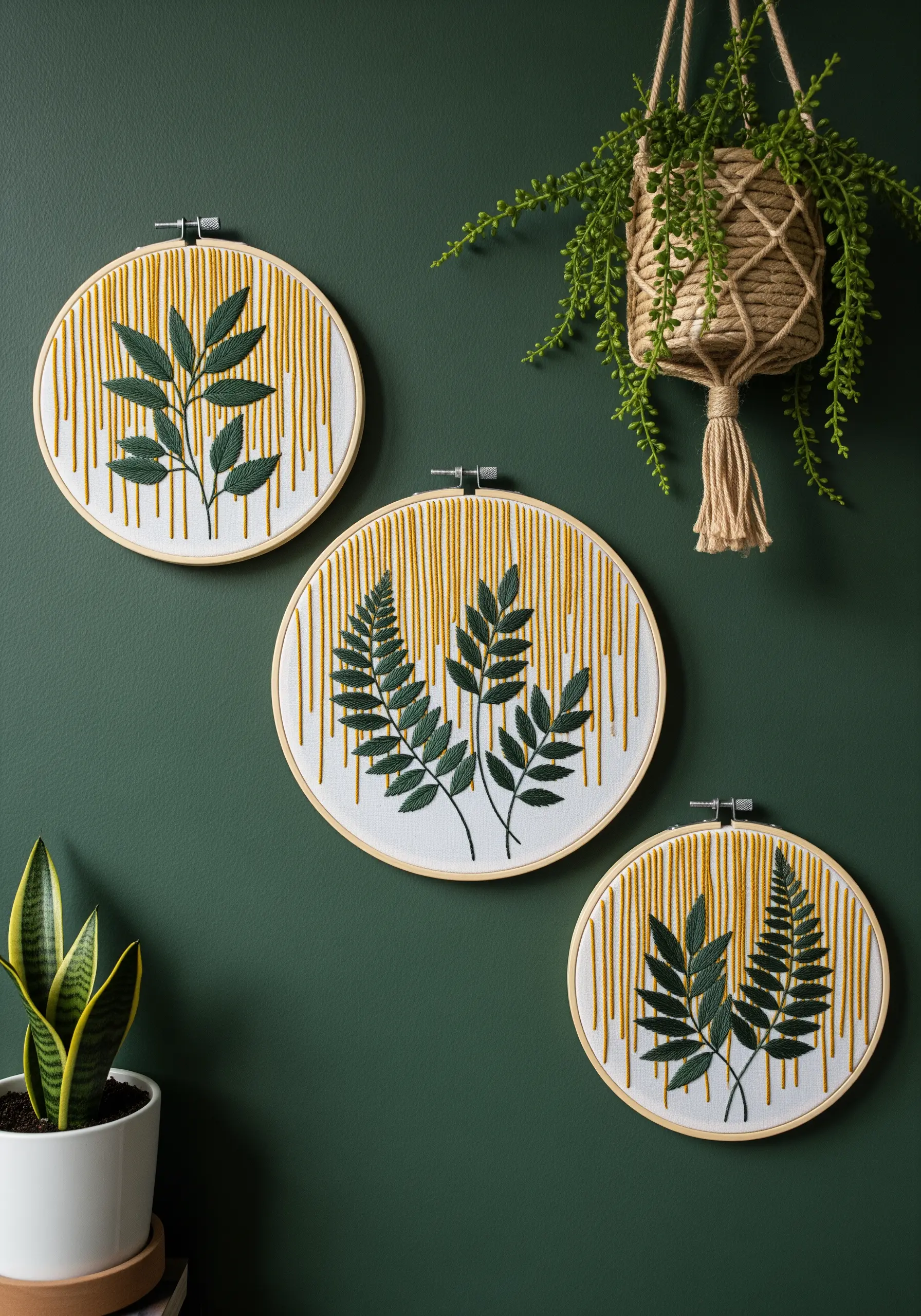
Create depth by contrasting a geometric background with an organic foreground subject.
The vertical yellow lines serve as a structured backdrop, while the minimalist leaf line embroidery patterns break the pattern, appearing to float in front.
Stop the background stitches precisely where the leaf begins to create a sharp, cutout effect without outlining.
This layering technique adds complexity without requiring advanced shading skills.
10. Defined by Absence
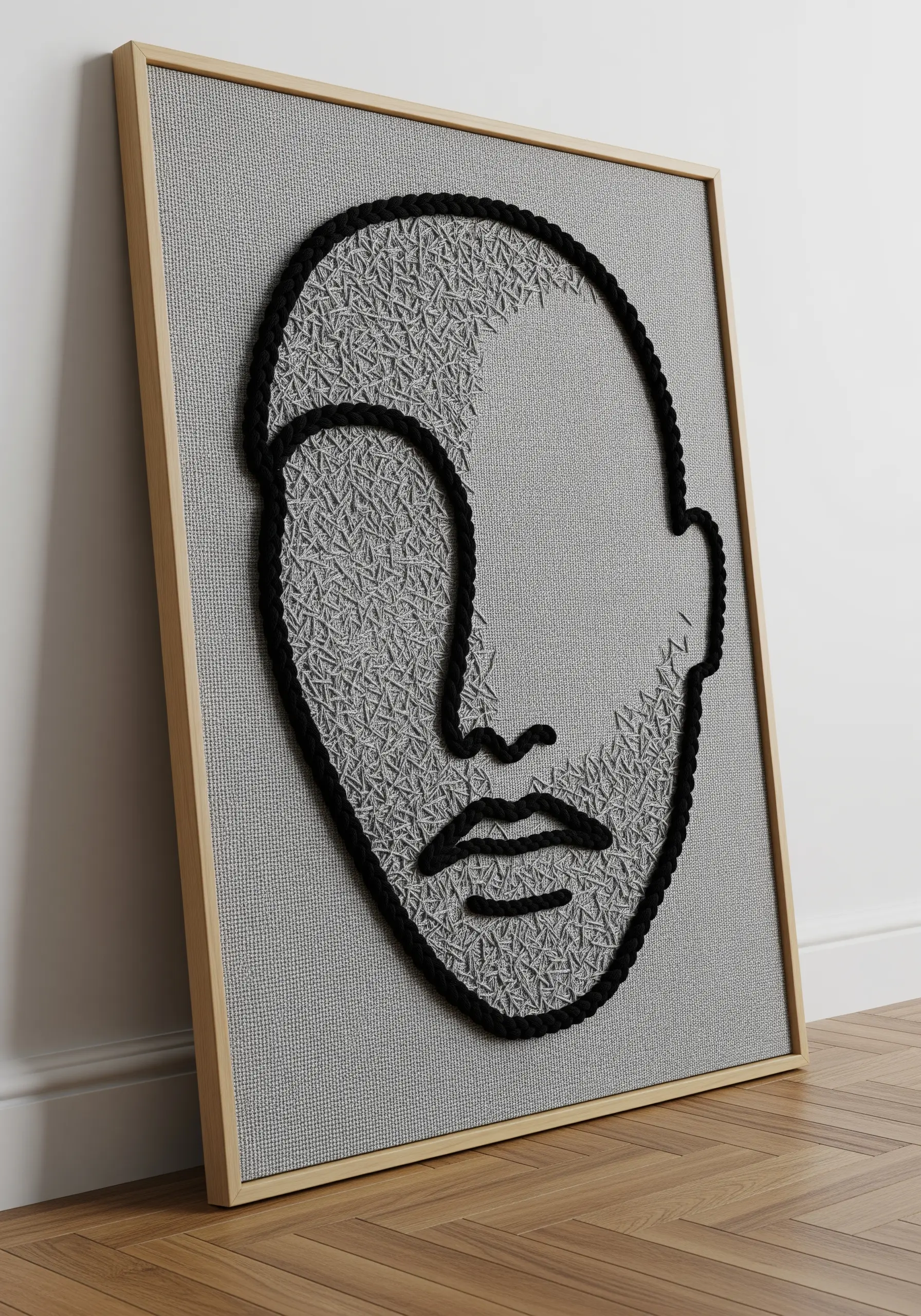
Instead of stitching the portrait, stitch the space around it.
This utilizes abstract negative space techniques to reveal a face through the density of the surrounding texture.
Use a heavy chain stitch or rug hooking technique for the background to maximize the contrast between the flat fabric and the raised fill.
The grey-on-grey palette keeps the result sophisticated and subtle, rewarding the viewer for looking closer.
11. Twisted Fiber Sculpture

Move beyond the hoop by mounting twisted wool rovings or thick cotton cords directly onto a framed board.
These contemporary thread sculptures emphasize the tactile quality of the fiber itself.
Keep the color palette purely monochromatic; the visual interest comes entirely from the twist of the rope and the horizontal layering.
Secure the ends invisibly from the back to maintain a clean, floating appearance.
12. Concentric Typography
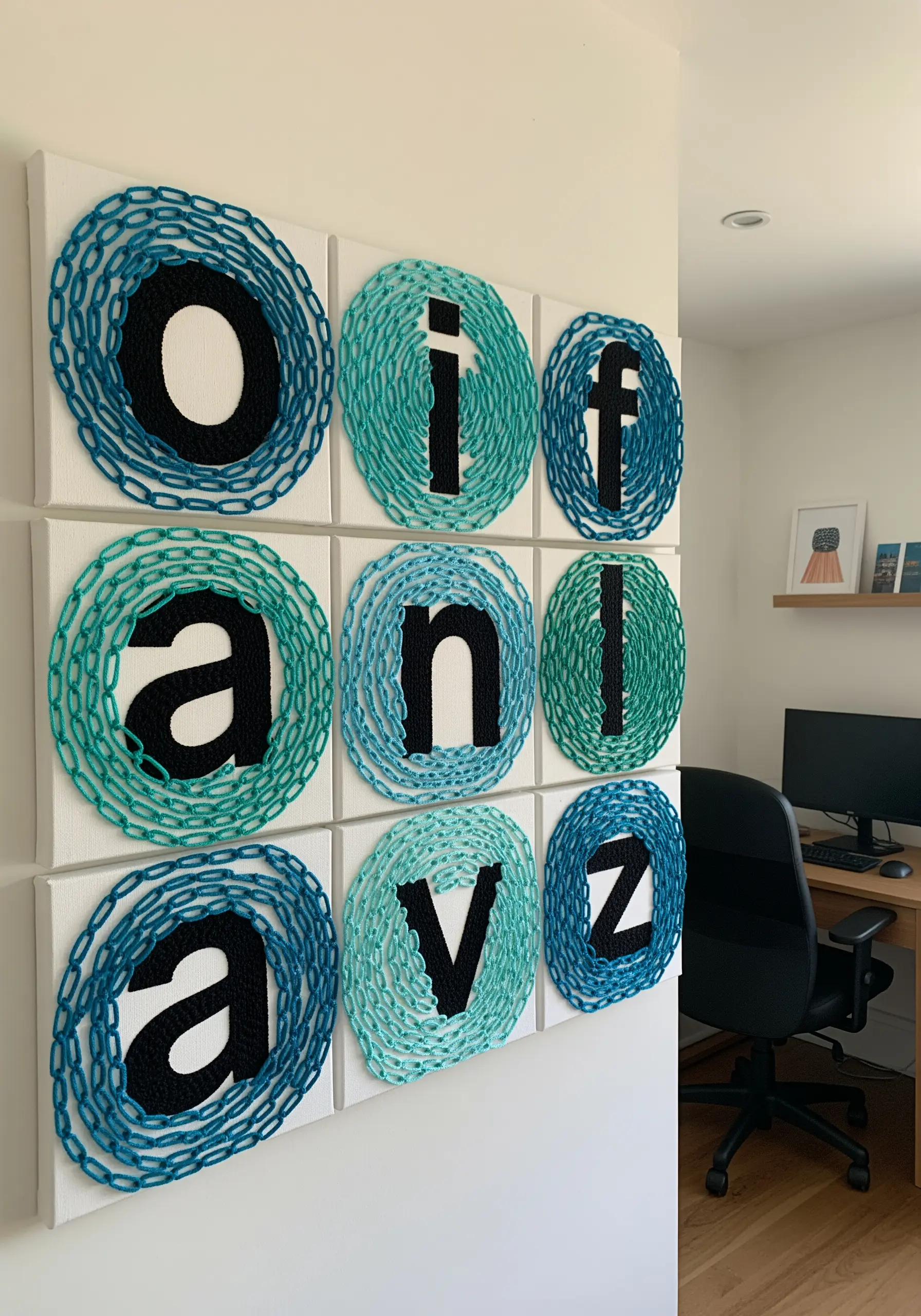
Standard lettering can feel flat; elevate it by embedding the character within a texture.
Stitch concentric circles using a chain stitch or split stitch to create a ripple effect that stops abruptly at the letter’s edge.
This fits perfectly with string art typography designs, turning a simple initial into a complex graphic element.
Using a variegated thread for the circles adds subtle dimension without introducing a new color family.
13. The Dripping Cityscape
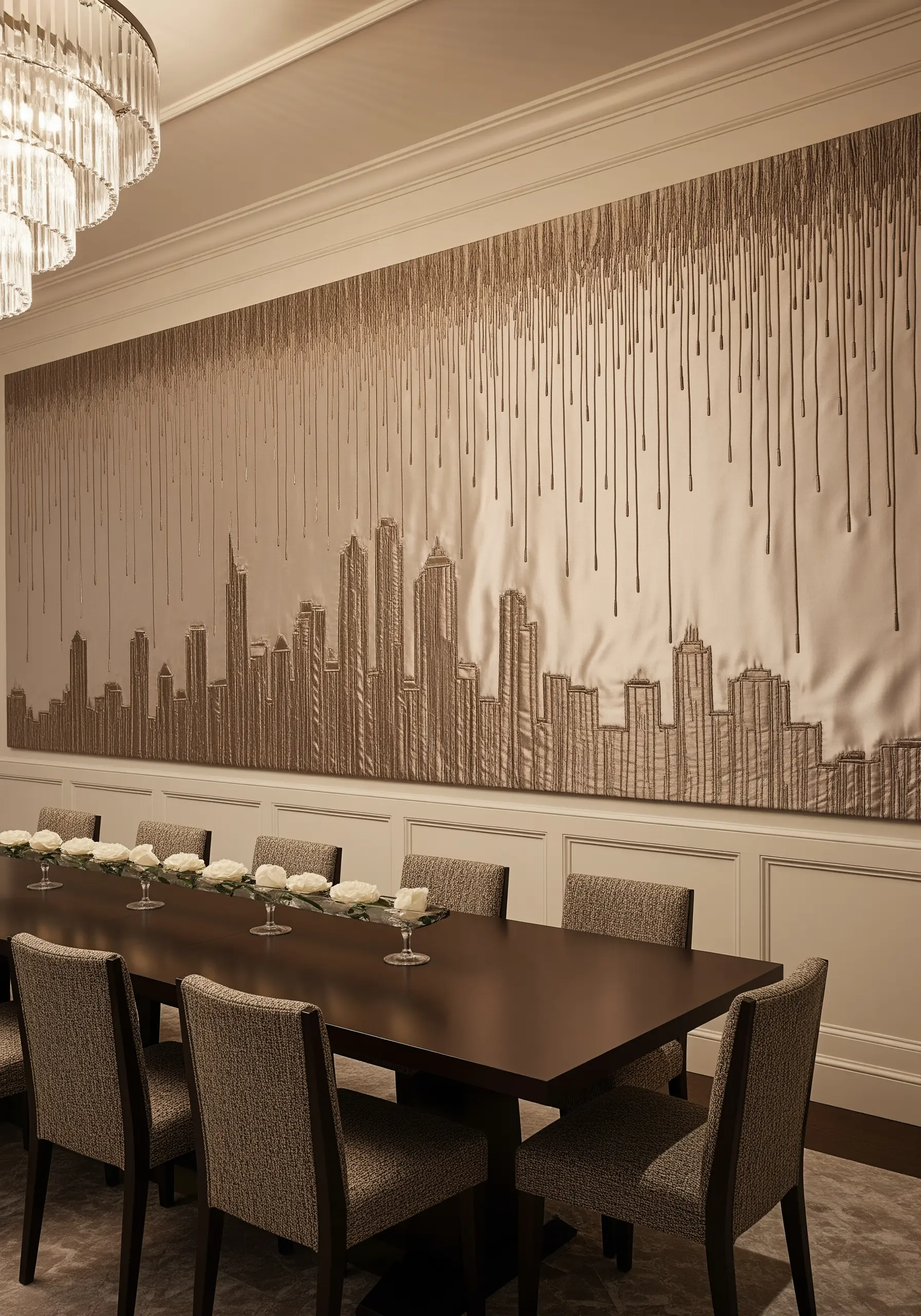
Interpret a skyline not as a solid block, but as a collection of vertical lines and negative space.
Long, straight stitches that “drip” down to form the silhouette create modern thread landscape projects that feel ethereal and light.
Use a satin finish fabric and a slightly glossy thread to capture the shimmering feeling of a city in the rain.
Vary the length of the upper lines to feather the edge, making the buildings appear to emerge from the mist.
14. Rustic Jute Spirals
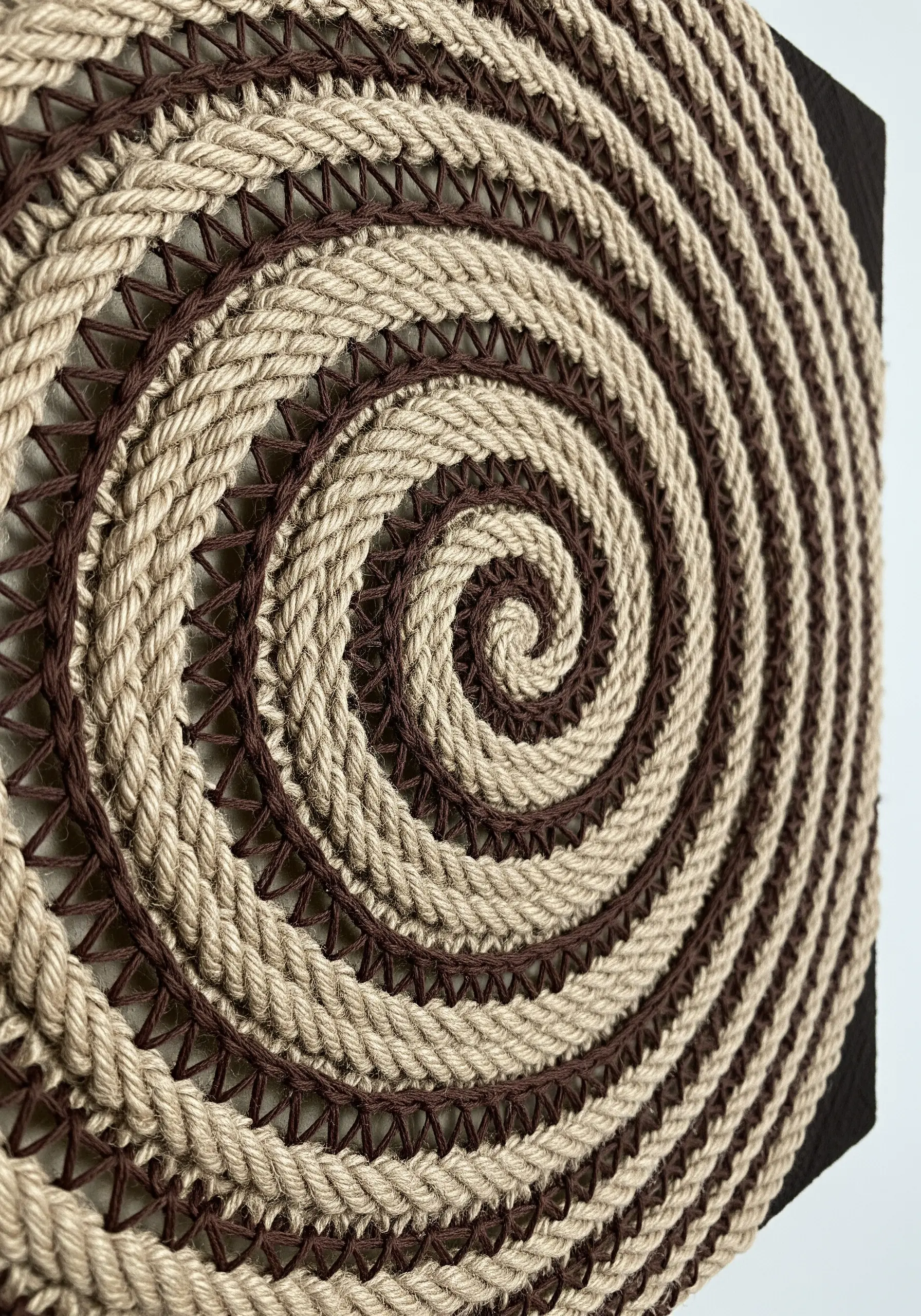
Texture is a color of its own. Using jute, hemp, or thick twine creates a raw, organic aesthetic that contrasts beautifully with a sharp black background.
You can discover ways to embroider natural textures by couching coarse rope in a tight spiral pattern.
The interplay of the open net-like background stitches and the solid rope foreground creates a hypnotic, mandala-like depth.
This material choice instantly warms up a minimalist modern space.
15. Mixed Media Cloud Mobile
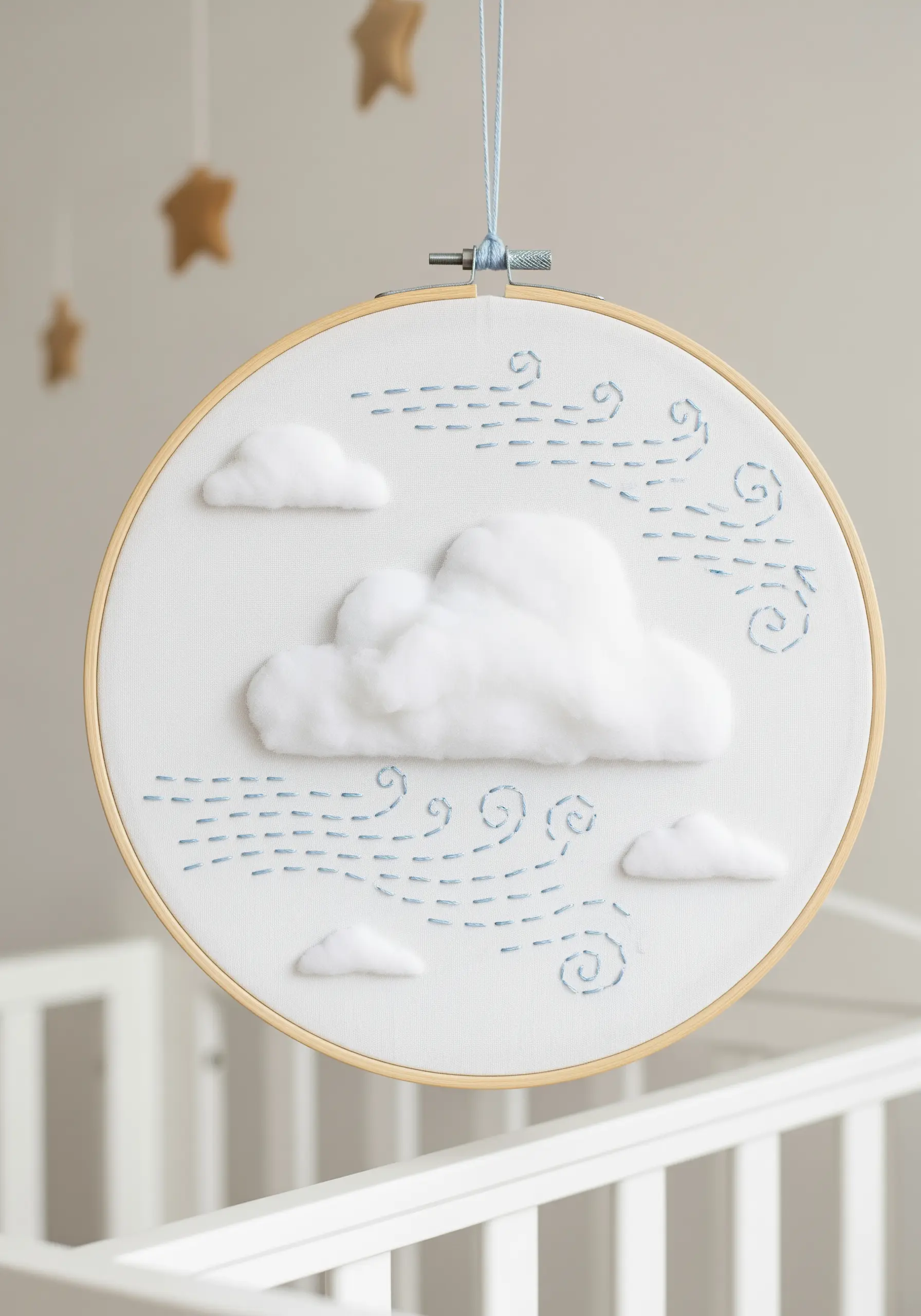
Combine traditional flat stitching with 3D applied elements for a playful, tactile piece.
The running stitch “wind” provides movement and direction, while the applied cotton or wool cloud adds a soft, physical pop.
This mimics sky cloud shading tricks but uses actual volume instead of just thread gradients.
It is a perfect technique for nursery decor where texture softness is visually comforting.
16. Deconstructed Sashiko

Traditional Sashiko patterns are rigid, but you can modernize them by breaking the grid.
Stitch a classic geometric pattern but allow it to fade out or “crumble” on one side, embracing Japanese Zen inspired embroidery designs.
The stark white running stitch on deep indigo denim or linen is timeless and high-contrast.
Leaving large areas of the fabric untouched emphasizes the precision of the areas you do stitch.
17. The Exploding Sunburst
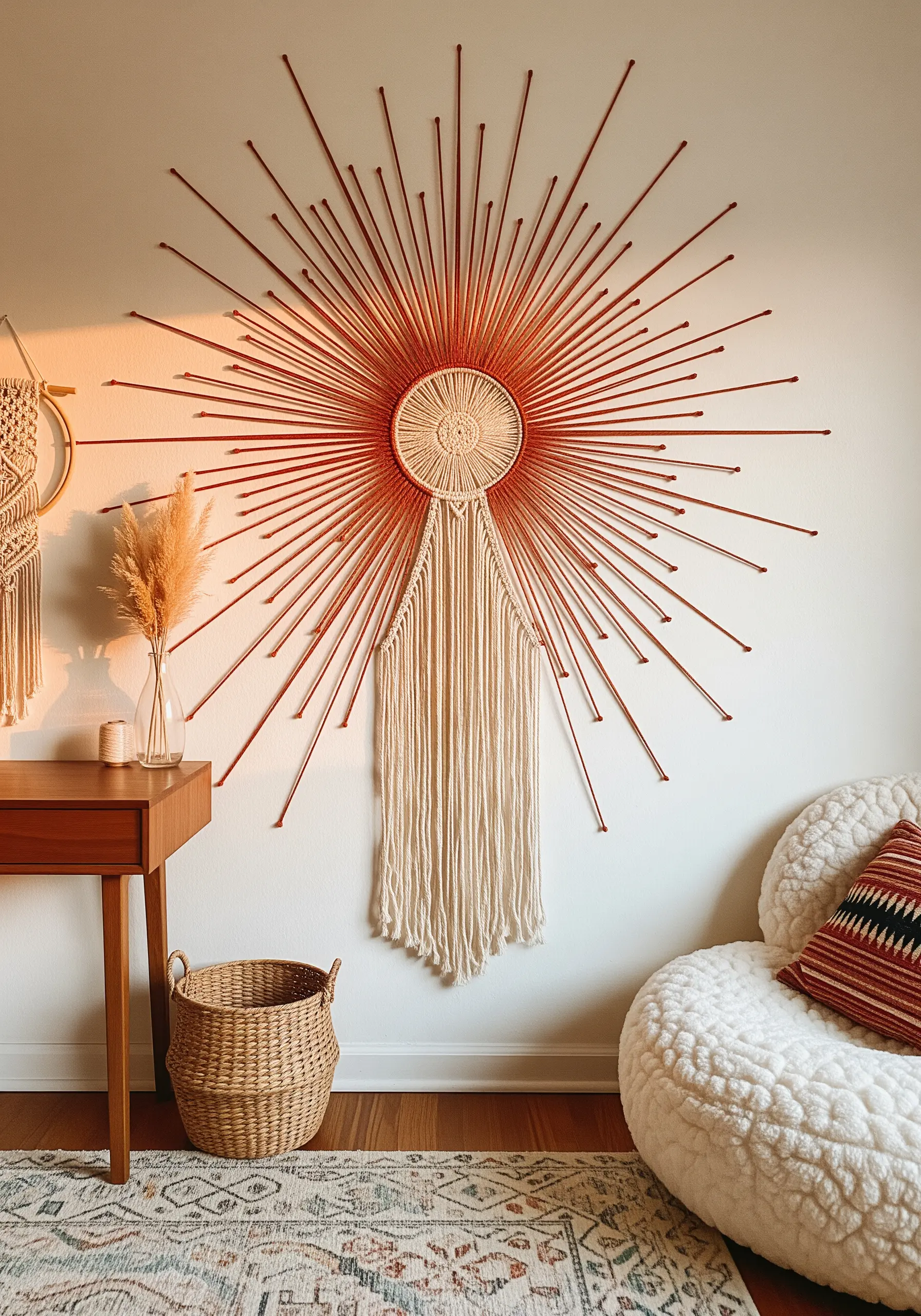
For large-scale wall impact, move towards string art techniques that utilize tension across a wide frame.
Radiating lines from a central focal point create bold yarn wall art patterns that energize a room.
Use a gradient of thread—from burnt orange to cream—to add a “glowing” effect without complex blending.
Ensure your anchor points are secure, as the visual impact relies entirely on the tautness of the lines.
18. Floating Tonal Steps

Explore the subtle beauty of tone-on-tone embroidery by stitching horizontal blocks in a shade slightly lighter than your background.
These modern embroidery wall panels look like floating architectural steps.
Using satin stitch for the blocks creates a smooth texture that contrasts with the fuzzy nap of a felt or wool background.
This quiet approach adds interest to a wall without disrupting a monochromatic color scheme.
19. The Thread Sketch Storm

Treat your needle like a pen and “scribble” your design to capture raw energy and movement.
This style uses minimal thread sketch embroidery concepts to depict flight, wind, or waves with loose, expressive lines.
Don’t worry about perfect stitch length; the variation adds to the sense of speed and chaos.
A black thread on white fabric ensures every erratic motion is visible and deliberate.