

Embroidery is more than just a craft; it’s a visual language with a rich global history. When you feel your work has hit a plateau, the solution isn’t always a new stitch—it’s a new perspective. By looking to cultural textiles, you can borrow techniques, color palettes, and compositions that have been refined over centuries, and infuse your own work with deeper meaning and intention.
This is your invitation to move beyond simple patterns and explore the soul of stitching. You don’t need to perfectly replicate these styles. Instead, analyze what makes them powerful. Is it the rhythmic precision of Sashiko? The vibrant narrative of Kantha? The opulent texture of Zardozi?
Take one element—a stitch combination, a color story, a textural idea—and apply it to your next project. You’ll be amazed at how these time-honored approaches can instantly elevate your work, making it feel more deliberate, polished, and uniquely yours.
1. Recreate Japanese Sashiko with Rhythmic Stitching
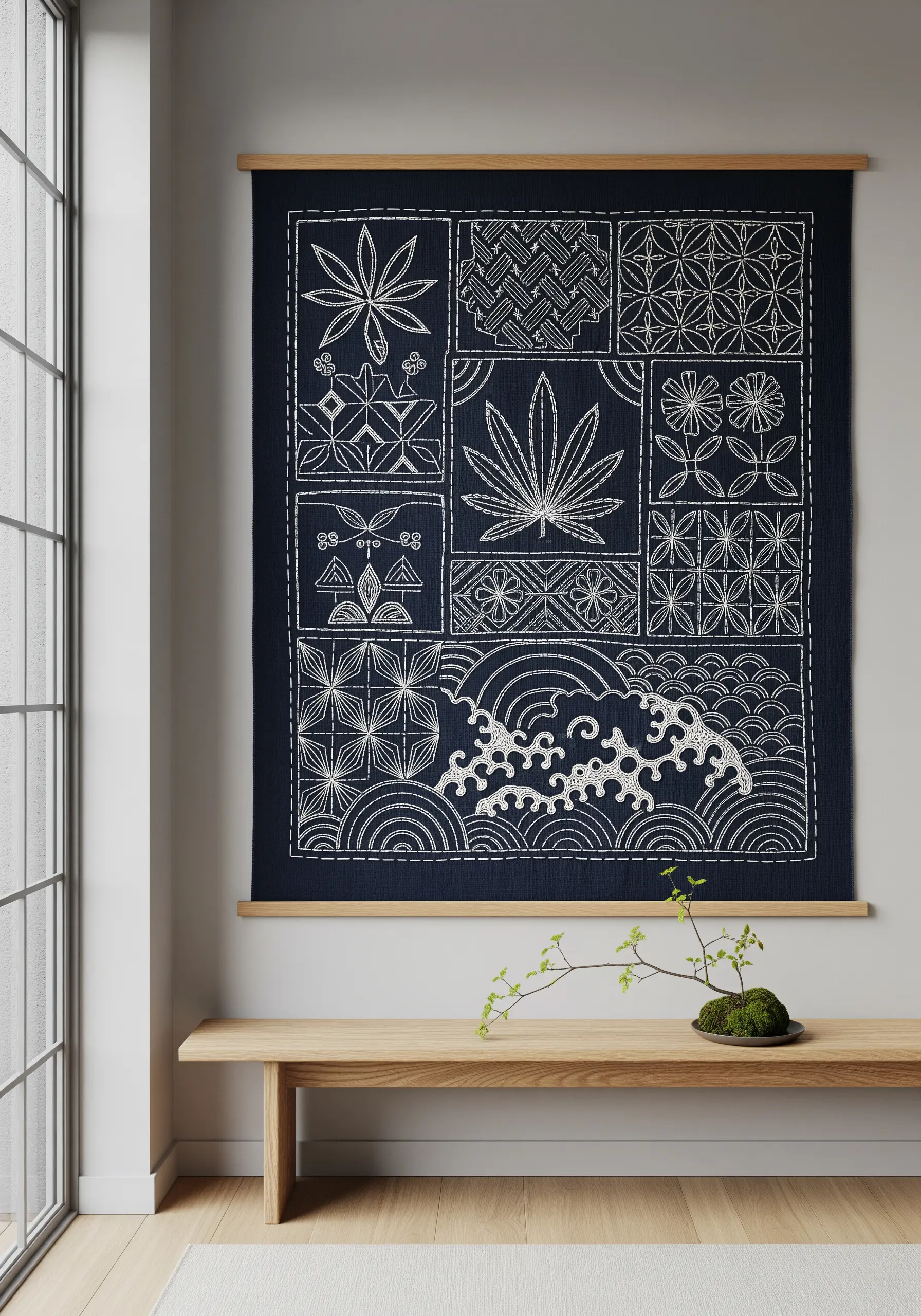
Embrace the quiet beauty of Sashiko by focusing on the consistency of your running stitch—the space between each stitch should match the length of the stitch itself.
Use a heavy, high-contrast thread like a white cotton Perle on dark indigo denim or linen to achieve that classic, graphic impact.
Instead of a standard needle, try a longer Sashiko needle; its length helps you load several stitches at once for straighter, more efficient lines.
This technique is a meditation on precision, turning simple geometry into sophisticated minimalist embroidery.
2. Tell a Story with Indian Kantha-Inspired Stitches
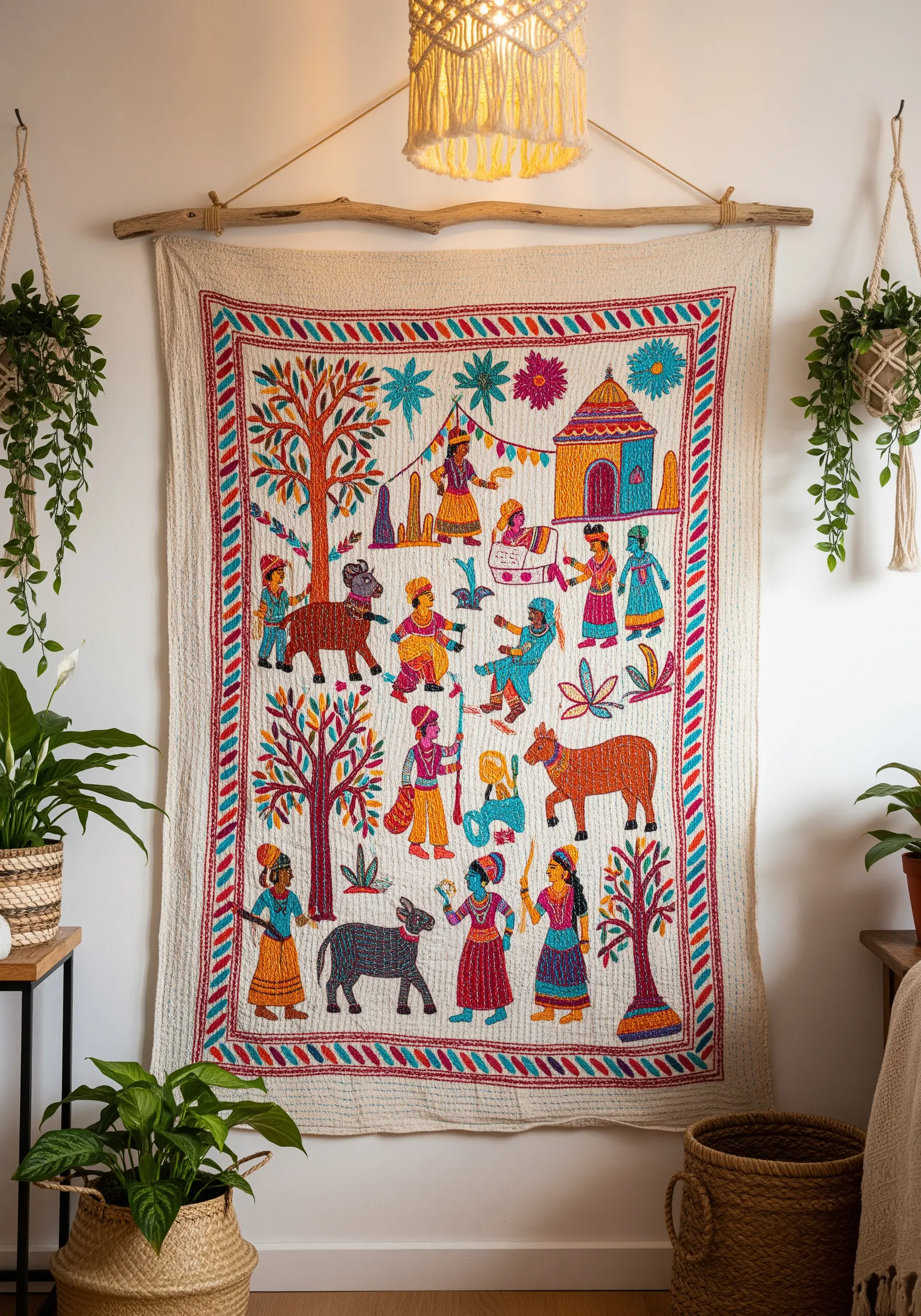
Channel the narrative spirit of Kantha by using simple running stitches to fill vibrant, illustrative motifs.
Outline your figures first with a backstitch for definition, then fill the shapes with rows of running stitches, varying the color to create energy and movement.
Use a soft, lightweight cotton fabric as your base and choose a palette of 5-7 bold colors to maintain vibrancy without overwhelming the scene.
The slightly irregular texture of the stitches is what gives the piece its handmade character and charm, celebrating storytelling over perfect uniformity.
3. Master the Otomí Technique for Bold Graphic Fills
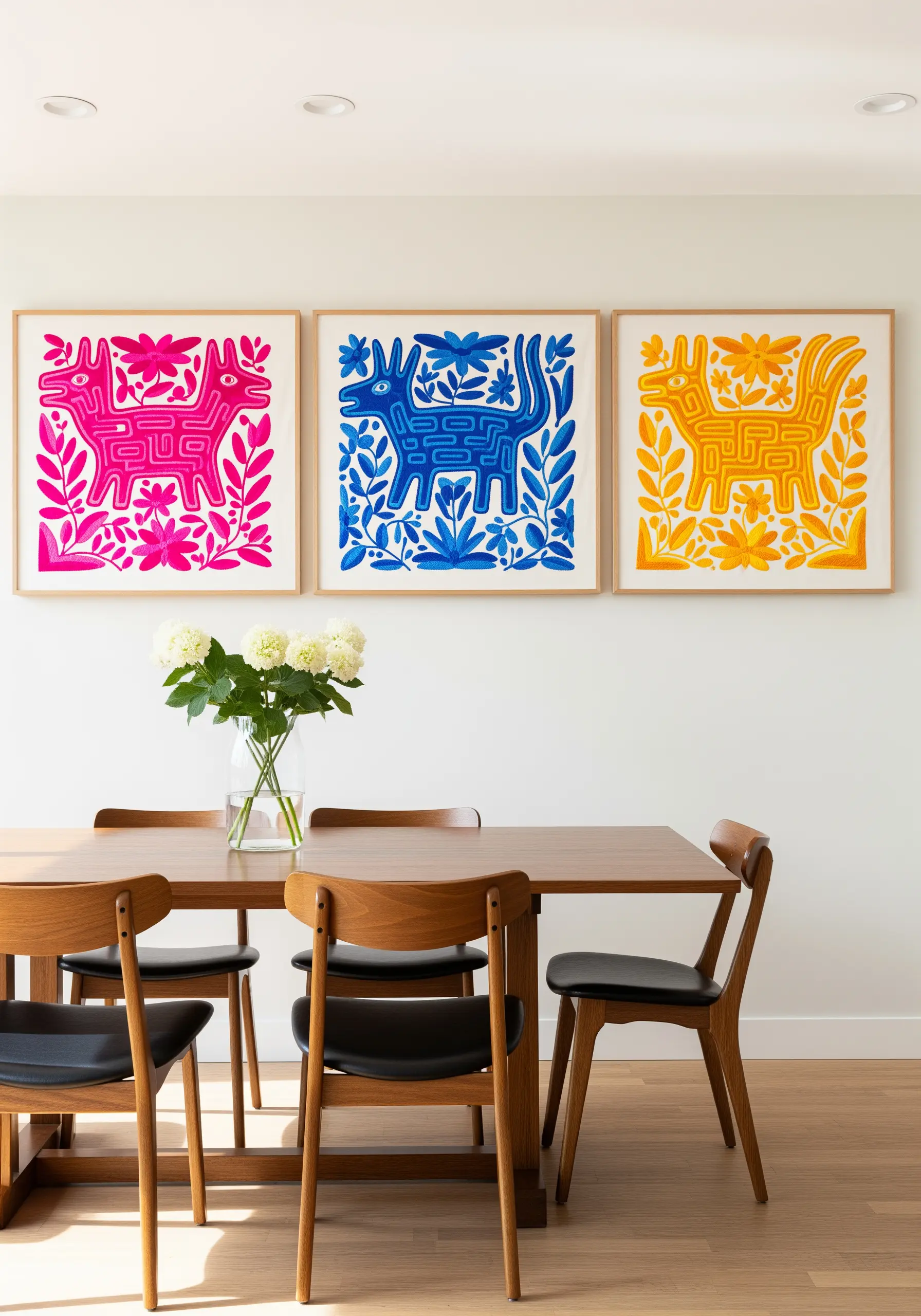
Achieve the iconic flat, dense fill of Otomí embroidery by using a closed herringbone stitch, ensuring your stitches lie close together with no fabric showing through.
Work your motifs in a single, brilliant color—like magenta, cobalt, or marigold—on a high-quality white or off-white cotton muslin.
This contrast is key to the style’s power.
To keep your edges crisp, outline the shape with a tight split stitch before beginning the fill. This creates a subtle boundary that contains the herringbone stitch and gives your work a professional finish.
This method transforms simple animal and botanical shapes into striking monochrome textile wall art.
4. Build Extreme Texture with Layered Mexican-Inspired Florals
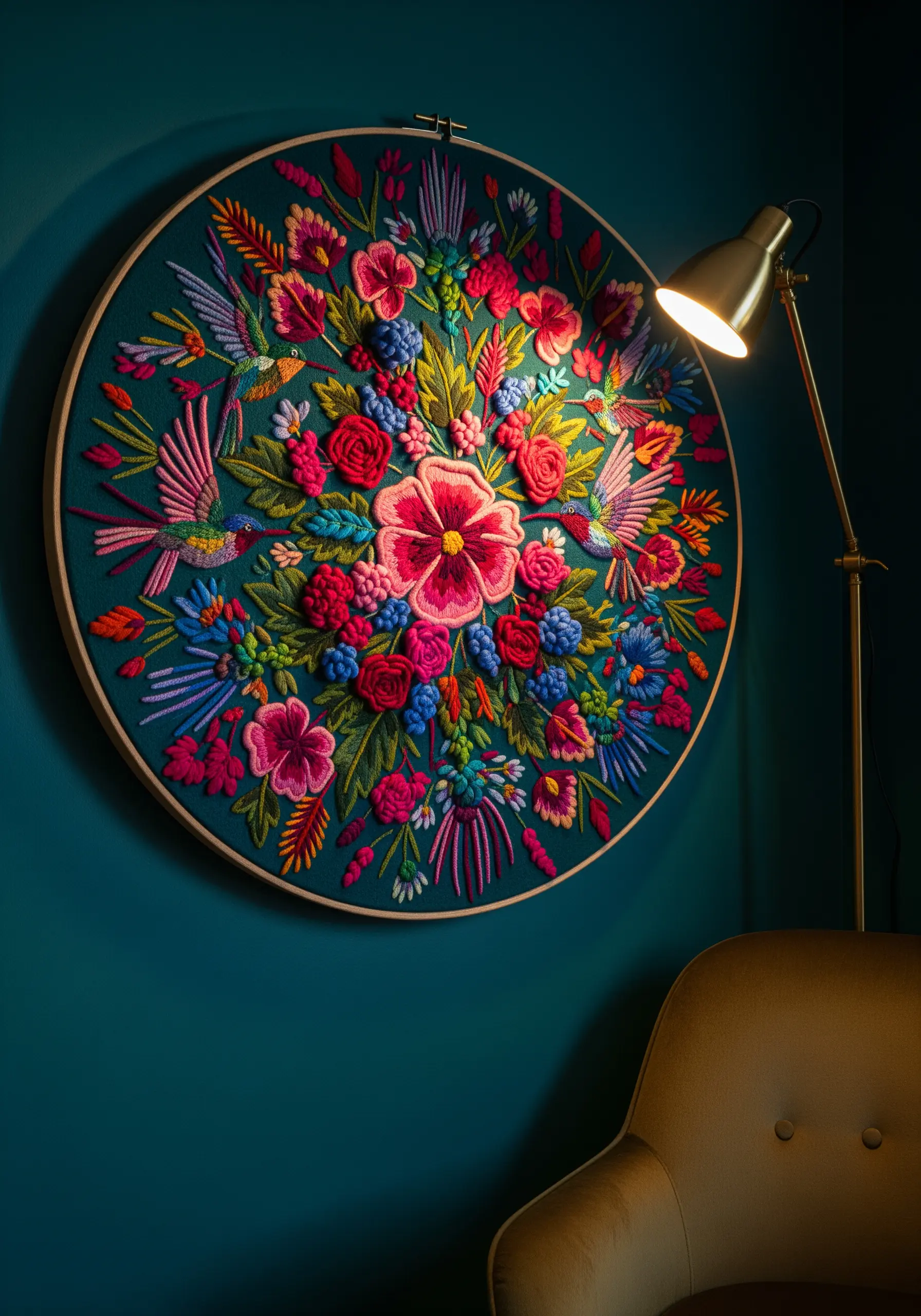
Create a lush, three-dimensional floral piece by layering a variety of high-texture stitches.
Use woven wheel stitches for roses, cast-on stitches for dimensional petals, and dense clusters of French knots for berry-like accents.
Work on a dark, rich fabric like teal or navy blue cotton twill to make your vibrant, jewel-toned threads feel even more saturated and luxurious.
Don’t be afraid to mix thread weights—use a full six strands for your knots and wheels, but switch to two or three strands for delicate satin stitch leaves to create visual depth.
The result is one of those colorful fiber art installations that invites touch.
5. Channel Suzani Grandeur with Bold, Symmetrical Motifs
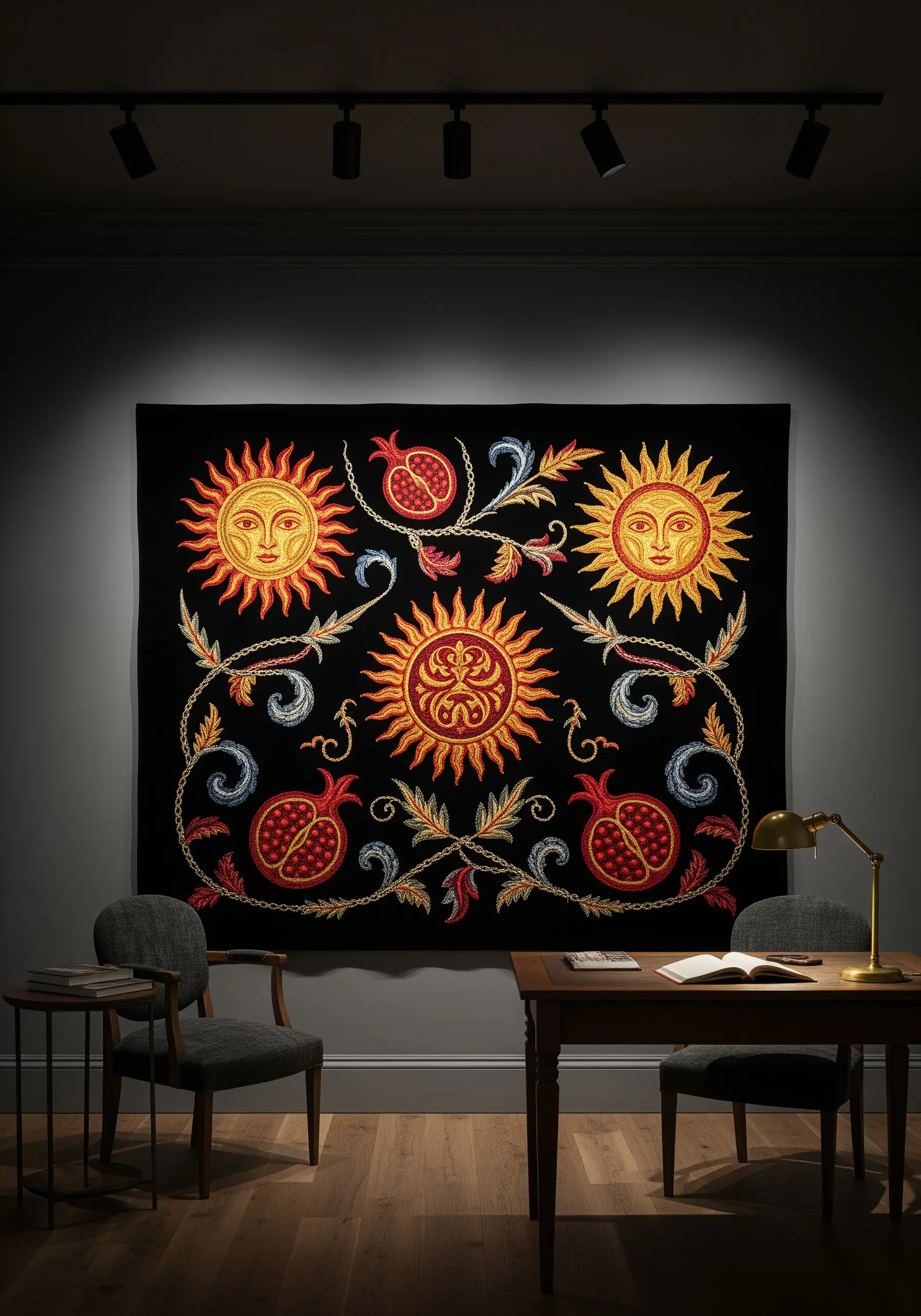
Capture the essence of Central Asian Suzani textiles by focusing on large, circular, and symmetrical motifs like suns and pomegranates.
Use a combination of chain stitch for outlines and a buttonhole stitch for filling shapes—this pairing creates a robust, slightly raised texture that defines the design.
A black velvet or heavy wool background provides the perfect dramatic canvas, making warm reds, golds, and oranges radiate heat and energy.
Arrange your primary motifs in a balanced, formal composition to echo the heirloom quality of traditional Suzani wall hangings.
These are the kind of dramatic dark thread embroidery designs that command a room.
6. Stitch Slavic Geometry with Counted-Thread Precision
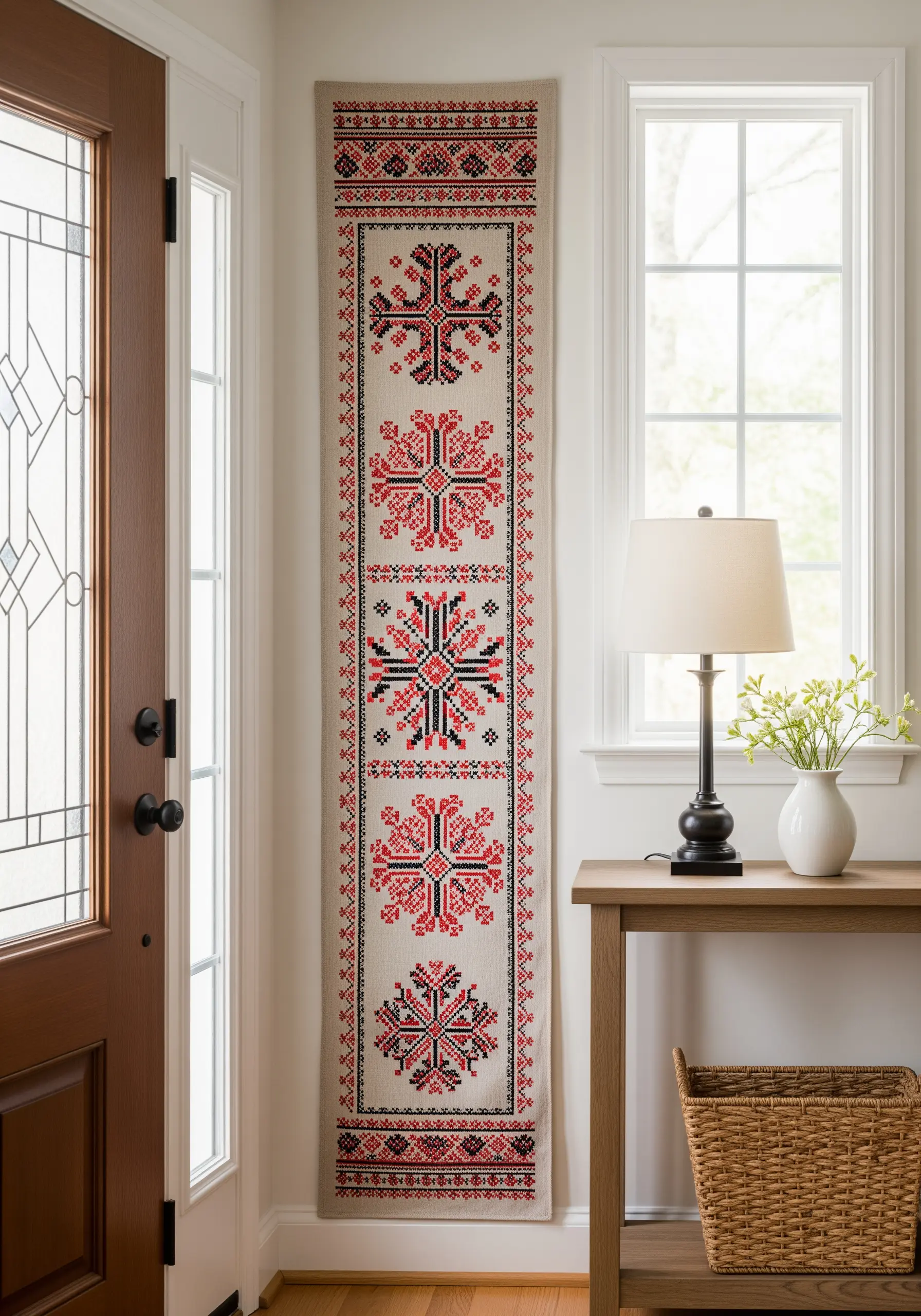
Recreate the powerful symbolism of a Ukrainian Rushnyk by using counted cross-stitch on an evenweave fabric like Aida or linen.
The grid of the fabric is your guide, ensuring every stitch is uniform and every geometric motif is perfectly symmetrical and sharp.
Stick to a traditional palette of red and black, as the limited colors create a striking graphic tension that is central to the style’s aesthetic.
Plan your design on graph paper first to ensure your repeating patterns fit perfectly within your desired dimensions, turning mathematical precision into cultural art.
This approach is also perfect for abstract geometric hoops.
7. Emulate African Kuba Cloth with Textural Stitches
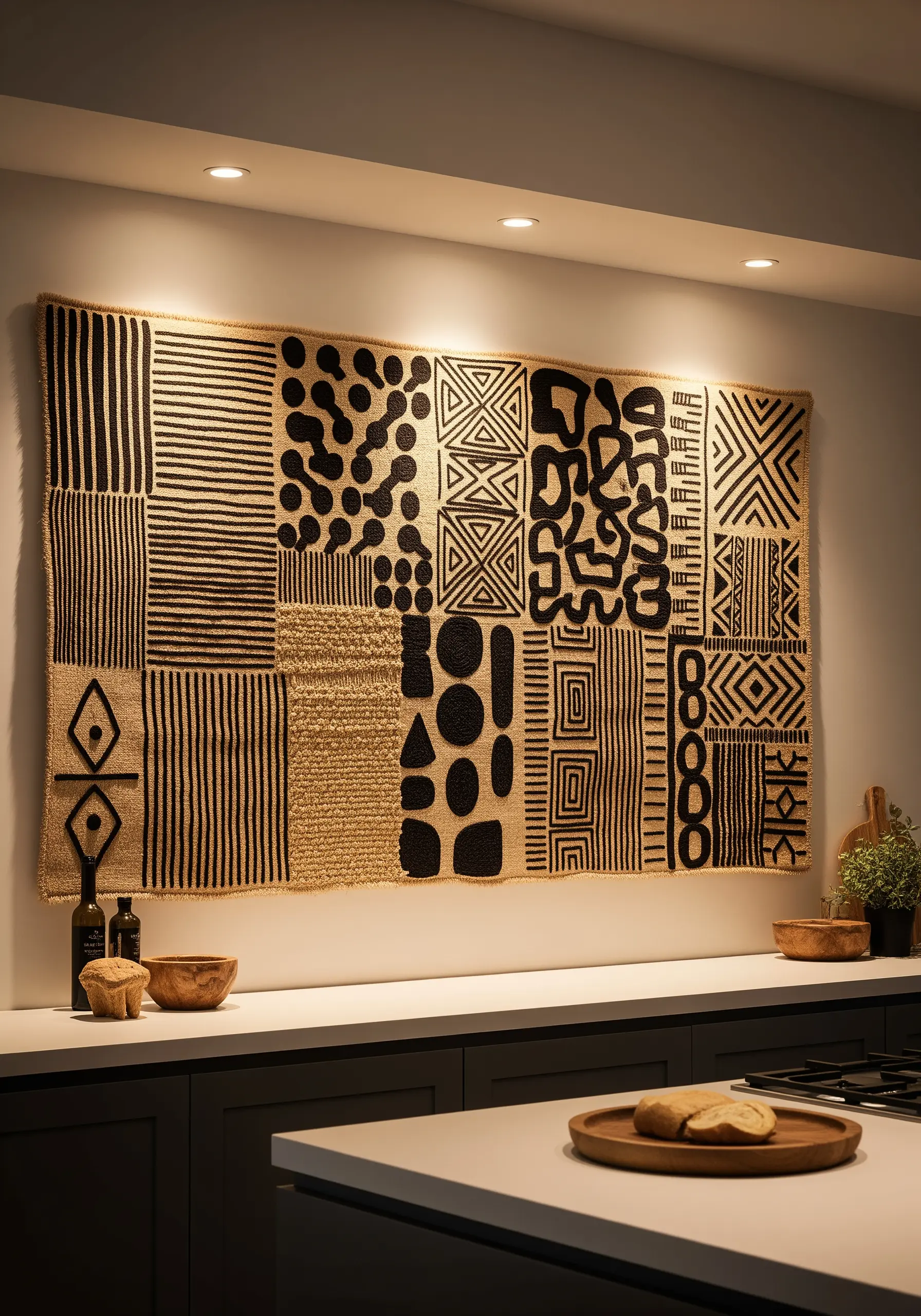
Translate the look of woven raffia from Kuba cloth into embroidery by using thick, textural yarns on a coarse, open-weave fabric like burlap or jute.
Instead of fine stitches, work with darning stitches, couching, or long straight stitches to fill in bold, abstract geometric patterns.
Embrace a high-contrast palette of black or dark brown against the natural tan of the base fabric.
The beauty of this style lies in its raw, organic feel, so allow for slight imperfections in your lines and fills—they add to the authentic, hand-woven character.
These abstract shapes create a powerful visual rhythm.
8. Achieve Royal Opulence with Zardozi-Inspired Couching
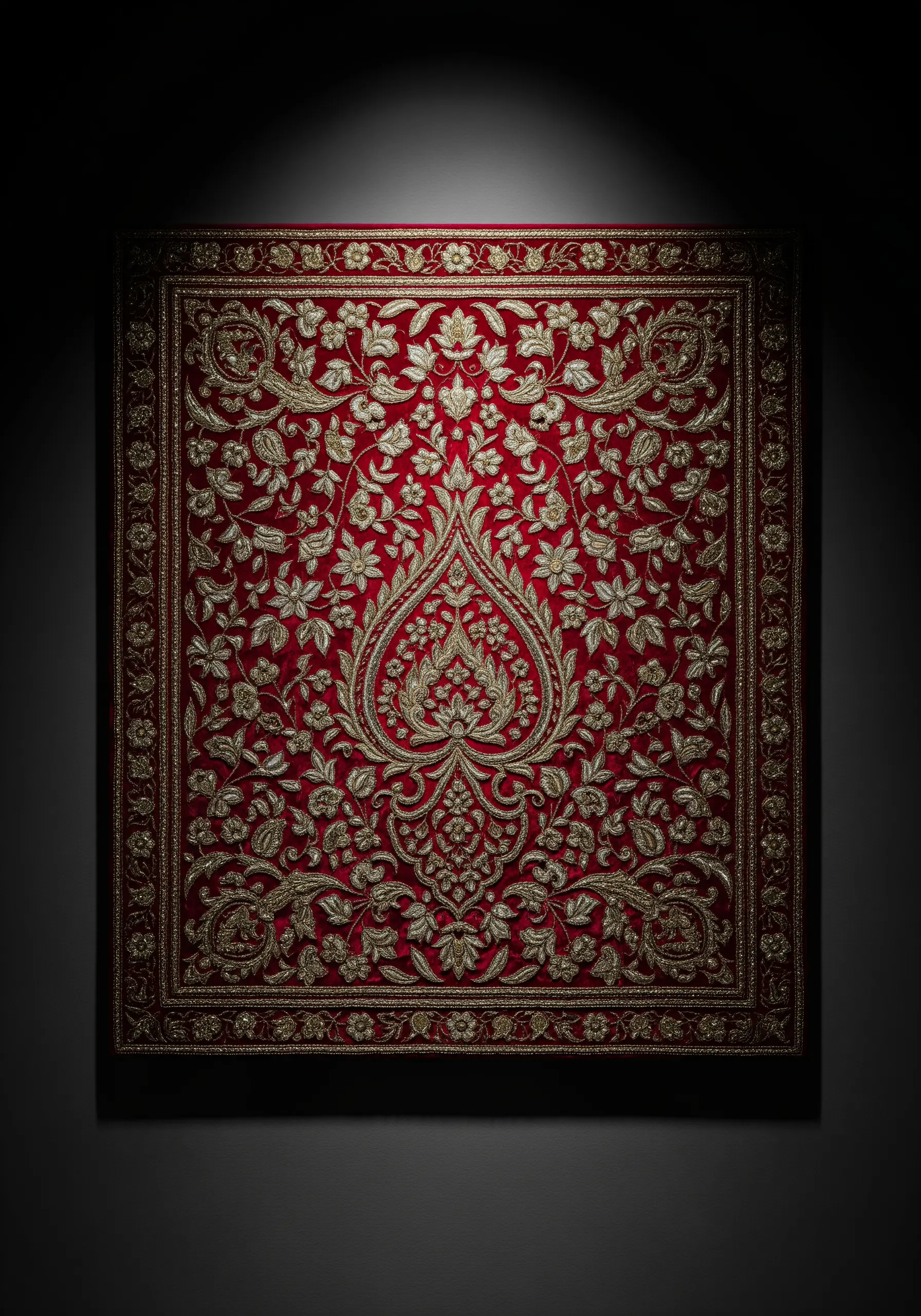
Capture the luxury of Indian Zardozi work by using couching, a technique where you lay metallic threads on the surface and tack them down with a finer, discreet thread.
This method allows you to create intricate, swirling patterns without pulling heavy metallic threads through the fabric, which preserves both the thread and the delicate silk or velvet base.
Work on a rich, jewel-toned fabric like deep red, emerald, or sapphire to create a regal contrast with the gold or silver threads.
For added dimension, stitch over a thin layer of felt padding to create a raised, embossed effect that truly elevates the design.
It’s one of the most unexpected ways to use metallic thread for lavish decor.
9. Frame Palestinian Tatreez as Modern Art
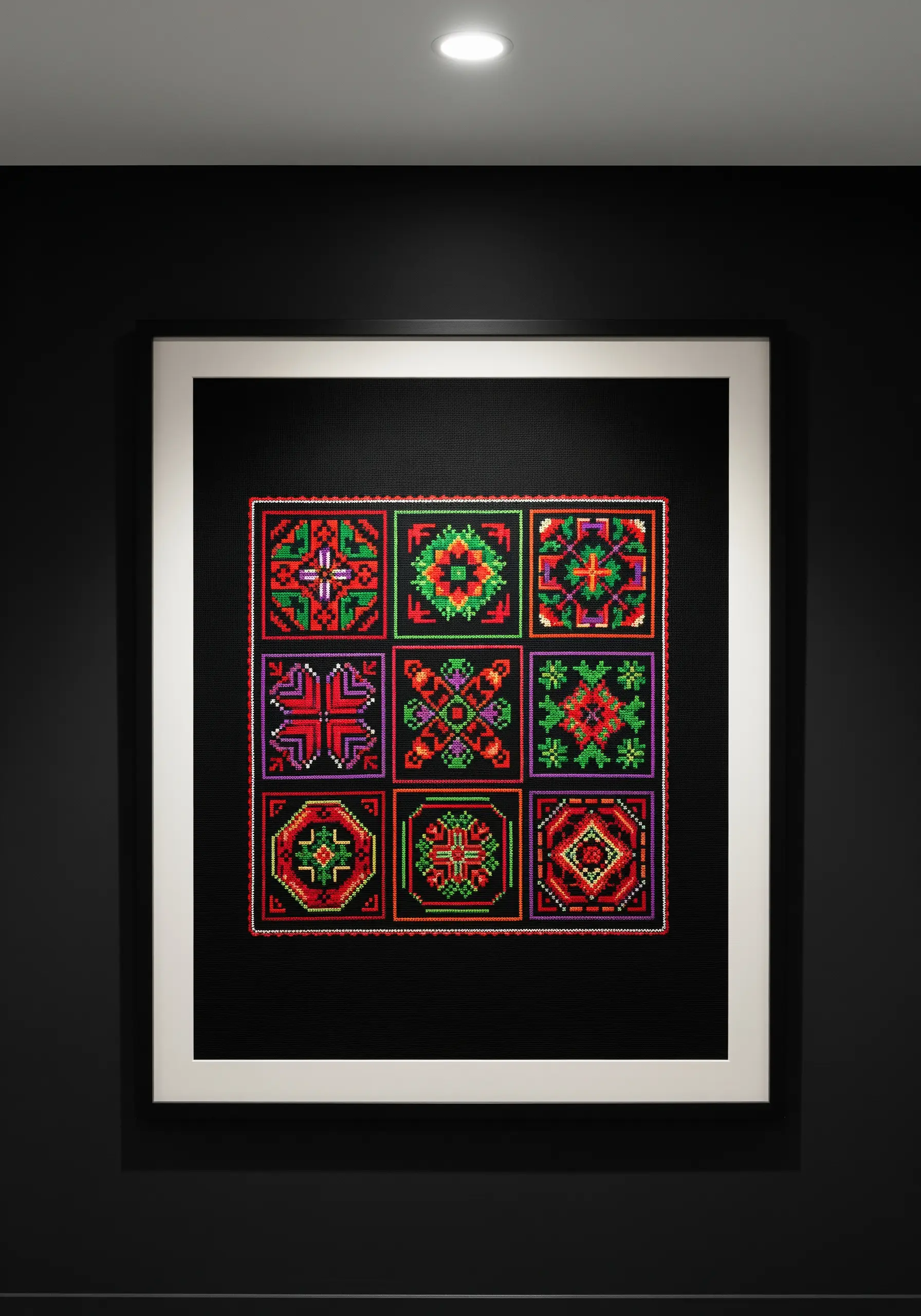
Modernize the rich tradition of Tatreez by stitching individual motifs on black Aida cloth and framing them in a grid.
This approach isolates the intricate cross-stitch patterns, allowing you to appreciate the geometry and vibrant, jewel-toned colors of each design as a standalone piece of art.
Use a high-quality cotton floss in bold reds, greens, oranges, and purples to stay true to the style’s vivid palette.
Arranging the stitched squares in a simple, modern gallery frame transforms these cultural symbols into stunning compact hoop embroidery designs perfect for contemporary spaces.
10. Create a Hmong Story Cloth with Appliqué and Outline
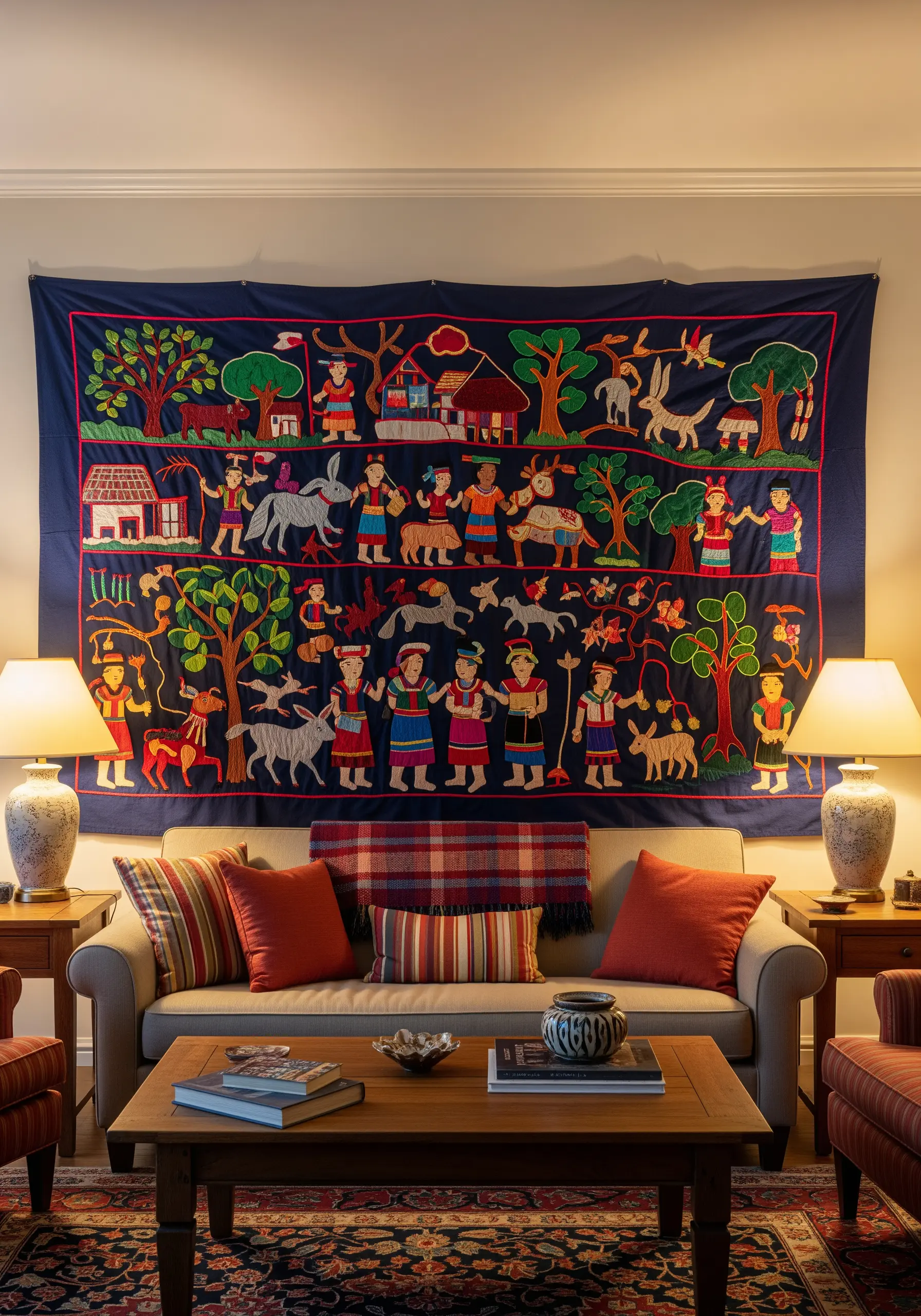
Recreate the narrative quality of a Hmong story cloth by combining simple appliqué with embroidery.
Cut your figures, animals, and houses from contrasting colored fabrics and arrange them on your background to build a scene.
Secure the appliqué pieces with a neat blanket stitch or a simple running stitch around the edges.
Then, add facial features, textile patterns, and environmental details using basic backstitch or stem stitch. This layered approach is a wonderful way to mix fabric, paper, and threads beautifully, telling a story with texture and color.
11. Master Japanese Silk Painting with Thread
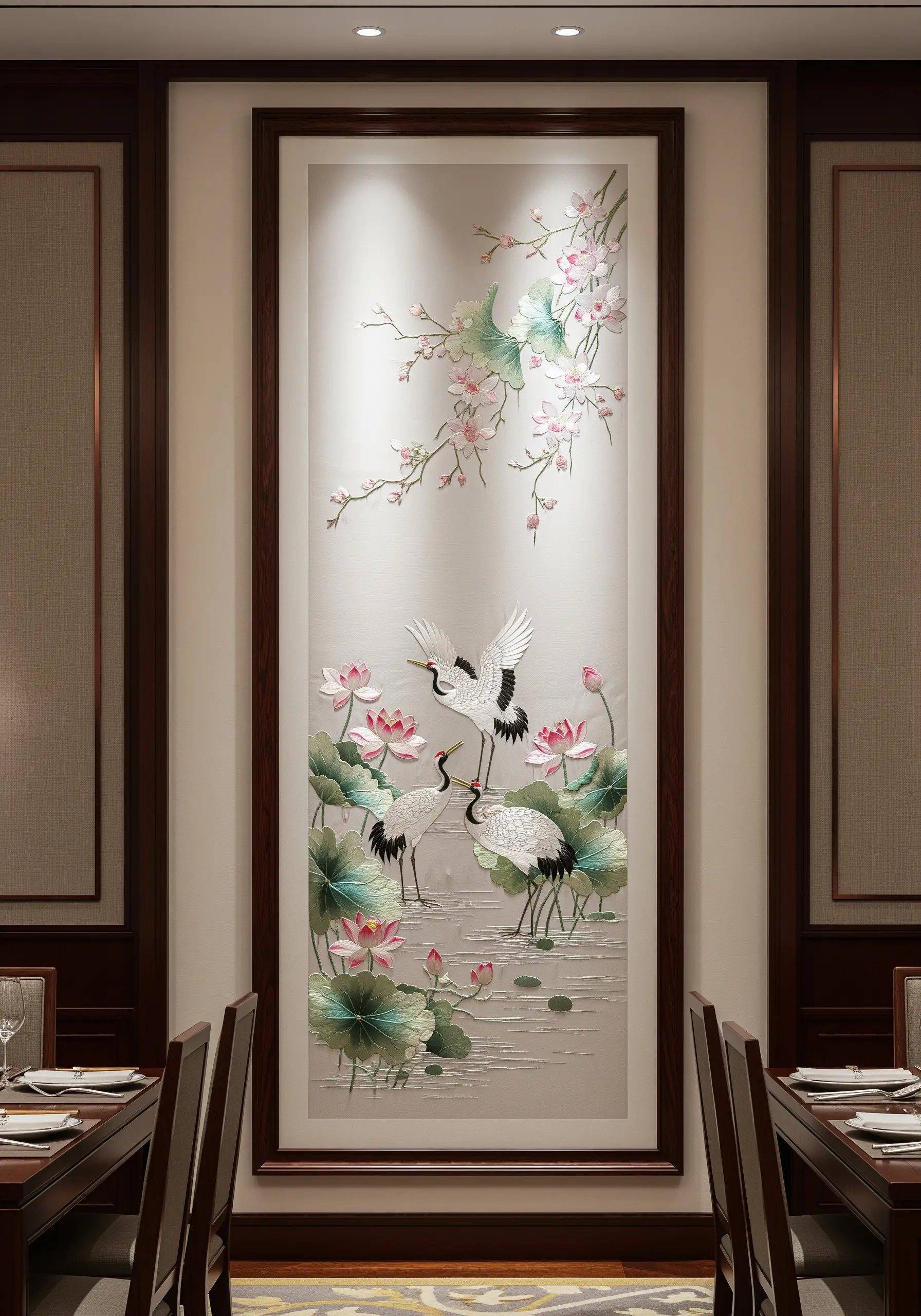
Achieve the delicate, painterly effect of Japanese silk embroidery by mastering the long-and-short stitch.
This technique, also known as thread painting, allows you to blend colors seamlessly, creating soft gradients that mimic watercolor on fabric.
Use single strands of fine silk thread on a silk or high-count cotton background for the ultimate smooth finish and subtle luster.
Focus on tranquil, nature-inspired subjects like cranes, cherry blossoms, or lotus flowers to capture the serene and elegant aesthetic.
It’s the perfect way to begin your own cherry blossom embroidery projects.
12. Weave with a Needle in a Southwestern Style
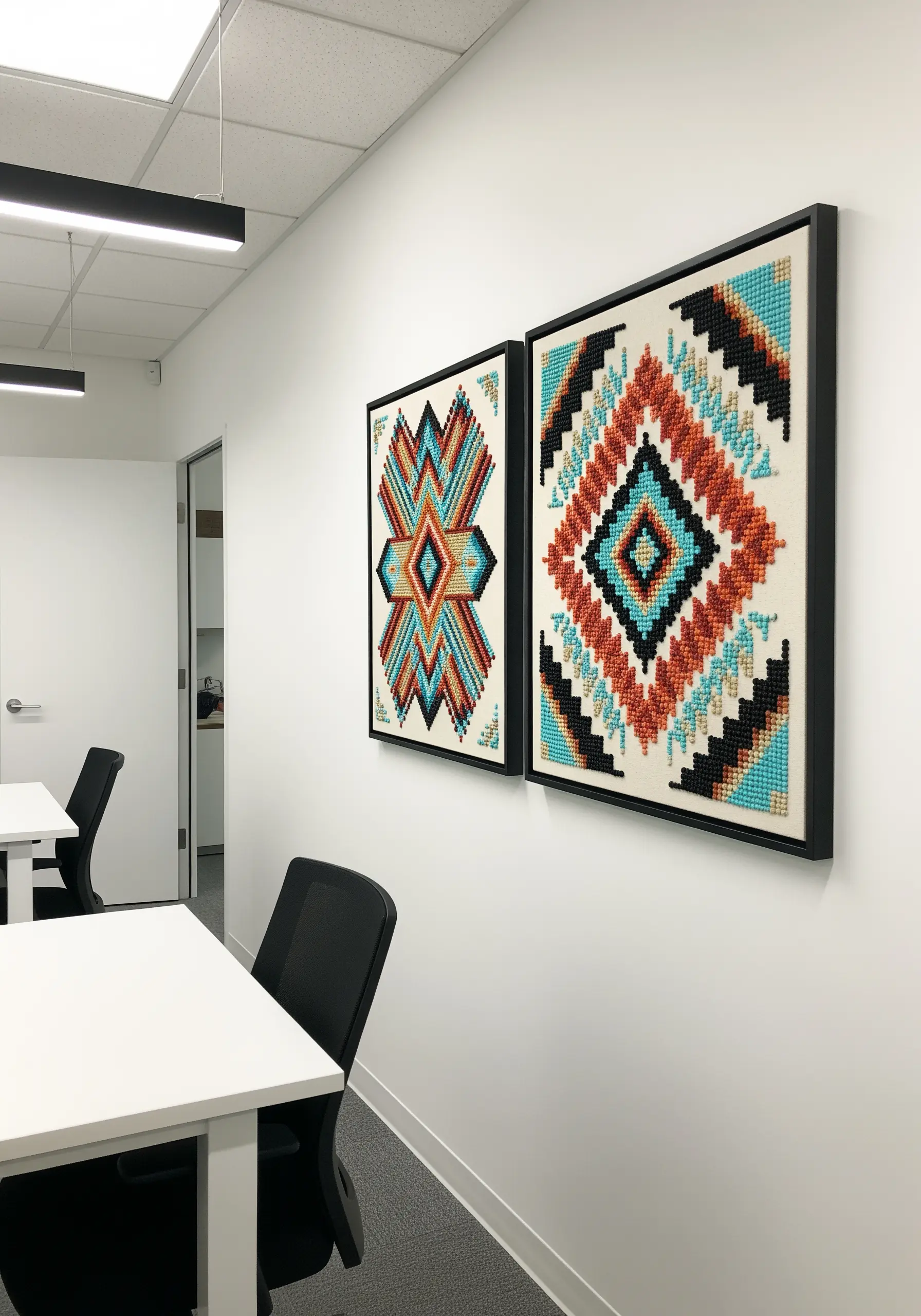
Mimic the bold geometry of a Navajo woven rug by filling shapes with dense, uniform rows of vertical satin stitch or brick stitch.
To get the clean, graphic lines characteristic of this style, outline each color block with a single line of backstitch before you begin filling it in.
Use a heavy, non-lustrous thread like tapestry wool or matte cotton on a sturdy canvas or linen base to replicate the substantial feel of a woven textile.
Choose a palette of desert hues—terracotta, turquoise, sand, and black—to create authentic, earth-tone DIY embroidery designs.
13. Carve Fabric with Richelieu Cutwork Embroidery
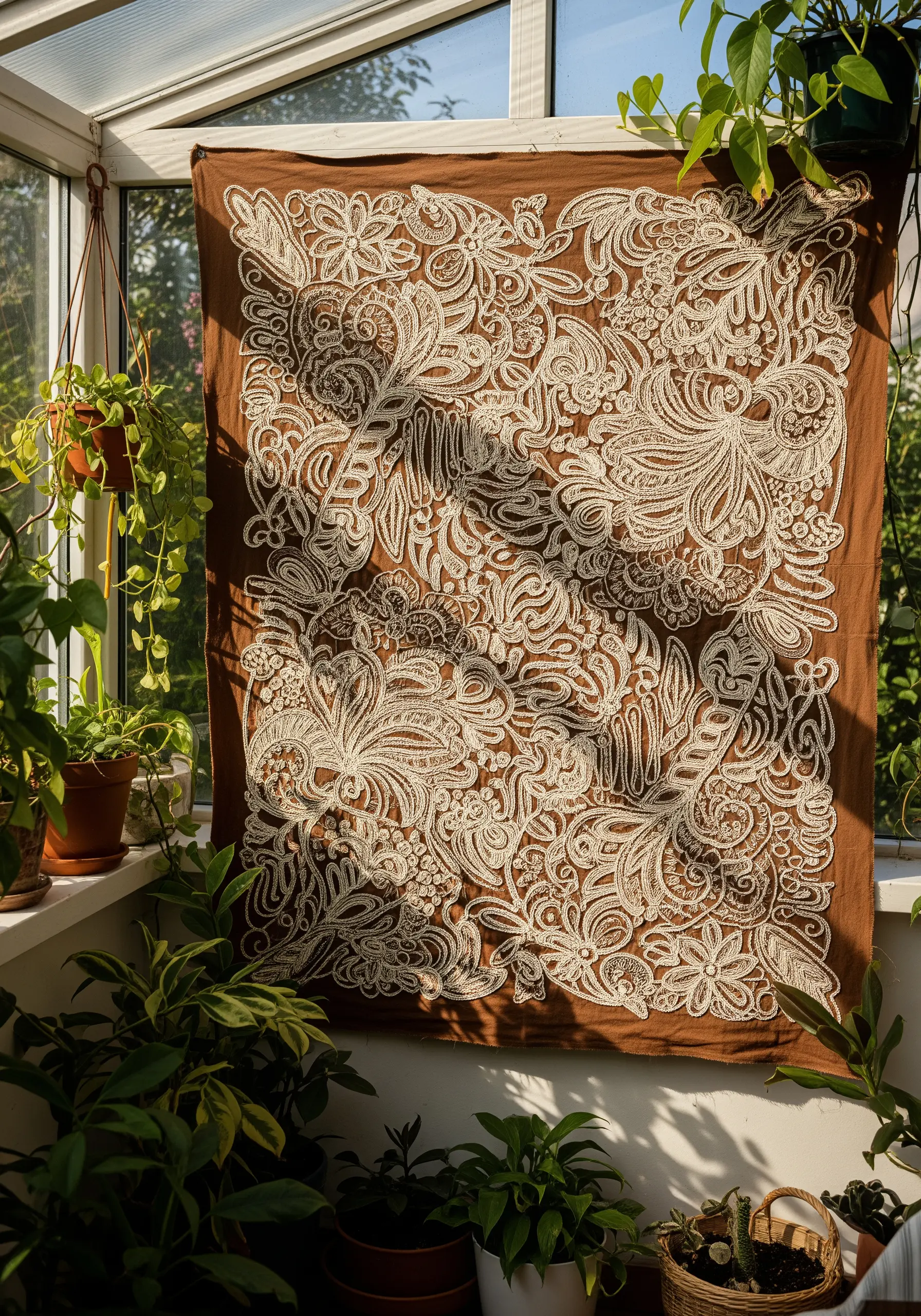
Create delicate, lace-like art by exploring Richelieu, a form of cutwork embroidery.
First, you’ll secure the outlines of your design and the connecting bars with tight buttonhole stitches.
Once the framework is stitched, you carefully cut away the negative space within the design, leaving an elegant, openwork pattern.
This technique requires a stable, tightly woven fabric like linen and sharp, fine-tipped scissors for precision.
It’s one of the most beautiful negative space embroidery techniques for creating an heirloom feel.
14. Define Celtic Knots with Raised and Couched Stitches
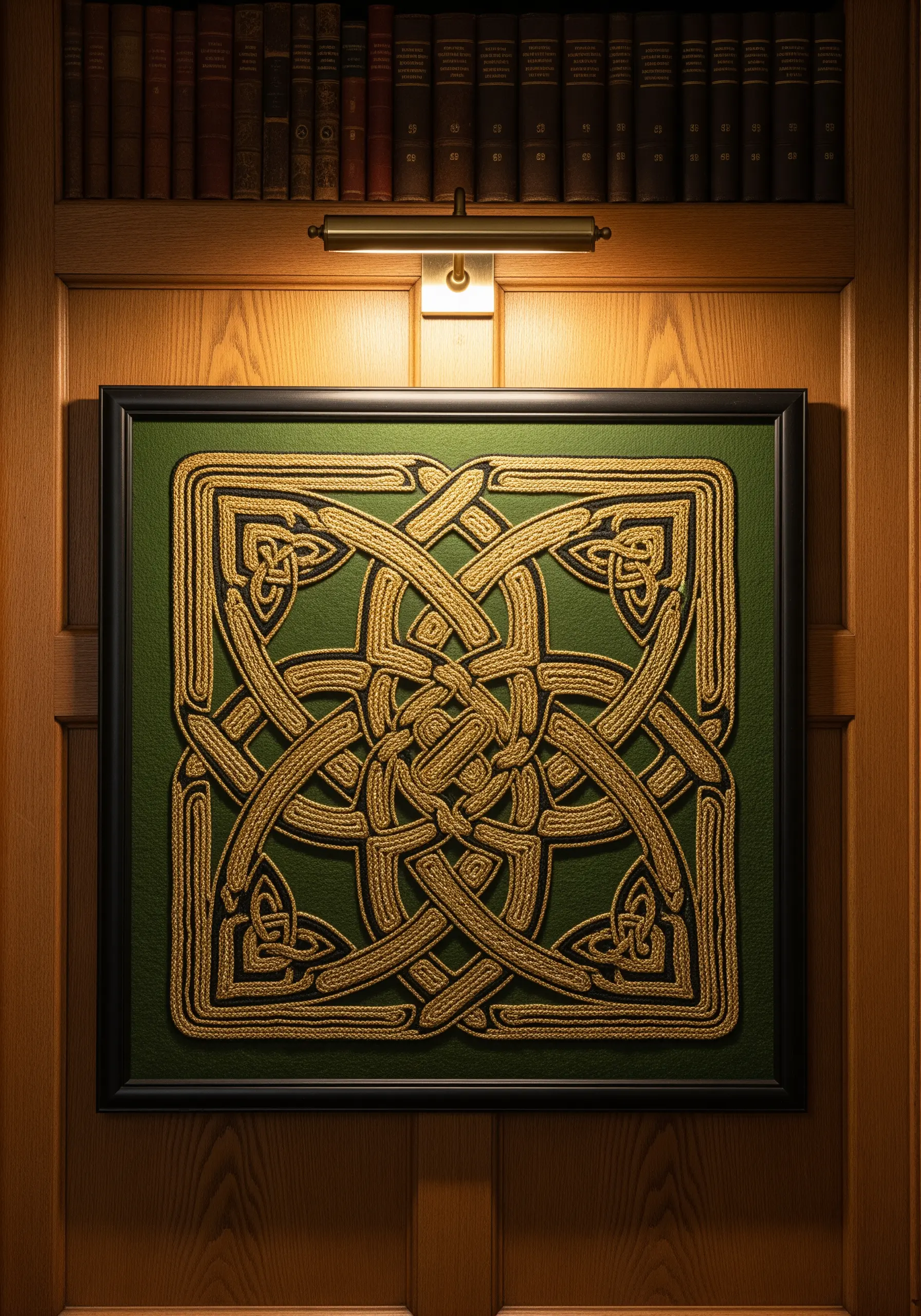
Give Celtic knotwork its characteristic interwoven, three-dimensional look by using raised stitches or by couching thick cords onto your fabric.
A raised stem stitch band or a heavy plaited braid stitch will create a rounded, rope-like line that stands out from the surface.
Alternatively, lay down a decorative cord or thick yarn and tack it in place with small, perpendicular stitches.
The key is meticulous planning to ensure your lines appear to weave over and under each other correctly, creating one of the most statement textured embroidery techniques.
15. Paint with Thread in a Vibrant Polish Folk Style
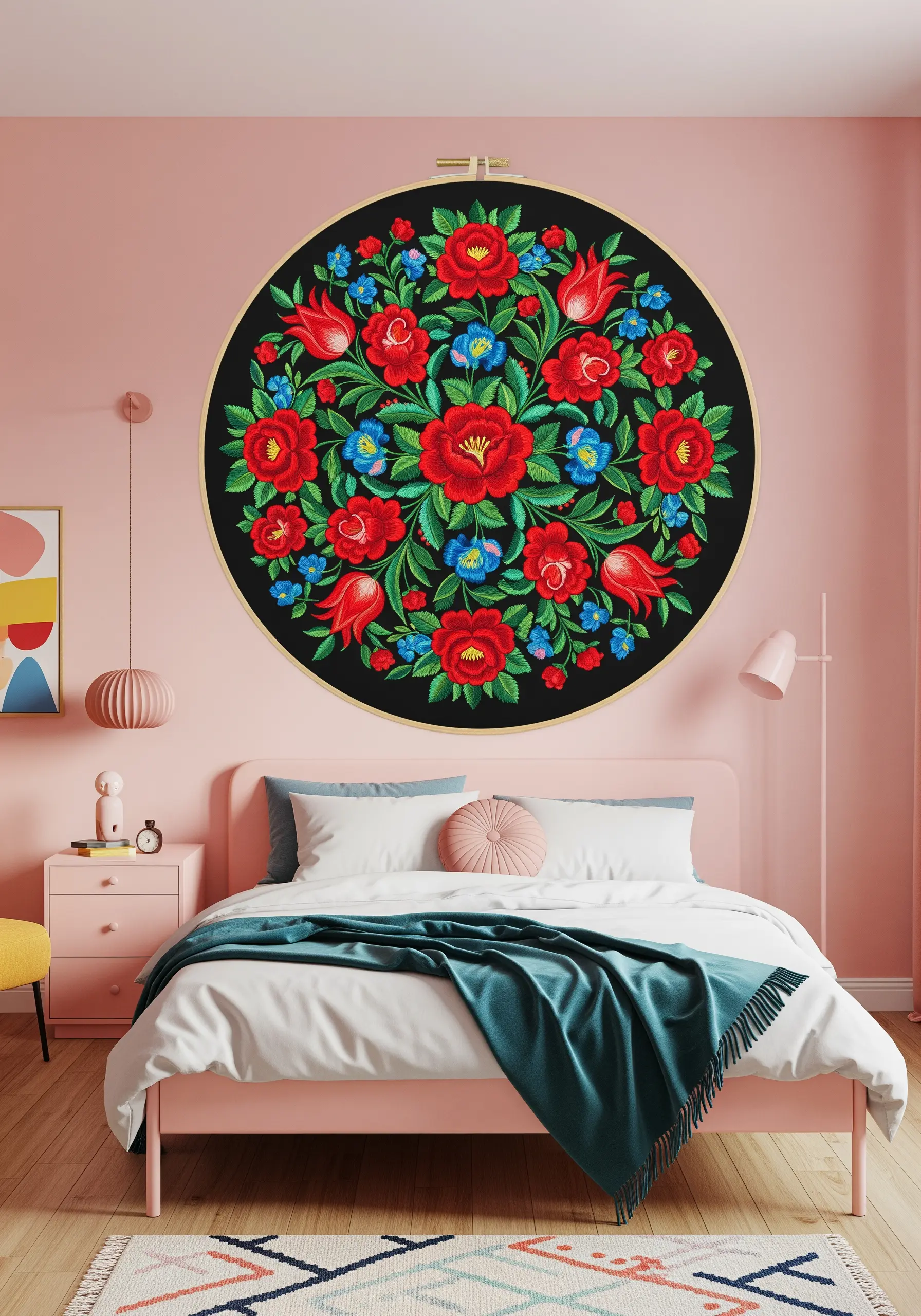
Capture the joyful energy of Polish folk art with bold, stylized floral motifs filled with impeccably smooth satin stitch.
Use a full six strands of cotton floss to achieve a dense, opaque fill that looks almost painted.
To keep your satin stitches perfectly flat and even, use a padding of small running stitches underneath; this gives the final layer a slight lift and a professional sheen.
Stitch on a black or dark navy background to make the traditional palette of bright reds, blues, and greens truly sing.
This is one of the most cheerful floral embroidery wall decor projects you can make.
16. Embrace Imperfection with Japanese Boro Patchwork
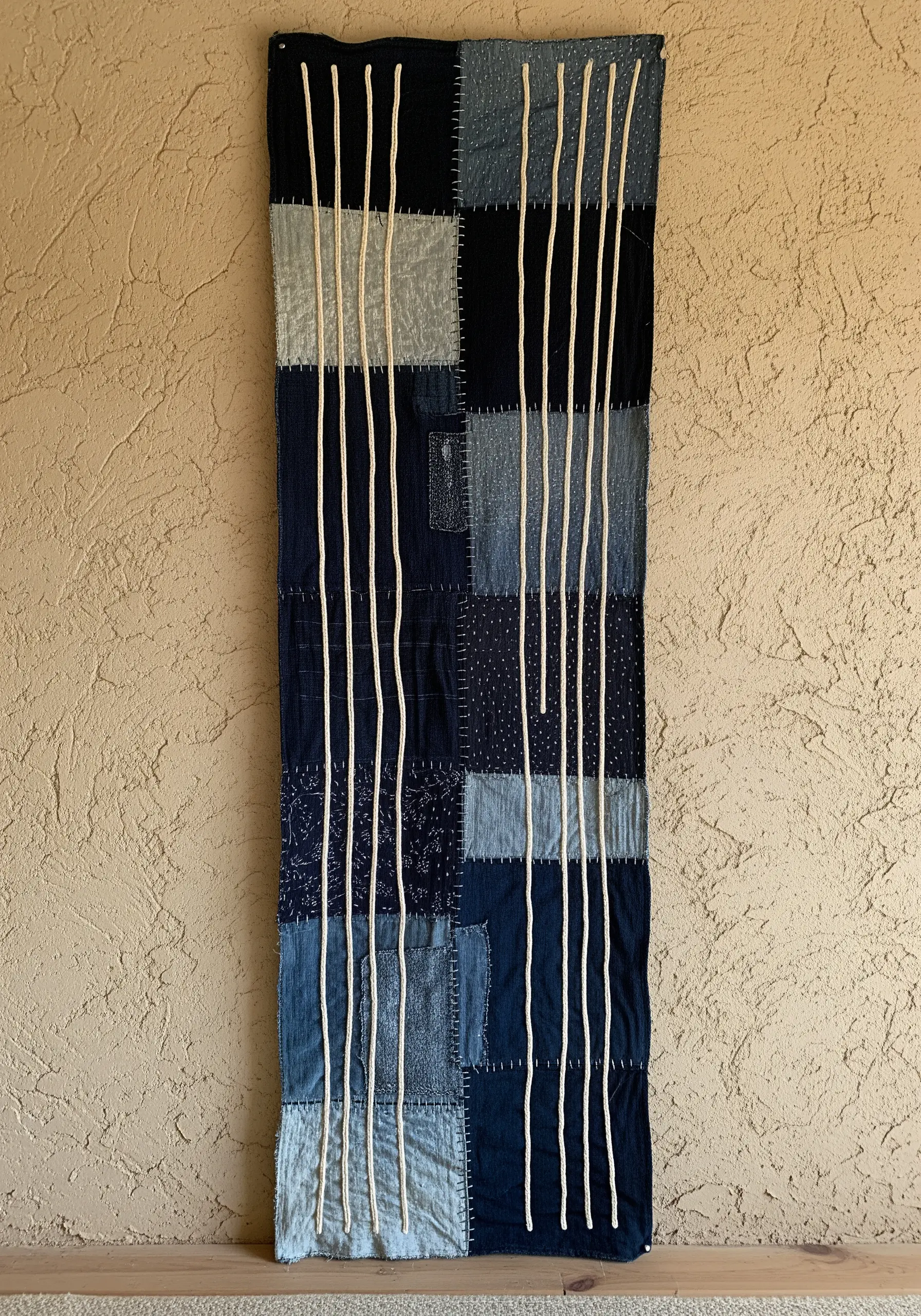
Channel the wabi-sabi philosophy of Boro by creating a patchwork of scrap fabrics, particularly indigo-dyed cottons or old denim.
Layer the pieces organically and hold them together with simple, functional running stitches (Sashiko). The beauty is not in perfection, but in the visible mending and the history of the cloth.
For a modern twist, add sculptural elements like the couched cords shown here, which introduce a bold, linear contrast to the patchwork texture.
This is one of the most soulful and creative ways to turn old fabrics into fun embroidery projects.
17. Add Reflective Light with Indian Shisha Work
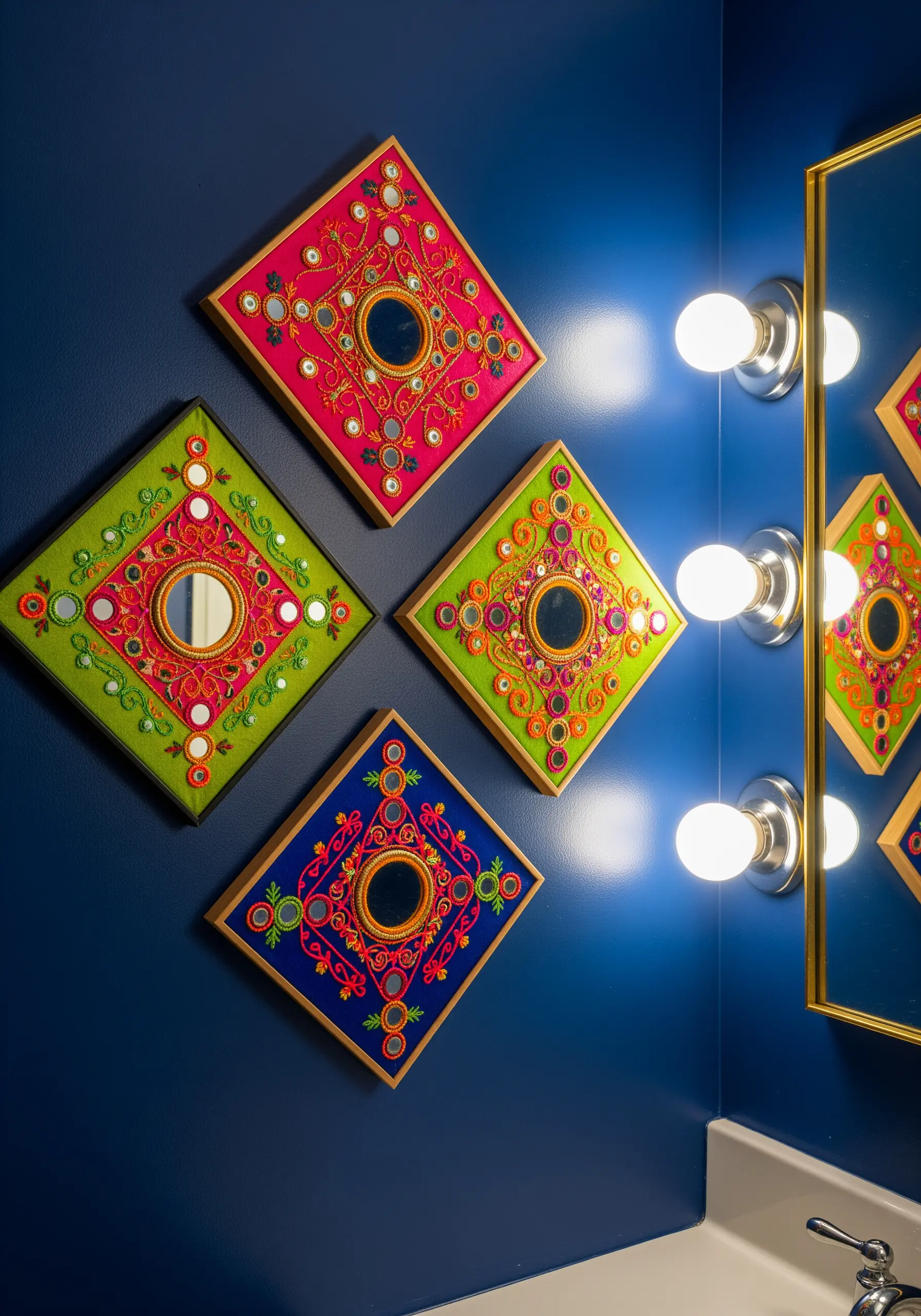
Incorporate the dazzling effect of Shisha mirror work into your embroidery for a piece that plays with light.
You can purchase small craft mirrors (shisha) and secure them to your fabric by creating a stitched frame—typically with a combination of straight stitches and a tight buttonhole stitch that grips the mirror’s edge.
Surround the mirrors with bright, energetic embroidery using chain stitches, herringbone stitches, and French knots in vibrant colors like fuchsia, lime green, and turquoise.
The combination of thread and reflection is perfect for creating joyful, boho-style embroidery decor.
18. Capture Swedish Folk Art with Clean, Stylized Stitches
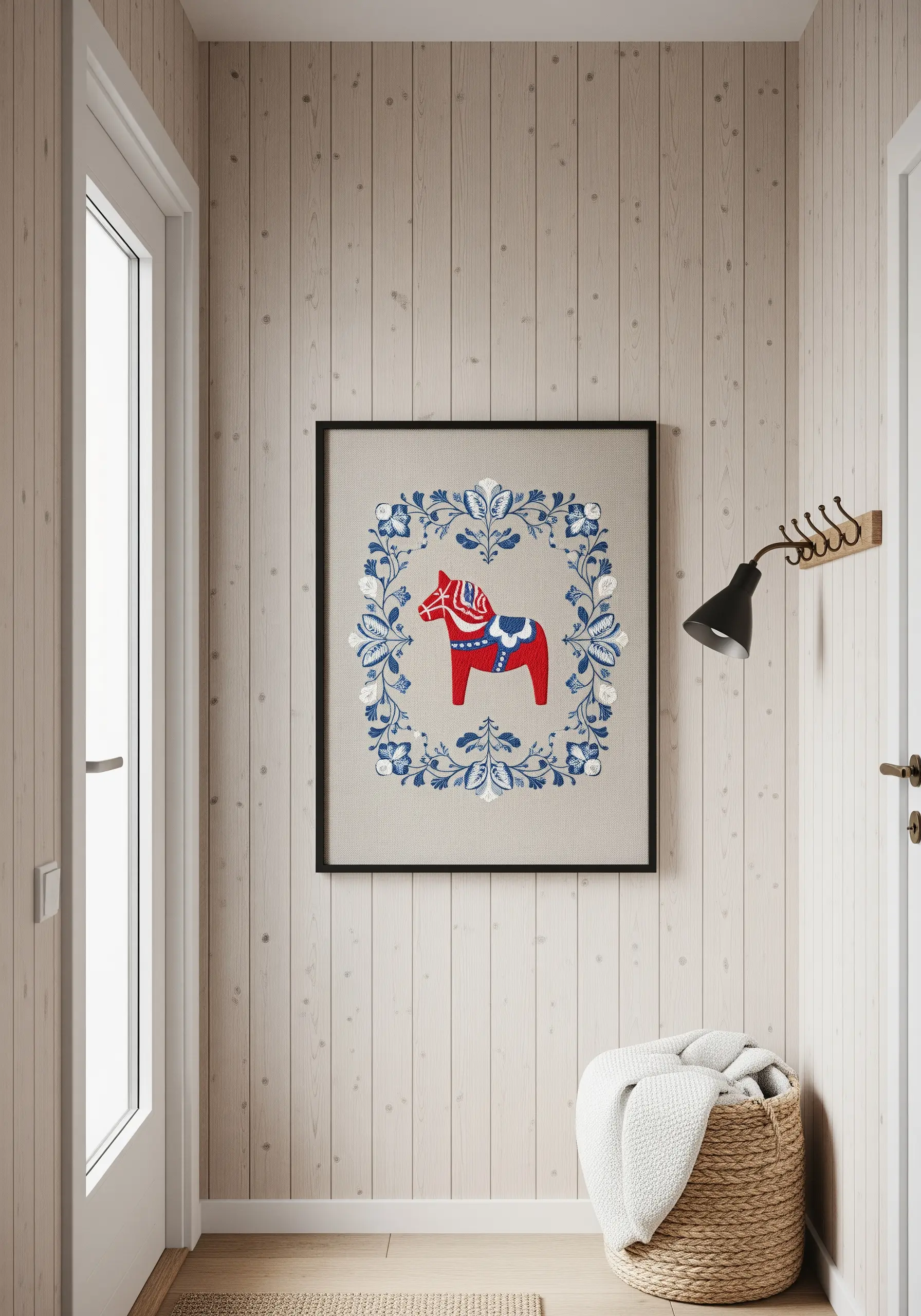
Translate the simple charm of a Swedish Dala horse into thread with clean lines and flat areas of color.
Use a smooth satin stitch to fill the body of the horse, ensuring all your stitches lie in the same direction for a uniform finish.
For the intricate harness and floral details, use more delicate stitches like backstitch, stem stitch, or even tiny detached chain stitches (lazy daisies).
A limited, traditional color palette on a neutral linen background keeps the focus on the iconic, stylized shape. These iconic minimal stitch motifs have timeless appeal.
19. Create Graphic Layers with Mola-Inspired Reverse Appliqué
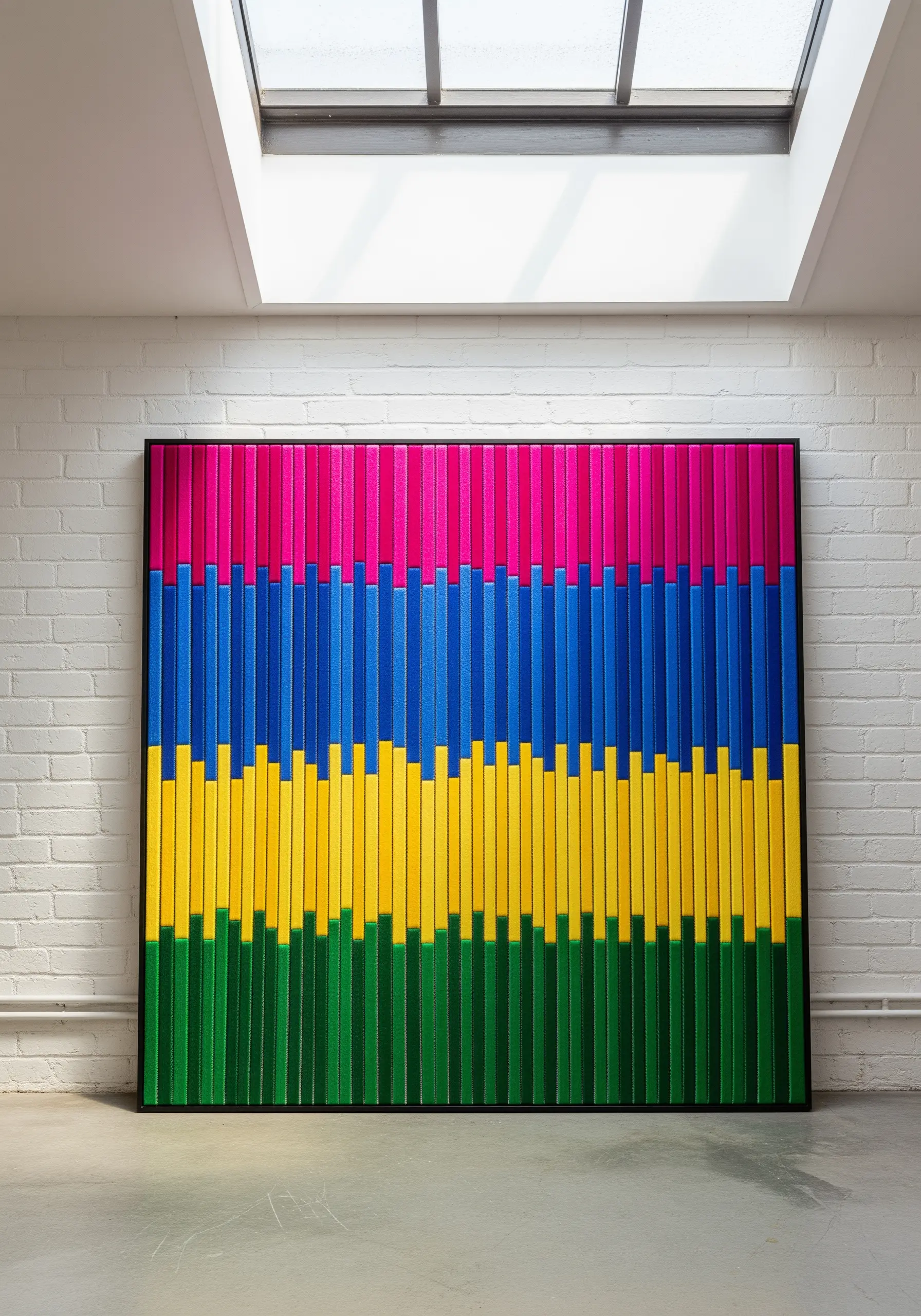
Explore the technique of reverse appliqué, inspired by the Mola art of Panama, to create bold, layered designs.
Start by layering two or more different colored fabrics. Baste them together, then stitch your design’s outline through all layers.
With fine-tipped scissors, carefully cut away the top layer(s) inside your stitched lines to reveal the colors underneath, creating a graphic, dimensional effect.
Finish the raw edges with a nearly invisible slip stitch or a decorative blanket stitch. It’s one of the best fabric collage stitch layer tricks for a stunning outcome.
20. Stitch Delicate Botanicals on Sheer Fabric
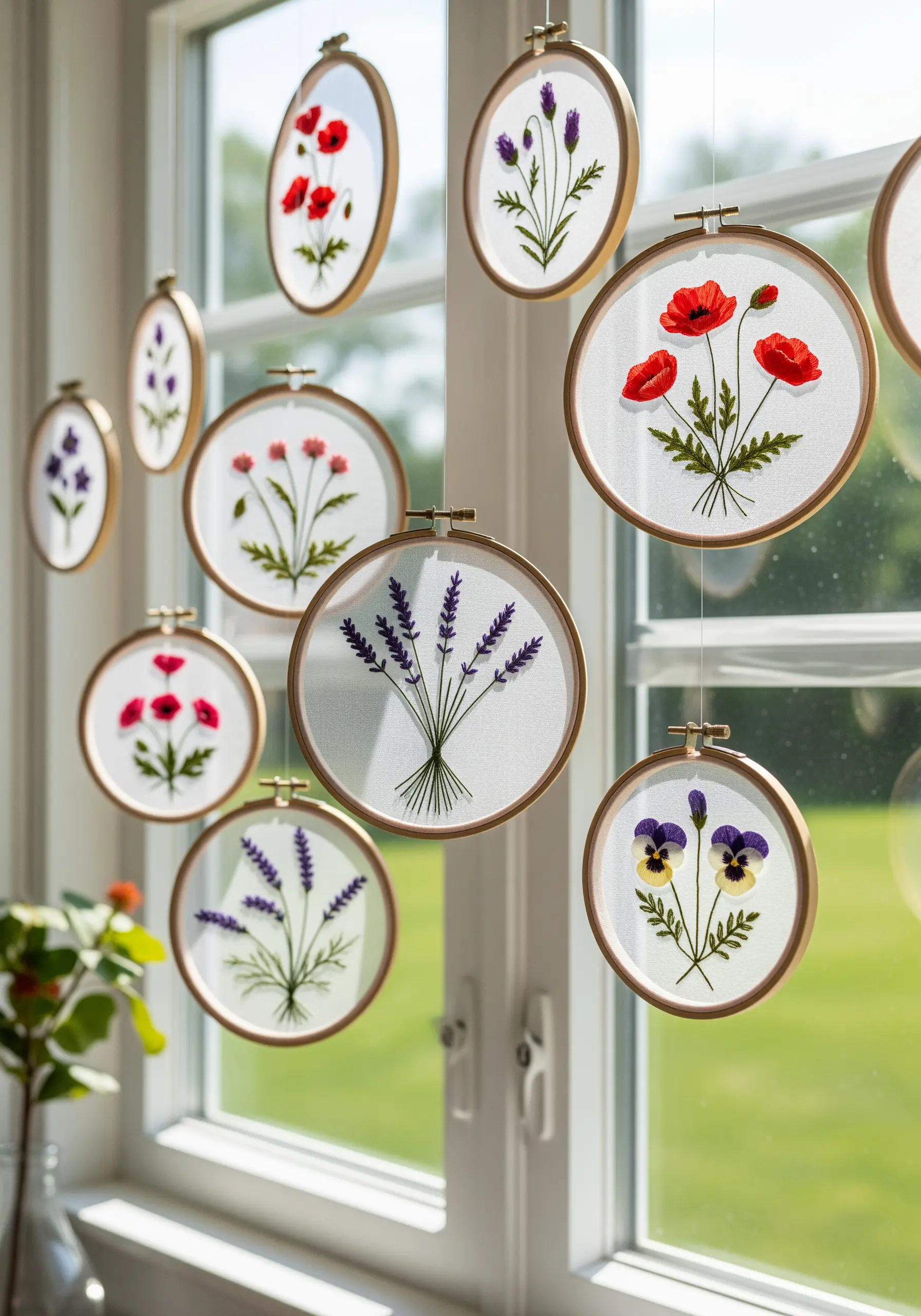
Create a modern, ethereal display by embroidering on a sheer fabric like tulle or organza stretched in a hoop.
This technique makes your stitches appear to float, giving a light, airy quality to delicate subjects like wildflowers and herbs.
Use just two or three strands of floss to keep the design from weighing down the delicate fabric, and stick to simple stitches like stem stitch, lazy daisies, and French knots.
When displayed in a window, the light filters through the fabric, highlighting the threadwork beautifully.
This is a fresh approach for a botanical garden sampler.
21. Mimic Russian Khokhloma Painting with Golden Threads
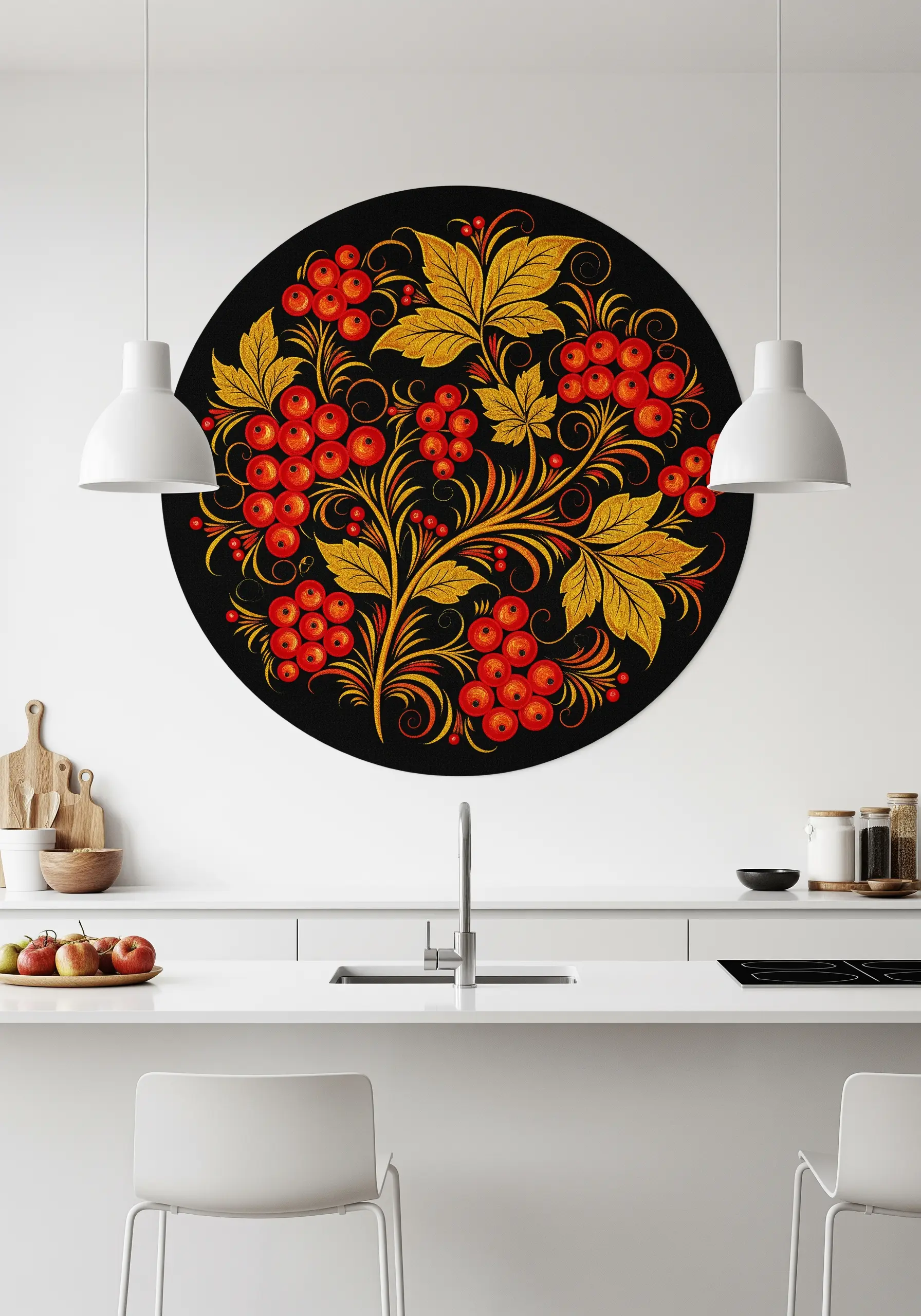
Capture the gilded, graphic look of Khokhloma wood painting by using lustrous gold threads against a black fabric background.
Combine the gold with vibrant red and subtle green to create the classic berries-and-leaves motifs.
Use a smooth, dense satin stitch for the berries and leaves to mimic the lacquered, painted surface. For the fine, swirling vines and accents, use a delicate backstitch or whipped backstitch to create clean, calligraphic lines.
This high-contrast, opulent style is a perfect way to create modern thread art projects that feel both traditional and luxurious.


