

Your bedroom is more than just a place to sleep—it’s a sanctuary. And the embroidery you create for it should feel just as personal and restorative. Often, the difference between a project you like and one you truly love lies in small, intentional details that elevate your work from a craft into an art form.
This isn’t about learning dozens of complicated new stitches. Instead, it’s about understanding how to use the stitches you already know with more precision and creativity. It’s about choosing the right thread weight to make a line feel delicate or bold, using texture to create depth, and embracing color to evoke a specific mood.
Here, you’ll find ideas designed to help you create pieces that are not just beautiful, but are also thoughtful expressions of your personal style. Let’s transform your bedroom into a space that feels stitched with intention, care, and a touch of modern artistry.
1. Create a Sculptural, Tone-on-Tone Headboard
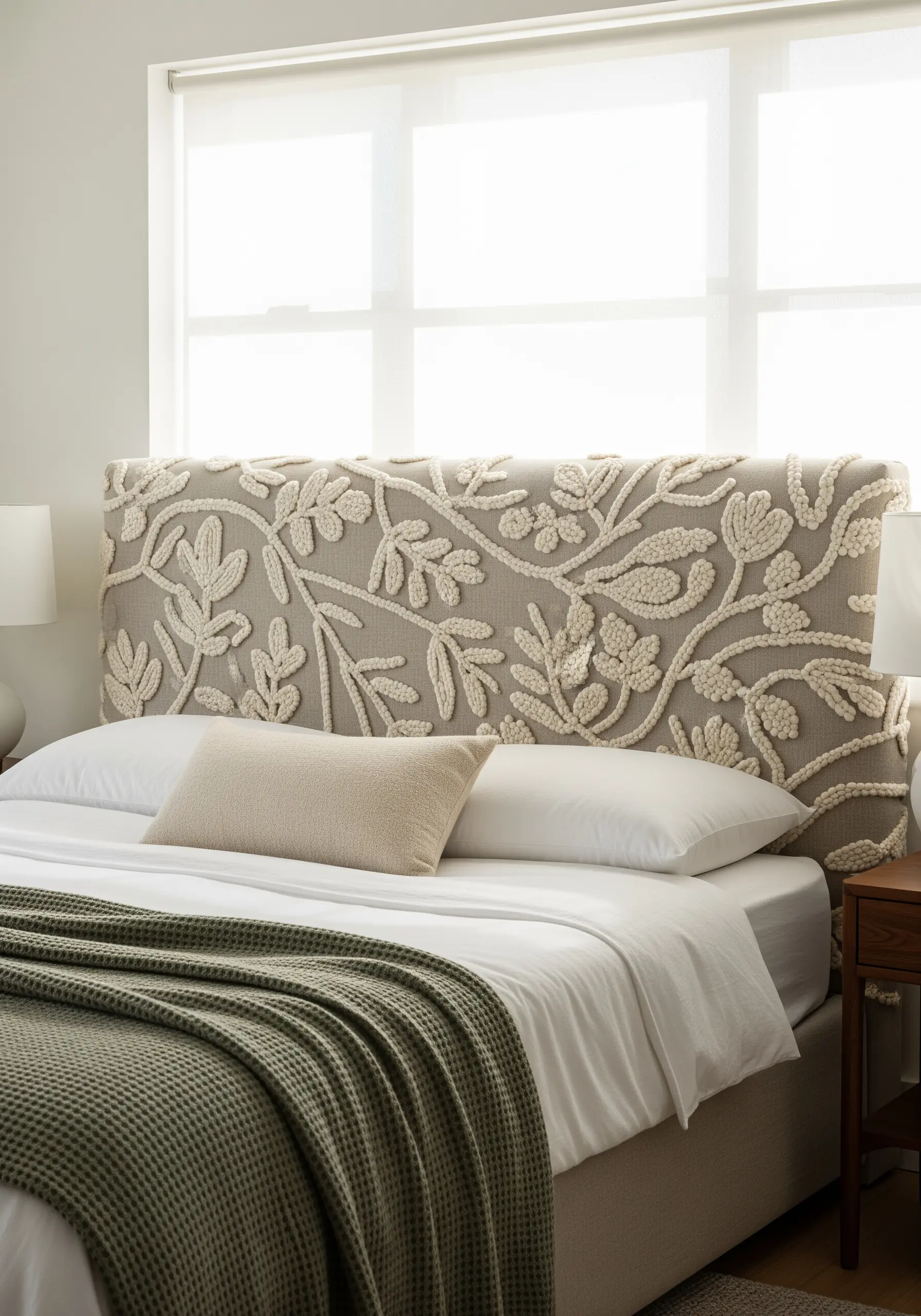
Transform a simple headboard into a tactile work of art using high-relief stitching.
Instead of standard floss, use a thick wool yarn or cotton cord, securing it to a sturdy linen or canvas base with a couching stitch.
This technique allows you to create bold, organic lines with incredible speed and texture.
By keeping the color palette monochromatic, you emphasize the sculptural shadows and forms, adding sophisticated depth to your bedroom without overwhelming it with color.
This approach gives you the impact of custom upholstery with the personal touch of hand embroidery.
2. Stitch a Bold, Celestial Wall Medallion
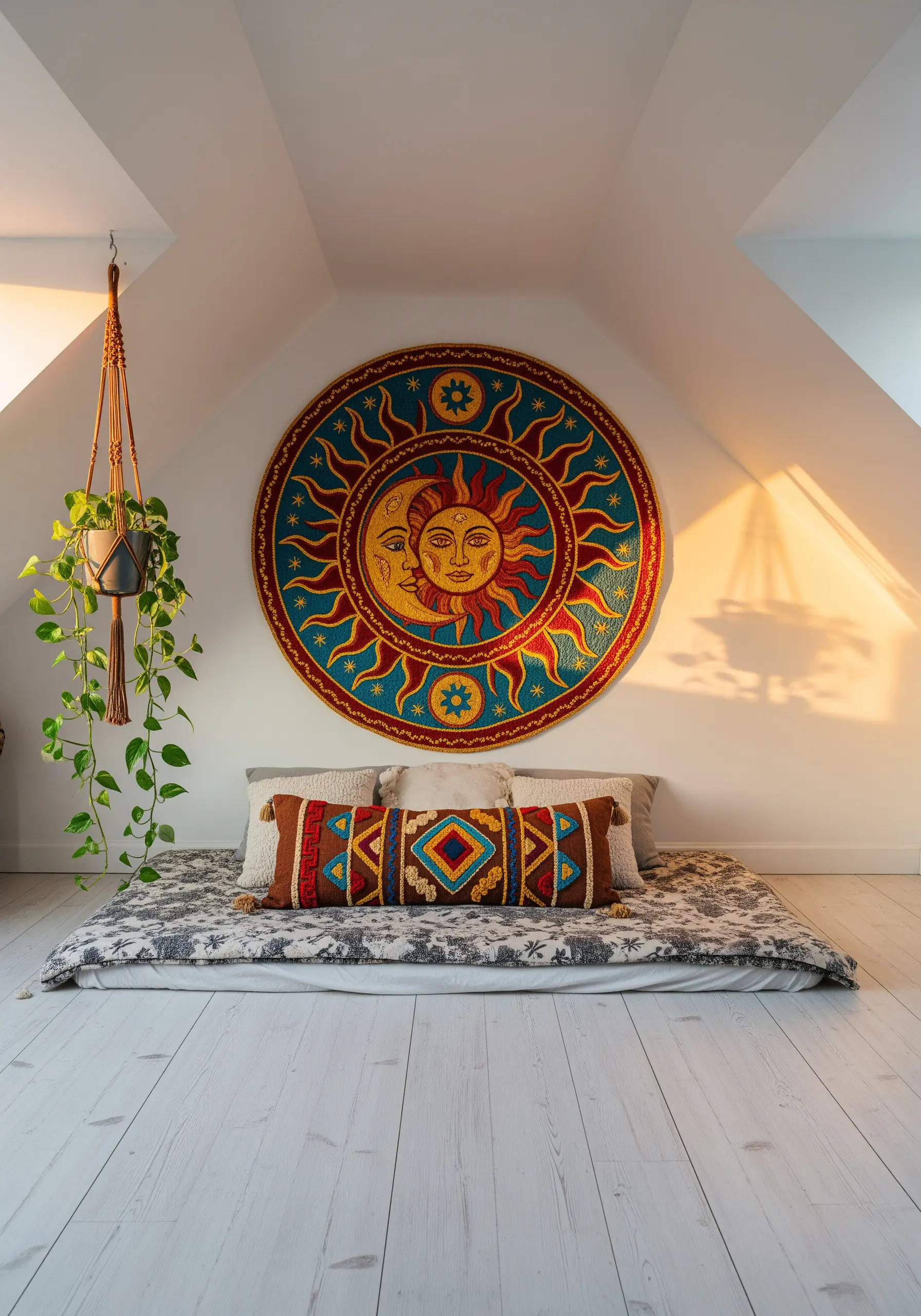
Move beyond the small hoop and create a large-scale focal point for your wall.
A dense chain stitch, worked in soft wool crewel thread, fills large areas with rich color and a beautiful matte texture.
To create a design this large, sketch your motif onto paper, then use a projector or a grid method to transfer it onto your fabric.
The power of this piece comes from the high-contrast color palette—warm golds and reds pop against the deep teal, creating a vibrant energy that draws the eye and defines the space.
This is your chance to make a statement that is both personal and powerful.
3. Master the Art of the Elegant Monogram
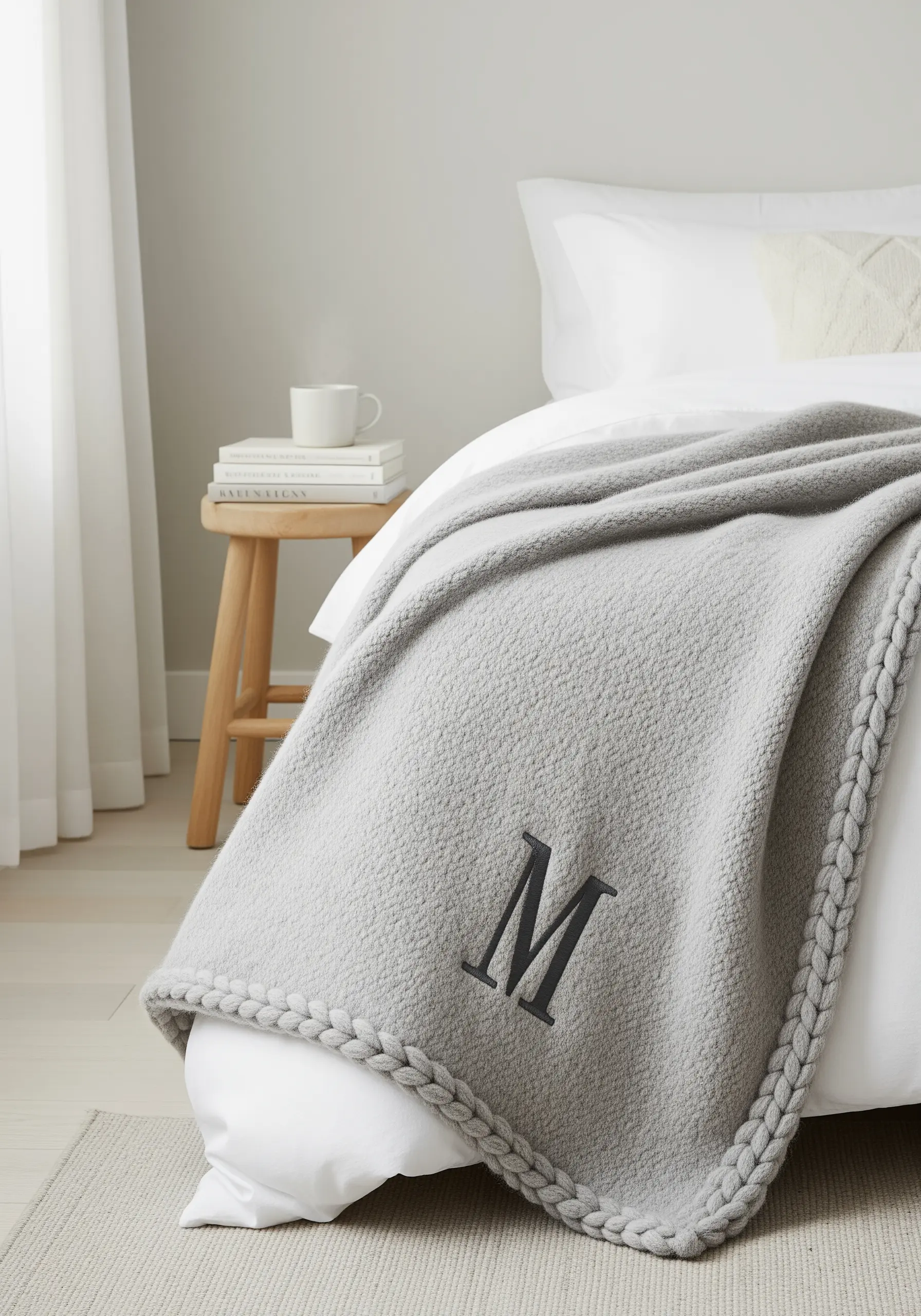
A perfectly executed monogram can turn a simple blanket into a bespoke heirloom.
The secret to achieving crisp, clean satin stitches on a textured or knit fabric is to use a water-soluble stabilizer on top.
This creates a smooth surface for your needle, preventing the stitches from sinking into the weave and ensuring sharp, defined edges.
Use a fine, sharp needle and a classic contrasting thread color for a timeless look that speaks of quiet luxury.
It’s a subtle detail that elevates the entire piece.
4. Embroider Botanical Silhouettes on Sheer Curtains

Stitching on sheer fabric creates a magical effect, making your embroidery appear to float in the light.
The key is to use a light touch: work with only two or three strands of floss and a fine needle to avoid puckering the delicate material.
Choose an open, linear design and use a simple backstitch or stem stitch for clean, elegant lines.
This technique allows daylight to filter through your work, casting beautiful botanical shadows and adding a layer of subtle, organic artistry to your windows.
You can find more ideas for climbing plant stitch designs to inspire your project.
5. Add Celestial Glamour with Metallic Thread
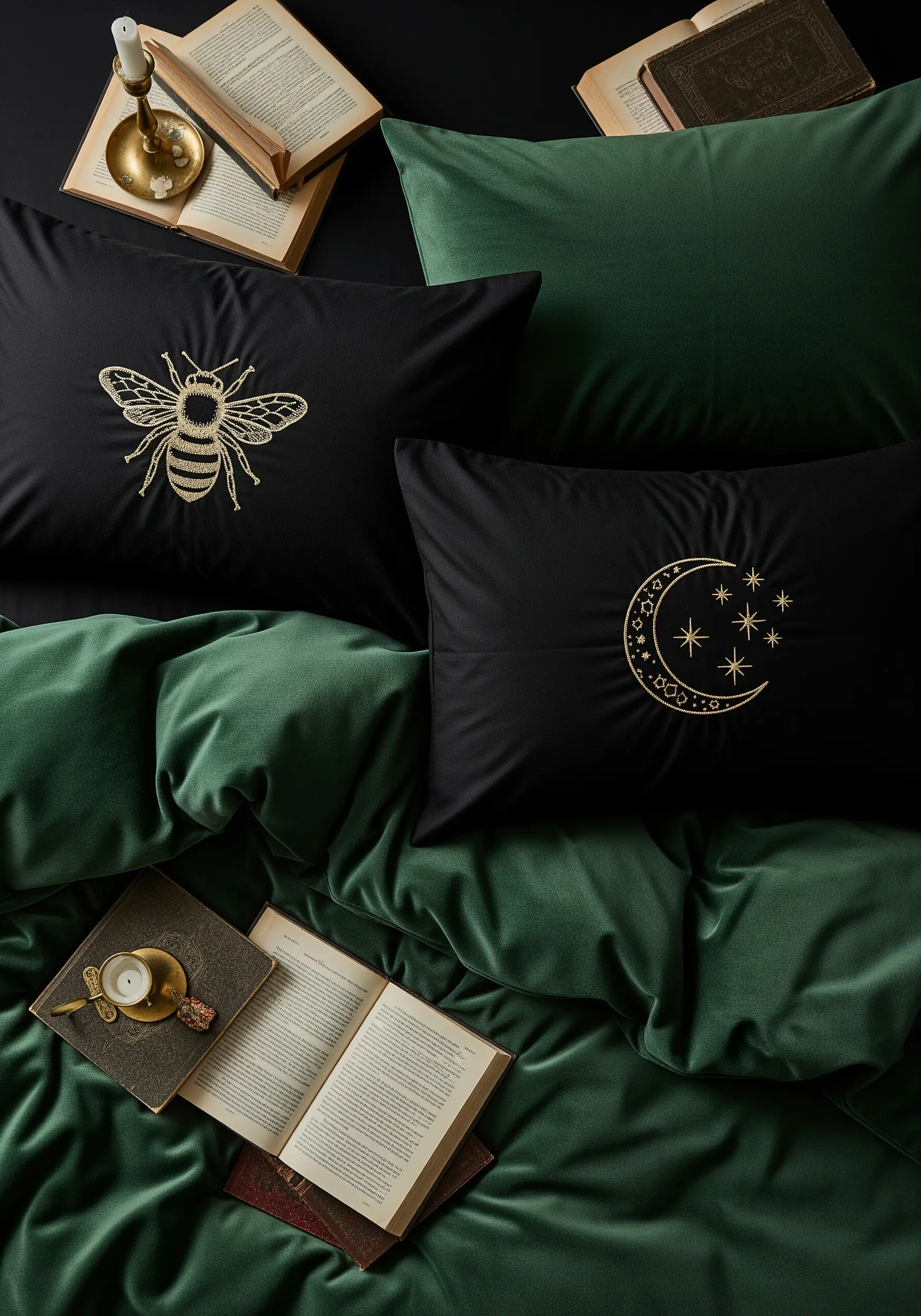
Elevate simple black pillowcases into something celestial with the shimmer of metallic thread.
Working with metallics requires a little extra care: use a needle with a larger eye and work with shorter thread lengths (around 12 inches) to prevent snagging and fraying.
A simple outline stitch is all you need, as the thread’s high shine provides all the impact.
Designs like bees, moons, and constellations create a beautiful contrast against dark fabric, adding a touch of sophisticated magic to your bedding.
6. Curate a Personal Embroidery Hoop Gallery Wall
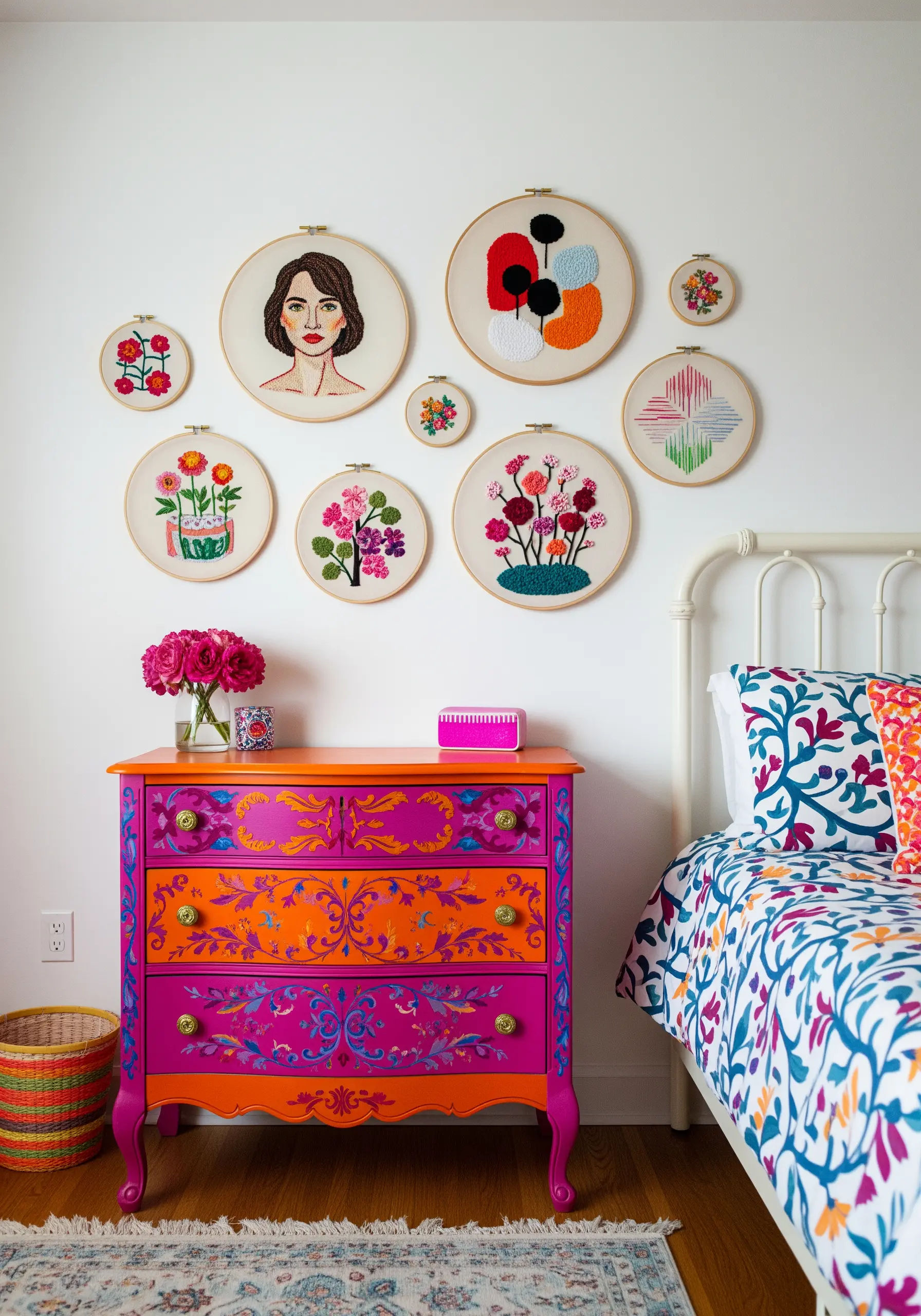
Your collection of finished hoops can become a stunning feature wall with thoughtful curation.
The secret to a cohesive look isn’t matching, but balance.
Combine different hoop sizes, and choose a unifying element—a recurring color, a shared theme like florals, or a similar stitch texture.
Before you commit to nails, arrange the hoops on the floor to find a composition that feels dynamic and personal.
This turns individual projects into a collective story, making your wall a true reflection of your creativity.
7. Create a Dynamic Wave Pattern Bed Runner
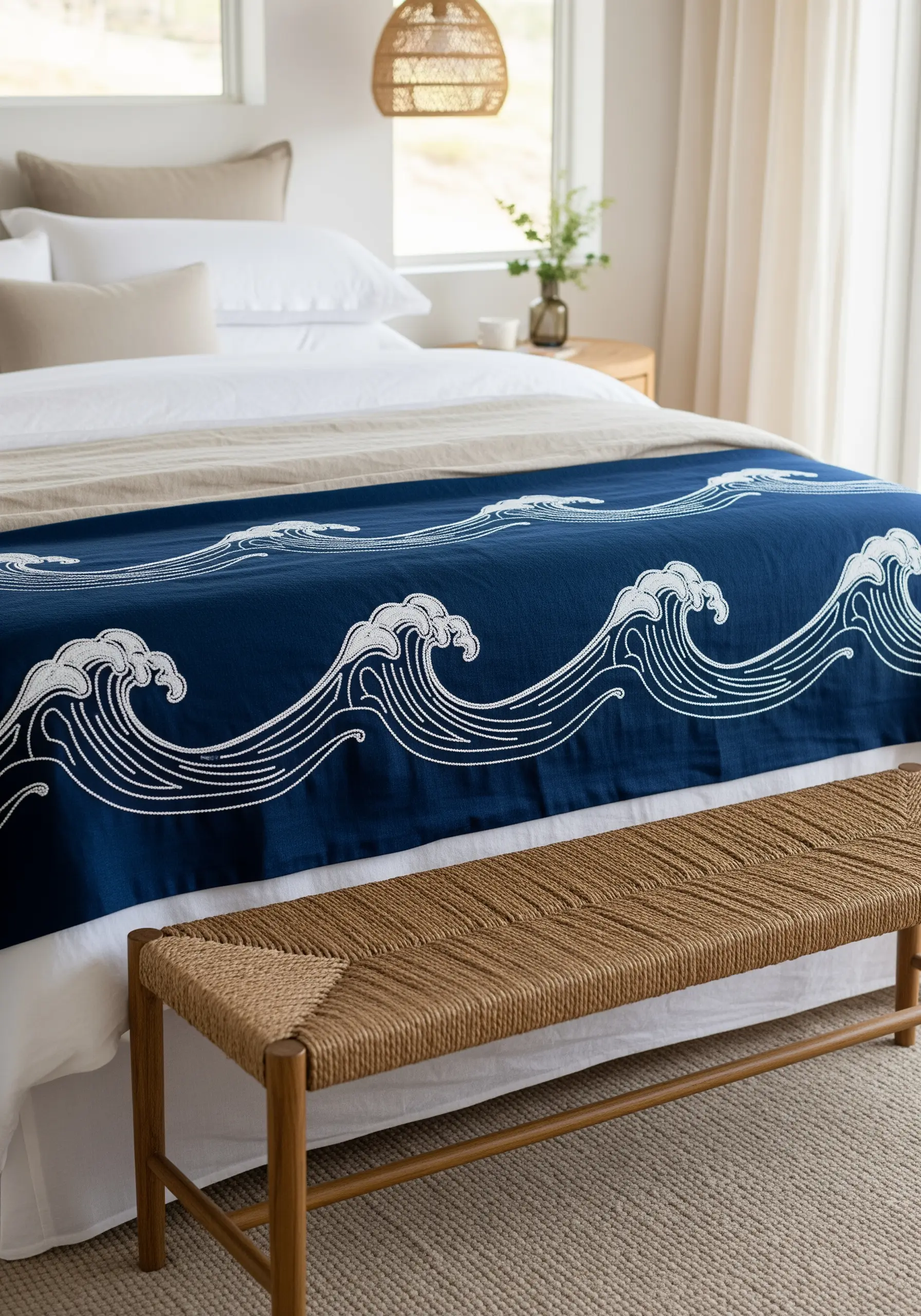
Capture the movement of the sea with a bold, graphic pattern on a bed runner.
For perfectly smooth and continuous lines, use a whipped backstitch—it creates a seamless, rope-like effect with no gaps.
On a large-scale project, maintaining even tension is crucial, so consider using a scroll frame instead of a hoop to avoid marking the fabric.
The stark contrast of white thread on a deep indigo base gives this design a clean, modern, and coastal-inspired energy.
8. Add Art Deco Glamour with a Radiating Stitch Pattern
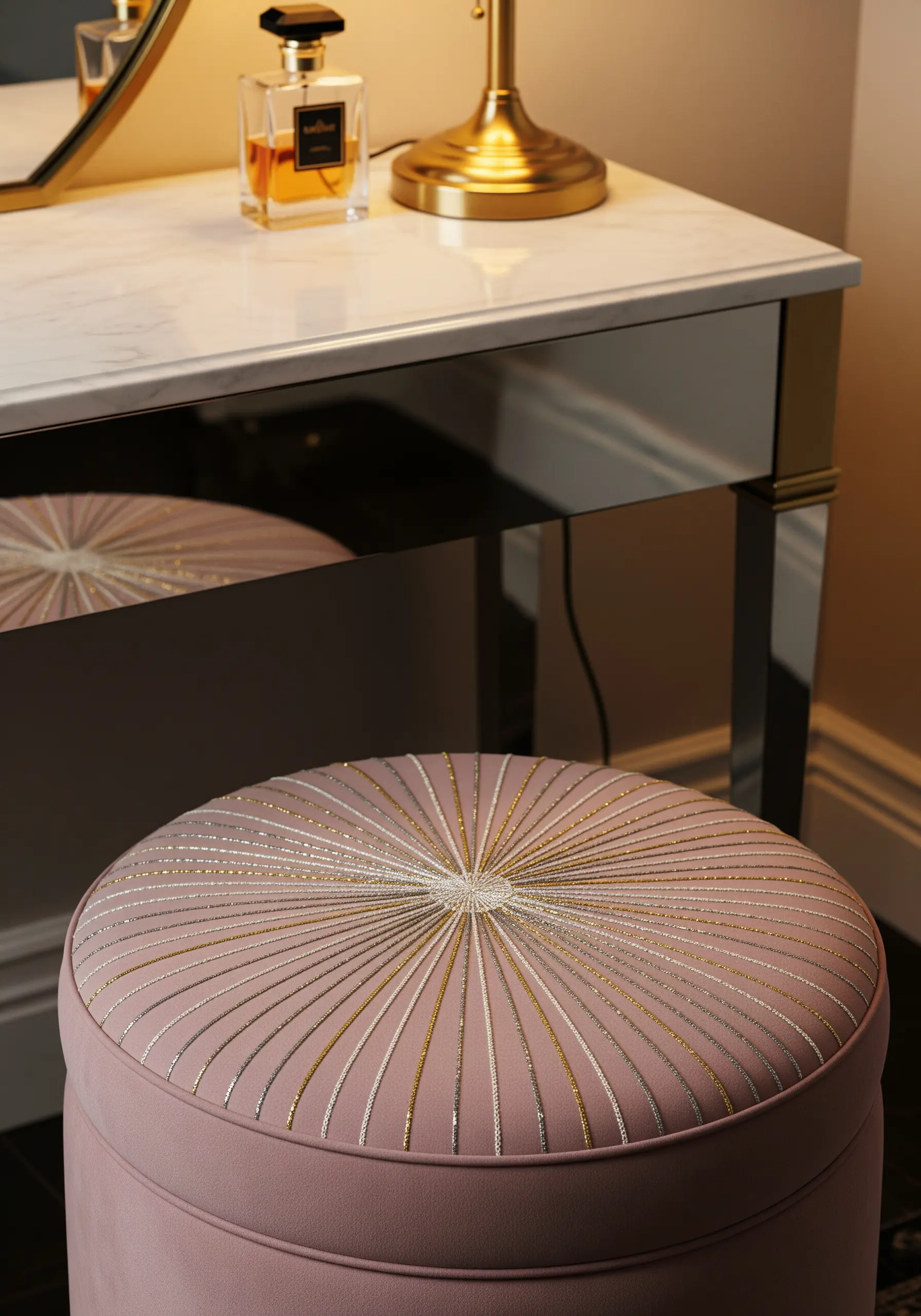
Transform a simple vanity stool into a piece of art with a precise, geometric sunburst.
Use a ruler and a removable fabric marker to draw your guidelines from a central point, ensuring perfect symmetry.
Create texture and light by alternating stitches: use a simple backstitch in a matte thread, then another in a shiny metallic, and another embellished with tiny seed beads.
This interplay of matte, shine, and sparkle gives the design a sophisticated, multi-dimensional quality reminiscent of Art Deco glamour.
9. Create a Minimalist Constellation Wall Tapestry
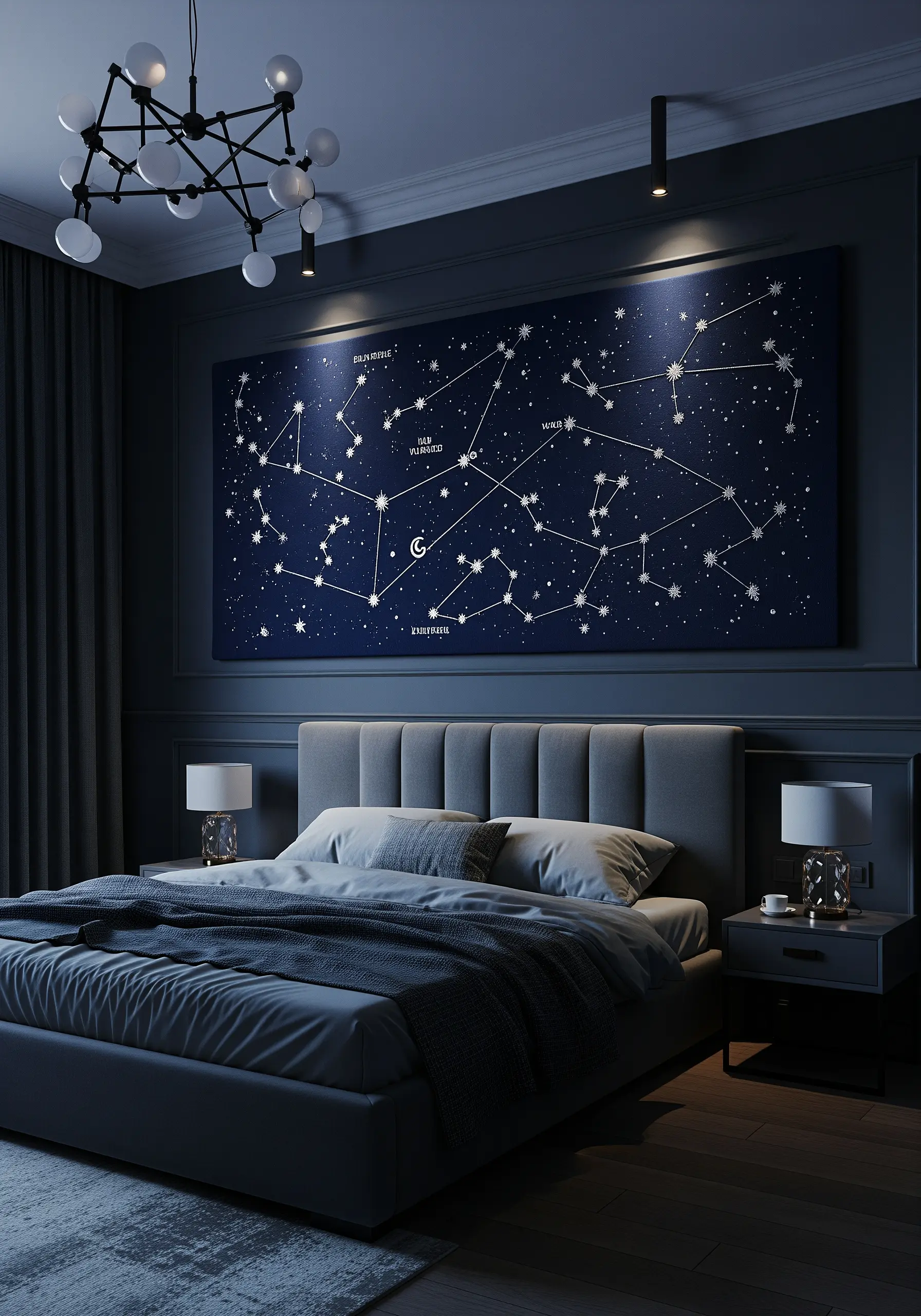
This dramatic project demonstrates that the simplest stitches can have the greatest impact.
On a large, dark canvas, use a crisp white or silver thread to map out the night sky.
Vary the size of your French knots by using one, two, or three wraps of the thread around your needle to represent stars of different brightness.
Connect them with a clean backstitch. The power of this piece lies in its grand scale and high contrast, turning a simple stitch combination into an immersive piece of modern art perfect for a quietly magical bedroom.
10. Stitch a Wildflower Meadow on a Lumbar Pillow
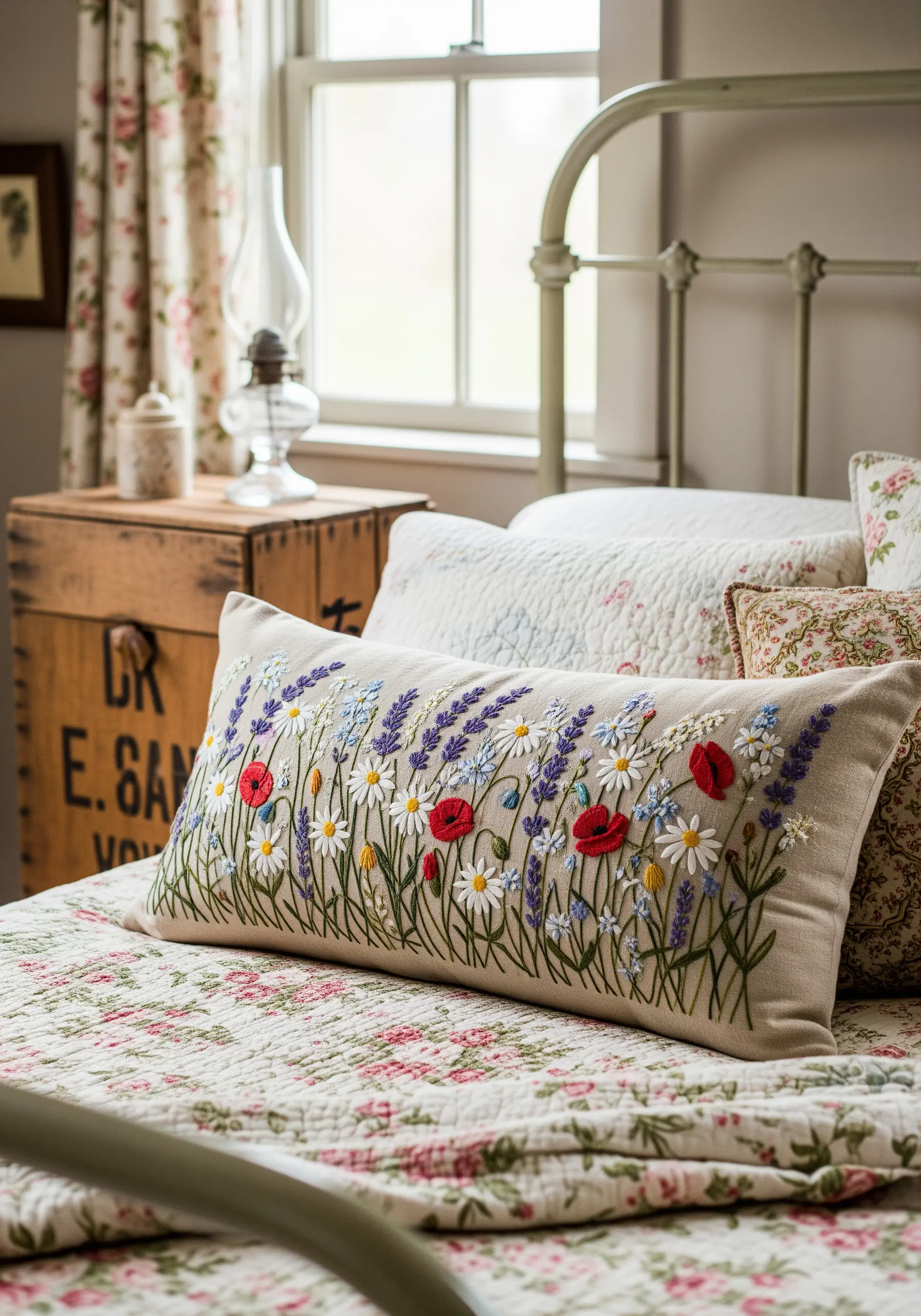
To create a lush, dimensional meadow, think like a painter and build your design in layers.
Use a variety of stitches to mimic nature’s textures: long-and-short stitch for soft petals, French knots for dense flower centers, and detached chain stitches for delicate buds.
Vary your thread weight by using more strands for foreground elements to make them advance visually, and fewer strands for background details to make them recede.
This layering of stitch, texture, and weight is what transforms a simple floral pattern into a vibrant, living wildflower meadow.
11. Illuminate Your Stitches on a Lampshade
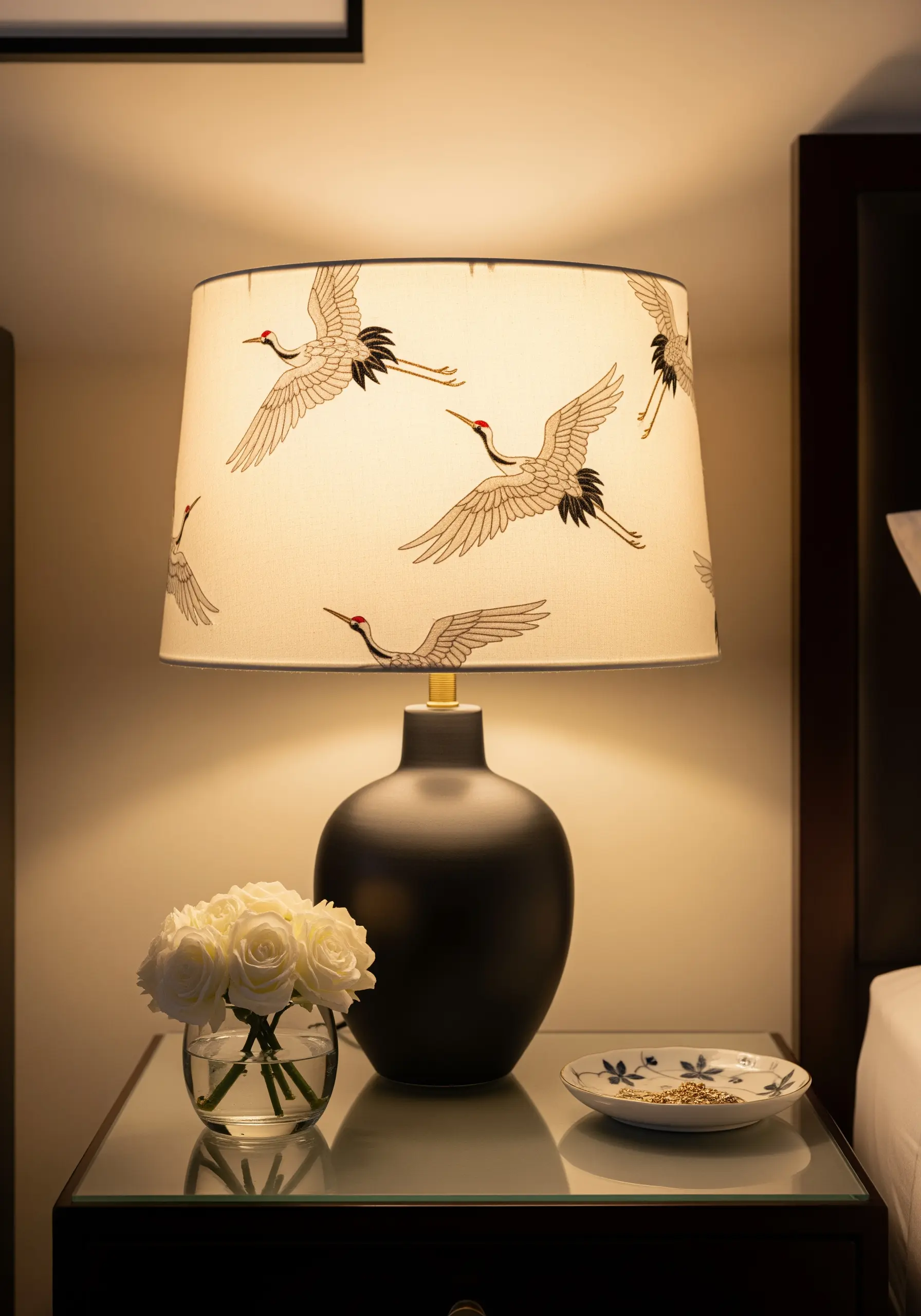
Embroidering a lampshade allows your stitchwork to literally glow.
The easiest method is to work your design on a flat piece of fabric first, which allows you to use a hoop for perfect tension, and then construct the shade using a self-adhesive panel kit.
Because the light will shine through your work, every stitch is visible, so choose a clean, graphic motif with elegant outlines.
A simple stem stitch or split stitch is perfect for capturing the graceful lines of a crane motif, turning a functional object into an illuminated piece of art.
12. Master Minimalist Botanical Line Art
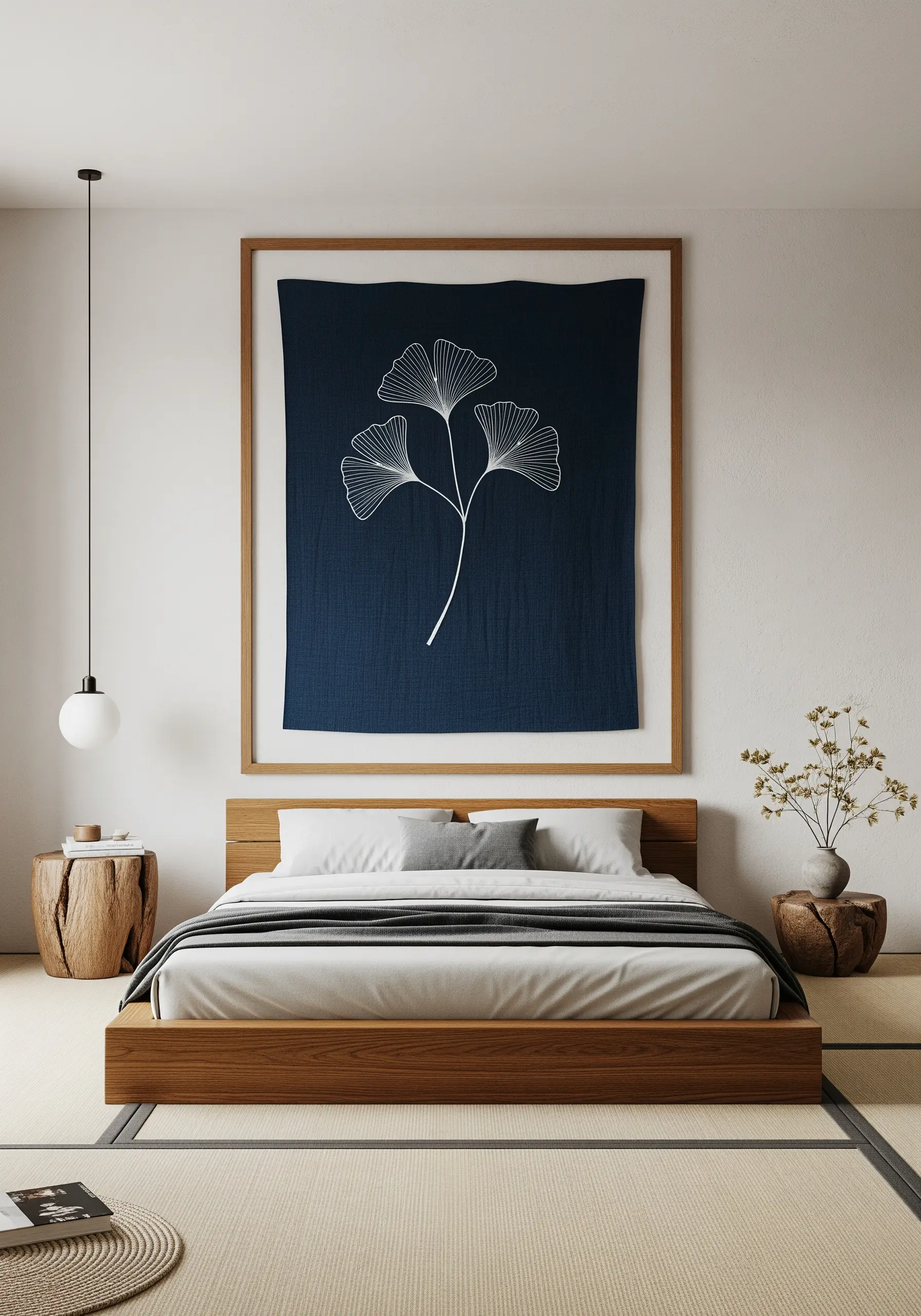
This style of embroidery celebrates the beauty of what is left unstitched.
The impact comes from the elegant silhouette of the motif and the clean, uninterrupted quality of the line.
Use a smooth stitch, such as a whipped backstitch, to create a flawless, solid line without any gaps.
The negative space around your design is just as important as the stitching itself, so choose a simple botanical shape and give it ample room to breathe on the fabric.
This is the essence of quiet luxury—restrained, intentional, and deeply serene.
13. Embrace Maximalism with Bold, Saturated Stitching
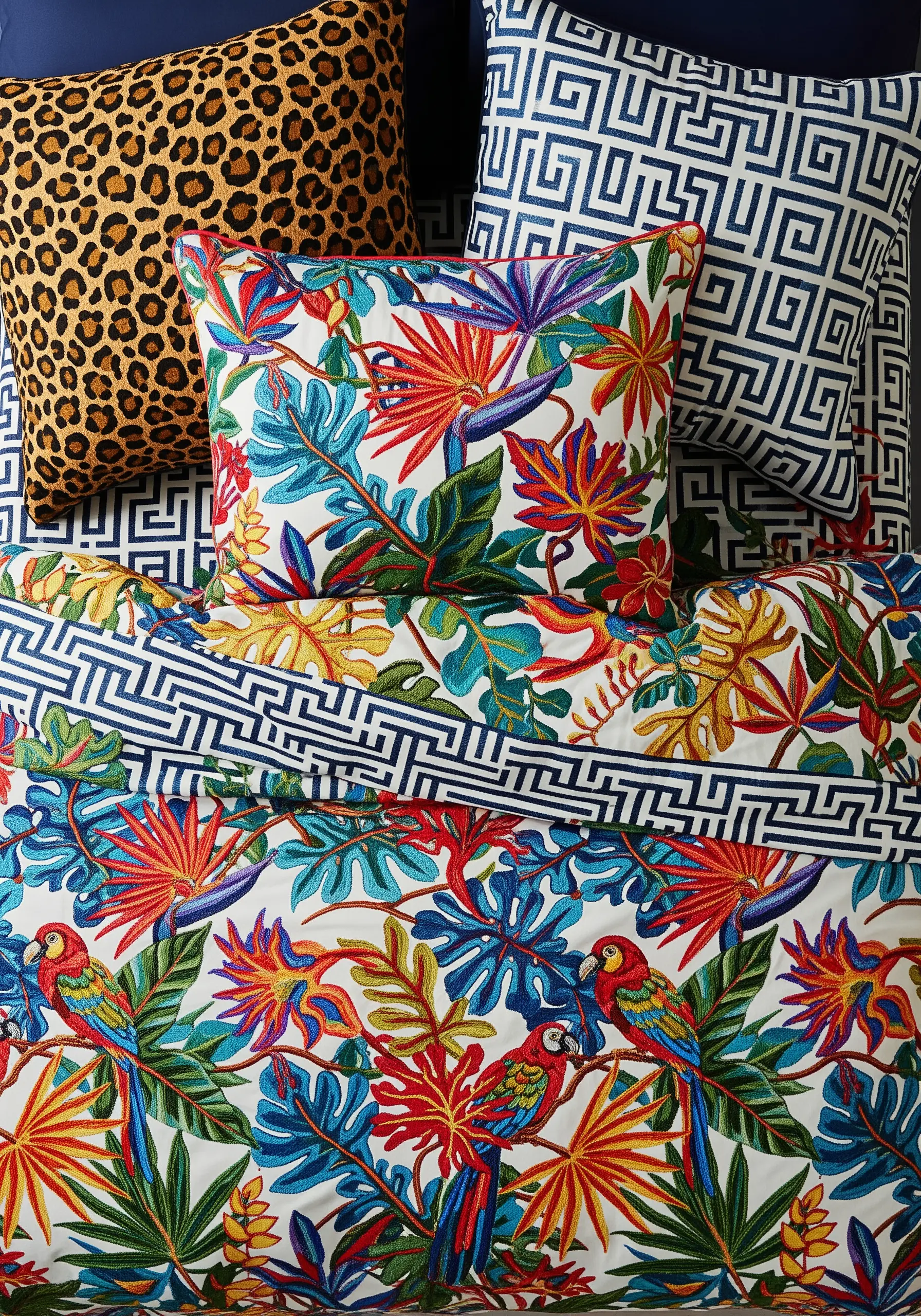
Create a vibrant, high-energy bedroom by embracing fearless color and pattern.
Use a dense, perfectly laid satin stitch to create solid blocks of lustrous color that catch the light and make your motifs pop.
When mixing embroidered patterns, find a common thread to create harmony—in this case, a shared jewel-tone palette and a tropical theme unite the disparate designs.
The key is to fill the space with confident, unapologetic color and texture, from the leopard print to the brilliant parrot.
14. Embellish Rope Baskets with Geometric Stitches
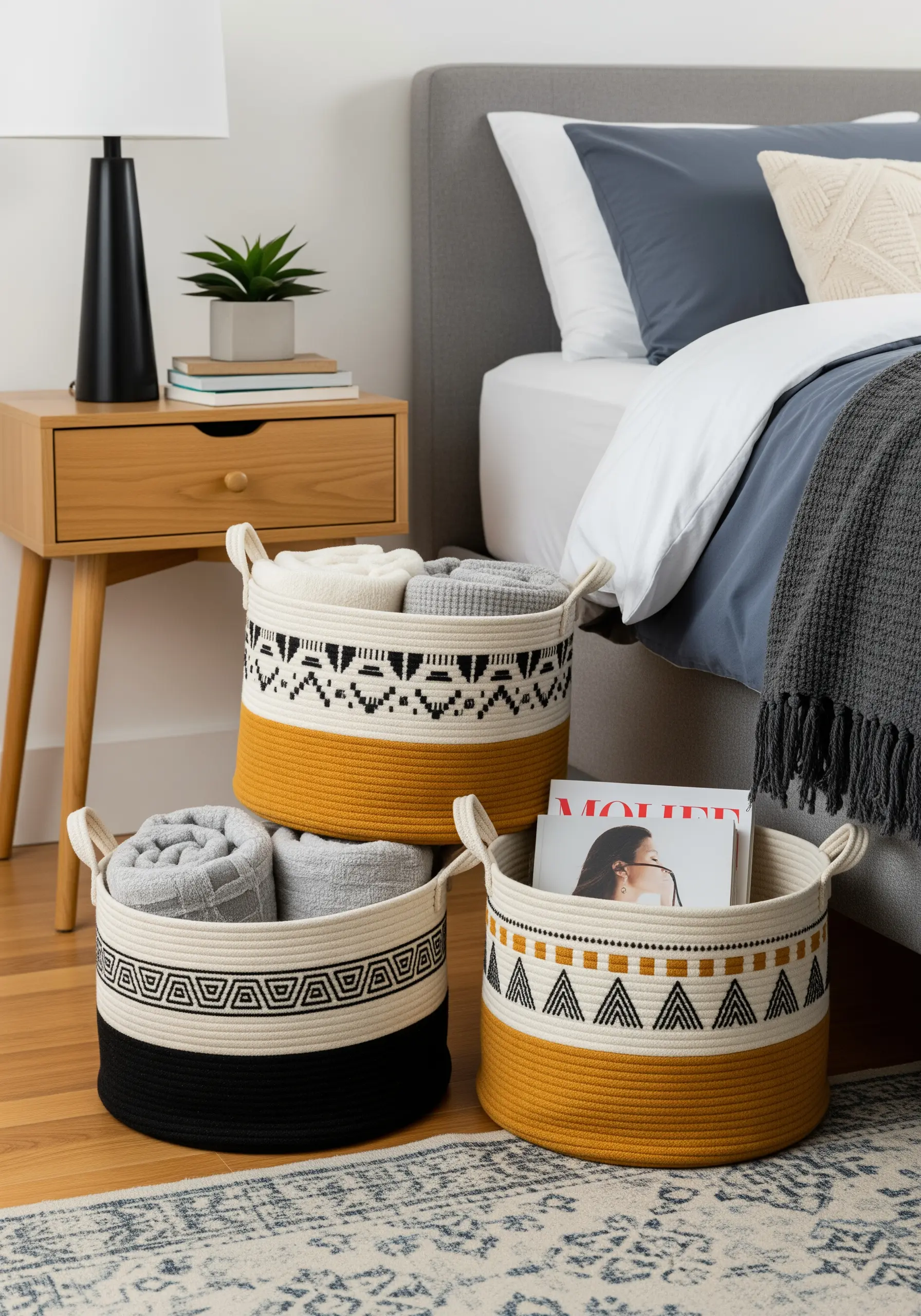
Add a bespoke touch to practical storage by embroidering directly onto coiled rope baskets.
You won’t need a sharp needle; instead, use a blunt tapestry needle or a curved upholstery needle to easily pass yarn through the rope coils.
Plan your geometric pattern with pins or a removable marker before you begin.
Simple stitches like running stitch or cross stitch, worked in a high-contrast yarn, are all you need to transform a functional object into a piece of decorative, handmade decor.
15. Create a Dreamy, Embellished Bed Canopy

Weave a little magic into your bedroom by embroidering a sheer canopy with light-catching details.
Stitch onto delicate tulle or organza using a fine beading needle and thread.
Instead of a dense motif, scatter tiny seed beads, sequins, and silver bugle beads across the fabric like constellations or falling snow.
This maintains the canopy’s airy, ethereal quality while adding a subtle, shimmering sparkle as it catches the light, perfect for a fairy-core aesthetic.
16. Stitch Jeweled Pomegranates on Velvet
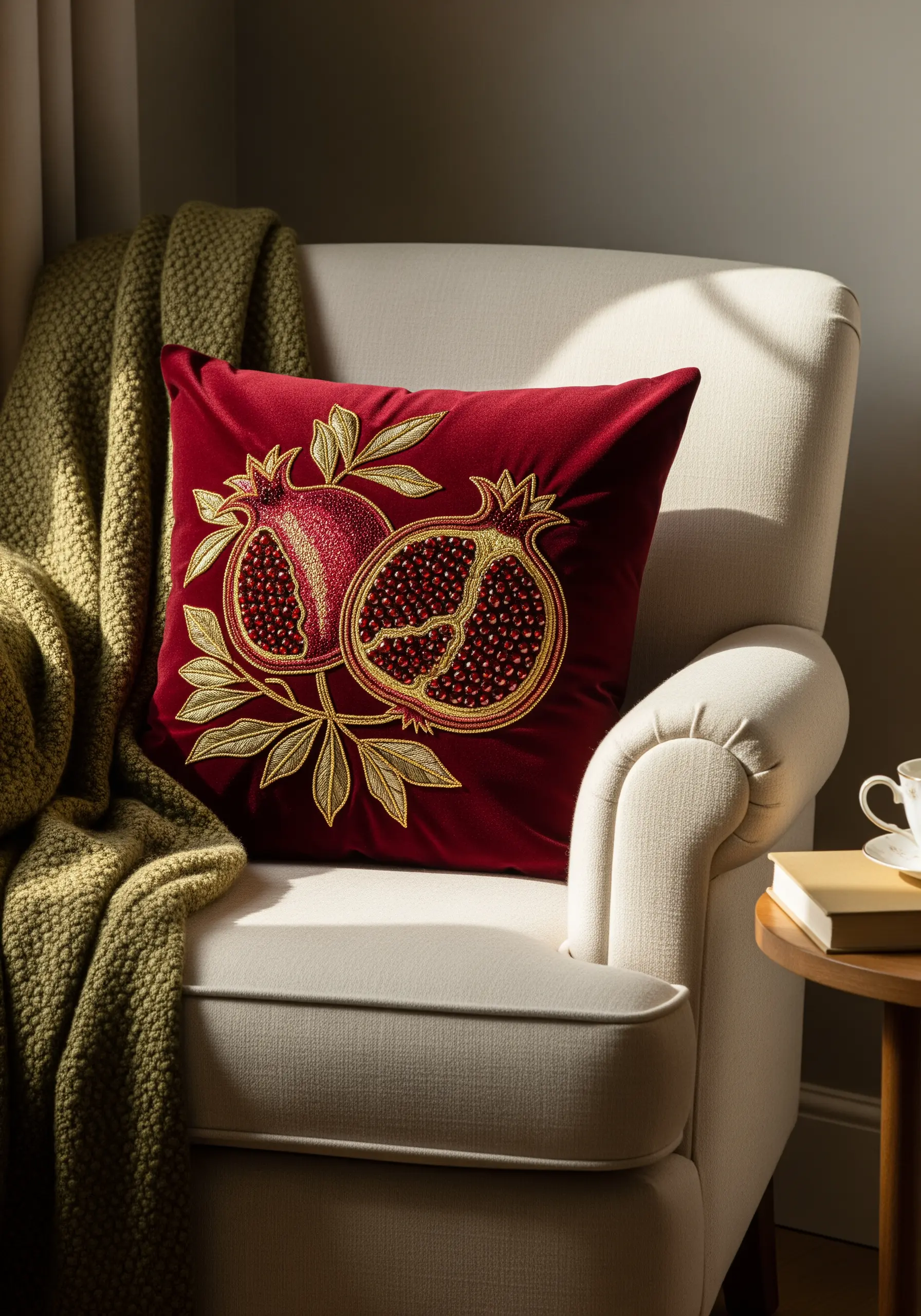
Combine beading and floss to create decadent texture on a plush velvet cushion.
To protect the fabric’s pile, always wrap the inner ring of your hoop with cotton twill tape.
Use tiny red seed beads to form the pomegranate seeds, giving them a glistening, three-dimensional quality.
Contrast this intricate beadwork with smooth, elegant satin stitches in a gold metallic thread for the leaves.
The combination of plush velvet, sparkling beads, and shimmering thread creates a rich, tactile experience that feels truly luxurious.
17. Design a Sculptural Punch Needle Pillow
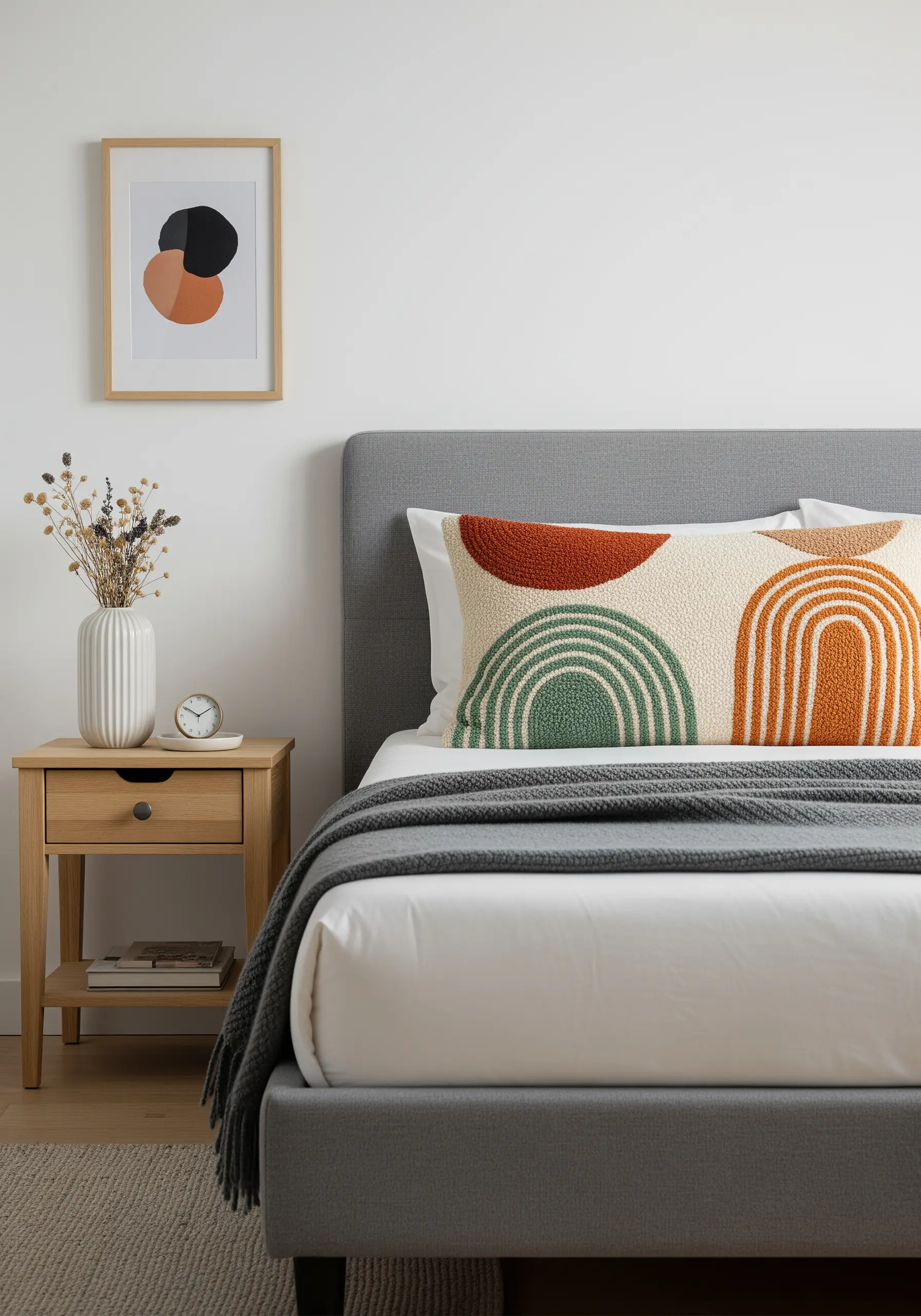
Punch needle is the perfect technique for creating plush, modern textiles with incredible speed and texture.
You can create a dynamic, sculptural surface by using a punch needle with an adjustable depth gauge to vary your loop heights.
Combine chunky yarn for the broad, filled shapes with a finer wool for the outlines to introduce a subtle contrast in texture.
The resulting abstract design is a piece that invites touch, adding a layer of cozy, tactile art to your bed.
18. Create a Botanical Triptych Room Screen
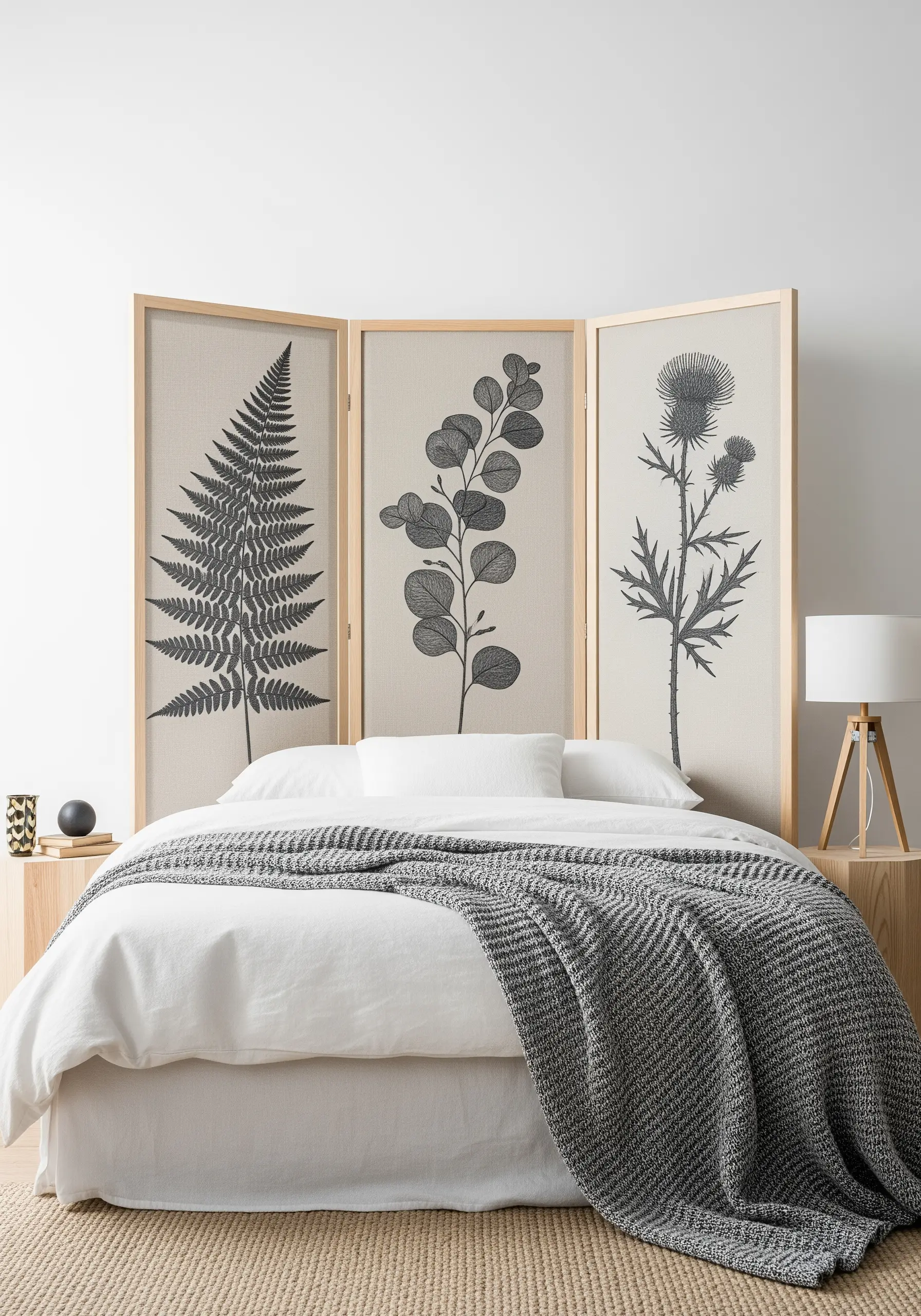
Elevate your embroidery from simple decor to functional art by creating a set of statement panels for a room screen.
To ensure the triptych feels cohesive, use the same neutral linen fabric and black thread for each panel.
Select related but distinct botanical motifs, like different plants you might find on a country walk.
A simple backstitch is all that’s needed to render these graphic silhouettes; their power comes from their impressive scale and their presentation as a unified, architectural element.
It’s like creating your own garden story in triptych form.
19. Add an Heirloom Floral Border to Your Linens
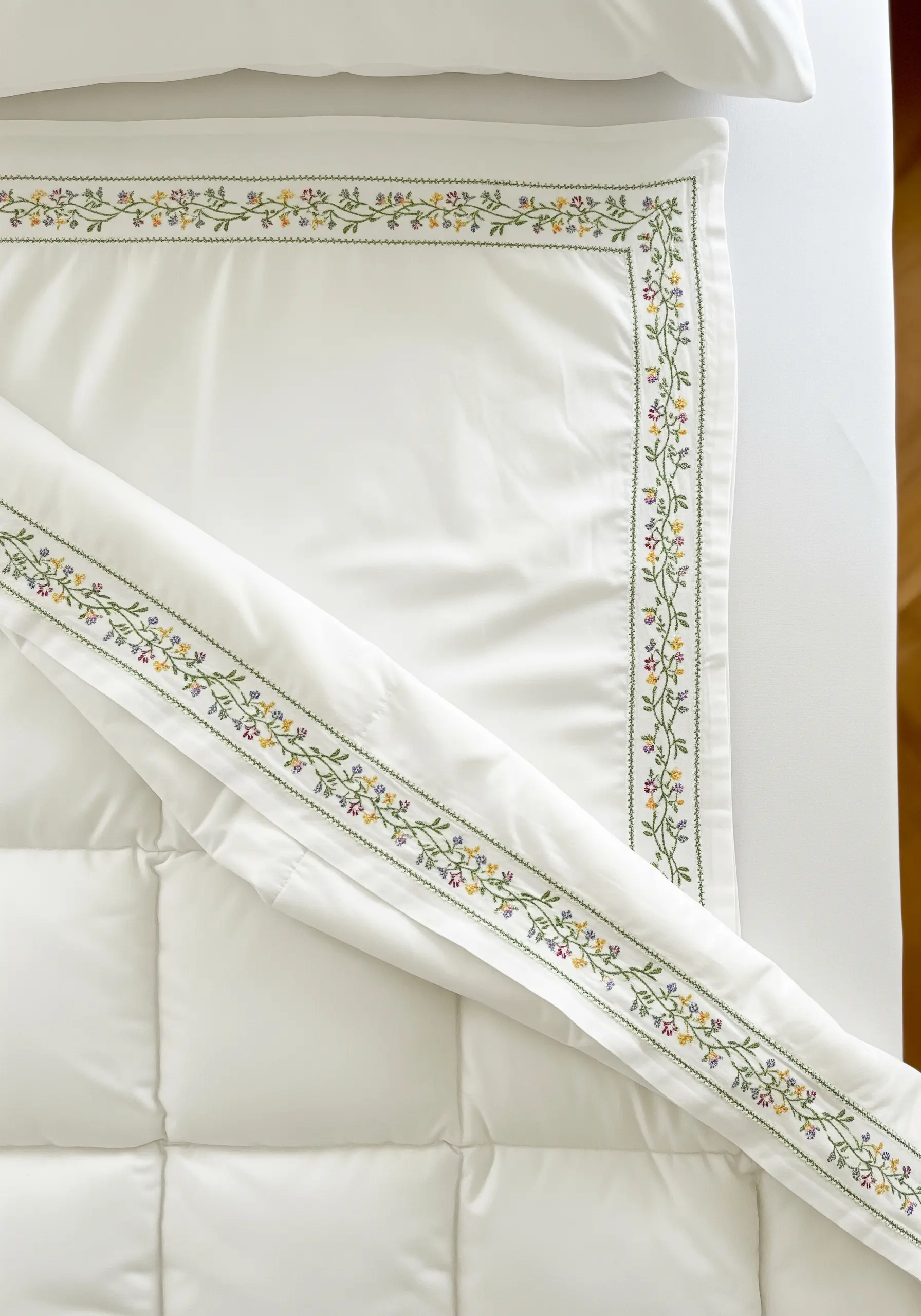
The secret to creating a refined, heirloom-quality floral border is to work on a miniature scale.
Use just a single strand of floss and keep your stitches tiny and precise: small detached chain stitches for leaves, miniature French knots for flower buds, and tiny satin stitches for petals.
Working on a smooth, high-thread-count cotton provides a stable foundation for this intricate work.
This delicate approach is what separates a simple embellishment from a timeless piece of artistry.
20. Stitch a Whimsical Skyline on a Roller Blind
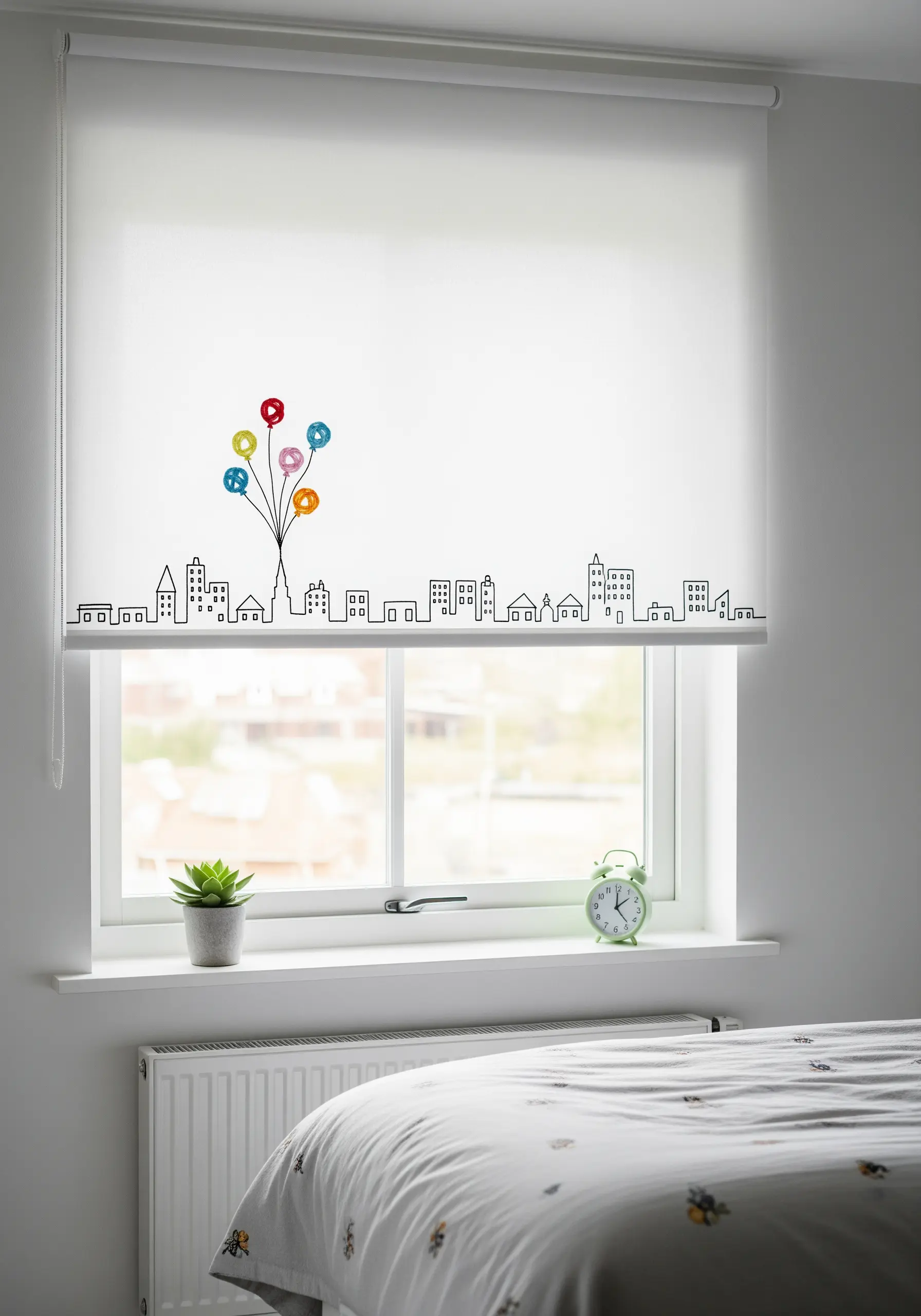
A simple roller blind can become a canvas for playful, minimalist art.
You will need a heavy-duty needle and a thimble to stitch comfortably through the sturdy blind material.
Use a single, continuous backstitch in black thread to create a clean, graphic skyline that stands out against the white backdrop.
Add small pops of color with tiny, circular satin stitches for the balloons, transforming a purely functional object into a piece of charming decor for your bedroom view.
21. Weave an Abstract Landscape with Thread
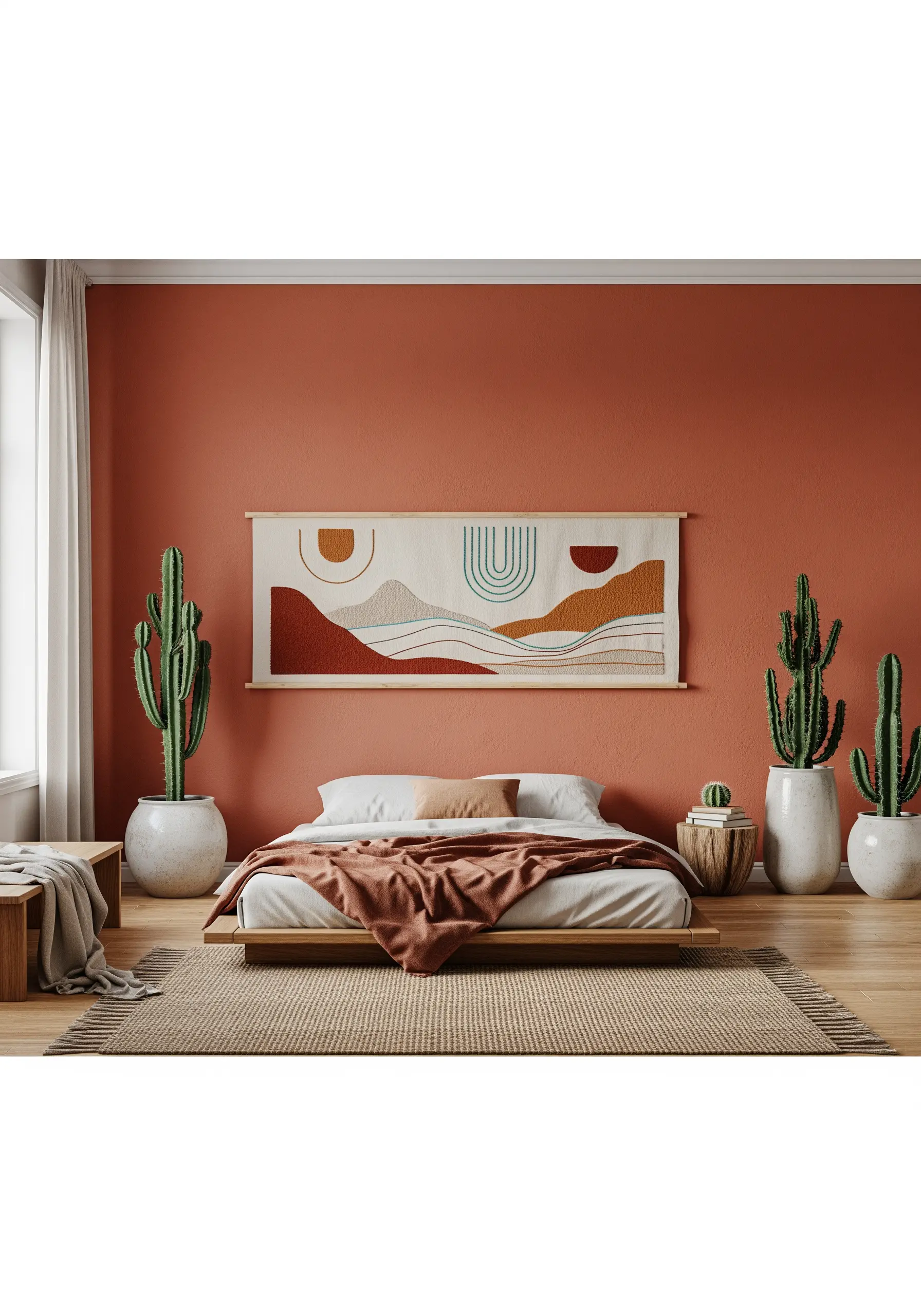
Create a stunning, abstract textile wall art piece by thinking in layers of color and texture.
Use different fill stitches to mimic natural forms: smooth satin stitch for calm water, long-and-short stitch for rolling hills, and dense French knots for rugged terrain.
Enhance the tactile quality by incorporating a variety of thread types, such as matte cotton, silky rayon, and nubby wool.
This combination of stitch and material is what gives your embroidered landscape a rich, layered, and evocative depth.
22. Embroider a Statement Upholstered Bench
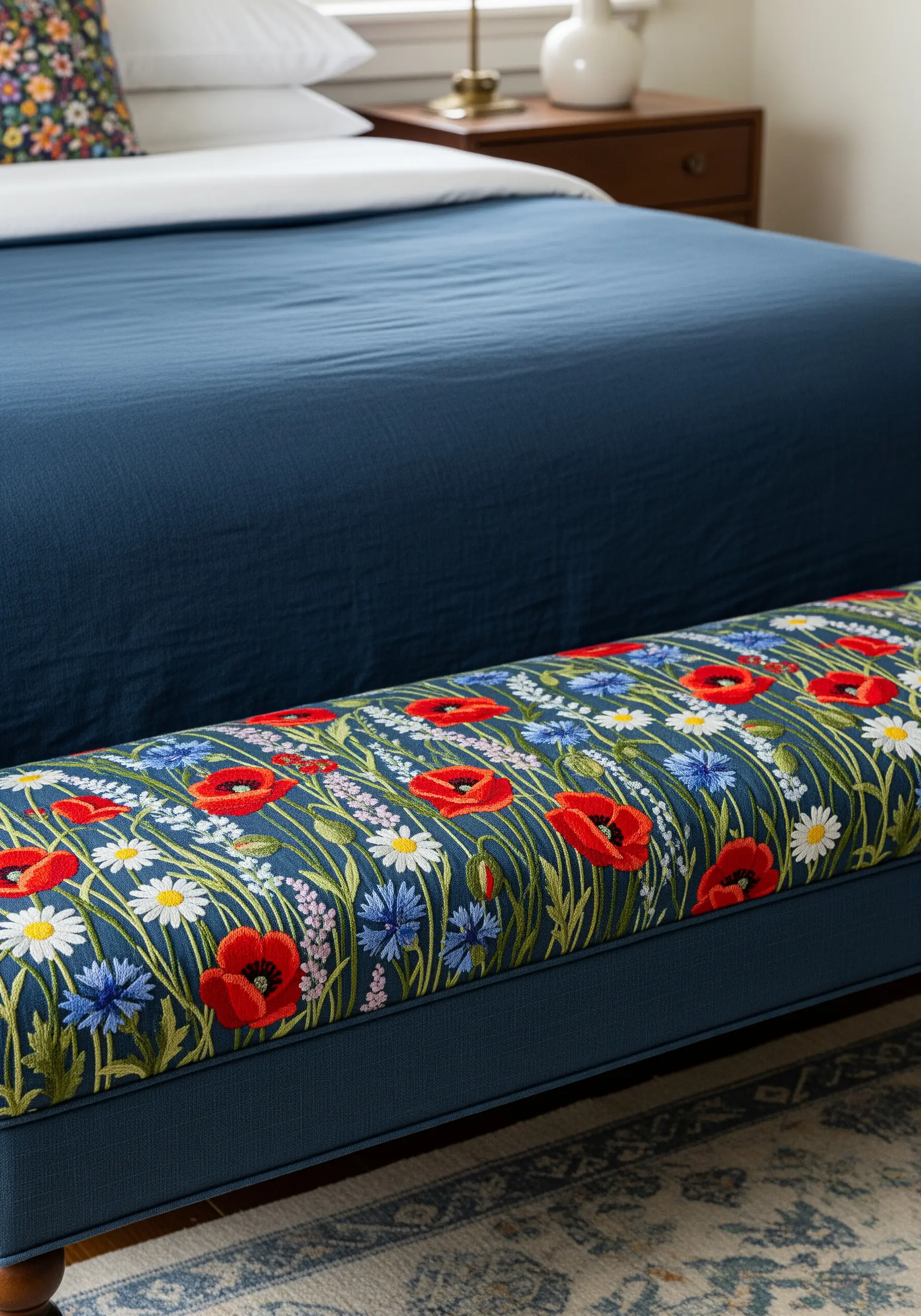
To create an embroidered fabric panel strong enough for upholstery, density and durability are essential.
Work your design on a heavy-duty base fabric like cotton canvas or upholstery-grade linen.
Use a dense long-and-short stitch, also known as thread painting, to completely cover the fabric, creating a durable surface that resembles a fine tapestry.
Once your embroidered masterpiece is complete, you can have it professionally upholstered, turning your needlework into a functional and breathtaking piece of furniture.
23. Capture Realistic Texture with Thread Painting
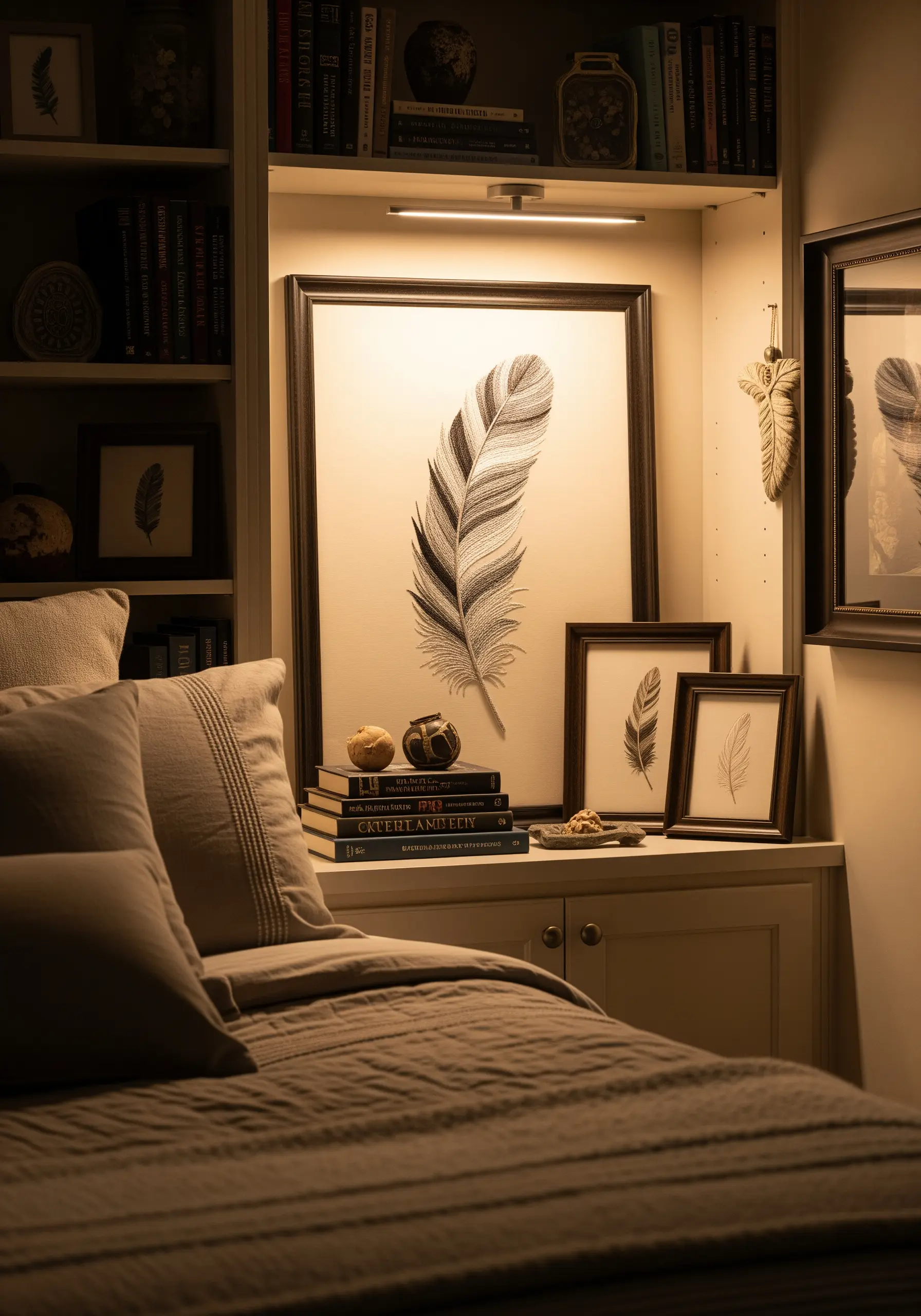
Thread painting is the art of using a single strand of floss as if it were a brushstroke, allowing you to build up photorealistic detail.
To create the soft texture of a feather, use a long-and-short stitch, blending dozens of closely related shades of thread.
Always stitch in the direction of natural growth to enhance the realism.
It is these subtle, meticulously blended color shifts that create the illusion of light, shadow, and depth, making this technique perfect for achieving luxury wall art.
24. Stitch an Architectural Landmark as Wall Art
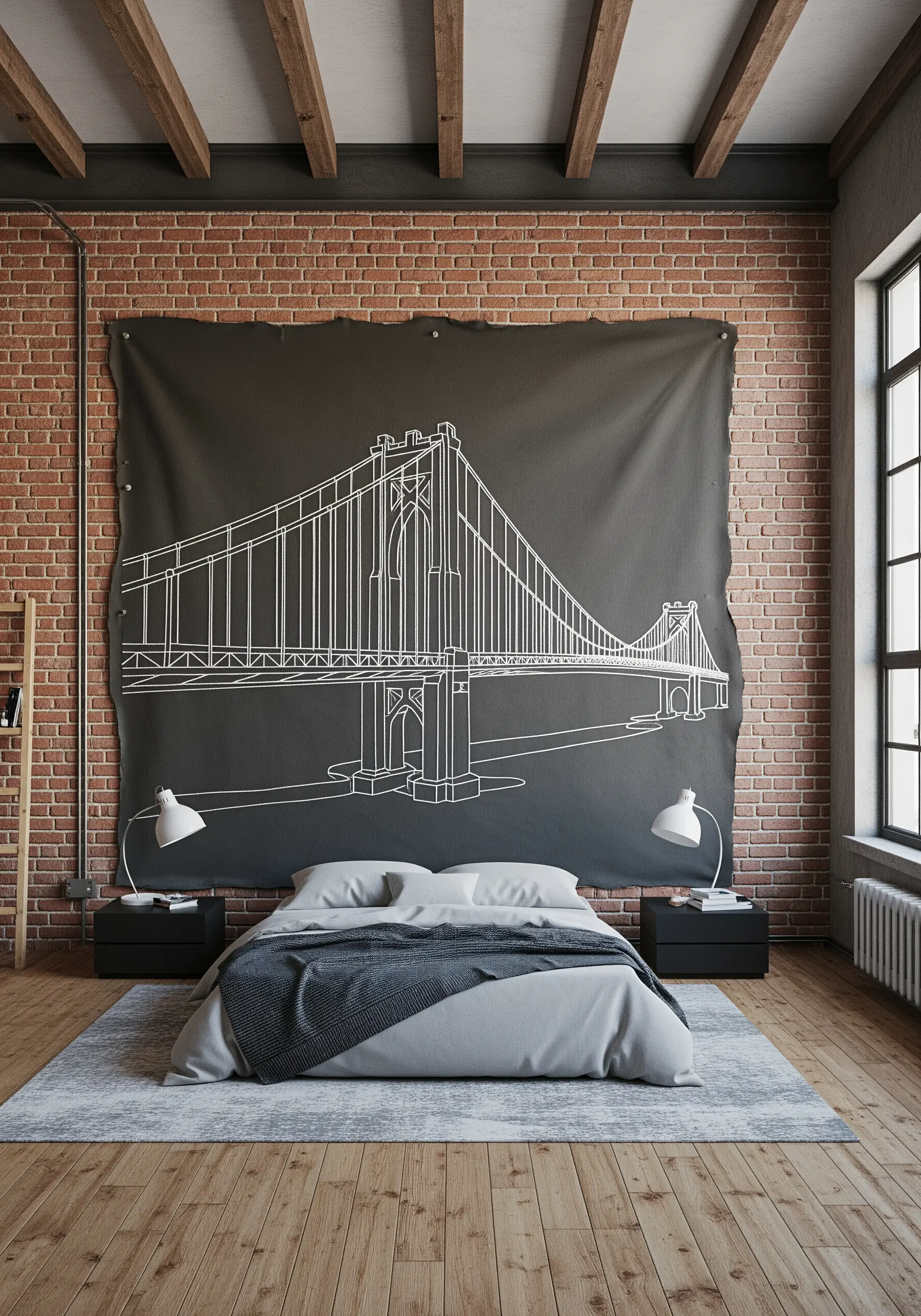
This technique transforms complex architecture into elegant, minimalist art through the power of a single line.
For a bold, graphic look, use a heavy thread like cotton perle or multiple strands of floss together.
A whipped backstitch or a heavy chain stitch will create a solid, raised line that provides a strong contrast against the fabric.
The artistic challenge is to simplify a grand structure into its most essential, recognizable lines, capturing its spirit with beautiful economy.
It’s a perfect example of simple yet emotional embroidery.
25. Embrace Art Nouveau Elegance on Your Linens
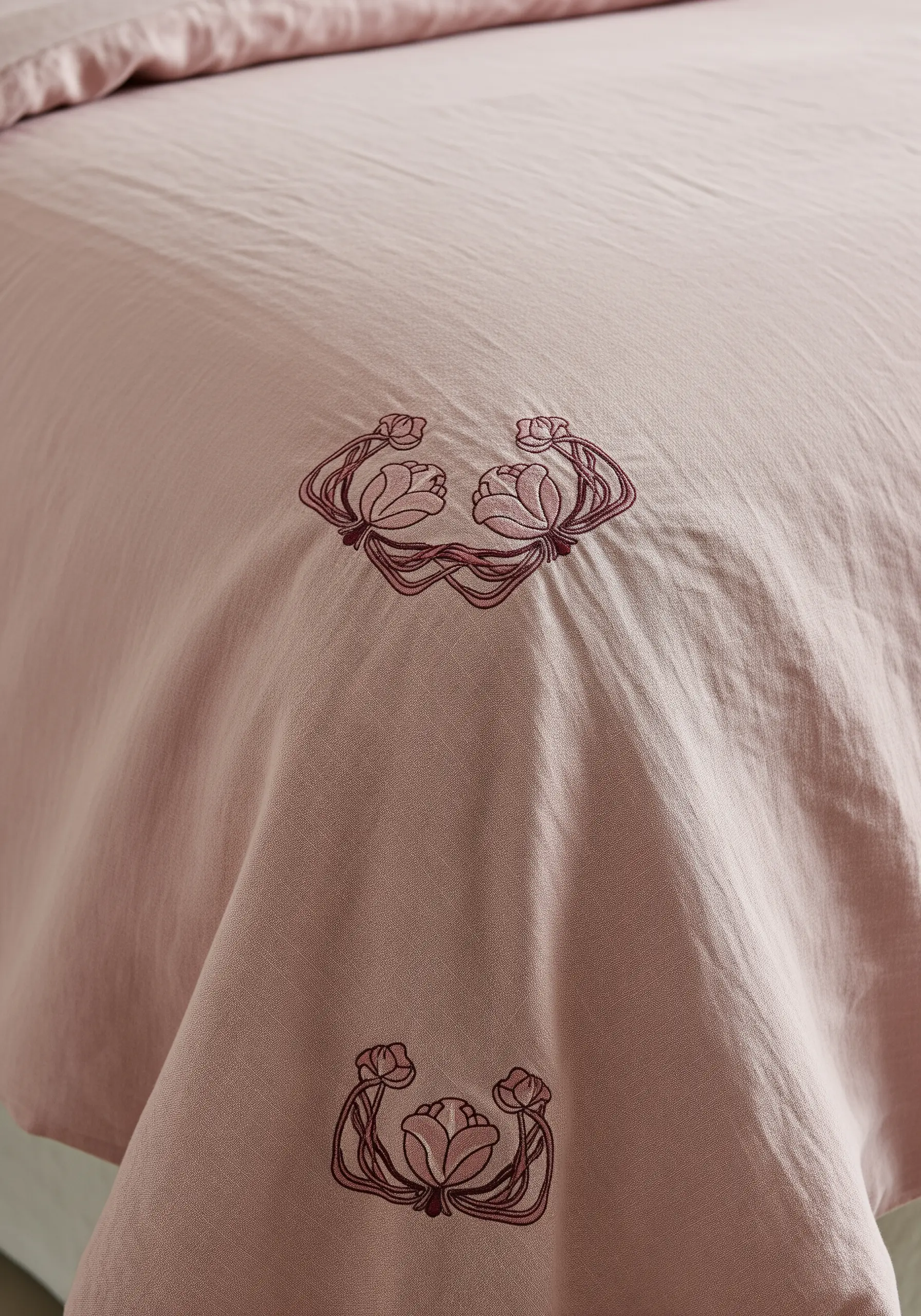
Capture the organic, flowing lines of the Art Nouveau style by using stitches that excel at creating smooth curves.
A whipped backstitch or a perfectly even stem stitch is ideal for recreating the movement of the period’s signature whiplash lines.
By choosing a tonal color palette—such as a deep mauve thread on a dusty rose fabric—you create a sophisticated, high-end look.
This emphasizes the beauty of the form itself, adding timeless elegance to your pillow covers and duvet.
26. Stitch a Storybook Adventure on a Duvet
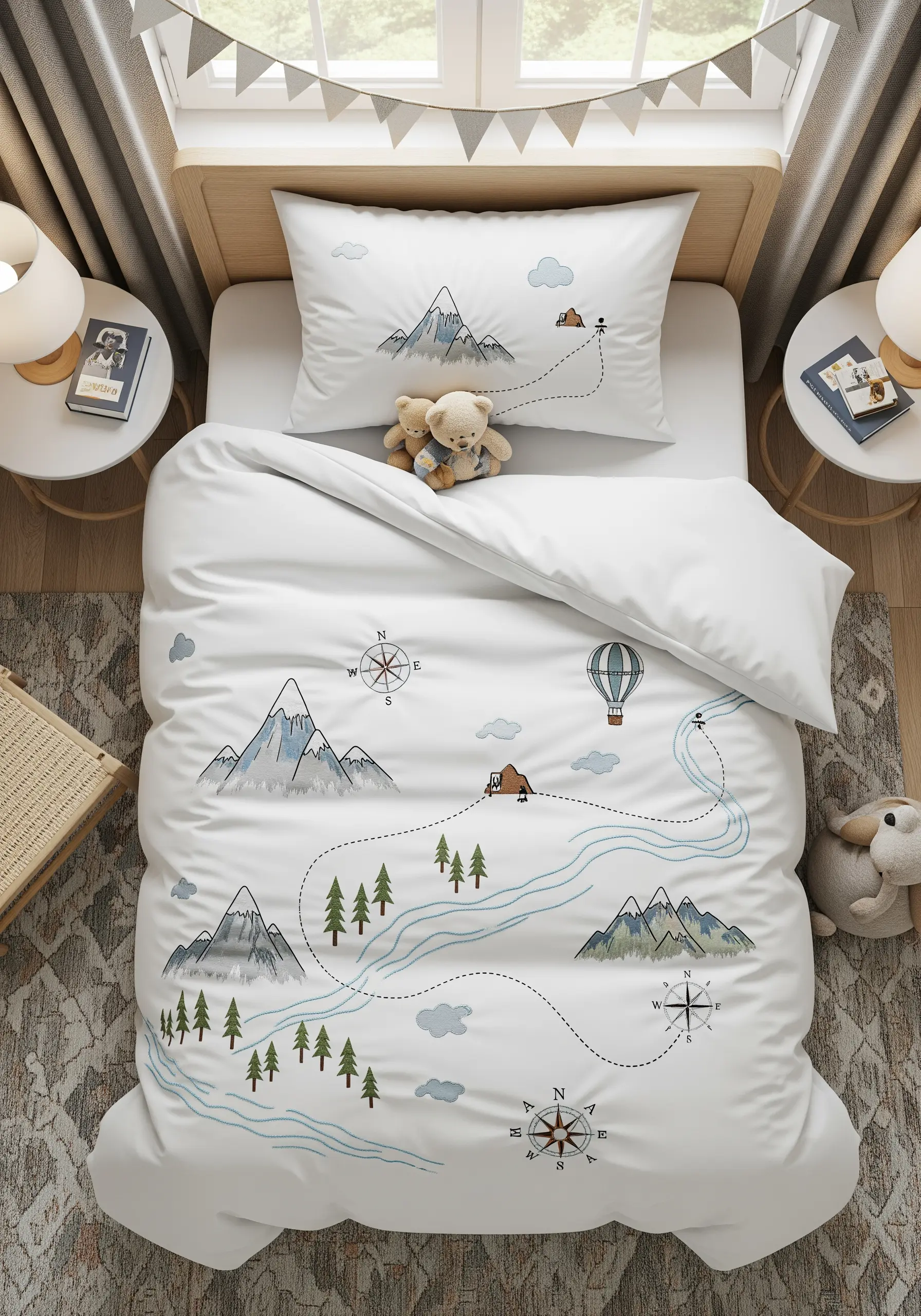
Create a piece of interactive art for a child’s bedroom by stitching an illustrative map on their bedding.
Use a simple backstitch for the outlines and the dotted path, making the design clean and easy for the eye to follow.
Add small pops of color with tiny satin stitch fills for the mountains and trees, but leave plenty of white space to maintain a light, uncluttered feel.
This approach is like drawing with thread, turning a simple duvet into a landscape for imagination.
27. Transform Your Stitch Sampler into Intentional Art
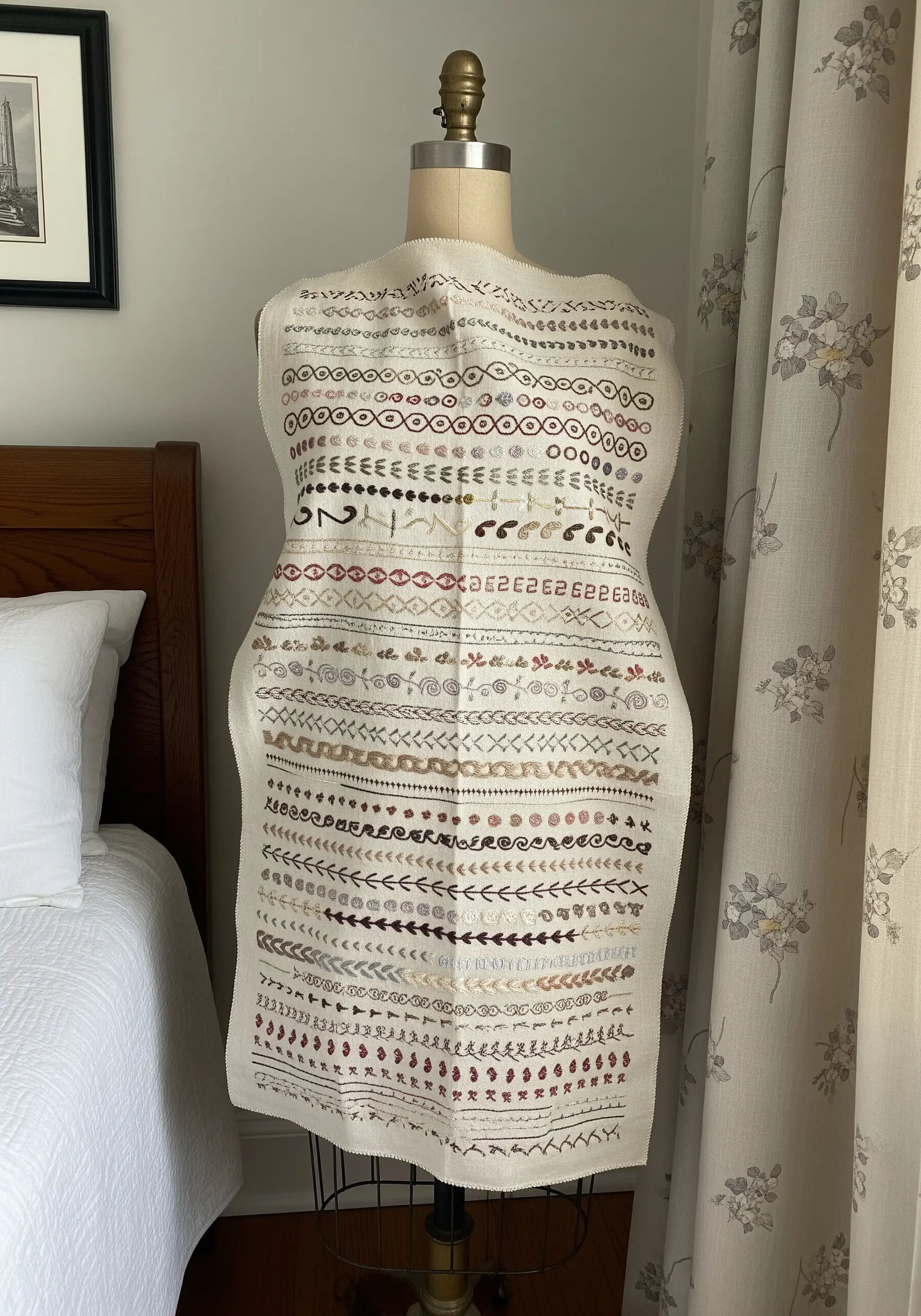
A sampler is more than just practice—it’s a record of your skill and a beautiful object in its own right.
Elevate it to art by thoughtfully arranging your rows of stitches.
Play with a limited color palette and vary the weight of your threads to create visual rhythm and texture.
Instead of hiding it away, display your sampler on a dress form or as an unframed wall hanging.
This celebrates the inherent beauty of the stitches themselves and turns your learning process into a stunning piece of abstract textile art.
28. Paint with Thread: A Vibrant Toucan Portrait

Capture the brilliant plumage of a tropical bird by using long-and-short stitch to blend colors seamlessly, as if you were painting.
Don’t be afraid of bold, high-contrast color transitions—the shift from deep blues to bright oranges creates a dynamic, iridescent effect that brings the subject to life.
To enhance the vibrancy, use a thread with a natural sheen, like silk or rayon, which will catch the light and make your colors appear even more luminous.
This technique allows you to create bold and colorful framed embroidery patterns that feel truly alive.


