
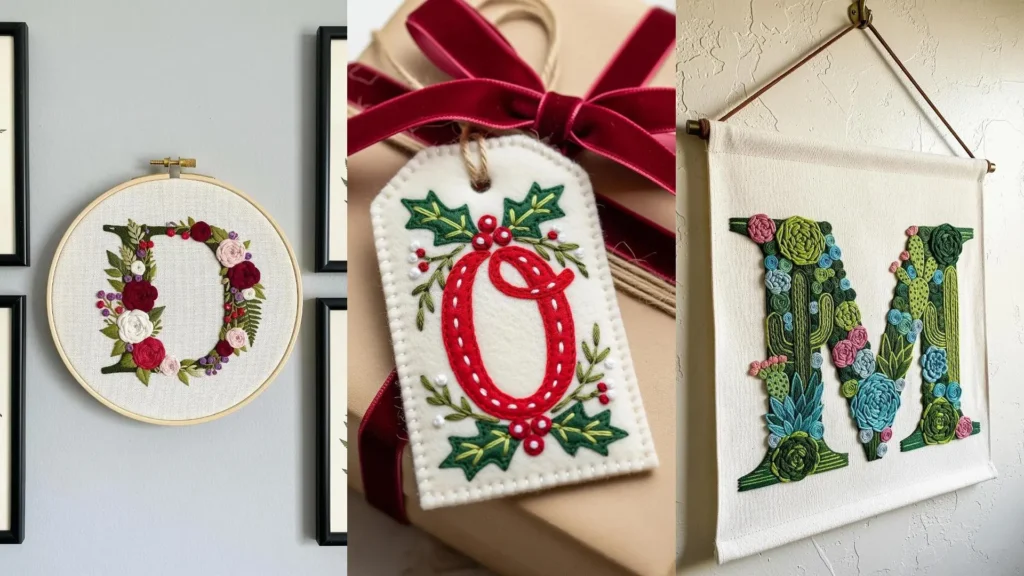
Stop looking at your hoop wondering why it lacks that professional spark. Monograms are the ultimate test of intention—balancing structure with organic flow to create something that feels personal yet perfectly executed.
Here is how to reclaim the art of lettering, turning simple initials into heirlooms that feel heavy with quality and light with botanical grace. You don’t need a machine to achieve this precision; you need the right stitch choices and a better understanding of negative space.
From padding your satin stitches to create relief, to blending threads for painterly gradients, these twenty-six examples will show you exactly how to elevate your next gift from “homemade” to “handcrafted luxury.”
1. Padded goldwork and peony shading
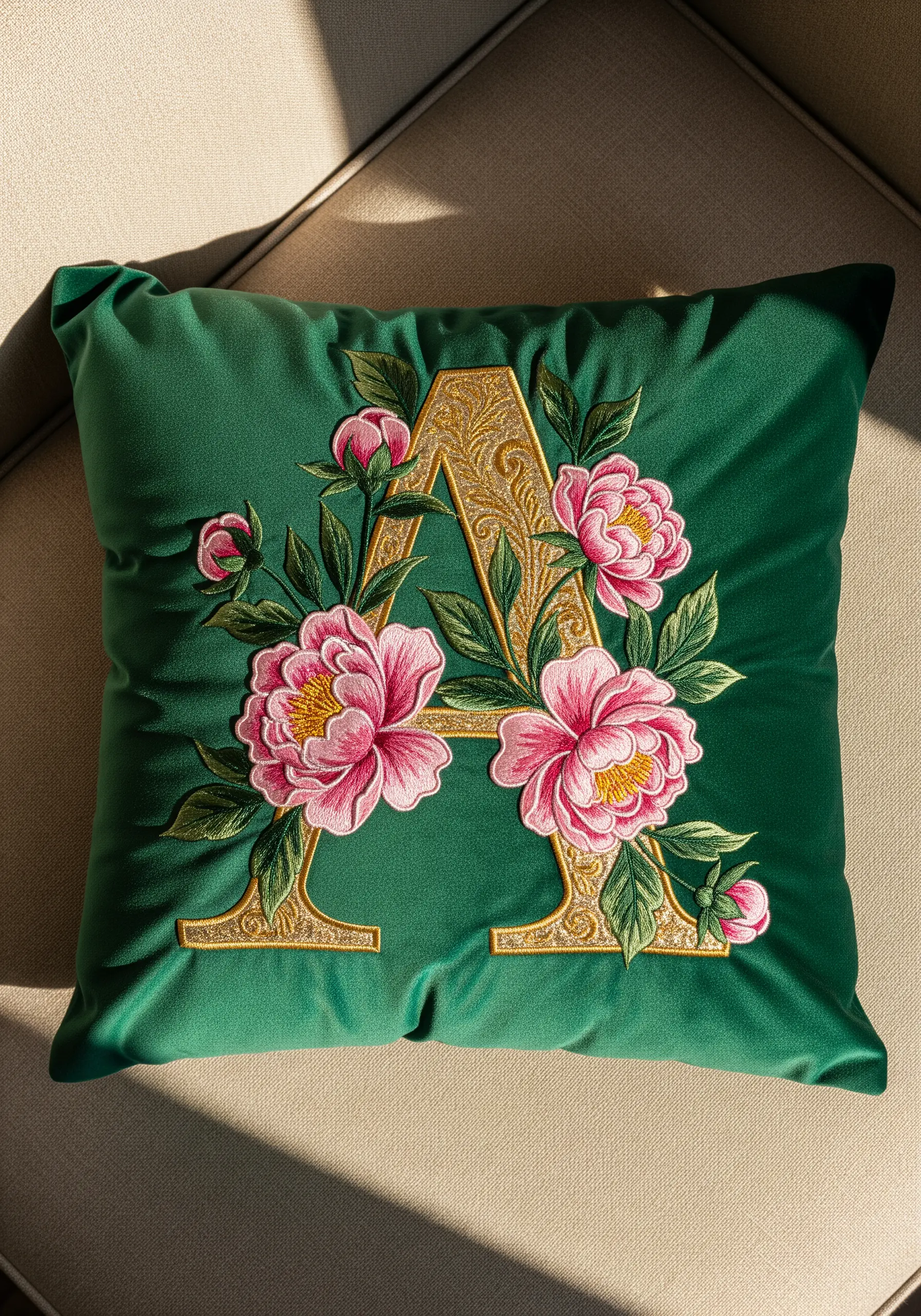
To achieve this level of dimension on velvet, you must use a split-stitch padding underneath the gold thread; without it, the metallic fibers will sink into the pile and lose their brilliance.
Notice how the pink peonies use luxury metallic thread wall decor ideas as a contrast point, blending soft cotton floss against the hardness of the gold.
When working on velvet, always use a water-soluble stabilizer on top to keep your stitches sitting proudly on the surface.
2. Negative space floral density

This design works because the flowers create the boundary of the letter ‘B’ without a rigid outline, requiring you to stitch with high density at the edges.
Use wool-blend threads for the cornflowers and poppies to build texture quickly; this mimics floral embroidery ideas that turn simple tote bags into garden-inspired showstoppers.
Ensure your leaves flow inward toward the center of the letter to maintain readability while keeping the outer edges organic and wild.
3. Delicate satin stitch wreath

For crisp linen napkins, your satin stitch monogram must be flawless; achieve this by outlining the letter ‘C’ with a tiny split stitch before filling it in.
The surrounding lavender sprigs should use varying shades of purple French knots to create depth, similar to lavender inspired embroidery designs for bedrooms meant for relaxation.
Keep the back of your work neat by weaving ends into existing stitches, as napkins are often viewed from both sides.
4. Intertwined botanical structure
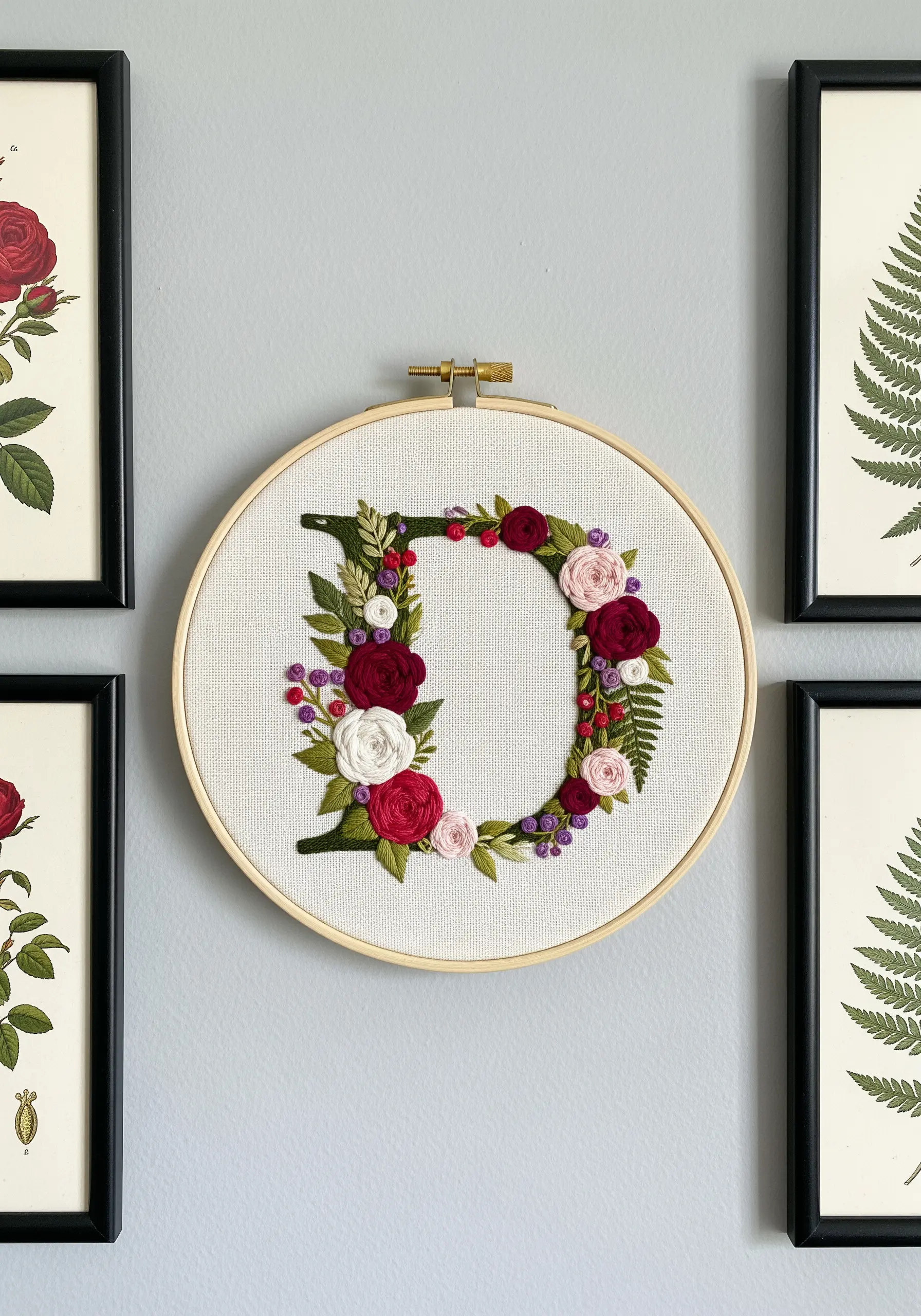
Instead of placing flowers *on* the letter, make the letter ‘D’ out of the vines and stems themselves, using a whipped backstitch for sturdy, fluid lines.
Balance the visual weight by placing heavier rose motifs at the corners and lighter ferns in the center, a technique often seen in framed embroidery art ideas that will instantly transform your living room.
Use a single strand of thread for the smallest leaves to prevent the design from looking bulky or crowded.
5. Culinary herb script flow
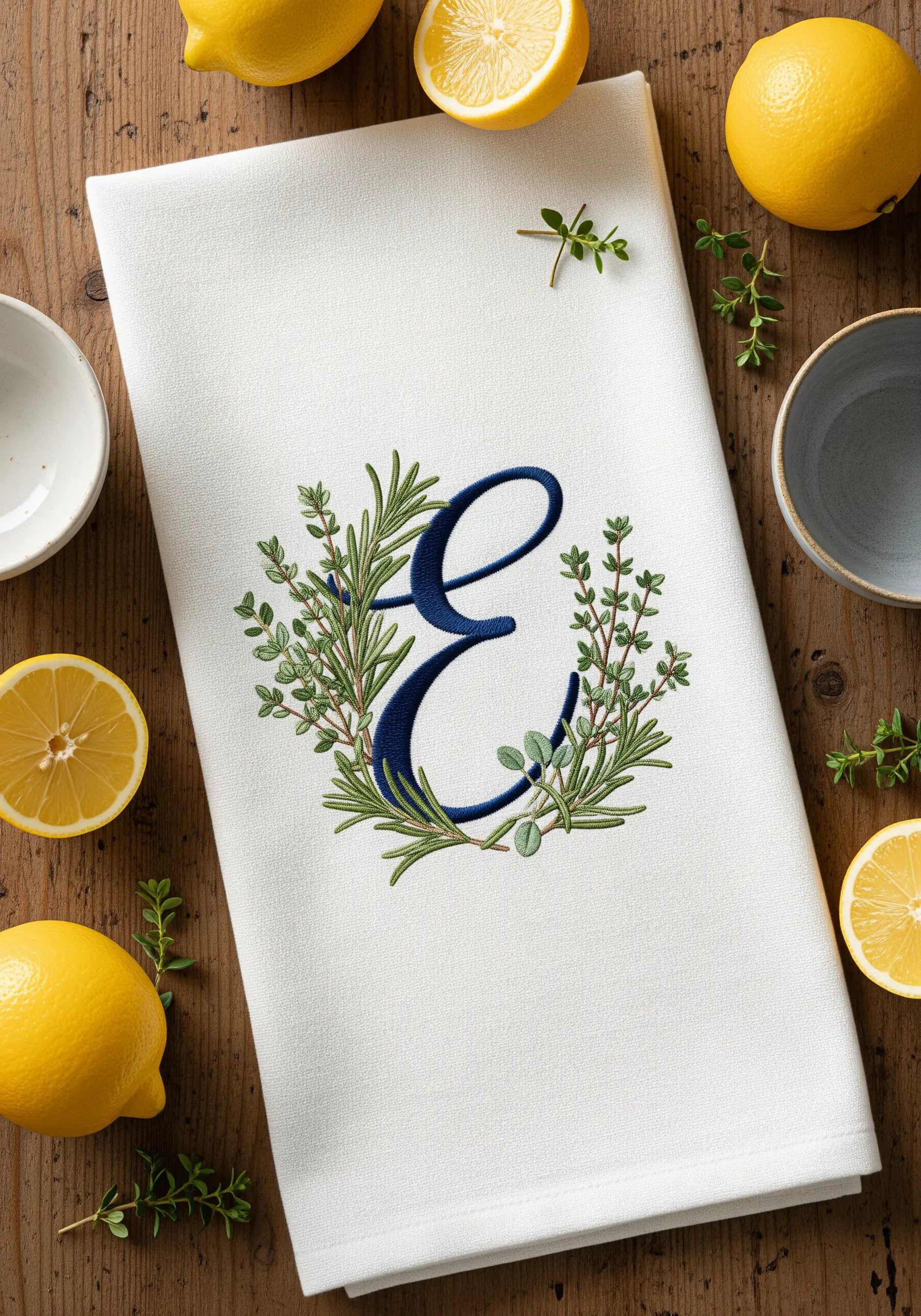
When stitching script letters like this ‘E’, shorten your stitch length significantly around the curves to avoid a blocky, angular appearance.
Incorporate culinary motifs like rosemary and thyme using a fly stitch, which pairs beautifully with embroidered kitchen towel designs that add personality to tiny urban kitchens.
The contrast between the thick navy script and the delicate green herbs creates a sophisticated, modern kitchen aesthetic.
6. Monochromatic texture on plush
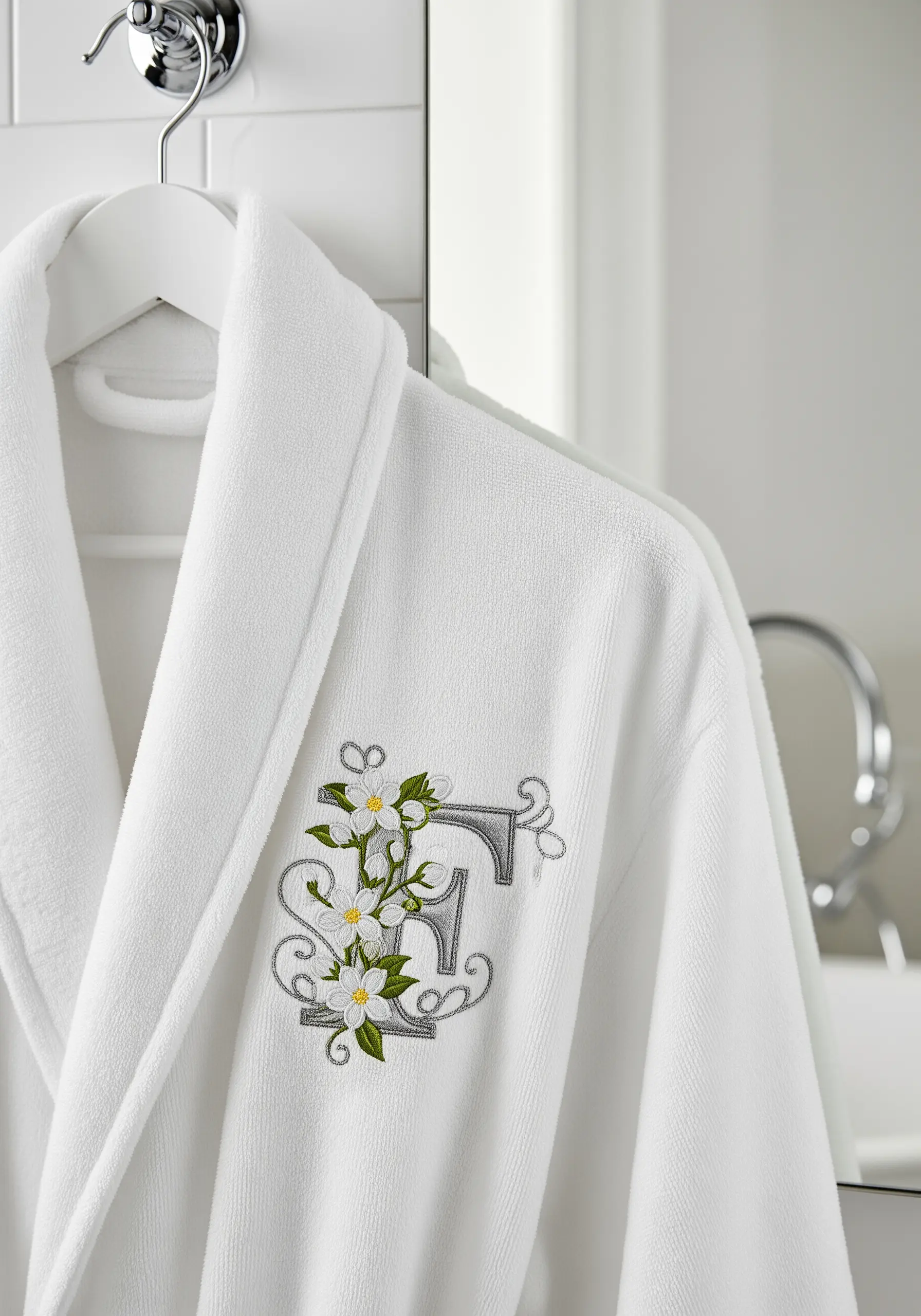
Embroidery on a plush robe requires a heavy toppings stabilizer to prevent your stitches from disappearing into the terry cloth loops.
By using shades of white and silver grey, you create a subtle relief effect that feels expensive, one of the best creative embroidery gift ideas to wow your best friend this year.
Focus on outline stitches like the stem stitch or heavy chain stitch to ensure the design remains visible after washing.
7. Autumnal gradient leaf work
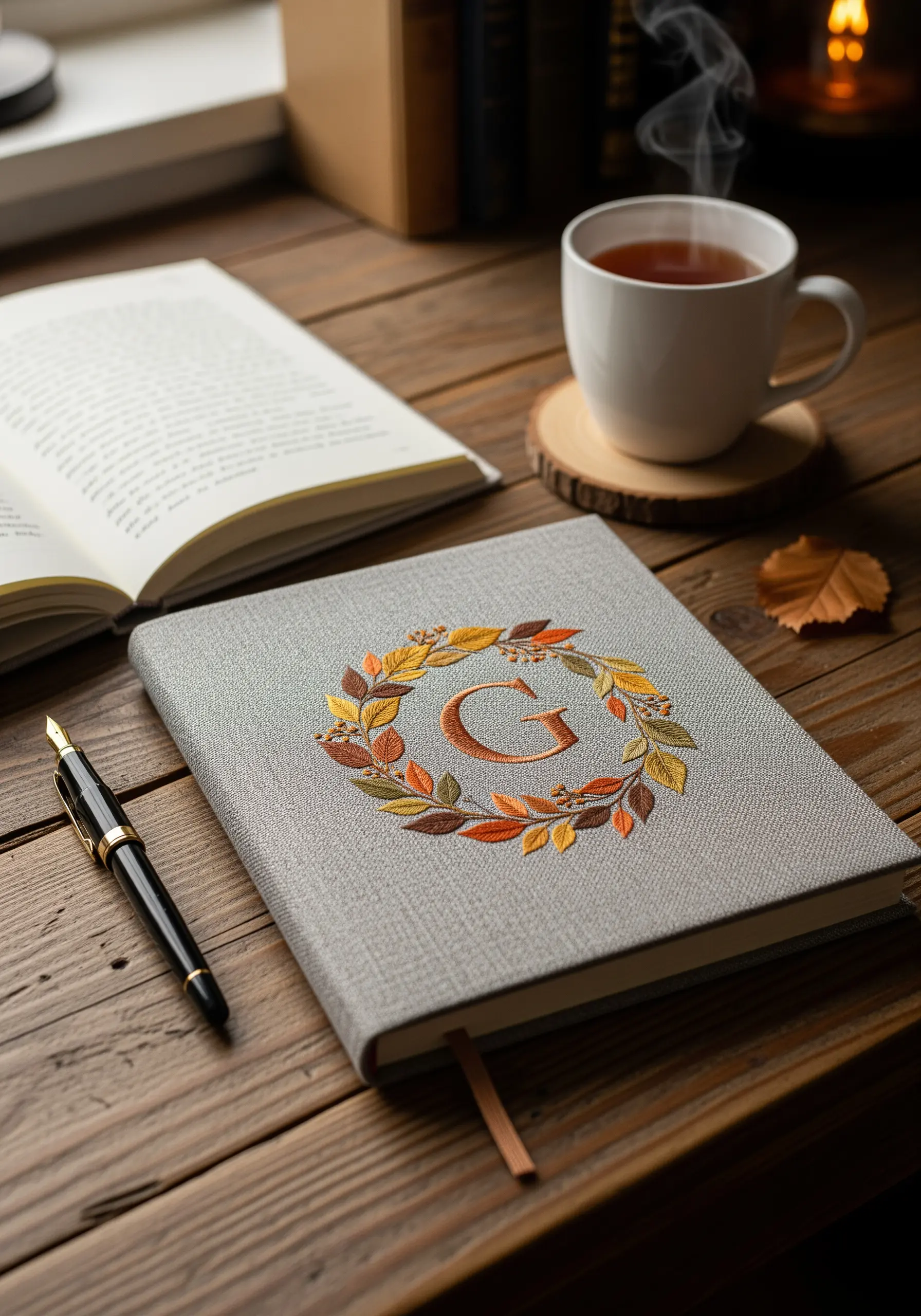
Pierce the fabric cover of a notebook carefully with a sharp chenille needle to avoid tearing the book cloth.
Use long-and-short stitch to blend ochre into rust, creating realistic autumn leaves that elevate this project beyond simple stationery, much like mixed media crafts with embroidery to transform old journals.
The letter ‘G’ should be stitched in a flat satin stitch to contrast with the textured, directional stitching of the falling leaves.
8. Bold denim sunflower patch
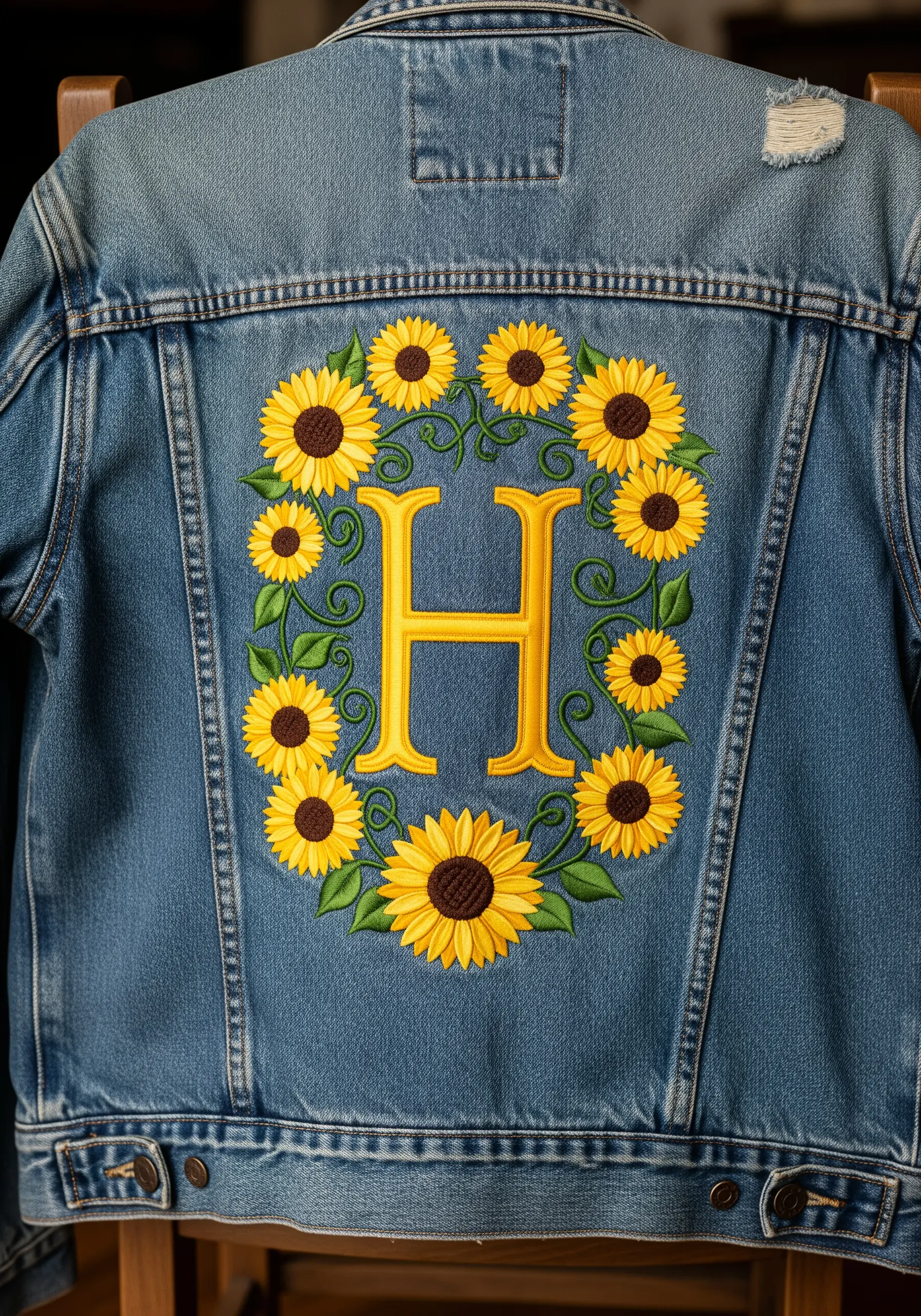
Denim is a dense fabric that can handle heavy thread; use pearl cotton size 8 to make the yellow petals of the sunflowers stand out against the blue.
Center the ‘H’ boldly, using these embroidered flower patch ideas to turn old jeans into trendy upcycled fashion into a statement piece.
Pack the centers of the sunflowers with French knots in varying shades of brown to add tactile dimension that resists wear and tear.
9. Branch-integrated typography
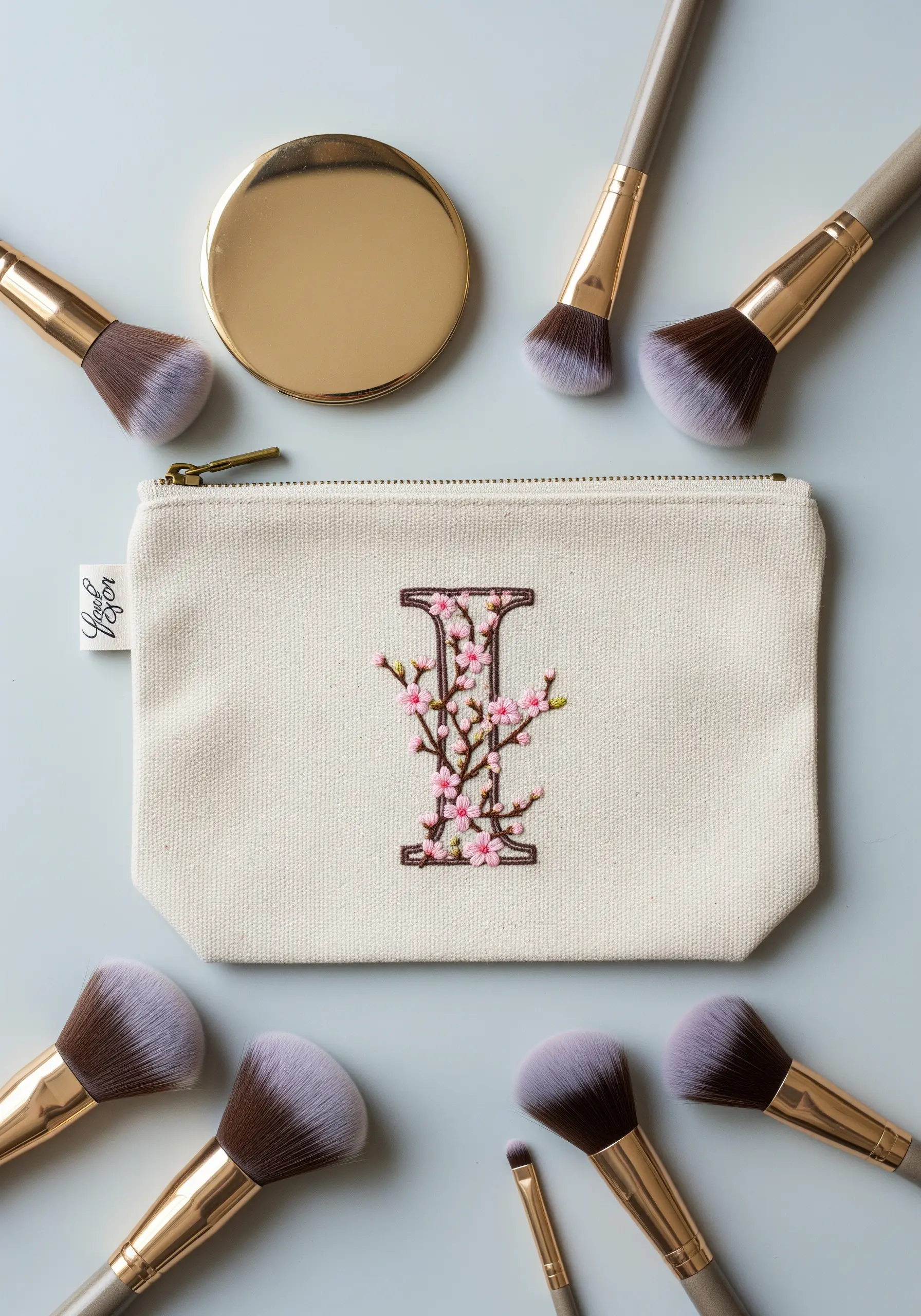
Transform the vertical stroke of the ‘I’ into a flowering branch by using a textured bark stitch or irregular stem stitch.
The cherry blossoms should be delicate, using bullion knots for buds to capture that fleeting spring beauty found in cherry blossom embroidery projects to capture Japanese-inspired elegance on fabric.
Leave negative space around the blossoms to let the canvas breathe, enhancing the minimalist yet organic feel.
10. High-contrast tropical vibrance

Black fabric absorbs light, so you must use high-sheen rayon or silk threads to ensure the tropical colors of the ‘J’ pop vividly.
Use a split stitch for the Monstera leaf veins to create a raised texture, drawing inspiration from modern framed embroidery designs you’ve never thought of hanging.
The gradient in the hibiscus petals requires careful shading from deep magenta to pale pink to create a realistic 3D volume.
11. Appliqué on chunky knits

Never stitch directly onto a chunky cable knit; instead, embroider your floral ‘K’ onto a linen patch and sew the patch onto the blanket.
Fray the edges of the patch intentionally to soften the transition, a technique perfect for cozy and colorful embroidery projects to brighten up your bedroom.
This method preserves the stretch of the blanket while allowing for intricate detail that would otherwise get lost in the yarn.
12. Minimalist fine-line script

For this elegant ‘L’, use a single strand of embroidery floss to achieve the look of a fine-line ink drawing.
This restrained approach is ideal for simple embroidery designs you’ll want to finish today that still look high-end.
Pay close attention to the stops and starts of your thread; on white linen, even a small shadow from a carried thread on the back will show through.
13. Architectural succulent texture
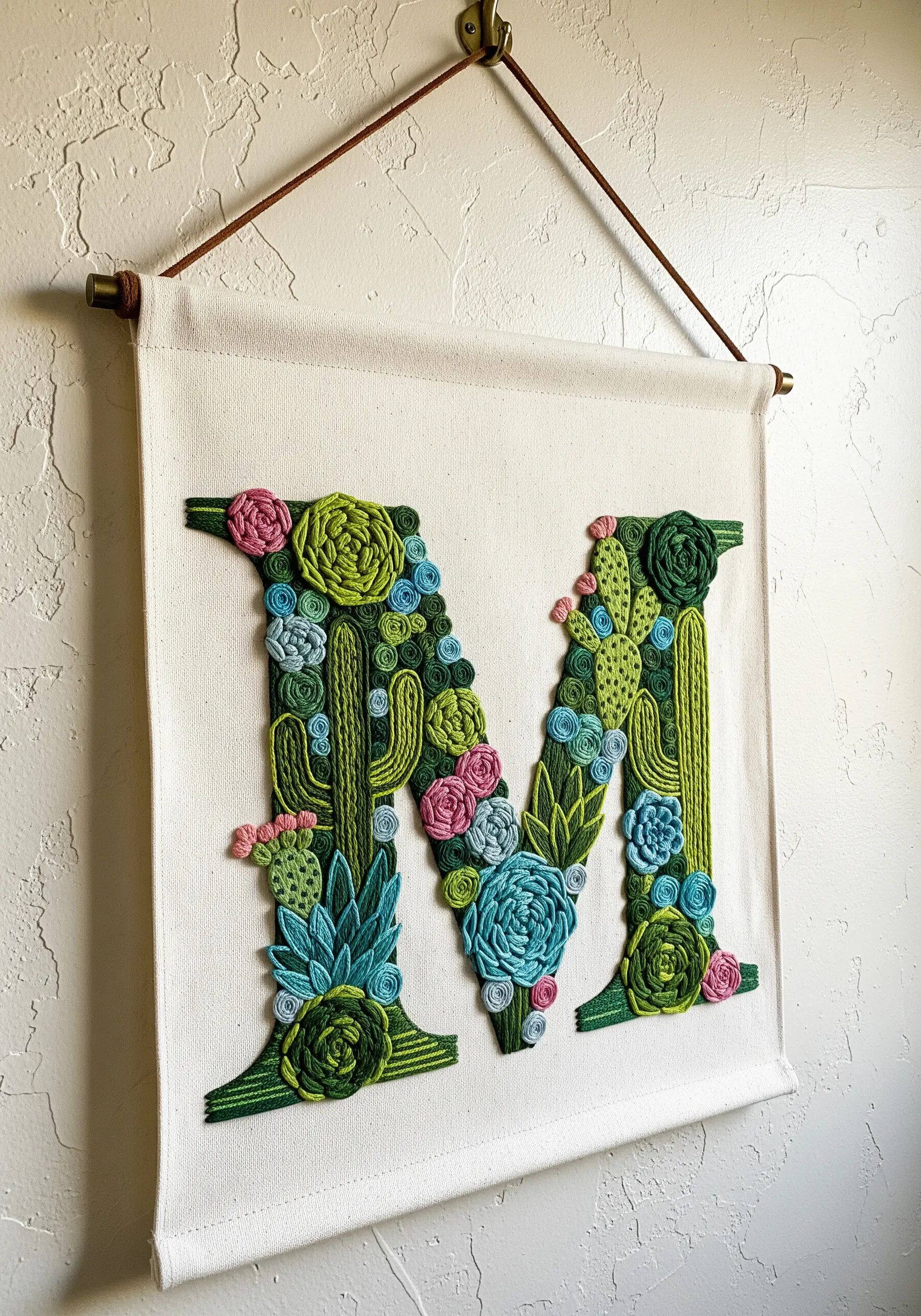
This ‘M’ relies entirely on texture; use bullion knots and cast-on stitches to mimic the fleshy, rounded shapes of succulents.
The variety of green shades creates visual interest, making it one of those plant inspired embroidery patterns to transform blank pillows into living room focal pieces.
Ensure your fabric is pulled drum-tight in the hoop, as these heavy, dimensional stitches can pucker softer fabrics if not stabilized.
14. Celestial silk shading

When working on satin or silk for a sleep mask, use a sharp, fine needle to prevent snagging the delicate weave.
The gold ‘N’ should be stitched with flat satin stitches to reflect light, complementing moon and stars embroidery ideas for peaceful bedtime vibes.
Keep the white floral motifs small and delicate to ensure the mask remains flexible and comfortable against the face.
15. Felt appliqué and blanket stitch

Felt is a forgiving medium that doesn’t fray, making it perfect for structured gift tags like this ‘O’.
Outline the letter with a precise backstitch, then use these small handmade ornaments to refresh your living space techniques to add holly details.
Using a slightly thicker thread, like pearl cotton, gives the edges a finished, professional look that elevates the simple material.
16. Mixed media beadwork
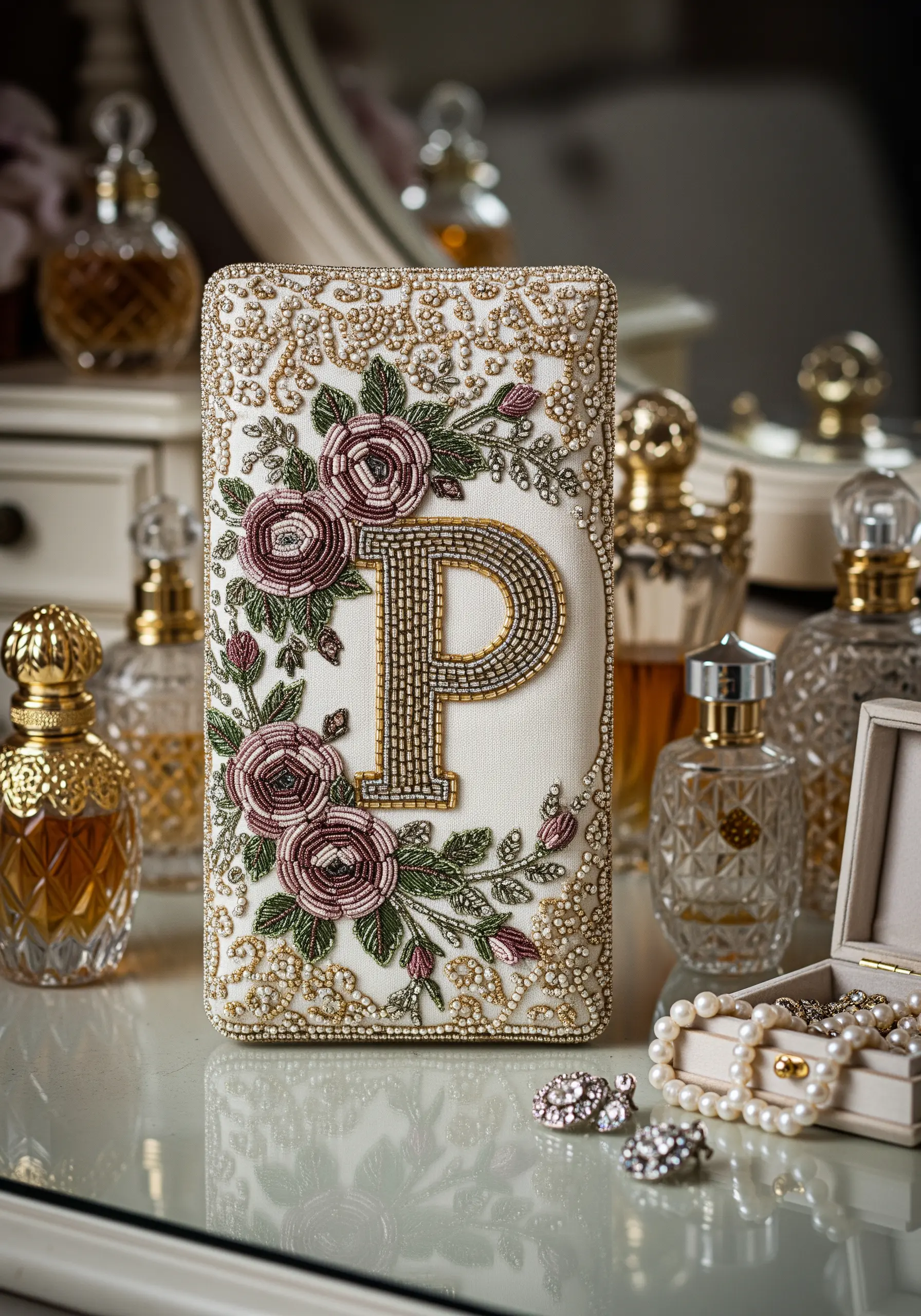
Integrate seed beads into your floral ‘P’ to catch the light and add a layer of luxury texture suitable for evening accessories.
This approach fits perfectly with unique ways to use embroidery in mixed media art projects, blending thread and glass.
Secure each bead with a double stitch or backstitch technique to ensure they don’t loosen with use on a clutch bag.
17. Micro-wreath on linen

For small functional items like coasters, keep your stitches short and dense to prevent snagging on cups.
The ‘Q’ acts as negative space here; these small embroidery designs perfect for your morning coffee mug rely on the surrounding greenery for definition.
Use a wreath of stem stitch and lazy daisy leaves, keeping the scale tiny to maintain the illusion of a delicate print.
18. Large-scale floral appliqué

On a storage basket, stitching a large ‘R’ entirely by hand would take forever; use the appliqué technique to lay down a patterned fabric first.
Satin stitch over the raw edges of the fabric to secure it, creating floral embroidery wall decor projects that bring gardens indoors without watering.
Add embroidered details on top of the fabric appliqué to merge the print with the texture of the basket.
19. Vine-wrapped sturdy canvas

When embroidering on heavy apron canvas, use a thimble to push the needle through without fatiguing your fingers.
Intertwine the vegetable vines through the ‘S’ using a split stitch for solidity, inspired by embroidered herb leaf designs perfect for kitchen towels and foodie gifts.
The bright red tomatoes should be padded satin stitch to make them look plump and ripe against the beige background.
20. Symmetrical heraldic laurel
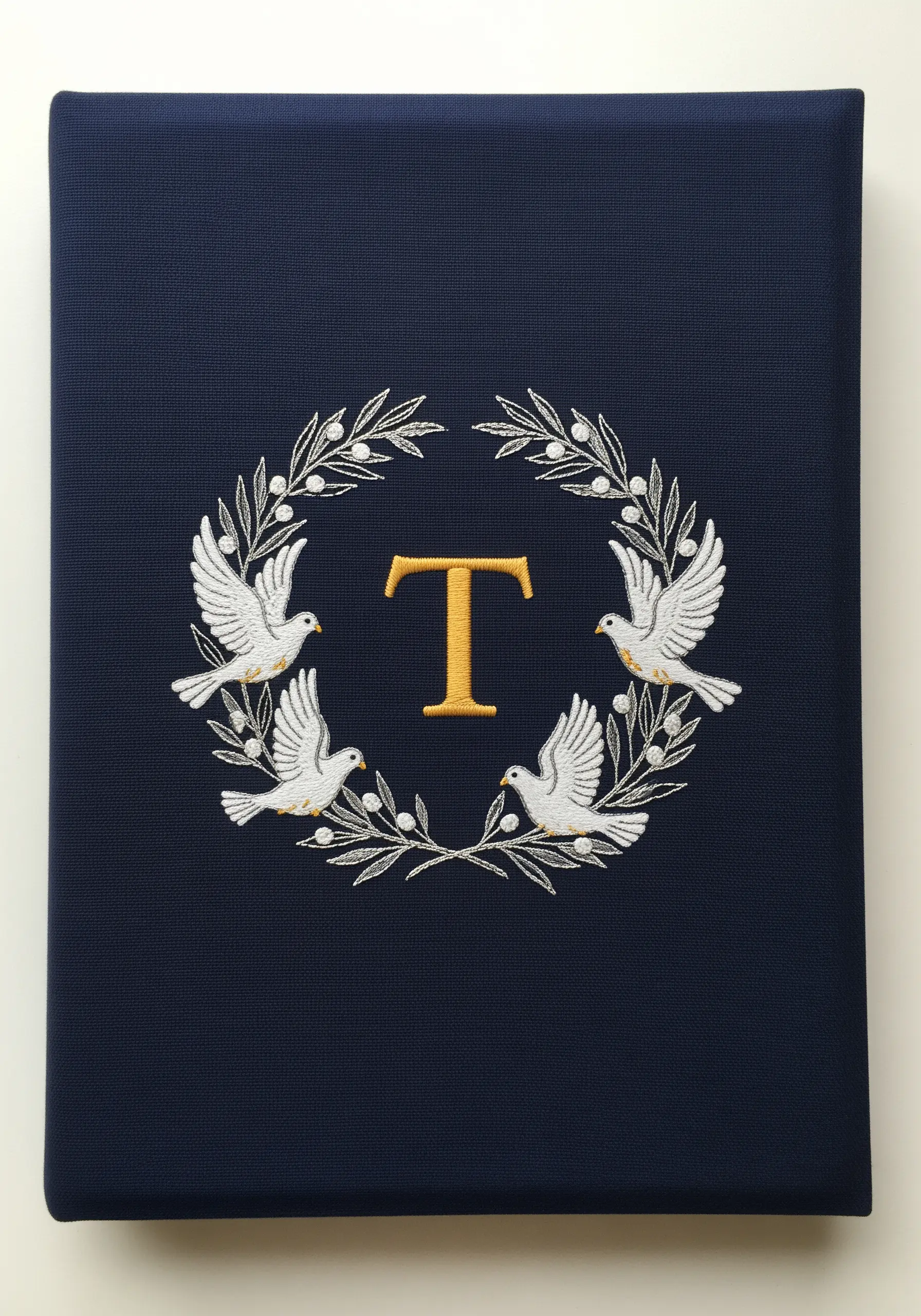
Symmetry is non-negotiable here; measure your laurel leaves carefully to ensure the ‘T’ sits perfectly in the center.
White thread on dark blue is a classic choice, reminiscent of traditional cultural textile wall art styles you can recreate with embroidery.
Use a gold thread for the letter itself to establish hierarchy, making the initial the clear focal point against the supporting leaves.
21. Vibrant overlay on faux leather

Stitching on luggage tags requires pre-punching holes if the material is thick leather or faux leather.
Use a bright, contrasting yellow for the ‘U’ to ensure visibility, a key element in artistic embroidery gift ideas inspired by travel and memories.
The tropical background print does the heavy lifting, so your embroidery just needs to be bold and clean to stand out.
22. Stabilized knitwear embroidery
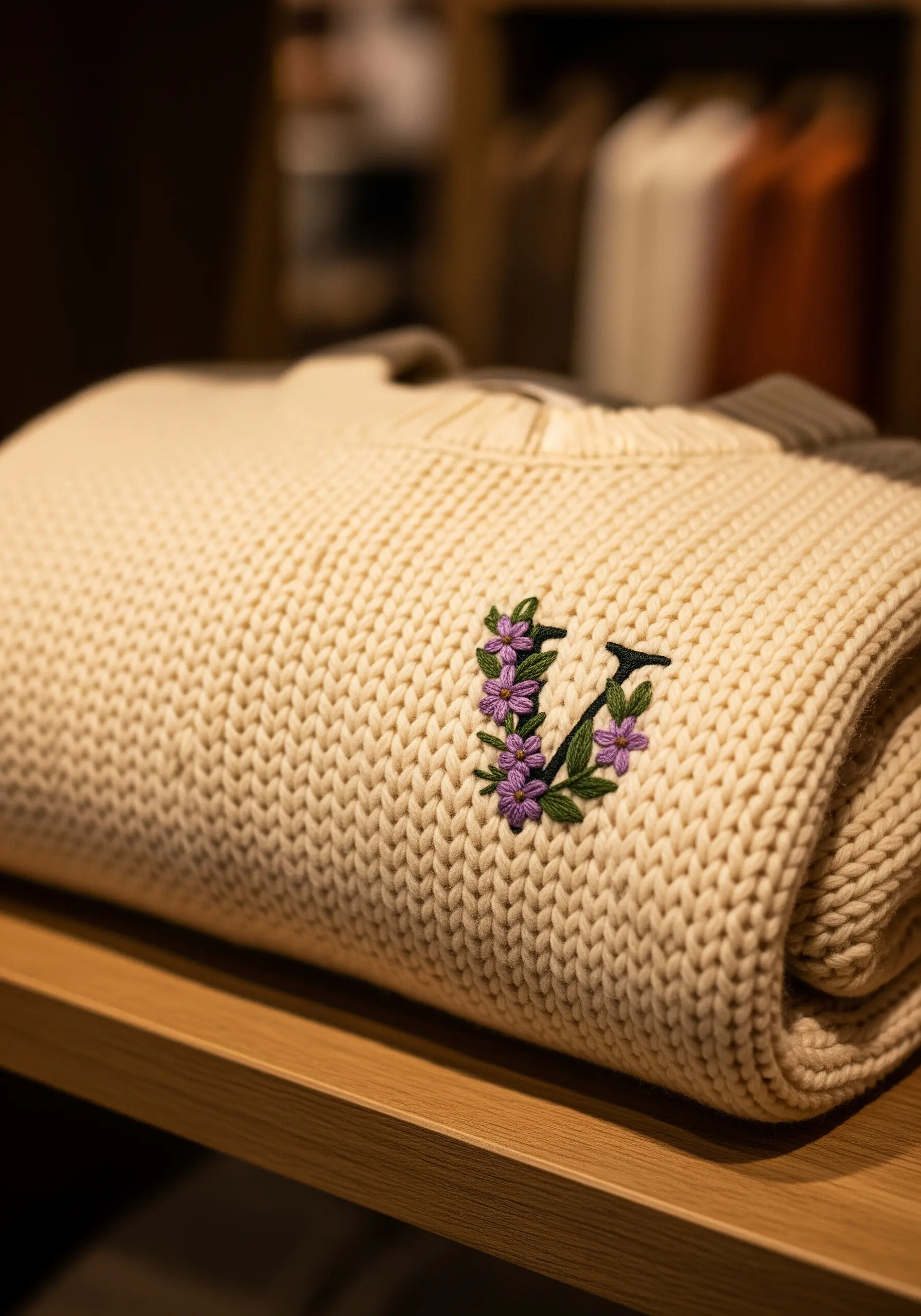
Always use a water-soluble stabilizer on top of knit sweaters to keep your stitches from sinking between the ribs.
The violets on this ‘V’ should be stitched loosely enough to move with the fabric, similar to floral collar embroidery patterns to transform your daily office outfits.
Secure your knots well on the inside, or weave them in, so they don’t unravel when the sweater stretches during wear.
23. Shadow work on organza

Sheer organza bags reveal everything, so your ‘W’ must be as neat on the back as it is on the front.
Use the shadow work technique where the criss-cross of stitches on the back creates a shadow on the front, perfect for handmade embroidery gifts that will be treasured forever.
Keep the floral wreath light and airy to match the delicate transparency of the fabric.
24. Tone-on-tone texture play

To make a red ‘X’ visible on a red stocking, you must use texture; satin stitch reflects light differently than the felt background.
Incorporate gold highlights or different shades of red, a trick often used in holiday themed table linen embroidery designs.
Outline the letter in a metallic gold thread to give it a sharp, defined edge that separates it from the fabric.
25. Precision cross-stitch geometry

For a crisp finish on a box lid, ensure your cross-stitches are perfectly uniform in tension and direction.
The ‘Y’ integrates seamlessly with the daffodils, using modern cross stitch variations that don’t look like your grandma’s patterns.
Mount the finished piece over batting before inserting it into the lid to give it a professional, upholstered look.
26. Modern geometric fusion

Combine sharp, black geometric lines with soft, organic white florals to create a modern ‘Z’ perfect for tech accessories.
Use gold thread for the accents to add a touch of luxury, utilizing minimal gold accent embroidery designs that add elegant sparkle to neutral wall palettes.
This contrast between the rigid letter form and the flowing flowers creates a balanced, contemporary design suitable for a workspace.


