You love the meditative rhythm of stitching, but you’re ready to take your needle beyond the confines of the embroidery hoop. What if your thread could do more than just embellish fabric? What if it could connect, define, and add physical depth to paper, photographs, and found objects?
This is where the thoughtful art of collage meets the quiet precision of embroidery. It’s a chance to see your thread not just as a tool for color, but as a structural element—a way to draw lines, build texture, and tell a story across different materials. Each tiny puncture of the needle becomes a deliberate mark that unifies disparate pieces into a cohesive whole.
These techniques aren’t about complexity; they’re about intention. They invite you to slow down and consider how the simplest running stitch or a single French knot can transform a flat surface into a dynamic, tactile piece of art. Pick one idea that speaks to you, gather your scraps, and see how a tiny stitch can add a whole new dimension to your creative practice.
1. Stitch Directly onto Preserved Botanicals

Carefully stitch onto pressed leaves or flowers to add an unexpected layer of texture.
To prevent tearing, use a very fine beading needle or pre-pierce the holes with an awl before you begin stitching.
Simple seed stitches or short straight stitches work best, creating a delicate pattern that complements the natural form without overwhelming it.
This technique creates a beautiful contrast between the fragile, papery surface of the leaf and the soft, dimensional quality of the thread.
2. Connect Geometric Shapes with Linear Stitches

Use a simple running stitch to unify separate paper elements and guide the viewer’s eye through your composition.
Choose a thread in a high-contrast color to transform the stitch from a simple connector into a bold, graphic element.
For clean, even stitches on cardstock, pre-punch your holes with a needle and use a thimble to protect your fingers.
The visible thread creates a path that ties the entire piece together, making an abstract geometric design feel cohesive and intentional.
3. Chart Constellations with Metallic Thread

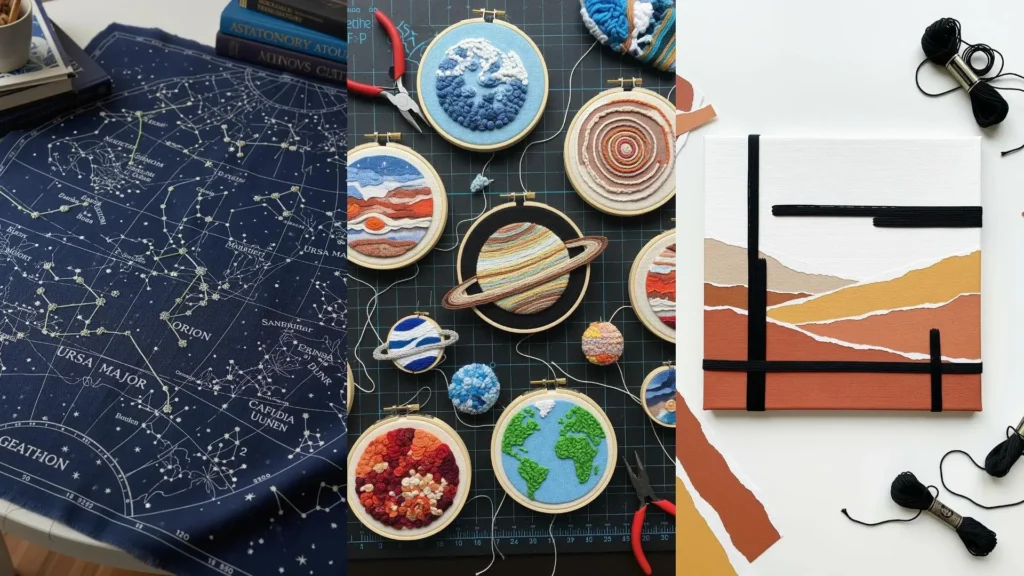
Transform a simple collage into a celestial map by connecting points with metallic thread.
Use small pieces of foil, beads, or even French knots as your stars, then link them with a neat backstitch for a solid, reflective line.
The thread’s shimmer against a dark paper background mimics the look of starlight, adding a touch of magic and dimension.
This is an elegant way to turn a flat surface into a dreamy galaxy string art piece.
4. Outline Illustrations with a Defining Backstitch

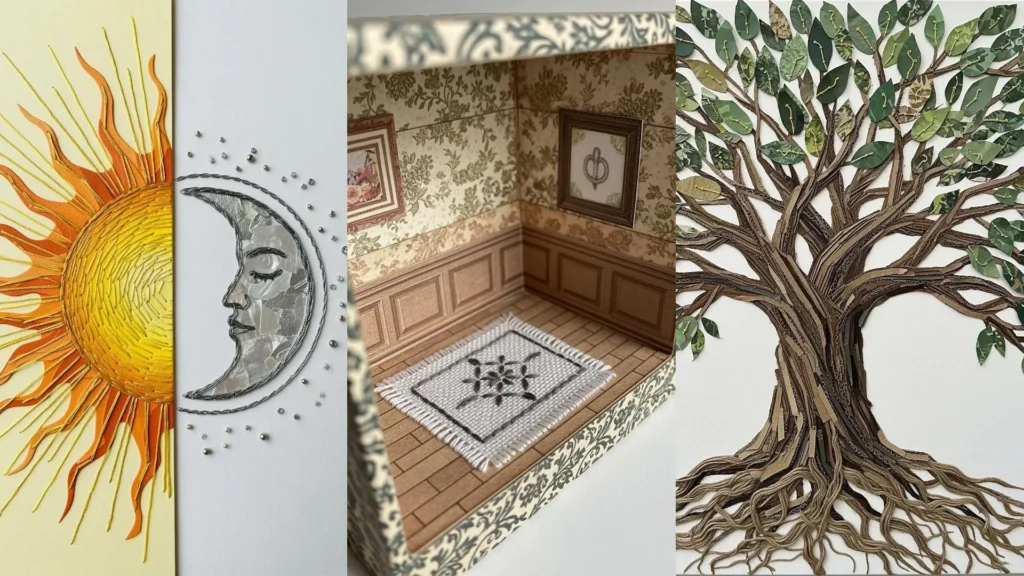
Elevate paper-cut illustrations by replacing drawn outlines with the texture of a crisp backstitch.
Using a single strand of dark thread gives your work a delicate, ink-like quality that feels both handmade and refined.
This technique adds subtle shadow and depth, lifting the illustration from the page in a way that a simple pen line cannot.
It’s a perfect way to mix fabric, paper, and threads beautifully, creating a piece that invites a closer look.
5. Create Rhythmic Texture with Whipped Stitches

Add a sense of movement to layered fabric and paper landscapes with a whipped running stitch or whipped backstitch.
This technique creates a raised, cord-like line that is perfect for depicting the flow of waves, wind, or rolling hills.
By varying the stitch density and thread weight across different layers, you can build incredible visual depth and embroider natural textures that feel dynamic and alive.
6. Sculpt Hair and Fur with Thread Painting

Move beyond flat surfaces by using thread painting—directional long-and-short stitches—to sculpt realistic hair or fur directly onto a paper collage.
Use several shades of the same color to build highlights and shadows, giving the thread a lifelike dimension.
Allowing some stitches to be slightly looser at the ends enhances the sense of movement, turning a static image into a dynamic portrait.
7. Define Edges with a Line of Seed Beads

Instead of thread, use tiny seed beads to outline the edges of your layered paper or fabric.
Stitch them on one by one with a simple backstitch for a clean line, or couch a pre-strung strand for faster application.
The beads add a luxurious, shimmering texture that catches the light, creating a clear definition between abstract shapes and adding a pop of opulence.
8. Add Ethereal Effects with Stitched Overlays

Create the illusion of steam, smoke, or mist by stitching onto a layer of sheer fabric, like organza or tulle, placed over your main collage.
A simple running stitch in a light-colored thread is all that’s needed to create a delicate, floating effect.
This technique adds a layer of depth and whimsy, making the stitched element appear suspended in air and perfect for projects that pair perfectly with tea & candles.
9. Fill Negative Space with Scattered Seed Stitches

Unify your composition by filling the empty background space with scattered seed stitches.
These tiny, randomly placed straight stitches add a subtle, consistent texture that ties disparate collage elements together without overwhelming them.
Use a thread that matches your background paper for a quiet, textural effect, or a slightly contrasting tone for more definition. It’s a key technique for many nature-inspired string art patterns.
10. Weave a Grid to Bridge Compositional Gaps

Create a bold, structural connection between two separate paper elements by weaving a thread grid.
First, create a ‘warp’ with long, parallel stitches running vertically. Then, weave your ‘weft’ thread horizontally over and under the warp threads.
Using a high-contrast thread turns this bridge into a stunning focal point and is a powerful way to make minimalism feel dramatic.
11. Layer Sheer Fabric to Suggest Translucency

Mimic the delicate quality of insect wings or flower petals by layering a sheer material like vellum or organza over your paper collage.
Use a simple backstitch to secure the sheer layer and provide definition, following the natural lines of your subject.
This method creates a beautiful illusion of depth and fragility, turning simple fabric collage bases into something ethereal.
12. Map a Personal Narrative with a Trailing Stitch

Turn a map or travel-themed collage into a personal story by stitching your route.
Use a thick thread like pearl cotton and a bold stitch—such as a stem stitch or chain stitch—to create a raised, tactile line that commands attention.
The stitched path transforms a static image into a dynamic record of a journey, making it one of the most meaningful mini travel story embroidery hoops you can create.
13. Frame a Paper-Cut Scene with a Decorative Border

Soften the sharp edges of paper-cut art and draw the eye inward by adding a stitched border.
A decorative stitch like a looped blanket stitch, feather stitch, or Cretan stitch adds a beautiful textile frame to your composition.
Choose a thread color that echoes a hue from within the scene to ensure the frame feels integrated, like something from a garden tea party table linen design.
14. Fill Shapes with Beads for Lustrous Dimension

Instead of filling an area with satin stitch, use beads to create a surface that catches the light.
This technique is perfect for representing glistening pomegranate seeds, dew drops, or glittering jewels.
Use a fine beading needle and a single strand of thread matching your bead color for a secure, almost invisible application. This is one of the most effective statement textured embroidery techniques for instant impact.
15. Add Subtle Detail with Tonal Couching

Create texture on a monochrome or minimalist collage without introducing distracting color by using tonal couching.
Lay down a thicker thread along a desired line, then use a finer, matching thread to tack it down with tiny perpendicular stitches.
This adds a raised, linear detail that suggests texture—like wood grain or distant hills—and transforms a simple surface into one of many beautiful textured neutral embroidery samplers.
16. Join Collage Elements with a Blanket Stitch

Embrace a charming, handmade aesthetic by using a visible blanket stitch to join your paper and fabric patches.
This stitch serves a dual purpose: it secures your layers and acts as a decorative border for each element.
Using a thick, contrasting pearl cotton emphasizes the stitch itself, celebrating the seams of your composition. These kinds of fabric collage embroidery ideas give new life to scraps.
17. Animate a Silhouette with Expressive Stitches

Bring a simple silhouette to life by stitching small, energetic marks that appear to emanate from it.
Use French knots for dots of light, or radiating straight stitches for sound or movement.
A bright, high-contrast thread will make these tiny details pop against the solid shape, transforming a static silhouette into a dynamic story. You can add color and texture to any room with this simple idea.
18. Enhance Embossed Paper with Invisible Anchors

When collaging with heavily textured materials like embossed paper and lace, use your stitches to secure elements without disrupting the delicate patterns.
A few tiny stab stitches using a fine, color-matched thread will hold your layers in place while remaining almost invisible.
This preserves the beautiful interplay of light and shadow, highlighting the existing texture. It’s the secret behind high-end neutral thread texture combinations.
19. Unify a Collection with a Consistent Edge Stitch

When creating a group of small collaged items for a shadow box or framed display, give them a cohesive look with a uniform stitched edge.
A simple running stitch or a neat backstitch around the border of each cutout provides a polished, unifying finish.
This technique turns a cluster of individual pieces into a thoughtfully curated collection, ideal for modern framed embroidery designs.
20. Punctuate Action with Radiating Straight Stitches

Inject energy and a sense of action into a dynamic collage—like one made from comic book pages—by stitching starbursts and accent lines.
Use straight stitches of varying lengths radiating from a central point to create an explosive effect.
A bright, contrasting thread color enhances the graphic impact, making the stitched element an integral part of the visual excitement.
21. Couch a Found Object to Your Surface

Secure a three-dimensional object, like a key, button, or twig, onto your collage by ‘couching’ it with thread.
Lay the object on your surface, then use a sturdy thread to make small, anchoring stitches that cross over the object at key points.
This method seamlessly integrates the item into the artwork, adding a surprising sculptural element. It is central to many creative mixed-media embroidery projects.
22. Create Tension with Intersecting Thread Lines

Generate visual energy by stretching taut lines of thread across a collage of soft, torn paper and fabric textures.
The sharp, geometric structure of the intersecting threads creates a dynamic contrast with the organic shapes and soft edges beneath it.
Use a strong, fine thread and pull it tight before anchoring to ensure perfectly straight lines, resulting in beautiful abstract monochrome thread designs.
23. Stitch Through Crinkled Paper for Organic Form

Build a richly textured surface by layering crinkled tissue paper, then stitch through it with long, meandering lines.
A simple running stitch will follow the contours of the paper, dipping into the valleys and rising over the peaks, which enhances the three-dimensional, organic quality.
This is a wonderfully effective way to represent landscapes, water, or clouds. Organic texture embroidery designs like this are surprisingly simple to create.
24. Accentuate Folds and Pleats with a Running Stitch

When your collage includes folded or pleated paper, use a simple running stitch to emphasize the structure and dimension.
Stitching along the ‘valleys’ of the pleats draws attention to the beautiful play of light and shadow created by the folds.
A contrasting thread adds a bold, graphic line, making the technique a deliberate design choice to transform ordinary fabric or paper.
25. Integrate Stitches into a Woven Paper Grid

Elevate a woven paper background by adding small, deliberate stitches at the intersections of the grid.
A tiny cross stitch or a single, short backstitch at each junction secures the weave and introduces a subtle layer of textile detail.
This technique transforms a simple papercraft into a sophisticated, textured surface, perfect for highlighting sea animal embroidery ideas or other focal points.
26. Create Points of Light with French Knots

Illuminate a cityscape or night sky collage by using French knots to represent points of light.
Use a vibrant yellow or white thread against a dark background for maximum impact.
You can create a sense of distance and varied brightness by changing the number of times you wrap the thread around the needle—one wrap for a distant star, two or three for a bright window. These tiny artistic home touches make a big statement.
27. Replicate Natural Fibers with Radiating Stitches

Mimic the delicate filaments of a feather or the fine veins of a leaf using long, radiating straight stitches.
Anchor all your stitches at a single point and fan them out across your paper shapes to create a sense of natural growth and flow.
Using a thread with a slight sheen, such as silk or rayon, will catch the light beautifully and enhance the fibrous illusion in majestic peacock embroidery designs.
28. Build Organic Forms with Looped and Couched Fibers

Create a complex, textural shape like a bird’s nest by layering loops of twine, yarn, or thick thread onto your collage surface.
Arrange the fibers into a chaotic yet deliberate form, then secure them with small, discreet couching stitches using a finer thread.
This method allows you to build three-dimensional, organic structures. It is the foundation of many layered thread collage projects that feel richly detailed.