

There is a quiet magic in bringing something from your garden indoors and making it a permanent part of your art. Combining pressed flowers with embroidery isn’t just about decoration; it’s about capturing a memory, a season, or a feeling and weaving it directly into the fabric.
But how do you move beyond simply attaching a flower to a hoop? The secret lies in a thoughtful integration of textures, forms, and techniques. It’s about letting your stitches echo the curve of a petal, or using thread to complete a story that a single pressed leaf began to tell. This is where you can find true ways to mix pressed flowers and embroidery thread for magic.
In the ideas that follow, I’ll show you how to use specific stitches and compositional choices to elevate your botanical work. You’ll see how a simple line of thread can provide structure, how a field of French knots can become an abstract impression of a bloom, and how your needle can trace the delicate architecture of nature itself. Let’s begin.
1. Frame Botanicals with an Embroidered Wreath

Create a delicate framework for your pressed flowers instead of letting them float aimlessly.
Use a whipped backstitch for the main vines to give them a rounded, dimensional quality that feels more organic than a simple line.
For the leaves, a fishbone stitch creates a beautiful central vein and subtle texture, mimicking nature’s own design.
Vary the angle and size of your stitched leaves to add movement and prevent the wreath from looking too rigid.
Finally, secure the pressed pansies with tiny, nearly invisible couching stitches around the edges, making them appear naturally settled among the embroidered foliage.
This technique turns your piece into a cohesive, framed composition rather than just a collection of items on fabric.
2. Create an Abstract Lavender Haze with French Knots

Translate the feeling of a lavender field into pure texture and color, rather than a literal depiction.
Group hundreds of French knots to build a dense, tactile cloud that represents the blossoms.
Create an atmospheric gradient by using at least four to five shades of purple, blending them from a deep, rich violet at the bottom to a pale lilac at the top.
This highly textured, abstract shape provides a stunning contrast to the sharp, linear forms of the real lavender stems you place below it.
The embroidery becomes an artistic interpretation of scent and color, not just a copy of the plant.
3. Trace Nature’s Delicate Architecture on Tulle
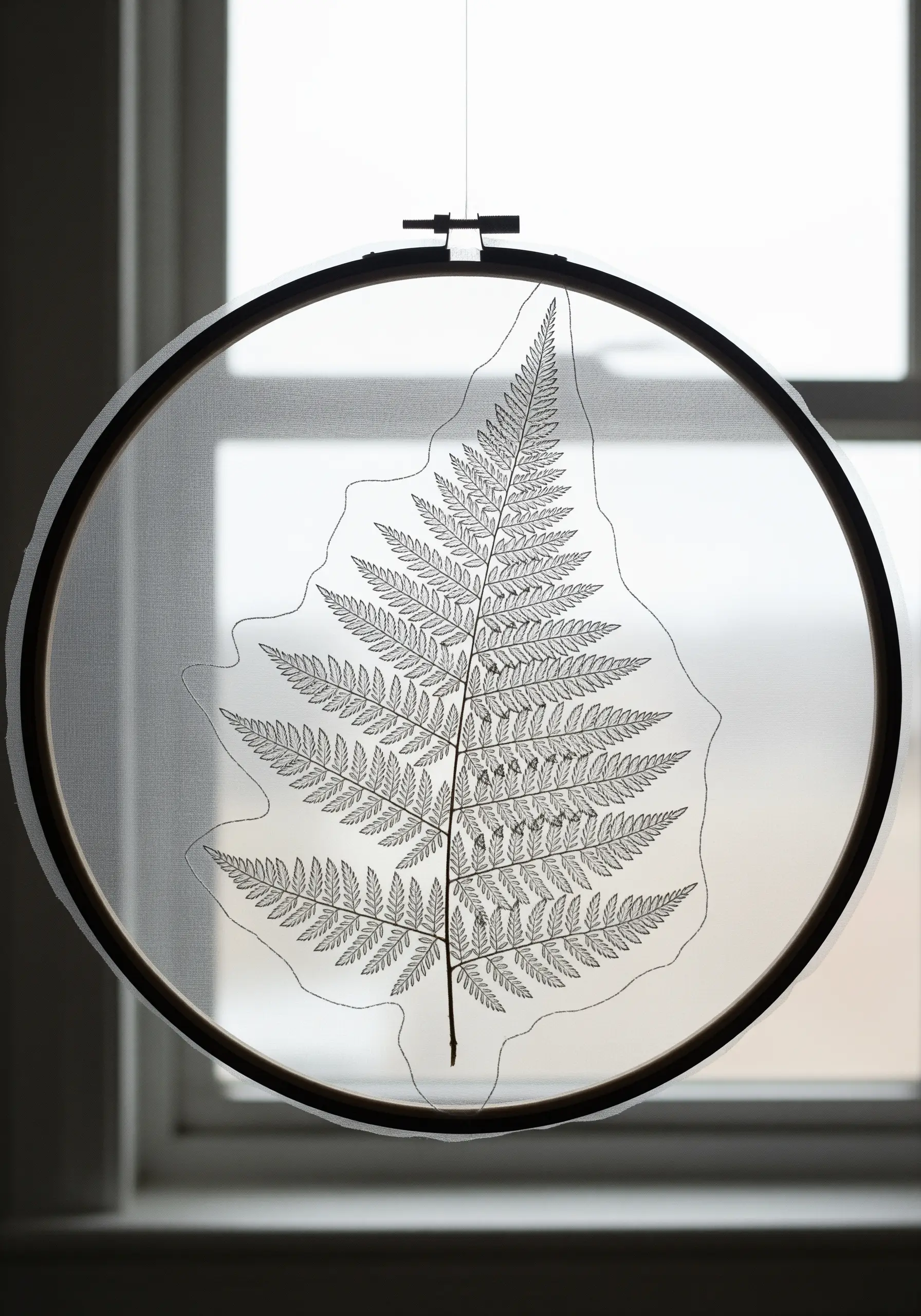
Use embroidery to highlight the intricate, skeletal structure of a pressed leaf, like this fern.
Work on a sheer fabric like tulle or organza, which allows the finished piece to interact with the light and creates a ‘floating’ effect.
Use a single strand of fine thread and a meticulous backstitch to trace the delicate veins and outline.
Your stitching becomes a ghostly echo of the plant, drawing attention to its natural geometry and complexity.
This technique transforms a simple leaf into a sophisticated and ethereal piece of line art.
4. Build Voluminous Florals with Fabric Appliqué
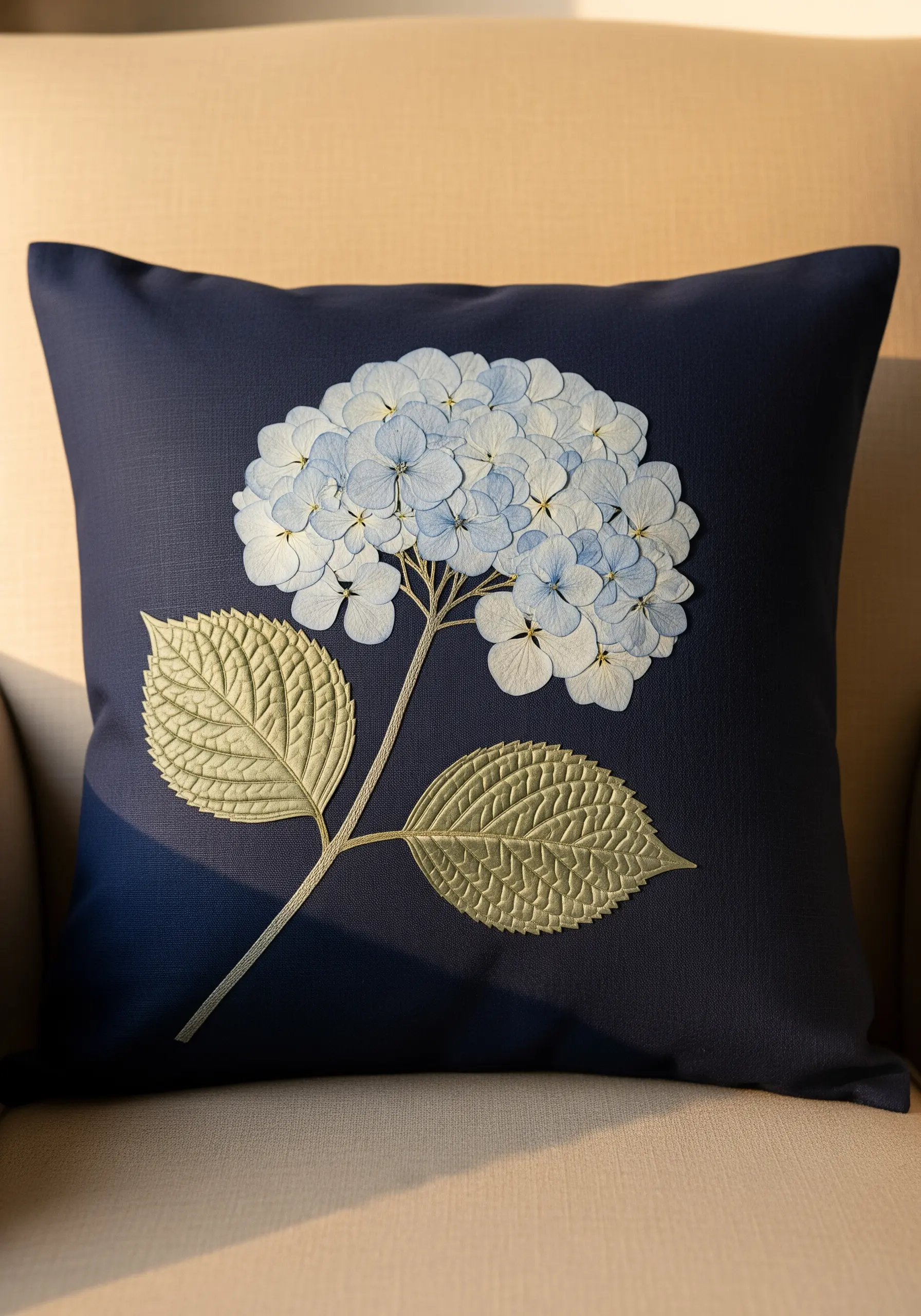
Instead of real petals, recreate the dense cluster of a hydrangea by cutting individual florets from a lightweight fabric like cotton lawn.
Secure each tiny fabric shape with just a few central stitches, allowing the edges to lift slightly for a soft, three-dimensional effect.
For the leaves, use a directional satin stitch in a contrasting color to create a sharp, graphic texture that makes the soft petals pop.
Stitching the leaves this way provides a solid visual anchor for the airy, voluminous bloom, creating a balanced and tactile design perfect for home décor.
5. Compose a Cascading Petal and Vine Design
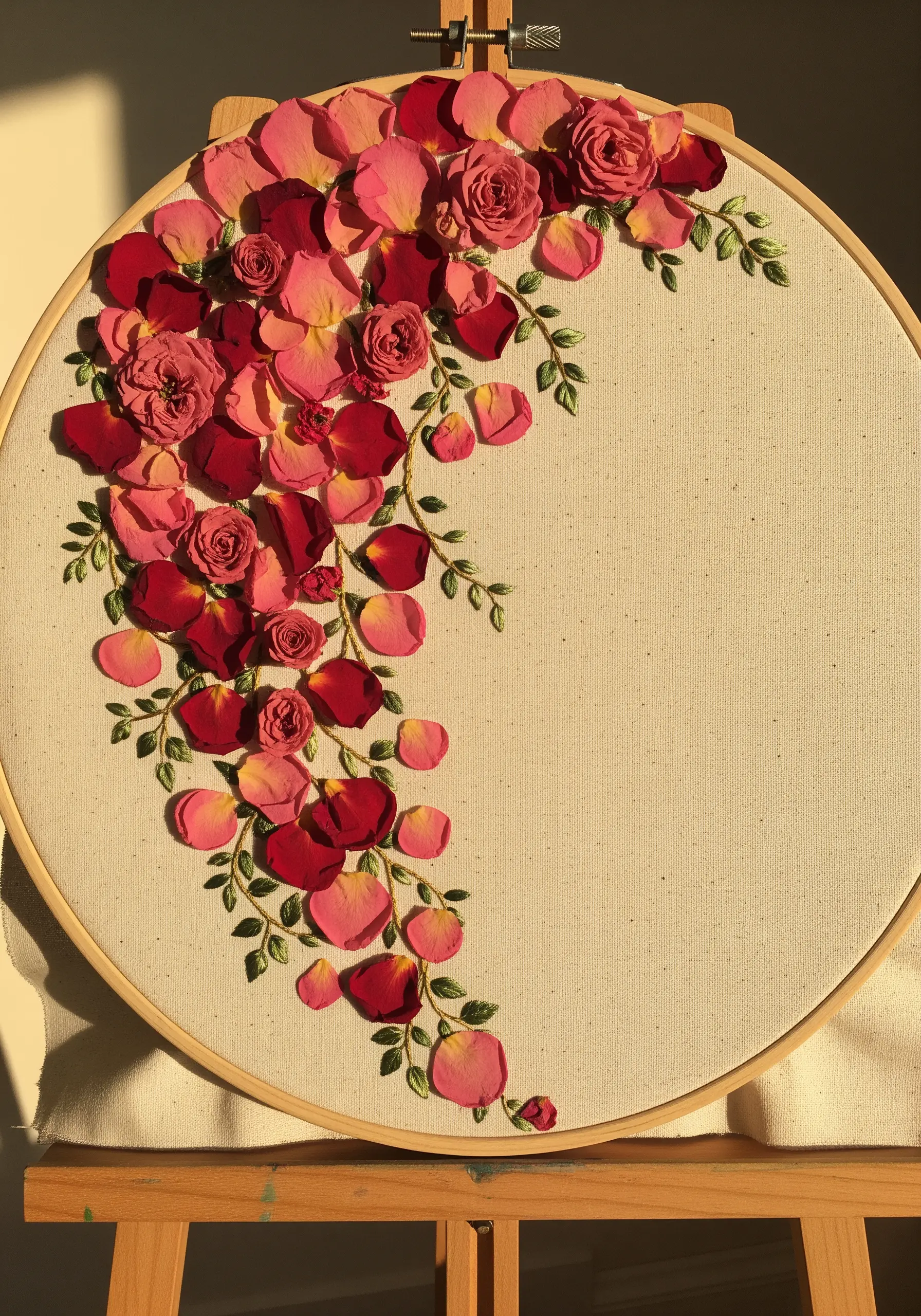
Use an embroidered structure to guide the placement of your loose, pressed petals, creating intentional flow and movement.
Begin by stitching a graceful, winding vine using a stem stitch, which gives the line a beautiful, rope-like texture.
Add small leaves along the vine with single detached chain stitches (lazy daisies) for a delicate, organic feel.
Only then should you arrange the dried rose petals along this stitched path, securing them with tiny, hidden stitches.
The embroidered vine acts as the spine of the design, ensuring your composition feels cohesive and artfully arranged, not random.
6. Stitch a Meadow Floor to Anchor Real Blooms
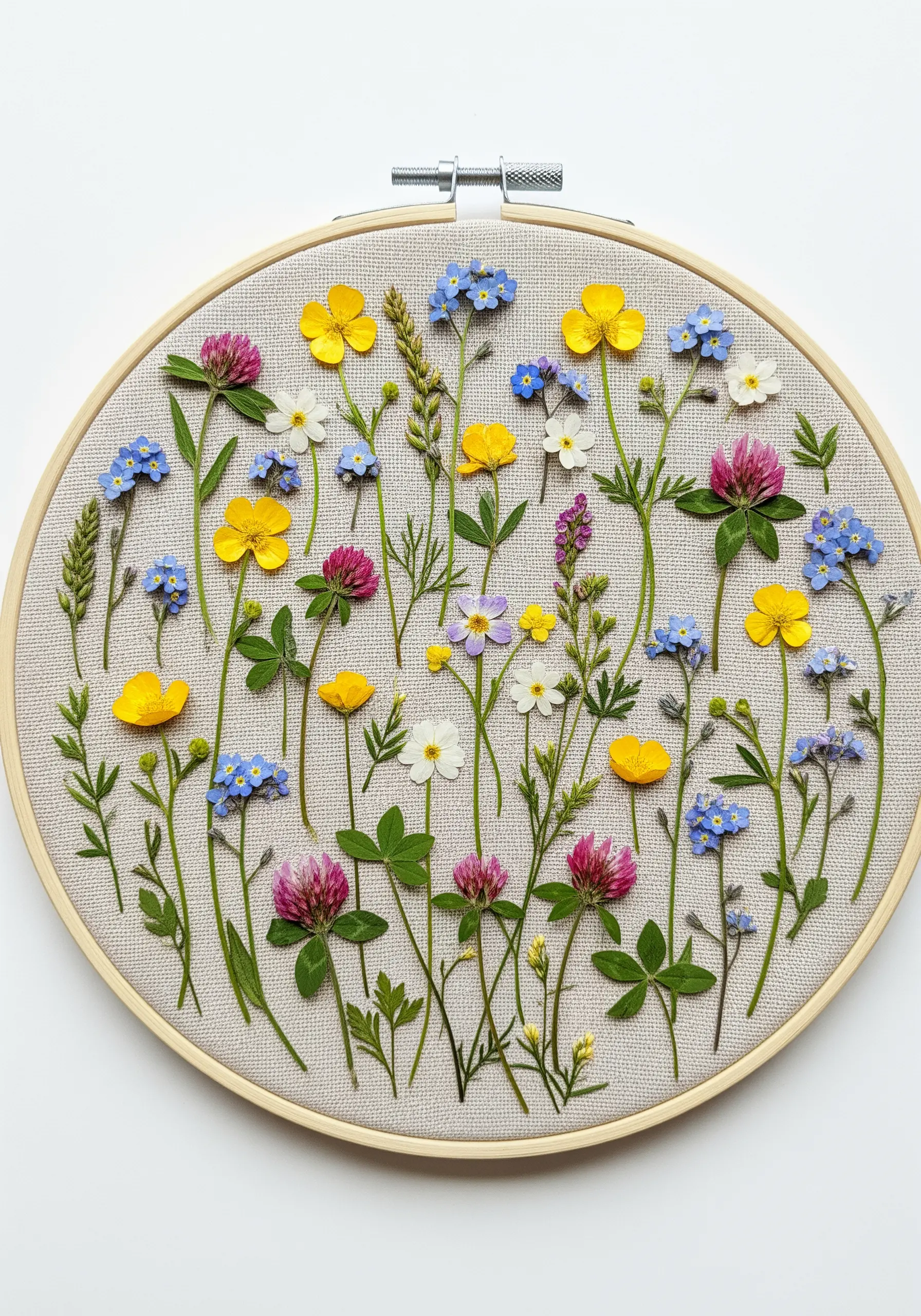
Integrate your pressed flowers into a complete scene by first creating an embroidered foundation for them to ‘grow’ from.
Use a variety of simple stitches—like straight stitch, seed stitch, and fly stitch—in several shades of green to build up a textured ground layer of grass and leaves.
Varying the length and direction of your stitches will create a sense of depth and realism.
Then, carefully position your pressed wildflowers so they appear to emerge from the stitched foliage.
This crucial step makes the composition feel whole and intentional, turning it from a simple collage into a miniature landscape.
7. Replicate Leaf Texture with Thread Painting

Use a real pressed leaf as your template to create a hyper-realistic embroidered version.
Trace its outline and major veins, then fill the shape using long-and-short stitch, which is perfect for blending colors seamlessly.
To mimic the natural color variations of an autumn leaf, blend at least three shades of thread, from dark orange to a light, shimmering gold.
The key to realism is directing your stitches to flow outwards from the central veins, just as they do in nature.
Using a single strand of metallic thread sporadically will catch the light and add a subtle, magical glint.
8. Capture Fleeting Moments with Dispersed Stitches
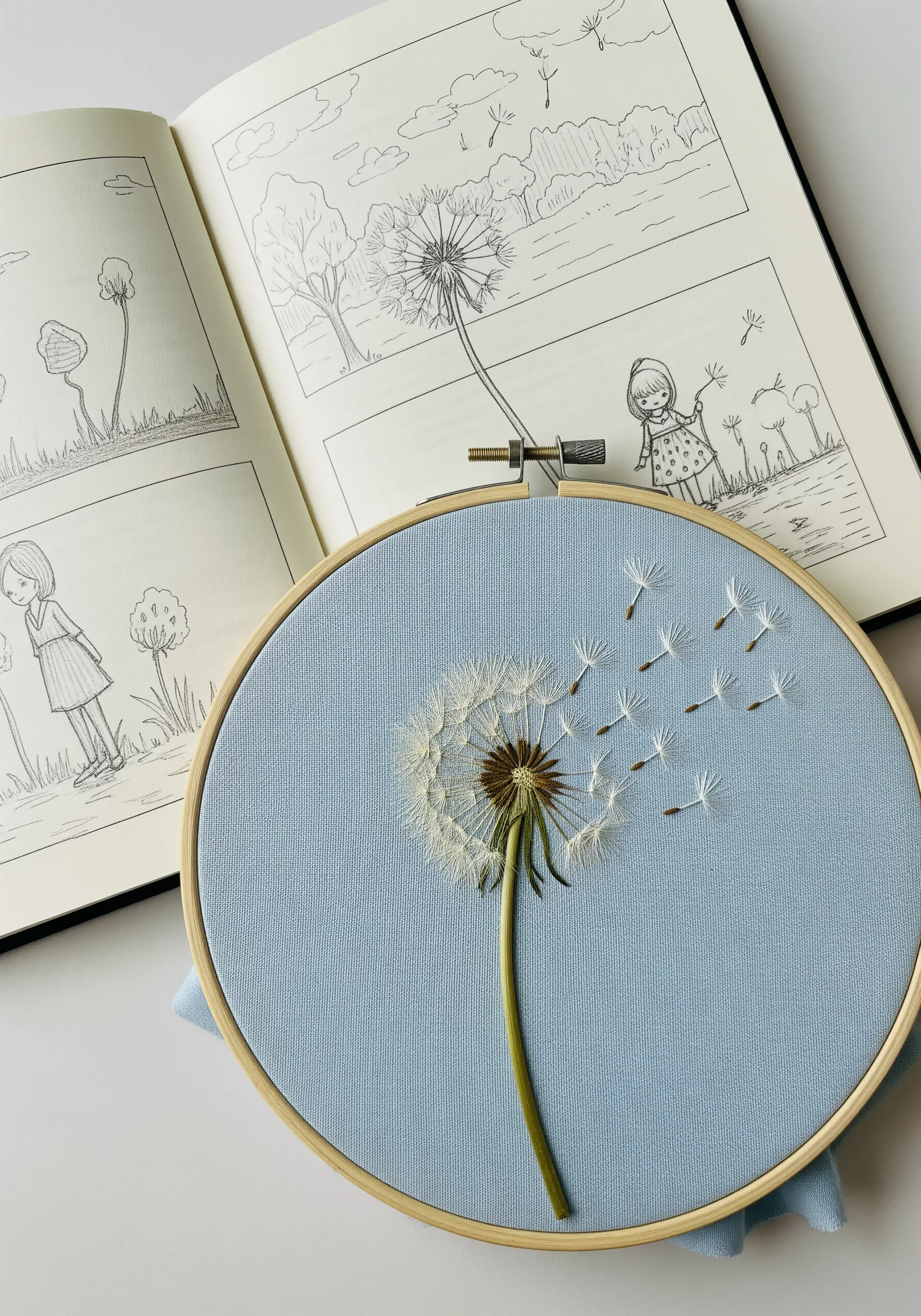
Combine a real botanical element with delicate stitching to create a sense of movement and storytelling.
Secure the pressed dandelion stem and seed head to your fabric first.
Then, use single, detached straight stitches to represent the seeds being carried away on the wind.
To create the fluffy, parachute-like pappus on each seed, add a tiny V-shape or a three-pronged star stitch at the end of your straight stitch.
This thoughtful mix of real and stitched elements captures the fragile, fleeting beauty of a moment in time.
9. Design a Minimalist Botanical Herbarium
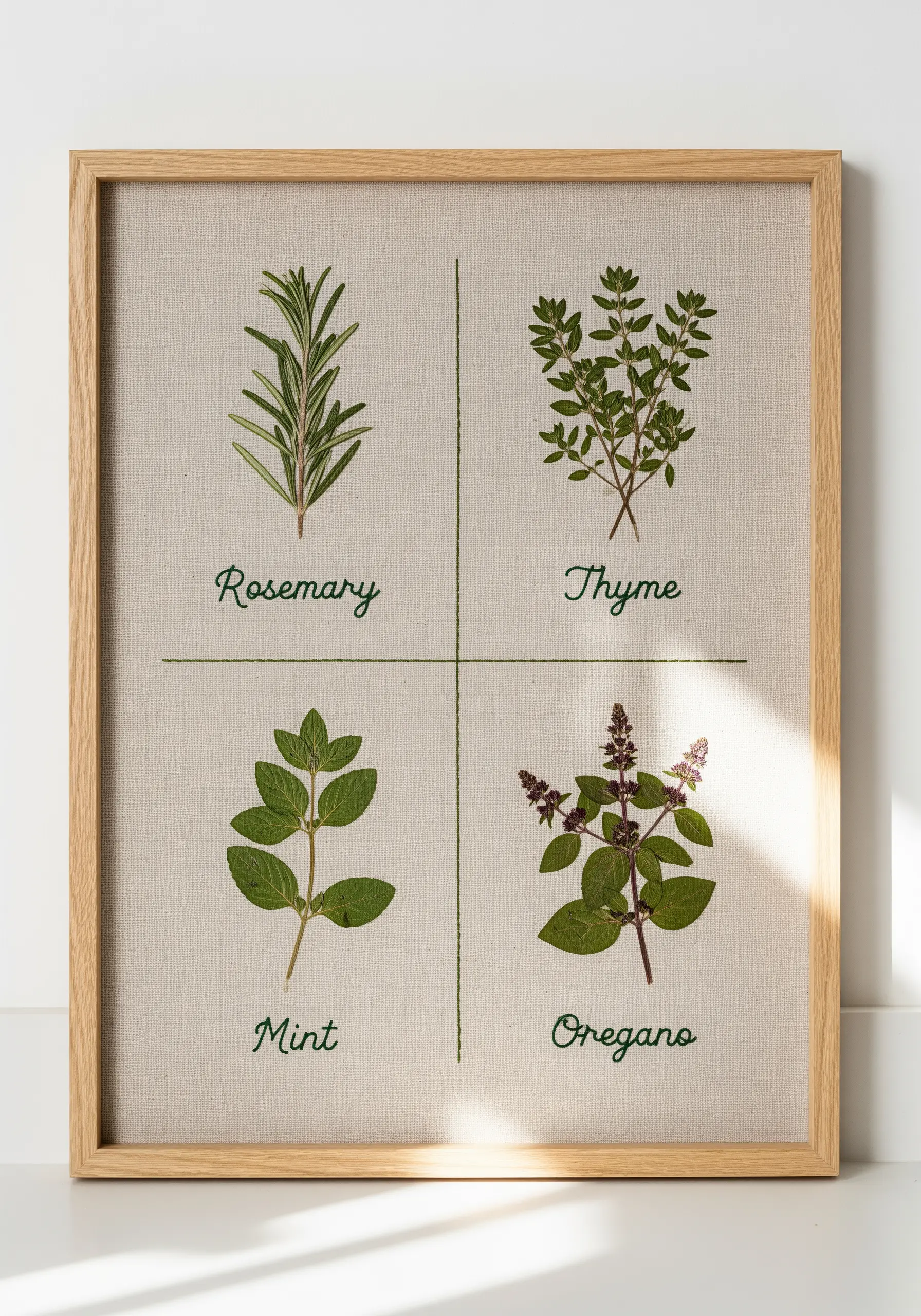
Elevate simple pressed herbs from your garden by arranging them in a clean, graphic grid.
This ordered presentation turns everyday specimens into a sophisticated piece of botanical art.
Use a single strand of contrasting thread and a neat backstitch for the dividing lines and lettering to maintain a crisp, clean aesthetic.
Choose a simple, elegant script or sans-serif font for the labels; overly ornate lettering would compete with the natural forms of the herbs.
This minimalist approach proves that thoughtful composition is often more impactful than complex stitching.
10. Inlay a Monogram with Tiny Pressed Florals
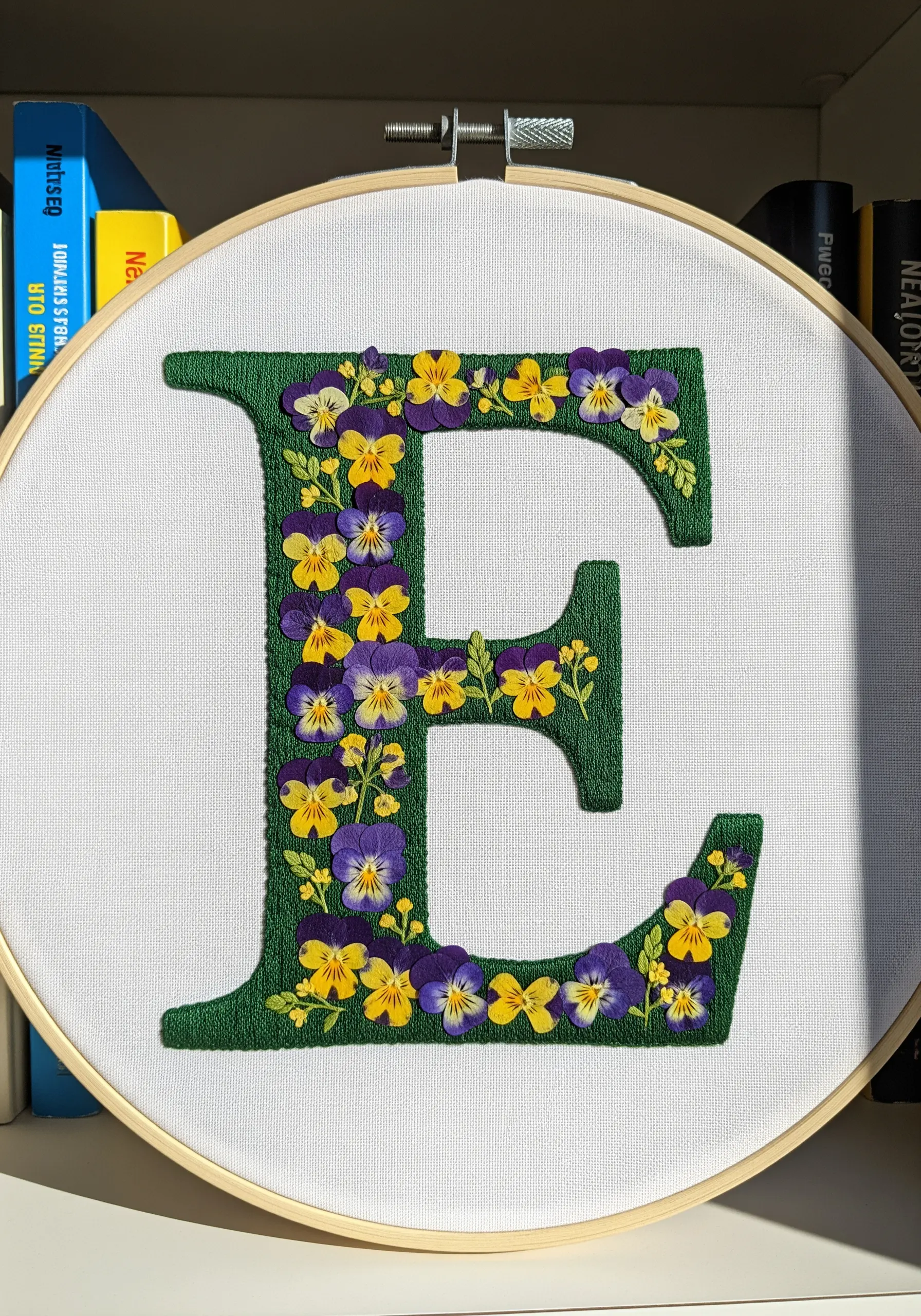
Create a stunning textural contrast by combining dense embroidery with delicate, real flowers.
First, stitch a bold, block-letter initial using a smooth satin stitch. This solid, textured foundation is essential for the inlay effect to work.
Then, carefully arrange tiny pressed flowers, like violas or forget-me-nots, within the boundaries of the stitched shape.
Secure each tiny bloom with a minuscule dot of archival fabric glue or a single, nearly invisible tacking stitch.
The final result is a beautiful, personalized monogram where the softness of the flowers is heightened by the sheen of the thread.
11. Pair Celestial Motifs with Delicate Botanicals
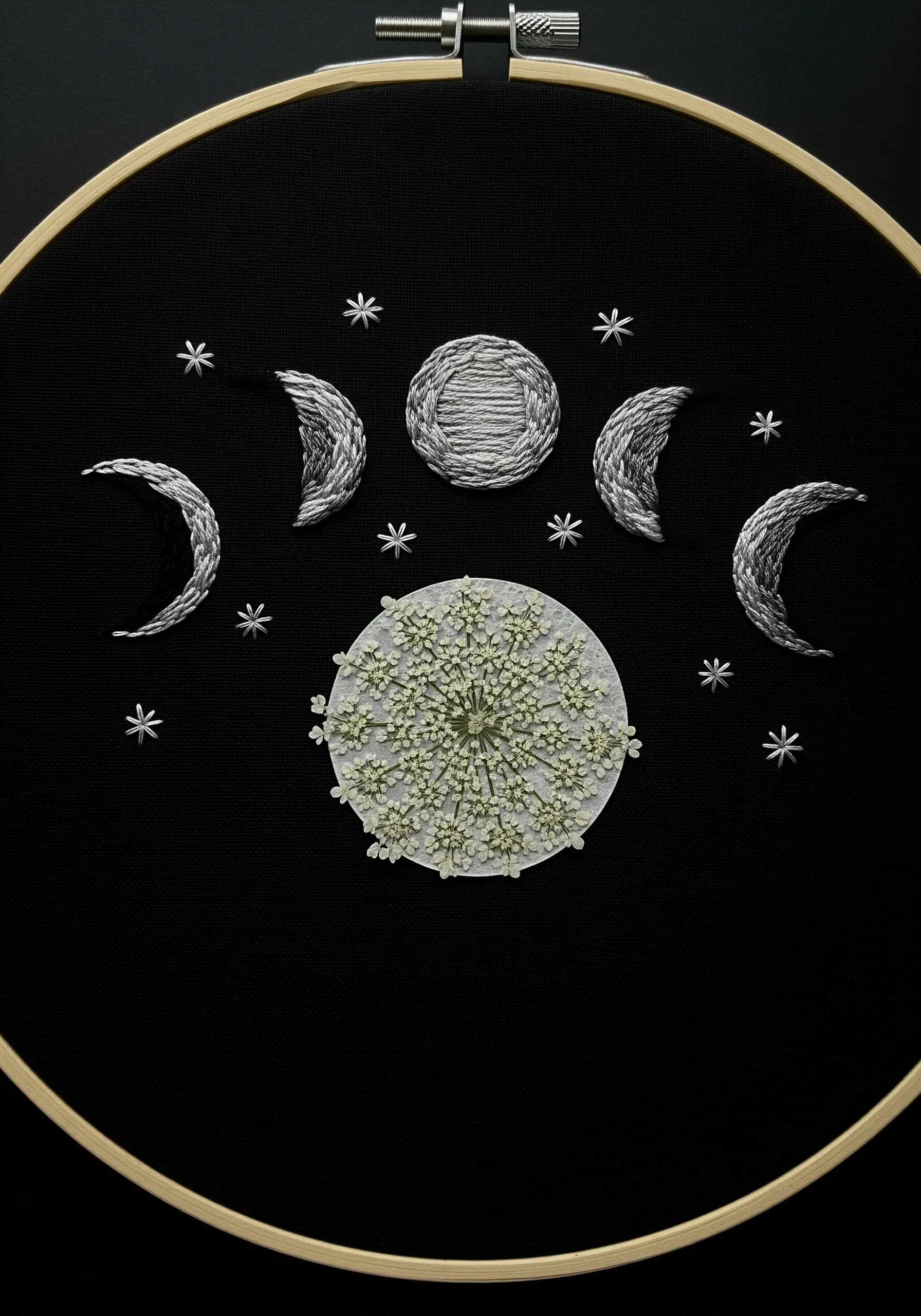
Look for natural elements that mimic other forms, like using a pressed Queen Anne’s Lace to represent a full moon.
Its intricate, circular spray of tiny flowers is a perfect natural analogue for a celestial body.
For the other moon phases, use a directional satin stitch with a silver metallic thread to capture the craters and shadows of the lunar surface.
Stitching on high-contrast black fabric makes both the shimmering thread and the pale flower pop, creating a dramatic and imaginative celestial-inspired art piece.
12. Merge Organic Forms with Geometric Line Art
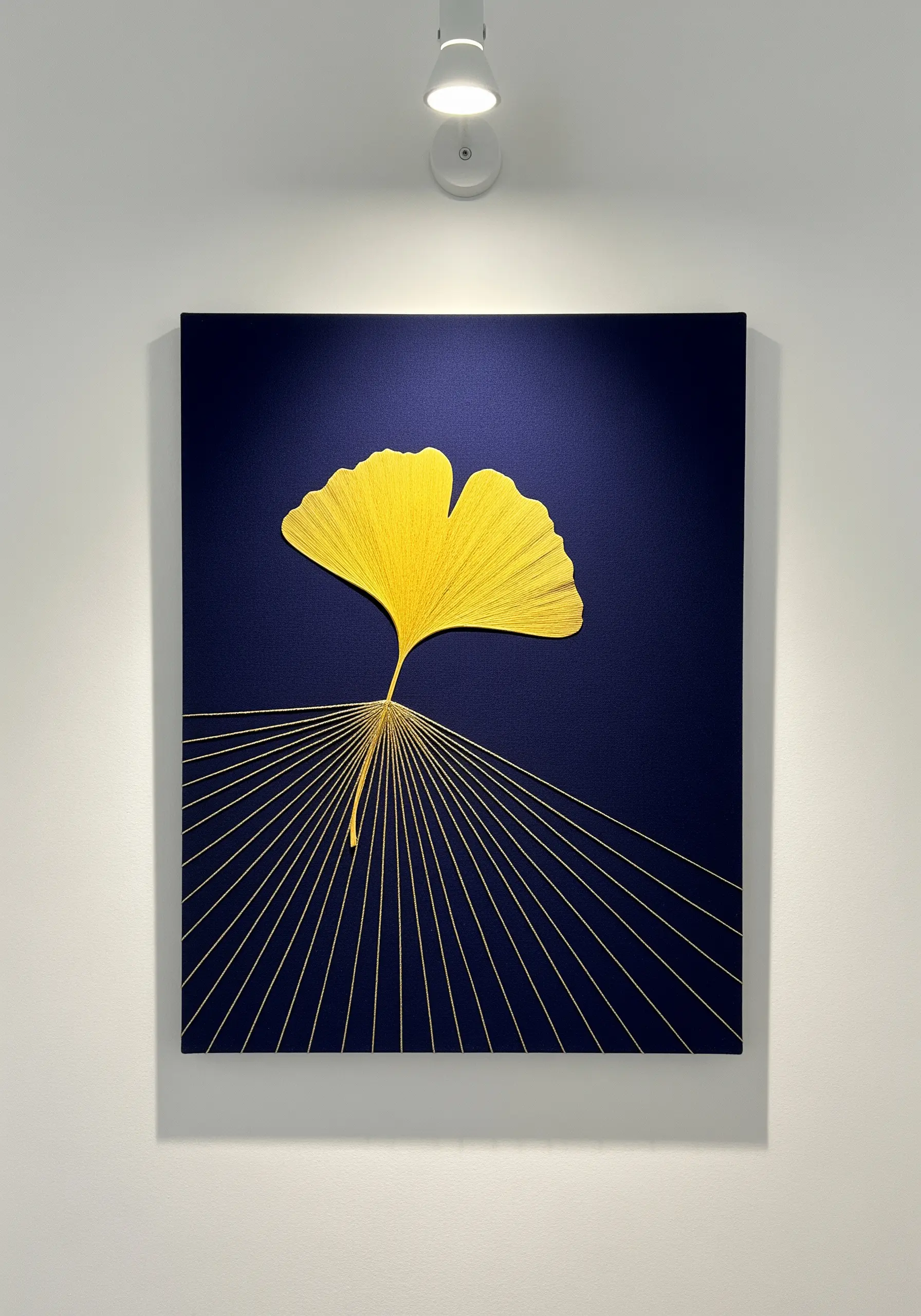
Create a dynamic composition by contrasting a soft, organic shape with sharp, geometric lines.
Begin by creating a perfectly blended ginkgo leaf using long-and-short stitch to achieve a smooth, paint-like finish.
Then, extend the energy of the leaf’s form by adding radiating straight stitches that shoot out from its base.
This technique, borrowed from string art, creates a powerful sense of movement and visual tension.
The rigid, mathematical precision of the lines makes the soft, natural curves of the leaf even more beautiful.
13. Create a Narrative with Stitched and Real Elements
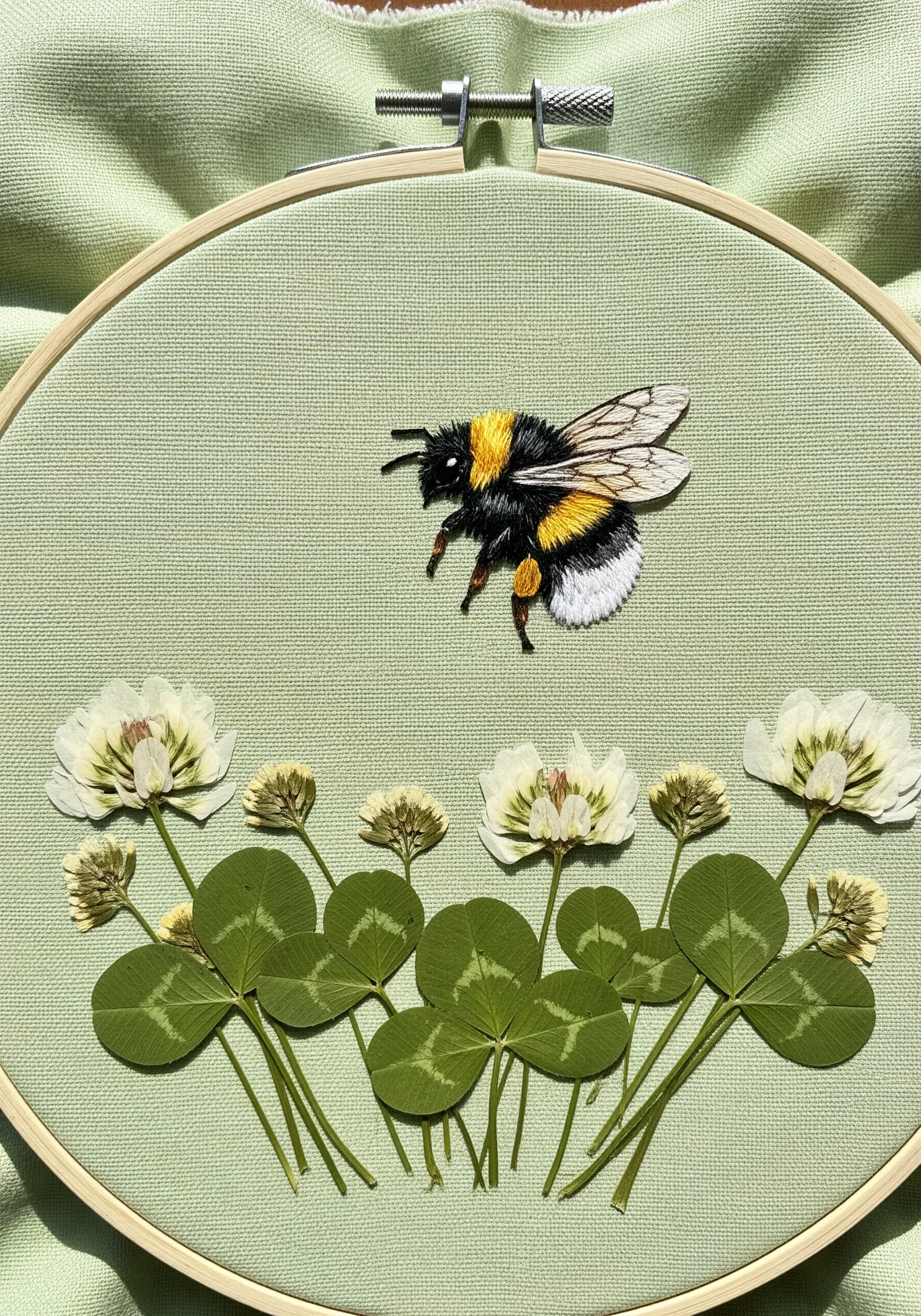
Tell a small, charming story by combining a hyper-realistic embroidered creature with a real botanical setting.
The key is to invest time in the stitched element. Render the bee with meticulous short satin stitches for the body and a delicate single-strand backstitch for the wings and legs to achieve that realism.
Placing this lifelike bee above a field of real pressed clover creates a dynamic scene that bridges the gap between your art and the natural world.
The interaction between the two elements is what brings the piece to life.
14. Map a Floral Constellation with Stitched Lines
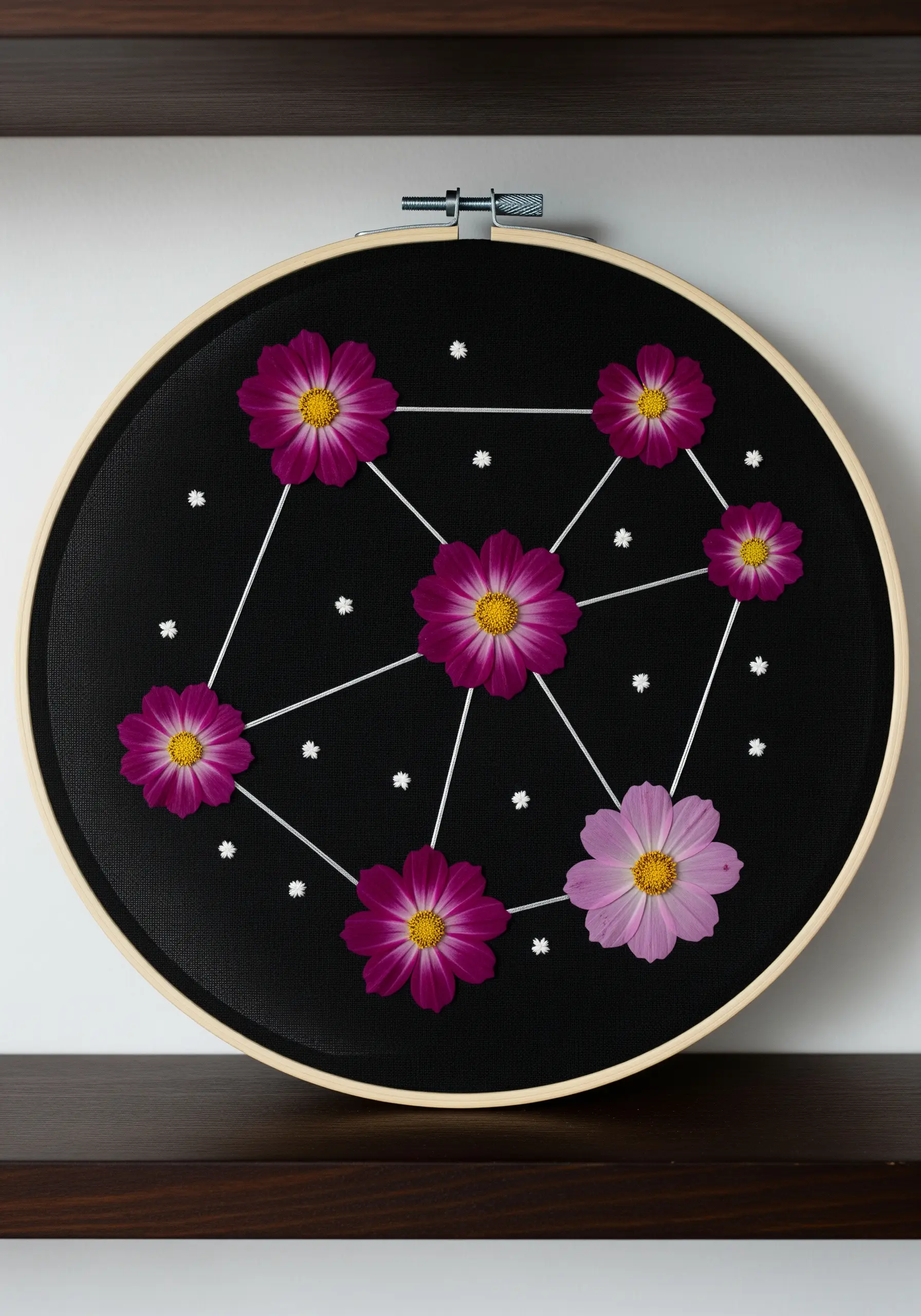
Turn your pressed flowers into a whimsical piece of celestial art by arranging them into a geometric pattern.
Instead of a random scatter, place your cosmos flowers at key points on a dark fabric, imagining they are stars.
Then, use a single strand of white or silver thread to connect them with clean, crisp backstitched lines, forming your own unique constellation.
Add tiny French knots or star stitches in the surrounding negative space to represent distant stars and complete the cosmic illusion.
15. Design a Climbing Vine for a Vertical Panel
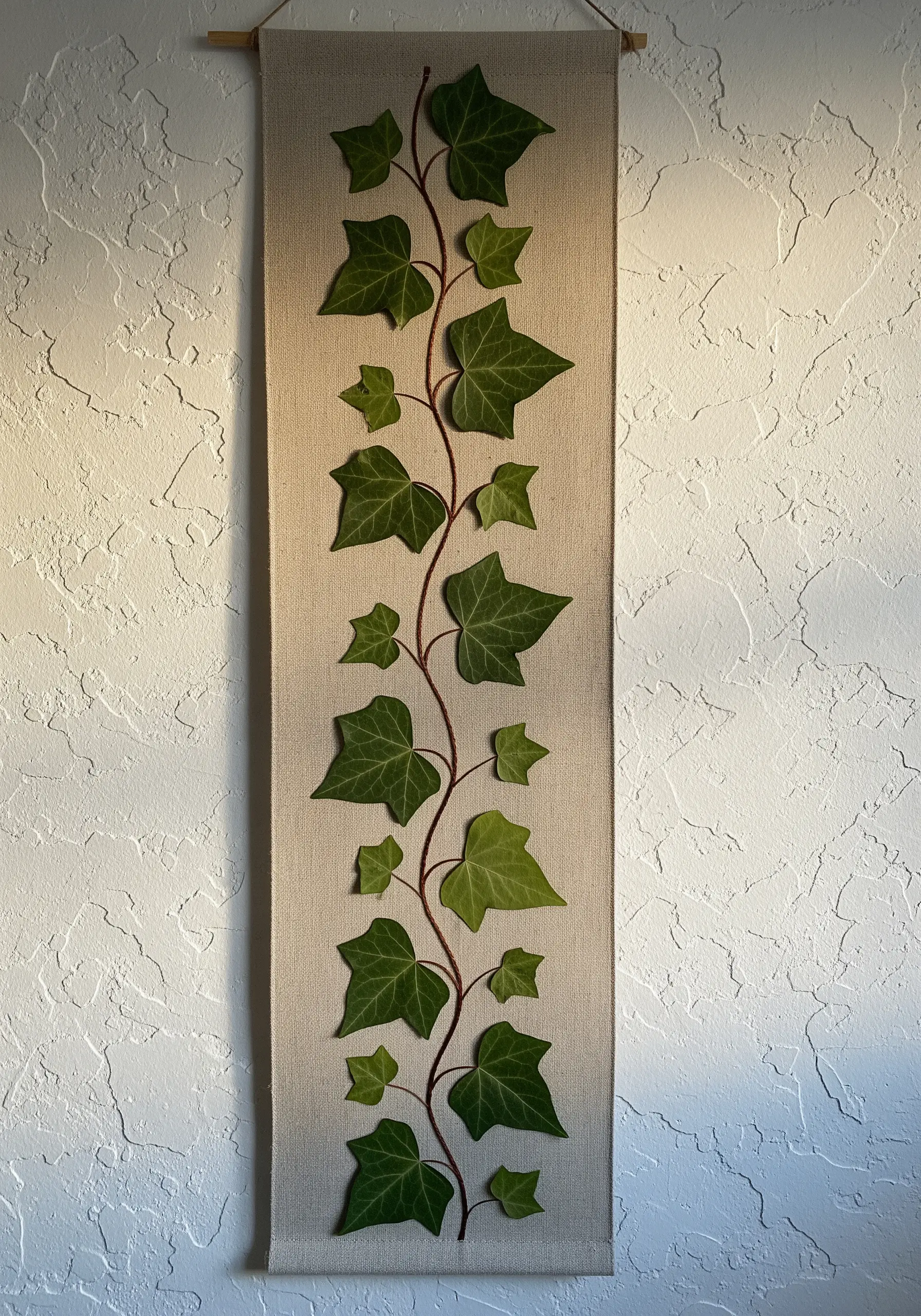
Take your botanical embroidery beyond the hoop by working on a long, narrow piece of fabric to create a stunning wall hanging.
This vertical format is perfect for conveying a sense of growth.
First, stitch a central, wandering vine using a thick stem stitch or a braid stitch to give it substance and texture.
Then, carefully arrange pressed ivy leaves along this stitched vine, varying their size and orientation to mimic how a real plant climbs.
This elegant format is an ideal solution for decorating narrow wall spaces or doorways.
16. Deconstruct a Flower into Abstract Components
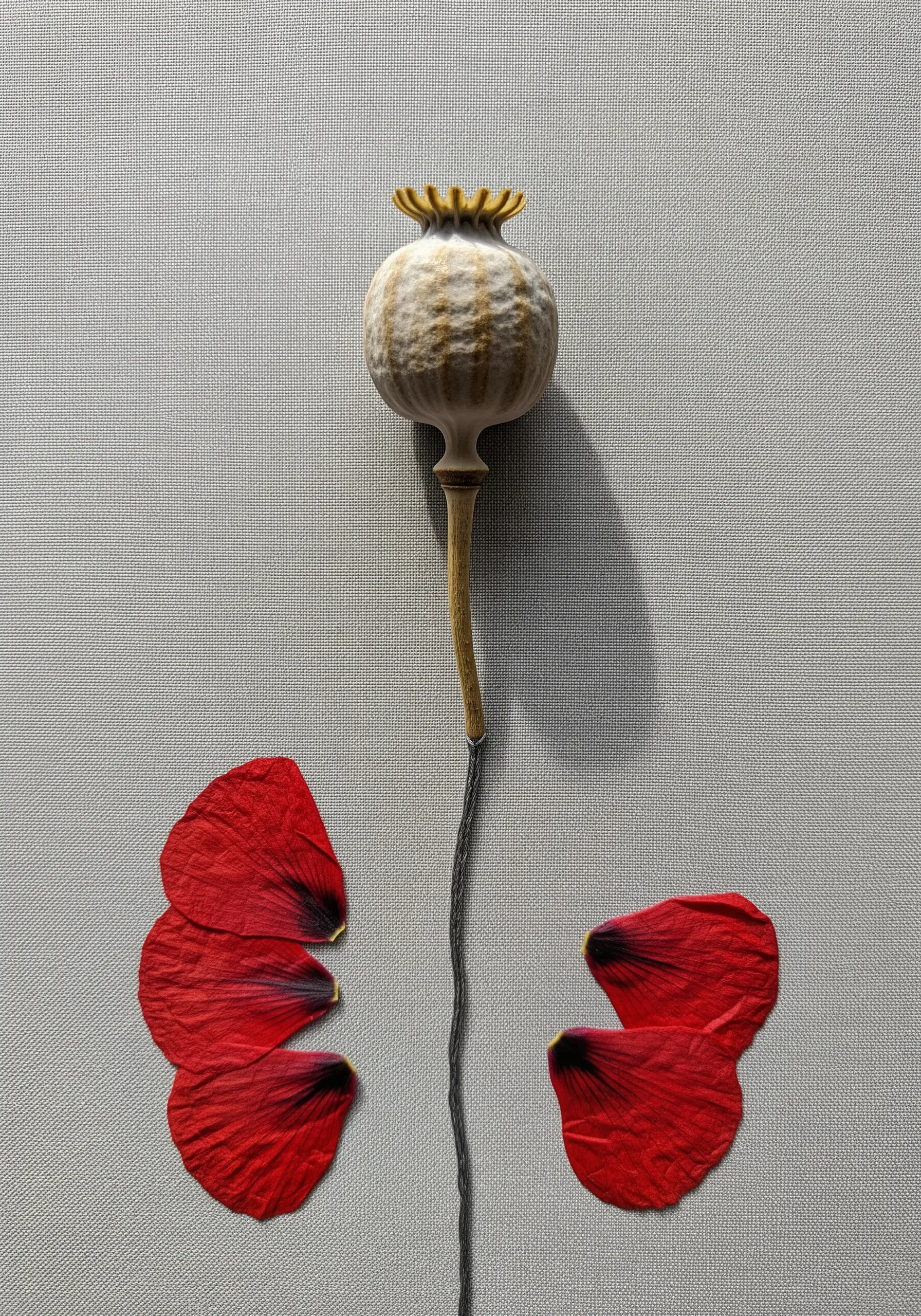
Embrace a minimalist, conceptual approach by breaking a flower down into its essential parts.
Pair a single, dramatic element—like a real, dried poppy seed head—with abstract representations of its other forms.
Here, a couched, twisted thread becomes the stem, and carefully arranged pressed petals serve as abstract leaf shapes below.
This deconstructed view is modern and thoughtful, encouraging the viewer to appreciate the unique beauty of each individual component rather than just the whole flower.
17. Build a 3D Landscape with Layered Textures
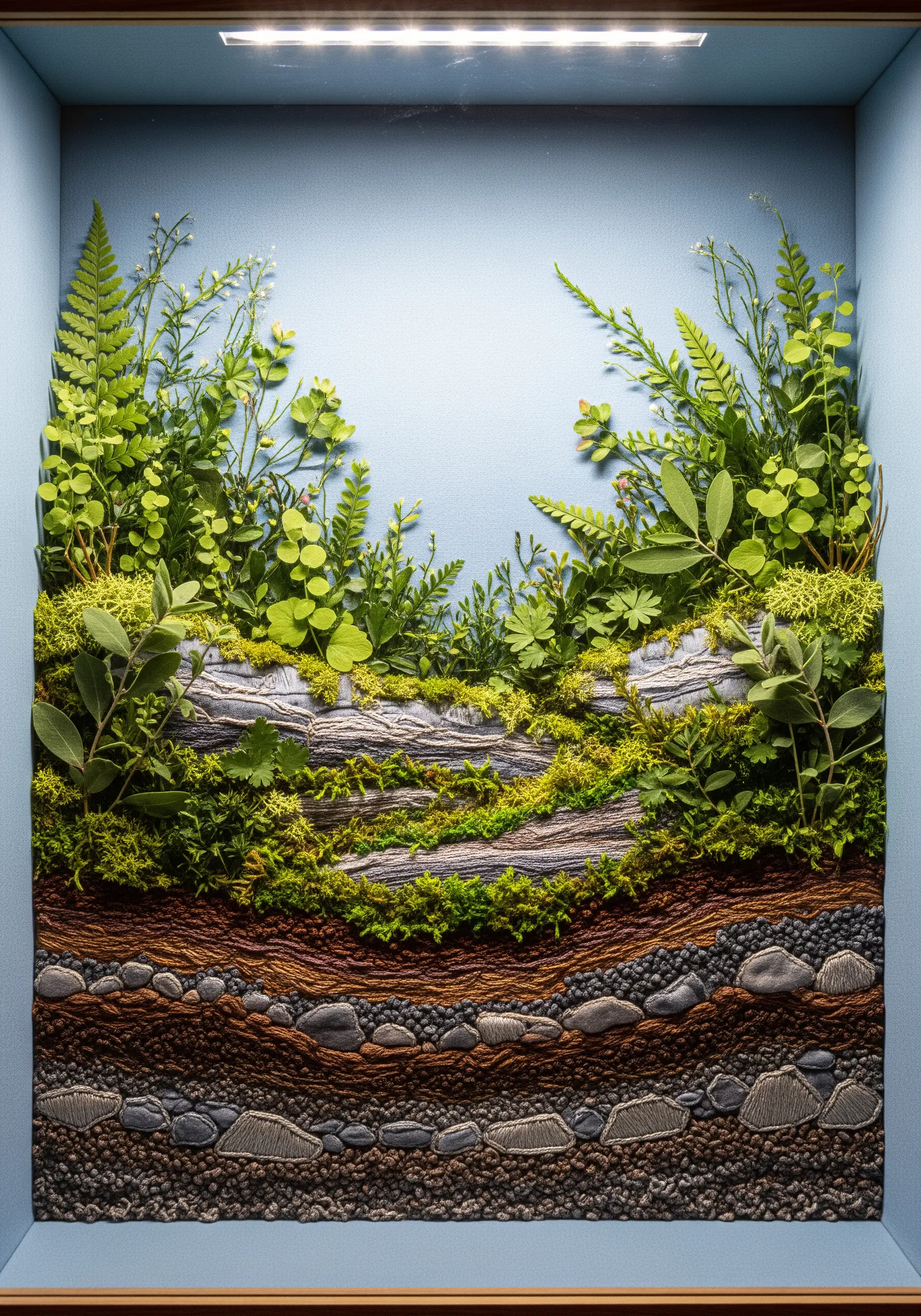
Go beyond a flat surface and build a rich, tactile diorama that invites closer inspection.
Create distinct layers of the earth using varied stitches: dense French knots for soil, smooth satin stitch for stones, and vertical straight stitches for tree bark.
Use Turkey work to create fluffy, 3D moss that you can trim to shape.
The final touch is to integrate small pressed ferns and other delicate foliage into the topmost layer, seamlessly blending your stitched world with real botanical elements.
This maximalist approach creates an incredibly immersive tactile diorama.
18. Frame a String Art Center with a Petal Mandala
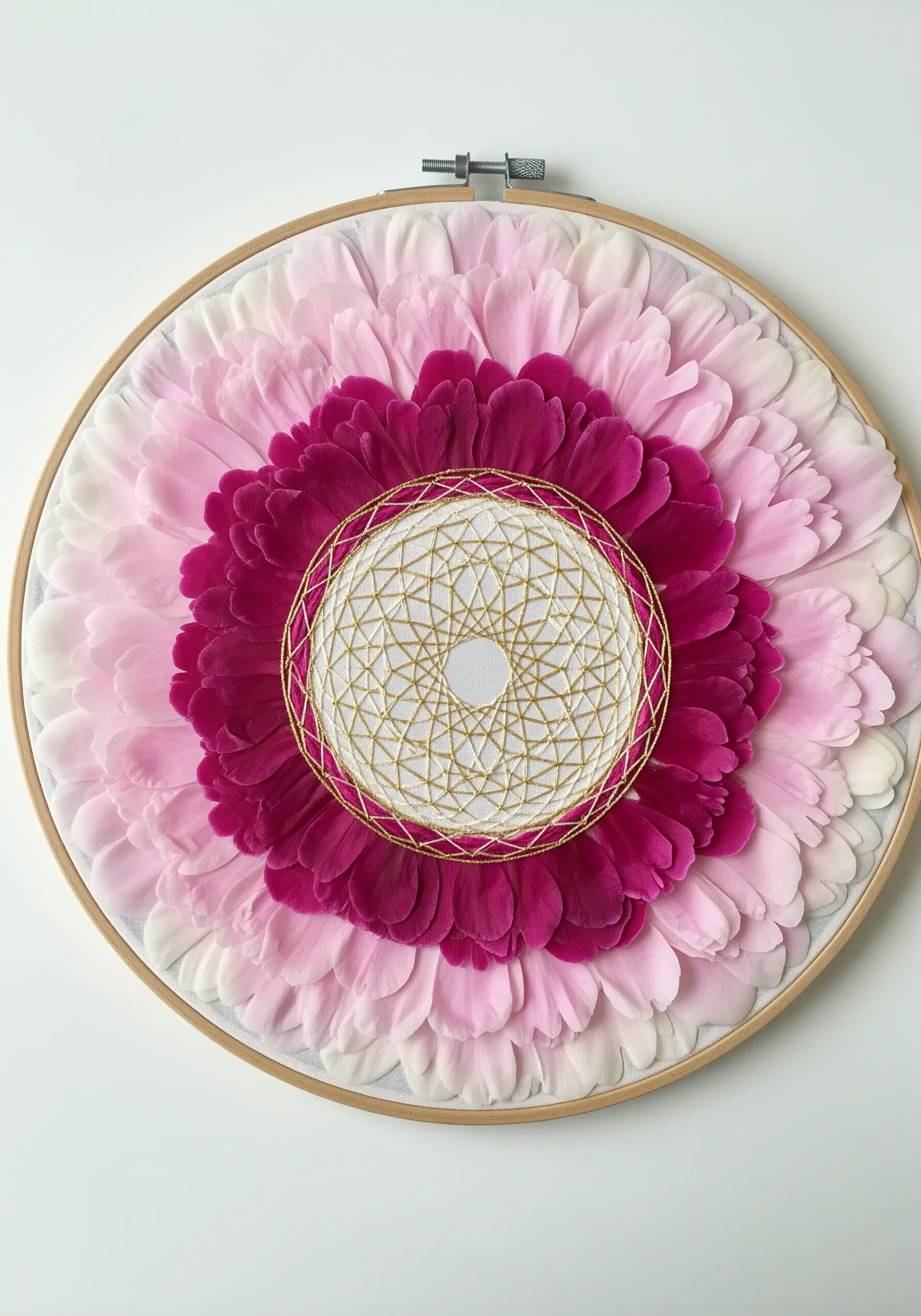
Create a powerful visual contrast by pairing the sharp precision of string art with the soft, organic texture of flower petals.
Begin by creating a geometric core, wrapping a metallic thread around a circle of carefully placed anchor stitches to form a crisp, mathematical pattern.
Then, surround this technical center with concentric rings of soft, pressed petals, arranged in a color gradient from dark to light.
The juxtaposition of the hard, shimmering lines and the soft, matte petals makes each element more impactful.
19. Create Atmospheric Depth with Layered Stitching
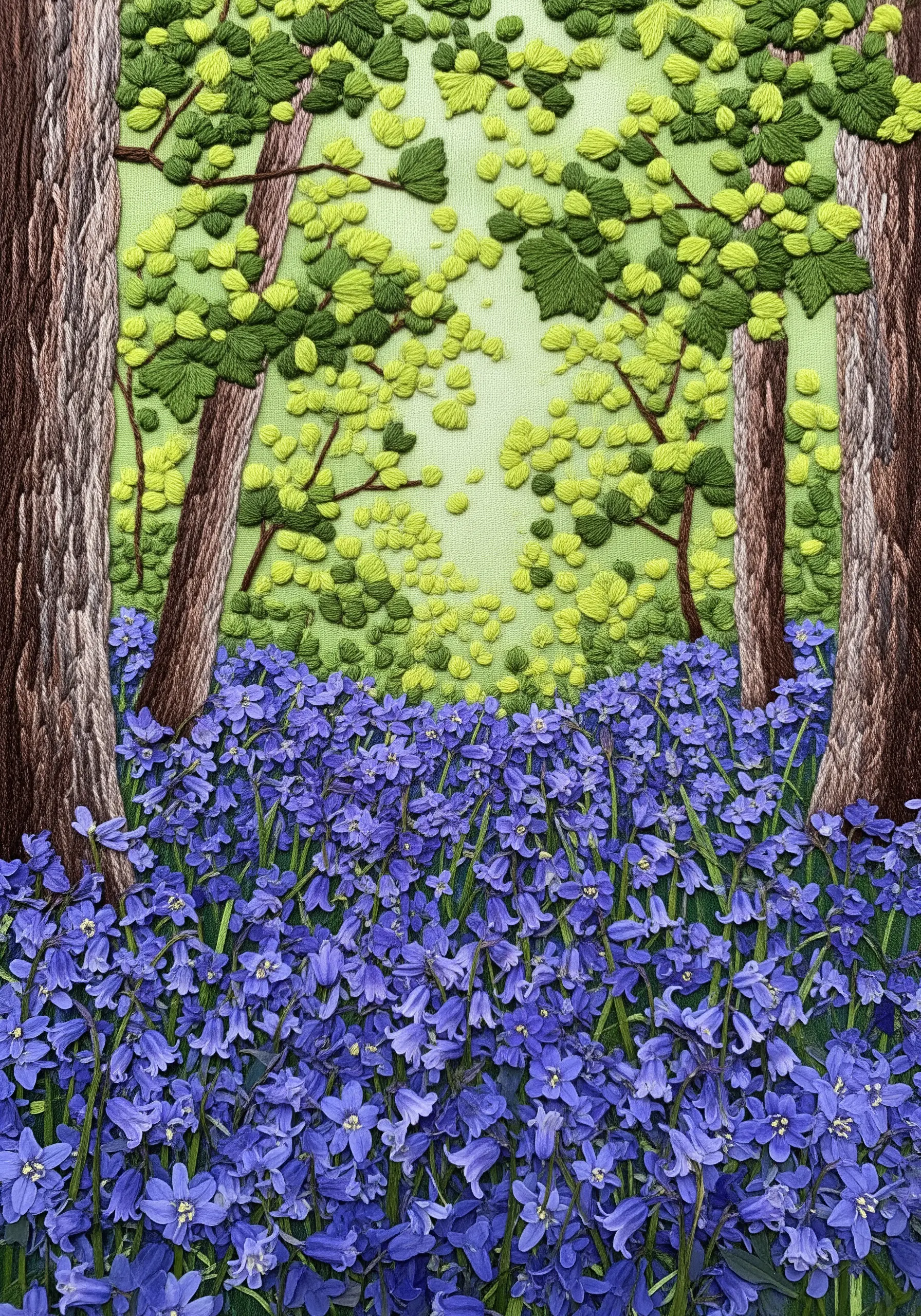
To make a landscape feel immersive, you need to create a sense of depth and perspective.
Stitch the elements in the foreground—like these bluebells—with high detail, vibrant color, and dense stitches like detached chain stitch and satin stitch.
For the trees and foliage in the background, use less detailed stitches like French knots and looser satin stitches in more muted, lighter colors.
This technique, known as atmospheric perspective, tricks the eye into seeing distance and draws the viewer right into the heart of your stitched forest.
20. Master Floral Realism Through Texture and Direction
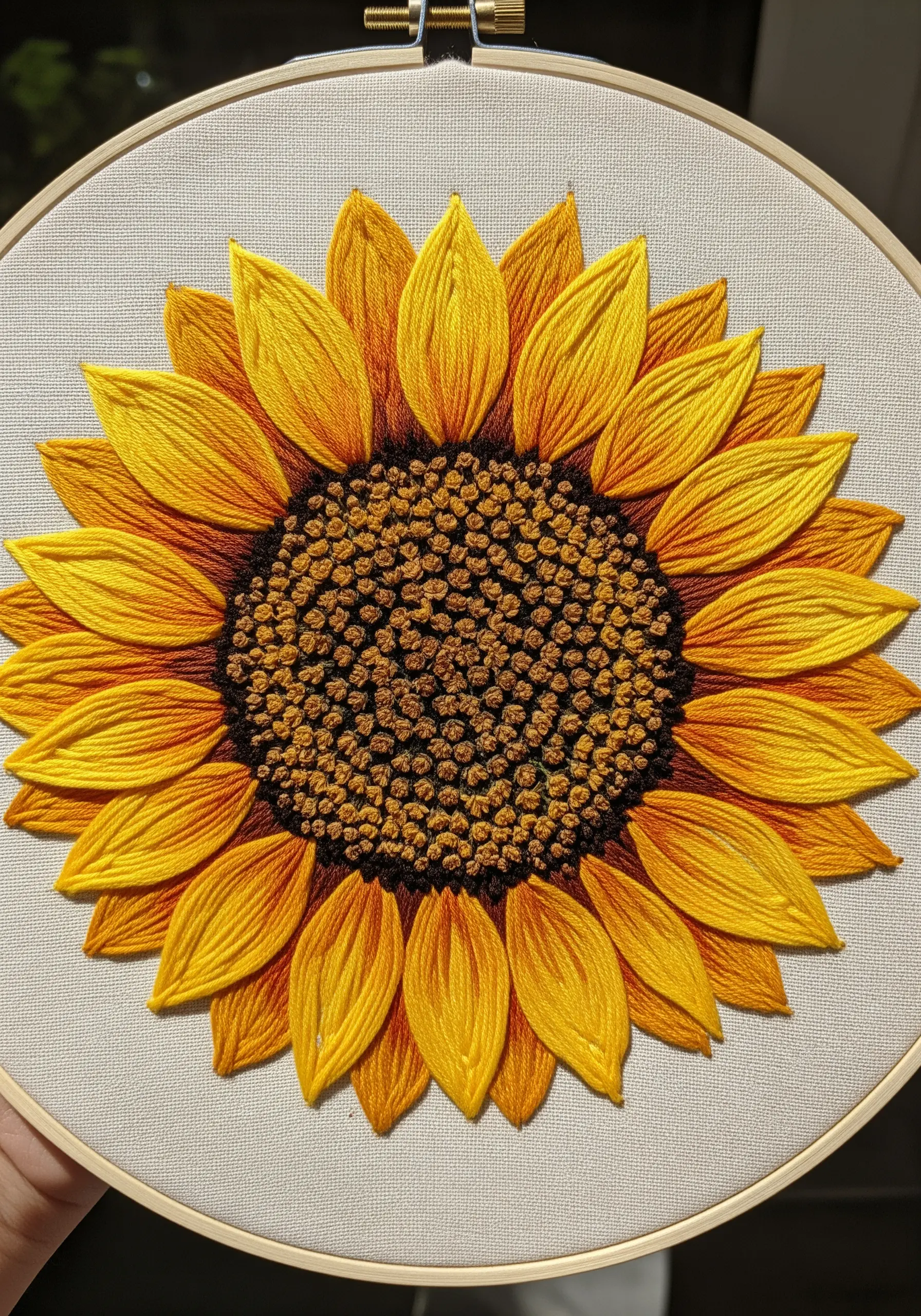
For a realistic sunflower, the magic is in capturing two distinct textures: the dense seed head and the radiating petals.
Fill the center with a thick carpet of French knots and colonial knots, using multiple shades of brown and dark gold to create depth and dimension.
For the petals, use a long-and-short stitch or fishbone stitch, ensuring every single stitch flows outward from the center.
This directional stitching is crucial; it makes the petals look like they are truly growing from the core, giving the entire flower a dynamic, lifelike quality.
21. Explore Stumpwork for Lifelike 3D Botanicals

To make elements truly lift off the fabric, experiment with stumpwork, a form of raised embroidery.
You will create the fuchsia and hummingbird on separate pieces of scrap fabric, using padding underneath and thin wire around the edges to give them structure and shape.
Use meticulous long-and-short stitch to create the color gradients.
Once complete, you carefully cut them out and appliqué them to your main fabric.
This advanced technique results in breathtaking realism and allows you to transform ordinary fabric into a sculptural piece.
22. Embellish Felt with a Single, Perfect Specimen
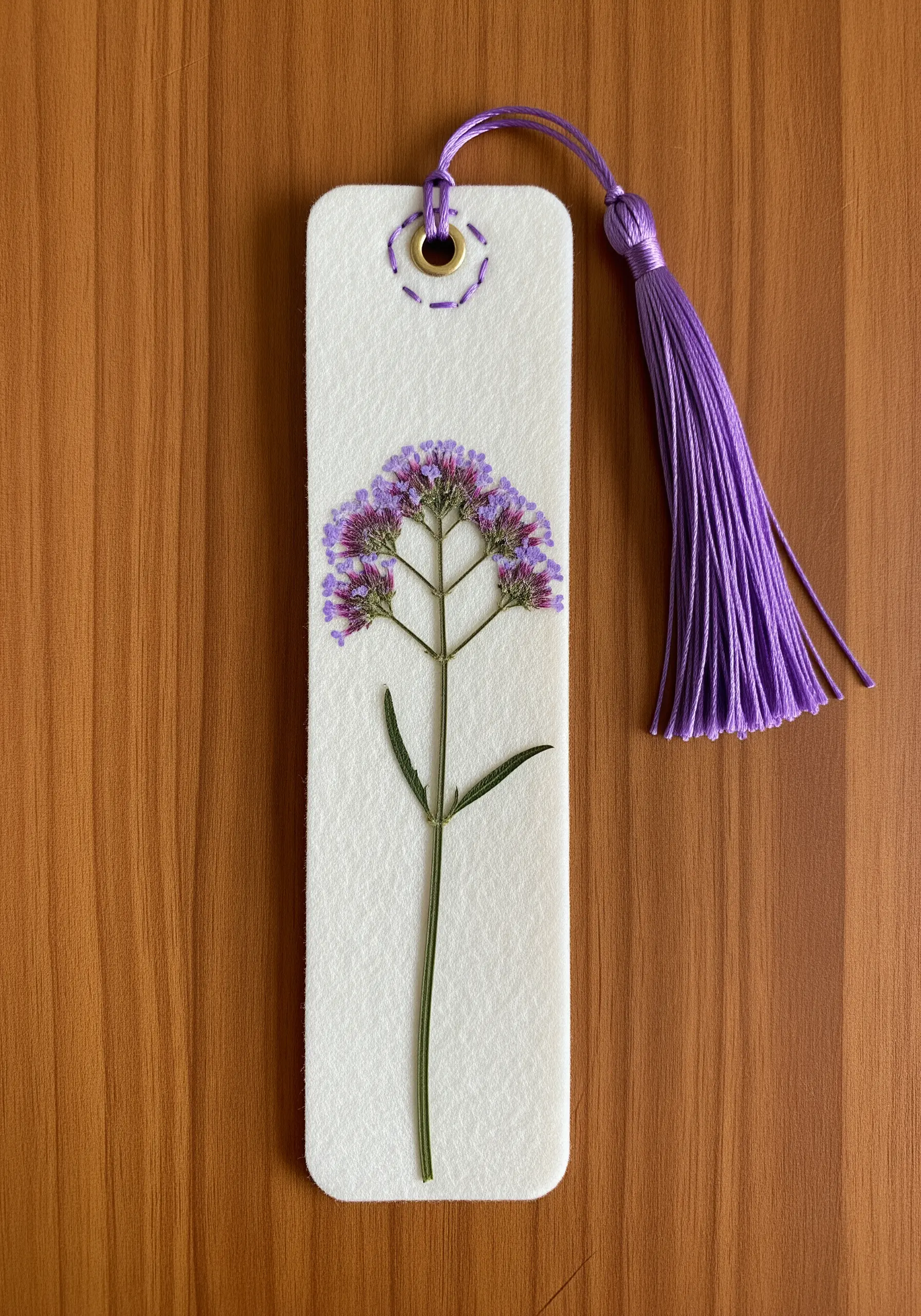
Sometimes, the simplest compositions are the most elegant. Create a beautiful bookmark using a sturdy piece of high-quality felt.
Choose one perfect, delicate pressed flower—like this verbena—and carefully secure it down the center as the sole focal point.
Elevate the finish by adding a hand-stitched buttonhole stitch around the grommet opening; it’s a small detail that signals quality craftsmanship.
The soft, matte texture of the felt provides a perfect, non-distracting background that makes the single botanical the star.
These make lovely small embroidery projects that make perfect handmade gifts.
23. Complement Real Leaves with Metallic Thread

Create a sophisticated, modern look by pairing the matte, natural texture of real leaves with the shimmer of metallic thread.
Arrange your pressed eucalyptus leaves in a graceful, trailing pattern across your pillow cover.
Instead of stitching a realistic stem, use a silver or pale gold metallic thread to stitch a stylized, graphic branch that connects the leaves.
Add small clusters of French knots with the same metallic thread to suggest buds or berries.
This elegant contrast between natural and man-made materials feels fresh, contemporary, and luxurious.
24. Create a Sunburst with Petals and Radiating Stitches
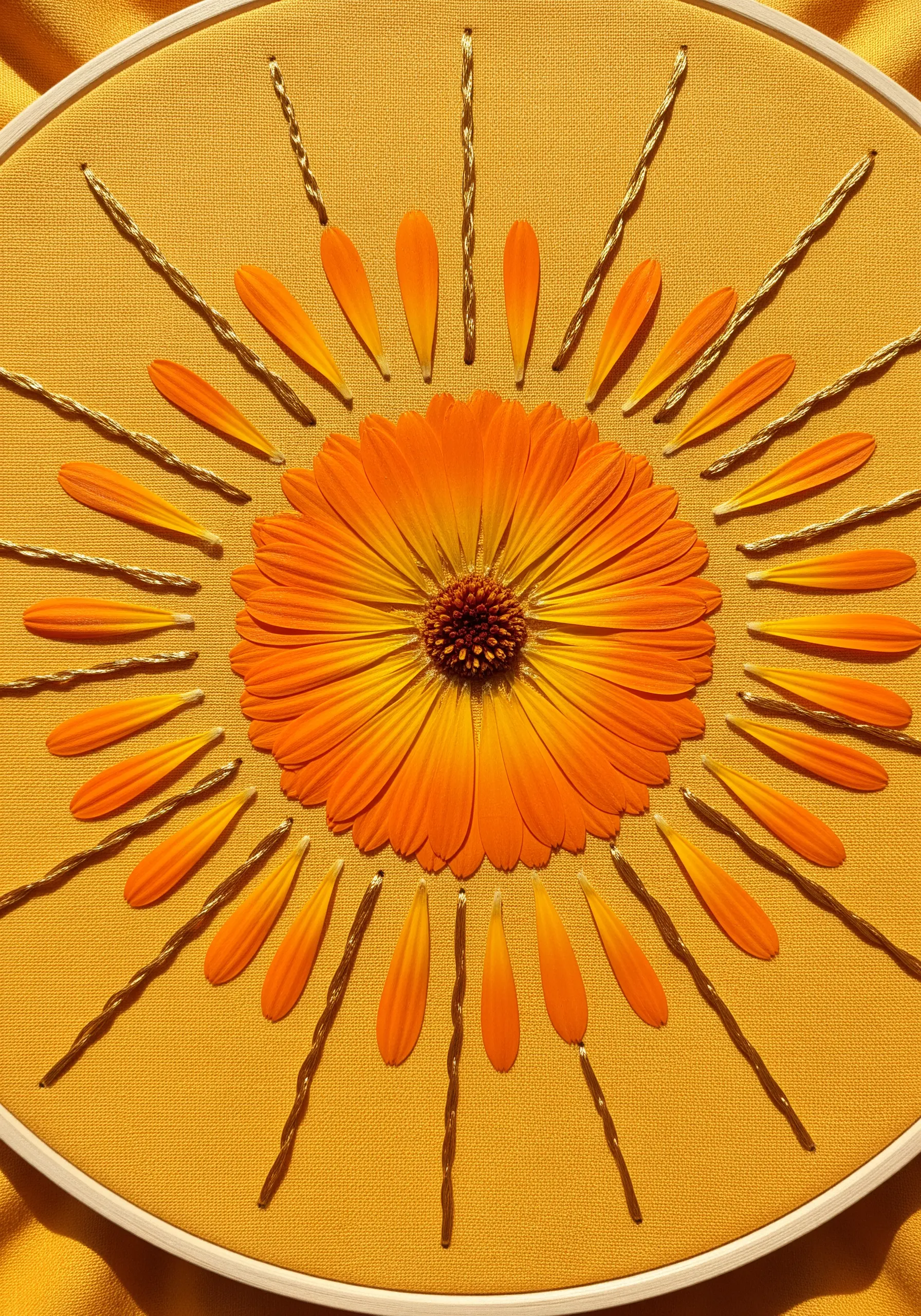
Design a piece that is bursting with energy and vibrant color by using a radial composition.
Place a whole pressed calendula flower at the very center of your hoop to act as the anchor point.
Next, arrange its loose petals in a circle around it, like rays of sun.
Finally, use a twisted thread or a braid stitch in a bright, complementary color to stitch longer sun rays that radiate outward between the petals.
This powerful, symmetrical design is joyful, eye-catching, and a beautiful celebration of a single flower.


