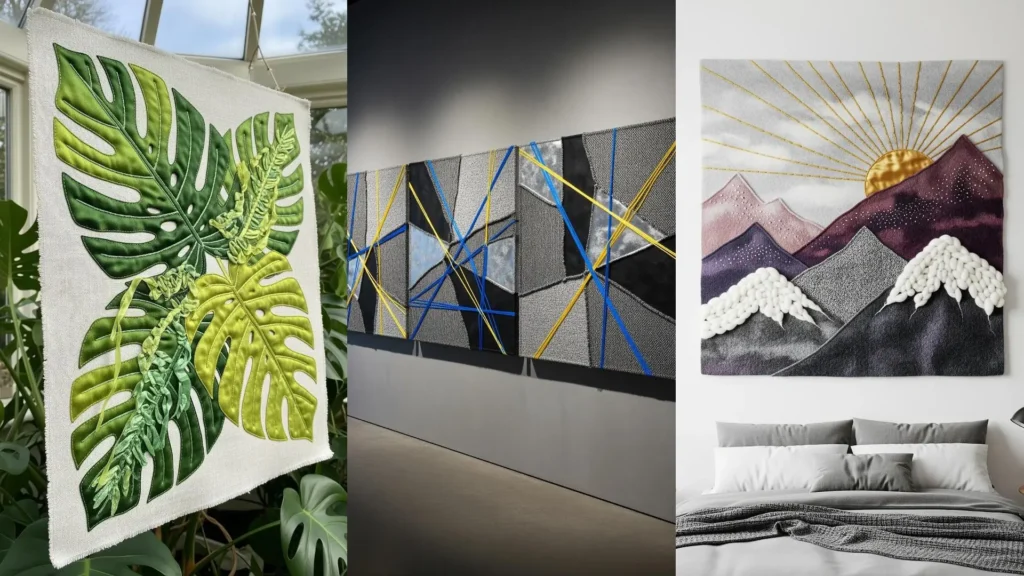
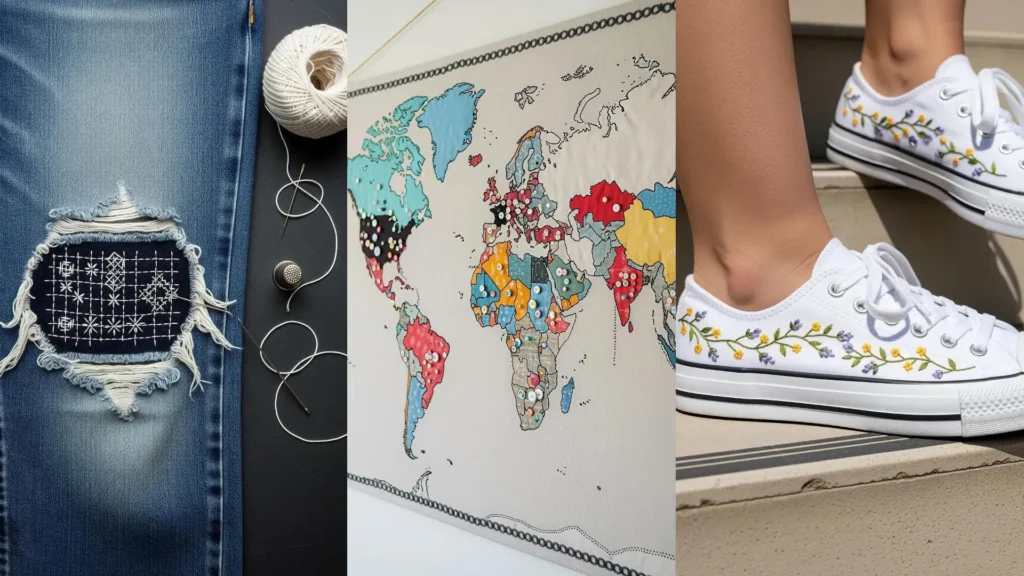
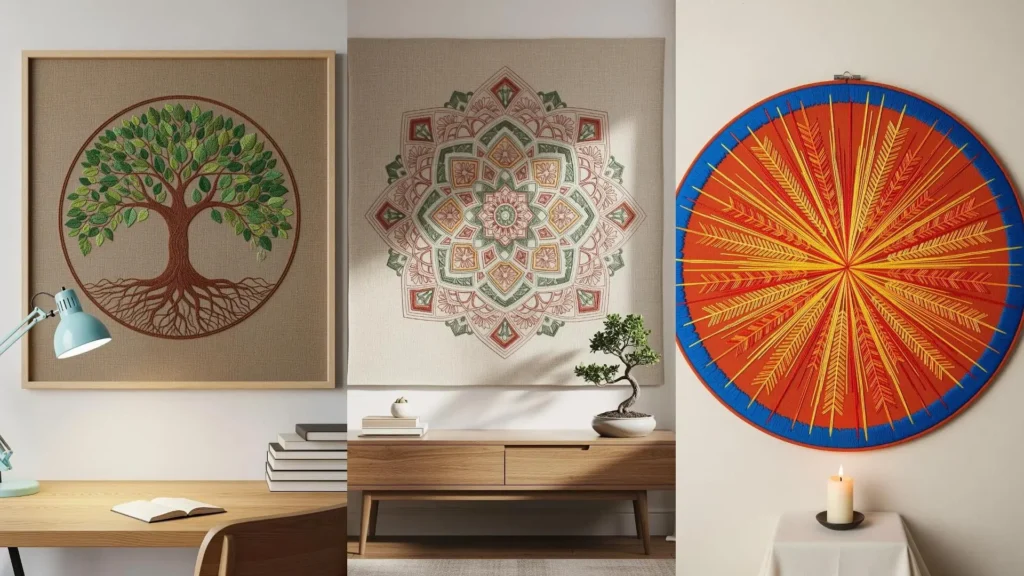
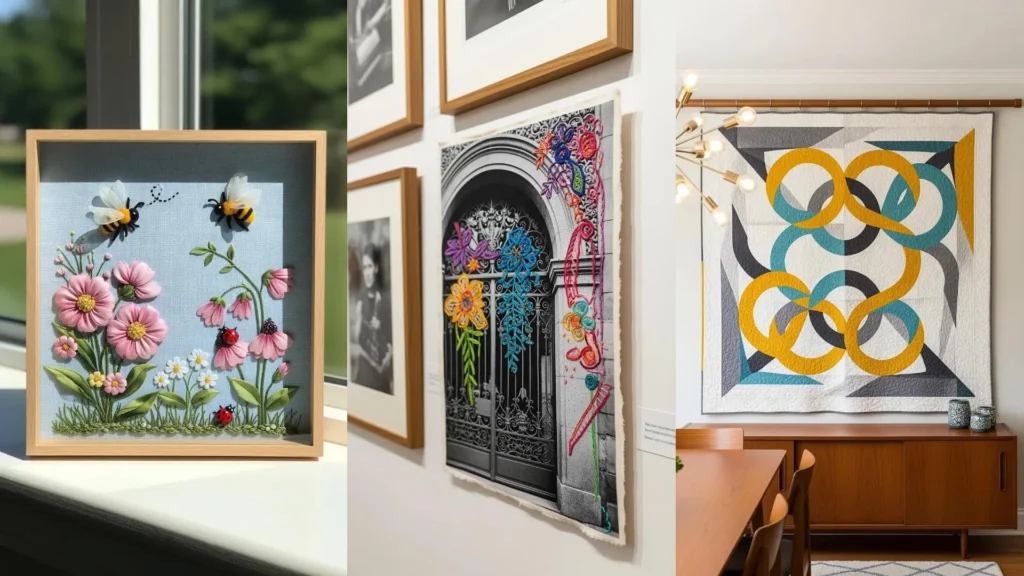
Before you buy new fabric, take a moment to look at what you already have. That stack of linen scraps, the denim jacket you no longer wear, or even a simple cotton tea towel holds immense potential. These aren’t just leftovers; they are canvases waiting for a story.
Embroidery is a language of texture and line, capable of turning the mundane into something meaningful. It’s about more than just decoration—it’s about transformation. A few carefully chosen stitches can mend a tear, celebrate a pattern, or give a forgotten object a completely new purpose in your home and life.
Here, you won’t find complex instructions, but rather ideas designed to spark your creativity. Think of them as starting points to help you see your old fabrics not for what they were, but for what they can become: unique, personal, and beautifully embroidered works of art.
1. Transform Denim with Full-Panel Floral Embroidery
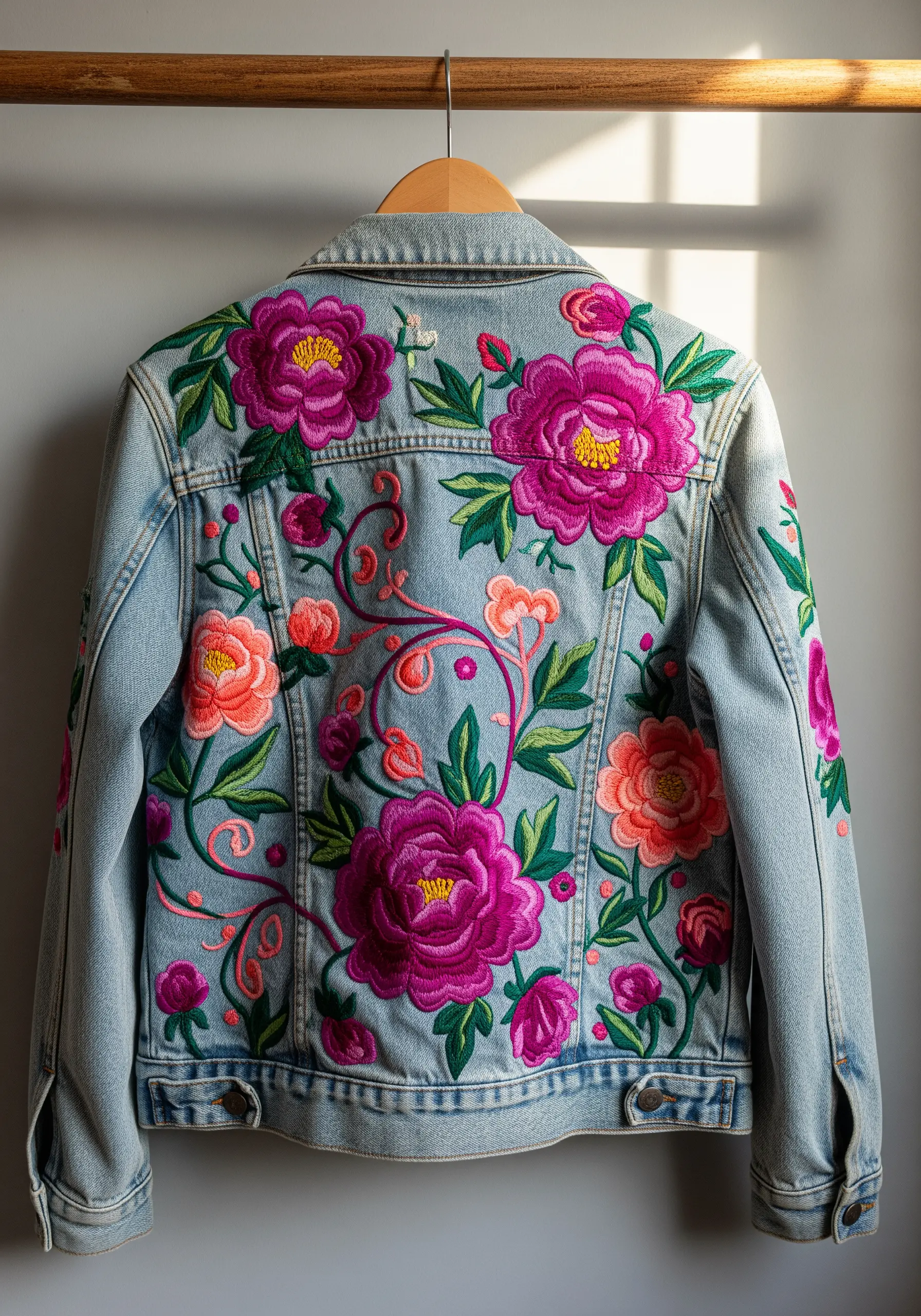
Give an old denim jacket a new identity by treating the back panel as a canvas.
Use a heavy-duty, stick-on stabilizer to support the dense stitching and prevent the fabric from puckering under the tension of bold satin stitches.
Create visual depth by layering your petals—stitch the background elements first, then add the foreground flowers on top.
For a dynamic composition, combine large, dominant flowers with swirling vines and smaller buds that flow across the seams and onto the sleeves.
Choose a vibrant, high-contrast palette of six-strand floss to make the wildflower embroidery patterns truly stand out against the blue denim.
2. Stitch Minimalist Landscapes on Felt Scraps

Use scraps of thick felt from old projects to create a set of modern, graphic coasters.
Felt’s non-woven structure provides a stable base that won’t fray, making it perfect for clean lines and un-hooped stitching.
Use a simple backstitch or stem stitch with contrasting cotton floss to outline minimalist mountain ranges.
Vary the designs across the set—some with single lines, others with layered geometric peaks or blocks of color-fill using satin stitch.
This is one of those Minimalist embroidery ideas that combines function with clean, modern aesthetics.
3. Create Sculptural Wall Art with Upcycled Canvas

Transform a plain canvas drop cloth or an old bedsheet into a large-scale, textural tapestry.
Use a punch needle and thick rug yarn to create raised, abstract shapes with a satisfyingly dense, looped texture.
Draw your organic forms directly onto the fabric, then fill them in with distinct color blocks for a modern, graphic impact.
Let sections of raw, natural-colored yarn hang loose as fringe to add another layer of texture and movement, creating a contrast with the tightly looped sections.
This approach elevates simple materials into one of those Giant fiber art installations perfect for a focal wall.
4. Embellish a Pillow Cover with a Mixed-Media Woodland Scene

Revitalize a faded pillowcase by creating a narrative scene with a variety of textures.
Combine simple appliqué for the mushroom caps with dense satin stitch for their stems to create dimension.
Use fern stitch for the foliage—its structure naturally mimics the shape of fern fronds, adding realism with an elementary stitch.
Incorporate small beads or French knots scattered like spores or morning dew to catch the light and add a touch of magic.
These detailed, plant-inspired embroidery patterns make a simple cushion a treasured object.
5. Add Bold Appliqué Typography to a Floral Tote

Elevate a thrifted floral tote bag by adding a high-contrast message.
To ensure your lettering stands out against a busy pattern, use appliqué instead of stitching alone.
Cut your letters from a sturdy, non-fraying fabric like black felt, which provides a bold, graphic base.
Secure each letter with fabric glue first, then outline it with a simple backstitch in a matching thread for a clean, permanent finish.
This technique is central to many Thread-based typography ideas, ensuring legibility and impact.
6. Practice Sashiko Stitching on Linen Scraps

Transform old linen napkins or fabric remnants into a sampler of traditional Japanese Sashiko patterns.
Sashiko uses a simple running stitch, but its power lies in geometric precision and consistency.
Use a specialized Sashiko thread, which is thicker and untwisted, to create bold, clear lines against the fabric.
The technique was originally for mending, making this a beautiful and historically meaningful way to reinforce and decorate worn textiles.
The clean lines and meditative process are similar to many Scandinavian table linen embroidery motifs.
7. Craft a Celestial Book Cover from Velvet Remnants
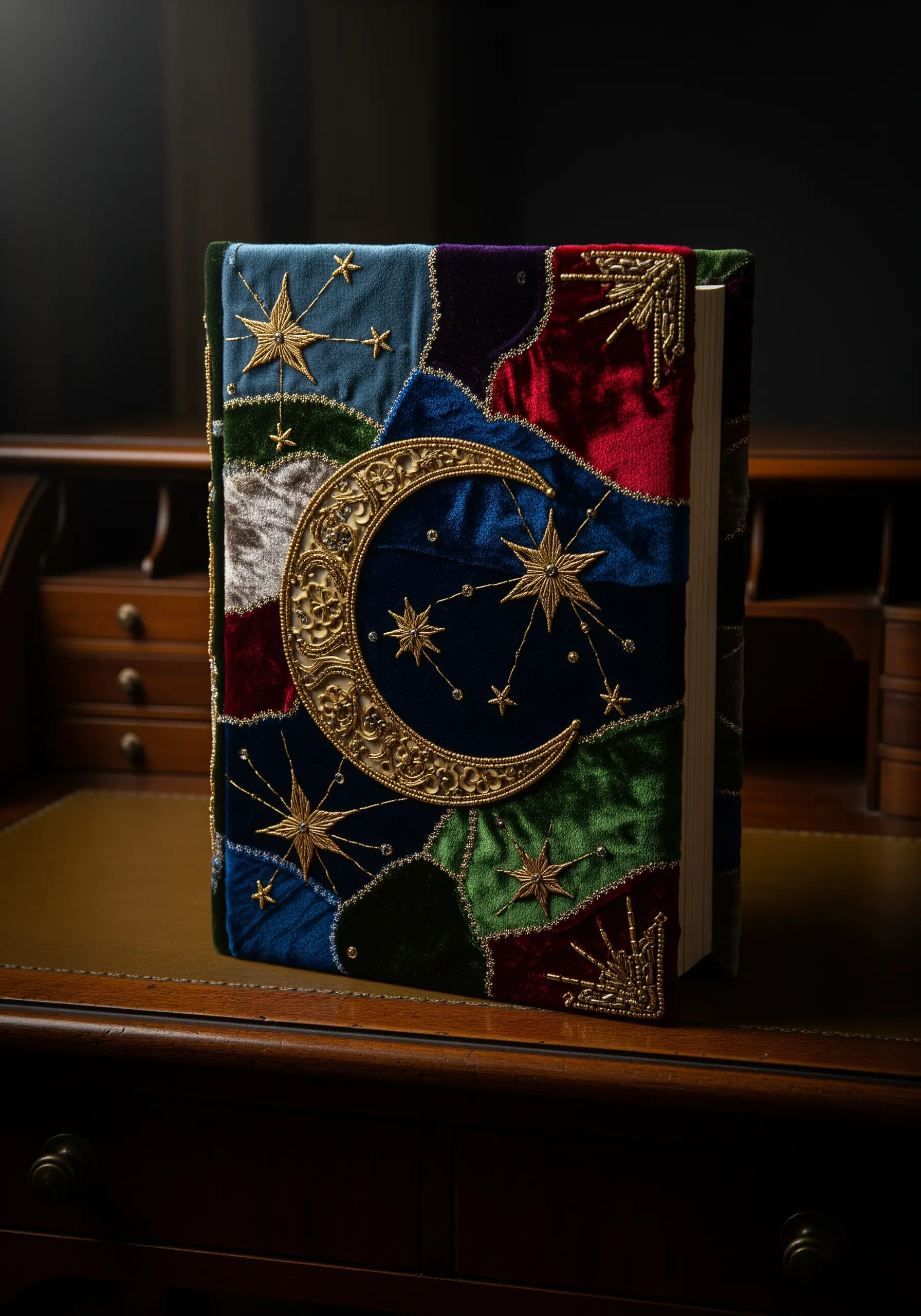
Cover a journal or book with a patchwork of jewel-toned velvet scraps for a luxurious, tactile feel.
Stitch the patches together first, then embellish the surface with celestial motifs using gold metallic thread.
Use a couching stitch to attach thicker gold cords for the crescent moon, creating a raised, opulent outline.
Scatter starbursts made from simple straight stitches and secure them with a central seed bead for a touch of sparkle.
This project evokes the feeling of Heirloom-style table linen embroidery patterns, turning a simple object into a keepsake.
8. Frame Botanical Stitches on Upcycled Kitchen Towels

Give stained or worn kitchen towels a new purpose as framed art.
Cut out clean sections of patterned tea towels—like gingham or stripes—and stretch them in embroidery hoops.
The fabric’s existing pattern becomes a charming, rustic background for your stitched motifs.
Use thread painting techniques with just two or three shades of green to render realistic herbs like rosemary and basil.
This grouping of kitchen herb embroidery designs creates a cohesive gallery wall from mismatched fabrics.
9. Unify a Memory Quilt with Simple Stitched Hearts
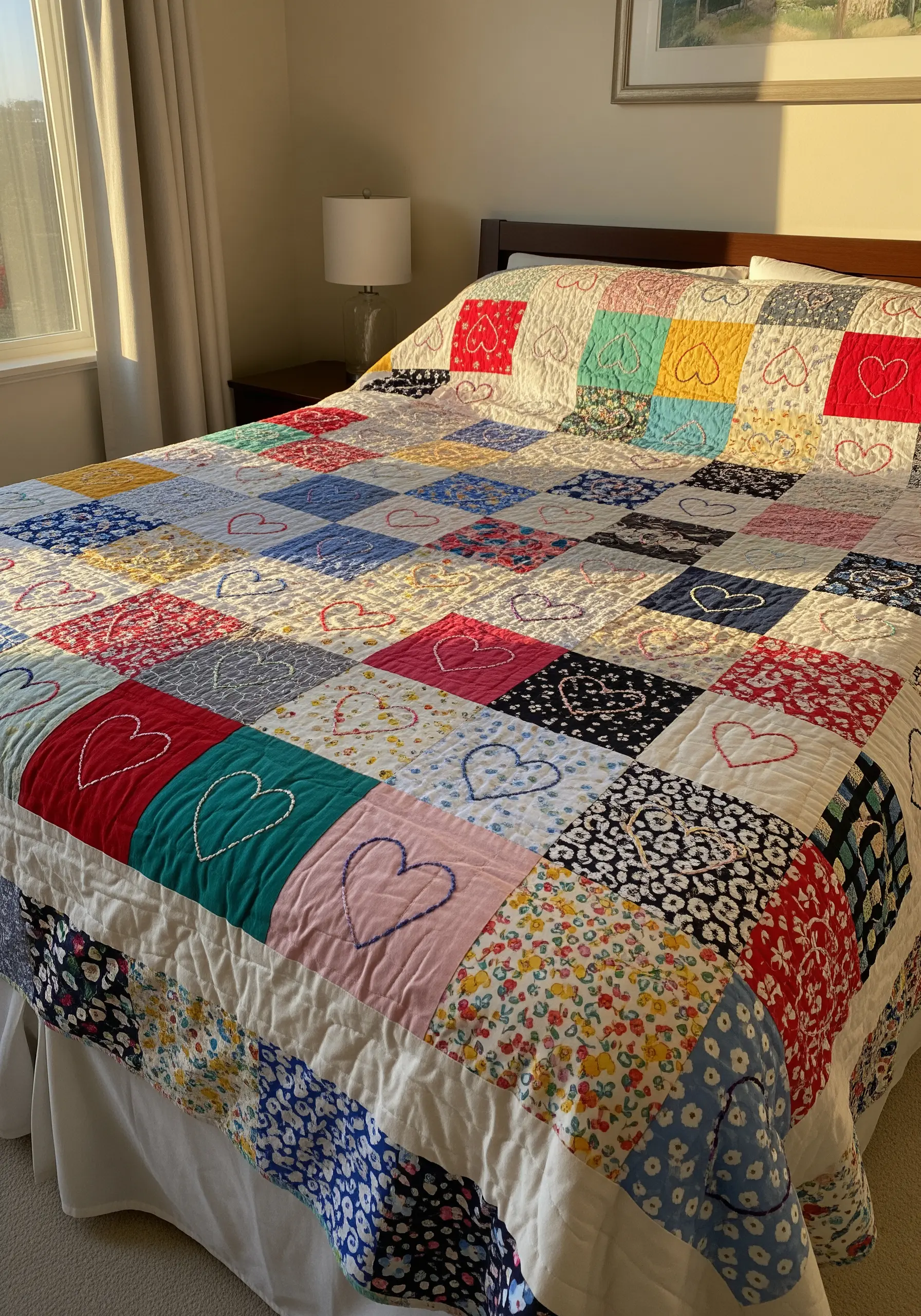
Create a meaningful quilt by piecing together squares cut from old garments, leftover fabrics, and remnants that hold memories.
To create a cohesive design element that ties the disparate patterns and colors together, add a simple hand-stitched motif to select squares.
Use a basic backstitch or running stitch to outline a heart shape in a contrasting color like white or red.
This subtle addition turns a collection of scraps into a unified story, making for truly personal embroidered gifts that turn simple clothes into meaningful keepsakes.
10. Reinvent a Lampshade with a Stitched Fabric Collage

Breathe new life into an old lampshade frame by covering it with a collage of vibrant fabric scraps.
Cut panels from bold, patterned fabrics and arrange them around the frame.
Instead of hiding the seams, celebrate them by joining the panels with a decorative and sturdy blanket stitch using a thick, dark thread.
This visible mending technique adds a rustic, handmade texture that becomes a design element in itself, especially when the lamp is lit.
These are the kinds of unique DIY art objects that infuse a room with personality.
11. Contrast Modern Geometry with Vintage Lace

Juxtapose old and new by using a vintage lace doily as your embroidery canvas.
Stretch the doily tightly in an embroidery hoop; the openwork of the lace provides a natural grid for your stitches.
Use vibrant, neon-colored floss to create a sharp, geometric starburst pattern radiating from the center.
The long, straight stitches stand in stark contrast to the delicate, swirling floral patterns of the lace, creating a visually arresting piece.
This use of color is reminiscent of modern neon thread designs, applied in an unexpected context.
12. Craft Wall Planters from Denim Pockets
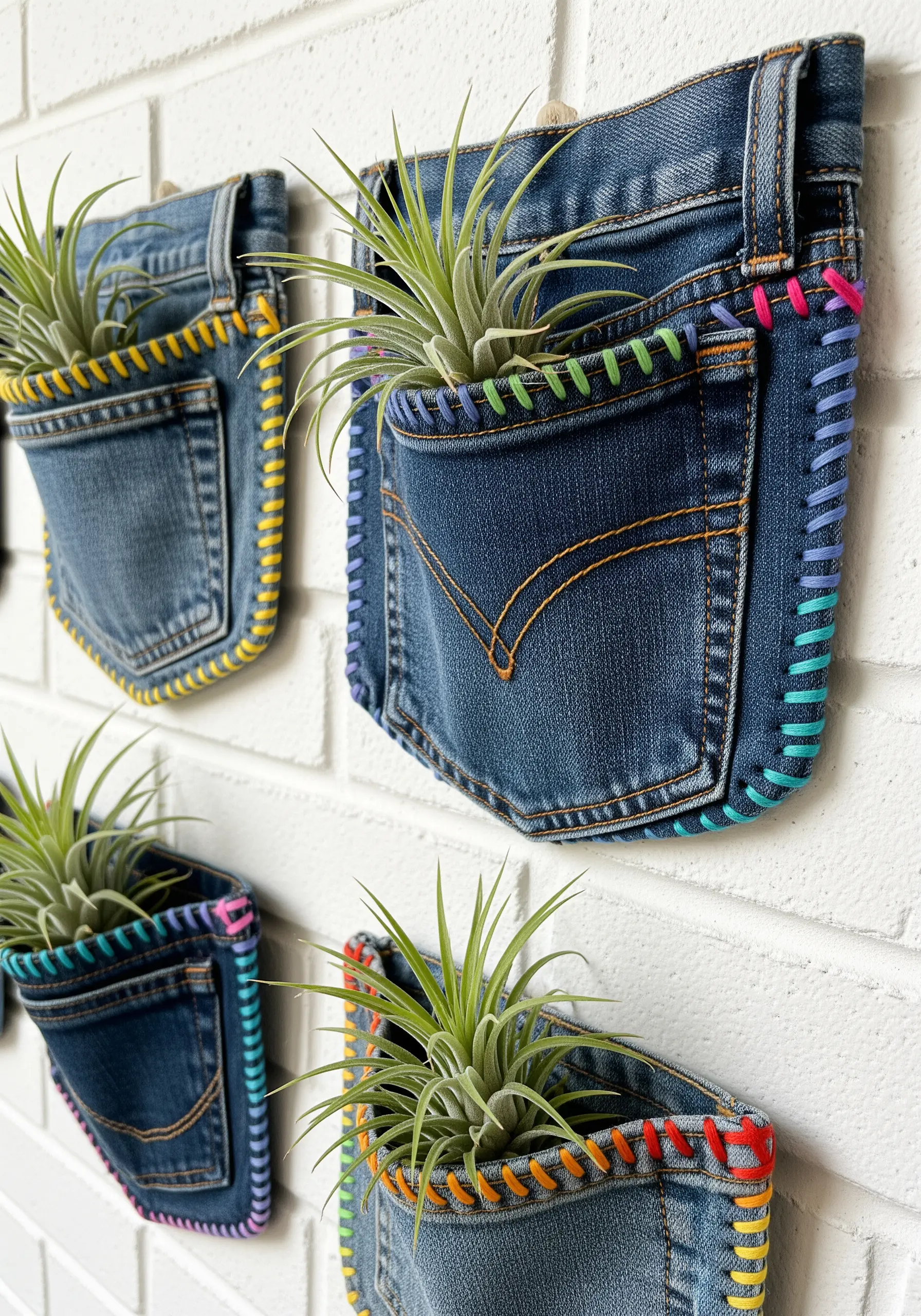
Repurpose the back pockets from worn-out jeans into functional and decorative wall hangers for air plants.
After cutting the pocket section from the jeans, use a thick, colorful yarn or embroidery floss to finish the raw edges with a bold blanket stitch.
This not only prevents fraying but also adds a pop of color and a tidy, handcrafted finish.
Arrange them in a group on a wall for a rustic, vertical garden display—one of those small DIY home accents that’s both resourceful and stylish.
13. Embellish a Shirt Collar with Beaded Beetles

Transform a simple button-down shirt by adding a cluster of intricate, jewel-like beetle embellishments to the collar.
Use a combination of metallic thread, seed beads, and bugle beads to create the bodies and legs of the insects.
To achieve the iridescent sheen of a beetle’s shell, lay down parallel rows of long bugle beads and outline the shape with a darker seed bead.
This technique elevates a basic garment with a touch of couture-level detail and is one of the best small embroidery ideas on clothing for making a big impact.
14. Explore Monochrome Texture with Soft Sculpture

Use old white bedsheets to create a large-scale, minimalist wall installation that focuses purely on form and shadow.
Stitch and stuff pillow-like shapes to create soft, three-dimensional forms, then attach them to a flat fabric backdrop.
Add linear details and texture by couching thick, soft yarn or wool roving onto both the background and the sculptural elements.
Working in a single color forces you to focus on texture and composition, resulting in sophisticated, stunning handmade sculptures with a serene presence.
15. Render Delicate Insects on Vintage Handkerchiefs

Vintage linen or cotton handkerchiefs provide the perfect delicate canvas for detailed entomological studies.
Their fine weave allows for precise thread painting techniques, even with a single strand of floss.
To prevent puckering on the lightweight fabric, use a temporary stabilizer on the back while you stitch.
Focus on capturing the transparency of a dragonfly’s wings with sparse, open stitches, and the fuzzy texture of a bee’s body with denser, layered stitches.
Tiny embroidery patterns like these turn forgotten linens into delicate keepsakes.
16. Create Rustic Wall Art on a Burlap Sack

Repurpose a burlap coffee sack or any hessian fabric as a rustic, textured background for bold yarn embroidery.
The open weave of burlap is ideal for working with thick yarn and a large-eyed needle.
Create a large-scale sunflower using long satin stitches for the petals and a tightly coiled circle (couching) for the textured center.
The printed typography on the sack adds a layer of industrial charm that contrasts beautifully with the soft, organic motif.
Cozy embroidery projects like this add warmth and personality to a kitchen or dining space.
17. Apply Bold Appliqué to a Terrycloth Towel Bag

Upcycle a worn-out bath or beach towel into a sturdy and stylish tote bag.
When embellishing a high-pile fabric like terrycloth, simple embroidery stitches can get lost. Instead, opt for bold appliqué.
Cut your design from a smooth, stable cotton fabric and secure it with a wide, dense satin stitch border.
This outlining technique not only frames the design but also firmly anchors the appliqué to the textured background, ensuring a clean, professional finish.
Tote bag embroidery designs gain structure and pop with this method.
18. Construct a Woodland Mobile from Felt Remnants

Gather your gray, brown, and rust-colored felt scraps to create a gentle woodland creature mobile.
Cut two identical silhouettes for each animal, then join them with a simple, visible blanket stitch around the edge as you lightly stuff them with poly-fil.
This stitch is both decorative and structural, adding a charming handmade quality.
Keep the embroidered details minimal—a few straight stitches for sleepy eyes or a running stitch for belly texture is all you need for this sweet and simple Nursery stitch art project.
19. Accent Upholstery Scraps with Selective Beading

Don’t let beautiful upholstery remnants go to waste—frame them in a hoop and treat them as a pre-made canvas.
Instead of adding a new design, use the existing woven pattern as your guide.
Selectively embellish the floral or damask motifs with beads and metallic threads to add sparkle and dimension.
This technique of highlighting existing patterns transforms a simple fabric scrap into a complex and luxurious piece of art.
These Creative fabric collage bases give you a head start on a beautiful project.
20. Weave a Modernist Seat with Yarn Wrapping

Revamp a set of old dining chairs without a single stitch by using a yarn wrapping technique.
Remove the seat cushions and use the frame or a new base as a loom.
Wrap colorful, thick yarn from a central point outwards, creating a vibrant, sunburst pattern.
Maintain even tension as you wrap to ensure the design is tight and durable. This no-sew fiber art technique adds instant color and a modernist touch to outdated furniture.
It’s a functional take on the principles behind many Yarn wall art ideas.
21. Create a Cascade of Leaves on Sheer Curtains

Bring a sense of gentle movement to a room by embroidering onto sheer curtain panels.
Stitch simple leaf outlines in autumnal shades, concentrating the motifs at the top and letting them scatter and trail off towards the bottom.
This gradient of density creates a beautiful illusion of falling leaves.
Use a lightweight thread and a simple backstitch to avoid weighing down the delicate fabric.
These types of climbing plant stitch designs work wonderfully for vertical applications like curtains.
22. Integrate Simple Motifs into a Cable-Knit Sweater

Give a beloved but plain cable-knit sweater a subtle, personalized touch.
The key to embroidering on heavy knits is to work *with* the existing texture, not against it.
Place your motifs within the flat, plain-knit sections between the cables, rather than stitching over the bulky parts.
Use a simple outline stitch, like a backstitch or stem stitch, in a contrasting color to create a clean, graphic design that feels like part of the original garment.
Minimal stitch motifs are perfect for adding character without overwhelming the sweater’s texture.