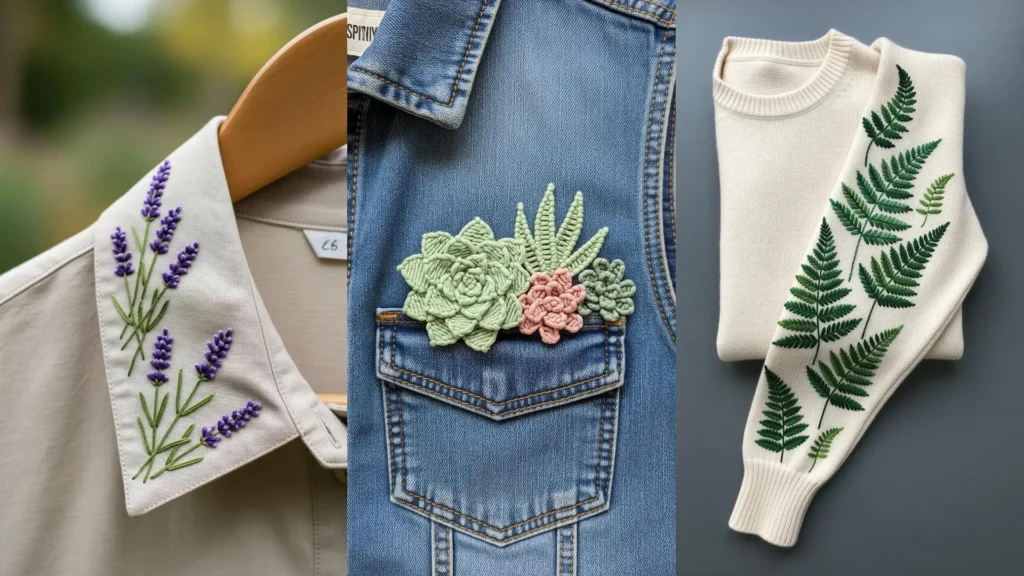
That piece of clothing you love but never wear? It’s not finished. Think of it as a canvas waiting for a story—a story you can tell with a needle and thread. Reviving your wardrobe isn’t about chasing trends; it’s about infusing garments with personal meaning, turning a simple sweater or a worn-in jacket into a portable garden that reflects you.
You don’t need years of practice to create something beautiful. A polished look comes from understanding how a single stitch can build texture, how a shift in color can create depth, or how placing a motif just so can change everything. It’s about making intentional choices that transform simple stitches into botanical art.
Here, you’ll find 17 specific techniques to guide you. Each one is a key to unlocking a more refined, expressive style. Forget generic advice. It’s time to pick up a needle and cultivate the garden you’ve always wanted to wear.
1. Create a Full-Coverage Woodland Scene
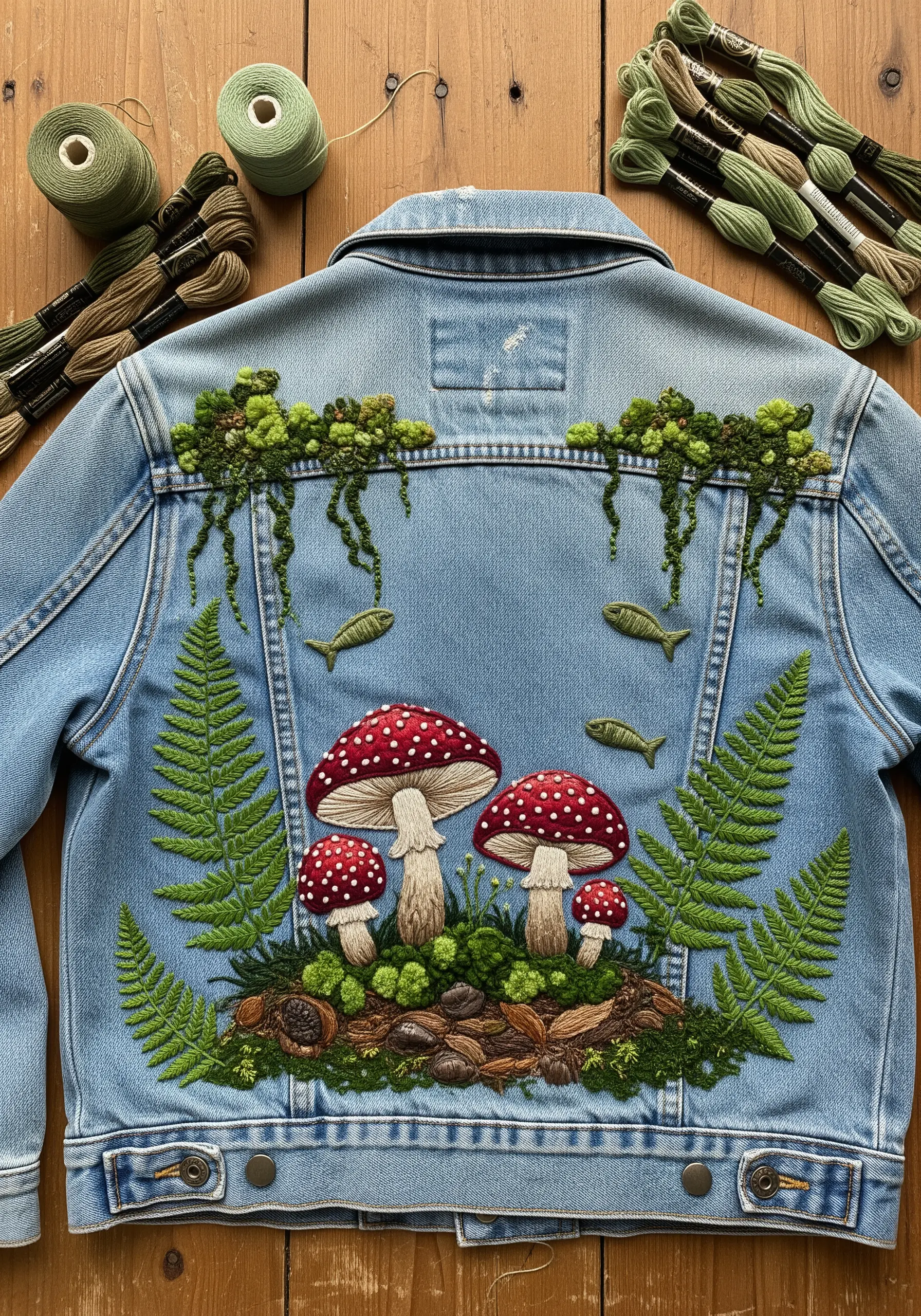
Transform the entire back panel of a denim jacket into a narrative piece by focusing on layered textures.
Use dense clusters of French knots in varied greens to build a mossy, three-dimensional effect along the yoke seam.
For the mushrooms, use a padded satin stitch to give the caps a raised, rounded shape, and employ long and short stitches on the stems for subtle shading.
You can create a rich forest floor with a mix of straight stitches, seed stitches, and couched thicker threads to represent fallen leaves and soil.
This technique turns a simple garment into a piece of wearable art, inviting a closer look at its intricate details and telling a complete story.
2. Place Delicate Botanicals Asymmetrically
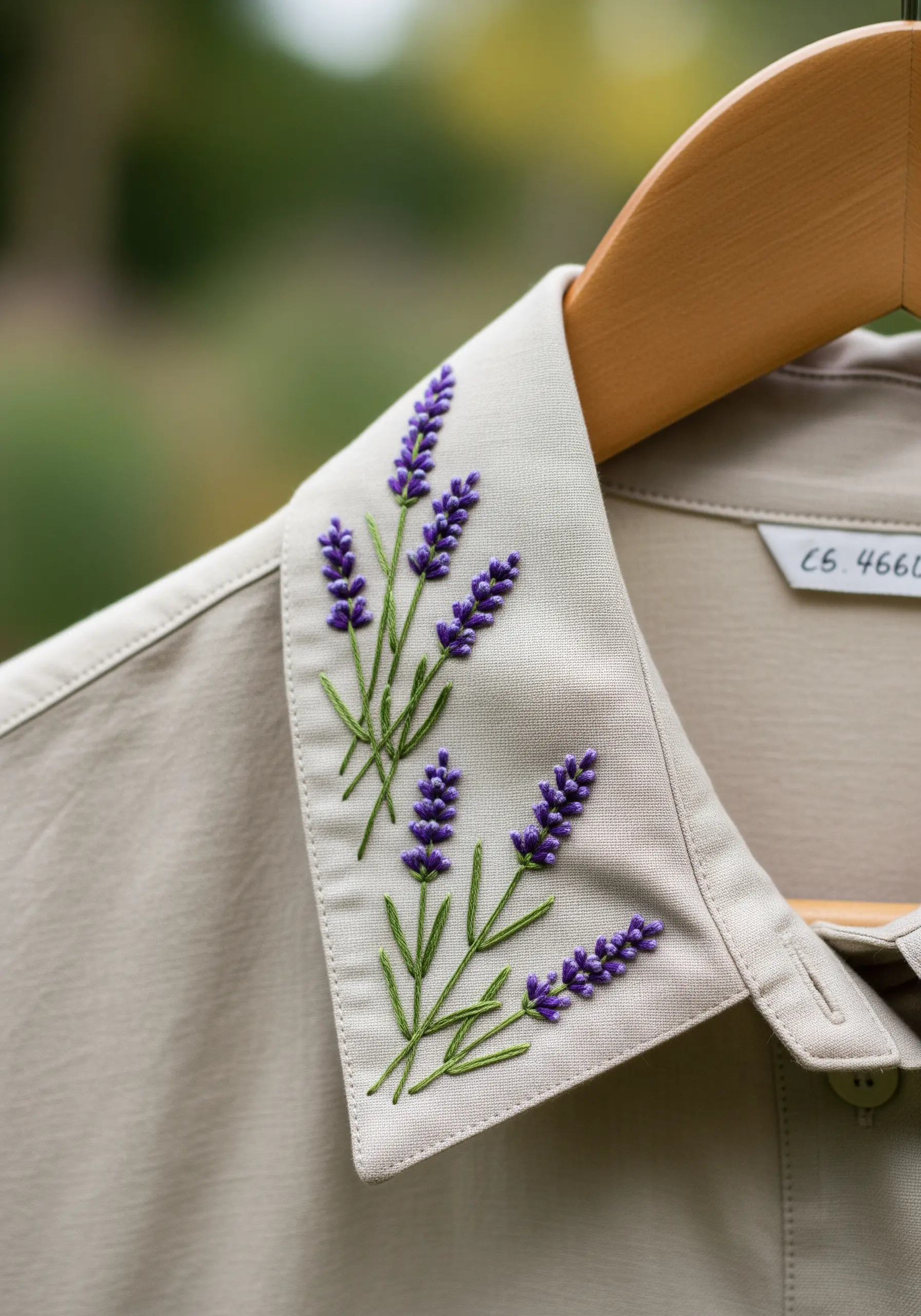
Elevate a simple shirt collar by placing a sprig of lavender asymmetrically on one side.
This creates a point of interest that is both elegant and unexpected, drawing the eye without overwhelming the garment.
Use tiny, tight French knots for the lavender buds, varying their placement to mimic natural growth.
Keep the stems delicate with a single strand of thread in a simple stem stitch or backstitch.
The beauty of this approach lies in its restraint; the negative space around the embroidery makes the design feel intentional and modern, proving that even subtle embroidery touches can have a significant impact.
3. Master Realistic Thread Painting for Florals
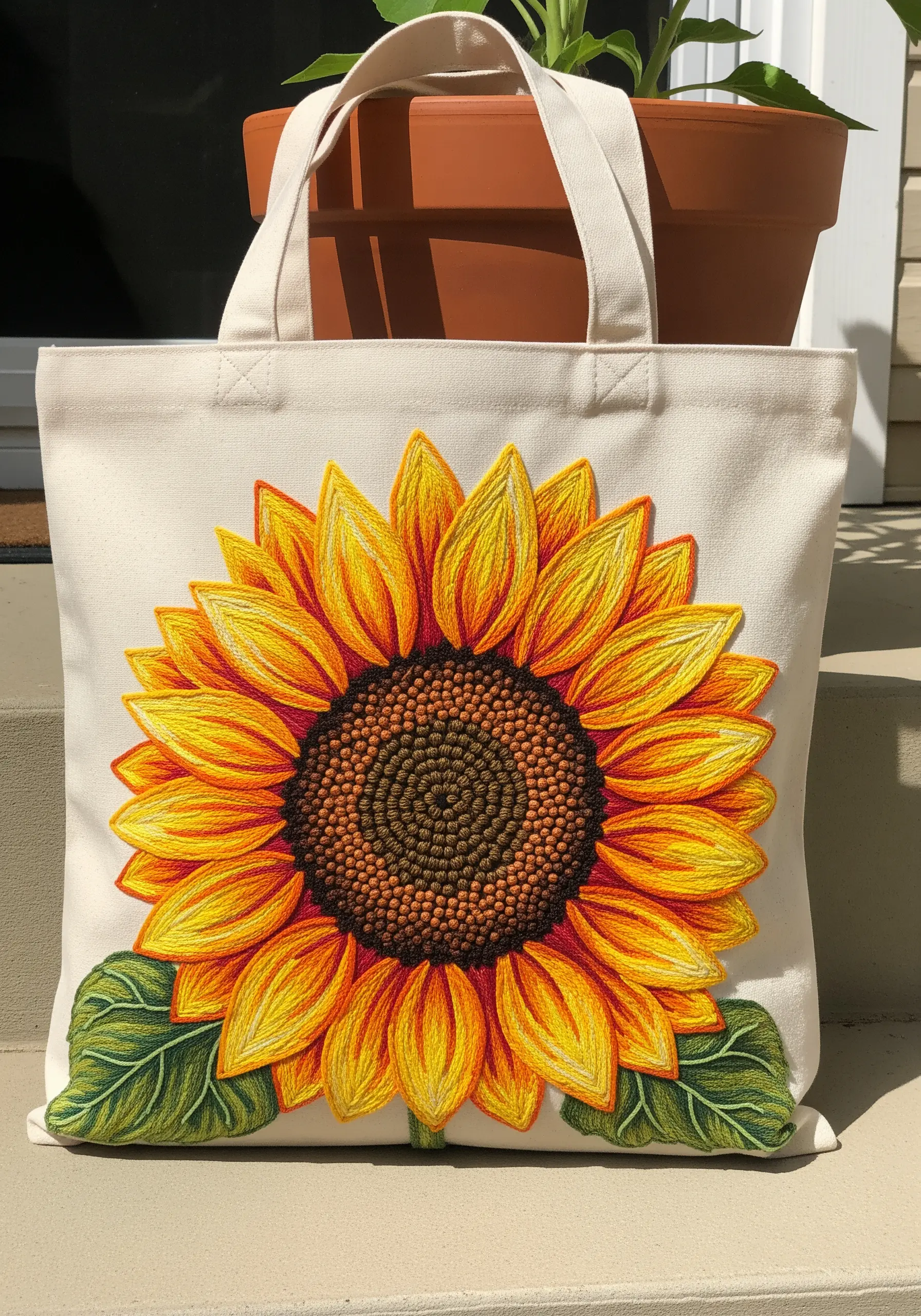
To achieve a photorealistic sunflower, focus on the long and short stitch to create seamless color gradients in the petals.
Start with the darkest shade at the base of each petal and work your way outwards, blending progressively lighter yellows and oranges.
This technique, known as thread painting, eliminates harsh lines and mimics the way light naturally hits a flower.
For the center, create dense texture with concentric circles of French knots in shades of brown and gold, which adds depth and a tactile quality.
Applying a statement tote bag embroidery like this transforms a functional item into a piece of portable art.
4. Use a Cascading Motif on Sleeves
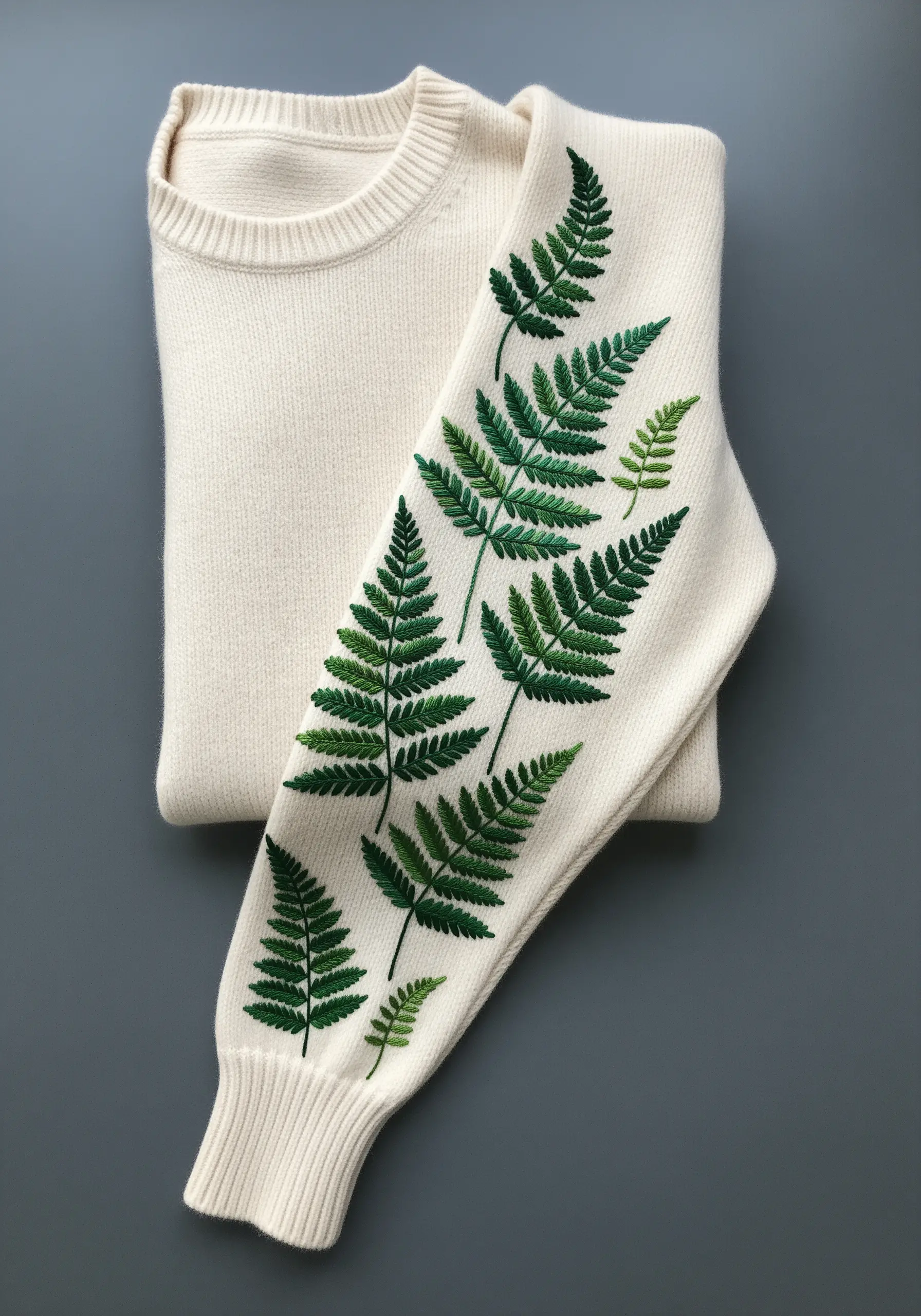
Turn a plain sweater sleeve into a botanical statement by stitching a cascade of ferns running from shoulder to cuff.
Vary the size and orientation of the ferns to create a sense of natural, organic movement down the arm.
Use fishbone stitch for each leaflet; this stitch creates a central vein and fills the shape in one fluid motion, perfect for fern fronds.
When stitching on knitwear, always use a cut-away or wash-away stabilizer on the inside to prevent the fabric from stretching and the stitches from sinking.
This arrangement adds whimsical forest touches and draws the eye along the length of the garment.
5. Convey Movement with Minimalist Line Work
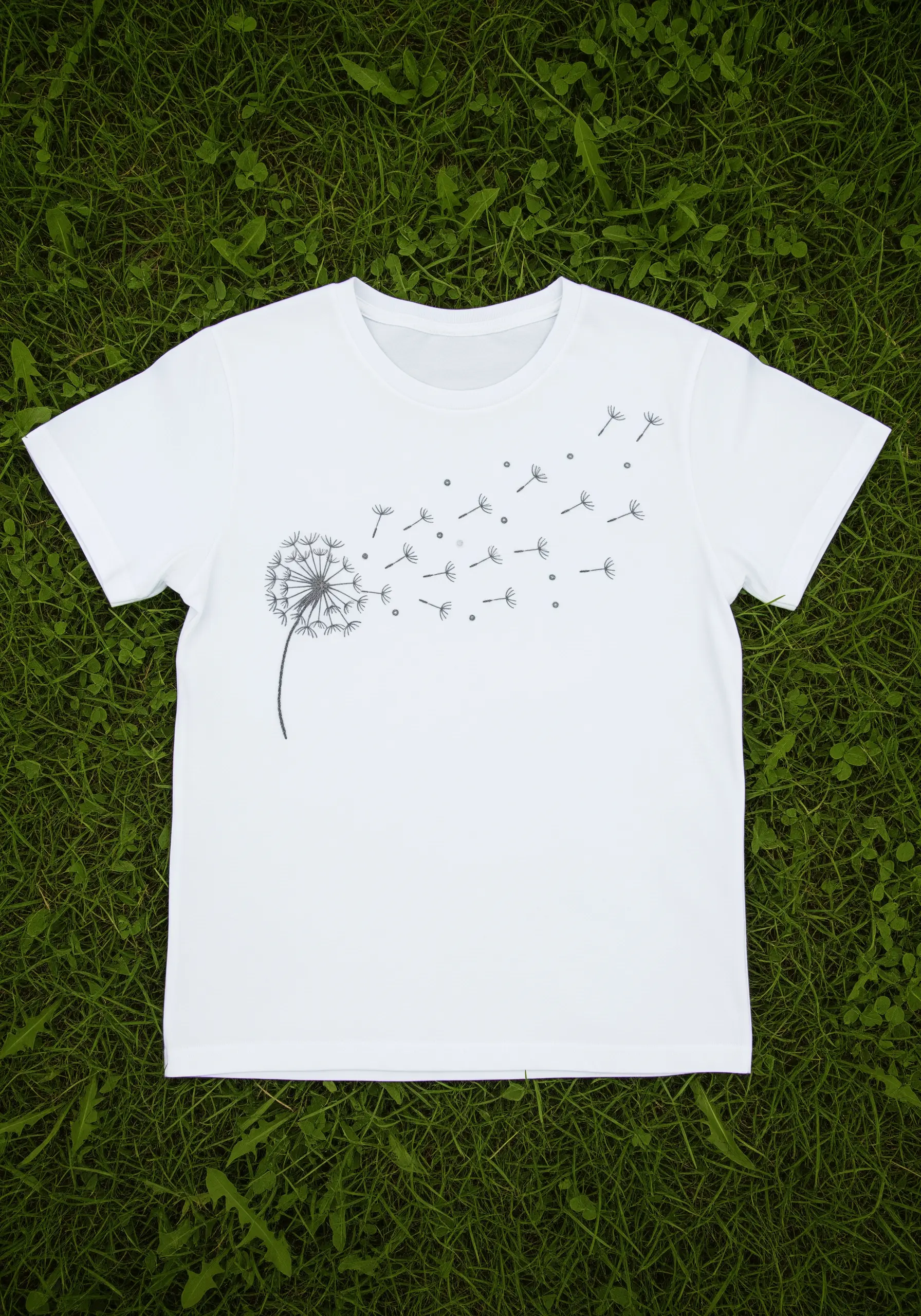
Capture the delicate, fleeting nature of a dandelion with fine-line stitching on a simple t-shirt.
Use a single strand of black or grey floss to maintain a light, airy feel that won’t weigh down the thin jersey fabric.
A simple backstitch for the stem and straight stitches for the seed head are all you need for the main flower.
Create the illusion of seeds scattering in the wind by using detached chain stitches combined with single straight stitches, spacing them further apart as they move across the shirt.
These simple line art embroidery ideas show that you don’t need dense stitching to make a powerful statement.
6. Cultivate a Miniature Pocket Garden
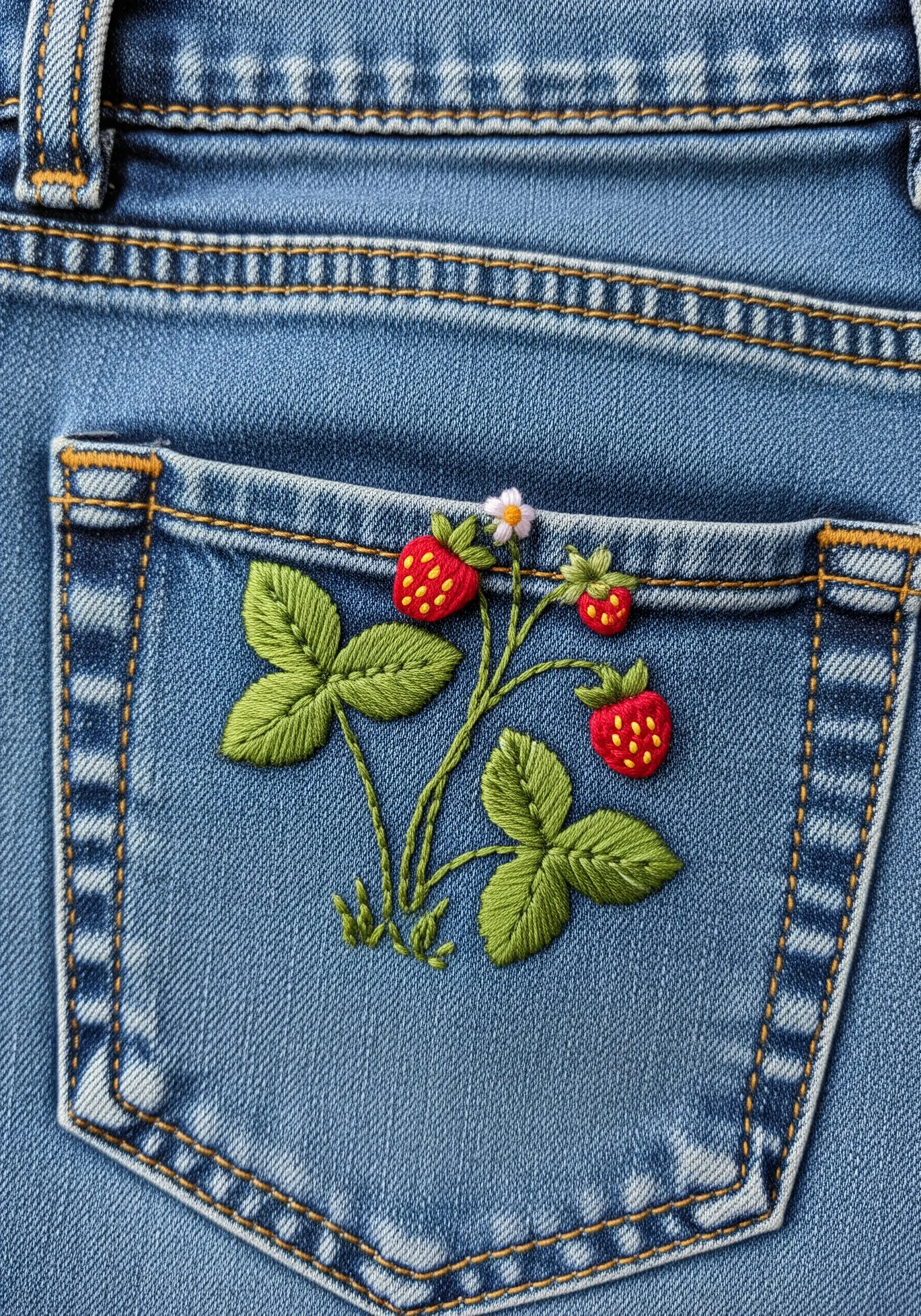
A denim pocket is the perfect frame for a small, detailed botanical design, turning it into a focal point.
To give the strawberries a plump, 3D effect, use a padded satin stitch by first laying down a base of small straight stitches before covering them with the final satin stitch.
Use a vibrant red to contrast sharply with the blue denim, and add tiny white seed stitches in a contrasting color for realism.
For the leaves, a fishbone stitch will create natural-looking texture and shape.
These floral pocket embroidery ideas add a playful and personal touch to a wardrobe staple.
7. Blend Autumnal Hues on Knits
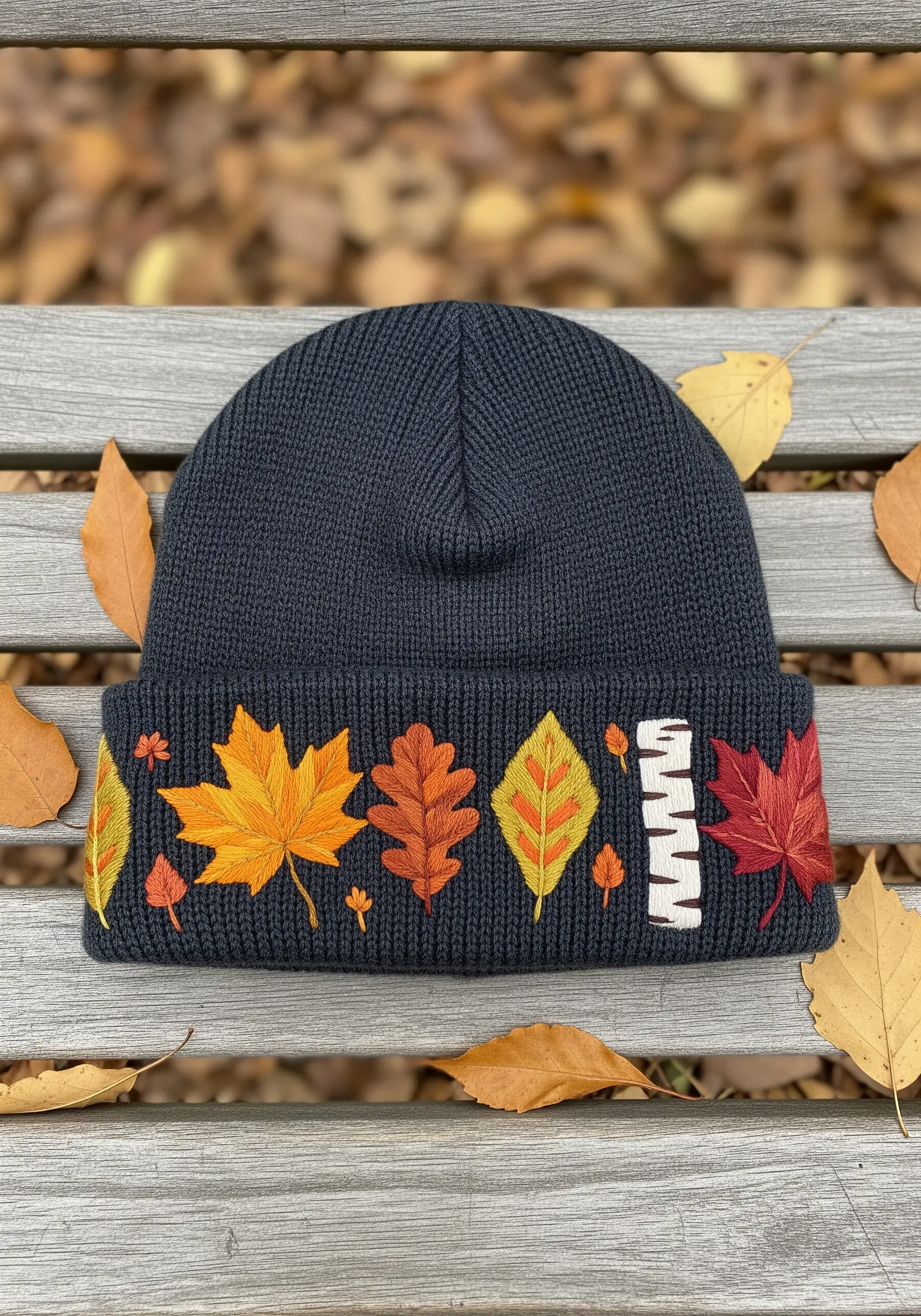
Embellish a winter beanie with a border of autumn leaves, using color blending to capture the season’s warmth.
Select a palette of reds, oranges, and yellows, and use the long and short stitch to create smooth gradients within each leaf, mimicking how they change color naturally.
Because you’re working on a stretchy, ribbed knit, a stabilizer is essential to prevent distortion.
Varying the leaf shapes—maple, oak, and birch—adds visual interest and authenticity to your botanical collection.
8. Drape Florals Over Garment Seams
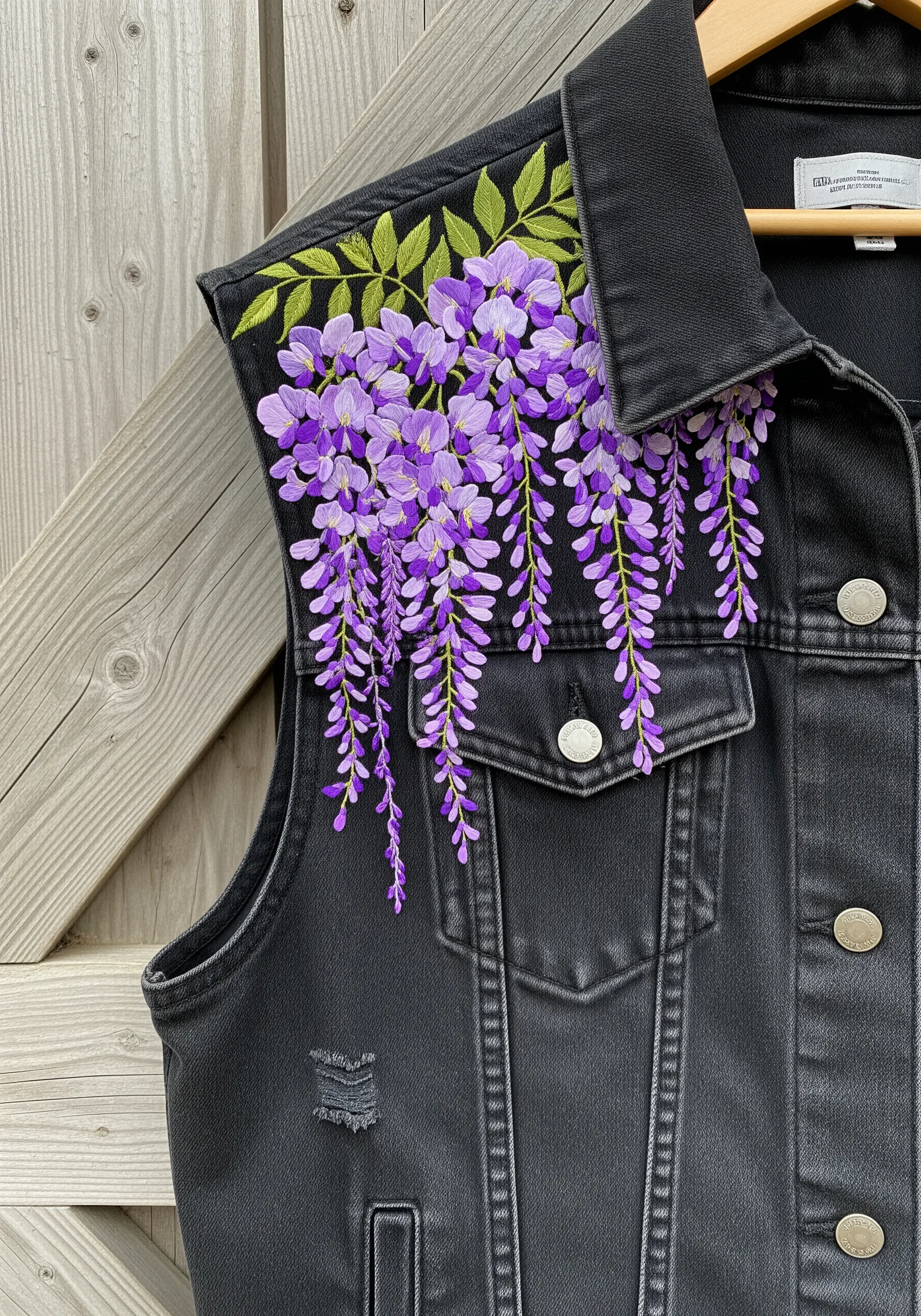
Create a stunning, organic look by draping a cascade of wisteria over the shoulder of a denim vest or jacket.
This placement makes the embroidery feel like it’s part of the garment’s structure, not just an appliqué.
Use a combination of satin stitches and French knots in various shades of purple and lavender to form the flower clusters, letting them hang down naturally.
Stitch the green leaves and vines first to establish the flow of the design, then fill in the blossoms.
This technique creates a beautiful draping floral effect that moves with the body.
9. Use High-Contrast Thread for Delicate Details
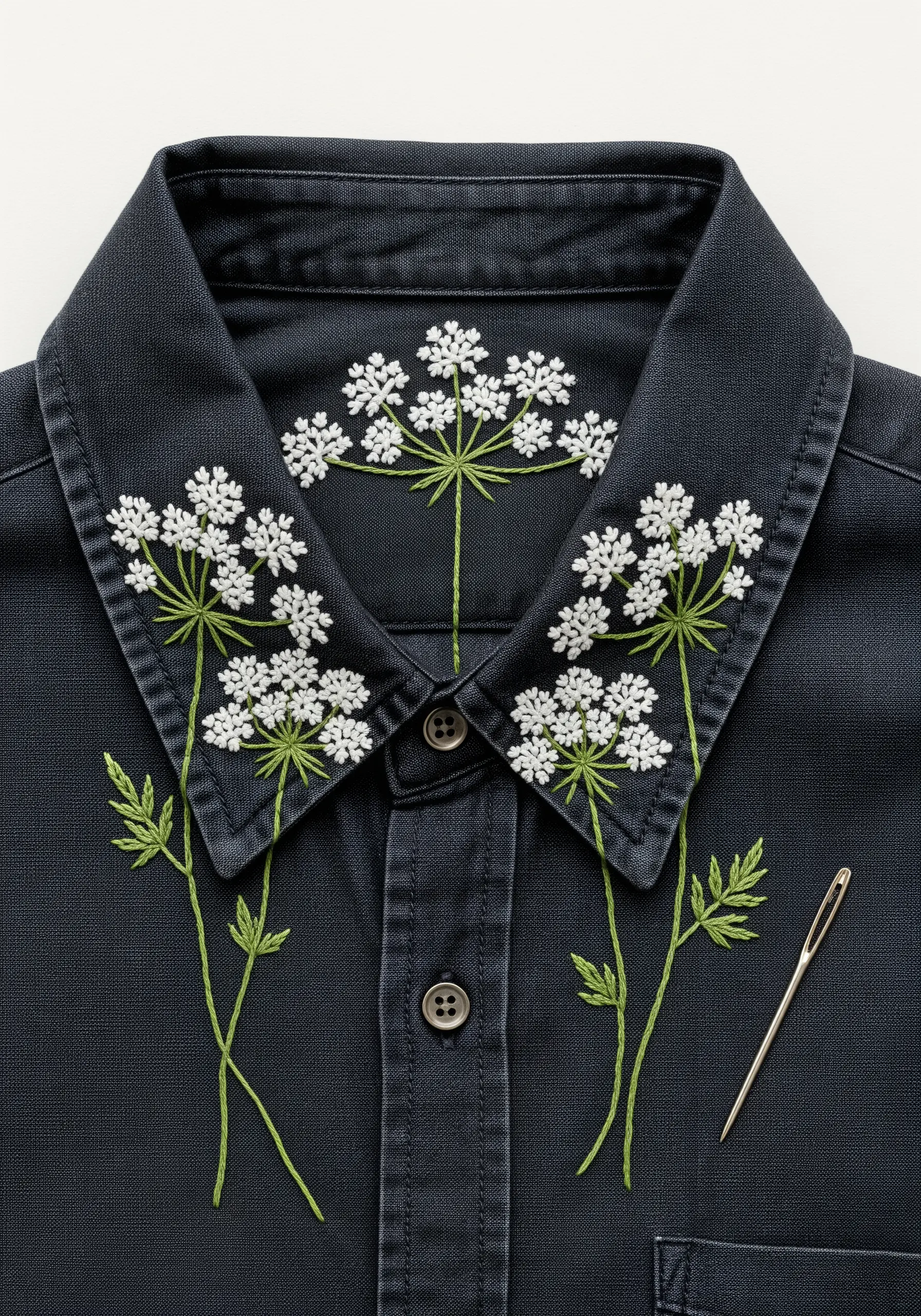
Make Queen Anne’s Lace pop on a dark fabric shirt by using bright white thread for the blossoms.
The high contrast creates a dramatic, graphic effect that highlights the intricate, lacelike structure of the flower heads.
Form each floret with a cluster of tiny French knots or a series of straight stitches radiating from a central point.
Use a vibrant spring green for the stems and feathery leaves to complete the look.
This approach proves how impactful delicate stitches on dark fabric can be, turning a simple collar into a botanical showcase.
10. Illustrate with Varied Stitch Textures
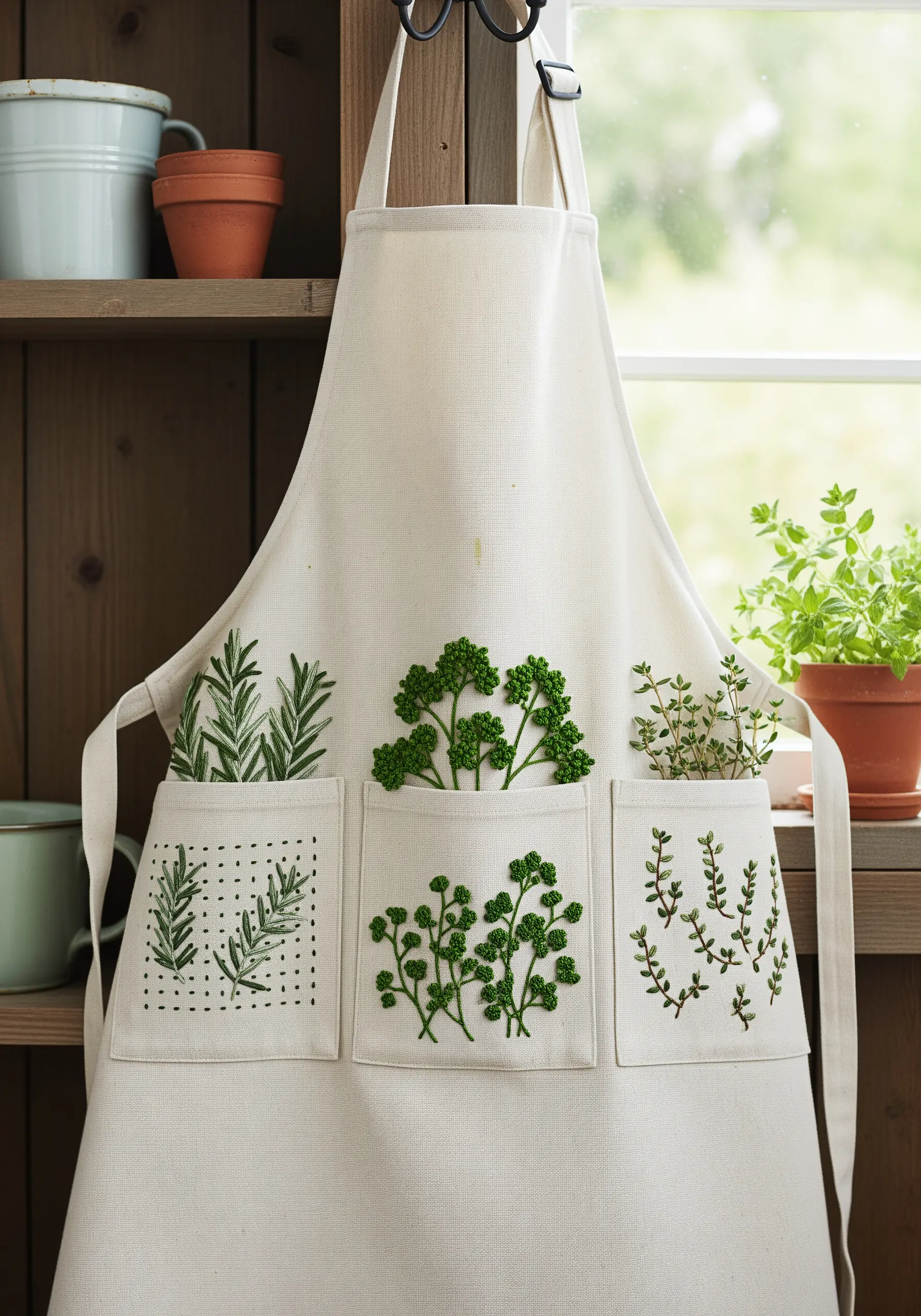
Bring an apron to life by dedicating each pocket to a different herb, using specific stitches to capture their unique textures.
For rosemary, use simple straight stitches to mimic its needle-like leaves. For parsley, use dense clusters of French knots to create its ruffled appearance. For thyme, use tiny detached chain stitches for its small, rounded leaves.
This method turns the garment into a sampler of stitches and a functional piece of garden art.
Pairing a textured, three-dimensional version with a simple line-art outline creates a sophisticated design contrast on these embroidered herb leaf designs.
11. Combine Smooth and Textured Stitches for Storytelling
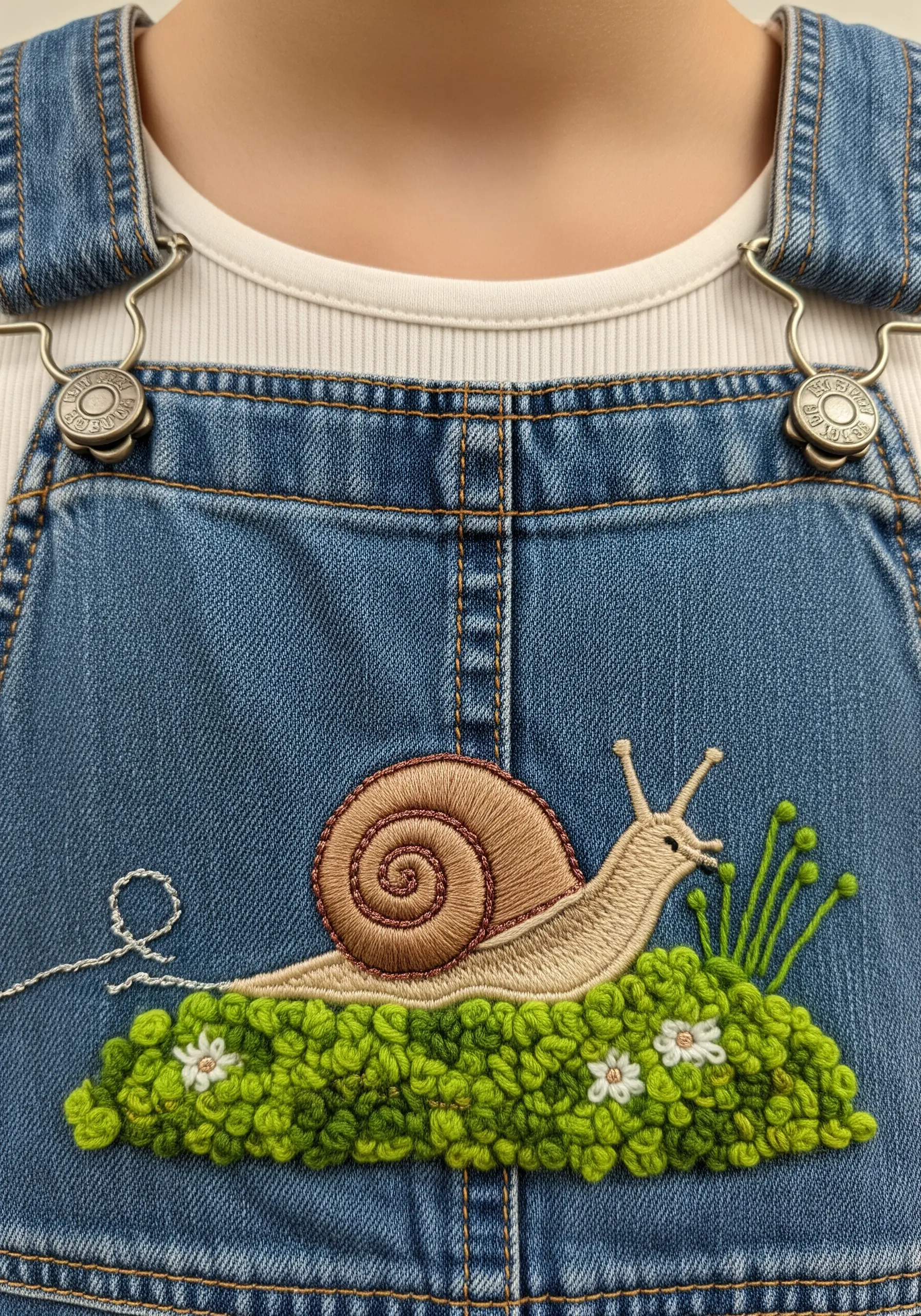
Create a whimsical scene on a pair of overalls by using contrasting textures to tell a story.
Render the snail’s shell with a smooth, spiraling satin stitch, changing thread color from dark to light to create depth and dimension.
In contrast, build the grassy mound with a thick layer of French knots in multiple shades of green for a plush, tactile quality.
Adding tiny whimsical details, like lazy daisy flowers and a single-thread slime trail, completes the charming narrative.
12. Employ Bold Color for Maximum Impact
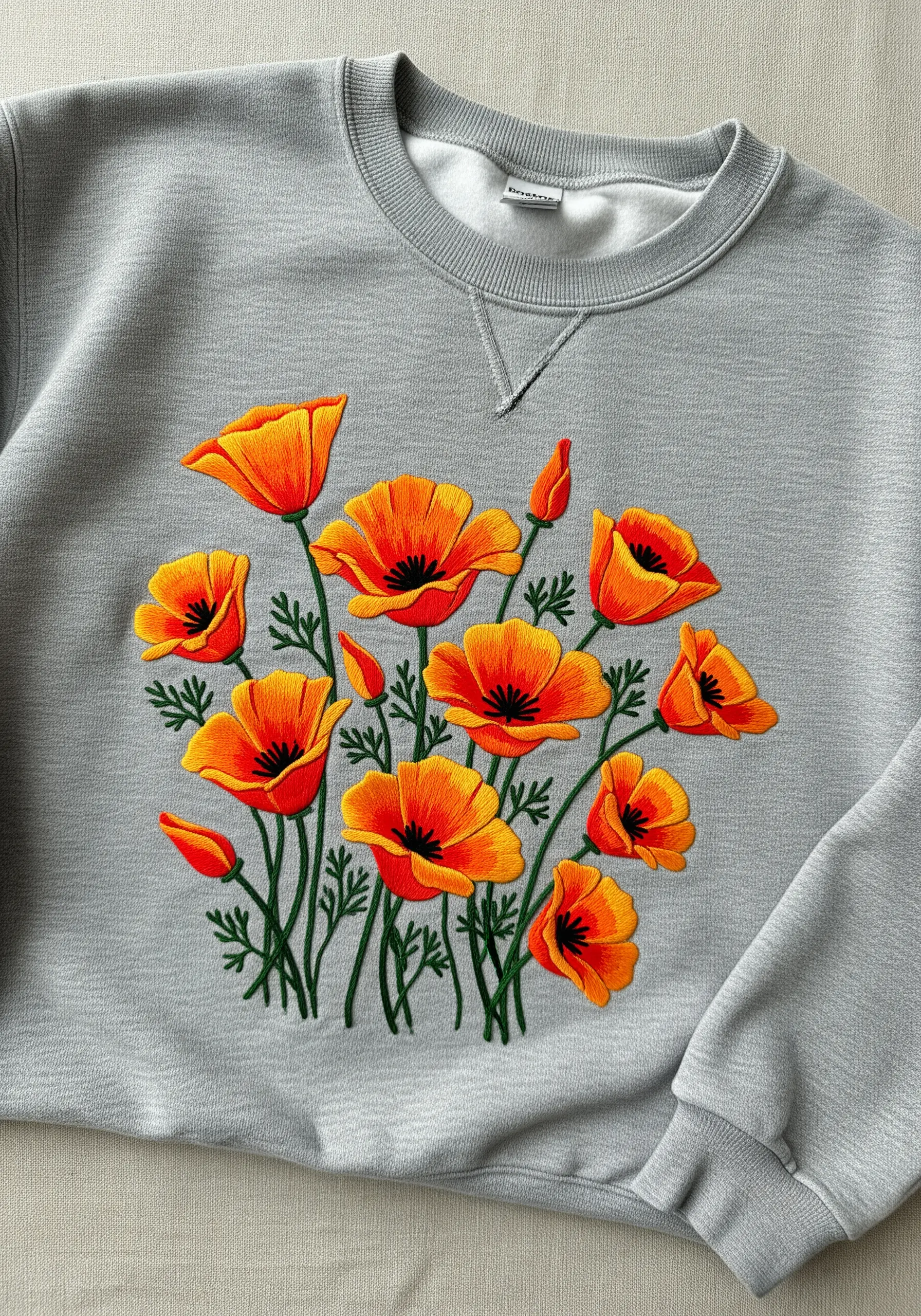
Make a statement on a muted sweatshirt with a vibrant bouquet of California poppies.
The key to this design’s success is the unapologetic use of intense oranges and yellows, which stand out beautifully against the grey fabric.
Use long and short stitch to blend the fiery hues seamlessly within the petals, and anchor the design with solid black satin-stitched centers.
The composition, a dense and lively cluster, gives the impression of a freshly picked bunch.
This use of vibrant color instantly elevates a casual piece of clothing.
13. Frame a Motif on a Patterned Fabric
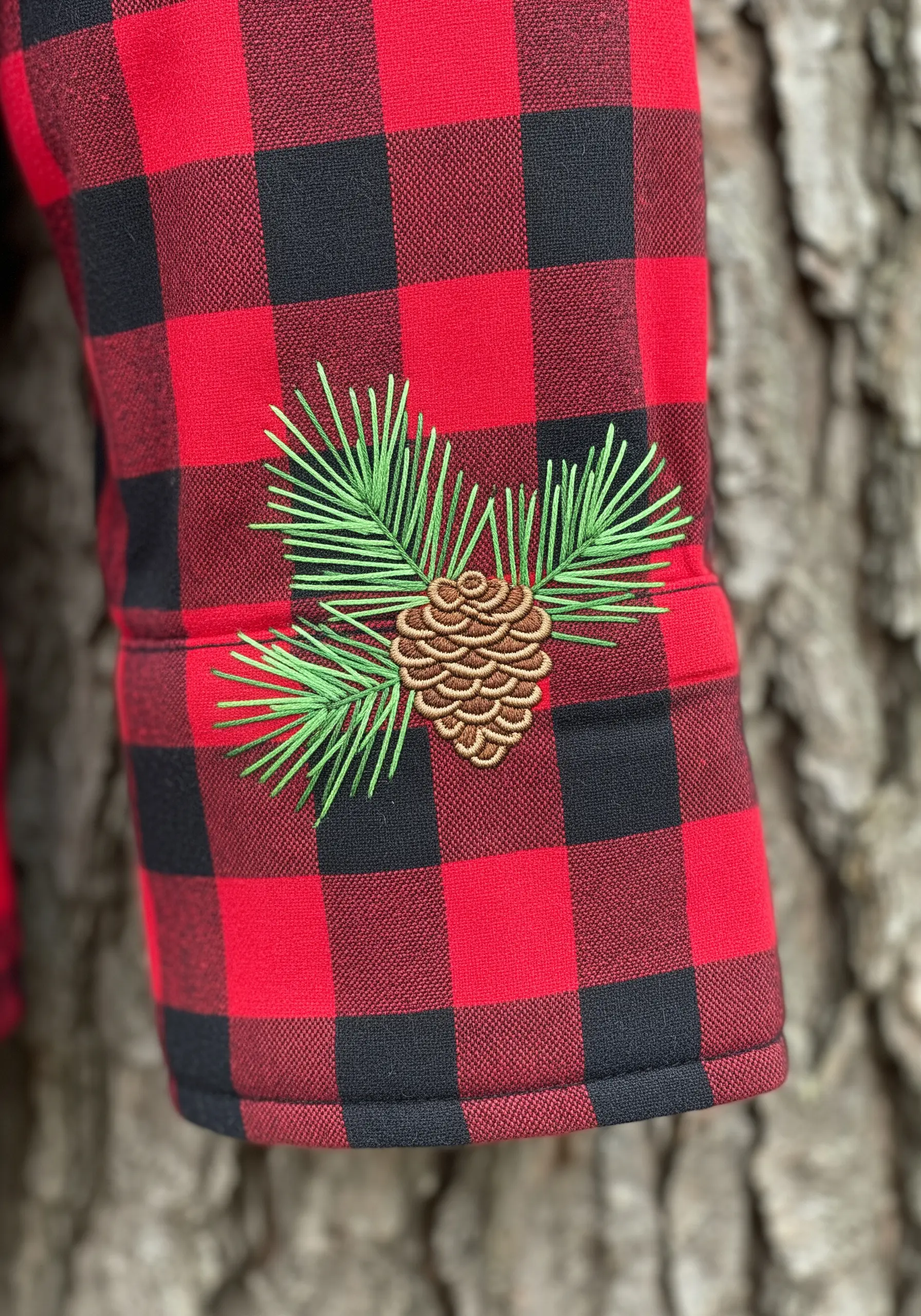
Successfully embroidering on a busy pattern like buffalo plaid requires a design with a strong, clean silhouette.
A pinecone with radiating pine needles provides a clear shape that doesn’t get lost in the checks.
Outline the design first with a split stitch or backstitch to create a defined edge. Then, fill the pinecone scales with overlapping satin stitches for texture and the needles with simple straight stitches.
This technique adds a rustic, cottagecore aesthetic to flannel shirts and jackets.
14. Embellish Unexpected Accessories
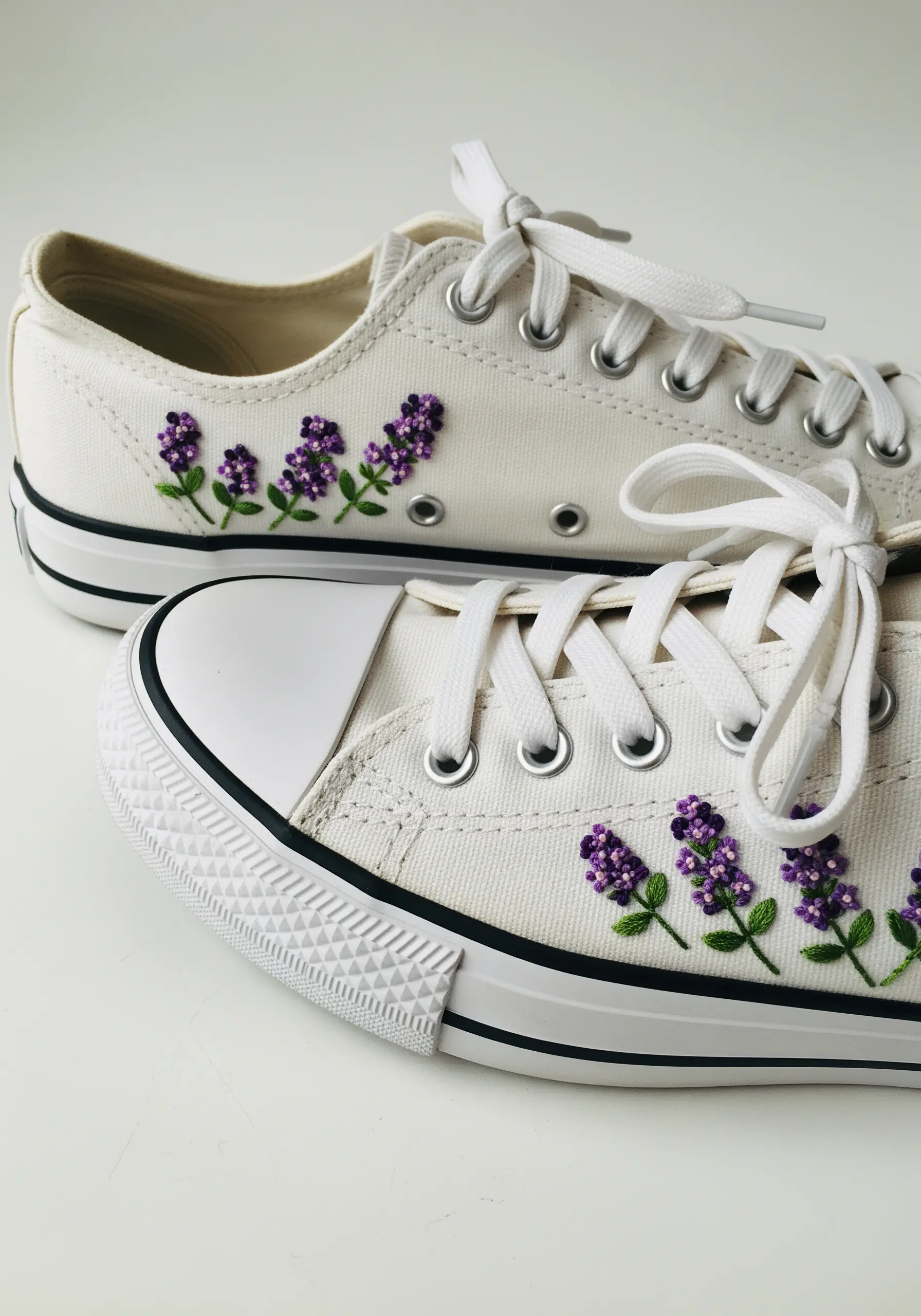
Take your embroidery beyond clothing by adding floral details to canvas sneakers.
To create these tiny lilac clusters, use a series of French knots in shades of purple, packing them closely together.
You’ll need a sharp, strong needle to comfortably pierce the thick canvas, and it’s best to work in small, manageable sections.
These small embroidery designs are perfect for this application, as they can be scattered along the side of the shoe for a subtle yet custom look.
15. Create a Wildflower Meadow Border
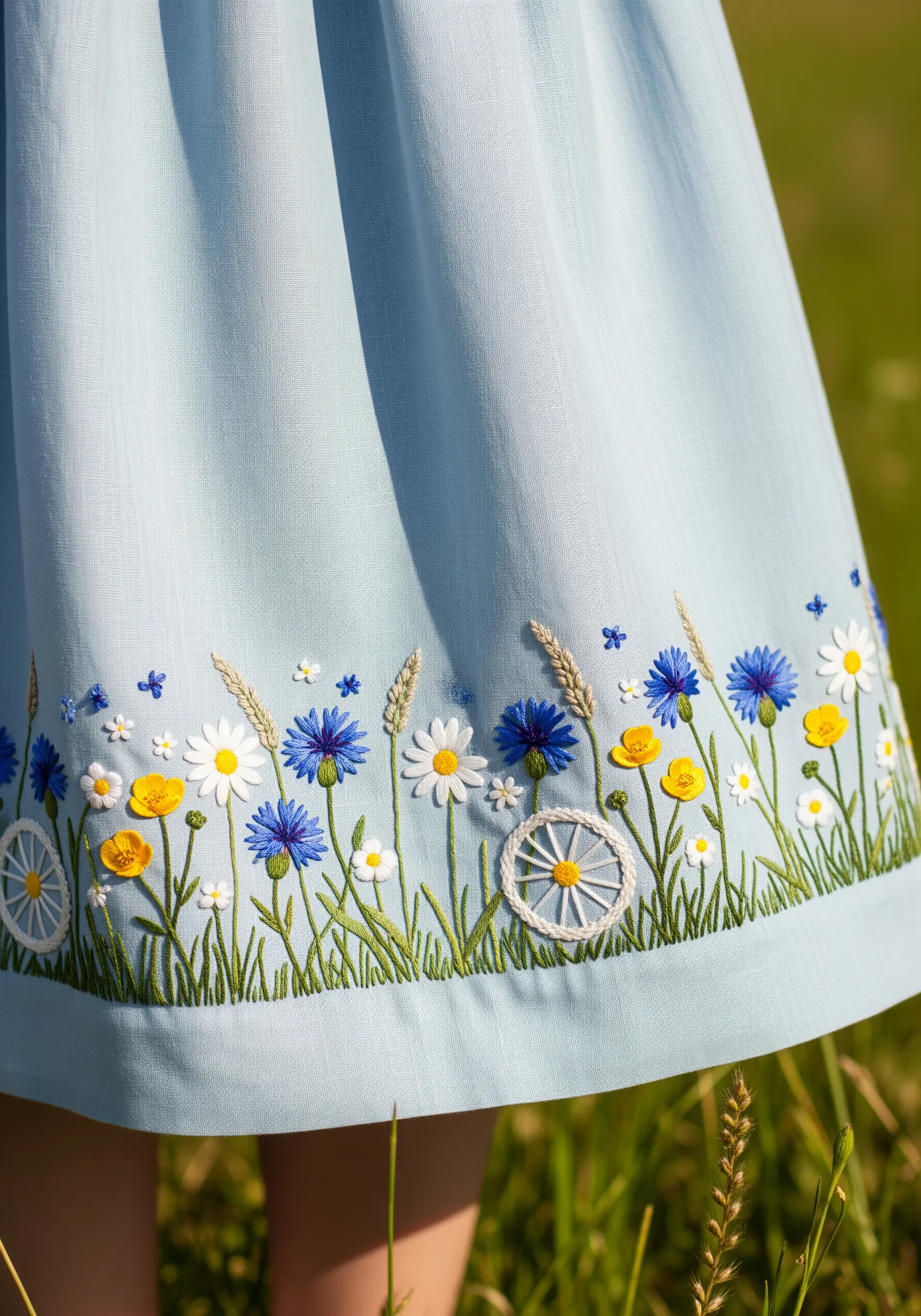
Transform the hem of a dress or skirt into a field of wildflowers with an intricate border design.
Combine a variety of stitches to represent different flowers: lazy daisy for chamomile petals, satin stitch for cornflowers, and French knots for small buttercups.
Vary the height of the stems and the density of the blossoms to create a natural, unkempt meadow feel.
This technique allows you to play with color and texture on a grander scale and create a varied meadow landscape that moves beautifully with the fabric.
16. Build Sculptural Stitches for 3D Botanicals
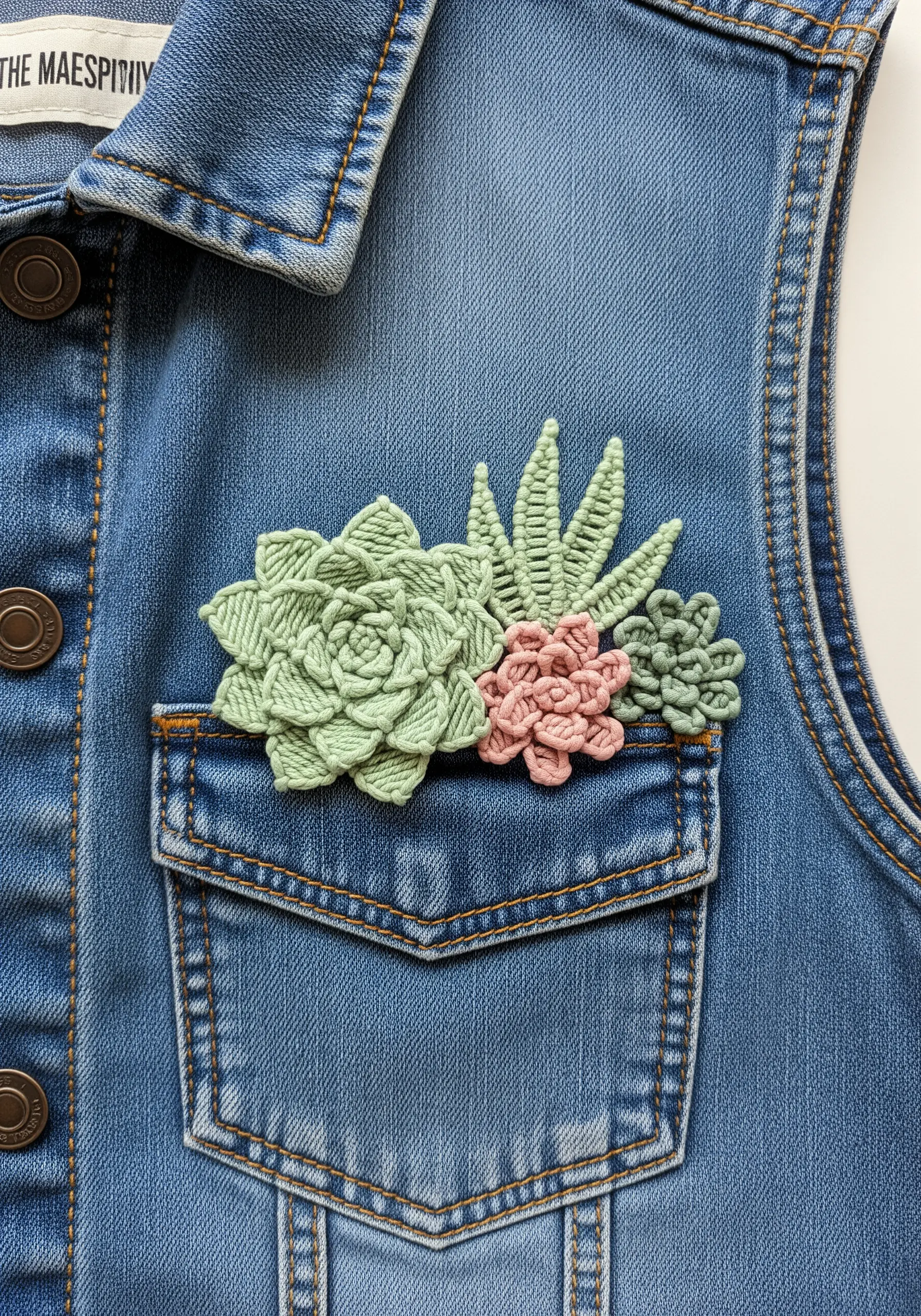
Give your embroidery a stunning, tactile quality by building succulents that rise off the fabric surface.
Use the woven wheel stitch (or spider web rose stitch) to create the central rosette succulent; its woven structure naturally creates a raised, petal-like effect.
For other succulent shapes, you can use padded satin stitch or cast-on stitches, which form thick, dimensional lines perfect for plump leaves.
This approach gives your work a sculptural effect, making the plants look real enough to touch.
17. Use Glow-in-the-Dark Thread for a Luminous Effect
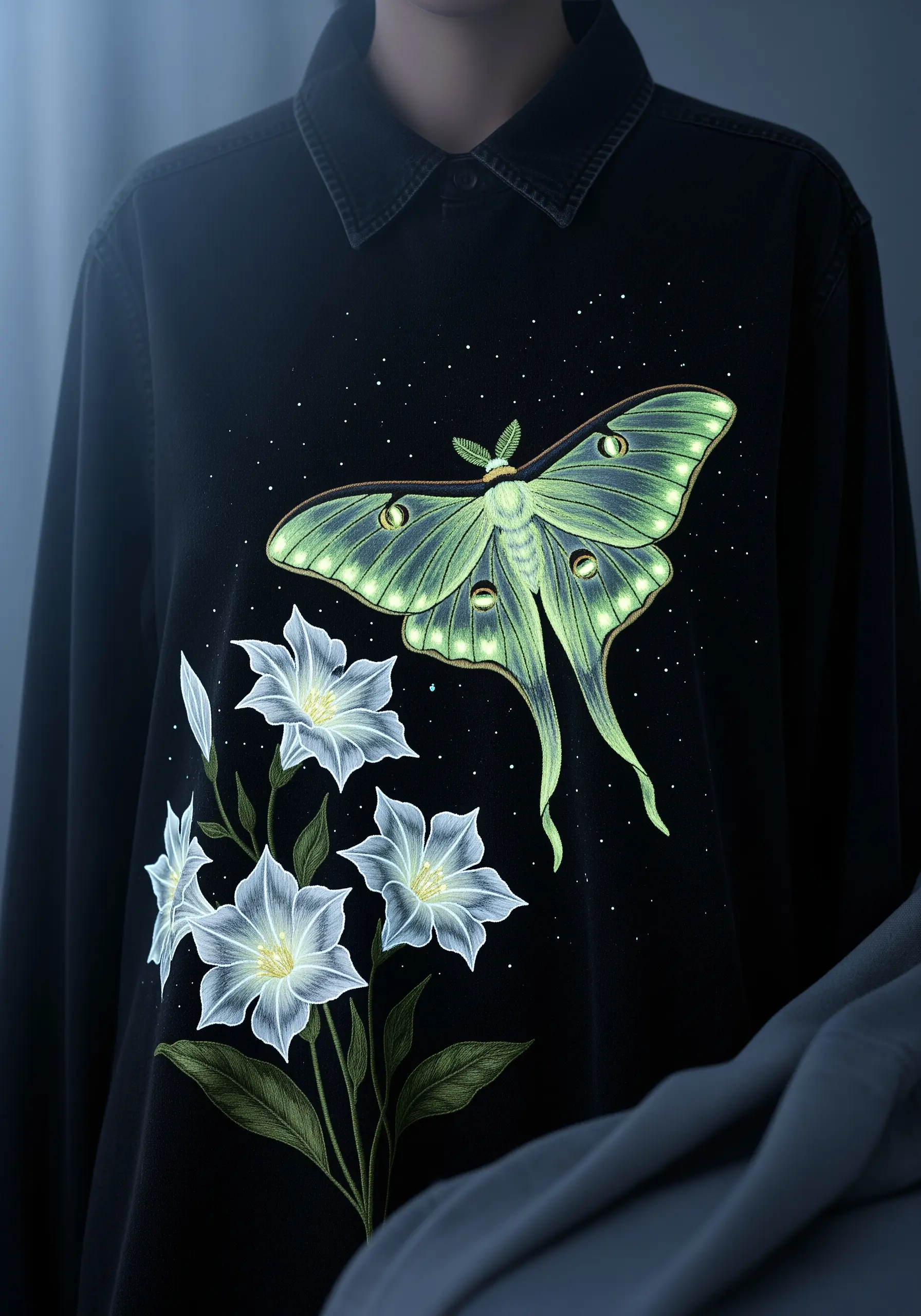
Add a layer of magic to your botanical designs by incorporating glow-in-the-dark thread.
On a dark sweatshirt, outline the wings of a Luna moth or the stamens of night-blooming flowers with this specialty thread.
During the day, it appears as a soft white or pale green, but in the dark, it reveals a surprising, ethereal glow.
This technique is perfect for creating modern neon thread designs that combine botanical beauty with an element of wonder, transforming how the garment is seen and experienced.