

Stitching for children offers a unique opportunity to create not just clothing, but tiny, wearable stories. Forget fleeting trends and focus instead on crafting pieces that feel personal and timeless. Adding a touch of the forest—a climbing ivy vine or a delicate fern frond—can transform a simple garment into a cherished keepsake.
The secret to beautiful botanical embroidery lies in the details: the direction of a stitch, the weight of a thread, the unexpected placement of a single leaf. It’s about understanding how a simple stem stitch can create graceful movement, or how a padded satin stitch can make a leaf feel soft and real to a child’s touch.
Here, you will find techniques and ideas to help you move beyond basic outlines. You’ll learn how to add depth, texture, and a touch of modern elegance to your work, ensuring that every piece you create is not only beautiful but also durable enough to be loved, worn, and perhaps one day, passed down.
1. Cascading Ivy with a Soft Color Gradient
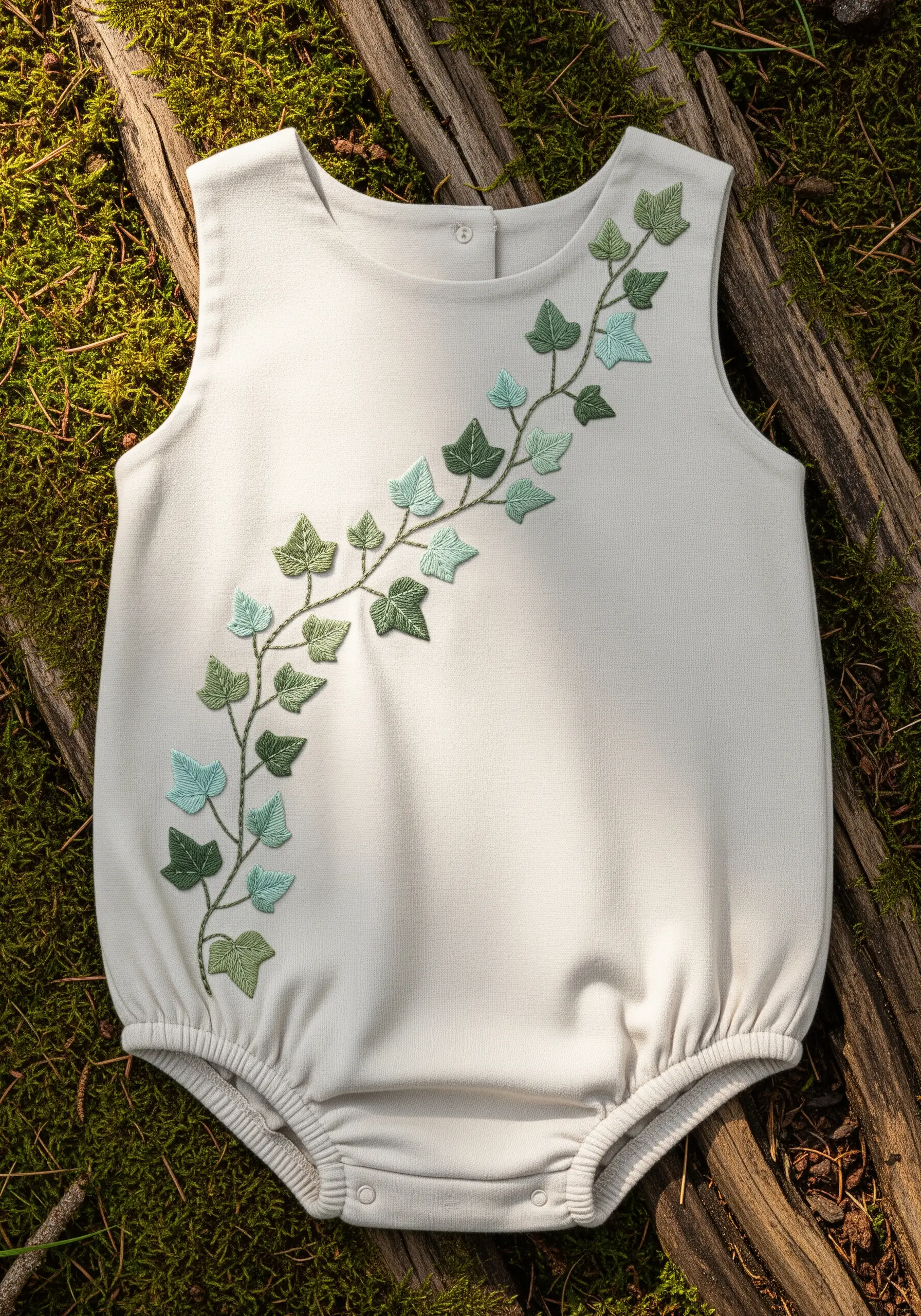
Create a gentle, flowing line by stitching an ivy vine diagonally across a onesie or small shirt.
Use a single strand of thread for the stem in a whipped backstitch for a smooth, raised line that mimics a real vine.
For the leaves, use a satin stitch with two strands, but vary the colors from dark green to mint and aqua.
This color gradient adds visual depth and a modern, dreamy quality, preventing the design from feeling too traditional.
The key is to scatter the colors organically rather than in rigid blocks, which enhances the natural feel.
2. Bold Fern Statement on Denim
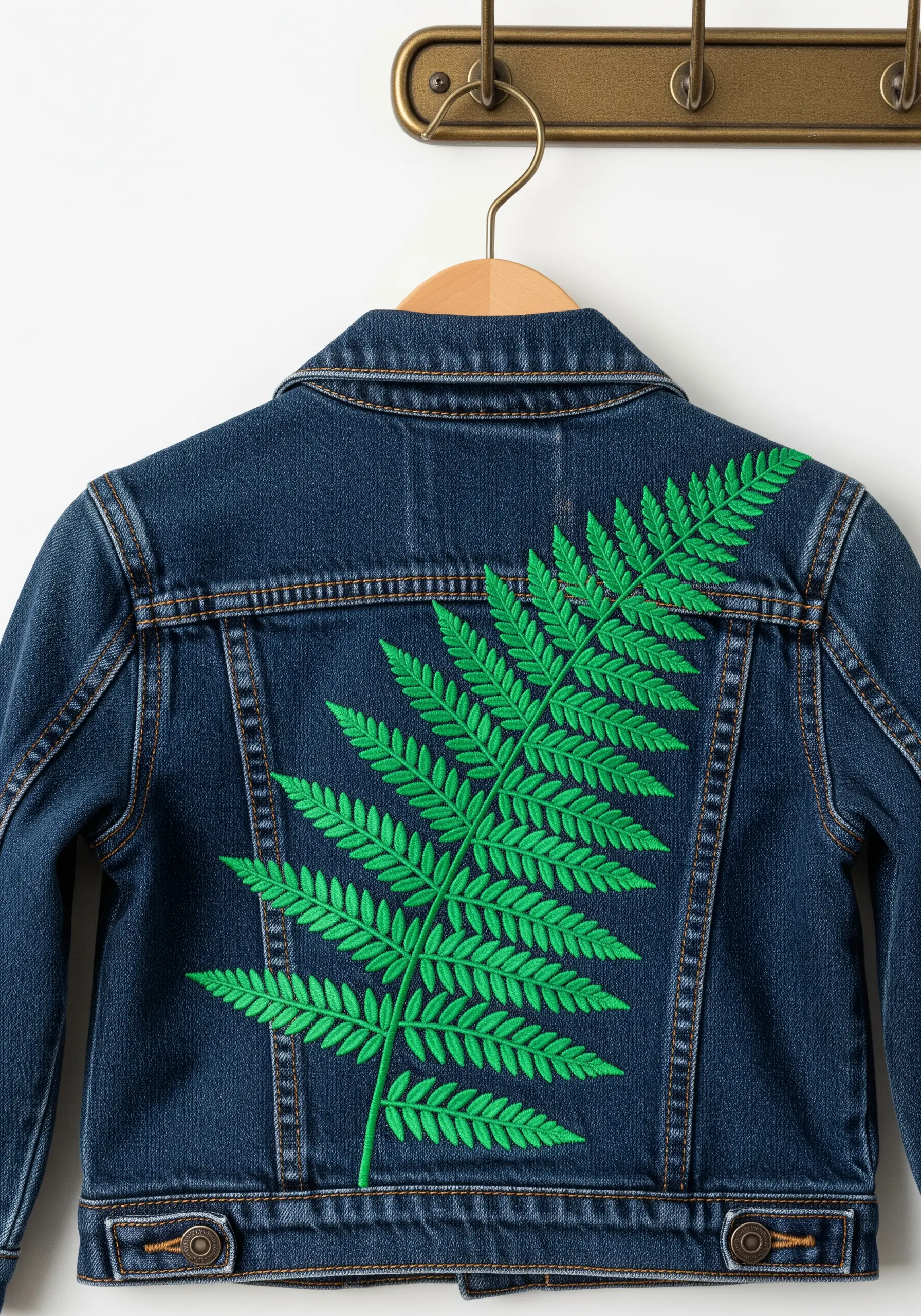
A large, single fern frond stitched on the back of a denim jacket creates a powerful, graphic statement.
To prevent puckering on heavy denim, always use a medium-weight tear-away stabilizer on the inside of the jacket.
Use a dense fishbone stitch for each leaflet, ensuring your stitches are tight and uniform for a smooth, almost patch-like appearance.
Choosing a vibrant, singular color like this electric green makes the botanical design feel modern and bold, turning blank denim jackets into wearable art.
3. Delicate Ivy on Textured Corduroy
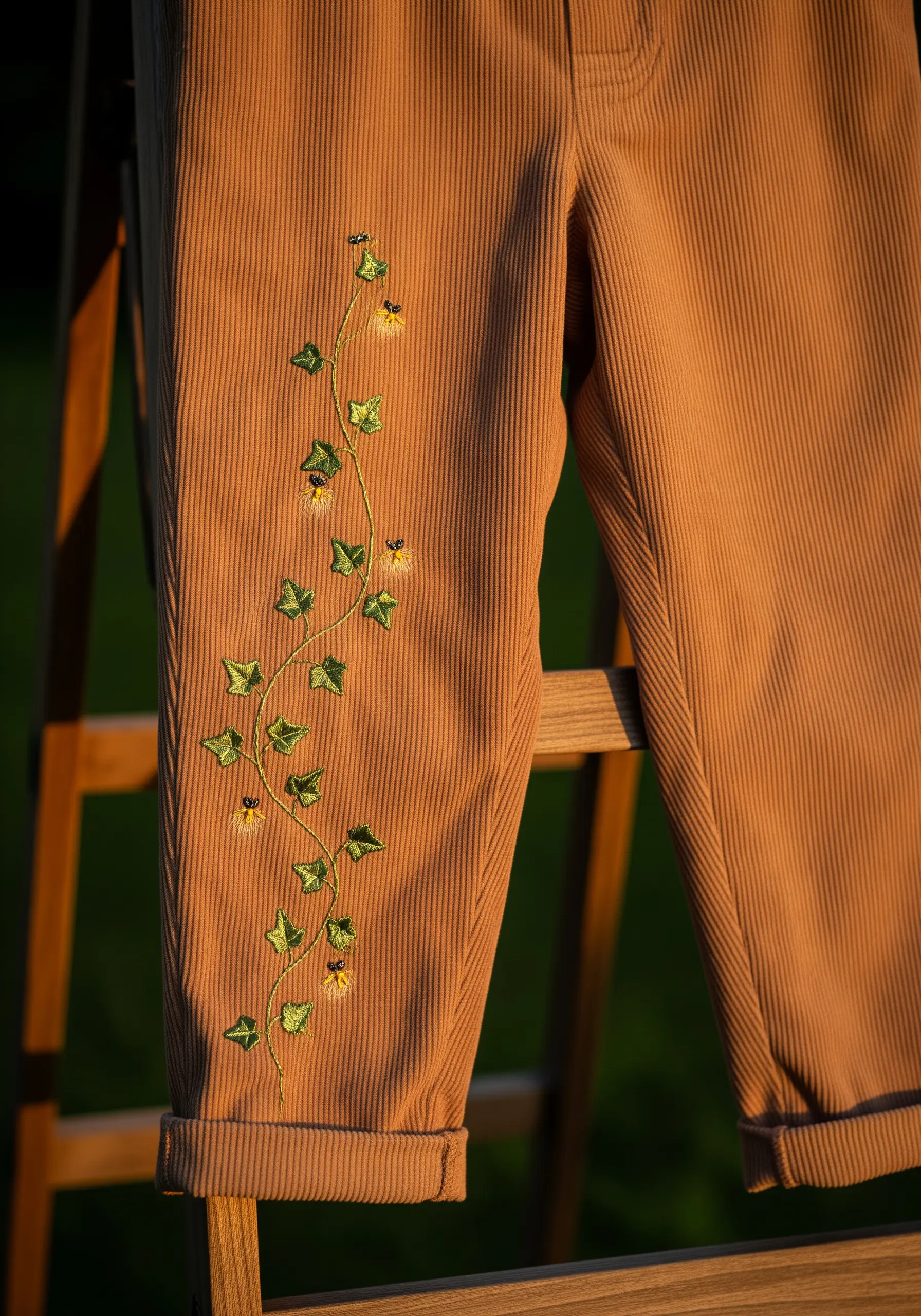
When embroidering on a textured fabric like corduroy, your stitches need enough body to avoid getting lost in the fabric’s ridges.
Use three strands of floss for the leaves and stems to ensure the design sits prominently on the surface.
A simple stem stitch for the vines and a satin stitch for the leaves provide clean definition against the corduroy’s texture.
Introduce tiny, whimsical details like bees or miniature flowers using French knots—they add a playful narrative touch perfect for children’s clothing.
4. Layered Textures in a Botanical Wreath
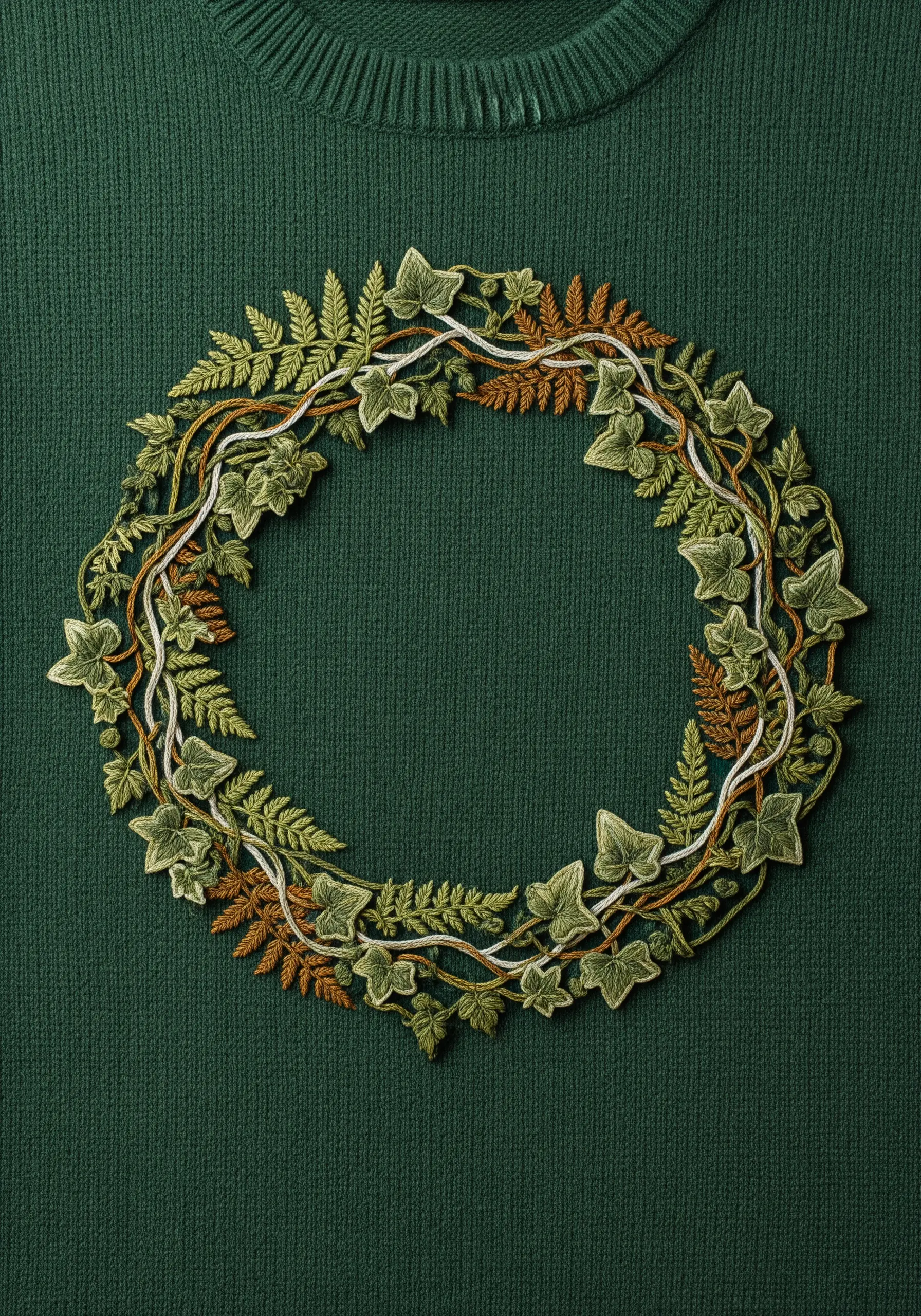
To achieve a wreath with this level of depth, think in layers.
First, stitch the background elements like the feathery ferns using a light-handed fishbone stitch in earthy tones.
Next, add the main ivy leaves over the top, using a padded satin stitch to give them a subtle, raised dimension.
Finally, weave in the delicate, lighter-colored vines using a simple backstitch, allowing them to twist over and under the other elements.
This layering technique creates a rich, three-dimensional effect that draws the eye in.
5. Playful Fern Peeking from a Pocket
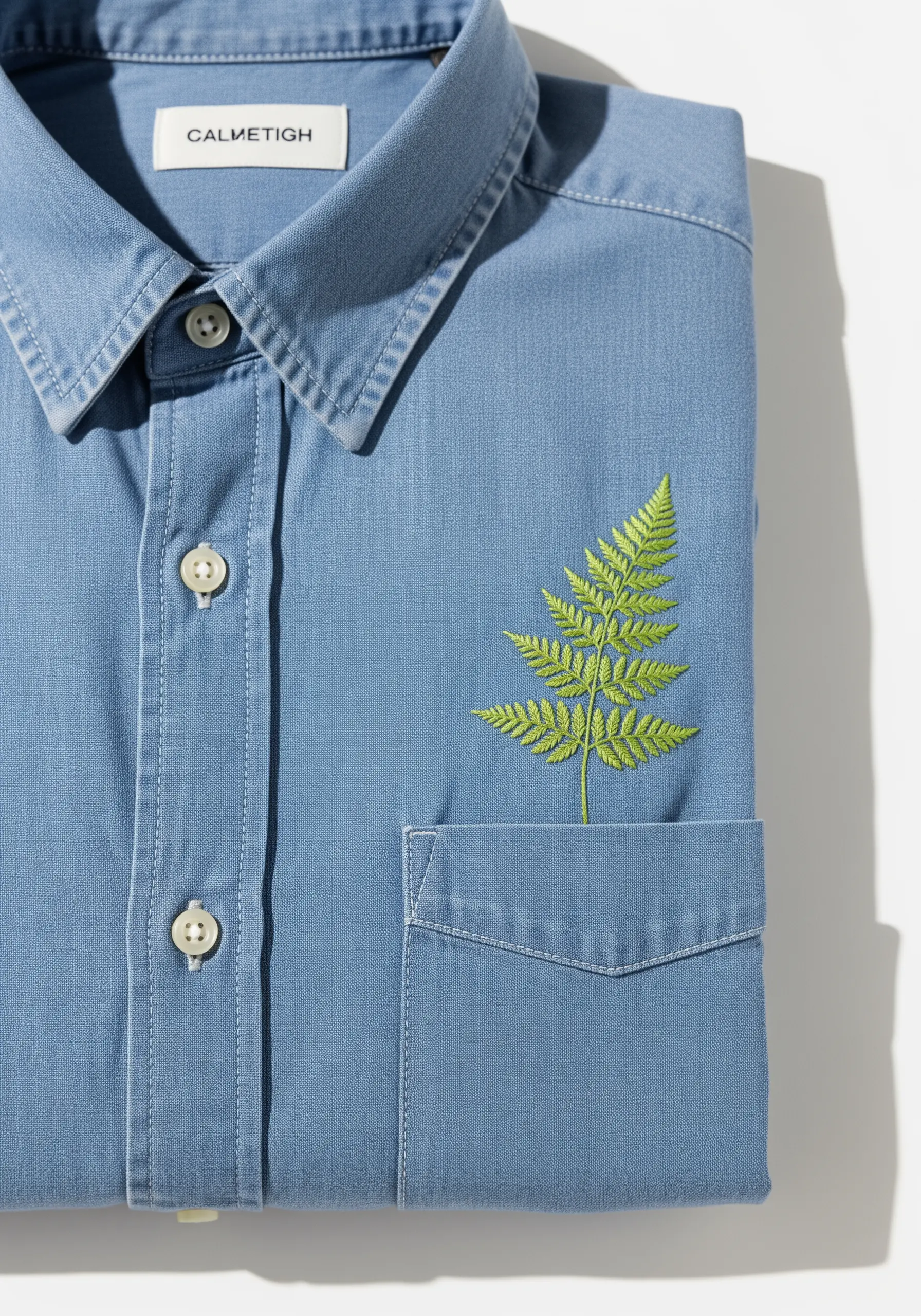
A small detail in an unexpected place is a signature of thoughtful design.
Embroider a single fern frond so it appears to be growing out of a shirt pocket.
On lightweight chambray or cotton, use only two strands of floss to keep the stitches from pulling or distorting the fabric.
A delicate fishbone stitch works perfectly here, giving the fern a light, airy quality that complements the subtle placement.
This thoughtful touch transforms a simple shirt into a personalized piece with a story.
6. Organic Ivy Border on a Hemline
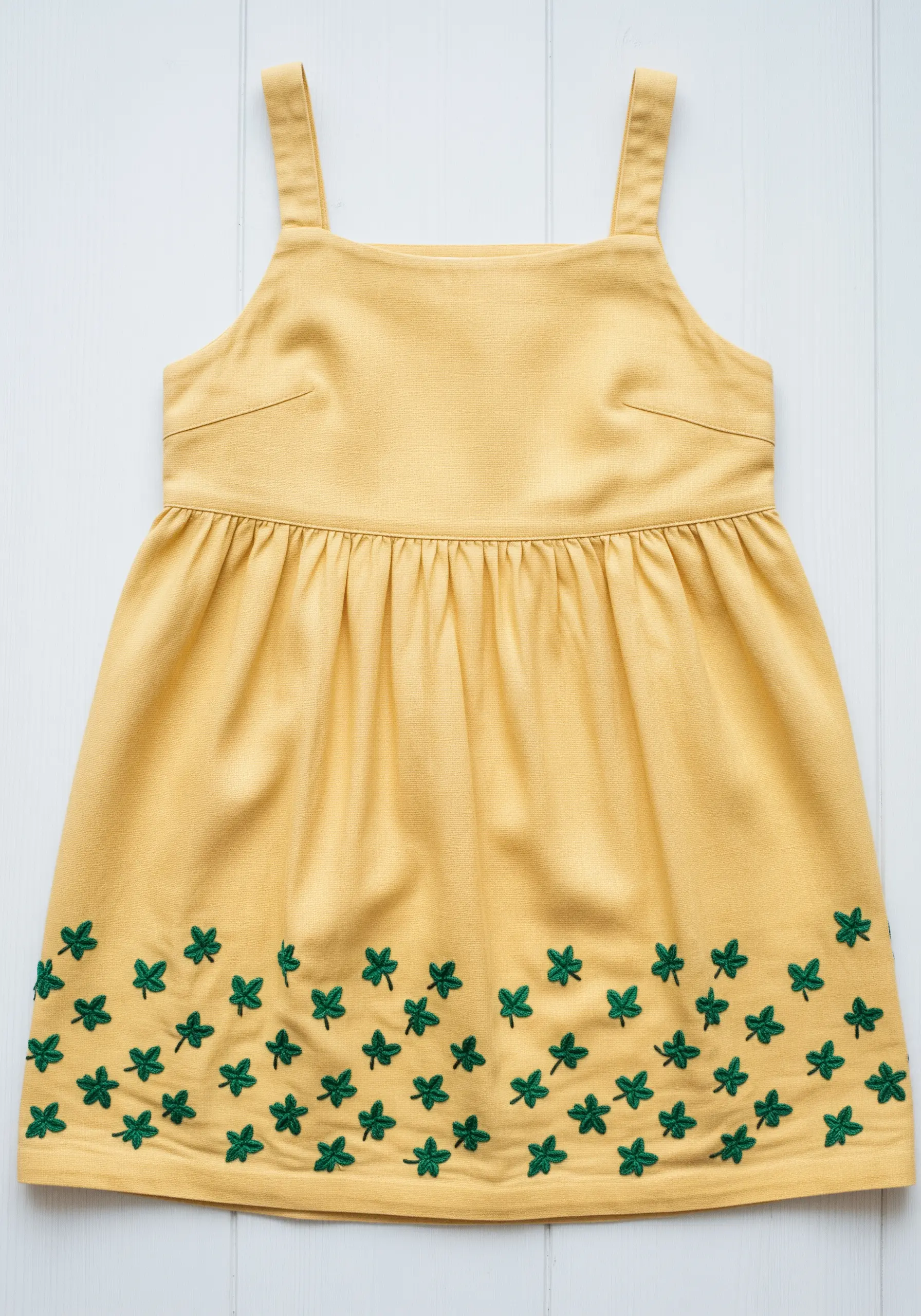
Create a whimsical border by scattering small ivy motifs along the hem of a dress or skirt.
To make the pattern feel organic and not like a stamp, vary the rotation and spacing of each three-leaf cluster.
Stitch the leaves first using a satin stitch, then connect them with a free-flowing stem stitch vine.
This technique creates a sense of natural, upward growth and movement, making the border feel alive and dynamic.
7. Appliqué-Style Ivy on Fleece
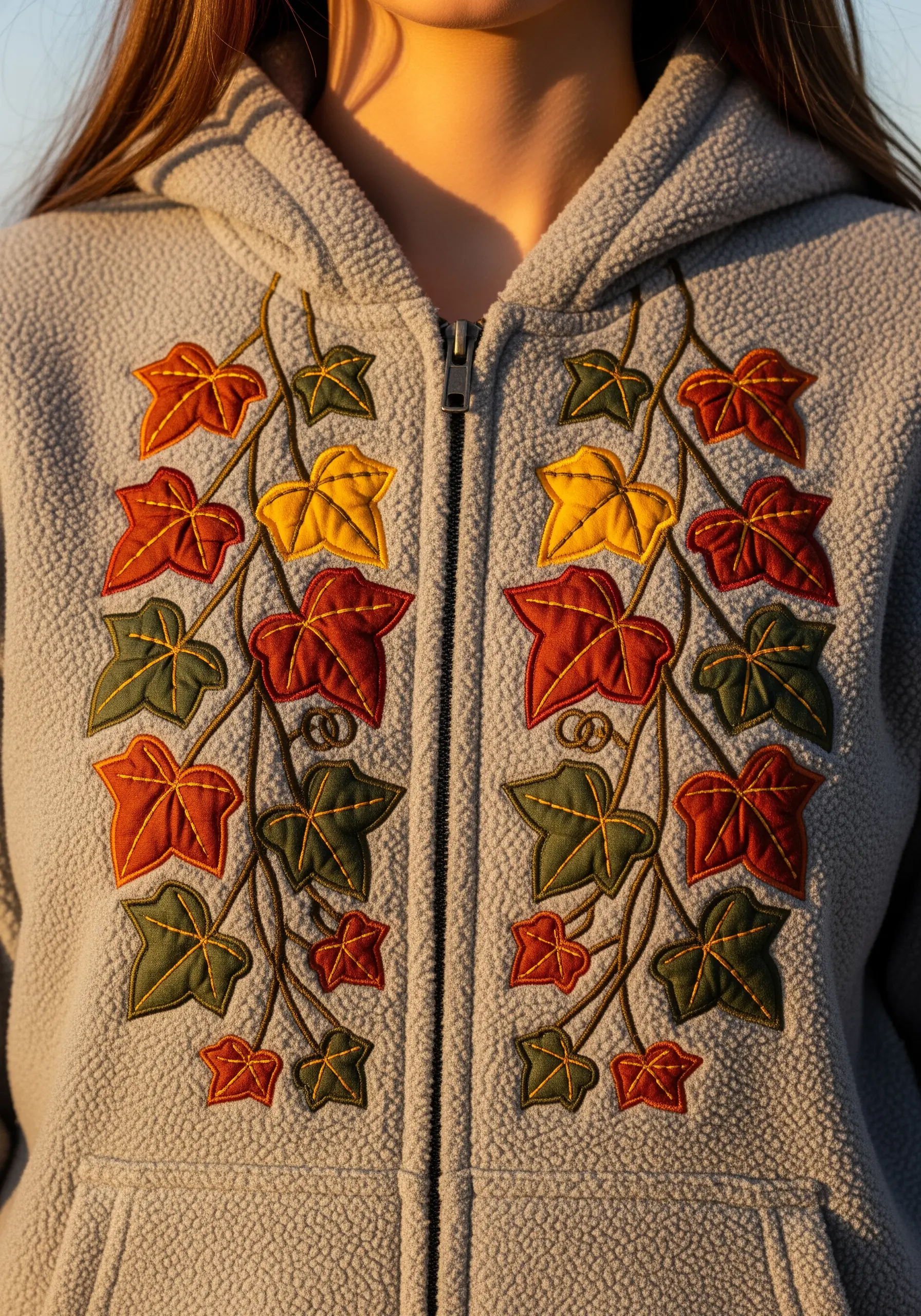
Fleece’s plush texture can swallow delicate stitches. The solution is to create a bold, appliqué-like effect.
Place a layer of water-soluble stabilizer over the fleece before stitching; this provides a smooth surface and prevents the threads from sinking in.
Use a thick satin stitch outline around each leaf shape, then fill it with a parallel satin stitch.
This technique gives the leaves a clean, solid, and slightly raised look that stands up beautifully against the soft texture of the fleece.
8. A Miniature Forest Scene on a Bib
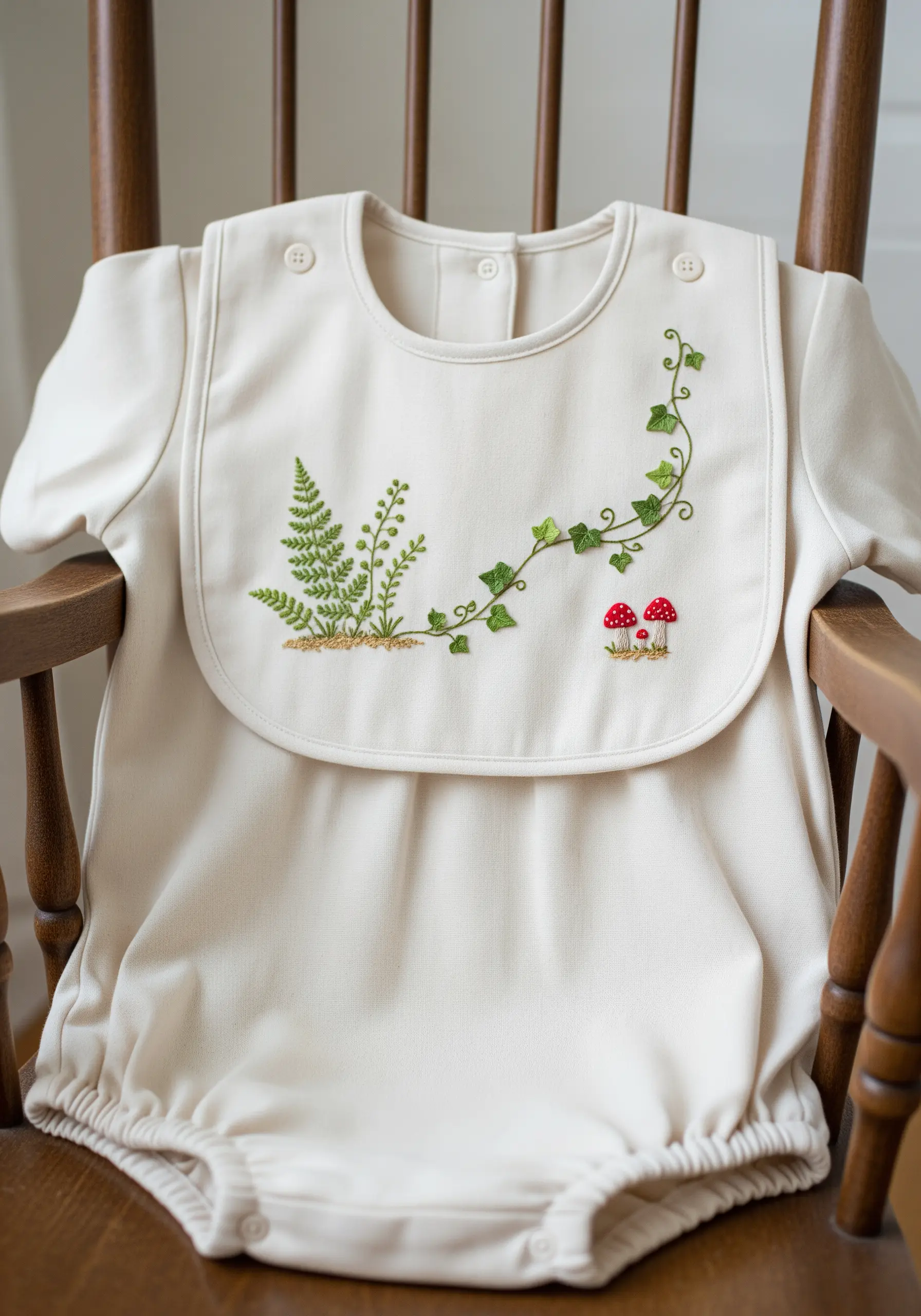
Transform a simple bib into a storybook illustration by composing a tiny, curated scene.
Combine different botanical elements—ferns, ivy, and mushrooms—to create a small world.
Use delicate stitches to avoid overwhelming the small space: a fine backstitch for fern stems, single detached chain stitches for leaves, and tiny satin-stitched mushroom caps.
This careful composition turns a practical item into one of those precious, creating delicate heirloom keepsakes.
9. Symmetrical Ferns on Collars and Cuffs
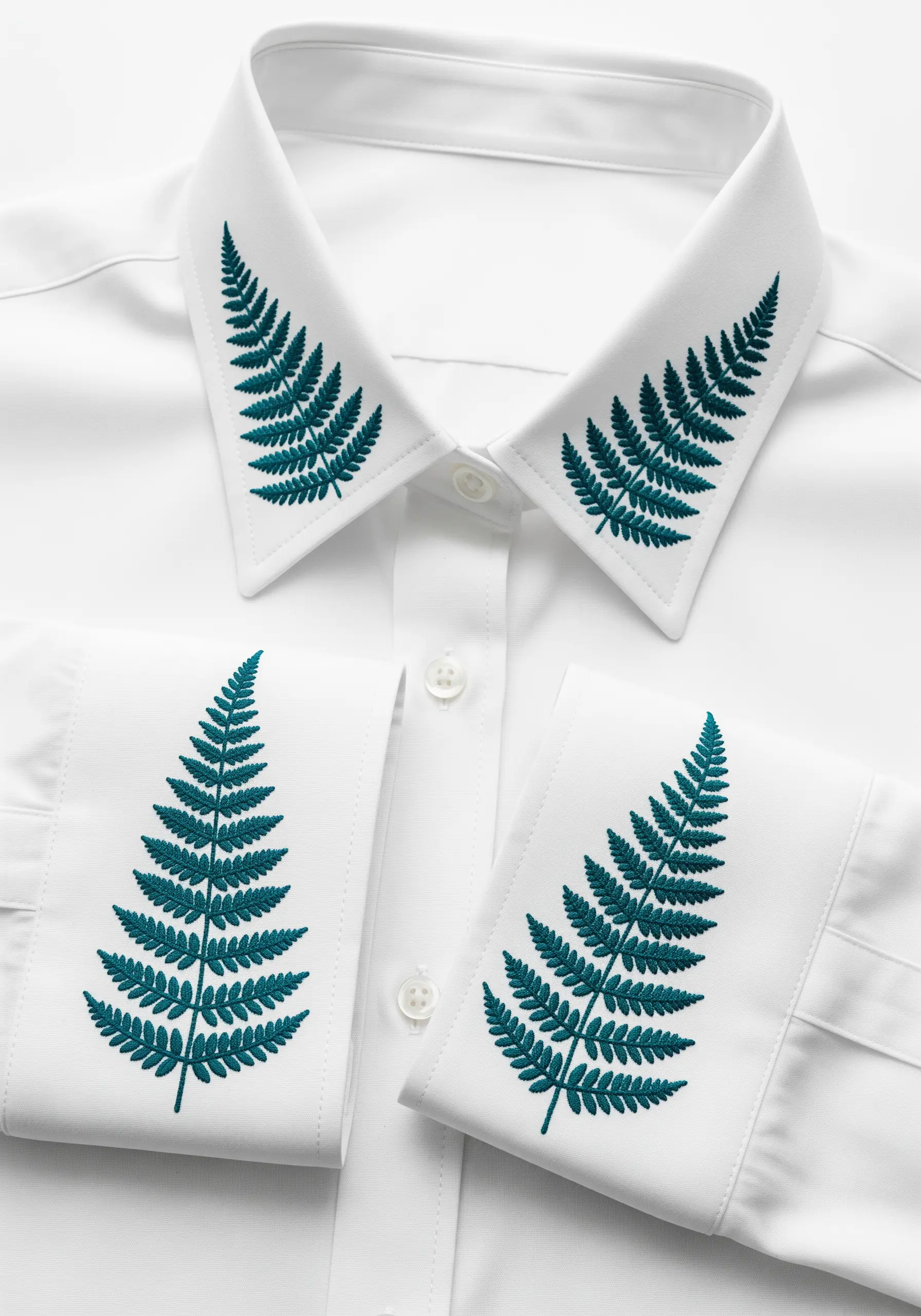
Symmetrical embroidery on collars and cuffs adds a sharp, bespoke finish to a classic shirt.
Precision is essential. Use a water-soluble transfer paper or a heat-erasable pen to trace your design perfectly on both sides.
A clean, tight satin stitch is ideal for achieving the crisp silhouette of a fern frond against white cotton.
This tailored placement feels intentional and sophisticated. It’s a technique used in many floral collar embroidery patterns to elevate a simple garment.
10. Three-Dimensional Stumpwork Foliage
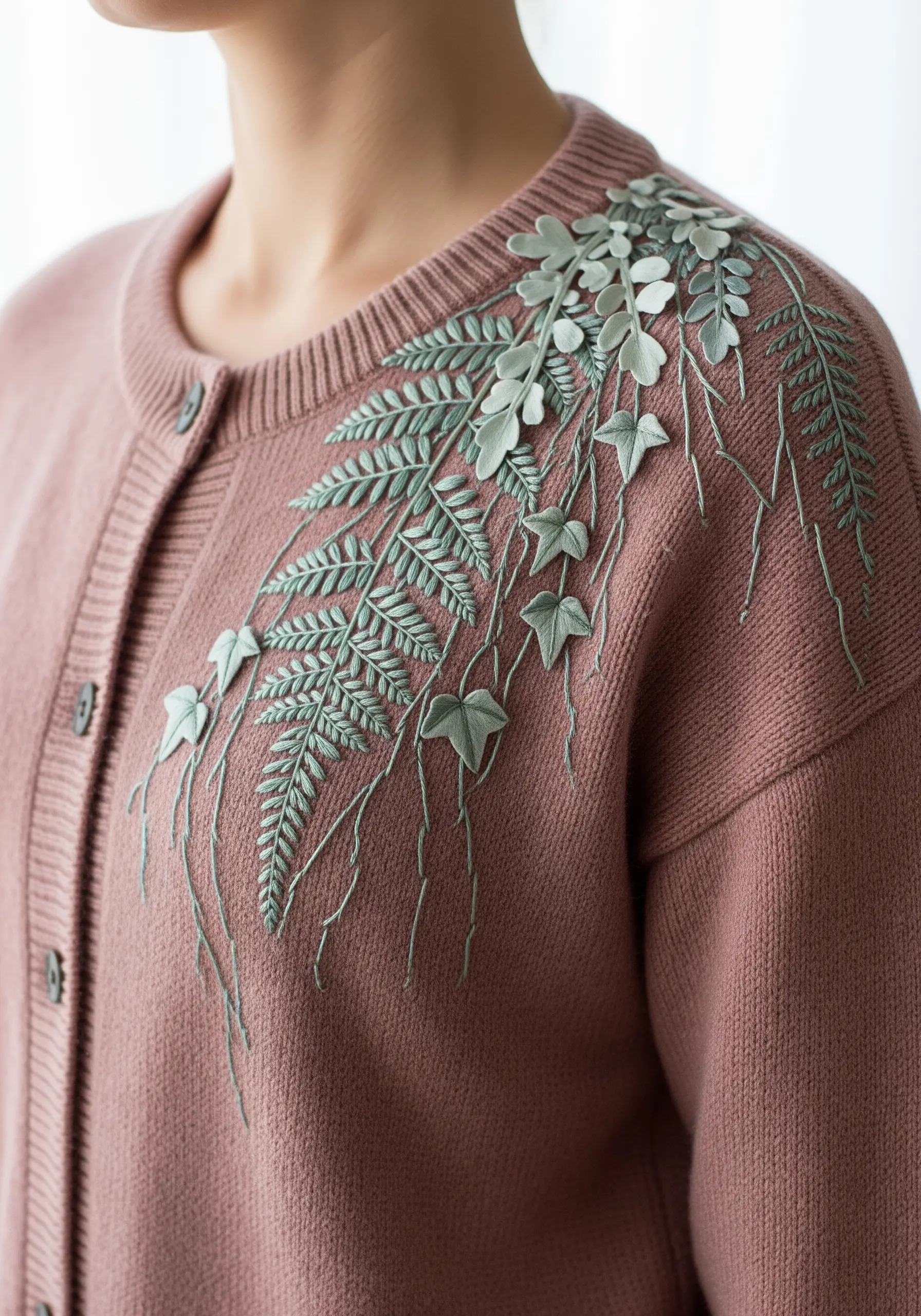
For a truly show-stopping effect, create raised, three-dimensional leaves using stumpwork techniques.
Stitch the ivy leaves onto a separate piece of fabric, using a wire edge to shape them. Fill with a padded satin stitch or long-and-short stitch.
Carefully cut out the leaves and then tack them onto the sweater at the base, allowing them to lift away from the surface.
Combine these 3D elements with flatter fern embroidery to create a stunning interplay of textures. This is one of the most impactful mixed fiber embroidery techniques you can master.
11. Functional and Decorative Knee Patches

Turn a practical repair into a beautiful design feature with embroidered knee patches.
Draw a circle on the knee area and fill it with dense, durable stitches. A tightly woven fishbone or long-and-short stitch works well to create a sturdy surface.
Use variegated green thread to give the fern motif natural-looking color shifts without changing your floss.
This not only reinforces a high-wear area but also turns everyday trousers into a unique piece that can add personality to jeans and pants.
12. Celestial Foliage with Metallic Accents
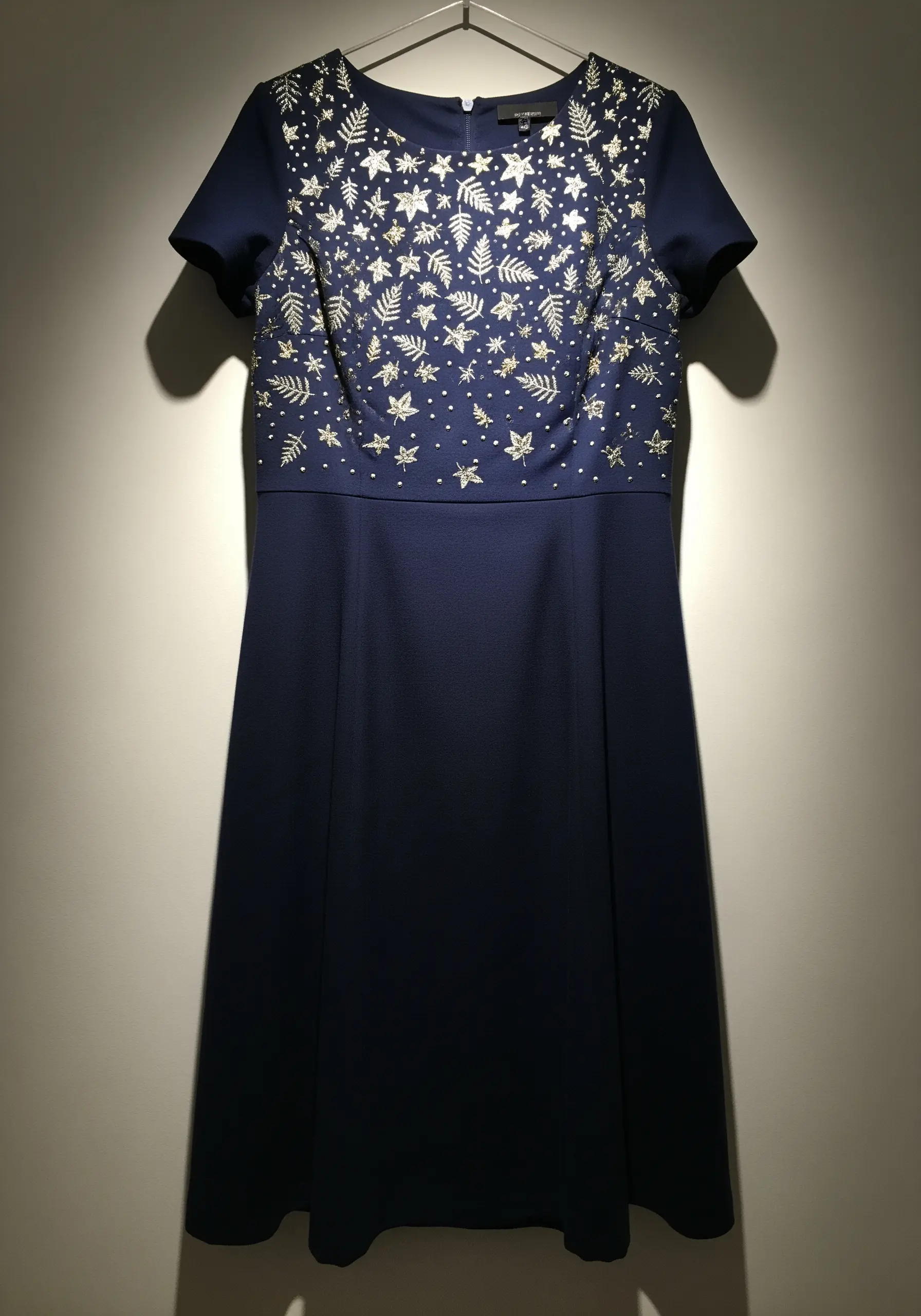
Combine botanical motifs with celestial elements for a touch of magic.
Scatter fern and ivy leaves across the bodice of a dress, then intersperse them with tiny stars and French knot dots.
Use a single strand of metallic gold or silver thread for the celestial details. The subtle shimmer contrasts beautifully with the matte finish of the cotton floss used for the leaves.
The combination evokes the feeling of moon and stars embroidery ideas nestled in a forest canopy, creating a truly enchanting garment.
13. Narrative Scene with a Snail and Fern

Create a tiny story on the back of a pocket by combining flora and fauna.
Build texture from the ground up: use a bed of French knots or seed stitches to represent soil.
For the snail’s shell, use a spiraling satin stitch, changing shades of brown to create the illusion of ridges. Add 3D stumpwork ivy leaves at the base for an extra layer of realism.
Layering textures and stitches makes these embroidery animals that look alive and brings your miniature world to life.
14. A Continuous Ivy Vine Down the Sleeve
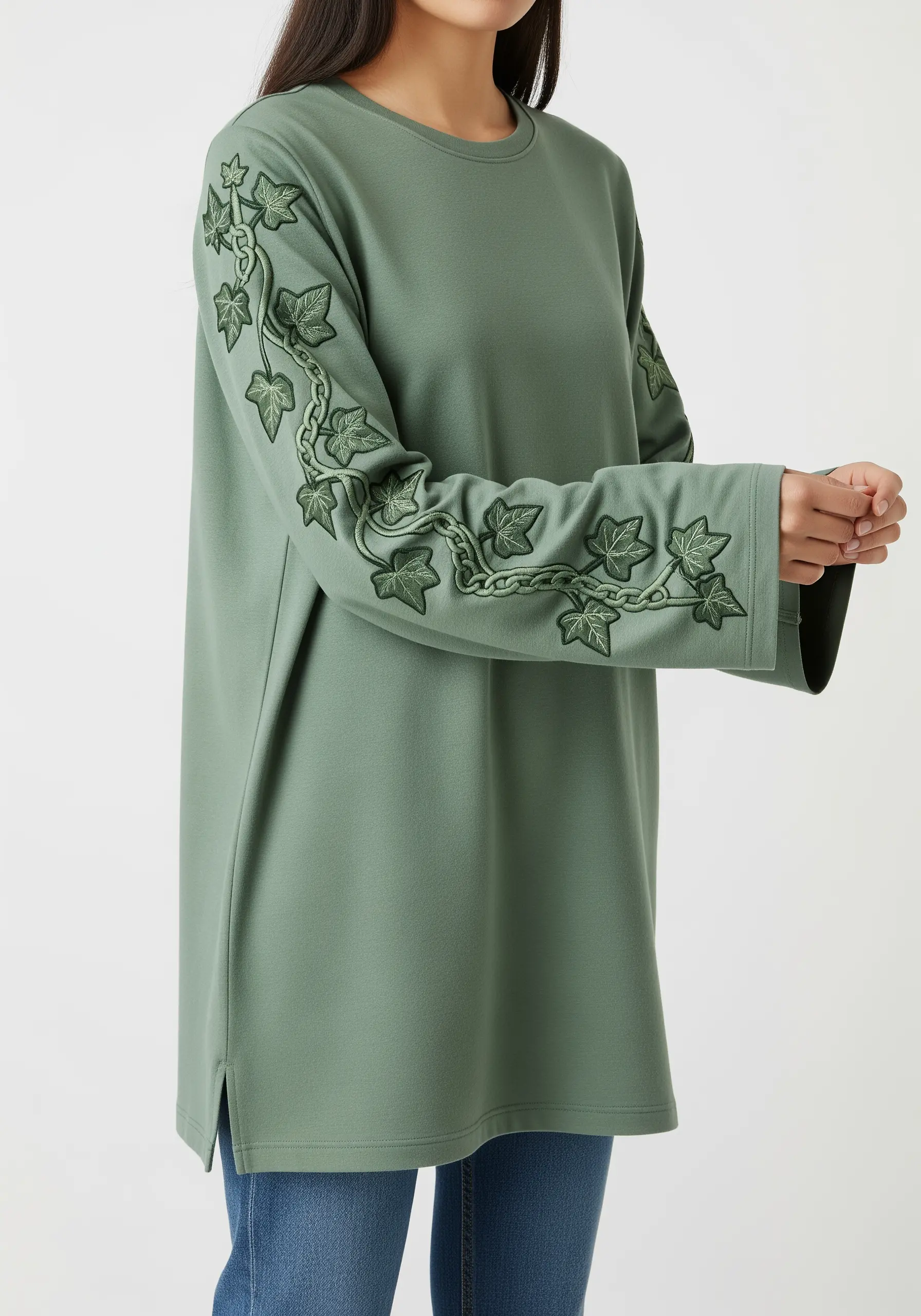
An embroidered vine wrapping around a sleeve creates an elegant, continuous line that moves with the wearer.
To plan the design, lay the sleeve flat and draw the main stem line with a removable fabric marker, ensuring it flows naturally.
Use a chain stitch for the vine to give it a linked, dimensional quality that stands out on soft jersey fabric.
This approach elevates simple hand-embroidered sleeve ideas from mere decoration to integral design.
15. Sophisticated Tone-on-Tone Ferns
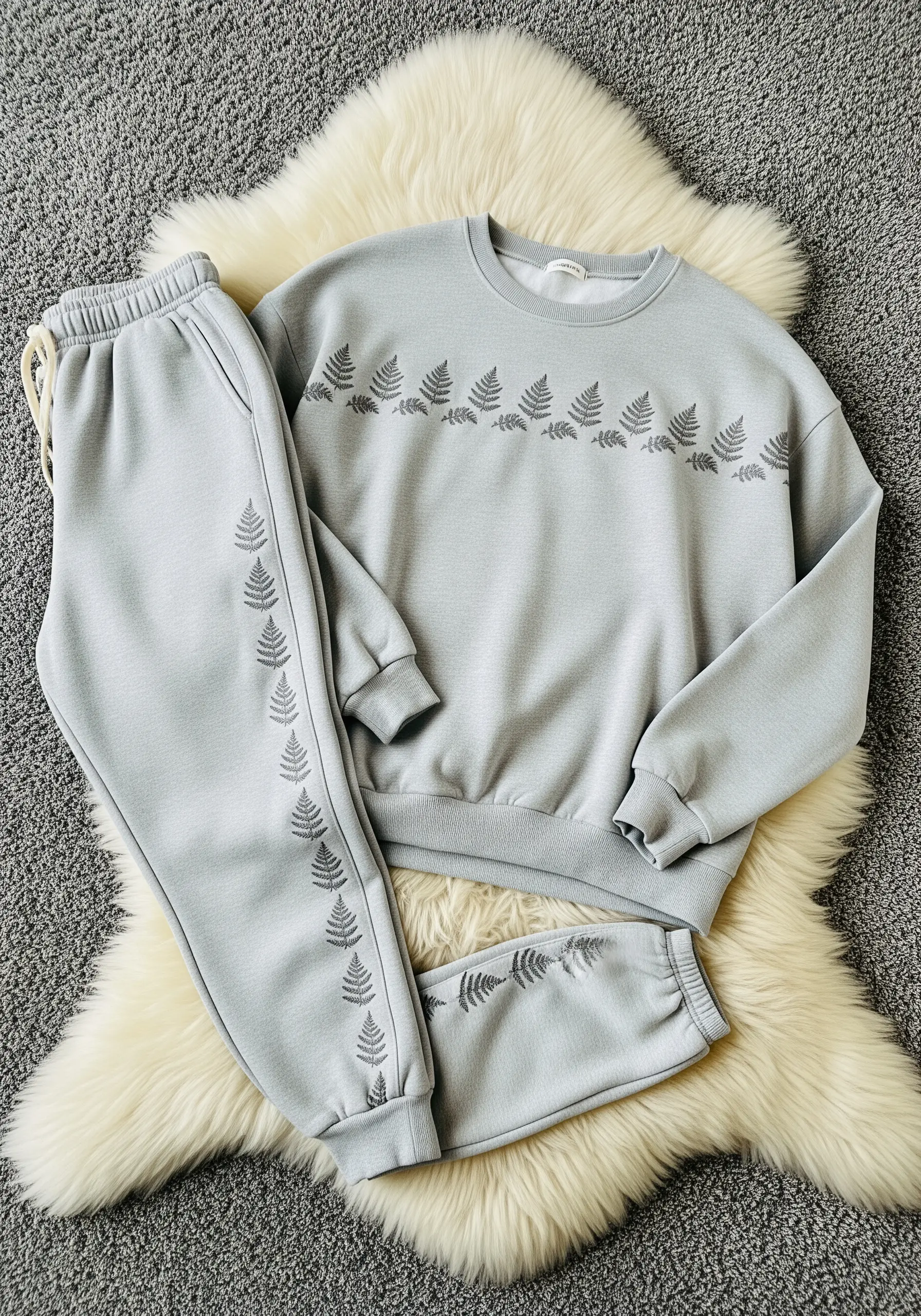
For a subtle and sophisticated effect, embroider a pattern using thread that is only a few shades darker or lighter than the base fabric.
This monochromatic approach emphasizes texture over color, creating a high-end, minimalist aesthetic.
On soft fleece or sweatsuit material, a simple backstitch outline of each fern is enough to create a delicate, repeating pattern.
Explore soft, white, taupe thread palettes to achieve this quiet luxury on cozy loungewear.
16. Ivy Embellishment on a Classic Trench Coat
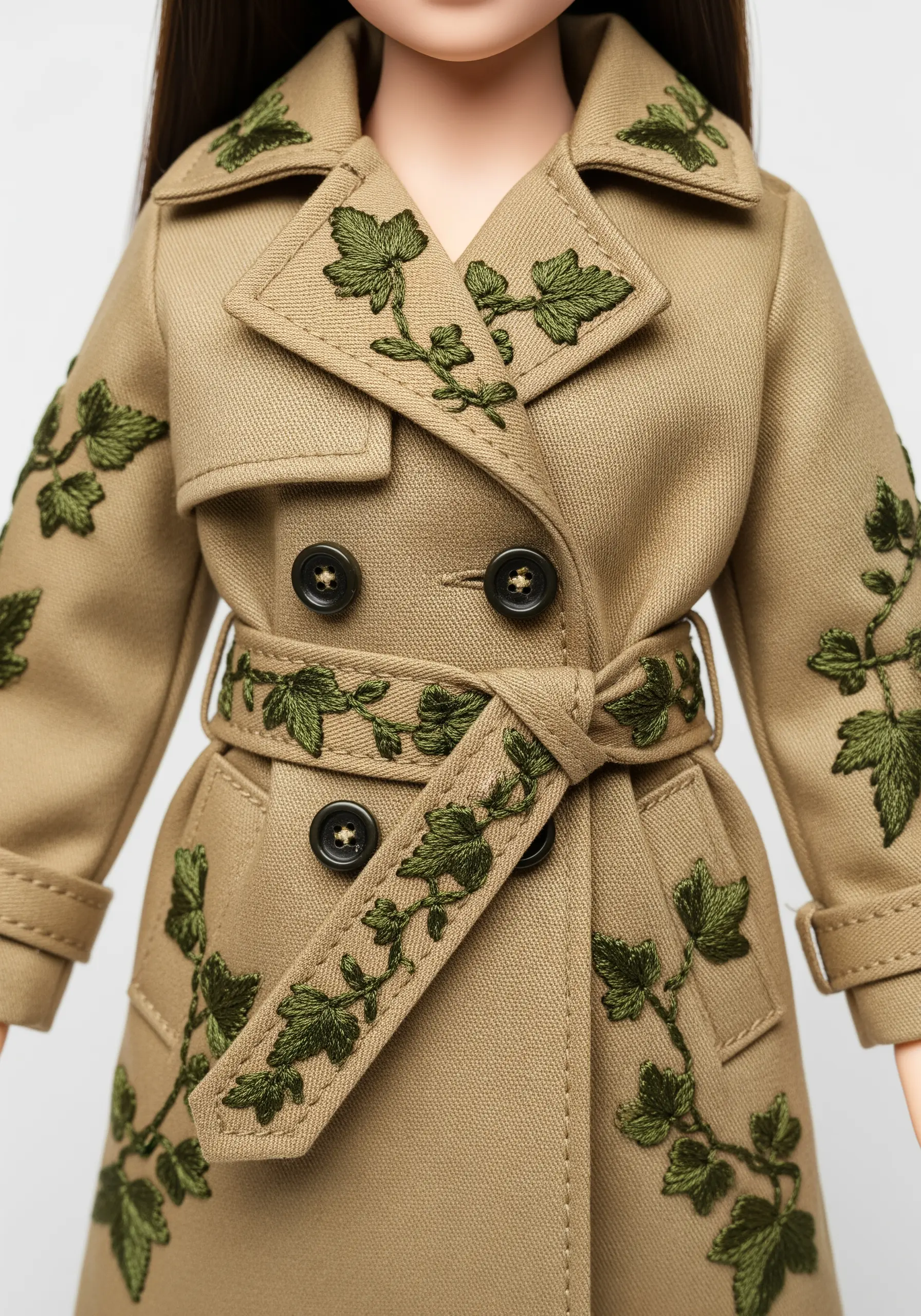
Embroidering on structured outerwear adds an unexpected, bespoke touch.
Focus the embroidery on specific architectural elements of the coat, like the lapels, collar, and belt, to complement its lines rather than overwhelm them.
A simple running stitch for the vines and a satin stitch for the leaves create a clean design that works well on the smooth, tightly woven fabric of a trench coat.
This method of transforming outerwear is one of the best botanical embroidery ideas for turning plain denim jackets into blooming fashion statements and coats alike.
17. A Vibrant Forest Floor Hemline
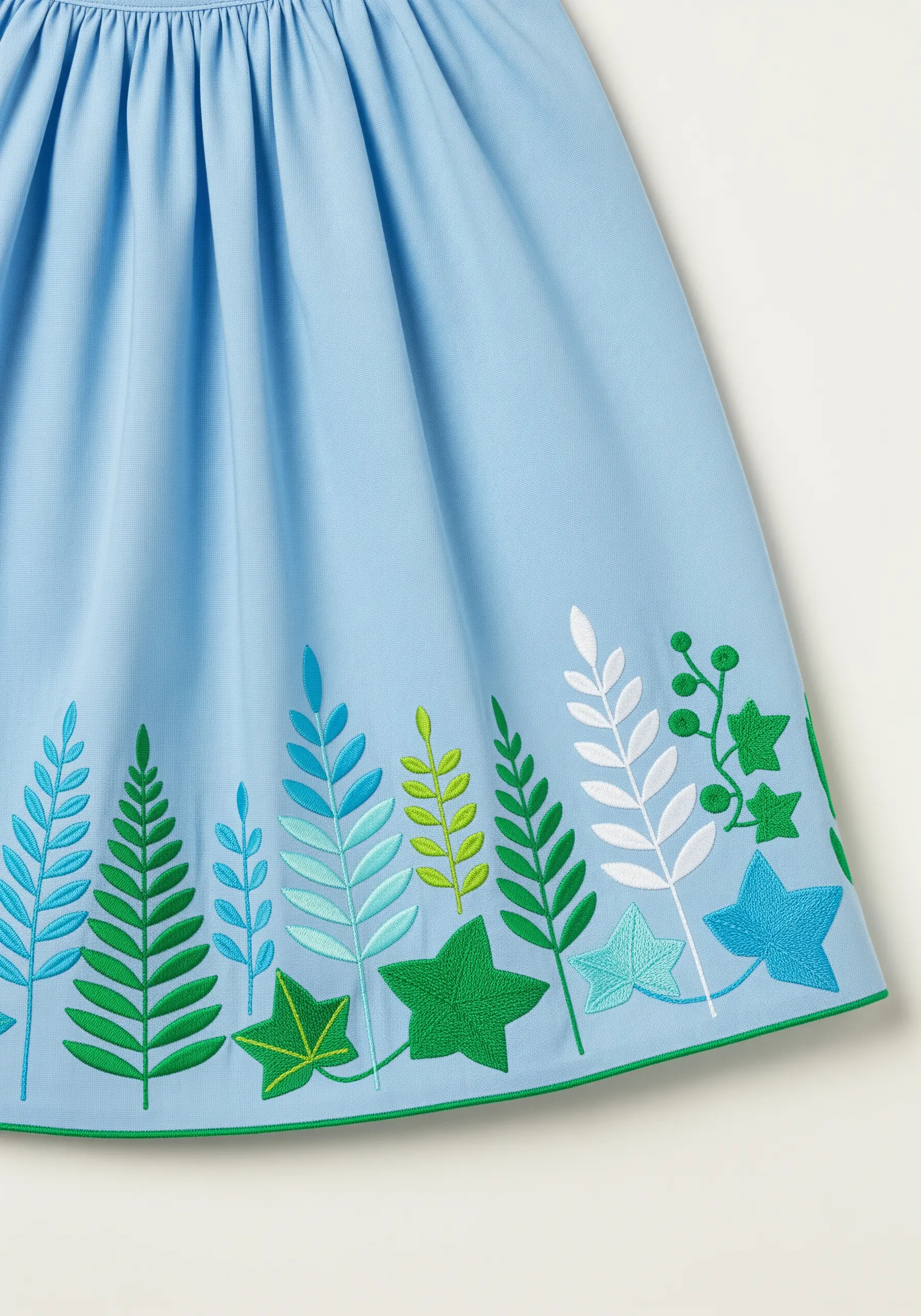
Create a vibrant, stylized forest border using a cheerful and modern color palette.
Combine simplified fern and ivy shapes and fill them with solid satin stitch. This graphic approach allows the colors to be the main focus.
Choose a cool analogous palette—like shades of green, aqua, and blue—and add a pop of contrasting white or chartreuse to make the design sing.
This is where bold color-pop embroidery meets botanical grace, perfect for a playful child’s dress.


