
You have spent hours selecting the perfect pressed petals and stitching delicate stems, so why let the presentation fall flat? Framing is not just a boundary for your art; it is the final design element that dictates how your work communicates with the room.
When you choose the right vessel—whether it is the transparency of floating glass or the organic texture of driftwood—you elevate a simple craft into a professional textile installation. The interplay between the fragility of a dried flower and the permanence of your thread deserves a display that highlights that beautiful tension.
Here are seventeen distinct framing concepts that will help you rethink how you display your botanical embroidery, moving beyond the basic hoop into something truly architectural and expressive.
1. Suspended transparency with floating glass

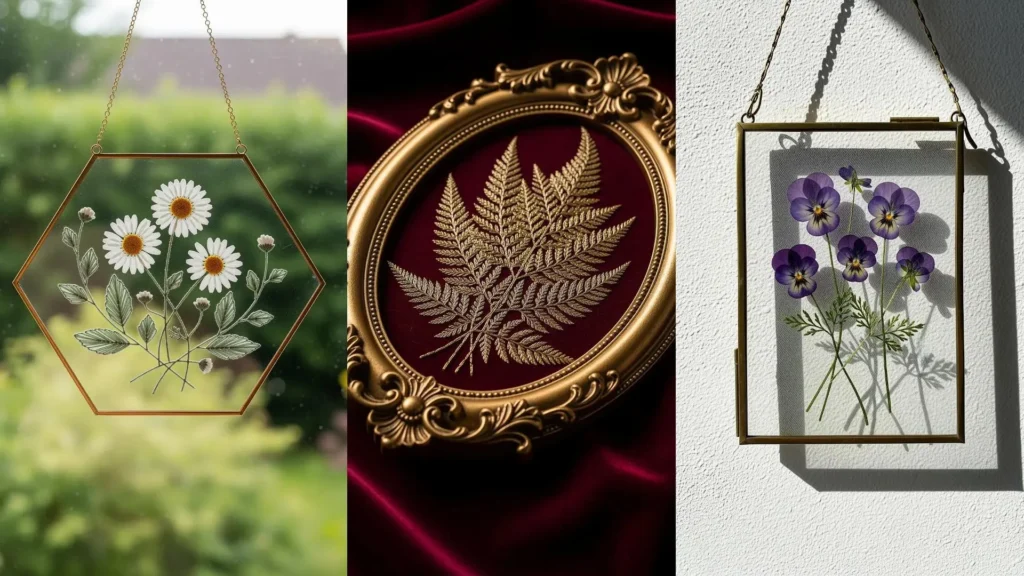
Minimalism demands perfection; by sandwiching your pressed pansies between double panes of glass, you allow the light to become the background.
Use a single strand of invisible nylon thread or a microscopic dot of UV resin to secure the stems without distracting from the pressed flower art techniques that look too good to frame.
The brass edging adds a vintage boundary, but the true focus remains the uninterrupted silhouette of the petals against your wall texture.
2. Deep-set shadow box for dimensional layering

When your embroidery involves textured knots or dense botanical clusters, a standard frame flattens the life out of your work.
Opt for a deep shadow box that allows you to mount the linen on a raised backing board, creating distinct shadows that define the lavender stalks.
This depth transforms simple stitching into framed embroidery art ideas that will instantly transform your living room into a gallery space.
3. Velvet backing in an ornate gold oval

Contrast is the secret to luxury; placing a delicate, gilded fern against deep burgundy velvet creates an immediate sense of history and opulence.
Choose a velvet with a short pile to ensure your adhesive or mounting stitches sit flush without sinking into the fabric.
This pairing mimics vintage inspired embroidery wall decor that makes any room feel nostalgic and regal.
4. Geometric brass hexagon for modern daisies

Break away from the traditional circle by framing your white daisies in a sharp, geometric brass hexagon.
To maintain structural integrity, embroider the stems directly onto a transparent tulle or organza base before mounting, ensuring the thread tension doesn’t warp the mesh.
These angular lines complement geometric hoop art designs that make a bold statement on walls.
5. Tulle canvas with integrated thorns

Embroidery on tulle requires a delicate hand; use a sharp needle and high-quality cotton floss to stitch thorns that visually interact with real rose petals.
The transparency of the tulle makes the petals appear to float, creating a surreal, deconstructed floral arrangement.
This is one of those botanical embroidery projects using pressed flowers you can try today to test your precision.
6. Sleek acrylic block for scientific precision

For a contemporary, almost clinical look, press your eucalyptus specimen between heavy acrylic blocks with embroidered geometric accents.
The black lines should be stitched on a cardstock or stiff fabric insert, acting as a rigid backdrop that emphasizes the organic curve of the leaves.
It is a perfect example of modern minimalist textile wall art designs to stitch for scandinavian interiors.
7. Rustic driftwood border with raw linen

Harmony in materials matters; frame wild field flowers with weathered driftwood and unbleached linen to capture a coastal or cottage atmosphere.
Use a whip stitch or couching technique with jute twine to create a border within the frame, bridging the gap between the delicate petals and the rough wood.
These are ways to embroider natural textures that wow your friends with their organic feel.
8. Sunburst rattan for bohemian energy

Extend the energy of your embroidery outward by mounting your hoop inside a rattan sunburst frame.
The radiating lines of the frame draw the eye to the center, so keep your floral composition tight and centrally balanced.
This style aligns perfectly with boho style embroidery wall canvases beginners can stitch to transform their space.
9. Ceramic crackle glaze for textural contrast

Don’t limit yourself to wood; a ceramic frame with a crackle glaze adds a layer of artisanal texture that complements the fragile veins of a hydrangea.
Select a frame color that echoes a secondary tone in your flower—here, the sage green highlights the cool undertones of the blue petals.
Explore small diy decor projects inspired by nature threads to find unique color pairings.
10. Botanical triptych with exposed roots

Tell a complete story by framing the entire plant anatomy, including the roots, across a series of three coordinating frames.
Embroider the root systems with a variegated brown thread to mimic the irregular, organic nature of soil-bound fibers.
This approach creates nature inspired framed embroidery designs for calm spaces that feel grounded and educational.
11. Vintage-style hanging fabric scroll

Bypass the glass entirely by mounting your work as a hanging tapestry, using wooden dowels to weight the top and bottom.
This format allows you to work on a much larger scale, perfect for an entire fern frond with an intricate, sprawling embroidered root system.
Large-format scrolls serve as stunning embroidered fabric wall panels you can stitch to impress guests instantly.
12. Upcycled window pane for kitchen herbs

Transform a salvaged multi-pane window into a functional art piece by dedicating each section to a specific herb.
Combine the real pressed specimen with elegant, black script lettering stitched in a smooth split stitch for legibility.
These garden herb embroidery patterns featuring mint thyme and basil blossoms bring the garden directly into your culinary space.
13. Sculptural copper wire wrapping
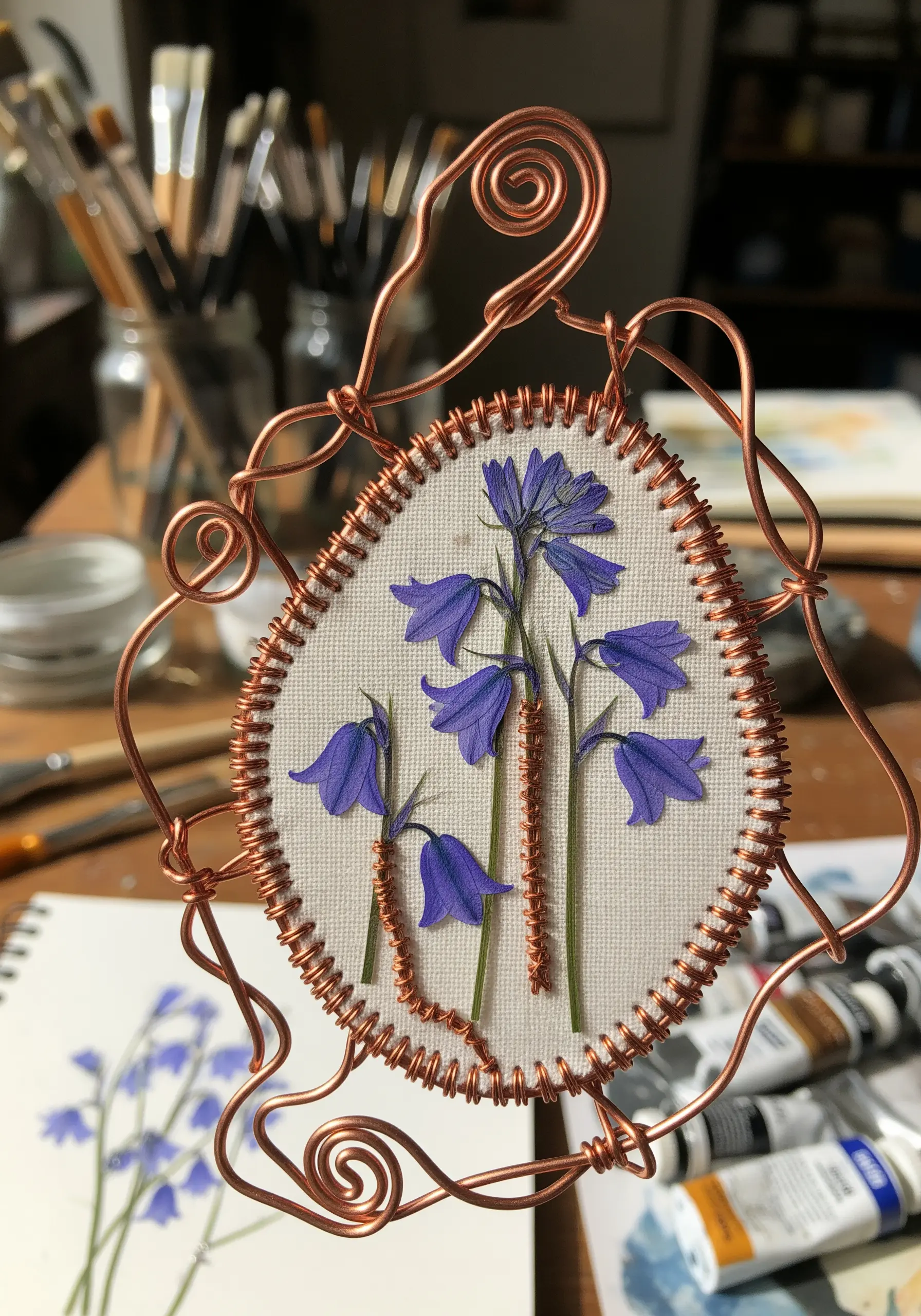
Treat the frame as a sculpture by bending heavy-gauge copper wire into a custom organic shape that grips your embroidery hoop.
The warm metallic tone of copper pairs beautifully with cool-toned flowers like bluebells, creating a complementary color vibration.
Integrating metalwork is one of those mixed media techniques for embroidery lovers who crave unique art.
14. Living moss border for immersion

Blur the line between art and nature by covering your wooden frame in preserved reindeer moss.
This texture creates a lush, soft boundary that makes the central violet embroidery feel like it is growing out of a forest floor.
It is a bold choice for nature inspired embroidery hoop art ideas to gift eco lovers who want to bring the outside in.
15. Slate backdrop for autumn contrast

Instead of fabric, consider mounting your fall foliage on a dark, circular slate board to make the red and yellow hues pop.
Drill tiny holes in the slate if possible, or adhere the leaves and embroider a fabric overlay that is glued to the stone surface.
This technique creates dramatic dark thread embroidery designs for moody high contrast walls.
16. Glass cloche for 3D preservation

Elevate your embroidery to the status of a rare specimen by encasing the hoop within a glass cloche.
This not only protects delicate orchid petals from dust but also allows you to view the dimensional stitching from multiple angles.
Such diy art objects that will impress your friends and family look sophisticated on mantels or shelves.
17. Crocheted lace internal border

Soften the transition between a rigid wooden frame and your linen canvas by adding a hand-crocheted lace border.
Use an ecru cotton thread that matches the fabric grain to create a cohesive, heirloom look that frames the central bloom gently.
This layering mimics vintage floral bouquet patterns for heirloom quality gifts and memory keepsakes.


