

You don’t need complex stitches or a thousand colors to create embroidery that feels truly sophisticated. Often, the most impactful work is born from restraint—a single, confident line, a thoughtfully placed motif, or the quiet interplay between thread and fabric.
Think of your needle as a drawing tool. These minimalist leaf patterns are designed to help you explore the beauty of the line itself. You will learn to control its weight, its texture, and its movement to create decor that is not just handmade, but artfully considered.
Let’s move beyond simply filling in shapes and begin to cultivate a sense of balance, harmony, and intention in your work. Your home deserves that quiet, personal touch of modern elegance, and you have the skill to create it, one calm stitch at a time.
1. The Continuous Line Monstera
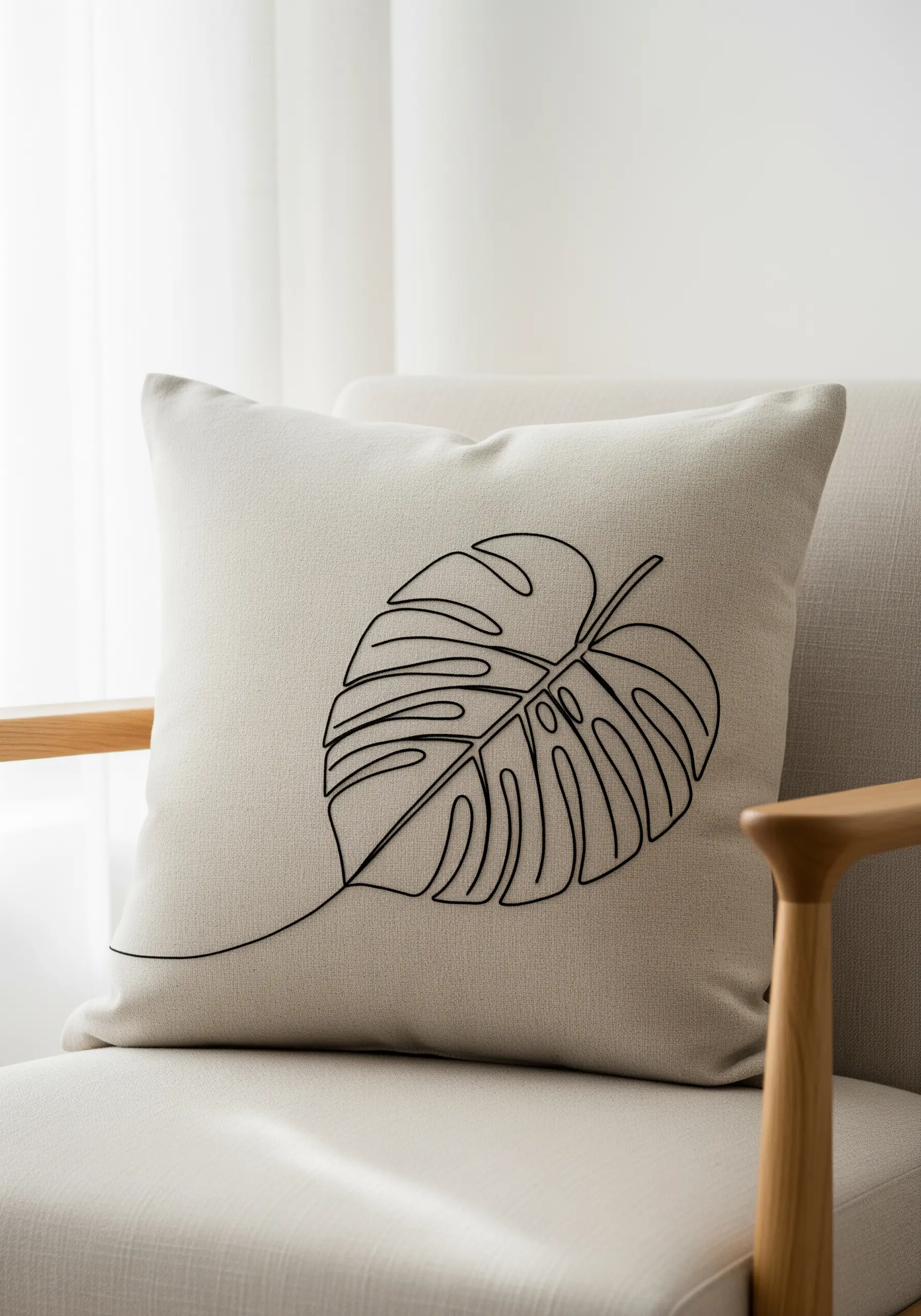
Achieve the fluid look of single-line art by using a whipped backstitch.
First, create a standard backstitch outline of your monstera leaf.
Then, without piercing the fabric again, slide your needle under each backstitch, wrapping the thread around the outline to create a smooth, uninterrupted curve.
For a plush cushion cover, use all six strands of cotton floss or even a fine pearl cotton to give the line weight and presence against the textured fabric.
2. The Curated Botanical Napkin Set

Create a sophisticated, cohesive set of table linens by assigning a different leaf motif to each piece.
Use a delicate backstitch with two strands of floss for crisp, defined outlines that feel elegant and refined.
To ensure consistency across the set, stick to a single thread color, like a muted sage green, which evokes a natural, earthy feel perfect for Scandinavian table linen.
The negative space around each motif is just as important as the stitching itself, allowing each leaf to breathe.
3. The Ascending Leaf Triptych
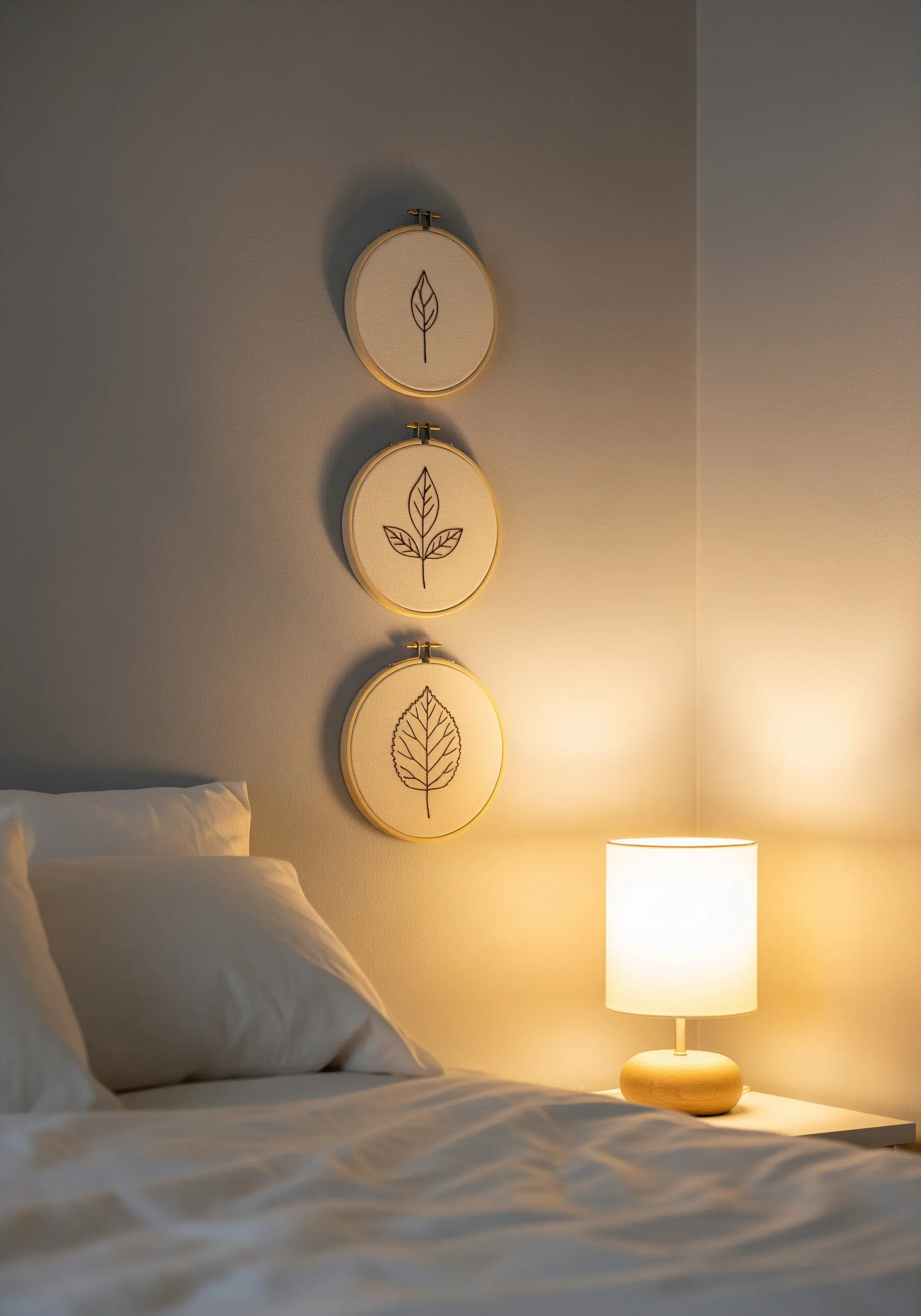
Transform simple leaf outlines into a vertical gallery wall by stitching them in a series of hoops.
To create a harmonious display, use the same size hoop, the same neutral linen fabric, and the same black thread for each piece.
The magic is in the progression: stitch a single leaf, then a sprig with a few leaves, and finally a more complex branch.
This creates a sense of growth and visual rhythm, turning minimalist hoop art patterns into a cohesive story.
4. The Meandering Ivy Table Runner
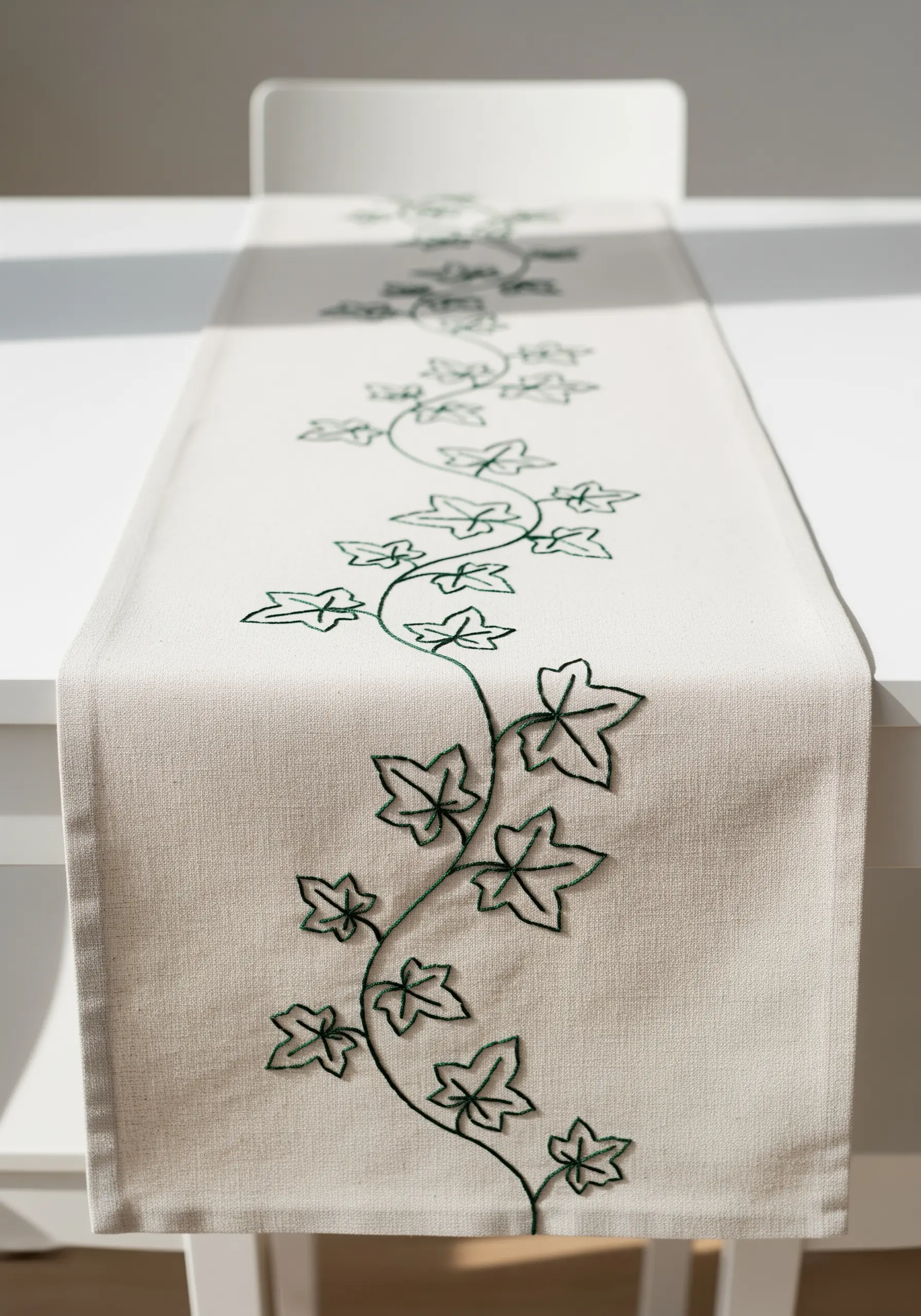
Give your table runner a sense of organic movement by using a stem stitch for the main vine.
This stitch naturally twists, creating a rope-like texture that mimics a real growing plant.
Stitch the individual ivy leaves using a simple backstitch outline, varying their angles slightly as you move down the runner to avoid a stiff, repetitive look.
The contrast between the thicker, flowing stem and the delicate leaves adds depth and realism to the design.
5. The Delicate Skeleton Leaf
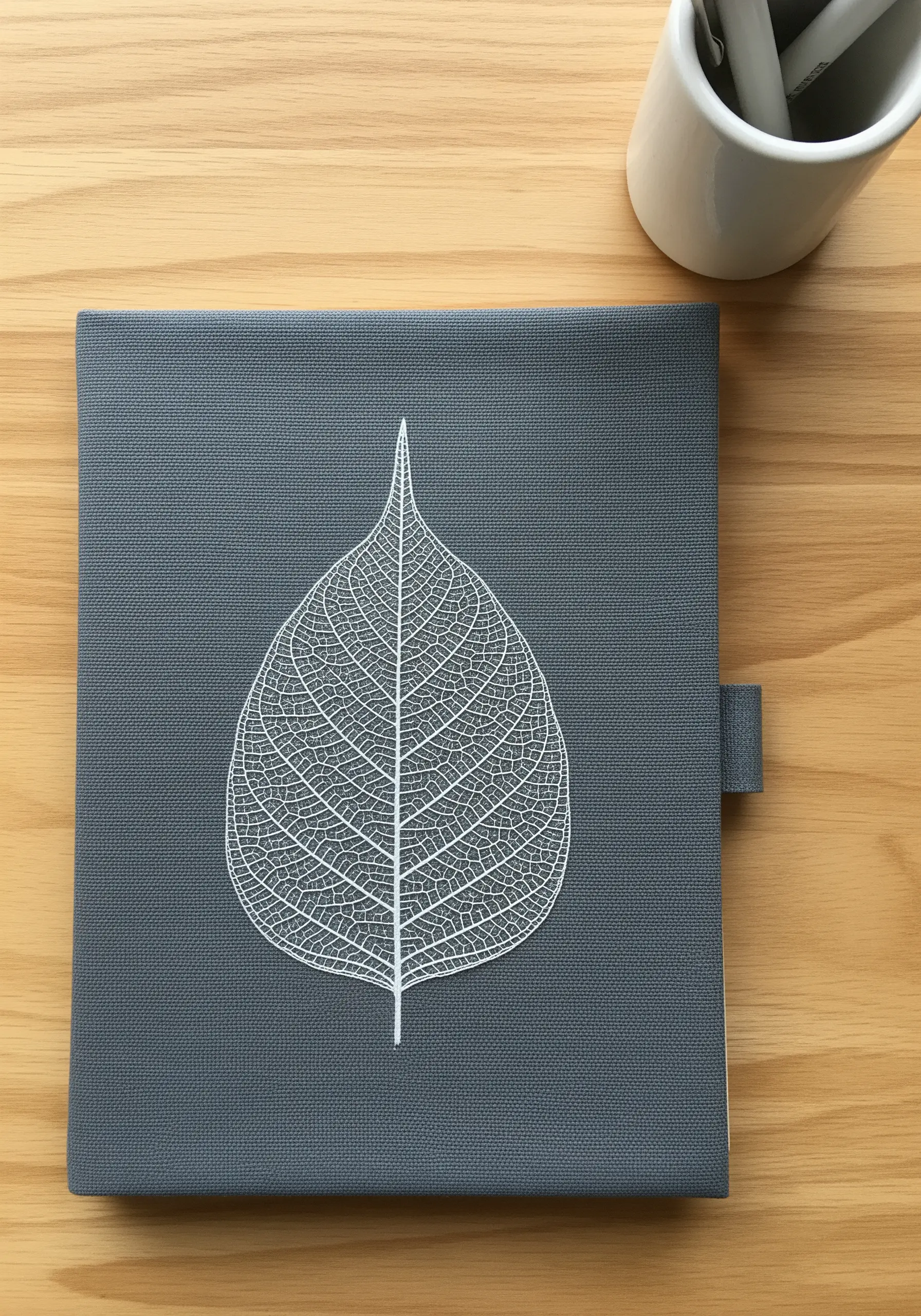
Capture the intricate beauty of a skeleton leaf by focusing on thread weight and stitch precision.
Use only a single strand of white floss on a contrasting dark, tightly woven fabric like cotton twill or book cloth.
Work with tiny, meticulous backstitches to render the delicate network of veins.
This high-contrast, fine-line approach transforms a simple botanical study into a piece of modern thread art that celebrates precision.
6. The Personalized Herbal Towel
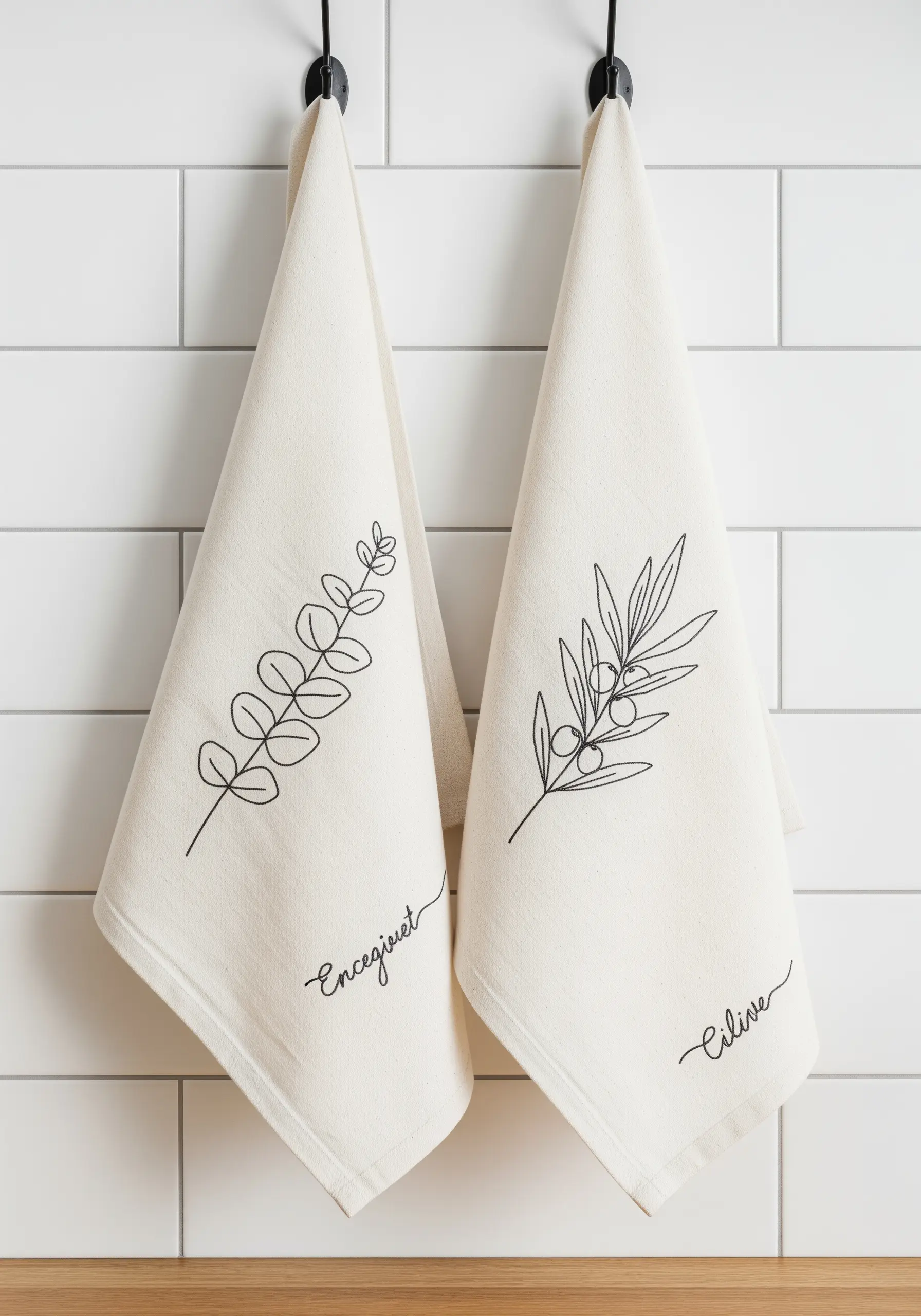
Elevate a simple kitchen towel by pairing a botanical line drawing with elegant, handwritten-style text.
Use a split stitch for both the herb and the lettering; its structure creates a solid, slightly raised line that withstands frequent washing better than a simple backstitch.
Choose a classic black thread on natural cotton or linen for a timeless, farmhouse-modern aesthetic that feels both personal and polished.
These DIY embroidery ideas make functional items feel special.
7. The Scattered Leaf Cushion Pattern
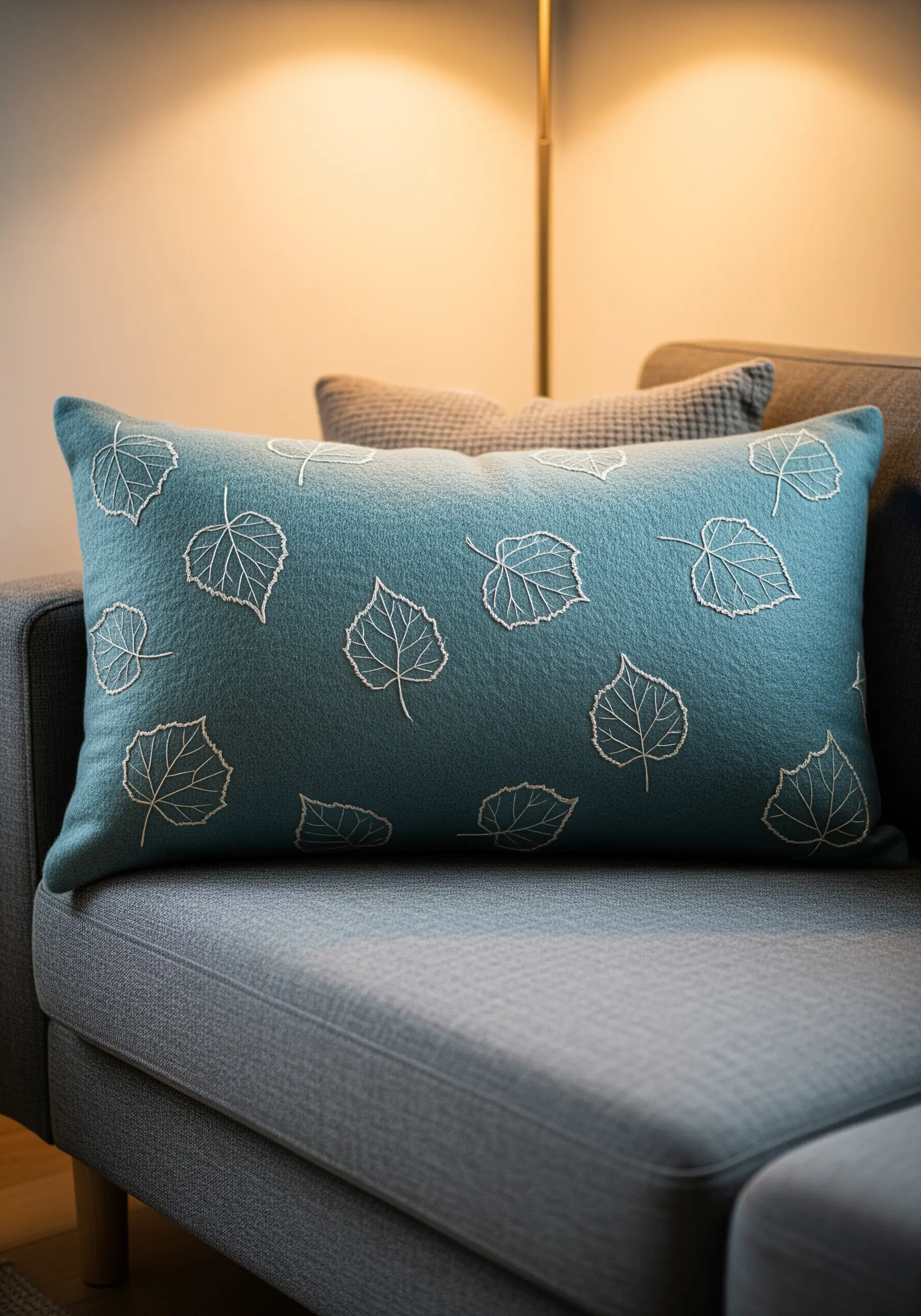
Create a dynamic yet calming pattern by scattering simple leaf motifs across a cushion cover.
To achieve a look that feels intentionally random, use a single leaf template but rotate its orientation for each placement.
Stitch the outlines with a crisp backstitch using three strands of white floss on a colored background, like this serene teal.
This technique creates a gentle sense of movement, like leaves caught in a breeze, perfect for simple stitch ideas that add elegance.
8. The Felt Botanical Coaster Set

Embroidering on felt requires a bolder approach to prevent your stitches from sinking in.
Use a thicker thread, like DMC Pearl Cotton No. 8, and a sharp needle to cleanly pierce the dense material.
A simple stem stitch for the outlines will stand out beautifully.
Finish each coaster with a decorative whipped backstitch around the edge in a contrasting color to frame the design and add a professional, handcrafted touch.
9. The Oversized Gradient Fern

Make a dramatic statement by stitching a large-scale design that uses color to create depth.
Create this gentle ombré effect by dividing the fern into three horizontal sections.
Stitch the top section with a pale mint green, the middle with a vibrant kelly green, and the bottom with a deep forest green.
Use a simple fishbone stitch for each leaflet; it’s quick to work and beautifully mimics the texture of a real fern frond, perfect for floral embroidery wall decor.
10. The Bold Fiddle-Leaf Fig Outline

When embroidering on heavy-duty fabric like a canvas storage basket, your stitches need to be substantial.
Opt for a chain stitch to create a bold, textured outline that won’t get lost on the sturdy material.
Use all six strands of embroidery floss in a vibrant green to make the fiddle-leaf fig design pop against the neutral canvas.
This approach adds a touch of playful, graphic art to an otherwise utilitarian object.
11. The Understated Pouch Motif
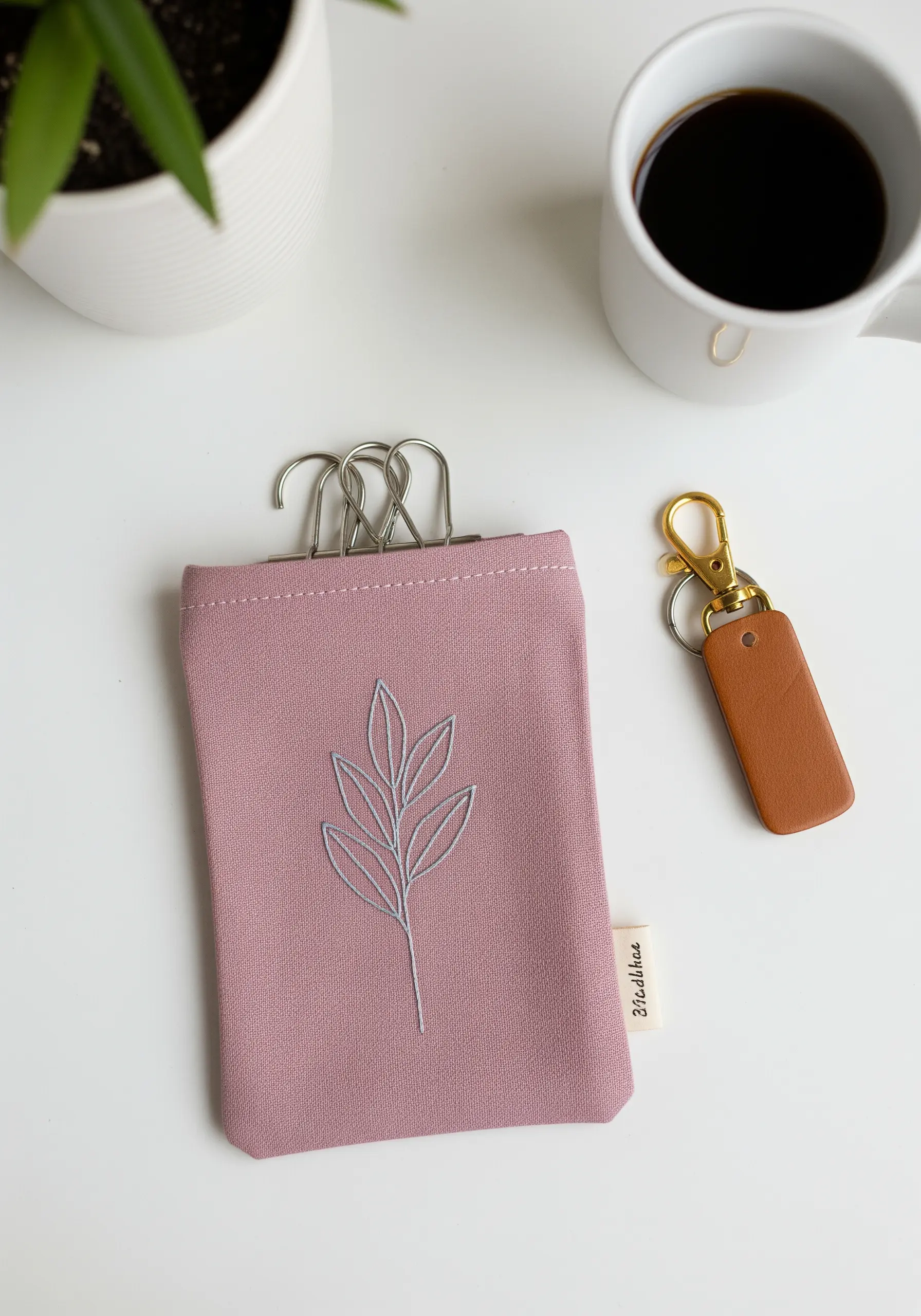
Sometimes, the most elegant statement is the most subtle one.
For a small pouch or purse, a single, centered botanical motif is all you need.
Use a thread color that is only a few shades lighter than the fabric itself, like this light grey on dusty rose.
This low-contrast pairing creates a sophisticated, tonal effect that feels quiet and luxurious, turning small embroidery designs into high-end details.
12. The Textural Pine Bough Accent
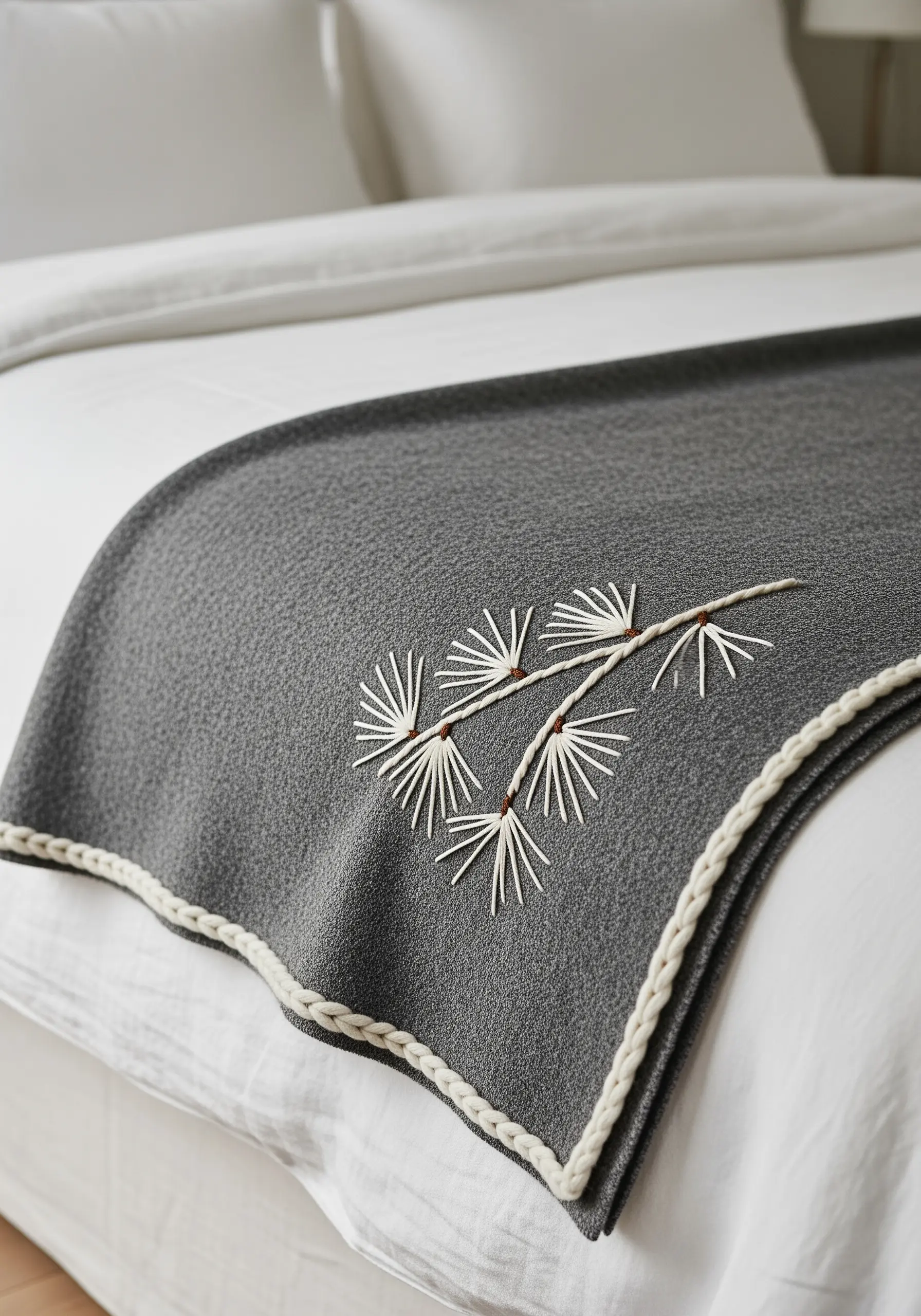
Introduce striking texture to a soft furnishing like a wool blanket by playing with stitch style and thread choice.
Use a chunky yarn or multiple strands of floss couched onto the surface for the branch.
For the pine needles, create long, bold straight stitches that radiate outwards.
This contrast between the thick, secured branch and the free-standing needles adds a powerful, three-dimensional quality to the natural textures.
13. The Sketchbook-Style Placemat
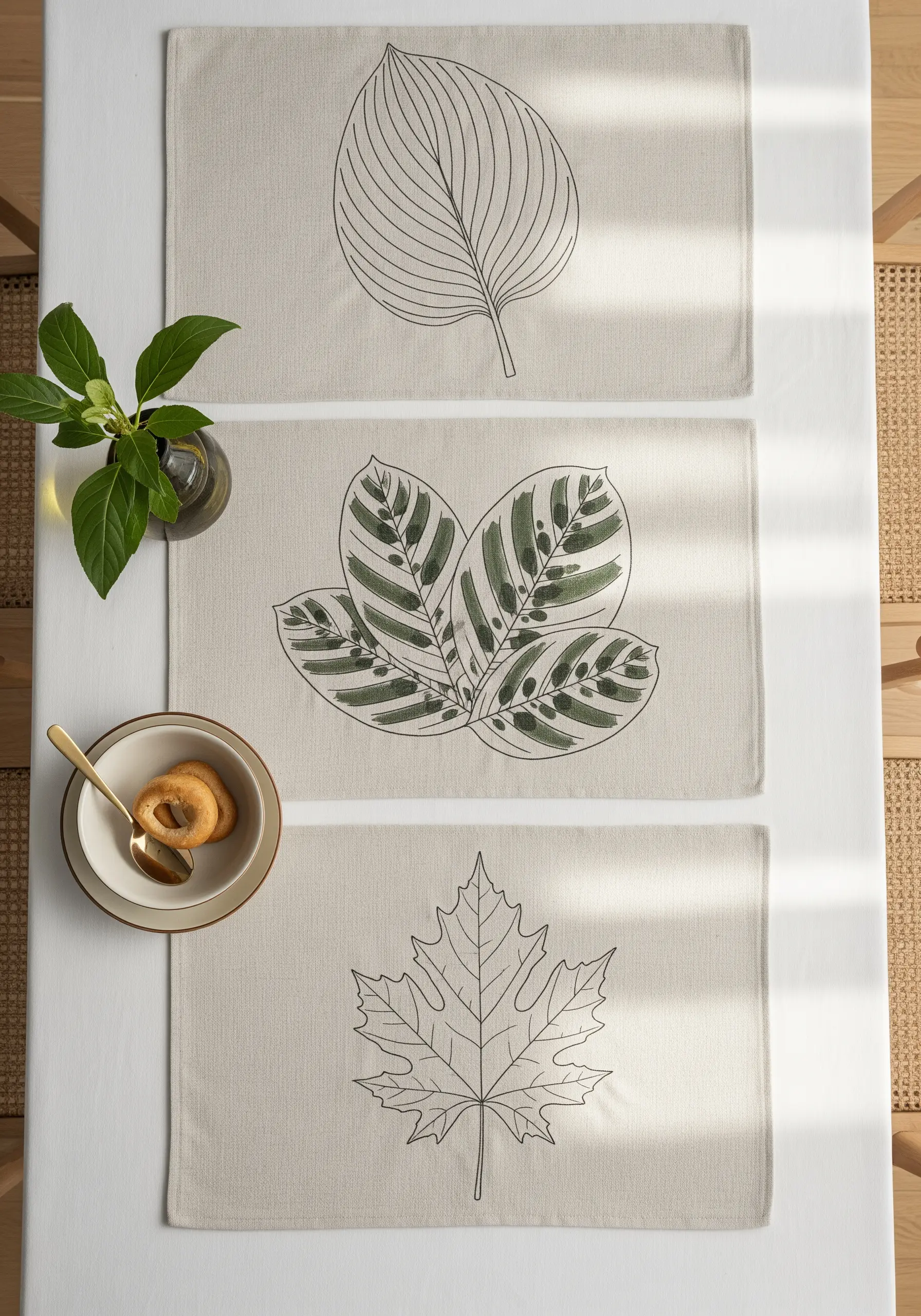
Combine delicate line work with suggestive fills to give your embroidery a hand-drawn, artistic quality.
Use a fine backstitch for the leaf outlines and veins.
Then, instead of a dense satin stitch, fill select areas with a scattering of seed stitches (tiny, randomly placed straight stitches).
This technique adds a hint of color and texture without overpowering the delicate line art, making it perfect for modern embroidery ideas to elevate your dining space.
14. The Cascading Willow Wall Hanging

Create a sense of graceful movement in a textile wall hanging by emphasizing verticality and flow.
Use a simple stem stitch for all the weeping willow branches, ensuring your stitches are consistent in length and tension to create fluid, uninterrupted lines.
The high contrast of white thread on dark grey fabric enhances the graphic quality of the design.
Displaying it as a narrow, vertical banner further accentuates the beautiful, cascading effect.
15. The Gossamer Curtain Border
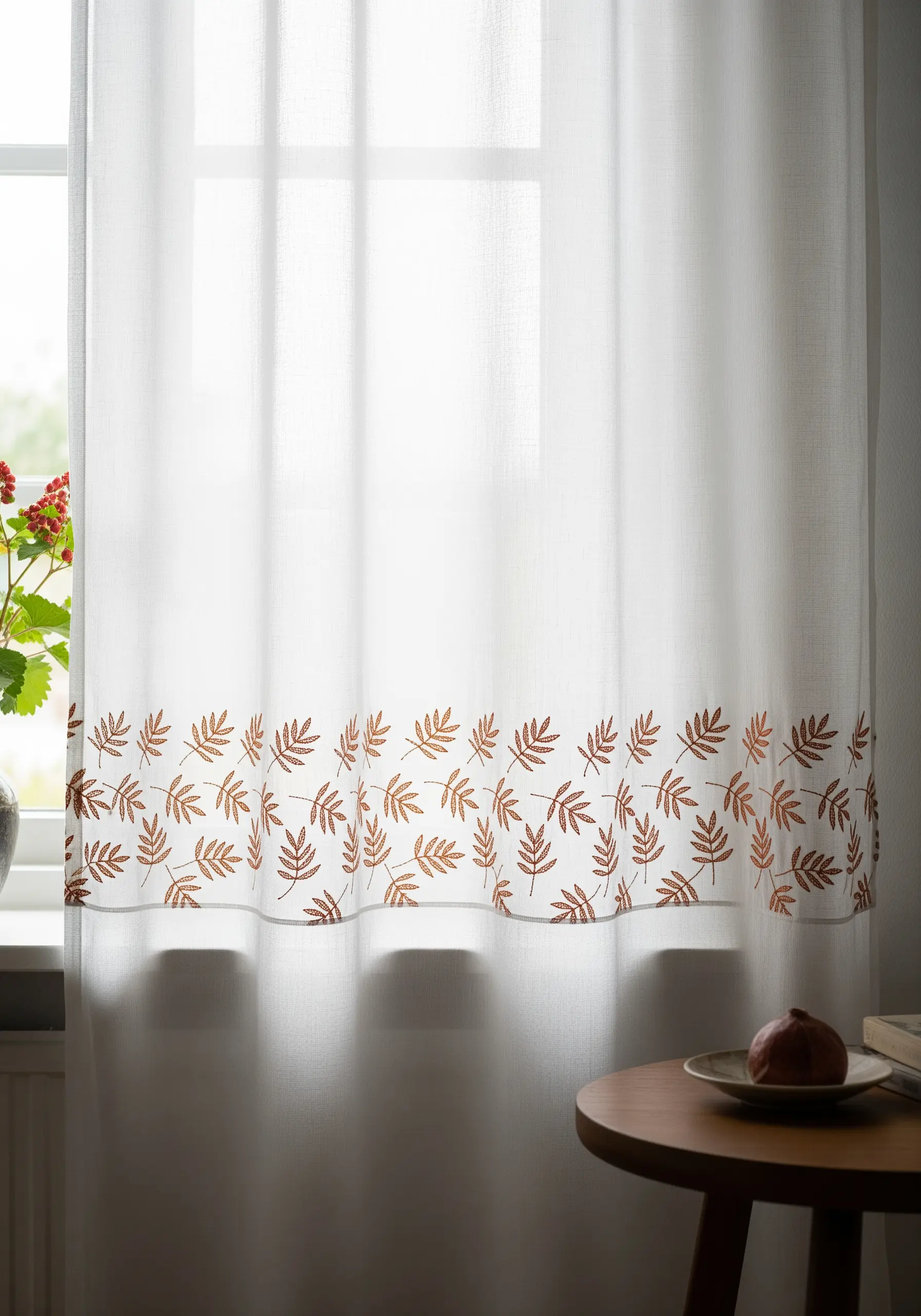
Embroidering on sheer or lightweight fabric requires stabilization to prevent puckering.
Iron on a lightweight, water-soluble stabilizer before you begin stitching your border design.
Use a fishbone stitch to fill in the leaves; this creates a lovely, textured pattern that catches the light beautifully.
Once you are finished, simply soak the fabric to dissolve the stabilizer, leaving your stitches clean and the curtain’s drape unaffected.
16. The Satin-Stitched Sprout Bookmark

For a small, precious project like a bookmark, a perfect satin stitch is the ultimate goal.
To achieve that smooth, glossy finish, first outline the two small leaves with a split stitch.
This creates a raised edge that acts as a guide, helping you keep your satin stitches neat and contained.
Use two strands of floss and lay each stitch closely against the last, creating a miniature piece of art that feels satisfyingly perfect.
17. The Aromatic Rosemary Apron

Bring a touch of the herb garden to your kitchen textiles with a clean, graphic rosemary sprig.
For a design that needs to be durable and washable, like on an apron, a simple backstitch using three strands of colorfast cotton floss is ideal.
The open, linear style ensures the design remains flexible and integrated with the fabric, rather than creating a stiff, dense patch.
This is a perfect example of how minimal embroidery designs can be both beautiful and practical.
18. The Illuminated Lampshade Vine
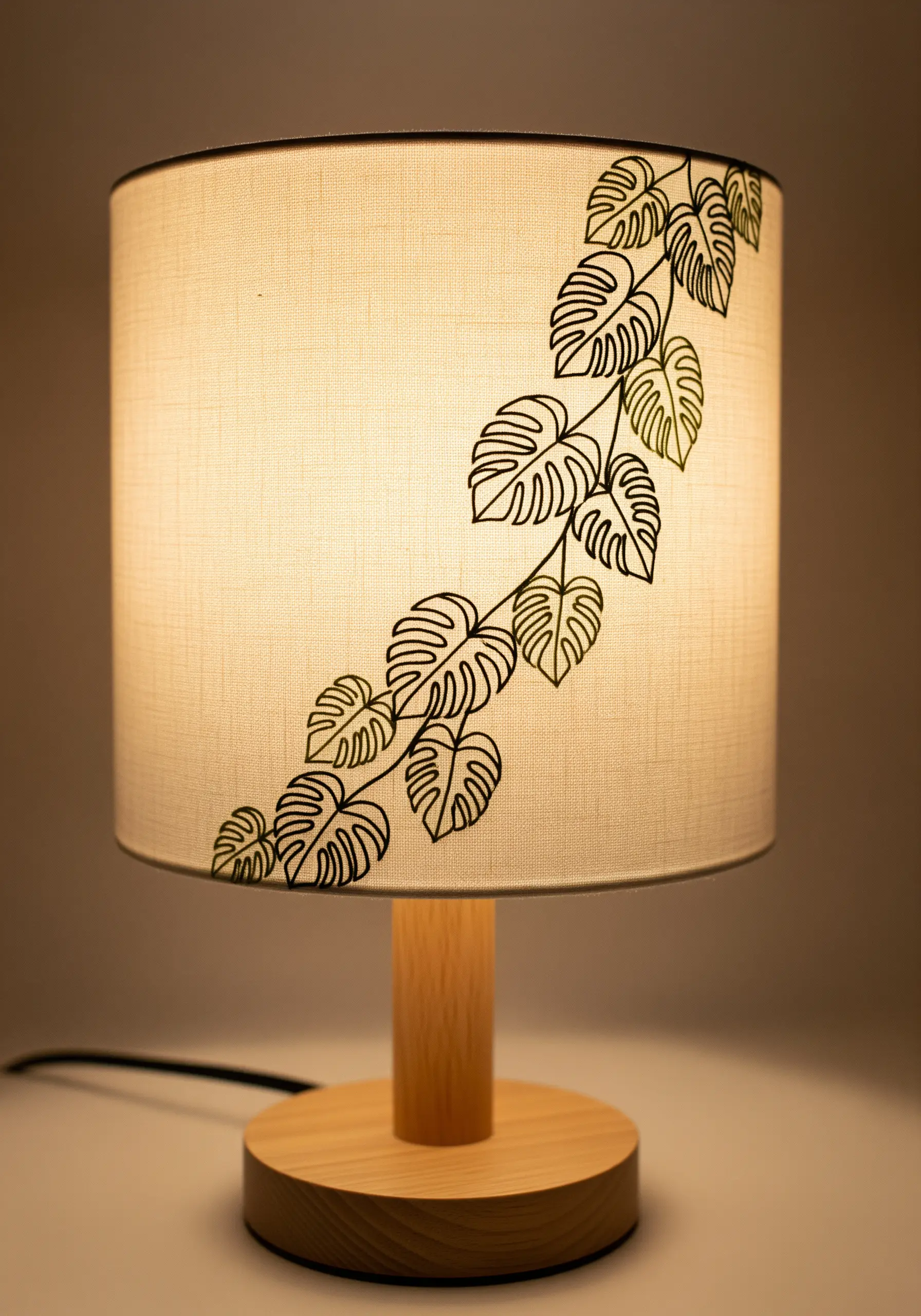
Embroidering a lampshade creates a stunning effect where the design comes alive with light.
Stitch your climbing monstera vine onto the linen fabric panel *before* it’s attached to the lampshade rings.
Use a simple backstitch with black thread for a strong, graphic silhouette that will be beautifully defined when the lamp is on.
The light filters through the fabric, turning your needlework into a captivating play of light and shadow.
19. The High-Contrast Geometric Tote
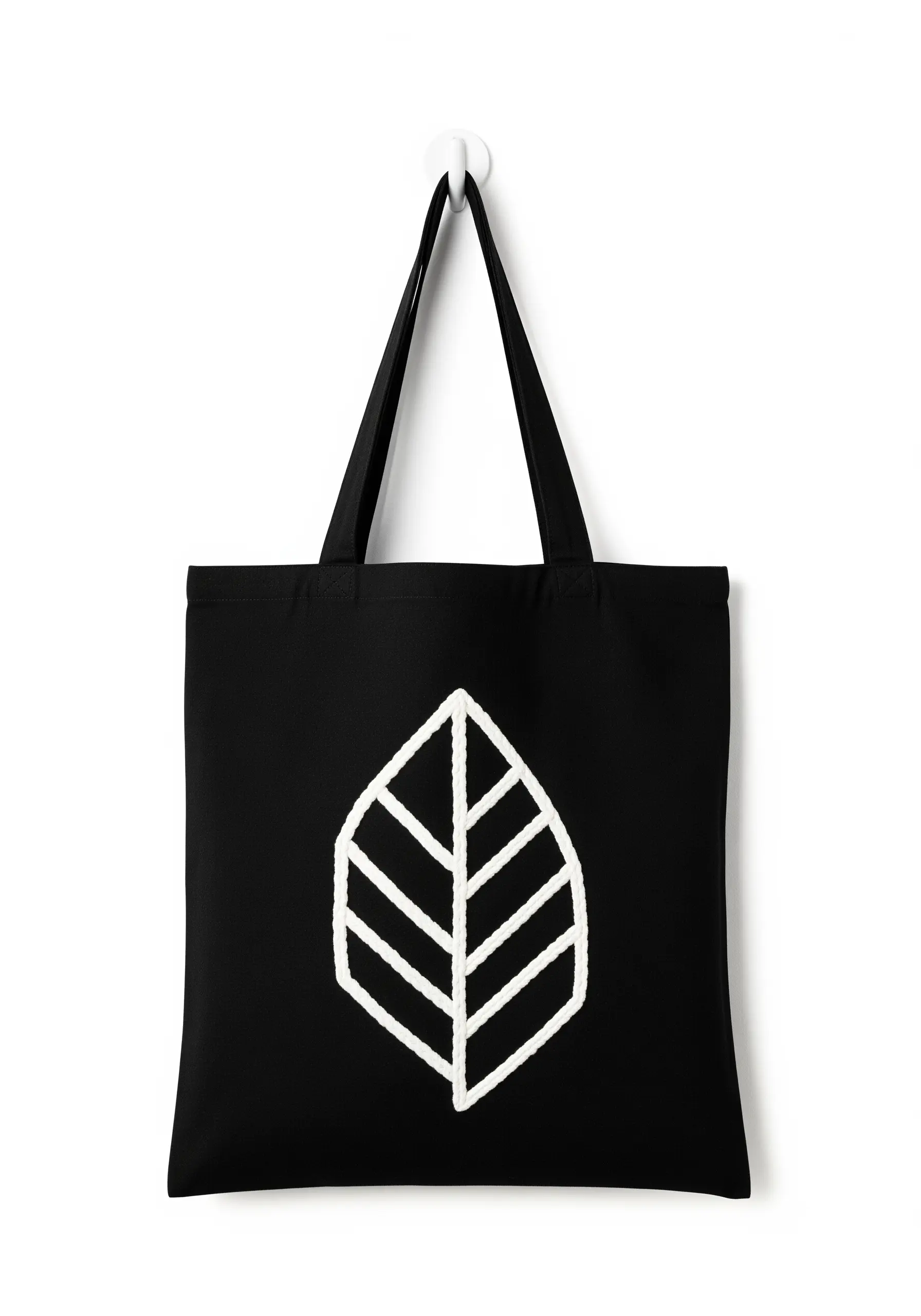
Make a powerful graphic statement by maximizing contrast in both color and texture.
On a heavy black canvas tote, a simple leaf outline in thick white thread becomes incredibly impactful.
Achieve this bold, rope-like texture by using a chain stitch or by couching a thick cord or yarn onto the surface with a thinner, matching thread.
This technique gives the tote bag embroidery a tactile, three-dimensional quality.
20. The Continuous Line Botanical Study
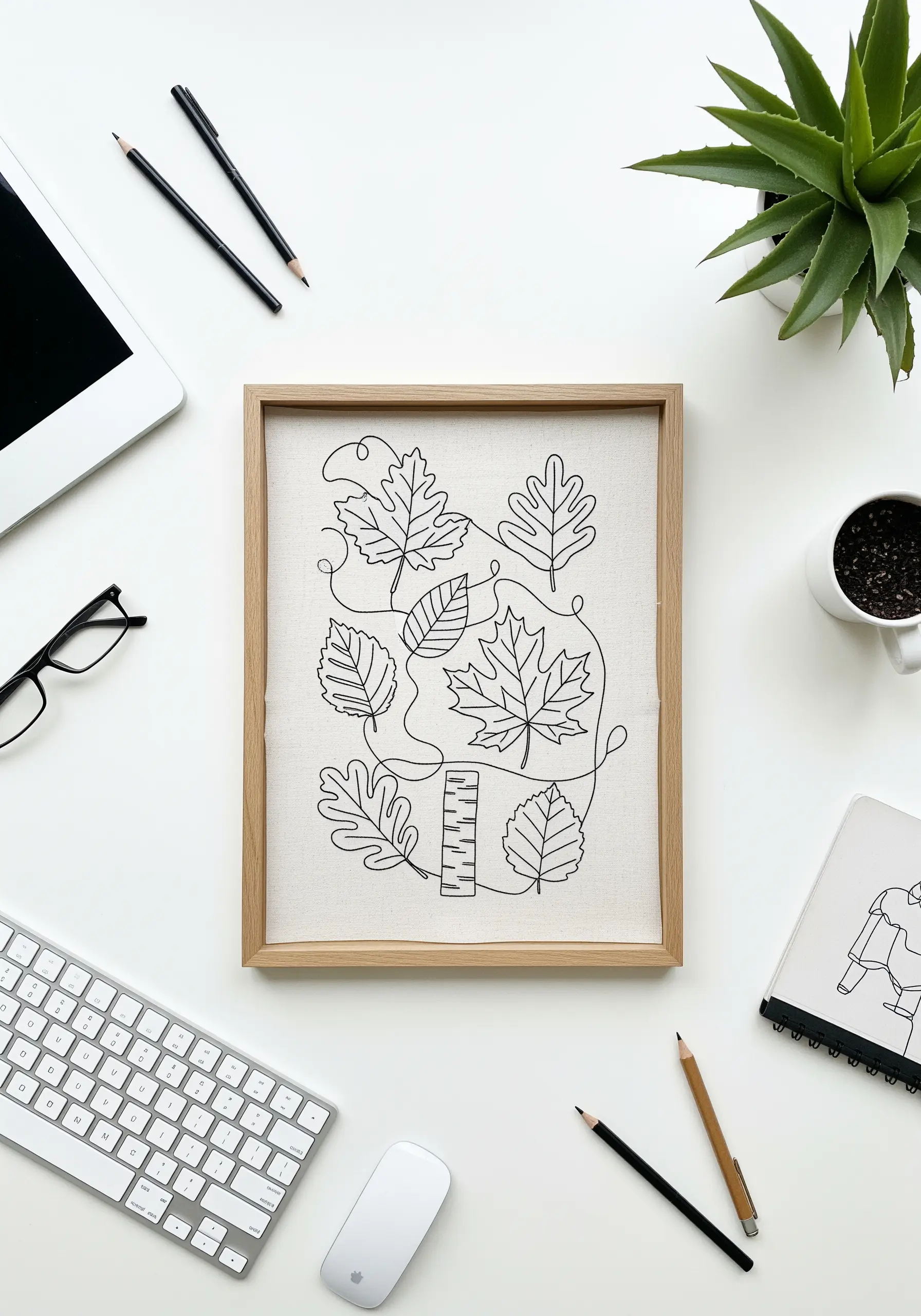
Create a dynamic composition by linking multiple leaf shapes with a single, unbroken line.
Before you stitch, lightly sketch the entire winding path with a water-soluble or heat-erasable pen to ensure the flow is graceful and balanced.
Use a whipped backstitch to achieve that perfectly smooth, continuous line that defines this modern, artistic style.
Framing it turns a simple stitch exercise into a sophisticated piece of one-line embroidery wall art.
21. The Satin-Stitched Laurel Wreath

For a motif that symbolizes peace and victory, a lustrous satin stitch adds appropriate elegance.
To achieve perfectly smooth, reflective leaves, ensure your stitches all lie in the same direction, slightly angled, from the central vein to the outer edge.
Using a satin-finish thread like rayon or silk floss will enhance the light-catching properties of the stitch, giving the wreath a subtle, luxurious sheen against the matte fabric of the cushion.
22. The Delicate Ivy Curtain Tie-Back

Transform a purely functional item into a decorative detail with delicate embroidery.
On a narrow surface like a curtain tie-back, a meandering vine is the perfect motif.
Use a fine stem stitch for the vine and a single detached chain stitch (or lazy daisy) for each small leaf.
This combination of stitches is quick to execute yet creates a charming, detailed pattern that adds a bespoke touch to your window treatments.
23. The Patchwork Quilt with Oak Accents

Integrate embroidery into your quilting projects to add a layer of texture and detail that unifies the design.
Keep the motifs simple and repeat the same oak leaf and acorn design in each designated square.
Use a thread color that complements your fabric palette, like a deep taupe or brown.
A combination of outline stitch for the leaf and a few French knots for the acorn cap adds just enough detail without overwhelming the patchwork itself.
24. The Falling Leaves Duvet

Create a serene and dreamy effect on bedding by embroidering a cascade of delicate leaves.
To prevent puckering on large, fine fabrics like a duvet cover, use a peel-and-stick, wash-away stabilizer for each individual leaf.
Place the motifs in a sparse, irregular pattern that flows diagonally down the fabric to mimic leaves gently falling.
Using a simple backstitch in a contrasting color creates a design that is visually soft and won’t feel rough to the touch.


