

You already know the quiet joy of pulling a needle and thread through fabric. But now you’re ready to move beyond just following a pattern. You want to create pieces that feel intentional, polished, and uniquely yours—especially for the heart of your home, the kitchen.
Think of your thread less like a craft supply and more like a drawing tool. A simple switch in stitch direction can mimic the way light hits a leaf. Using just two shades of green instead of one can create instant depth. These aren’t complex, time-consuming changes; they are small, deliberate choices that transform your work from a hobby into an art form.
This collection is designed to give you that confidence. Here, you will find not just ideas, but the techniques behind them—how to make a leaf feel soft, a stem look strong, and a simple tea towel feel like a small luxury. It’s time to stitch with intention.
1. Render Rosemary with Dimensional Stitches
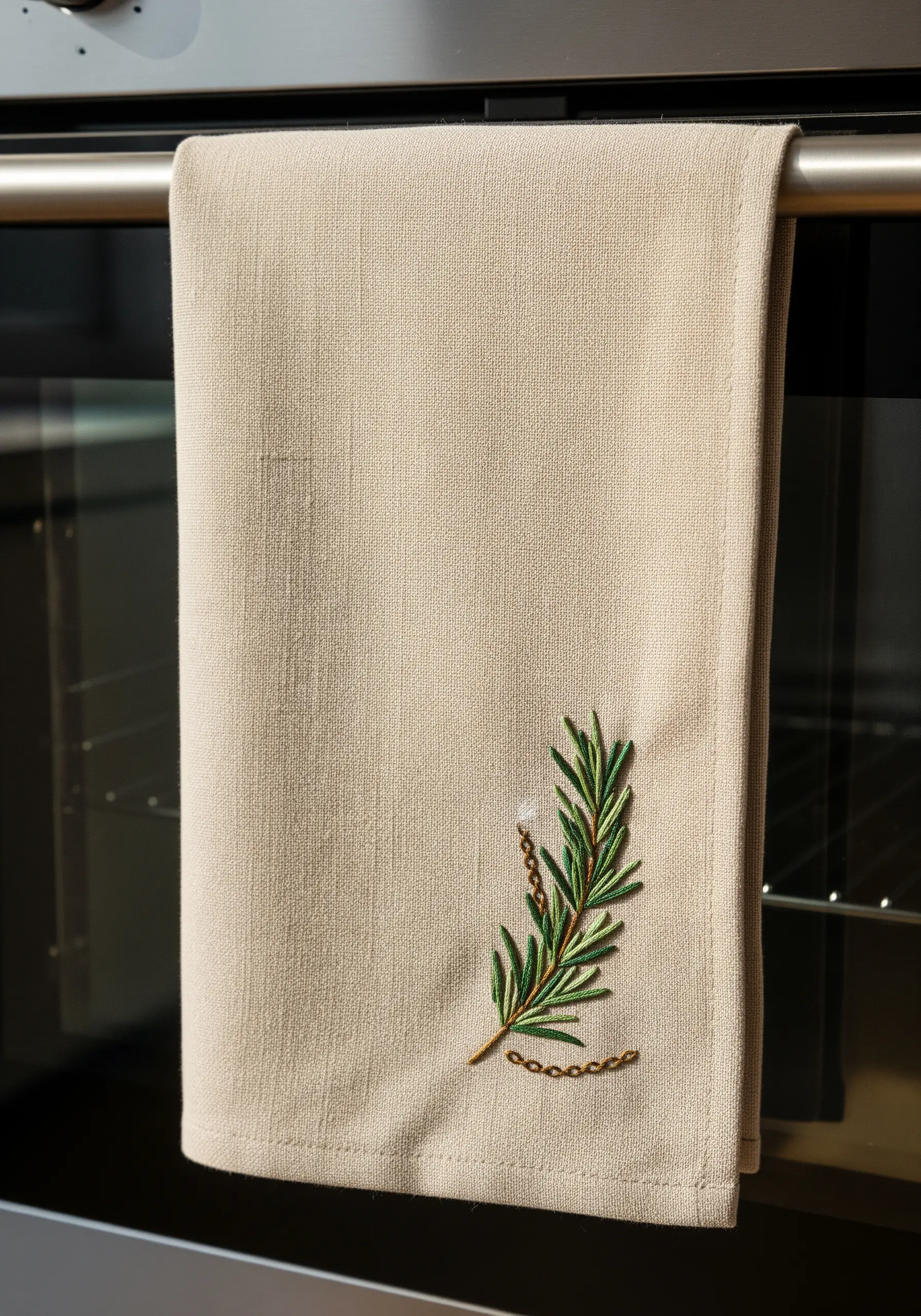
Instead of a simple backstitch for the rosemary needles, use straight stitches layered at slight angles to build realistic texture.
For the woody stem, a whipped backstitch or a thin stem stitch provides a smooth, raised line that contrasts beautifully with the spikier leaves.
Incorporate a delicate, single-strand chain stitch in a metallic gold thread to add an unexpected touch of elegance that elevates the rustic herb motif.
This combination of textures makes the design feel considered and tactile, perfect for a linen tea towel that gets seen and used.
2. Define Herb Varieties with Color and Outline
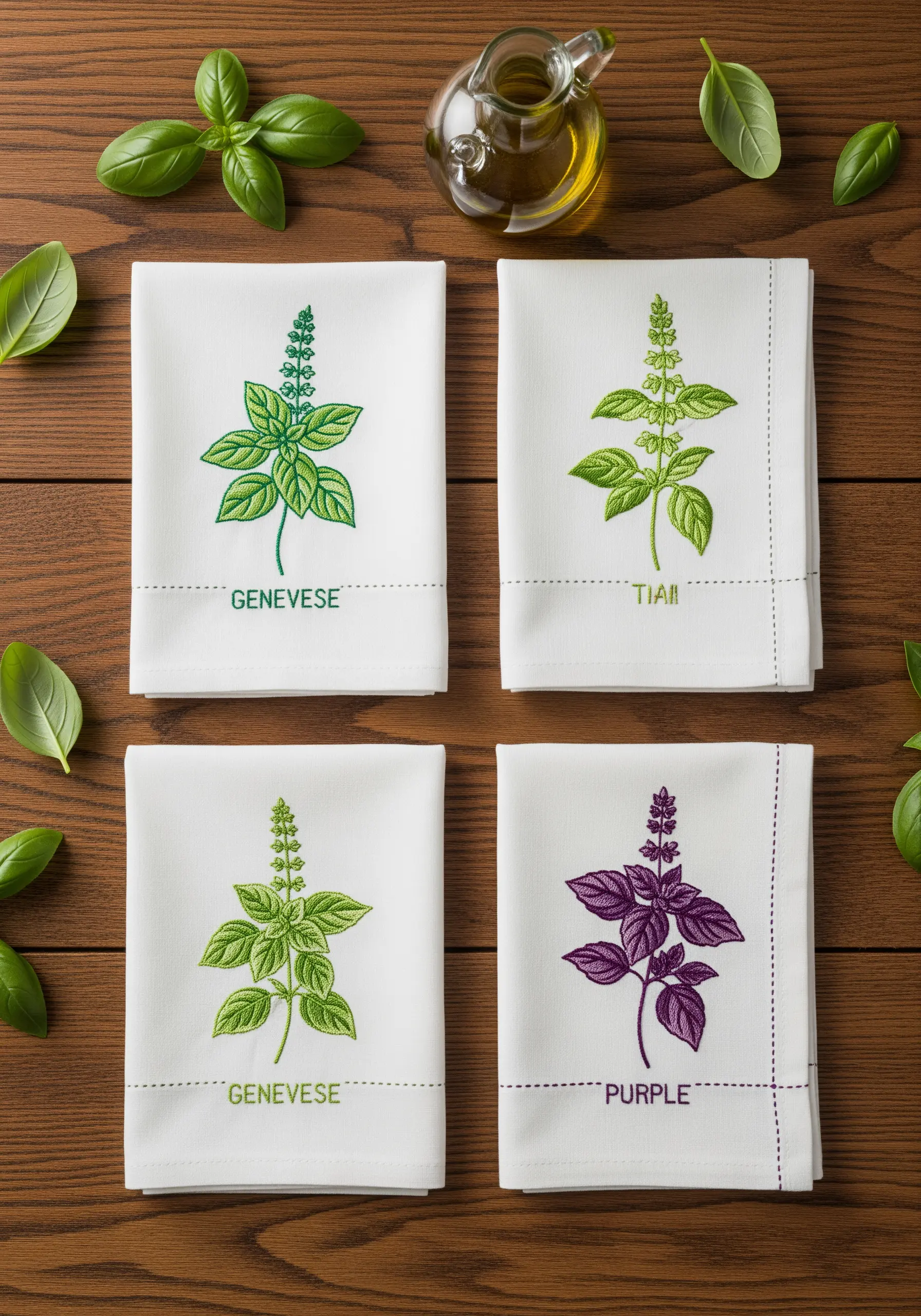
To differentiate similar herbs like these basil varieties, create distinct color palettes for each one, even if the changes are subtle.
Use a slightly darker shade of the main leaf color for the outlines, stitched with a single strand of thread in a neat backstitch.
This technique sharpens the edges of each leaf and prevents the satin stitch fill from looking fuzzy, giving your work a clean, almost illustrative quality.
For the text, a simple backstitch ensures readability without competing with the detailed botanicals.
3. Create Impact with Monochromatic Texture
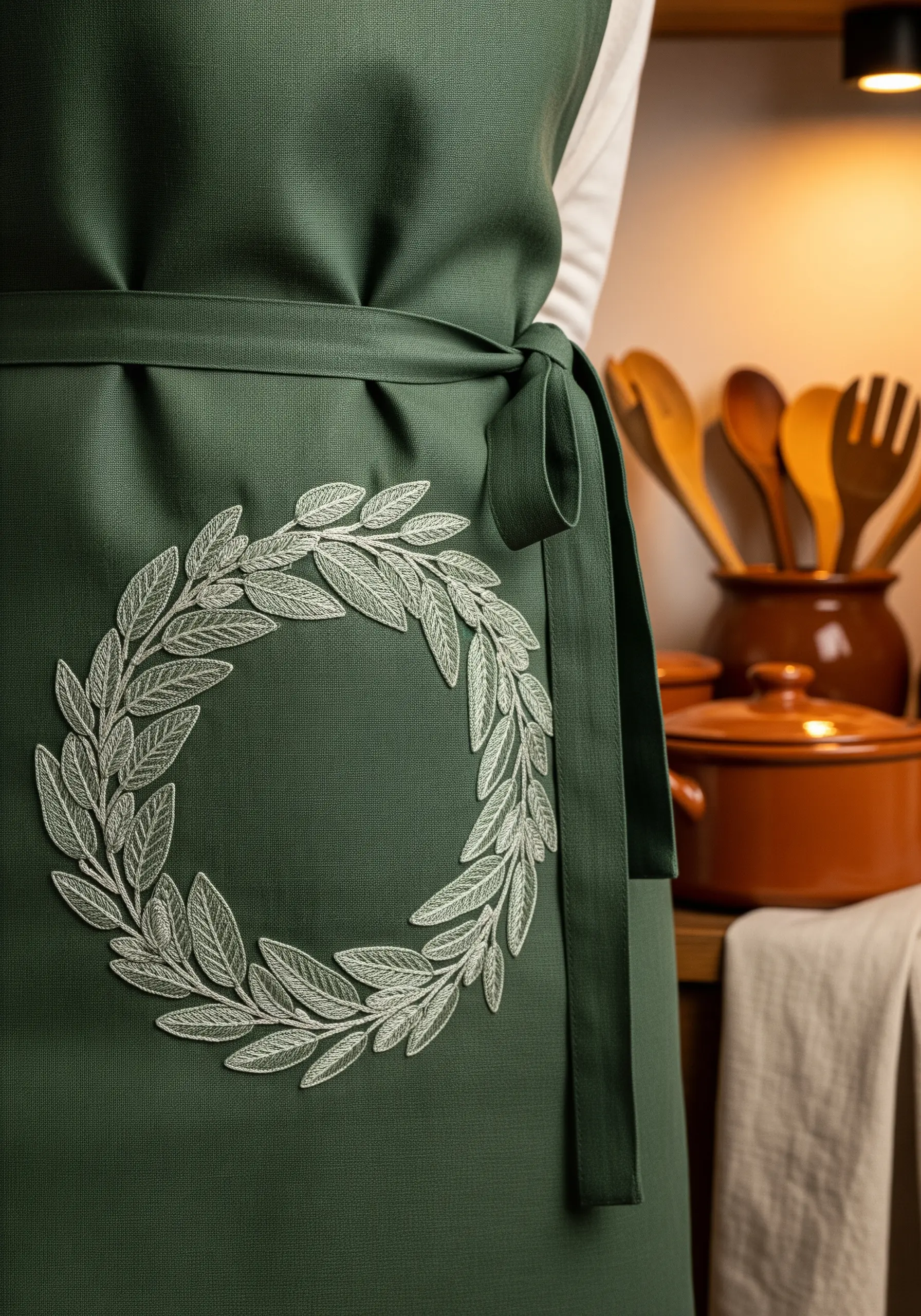
Elevate an apron or other kitchen linen by stitching a sophisticated wreath in a thread that closely matches the fabric color.
The design’s impact comes not from color contrast, but from the texture and light-catching sheen of the satin-stitched leaves against the matte fabric.
Focus on keeping your satin stitches uniform in length and angle to create a smooth, light-reflecting surface that feels both modern and timeless.
This tone-on-tone approach creates a subtle, high-end look that feels integrated with the garment itself.
4. Master Stitching on Textured Waffle Weave
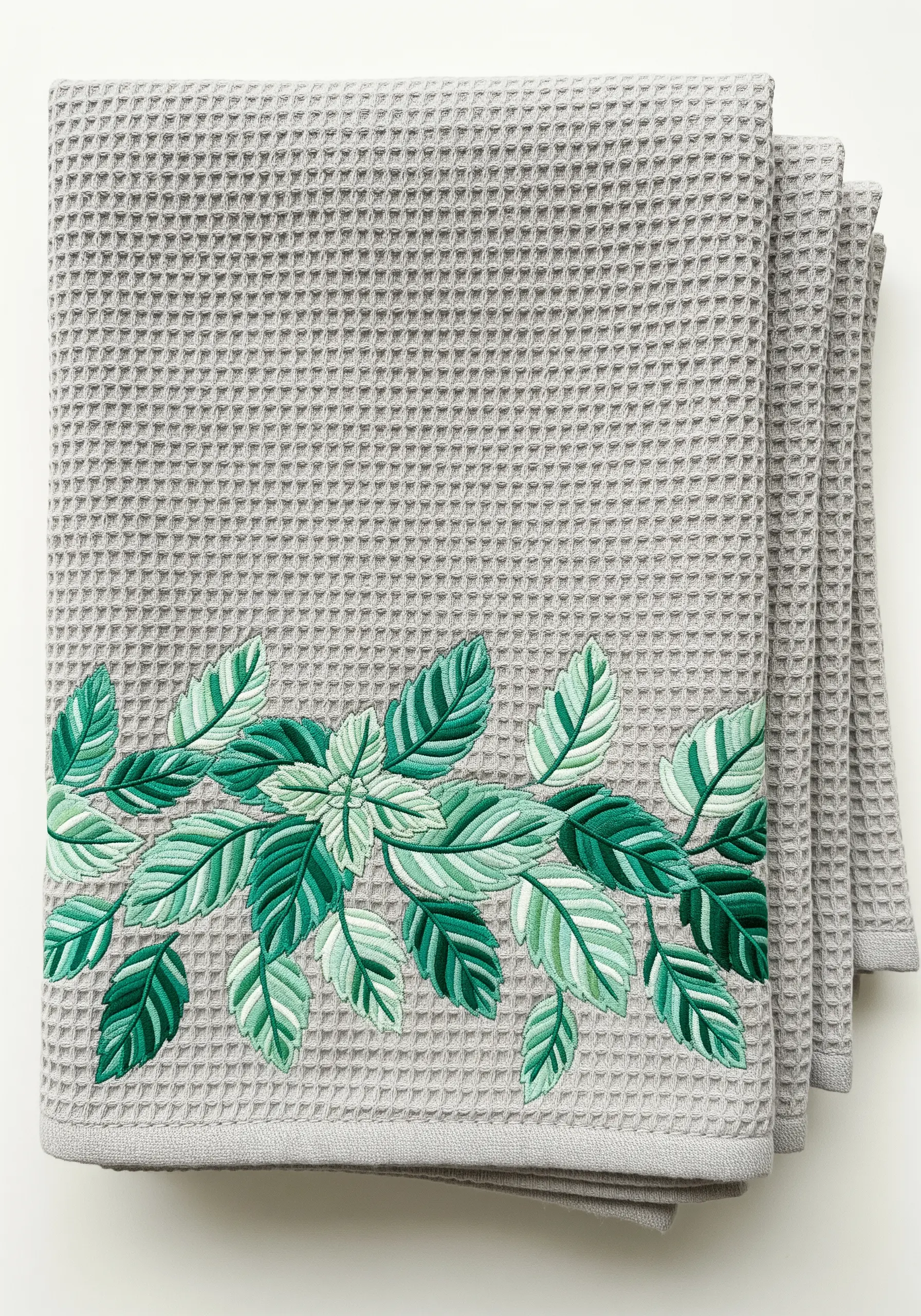
When embroidering on a waffle weave towel, the recessed squares can cause stitches to sink and look uneven.
To counteract this, use a lightweight, iron-on stabilizer on the back of the towel to create a smooth, stable surface for your stitches.
Opt for satin stitch or long-and-short stitch, ensuring your needle enters and exits on the raised parts of the weave for maximum visibility and smoothness.
A bolder design with larger filled areas works best, as delicate line work can get lost in the fabric’s texture.
5. Design a Scattered, Breathable Pattern

Create an elegant, all-over pattern by scattering small, simple sprigs across the fabric, leaving plenty of negative space.
Vary the orientation and color of each sprig slightly to give the pattern a natural, hand-drawn feel rather than a repetitive, stamped look.
This design is perfect for using up leftover thread, allowing you to create a harmonious color story with muted greens and earthy browns.
This technique turns a simple napkin into a piece of custom table linen without overwhelming the surface, making it one of the most effective minimalist leaf vine embroidery ideas for home goods.
6. Use Color Gradients for Vibrant Leaves
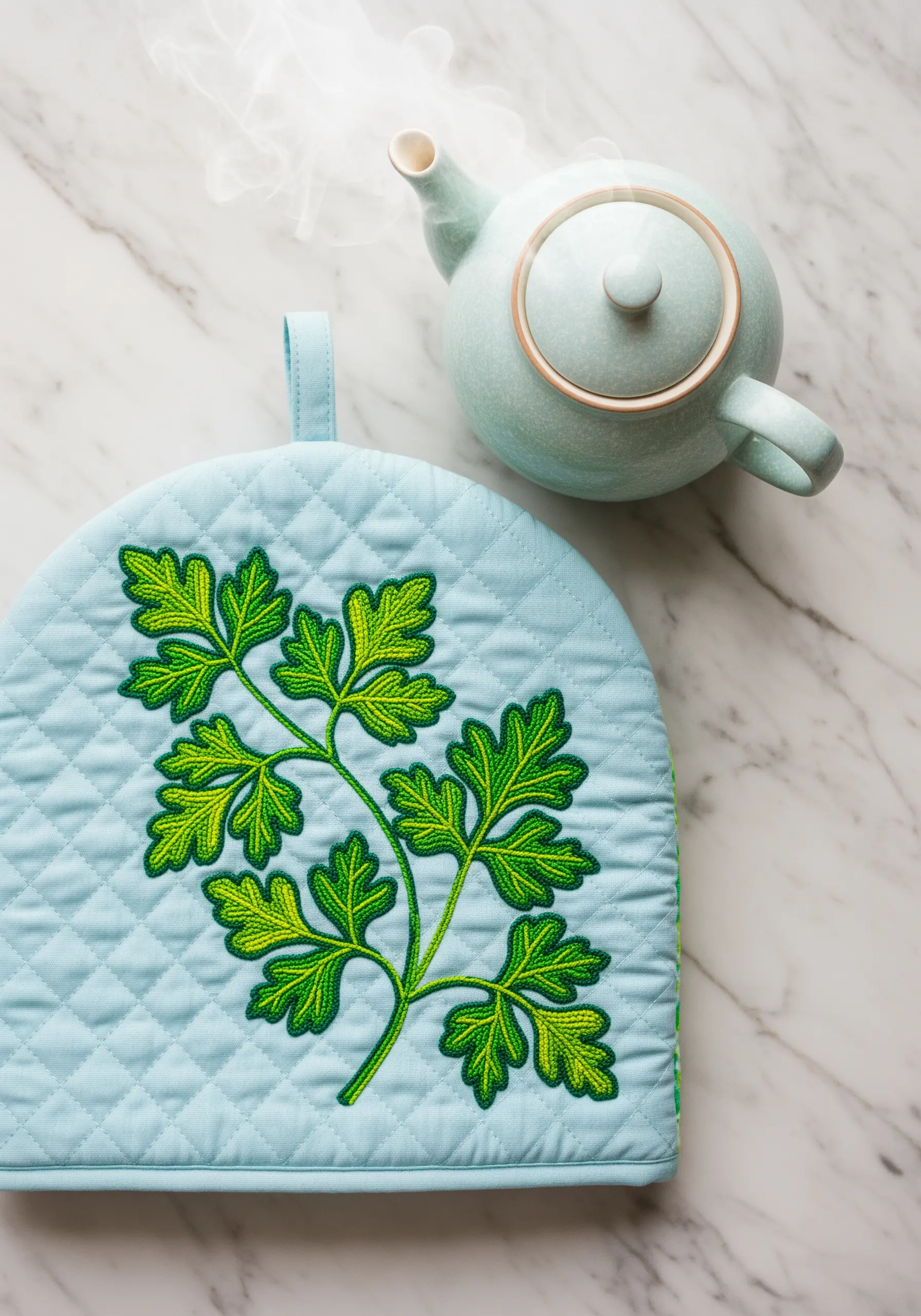
Make flat leaves feel three-dimensional by using a simple color gradient within each section.
Fill the outer edge of the parsley leaf with a dark green satin stitch, then switch to a vibrant lime green for the center.
There’s no need for complex thread painting; simply placing the two colors side-by-side creates an immediate illusion of light and depth.
Outline the entire motif in the darker green to frame the design and give it a crisp, defined edge on the quilted fabric.
7. Add Texture to Small-Scale Botanicals
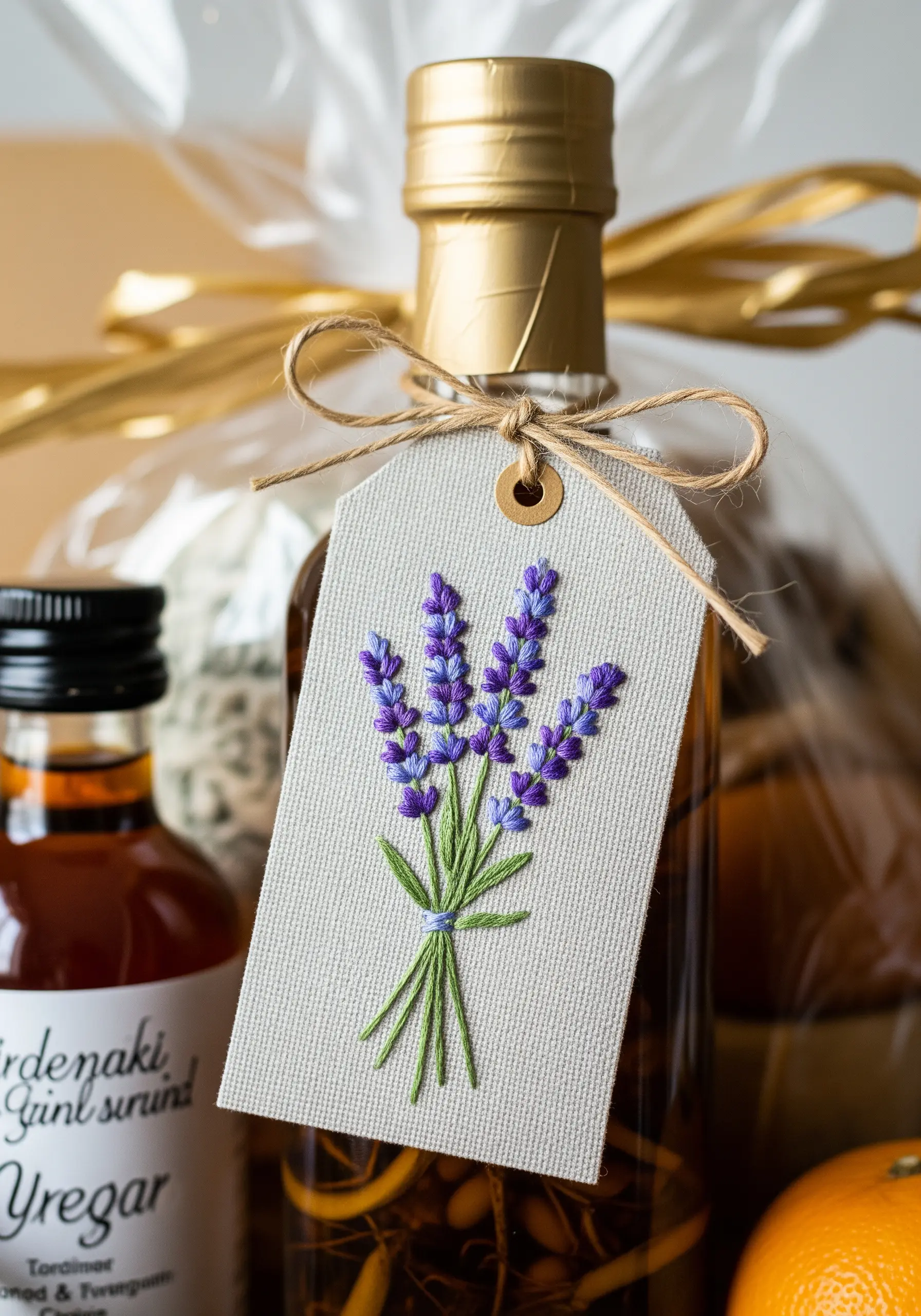
When working on small items like gift tags, texture is key to making the design stand out.
For lavender blossoms, use a combination of satin stitch and French knots in varying shades of purple to mimic the dense, bumpy texture of the real flower.
Use a simple stem stitch for the stalks, keeping them thin and delicate to balance the fuller blossoms.
Stitching on cardstock or heavyweight fabric provides the necessary stability for these tiny embroidery projects that make thoughtful DIY gifts fast, ensuring your stitches don’t warp the material.
8. Balance Detail and Simplicity in a Vine

Create a gracefully flowing vine by combining different stitch types for leaves and flowers.
Use a smooth, consistent stem stitch for the main vine to create a strong foundational line.
For the delicate white blossoms, group several tiny French knots together, adding a single pink knot in the center of each cluster for a hint of color.
The contrast between the flat satin-stitched leaves and the textured knots adds visual interest and keeps the design from feeling monotonous.
9. Embrace Minimalist Line Art for Modern Linens
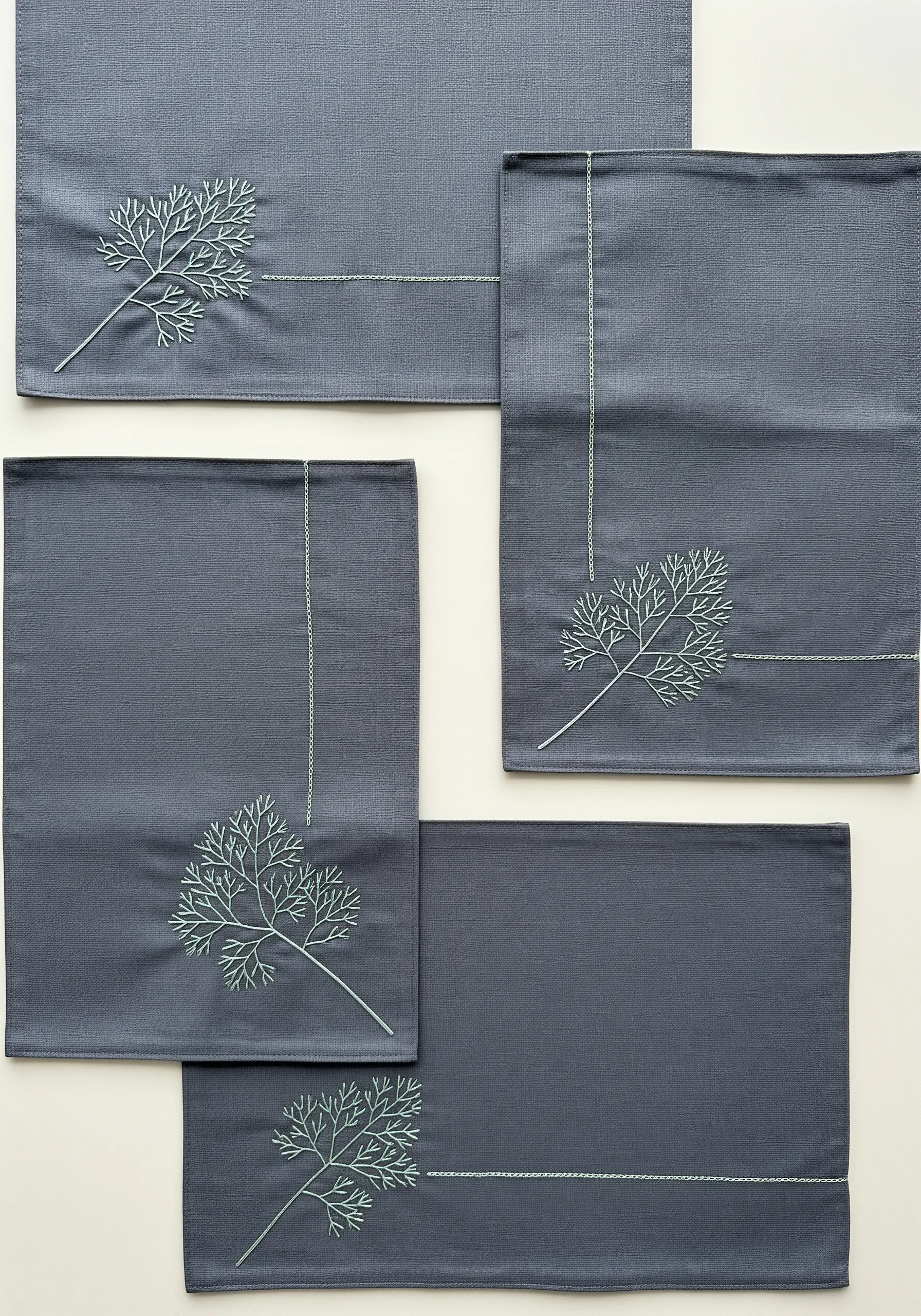
For a contemporary and sophisticated look, reduce an herb like dill to its essential lines.
Use a single, light-colored thread against a dark fabric to create a striking contrast that highlights the delicate, feathery structure of the plant.
A simple backstitch or stem stitch is all you need to achieve this clean, graphic effect.
This is one of the easiest minimal line art table linen embroidery motifs to execute, proving that you don’t need dense stitching for a high-impact result.
10. Compose a Classic Botanical Sampler
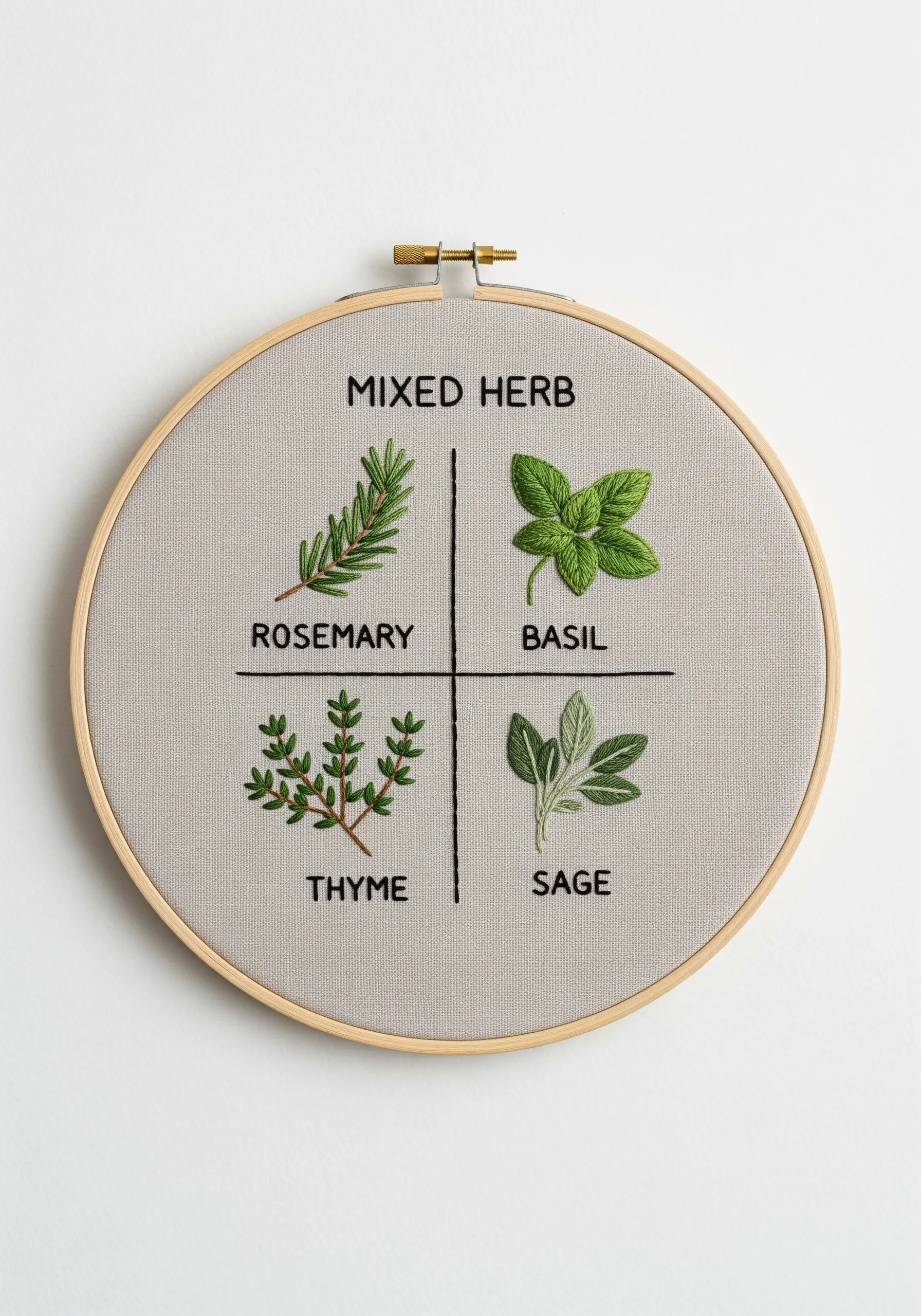
Organize your favorite herbs into a clean, quadrant-style sampler for a piece of classic kitchen wall art.
Focus on capturing the distinct texture of each herb: use French knots for thyme, smooth satin stitch for basil, directional straight stitches for rosemary, and a padded satin stitch for the softer sage leaves.
Keep the dividing lines and text simple and clean—a thin backstitch in a dark, contrasting color works perfectly.
This project is ideal for small hoop kitchen herb embroidery designs and makes a wonderful gift for any foodie.
11. Frame a Table with an Olive Branch Border
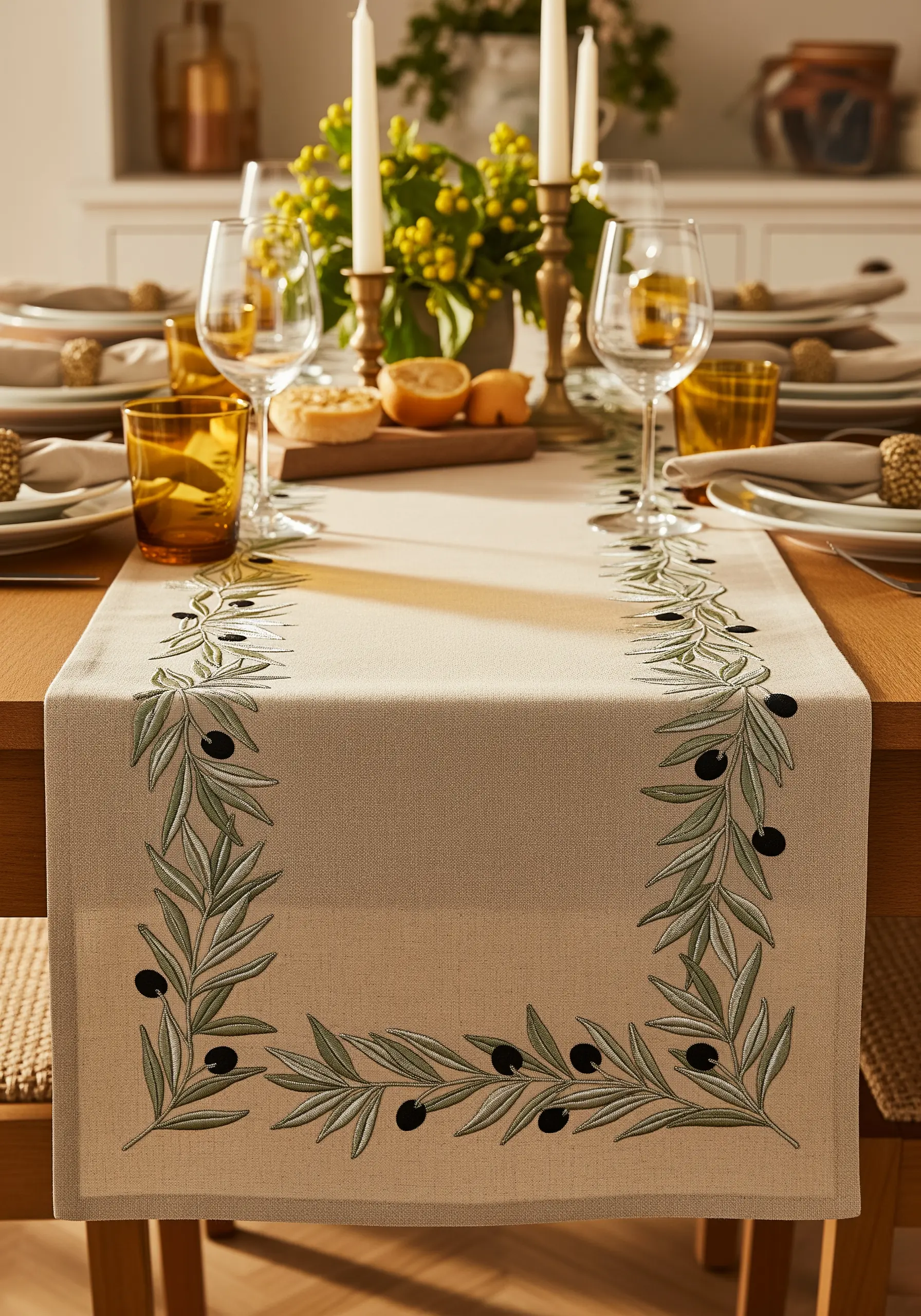
Design an elegant border for a table runner by mirroring a continuous olive branch motif along both edges.
To create a sense of depth in the leaves, use two or three shades of dusty green and stitch them with the long-and-short stitch, blending the colors subtly.
For the olives, use a padded satin stitch—a few straight stitches as a base layer before covering them with the final satin stitch—to give them a plump, rounded shape.
This thoughtful approach to embroidery table runner placemat ideas creates a timeless piece for any dining occasion.
12. Highlight Form with Radiating Line Work
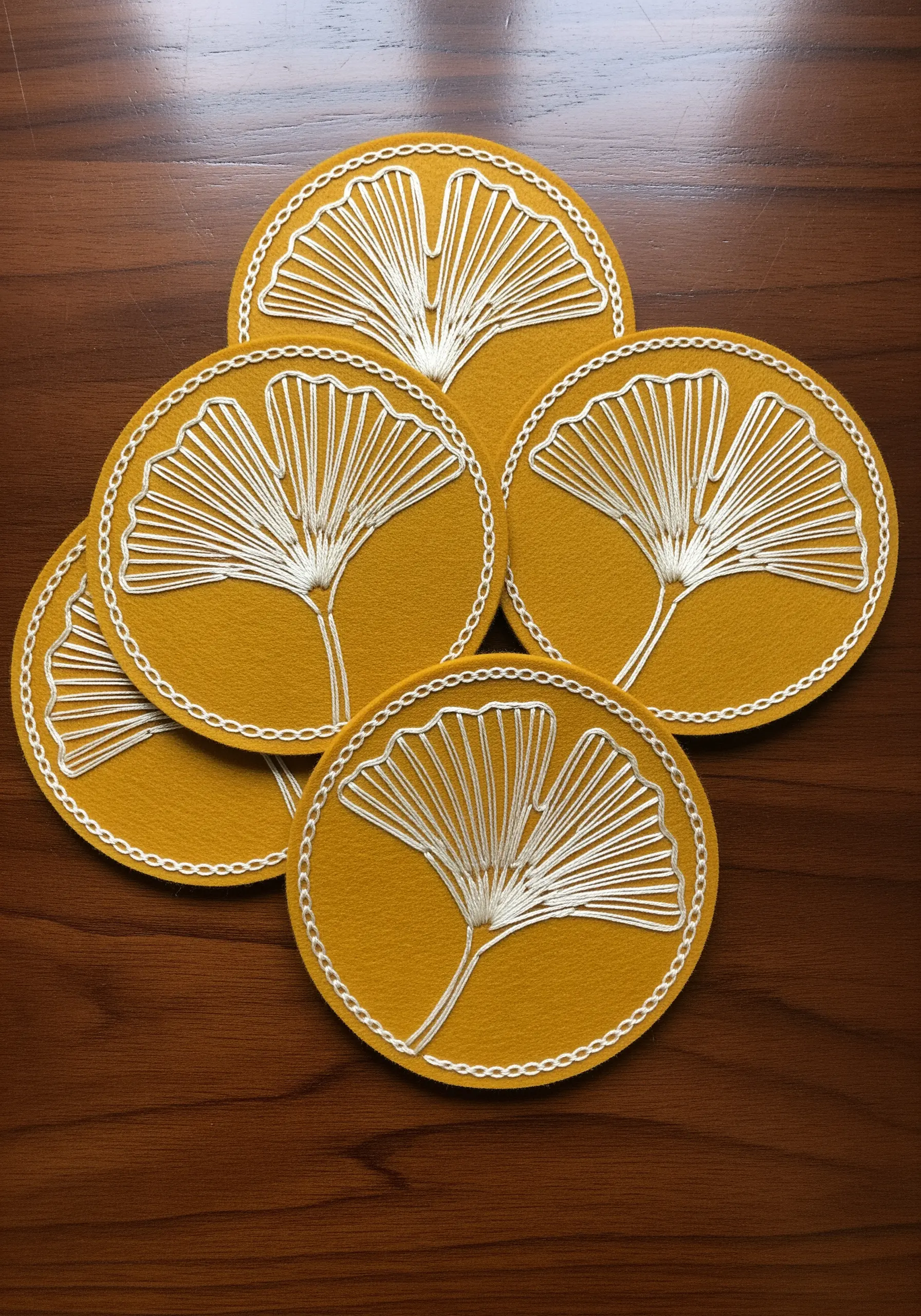
Capture the delicate structure of a ginkgo leaf by focusing entirely on line and form, not fill.
Use a bright white or silver thread on a bold, solid-colored felt to create maximum contrast.
Stitch the veins with a simple backstitch, starting from the base and radiating outwards, ensuring your stitches are even and taut.
A decorative chain stitch border frames the design, giving these coasters a polished, finished edge that feels cohesive and intentional.
13. Compose a Cascading Botanical Tote
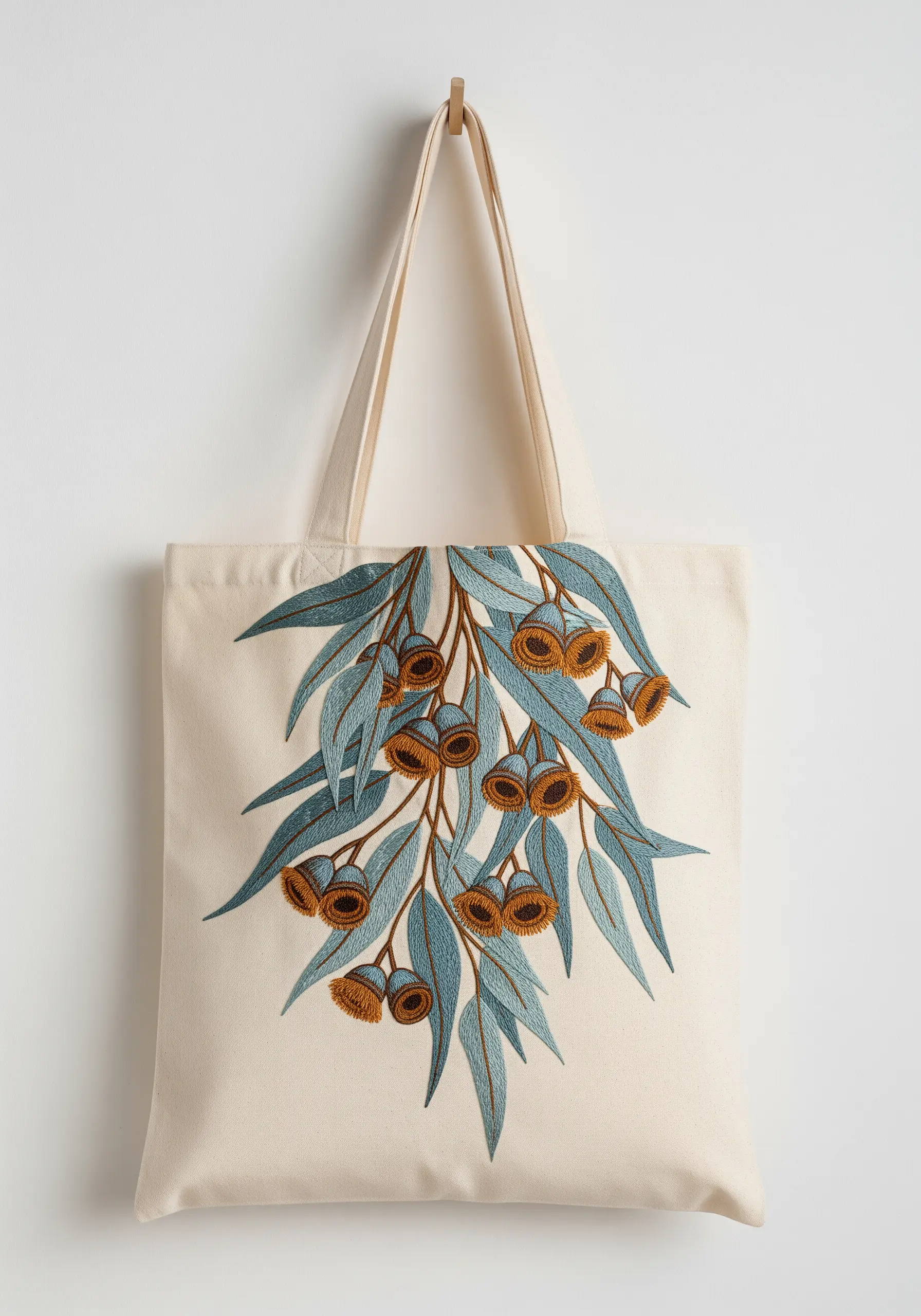
When embellishing a large surface like a tote bag, allow your design to cascade naturally from one corner.
Give eucalyptus leaves their signature dusty, blue-green hue by blending two or three muted thread colors with a long-and-short stitch.
For the gum nuts, use satin stitch for the base and add texture with small straight stitches or French knots for the caps.
This style of composition makes these botanical stitch art ideas to transform plain tote bags into wearable art that feels dynamic and organic.
14. Achieve Bold Graphics with a Satin Stitch Fill
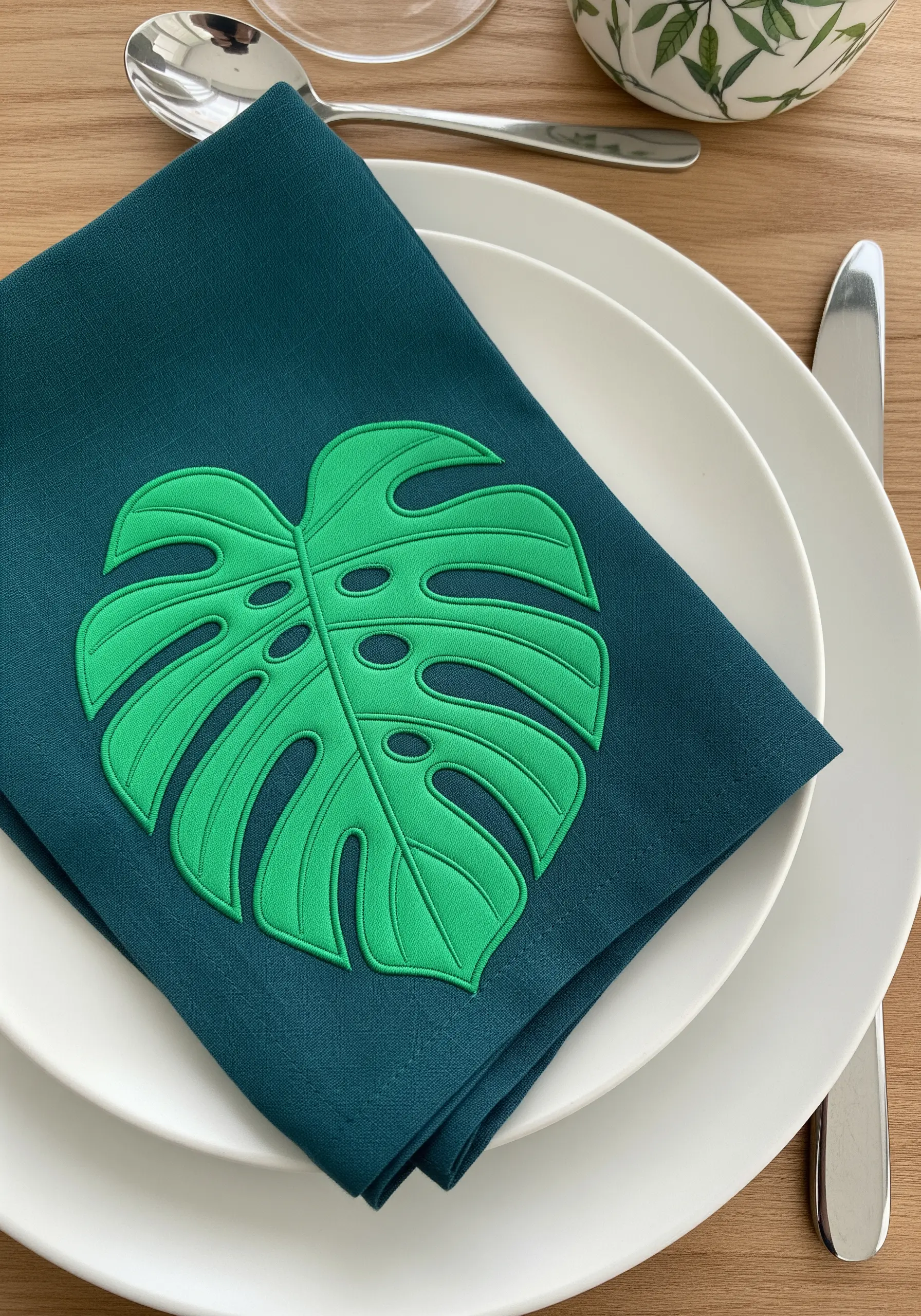
For a modern, graphic statement like this monstera leaf, a dense, perfectly executed satin stitch is your best tool.
To keep the edges incredibly sharp, first outline the entire shape with a split stitch. Then, work your satin stitches over and just past this outline, which acts as a raised barrier.
Using two shades of green adds subtle dimension, but the real power of this design is in its clean lines and smooth, uniform fill.
This technique turns a simple napkin into a bold piece of modern table decor.
15. Embrace Expressive, Sketch-Like Stitching
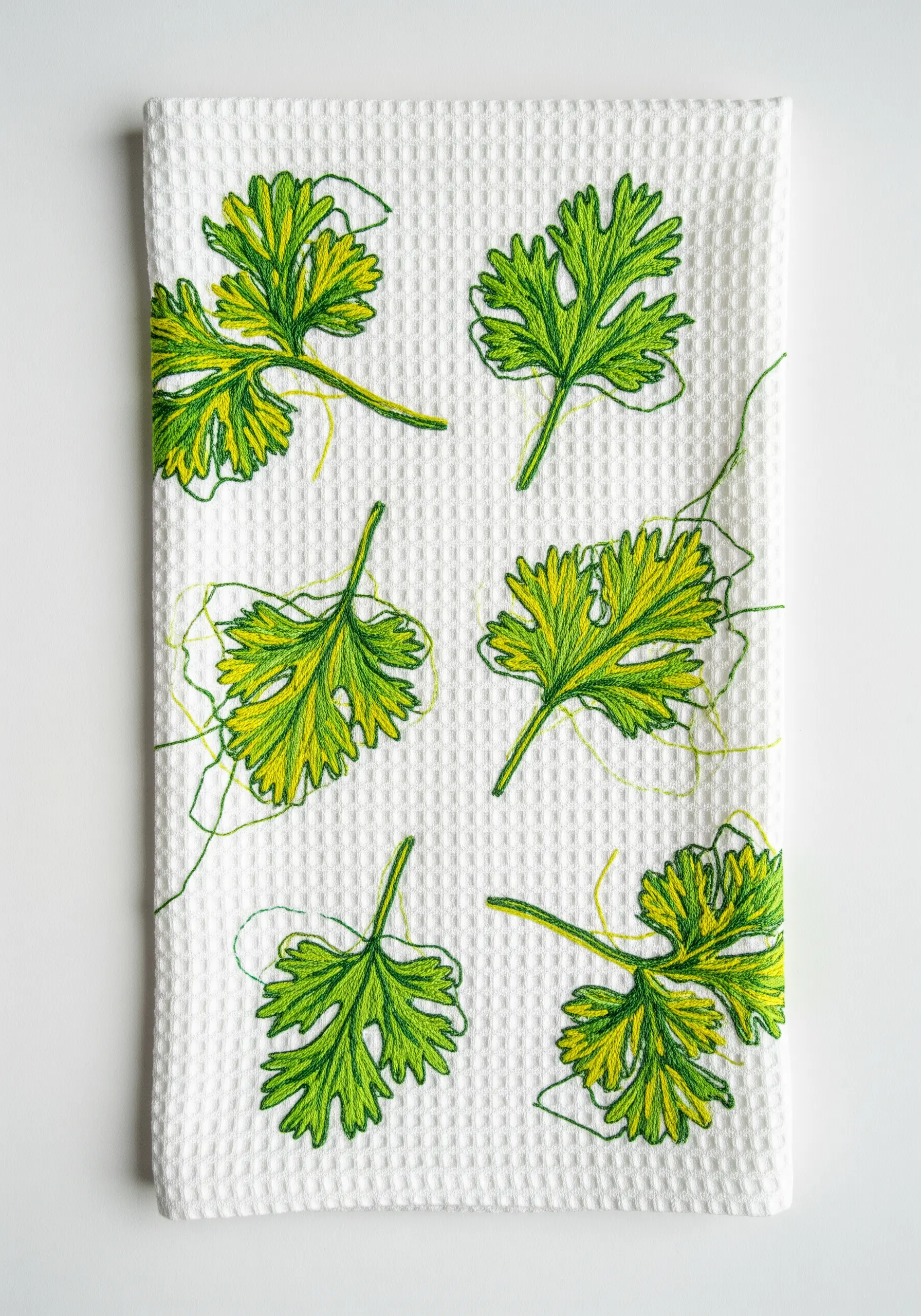
Move beyond perfect fills and embrace an artistic, sketch-like quality in your work.
Combine areas of satin stitch with loose, looping threads and open backstitches to create a sense of movement and energy.
Don’t hide your connecting threads; let them become part of the design, creating a web of color that adds depth and an abstract feel.
This is one of those abstract stitching techniques that frees you from precision and focuses on expression, turning a simple leaf into a dynamic piece of textile art.
16. Craft Delicate Blossoms with Knots and Loops
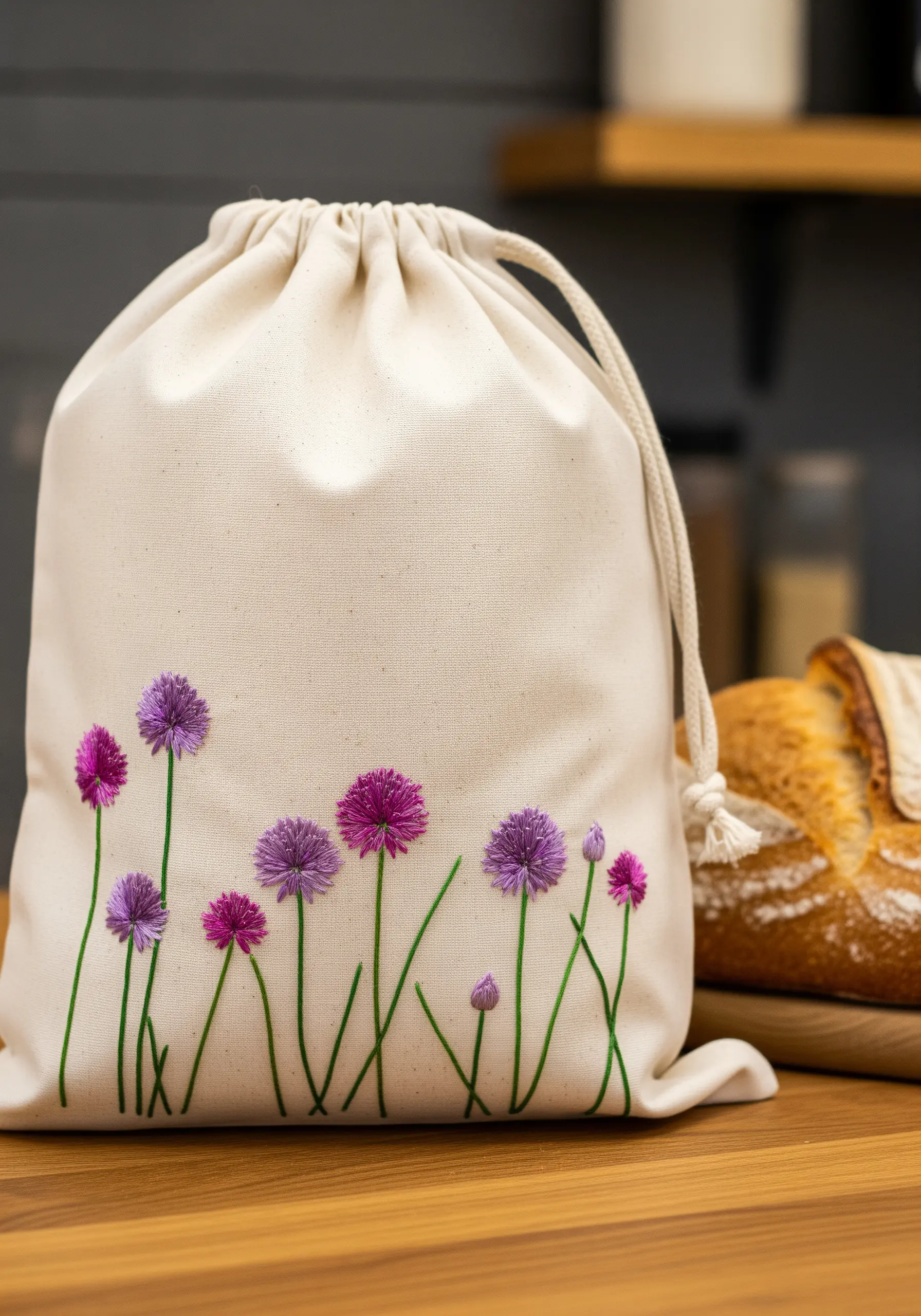
To capture the airy texture of chive blossoms, build up the flower heads with a dense cluster of French knots and detached chain stitches (lazy daisies).
Vary the shades of purple and pink within each blossom to give them a natural, multi-tonal appearance.
Keep the stems long and elegant with a simple stem stitch in a bright, fresh green. The contrast between the thin stems and the textured tops makes the design pop.
This technique is perfect for adding a touch of wildflower charm to items like canvas bread bags or produce pouches.
17. Combine Fill and Outline for a Zesty Design
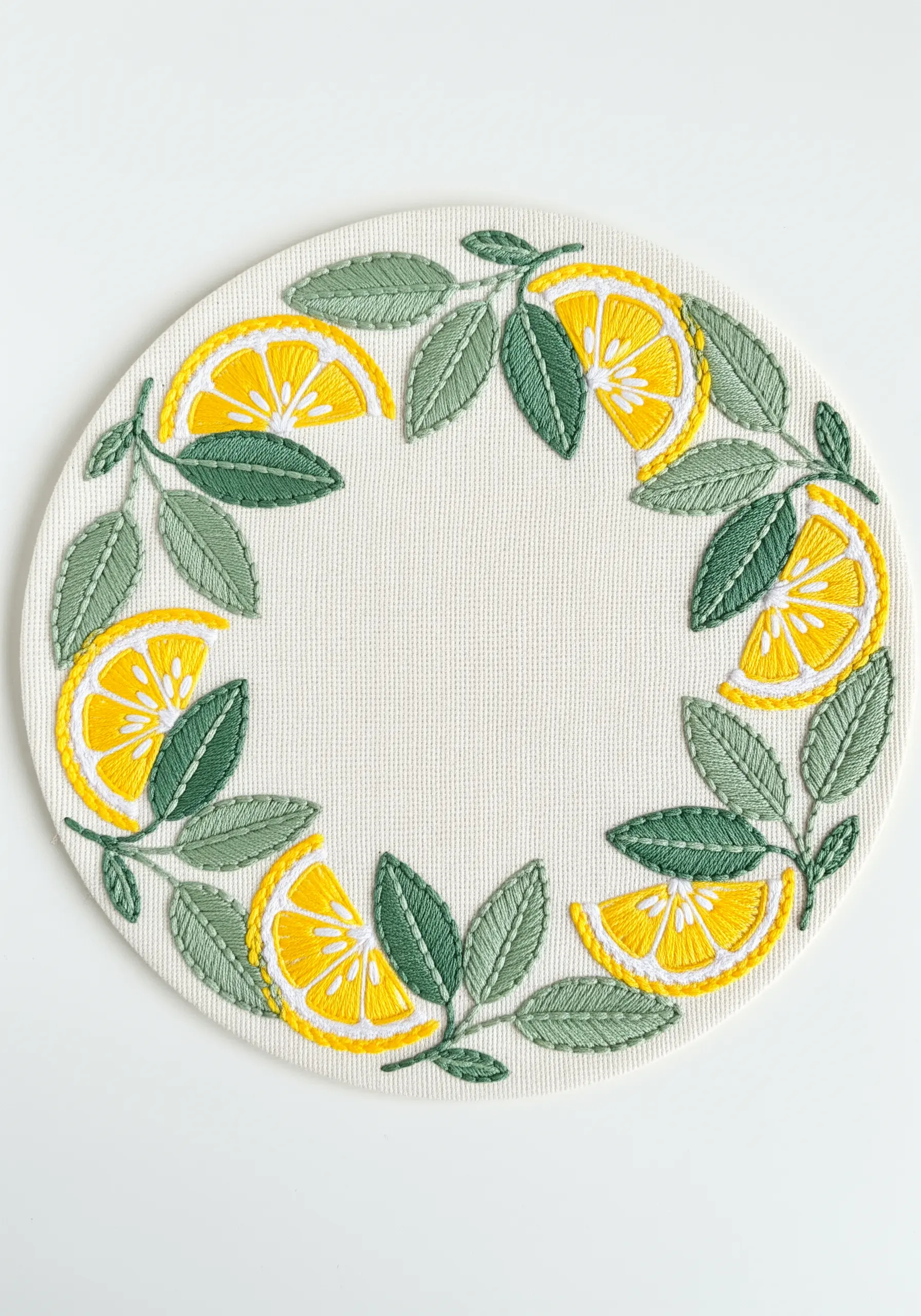
Create a visually interesting wreath by alternating between filled elements and outlined ones.
Stitch the lemon slices with a vibrant yellow satin stitch for the pulp and a clean white backstitch for the pith, making them the focal point.
In contrast, render the leaves with a simple backstitch or stem stitch outline, using two shades of green to add depth without adding weight.
This play between solid and open shapes creates a balanced, dynamic composition that guides the eye around the circle.
18. Weave Tiny Flowers into an Herbal Wreath

Elevate a simple rosemary wreath by studding it with tiny, delicate flowers.
After stitching the green base of the wreath, add small daisy-like flowers using the detached chain stitch for petals and a single French knot for the center.
Scatter them asymmetrically throughout the wreath to give it a more natural, organic feeling, as if they’ve just bloomed.
This small addition transforms the design from a simple herbal motif into a charming, meadow-inspired piece, perfect for a crisp white apron.
19. Define Space with Minimalist Corner Art
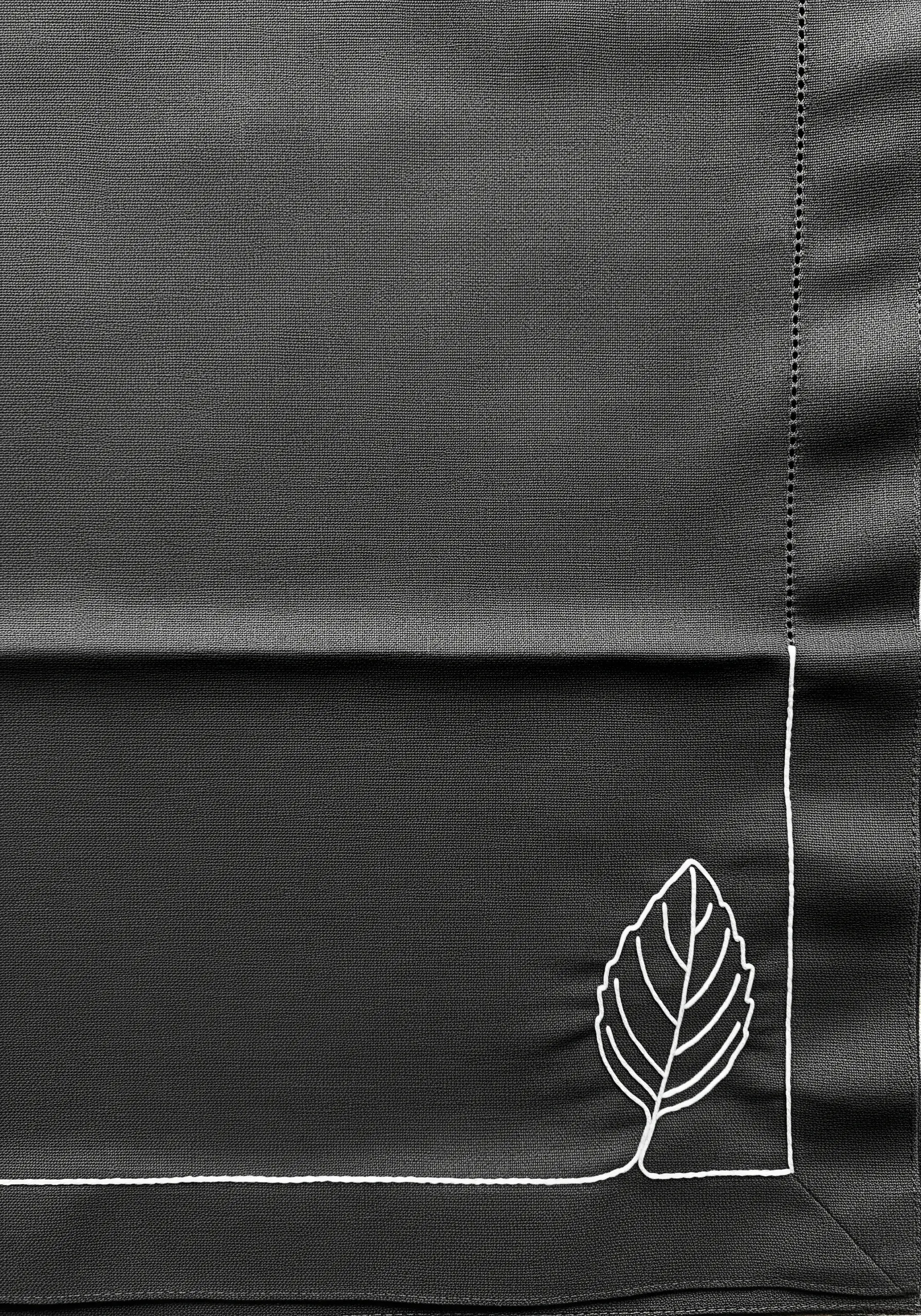
Use a single, continuous line to create a design that feels both minimal and intentional.
This technique uses the corner of the napkin as a natural frame, with a simple backstitch creating a clean border that flows seamlessly into the leaf motif.
The beauty of this style lies in its simplicity and the intelligent use of negative space; the unstitched area becomes just as important as the embroidered line.
This is a perfect example of how simple line art embroidery patterns can create a high-end, contemporary feel with minimal effort.
20. Achieve Variegation with Thread Blending
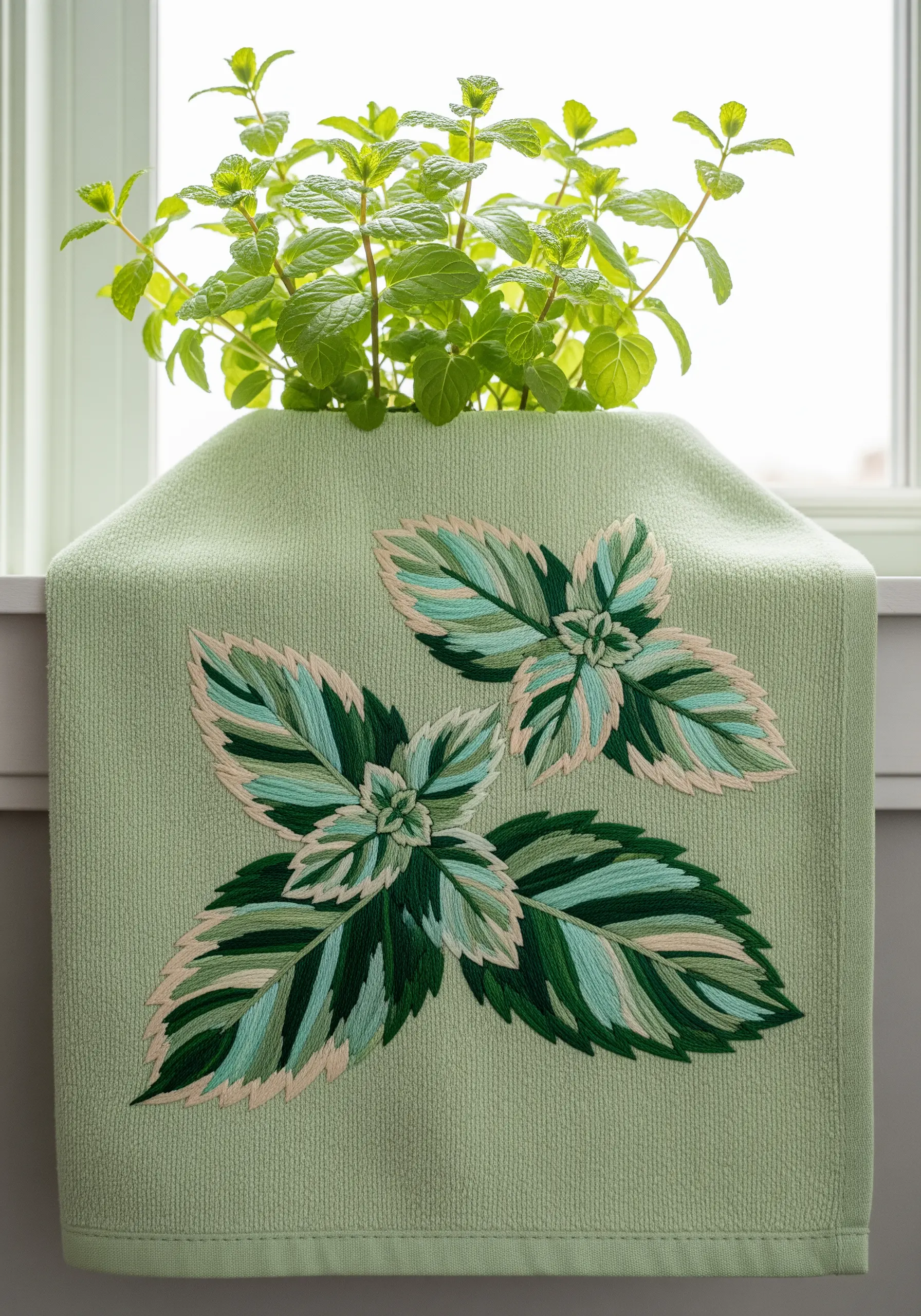
Replicate the complex beauty of variegated leaves by mastering the long-and-short stitch technique.
Work in sections, filling each part of the leaf with staggered stitches of different colors—dark green, mint, cream, and teal—to create a soft, painterly blend.
Outline each leaf segment with a fine backstitch to maintain definition and prevent the colors from looking muddy.
By understanding plant embroidery color palettes, you can turn a simple hand towel into a stunning piece of botanical art.
21. Tie It All Together with a Simple Bow

Add a touch of classic charm to a simple pair of herb sprigs by finishing the design with a neatly stitched bow.
Use a contrasting color, like this rich magenta, to make the bow a small but powerful focal point.
A satin stitch works perfectly, allowing you to create smooth, ribbon-like loops. Ensure your stitches are parallel and close together for a solid, polished look.
This small detail instantly transforms two simple sprigs into a thoughtful, gift-worthy motif for a small pouch or sachet.
22. Create Realistic Ferns with Directional Stitches
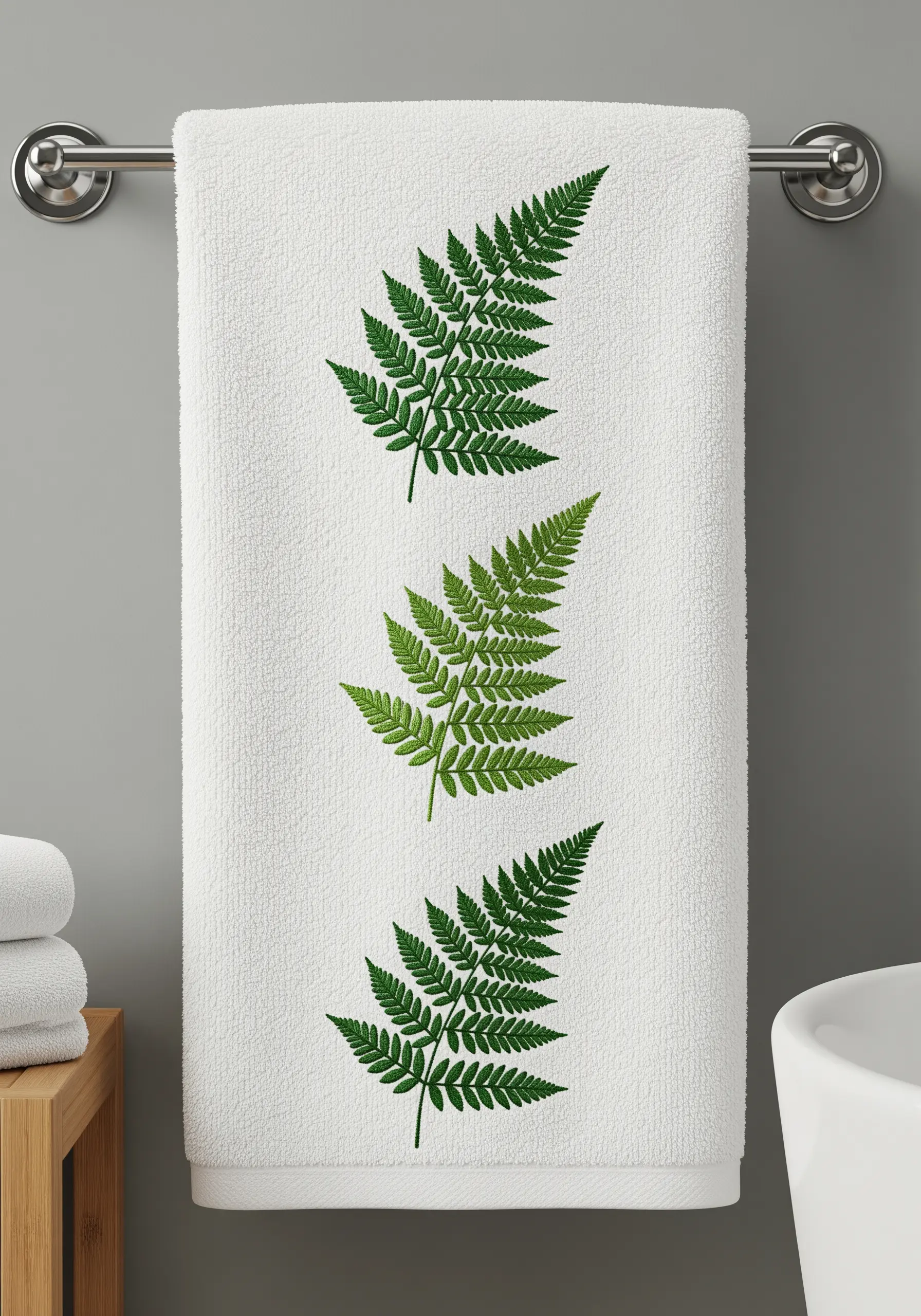
To capture the delicate complexity of a fern, pay close attention to the direction of your stitches.
For each tiny leaflet (pinna), use a single fishbone stitch or a few angled straight stitches that follow the natural upward and outward growth pattern.
Use a slightly lighter green for the newer fronds at the top to create a subtle and realistic sense of growth.
These fern ivy embroidery ideas look especially striking on absorbent terrycloth, but be sure to use a water-soluble stabilizer on top to prevent your stitches from sinking.
23. Add Elegance with a Sheer Curtain Border
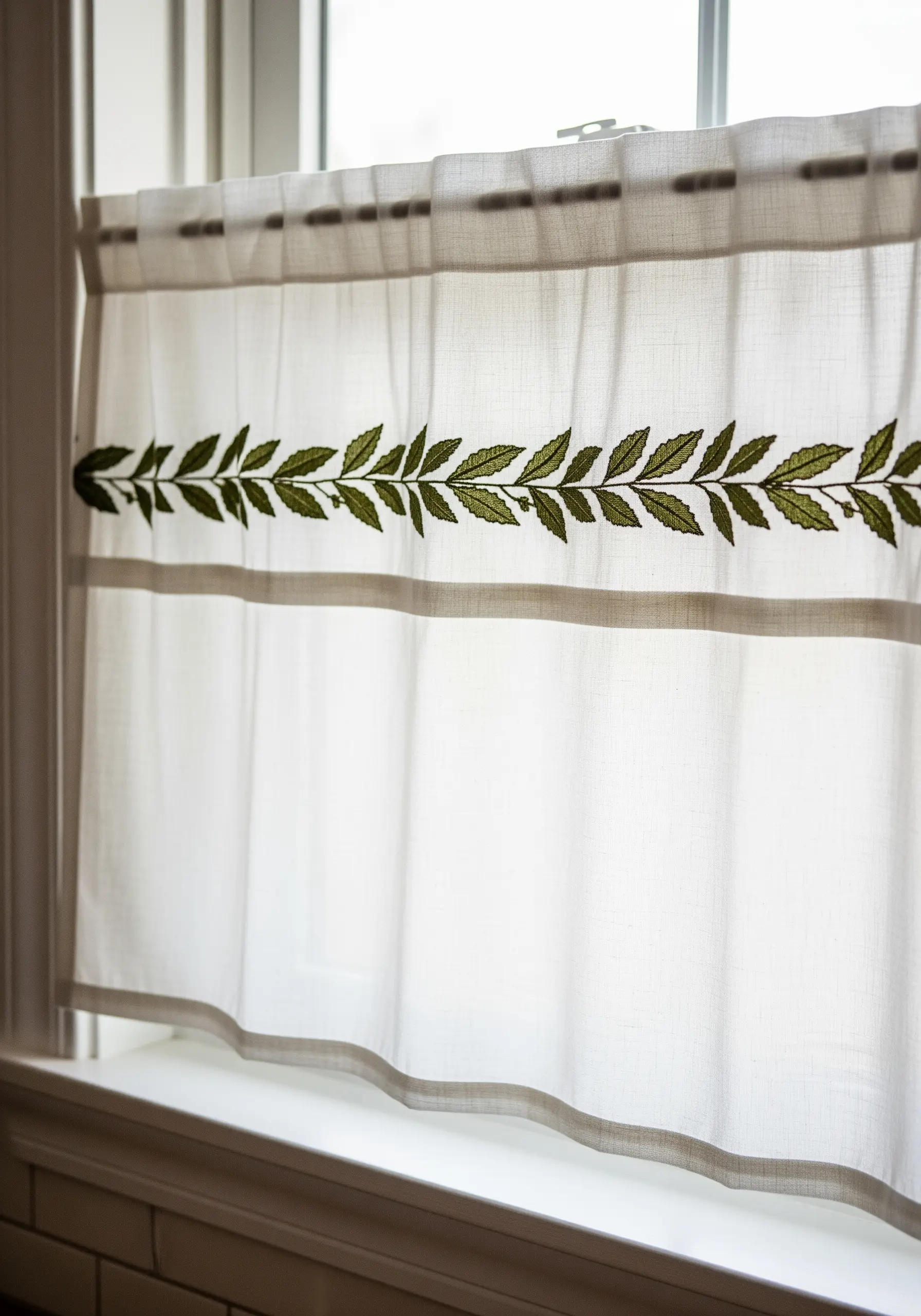
Transform a simple kitchen curtain with an elegant, continuous border of leaves.
Stitching on sheer or semi-sheer fabric requires a stabilizer to prevent puckering. A wash-away stabilizer is ideal as it provides support during stitching and then disappears completely.
Keep the design simple, like this laurel leaf band, using a satin stitch that will look neat from both the inside and outside.
This is a beautiful application of leaf border embroidery ideas, turning a functional item into a custom piece of home decor.
24. Curate a Cohesive Herb Napkin Set

Design a sophisticated set of napkins by dedicating one herb to each, unified by a consistent style and color palette.
Even though the plants are different, a shared approach—such as using detailed outlines and soft long-and-short stitch fills—makes them feel like a deliberate collection.
Use a consistent set of greens, browns, and grays across all four designs to tie them together visually.
This creates a thoughtful, high-end gift that feels more special than a single embroidered item.
25. Build Up 3D Texture for Flowers and Leaves
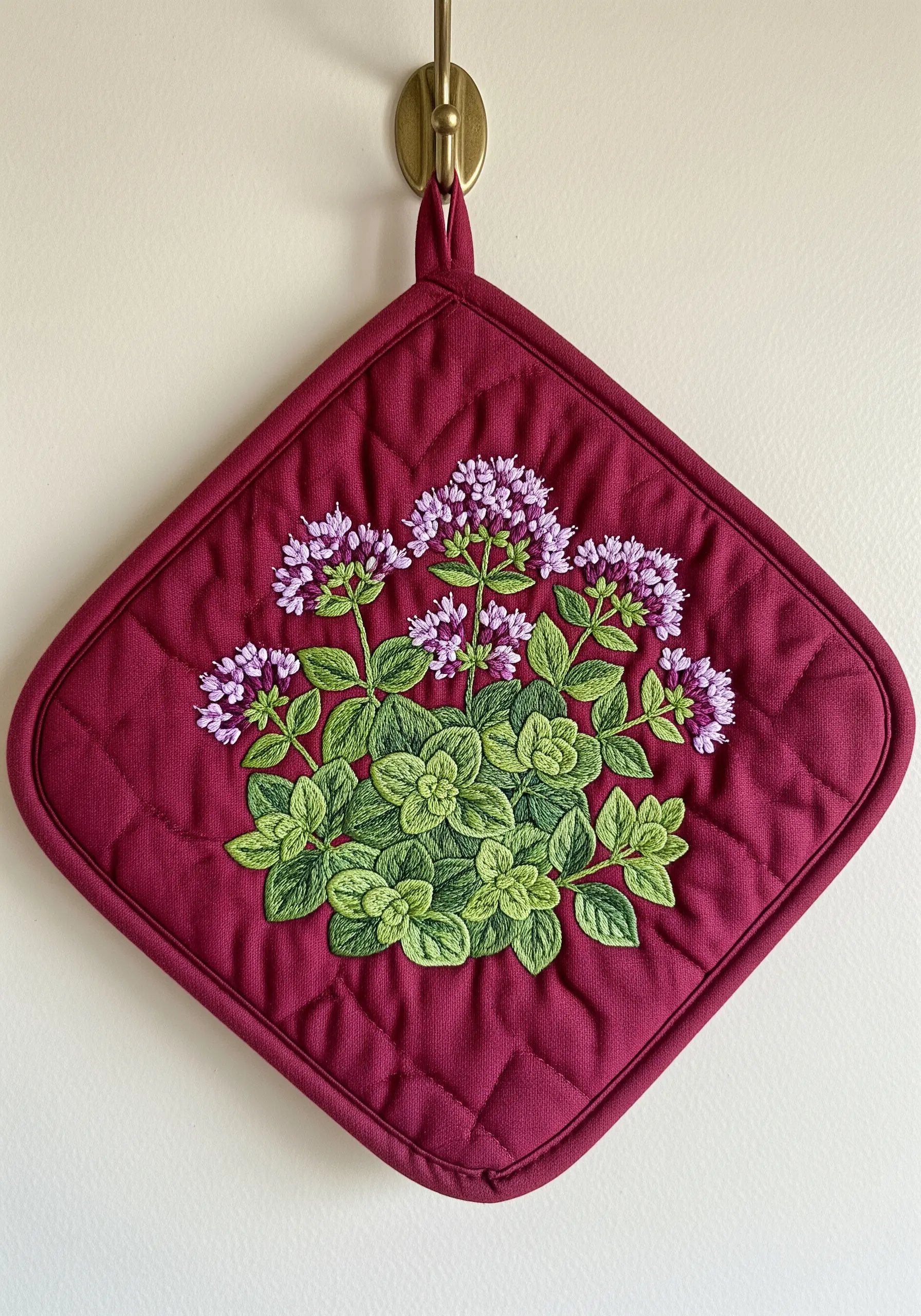
Give your embroidery a lush, three-dimensional quality by layering stitches to build up height and texture.
For the oregano blossoms, use dense French knots in several shades of lilac and purple, packing them closely together to create voluminous clusters.
Use fishbone stitch for the leaves, which creates a raised central vein and adds a natural, lifelike quality.
This high-texture approach works especially well on thick, sturdy items like a quilted potholder, where the dimension can be fully appreciated.
26. Blend Geometric and Organic Forms
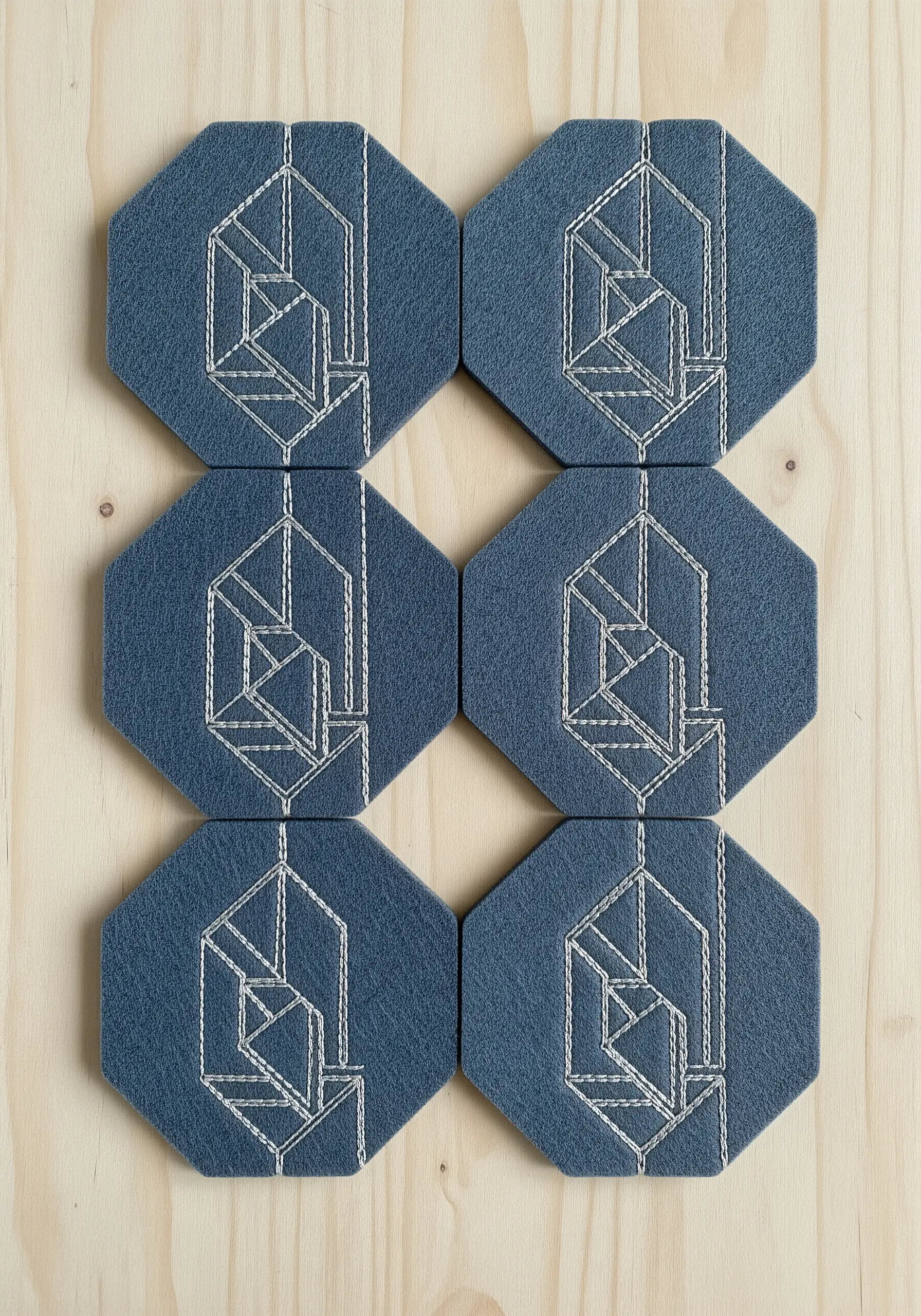
Create a striking modern design by containing an organic, natural shape within a rigid geometric form.
Here, the delicate veins of a leaf are abstracted into a series of straight lines, contained within an angular, crystal-like structure.
Use a simple backstitch in a high-contrast thread to emphasize the clean lines and sharp angles of the design.
These minimalist stitched ideas inspired by geometry and nature are perfect for contemporary home goods like coasters, creating a look that is both artistic and functional.
27. Let a Design Grow Beyond Its Borders
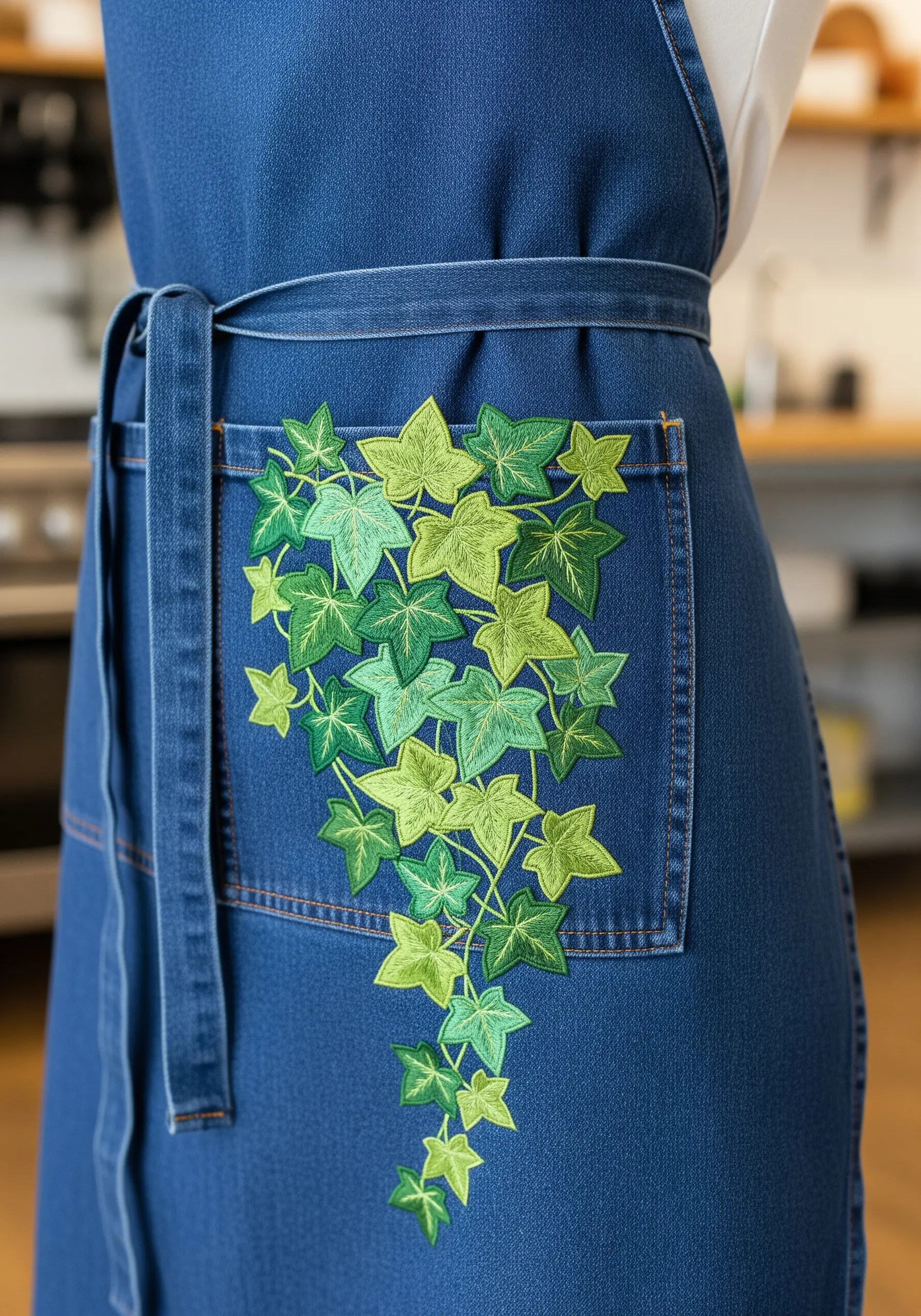
Create a dynamic, eye-catching design by allowing your motif to spill out from a defined area, like a pocket.
Start the main body of the ivy cluster within the pocket’s boundaries, then let a few vines and leaves trail out onto the main body of the apron.
This technique creates a sense of organic, untamed growth and turns a simple embellishment into a narrative element.
It’s one of the most effective botanical embroidery ideas for turning plain denim jackets or aprons into standout fashion pieces.


