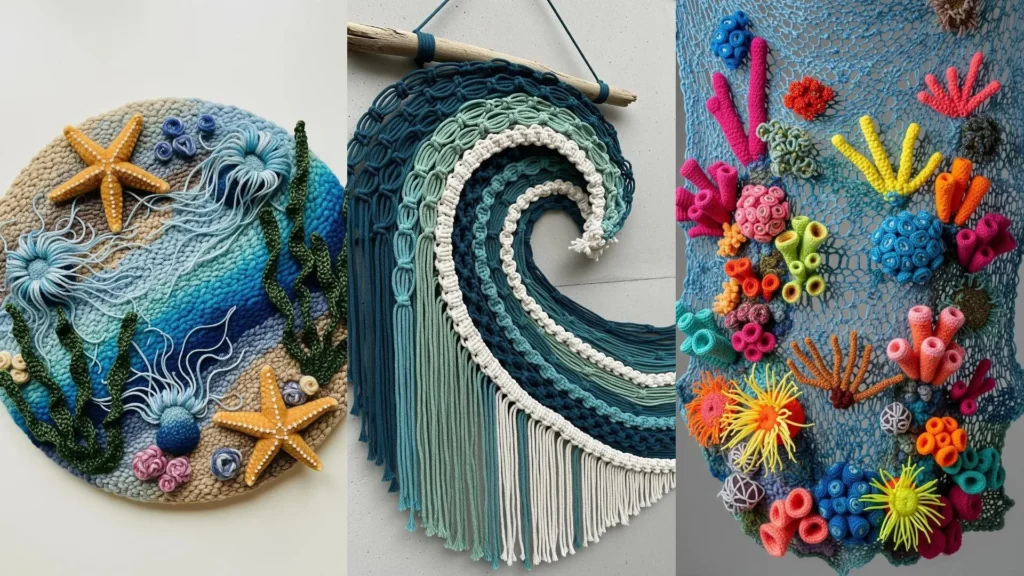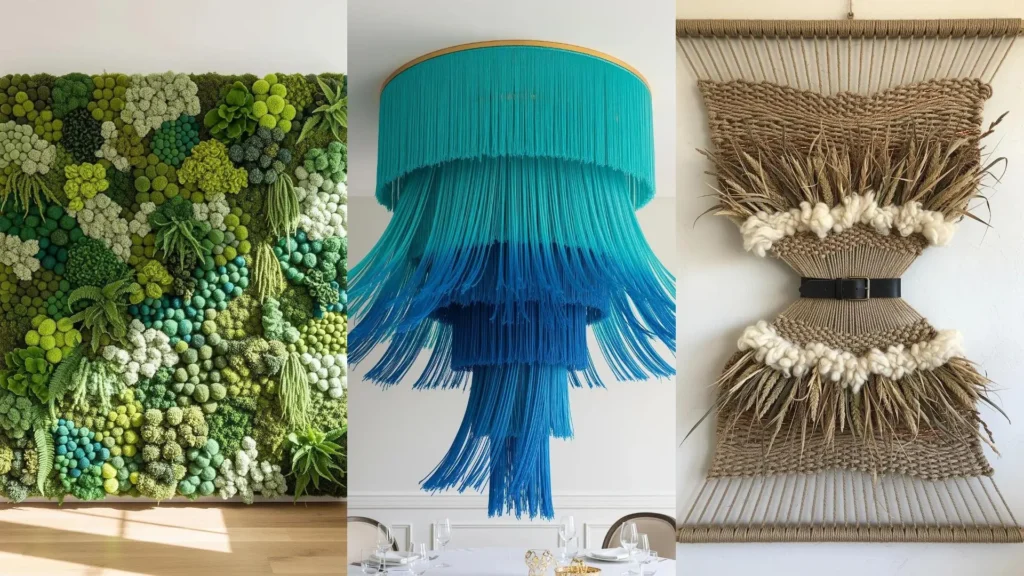
It is time to stop thinking of your embroidery as something that must live quietly inside a small wooden hoop. When you scale up your fiber art, you aren’t just decorating a surface; you are altering the architecture of the room itself.
The techniques you already know—tension, texture, gradient, and knotting—transform completely when applied to a wall or a ceiling. You don’t need industrial machinery, but you do need the courage to work with heavier materials and bolder gestures.
These installations prove that fiber is a structural medium. Look closely at how they manipulate space and light, and consider how you can expand your own practice from the micro to the monumental.
1. Architectural draping and scale

When you move from the hoop to the room, gravity becomes your primary tool; use the weight of heavy cotton rope to create natural, symmetrical arches that soften industrial spaces.
Instead of complex knots, focus on the rhythm of vertical lines and the negative space between them, allowing the architecture behind the piece to breathe.
These fiber art installations that look like they’re floating in mid-air rely on heavy-gauge cord to maintain straight, decisive lines even over long drops.
2. Sculpting with loop pile density

Treat your yarn like clay by varying the height of your loops; punch needle and tufting allow you to build topographical layers that catch the light differently.
Use a gradient palette—shifting from cool greens to warm terracottas—to exaggerate the sense of depth and movement within the organic shapes.
This approach creates organic texture embroidery designs that look harder than they are but feel incredibly luxurious to the touch.
3. Contrasting metallic sheen with roving

Elevate a standard weave by juxtaposing the matte, cloud-like softness of unspun wool roving against the sharp, reflective quality of metallic threads.
Do not overthink the structure; let the thick roving bubble and flow organically while the metallic warp threads provide a rigid, shimmering skeleton.
Integrating these materials is key to creating luxury metallic thread wall decor ideas that look straight out of high-end hotels.
4. Radial tension and precision

For a look of modern precision, abandon the curve of the stitch for the straight line of the string; high-tension radial patterns create mesmerizing optical illusions.
Use a dark, matte background to make a single hue of thread vibrate visually, focusing entirely on the uniformity of your spacing and anchor points.
This technique is perfect for minimal geometry stitch projects to turn office walls into inspiring zen workspaces.
5. The drama of dip-dyed gradients

If you cannot find the perfect thread transition, create it yourself by dip-dyeing a finished fringe curtain; this ensures a seamless bleed from cream to deep crimson.
Leave the individual strands long and unknotted to emphasize the fluidity of the color change, turning the fiber itself into a liquid element.
These are ombre gradient embroidery wall hangings that add color flow to any room with dramatic verticality.
6. Neon fluidity and loose ends

Break the rules of neat finishing by purposefully leaving long, dripping tails of yarn to simulate the effect of melting paint or graffiti.
Pairing electric cyan and magenta against a structured weave creates a vibrant disruption that feels energetic and contemporary rather than traditional.
Experiment with modern neon on black thread art ideas that glow under UV lights for maximum impact.
7. Wrapping three-dimensional forms

Take your fiber art off the wall and onto objects; wrapping geometric forms in high-contrast black and white yarn turns simple shapes into hypnotic sculptures.
The key here is absolute consistency in tension so the underlying object is completely concealed, creating a surface that feels like graphic design come to life.
These geometric hoop art designs that make a bold statement on walls can easily translate to table sculptures.
8. Transparency in large-scale weaving
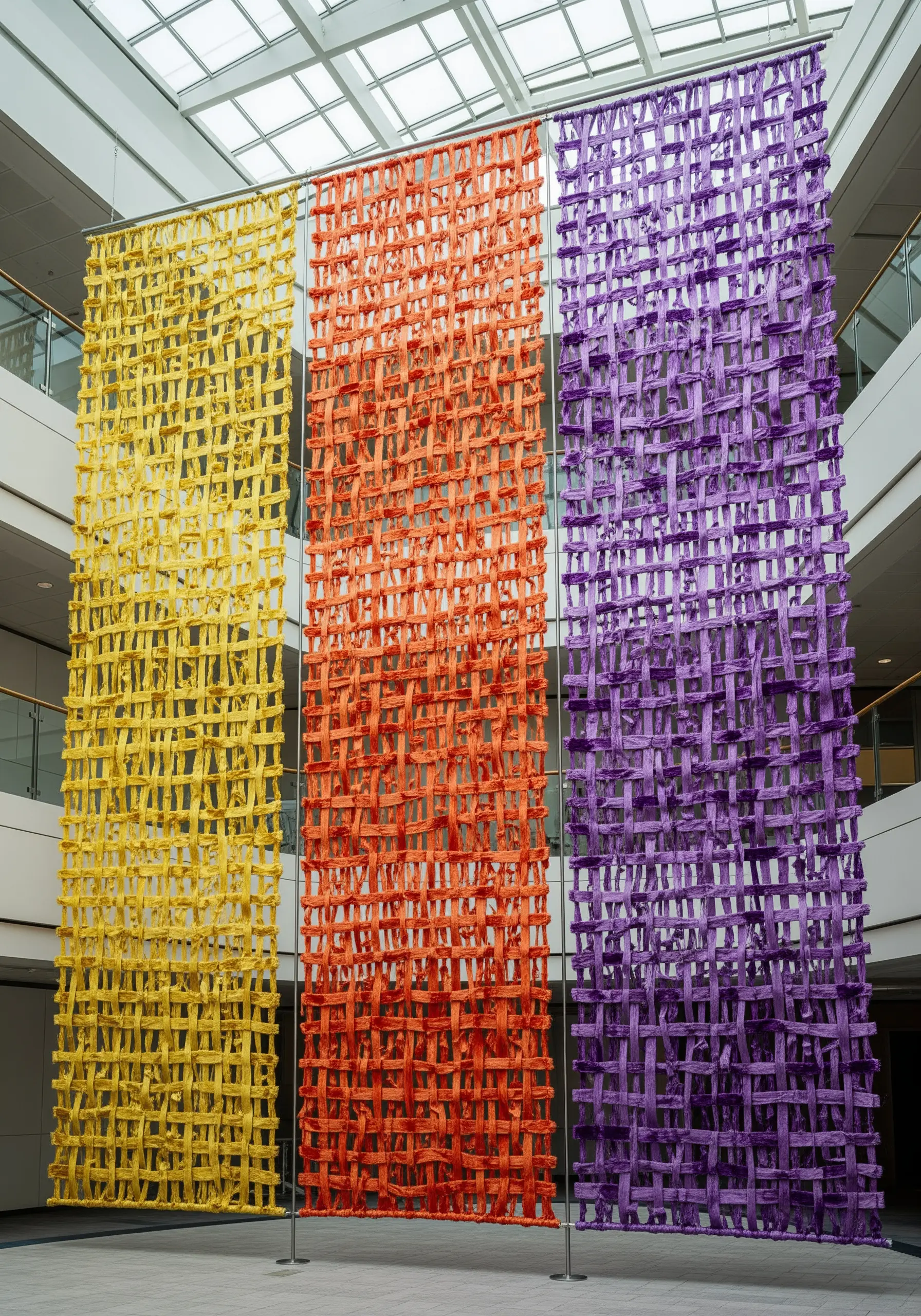
When working on a massive scale, embrace negative space; an open, grid-like weave allows light to pass through, keeping the installation from feeling heavy or oppressive.
Use monochromatic palettes for each panel to create distinct zones of color that interact as you move through the space.
You can design colorful fiber art installations that will make your walls come alive without blocking the view.
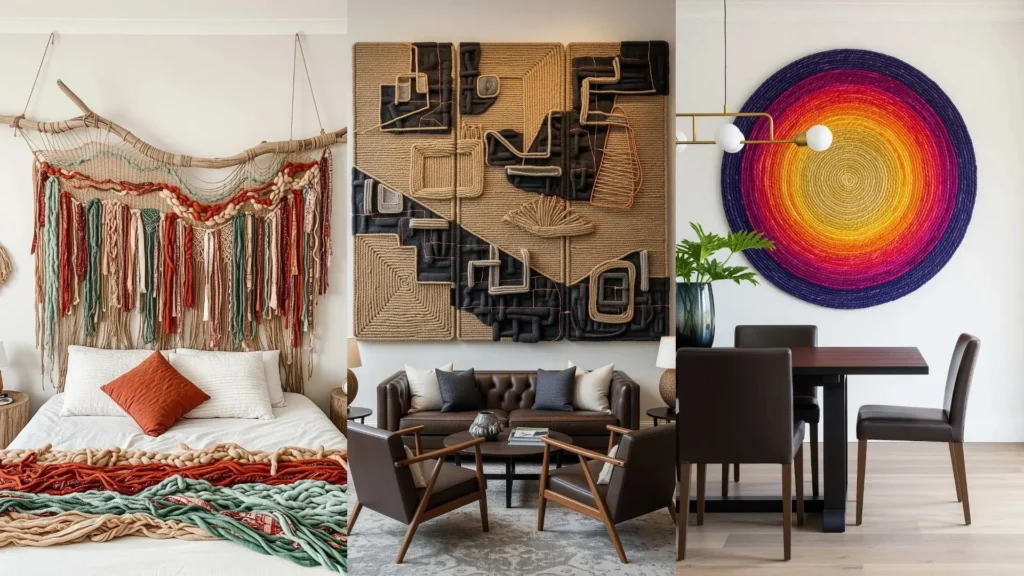
9. Integrating natural supports
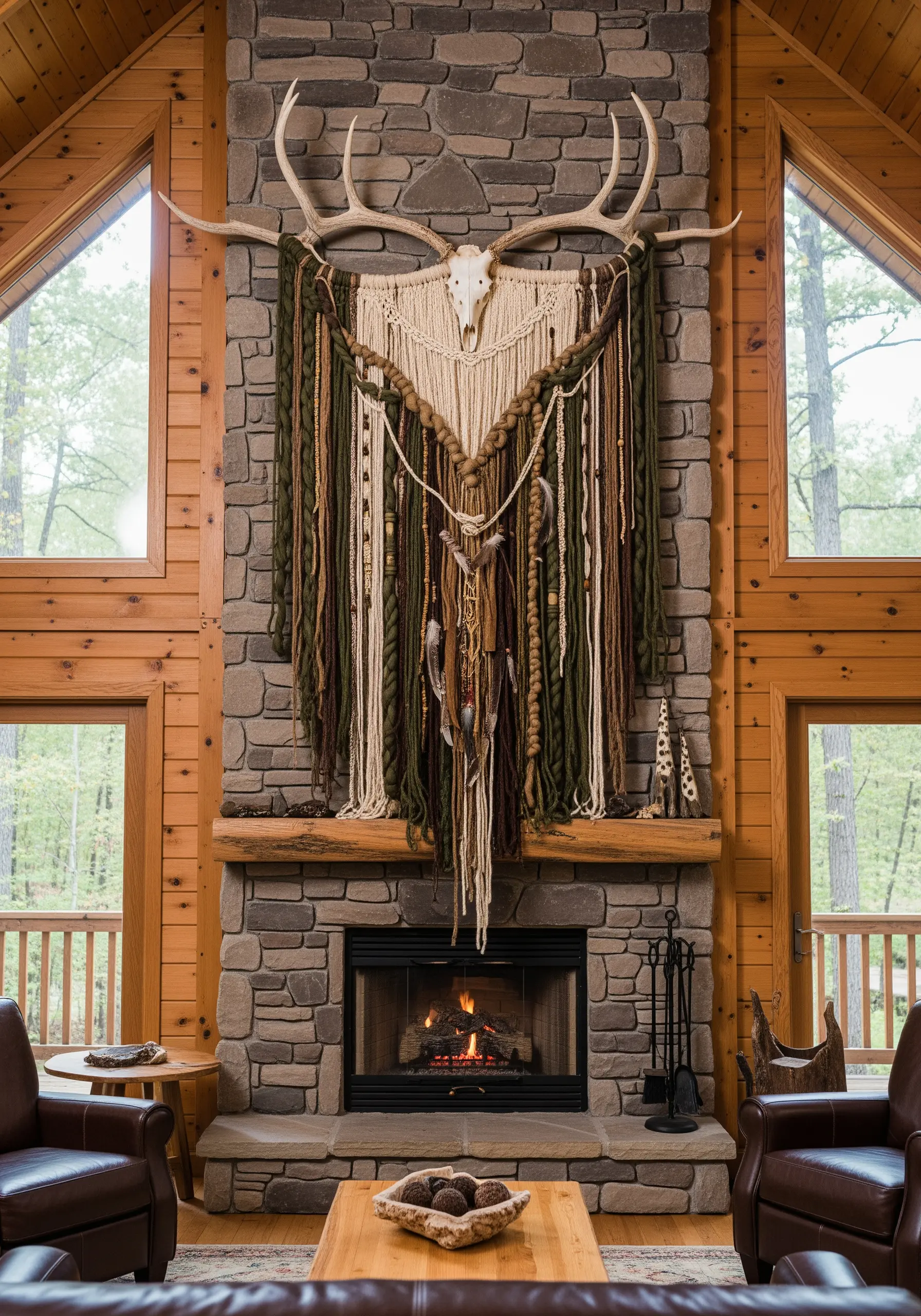
Replace the standard dowel or hoop with found objects like antlers or driftwood to ground your fiber art in a rustic, organic aesthetic.
Layer textures—braids, twists, and feathers—in earth tones to complement the natural mount rather than competing with it.
These are rustic stitch art projects to turn old fabric scraps into cottage core wall magic.
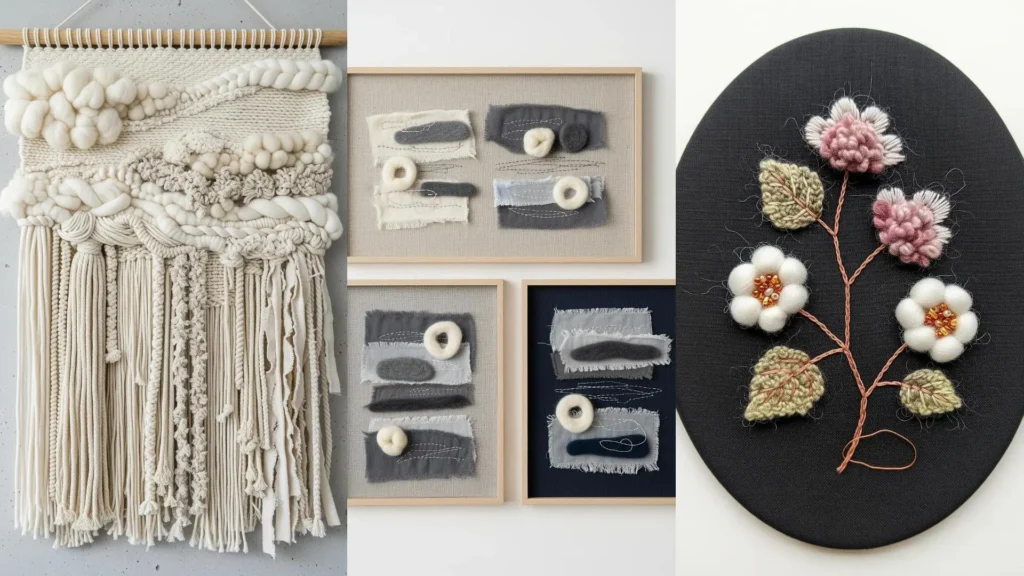
10. Simulating botanical density

Mimic the texture of a living wall by tightly packing French knots, loops, and tufts in varying shades of forest and moss green.
The goal is to hide the backing completely, creating a lush, tactile surface that invites touch and absorbs sound.
Explore ways to embroider natural textures that wow your friends by observing real moss patterns.
11. Repetition of spherical forms
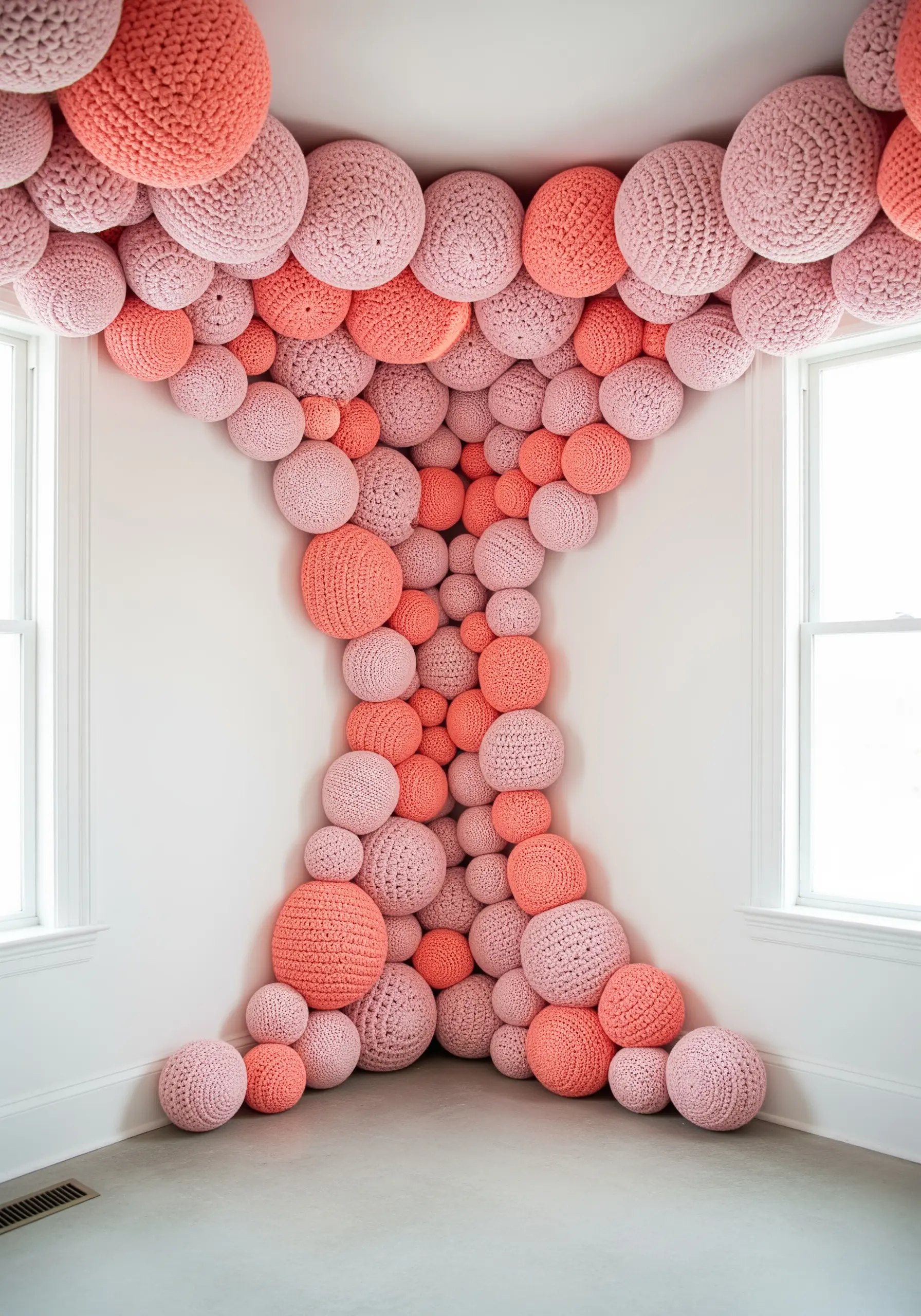
Create an immersive environment by repeating a single, simple shape—like a crocheted sphere—hundreds of times to build a massive, cellular structure.
The soft, monochromatic palette unifies the complex assembly, turning individual craft components into a singular architectural feature.
These represent mind-blowing fiber art installations that redefine textile design through sheer volume.
12. Retro curves and shag texture

Channel the warmth of the 1970s by combining a long shag pile with bold, curvilinear graphic design in mustard, orange, and brown.
Keep the edges clean and sharp to define the pattern, while allowing the surface texture to remain wild and soft.
Look into bold yarn wall art patterns that turn blank walls into statements using retro influences.
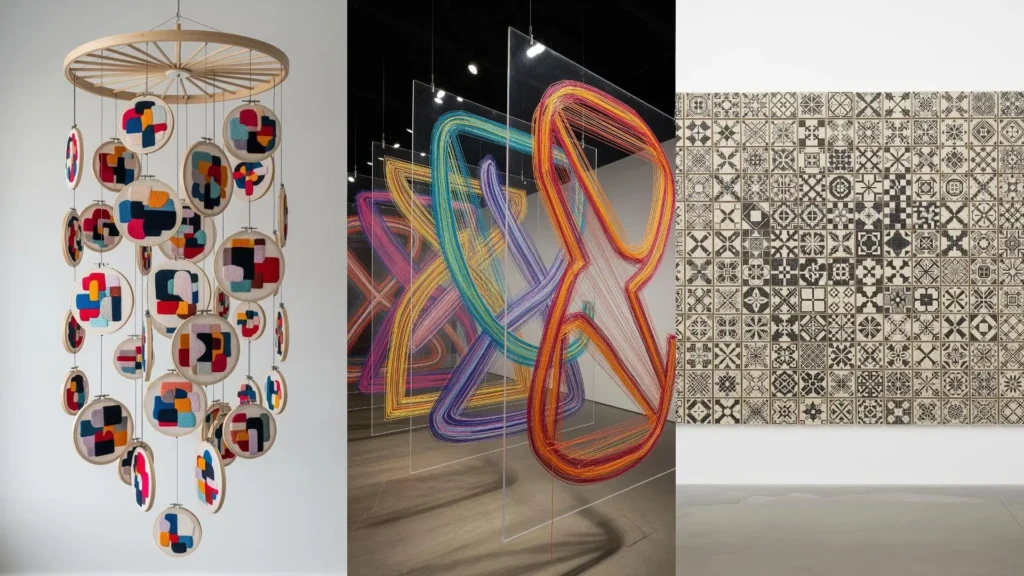
13. Light and shadow with tensioned thread

Use white thread against a dark void to sculpt light; by layering sheer planes of string, you create ghost-like volumes that change depending on the viewer’s angle.
Precision is paramount here—a single slack thread will break the illusion of the ethereal curve.
Master contemporary thread sculptures using layering techniques to create 3d shadow effects.
14. Controlled chaos with recycled fabric

Turn your scrap bin into a masterpiece by layering strips of denim, floral cotton, and lace into a dense, nest-like composition.
While it looks chaotic, you must balance the colors and textures evenly to prevent the piece from looking like accidental clutter.
Use fabric collage embroidery ideas that turn scraps into magical wall art for sustainable creativity.
15. The gradient landscape mural
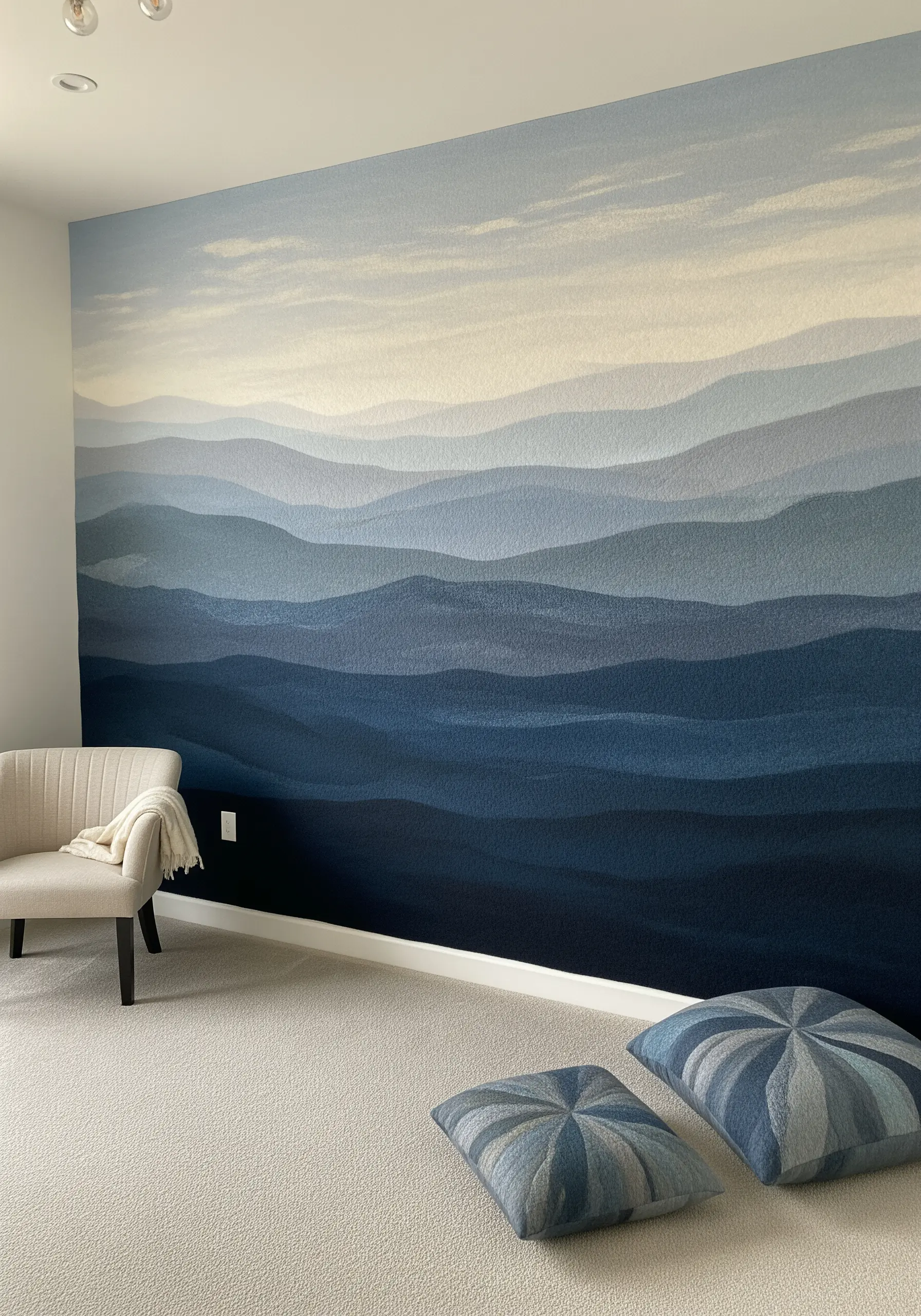
Scale up the concept of thread painting to cover an entire wall, using subtle shifts in blue and grey to create a calming, atmospheric mountain range.
Avoid hard outlines; overlap your color zones gently to mimic the haze of distant hills.
These are large-scale landscape embroidery wall pieces that turn fabric into painted scenery.
16. Geometric precision on black

Utilize the high contrast of gold thread on a black pegboard to create Art Deco-inspired designs that feel sharp, modern, and luxurious.
The rigid grid of the board does the measuring for you, allowing you to focus entirely on the complexity of the layered geometric patterns.
Try minimalist string art line designs that add a modern embroidery aesthetic to blank walls instantly.
17. Mixed media with dried botanicals

Bridge the gap between fiber and floristry by weaving dried wheat or grasses directly into your warp; the brittle texture contrasts beautifully with soft wool.
Structure your weaving to cradle the fragile stems, using a simple tabby weave to secure them without crushing.
This incorporates mixed media embroidery wall art techniques combining yarn beads fabric and nature.
18. The pom-pom pixel grid
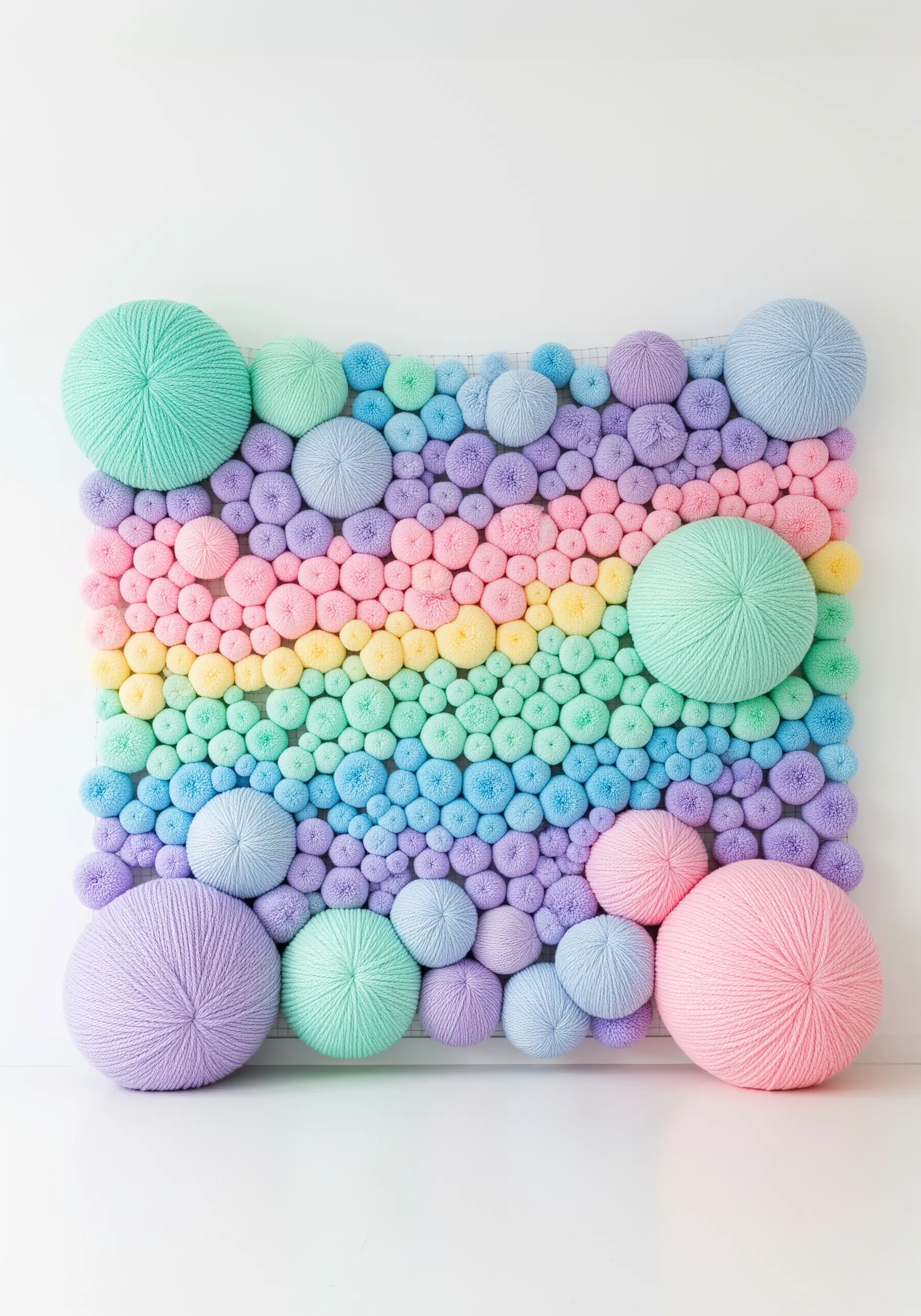
Treat yarn pom-poms as individual pixels; by arranging them in a tight grid, you can create smooth color gradients or even complex images.
Shear your pom-poms tightly to ensure they look like solid spheres rather than shaggy puffs, maintaining the clean lines of the grid.
Follow color palette tips for hoop art that transforms your wall instantly using this grid method.
19. Scaling up the tools

Play with perception by fabricating oversized knitting needles and using thick roving to create a piece that celebrates the act of making itself.
The stitch becomes architectural when magnified; simple stockinette stitch reveals its structural beauty when every loop is three inches wide.
Draw inspiration from giant fiber art installations that look like they’re from another world.
20. Integrating ceramics and knotting

Add weight and focal points to your macramé by knotting around custom ceramic discs; the clay provides an earthy, solid counterpoint to the rope.
Keep the surrounding knots simple to let the ceramic shapes dictate the visual rhythm of the piece.
Discover mixed fiber art techniques that push creative boundaries by adding clay.
21. Fluidity in fringe chandeliers

Suspend layers of long, combed-out fringe to create a lighting fixture that moves and sways like a jellyfish in water.
A dip-dyed ombre effect enhances the feeling of depth, drawing the eye downward through the layers of blue and teal.
Create vibrant embroidery wall panels to energize your bedroom decor or hanging mobile art.
22. The art of mending and patchwork

Elevate the humble quilt by using visible sashiko stitching to unite disparate patches of denim, corduroy, and linen into a cohesive wall tapestry.
The beauty lies in the variation of texture and the white running stitch that acts as a visual unifier across the dark indigo tones.
These stunning embroidered fabric wall panels you can stitch to impress guests instantly celebrate imperfection.
23. Explosive color tension

Forget the frame; anchor your threads to a central structure and pull them outward to the walls and floor, creating a dynamic explosion of primary colors.
This technique relies on the tension of the lines to define the space, turning the air itself into part of the sculpture.
This evokes abstract freeform stitching ideas for when you don’t want to follow a pattern.