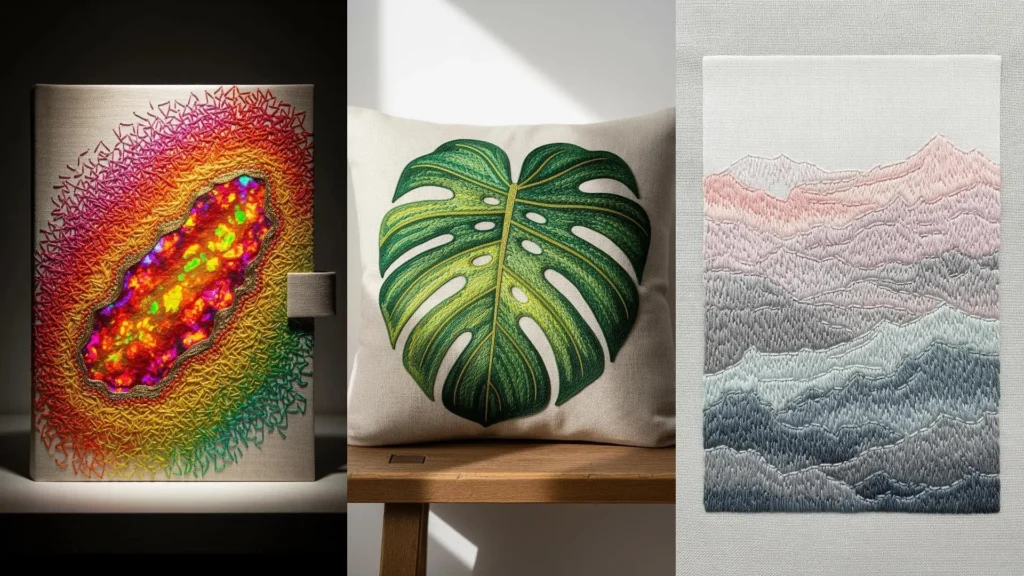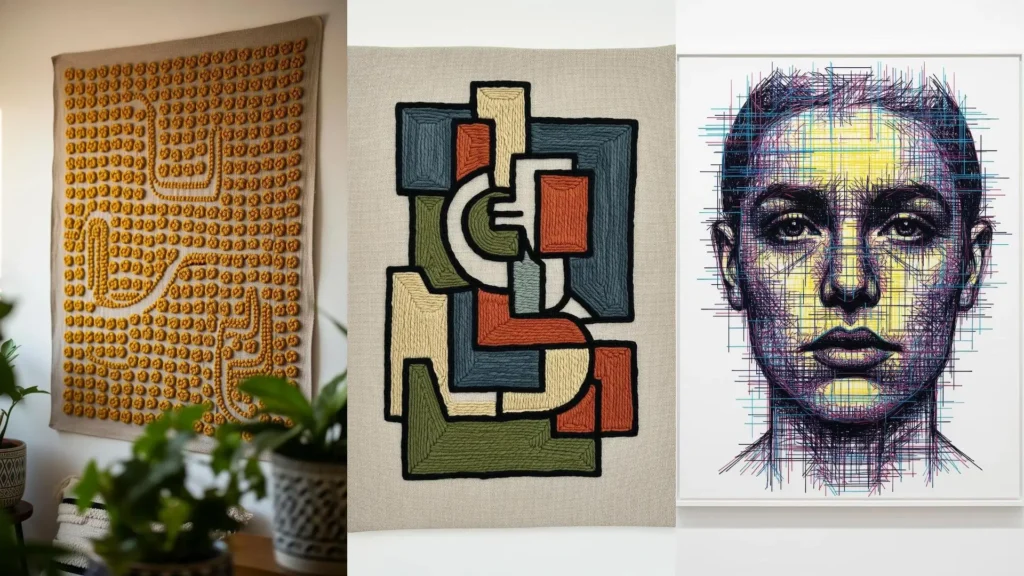
There is a distinct line where embroidery stops being a craft and starts being art. It usually happens when you stop trying to fill every inch of fabric and start making deliberate choices about line, weight, and negative space.
The pieces you see in modern galleries aren’t necessarily complex; they are confident. They use texture instead of just color, and they embrace the sculptural nature of thread rather than forcing it to look like paint.
You can achieve this look in your own home. By adjusting your tension, experimenting with thread weights, and rethinking how you frame your work, you can turn a simple hoop into a statement piece. Here are 31 ways to elevate your stitching into modern art.
1. The continuous line portrait
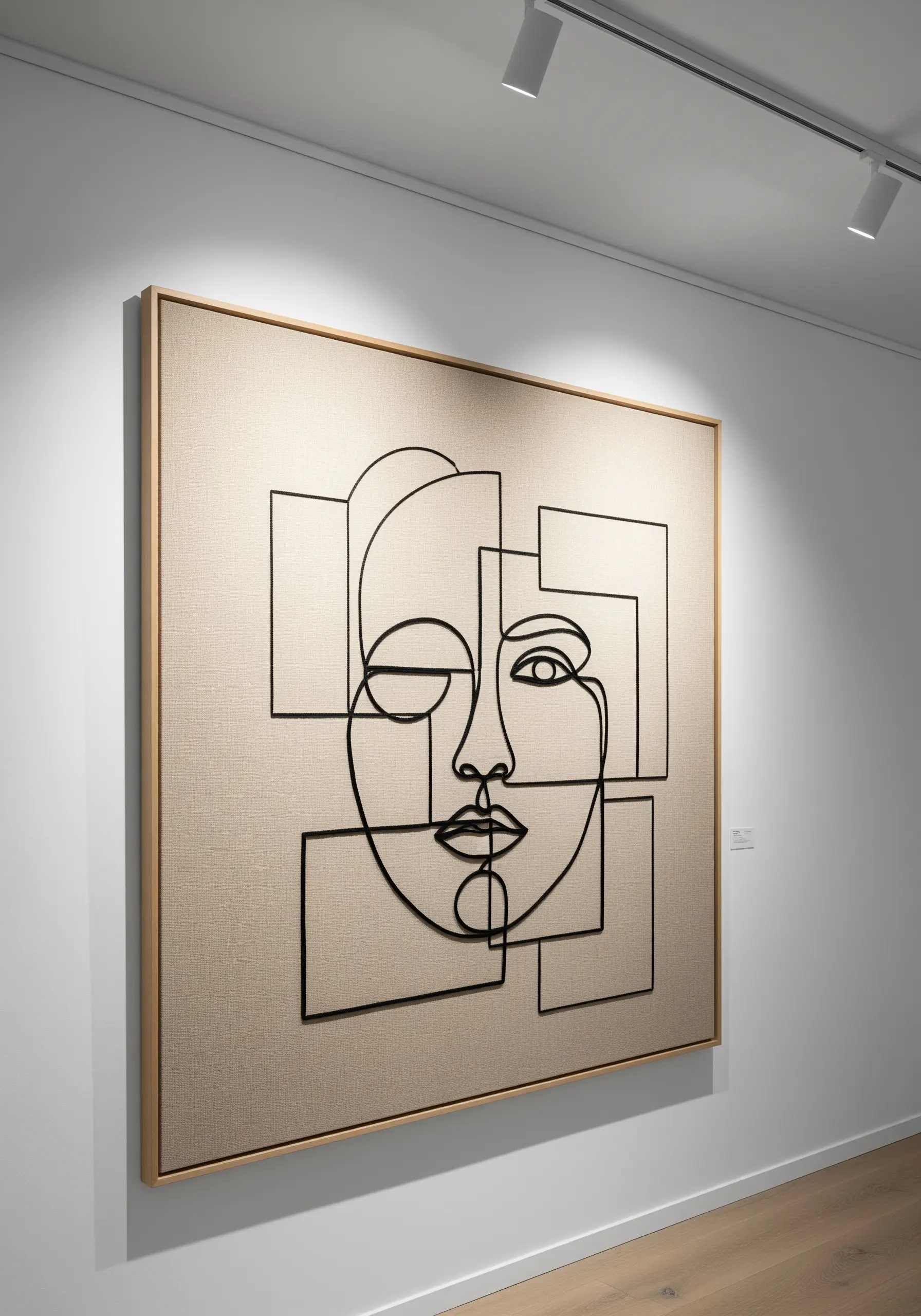
You can achieve this gallery-worthy fluidity by moving away from standard backstitch and embracing couching.
By laying down a thicker cord or heavy-weight yarn and stitching it in place with a finer, matching thread, you eliminate the jagged edges that often plague curved outlines.
This technique allows you to treat your thread exactly like an ink pen, creating continuous, unbroken facial contours that feel modern rather than crafty.
Explore modern line art thread designs for people who love simple yet emotional embroidery to master this expressive minimalism.
2. Gradient chaos mesh
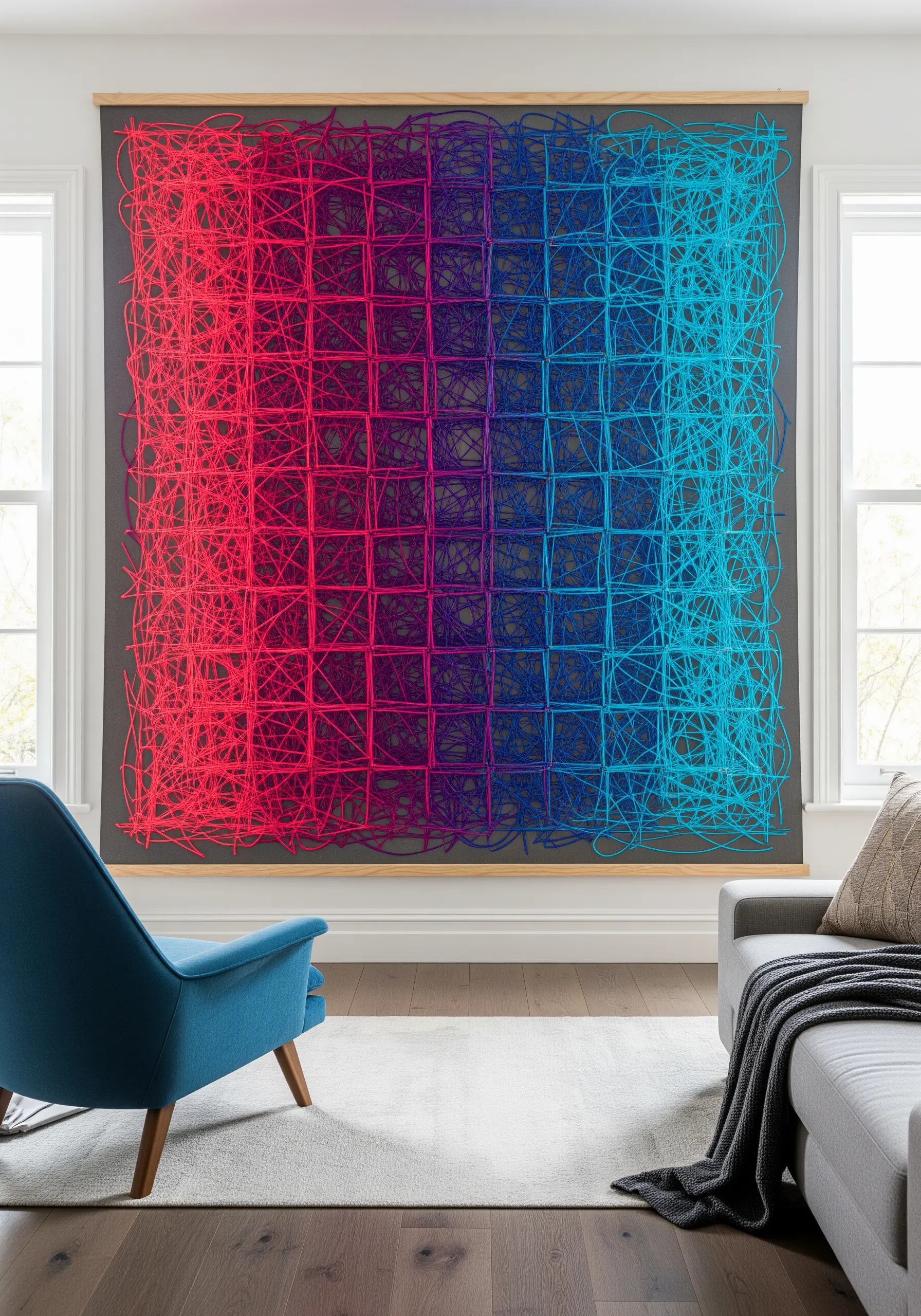
This chaotic texture works because the underlying color transition is meticulously planned.
To recreate this, do not stitch randomly; instead, layer long, straight stitches in a grid formation first, then layer the ‘scribbled’ texture on top using a lighter weight thread.
This creates depth and prevents the piece from looking like a messy mistake, ensuring the gradient reads clearly from a distance.
See how abstract thread overlapping patterns that create beautiful color chaos can transform a simple concept into a masterpiece.
3. Terra cotta relief waves
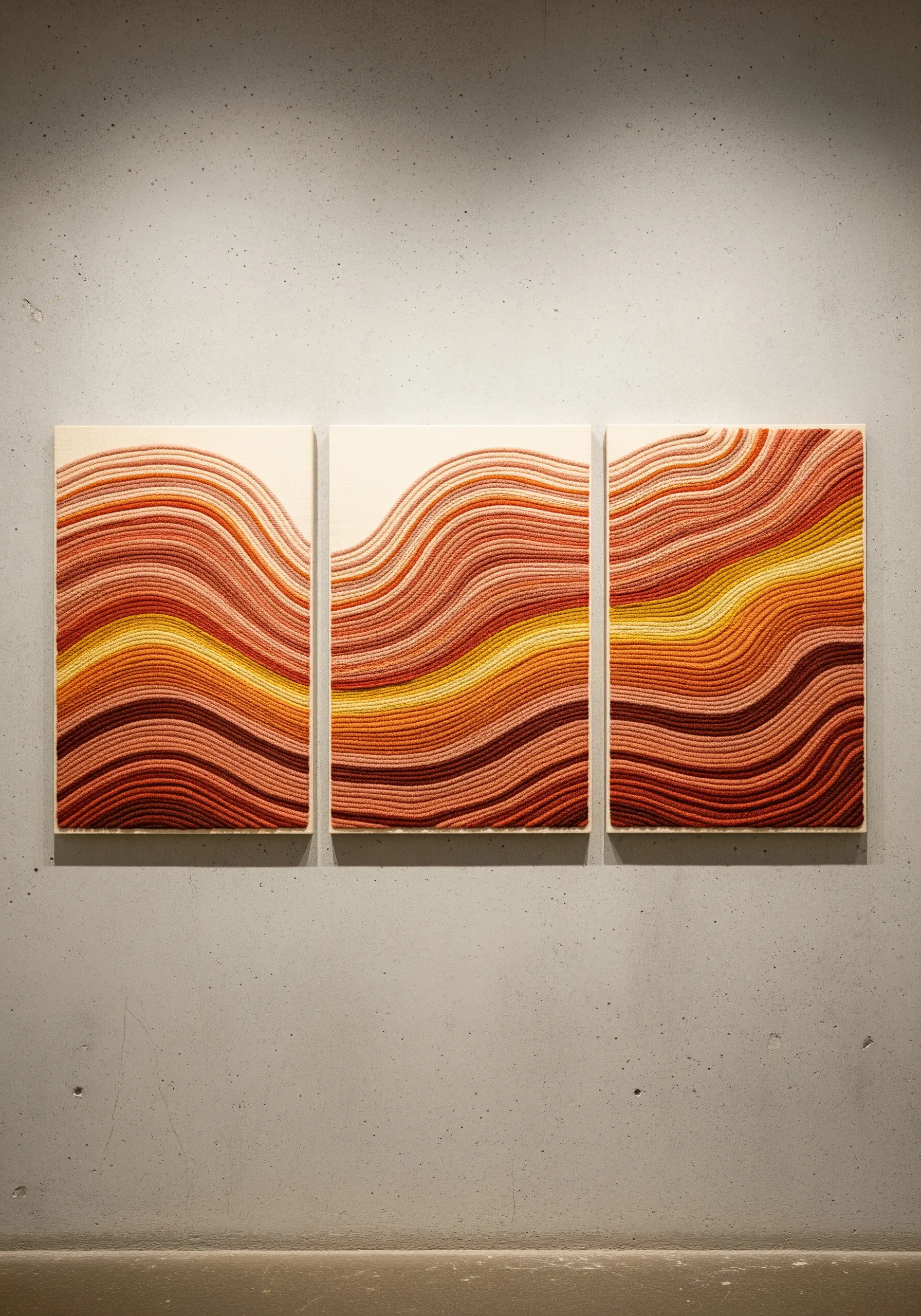
Texture is the primary language here, achieved by using thick tapestry wool or cotton rope instead of standard floss.
You must couch these thick strands side-by-side with zero gaps to create that rolling, dune-like surface.
The slight variation in color between rows adds a vibrating visual effect that makes the static image appear to move.
These textured yarn wall art techniques that will elevate your space prove that bulkier materials often yield more sophisticated results.
4. Geometric tension studies
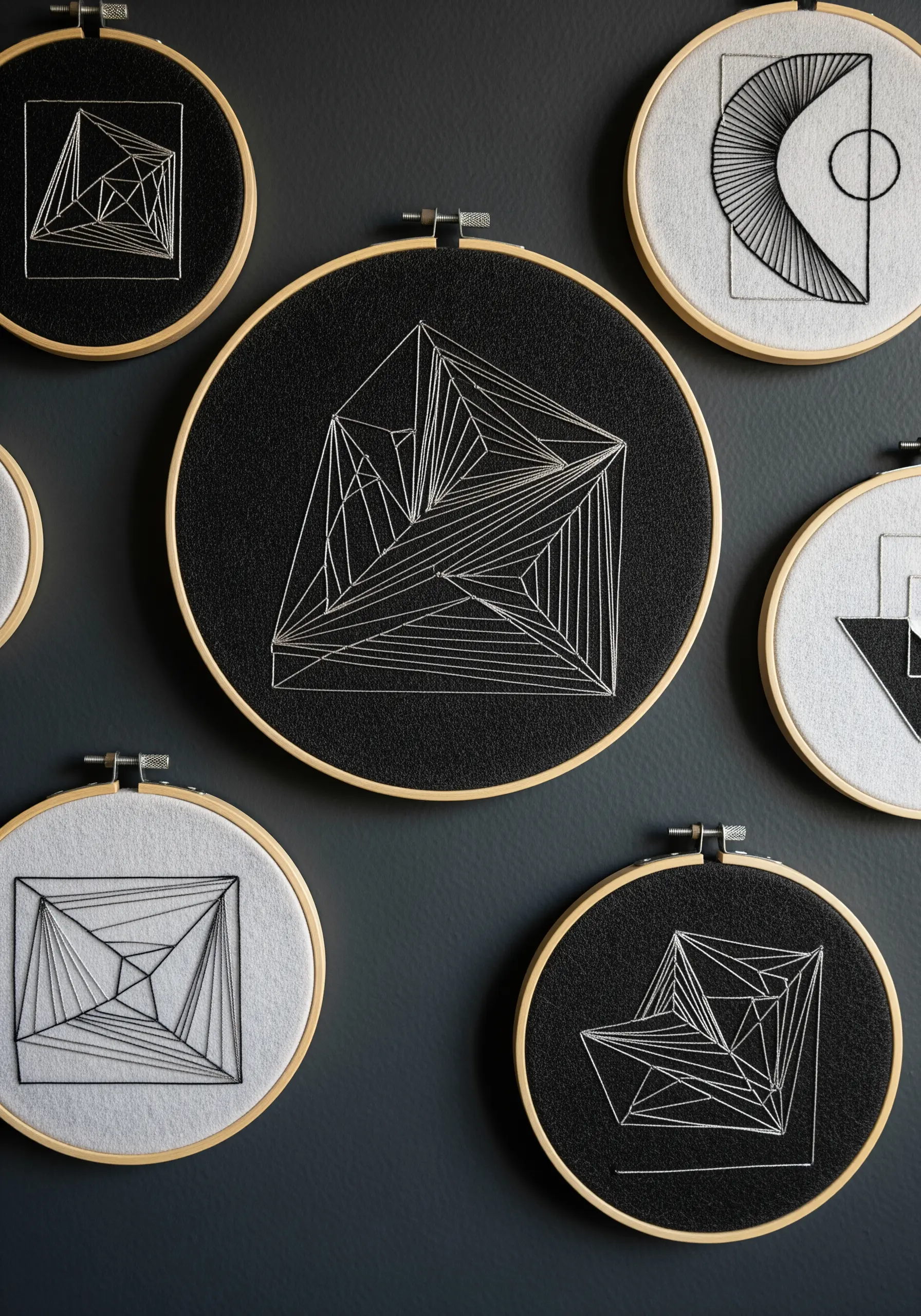
Precision is your only option with high-contrast geometry; any slack thread will ruin the architectural effect.
Use a slate frame or a very tight hoop to maintain extreme tension on the fabric while stitching long, straight spans.
For the solid shapes, a padded satin stitch ensures the black areas look like solid voids rather than flat coloring.
These geometric hoop art designs that make-a-bold-statement on walls rely entirely on the sharpness of your angles.
5. Suspended thread architecture
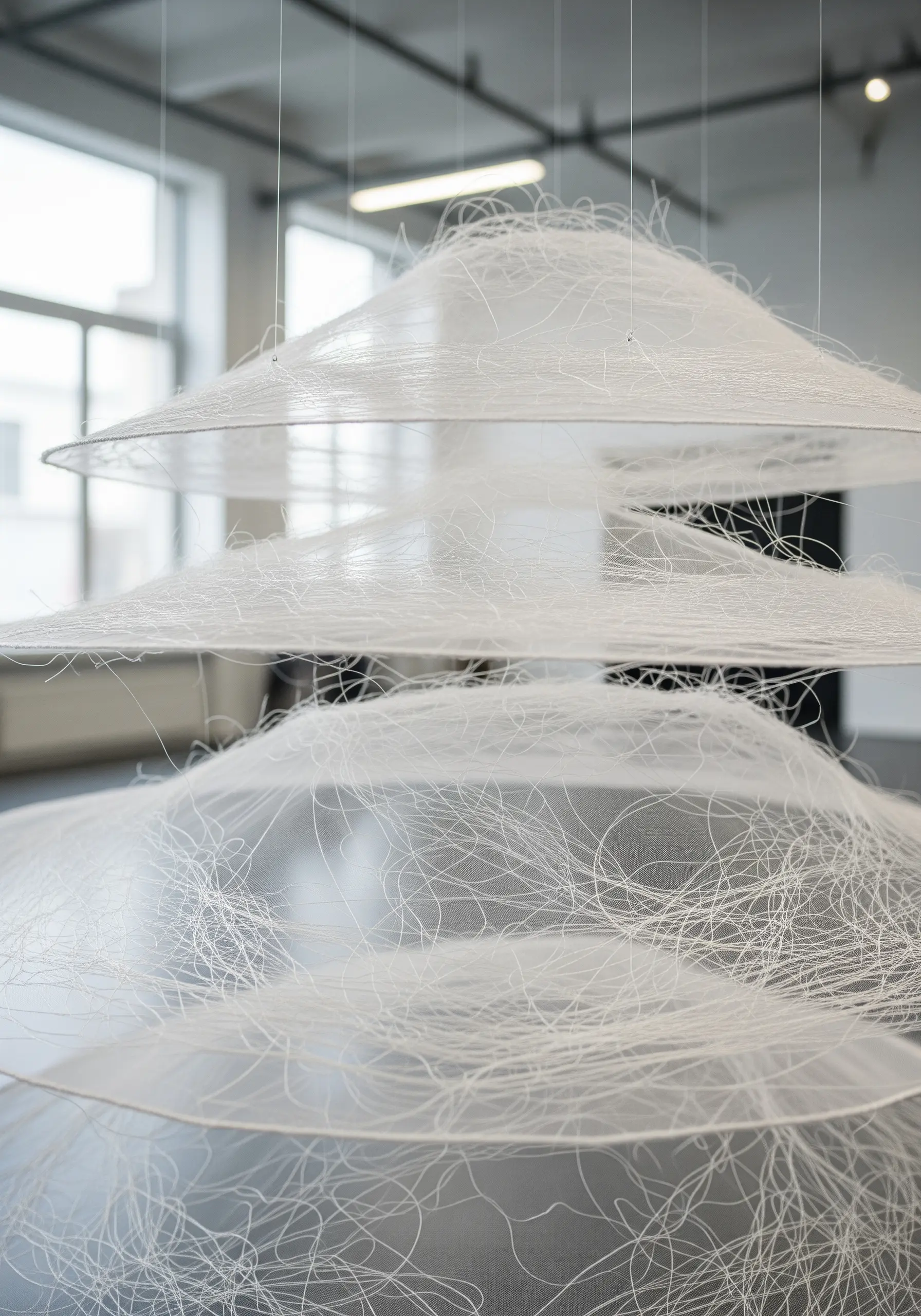
If you want to move off the fabric entirely, use water-soluble stabilizer as your base.
Stitch this netting structure heavily enough to support its own weight, then wash away the stabilizer to leave a ghostly, floating sculpture.
This requires a stiffening agent or a very dense thread network to prevent collapse once the support is removed.
Look at fiber art installations that mix light yarn and texture beautifully for structural inspiration.
6. Density-based shading
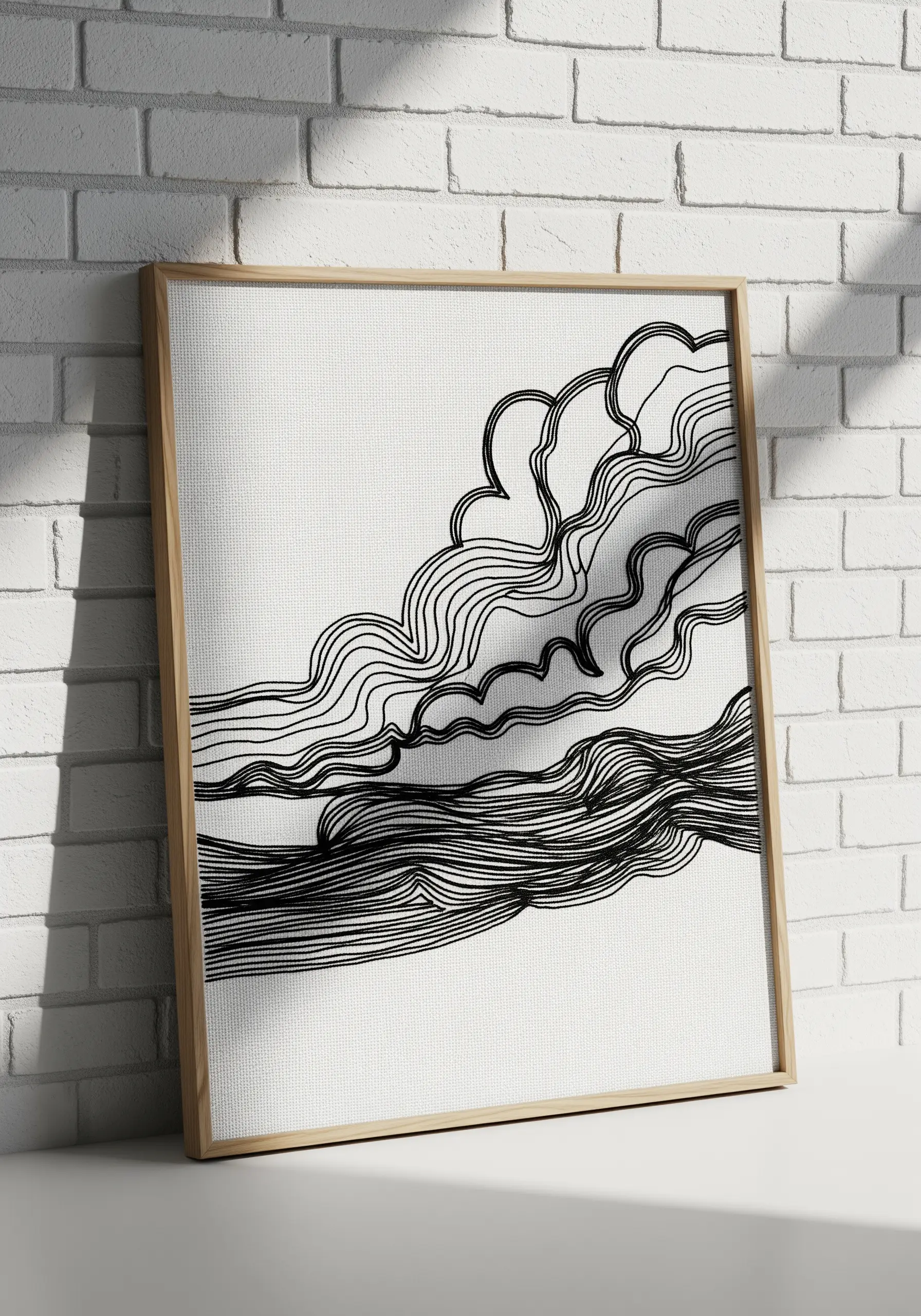
You don’t need different thread colors to create shadows; you only need to adjust the proximity of your lines.
In this landscape, the darker areas are simply lines stitched closer together, while the light areas use wider spacing.
This is etching with thread—use a single strand of black cotton for the sharpest, most ink-like definition.
These landscape embroidery wall pieces that turn fabric into painted scenery show the power of negative space.
7. The frequency gradient
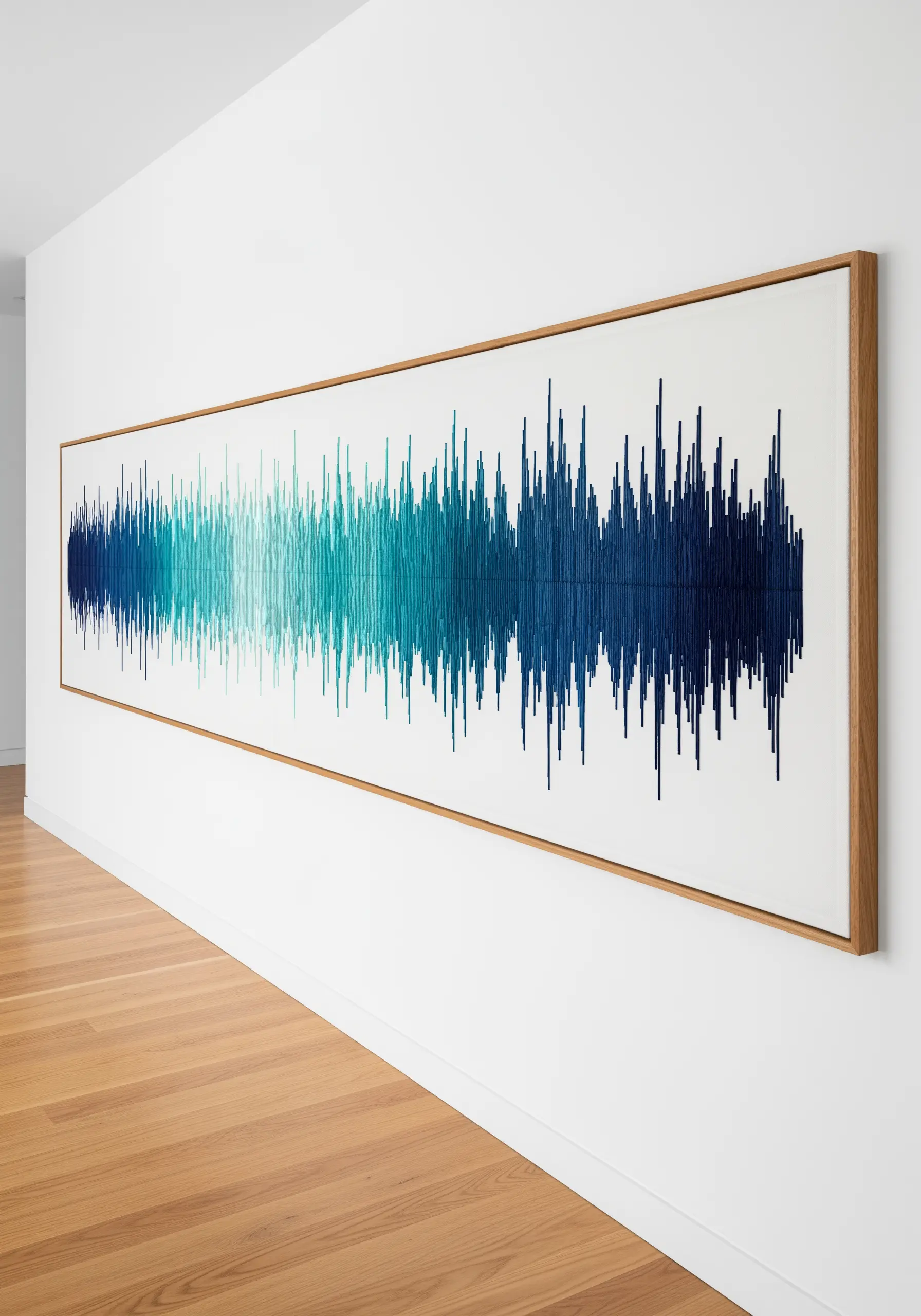
The impact of this piece lies in the vertical uniformity of the satin stitch.
You must use a laying tool (or a large tapestry needle) to stroke the threads flat as you stitch, ensuring they don’t twist over each other.
The color blending works best when you interlock the stitch ends slightly, rather than creating hard blocks of color.
For similar effects, abstract thread-based gradient pieces that Pinterest users can’t stop saving offer endless palette ideas.
8. Mixed media botanical wash

Embrace the unpredictability of watercolor paints on canvas before you even thread your needle.
Let the paint dry completely, then use a double-strand of black thread to sketch the floral outlines loosely, intentionally missing the color boundaries.
This misalignment creates an artistic, sketchbook aesthetic that looks effortless rather than rigid.
Try wild garden floral embroidery ideas that look like watercolor paintings on fabric to merge painting and stitching.
9. Radial perfection
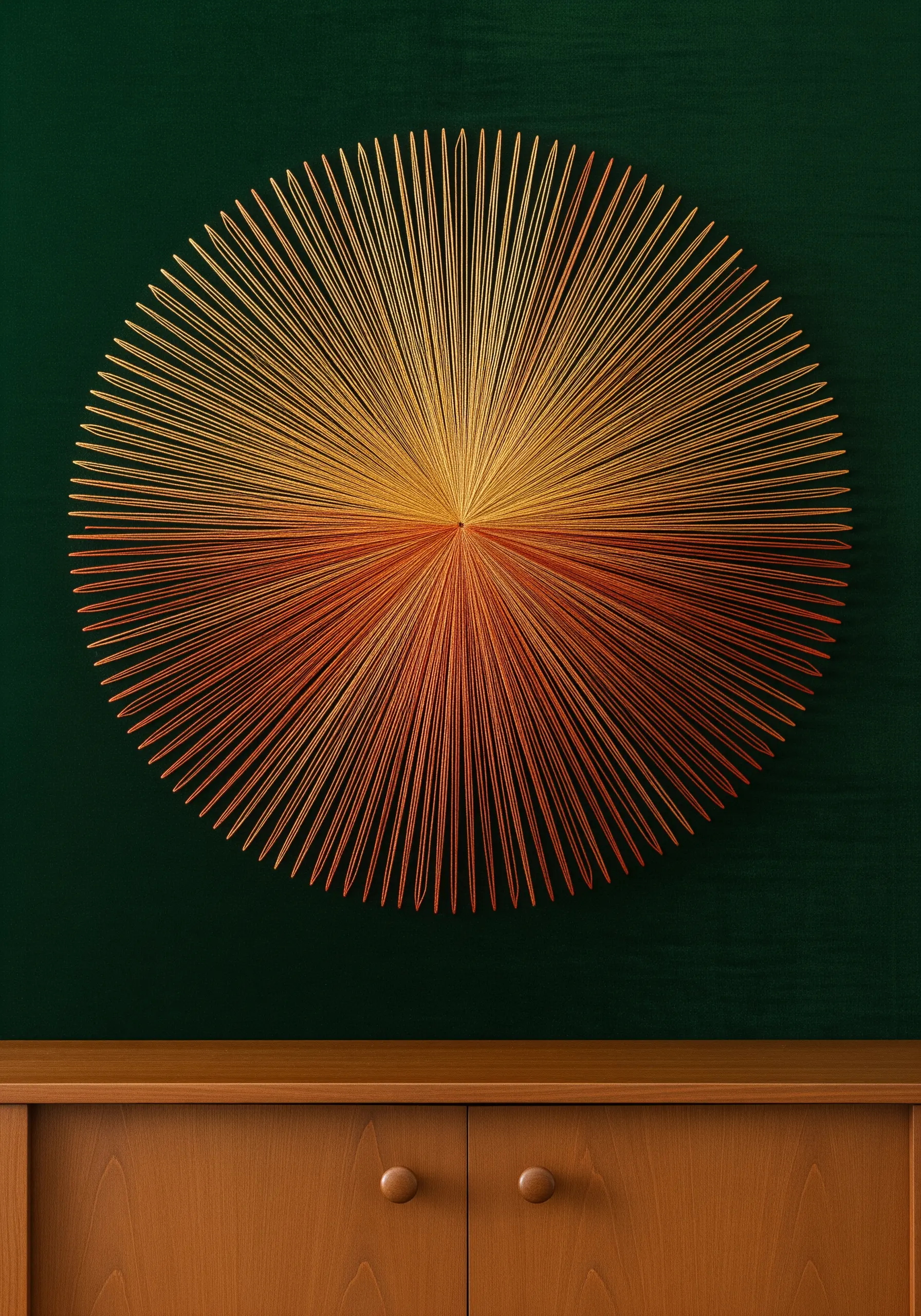
The challenge with radial designs is the congestion of thread in the center hole.
To avoid a bulky lump in the middle, plunge your needle slightly adjacent to the center point for every other stitch, or use a metal ring in the center to keep the threads spaced.
The gradient effect is achieved by changing thread shades every 15-20 degrees.
Such modern mandala stitch patterns for calm mindful aesthetic daily crafting require patience and precise spacing.
10. Architectural blueprint stitch
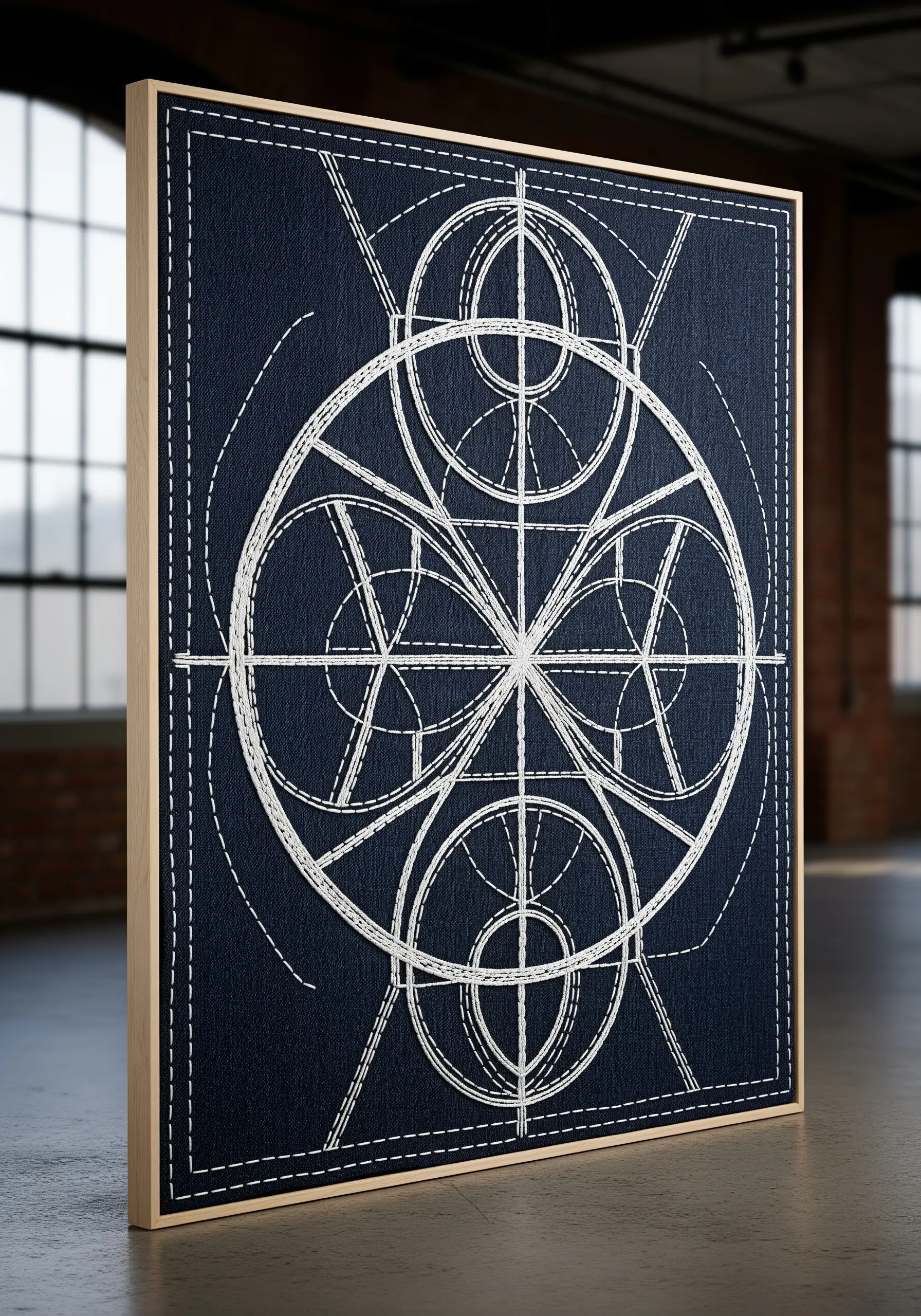
Using a running stitch on a dark background mimics the clean, technical look of a blueprint.
Keep your stitch length strictly consistent; a 3mm stitch with a 2mm gap is a good ratio for readability.
Use a white gel pen to map out your geometry on the navy fabric before stitching to ensure perfect symmetry.
These minimalist embroidery art pieces you’ll want to frame immediately rely on high contrast and mathematical precision.
11. Ribbon and thread fusion
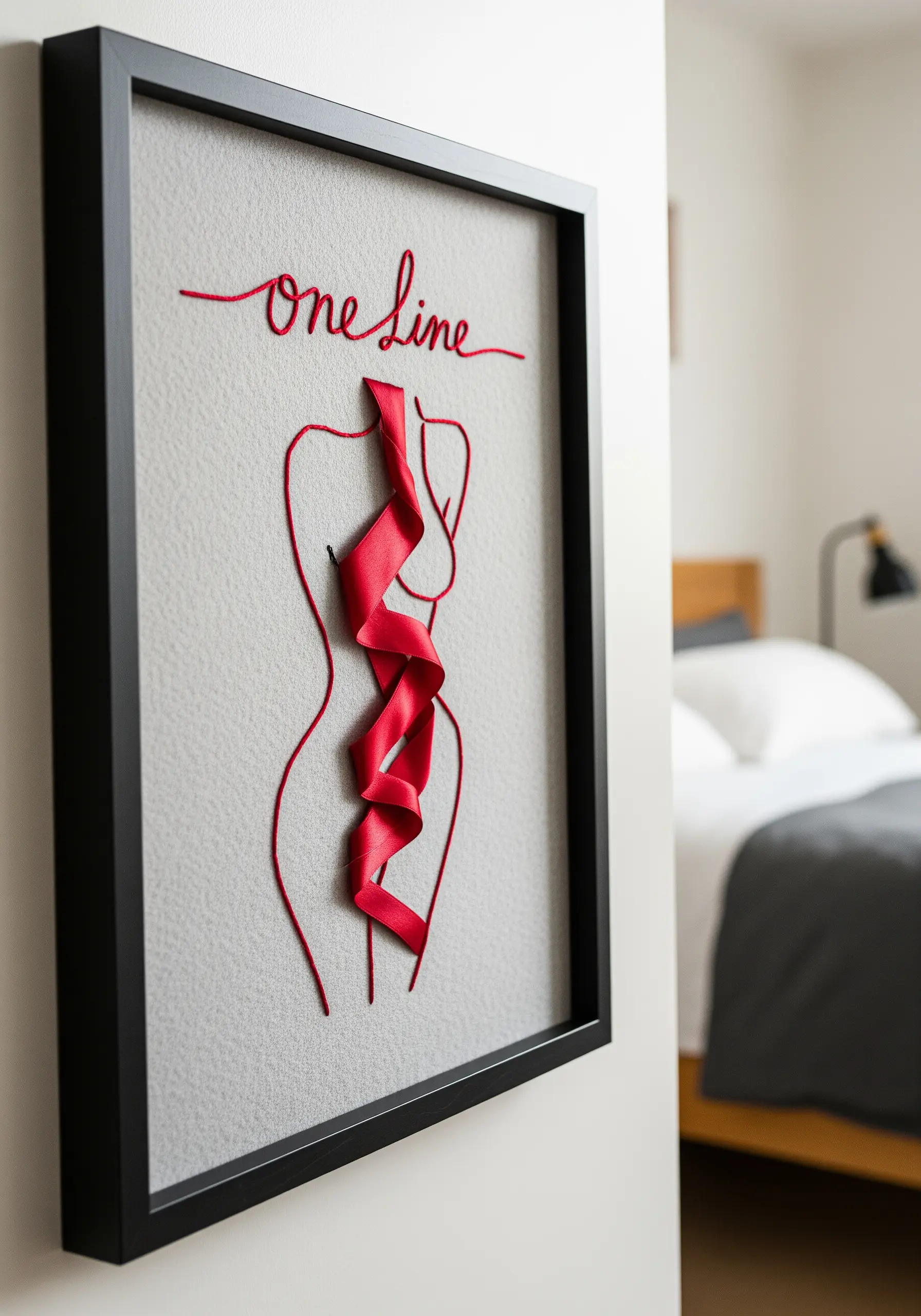
Elevate a simple line drawing by introducing a secondary medium like satin ribbon.
Tack the ribbon down at irregular intervals to create folds and volume, mimicking the fluidity of the stitched line.
Ensure the red thread matches the ribbon’s dye lot exactly to maintain visual continuity between the flat and 3D elements.
Consider floral inspired ribbon embroidery ideas for textured petals and 3d statement pieces to expand your mixed-media skills.
12. The serial repetition
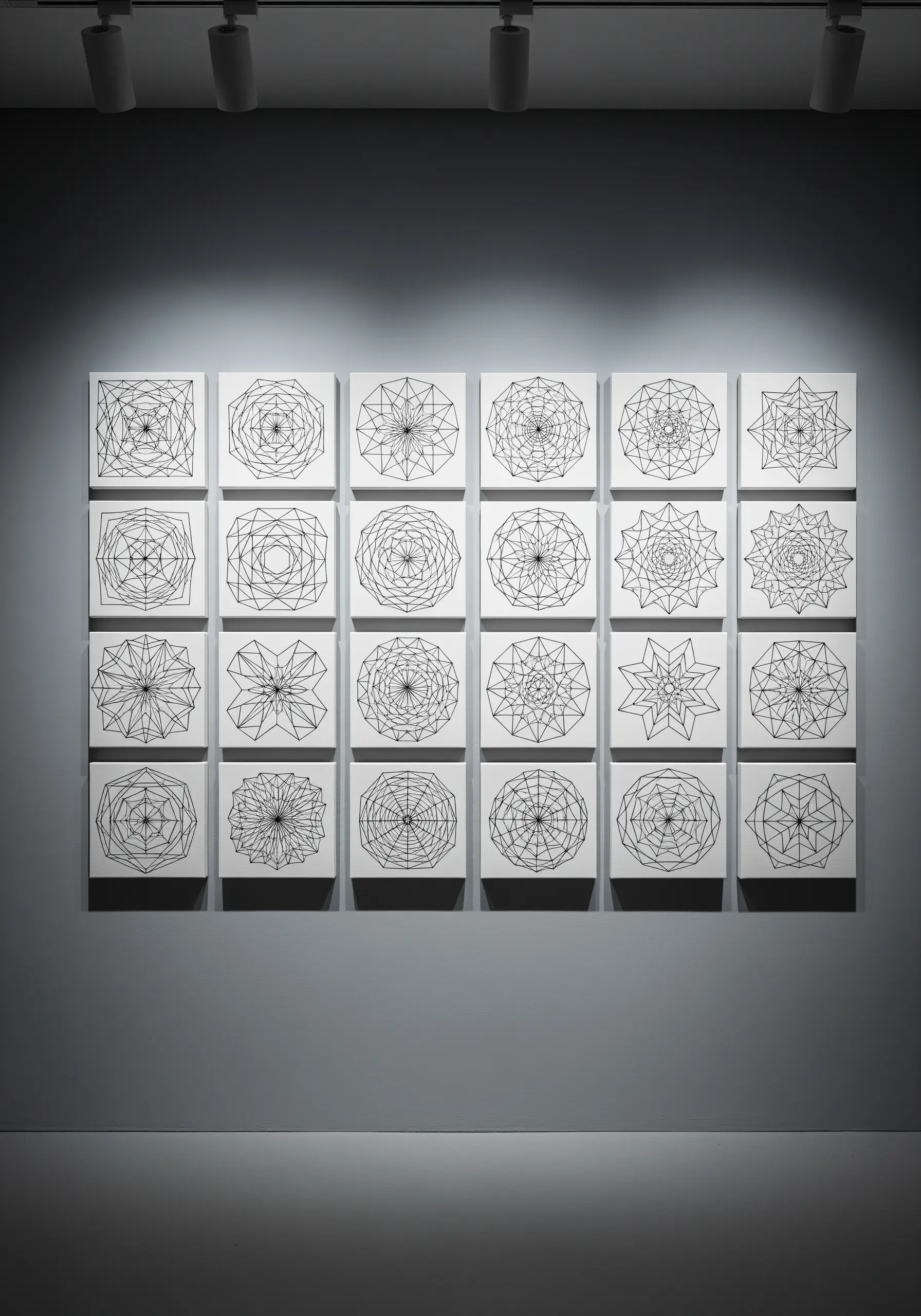
The power of this artwork isn’t in one complex design, but in the disciplined repetition of many.
Create a master template on paper first, then prick holes through it to transfer the exact dots to each canvas.
This ensures that while the internal web patterns vary, the external dimensions remain identical for a cohesive gallery wall.
Explore small hoop mandala patterns to calm your mind through stitching to start your own series.
13. Knotted relief texture
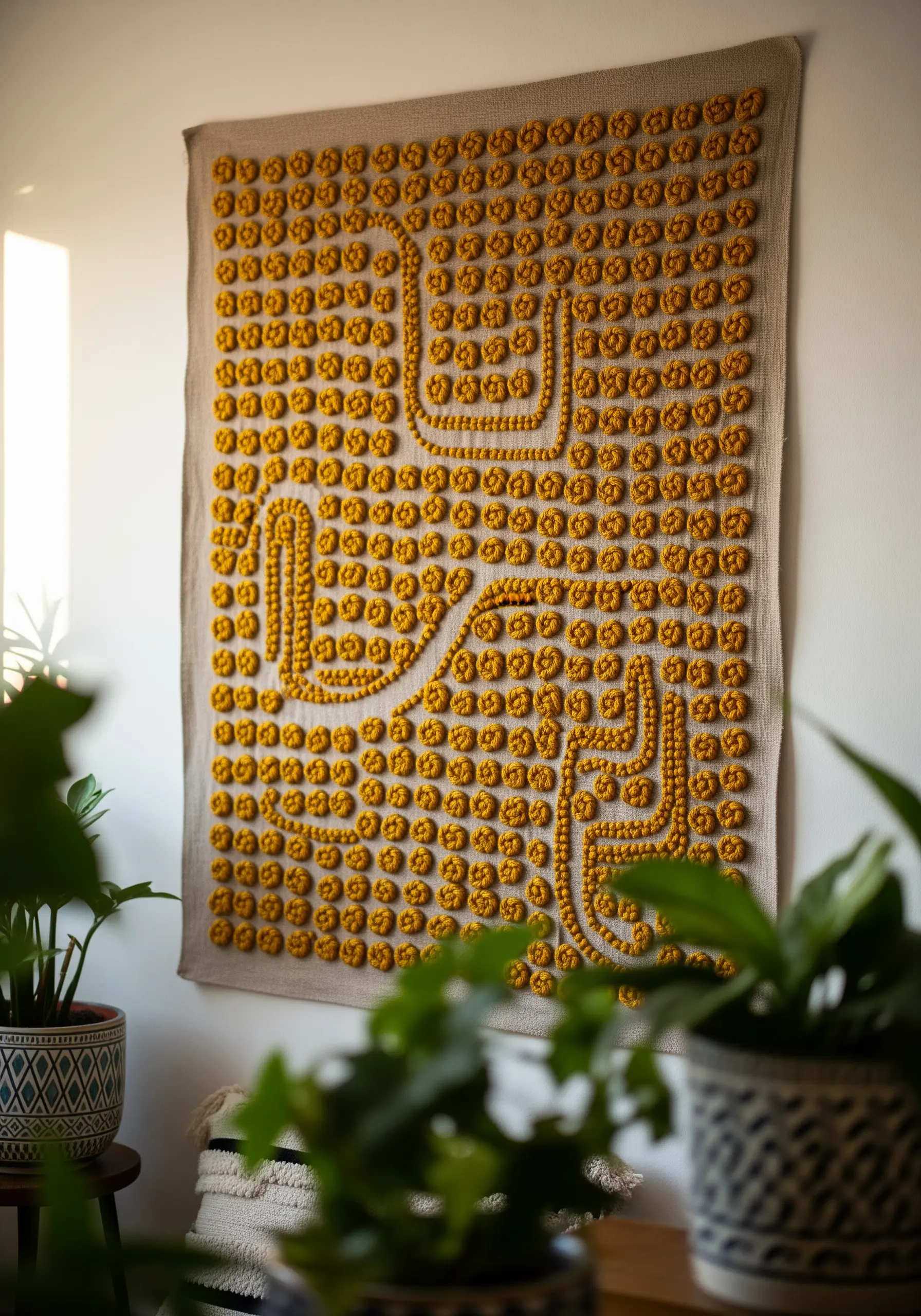
You can sculpt fabric by densely packing French knots and bullion knots.
Don’t just place them randomly; arrange them in directional flows or clusters to guide the viewer’s eye.
Varying the number of wraps in your knots (from 2 to 4) creates undulation and depth within the monochromatic palette.
These organic texture embroidery designs that look harder than they are transform flat fabric into tactile surfaces.
14. Primary linear intersection
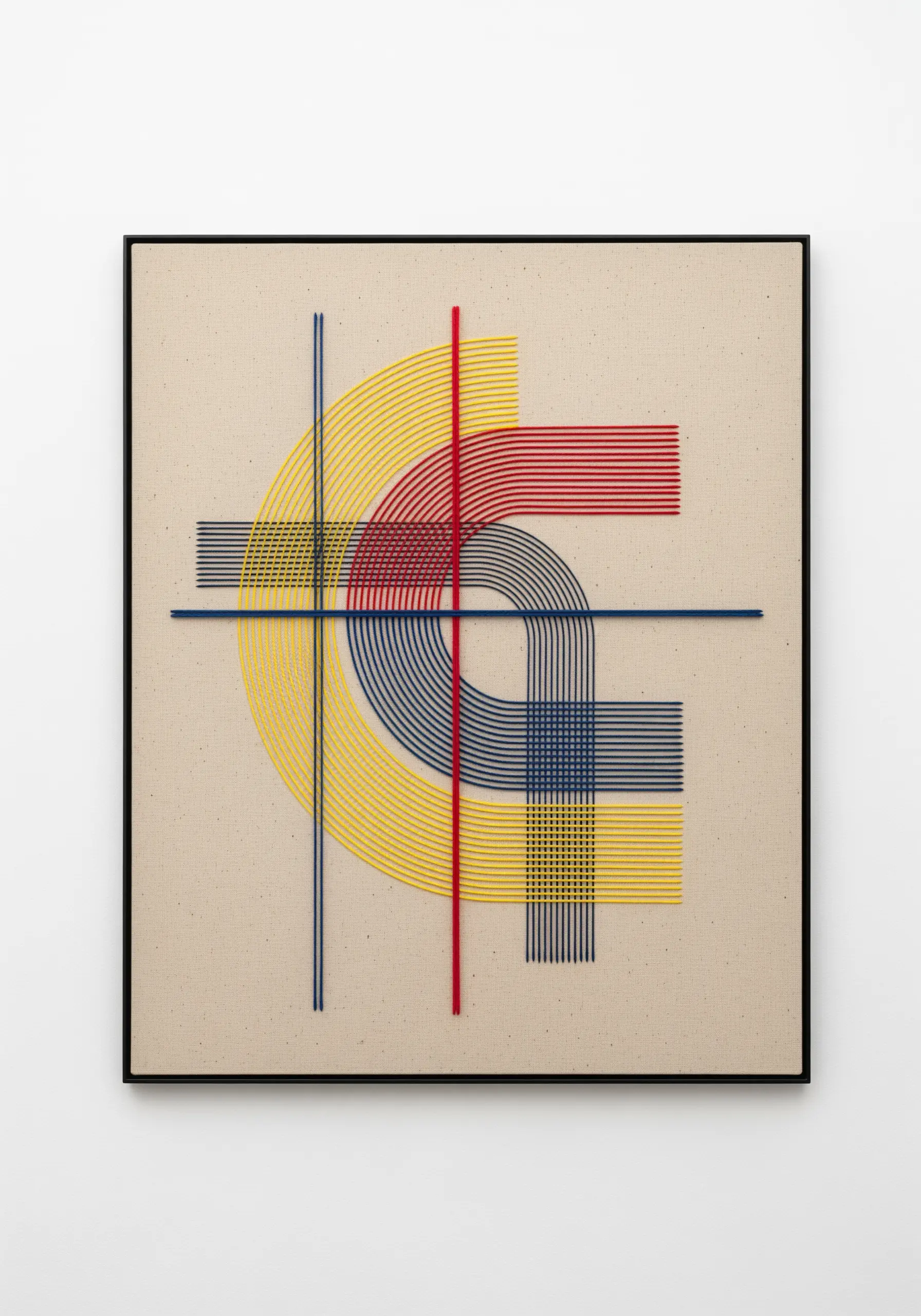
When creating long spans of thread like this, ‘laid work’ is essential to prevent sagging.
If the span is too long, use a tiny, invisible couching stitch with a single strand of matching thread to anchor the long lines in the middle.
The interplay of primary colors works because the lines are distinct and don’t muddy each other.
Such minimalist embroidery wall art styles that make small bedrooms look bigger instantly utilize crisp lines to open up a space.
15. Controlled scribble density
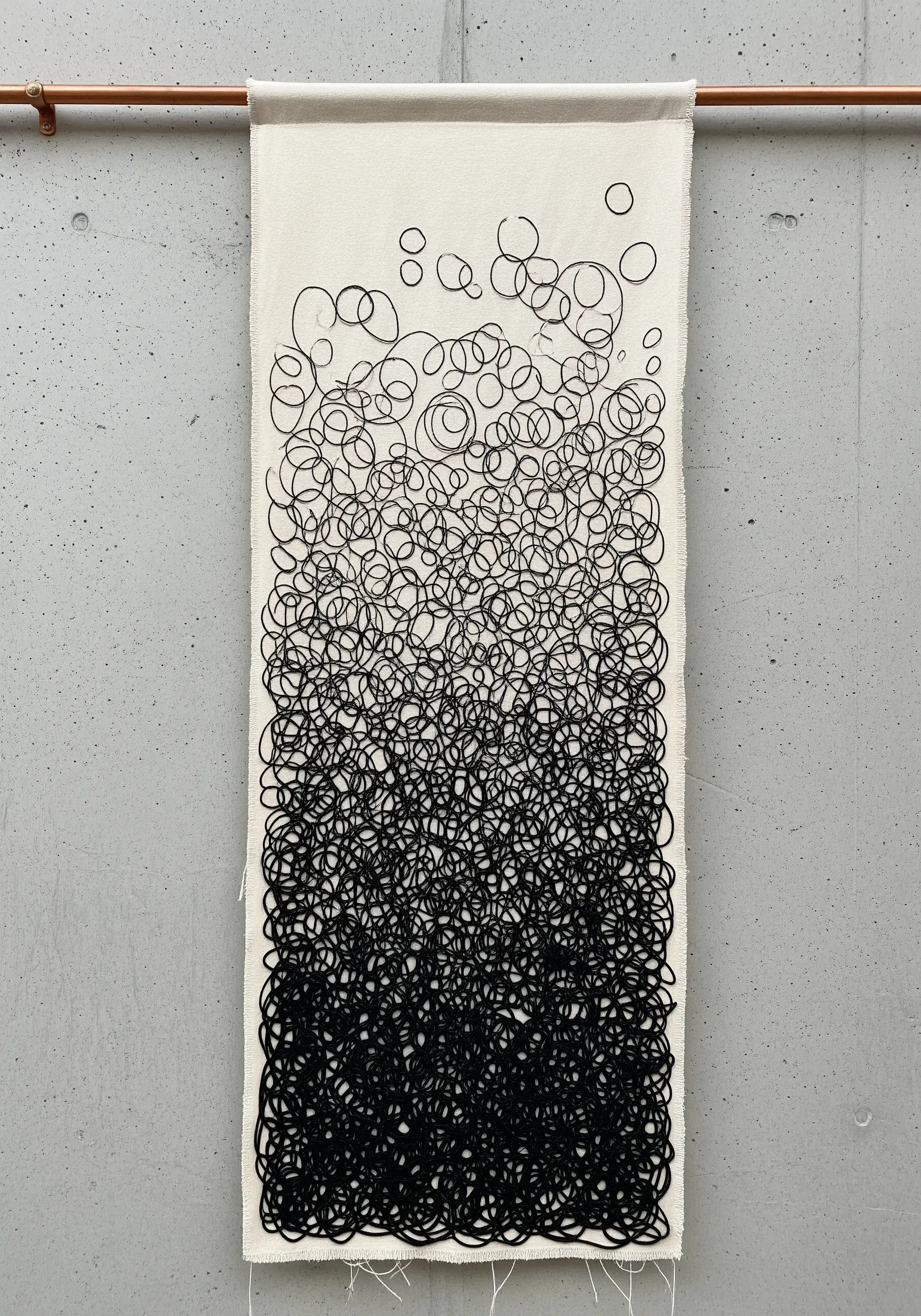
This is not random scribbling; it is a calculated study in density.
To achieve the gradient, you must overlay your looping backstitches heavily at the bottom and gradually increase the open space between loops as you move up.
Use a matte cotton thread rather than shiny rayon to keep the look modern and graphic like an ink drawing.
Check out abstract freeform stitching ideas for when you don’t want to follow a pattern.
16. Optical distortion grid
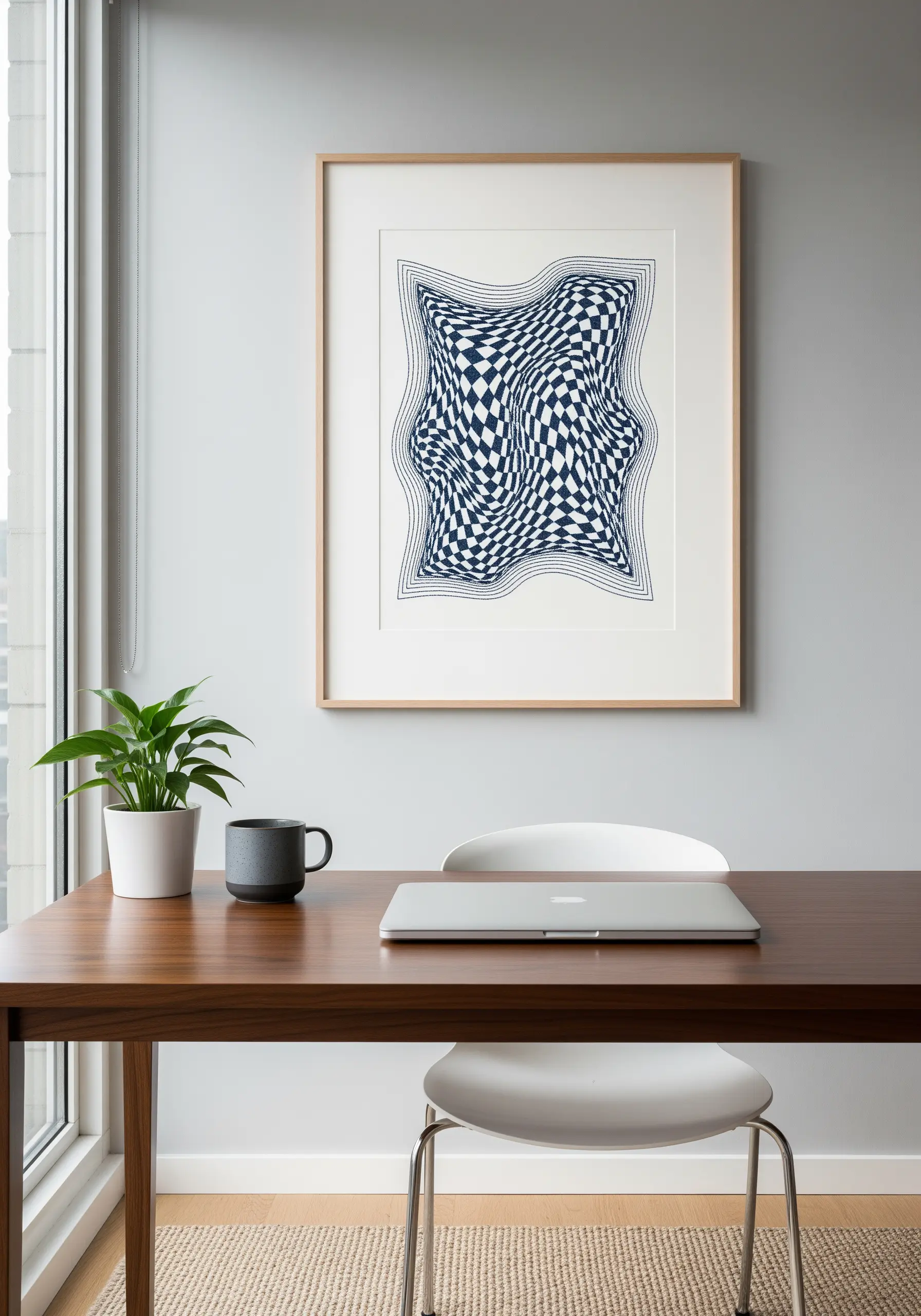
The illusion of depth comes from curving the grid lines while keeping the fill stitches straight.
Draw your distorted grid on the fabric first, then fill the ‘black’ squares with horizontal satin stitch.
The contrast between the curved outline and the straight fill threads enhances the warping effect.
Mastering modern thread illusion techniques that make flat fabric look deep and textured creates an interactive visual experience.
17. The woven transparency
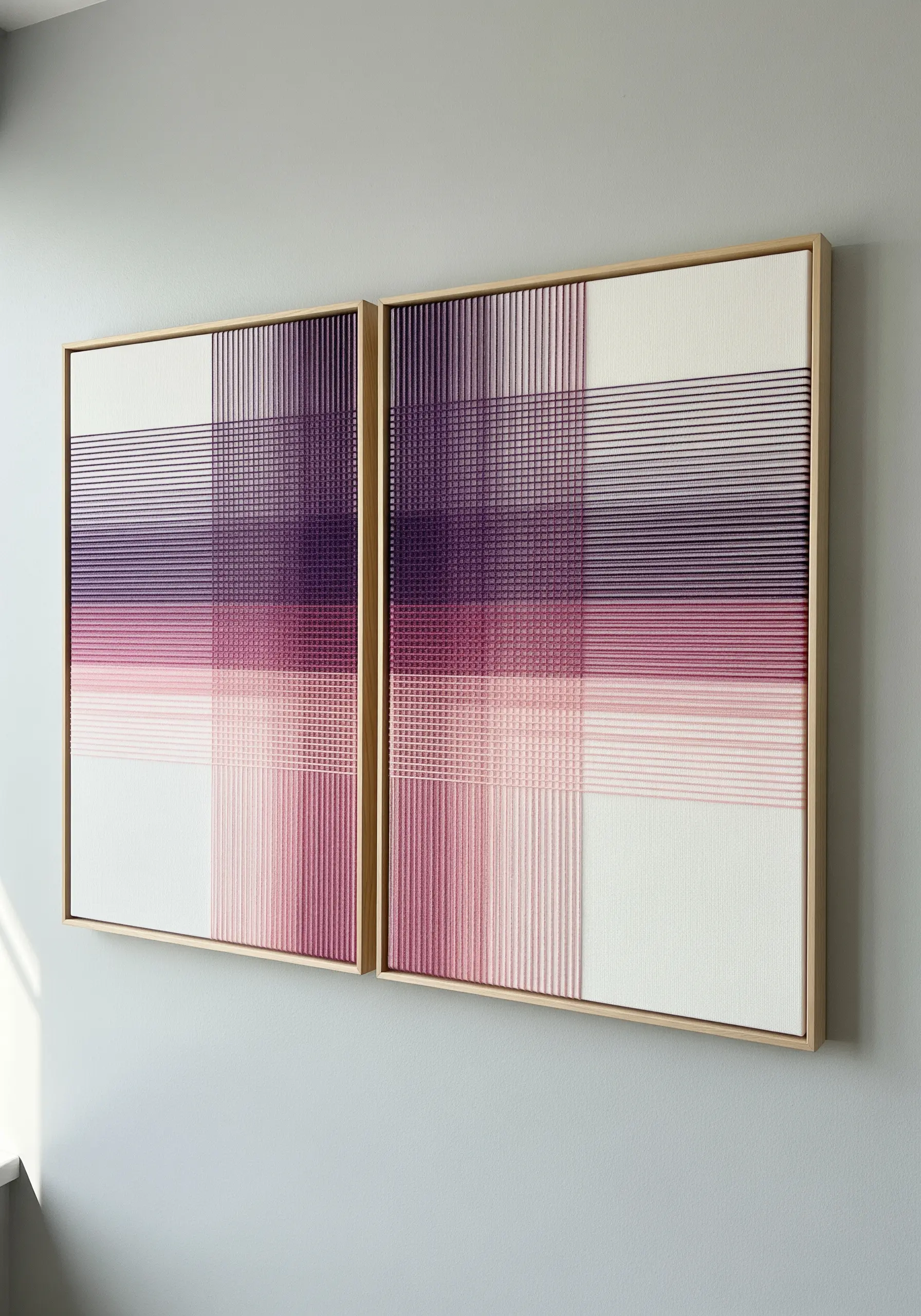
To replicate this transparency, you aren’t actually stitching *through* the fabric, but layering long spans over it.
Create the vertical purple layer first, then lay the horizontal pink layer on top.
The eye blends the crossing points into a new color, mimicking the physics of light and transparency.
For more depth, contemporary thread sculptures using layering techniques to create 3d shadow effects are the next step.
18. Raw fiber contrast
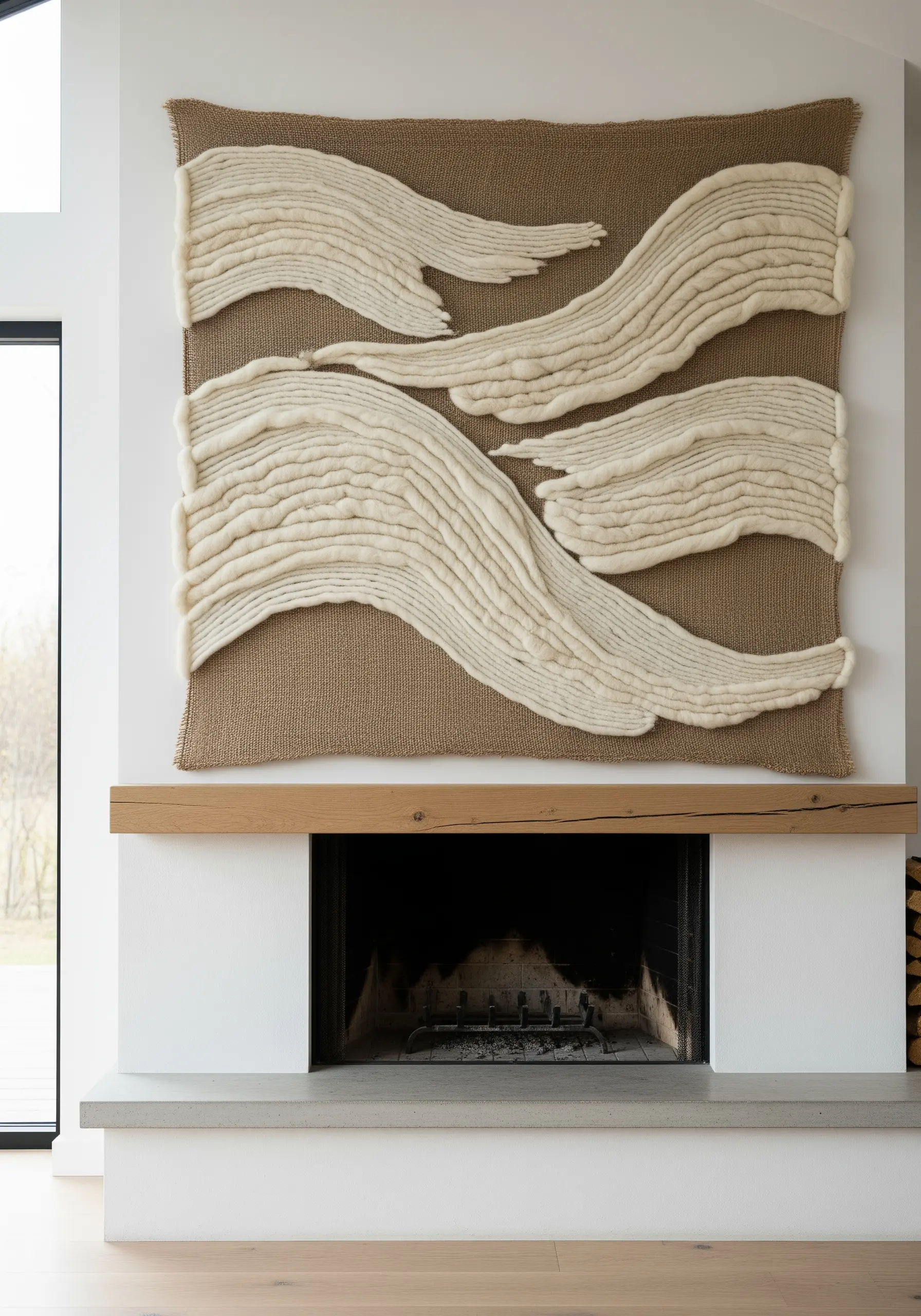
The sophistication here comes from the contrast between the rough burlap base and the soft, unspun wool roving.
Do not pull the wool through the burlap; instead, lay it on top and couch it down with a thin, invisible thread.
This preserves the fluffiness and volume of the wool, which would be destroyed if you tried to pull it through the fabric weave.
These stunning yarn wall art projects you can finish in a weekend offer high impact for minimal time.
19. Constellation mapping
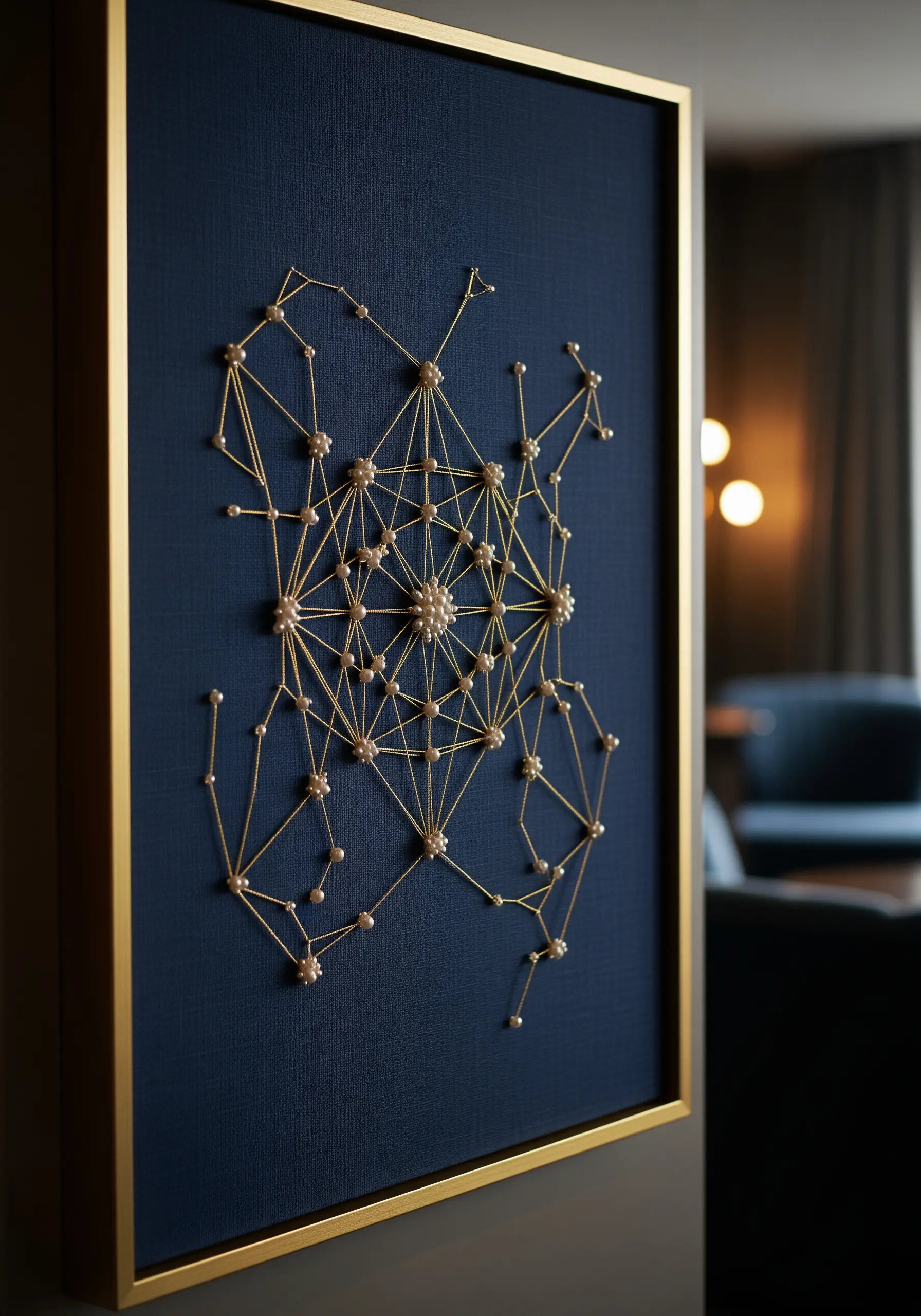
This geometric web relies on distinct anchor points—use beads or French knots as the ‘stars’.
Connect these points with single strands of metallic gold thread to create the delicate lattice.
The dark blue background is crucial; it pushes the gold forward, making the fine lines legible.
Try these dreamy galaxy string art concepts to transform basic threads into cosmic embroidery art.
20. The digital glitch portrait
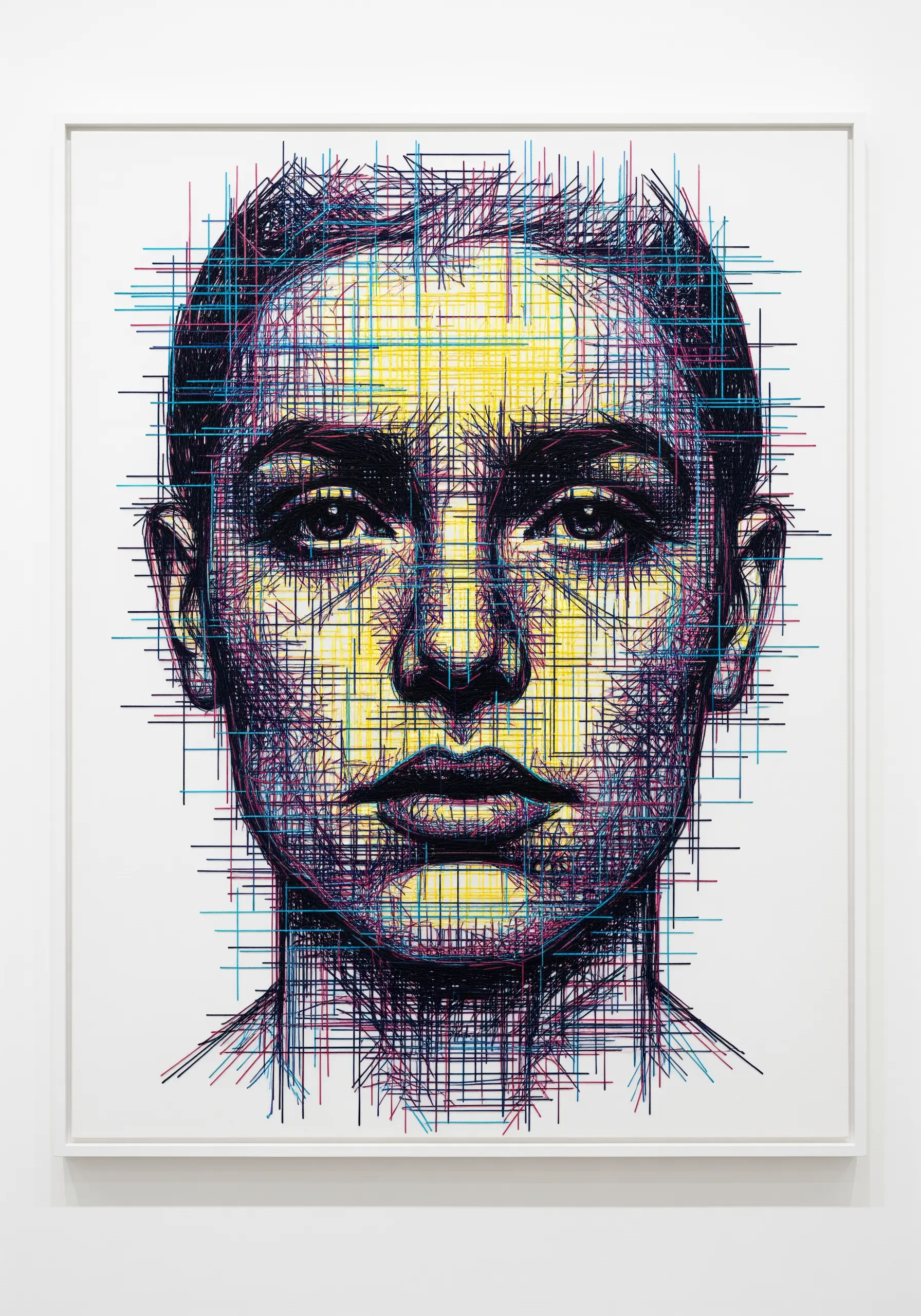
You can mimic digital distortion by treating your thread like pixels.
Use horizontal satin stitches exclusively, abruptly switching colors (cyan, magenta, yellow, black) to create the ‘noise’ lines that cut through the face.
Keep the edges of these glitch lines sharp to contrast with the organic curves of the facial features.
This style of line art portrait embroidery ideas for beginners who love modern minimal aesthetics bridges the gap between tech and craft.
21. The chain stitch spiral

A simple chain stitch becomes mesmerizing when repeated on a massive scale.
Start from the absolute center and work outward in a continuous spiral, changing thread shades gradually to create the green gradient.
The texture of the chain stitch catches the light, adding a physical rhythm to the color shift.
Even minimalist hoop art pieces that look like museum prints but use only two stitches can dominate a room through repetition.
22. Deconstructed patchwork
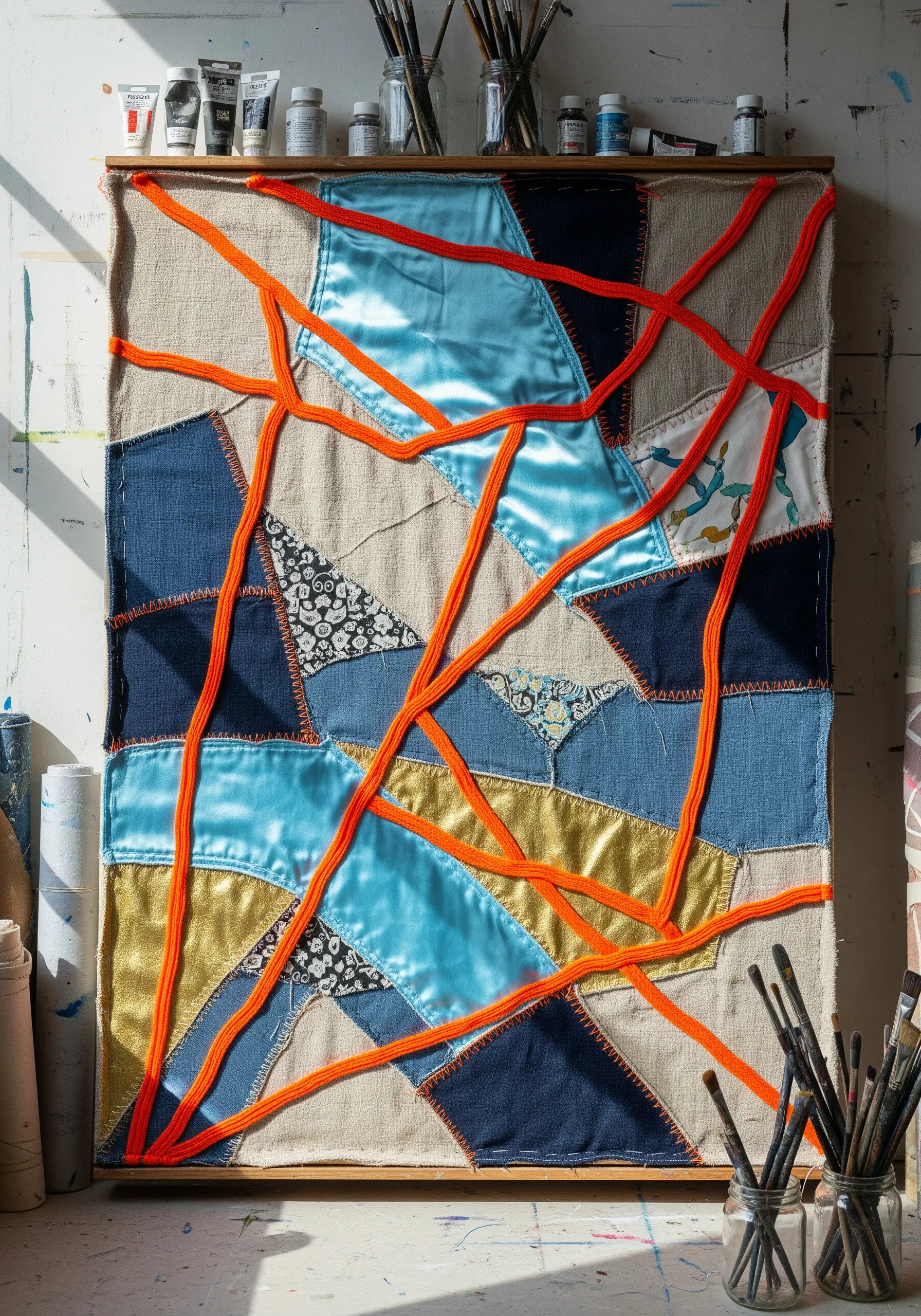
Stop trying to hide your seams; highlight them.
Arrange raw-edged fabric scraps and couch thick, bright orange yarn directly over the join lines.
This turns the structural necessity of holding the fabric together into the primary visual feature of the artwork.
Such abstract patchwork embroidery mashup ideas for bold statement pieces celebrate the construction process.
23. The transparent window

Working on organza or silk mesh requires impeccable neatness, as there is nowhere to hide knots.
You must weave your thread tails back into the stitched lines or use a ‘waste knot’ technique that gets trimmed away.
The result is a tattoo-like effect where the embroidery appears to float in mid-air.
These botanical hoop embroidery projects that look stunning in sunlit windows rely on a clean reverse side.
24. Directional light blocking
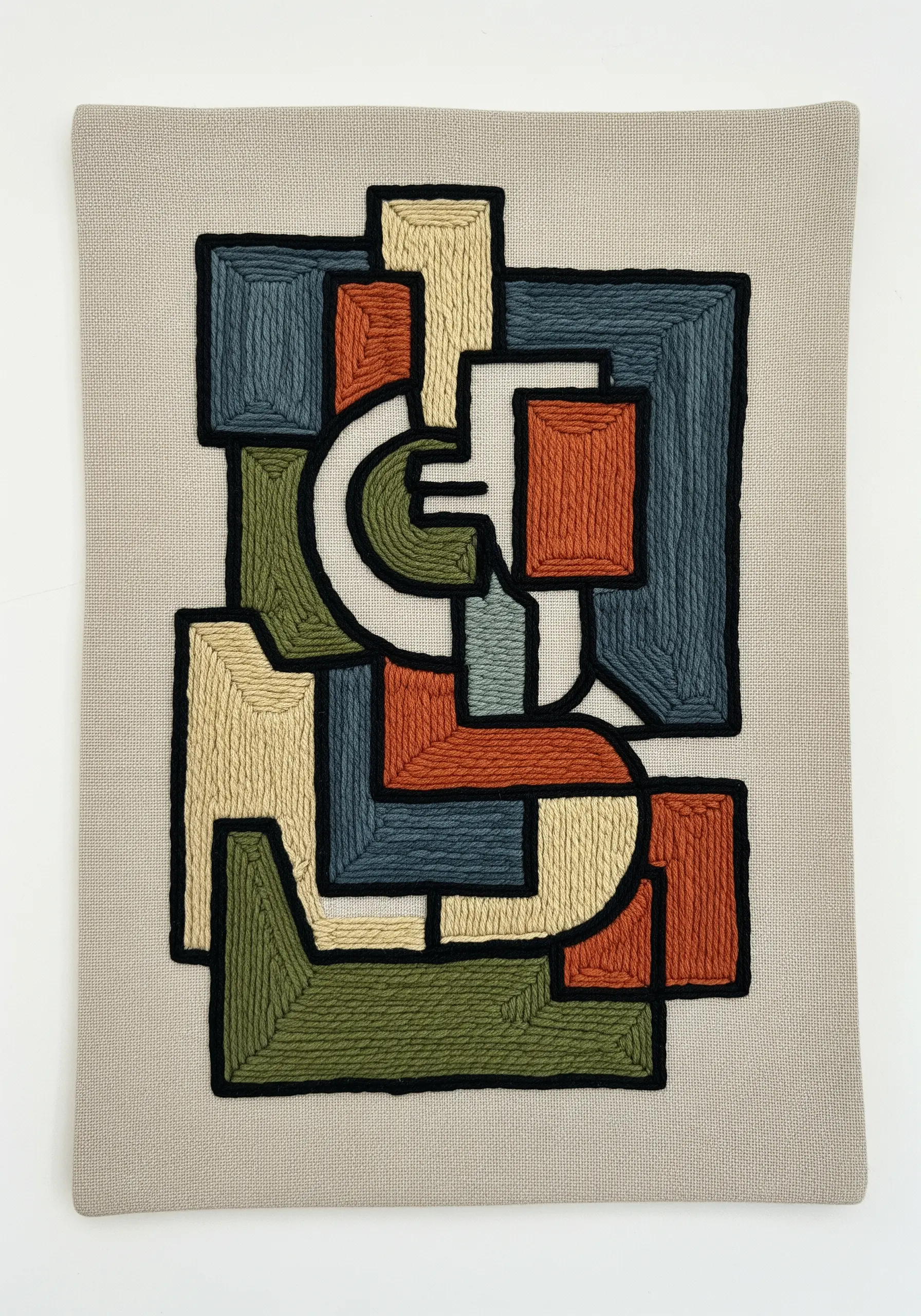
Even with a limited palette, you can create distinct shapes by changing the angle of your satin stitch.
Stitch one geometric block vertically and its neighbor horizontally; the light will hit the threads differently, separating the shapes.
This creates a subtle, sophisticated texture that changes as you walk past the artwork.
Use abstract shapes for pillow covers that look like boutique decor to practice this directional technique.
25. Electric soundwaves
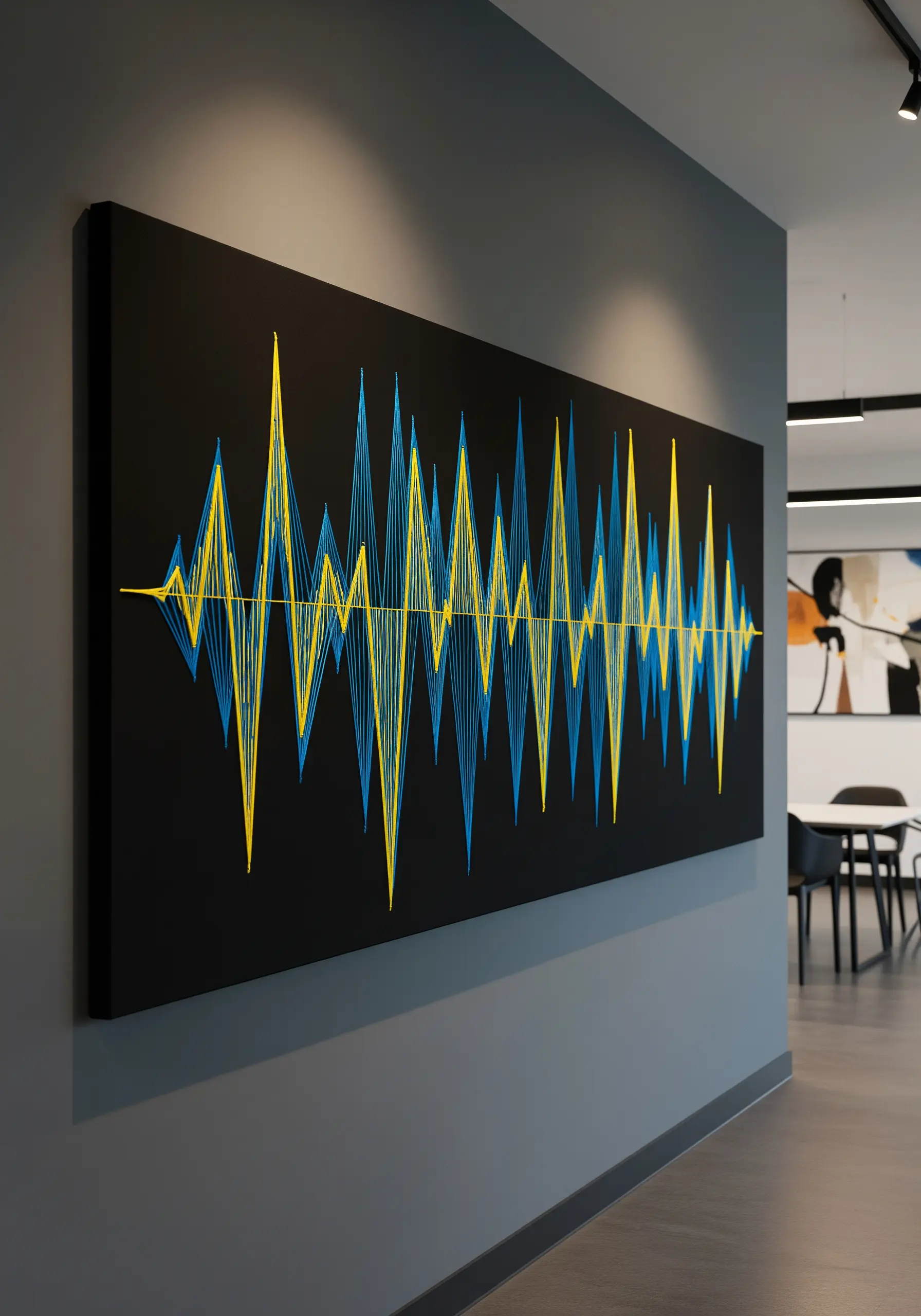
To make the yellow and blue pop against the black, use a split stitch for the outlines.
Split stitch creates a slightly raised, solid line that holds its shape better than a backstitch on sharp peaks and valleys.
Keep the tension high to ensure the ‘spikes’ remain straight and aggressive.
Designs like modern neon on black thread art ideas that glow under UV lights maximize color impact.
26. Found object suspension
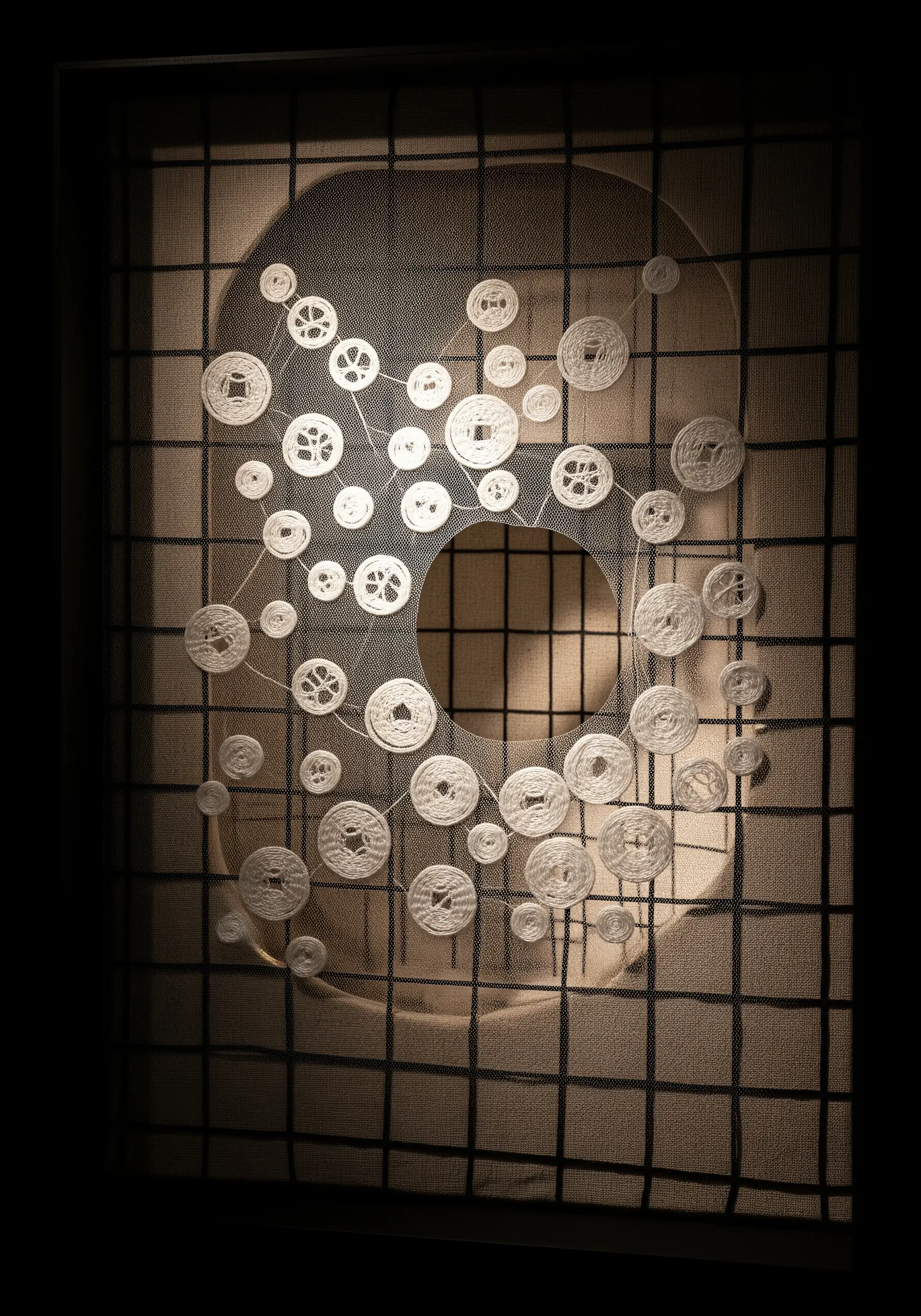
Embroidery isn’t limited to thread; use a sturdy mesh base to anchor heavier objects like buttons or washers.
Stitch *around* the objects to create a web that holds them in suspension, playing with the tension between the delicate thread and the hard objects.
This moves your work from craft into assemblage art.
Create unique DIY art objects that showcase your personal style by incorporating non-textile materials.
27. The continuous labyrinth
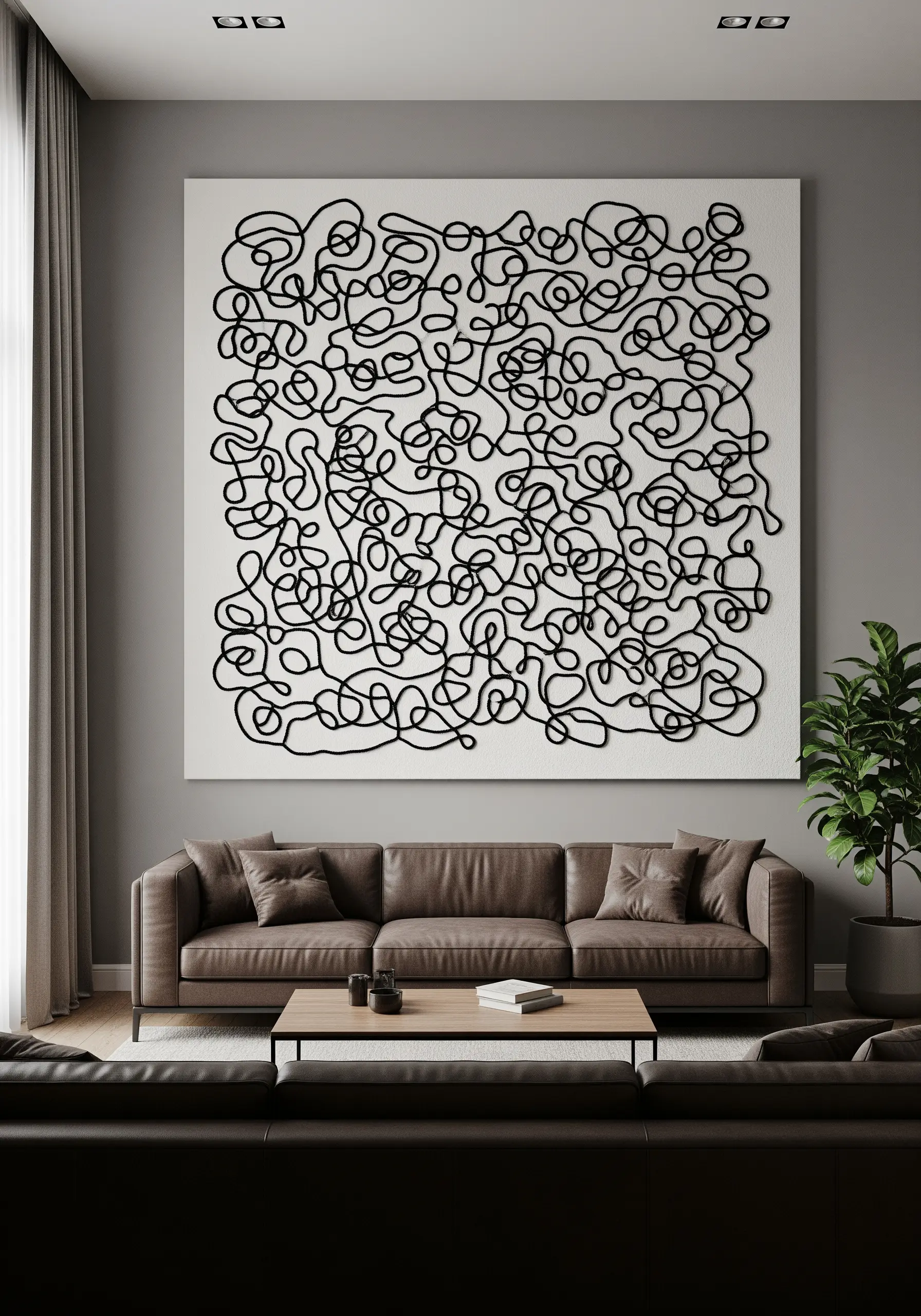
This look is best achieved by couching a single continuous black cord onto the canvas.
Pre-draw your maze lightly with pencil to ensure the lines never cross or touch.
The continuous line draws the eye on a journey, creating a sense of movement within a static frame.
Simple minimalist string art line designs that add a modern embroidery aesthetic to blank walls instantly are often the most captivating.
28. Zen garden textures

Contrast is key here: use padded satin stitch to make the ‘stones’ bulbous and smooth.
Then, use a whipped backstitch or a heavy-weight cotton for the ‘sand’ lines to create a gritty, distinct texture.
The juxtaposition of the raised, smooth shapes against the linear background creates a tactile 3D effect.
Such hand stitched framed embroidery pieces that look professionally made rely on varying thread weights.
29. Wire armature structures

To build off the wall, you need a skeleton.
Form your geometric shapes with copper wire first, then wrap the wire entirely in thread.
This allows you to construct impossible, gravity-defying shapes that cast real shadows, adding a fourth dimension to your work.
Explore fiber thread wall sculptures for artists who want 3D texture shadows.
30. The architectural fringe

Instead of trimming your threads, celebrate the ends.
Stitch the upper geometric sections firmly, but leave the bottom tails long and uncured.
Comb the threads out so they hang perfectly straight; gravity does the finishing work for you here.
These colorful fiber art installations that will make your walls come alive bring movement to static walls.
31. The unfinished narrative

Sometimes the thread spool is part of the art.
Stitch a jagged line art graph, but leave the final thread attached to a spool resting on the floor.
This breaks the boundary of the frame and turns a flat image into an installation, suggesting the work is still in progress.
These abstract minimal embroidery pieces that make blank hallway walls look like art galleries invite the viewer into the process.