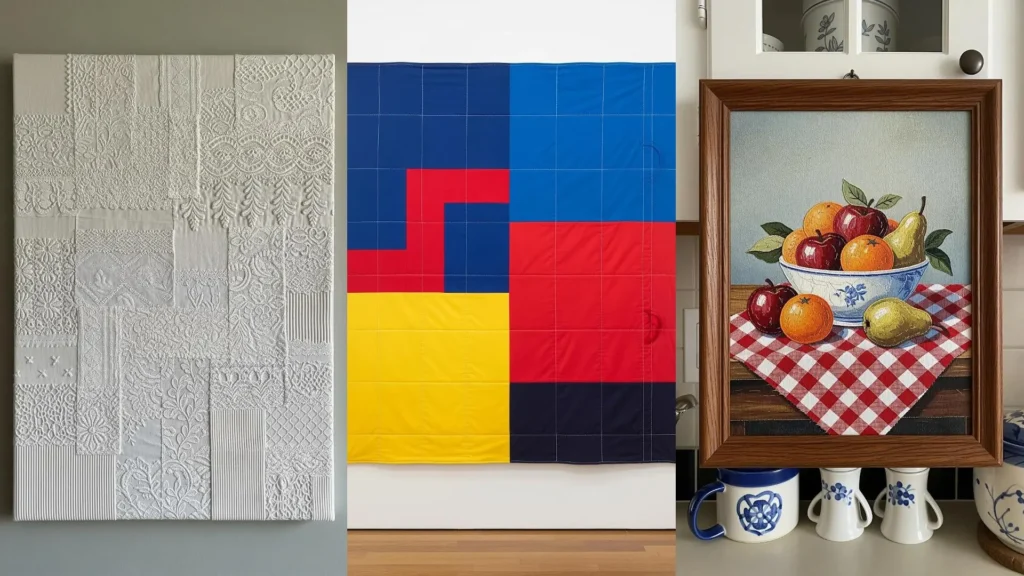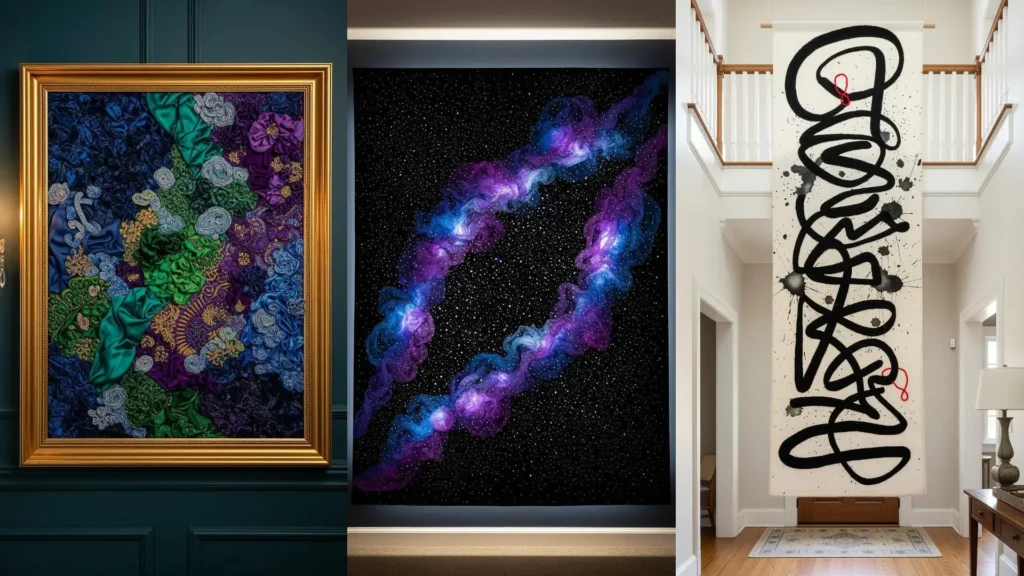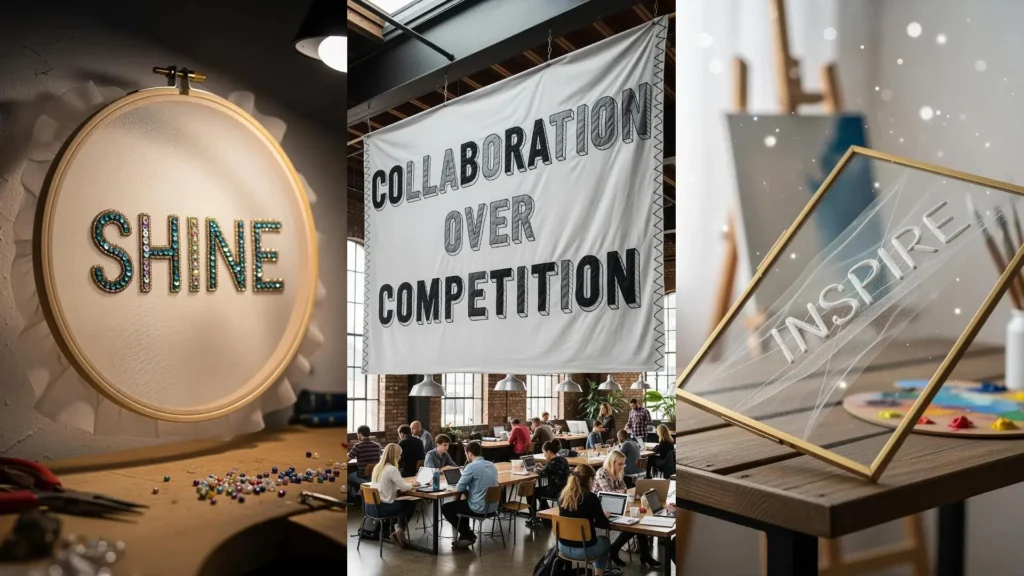
You likely have a wall in your home that feels unfinished—a creative corner that needs a voice, but not just another generic print. Hand-stitched wall art offers something paper cannot: texture, depth, and the tangible energy of time spent creating.
We are moving past the era of messy, improvised hoop art. The ideas below focus on elevating your technique—teaching you how to use negative space, how to stabilize fabric for heavier thread weights, and how to mix mediums like watercolor and macramé without the result looking cluttered.
Whether you have twenty minutes or a whole weekend, these projects are designed to sharpen your skills. Pick the one that challenges your current comfort level, grab your hoop, and let’s make something that speaks clearly.
1. Curate a cohesive gallery wall with distinct saturation

When designing a gallery wall, the central typographic piece must anchor the surrounding motifs through color weight rather than just size.
For these bold and colorful framed embroidery patterns, utilize a padded satin stitch for the lettering to ensure the text stands proud against the fabric.
By mirroring the specific thread codes from the central rainbow into the petals of the flanking floral hoops, you create a visual loop that keeps the eye moving comfortably across the entire display.
2. Elevate raw textures with high-contrast applique

Embracing the natural imperfections of raw canvas or calico adds warmth to a workspace, but it requires bold typography to look intentional rather than unfinished.
Create vintage style embroidery banners by cutting felt letters and securing them with a contrasting whip stitch in black pearl cotton.
The addition of a macramé-style fringe at the bottom weights the fabric, preventing the banner from curling and giving the piece a finished, architectural drape.
3. Master the art of metallic thread on velvet

Deep pile fabrics like velvet or velour absorb light, making them the perfect backdrop for reflective metallic threads that need to pop.
To achieve these luxury metallic thread wall decor ideas, use a couching technique rather than passing the metallic thread through the fabric repeatedly, which shreds the foil.
Frame the piece in an ornate, gold-leaf frame to bridge the gap between traditional textile art and classic interior design.
4. Utilize denim’s structure for neon outlines

Denim provides a stable, grid-like weave that supports heavy thread tension without puckering, making it ideal for bold outline work.
Use a split stitch or chain stitch in modern neon thread designs to create a vibrating color effect against the indigo background.
Leave the hoop exposed but sand the wood to a pale finish; this contrast keeps the aesthetic raw and industrial, perfect for a maker’s studio.
5. Achieve the floating text effect with organza

Working on transparent fabrics like tulle or organza requires absolute precision, as the back of your work is fully visible.
For modern thread illusion techniques, avoid traveling threads across the back; instead, knot and cut the thread after every letter.
Sandwich the delicate fabric between glass panes in a floating frame to enhance the ethereal, suspended quality of the white lettering.
6. Transform burlap with counted geometric stitching

Burlap’s loose weave naturally lends itself to grid-based techniques like cross-stitch or Blackwork, but you must scale up your yarn weight.
These rustic stitch art projects work best with tapestry wool, which fills the large gaps in the fabric and prevents the design from looking sparse.
Fray the edges intentionally to soften the geometry of the pixelated text, ensuring the piece feels organic rather than rigid.
7. Build dimension with sculpted French knots

Texture conveys emotion just as much as color; dense packing of stitches creates a sensory experience that draws the viewer in.
Use statement textured embroidery techniques by combining French knots and bullion knots in varying thread weights to create a relief effect.
By leaving the typography as negative space—unstitched canvas surrounded by texture—you create a design that is legible through depth rather than ink or outline.
8. Perfect the padded satin stitch for script

To make cursive script look like professional calligraphy, you must build a foundation before the final layer.
Apply these small hoop lettering ideas by first stitching the word in a split stitch, then covering it with a horizontal satin stitch.
This padding lifts the letters off the fabric, catching the light and giving the script a rounded, fluid appearance that flat stitching cannot achieve.
9. Combine felt applique with blanket stitch borders

Felt offers a matte, soft texture that contrasts beautifully with the sheen of embroidery floss, perfect for playful, tactile wall art.
Implement nursery stitch art wall ideas by cutting letters from wool blend felt and securing them with a contrasting blanket stitch.
This technique not only prevents the felt from stretching over time but also adds a decorative, hand-drawn outline quality to the typography.
10. Integrate watercolor washes with linear stitching

Combining paint and thread allows you to cover large surface areas with color without the time commitment of full embroidery.
For handmade collage projects that mix embroidery paper and paint perfectly, apply watercolor to wet fabric for a bleed effect, let it dry completely, and then stitch clean, black typographic lines over it.
The sharp contrast between the fluid, unpredictable paint and the structured, architectural thread creates a sophisticated modern art feel.
11. Explore the retro texture of punch needle loops

Punch needle embroidery mimics the texture of a hooked rug, offering a cozy, retro aesthetic that absorbs sound and softens hard wall surfaces.
Utilize textured yarn wall art techniques to create chunky, bold typography that feels substantial and architectural.
Keep your loop height consistent to ensure the text remains legible; if the loops are too uneven, the definition of the letters will get lost in the fuzz.
12. Scale up with architectural banner typography

Sometimes a space demands scale that a simple hoop cannot provide; a large drop-cloth banner creates an instant focal point.
Use thread based typography ideas to outline large block letters, filling them with hatch marks or seed stitches for texture without the weight of solid filling.
Finish the sides with a simple zigzag or serge, leaving the bottom raw or fringed to maintain an industrial, loft-style aesthetic.
13. Create typography using botanical motifs

Instead of stitching a line and adding flowers to it, let the flowers themselves form the anatomy of the letters.
These floral embroidery wall decor projects require you to sketch the letter width lightly, then fill that space with tiny lazy daisy stitches and French knots.
Vary the shades of green and floral colors slightly to ensure the shape of the letter remains distinct from a distance.
14. Adopt Sashiko techniques for minimalist impact

Sashiko, the Japanese art of functional reinforcement, uses simple running stitches to create complex geometric impact.
Apply line art geometry based stitches in white thread against indigo fabric to build letters out of parallel lines or concentric shapes.
Precision is key here; use a ruler and water-soluble pen to mark every stitch length, as the beauty lies in the mathematical rhythm of the white dashes.
15. Sculpt 3D letters with stumpwork padding

To make your message truly stand out, physically raise the lettering off the background using stumpwork techniques.
Create 3d embroidery wall art pieces by stitching over layers of felt padding or foam, wrapping the thread tightly to conceal the structure underneath.
Surround these raised elements with flat leaf stitching to exaggerate the depth and make the text appear to be growing out of the foliage.
16. Blend gradients with long-and-short stitch

Standard satin stitch can look flat; using a long-and-short stitch allows you to blend colors for a fluid, painterly effect.
For ombre gradient embroidery wall hangings, switch thread shades every few millimeters, ensuring the stitches interlock deeply to blur the transition lines.
This technique mimics the look of brush lettering, adding a sense of movement and passion to the static medium of thread.
17. Fuse macramé knots with hoop embroidery

Combining fiber arts adds a bohemian complexity to simple hoop art; the macramé draws the eye down, extending the footprint of the piece.
Incorporate boho string art dreamcatcher embroidery designs by attaching lark’s head knots to the bottom of your hoop.
Keep the embroidery inside the hoop simple—like a single word in backstitch—so it doesn’t compete with the intricate texture of the knotted fringe below.
18. Simulate chalk texture with sketch-style stitching

The aesthetic of a chalkboard is classic for creative spaces, but real chalk smudges; thread is permanent.
Use minimalist string art line designs on black cotton, using a messy, sketch-like backstitch to mimic the uneven pressure of a chalk stick.
Do not pull your stitches too tight; a slightly looser tension helps replicate the grainy, hand-drawn texture of chalk on a slate board.
19. Catch the light with sequin typography
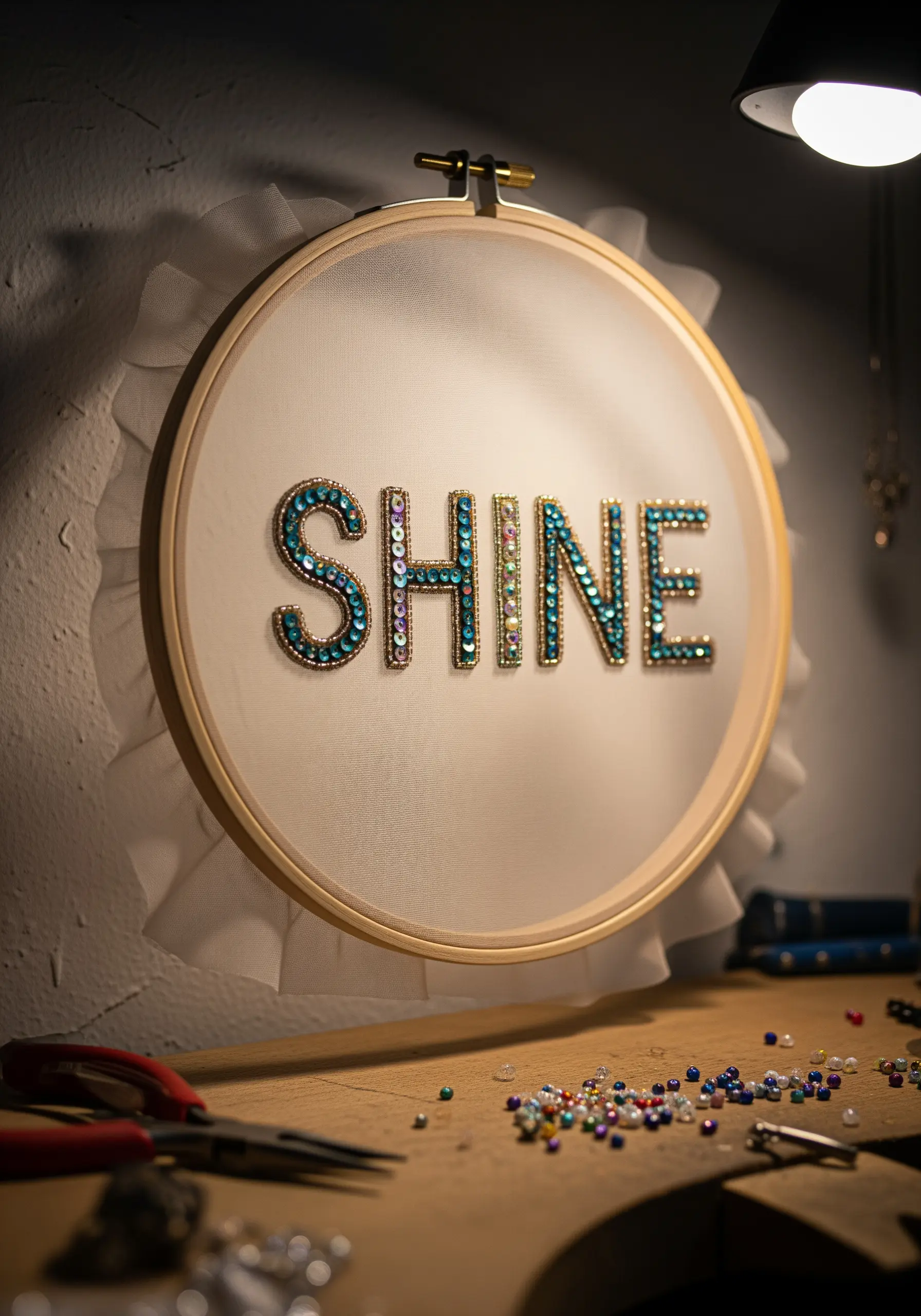
For spaces that lack natural light, embroidery that incorporates reflective elements can act as a brightening focal point.
Enhance your work with glitter thread embroidery ideas by sewing sequins flat within the letter outlines, securing each with a tiny seed bead anchor.
This technique creates a marquee-sign effect that changes appearance as you move through the room, adding dynamic energy to the wall.
20. Frame text with a dense botanical wreath

A double-hoop structure allows you to create a wreath that feels full and lush without overcrowding the central message.
Design modern embroidery wall panels by densely packing the outer ring with fly stitch ferns and lazy daisy leaves.
Keep the central text in a simple, sans-serif font; the contrast between the wild, organic border and the clean, modern typography creates a perfectly balanced composition.