You’ve mastered the basic stitches, and your work is neat and lovely. But perhaps you feel a quiet pull for something more—a desire to move beyond the flat surface of the hoop and create work that feels truly immersive, something that engages more than just the eyes.
The answer isn’t necessarily a more complicated stitch. It’s a shift in perspective. It’s about thinking in terms of texture, scale, and interaction. It’s about understanding how fiber can build worlds, evoke feelings, and invite connection.
These large-scale installations are more than just spectacles; they are a library of techniques you can borrow from. Look at how they use repetition, how they play with light, and how they beg to be touched. Each monumental piece holds a secret you can scale down and translate into your own hands, your own materials, and your own art.
1. Construct a Tactile World with Oversized Fibers
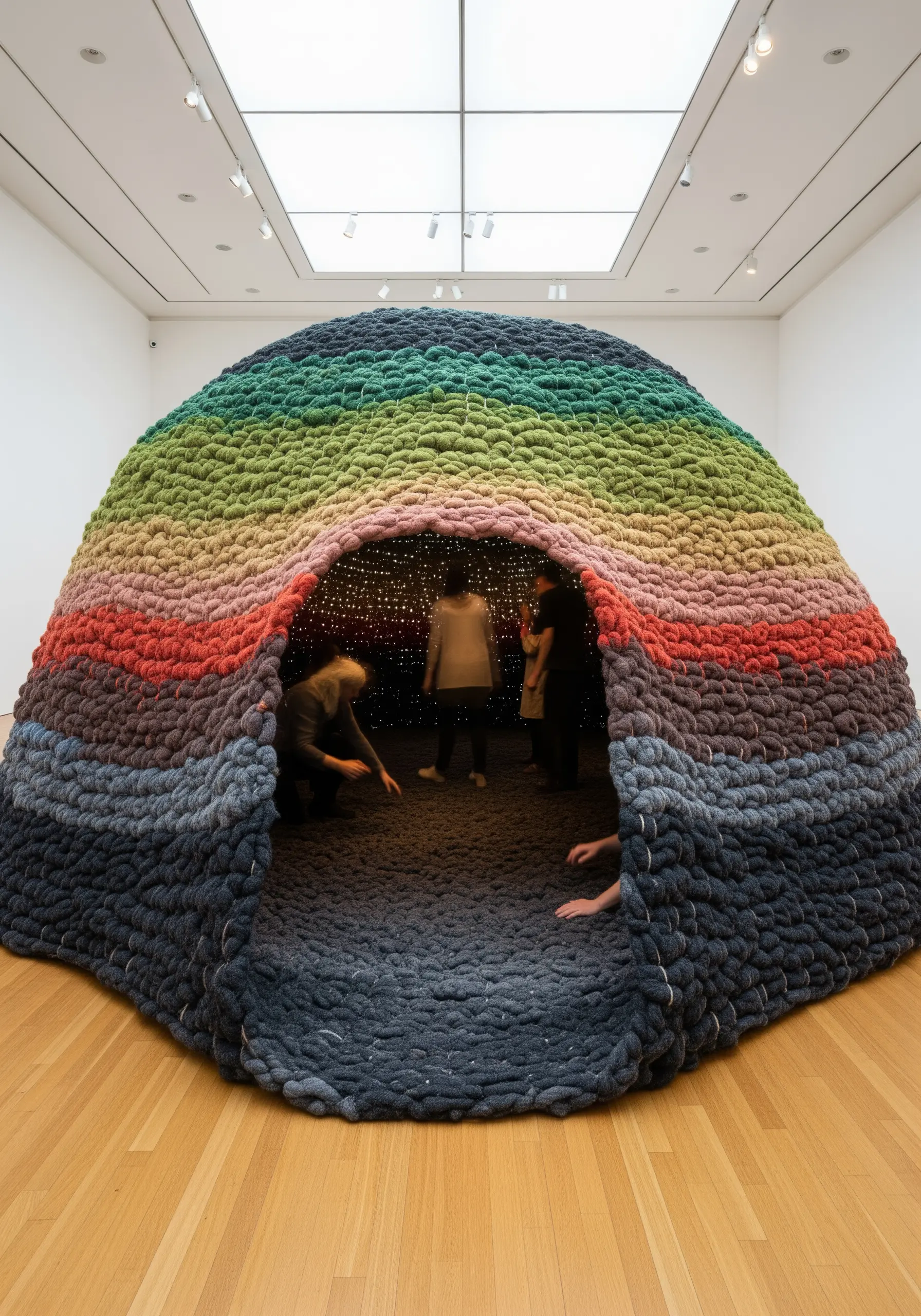
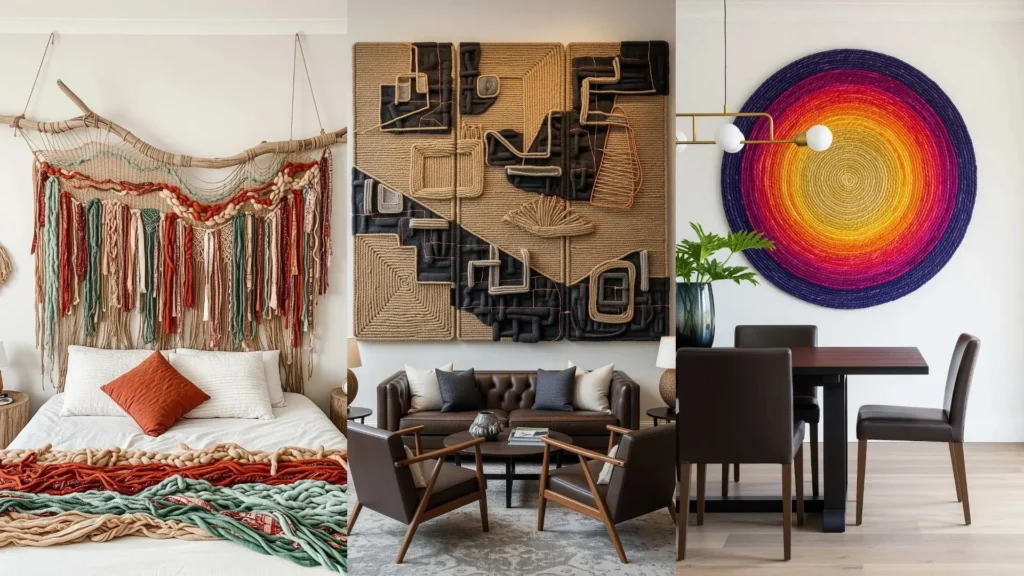
Instead of fine floss, experiment with wrapping or couching bulky materials like wool roving, thick felted cord, or chunky yarn onto a sturdy canvas base.
This allows you to create giant fiber art installations on a manageable scale, focusing on the satisfying rhythm of building texture row by row.
Pay close attention to how your colors transition; a soft, blended gradient feels more immersive and organic than sharp, sudden changes, inviting a sense of calm.
The goal isn’t just a visual piece, but a surface that begs to be touched, turning your art into a sensory experience.
2. Wrap 3D Objects in Knots and Texture
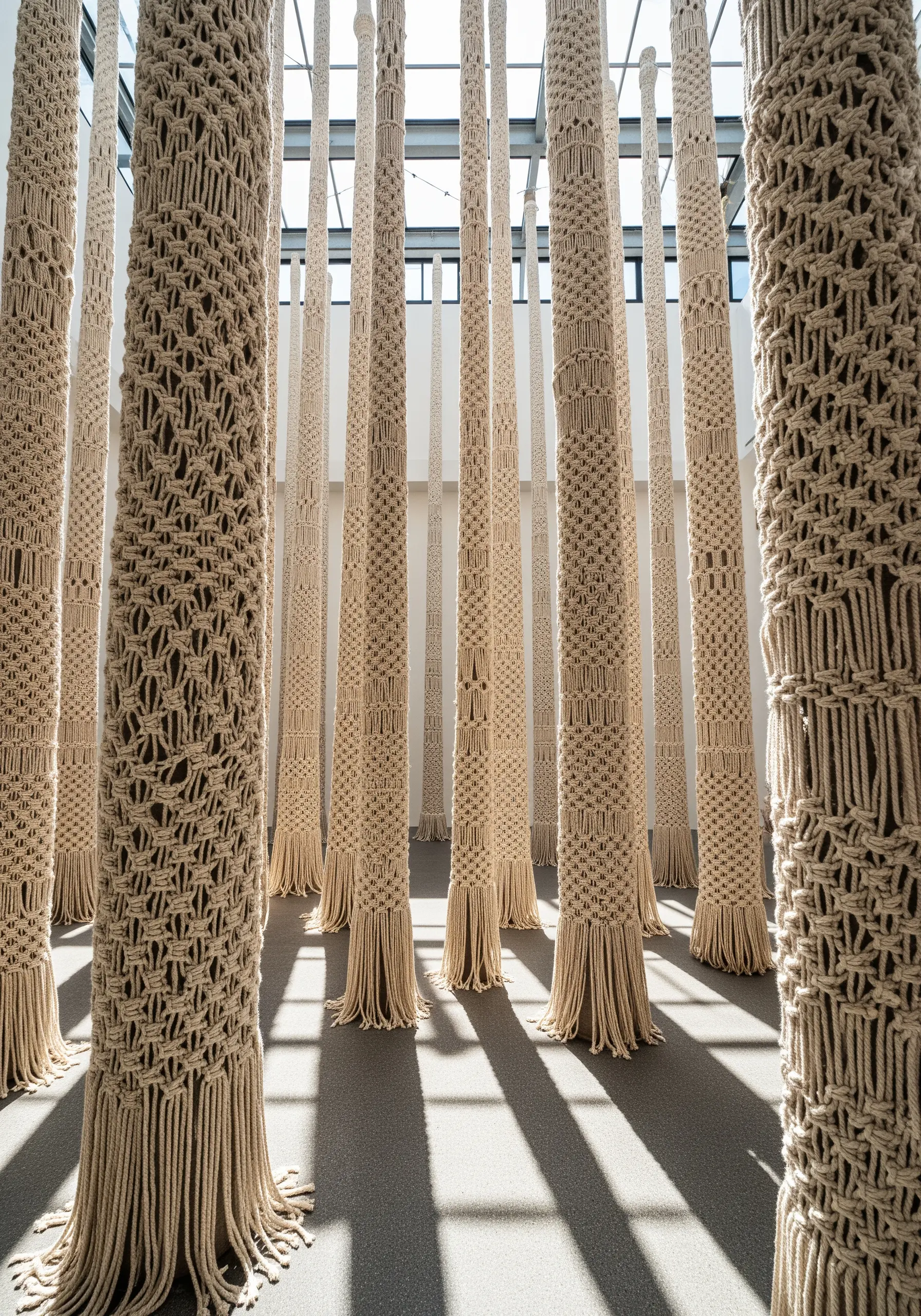
Transform an everyday object by treating its surface like a canvas for knotting.
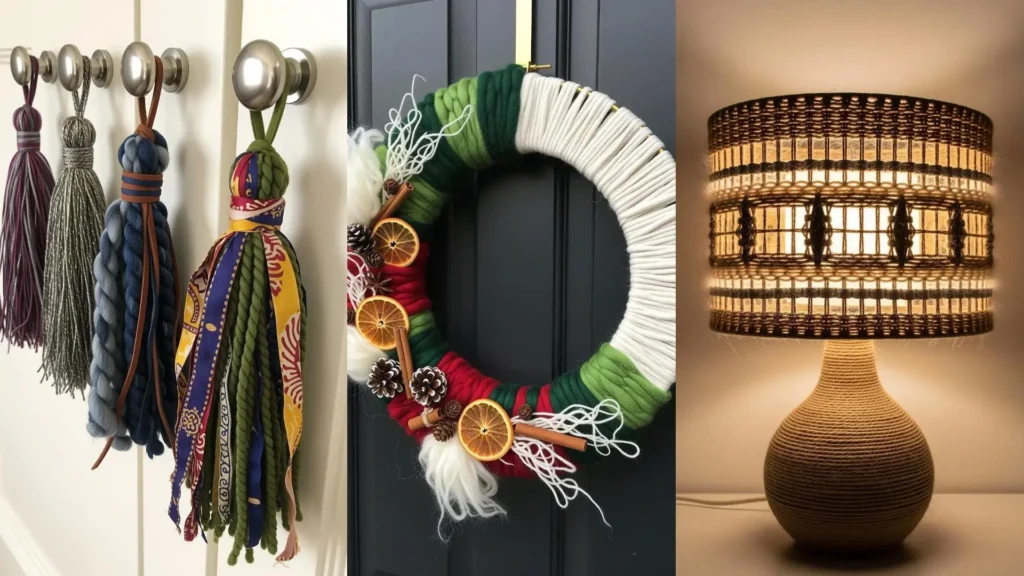
Start with a simple form like a wooden dowel, a plain vase, or even a lamp base, and cover it completely in macrame square knots or a continuous half-hitch spiral.
This technique, known as wrapping or covering, turns a functional item into a sculptural piece, exploring how texture interacts with form.
Using a single, neutral color like natural cotton cord emphasizes the pattern and shadow of the knots, creating a sophisticated and unified look.
3. Sculpt Soft Landscapes with Needle Felting
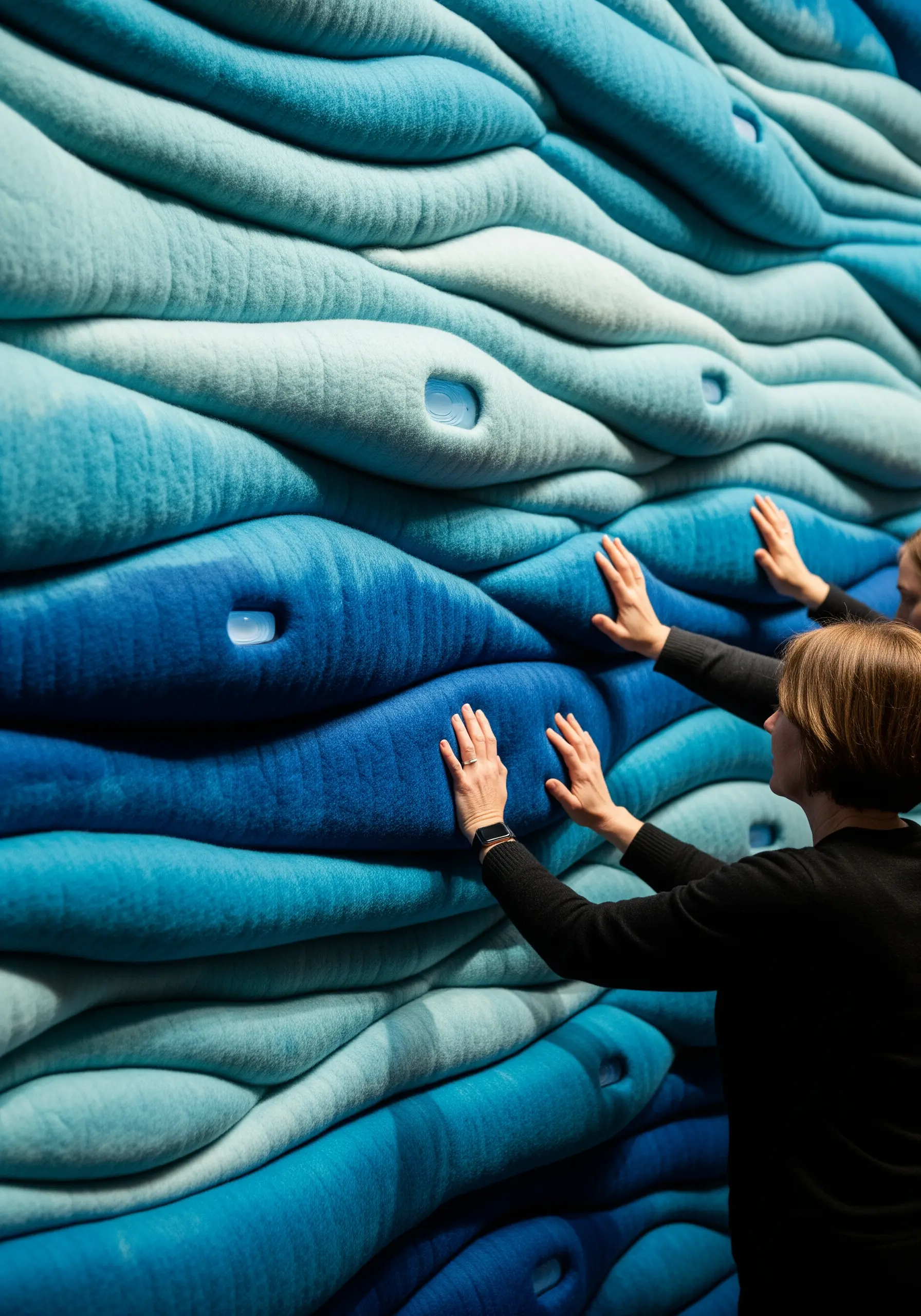
Create undulating, wave-like forms without a single stitch by using needle felting techniques on a foam or wool base.
To achieve depth, layer shades of wool roving, placing the darkest tones in the valleys and the lightest on the crests of your waves.
This painterly approach to fiber allows you to blend colors seamlessly and build up 3D embroidery wall art pieces that feel both soft and dynamic.
The magic is in the gradual layering, which produces a soft-focus effect that is incredibly touchable.
4. Use Thread to Draw Lines in Space
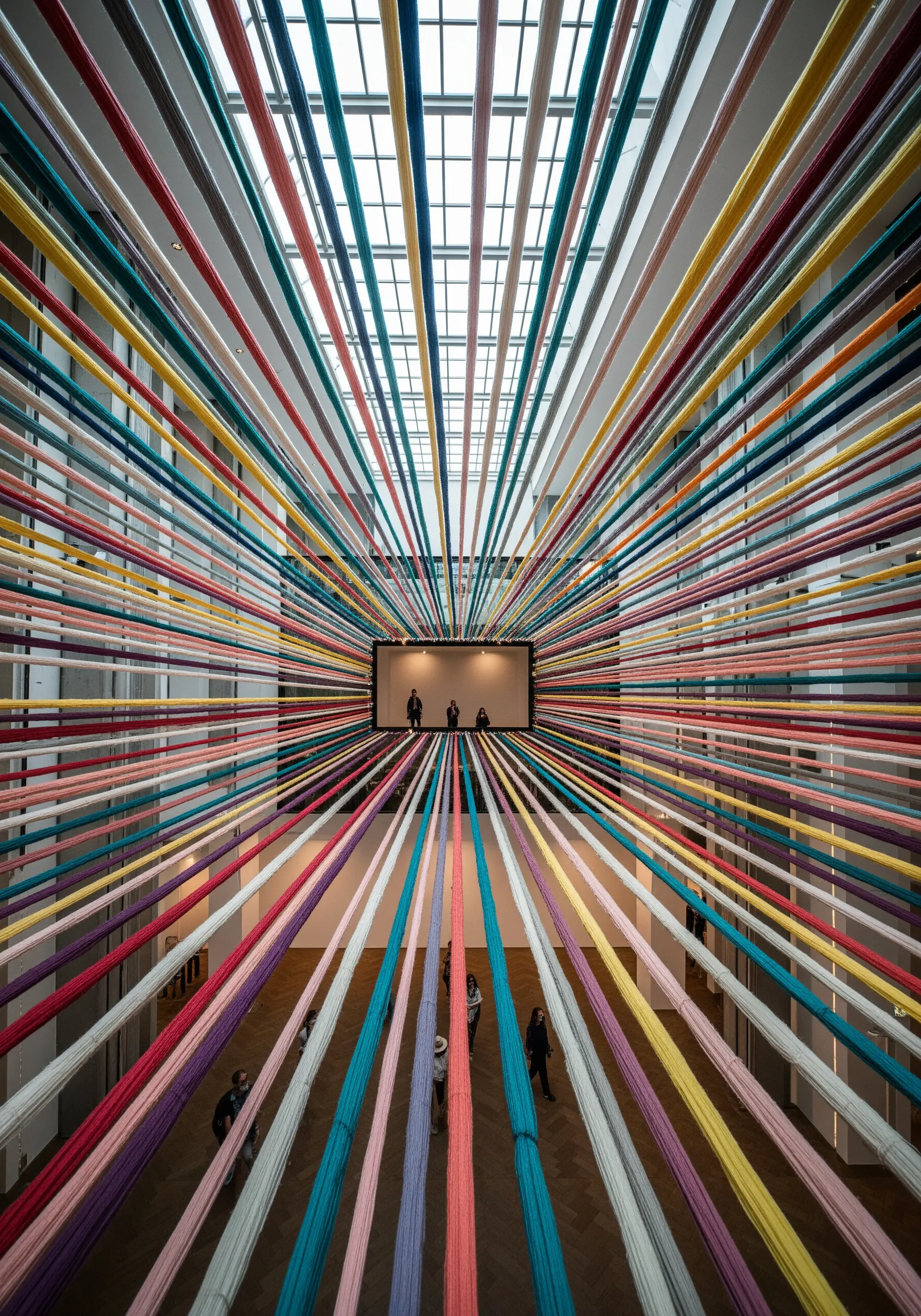
Rethink embroidery thread not as something stitched *onto* a surface, but as the surface itself.
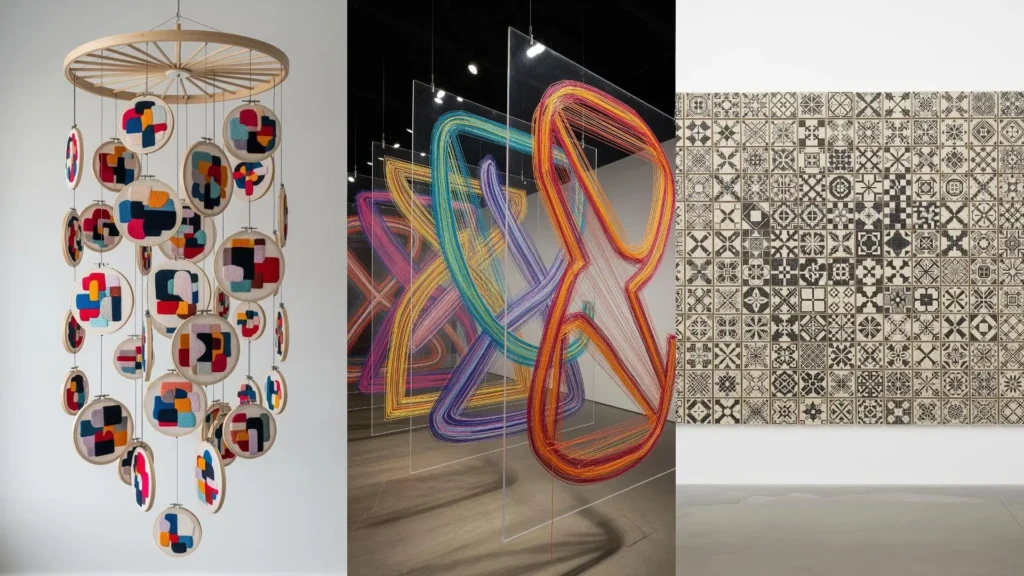
On a smaller scale, you can replicate this effect by building a simple wooden frame and stretching threads from one side to another, creating intersecting lines and geometric patterns.
Experiment with tension and color placement to see how you can create optical illusions and a sense of depth.
This method turns simple string into contemporary thread art that uses light and shadow, transforming your space with vibrant, architectural lines.
5. Encourage Connection Through Communal Making
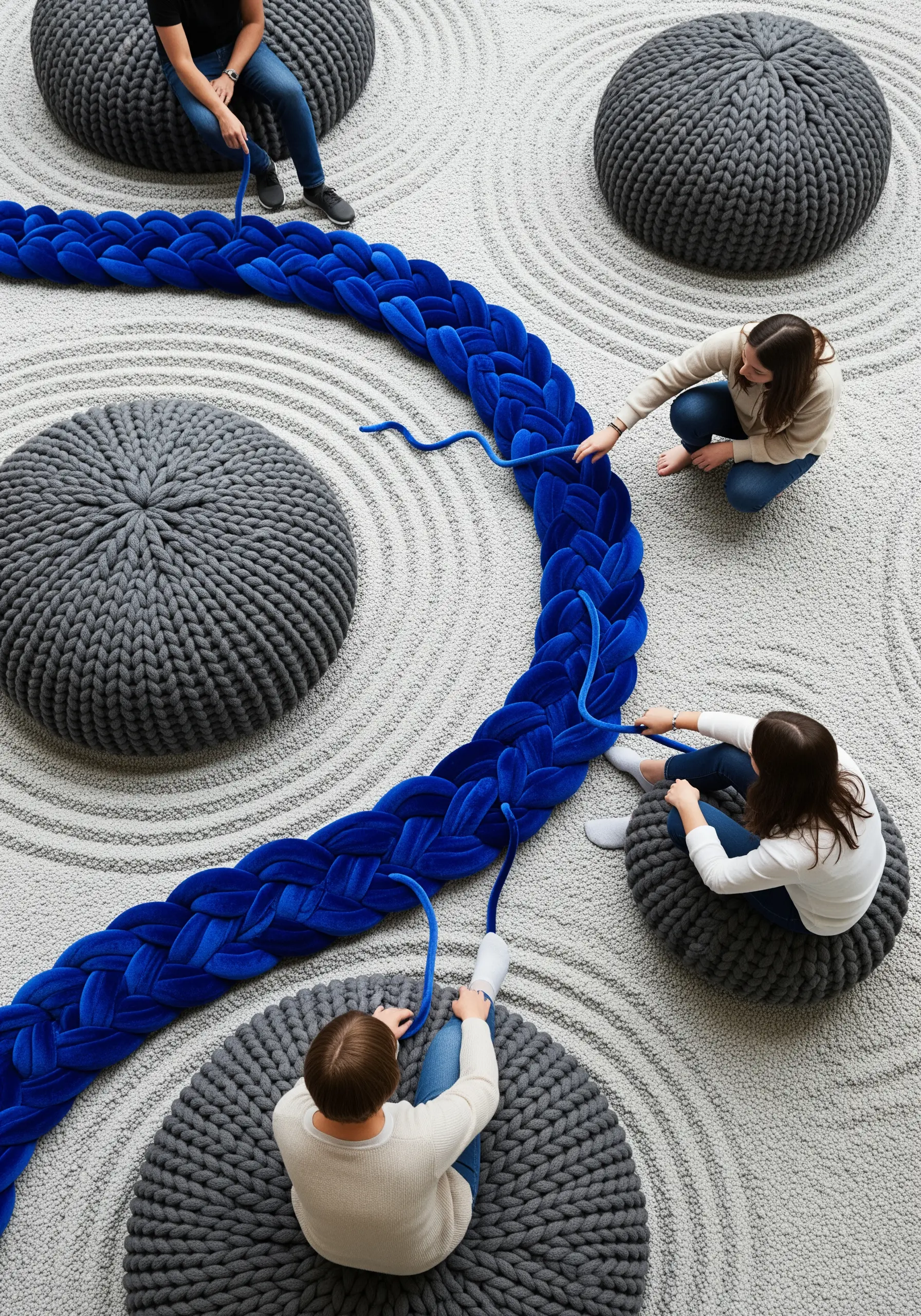
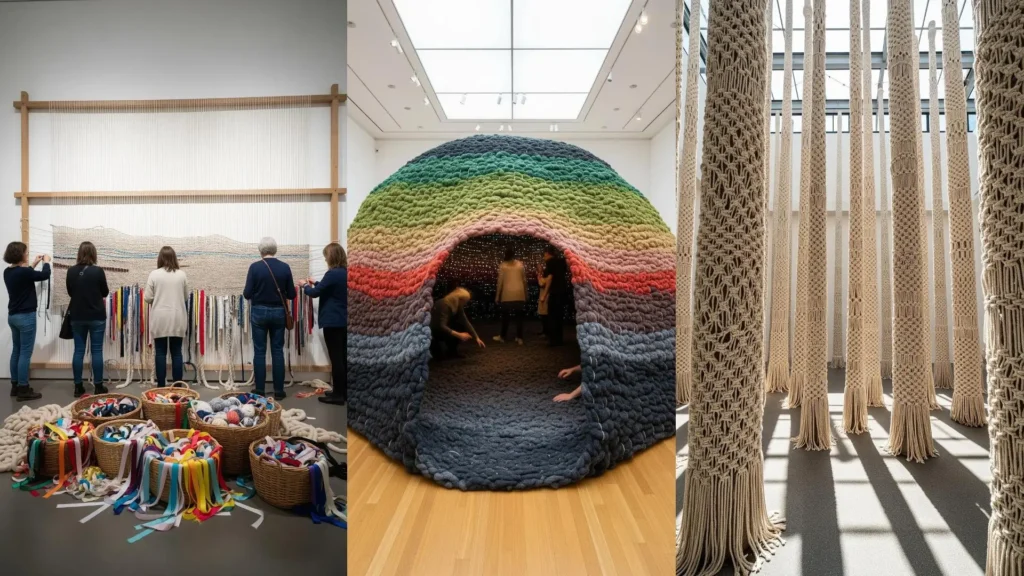
Turn a fiber project into a shared experience by designing it to be interactive.
Create a large-scale braid using multiple strands of chunky yarn and invite friends or family to contribute a few plaits.
Alternatively, create oversized, knitted floor cushions that encourage gathering and relaxation.
The final piece becomes more than just an object; it holds the memory of collaboration and makes your home feel more inviting.
6. Translate Topography into Layered Textiles
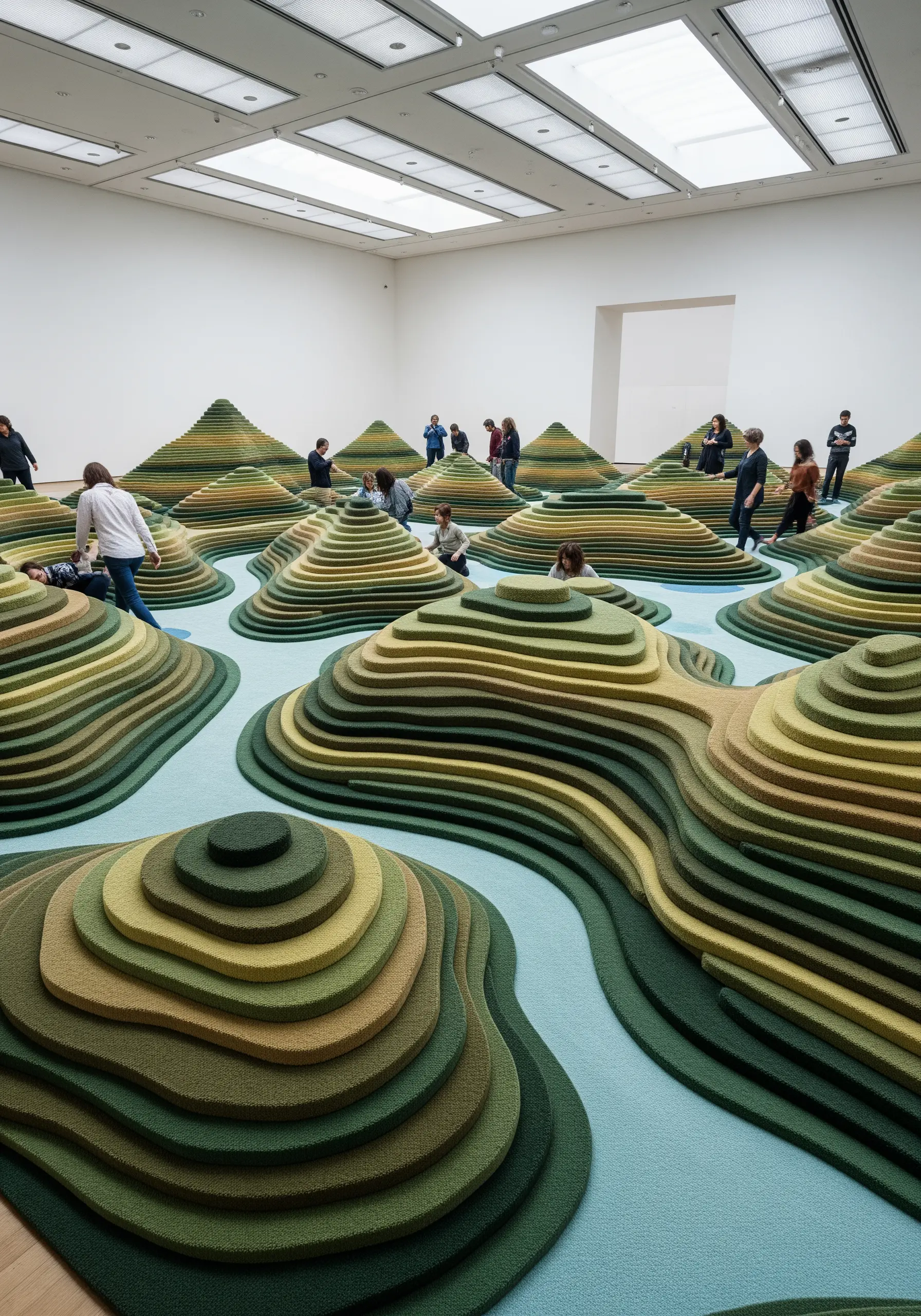
Use the concept of a topographical map to create a tactile landscape in a hoop or frame.
Cut concentric layers of felt or thick fabric in earthy tones, with each layer slightly smaller than the one beneath it.
Secure the edges of each layer with a simple running stitch or backstitch to define the contours and add subtle detail.
This technique transforms an abstract map into a compelling, touchable modern thread landscape with graphic appeal and satisfying depth.
7. Weave Memory into Your Work with Recycled Textiles

Give new life to old garments by deconstructing them into materials for your next project.
Cut sentimental t-shirts or worn-out linens into strips to create a unique fabric “yarn.”
Use this yarn to weave a small tapestry, wrap an object, or braid into a decorative cord.
These embroidery DIYs that turn old clothes into stunning statement pieces carry personal histories, embedding your art with emotion and memory.
8. Build a Vibrant World with Textural Stitches
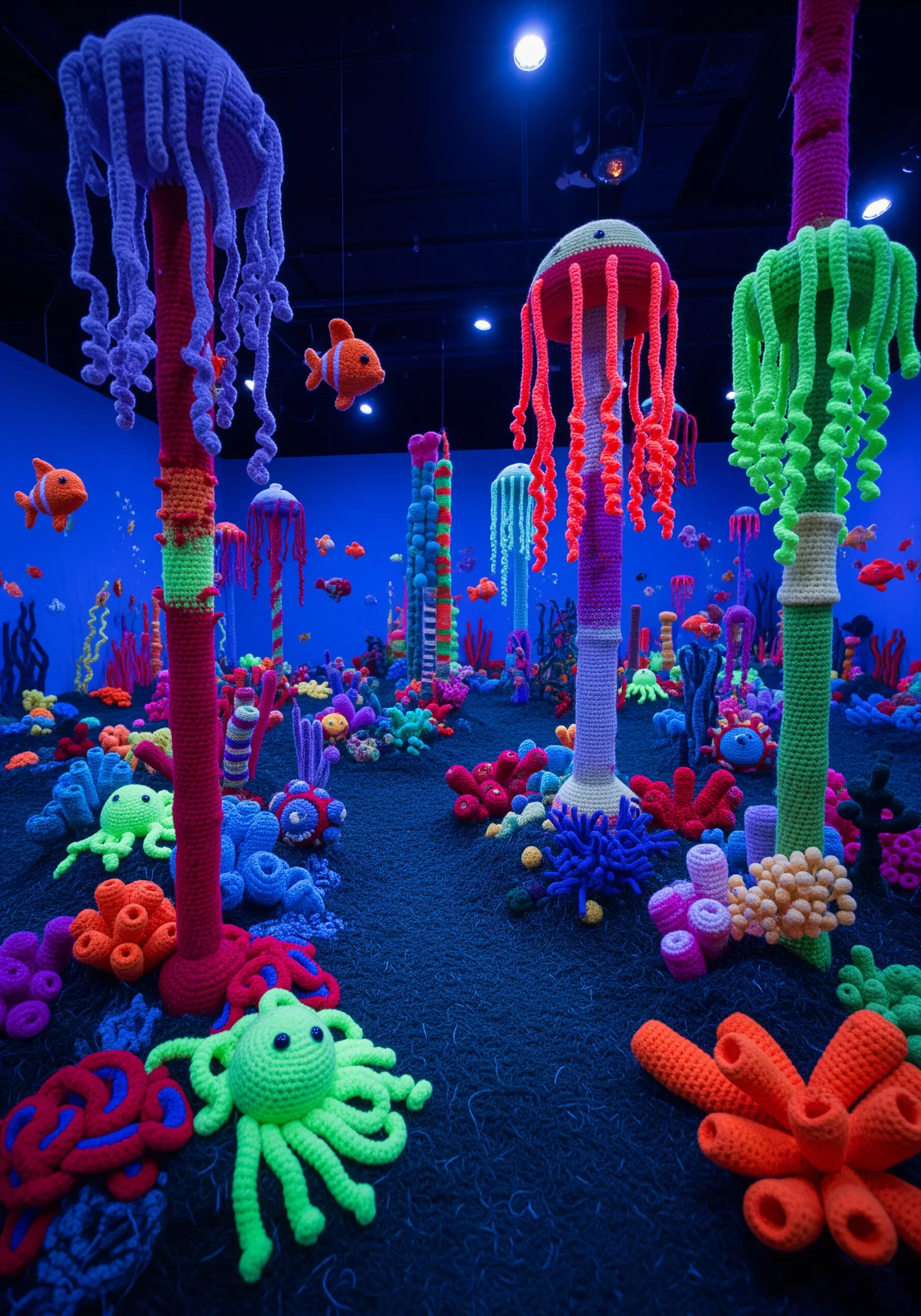
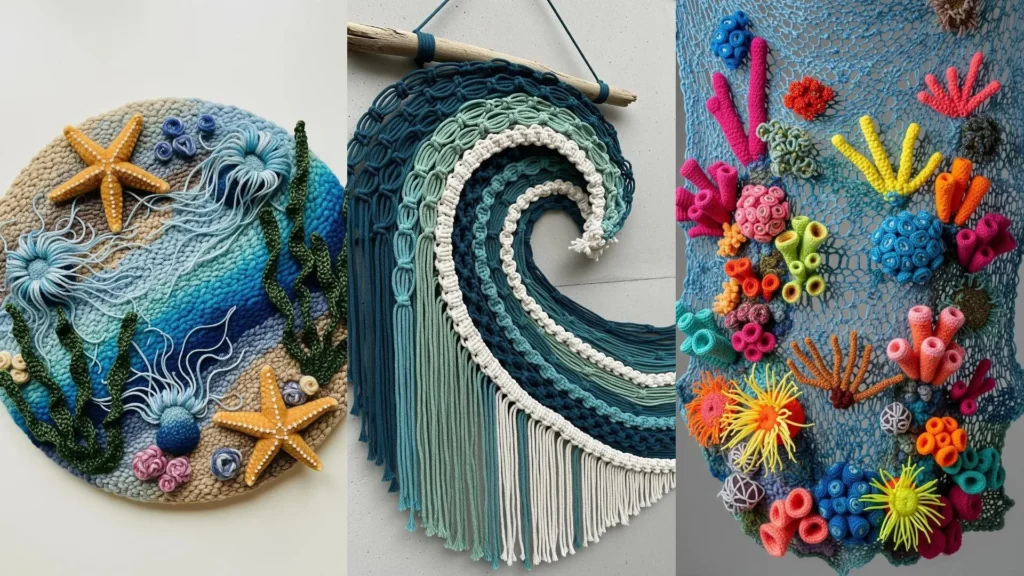
Create an immersive, coral-reef-inspired hoop by focusing entirely on highly textural stitches.
Combine dense clusters of French knots with long, twisting bullion knots and cast-on stitches to mimic the organic forms of a reef.
Use a riot of unapologetically bright, neon, and contrasting colors to bring your scene to life.
This approach moves beyond simple outlines, allowing you to paint with texture and create bold and colorful framed embroidery patterns that are a feast for the eyes and fingers.
9. Illuminate Your Stitches with Light and Shadow
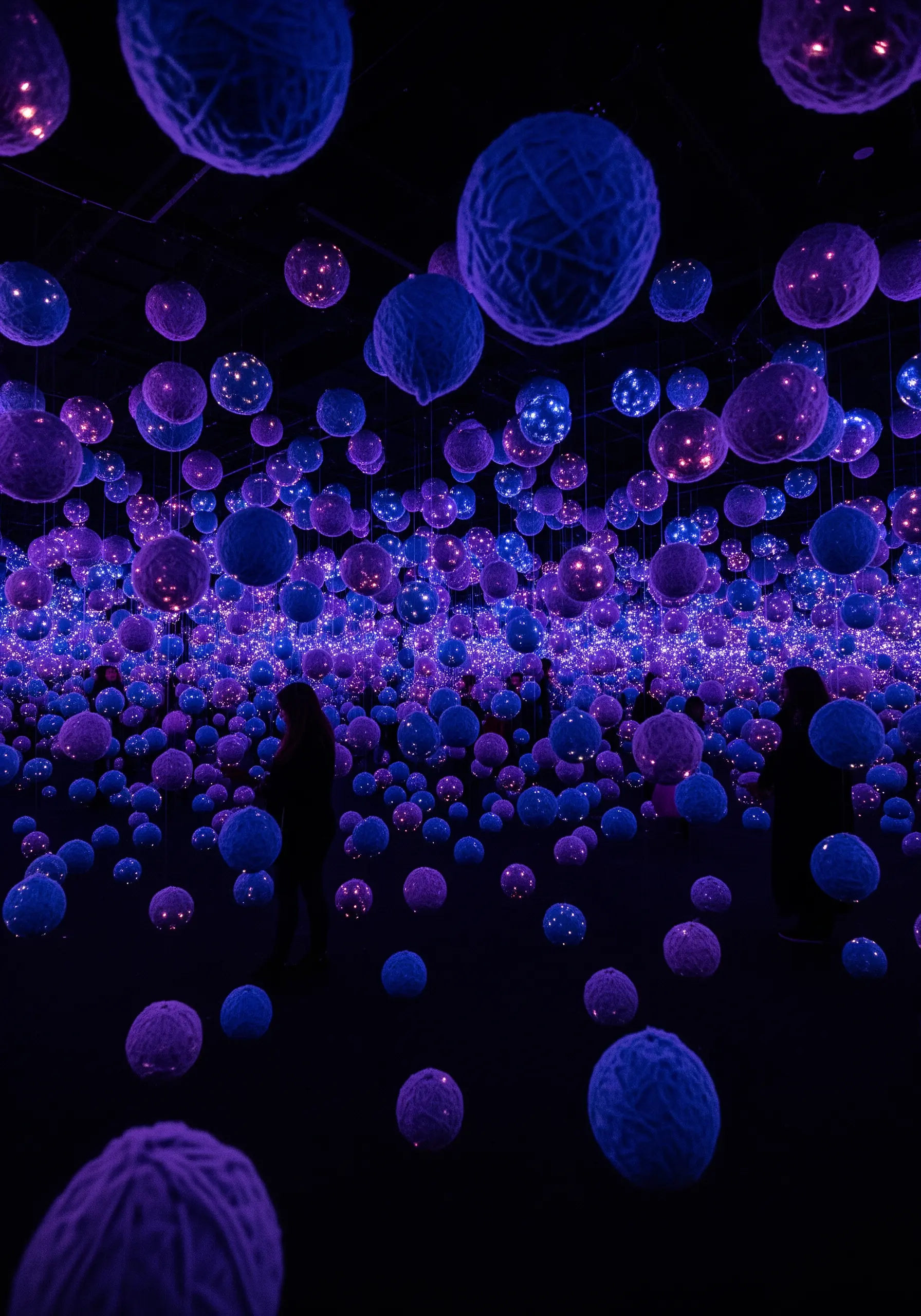
Introduce an element of magic by combining fiber with light.
Embroider a simple design on dark fabric using glow-in-the-dark floss, which reveals a secret second life when the lights go out.
For a different effect, wrap translucent yarn balls around small, battery-powered fairy lights to create soft, glowing orbs.
These techniques transform your work from a static object into an interactive experience, creating minimal celestial embroidery wall designs that shift and change with the light.
10. Explore the Strength and Beauty of Structural Knots

Shift your focus from decorative stitches to functional knots that create structure and form.
Using thick, sturdy rope, practice making a series of strong, uniform square knots or fisherman’s knots to build a net-like fabric.
You can apply this skill to create a functional piece like a hanging plant holder or a market bag.
Mastering consistent tension is the key to turning simple cordage into beautiful, durable DIY sculptures that use unexpected materials with architectural integrity.
11. Weave with More Than Just Yarn
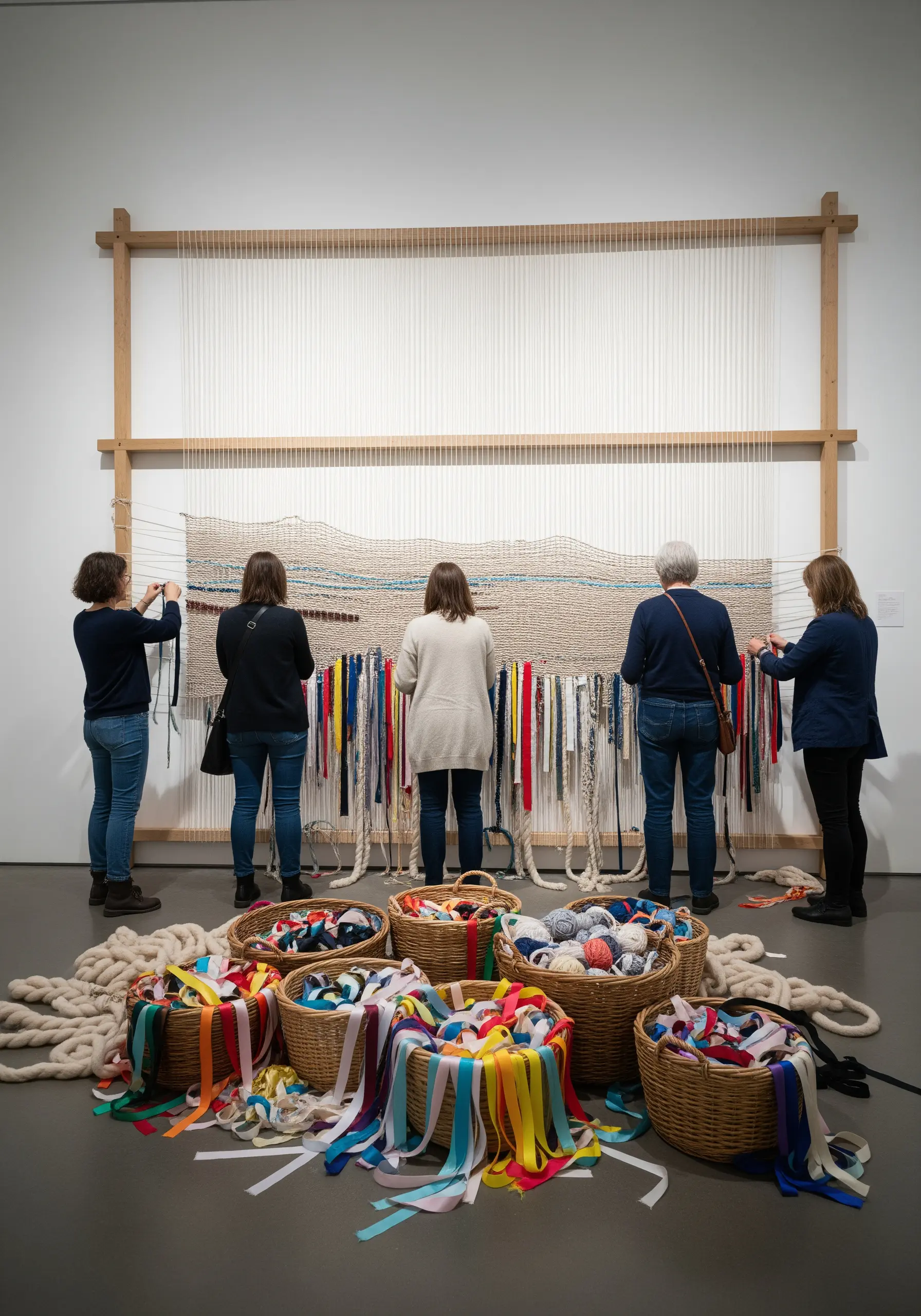
Elevate a simple weaving project by introducing unconventional materials into your weft.
On a small frame loom, weave with the usual yarn, but intersperse it with torn strips of silk, wide satin ribbons, chunky felted cords, or even natural elements like dried grasses.
This practice transforms a flat tapestry into a dynamic, multi-sensory surface.
The contrast between materials makes the piece compelling, creating mixed-fiber creations combining yarn, thread, and unexpected materials that celebrate texture.
12. Create a Sampler of Contrasting Textures
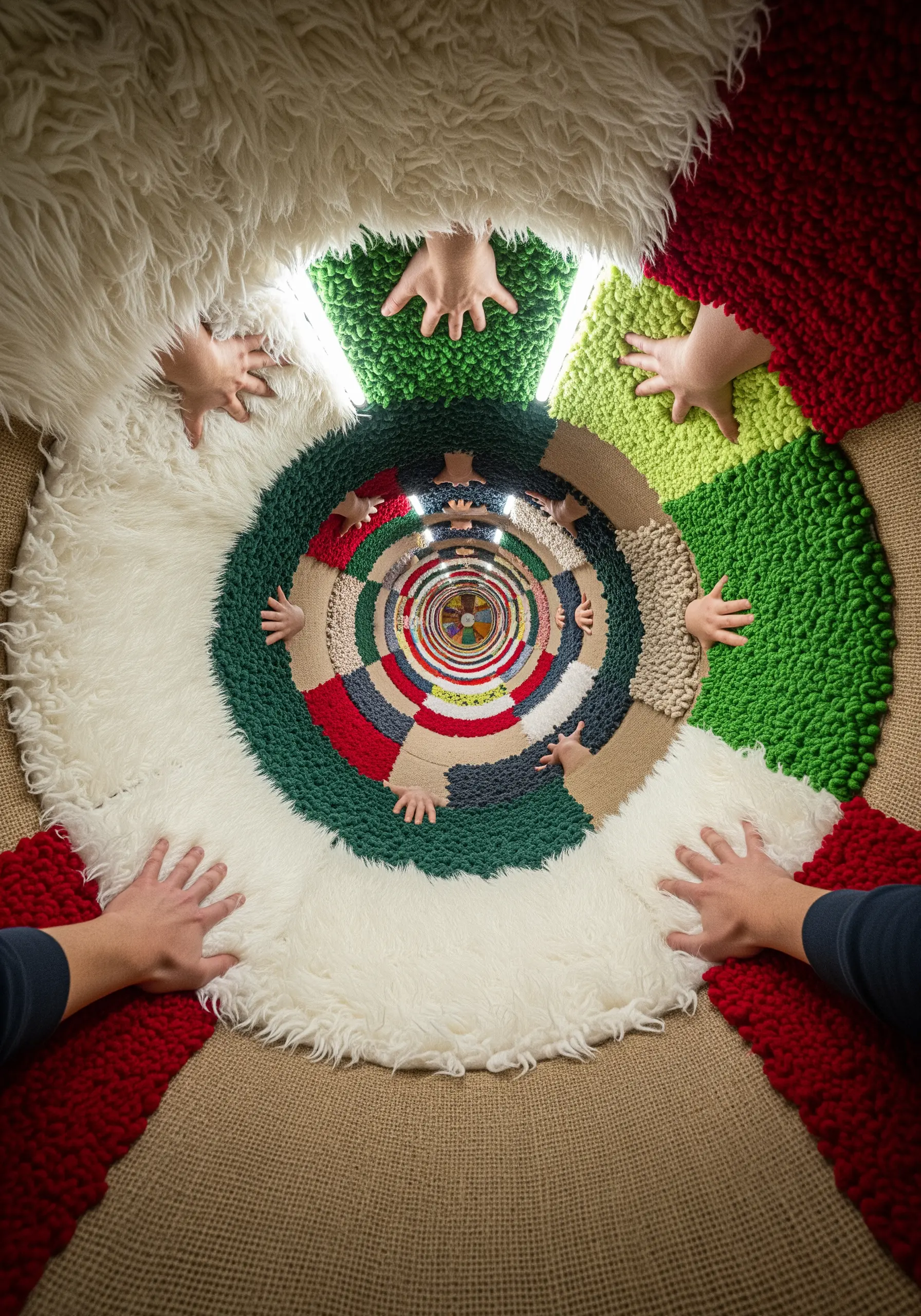
Design a piece that is a celebration of touch by deliberately juxtaposing different textures within a single composition.
In one hoop, combine the shaggy pile of turkey work, the tight bumps of French knots, the smooth sheen of satin stitch, and the plush loops of punch needle.
By dividing a simple geometric design into sections and assigning a different textural technique to each, you create a compelling abstract textile wall art design that must be explored by hand.
13. Knit or Crochet Enveloping Sculptural Forms
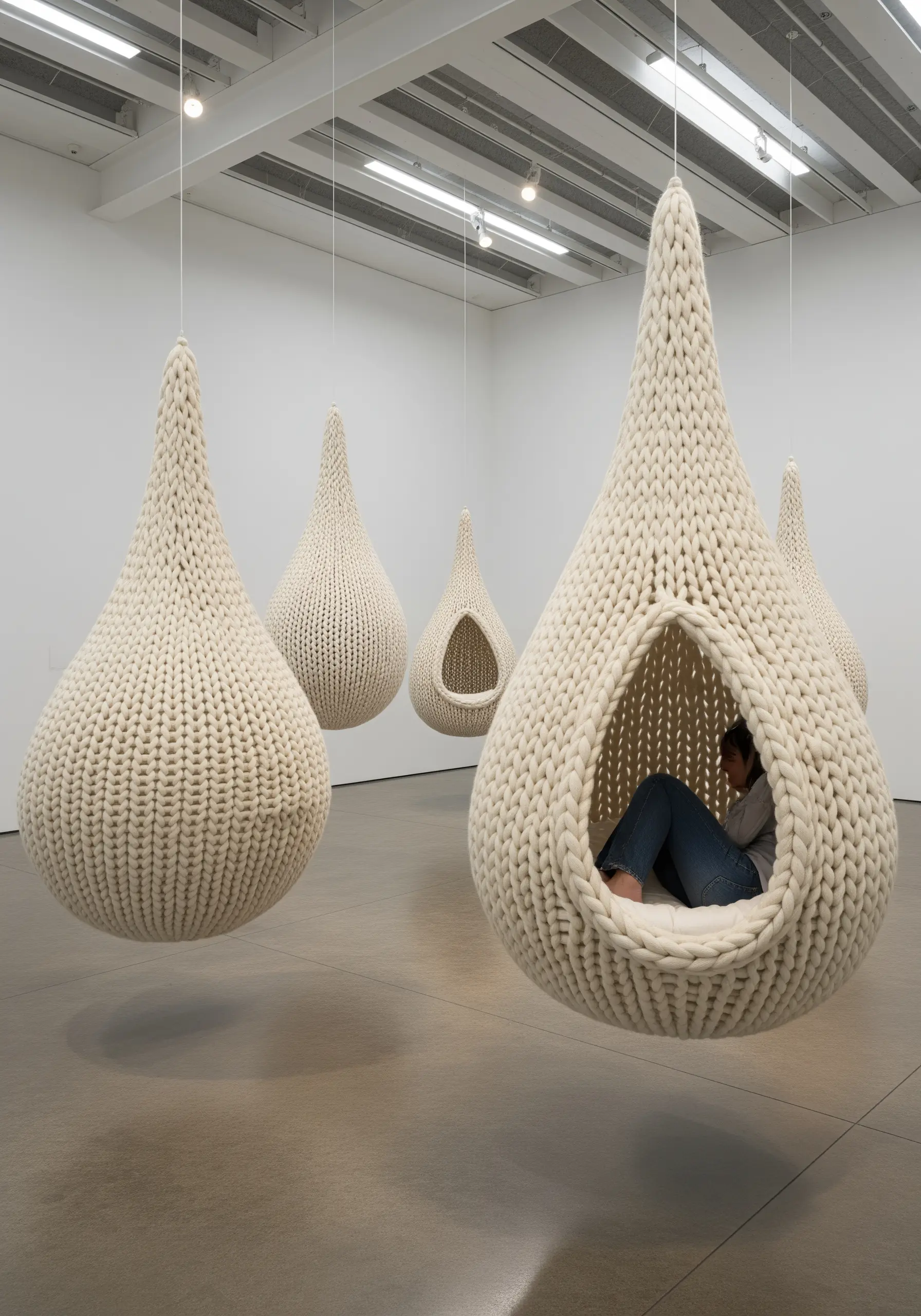
Use basic knitting or crochet stitches with oversized yarn and needles to create volumetric, pod-like shapes.
By working in the round and using simple increases and decreases, you can form spheres, teardrops, and other organic, cocooning structures.
Stuff these forms lightly with batting to help them hold their shape, turning them into soft, huggable sculptures.
These handmade sculptures that are surprisingly quick to make demonstrate how simple stitches can build impressive, three-dimensional volume.
14. Turn Your Wall into a Collaborative Stitch Mural
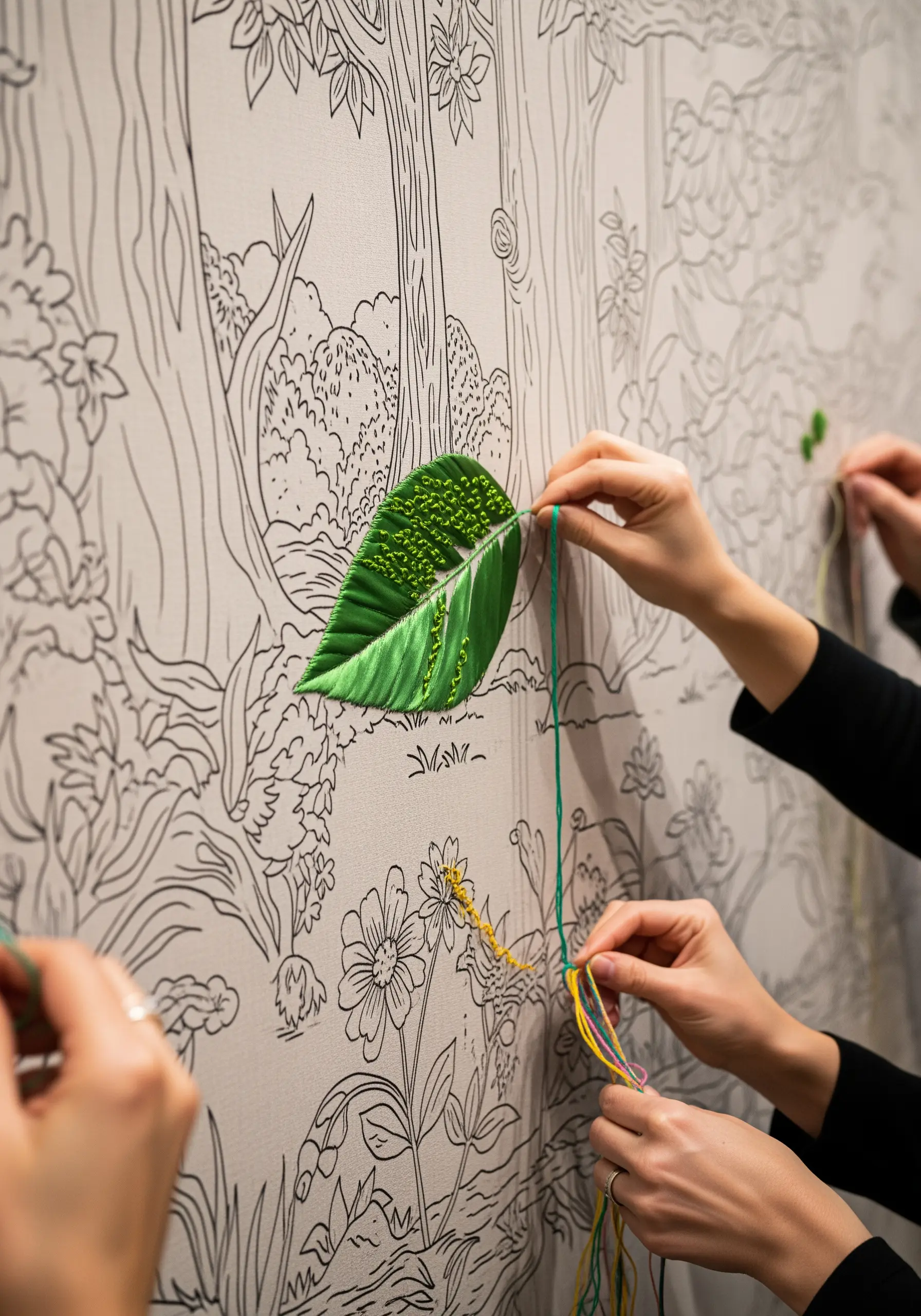
Transform embroidery into a communal activity by creating a large-scale stitching canvas.
Print or draw a large line-art design onto a piece of fabric and stretch it onto a frame or directly onto a wall.
Provide needles and a curated palette of thread colors, then invite guests, friends, or family to fill in sections of the design.
This approach turns a solitary craft into a shared story, resulting in DIY embroidery wall hangings that are rich with collective creativity.
15. Inject Playfulness with Functional Fiber Art
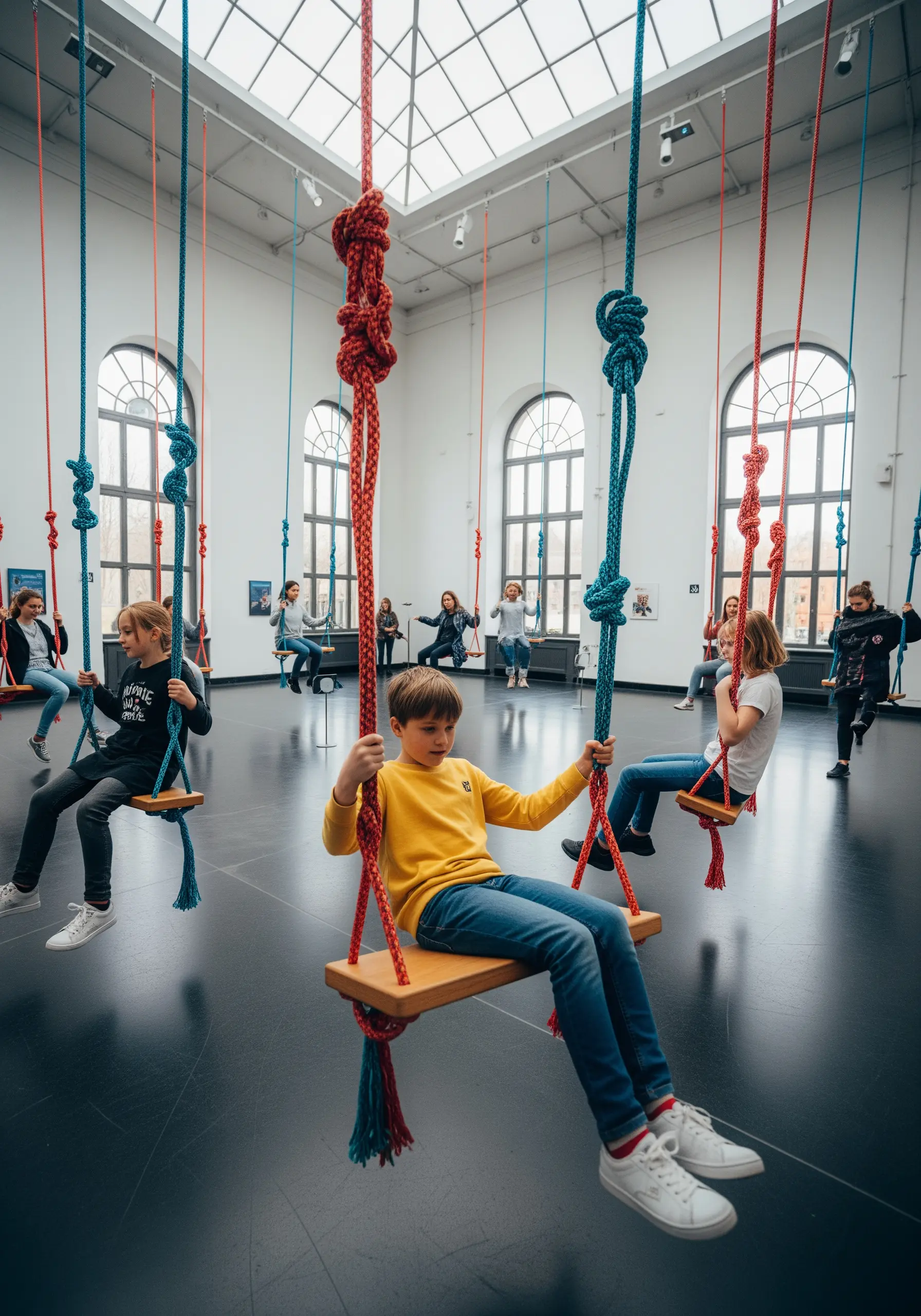
Add an element of joy and function to your fiber work by creating pieces that invite interaction and play.
Instead of a static wall hanging, use your skills to create something usable, like colorful rope swings, a knotted hammock, or a beautifully braided jump rope.
By applying wrapping, braiding, and knotting techniques to functional objects, you create colorful fiber art installations that are not just looked at, but are actively enjoyed.
16. Mimic Natural Textures with Felt and Fiber
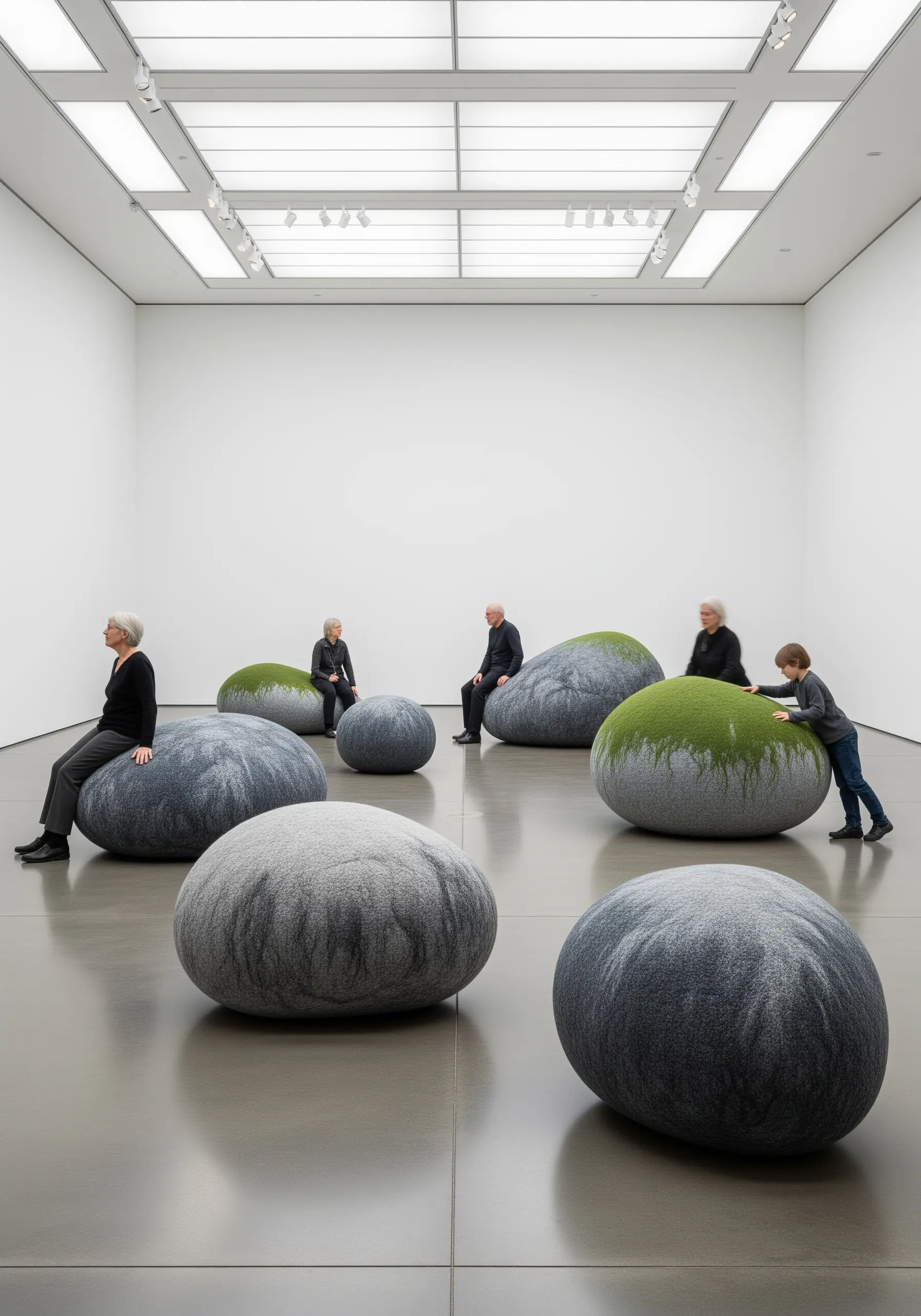
Challenge yourself to replicate the textures of the natural world using only fiber.
Create soft, touchable “moss” by layering and needle-felting shades of green wool roving onto a base fabric or a rounded form.
For a different effect, use dense French knots and turkey work to mimic the texture of lichen on a branch.
Focusing on replicating tree bark wood texture stitch ideas helps you observe nature more closely and translates that beauty into tactile art.
17. Bring Unexpected Softness to Hard Surfaces
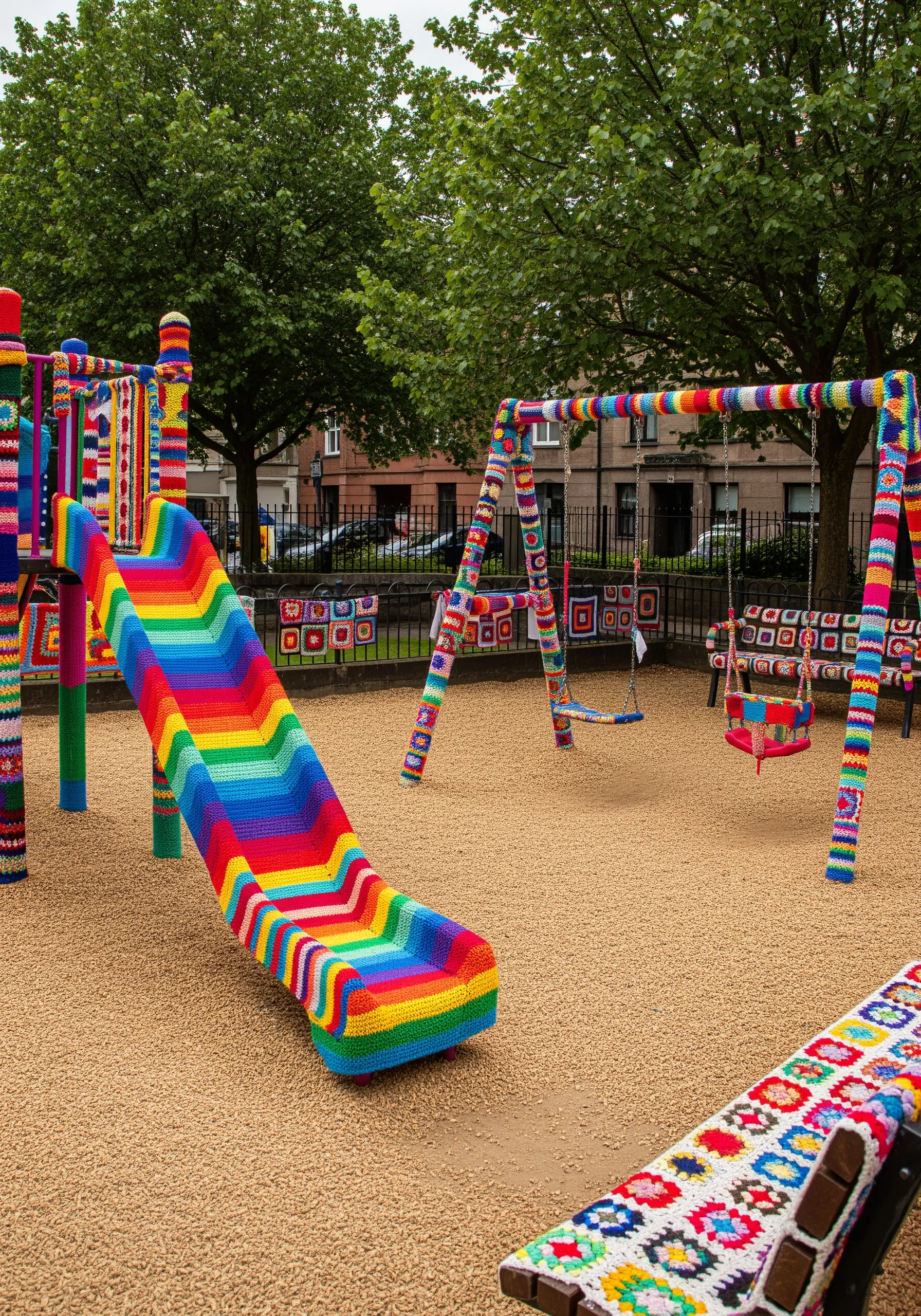
Practice the art of “yarn bombing” on a personal scale by adding a soft, knitted or crocheted covering to an everyday object.
Create a colorful cozy for a bicycle rack, a park bench, or even the handle of your favorite mug.
Use variegated yarn and simple stitches like garter stitch or granny squares for a joyful, graphic effect.
This playful act of beautifying public or private spaces can transform your entire yarn wall art into a statement of warmth and creativity.
18. Create Atmosphere with Cascading Color
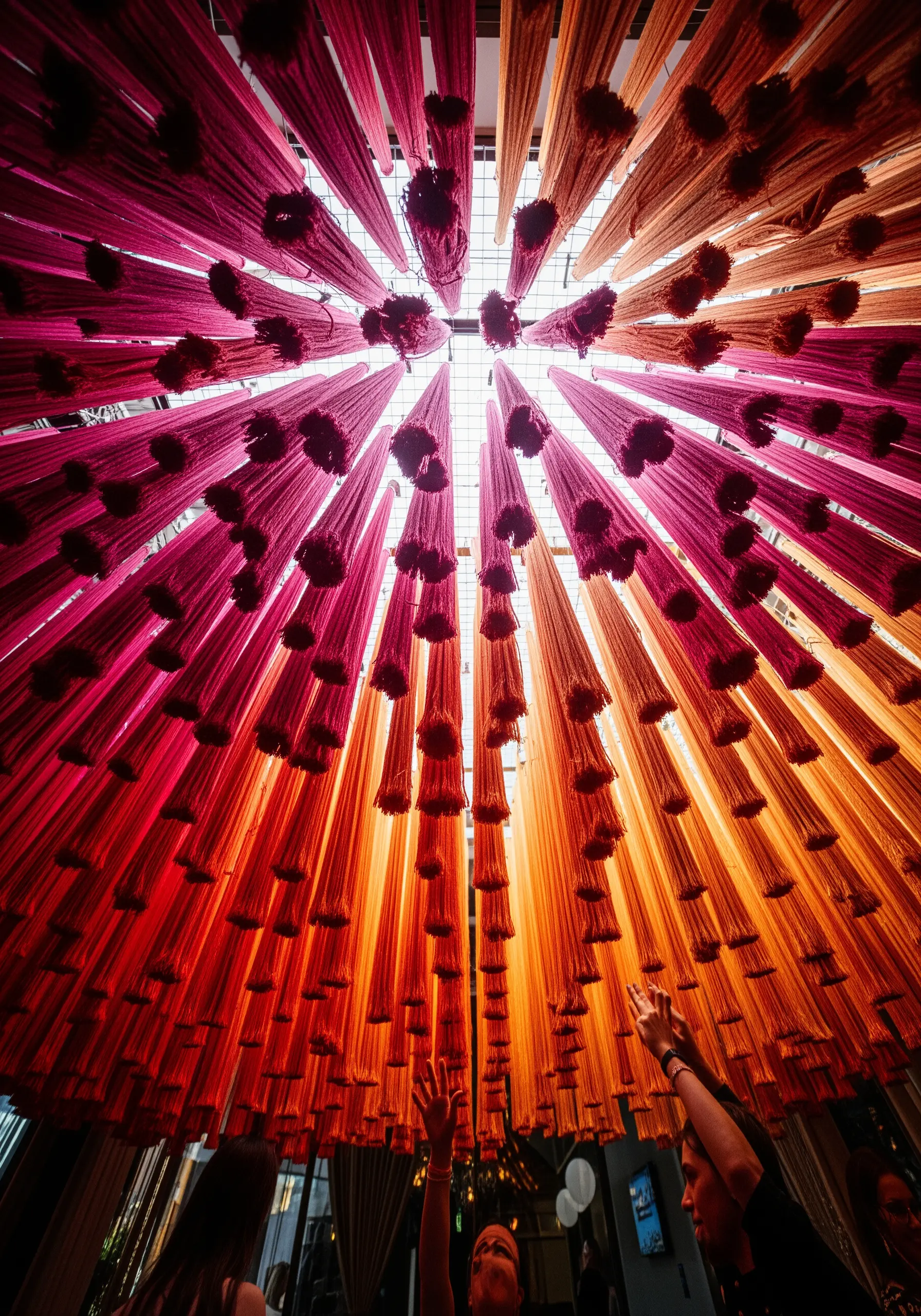
Design a piece that uses repetition and color to create an immersive, atmospheric effect.
You can achieve this on a smaller scale by making dozens of simple yarn tassels in a gradient of colors and hanging them from a dowel.
Arrange the tassels from light to dark or create a sunset-like blend to build a powerful visual flow.
The result is a lush, touchable ombre gradient embroidery wall hanging that transforms the feeling of a room.
19. Curate a Library of Tactile Forms
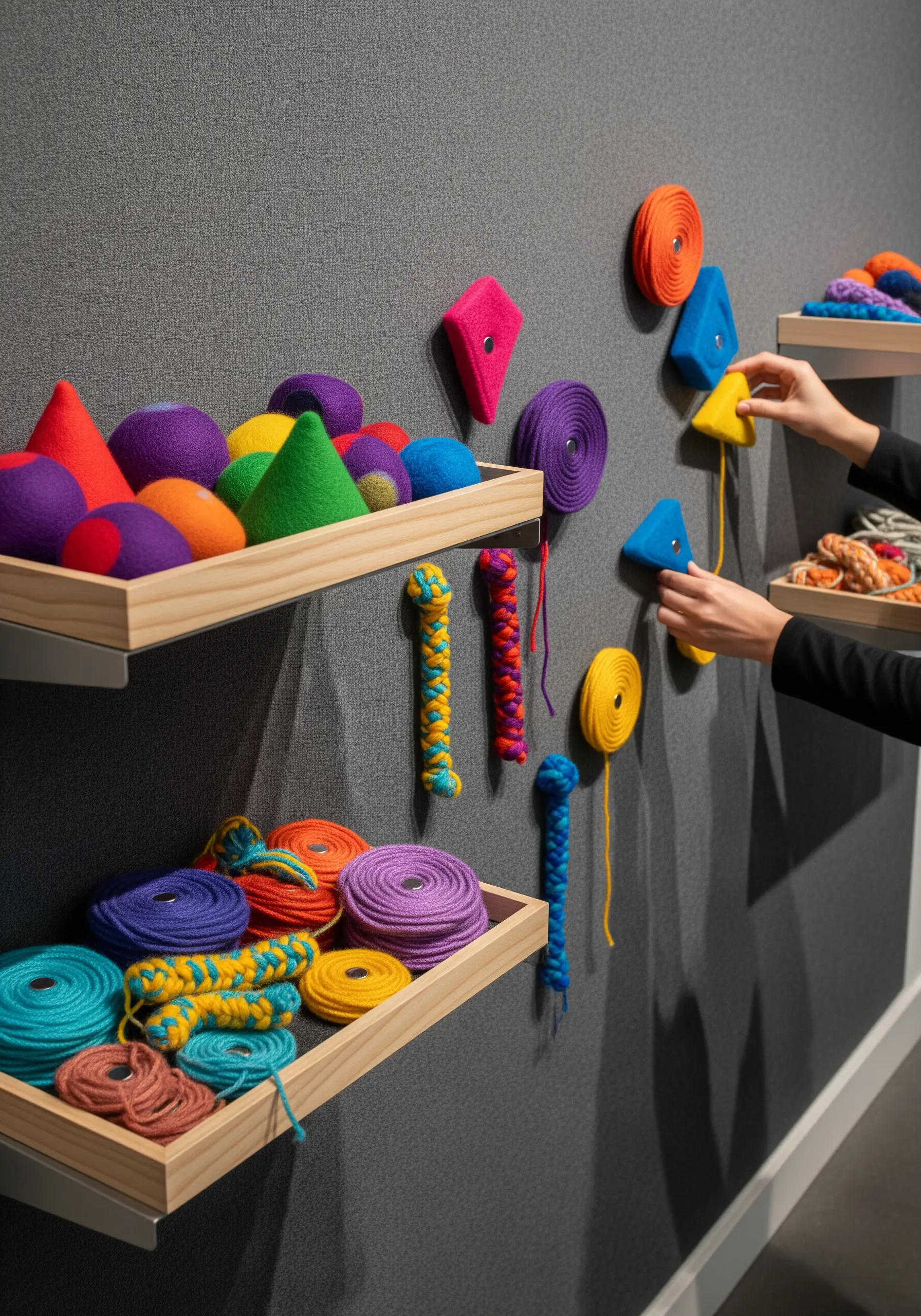
Instead of a single, unified artwork, create a collection of small, tactile “specimens.”
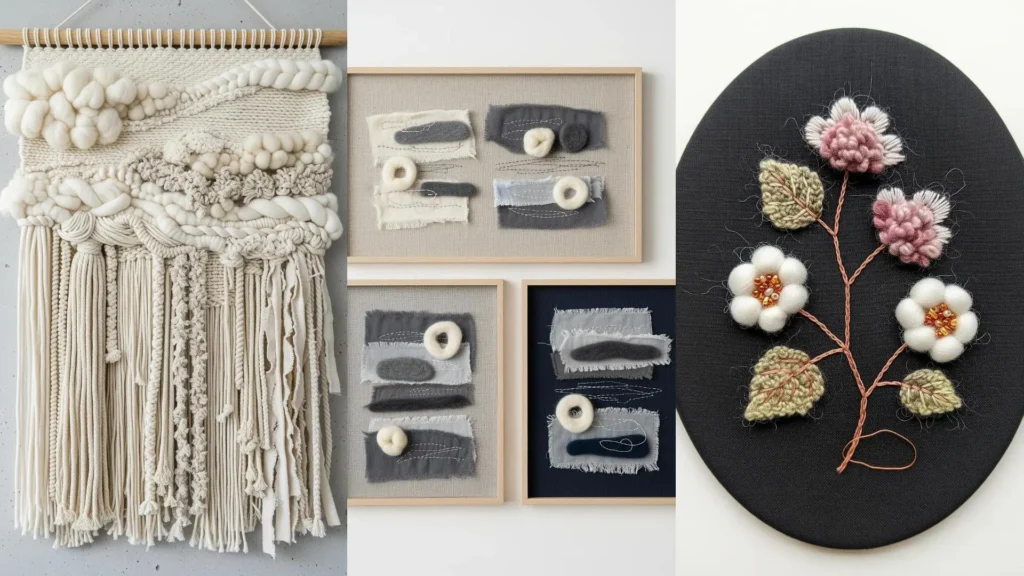
Craft a variety of fiber objects using different techniques: a tightly wrapped spool of yarn, a soft needle-felted ball, a braided cord, a small woven square.
Arrange these objects on a shelf or in a shadow box to create a visual and sensory library.
This approach celebrates the diversity of fiber techniques and encourages hands-on exploration through abstract stitching techniques.
20. Craft Lightness and Air with Openwork Netting
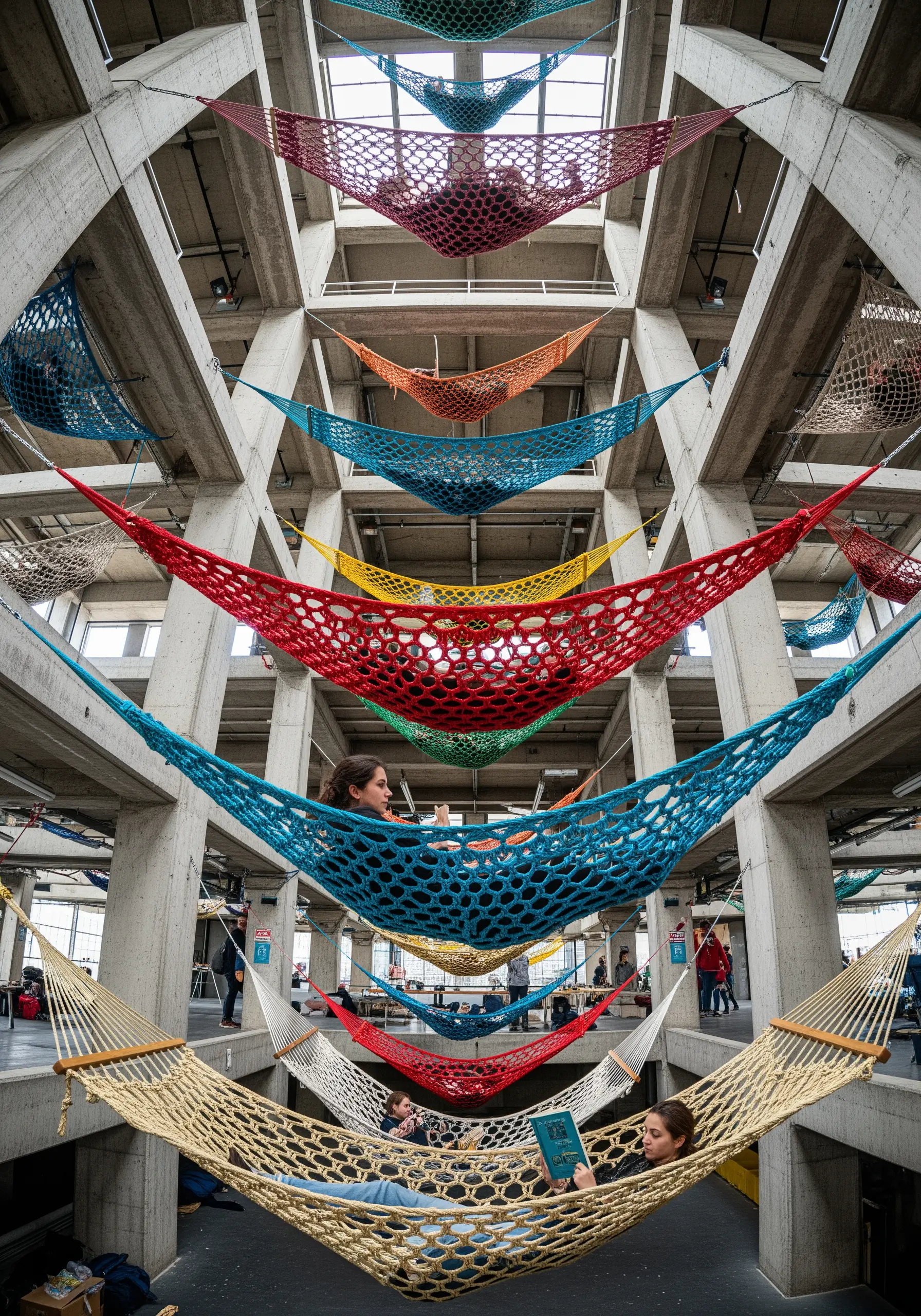
Explore techniques that create open, airy structures rather than dense, solid fabric.
Practice simple knotted netting using a sturdy cotton cord to create a flexible, web-like material.
This technique is perfect for functional projects like a hanging fruit basket or a decorative panel that casts beautiful shadows.
The beauty of netting lies in its negative space, creating fiber art installations that look like they’re floating in mid-air and feel effortlessly light.
21. Paint with Plush Loops Using Punch Needle
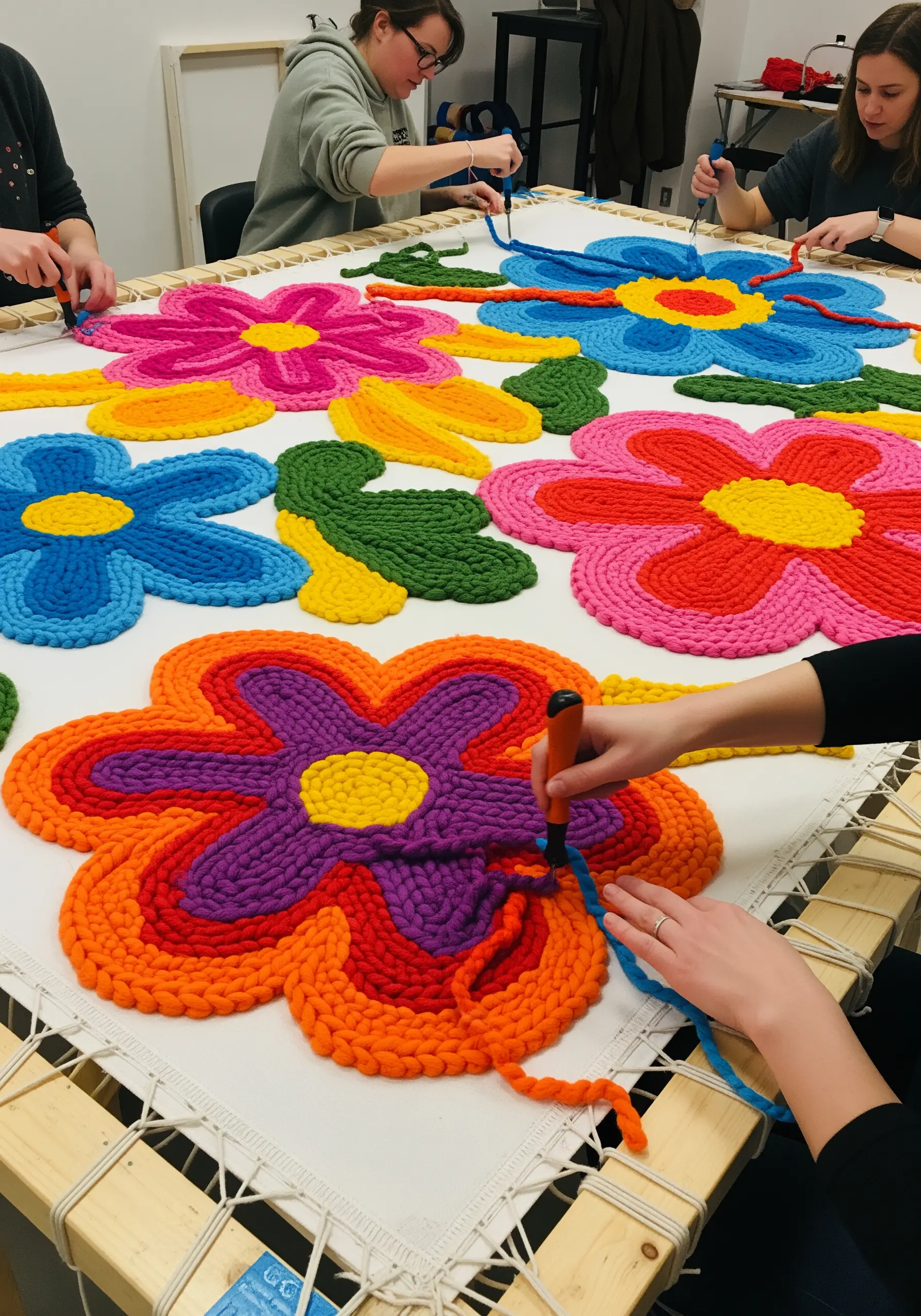
If you love texture, explore punch needle embroidery to quickly fill large areas with a satisfyingly plush, looped pile.
Use a punch needle tool and thick yarn on monk’s cloth to “paint” bold, graphic shapes with color and texture.
Adjust the needle length to vary the height of your loops, adding subtle dimension to your design.
This technique is perfect for creating a DIY cozy wall art piece or a tactile cushion cover with a modern, graphic feel.
22. Capture Movement with Cascading Fabric Strips
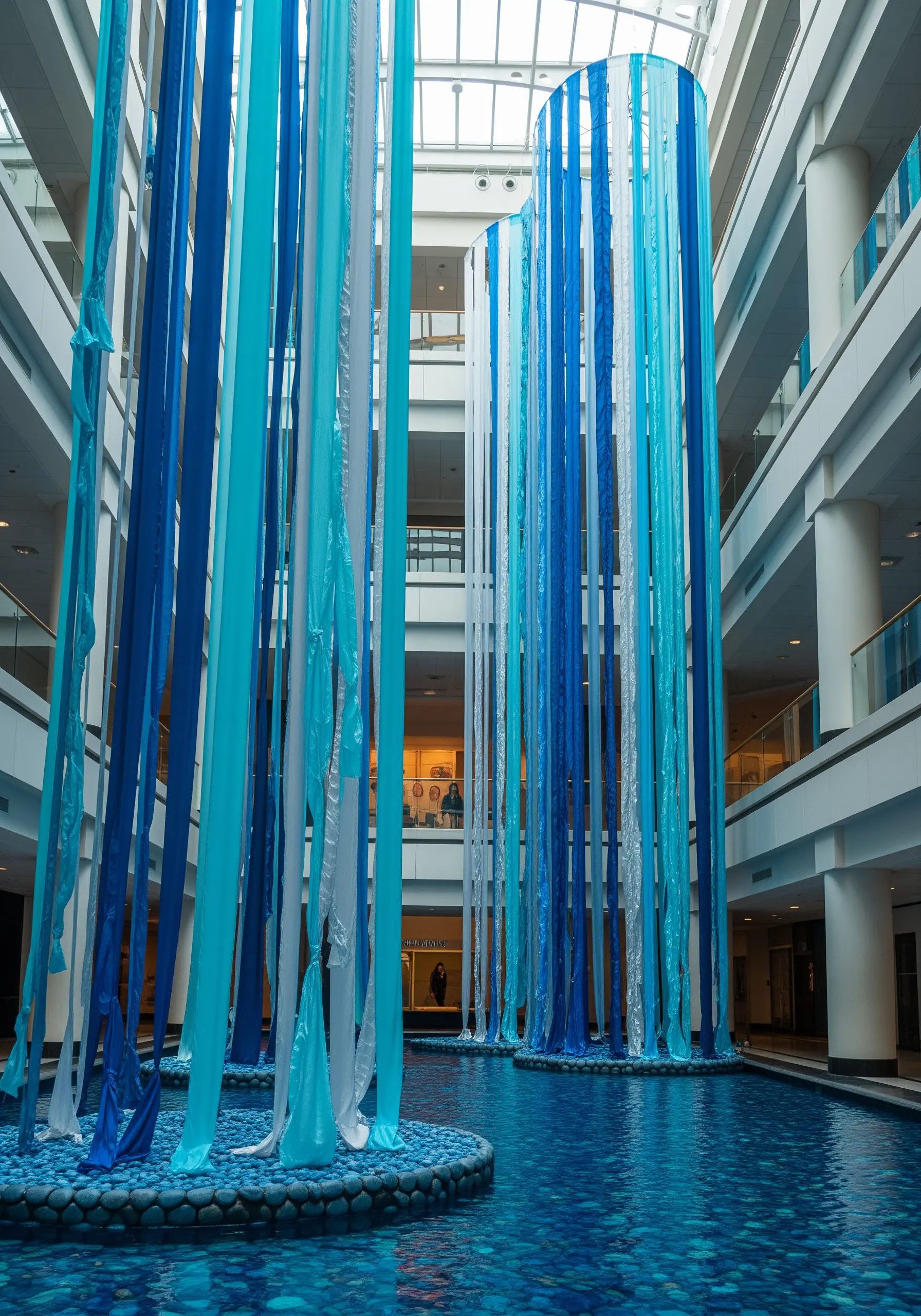
Create a sense of fluidity and motion using simple strips of fabric.
Tear or cut long pieces of lightweight cotton, silk, or even organza in a harmonious color palette.
Tie these strips to a wooden dowel or branch, allowing their varying lengths and raw edges to evoke the feeling of a waterfall or wind-blown grass.
This project requires no complex stitching, yet it results in beautiful abstract thread flow patterns that interact with the slightest breeze.
23. Translate Scientific Diagrams into Stitched Art
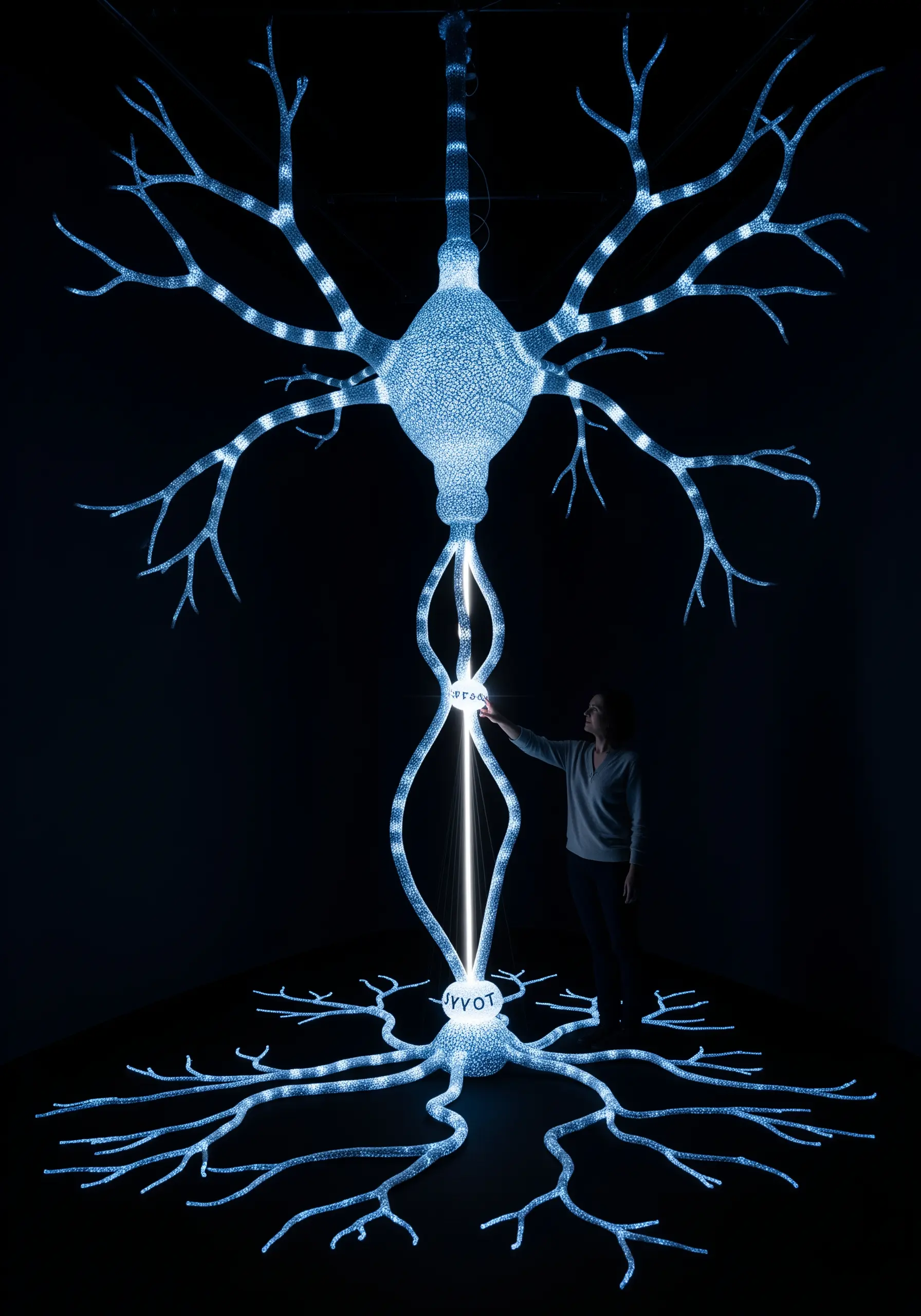
Find inspiration in the precise beauty of scientific and anatomical illustrations.
Choose a diagram—like a neuron, a plant cell, or a constellation map—and interpret its lines and forms with thread.
Use a simple backstitch or stem stitch to maintain the clarity of the original drawing.
The contrast between the technical subject matter and the soft, tactile medium creates fascinating architectural stitch ideas that are both intelligent and beautiful.
24. Create a Sense of Discovery with Hidden Details
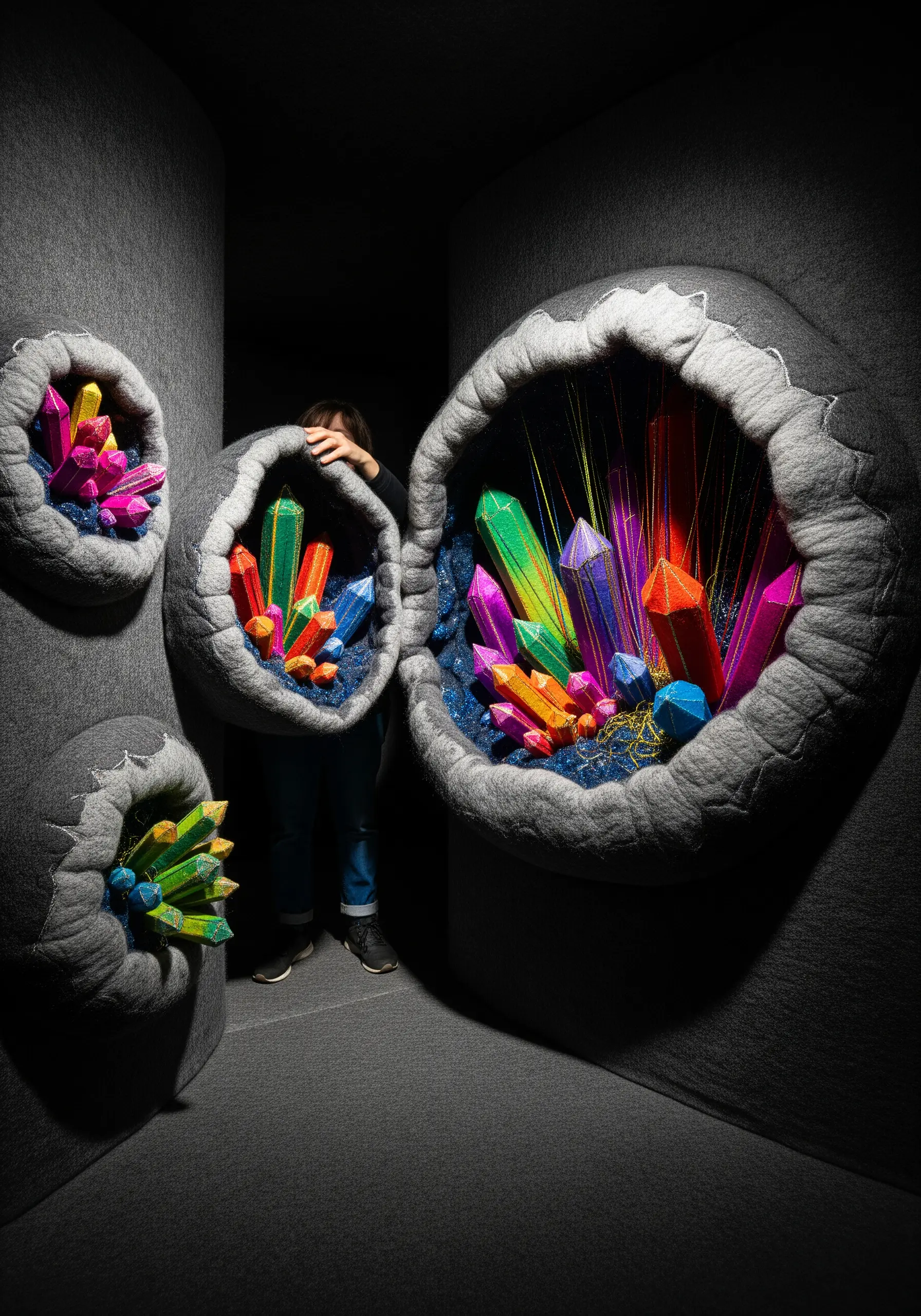
Design a piece that rewards closer inspection by incorporating a secret, embellished interior.
Create a small, sculptural form with an opening, such as a felted vessel, a fabric cave, or a stitched pod.
While the outside can be plain and unassuming, fill the inside with a burst of unexpected color and texture—a cluster of beaded stitches, vibrant metallic threads, or tiny fabric crystals.
This approach turns your art into an object of curiosity, reminding us that some of the most mind-blowing fiber art installations have secrets to reveal.